Personal Cooling Device Market by Technology (Ambient Air Cooling), Product Type (Personal Air Conditioner/Desk Fans, and Handheld Cooling Device), and Geography - Global Forecast to 2035


Personal Cooling Device Market Summary
The Personal Cooling Device Market is entering a high-growth phase as rising temperatures, recurring heatwaves, occupational heat exposure, urbanization, and consumer demand for portable thermal comfort increase adoption across residential, commercial, industrial, sports, healthcare, and outdoor applications. The global market was valued at approximately USD 7.0 billion in 2025 and is projected to reach nearly USD 28.0 billion by 2035, expanding at a CAGR of around 14%–15% during the forecast period.
The market encompasses wearable neck fans, handheld cooling devices, personal air conditioners, cooling apparel, thermoelectric coolers, evaporative systems, and phase-change cooling products. Demand is increasingly shifting from simple comfort products toward intelligent and application-specific thermal-management solutions. AI, IoT, connected sensors, automation, and digital controls are enabling devices to adjust cooling intensity based on ambient conditions, user preferences, activity, and—in advanced products—body or skin temperature. The convergence of wearable technology and thermal management is therefore creating new opportunities for manufacturers seeking to differentiate products through personalization, energy efficiency, and connected functionality.
Climate adaptation is another important market catalyst. Personal cooling devices provide localized cooling without requiring users to cool an entire room or facility, making them particularly attractive for outdoor workers, commuters, athletes, travelers, construction personnel, logistics workers, and industrial employees. At the same time, employers are increasingly evaluating wearable cooling solutions as part of heat-exposure management programs. The combination of consumer comfort, energy awareness, workplace productivity, and heat-risk mitigation is expected to sustain market momentum through 2035.
Key Market Trends & Insights
The Asia Pacific region represents the strongest growth center for the Personal Cooling Device Market, supported by high-temperature environments, dense urban populations, expanding e-commerce, manufacturing capabilities, and increasing adoption of wearable consumer electronics.
Wearable neck fans represent a leading product category because they combine portability, hands-free operation, relatively low prices, and convenient battery-powered operation. Their popularity is also being supported by continuous improvements in motor efficiency, noise reduction, battery life, and ergonomic design.
Thermoelectric cooling is emerging as an important technology for premium personal cooling products. Peltier-based systems can provide targeted cooling without relying exclusively on high-speed airflow. Manufacturers are combining thermoelectric modules with heat-dissipation fans, sensors, and mobile applications to deliver more controlled thermal experiences.
AI and automation are gradually moving personal cooling devices from manual-control products toward adaptive systems. Smart modes can use environmental sensors, user settings, and thermal feedback to adjust cooling intensity automatically. This trend is particularly relevant to wearable products where comfort can change rapidly with activity level and surrounding temperature.
Cooling apparel is also gaining momentum. Battery-powered jackets, cooling vests, phase-change garments, and smart textiles are expanding the market beyond standalone electronic gadgets. Air-conditioned clothing has already become established in Japan and is increasingly attracting interest internationally as a lightweight alternative for localized cooling.
Market Size & Forecast
-
Base year market size: USD 7.0 billion in 2025.
-
Forecast value by 2035: USD 28.0 billion.
-
Expected CAGR: 14%–15% during 2025–2035.
-
Key growth factors: Increasing heat exposure, climate adaptation, workplace safety requirements, wearable technology adoption, e-commerce expansion, and demand for energy-efficient localized cooling.
-
Technology outlook: Thermoelectric modules, smart sensors, AI-assisted controls, rechargeable batteries, phase-change materials, and connected wearables are expected to support product innovation.
Personal Cooling Device Market Top 10 key takeaway
-
The global Personal Cooling Device Market is projected to expand at approximately 14%–15% CAGR through 2035.
-
Rising temperatures and recurring heatwaves are major demand catalysts.
-
Asia Pacific is expected to remain the fastest-growing regional market.
-
Wearable neck fans are among the leading product categories.
-
Thermoelectric cooling is gaining importance in premium and smart devices.
-
Cooling apparel is expanding adoption among industrial and outdoor workers.
-
Rechargeable USB-C batteries are improving product convenience and portability.
-
AI and sensor technologies are enabling more adaptive cooling experiences.
-
Online and direct-to-consumer channels are accelerating product availability.
-
Product differentiation through energy efficiency, smart controls, ergonomics, and safety will shape competition through 2035.
Product Insights
Wearable cooling products are expected to remain one of the most commercially attractive segments of the Personal Cooling Device Market. Neck fans, wearable cooling systems, and compact thermoelectric devices provide hands-free operation and allow users to remain mobile while receiving localized cooling.
Handheld fans and misting devices continue to benefit from affordability and simplicity. Their relatively low entry price makes them suitable for mass-market consumers, while USB-C charging and improvements in battery capacity are increasing convenience. Personal air conditioners and desktop cooling units serve users who need localized cooling in offices, bedrooms, workstations, and other small spaces.
Cooling apparel represents a particularly important emerging category. These products incorporate fans, phase-change materials, thermoelectric components, or specialized fabrics to reduce perceived heat. Industrial and construction workers are important target users because cooling garments can provide mobility without requiring workers to remain near stationary cooling equipment.
Premium devices are increasingly integrating smartphone connectivity, multiple cooling modes, environmental sensors, and automated controls. Recent products demonstrate the market's movement toward multifunctional systems: for example, SharkNinja introduced the ChillPill, combining a cooling plate, misting capability, and high-speed fan in a portable device.
Technology / Component Insights
The technology landscape is becoming more diverse as manufacturers balance cooling performance, power consumption, weight, noise, cost, and battery life. Fan-based air circulation remains the most accessible technology because of its simple architecture and low manufacturing cost. However, thermoelectric Peltier modules are gaining attention because they can generate targeted heating or cooling at contact points.
Evaporative cooling offers another efficient approach, particularly in dry environments. Misting systems and evaporative personal coolers can produce an immediate perception of cooling while consuming less electrical energy than conventional refrigeration-based systems. Phase-change materials are also gaining traction in cooling vests and wearable products because they can absorb thermal energy without requiring continuous electrical power.
AI and IoT are becoming strategic differentiators. Sensors can monitor ambient temperature, humidity, motion, and other parameters, while connected controllers can use this information to optimize cooling. Advanced products can potentially learn individual preferences and automatically select operating modes. Smartphone applications can also provide battery monitoring, temperature settings, usage analytics, and firmware updates.
Battery technology remains a critical component. Longer-lasting lithium-ion batteries, improved battery-management systems, USB-C fast charging, and power-efficient electronics are helping manufacturers extend operating time while keeping devices compact. Future products are likely to combine AI-enabled control algorithms with more efficient thermoelectric modules, low-power motors, flexible sensors, and smart textiles.
Application Insights
The residential and household segment remains a major application area because personal cooling devices provide an economical way to improve localized comfort without continuously operating room-level air conditioning. Portable fans, desktop coolers, wearable devices, and personal air conditioners are particularly relevant to consumers seeking flexible cooling during hot weather.
Industrial and construction applications represent another significant opportunity. Workers in construction, manufacturing, agriculture, logistics, mining, utilities, and outdoor maintenance can experience substantial heat exposure. Cooling vests, neck fans, and wearable systems can help improve thermal comfort and productivity while complementing broader workplace heat-management measures.
Sports and fitness applications are also expanding. Athletes, runners, cyclists, hikers, and outdoor enthusiasts increasingly seek lightweight cooling solutions that can operate during movement. Healthcare and elderly-care applications offer another emerging opportunity, particularly where individualized temperature management and comfort are important.
Military and defense users represent a specialized market for ruggedized cooling products. Devices intended for these applications must typically balance thermal performance with weight, durability, battery endurance, and operational reliability. Over time, opportunities are expected to expand as personal thermal-management technologies become smaller and more energy efficient.
Regional Insights
North America represents a mature and technologically advanced market for personal cooling devices. Demand is supported by high consumer purchasing power, outdoor recreation, workplace heat-management requirements, and rapid adoption of wearable electronics. The region is also well positioned for premium thermoelectric products and connected cooling wearables.
Europe is supported by growing awareness of heat-related risks, sustainability objectives, and demand for efficient personal comfort solutions. The market is particularly attractive for energy-efficient cooling products that complement building-level HVAC rather than replacing it.
Asia Pacific is expected to record the fastest growth. Extreme heat exposure, urbanization, manufacturing activity, rising disposable income, and strong electronics supply chains are creating favorable conditions. Japan has been an early market for wearable cooling apparel, while China and other Asian markets provide large-scale manufacturing and e-commerce opportunities.
-
Asia Pacific is expected to remain the fastest-growing regional market.
-
North America has strong demand for premium smart cooling technologies.
-
Europe is emphasizing energy efficiency and climate adaptation.
-
Japan is an important innovation center for wearable cooling apparel.
-
E-commerce is accelerating adoption across emerging Asian markets.
Country-Specific Market Trends
In China, the Personal Cooling Device Market benefits from a large electronics manufacturing ecosystem, strong online retail infrastructure, and increasing demand for portable consumer technologies. The country's expanding outdoor workforce and hot-weather conditions are creating opportunities for both low-cost fans and sophisticated thermoelectric products. China is expected to record approximately 15%–16% CAGR through 2035.
Japan remains a technology leader in wearable thermal management, particularly cooling apparel and compact thermoelectric devices. Established consumer acceptance of wearable cooling systems provides a foundation for next-generation smart products. Japan's market is projected to grow at approximately 11%–12% CAGR.
In the United States, demand is driven by consumer electronics adoption, outdoor recreation, workplace heat exposure, and premium wearable technologies. The US market is expected to expand at approximately 12%–13% CAGR. Canada, with a smaller market base, is projected to grow at around 10%–11% CAGR, while Mexico is expected to record approximately 13%–14% CAGR, supported by rising temperatures, industrial applications, and expanding consumer electronics distribution.
In Europe, Germany is expected to grow at approximately 10%–11% CAGR, supported by industrial demand and increasing attention to workplace thermal comfort. France is projected to expand at around 10%–12% CAGR, with consumer and outdoor applications supporting demand. These country-level estimates should be viewed as indicative market projections because published market studies use different geographic and product definitions.
-
China is positioned as a major manufacturing and consumption market.
-
Japan remains an important center for wearable cooling innovation.
-
The US is a key premium-market opportunity.
-
Germany provides strong industrial and workplace applications.
-
France offers opportunities across consumer, outdoor, and wearable segments.
Key Personal Cooling Device Company Insights
The competitive landscape includes consumer-electronics companies, industrial-safety suppliers, thermal-management specialists, and specialized wearable-device manufacturers. Companies such as Honeywell International, Havells India, Evapolar, Laird Technologies, Lakeland, O2Cool, Tellurex, Beijing Huimao Cooling Equipment, Shenzhen KRG Electronics, and other specialized manufacturers participate across different product and technology categories.
Leading companies are increasingly focusing on compact form factors, higher battery efficiency, quieter operation, thermoelectric technology, and connected controls. Consumer brands are emphasizing attractive industrial design and direct-to-consumer distribution, while industrial suppliers are concentrating on durability, worker safety, and reliable operation in demanding environments.
AI adoption remains relatively early compared with mature consumer-electronics markets, but sensor-based automation is becoming more common. Smart cooling modes can adjust output according to environmental conditions, while smartphone applications provide users with greater control. Future competition is likely to depend increasingly on the combination of cooling effectiveness, comfort, battery endurance, connectivity, and software.
-
Companies are investing in compact and lightweight designs.
-
Thermoelectric technology is supporting premium product differentiation.
-
Smart sensors are enabling automated cooling modes.
-
Direct-to-consumer and e-commerce channels are expanding market reach.
-
Battery efficiency and thermal safety remain major product-development priorities.
Recent Developments
The market has recently seen increased emphasis on multifunctional personal cooling systems. In 2026, SharkNinja introduced the Shark ChillPill, combining a metal cooling plate, misting function, and high-speed fan, demonstrating how manufacturers are moving beyond conventional airflow-only products.
Wearable thermoregulation products are also becoming more sophisticated. Sony's newer Reon Pocket Pro Plus, for example, combines a wearable cooling and heating device with smartphone control and an environmental sensing accessory, highlighting the shift toward adaptive thermal management.
Meanwhile, cooling apparel is moving beyond specialist industrial use toward mainstream fashion and lifestyle applications. Recent design collaborations indicate growing interest in making electronically assisted cooling garments more aesthetically acceptable to everyday consumers.
Market Segmentation
The Personal Cooling Device Market can be segmented by Product into personal air conditioners and desk fans, handheld cooling devices, wearable neck fans, cooling apparel, and thermoelectric personal coolers. By Technology, the market includes evaporative cooling, thermoelectric/Peltier cooling, phase-change materials, fan-based air circulation, and hybrid technologies. By Application, demand spans residential and household use, industrial and construction workers, military and defense, sports and fitness, healthcare and elderly care, and outdoor recreation. By Region, the market is divided into North America, Europe, Asia Pacific, Middle East and Africa, and South America.
The product mix is expected to evolve toward wearable and hybrid technologies as consumers and industrial users demand greater portability. Technology segmentation will increasingly favor thermoelectric, phase-change, and sensor-enabled hybrid solutions. Application growth is likely to broaden from consumer comfort toward workplace heat management and specialized healthcare applications. Regionally, Asia Pacific is expected to contribute significantly to incremental demand through 2035.
-
Wearable neck fans represent a major product segment.
-
Thermoelectric technology is gaining importance in premium products.
-
Industrial and construction applications offer strong growth potential.
-
Online distribution is increasing product accessibility.
-
Asia Pacific is expected to account for a significant share of future market expansion.
The Personal Cooling Device Market is evolving from a niche consumer category into a broader thermal-management ecosystem spanning consumer electronics, workplace safety, sports, healthcare, outdoor recreation, and smart wearables. With the market projected to approach USD 28.0 billion by 2035, manufacturers have significant opportunities to develop products that deliver targeted cooling while consuming substantially less energy than cooling an entire room.
AI, IoT, automation, and sensor technologies will increasingly influence the next generation of products. Instead of relying solely on manual fan-speed controls, future devices can dynamically respond to environmental conditions, activity levels, and user preferences. Thermoelectric modules, phase-change materials, smart textiles, improved batteries, and low-power electronics will further expand the range of possible product designs.
Strategically, companies that combine thermal performance, comfort, battery efficiency, safety, connectivity, and attractive industrial design are likely to gain an advantage. As extreme heat becomes a recurring operational and consumer challenge, personal cooling will increasingly be viewed not only as a convenience but also as an important component of localized climate adaptation. The market therefore presents substantial long-term opportunities for technology developers, HVAC companies, wearable manufacturers, industrial-safety suppliers, and consumer-electronics brands.
FAQs
1. What is the current market size of the Personal Cooling Device Market?
The global Personal Cooling Device Market is estimated at approximately USD 7.0 billion in 2025. Published estimates vary depending on the products and applications included in the market definition.
2. What is the expected growth rate of the Personal Cooling Device Market?
The market is expected to grow at approximately 14%–15% CAGR from 2025 to 2035, supported by increasing heat exposure, wearable technology adoption, workplace applications, and demand for localized cooling.
3. What are the key drivers of the Personal Cooling Device Market?
Major drivers include rising temperatures, heatwaves, workplace heat exposure, demand for portable comfort, wearable technology adoption, energy-efficiency requirements, expanding e-commerce, and innovations in thermoelectric and battery technologies.
4. Which region is expected to lead the Personal Cooling Device Market?
Asia Pacific is expected to remain the leading and fastest-growing regional market, supported by climate conditions, urbanization, manufacturing capabilities, consumer electronics adoption, and strong online retail infrastructure.
5. Who are the key companies in the Personal Cooling Device Market?
Key participants include Honeywell International, Havells India, Evapolar, Laird Technologies, Lakeland, O2Cool, Tellurex, Beijing Huimao Cooling Equipment, and Shenzhen KRG Electronics, along with other regional and specialized manufacturers.
To speak to our analyst for a discussion on the above findings, click Speak to Analyst
 Exclusive indicates content/data unique to MarketsandMarkets and not available with any competitors.
Table of Contents
1 Introduction (Page No. - 11)
1.1 Objectives of Study
1.2 Market Definition
1.3 Study Scope
1.4 Stakeholders
1.5 Currency & Pricing
2 Research Methodology (Page No. - 17)
2.1 Market Size Estimation
2.2.1 Bottom-Up Approach
2.2.2 Top-Down Approach
2.2 Market Breakdown and Data Triangulation
2.3 Research Assumptions and Limitations
2.3.1 Assumptions
3 Analyst Briefing (Page No. - 25)
4 Premium Insights (Page No. - 28)
4.1 Emerging Technologies
4.2 Key Trends
4.3 Asp Analysis and Tec Inception
5 Market Overview (Page No. - 32)
5.1 Introduction
5.2 Value Chain Analysis
5.3 Drivers and Restraints
5.3.1 Impact Analysis of Drivers
5.3.1.1 Energy Saving Technology
5.3.1.2 Individual Comfort System
5.3.1.3 Ergonomic & User Friendly Device Design
5.3.2 Impact Analysis of Restraints
5.3.2.1 Dominant HVAC System for Room Cooling
5.3.2.2 Limited Battery Capacity
5.3.2.3 Less Branding of Products
5.3.3 Impact Analysis of Opportunities & Challenges
5.3.3.1 Application of Tec Technology for Healthcare, Personal Computers & Laptops
5.3.3.2 Application of Tec Technology in Wearable Device
5.3.3.3 Personal Cooling in Hot Industrial Environment
6 Market By Technology (Page No. - 39)
6.1 Market By Technology- Ambient Cooling Technology
7 Market By Product (Page No. - 41)
7.1 Market By Product- Personal Air Conditioner
7.2 Market By Product-Handheld Cooling Device
8 Market By Geography (Page No. - 44)
8.1 Personal Cooling Device Market: Geography Snapshot
8.2 Personal Cooling Device Market By Geography
8.3 Personal Cooling Device Market in the Americas
8.4 Personal Cooling Device Market in Europe
8.5 Personal Cooling Device Market in APAC
8.6 Personal Cooling Device Market in RoW
9 Competitive Landscape (Page No. - 51)
9.1 Introduction
2.2 Key Market Players
9.3 Competitive Situations and Trends
10 Company Profiles (Page No. - 56)
10.1 Ambient Therapeutics
10.1.1 Business Overview
10.1.2 Product Portfolio
10.1.3 MnM View
10.2 Beijing Huimao Cooling Equipment Ltd
10.2.1 Business Overview
10.2.2 Product Portfolio
10.2.3 MnM View
10.3 Design Go Ltd.
10.3.1 Business Overview
10.3.2 Product Portfolio
10.3.3 MnM View
10.4 Evapolar Ltd.
10.4.1 Business Overview
10.4.2 Product Portfolio
10.4.3 MnM View
10.5 Genexus LLC
10.5.1 Business Overview
10.5.2 Product Portfolio
10.5.3 MnM View
10.6 Havells India Ltd.
10.6.1 Business Overview
10.6.2 Product Portfolio
10.6.3 MnM View
10.7 Holmes Ltd.
10.7.1 Business Overview
10.7.2 Product Portfolio
10.7.3 MnM View
10.8 Honeywell International
10.8.1 Business Overview
10.8.2 Product Portfolio
10.8.3 MnM View
10.9 Laird PLC
10.9.1 Business Overview
10.9.2 Product Portfolio
10.9.3 MnM View
10.10 Lakeland Limited.
10.10.1 Business Overview
10.10.2 Product Portfolio
10.10.3 MnM View
10.11 O2cool LLC
10.11.1 Business Overview
10.11.2 Product Portfolio
10.11.3 MnM View
10.12 Shenzhen KRG Electronics Co. Ltd.
10.12.1 Business Overview
10.12.2 Product Portfolio
10.12.3 MnM View
10.13 Tellurex Corporation
10.13.1 Business Overview
10.13.2 Product Portfolio
10.13.3 MnM View
List of Tables (9 Tables)
Table 1.1 List of Companies for Personal Cooling Device and Thermoelectric Module
Table 2.1 General Assumptions
Table 2.2 Year-Wise Forecast and Assumptions
Table 4.1 Asp Analysis of Personal Cooling Systems
Table 9.1 Major Players’ Ranking: Non-Handheld Personal Cooling Device
Table 9.2 Major Players’ Ranking: Handheld Personal Cooling Device
Table 10.1 Evapolar Ltd : Developments
Table 10.2 Havells India Limited: Developments
Table 10.3 Honeywell International Inc.: Developments
List of Figures (40 Figures)
Figure 1.1 Market Segmentation
Figure 2.1 Market Breakdown
Figure 3.1 Global Personal Cooling Devices Market, 2016-2022 (USD Thousand)
Figure 5.1 Value Chain Analysis
Figure 5.2 Driver, Restraints, Opportunities, and Challenges
Figure 6.1 Personal Cooling Device Market By Technology, 2015-2022
Figure 7.1 Personal Cooling Device Market By Air Conditioner/ Desk Fan, 2016-2022 (USD Thousand)
Figure 7.2 Personal Cooling Device Market By Handheld Cooling Fans, 2016-2022 (USD Thousand)
Figure 8.1 Personal Cooling Device Market: Geography Snapshot
Figure 8.2 Personal Cooling Device Market, By Geography, 2014-2022, (USD Thousand)
Figure 8.3 Personal Cooling Device Market in America, 2014-2022, (USD Thousand)
Figure 8.4 Personal Cooling Device Market in Europe, 2014-2022, (USD Thousand)
Figure 8.5 Personal Cooling Device Market in APAC, 2014-2022, (USD Thousand)
Figure 8.6 Personal Cooling Device Market in Rest of the World, 2014-2022, (USD Thousand)
Figure 9.1 Competitive Situation
Figure 10.1 Ambient Therapeutics Inc.: Business Overview
Figure 10.2 Ambient Therapeutics Inc.: Product Portfolio
Figure 10.3 Beijing Huimao Cooling Equipment Co., Ltd.: Business Overview
Figure 10.4 Beijing Huimao Cooling Equipment Co., Ltd.: Product Portfolio
Figure 10.5 Design Go Ltd.: Business Overview
Figure 10.6 Design Go Ltd.: Product Portfolio
Figure 10.7 Evapolar Ltd: Business Overview
Figure 10.8 Evapolar Ltd : Product Portfolio
Figure 10.9 Genexus LLC: Product Portfolio
Figure 10.10 Havells India Limited: Business Overview
Figure 10.11 Havells India Limited : Product Portfolio
Figure 10.12 Holmes (Jarden Consumer Solution): Business Overview
Figure 10.13 Holmes (Jarden Consumer Solution): Product Portfolio
Figure 10.14 Honeywell International Inc.: Business Overview
Figure 10.15 Honeywell International Inc.: Product Portfolio
Figure 10.16 Laird PLC.: Business Overview
Figure 10.17 Laird PLC.: Product Portfolio
Figure 10.18 Lakeland Limited: Business Overview
Figure 10.19 Lakeland Limited : Product Portfolio
Figure 10.20 O2cool, LLC.: Business Overview
Figure 10.21 O2cool, LLC.: Product Portfolio
Figure 10.22 Shenzhen KRG Electronics Co., Ltd.: Business Overview
Figure 10.23 Shenzhen KRG Electronics Co., Ltd.: Product Portfolio
Figure 10.24 Tellurex Corporation: Business Overview
Figure 10.25 Tellurex Corporation: Product Portfolio
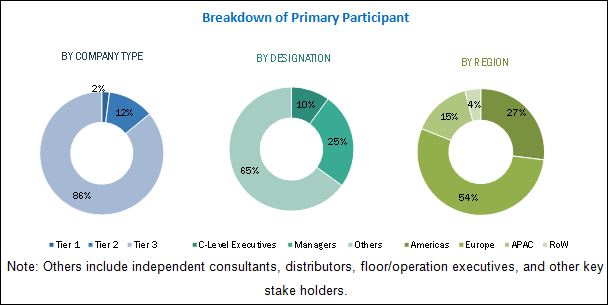
During this research study, major players operating in the managed print services market in various regions have been identified, and their offerings, regional presence, and distribution channels have been analyzed through in-depth discussions. Top-down and bottom-up approaches have been used to determine the overall market size. Sizes of the other individual markets have been estimated using the percentage splits obtained through secondary sources such as Hoovers, Bloomberg BusinessWeek, and Factiva, along with primary respondents. The entire procedure includes the study of the annual and financial reports of the top market players and extensive interviews with industry experts such as CEOs, VPs, directors, and marketing executives for key insights (both qualitative and quantitative) pertaining to the market. The figure below shows the breakdown of the primaries on the basis of the company type, designation, and region considered during the research study.
To know about the assumptions considered for the study, download the pdf brochure
The global personal cooling device market includes manufacturers of handheld cooling device, such as AMBIENT Therapeutics Inc. (U.S.), Lakeland Ltd. (U.K.), Beijing Huimao Cooling Equipment Co. Ltd. (China), Handy Cooler (Genexus LLC) (U.S.), and Design Go Ltd. (U.K.); personal air conditioners and desk fans manufacturer, such as Honeywell International (U.S.), Havells India Ltd. (India), O2Cool LLC. (U.S.), Holmes (Jarden Consumer Solution) (U.S.), and Evapolar Ltd. (Russia); research institutes & universities, alliances & associations of personal cooling/ thermal cooling technologies, and end users of personal cooling devices.
Major Market Developments
- In May 2015, Honeywell introduced new products in QuietSet® and Turbo® product line: Turbo® on the Go! and QuietSet® Slim Mini Tower Table Fan respectively. Turbo® on the Go! is portable folding fan that can be USB and battery operated. This fan can be used in office, gym, on beach, or during camping, backyard barbeques and picnics.
- In September 2015, Evapolar Ltd developed a world`s first personal air conditioner "Evapolar" that offers 3 in1 functionality of cooling, humidifying, and air purifying. The device is completely eco-friendly and is 12 times more energy efficient that current air conditioners. Based on patented nano-technology this device is unique and easy to use.
- In February 2016, Havells India Limited expanded geographically through its retail showroom 'Havells Galaxy'. The new office offered the customers the complete electrical solution. The wide range of solution offered comprise Industrial Switchgears, Cables, Fans, CFLs, Lighting Fixtures, Electrical water heaters, Crabtree switches and Domestic Appliances, etc. This expansion also generated an opportunity for the growth of personal fan and personal coolers.
Key Target Audience
- Personal air conditioner or desk fan manufacturers/suppliers
- Thermoelectric cooling module manufacturers/suppliers
- Handheld cooling fan manufacturers/suppliers
- Research institutes and universities
- Personal cooling device traders and wholesalers
- Alliances and associations for thermoelectric cooling technology
- Private equity firms
- Analysts, strategic business planners, and others
- Startup firms
Scope of the Report
The personal cooling device market has been covered in detail in this report. To provide a holistic picture, the current market demand and forecasts have also been included in the report. The personal cooling device market has been segmented as follows:
By Technology:
- Ambient Air
By Product Type
- Personal Air Conditioner/ Desk Fans
- Handheld Cooling Device
By Geography:
- Americas
- Europe
- Asia-Pacific
- RoW1
Note1: RoW includes the Middle East and Africa.
Critical questions which the report answers
- What are new technologies which the personal cooling device providers are exploring?
- Which are the key players in the market and how intense is the competition?
Available Customizations
With the given market data, MarketsandMarkets offers customizations as per the company’s specific needs. The following customization options are available for the report:
Product Information:
- Additional technology for personal cooling can be analyzed
Company Information:
- Detailed portfolio analysis and profiling of additional market players













Growth opportunities and latent adjacency in Personal Cooling Device Market