Power Monitoring Market

Power Monitoring Market by Component (Hardware, Software, Services), Application (Energy Management, Industrial Automation, Building Automation, Transportation), End-Use, and Region - Global Forecast to 2031




OVERVIEW
Source: Secondary Research, Interviews with Experts, MarketsandMarkets Analysis
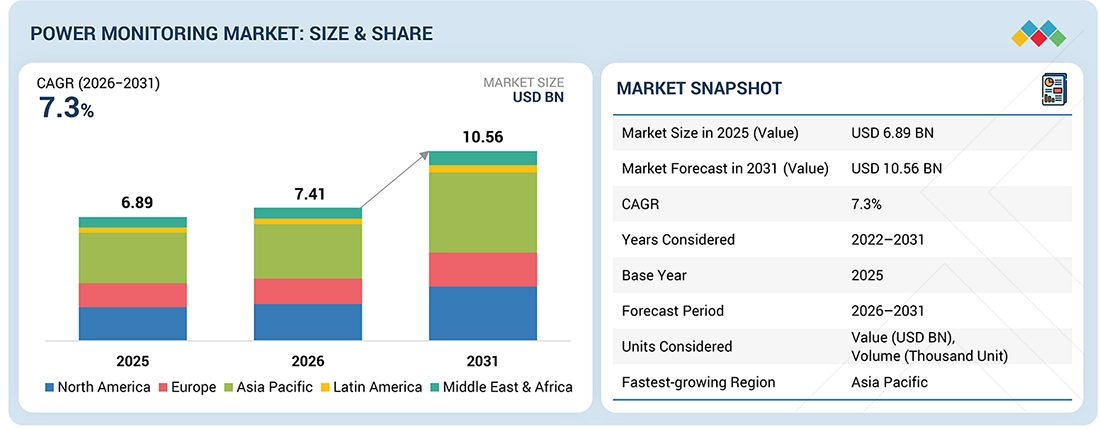
The power monitoring market is projected to reach USD 10.56 billion by 2031 from USD 7.41 billion in 2026 with a CAGR of 7.3% during the forecast period. Growth is linked to the wider adoption of real-time power quality monitoring, energy optimization, and grid intelligence solutions across critical infrastructure, data centers, healthcare facilities, commercial complexes, industrial operations, and smart city projects. These systems are increasingly applied across manufacturing plants, utilities, renewable energy installations, oil & gas facilities, telecommunications networks, and commercial buildings.
Power Monitoring Market Size and Forecast:
- Market Size Value in 2025: USD 6.89 Billion
- Market Size Value in 2026: USD 7.41 Billion
- Revenue Forecast in 2031: USD 10.56 Billion
- Growth Rate: CAGR of 7.3% from 2026 to 2031
- Data available from 2021 to 2031
- The hardware segment is projected to witness the fastest growth, while Asia Pacific is expected to account for the largest market share of 40.9% in 2026.
Key Market Trends and Insights
- Market Growth: Driven by increasing emphasis on energy efficiency, rising demand for real-time power quality monitoring, and the growing need to optimize energy consumption across industries.
- Growing Trends: Adoption of IoT-enabled, cloud-based power monitoring platforms integrated with AI-driven analytics and predictive maintenance capabilities is accelerating worldwide.
- Growth Opportunities: Expansion of smart grids, digital substations, renewable energy installations, and data center infrastructure is creating significant opportunities for market participants.
- Market Share Analysis: The energy management application segment is expected to maintain a dominant position, while the building automation segment is projected to register the highest CAGR of 8.9% during the forecast period. The data centers segment is anticipated to be the fastest-growing end-user category.
KEY TAKEAWAYS
-
BY REGIONAsia Pacific accounts for the largest market share of 40.9% in 2026.
-
BY COMPONENTBy component, the hardware segment is projected to grow at the fastest rate from 2026 to 2031.
-
BY APPLICATIONBy application, the building automation segment is estimated to register the highest CAGR of 8.9% from 2026 to 2031.
-
BY END USERBy end user, the data centers segment is projected to grow at the fastest rate from 2026 to 2031.
-
COMPETITIVE LANDSCAPE - KEY PLAYERSCompanies such as Schneider Electric (France), Siemens (Germany), ABB (Switzerland), Eaton (US), and Honeywell International (US) were identified as some of the star players in the power monitoring market.
-
COMPETITIVE LANDSCAPE - STARTUPS/SMEsMondas GmbH (Germany), Emporia Corp. (US), and Nelinor (Finland) have distinguished themselves among startups and SMEs in the power monitoring market.
The increasing penetration of intermittent renewable energy sources, battery energy storage systems, and the growing demand for uninterrupted, high-quality power across residential, commercial, industrial, and utility-scale segments are driving strong demand for advanced power monitoring solutions. Modern power monitoring systems are evolving from basic metering devices to intelligent, digital platforms capable of real-time data acquisition, advanced power quality analysis, automatic anomaly detection, predictive maintenance, and seamless integration with energy management platforms. This transition is accelerating the adoption of IoT-enabled sensors, AI-powered analytics, edge computing, and cloud-based monitoring systems, enabling greater system visibility, improved power quality, faster fault detection, and enhanced operational efficiency. However, widespread deployment faces challenges, including integration complexity across legacy systems, data management and interoperability issues, stringent cybersecurity requirements, high initial investment in certain segments, and the need to comply with evolving international standards. At the same time, government-led energy security initiatives, smart grid modernization programs, infrastructure resilience efforts, and net-zero targets are creating significant growth opportunities, particularly in high-growth markets with rising electricity demand and complex power networks.
TRENDS & DISRUPTIONS IMPACTING CUSTOMERS' CUSTOMERS
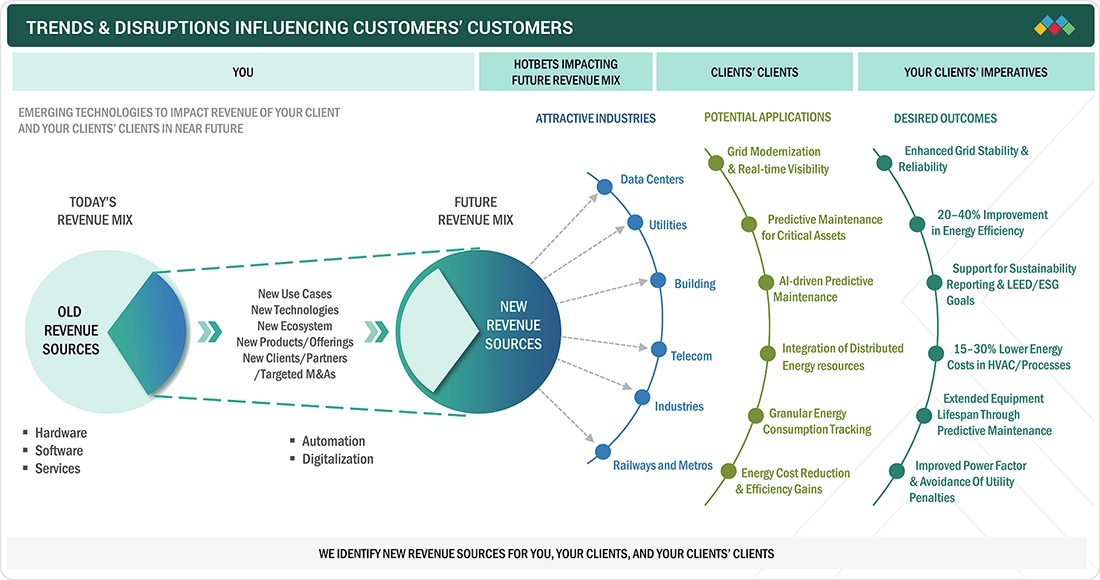
The power monitoring market is poised for robust and accelerated growth in the coming years, driven by the accelerating demand for real-time power quality visibility, energy optimization, grid intelligence, widespread infrastructure modernization, and the rapid integration of renewable energy sources amid rising power disturbances and complexity. Advanced power monitoring systems particularly IoT-enabled, AI-powered, and cloud-integrated solutions are enhancing system reliability, voltage and frequency stability, harmonic mitigation, load management, predictive maintenance, and overall operational resilience. These technologies support the smooth transition toward smarter, more flexible, decentralized, and sustainable power networks.
Source: Secondary Research, Interviews with Experts, MarketsandMarkets Analysis
MARKET DYNAMICS

Level
-
Growing emphasis on energy efficiency to meet strict compliance requirements

-
Increasing investments in smart grids to enable predictive analytics


Level
-
High upfront and maintenance costs of advanced power monitoring systems

-
Aging electrical infrastructure and legacy automation systems


Level
-
Increasing renewable energy projects and microgrid deployments

-
Heightened focus on achieving government-mandated energy efficiency targets


Level
-
Exposure to sophisticated cyber threats

Source: Secondary Research, Interviews with Experts, MarketsandMarkets Analysis
Driver: Growing emphasis on energy efficiency to meet strict compliance requirements
Developed and emerging economies, including the US, China, India, the European Union (EU), and Japan, are actively revising and strengthening their energy policies to prioritize efficiency, sustainability, and the integration of renewable energy sources, such as solar, wind, and hydropower, while accelerating the phase-out of fossil fuel dependency. Substantial financial support from governments, multilateral development banks, green bonds, and private capital is driving unprecedented investments in smart grid infrastructure, digitalization of utilities, industrial automation, data center expansion, EV charging networks, and building energy management systems worldwide. This massive capital inflow, supported by favorable policies and regulatory mandates on energy conservation, carbon reduction, and power quality standards, is augmenting the power monitoring market growth. Advanced power monitoring systems serve as essential tools for delivering granular visibility into energy usage patterns, enabling predictive analytics, automated demand response, and rapid identification of inefficiencies or faults. The global transition toward smart grids, IoT-enabled sensors, AI-powered insights, cloud-based platforms, and microgrid operations is positively impacting manufacturers by spurring demand for high-precision metering hardware, advanced analytics software, secure communication protocols, and interoperable digital solutions.
Restraint: High upfront and maintenance costs of advanced power monitoring systems
In traditional electrical and industrial setups, implementing advanced power monitoring systems demands considerable capital investment in high-precision sensors, IoT hardware, communication networks, analytics software, and comprehensive system integration. These elevated upfront costs create substantial barriers for utilities, manufacturing plants, commercial facilities, data centers, and particularly small- and medium-sized enterprises (SMEs), where budget limitations and lengthy payback periods often delay or deter deployment despite clear long-term efficiency gains. Retrofitting monitoring solutions into legacy infrastructure frequently requires extensive customization, compatibility testing across disparate vendors and protocols, and temporary operational disruptions, which inflate total project expenses and extend implementation timelines. While these systems are indispensable for delivering real-time visibility, predictive analytics, demand response, and regulatory compliance, the financial burden acts as a major restraint on market expansion. Costs extend beyond initial hardware and installation to include recurring expenses for maintenance, calibration, cloud subscriptions, cybersecurity enhancements, and specialized workforce training.
Opportunity: Heightened focus on achieving government-mandated energy efficiency targets
Governments across major economies are rolling out ambitious policies and financial incentives to accelerate smart meter deployments as a cornerstone of their decarbonization strategies. In the UK, new post-2025 frameworks mandate energy suppliers to achieve near 100% domestic smart meter coverage by 2030, supported by annual deployment plans and recovery targets. The EU continues enforcing high penetration targets under the Energy Efficiency Directive, while countries such as Germany have introduced binding quotas and potential mandatory installations. In the US, substantial funding through infrastructure laws supports grid modernization and smart metering. India is driving one of the world’s largest programs under the Revamped Distribution Sector Scheme (RDSS), targeting multiple smart meters. China leads globally with massive nationwide deployments, and countries in the Middle East, Australia, and Latin America are introducing similar mandates and incentives tied to net-zero and energy resilience goals.
Challenge: Exposure to sophisticated cyber threats
Data privacy issues compound the challenge, as these systems continuously collect detailed information on energy usage patterns, load profiles, and operational metrics that are subject to strict regulatory frameworks, such as GDPR, CCPA, and emerging national data sovereignty laws. Non-compliance or data leaks can result in hefty fines, loss of customer trust, and legal liabilities. At the same time, the global shortage of skilled professionals, particularly those proficient in power systems engineering and cybersecurity, severely hampers effective deployment, ongoing management, and timely response to evolving threats. This talent gap is especially pronounced in emerging markets and among smaller organizations, driving up project costs, extending implementation timelines, and limiting the pace of digital transformation across the power monitoring sector.
POWER MONITORING MARKET: COMMERCIAL USE CASES ACROSS INDUSTRIES
| COMPANY | USE CASE DESCRIPTION | BENEFITS |
|---|---|---|
 |
Schneider Electric provides comprehensive power monitoring solutions through its EcoStruxure Power architecture and PowerLogic range of devices. These systems are widely deployed across data centers, industrial plants, commercial buildings, hospitals, and critical infrastructure for real-time energy monitoring, power quality analysis, and advanced energy management. They are particularly used in facilities requiring high reliability, detailed energy reporting, and seamless integration with building management systems (BMS) and SCADA. | High accuracy and reliability in continuous power monitoring | Real-time visibility and advanced analytics for energy optimization | Predictive maintenance and power quality management | Significant reduction in energy costs and downtime | Strong global service network with excellent technical support | Easy integration with existing infrastructure and future-ready for renewable integration |
 |
ABB offers advanced power monitoring and power quality solutions through its ABB Ability platform, including smart meters, power quality analyzers, and digital control systems. These solutions are commonly implemented in industrial facilities, utilities, data centers, commercial complexes, and renewable energy plants for grid monitoring, harmonic mitigation, and asset performance management. They are especially valued in mission-critical applications and smart grid projects. | Intelligent power management with remote monitoring capabilities | Excellent power quality analysis and disturbance detection | Improved energy efficiency and lower operational costs | High reliability for mission-critical operations | Seamless integration with IEC 61850 and other protocols | Strong compliance with international standards and enhanced system resilience |
 |
Siemens delivers robust power monitoring solutions via its SENTRON and SICAM portfolios, integrated with the Siemens Xcelerator platform. These systems are widely used in industrial manufacturing, data centers, commercial buildings, utilities, and healthcare facilities for continuous monitoring, power quality diagnostics, and energy transparency. They support both new installations and modernization of existing electrical networks. | Real-time monitoring and advanced analytics for better decision-making | Early fault detection and predictive maintenance | Enhanced grid stability and renewable integration support | Reduced energy consumption and operational costs | User-friendly dashboards and scalable solutions | High durability and long-term reliability with global service expertise |
Logos and trademarks shown above are the property of their respective owners. Their use here is for informational and illustrative purposes only.
MARKET ECOSYSTEM
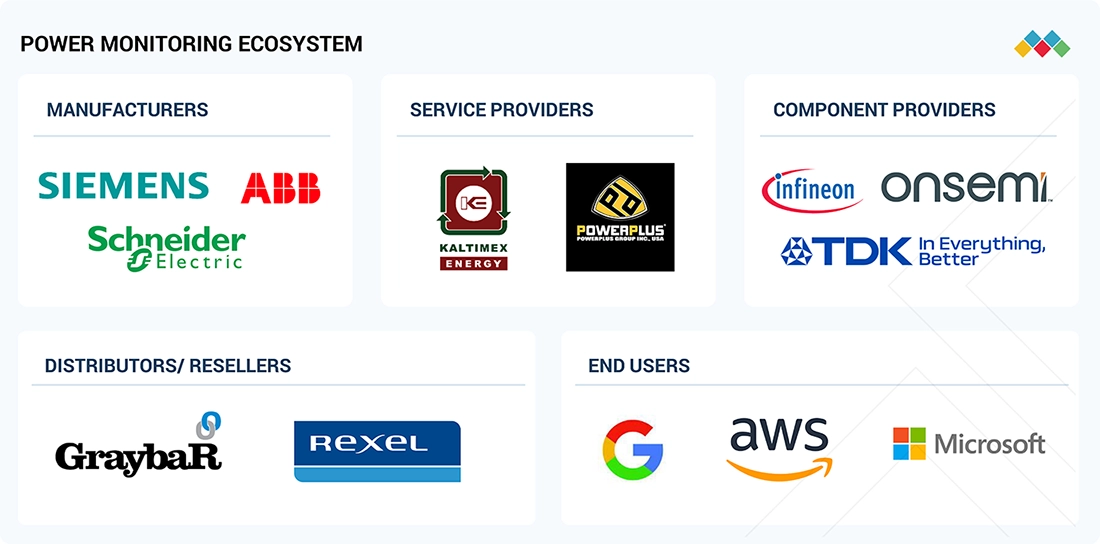
The market ecosystem comprises several key players: raw material and component suppliers, power quality system manufacturers, distributors, rental/service providers, end users, regulatory bodies, and standards organizations. The primary participants in this market include several key stakeholders that interact across the value chain, including component suppliers (sensors, current transformers, communication modules), hardware manufacturers, embedded software developers, full solution providers, system integrators, distributors, dealers, installers, after-sales service partners, end users, regulatory bodies, and standards organizations.
Logos and trademarks shown above are the property of their respective owners. Their use here is for informational and illustrative purposes only.
MARKET SEGMENTS
Source: Secondary Research, Interviews with Experts, MarketsandMarkets Analysis
Power Monitoring Market, by Component
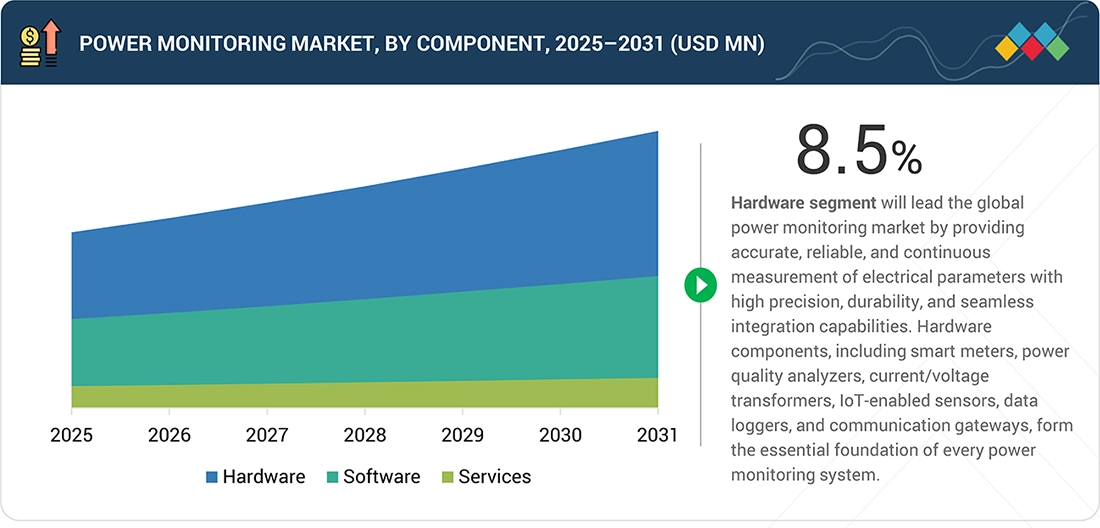
The hardware segment holds the largest share in the power monitoring market due to the robust demand for high-precision metering devices, power quality analyzers, current/voltage sensors, data acquisition units, and communication gateways. These hardware components are widely deployed in data centers, manufacturing facilities, commercial buildings, hospitals, and critical infrastructure, where continuous and accurate measurement of electrical parameters is essential. They offer superior reliability, long operational life, durability in harsh environments, and compliance with international standards.
Power Monitoring Market, by Application
Energy management leads the market due to the rising focus on energy efficiency, cost reduction, and sustainability. This application enables real-time tracking of energy consumption, load profiling, peak-demand management, power-factor correction, and detailed analytics. It is widely adopted across industrial plants, commercial buildings, data centers, and utilities to achieve significant energy savings, meet ISO 50001 standards, support carbon reduction targets, and ensure regulatory compliance.
Power Monitoring Market, by End User
The industrial sector holds the largest share of deployments, as these industries need reliable, high-accuracy solutions for voltage stability, frequency regulation, harmonic mitigation, and power quality in challenging environments. Sectors such as manufacturing, telecommunications, utilities, and data centers are increasingly investing in power monitoring systems. These investments help strengthen operational resilience, reduce costly downtime, protect valuable equipment, support continuous production, and manage energy demands amid rising electrification and grid instability.
REGION
Asia Pacific to be largest region in power monitoring market during forecast period
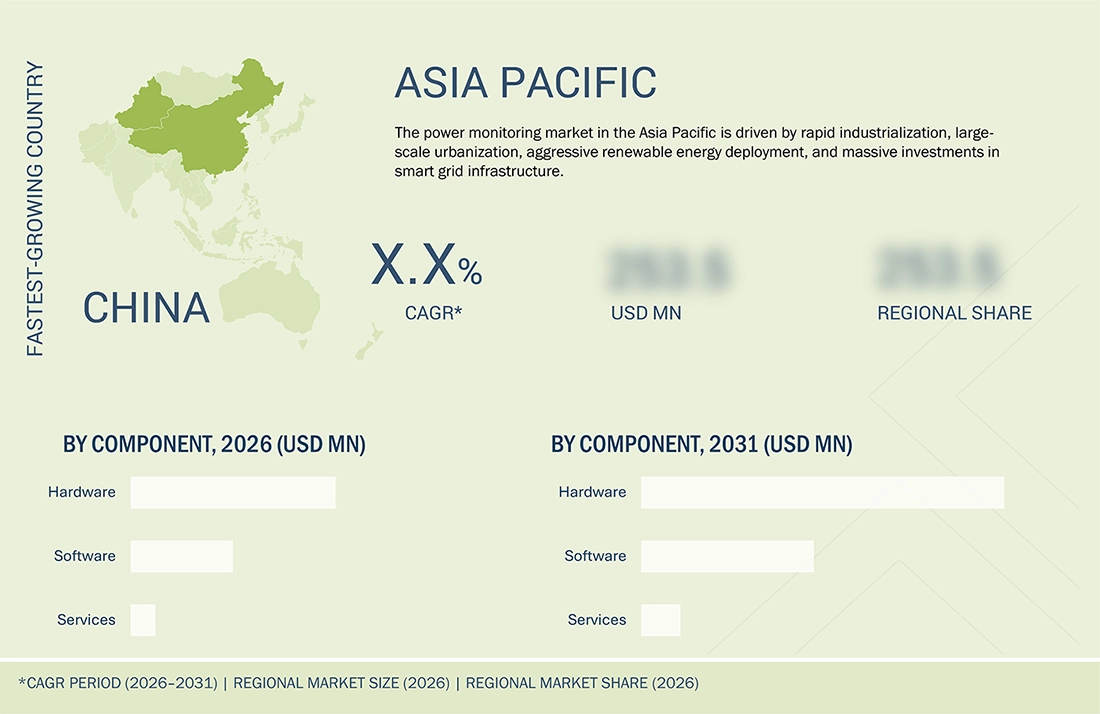
The Asia Pacific power monitoring market is projected to grow steadily and maintain the largest regional share over the forecast period, driven by rapid industrialization and urbanization, frequent grid instability, expanding infrastructure projects, and strong demand for real-time power quality monitoring and energy optimization solutions across manufacturing, data centers, commercial buildings, utilities, telecom, and renewable energy sectors in countries like China and India.
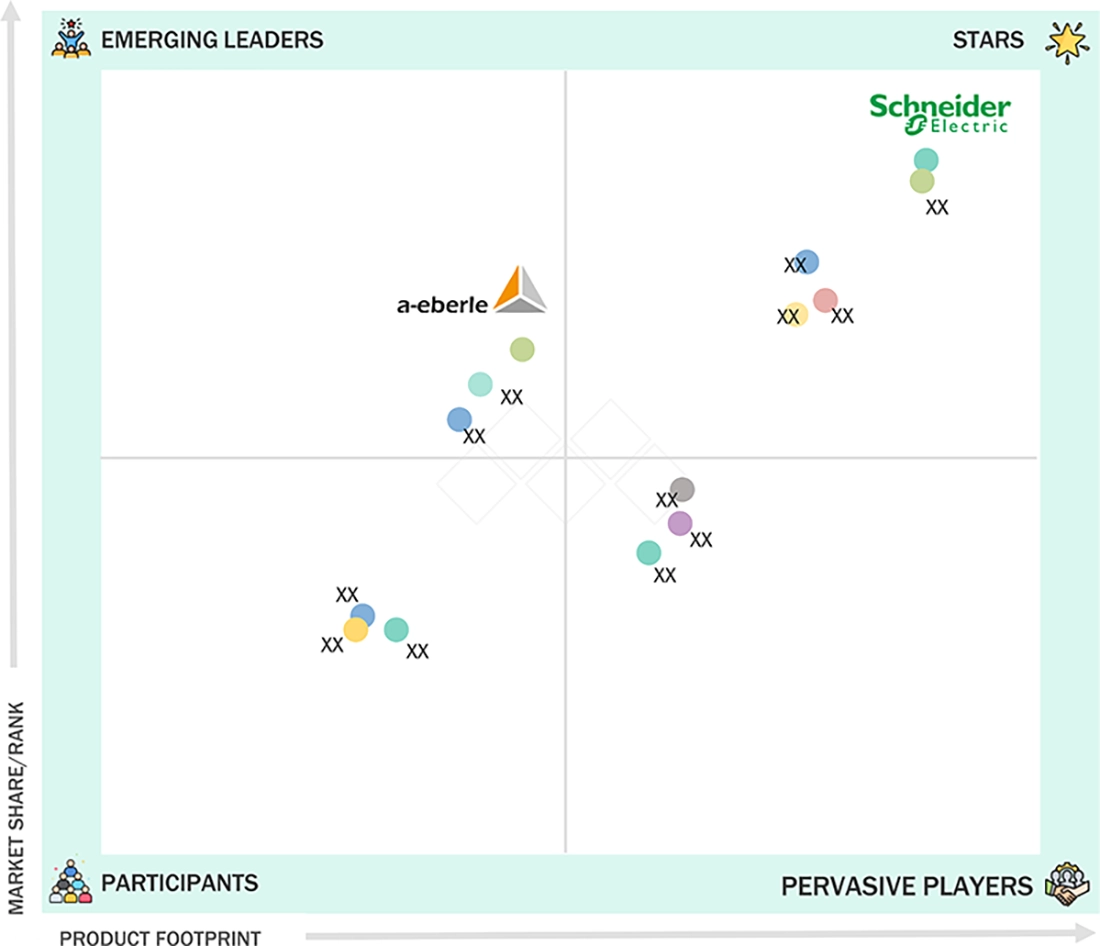
POWER MONITORING MARKET: COMPANY EVALUATION MATRIX
Schneider Electric is recognized as a leader in the power monitoring market, holding a prominent position in both market share and product range. The company sets itself apart with its extensive portfolio and strong presence across various industries, including utilities, data centers, and oil & gas. Eberle GmbH is also a key player in this market, known for its cost-effective solutions, adaptability, and commitment to efficiency in promoting sustainability goals.
Source: Secondary Research, Interviews with Experts, MarketsandMarkets Analysis
KEY MARKET PLAYERS
- Schneider Electric (France)
- Siemens (Germany)
- ABB (Switzerland)
- Eaton (US)
- Honeywell International (US)
- Eberle GmbH (Germany)
- Bender GmbH (Germany)
- Secure Meters (India)
- MIKRONIKA (Poland)
- Algodue Elettronica (Italy)
- KBR Energy Management (Germany)
- GMC-Instruments (Germany)
- Powerside (US)
- LUMEL (Poland)
- ELMEASURE (India)
- CARLO GAVAZZI (Switzerland)
- Schweitzer Engineering Laboratories (US)
- Janitza electronics (Germany)
- CIRCUTOR.COM (Spain)
- Accuenergy (Canada)
- Elspec (Israel)
- Socomec (France)
- SATEC GROUP (Israel)
- LOVATO ELECTRIC (Italy)
- Rayleigh Instruments (UK)
- JIANGSU ELECNOVA ELECTRIC (China)
- entes (Turkey)
- Unipower (Sweden)
- CET (China)
- Eastron Electronic (China)
- PQ Plus (Germany)
- CT LAB (South Africa)
- KMB Systems (Czech Republic)
MARKET SCOPE
| REPORT METRIC | DETAILS |
|---|---|
| Market Size in 2025 (Value) (Base Year) | USD 6.89 Billion |
| Market Size in 2026 (Value) (Estimated Year) | USD 7.41 Billion |
| Market Forecast in 2031 (Value) (Forecast Year) | USD 10.56 Billion |
| CAGR | 7.3% |
| Years Considered | 2022–2031 |
| Base Year | 2025 |
| Forecast Period | 2026–2031 |
| Units Considered | USD Billion |
| Report Coverage | Revenue Forecast, Company Ranking, Competitive Landscape, Growth Factors, and Trends |
| Segments Covered |
|
| Regions Covered | North America, Asia Pacific, Europe, the Middle East & Africa, Latin America |
WHAT IS IN IT FOR YOU: POWER MONITORING MARKET REPORT CONTENT GUIDE
DELIVERED CUSTOMIZATIONS
We have successfully delivered the following deep-dive customizations:
| CLIENT REQUEST | CUSTOMIZATION DELIVERED | VALUE ADDS |
|---|---|---|
| Client requirement for Asia Pacific region-specific report | Market sizing for Asia Pacific countries | Country-wise market attractiveness analysis, competitive landscape overview, and application scope of power quality systems in high-growth economies |
RECENT DEVELOPMENTS
- March 2026 : Eaton announced the availability of Brightlayer Energy, an AI-powered energy management and optimization system. It is designed to help building owners manage, optimize, and monetize energy investments, while meeting local regulatory requirements. The platform delivers real-time data analysis, forecasting, and automated control to help maximize benefits from building electrical infrastructure and distributed energy resources.
- March 2026 : ABB has been awarded additional large orders by VoltaGrid for data center power projects globally to support artificial intelligence growth. The agreement, signed in Houston at the global energy conference CERAWeek, extends the companies’ existing collaboration to deliver reliable, stable, and rapidly deployable power infrastructure for hyperscale AI workloads.
- January 2026 : Siemens acquired ASTER Technologies, a privately held market leader in printed circuit board assembly test verification and engineering software. This strategic move integrates ASTER’s advanced shift-left design for test functionality directly into Siemens' Xpedition software and Valor software, part of the Siemens Xcelerator portfolio of industry software, establishing an unparalleled, comprehensive portfolio for electronic systems design.
- December 2024 : Socomec announced a strategic partnership with Boxy Private Limited, a subsidiary of the Venora Group. This collaboration aims to strengthen power metering and monitoring solutions in the Sri Lankan market, aligning with the region’s growing focus on sustainability and efficient energy management.
Table of Contents
 Exclusive indicates content/data unique to MarketsandMarkets and not available with any competitors.
Methodology
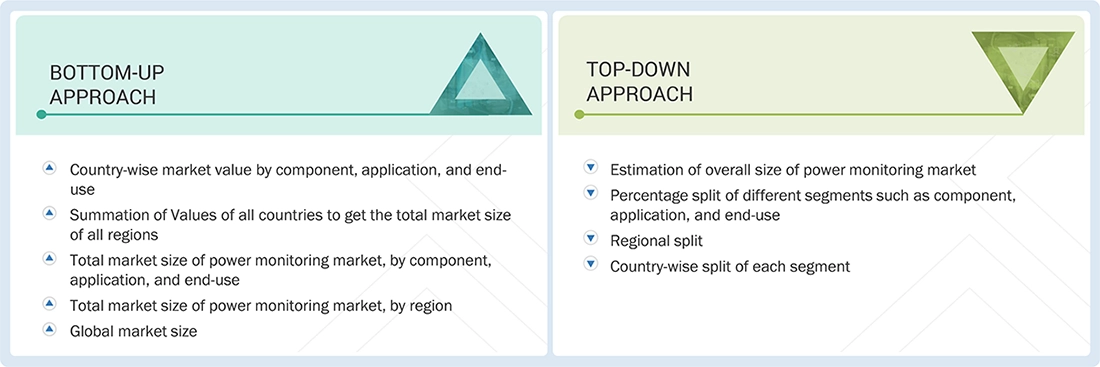
The study involved major activities in estimating the current size of the power monitoring market. Exhaustive secondary research was done to collect information on the peer and parent markets. The next step was to validate these findings, assumptions, and sizing with industry experts across the value chain through primary research. Both top-down and bottom-up approaches were employed to estimate the complete market size. Thereafter, market breakdown and data triangulation were used to estimate the market size of the segments and subsegments.
Secondary Research
This research study on the power monitoring market involved the use of extensive secondary sources, directories, and databases, such as D&B Hoovers, Bloomberg, Businessweek, Factiva, International Energy Agency, and BP Statistical Review of World Energy, to identify and collect valuable information for a technical, market-oriented, and commercial study of the global power monitoring market. The other secondary sources included annual reports, press releases, and investor presentations of companies, white papers, certified publications, articles by recognized authors, manufacturer associations, trade directories, and databases.
Primary Research
The power monitoring market comprises stakeholders such as metering device manufacturers, power quality analyzer suppliers, software platform providers, system integrators, communication technology providers, and after-sales service partners across the value chain. On the demand side, the market is driven by the growing adoption of power monitoring solutions across key sectors, including industrial facilities, data centers, commercial buildings, utilities, healthcare institutions, telecommunications, renewable energy plants, and critical infrastructure projects. On the supply side, manufacturers and technology providers are seeing increasing opportunities through contracts with utilities and industrial end-users, infrastructure developers, as well as through strategic initiatives such as new product launches, agreements, acquisitions, investments, and partnerships, among major players, to expand their market presence and strengthen technological capabilities. Various primary sources from both the supply and demand sides of the market were interviewed to obtain qualitative and quantitative information. The following is the breakdown of primary respondents:
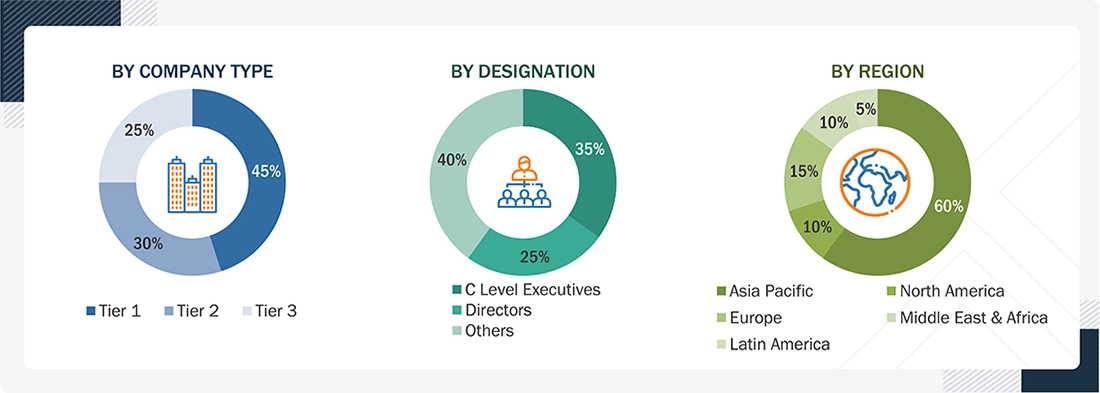
Note: Others include sales managers, engineers, and regional managers.
The tiers of the companies are defined based on their total revenue as of 2025: Tier 1: >USD 1 billion, Tier 2: USD 500 million–1 billion, and Tier 3: <USD 500 million.
To know about the assumptions considered for the study, download the pdf brochure
Market Size Estimation
Both top-down and bottom-up approaches were employed to estimate and validate the size of the power monitoring market and its dependent submarkets. The key players in the market were identified through secondary research, and their market share in the respective regions was determined through a combination of primary and secondary research. The research methodology involves analyzing the annual and financial reports of leading market players and conducting interviews with industry experts, including chief executive officers, vice presidents, directors, sales managers, and marketing executives, to gather key quantitative and qualitative insights into the power monitoring market.
Data Triangulation
After determining the overall market size through the estimation process explained above, the total market has been divided into several segments and subsegments. To complete the overall market engineering process and obtain exact statistics for all segments and subsegments, data triangulation and market breakdown have been employed where applicable. The data has been triangulated by studying various factors and trends from both the demand and supply sides. Additionally, the market has been validated using both top-down and bottom-up approaches.
Market Definition
A power monitoring system comprises hardware, software, and services that enable real-time measurement, monitoring, and analysis of electrical parameters such as power consumption, voltage, current, frequency, and harmonics, to ensure reliability and operational visibility. Data is collected from devices such as energy meters, power quality analyzers, branch circuit monitoring systems, and embedded monitoring units to assess power supply conditions and infrastructure performance. For this study, the market includes monitoring, data acquisition, and analytical visibility solutions deployed across industries, data centers, utilities, renewables, public infrastructure, and EV charging.
Key Stakeholders
- Government and research organizations
- Institutional investors and investment banks
- Environmental research institutes
- Consulting companies (energy & power sector)
- Raw material and component manufacturers
- Renewable energy companies
- Manufacturers’ associations
- Process and power industry associations
- Refinery operators
- Manufacturing sector
- Energy efficiency consultants
- Energy utilities
- Investors/shareholders
- Process industries and power and energy associations
- Public and private operators of power plants
Report Objectives
- To describe and forecast the power monitoring market, by component, application, and end use, in terms of value
- To describe and forecast the power monitoring market for various segments with respect to five main regions: North America, Europe, Asia Pacific, Latin America, and the Middle East & Africa, along with their country-level analysis, in terms of value
- To describe and forecast the power monitoring market, by component and region, in terms of volume
- To provide detailed information regarding the major drivers, restraints, opportunities, and challenges influencing the growth of the power monitoring market
- To analyze market opportunities for stakeholders and provide a detailed competitive landscape for market leaders
- To strategically analyze micromarkets with regard to individual growth trends, prospects, and contributions to the total market
- To strategically profile the key players and comprehensively analyze their market shares and core competencies
- To provide a detailed overview of the unmet needs and white spaces, interconnected markets and cross-sector opportunities, strategic moves by tier-1/2/3 players, power monitoring value chain analysis, ecosystem analysis, key conferences and events, key stakeholders and buying criteria, patent analysis, trends/disruptions impacting customer business, trade analysis, tariff analysis, investment and funding scenario, technology analysis, technology/product roadmap, case study analysis, regulations, future applications, macroeconomic outlook, pricing analysis, Porter’s five forces analysis, sustainability initiatives, adoption barriers and internal challenges, unmet needs of various verticals, market profitability, impact of regulatory policies on sustainability initiatives, certifications, labeling, and eco-standards, decision making process, impact of gen AI, and the 2025 US tariff impact
- To analyze competitive developments, such as agreements, collaborations, investments, partnerships, product launches, and acquisitions, in the market
Available customizations:
MarketsandMarkets offers customizations tailored to the specific needs of companies using the given market data.
The following customization options are available for the report:
Product Analysis
- Product matrix, which gives a detailed comparison of the product portfolio of each company
Regional Analysis
- Further breakdown of the power monitoring market, by country
Company Information
- Detailed analysis and profiling of additional market players (up to five)
Key Questions Addressed by the Report
What is the current market size of the Power Monitoring Market, and how is it expected to grow?
The Power Monitoring Market is projected to grow from USD 7.41 billion in 2026 to USD 10.56 billion by 2031, at a CAGR of 7.3%.
What are the key factors driving the Power Monitoring Market?
Growth is driven by increasing demand for real-time power quality monitoring, energy optimization, smart grids, and industrial automation.
Which segment holds the largest share of the Power Monitoring Market?
The industrial end-user segment holds the largest market share due to rising demand for reliable power and energy management.
Which region dominates the Power Monitoring Market?
Asia Pacific dominates the market, accounting for 40.9% of the global market in 2026, driven by rapid industrialization and grid modernization.
Who are the key players in the Power Monitoring Market?
Leading companies include Schneider Electric, Siemens, ABB, Eaton, and Honeywell International Inc.


Personalize This Research
- Triangulate with your Own Data
- Get Data as per your Format and Definition
- Gain a Deeper Dive on a Specific Application, Geography, Customer or Competitor
- Any level of Personalization
Let Us Help You
- What are the Known and Unknown Adjacencies Impacting the Power Monitoring Market
- What will your New Revenue Sources be?
- Who will be your Top Customer; what will make them switch?
- Defend your Market Share or Win Competitors
- Get a Scorecard for Target Partners

Custom Market Research Services
We Will Customise The Research For You, In Case The Report Listed Above Does Not Meet With Your Requirements
Get 10% Free CustomisationTESTIMONIALS

Kimberly Murphy
GLOBAL MARKETING DIRECTOR
Bently Nevada,
Leading Condition Monitoring & Asset Protectionwww.bakerhughesds.com/bently-nevada

MarketsandMarkets™ showed consistent rigor for success and relentlessly worked with Bently Nevada stakeholders to positively impact go-to-market strategy. Their proactiveness and flexibility has been instrumental in achieving the objectives to grow our sales pipeline in key industrial markets.

DARRICK HUEBER
Business Development Leader
Nexus Controls LLC,
Leading Manufacturer of Automation System & Electrical Panelswww.bakerhughesds.com/nexus-controls

We partnered with MarketsandMarkets to expand our business further by tapping into new industrial segments. It was critical for us to gather crucial business insights about specific markets to achieve this goal. MarketsandMarkets engagement model and client services helped us provide those insights, it was really impressive and valuable for my business. The team was extremely flexible and helpful.

Mike Schoff
Global Industrial Commercial Strategy Leader
Nexus Controls LLC
Leading Manufacturer of Automation System & Electrical Panelswww.bakerhughesds.com/nexus-controls
We consulted MarketsandMarkets for potential Partner Identification. Overall, it was a good experience. The insights provided through interviews conducted by the team helped us put together the questionnaire required for discussion with the selected partners. Their ability to provide insights through interviews with customers in a timely manner was quite impressive.
- China Power Monitoring Market
- India Power Monitoring Market
- Japan Power Monitoring Market
- South Korea Power Monitoring Market
- Canada Power Monitoring Market
- US Power Monitoring Market
- Germany Power Monitoring Market
- UK Power Monitoring Market
- France Power Monitoring Market
- Italy Power Monitoring Market
- Spain Power Monitoring Market
- Austria Power Monitoring Market
- Saudi Arabia Power Monitoring Market
- UAE Power Monitoring Market
- South Africa Power Monitoring Market
- Egypt Power Monitoring Market
- Brazil Power Monitoring Market
- Argentina Power Monitoring Market
- Mexico Power Monitoring Market
- Nordics Power Monitoring Market
- Rest Of Europe Power Monitoring Market
- Rest Of Asia Pacific Power Monitoring Market






Growth opportunities and latent adjacency in Power Monitoring Market