Rotary and RF Rotary Joints Market Size, Share & Growth

Rotary and RF Rotary Joints Market Size, Share, Trends by Rotary Joints Type (Hydraulic, Pneumatic, Slip Rings, Fiber Optic), Channel (Single Passage, Multi Passage), RF Rotary Joints Type (Coaxial, Waveguide), Application, Industry and Region - Global Forecast to 2029




OVERVIEW
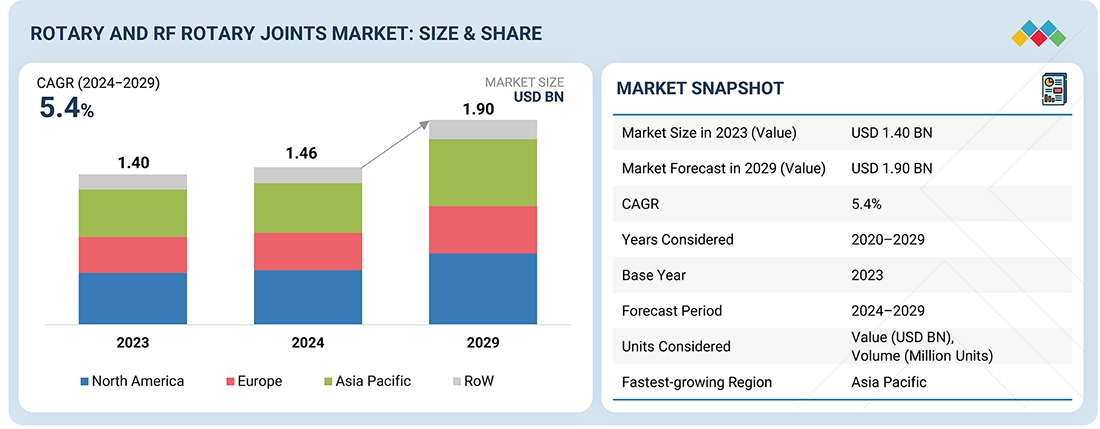
Source: Secondary Research, Interviews with Experts, MarketsandMarkets Analysis
The rotary and RF rotary joints market is projected to reach USD 1.90 billion by 2029 from USD 1.46 billion in 2024, at a CAGR of 5.4% from 2024 to 2029. The market for rotary joints and RF rotary joints is expanding steadily as industries shift toward high-speed automation, precision motion systems, and advanced communication platforms. Traditional rotary joints support the transfer of fluids, air, steam, and hydraulics between stationary and rotating machinery, and their demand is rising with the rapid growth of robotics, packaging, semiconductor manufacturing, wind turbines, construction equipment, and high-performance industrial machinery.
KEY TAKEAWAYS
-
By RegionThe North America in rotary and RF roatry joints Market market dominated with a share of 34.5% in 2023.
-
By TypeBy type, the RF rotary joints segment is expected to register the highest CAGR of 7.4%.
-
By Rotary Joint TypeBy rotary joint type, the fiber optic rotary joint segment is projected to grow at the fastest rate from 2024 to 2029.
-
By RF Rotary Joint TypeBy RF rotary joint type, the coaxial segment is expected to dominate the market.
-
By rotary joints industryBy rotary joints industry, the industrial automation segment will grow the fastest during the forecast period.
-
Competitive LandscapeMoog Inc., Deublin Inc., Columbus Mckinnon Corporation, and Kadant Inc were identified as some of the star players in the ocupancy sensor market (global), given their strong market share and product footprint.
-
Competitive LandscapeFarview Microwave, Sofant Technologies, Carbon Rotofluid Pvt Ltd., among others, have distinguished themselves among startups and SMEs by securing strong footholds in specialized niche areas, underscoring their potential as emerging market leaders
Rotary and RF rotary joints are witnessing steady growth due to the rising adoption of high-speed automation, advanced radar and satellite communication systems, and precision industrial machinery, which require reliable transfer of fluid, power, and RF signals between stationary and rotating interfaces.
TRENDS & DISRUPTIONS IMPACTING CUSTOMERS' CUSTOMERS
The rotary and RF rotary joints industry is shaped by growing trends such as the shift toward high-frequency, multi-channel designs, increasing demand for compact and lightweight joints for UAVs and aerospace, and rising adoption of hybrid solutions that integrate electrical, optical, and RF transmission in a single assembly. Industry 4.0 automation, robotics, and expanding LEO satellite constellations further accelerate uptake. At the same time, the market faces disruptions from phased-array antennas that reduce mechanical rotation needs, wireless data and power transfer that can replace slip-ring functions, additive manufacturing enabling faster customized production, and the emergence of maintenance-free magnetic couplings and ultra-miniaturized alternatives for small platforms, reshaping the competitive landscape.

Source: Secondary Research, Interviews with Experts, MarketsandMarkets Analysis
MARKET DYNAMICS

Level
-
Use of advanced radar and satellite communication systems

-
Increasing demand for single-passage and multi-passage rotary joints


Level
-
Mixing of rotary joints from different manufacturers on single piece of equipment cause leakage problems

-
Stringent aerospace and defense qualification standards,


Level
-
Expanding satcom communication infrastructure

-
Incorporation of rotary joints into robotics


Level
-
Mechanical wear due to continuous rotation and exposure to harsh operating conditions issues

-
Vulnerability to vibration, shock, and extreme temperatures,

Source: Secondary Research, Interviews with Experts, MarketsandMarkets Analysis
Driver: Use of advanced radar and satellite communication systems
The growing use of advanced radar and satellite communication systems is a major driver for the rotary and RF rotary joints market, as these platforms need reliable 360° continuous rotation while maintaining low-loss signal transmission. Modern airborne, naval, and ground-based radars, along with fast-expanding LEO/MEO satellite networks, demand high-frequency, multi-channel RF rotary joints to support higher data rates and broader bandwidths. As defense forces upgrade surveillance systems and commercial SATCOM expands globally, the need for robust, compact, and high-performance rotary and RF rotary joints continues to surge.
Restraint: Mixing of rotary joints from different manufacturers on single piece of equipment cause leakage problems
A major restraint in the market is the integration of mechanical rotary joints and RF rotary joints from different manufacturers within a single piece of equipment, which often leads to compatibility mismatches. Variations in sealing design, pressure tolerance, material expansion, and mechanical alignment can cause fluid or air leakage in rotary unions and signal degradation in RF joints. This increases system failure risk, raises maintenance needs, and discourages end users from mixing components, limiting flexibility in equipment design..
Opportunity: Expanding satcom communication infrastructure
The rapid expansion of global SATCOM infrastructure—including LEO/MEO constellations, ground station upgrades, in-flight connectivity, maritime broadband, and 5G-satellite integration—is creating a significant opportunity for rotary and RF rotary joint manufacturers. These systems require high-frequency, low-loss, continuous-rotation joints for tracking antennas and communication terminals. Growing government and commercial investments make SATCOM one of the strongest long-term growth opportunities in the market.
Challenge: Mechanical wear due to continuous rotation and exposure to harsh operating conditions issues
Rotary and RF rotary joints face the challenge of mechanical wear caused by continuous rotation, vibration, shock, and exposure to harsh environments such as dust, moisture, saltwater, and extreme temperatures. Over time, this leads to degradation of seals, bearings, and RF pathways, increasing failure rates and requiring frequent maintenance. Ensuring long-term durability in these demanding operating conditions remains a major engineering hurdle for manufacturers..
ROTARY AND RF ROTARY JOINTS MARKET SIZE, SHARE & GROWTH: COMMERCIAL USE CASES ACROSS INDUSTRIES
| COMPANY | USE CASE DESCRIPTION | BENEFITS |
|---|---|---|
 |
Integration of high-precision rotary joints and RF rotary joints into aerospace, defense radar platforms, and satellite communication systems requiring continuous 360° rotation with low-loss signal transfer. | Ensures reliable data and power transfer in mission-critical environments, enhances radar accuracy, improves antenna performance, and supports long-term operational stability. |
 |
Deployment of advanced rotary unions for industrial machinery, robotics, semiconductor tools, and high-speed manufacturing lines requiring efficient transfer of air, coolant, hydraulic media, and steam | Improves equipment uptime, increases thermal and fluid efficiency, reduces leakage, and enhances productivity in automated and high-speed production environments.. |
 |
Use of heavy-duty rotary joints in material-handling equipment, lifting systems, and automated hoists to support rotational movement while transferring hydraulic power. | Enhances operational safety, supports smooth rotational motion, reduces mechanical stress, and improves durability in industrial and warehouse systems. |
 |
Integration of engineered rotary joints for paper manufacturing, chemical processing, and energy systems requiring high-temperature steam transfer and multi-pass fluid handling | Improves heat-transfer efficiency, extends lifecycle of rotating machinery, minimizes downtime, and increases operational performance of process equipment. |
 |
Use of custom rotary-sealing joints and high-pressure rotary unions for oil & gas tools, defense platforms, and extreme-environment industrial systems.. | Provides enhanced sealing reliability, resists harsh conditions, reduces leakage risk, and supports stable performance in high-pressure, high-speed rotating applications.. |
Logos and trademarks shown above are the property of their respective owners. Their use here is for informational and illustrative purposes only.
MARKET ECOSYSTEM
The ecosystem includes raw material providers, manufacturers, distributors, and end users—with raw material providers supplying precision metals, RF substrates, seals, and bearings; manufacturers designing and assembling rotary and RF rotary joints with required mechanical and RF tolerances; distributors enabling global reach through specialized industrial, aerospace, and defense supply channels; and end users such as radar integrators, satellite ground stations, robotics OEMs, industrial automation companies, and defense agencies deploying these components in mission-critical rotating platforms.

Logos and trademarks shown above are the property of their respective owners. Their use here is for informational and illustrative purposes only.
MARKET SEGMENTS
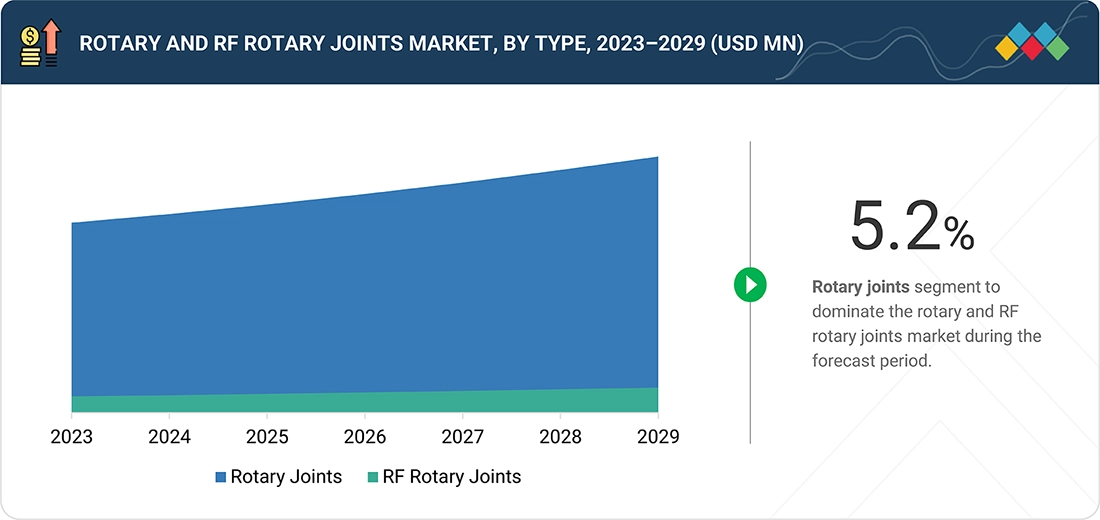
Source: Secondary Research, Interviews with Experts, MarketsandMarkets Analysis
Rotary and RF Rotary Joints Market, By Type
Rotary joints dominate because they are essential for transferring fluids, air, and hydraulics between stationary and rotating machinery without interrupting operation. Their robust design supports high pressures, high speeds, and harsh industrial environments, making them suitable for a wide range of equipment. They are easier to integrate, cost-effective, and widely standardized across automation, packaging, and manufacturing systems. Their versatility across multiple industries keeps their adoption significantly higher than RF rotary joints.
Rotary and RF Rotary Joints Market, By Rotary Joints Type
Slip rings dominate due to their ability to provide reliable, continuous 360-degree electrical power and signal transmission between stationary and rotating components across a wide range of industrial, automation, and defense applications. Their simple construction, lower cost, and easier integration compared to RF or optical alternatives make them the preferred choice for motors, packaging equipment, wind turbines, and rotating platforms. Slip rings also support high-current and multi-channel configurations, offering flexibility for diverse machinery. Their widespread availability, mature supply chain, and proven performance reinforce their market dominance..
Rotary and RF Rotary Joints Market, By Rotary Joints Industry
Industrial automation dominates in rotary joints due to the need for reliable, continuous transfer of fluids, air, and hydraulic media between stationary and rotating components in high-speed machinery. Automated production lines, robotic arms, CNC machines, and packaging equipment all rely on rotary joints to maintain uninterrupted motion, precision, and efficiency. Their ability to withstand high pressures, repetitive cycles, and harsh operating environments makes them essential for uptime and productivity. As factories adopt Industry 4.0 and increase automation density, demand for durable, maintenance-efficient rotary joints continues to surge.
REGION
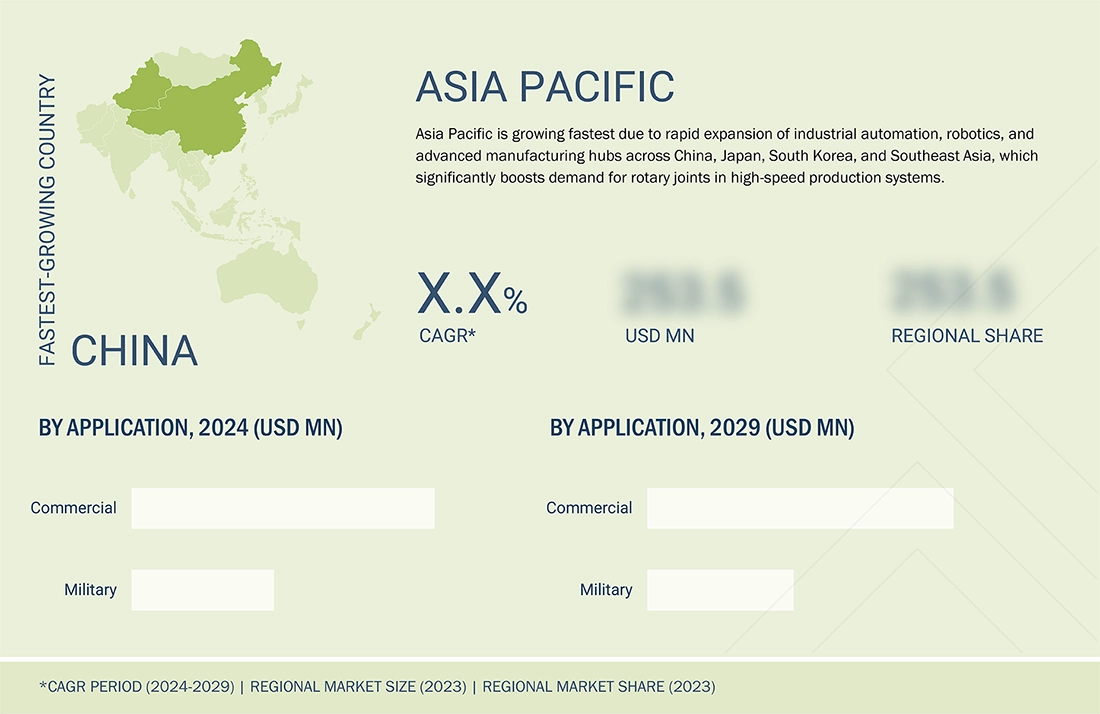
Asia Pacific to be fastest-growing region in global rotary and RF rotary joints market during forecast period
Asia Pacific is growing fastest due to the rapid expansion of manufacturing automation, electronics production, and aerospace & defense modernization across China, India, South Korea, and Japan. The region’s strong investments in LEO satellite programs, radar upgrades, and 5G/6G communication infrastructure are boosting demand for RF rotary joints. Additionally, APAC's booming industrial machinery, robotics, and renewable energy sectors—especially wind turbines—are driving large-scale deployment of mechanical rotary joints. The presence of cost-competitive suppliers and strong government-backed industrial programs amplifies market growth.
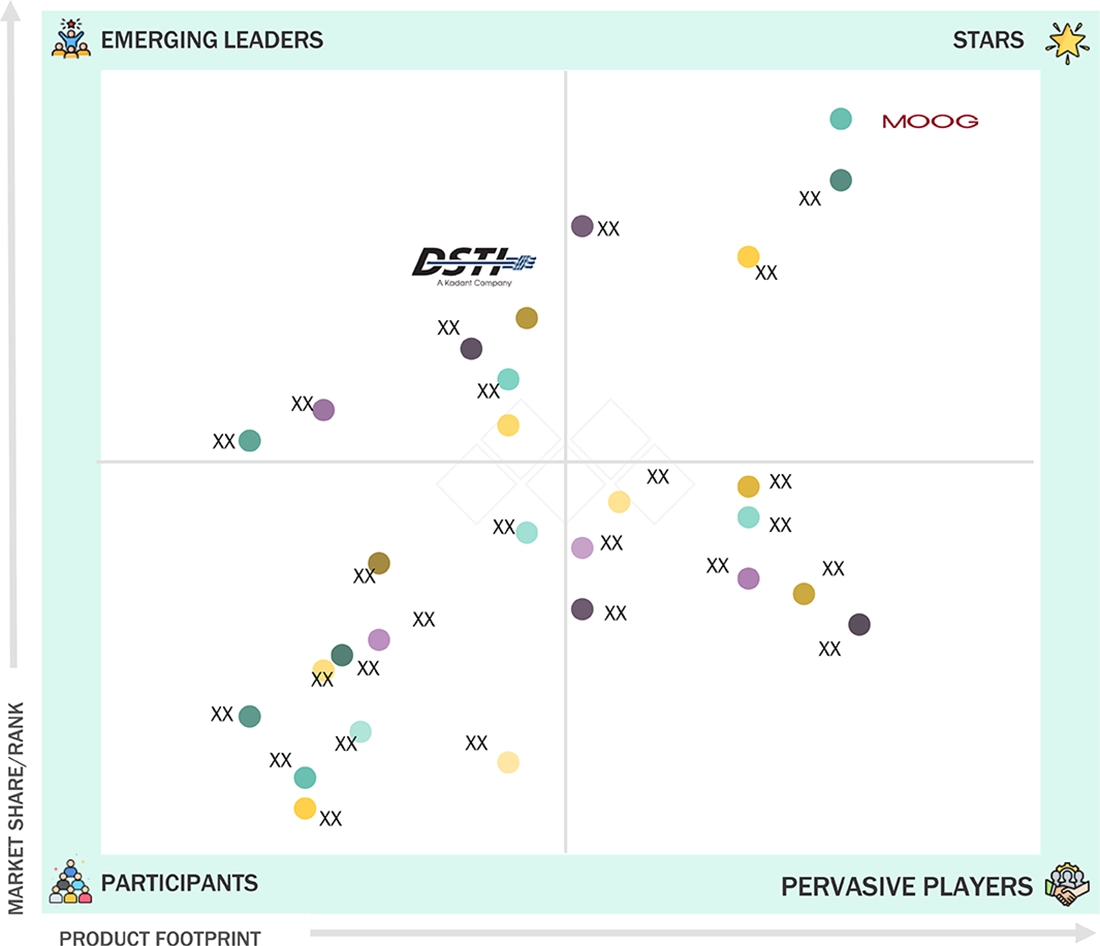
ROTARY AND RF ROTARY JOINTS MARKET SIZE, SHARE & GROWTH: COMPANY EVALUATION MATRIX
In the rotary and RF rotary joints companies matrix, Moog Inc (Star) leads with its extensive global presence and highly reliable rotary and RF rotary joint solutions that support advanced radar, SATCOM, aerospace, and industrial automation platforms. Its engineering depth, precision performance, and proven durability position it strongly in high-demand mission-critical applications. Dynamic Sealing Technologies (Emerging Leader) is rapidly gaining momentum with its innovative sealing and rotary union technologies designed for harsh environments, delivering leak-free performance and longer service life for industrial and energy sectors. While Moog maintains a clear lead, Dynamic Sealing Technologies shows strong potential to move toward the leaders’ quadrant as demand grows for robust, maintenance-optimized rotary joint solutions.
Source: Secondary Research, Interviews with Experts, MarketsandMarkets Analysis
KEY MARKET PLAYERS
- Moog Inc. (US)
- Kadant Inc. (US)
- Columbus McKinnon Corporation (US)
- DEUBLIN Company (US)
- Dynamic Sealing Technologies, Inc. (US)
- MacArtney Underwater Technology (Denmark)
- Cobham France SAS (France)
- Pasternack Enterprises, Inc. (US)
- Spinner GmbH (Germany)
- Spectrum Control (US)
MARKET SCOPE
| REPORT METRIC | DETAILS |
|---|---|
| Market Size in 2023 (Value) | USD 1.40 Billion |
| Market Forecast in 2029 (Value) | USD 1.90 Billion |
| Growth Rate | CAGR of 5.4% from 2024-2029 |
| Years Considered | 2020-2029 |
| Base Year | 2023 |
| Forecast Period | 2024-2029 |
| Units Considered | Value (USD Million/Billion), Volume (Million Units) |
| Report Coverage | Revenue forecast, company ranking, competitive landscape, growth factors, and trends |
| Segments Covered |
|
| Regions Covered | North America, Asia Pacific, Europe, South America, Middle East & Africa |
WHAT IS IN IT FOR YOU: ROTARY AND RF ROTARY JOINTS MARKET SIZE, SHARE & GROWTH REPORT CONTENT GUIDE
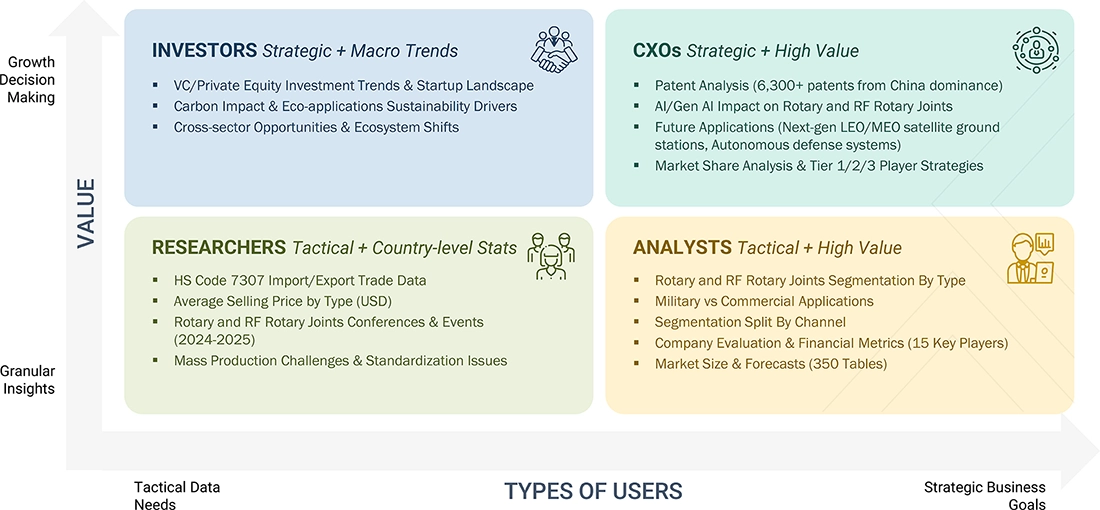
DELIVERED CUSTOMIZATIONS
We have successfully delivered the following deep-dive customizations:
| CLIENT REQUEST | CUSTOMIZATION DELIVERED | VALUE ADDS |
|---|---|---|
| Leading Defense & Aerospace OEM | Benchmarking of RF rotary joints across frequency bands (L-, S-, X-, Ku-, Ka-band), multi-channel performance, low-loss designs, and ruggedization for airborne/marine radars. | Enables selection of high-reliability joints that enhance radar accuracy, reduce signal loss, and improve mission readiness |
| Satellite Ground-Station & SATCOM Equipment Provider |
|
|
| Industrial Automation & Robotics Manufacturer |
|
Improves reliability of robotic/automated systems, reduces leakage and maintenance downtime, and supports higher cycle speeds |
RECENT DEVELOPMENTS
- June 2024 : Kadant Inc. completed the acquisition of Dynamic Sealing Technologies Inc. The acquisition, subject to customary adjustments, was financed through borrowings under Kadant's revolving credit facility. DSTI specializes in engineered fluid sealing and transfer solutions for rotating applications. DSTI's custom-engineered rotary unions and related products align well with Kadant's existing product portfolio, enhancing Kadant's presence in adjacent industries such as Aerospace and Semiconductor
- March 2024 : HOERBIGER, through its subsidiary DEUBLIN Company, enhanced its global leadership in rotary unions and slip rings with the acquisition of Diamond-Roltran, LLC, a prominent manufacturer of maintenance-free slip rings known as Roll-Rings. This acquisition strengthens its market presence in the slip rings segment.
- May 2023 : Columbus McKinnon Corporation acquired montratec GmbH, which is a leading automation solutions company. This acquisition advances Columbus McKinnon Corporation's strategy to expand its presence in attractive markets such as life sciences, semiconductors, and electronics
Table of Contents
 Exclusive indicates content/data unique to MarketsandMarkets and not available with any competitors.
Methodology
The study used four major activities to estimate the market size of the rotary and RF rotary joints. Exhaustive secondary research was conducted to gather information on the market and its peer and parent markets. The next step was to validate these findings, assumptions, and sizing with industry experts across the value chain through primary research. Both top-down and bottom-up approaches were employed to estimate the total market size. Finally, market breakdown and data triangulation methods were utilized to estimate the market size for different segments and subsegments.
Secondary Research
In the secondary research process, various sources were referred to identify and collect information on the rotary and RF rotary joints market for this study. Secondary sources for this research study include corporate filings (such as annual reports, investor presentations, and financial statements), trade, business, and professional associations, white papers, certified publications, articles by recognized authors, directories, and databases. The secondary data was collected and analyzed to determine the overall market size, further validated through primary research.
List of key secondary sources
|
SOURCE NAME |
WebLink |
|
Multidisciplinary Digital Publishing Institute (MDPI) |
https://www.mdpi.com/ |
|
Institute of Electrical and Electronics Engineers (IEEE) |
https://www.ieee.org/ |
|
Texas A&M University |
https://www.tamu.edu/ |
|
University of Victoria (UVic) |
https://www.uvic.ca/ |
Primary Research
Primary interviews were conducted to gather insights on market statistics, revenue data, market breakdowns, size estimations, and forecasting. Additionally, primary research was used to comprehend the various technology, application, vertical, and regional trends. Interviews with stakeholders from the demand side, including CIOs, CTOs, CSOs, and customers/end-users using rotary and RF rotary joints, were also conducted to understand their perspective on suppliers, products, component providers, and their current and future use of rotary and RF rotary joints, which will impact the overall market. Several primary interviews were conducted across major countries of North America, Europe, Asia Pacific, the Middle East & Africa, and Latin America.

To know about the assumptions considered for the study, download the pdf brochure
Market Size Estimation
To estimate and validate the size of the rotary and RF rotary joints market size and its submarkets, both top-down and bottom-up approaches were utilized. Secondary research was conducted to identify the key players in the market, and primary and secondary research was used to determine their market share in specific regions. The entire process involved studying top players' annual and financial reports and conducting extensive interviews with industry leaders such as CEOs, VPs, directors, and marketing executives. Secondary sources were used to determine all percentage shares and breakdowns, which were verified through primary sources. All parameters that could impact the markets covered in this research study were accounted for, analyzed in detail, verified through primary research, and consolidated to obtain the final quantitative and qualitative data.
Global Rotary and RF Rotary Joints Market Size: Botton Up Approach and Top Down
- Companies offering rotary and RF rotary joints have been identified, and their mapping with respect to different parameters, such as channel, type, application, and industry has been carried out.
- The market size has been estimated based on the demand for different rotary and RF rotary joints for different applications. The anticipated change in demand for rotary and RF rotary joints offered by these companies and company revenues have been analyzed and estimated.
- Primary research has been conducted with a few major players operating in the rotary and RF rotary joints market to validate the global market size.
- The size of the rotary and RF rotary joints market has been validated through secondary sources, which include the International Trade Centre (ITC), the World Trade Organization, and the World Economic Forum.
- The CAGR of the rotary and RF rotary joints market size has been calculated considering the historical and future market trends by understanding the adoption rate of rotary and RF rotary joints for different applications.
- The estimates at every level have been verified and cross-checked through discussions with key opinion leaders, such as corporate executives (CXOs), directors, and sales heads, and with the domain experts in MarketsandMarkets.
- Various paid and unpaid information sources, such as company websites, annual reports, press releases, research journals, magazines, white papers, and databases, have also been studied.
The top-down approach has been used to estimate and validate the total size of the rotary and RF rotary joints market.
- Focusing initially on R&D investments and expenditures being made in the ecosystem of the rotary and RF rotary joints market size ; further splitting the market on the basis of rotary joint channel, rotary joint type, RF rotary joint type, RF rotary joint application, rotary joint industry and region and listing key developments
- Identifying leading players in the rotary and RF rotary joints market size through secondary research and verifying them through brief discussions with industry experts
- Analyzing revenue, product mix, geographic presence, and key applications for which all identified players serve products to estimate and arrive at percentage splits for all key segments
- Discussing splits with industry experts to validate the information and identify key growth pockets across all key segments
- Breaking down the total market based on verified splits and key growth pockets across all segments.

Data Triangulation
Once the overall size of the rotary and RF rotary joints market size was determined using the methods described above, it was divided into multiple segments and subsegments. Market engineering was performed for each segment and subsegment using market breakdown and data triangulation methods, as applicable, to obtain accurate statistics. To triangulate the data, various factors and trends from the demand and supply sides were studied. The market was validated using both top-down and bottom-up approaches.
Market Definition
A rotary joint, otherwise designated as a rotary union or rotating union, is a type of rotary sealing device interconnecting rotating equipment to stationary piping for the transfer of steam, water, thermal oil, coolant, hydraulic oil, air, and other media. While rotary joints come in a wide range of shapes, sizes, and configurations, all of them comprise four fundamental components: a housing unit, a shaft, mechanical bearings, and a seal. RF Rotary Joints are considered to be the most essential components in systems that require transmission of RF signals between stationary and rotating parts. The importance of these electromechanical devices has especially been realized since very early days of RF and microwave technology, particularly within radar systems.
Key Stakeholders
- Original equipment manufacturers (OEMs)
- Raw material suppliers
- Technology investors
- Electronic hardware equipment manufacturers
- Research organizations and consulting companies
- Government bodies such as regulatory authorities and policymakers
- Venture capitalists and private equity firms
- Associations, organizations, and alliances related to rotary and RF rotary joints
Report Objectives
- To describe and forecast the rotary and RF rotary joints market size , by rotary joint channel, rotary joint type, RF rotary joint type, RF rotary joint application, rotary joint industry and region, in terms of value
- To describe and forecast the market for various segments across four central regions, namely, North America, Europe, Asia Pacific, and Rest of the World (RoW), in terms of value
- To strategically analyze the micro markets with regard to the individual growth trends, prospects, and contribution to the market
- To provide detailed information regarding drivers, restraints, opportunities, and challenges influencing the growth of the market
- To analyze opportunities for stakeholders by identifying high-growth segments in the market
- To provide a detailed overview of the value chain
- To strategically analyze the ecosystem, regulatory landscape, patent landscape, Porter’s five forces, import and export scenarios trade landscape, and case studies pertaining to the market under study
- To strategically profile key players in the rotary and RF rotary joints market and comprehensively analyze their market shares and core competencies
- To strategically profile the key players and provide a detailed competitive landscape of the market
- To analyze competitive developments such as partnerships, acquisitions, expansions, collaborations, and product launches, along with research and development (R&D) in the rotary and RF rotary joints market
Available customizations:
With the given market data, MarketsandMarkets offers customizations according to the specific requirements of companies. The following customization options are available for the report:
- Detailed analysis and profiling of additional market players (up to 5)
- Additional country-level analysis of the rotary and RF rotary joints market
Product Analysis
- Product matrix, which provides a detailed comparison of the product portfolio of each company in the rotary and RF rotary joints market.
Frequently Asked Questions (FAQs):
Which are the major companies in the rotary and RF rotary joints market? What are their significant strategies to strengthen their market presence?
The major companies in the rotary and RF rotary joints market are – Moog Inc. (US), Kadant Inc. (US), Columbus McKinnon Corporation (US), Deublin Company (US), and Dynamic Sealing Technologies Inc (US). The major strategies adopted by these players are product launches and developments, collaborations, acquisitions, and expansions.
What is the potential market for the rotary and RF rotary joints in terms of the region?
The North American region is expected to dominate the rotary and RF rotary joints market due to the presence of major companies in various industries.
What are the opportunities for new market entrants?
There are significant opportunities for start-up companies in the rotary and RF rotary joint market. These companies provide innovative and diverse service portfolios for industrial automation, military, aerospace, oil & gas, and other industries.
What are the drivers and opportunities for the rotary and RF rotary joints market?
Factors such as governmental strategic initiatives in developing nations and the rising adoption of industrial automation are fueling the growth.
What are the major rotary and RF rotary joints applications expected to drive the market's growth in the next five years?
The major applications for the rotary and RF rotary joints are industrial automation, food & beverage, and oil & gas. The rotary and RF rotary joints are also in demand in aerospace, semiconductor, power & energy, and healthcare. They are expected to have a significant share in this market.
To speak to our analyst for a discussion on the above findings, click Speak to Analyst


Personalize This Research
- Triangulate with your Own Data
- Get Data as per your Format and Definition
- Gain a Deeper Dive on a Specific Application, Geography, Customer or Competitor
- Any level of Personalization
Let Us Help You
- What are the Known and Unknown Adjacencies Impacting the Rotary and RF Rotary Joints Market
- What will your New Revenue Sources be?
- Who will be your Top Customer; what will make them switch?
- Defend your Market Share or Win Competitors
- Get a Scorecard for Target Partners

Custom Market Research Services
We Will Customise The Research For You, In Case The Report Listed Above Does Not Meet With Your Requirements
Get 10% Free CustomisationTESTIMONIALS

Tetsuya Ohhira
Business Development Manager-Technology Business
Nikon Corporation,
Leading Japanese MNC specializing in optics and imaging productswww.nikon.com
MarketsandMarkets™ response
is quick. Their attitude is flexible and positive. Analyst Insights are globally considered and
significant. Client Services quickly respond to our inquiry and demand. Their wide range of global
surveys help us make our strategic plan.
We hope Knowledge Store will be easier to search
for a report.
VP - Marketing & Business Development
Leading Provider of Process Control Solutions
We engaged with MarketsandMarkets on a study to perform an analysis and recommend a Go-To-Market strategy for metrology and process control in the semiconductor market. The study was tailored to our targets and needs with well-defined milestones. Our overall experience with the MarketsandMarkets team was very good throughout the project in all aspects including the analysis methodologies used, the quality and depth of primary and secondary data sets, the professionalism and flexibility of the team and the ability to meet the target schedule and milestones. We want to thank MarketsandMarkets team for a job well done.
- US Rotary and RF Rotary Joints Market
- Canada Rotary and RF Rotary Joints Market
- Mexico Rotary and RF Rotary Joints Market
- Germany Rotary and RF Rotary Joints Market
- UK Rotary and RF Rotary Joints Market
- France Rotary and RF Rotary Joints Market
- Rest Of Europe Rotary and RF Rotary Joints Market
- China Rotary and RF Rotary Joints Market
- Japan Rotary and RF Rotary Joints Market
- South Korea Rotary and RF Rotary Joints Market
- Rest Of Asia Pacific Rotary and RF Rotary Joints Market
Growth opportunities and latent adjacency in Rotary and RF Rotary Joints Market






Henry
Apr, 2026
How will increasing adoption of advanced radar and satellite communication systems drive long-term demand for RF rotary joints across aerospace, defense, and industrial applications?.