Swarm Intelligence Market by Model, Capability (Clustering, Routing, Scheduling, and Optimization), Application (Robotics, Drones, and Human Swarming), and Geography - Global Forecast to 2035


Swarm Intelligence Market
Summary
The global Swarm Intelligence Market is estimated at approximately US$0.65 Billion - US$0.85 Billion in 2025 and is projected to reach approximately US$2.80 Billion - US$3.60 Billion by 2035, expanding at a CAGR of approximately 15.0% - 16.5% from 2025 to 2035. Swarm intelligence is gaining momentum as organizations adopt decentralized AI and optimization techniques inspired by the collective behavior of ants, bees, birds, fish, and other biological systems. Growing demand for autonomous systems, multi-robot coordination, AI-enabled optimization, industrial automation, intelligent transportation, defense applications, drone fleets, and IoT-enabled distributed decision-making is driving market expansion. Advances in machine learning, edge computing, reinforcement learning, cloud platforms, digital twins, and autonomous robotics are further increasing the commercial potential of swarm-based systems. The integration of swarm intelligence with AI enables multiple autonomous agents to collaborate, adapt to changing environments, optimize resources, and solve complex problems without relying on a centralized controller.
Key Market Trends & Insights
North America is expected to remain the leading region in the Swarm Intelligence Market, supported by substantial investments in artificial intelligence, autonomous robotics, defense technologies, unmanned systems, and advanced computing infrastructure. The US has particularly strong demand for distributed autonomous systems across defense, aerospace, logistics, and industrial automation.
Asia Pacific is projected to register the fastest growth during the forecast period. China, Japan, South Korea, and India are increasing investments in robotics, smart manufacturing, autonomous vehicles, drones, and AI-based industrial systems. Rapid industrial digitalization and government-supported AI initiatives are creating favorable conditions for swarm-based technologies.
Optimization and robotics-related applications represent major areas of adoption because swarm algorithms can solve complex routing, scheduling, resource allocation, and coordination problems. Emerging technologies such as reinforcement learning, multi-agent AI, edge computing, digital twins, and collaborative robotics are expanding the functionality of swarm intelligence.
The convergence of AI and IoT is another major trend. IoT-connected devices can operate as distributed agents, exchange information, and collectively respond to environmental conditions. This creates opportunities for swarm intelligence in smart cities, industrial monitoring, agriculture, transportation, energy management, and autonomous infrastructure.
Market Size & Forecast
-
Base year market size: Approximately US$0.65 Billion - US$0.85 Billion in 2025
-
Forecast value by 2035: Approximately US$2.80 Billion - US$3.60 Billion by 2035
-
CAGR: Approximately 15.0% - 16.5% from 2025 to 2035
-
Growth factors: Increasing adoption of autonomous robots, AI-based optimization, drone fleets, IoT connectivity, multi-agent systems, defense modernization, smart manufacturing, and decentralized decision-making are expected to support sustained market growth.
The market is transitioning from research-oriented swarm algorithms toward commercial deployments. Businesses are increasingly using swarm intelligence to improve routing, production scheduling, resource utilization, predictive maintenance, warehouse operations, and autonomous navigation. As computing costs decline and AI capabilities improve, swarm-based decision-making is expected to become more practical for large-scale deployments.
AI-Powered Military Transformation: The Future of Smart Combat and Defense Top 10 Key Takeaway
-
The Swarm Intelligence Market is moving from academic research toward commercial autonomous-system deployments.
-
North America is expected to remain the leading regional market through 2035.
-
Asia Pacific is projected to achieve the fastest growth because of expanding robotics and AI investments.
-
Multi-robot coordination is becoming an important application area for swarm intelligence.
-
AI and machine learning are improving the adaptability of swarm-based systems.
-
IoT connectivity allows distributed devices and autonomous agents to exchange information in real time.
-
Drone swarms are creating significant opportunities across defense, surveillance, agriculture, and infrastructure inspection.
-
Edge computing can enable faster decentralized decision-making with reduced dependence on centralized cloud systems.
-
Reinforcement learning and multi-agent AI are expected to improve swarm autonomy and coordination.
-
Increasing automation across manufacturing, logistics, transportation, and defense will create new demand for swarm intelligence.
Product Insights
Swarm robotics and autonomous multi-agent systems are expected to represent a major product opportunity within the Swarm Intelligence Market. These systems allow multiple robots, drones, autonomous vehicles, or software agents to work collaboratively toward a shared objective. Unlike conventional centralized automation, swarm-based systems can distribute decision-making among individual agents, improving flexibility and resilience.
Swarm robotics is particularly relevant to warehouse automation, manufacturing, agriculture, mining, inspection, and search-and-rescue operations. Multiple small robots can coordinate their activities, divide tasks, adjust routes, and respond to changing environmental conditions. This approach can provide operational advantages where large centralized machines may be expensive or difficult to deploy.
Drone swarm systems are another emerging product category. Coordinated unmanned aerial vehicles can cover large areas for surveillance, mapping, disaster response, agriculture, infrastructure inspection, and environmental monitoring. Defense organizations are also investigating autonomous multi-agent systems capable of distributed sensing and coordinated operations.
Software platforms, swarm-control systems, simulation environments, optimization engines, and AI-based coordination solutions are expected to gain importance as enterprises seek to integrate swarm intelligence into existing automation infrastructure.
Technology / Component Insights
The technological foundation of swarm intelligence includes artificial intelligence, machine learning, optimization algorithms, multi-agent systems, distributed computing, robotics, sensors, communication networks, and control technologies. Algorithms such as ant colony optimization, particle swarm optimization, artificial bee colony algorithms, and evolutionary computation have traditionally formed the foundation of swarm intelligence.
AI and machine learning are now extending these algorithms by allowing autonomous agents to learn from their environments and adapt their behavior. Reinforcement learning is particularly important because individual agents can learn strategies through interaction and collectively improve system performance.
IoT is also playing a significant role. Connected sensors can provide real-time information to individual agents, while wireless networks allow agents to share data. In industrial environments, this enables distributed monitoring and coordinated responses to equipment conditions.
Cloud computing provides large-scale processing, simulation, data storage, and model-training capabilities. However, edge computing is becoming increasingly important for applications that require low latency. Processing information closer to autonomous agents can reduce communication delays and improve operational resilience.
Future innovation is expected to focus on AI-driven multi-agent systems, edge AI, digital twins, 5G and advanced wireless communication, autonomous navigation, explainable swarm decision-making, and energy-efficient coordination algorithms.
Application Insights
Autonomous robotics and optimization are expected to remain leading application areas. In manufacturing, swarm intelligence can coordinate multiple robots involved in material movement, assembly, inspection, and production processes. The technology can also optimize manufacturing schedules and resource allocation.
Logistics and warehousing represent another significant opportunity. Swarm-based autonomous mobile robots can coordinate movement across warehouses, dynamically assign tasks, avoid collisions, and optimize material flow. This capability aligns strongly with the expansion of e-commerce and automated fulfillment centers.
Defense and aerospace applications are expected to experience substantial investment, particularly in autonomous drone coordination, distributed sensing, surveillance, reconnaissance, and mission planning. Beyond defense, swarm intelligence can support agricultural drones, environmental monitoring, disaster management, traffic optimization, energy-grid management, and smart-city infrastructure.
Healthcare may also represent a future application area through coordinated medical robots, logistics robots, and distributed healthcare systems. As AI becomes more capable of coordinating multiple agents, the technology could support complex environments where tasks must be dynamically allocated.
Regional Insights
North America is expected to maintain its leadership position in the Swarm Intelligence Market through 2035. The region benefits from strong AI research capabilities, advanced robotics companies, defense spending, autonomous-system development, and venture investment in emerging technologies. The US is particularly important for the development of autonomous drones, multi-agent AI, defense robotics, and industrial automation.
Europe is expected to remain a significant market due to its advanced manufacturing ecosystem, industrial robotics capabilities, research institutions, and emphasis on smart manufacturing. Germany, France, the UK, and other European countries are investing in autonomous systems, Industry 4.0, robotics, and AI-based optimization.
Asia Pacific is projected to experience the fastest growth. China and Japan have extensive robotics and electronics industries, while South Korea and India are rapidly expanding AI and automation capabilities. Increasing investment in smart factories, autonomous vehicles, drones, logistics automation, and connected infrastructure is expected to create strong demand.
-
North America: Leading region driven by AI, robotics, defense, and autonomous systems.
-
Asia Pacific: Fastest-growing region supported by industrial automation and government AI initiatives.
-
Europe: Strong adoption through Industry 4.0, robotics, and smart manufacturing.
-
China and Japan: Major contributors to robotics, autonomous systems, and AI development.
-
United States: Major center for swarm robotics, defense applications, and multi-agent AI research.
Country Specific Market Trends
China is expected to be one of the fastest-growing national markets for swarm intelligence in Asia Pacific. Investments in robotics, autonomous drones, smart factories, AI, and intelligent transportation are creating opportunities for distributed autonomous systems. Government support for advanced manufacturing and AI is also encouraging technology development.
Japan has strong potential because of its established robotics ecosystem and growing demand for automation. Swarm robotics can support manufacturing, logistics, infrastructure inspection, agriculture, and applications associated with an aging workforce.
In North America, the United States remains the dominant country-level market. Strong defense investment, advanced robotics research, AI development, and private-sector investment are driving adoption. Canada is increasing investment in AI, autonomous systems, mining automation, and advanced manufacturing, while Mexico is benefiting from manufacturing modernization and industrial automation.
Germany represents a major European opportunity due to its automotive and industrial manufacturing base. Swarm intelligence can support flexible production, logistics, inspection, and distributed industrial automation. France is investing in AI, robotics, aerospace, defense, and smart infrastructure, creating additional opportunities.
Estimated country-level growth rates over 2025–2035 are approximately 16%–18% for China, 14%–16% for Japan, 13%–15% for Canada, 12%–15% for Mexico, 15%–17% for the United States, 12%–14% for Germany, and 13%–15% for France.
-
China: Rapid robotics, AI, drone, and smart-manufacturing investment.
-
Japan: Strong robotics ecosystem and demand for autonomous automation.
-
United States: Advanced defense, AI, aerospace, and autonomous-system applications.
-
Germany: Industry 4.0 and automotive automation support market development.
-
France: Growing investment in AI, aerospace, defense, and robotics.
Key Company Insights
The competitive landscape includes technology providers, robotics companies, AI developers, defense technology companies, and research-driven organizations. Major companies associated with swarm intelligence technologies and applications include IBM, Siemens, ABB, NVIDIA, Boston Dynamics, Qualcomm, Intel, Microsoft, and Lockheed Martin.
NVIDIA is strengthening the underlying AI and accelerated-computing infrastructure required to train and operate multi-agent systems. Siemens is focused on industrial automation, digital twins, simulation, and intelligent manufacturing, creating a strong foundation for swarm-enabled industrial environments. ABB is expanding robotics and automation capabilities for flexible manufacturing.
IBM and Microsoft contribute AI, cloud, optimization, and enterprise software capabilities that can support distributed decision-making. Qualcomm and Intel are important for edge computing and connected-device processing. Defense-oriented organizations such as Lockheed Martin are exploring autonomous systems, coordinated platforms, and AI-enabled mission capabilities.
-
NVIDIA: AI computing, simulation, robotics, and accelerated edge technologies.
-
Siemens: Industrial automation, digital twins, and intelligent manufacturing.
-
ABB: Robotics, automation, and collaborative industrial systems.
-
Microsoft: Cloud AI, multi-agent software, and enterprise automation.
-
IBM: AI optimization, enterprise intelligence, and automation solutions.
Recent Developments
The industry is increasingly moving toward AI-powered multi-agent architectures in which individual autonomous systems can collaborate, learn, and coordinate tasks. Advances in generative AI and agentic AI are creating new possibilities for combining language-based planning with physical autonomous systems.
Robotics companies and technology providers are also increasing the use of simulation and digital-twin environments to train autonomous agents before deployment. These environments allow developers to test swarm behavior, collision avoidance, communication strategies, and task allocation under different operating conditions.
The growing integration of AI-enabled drones, autonomous mobile robots, edge computing, and advanced wireless communication is also encouraging partnerships between robotics manufacturers, AI developers, semiconductor companies, and industrial automation providers.
Market Segmentation
The Swarm Intelligence Market can be segmented by Product, by Technology / Component, by Application, and by Region. By Product, the market includes swarm robotics, autonomous drones, software platforms, optimization solutions, multi-agent systems, and other swarm-enabled products. By Technology / Component, segmentation includes artificial intelligence, machine learning, optimization algorithms, sensors, communication systems, edge computing, cloud computing, robotics platforms, and control systems. By Application, major categories include manufacturing, logistics and warehousing, defense and aerospace, agriculture, healthcare, transportation, smart cities, energy, environmental monitoring, and search and rescue. By Region, the market covers North America, Europe, Asia Pacific, Latin America, and the Middle East & Africa.
The segmentation landscape is becoming increasingly interconnected. For example, a warehouse swarm system can combine autonomous mobile robots, AI-based task allocation, IoT sensors, edge computing, wireless connectivity, and cloud-based analytics. Similarly, agricultural drone swarms can combine machine vision, GPS, AI, environmental sensors, and distributed flight-control technologies.
-
By Product: Swarm robotics and autonomous systems represent major growth opportunities.
-
By Technology: AI, optimization algorithms, IoT, and edge computing are critical technologies.
-
By Application: Manufacturing, logistics, defense, and agriculture offer strong opportunities.
-
By Region: North America leads while Asia Pacific is expected to grow fastest.
-
By Deployment: Cloud-connected and edge-enabled autonomous systems are gaining importance.
Conclusion
The Swarm Intelligence Market is entering a significant growth phase as artificial intelligence, robotics, IoT, edge computing, and automation converge to create distributed autonomous systems. The market is estimated at approximately US$0.65 Billion - US$0.85 Billion in 2025 and is projected to reach approximately US$2.80 Billion - US$3.60 Billion by 2035 at a CAGR of 15.0% - 16.5% from 2025 to 2035.
AI will be central to the next stage of swarm intelligence development. Machine learning and reinforcement learning will allow autonomous agents to adapt to changing conditions, while edge computing will support faster decentralized decision-making. IoT and advanced connectivity will enable larger numbers of connected agents to exchange information and coordinate activities.
Through 2035, the strategic value of swarm intelligence is expected to extend beyond robotics into industrial optimization, logistics, agriculture, defense, transportation, smart cities, energy, and infrastructure management. Businesses that adopt swarm-based automation can potentially improve flexibility, scalability, resource utilization, and operational resilience.
The competitive landscape will increasingly favor companies capable of combining AI algorithms, autonomous hardware, simulation, sensors, connectivity, and enterprise software into integrated solutions. As autonomous systems become more collaborative and intelligent, swarm intelligence is positioned to become an important component of next-generation automation and AI-driven decision-making.
FAQs
1. What is the Swarm Intelligence Market size?
The global Swarm Intelligence Market is estimated at approximately US$0.65 Billion - US$0.85 Billion in 2025 and is projected to reach approximately US$2.80 Billion - US$3.60 Billion by 2035.
2. What is the growth rate of the Swarm Intelligence Market?
The Swarm Intelligence Market is projected to grow at approximately 15.0% - 16.5% CAGR from 2025 to 2035, driven by autonomous robotics, AI, IoT, optimization, and industrial automation.
3. What are the key drivers of the Swarm Intelligence Market?
Major drivers include increasing demand for autonomous systems, multi-robot coordination, AI-powered optimization, drone swarms, IoT connectivity, smart manufacturing, logistics automation, and defense modernization.
4. Which region leads the Swarm Intelligence Market?
North America is expected to lead the global market because of its advanced AI ecosystem, robotics capabilities, defense investment, autonomous-system development, and strong technology infrastructure.
5. Who are the key companies in the Swarm Intelligence Market?
Major companies participating across swarm intelligence technologies and related applications include NVIDIA, Siemens, ABB, IBM, Microsoft, Intel, Qualcomm, Boston Dynamics, and Lockheed Martin.
 Exclusive indicates content/data unique to MarketsandMarkets and not available with any competitors.
Table of Contents
1 Introduction (Page No. - 10)
1.1 Study Objectives
1.2 Market Definition
1.3 Study Scope
1.3.1 Markets Covered
1.3.2 Geographic Scope
1.3.3 Years Considered for Study
1.4 Currency
1.5 Market Stakeholders
2 Research Methodology (Page No. - 13)
2.1 Research Data
2.1.1 Secondary Data
2.1.1.1 Secondary Sources
2.1.2 Primary Data
2.1.2.1 Primary Sources
2.1.2.2 Breakdown of Primaries
2.2 Market Size Estimation
2.2.1 Top-Down Approach
2.3 Market Breakdown and Data Triangulation
2.4 Research Assumptions
3 Executive Summary (Page No. - 20)
4 Premium Insights (Page No. - 24)
4.1 Attractive Opportunities in Overall Swarm Intelligence Market
4.2 Swarm Intelligence Market for Robotics, By Model
4.3 Market, By Application and Region
4.4 Region-Wise Analysis of Market
4.5 Swarm Intelligence Market, By Application
5 Market Overview (Page No. - 27)
5.1 Introduction
5.2 Market Dynamics
5.2.1 Drivers
5.2.1.1 Increase in Usage of Swarm Intelligence for Solving Big Data Problems
5.2.1.2 Rising Adoption of Swarm-Based Drones (UAVS) in Military
5.2.1.3 Need for Swarm Intelligence in Transportation Business
5.2.2 Restraints
5.2.2.1 Reluctance to Accept New Technology By Key Industries
5.2.3 Opportunities
5.2.3.1 Integration of Swarm Intelligence Technology With Connected Cars
5.2.3.2 Use of Swarm Robotics in Warehouses
5.2.3.3 Implementation of Swarm Intelligence in Telecommunications Industry
5.2.4 Challenges
5.2.4.1 Lack of Skilled Workforce
5.2.4.2 Low Awareness About Swarm Intelligence
5.2.4.3 Funding Limitations
5.3 Value Chain
6 Swarm Intelligence Market, By Model (Page No. - 32)
6.1 Introduction
6.2 Ant Colony Optimization (ACO)
6.3 Particle Swarm Optimization (PSO)
6.4 Others
7 Market, By Capability (Page No. - 37)
7.1 Introduction
7.2 Optimization
7.3 Routing
7.4 Scheduling
7.5 Clustering
8 Swarm Intelligence Market, By Application (Page No. - 43)
8.1 Introduction
8.2 Robotics
8.3 Drones
8.4 Human Swarming
9 Geographic Analysis (Page No. - 50)
9.1 Introduction
9.2 North America
9.3 Europe
9.4 Asia Pacific
9.5 RoW
10 Company Profiles (Page No. - 56)
10.1 Overview
10.2 Competitive Benchmarking Analysis
(Business Overview, Products Offered, Product Offering, Business Strategy, and Case study)*
10.3 Key Players
10.3.1 Dobots
10.3.2 Hydromea SA
10.3.3 Sentien Robotics
10.3.4 Unanimous A.I.
10.3.5 Axonai
10.3.6 Swarm Technology
10.3.7 SSI Schäfer-Fritz Schäfer
10.3.8 Valutico
10.3.9 Enswarm
10.3.10 Power-Blox
10.4 Key Innovators
10.4.1 Redtree Robotics
10.4.2 Grey Orange
10.4.3 Evana
10.4.4 KIM Technologies
10.4.5 Lexalytics
10.5 Other Important Players
10.5.1 Brainalyzed
10.5.2 Queen B Robotics
10.5.3 Resson Aerospace
10.5.4 Netbeez
10.5.5 Swarm Systems
10.5.6 Mobileye (Intel Company)
10.5.7 Continental
10.5.8 Nvidia
10.5.9 Bosch Group
10.5.10 Apium Swarm Robotics
*Details on Business Overview, Products Offered, Product Offering, Business Strategy, and Case study might not be captured in case of unlisted companies.
11 Appendix (Page No. - 75)
11.1 Insights of Industry Experts
11.2 Discussion Guide
11.3 Knowledge Store: Marketsandmarkets’ Subscription Portal
11.4 Introducing RT: Real-Time Market Intelligence
11.5 Available Customizations
11.6 Related Reports
11.7 Author Details
List of Tables (41 Tables)
Table 1 Swarm Intelligence Market, By Model, 2020–2030 (USD Million)
Table 2 Market for Ant Colony Optimization, By Capability, 2020–2030 (USD Million)
Table 3 Market for Ant Colony Optimization, By Application, 2020–2030 (USD Million)
Table 4 Market for Particle Swarm Optimization, By Capability, 2020–2030 (USD Million)
Table 5 Market for Particle Swarm Optimization, By Application, 2020–2030 (USD Million)
Table 6 Market for Others, By Capability, 2020–2030 (USD Million)
Table 7 Market for Others, By Application, 2020–2030 (USD Million)
Table 8 Market, By Capability, 2020–2030 (USD Million)
Table 9 Market for Optimization, By Model, 2020–2030 (USD Million)
Table 10 Swarm Intelligence Market for Optimization, By Application, 2020–2030 (USD Million)
Table 11 Market for Routing, By Model, 2020–2030 (USD Million)
Table 12 Market for Routing, By Application, 2020–2030 (USD Million)
Table 13 Market for Scheduling, By Model, 2020–2030 (USD Million)
Table 14 Market for Scheduling, By Application, 2020–2030 (USD Million)
Table 15 Market for Clustering, By Model, 2020–2030 (USD Million)
Table 16 Market for Clustering, By Application, 2020–2030 (USD Million)
Table 17 Market, By Application, 2020–2030 (USD Million)
Table 18 Market for Robotics, By Model, 2020–2030 (USD Million)
Table 19 Market for Robotics, By Capability, 2020–2030 (USD Million)
Table 20 Swarm Intelligence Market for Robotics, By Region, 2020–2030 (USD Million)
Table 21 Market for Drones, By Model, 2020–2030 (USD Million)
Table 22 Market for Drones, By Capability, 2020–2030 (USD Million)
Table 23 Market for Drones, By Region, 2020–2030 (USD Million)
Table 24 Market for Human Swarming, By Model, 2020–2030 (USD Million)
Table 25 Market for Human Swarming, By Capability, 2020–2030 (USD Million)
Table 26 Market for Human Swarming, By Region, 2020–2030 (USD Million)
Table 27 Market, By Region, 2020–2030 (USD Million)
Table 28 Market in North America, By Application, 2020–2030 (USD Million)
Table 29 Market in Europe, By Application, 2020–2030 (USD Million)
Table 30 Market in APAC, By Application, 2020–2030 (USD Million)
Table 31 Swarm Intelligence Market in RoW, By Application, 2020–2030 (USD Million)
Table 32 Dobots: Company Snapshot
Table 33 Hydromea SA: Company Snapshot
Table 34 Sentien Robotics: Company Snapshot
Table 35 Unanimous A.I.: Company Snapshot
Table 36 Axonai: Company Snapshot
Table 37 Swarm Technology: Company Snapshot
Table 38 SSI Schäfer - Fritz Schäfer: Company Snapshot
Table 39 Valutico: Company Snapshot
Table 40 Enswarm: Company Snapshot
Table 41 Power-Blox: Company Snapshot
List of Figures (18 Figures)
Figure 1 Swarm Intelligence Market Segmentation
Figure 2 Research Design
Figure 3 Process Flow
Figure 4 Market Size Estimation Methodology: Top-Down Approach
Figure 5 Data Triangulation
Figure 6 Assumptions for Research Study
Figure 7 Optimization to Hold Largest Share of Market for Capabilities During Forecast Period
Figure 8 Ant Colony Optimization to Hold Largest Size of Swarm Intelligence Market By 2030
Figure 9 Swarm Intelligence Market for Drones to Grow at Highest CAGR During Forecast Period
Figure 10 Swarm Intelligence Market in RoW to Grow at Highest CAGR During Forecast Period
Figure 11 Human Swarming and Robotics Applications Would Increase Demand for Swarm Intelligence During Forecast Period
Figure 12 Ant Colony Optimization Expected to Lead Swarm Intelligence Market for Robotics During Forecast Period
Figure 13 Robotics Application and APAC Region Expected to Hold Largest Share of Swarm Intelligence Market By 2020
Figure 14 Swarm Intelligence Market in RoW Expected to Grow at Highest CAGR Between 2020 and 2030
Figure 15 Market for Drones to Grow at Highest CAGR Between 2020 and 2030
Figure 16 Rising Adoption of Swarm Based Drones in Military Expected to Spur Growth of Market
Figure 17 Swarm Intelligence Market: Geographic Snapshot
Figure 18 Competitive Benchmarking
The research methodology used to estimate and forecast the market begins with obtaining data through secondary research, such as the Journal of Swarm Intelligence and Evolutionary Computation, newsletters, and white papers of leading players in this market. The top-down approach has been used to estimate the overall size of the swarm intelligence market. In the top-down approach, the overall market size has been used to estimate the size of the individual markets (mentioned in the market segmentation) through percentage splits from secondary and primary research. For the calculation of specific market segments, the most appropriate parent market size has been used to implement the top-down approach.
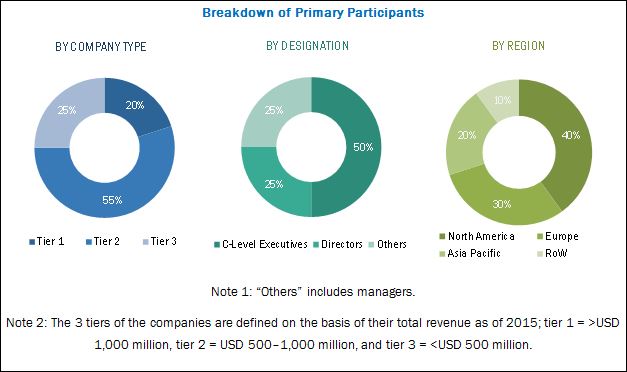
The data has been verified through primary research by conducting extensive interviews with key experts such as CEOs, VPs, directors, and executives. The market breakdown and data triangulation procedures have been employed to complete the overall market engineering process and arrive at the exact statistics for all segments and subsegments. The breakdown of the profiles of primaries has been depicted in the following figure:
To know about the assumptions considered for the study, download the pdf brochure
Players involved in the swarm intelligence market are DoBots (Netherlands), Hydromea (Switzerland), Sentien Robotics (US), Unanimous A.I. (US), AxonAI (US), Swarm Technology (US), SSI Schäfer - Fritz Schäfer (Germany), Valutico (Austria), Enswarm (UK), and Power-Blox (Switzerland).
Target Audience
- Swarm intelligence component manufacturers
- Original equipment manufacturers (OEMs) of swarm intelligence
- Research organizations
- Algorithm providers
- Drone manufacturers
- Robot manufacturers
- Technology providers
- Automotive companies
- Organizations, forums, alliances, and associations related to swarm intelligence
This study answers several questions for the stakeholders, primarily which market segments to focus on in the next 2–5 years for prioritizing efforts and investments.
Scope of the Report:
This research report categorizes the overall swarm intelligence market based on model, capability, application, and geography.
Swarm Intelligence Market, by Model
- Ant Colony Optimization
- Particle Swarm Optimization
- Others
Market, by Capability
- Optimization
- Clustering
- Scheduling
- Routing
Swarm Intelligence Market, by Application
- Robotics
- Drones
- Human Swarming
Market, by Geography
- North America
- Europe
- APAC
- RoW
Available Customizations
With the given market data, MarketsandMarkets offers customizations according to the company’s specific needs. The following customization options are available for the report:
Company Information
- Detailed analysis and profiling of additional market players on the basis of various blocks of the value chain
Geographic Analysis
- Further breakdown of different regions under geography on the basis of applications.













Growth opportunities and latent adjacency in Swarm Intelligence Market
I am intreseted in application of swarm intelligence. Does your report describe the major application area of swarm intelligence?