



Unmanned Aerial Vehicle Market Size, Share, and Trends
Report Code
AS 2802
Published in
Jul, 2025, By MarketsandMarkets™
Unmanned Aerial Vehicle (UAV / Drone) Market Size, Share, and Trends Size, Share & Trends by Type (Fixed Wing, Rotary Wing, Hybrid), Platform (Civil & Commercial, and Defense & Government), Sales Channel, Systems, Function, Industry, Application, Mode of Operation, MTOW, Range and Region - Global Forecast to 2030

USD 40.56 BN
MARKET SIZE, 2030

CAGR 9.2%
(2025-2030)

483
REPORT PAGES

509
MARKET TABLES
UNMANNED AERIAL VEHICLE (UAV) MARKET OVERVIEW
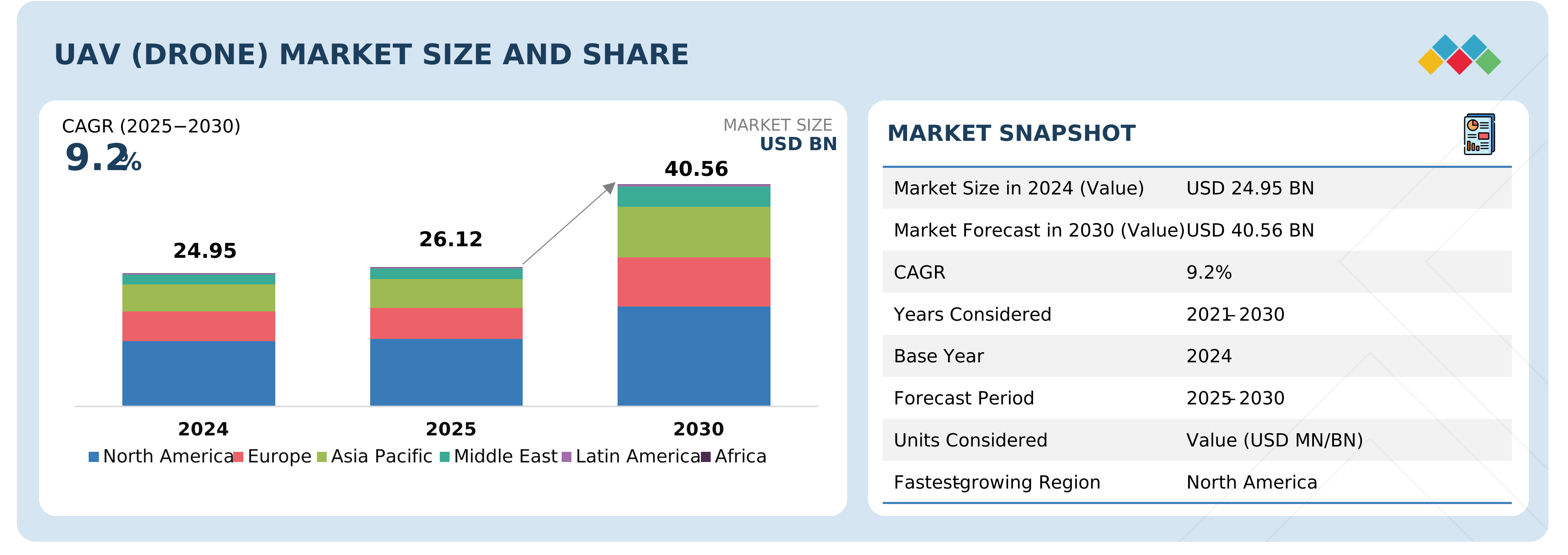
According to Marketsandmarkets, the Global Unmanned Aerial Vehicle Market Size is projected to grow from USD 26.12 billion in 2025 to USD 40.56 billion by 2030, growing at a CAGR of 9.2% from 2025-2030. The drone (UAV) market volume (OEM) is projected to grow from 596.94 thousand units in 2025 to reach 869.76 thousand by 2030. Technological advancements, such as improved autonomy, efficient power systems, and advanced sensing technology, have expanded the capabilities of UAVs, further driving their growth.
The Unmanned Aerial Vehicle Market Size is expanding rapidly as governments, defense organizations, and commercial sectors increasingly adopt advanced drone technologies for surveillance, logistics, agriculture, and infrastructure monitoring. The growing integration of artificial intelligence, autonomous navigation, and advanced sensor systems is significantly influencing the Unmanned Aerial Vehicle Market Growth, enabling drones to perform complex operations with improved accuracy and efficiency. Rising investments in defense modernization programs and the growing use of drones in border surveillance, disaster management, and precision agriculture are further strengthening the Unmanned Aerial Vehicle Market. As a result, the market continues to experience strong expansion across both military and commercial applications worldwide.
The Unmanned Aerial Vehicle Market Share is becoming more competitive as leading aerospace and defense companies focus on technological innovation, partnerships, and product development to strengthen their market position. Emerging startups and technology firms are also contributing to the evolving Unmanned Aerial Vehicle Market Trends, particularly through advancements in swarm technology, AI powered analytics, and long endurance UAV platforms. The increasing demand for real time aerial intelligence, combined with regulatory developments supporting commercial drone operations, is accelerating Unmanned Aerial Vehicle Market Growth across multiple industries. With expanding applications in logistics, environmental monitoring, and smart city operations, the Unmanned Aerial Vehicle Market Industry is expected to witness sustained development and increasing global adoption in the coming years.
REPORT SCOPE
| REPORT METRIC | DETAILS |
|---|---|
| Market Size in 2025 (Value) | USD 26.12 billion |
| Market Forecast in 2030 (value) | USD 40.56 billion |
| Growth Rate | 9.2% |
| Years Considered | 2021–2030 |
| Base Year | 2024 |
| Forecast Period | 2025–2030 |
| Units Considered | Value (USD BN) |
| Report Coverage | Revenue forecast, company ranking, competitive landscape, growth factors, and trends |
| Top Companies |
|
| Growth Drivers |
|
| Segments Covered |
|
| Regions Covered | North America, Europe, Asia Pacific, Middle East, Latin America, Africa |
UAV (DRONE) MARKET Market Size & Forecast
• 2025 Market Size (Value): USD 26.12 billion
• 2030 Market Forecast (Value): USD 40.56 billion
• CAGR: 9.2% from 2025 to 2030
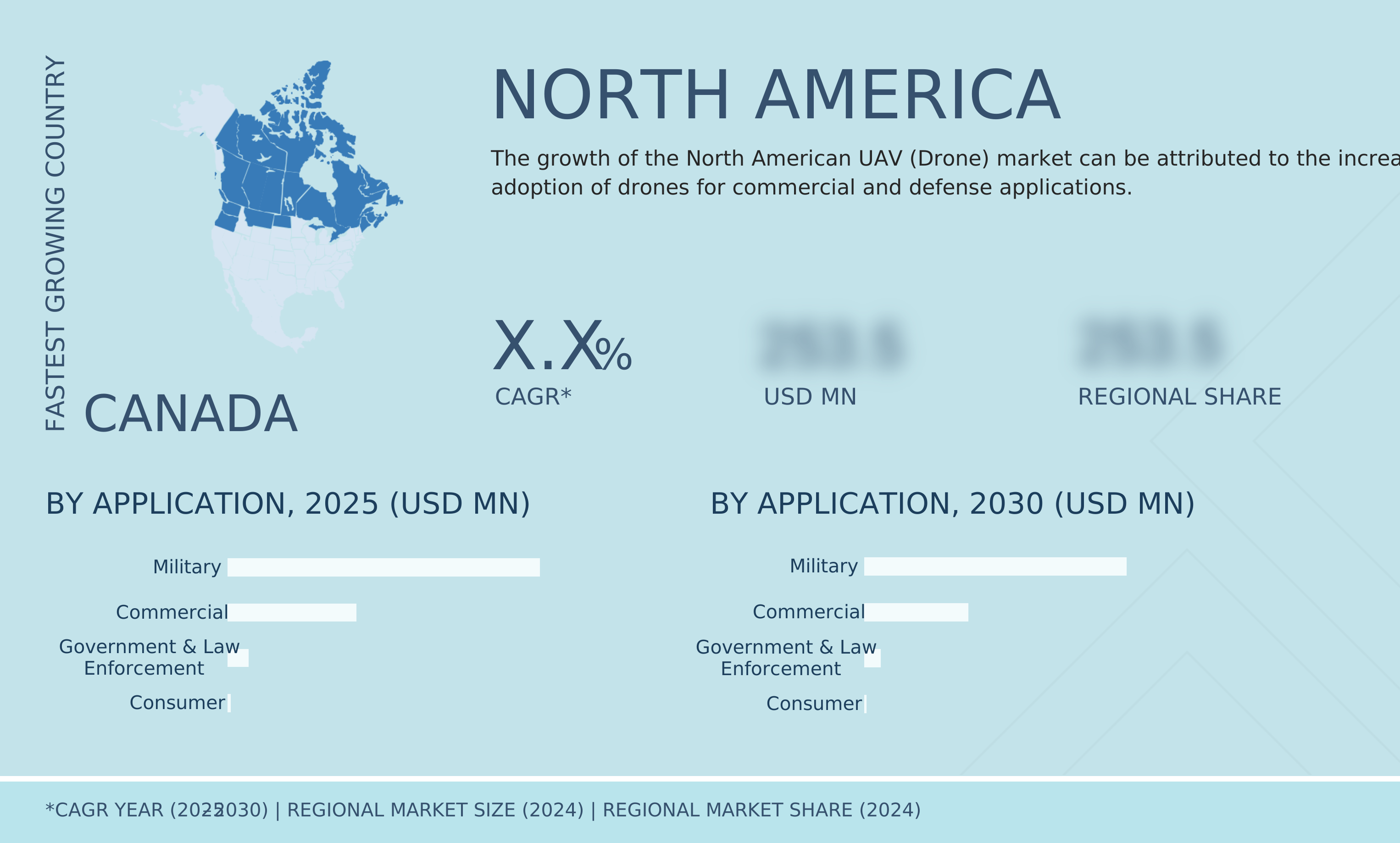
• North America: Account for a 48.6% Share
• Commercial Segment: Fastest Rate of 25.4%
KEY TAKEAWAYS
- North America is expected to account for a 48.6% share of the UAV (drone) market in 2025.
- By type, the propulsion system segment is projected to dominate the market in 2025.
- By platform, the civil & commercial segment is expected to grow at the fastest rate from 2025 to 2030.
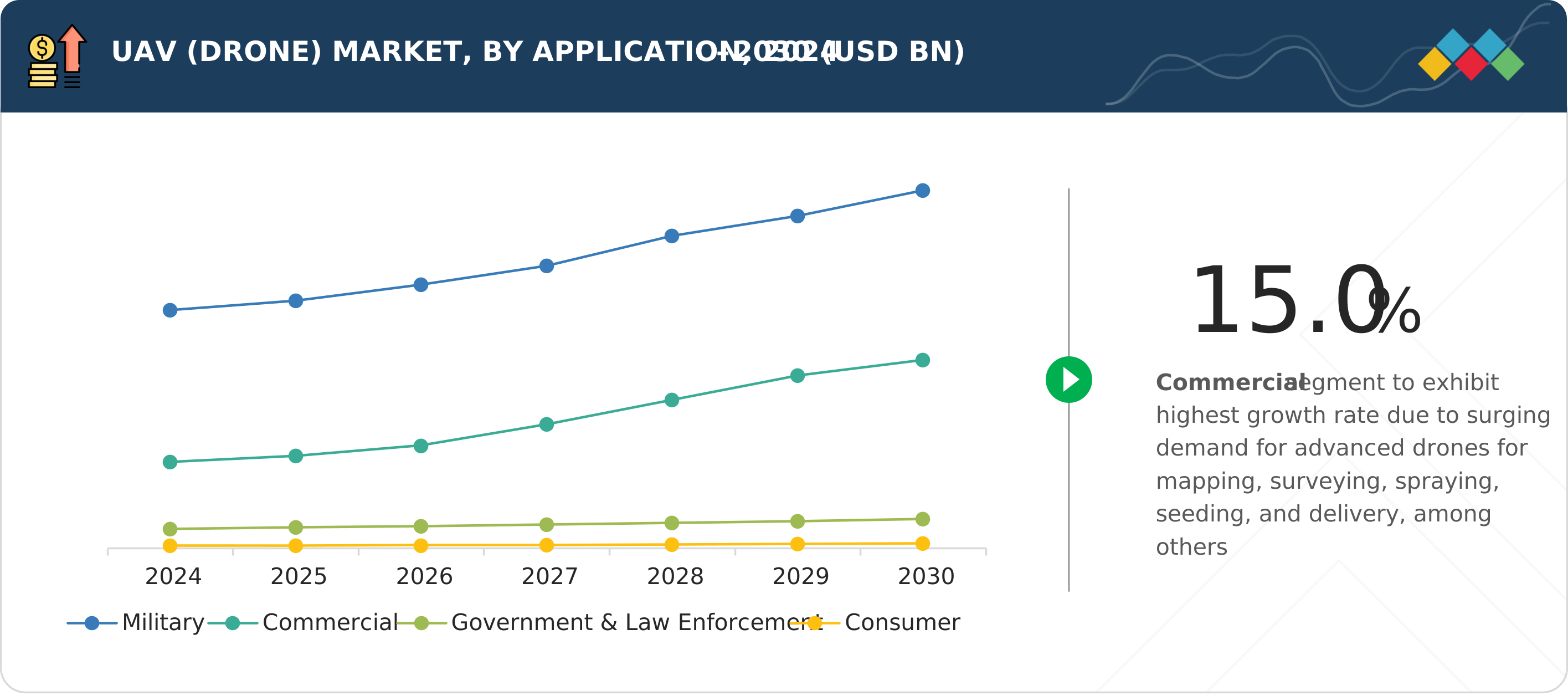
- By application, the commercial segment is projected to grow at the fastest rate of 25.4% from 2025 to 2030.
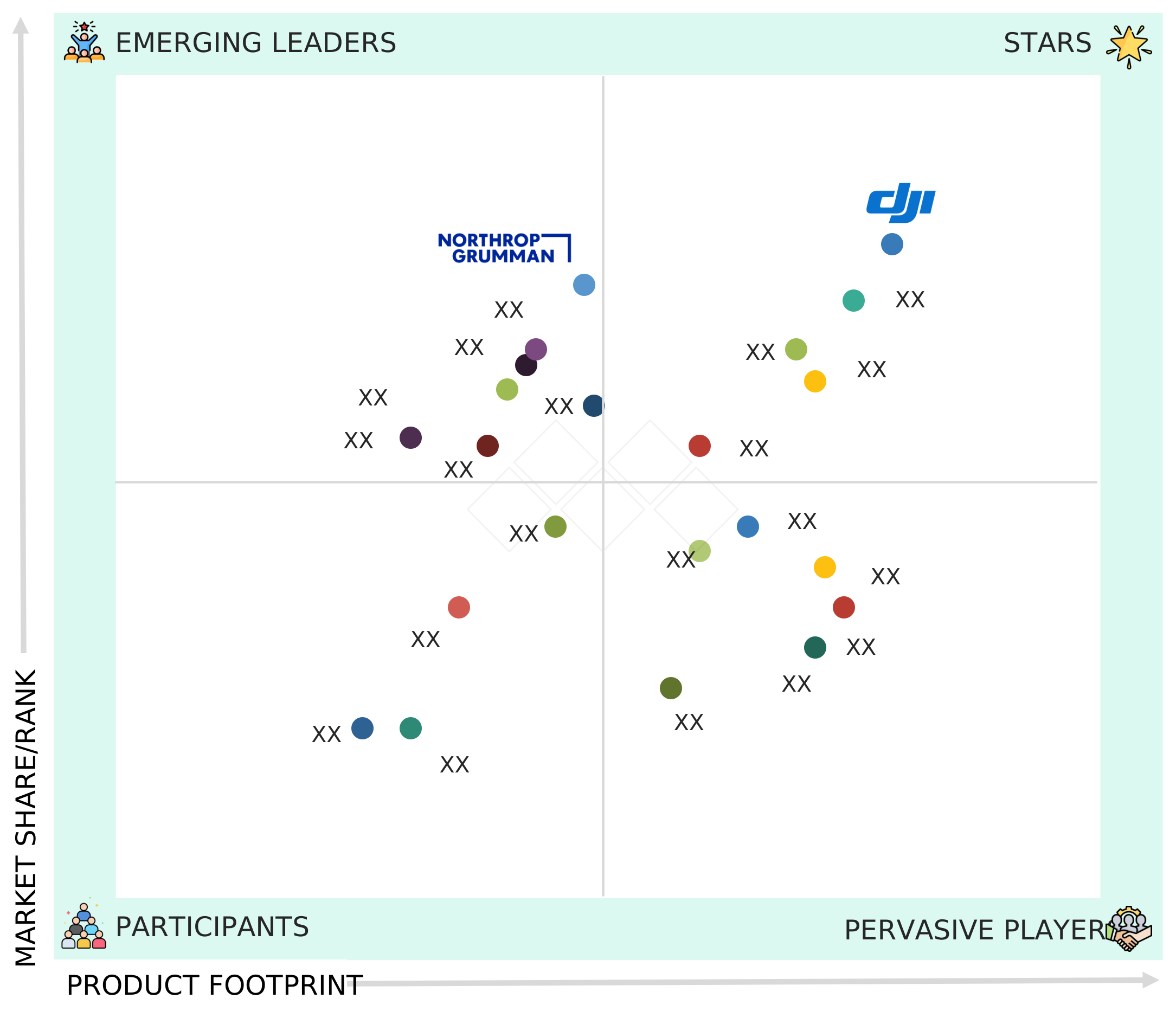
- DJI, Northrop Grumman, and Israel Aerospace Industries were identified as some of the star players in the UAV (drone) market, given their strong market share and product footprint.
- Shield AI, Delair, and Volocopter GmbH have distinguished themselves among startups and SMEs by securing strong footholds in specialized niche areas, underscoring their potential as emerging market leaders.
The Industry for Unmanned Aerial Vehicles (UAVs) is predominantly driven by their diversified applications across the military, commercial, and recreational sectors. Innovations in UAV technology, including extended battery endurance, augmented payload capabilities, and sophisticated navigational technologies, have substantially widened their functional scope.
Source: Secondary Research, Interviews with Experts, MarketsandMarkets Analysis
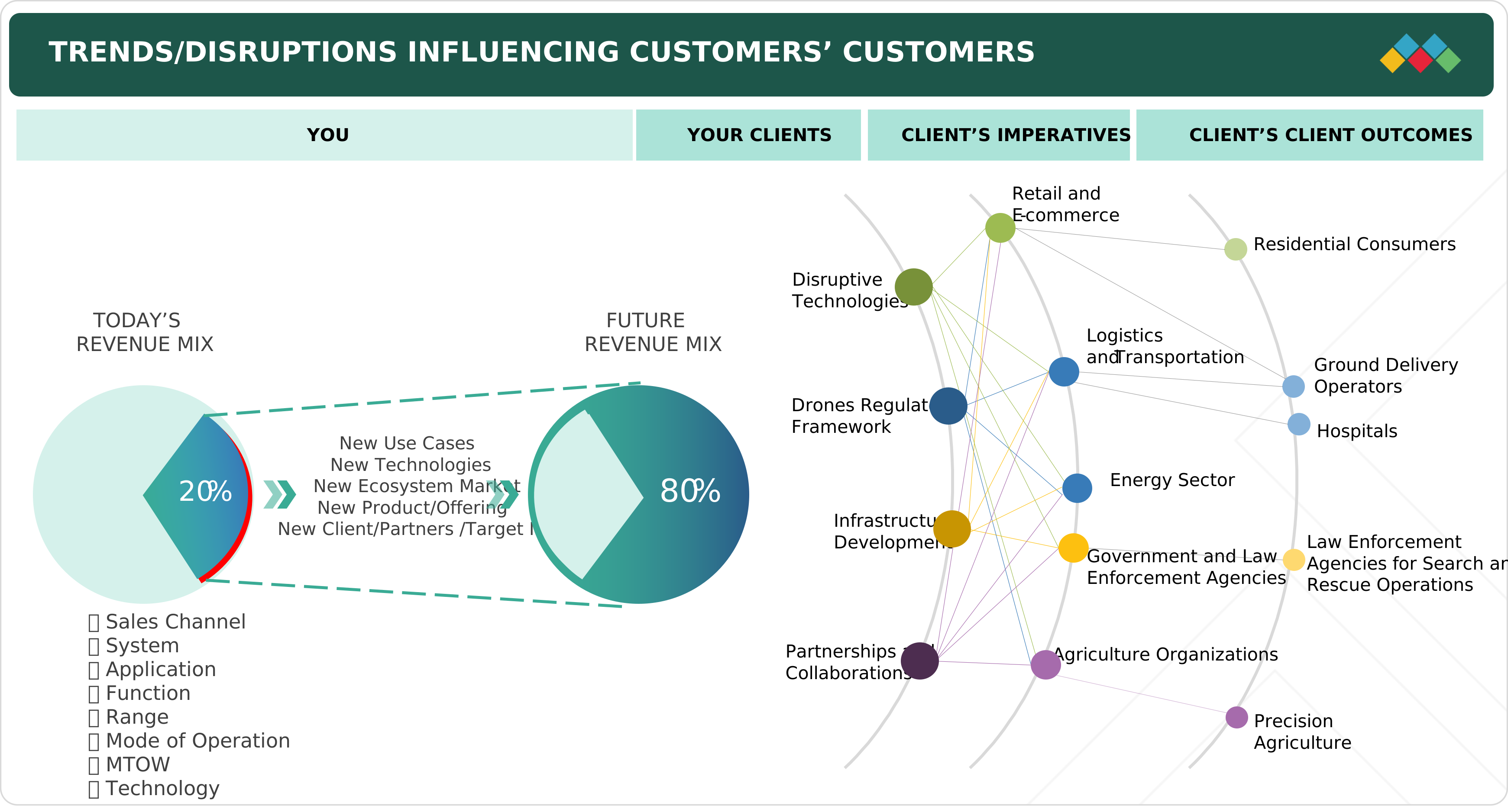
TRENDS & DISRUPTIONS IMPACTING CUSTOMERS' CUSTOMERS
Several drone startups and manufacturers are seeking venture capital investments, partnerships, collaborations, and joint ventures to advance drone technology. This, in turn, is expected to aid in vital improvements in drones and related infrastructure and increase the customer base for drones.
The global UAV market was valued at about USD 26.12 billion in 2025. It is expected to reachUSD 40.56 billion by 2030, with annual growth of 9.2%. Revenue Growth is supported by defense, surveillance, mapping, inspection, and automated drone use.
Investment is focused on defense drones, commercial drones, and automated systems. Quantum Systems raisedUSD 1.2 billion in July 2026, at a company value of about USD 8 billion, to increase production and develop new drone systems.
The global UAV market was valued at about USD 26.12 billion in 2025. It is expected to reach USD 40.56 billion by 2030, with annual growth of 9.2%. Growth is supported by defense, surveillance, mapping, inspection, and automated drone use.
Investment is focused on defense drones, commercial drones, and automated systems. Quantum Systems raised USD 1.2 billion in July 2026, at a company value of about USD 8 billion, to increase production and develop new drone systems.
Source: Secondary Research, Interviews with Experts, MarketsandMarkets Analysis
UAV (DRONE) MARKET DYNAMICS

Drivers
Impact
Level
Level
-
Rising procurement of drones for military applications

-
Increasing use of UAVs in commercial applications


RESTRAINTS
Impact
Level
Level
-
Information about security risk and lack of standardized air traffic regulations

-
Lack of qualified and certified drone operators


OPPORTUNITIES
Impact
Level
Level
-
High investments in commercial drone industry

-
Use of UAV for cargo delivery in military operations


CHALLENGES
Impact
Level
Level
-
Issues with hijacking and security of UAVs

-
Unpredictable weather conditions

Source: Secondary Research, Interviews with Experts, MarketsandMarkets Analysis
Driver: Rising procurement of drones for military applications
Defense forces in various countries have increasingly used UAVs to carry out military operations, such as intelligence, surveillance, and reconnaissance (ISR) activities and battle damage management. For instance, the Fifth Generation C4ISR is a joint battle management system that can gather data, understand the data, and communicate freely with all the components.
Restraint: Information about security risk and lack of standardized air traffic regulations
According to the Air Traffic Control Association (ATCA) (US), the limited use of small drones in civil airspace is creating a hindrance to UAV (Drone) market growth in the country. Small commercial drones are prohibited from flying in the airspace around airports, except for certain companies that have received exemptions to conduct tests or demonstration flights
Opportunity: High investments in commercial drone industry
Investments in the drone industry have been increasing drastically since the COVID-19 pandemic (2020 and 2021. In the last five years, investments in this industry have increased at a CAGR of 48%. Between 2021 and 2022, the investments were corrected due to increased inflation, reduced consumer spending, and global recession.
Challenge: Issues with hijacking and security of UAVs
Drones face considerable security challenges, particularly concerning the risk of hijacking. Despite the encryption of communications between drones and remote controls, the prevalent use of identical encrypted codes makes hijacking a viable and straightforward target. Addressing the security aspects of military drones presents various technical difficulties that must be solved.
UAV (Drone) Market: COMMERCIAL USE CASES ACROSS INDUSTRIES
| COMPANY | USE CASE DESCRIPTION | BENEFITS |
|---|---|---|
 |
Deployed medium-altitude long-endurance (MALE) UAVs for intelligence, surveillance, and reconnaissance (ISR) in defense operations | Extended mission endurance for border security and battlefield monitoring, real-time transmission of intelligence to command centers |
 |
Designed tactical UAVs like Aerosonde for military and civil applications, supporting force protection, maritime patrol, and disaster response | Rapid deployment in austere environments with minimal ground crew, multi-payload integration for flexible operations across missions |
 |
Fielded combat-proven UAVs like the Hermes series, designed for reconnaissance, target acquisition, and precision strike coordination | High-altitude and long-range endurance for continuous ISR, seamless integration with artillery and airstrike systems for faster decision-making |
 |
Developed UAV solutions ranging from rotary-wing drones for shipborne operations to experimental high-altitude UAVs for strategic reconnaissance | Enhanced resilience in GPS-denied or electronic warfare environments, scalable UAV designs for both tactical and strategic missions |
 |
Supports crop spraying, infrastructure inspection, search-and-rescue, and mapping with AI-enabled imaging tools | Cost-effective aerial coverage for industries reducing manual inspection time, high-resolution mapping and monitoring to improve productivity |
Logos and trademarks shown above are the property of their respective owners. Their use here is for informational and illustrative purposes only.
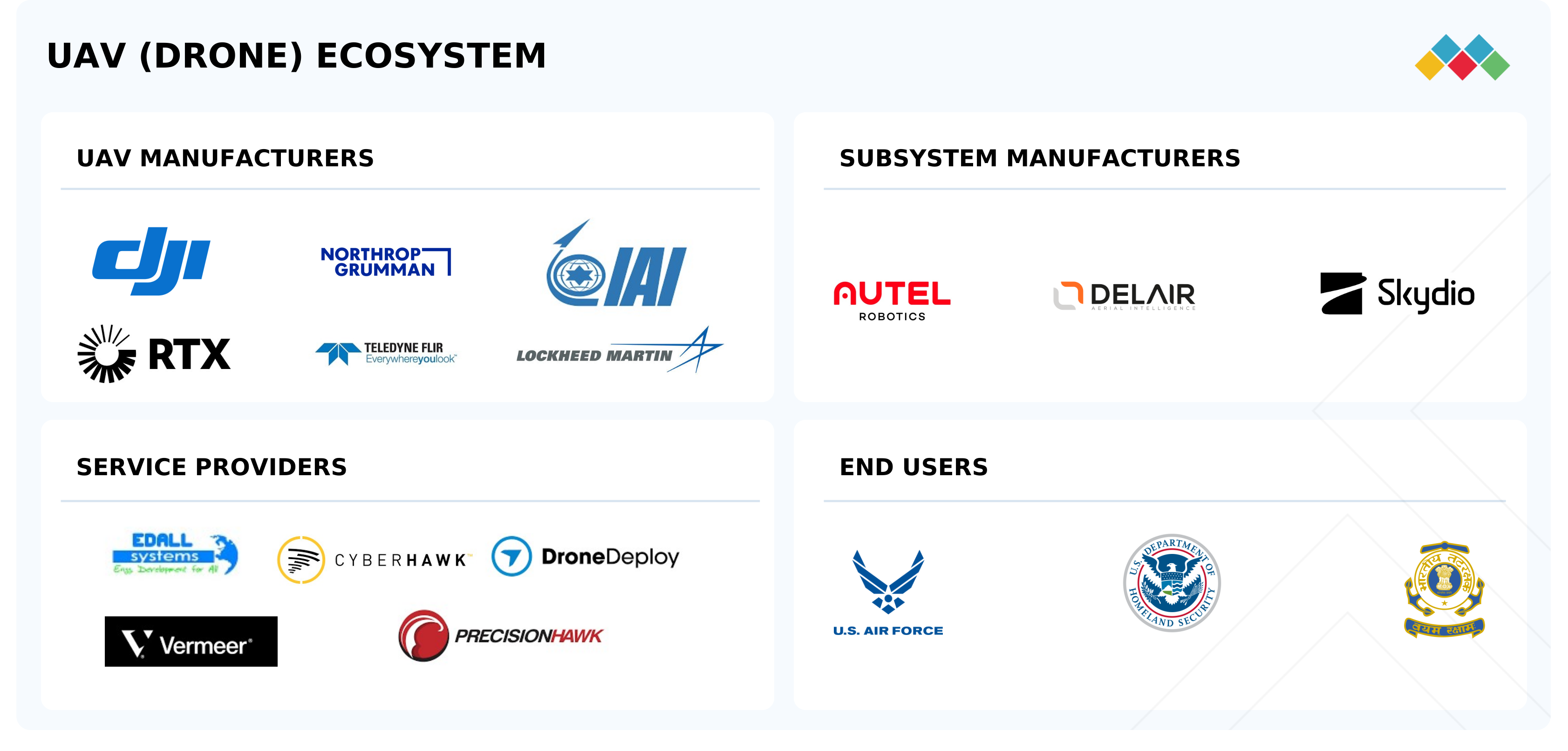
UAV (DRONE) MARKET ECOSYSTEM
The key stakeholders in the UAV (Drone) market ecosystem are platform manufacturers, subsystem manufacturers, service providers, software providers, and miscellaneous (insurance companies). The following figure lists some global platform manufacturers, subsystem providers, service providers, and software providers.
Logos and trademarks shown above are the property of their respective owners. Their use here is for informational and illustrative purposes only.
UAV (DRONE) MARKET SEGMENTS
Source: Secondary Research, Interviews with Experts, MarketsandMarkets Analysis
Drone Market, By Sales Channel
The UAV sales channel segment, encompassing both OEM and aftermarket sectors, specifically MRO, replacement, simulation, and training, represents a critical area within the aerospace industry, driven by technological advancements and escalating demand for enhanced UAV capabilities and extended lifecycle management.
Drone Market, By System
The UAV (Drone) market has been segmented by system into vehicle, payload, data link, ground control station, and launch and recovery system. Each performs a different function and ensures the proper functioning of UAVs in different applications.
Drone Market, By Platform
The demand for UAVs in the defense and government platforms is projected to increase due to their use in intelligence, surveillance, reconnaissance activities, combat operations, and battle management applications. The civil and commercial segment is expected to grow for inspection and monitoring.
Drone Market, By Function
UAVs perform various functions, from transporting passengers to combat duties. Based on function, the UAV (Drone) market has been segmented into special-purpose drones, passenger drones, inspection and monitoring drones, surveying and mapping drones, spraying and seeding drones, cargo air vehicles, and others.
UAV (Drone) Market, By Industry
The UAV (drone) market has been segmented by industry into defense and security, logistics and transportation, agriculture, energy and power, construction and mining, media and entertainment, insurance, wildlife and forestry, and academics and research. Recent trends indicate robust growth across these industries, propelled by digital transformation and sustainability initiatives.
UAV (Drone) Market, By Application
By application, the UAV (Drone) market has been classified into military, commercial, government & law enforcement, and consumer. UAVs are widely employed in military applications for intelligence, surveillance, and reconnaissance (ISR), combat operations, and battle damage management.
UAV (Drone) Market, By Range
The UAV (Drone) market has been segmented by range into visual line of sight (VLOS), extended visual line of sight (EVLOS), and beyond visual line of sight (BVLOS). UAVs with different ranges are used in other operations. VLOS-range UAVs are used in easy operations that require pilots to be within the drone's range of vision.
UAV (Drone) Market, By Mode of Operation
By mode of operation, the UAV (Drone) market has been classified into remotely piloted, optionally piloted, and fully autonomous. The remotely piloted segment is projected to grow significantly during the forecast period, driven by the cost-effective usage of remotely piloted UAVs in several applications ranging from defense operations to surveys.
UAV (Drone) Market, By Type
The UAV (Drone) market has been categorized by type as fixed, rotary, and hybrid. The fixed-wing segment has been further divided into conventional takeoff and landing (CTOL) and vertical takeoff and landing (VTOL). In contrast, the rotary-wing segment has been classified into single-rotor and multirotor.
UAV (Drone) Market, By MTOW
Based on MTOW, the UAV (Drone) market has been segmented into <2 kg, 2–25 kg, 25–150 kg, 150–600 kg, 600–2000 kg, and >2000 kg—ranging from lightweight consumer and educational drones to medium and heavy tactical systems used in industrial and defense sectors. As the mass of a UAV is a fixed value, it is independent of the temperature or the altitude at which a drone is flying.
UAV (Drone) Market, By Technology
The UAV (Drone) market is evolving rapidly, driven by advancements across different technological segments, primarily categorized into conventional and AI-powered drones. Conventional drones rely on manual or pre-programmed control systems and continue to serve as the backbone of UAV operations due to their affordability, simplicity, and regulatory acceptance.
UAV (DRONE) Market REGION
North America is expected to be the largest region in the global UAV (Drone) market.
The North American UAV (Drone) Market is projected to grow from USD 10.98 billion in 2025 to USD 16.17 billion by 2030 at a CAGR of 8.0%. Rising adoption across defense, public safety, infrastructure, and energy sectors, driven by the demand for long-range missions, high-precision data capture, and autonomous operations, continues to accelerate market expansion, supported by advancements in analytics, automation, and beyond-visual-line-of-sight (BVLOS) capabilities.
The European UAV (Drone) Market is projected to grow from USD 5.00 billion in 2025 to USD 7.98 billion by 2030 at a CAGR of 9.8%. The increasing adoption of UAVs across defense, border security, public safety, and critical infrastructure sectors, driven by demand for long-range surveillance, high-precision data acquisition, and autonomous flight operations, boosts market expansion. The growth is further supported by advancements in AI-enabled analytics, automation, and progress in BVLOS regulations, as well as the increasing integration of UAVs into commercial applications, including logistics, energy inspection, and environmental monitoring.
The Asia Pacific UAV (Drone) Market is expected to grow from USD 4.68 billion in 2025 to USD 8.18 billion by 2030, with a CAGR of 11.8%. The market growth is driven by rapid defense modernization, improved border surveillance needs, and increased investment in autonomous technologies. Growing commercial use in agriculture, infrastructure, and logistics, supported by regulatory reforms and expanding local manufacturing, is further promoting sustained growth throughout the region.
The Middle East UAV (Drone) Market is expected to reach USD 3.31 billion by 2030, from USD 1.70 billion in 2025, with a CAGR of 14.2%. This growth is driven by an increasing number of military modernization programs and rising reliance on unmanned aircraft systems for key military missions. The Middle East region is also experiencing healthy growth in the commercial drone sector, subject to demand from applications such as inspection, mapping, logistics, and energy-sector monitoring. Advancements in autonomous flight control, AI-enabled analytics, and BVLOS operational capabilities are further increasing the need for deploying new UAVs among the armed forces.
The US UAV (Drone) market is projected to grow from USD 10.75 billion in 2025 to USD 15.78 billion by 2030 at a CAGR of 8.0%. The market in the US is driven by investments in defense fleet modernization, reliance on unmanned systems for long-endurance intelligence, surveillance, and reconnaissance missions, and growing deployment of UAVs for border security and homeland protection. In addition, the US is witnessing growth in commercial UAV applications across various sectors, including inspection, mapping, and monitoring. Furthermore, the advancements in AI-based mission systems, autonomous flight control, BVLOS operational capabilities, and cybersecurity enhancements are boosting the deployment of UAVs for military and commercial platforms.
The UK UAV (Drone) market is expected to grow from USD 0.84 billion in 2025 to USD 1.48 billion by 2030 at a CAGR of 12.0%. The growth is driven by advancements in lightweight materials, high-resolution sensors, AI, autonomous navigation, communication systems, and battery efficiency. These are enhancing UAV performance, expanding mission versatility, and enabling cost-effective deployment in commercial logistics and defense operations with reduced human intervention.
UAV (Drone) Market: COMPANY EVALUATION MATRIX
In the UAV (Drone) market matrix, DJI (Star) leads with strong dominance and advanced UAV technologies, solidifying its leadership in the industry. Northrop Grumman Corporation (Emerging Leader) is maintaining a competitive global presence with robust UAV offerings, showing potential to strengthen its market position as global demand for drones expands.
Source: Secondary Research, Interviews with Experts, MarketsandMarkets Analysis
UAV (DRONE) MARKET KEY PLAYERS
List of Top UAV (Drone) Market Companies
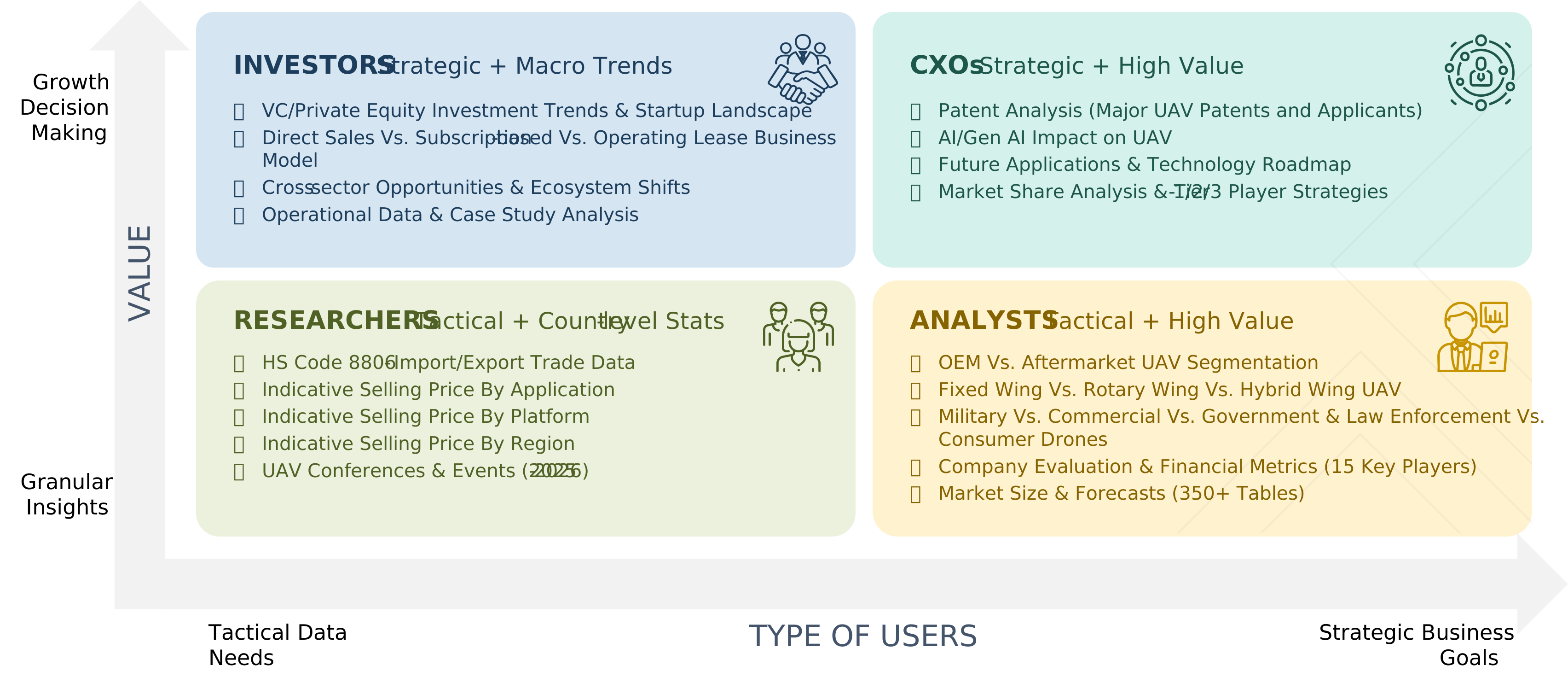
WHAT IS IN IT FOR YOU: UAV (Drone) Market REPORT CONTENT GUIDE
DELIVERED CUSTOMIZATIONS
We have successfully delivered the following deep-dive customizations:
| CLIENT REQUEST | CUSTOMIZATION DELIVERED | VALUE ADDS |
|---|---|---|
| UAV Application Cross-arket Analysis | Further breakdown of the current application categories into more detailed sub-categories, along with historical data | Gain cross-market analysis to understand the penetration of each segment by application categorizations and observe consumption trends and shifts |
| UAV Propulsion Technology Deep Dive | Mapping UAV models by number and type of engines/propulsion technology deployed | Broader understanding of the UAV engine by model, along with technical capabilities across civil/commercial and defense & government applications |
| VTOL UAV, AI-powered UAV & Loitering Munition UAV Market & Competition Analysis | Further deep-dive on VTOL UAV market, AI-powered UAV market, and loitering Munition UAV market across regions and segments | Gain an understanding of how the companies are positioned based on segmentation footprint, financials, contracts, and developments, along with market size estimates and forecasts at the regional and segmental level |
| UAV Commercial Model Deep Dive | Market share by commercial UAV model, average selling price ranges, and operation cost per model | Help understand the complete commercial UAV landscape with key models and relevant statistics to determine their adoption |
RECENT DEVELOPMENTS
- July 2025 : DJI (China) unveiled three new agricultural drones, Agras T100, T70P, and T25P, to enhance large-scale, precision farming. The Agras T100 boasts a 40-liter spraying tank, dual atomization, and a 20-hectare/hour efficiency, ideal for expansive farmland. The T70P targets mid-scale operations with a 30-liter tank and smart terrain following, while the T25P offers portability and modularity for orchards and hilly regions, supporting spraying and spreading.
- June 2025 : Parrot Drone SAS (France) launched the ANAFI UKR, a sovereign micro-drone explicitly designed for tactical Intelligence, Surveillance, and Reconnaissance (ISR) missions. Developed in response to operational needs highlighted during the Ukraine conflict, the ANAFI UKR offers silent flight, high-resolution day/night imaging, secure communications, and GNSS-denied navigation, making it ideal for frontline deployment.
- February 2025 : Teledyne FLIR LLC (US) Defense received a contract for USD 15 million for Black Hornet 4 Nano-Drones. The contract was facilitated by Teledyne FLIR’s regional partner, European Logistic Partners (ELP) GmbH, Wuppertal, Germany. Black Hornet 4 represents the next generation of lightweight nano-drones. It provides enhanced covert situational awareness to small fighting units.
Table of Contents
 Exclusive indicates content/data unique to MarketsandMarkets and not available with any competitors.
TITLE
PAGE NO
1
INTRODUCTION
40
2
RESEARCH METHODOLOGY
48
3
EXECUTIVE SUMMARY
61
4
PREMIUM INSIGHTS
66
5
MARKET OVERVIEW
Drone market growth driven by military, commercial, and technological advancements despite security challenges.
69
5.1
INTRODUCTION
5.2
MARKET DYNAMICS
5.2.1
DRIVERS
5.2.1.1
Rising procurement of drones for military applications
5.2.1.2
Increasing use of UAVs in commercial applications
5.2.1.3
Farm management optimization using agricultural drones
5.2.1.4
Rapid advancements in sensor and technology Innovation
5.2.1.5
Supportive government regulations and initiatives
5.2.2
RESTRAINTS
5.2.2.1
Information about security risk and lack of standardized air traffic regulations
5.2.2.2
Lack of qualified and certified drone operators
5.2.2.3
Limited payload capacity of commercial drones
5.2.3
OPPORTUNITIES
5.2.3.1
High investments in commercial drone industry
5.2.3.2
Use of UAVs for cargo delivery in military operations
5.2.3.3
Growing use of UAVs (drones) in providing wireless coverage
5.2.3.4
Technological advancements to enhance accuracy of package delivery
5.2.3.5
Real-time monitoring of road traffic
5.2.4
CHALLENGES
5.2.4.1
Issues with hijacking and security of UAVs
5.2.4.2
Lack of sustainable power sources to improve endurance
5.2.4.3
Unpredictable weather conditions
5.3
ECOSYSTEM ANALYSIS
5.3.1
PLATFORM MANUFACTURERS
5.3.2
SERVICE PROVIDERS
5.3.3
END USERS
5.4
TRENDS/DISRUPTIONS IMPACTING CUSTOMER BUSINESS
5.5
VALUE CHAIN ANALYSIS
5.5.1
PLANNING AND REVISED FUNDING
5.5.2
RESEARCH & DEVELOPMENT
5.5.3
RAW MATERIAL PROCUREMENT AND MANUFACTURING
5.5.4
ASSEMBLY, TESTING, AND APPROVALS
5.5.5
DISTRIBUTION AND AFTER-SALES SERVICES
5.6
TRADE DATA ANALYSIS
5.6.1
IMPORT SCENARIO
5.6.2
EXPORT SCENARIO
5.7
OPERATIONAL DATA
5.8
PRICING ANALYSIS
5.8.1
INDICATIVE PRICING ANALYSIS, BY APPLICATION AND REGION
5.8.2
INDICATIVE PRICING ANALYSIS, BY PLATFORM
5.9
BILL OF MATERIALS (BOM) ANALYSIS
5.10
BUSINESS MODEL
5.10.1
DIRECT SALES BUSINESS MODEL
5.10.2
SUBSCRIPTION-BASED SERVICE MODEL
5.10.3
OPERATING LEASE MODEL
5.11
VOLUME DATA
5.12
INVESTMENT AND FUNDING SCENARIO
5.13
KEY STAKEHOLDERS AND BUYING CRITERIA
5.13.1
KEY STAKEHOLDERS IN BUYING PROCESS
5.13.2
BUYING CRITERIA
5.14
TECHNOLOGY ROADMAP
5.15
TOTAL COST OF OWNERSHIP (TCO)
5.16
CASE STUDIES
5.16.1
TRANSFER OF MEDICAL PRESCRIPTIONS USING DRONES FROM MANNA AERO
5.16.2
AEROVIRONMENT DEMONSTRATED INTEGRATED MARITIME UAV SENSOR-TO-SHOOTER CAPABILITY FOR REAL-TIME TARGET ENGAGEMENT
5.16.3
STRATEGIC SUPERIORITY OF ARMED DRONES IN TERRITORIAL CONFLICTS
5.16.4
GE AEROSPACE (US) AND KRATOS DEFENSE & SECURITY SOLUTIONS (US) PARTNERED TO CO-DEVELOP SMALL, LOW-COST TURBOJET AND TURBOFAN ENGINES FOR UAVS
5.16.5
CROW CANYON ARCHAEOLOGY CENTER (CCAC) CHOSE DJI M600 FOR ITS STABILITY AND HIGH LIFT CAPACITY
5.17
TECHNOLOGY ANALYSIS
5.17.1
KEY TECHNOLOGIES
5.17.1.1
Artificial intelligence in UAVS
5.17.1.2
Mid-air refueling of drones
5.17.1.3
Anti-UAV defense systems
5.17.1.4
UAV with LiDAR system
5.17.2
COMPLEMENTARY TECHNOLOGIES
5.17.2.1
Beyond visual line of sight (BVLOS) operations
5.17.2.2
Increased autonomy in traffic management
5.17.2.3
Energy harvesting
5.17.2.4
Enhanced security protocols
5.17.3
ADJACENT TECHNOLOGIES
5.17.3.1
Satellite communication (SATCOM) systems
5.17.3.2
Electro-optical/Infrared (EO/IR) sensor payloads
5.18
REGULATORY LANDSCAPE
5.18.1
REGULATORY BODIES, GOVERNMENT AGENCIES, AND OTHER ORGANIZATIONS
5.19
REGULATORY FRAMEWORK, BY REGION
5.19.1
NORTH AMERICA
5.19.1.1
US
5.19.1.2
Canada
5.19.2
EUROPE
5.19.2.1
UK
5.19.2.2
Germany
5.19.2.3
France
5.19.3
ASIA PACIFIC
5.19.4
MIDDLE EAST
5.19.5
REST OF THE WORLD (LATIN AMERICA & AFRICA)
5.20
KEY CONFERENCES & EVENTS, 2025–2026
5.21
US TARIFF 2025
5.21.1
INTRODUCTION
5.22
KEY TARIFF RATES
5.23
PRICE IMPACT ANALYSIS
5.24
IMPACT ON COUNTRY/REGION
5.24.1
US
5.24.2
EUROPE
5.24.3
ASIA PACIFIC
5.25
IMPACT ON END-USE INDUSTRIES
5.26
MACROECONOMIC OUTLOOK
5.26.1
INTRODUCTION
5.26.2
NORTH AMERICA
5.26.3
EUROPE
5.26.4
ASIA PACIFIC
5.26.5
MIDDLE EAST
5.26.6
LATIN AMERICA
5.26.7
AFRICA
5.27
IMPACT OF AI/ GENERATIVE AI ON UAV (DRONE) MARKET
5.27.1
ENHANCED AUTONOMY AND NAVIGATION
5.27.2
REAL-TIME DATA ANALYSIS AND OBJECT DETECTION
5.27.3
SWARM INTELLIGENCE AND MULTI-UAV COORDINATION
5.27.4
GENERATIVE AI FOR MISSION SIMULATION AND TRAINING
5.27.5
PREDICTIVE MAINTENANCE AND SYSTEM HEALTH MONITORING
6
INDUSTRY TRENDS
Discover cutting-edge drone innovations transforming industries through AI, nanotech, and green initiatives.
131
6.1
INTRODUCTION
6.2
TECHNOLOGY TRENDS
6.2.1
DRONE SWARM TECHNOLOGY
6.2.2
HYPERSONIC ARMED DRONES
6.2.3
AI-OPTIMIZED POWER MANAGEMENT SYSTEMS
6.2.4
SIGINT BY DRONES
6.2.5
NETWORK FUNCTION VIRTUALIZATION (NFV)
6.2.6
MICROTURBINE ENGINE-POWERED DRONES
6.2.7
MILLIMETER-WAVE (MM-WAVE) TECHNOLOGY
6.3
IMPACT OF MEGATRENDS
6.3.1
NANOTECHNOLOGY
6.3.2
ARTIFICIAL INTELLIGENCE
6.3.3
GREEN INITIATIVE
6.3.4
BIG DATA ANALYTICS
6.4
SUPPLY CHAIN ANALYSIS
6.5
PATENT ANALYSIS
7
UAV (DRONE) MARKET, BY SALES CHANNEL
Market Size & Growth Rate Forecast Analysis to 2030 in USD Million | 4 Data Tables
142
7.1
INTRODUCTION
7.2
OEM
7.2.1
INCREASING ADOPTION OF NEXT-GENERATION UAVS TO DRIVE MARKET
7.2.2
INDIGENOUS DESIGN, DEVELOPED, AND MANUFACTURED (IDDM)
7.2.3
NON-INDIGENOUS
7.3
AFTERMARKET
7.3.1
HIGH DEMAND FOR AFTERMARKET SERVICES TO MAINTAIN AND UPGRADE UAVS TO DRIVE MARKET
7.3.2
MRO
7.3.2.1
SCHEDULED MAINTENANCE
7.3.2.2
UNSCHEDULED REPAIRS
7.3.2.3
CALIBRATION/DIAGNOSTICS
7.3.2.4
UPGRADES/RETROFITS
7.3.3
REPLACEMENT
7.3.3.1
Platform
7.3.3.2
Payload
7.3.3.3
Ground control station
7.3.3.4
Launch & recovery system
7.3.4
SIMULATION & TRAINING
7.3.4.1
Oem onboarding training
7.3.4.2
Simulator-based training
7.3.4.3
Certification-as-a-service
8
UAV (DRONE) MARKET, BY SYSTEM
Market Size & Growth Rate Forecast Analysis to 2030 in USD Million | 28 Data Tables
149
8.1
INTRODUCTION
8.2
VEHICLE
8.2.1
INCREASING ADOPTION OF UAV DRONE SYSTEMS IN COMMERCIAL AND DEFENSE APPLICATIONS TO DRIVE MARKET
8.2.2
AIRFRAME
8.2.2.1
Alloys
8.2.2.2
Plastics
8.2.2.3
Composites
8.2.3
AVIONICS
8.2.3.1
Flight control
8.2.3.2
Navigation
8.2.3.3
Sensor
8.2.3.4
Communication
8.2.3.5
Others
8.2.4
PROPULSION SYSTEM
8.2.4.1
IC engine
8.2.4.2
Electric motor
8.2.4.3
Power source
8.2.4.4
Electronic speed controller (ESC)
8.2.4.5
Propeller
8.2.5
SOFTWARE
8.3
PAYLOAD
8.3.1
HIGH DEMAND FOR PAYLOAD-EQUIPPED DRONES FROM COMMERCIAL SEGMENT TO DRIVE MARKET
8.3.2
CAMERA
8.3.2.1
High-resolution camera
8.3.2.2
Multispectral camera
8.3.2.3
Hyperspectral camera
8.3.2.4
Thermal camera
8.3.2.5
Electro-optical (EO)/Infrared (IR) camera
8.3.3
CBRN SENSOR
8.3.4
INTELLIGENCE PAYLOAD
8.3.4.1
Signal intelligence
8.3.4.2
Electronic intelligence
8.3.4.3
Communication intelligence
8.3.4.4
Telemetry intelligence
8.3.5
RADAR
8.3.5.1
Synthetic aperture radar (SAR)
8.3.5.2
Active electronically scanned array (AESA) radar
8.3.6
LIDAR
8.3.7
GIMBAL
8.3.8
OTHERS
8.4
GROUND CONTROL STATION
8.4.1
FOCUS ON ENABLING MISSION PLANNING AND OFFERING FULL FLIGHT CONTROL FOR DRONES TO DRIVE MARKET
8.5
LAUNCH & RECOVERY SYSTEM
8.5.1
LAUNCH AND RECOVERY SYSTEMS ARE ESSENTIAL IN SUCCESSFULLY LAUNCHING AND RECOVERING UAVS
9
UAV (DRONE) MARKET, BY PLATFORM
Market Size & Growth Rate Forecast Analysis to 2030 in USD Million | 13 Data Tables
169
9.1
INTRODUCTION
9.2
CIVIL & COMMERCIAL
9.2.1
EMERGING APPLICATIONS IN CIVIL AND COMMERCIAL SECTORS TO DRIVE MARKET
9.2.2
MICRO
9.2.3
SMALL
9.2.4
MEDIUM
9.2.5
LARGE
9.3
DEFENSE & GOVERNMENT
9.3.1
INCREASING USE OF DRONES IN RESCUE AND ISR OPERATIONS TO DRIVE MARKET
9.3.2
SMALL
9.3.2.1
Nano
9.3.2.2
Micro
9.3.2.3
Mini
9.4
TACTICAL
9.4.1
CLOSE RANGE
9.4.2
SHORT RANGE
9.4.3
MEDIUM-RANGE MEDIUM ENDURANCE
9.4.4
LONG-RANGE MEDIUM ENDURANCE
9.4.5
STRATEGIC
9.4.5.1
Medium-altitude long endurance (MALE)
9.4.5.2
High-altitude long endurance (HALE)
10
UAV (DRONE) MARKET, BY FUNCTION
Market Size & Growth Rate Forecast Analysis to 2030 in USD Million | 6 Data Tables
180
10.1
INTRODUCTION
10.2
SPECIAL PURPOSE DRONES
10.2.1
UCAVS
10.2.2
SWARM DRONES
10.2.3
STRATOSPHERIC DRONES
10.2.4
EXO-STRATOSPHERIC DRONES
10.3
PASSENGER DRONES
10.3.1
DRONE TAXIS
10.3.2
AIR SHUTTLES
10.3.3
AIR AMBULANCES
10.3.4
PERSONAL AIR VEHICLES
10.4
INSPECTION & MONITORING DRONES
10.5
SURVEYING & MAPPING DRONES
10.6
SPRAYING & SEEDING DRONES
10.7
CARGO & DELIVERY DRONES
10.8
OTHERS
10.8.1
PHOTOGRAPHY/FILMING DRONES
10.8.2
DRONE EDUCATION & STEM LEARNING KITS
10.8.3
DRONE RACING
10.8.4
DRONE LIGHT SHOWS
11
UAV (DRONE) MARKET, BY INDUSTRY
Market Size & Growth Rate Forecast Analysis to 2030 in USD Million | 6 Data Tables
188
11.1
INTRODUCTION
11.2
DEFENSE & SECURITY
11.2.1
DEVELOPMENT OF ADVANCED UNMANNED SYSTEMS FOR COMBAT OPERATIONS TO DRIVE MARKET
11.3
AGRICULTURE
11.3.1
INCREASING UTILIZATION OF DRONES FOR MONITORING AND SPRAYING PURPOSES TO DRIVE MARKET
11.4
LOGISTICS & TRANSPORTATION
11.4.1
RISING DEMAND FOR REDUCED DELIVERY TIMES TO DRIVE MARKET
11.4.2
POSTAL & PACKAGE DELIVERY
11.4.3
HEALTHCARE & PHARMACY DELIVERY
11.4.4
RETAIL & FOOD DELIVERY
11.5
ENERGY & POWER
11.5.1
NEED FOR REAL-TIME DATA AND MAINTENANCE SURVEILLANCE FOR POWER INFRASTRUCTURE TO DRIVE MARKET
11.5.2
POWER GENERATION
11.5.3
OIL & GAS
11.6
CONSTRUCTION & MINING
11.6.1
INCREASING AVAILABILITY OF APPLICATION-SPECIFIC DRONES TO DRIVE MARKET
11.7
MEDIA & ENTERTAINMENT
11.7.1
INCREASING ADOPTION BY AMATEUR PHOTOGRAPHERS AND FILM INDUSTRY TO DRIVE MARKET
11.8
INSURANCE
11.8.1
NEED TO MONITOR DISASTER-PRONE AREAS AND GATHER DATA FOR GIVING ACCURATE QUOTES TO DRIVE MARKET
11.9
WILDLIFE & FORESTRY
11.9.1
GROWING DEMAND FOR CONSERVATION AND RESOURCE MANAGEMENT TO DRIVE MARKET
11.10
ACADEMICS
11.10.1
AVAILABILITY OF VARIETY OF INSTRUMENTS TO DRIVE MARKET
12
UAV (DRONE) MARKET, BY APPLICATION
Market Size & Growth Rate Forecast Analysis to 2030 in USD Million | 12 Data Tables
195
12.1
INTRODUCTION
12.2
MILITARY
12.2.1
EXECUTION OF HIGH-PROFILE MILITARY OR COMBAT MISSIONS TO DRIVE MARKET
12.2.2
INTELLIGENCE, SURVEILLANCE, AND RECONNAISSANCE (ISR)
12.2.3
COMBAT OPERATIONS
12.2.3.1
Lethal
12.2.3.2
Stealth
12.2.3.3
Loitering munition
12.2.3.4
Target
12.2.4
DELIVERY
12.3
COMMERCIAL
12.3.1
INTEGRATION OF VARIOUS FEATURES IN DRONES TO DRIVE MARKET
12.3.2
REMOTE SENSING
12.3.3
INSPECTION & MONITORING
12.3.4
PRODUCT DELIVERY
12.3.5
SURVEYING & MAPPING
12.3.6
AERIAL IMAGING
12.3.7
INDUSTRIAL WAREHOUSING
12.3.8
PASSENGER & PUBLIC TRANSPORTATION
12.3.9
OTHERS
12.4
GOVERNMENT & LAW ENFORCEMENT
12.4.1
ADOPTION OF UAVS FOR HOMELAND SECURITY TO DRIVE MARKET
12.4.2
BORDER MANAGEMENT
12.4.3
TRAFFIC MONITORING
12.4.4
FIREFIGHTING & DISASTER MANAGEMENT
12.4.5
SEARCH & RESCUE
12.4.6
POLICE OPERATIONS & INVESTIGATION
12.4.7
MARITIME SECURITY
12.5
CONSUMER
12.5.1
GROWING USE OF UAVS FOR RECREATIONAL ACTIVITIES TO DRIVE MARKET
12.5.2
PROSUMERS
12.5.3
HOBBYISTS
13
UAV (DRONE) MARKET, BY RANGE
Market Size & Growth Rate Forecast Analysis to 2030 in USD Million | 2 Data Tables
209
13.1
INTRODUCTION
13.2
VISUAL LINE OF SIGHT (VLOS)
13.2.1
NEED FOR UAVS (DRONES OFFERING EASE OF USE AND COST-EFFECTIVENESS TO DRIVE MARKET
13.3
EXTENDED VISUAL LINE OF SIGHT (EVLOS)
13.3.1
INCREASING APPLICATIONS OF DRONES IN COMMERCIAL AND MILITARY SECTORS TO DRIVE MARKET
13.4
BEYOND VISUAL LINE OF SIGHT (BVLOS)
13.4.1
INCREASED DEPLOYMENT OF DRONES FOR MILITARY OPERATIONS TO DRIVE MARKET
14
UAV (DRONE) MARKET, BY MODE OF OPERATION
Market Size & Growth Rate Forecast Analysis to 2030 in USD Million | 2 Data Tables
213
14.1
INTRODUCTION
14.2
REMOTELY PILOTED
14.2.1
REMOTELY PILOTED DRONES CAN BE CONTROLLED AND OPERATED REMOTELY BY HUMAN OPERATOR
14.3
OPTIONALLY PILOTED
14.3.1
EXTENSIVE USE IN MILITARY AND COMMERCIAL APPLICATIONS TO DRIVE MARKET
14.4
FULLY AUTONOMOUS
14.4.1
HUGE DEMAND FOR FULLY AUTONOMOUS DRONES FOR MILITARY APPLICATIONS TO DRIVE MARKET
15
UAV (DRONE) MARKET, BY TYPE
Market Size & Growth Rate Forecast Analysis to 2030 in USD Million | 8 Data Tables
217
15.1
INTRODUCTION
15.2
FIXED WING
15.2.1
LONG-RANGE CAPABILITIES OF FIXED WING DRONES TO DRIVE MARKET
15.2.2
CONVENTIONAL TAKE-OFF AND LANDING (CTOL)
15.2.3
SHORT TAKE-OFF AND LANDING (STOL)
15.2.4
VERTICAL TAKE-OFF AND LANDING (VTOL)
15.3
ROTARY WING
15.3.1
INNOVATIONS IN MULTI-ROTOR UAVS USED IN DEFENSE, COMMERCIAL, AND INDUSTRIAL SECTORS TO DRIVE MARKET
15.3.1.1
Single rotor
15.3.1.2
Multi-rotor
15.3.1.3
Bicopter
15.3.1.4
Tricopter
15.3.1.5
Quadcopter
15.3.1.6
Hexacopter
15.3.1.7
Octocopter
15.4
HYBRID WING
15.4.1
INNOVATION IN HYBRID DRONE TECHNOLOGY TO DRIVE MARKET
16
UAV (DRONE) MARKET, BY MTOW
Market Size & Growth Rate Forecast Analysis to 2030 in USD Million | 2 Data Tables
224
16.1
INTRODUCTION
16.2
< 2 KG
16.2.1
GROWING DEMAND FOR ACCESSIBLE CONSUMER DRONES AND EDUCATIONAL PLATFORMS TO DRIVE MARKET
16.3
2–25 KG
16.3.1
RISING ADOPTION IN COMMERCIAL SECTORS, SUCH AS AGRICULTURE, ENERGY, AND LOGISTICS TO DRIVE MARKET
16.4
25–150 KG
16.4.1
EXPANSION OF TACTICAL SURVEILLANCE AND INDUSTRIAL UAV APPLICATIONS TO DRIVE MARKET
16.5
150–600 KG
16.5.1
HIGH MILITARY FOCUS ON TACTICAL ISR AND BATTLEFIELD AWARENESS TO DRIVE MARKET
16.6
600–2000 KG
16.6.1
STRATEGIC PROCUREMENT OF MALE-CLASS UAVS BY DEFENSE FORCES TO DRIVE MARKET
16.7
> 2000 KG
16.7.1
RISING NEED FOR PERSISTENT, HIGH-ALTITUDE SURVEILLANCE AND DEEP-PENETRATION CAPABILITIES TO DRIVE MARKET
17
UAV (DRONE) MARKET, BY TECHNOLOGY
Market Size & Growth Rate Forecast Analysis to 2030 in USD Million | 2 Data Tables
228
17.1
INTRODUCTION
17.2
CONVENTIONAL DRONES
17.2.1
DEMAND FOR DRONES OFFERED COST-EFFECTIVENESS, EASE OF OPERATION, AND COMPLIANCE WITH EXISTING AVIATION REGULATIONS TO DRIVE MARKET
17.3
AI-POWERED DRONES
17.3.1
DEMAND FOR AUTONOMOUS OPERATIONS AND REAL-TIME ANALYTICS TO DRIVE MARKET
18
UAV (DRONE) MARKET, BY REGION
Market Size & Growth Rate Forecast Analysis to 2030 in USD Million and Units | 266 Data Tables
231
18.1
INTRODUCTION
18.2
NORTH AMERICA
18.2.1
PESTLE ANALYSIS
18.2.2
US
18.2.2.1
Constant innovation and heavy investment in advanced drone technology to drive market
18.2.3
CANADA
18.2.3.1
Increasing procurement of military UAVs to drive market
18.3
ASIA PACIFIC
18.3.1
PESTLE ANALYSIS
18.3.2
CHINA
18.3.2.1
Constant innovations in drone technology to drive market
18.3.3
INDIA
18.3.3.1
Development of advanced weaponry to improve border security to drive market
18.3.4
JAPAN
18.3.4.1
Modernization in drone designs to drive market
18.3.5
AUSTRALIA
18.3.5.1
Increasing adoption of UAVs for commercial applications to drive market
18.3.6
SOUTH KOREA
18.3.6.1
Innovations in UAVs and increase in defense spending to drive market
18.3.7
REST OF ASIA PACIFIC
18.4
EUROPE
18.4.1
PESTLE ANALYSIS
18.4.2
UK
18.4.2.1
Continuous technological advancements in UAVs to drive market
18.4.3
GERMANY
18.4.3.1
Increased government funding and UAV contracts to drive market
18.4.4
FRANCE
18.4.4.1
Government initiatives boosting adoption of UAVs (drones) for civil and commercial applications to drive market
18.4.5
ITALY
18.4.5.1
Growing demand for drones from healthcare industry to drive market
18.4.6
RUSSIA
18.4.6.1
Growing focus on enhancing military capabilities to drive market
18.4.7
SWEDEN
18.4.7.1
Increasing deployment for national security forces to drive market
18.4.8
REST OF EUROPE
18.5
LATIN AMERICA
18.5.1
PESTLE ANALYSIS
18.5.2
BRAZIL
18.5.2.1
Increasing procurement of UAVs for safety, security, and advanced intelligence missions to drive market
18.5.3
MEXICO
18.5.3.1
Growing focus on developing drones for monitoring and curbing forest fires to drive market
18.5.4
ARGENTINA
18.5.4.1
Relaxation of UAV regulations to drive market
18.5.5
REST OF LATIN AMERICA
18.6
MIDDLE EAST
18.6.1
PESTLE ANALYSIS
18.6.2
GCC COUNTRIES
18.6.2.1
UAE
18.6.2.2
Saudi Arabia
18.6.3
ISRAEL
18.6.3.1
Increasing use of small drones in ISR applications to drive market
18.6.4
TURKEY
18.6.4.1
Growing demand for UAVs and subsystems by defense forces to drive market
18.6.5
REST OF MIDDLE EAST
18.7
AFRICA
18.7.1
PESTLE ANALYSIS
18.7.2
SOUTH AFRICA
18.7.2.1
Increasing number of UAV contracts to drive market
18.7.3
NIGERIA
18.7.3.1
Growing use of UAVs in military applications to drive market
18.7.4
REST OF AFRICA
19
COMPETITIVE LANDSCAPE
Discover how top players dominate the UAV market through strategic innovations and market positioning.
325
19.1
INTRODUCTION
19.2
STRATEGIES ADOPTED BY KEY PLAYERS
19.3
REVENUE ANALYSIS
19.4
MARKET SHARE ANALYSIS
19.5
COMPANY EVALUATION MATRIX: KEY PLAYERS
19.5.1
STARS
19.5.2
EMERGING LEADERS
19.5.3
PERVASIVE PLAYERS
19.5.4
PARTICIPANTS
19.5.5
COMPANY FOOTPRINT
19.6
COMPANY EVALUATION MATRIX: STARTUPS/SMES
19.6.1
PROGRESSIVE COMPANIES
19.6.2
RESPONSIVE COMPANIES
19.6.3
DYNAMIC COMPANIES
19.6.4
STARTING BLOCKS
19.6.5
COMPETITIVE BENCHMARKING
19.7
COMPANY VALUATION
19.8
FINANCIAL METRICS
19.9
BRAND COMPARISON
19.10
COMPETITIVE SCENARIOS
19.10.1
PRODUCT LAUNCHES
19.10.2
DEALS
19.10.3
OTHER DEVELOPMENTS
20
COMPANY PROFILES
In-depth Company Profiles of Leading Market Players with detailed Business Overview, Product and Service Portfolio, Recent Developments, and Unique Analyst Perspective (MnM View)
377
20.1
KEY PLAYERS
20.1.1
DJI
20.1.1.1
Business overview
20.1.1.2
Products offered
20.1.1.3
Recent developments
20.1.1.4
MnM view
20.1.2
NORTHROP GRUMMAN
20.1.3
ISRAEL AEROSPACE INDUSTRIES LTD.
20.1.4
TELEDYNE FLIR LLC
20.1.5
GENERAL ATOMICS
20.1.6
RTX
20.1.7
PARROT DRONE SAS
20.1.8
YUNEEC - ATL DRONE
20.1.9
EHANG
20.1.10
LOCKHEED MARTIN CORPORATION
20.1.11
BOEING
20.1.12
AEROVIRONMENT, INC.
20.1.13
TEXTRON INC.
20.1.14
AIRBUS
20.1.15
BAE SYSTEMS
20.1.16
THALES
20.1.17
ELBIT SYSTEMS LTD.
20.1.18
AERONAUTICS LTD
20.1.19
SKYDIO, INC.
20.1.20
XAG CO., LTD.
20.1.21
CHENGDU JOUAV AUTOMATION TECH CO., LTD
20.1.22
LEONARDO S.P.A.
20.2
OTHER PLAYERS
20.2.1
SHIELD AI
20.2.2
DELAIR
20.2.3
VOLOCOPTER GMBH
20.2.4
MICRODRONES
20.2.5
TURKISH AEROSPACE INDUSTRIES
20.2.6
AUTEL ROBOTICS
20.2.7
VOLANSI, INC.
20.2.8
FLYABILITY
20.2.9
WINGTRA
20.2.10
GARUDA AEROSPACE
21
APPENDIX
475
21.1
DISCUSSION GUIDE
21.2
COMPANY LONGLIST
21.3
KNOWLEDGESTORE: MARKETSANDMARKETS’ SUBSCRIPTION PORTAL
21.4
CUSTOMIZATION OPTIONS
21.5
RELATED REPORTS
21.6
AUTHOR DETAILS
LIST OF TABLES
TABLE 1
USD EXCHANGE RATES, 2019–2024
TABLE 2
MARKET SIZE ILLUSTRATION
TABLE 3
COMMERCIAL INDUSTRIES EXEMPTED BY FAA
TABLE 4
ENDURANCE-BASED MAPPING OF POWER SOURCES
TABLE 5
ROLE OF COMPANIES IN ECOSYSTEM
TABLE 6
IMPORT AND EXPORT STATISTICS FOR UAVS
TABLE 7
IMPORT DATA FOR HS CODE 8806-COMPLIANT PRODUCTS, BY COUNTRY, 2022–2024 (USD THOUSAND)
TABLE 8
EXPORT DATA FOR HS CODE 8806-COMPLIANT PRODUCTS, BY COUNTRY, 2022–2024 (USD THOUSAND)
TABLE 9
TOTAL PROCUREMENT FLEET OF DRONES, BY REGION, 2020–2024 (UNITS)
TABLE 10
INDICATIVE PRICE, BY APPLICATION AND REGION, 2024 (USD)
TABLE 11
INDICATIVE PRICE RANGE FOR MILITARY UAVS, BY REGION, 2024 (USD MILLION)
TABLE 12
MILITARY DRONES LEASED
TABLE 13
UAV (DRONE) MARKET, BY REGION, 2021–2024 (UNITS)
TABLE 14
UAV (DRONE) MARKET, BY REGION, 2025–2030 (UNITS)
TABLE 15
INFLUENCE OF STAKEHOLDERS ON BUYING PROCESS FOR KEY APPLICATIONS (%)
TABLE 16
KEY BUYING CRITERIA FOR KEY APPLICATIONS
TABLE 17
TOTAL COST OF OWNERSHIP (TCO) FOR UAVS
TABLE 18
ESTIMATED COST OF DRONES
TABLE 19
TECHNICAL COST OF DRONES
TABLE 20
COMPANIES WORKING TOWARD DEVELOPMENT OF DRONE SOFTWARE WITH AI
TABLE 21
COMPANIES WORKING TOWARD DEVELOPMENT OF DRONE EQUIPMENT WITH AI
TABLE 22
INNOVATIONS IN UAVS
TABLE 23
USAGE OF DRONES WITH LIDAR SYSTEM
TABLE 24
NORTH AMERICA: REGULATORY BODIES, GOVERNMENT AGENCIES, AND OTHER ORGANIZATIONS
TABLE 25
EUROPE: REGULATORY BODIES, GOVERNMENT AGENCIES, AND OTHER ORGANIZATIONS
TABLE 26
ASIA PACIFIC: REGULATORY BODIES, GOVERNMENT AGENCIES, AND OTHER ORGANIZATIONS
TABLE 27
MIDDLE EAST: REGULATORY BODIES, GOVERNMENT AGENCIES, AND OTHER ORGANIZATIONS
TABLE 28
LATIN AMERICA: REGULATORY BODIES, GOVERNMENT AGENCIES, AND OTHER ORGANIZATIONS
TABLE 29
US: RULES AND GUIDELINES BY FAA FOR DRONE OPERATIONS
TABLE 30
CANADA: RULES AND GUIDELINES FOR DRONE OPERATIONS
TABLE 31
UK: RULES AND GUIDELINES BY CAA FOR DRONE OPERATIONS
TABLE 32
GERMANY: RULES AND GUIDELINES FOR DRONE OPERATION
TABLE 33
FRANCE: RULES AND GUIDELINES FOR DRONE OPERATIONS
TABLE 34
DRONE REGULATIONS AND APPROVAL FOR COMMERCIAL SECTOR, BY COUNTRY
TABLE 35
UAV REGULATIONS, BY COUNTRY
TABLE 36
KEY CONFERENCES AND EVENTS, 2025–2026
TABLE 37
TIMELINE OF TRADE CHANGES
TABLE 38
KEY TARIFF RATES IMPOSED BY US FOR DRONES AND THEIR SYSTEMS, BY COUNTRY
TABLE 39
HS CODES AND THEIR CORRESPONDING TARIFF RATES FOR DRONES AND THEIR COMPONENTS
TABLE 40
KEY MODEL-WISE PRICE IMPACT ANALYSIS
TABLE 41
KEY IMPACT ON END-USE INDUSTRIES
TABLE 42
LIST OF MAJOR PATENTS FOR UAV (DRONE) MARKET (2023–2025)
TABLE 43
UAV (DRONE) MARKET, BY SALES CHANNEL, 2021–2024 (USD MILLION)
TABLE 44
UAV (DRONE) MARKET, BY SALES CHANNEL, 2025–2030 (USD MILLION)
TABLE 45
AFTERMARKET: UAV (DRONE) MARKET, BY SERVICE, 2021–2024 (USD MILLION)
TABLE 46
AFTERMARKET: UAV (DRONE) MARKET, BY SERVICE, 2025–2030 (USD MILLION)
TABLE 47
UAV (DRONE) MARKET, BY SYSTEM, 2021–2024 (USD MILLION)
TABLE 48
UAV (DRONE) MARKET, BY SYSTEM, 2025–2030 (USD MILLION)
TABLE 49
VEHICLE: UAV (DRONE) MARKET, BY TYPE, 2021–2024 (USD MILLION)
TABLE 50
VEHICLE: UAV (DRONE) MARKET, BY TYPE, 2025–2030 (USD MILLION)
TABLE 51
AIRFRAME: UAV (DRONE) MARKET, BY MATERIAL, 2021–2024 (USD MILLION)
TABLE 52
AIRFRAME: UAV (DRONE) MARKET, BY MATERIAL, 2025–2030 (USD MILLION)
TABLE 53
COMPOSITES MARKET, BY TYPE, 2021–2024 (USD MILLION)
TABLE 54
COMPOSITES MARKET, BY TYPE, 2025–2030 (USD MILLION)
TABLE 55
AVIONICS: UAV (DRONE) MARKET, BY SYSTEM, 2021–2024 (USD MILLION)
TABLE 56
AVIONICS: UAV (DRONE) MARKET, BY SYSTEM, 2025–2030 (USD MILLION)
TABLE 57
FLIGHT CONTROL MARKET, BY SYSTEM TYPE, 2021–2024 (USD MILLION)
TABLE 58
FLIGHT CONTROL MARKET, BY SYSTEM TYPE, 2025–2030 (USD MILLION)
TABLE 59
NAVIGATION MARKET, BY SYSTEM TYPE, 2021–2024 (USD MILLION)
TABLE 60
NAVIGATION MARKET, BY SYSTEM TYPE, 2025–2030 (USD MILLION)
TABLE 61
SENSOR MARKET, BY TYPE, 2021–2024 (USD MILLION)
TABLE 62
SENSOR MARKET, BY TYPE, 2025–2030 (USD MILLION)
TABLE 63
COMMUNICATION MARKET, BY TYPE, 2021–2024 (USD MILLION)
TABLE 64
COMMUNICATION MARKET, BY TYPE, 2025–2030 (USD MILLION)
TABLE 65
PROPULSION SYSTEM: UAV (DRONE) MARKET, BY TYPE, 2021–2024 (USD MILLION)
TABLE 66
PROPULSION SYSTEM: UAV (DRONE) MARKET, BY TYPE, 2025–2030 (USD MILLION)
TABLE 67
PAYLOAD: UAV (DRONE) MARKET, BY TYPE, 2021–2024 (USD MILLION)
TABLE 68
PAYLOAD: UAV (DRONE) MARKET, BY TYPE, 2025–2030 (USD MILLION)
TABLE 69
CAMERA: UAV (DRONE) MARKET, BY TYPE, 2021–2024 (USD MILLION)
TABLE 70
CAMERA: UAV (DRONE) MARKET, BY TYPE, 2025–2030 (USD MILLION)
TABLE 71
INTELLIGENCE PAYLOAD: UAV (DRONE) MARKET, BY TYPE, 2021–2024 (USD MILLION)
TABLE 72
INTELLIGENCE PAYLOAD: UAV (DRONE) MARKET, BY TYPE, 2025–2030 (USD MILLION)
TABLE 73
RADAR: UAV MARKET, BY TYPE, 2021–2024 (USD MILLION)
TABLE 74
RADAR: UAV MARKET, BY TYPE, 2025–2030 (USD MILLION)
TABLE 75
UAV (DRONE) MARKET, BY PLATFORM, 2021–2024 (USD MILLION)
TABLE 76
UAV (DRONE) MARKET, BY PLATFORM, 2025–2030 (USD MILLION)
TABLE 77
CIVIL & COMMERCIAL: UAV (DRONE) MARKET, BY PLATFORM TYPE, 2021–2024 (USD MILLION)
TABLE 78
CIVIL & COMMERCIAL: UAV (DRONE) MARKET, BY PLATFORM TYPE, 2025–2030 (USD MILLION)
TABLE 79
CLASSIFICATION OF UASS BASED ON VARIOUS PARAMETERS: US VS. NATO
TABLE 80
DEFENSE & GOVERNMENT: UAV (DRONE) MARKET, BY PLATFORM TYPE, 2021–2024 (USD MILLION)
TABLE 81
DEFENSE & GOVERNMENT: UAV (DRONE) MARKET, BY PLATFORM TYPE, 2025–2030 (USD MILLION)
TABLE 82
SMALL UAV (DRONE) MARKET, BY TYPE, 2021–2024 (USD MILLION)
TABLE 83
SMALL UAV (DRONE) MARKET, BY TYPE, 2025–2030 (USD MILLION)
TABLE 84
TACTICAL UAV (DRONE) MARKET, BY TYPE, 2021–2024 (USD MILLION)
TABLE 85
TACTICAL UAV (DRONE) MARKET, BY TYPE, 2025–2030 (USD MILLION)
TABLE 86
STRATEGIC UAV (DRONE) MARKET, BY TYPE, 2021–2024 (USD MILLION)
TABLE 87
STRATEGIC UAV (DRONE) MARKET, BY TYPE, 2025–2030 (USD MILLION)
TABLE 88
UAV (DRONE) MARKET, BY FUNCTION, 2021–2024 (USD MILLION)
TABLE 89
UAV (DRONE) MARKET, BY FUNCTION, 2025–2030 (USD MILLION)
TABLE 90
SPECIAL PURPOSE DRONES: UAV (DRONE) MARKET, BY TYPE,2021–2024 (USD MILLION)
TABLE 91
SPECIAL PURPOSE DRONES: UAV (DRONE) MARKET, BY TYPE, 2025–2030 (USD MILLION)
TABLE 92
PASSENGER DRONES: UAV (DRONE) MARKET, BY TYPE, 2021–2024 (USD MILLION)
TABLE 93
PASSENGER DRONES: UAV (DRONE) MARKET, BY TYPE, 2025–2030 (USD MILLION)
TABLE 94
UAV (DRONE) MARKET, BY INDUSTRY, 2021–2024 (USD MILLION)
TABLE 95
UAV (DRONE) MARKET, BY INDUSTRY, 2025–2030 (USD MILLION)
TABLE 96
LOGISTICS & TRANSPORTATION: UAV (DRONE) MARKET, BY APPLICATION, 2021–2024 (USD MILLION)
TABLE 97
LOGISTICS & TRANSPORTATION: UAV (DRONE) MARKET, BY APPLICATION,2025–2030 (USD MILLION)
TABLE 98
ENERGY & POWER: UAV (DRONE) MARKET, BY APPLICATION, 2021–2024 (USD MILLION)
TABLE 99
ENERGY & POWER: UAV (DRONE) MARKET, BY APPLICATION, 2025–2030 (USD MILLION)
TABLE 100
UAV (DRONE) MARKET, BY APPLICATION, 2021–2024 (USD MILLION)
TABLE 101
UAV (DRONE) MARKET, BY APPLICATION, 2025–2030 (USD MILLION)
TABLE 102
MILITARY: UAV (DRONE) MARKET, BY SUBAPPLICATION, 2021–2024 (USD MILLION)
TABLE 103
MILITARY: UAV (DRONE) MARKET, BY SUBAPPLICATION, 2025–2030 (USD MILLION)
TABLE 104
COMBAT OPERATIONS: MILITARY UAV (DRONE) MARKET, BY TYPE, 2021–2024 (USD MILLION)
TABLE 105
COMBAT OPERATIONS: MILITARY UAV (DRONE) MARKET, BY TYPE, 2025–2030 (USD MILLION)
TABLE 106
COMMERCIAL: UAV (DRONE) MARKET, BY SUBAPPLICATION, 2021–2024 (USD MILLION)
TABLE 107
COMMERCIAL: UAV (DRONE) MARKET, BY SUBAPPLICATION, 2025–2030 (USD MILLION)
TABLE 108
GOVERNMENT & LAW ENFORCEMENT: UAV (DRONE) MARKET, BY SUBAPPLICATION, 2021–2024 (USD MILLION)
TABLE 109
GOVERNMENT & LAW ENFORCEMENT: UAV (DRONE) MARKET, BY SUBAPPLICATION, 2025–2030 (USD MILLION)
TABLE 110
CONSUMER: UAV (DRONE) MARKET, BY SUBAPPLICATION, 2021–2024 (USD MILLION)
TABLE 111
CONSUMER: UAV (DRONE) MARKET, BY SUBAPPLICATION, 2025–2030 (USD MILLION)
TABLE 112
UAV (DRONE) MARKET, BY RANGE, 2021–2024 (USD MILLION)
TABLE 113
UAV (DRONE) MARKET, BY RANGE, 2025–2030 (USD MILLION)
TABLE 114
UAV (DRONE) MARKET, BY MODE OF OPERATION, 2021–2024 (USD MILLION)
TABLE 115
UAV (DRONE) MARKET, BY MODE OF OPERATION, 2025–2030 (USD MILLION)
TABLE 116
UAV (DRONE) MARKET, BY TYPE, 2021–2024 (USD MILLION)
TABLE 117
UAV (DRONE) MARKET, BY TYPE, 2025–2030 (USD MILLION)
TABLE 118
FIXED WING: UAV (DRONE) MARKET, BY TYPE, 2021–2024 (USD MILLION)
TABLE 119
FIXED WING: UAV (DRONE) MARKET, BY TYPE, 2025–2030 (USD MILLION)
TABLE 120
ROTARY WING: UAV (DRONE) MARKET, BY TYPE, 2021–2024 (USD MILLION)
TABLE 121
ROTARY WING: UAV (DRONE) MARKET, BY TYPE, 2025–2030 (USD MILLION)
TABLE 122
MULTI-ROTOR: UAV (DRONE) MARKET, BY TYPE, 2021–2024 (USD MILLION)
TABLE 123
MULTI-ROTOR: UAV (DRONE) MARKET, BY TYPE, 2025–2030 (USD MILLION)
TABLE 124
UAV (DRONE) MARKET, BY MTOW, 2021–2024 (USD MILLION)
TABLE 125
UAV (DRONE) MARKET, BY MTOW, 2025–2030 (USD MILLION)
TABLE 126
UAV (DRONE) MARKET, BY TECHNOLOGY, 2021–2024 (USD MILLION)
TABLE 127
UAV (DRONE) MARKET, BY TECHNOLOGY, 2025–2030 (USD MILLION)
TABLE 128
UAV (DRONE) MARKET, BY REGION, 2021–2024 (USD MILLION)
TABLE 129
UAV (DRONE) MARKET, BY REGION, 2025–2030 (USD MILLION)
TABLE 130
NORTH AMERICA: UAV (DRONE) MARKET, BY COUNTRY, 2021–2024
TABLE 131
NORTH AMERICA: UAV (DRONE) MARKET, BY COUNTRY, 2025–2030
TABLE 132
NORTH AMERICA: UAV (DRONE) MARKET, BY APPLICATION, 2021–2024 (UNITS)
TABLE 133
NORTH AMERICA: UAV (DRONE) MARKET, BY PLATFORM, 2021–2024 (USD MILLION)
TABLE 134
NORTH AMERICA: UAV (DRONE) MARKET, BY PLATFORM, 2025–2030 (USD MILLION)
TABLE 135
NORTH AMERICA: CIVIL & COMMERCIAL UAV (DRONE) MARKET, BY TYPE, 2021–2024 (USD MILLION)
TABLE 136
NORTH AMERICA: CIVIL & COMMERCIAL UAV (DRONE) MARKET, BY TYPE, 2025–2030 (USD MILLION)
TABLE 137
NORTH AMERICA: DEFENSE & GOVERNMENT UAV (DRONE) MARKET, BY TYPE, 2021–2024 (USD MILLION)
TABLE 138
NORTH AMERICA: DEFENSE & GOVERNMENT UAV (DRONE) MARKET, BY TYPE, 2025–2030 (USD MILLION)
TABLE 139
NORTH AMERICA: UAV (DRONE) MARKET, BY FUNCTION, 2021–2024 (USD MILLION)
TABLE 140
NORTH AMERICA: UAV (DRONE) MARKET, BY FUNCTION, 2025–2030 (USD MILLION)
TABLE 141
NORTH AMERICA: UAV (DRONE) MARKET, BY APPLICATION, 2021–2024 (USD MILLION)
TABLE 142
NORTH AMERICA: UAV (DRONE) MARKET, BY APPLICATION, 2025–2030 (USD MILLION)
TABLE 143
NORTH AMERICA: UAV (DRONE) MARKET, BY TYPE, 2021–2024 (USD MILLION)
TABLE 144
NORTH AMERICA: UAV (DRONE) MARKET, BY TYPE, 2025–2030 (USD MILLION)
TABLE 145
NORTH AMERICA: UAV (DRONE) MARKET, BY TECHNOLOGY, 2021–2024 (USD MILLION)
TABLE 146
NORTH AMERICA: UAV (DRONE) MARKET, BY TECHNOLOGY, 2025–2030 (USD MILLION)
TABLE 147
US: UAV (DRONE) MARKET, BY PLATFORM, 2021–2024 (USD MILLION)
TABLE 148
US: UAV (DRONE) MARKET, BY PLATFORM, 2025–2030 (USD MILLION)
TABLE 149
US: UAV (DRONE) MARKET, BY APPLICATION, 2021–2024 (USD MILLION)
TABLE 150
US: UAV (DRONE) MARKET, BY APPLICATION, 2025–2030 (USD MILLION)
TABLE 151
US: UAV (DRONE) MARKET, BY TYPE, 2021–2024 (USD MILLION)
TABLE 152
US: UAV (DRONE) MARKET, BY TYPE, 2025–2030 (USD MILLION)
TABLE 153
CANADA: UAV (DRONE) MARKET, BY PLATFORM, 2021–2024 (USD MILLION)
TABLE 154
CANADA: UAV (DRONE) MARKET, BY PLATFORM, 2025–2030 (USD MILLION)
TABLE 155
CANADA: UAV (DRONE) MARKET, BY APPLICATION, 2021–2024 (USD MILLION)
TABLE 156
CANADA: UAV (DRONE) MARKET, BY APPLICATION, 2025–2030 (USD MILLION)
TABLE 157
CANADA: UAV (DRONE) MARKET, BY TYPE, 2021–2024 (USD MILLION)
TABLE 158
CANADA: UAV (DRONE) MARKET, BY TYPE, 2025–2030 (USD MILLION)
TABLE 159
ASIA PACIFIC: UAV (DRONE) MARKET, BY COUNTRY/REGION, 2021–2024 (USD MILLION)
TABLE 160
ASIA PACIFIC: UAV (DRONE) MARKET, BY COUNTRY/REGION,2025–2030 (USD MILLION)
TABLE 161
ASIA PACIFIC: UAV (DRONE) MARKET, BY APPLICATION, 2021–2024 (UNITS)
TABLE 162
ASIA PACIFIC: UAV (DRONE) MARKET, BY PLATFORM, 2021–2024 (USD MILLION)
TABLE 163
ASIA PACIFIC: UAV (DRONE) MARKET, BY PLATFORM, 2025–2030 (USD MILLION)
TABLE 164
ASIA PACIFIC: CIVIL & COMMERCIAL UAV (DRONE) MARKET, BY TYPE, 2021–2024 (USD MILLION)
TABLE 165
ASIA PACIFIC: CIVIL & COMMERCIAL UAV (DRONE) MARKET, BY TYPE, 2025–2030 (USD MILLION)
TABLE 166
ASIA PACIFIC: DEFENSE & GOVERNMENT UAV (DRONE) MARKET, BY TYPE, 2021–2024 (USD MILLION)
TABLE 167
ASIA PACIFIC: DEFENSE & GOVERNMENT UAV (DRONE) MARKET, BY TYPE, 2025–2030 (USD MILLION)
TABLE 168
ASIA PACIFIC: UAV (DRONE) MARKET, BY FUNCTION, 2021–2024 (USD MILLION)
TABLE 169
ASIA PACIFIC: UAV (DRONE) MARKET, BY FUNCTION, 2025–2030 (USD MILLION)
TABLE 170
ASIA PACIFIC: UAV (DRONE) MARKET, BY APPLICATION, 2021–2024 (USD MILLION)
TABLE 171
ASIA PACIFIC: UAV (DRONE) MARKET, BY APPLICATION, 2025–2030 (USD MILLION)
TABLE 172
ASIA PACIFIC: UAV (DRONE) MARKET, BY TYPE, 2021–2024 (USD MILLION)
TABLE 173
ASIA PACIFIC: UAV (DRONE) MARKET, BY TYPE, 2025–2030 (USD MILLION)
TABLE 174
ASIA PACIFIC: UAV (DRONE) MARKET, BY TECHNOLOGY, 2021–2024 (USD MILLION)
TABLE 175
ASIA PACIFIC: UAV (DRONE) MARKET, BY TECHNOLOGY, 2025–2030 (USD MILLION)
TABLE 176
CHINA: UAV (DRONE) MARKET, BY PLATFORM, 2021–2024 (USD MILLION)
TABLE 177
CHINA: UAV (DRONE) MARKET, BY PLATFORM, 2025–2030 (USD MILLION)
TABLE 178
CHINA: UAV (DRONE) MARKET, BY APPLICATION, 2021–2024 (USD MILLION)
TABLE 179
CHINA: UAV (DRONE) MARKET, BY APPLICATION, 2025–2030 (USD MILLION)
TABLE 180
CHINA: UAV (DRONE) MARKET, BY TYPE, 2021–2024 (USD MILLION)
TABLE 181
CHINA: UAV (DRONE) MARKET, BY TYPE, 2025–2030 (USD MILLION)
TABLE 182
INDIA: UAV (DRONE) MARKET, BY PLATFORM, 2021–2024 (USD MILLION)
TABLE 183
INDIA: UAV (DRONE) MARKET, BY PLATFORM, 2025–2030 (USD MILLION)
TABLE 184
INDIA: UAV (DRONE) MARKET, BY APPLICATION, 2021–2024 (USD MILLION)
TABLE 185
INDIA: UAV (DRONE) MARKET, BY APPLICATION, 2025–2030 (USD MILLION)
TABLE 186
INDIA: UAV (DRONE) MARKET, BY TYPE, 2021–2024 (USD MILLION)
TABLE 187
INDIA: UAV (DRONE) MARKET, BY TYPE, 2025–2030 (USD MILLION)
TABLE 188
JAPAN: UAV (DRONE) MARKET, BY PLATFORM, 2021–2024 (USD MILLION)
TABLE 189
JAPAN: UAV (DRONE) MARKET, BY PLATFORM, 2025–2030 (USD MILLION)
TABLE 190
JAPAN: UAV (DRONE) MARKET, BY APPLICATION, 2021–2024 (USD MILLION)
TABLE 191
JAPAN: UAV (DRONE) MARKET, BY APPLICATION, 2025–2030 (USD MILLION)
TABLE 192
JAPAN: UAV (DRONE) MARKET, BY TYPE, 2021–2024 (USD MILLION)
TABLE 193
JAPAN: UAV (DRONE) MARKET, BY TYPE, 2025–2030 (USD MILLION)
TABLE 194
AUSTRALIA: UAV (DRONE) MARKET, BY PLATFORM, 2021–2024 (USD MILLION)
TABLE 195
AUSTRALIA: UAV (DRONE) MARKET, BY PLATFORM, 2025–2030 (USD MILLION)
TABLE 196
AUSTRALIA: UAV (DRONE) MARKET, BY APPLICATION, 2021–2024 (USD MILLION)
TABLE 197
AUSTRALIA: UAV (DRONE) MARKET, BY APPLICATION, 2025–2030 (USD MILLION)
TABLE 198
AUSTRALIA: UAV (DRONE) MARKET, BY TYPE, 2021–2024 (USD MILLION)
TABLE 199
AUSTRALIA: UAV (DRONE) MARKET, BY TYPE, 2025–2030 (USD MILLION)
TABLE 200
SOUTH KOREA: UAV (DRONE) MARKET, BY PLATFORM, 2021–2024 (USD MILLION)
TABLE 201
SOUTH KOREA: UAV (DRONE) MARKET, BY PLATFORM, 2025–2030 (USD MILLION)
TABLE 202
SOUTH KOREA: UAV (DRONE) MARKET, BY APPLICATION, 2021–2024 (USD MILLION)
TABLE 203
SOUTH KOREA: UAV (DRONE) MARKET, BY APPLICATION, 2025–2030 (USD MILLION)
TABLE 204
SOUTH KOREA: UAV (DRONE) MARKET, BY TYPE, 2021–2024 (USD MILLION)
TABLE 205
SOUTH KOREA: UAV (DRONE) MARKET, BY TYPE, 2025–2030 (USD MILLION)
TABLE 206
REST OF ASIA PACIFIC: UAV (DRONE) MARKET, BY PLATFORM, 2021–2024 (USD MILLION)
TABLE 207
REST OF ASIA PACIFIC: UAV (DRONE) MARKET, BY PLATFORM, 2025–2030 (USD MILLION)
TABLE 208
REST OF ASIA PACIFIC: UAV (DRONE) MARKET, BY APPLICATION, 2021–2024 (USD MILLION)
TABLE 209
REST OF ASIA PACIFIC: UAV (DRONE) MARKET, BY APPLICATION, 2025–2030 (USD MILLION)
TABLE 210
REST OF ASIA PACIFIC: UAV (DRONE) MARKET, BY TYPE, 2021–2024 (USD MILLION)
TABLE 211
REST OF ASIA PACIFIC: UAV (DRONE) MARKET, BY TYPE, 2025–2030 (USD MILLION)
TABLE 212
EUROPE: UAV (DRONE) MARKET, BY COUNTRY/REGION, 2021–2024 (USD MILLION)
TABLE 213
EUROPE: UAV (DRONE) MARKET, BY COUNTRY/REGION, 2025–2030 (USD MILLION)
TABLE 214
EUROPE: UAV (DRONE) MARKET, BY APPLICATION, 2021–2024 (UNITS)
TABLE 215
EUROPE: UAV (DRONE) MARKET, BY PLATFORM, 2021–2024 (USD MILLION)
TABLE 216
EUROPE: UAV (DRONE) MARKET, BY PLATFORM, 2025–2030 (USD MILLION)
TABLE 217
EUROPE: CIVIL & COMMERCIAL UAV (DRONE) MARKET, BY TYPE, 2021–2024 (USD MILLION)
TABLE 218
EUROPE: CIVIL & COMMERCIAL UAV (DRONE) MARKET, BY TYPE, 2025–2030 (USD MILLION)
TABLE 219
EUROPE: DEFENSE & GOVERNMENT UAV (DRONE) MARKET, BY TYPE, 2021–2024 (USD MILLION)
TABLE 220
EUROPE: DEFENSE & GOVERNMENT UAV (DRONE) MARKET, BY TYPE, 2025–2030 (USD MILLION)
TABLE 221
EUROPE: UAV (DRONE) MARKET, BY FUNCTION, 2021–2024 (USD MILLION)
TABLE 222
EUROPE: UAV (DRONE) MARKET, BY FUNCTION, 2025–2030 (USD MILLION)
TABLE 223
EUROPE: UAV (DRONE) MARKET, BY APPLICATION, 2021–2024 (USD MILLION)
TABLE 224
EUROPE: UAV (DRONE) MARKET, BY APPLICATION, 2025–2030 (USD MILLION)
TABLE 225
EUROPE: UAV (DRONE) MARKET, BY TYPE, 2021–2024 (USD MILLION)
TABLE 226
EUROPE: UAV (DRONE) MARKET, BY TYPE, 2025–2030 (USD MILLION)
TABLE 227
EUROPE: UAV (DRONE) MARKET, BY TECHNOLOGY, 2021–2024 (USD MILLION)
TABLE 228
EUROPE: UAV (DRONE) MARKET, BY TECHNOLOGY, 2025–2030 (USD MILLION)
TABLE 229
UK: UAV (DRONE) MARKET, BY PLATFORM, 2021–2024 (USD MILLION)
TABLE 230
UK: UAV (DRONE) MARKET, BY PLATFORM, 2025–2030 (USD MILLION)
TABLE 231
UK: UAV (DRONE) MARKET, BY APPLICATION, 2021–2024 (USD MILLION)
TABLE 232
UK: UAV (DRONE) MARKET, BY APPLICATION, 2025–2030 (USD MILLION)
TABLE 233
UK: UAV (DRONE) MARKET, BY TYPE, 2021–2024 (USD MILLION)
TABLE 234
UK: UAV (DRONE) MARKET, BY TYPE, 2025–2030 (USD MILLION)
TABLE 235
GERMANY: UAV (DRONE) MARKET, BY PLATFORM, 2021–2024 (USD MILLION)
TABLE 236
GERMANY: UAV (DRONE) MARKET, BY PLATFORM, 2025–2030 (USD MILLION)
TABLE 237
GERMANY: UAV (DRONE) MARKET, BY APPLICATION, 2021–2024 (USD MILLION)
TABLE 238
GERMANY: UAV (DRONE) MARKET, BY APPLICATION, 2025–2030 (USD MILLION)
TABLE 239
GERMANY: UAV (DRONE) MARKET, BY TYPE, 2021–2024 (USD MILLION)
TABLE 240
GERMANY: UAV (DRONE) MARKET, BY TYPE, 2025–2030 (USD MILLION)
TABLE 241
FRANCE: UAV (DRONE) MARKET, BY PLATFORM, 2021–2024 (USD MILLION)
TABLE 242
FRANCE: UAV (DRONE) MARKET, BY PLATFORM, 2025–2030 (USD MILLION)
TABLE 243
FRANCE: UAV (DRONE) MARKET, BY APPLICATION, 2021–2024 (USD MILLION)
TABLE 244
FRANCE: UAV (DRONE) MARKET, BY APPLICATION, 2025–2030 (USD MILLION)
TABLE 245
FRANCE: UAV (DRONE) MARKET, BY TYPE, 2021–2024 (USD MILLION)
TABLE 246
FRANCE: UAV (DRONE) MARKET, BY TYPE, 2025–2030 (USD MILLION)
TABLE 247
ITALY: UAV (DRONE) MARKET, BY PLATFORM, 2021–2024 (USD MILLION)
TABLE 248
ITALY: UAV (DRONE) MARKET, BY PLATFORM, 2025–2030 (USD MILLION)
TABLE 249
ITALY: UAV (DRONE) MARKET, BY APPLICATION, 2021–2024 (USD MILLION)
TABLE 250
ITALY: UAV (DRONE) MARKET, BY APPLICATION, 2025–2030 (USD MILLION)
TABLE 251
ITALY: UAV (DRONE) MARKET, BY TYPE, 2021–2024 (USD MILLION)
TABLE 252
ITALY: UAV (DRONE) MARKET, BY TYPE, 2025–2030 (USD MILLION)
TABLE 253
RUSSIA: UAV (DRONE) MARKET, BY PLATFORM, 2021–2024 (USD MILLION)
TABLE 254
RUSSIA: UAV (DRONE) MARKET, BY PLATFORM, 2025–2030 (USD MILLION)
TABLE 255
RUSSIA: UAV (DRONE) MARKET, BY APPLICATION, 2021–2024 (USD MILLION)
TABLE 256
RUSSIA: UAV (DRONE) MARKET, BY APPLICATION, 2025–2030 (USD MILLION)
TABLE 257
RUSSIA: UAV (DRONE) MARKET, BY TYPE, 2021–2024 (USD MILLION)
TABLE 258
RUSSIA: UAV (DRONE) MARKET, BY TYPE, 2025–2030 (USD MILLION)
TABLE 259
SWEDEN: UAV (DRONE) MARKET, BY PLATFORM, 2021–2024 (USD MILLION)
TABLE 260
SWEDEN: UAV (DRONE) MARKET, BY PLATFORM, 2025–2030 (USD MILLION)
TABLE 261
SWEDEN: UAV (DRONE) MARKET, BY APPLICATION, 2021–2024 (USD MILLION)
TABLE 262
SWEDEN: UAV (DRONE) MARKET, BY APPLICATION, 2025–2030 (USD MILLION)
TABLE 263
SWEDEN: UAV (DRONE) MARKET, BY TYPE, 2021–2024 (USD MILLION)
TABLE 264
SWEDEN: UAV (DRONE) MARKET, BY TYPE, 2025–2030 (USD MILLION)
TABLE 265
REST OF EUROPE: UAV (DRONE) MARKET, BY PLATFORM, 2021–2024 (USD MILLION)
TABLE 266
REST OF EUROPE: UAV (DRONE) MARKET, BY PLATFORM, 2025–2030 (USD MILLION)
TABLE 267
REST OF EUROPE: UAV (DRONE) MARKET, BY APPLICATION, 2021–2024 (USD MILLION)
TABLE 268
REST OF EUROPE: UAV (DRONE) MARKET, BY APPLICATION, 2025–2030 (USD MILLION)
TABLE 269
REST OF EUROPE: UAV (DRONE) MARKET, BY TYPE, 2021–2024 (USD MILLION)
TABLE 270
REST OF EUROPE: UAV (DRONE) MARKET, BY TYPE, 2025–2030 (USD MILLION)
TABLE 271
LATIN AMERICA: UAV (DRONE) MARKET, BY COUNTRY/REGION, 2021–2024 (USD MILLION)
TABLE 272
LATIN AMERICA: UAV (DRONE) MARKET, BY COUNTRY/REGION, 2025–2030 (USD MILLION)
TABLE 273
LATIN AMERICA: UAV (DRONE) MARKET, BY APPLICATION, 2021–2024 (UNITS)
TABLE 274
LATIN AMERICA: UAV (DRONE) MARKET, BY PLATFORM, 2021–2024 (USD MILLION)
TABLE 275
LATIN AMERICA: UAV (DRONE) MARKET, BY PLATFORM, 2025–2030 (USD MILLION)
TABLE 276
LATIN AMERICA: CIVIL & COMMERCIAL UAV (DRONE) MARKET, BY TYPE, 2021–2024 (USD MILLION)
TABLE 277
LATIN AMERICA: CIVIL & COMMERCIAL UAV (DRONE) MARKET, BY TYPE, 2025–2030 (USD MILLION)
TABLE 278
LATIN AMERICA: DEFENSE & GOVERNMENT UAV (DRONE) MARKET, BY TYPE, 2021–2024 (USD MILLION)
TABLE 279
LATIN AMERICA: DEFENSE & GOVERNMENT UAV (DRONE) MARKET, BY TYPE, 2025–2030 (USD MILLION)
TABLE 280
LATIN AMERICA: UAV (DRONE) MARKET, BY FUNCTION, 2021–2024 (USD MILLION)
TABLE 281
LATIN AMERICA: UAV (DRONE) MARKET, BY FUNCTION, 2025–2030 (USD MILLION)
TABLE 282
LATIN AMERICA: UAV (DRONE) MARKET, BY APPLICATION, 2021–2024 (USD MILLION)
TABLE 283
LATIN AMERICA: UAV (DRONE) MARKET, BY APPLICATION, 2025–2030 (USD MILLION)
TABLE 284
LATIN AMERICA: UAV (DRONE) MARKET, BY TYPE, 2021–2024 (USD MILLION)
TABLE 285
LATIN AMERICA: UAV (DRONE) MARKET, BY TYPE, 2025–2030 (USD MILLION)
TABLE 286
LATIN AMERICA: UAV (DRONE) MARKET, BY TECHNOLOGY, 2021–2024 (USD MILLION)
TABLE 287
LATIN AMERICA: UAV (DRONE) MARKET, BY TECHNOLOGY, 2025–2030 (USD MILLION)
TABLE 288
BRAZIL: UAV (DRONE) MARKET, BY PLATFORM, 2021–2024 (USD MILLION)
TABLE 289
BRAZIL: UAV (DRONE) MARKET, BY PLATFORM, 2025–2030 (USD MILLION)
TABLE 290
BRAZIL: UAV (DRONE) MARKET, BY APPLICATION, 2021–2024 (USD MILLION)
TABLE 291
BRAZIL: UAV (DRONE) MARKET, BY APPLICATION, 2025–2030 (USD MILLION)
TABLE 292
BRAZIL: UAV (DRONE) MARKET, BY TYPE, 2021–2024 (USD MILLION)
TABLE 293
BRAZIL: UAV (DRONE) MARKET, BY TYPE, 2025–2030 (USD MILLION)
TABLE 294
MEXICO: UAV (DRONE) MARKET, BY PLATFORM, 2021–2024 (USD MILLION)
TABLE 295
MEXICO: UAV (DRONE) MARKET, BY PLATFORM, 2025–2030 (USD MILLION)
TABLE 296
MEXICO: UAV (DRONE) MARKET, BY APPLICATION, 2021–2024 (USD MILLION)
TABLE 297
MEXICO: UAV (DRONE) MARKET, BY APPLICATION, 2025–2030 (USD MILLION)
TABLE 298
MEXICO: UAV (DRONE) MARKET, BY TYPE, 2021–2024 (USD MILLION)
TABLE 299
MEXICO: UAV (DRONE) MARKET, BY TYPE, 2025–2030 (USD MILLION)
TABLE 300
ARGENTINA: UAV (DRONE) MARKET, BY PLATFORM, 2021–2024 (USD MILLION)
TABLE 301
ARGENTINA: UAV (DRONE) MARKET, BY PLATFORM, 2025–2030 (USD MILLION)
TABLE 302
ARGENTINA: UAV (DRONE) MARKET, BY APPLICATION, 2021–2024 (USD MILLION)
TABLE 303
ARGENTINA: UAV (DRONE) MARKET, BY APPLICATION, 2025–2030 (USD MILLION)
TABLE 304
ARGENTINA: UAV (DRONE) MARKET, BY TYPE, 2021–2024 (USD MILLION)
TABLE 305
ARGENTINA: UAV (DRONE) MARKET, BY TYPE, 2025–2030 (USD MILLION)
TABLE 306
REST OF LATIN AMERICA: UAV (DRONE) MARKET, BY PLATFORM, 2021–2024 (USD MILLION)
TABLE 307
REST OF LATIN AMERICA: UAV (DRONE) MARKET, BY PLATFORM, 2025–2030 (USD MILLION)
TABLE 308
REST OF LATIN AMERICA: UAV (DRONE) MARKET, BY APPLICATION, 2021–2024 (USD MILLION)
TABLE 309
REST OF LATIN AMERICA: UAV (DRONE) MARKET, BY APPLICATION, 2025–2030 (USD MILLION)
TABLE 310
REST OF LATIN AMERICA: UAV (DRONE) MARKET, BY TYPE, 2021–2024 (USD MILLION)
TABLE 311
REST OF LATIN AMERICA: UAV (DRONE) MARKET, BY TYPE, 2025–2030 (USD MILLION)
TABLE 312
MIDDLE EAST: UAV (DRONE) MARKET, BY COUNTRY/REGION, 2021–2024 (USD MILLION)
TABLE 313
MIDDLE EAST: UAV (DRONE) MARKET, BY COUNTRY/REGION, 2025–2030 (USD MILLION)
TABLE 314
MIDDLE EAST: UAV (DRONE) MARKET, BY APPLICATION, 2021–2024 (UNITS)
TABLE 315
MIDDLE EAST: UAV (DRONE) MARKET, BY PLATFORM, 2021–2024 (USD MILLION)
TABLE 316
MIDDLE EAST: UAV (DRONE) MARKET, BY PLATFORM, 2025–2030 (USD MILLION)
TABLE 317
MIDDLE EAST: CIVIL & COMMERCIAL UAV (DRONE) MARKET, BY TYPE, 2021–2024 (USD MILLION)
TABLE 318
MIDDLE EAST: CIVIL & COMMERCIAL UAV (DRONE) MARKET, BY TYPE, 2025–2030 (USD MILLION)
TABLE 319
MIDDLE EAST: DEFENSE & GOVERNMENT UAV (DRONE) MARKET, BY TYPE, 2021–2024 (USD MILLION)
TABLE 320
MIDDLE EAST: DEFENSE & GOVERNMENT UAV (DRONE) MARKET, BY TYPE, 2025–2030 (USD MILLION)
TABLE 321
MIDDLE EAST: UAV (DRONE) MARKET, BY FUNCTION, 2021–2024 (USD MILLION)
TABLE 322
MIDDLE EAST: UAV (DRONE) MARKET, BY FUNCTION, 2025–2030 (USD MILLION)
TABLE 323
MIDDLE EAST: UAV (DRONE) MARKET, BY APPLICATION, 2021–2024 (USD MILLION)
TABLE 324
MIDDLE EAST: UAV (DRONE) MARKET, BY APPLICATION, 2025–2030 (USD MILLION)
TABLE 325
MIDDLE EAST: UAV (DRONE) MARKET, BY TYPE, 2021–2024 (USD MILLION)
TABLE 326
MIDDLE EAST: UAV (DRONE) MARKET, BY TYPE, 2025–2030 (USD MILLION)
TABLE 327
MIDDLE EAST: UAV (DRONE) MARKET, BY TECHNOLOGY, 2021–2024 (USD MILLION)
TABLE 328
MIDDLE EAST: UAV (DRONE) MARKET, BY TECHNOLOGY, 2025–2030 (USD MILLION)
TABLE 329
UAE: UAV (DRONE) MARKET, BY PLATFORM, 2021–2024 (USD MILLION)
TABLE 330
UAE: UAV (DRONE) MARKET, BY PLATFORM, 2025–2030 (USD MILLION)
TABLE 331
UAE: UAV (DRONE) MARKET, BY APPLICATION, 2021–2024 (USD MILLION)
TABLE 332
UAE: UAV (DRONE) MARKET, BY APPLICATION, 2025–2030 (USD MILLION)
TABLE 333
UAE: UAV (DRONE) MARKET, BY TYPE, 2021–2024 (USD MILLION)
TABLE 334
UAE: UAV (DRONE) MARKET, BY TYPE, 2025–2030 (USD MILLION)
TABLE 335
SAUDI ARABIA: UAV (DRONE) MARKET, BY PLATFORM, 2021–2024 (USD MILLION)
TABLE 336
SAUDI ARABIA: UAV (DRONE) MARKET, BY PLATFORM, 2025–2030 (USD MILLION)
TABLE 337
SAUDI ARABIA: UAV (DRONE) MARKET, BY APPLICATION, 2021–2024 (USD MILLION)
TABLE 338
SAUDI ARABIA: UAV (DRONE) MARKET, BY APPLICATION, 2025–2030 (USD MILLION)
TABLE 339
SAUDI ARABIA: UAV (DRONE) MARKET, BY TYPE, 2021–2024 (USD MILLION)
TABLE 340
SAUDI ARABIA: UAV (DRONE) MARKET, BY TYPE, 2025–2030 (USD MILLION)
TABLE 341
ISRAEL: UAV (DRONE) MARKET, BY PLATFORM, 2021–2024 (USD MILLION)
TABLE 342
ISRAEL: UAV (DRONE) MARKET, BY PLATFORM, 2025–2030 (USD MILLION)
TABLE 343
ISRAEL: UAV (DRONE) MARKET, BY APPLICATION, 2021–2024 (USD MILLION)
TABLE 344
ISRAEL: UAV (DRONE) MARKET, BY APPLICATION, 2025–2030 (USD MILLION)
TABLE 345
ISRAEL: UAV (DRONE) MARKET, BY TYPE, 2021–2024 (USD MILLION)
TABLE 346
ISRAEL: UAV (DRONE) MARKET, BY TYPE, 2025–2030 (USD MILLION)
TABLE 347
TURKEY: UAV (DRONE) MARKET, BY PLATFORM, 2021–2024 (USD MILLION)
TABLE 348
TURKEY: UAV (DRONE) MARKET, BY PLATFORM, 2025–2030 (USD MILLION)
TABLE 349
TURKEY: UAV (DRONE) MARKET, BY APPLICATION, 2021–2024 (USD MILLION)
TABLE 350
TURKEY: UAV (DRONE) MARKET, BY APPLICATION, 2025–2030 (USD MILLION)
TABLE 351
TURKEY: UAV (DRONE) MARKET, BY TYPE, 2021–2024 (USD MILLION)
TABLE 352
TURKEY: UAV (DRONE) MARKET, BY TYPE, 2025–2030 (USD MILLION)
TABLE 353
REST OF MIDDLE EAST: UAV (DRONE) MARKET, BY PLATFORM, 2021–2024 (USD MILLION)
TABLE 354
REST OF MIDDLE EAST: UAV (DRONE) MARKET, BY PLATFORM, 2025–2030 (USD MILLION)
TABLE 355
REST OF MIDDLE EAST: UAV (DRONE) MARKET, BY APPLICATION, 2021–2024 (USD MILLION)
TABLE 356
REST OF MIDDLE EAST: UAV (DRONE) MARKET, BY APPLICATION, 2025–2030 (USD MILLION)
TABLE 357
REST OF MIDDLE EAST: UAV (DRONE) MARKET, BY TYPE, 2021–2024 (USD MILLION)
TABLE 358
REST OF MIDDLE EAST: UAV (DRONE) MARKET, BY TYPE, 2025–2030 (USD MILLION)
TABLE 359
AFRICA: UAV (DRONE) MARKET, BY COUNTRY/REGION, 2021–2024 (USD MILLION)
TABLE 360
AFRICA: UAV (DRONE) MARKET, BY COUNTRY/REGION, 2025–2030 (USD MILLION)
TABLE 361
AFRICA: UAV (DRONE) MARKET, BY APPLICATION, 2021–2024 (UNITS)
TABLE 362
AFRICA: UAV (DRONE) MARKET, BY PLATFORM, 2021–2024 (USD MILLION)
TABLE 363
AFRICA: UAV (DRONE) MARKET, BY PLATFORM, 2025–2030 (USD MILLION)
TABLE 364
AFRICA: CIVIL & COMMERCIAL UAV (DRONE) MARKET, BY TYPE, 2021–2024 (USD MILLION)
TABLE 365
AFRICA: CIVIL & COMMERCIAL UAV (DRONE) MARKET, BY TYPE, 2025–2030 (USD MILLION)
TABLE 366
AFRICA: DEFENSE & GOVERNMENT UAV (DRONE) MARKET, BY TYPE, 2021–2024 (USD MILLION)
TABLE 367
AFRICA: DEFENSE & GOVERNMENT UAV (DRONE) MARKET, BY TYPE, 2025–2030 (USD MILLION)
TABLE 368
AFRICA: UAV (DRONE) MARKET, BY FUNCTION, 2021–2024 (USD MILLION)
TABLE 369
AFRICA: UAV (DRONE) MARKET, BY FUNCTION, 2025–2030 (USD MILLION)
TABLE 370
AFRICA: UAV (DRONE) MARKET, BY APPLICATION, 2021–2024 (USD MILLION)
TABLE 371
AFRICA: UAV (DRONE) MARKET, BY APPLICATION, 2025–2030 (USD MILLION)
TABLE 372
AFRICA: UAV (DRONE) MARKET, BY TYPE, 2021–2024 (USD MILLION)
TABLE 373
AFRICA: UAV (DRONE) MARKET, BY TYPE, 2025–2030 (USD MILLION)
TABLE 374
AFRICA: UAV (DRONE) MARKET, BY TECHNOLOGY, 2021–2024 (USD MILLION)
TABLE 375
AFRICA: UAV (DRONE) MARKET, BY TECHNOLOGY, 2025–2030 (USD MILLION)
TABLE 376
SOUTH AFRICA: UAV (DRONE) MARKET, BY PLATFORM, 2021–2024 (USD MILLION)
TABLE 377
SOUTH AFRICA: UAV (DRONE) MARKET, BY PLATFORM, 2025–2030 (USD MILLION)
TABLE 378
SOUTH AFRICA: UAV (DRONE) MARKET, BY APPLICATION, 2021–2024 (USD MILLION)
TABLE 379
SOUTH AFRICA: UAV (DRONE) MARKET, BY APPLICATION, 2025–2030 (USD MILLION)
TABLE 380
SOUTH AFRICA: UAV (DRONE) MARKET, BY TYPE, 2021–2024 (USD MILLION)
TABLE 381
SOUTH AFRICA: UAV (DRONE) MARKET, BY TYPE, 2025–2030 (USD MILLION)
TABLE 382
NIGERIA: UAV (DRONE) MARKET, BY PLATFORM, 2021–2024 (USD MILLION)
TABLE 383
NIGERIA: UAV (DRONE) MARKET, BY PLATFORM, 2025–2030 (USD MILLION)
TABLE 384
NIGERIA: UAV (DRONE) MARKET, BY APPLICATION, 2021–2024 (USD MILLION)
TABLE 385
NIGERIA: UAV (DRONE) MARKET, BY APPLICATION, 2025–2030 (USD MILLION)
TABLE 386
NIGERIA: UAV (DRONE) MARKET, BY TYPE, 2021–2024 (USD MILLION)
TABLE 387
NIGERIA: UAV (DRONE) MARKET, BY TYPE, 2025–2030 (USD MILLION)
TABLE 388
REST OF AFRICA: UAV (DRONE) MARKET, BY PLATFORM, 2021–2024 (USD MILLION)
TABLE 389
REST OF AFRICA: UAV (DRONE) MARKET, BY PLATFORM, 2025–2030 (USD MILLION)
TABLE 390
REST OF AFRICA: UAV (DRONE) MARKET, BY APPLICATION, 2021–2024 (USD MILLION)
TABLE 391
REST OF AFRICA: UAV (DRONE) MARKET, BY APPLICATION, 2025–2030 (USD MILLION)
TABLE 392
REST OF AFRICA: UAV (DRONE) MARKET, BY TYPE, 2021–2024 (USD MILLION)
TABLE 393
REST OF AFRICA: UAV (DRONE) MARKET, BY TYPE, 2025–2030 (USD MILLION)
TABLE 394
STRATEGIES ADOPTED BY KEY PLAYERS, 2024
TABLE 395
UAV (DRONE) MARKET: DEGREE OF COMPETITION
TABLE 396
UAV (DRONE) MARKET: APPLICATION FOOTPRINT
TABLE 397
UAV (DRONE) MARKET: TYPE FOOTPRINT
TABLE 398
UAV (DRONE) MARKET: PLATFORM FOOTPRINT
TABLE 399
UAV (DRONE) MARKET: POINT OF SALE FOOTPRINT
TABLE 400
UAV (DRONE) MARKET: REGION FOOTPRINT
TABLE 401
LIST OF KEY STARTUPS/SMES
TABLE 402
UAV (DRONE) MARKET: COMPETITIVE BENCHMARKING OF KEY STARTUPS/SMES
TABLE 403
PRODUCT LAUNCHES, JANUARY 2020–JULY 2025
TABLE 404
DEALS, JANUARY 2020–JULY 2025
TABLE 405
OTHER DEVELOPMENTS, JANUARY 2020–JULY 2025
TABLE 406
DJI: COMPANY OVERVIEW
TABLE 407
DJI: PRODUCTS OFFERED
TABLE 408
DJI: PRODUCT LAUNCHES
TABLE 409
DJI: DEALS
TABLE 410
NORTHROP GRUMMAN: COMPANY OVERVIEW
TABLE 411
NORTHROP GRUMMAN: PRODUCTS OFFERED
TABLE 412
NORTHROP GRUMMAN: DEALS
TABLE 413
NORTHROP GRUMMAN: OTHER DEVELOPMENTS
TABLE 414
ISRAEL AEROSPACE INDUSTRIES LTD.: COMPANY OVERVIEW
TABLE 415
ISRAEL AEROSPACE INDUSTRIES LTD.: PRODUCTS OFFERED
TABLE 416
ISRAEL AEROSPACE INDUSTRIES LTD.: PRODUCT LAUNCHES
TABLE 417
ISRAEL AEROSPACE INDUSTRIES LTD.: DEALS
TABLE 418
ISRAEL AEROSPACE INDUSTRIES LTD.: OTHER DEVELOPMENTS
TABLE 419
TELEDYNE FLIR LLC: COMPANY OVERVIEW
TABLE 420
TELEDYNE FLIR LLC: PRODUCTS OFFERED
TABLE 421
TELEDYNE FLIR LLC: PRODUCT LAUNCHES
TABLE 422
TELEDYNE FLIR LLC: DEALS
TABLE 423
TELEDYNE FLIR LLC: OTHER DEVELOPMENTS
TABLE 424
GENERAL ATOMICS: COMPANY OVERVIEW
TABLE 425
GENERAL ATOMICS: PRODUCTS OFFERED
TABLE 426
GENERAL ATOMICS: PRODUCT LAUNCHES
TABLE 427
GENERAL ATOMICS: DEALS
TABLE 428
GENERAL ATOMICS: OTHER DEVELOPMENTS
TABLE 429
RTX: COMPANY OVERVIEW
TABLE 430
RTX: PRODUCTS OFFERED
TABLE 431
RTX: OTHER DEVELOPMENTS
TABLE 432
PARROT DRONE SAS: COMPANY OVERVIEW
TABLE 433
PARROT DRONE SAS: PRODUCTS OFFERED
TABLE 434
PARROT DRONE SAS: PRODUCT LAUNCHES
TABLE 435
PARROT DRONE SAS: DEALS
TABLE 436
PARROT DRONE SAS: OTHER DEVELOPMENTS
TABLE 437
YUNEEC - ATL DRONE: COMPANY OVERVIEW
TABLE 438
YUNEEC - ATL DRONE: PRODUCTS OFFERED
TABLE 439
YUNEEC - ATL DRONE: DEALS
TABLE 440
EHANG: COMPANY OVERVIEW
TABLE 441
EHANG: PRODUCTS OFFERED
TABLE 442
EHANG: PRODUCT LAUNCHES
TABLE 443
EHANG: DEALS
TABLE 444
EHANG: OTHER DEVELOPMENTS
TABLE 445
EHANG: EXPANSIONS
TABLE 446
LOCKHEED MARTIN CORPORATION: COMPANY OVERVIEW
TABLE 447
LOCKHEED MARTIN CORPORATION: PRODUCTS OFFERED
TABLE 448
LOCKHEED MARTIN CORPORATION: OTHER DEVELOPMENTS
TABLE 449
BOEING: COMPANY OVERVIEW
TABLE 450
BOEING: PRODUCTS OFFERED
TABLE 451
BOEING: PRODUCT LAUNCHES
TABLE 452
BOEING: DEALS
TABLE 453
BOEING: OTHER DEVELOPMENTS
TABLE 454
AEROVIRONMENT, INC.: COMPANY OVERVIEW
TABLE 455
AEROVIRONMENT, INC.: PRODUCTS OFFERED
TABLE 456
AEROVIRONMENT, INC.: PRODUCT LAUNCHES
TABLE 457
AEROVIRONMENT, INC.: DEALS
TABLE 458
AEROVIRONMENT, INC.: OTHER DEVELOPMENTS
TABLE 459
TEXTRON INC.: COMPANY OVERVIEW
TABLE 460
TEXTRON INC.: PRODUCTS OFFERED
TABLE 461
TEXTRON INC.: PRODUCT LAUNCHES
TABLE 462
TEXTRON INC.: DEALS
TABLE 463
TEXTRON INC.: OTHER DEVELOPMENTS
TABLE 464
AIRBUS: COMPANY OVERVIEW
TABLE 465
AIRBUS: PRODUCTS OFFERED
TABLE 466
AIRBUS: DEALS
TABLE 467
AIRBUS: OTHER DEVELOPMENTS
TABLE 468
BAE SYSTEMS: COMPANY OVERVIEW
TABLE 469
BAE SYSTEMS: PRODUCTS OFFERED
TABLE 470
BAE SYSTEMS: PRODUCT LAUNCHES
TABLE 471
BAE SYSTEMS: DEALS
TABLE 472
BAE SYSTEMS: OTHER DEVELOPMENTS
TABLE 473
THALES: COMPANY OVERVIEW
TABLE 474
THALES: PRODUCTS OFFERED
TABLE 475
THALES: DEALS
TABLE 476
THALES: OTHER DEVELOPMENTS
TABLE 477
ELBIT SYSTEMS LTD.: COMPANY OVERVIEW
TABLE 478
ELBIT SYSTEMS LTD.: PRODUCTS OFFERED
TABLE 479
ELBIT SYSTEMS LTD.: PRODUCT LAUNCHES
TABLE 480
ELBIT SYSTEMS LTD.: DEALS
TABLE 481
ELBIT SYSTEMS LTD.: OTHER DEVELOPMENTS
TABLE 482
AERONAUTICS LTD: COMPANY OVERVIEW
TABLE 483
AERONAUTICS LTD: PRODUCTS OFFERED
TABLE 484
AERONAUTICS LTD: OTHER DEVELOPMENTS
TABLE 485
SKYDIO, INC.: COMPANY OVERVIEW
TABLE 486
SKYDIO, INC.: PRODUCTS OFFERED
TABLE 487
SKYDIO, INC.: DEALS
TABLE 488
SKYDIO, INC.: OTHER DEVELOPMENTS
TABLE 489
XAG CO., LTD.: COMPANY OVERVIEW
TABLE 490
XAG CO., LTD.: PRODUCTS OFFERED
TABLE 491
XAG CO., LTD.: PRODUCT LAUNCHES
TABLE 492
XAG CO., LTD.: DEALS
TABLE 493
CHENGDU JOUAV AUTOMATION TECH CO., LTD: COMPANY OVERVIEW
TABLE 494
CHENGDU JOUAV AUTOMATION TECH CO., LTD: PRODUCTS OFFERED
TABLE 495
CHENGDU JOUAV AUTOMATION TECH CO., LTD: PRODUCT LAUNCHES
TABLE 496
CHENGDU JOUAV AUTOMATION TECH CO., LTD: EXPANSIONS
TABLE 497
LEONARDO S.P.A.: COMPANY OVERVIEW
TABLE 498
LEONARDO S.P.A.: PRODUCTS OFFERED
TABLE 499
LEONARDO S.P.A.: DEALS
TABLE 500
SHIELD AI: COMPANY OVERVIEW
TABLE 501
DELAIR: COMPANY OVERVIEW
TABLE 502
VOLOCOPTER GMBH: COMPANY OVERVIEW
TABLE 503
MICRODRONES: COMPANY OVERVIEW
TABLE 504
TURKISH AEROSPACE INDUSTRIES: COMPANY OVERVIEW
TABLE 505
AUTEL ROBOTICS: COMPANY OVERVIEW
TABLE 506
VOLANSI, INC.: COMPANY OVERVIEW
TABLE 507
FLYABILITY: COMPANY OVERVIEW
TABLE 508
WINGTRA: COMPANY OVERVIEW
TABLE 509
GARUDA AEROSPACE: COMPANY OVERVIEW
LIST OF FIGURES
FIGURE 1
RESEARCH PROCESS FLOW
FIGURE 2
RESEARCH DESIGN
FIGURE 3
BREAKDOWN OF PRIMARY INTERVIEWS: BY COMPANY TYPE, DESIGNATION, AND REGION
FIGURE 4
MARKET SIZE ESTIMATION METHODOLOGY: BOTTOM-UP APPROACH
FIGURE 5
MARKET SIZE ESTIMATION METHODOLOGY: TOP-DOWN APPROACH
FIGURE 6
DATA TRIANGULATION
FIGURE 7
OEM TO BE DOMINANT SEGMENT IN 2025
FIGURE 8
FULLY AUTONOMOUS SEGMENT TO LEAD MARKET DURING FORECAST PERIOD
FIGURE 9
SPECIAL PURPOSE DRONES SEGMENT TO LEAD MARKET IN 2025
FIGURE 10
MILITARY SEGMENT TO ACCOUNT FOR LARGEST SHARE IN 2025
FIGURE 11
2–25 KG SEGMENT TO LEAD MARKET IN 2025
FIGURE 12
BEYOND VISUAL LINE OF SIGHT (BVLOS) SEGMENT TO LEAD MARKET IN 2025
FIGURE 13
EUROPE TO GROW AT HIGHEST RATE DURING FORECAST PERIOD
FIGURE 14
INCREASED FUNDING AND USE OF UAVS IN VARIOUS COMMERCIAL AND DEFENSE APPLICATIONS TO DRIVE MARKET
FIGURE 15
VEHICLE SEGMENT TO LEAD MARKET DURING FORECAST PERIOD
FIGURE 16
DEFENSE & GOVERNMENT SEGMENT TO LEAD MARKET DURING FORECAST PERIOD
FIGURE 17
DEFENSE & SECURITY TO BE DOMINANT SEGMENT DURING FORECAST PERIOD
FIGURE 18
BEYOND VISUAL LINE OF SIGHT (BVLOS) SEGMENT TO LEAD MARKET BY 2030
FIGURE 19
UAV (DRONE) MARKET: DRIVERS, RESTRAINTS, OPPORTUNITIES, AND CHALLENGES
FIGURE 20
AGRICULTURAL DRONES AND THEIR BENEFITS
FIGURE 21
INVESTMENTS IN COMMERCIAL DRONE INDUSTRY, 2014–2023 (USD MILLION)
FIGURE 22
UAV (DRONE) MARKET ECOSYSTEM
FIGURE 23
REVENUE SHIFTS AND NEW REVENUE POCKETS IN UAV (DRONE) MARKET
FIGURE 24
VALUE CHAIN ANALYSIS
FIGURE 25
IMPORT DATA FOR HS CODE 8806-COMPLIANT PRODUCTS, BY COUNTRY, 2022–2024 (USD THOUSAND)
FIGURE 26
EXPORT DATA FOR HS CODE 8806-COMPLIANT PRODUCTS, 2022–2024 (USD THOUSAND)
FIGURE 27
INDICATIVE PRICING, BY APPLICATION AND REGION, 2024 (USD)
FIGURE 28
COMMERCIAL DRONE KEY COMPONENT DISTRIBUTION
FIGURE 29
MILITARY DRONE KEY COMPONENT DISTRIBUTION
FIGURE 30
DIRECT SALE BUSINESS MODEL
FIGURE 31
SUBSCRIPTION-BASED SERVICE MODEL
FIGURE 32
OPERATING LEASE MODEL
FIGURE 33
BUSINESS MODELS IN UAV (DRONE) MARKET
FIGURE 34
COMPARISON BETWEEN BUSINESS MODELS
FIGURE 35
INVESTMENT AND FUNDING SCENARIO, 2019−2024
FIGURE 36
INFLUENCE OF STAKEHOLDERS ON BUYING PROCESS FOR KEY APPLICATIONS
FIGURE 37
KEY BUYING CRITERIA FOR KEY APPLICATIONS
FIGURE 38
TECHNOLOGY ROADMAP FOR UAV (DRONE) MARKET
FIGURE 39
EMERGING TRENDS
FIGURE 40
TOTAL COST OF OWNERSHIP ASSOCIATED WITH ACQUISITION OF UAVS
FIGURE 41
UAV LIFE CYCLE PHASES
FIGURE 42
AVERAGE BREAKDOWN OF MAJOR COST CATEGORIES AS % OF TOTAL LIFE CYCLE COST
FIGURE 43
UAV (DRONE) MARKET: IMPACT OF AI/GEN AI
FIGURE 44
SUPPLY CHAIN ANALYSIS
FIGURE 45
LIST OF MAJOR PATENTS RELATED TO UAV (DRONE) MARKET
FIGURE 46
OEM SEGMENT TO GROW AT HIGHER CAGR THAN AFTERMARKET SEGMENT DURING FORECAST PERIOD
FIGURE 47
VEHICLE SEGMENT TO ACCOUNT FOR LARGEST SHARE BY 2030
FIGURE 48
DEFENSE & GOVERNMENT SEGMENT TO LEAD MARKET DURING FORECAST PERIOD
FIGURE 49
SPECIAL-PURPOSE DRONES SEGMENT TO ACCOUNT FOR LARGEST MARKET FROM 2025 TO 2030
FIGURE 50
DEFENSE & SECURITY TO COMMAND LARGEST MARKET DURING FORECAST PERIOD
FIGURE 52
BEYOND VISUAL LINE OF SIGHT (VLOS) SEGMENT TO LEAD MARKET DURING FORECAST PERIOD
FIGURE 53
OPTIONALLY PILOTED SEGMENT TO ACCOUNT FOR LARGEST DURING FORECAST PERIOD
FIGURE 54
FIXED WING SEGMENT TO LEAD MARKET DURING FORECAST PERIOD
FIGURE 55
2–25 KG SEGMENT TO LEAD MARKET DURING FORECAST PERIOD
FIGURE 56
CONVENTIONAL DRONES SEGMENT TO LEAD MARKET DURING FORECAST PERIOD
FIGURE 57
NORTH AMERICA TO ACCOUNT FOR LARGEST MARKET IN 2025
FIGURE 58
NORTH AMERICA: UAV (DRONE) MARKET SNAPSHOT
FIGURE 59
ASIA PACIFIC: UAV (DRONE) MARKET SNAPSHOT
FIGURE 60
EUROPE: UAV (DRONE) MARKET SNAPSHOT
FIGURE 61
LATIN AMERICA: UAV (DRONE) MARKET SNAPSHOT
FIGURE 62
MIDDLE EAST: UAV (DRONE) MARKET SNAPSHOT
FIGURE 63
AFRICA: UAV (DRONE) MARKET SNAPSHOT
FIGURE 64
REVENUE ANALYSIS OF TOP 5 PLAYERS, 2020–2024 (USD MILLION)
FIGURE 65
MARKET SHARE ANALYSIS OF KEY PLAYERS, 2024
FIGURE 66
UAV (DRONE) MARKET: COMPANY EVALUATION MATRIX (KEY PLAYERS), 2024
FIGURE 67
UAV (DRONE) MARKET: COMPANY FOOTPRINT
FIGURE 68
UAV (DRONE) MARKET: COMPANY EVALUATION MATRIX (STARTUPS/SMES), 2024
FIGURE 69
VALUATION OF PROMINENT MARKET PLAYERS
FIGURE 70
FINANCIAL METRICS OF PROMINENT MARKET PLAYERS
FIGURE 71
NORTHROP GRUMMAN: COMPANY SNAPSHOT
FIGURE 72
ISRAEL AEROSPACE INDUSTRIES LTD.: COMPANY SNAPSHOT
FIGURE 73
TELEDYNE FLIR LLC: COMPANY SNAPSHOT
FIGURE 74
RTX: COMPANY SNAPSHOT
FIGURE 75
PARROT DRONE SAS: COMPANY SNAPSHOT
FIGURE 76
EHANG: COMPANY SNAPSHOT
Methodology
This research study on the UAV (drone) market extensively used secondary sources, directories, and databases such as Hoovers, Bloomberg BusinessWeek, and Factiva to identify and collect information relevant to the market. Primary sources included industry experts, service providers, manufacturers, solution providers, technology developers, alliances, and organizations related to all segments of this industry’s value chain. In-depth interviews with primary respondents, including key industry participants, subject matter experts, industry consultants, and C-level executives, were conducted to obtain and verify critical qualitative and quantitative information about the UAV (drone) market and assess the market’s growth prospects.
Secondary Research
The market share of companies in the UAV (drone) market was determined using the secondary data acquired through paid and unpaid sources, and by analyzing the product portfolios of major companies operating in the market. These companies were rated based on the performance and quality of their products. Primary sources further validated these data points.
Secondary sources for this research study included financial statements of companies offering UAV services, infrastructure and software providers, and various trade, business, and professional associations. Secondary data was collected and analyzed, and was validated by primary respondents.
Primary Research
Extensive primary research was conducted after acquiring information on the UAV (drone) market through secondary research. Several primary interviews were conducted with market experts from the demand and supply sides across major countries in North America, Europe, Asia Pacific, the Middle East, Africa, and Latin America. Primary data was collected through questionnaires, emails, and telephonic interviews.
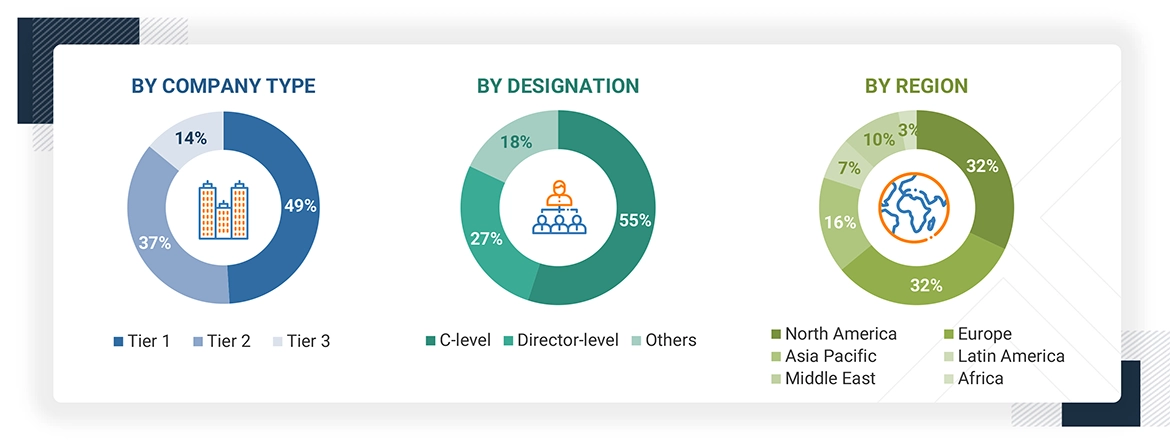
Others include Sales Managers, Marketing Managers, and Product Managers.
Tiers of companies are based on their revenue in 2024. Here’s the categorization of tiers:
Tier 1: company revenue greater than USD 1 billion; tier 2: company revenue between USD 100 million and USD 1 billion; and tier 3: company revenue less than USD 100 million
To know about the assumptions considered for the study, download the pdf brochure
Market Size Estimation
All percentage shares, splits, and breakdowns were determined using secondary sources and verified through primary sources. All possible parameters that affect the markets covered in this research study were accounted for, viewed in extensive detail, verified through primary research, and analyzed to obtain the final quantitative and qualitative data. This data was consolidated, enhanced with detailed inputs, analyzed by MarketsandMarkets, and presented in this report.
- Top-down and bottom-up approaches were used to estimate and validate the size of the UAV (drone) market.
- Key players were identified through secondary research, and their market ranking was determined through primary and secondary research. This included a study of annual and financial reports of the top market players and extensive interviews of leaders, including CEOs, directors, and marketing executives.
UAV (Drone) Market : Top-Down and Bottom-Up Approach
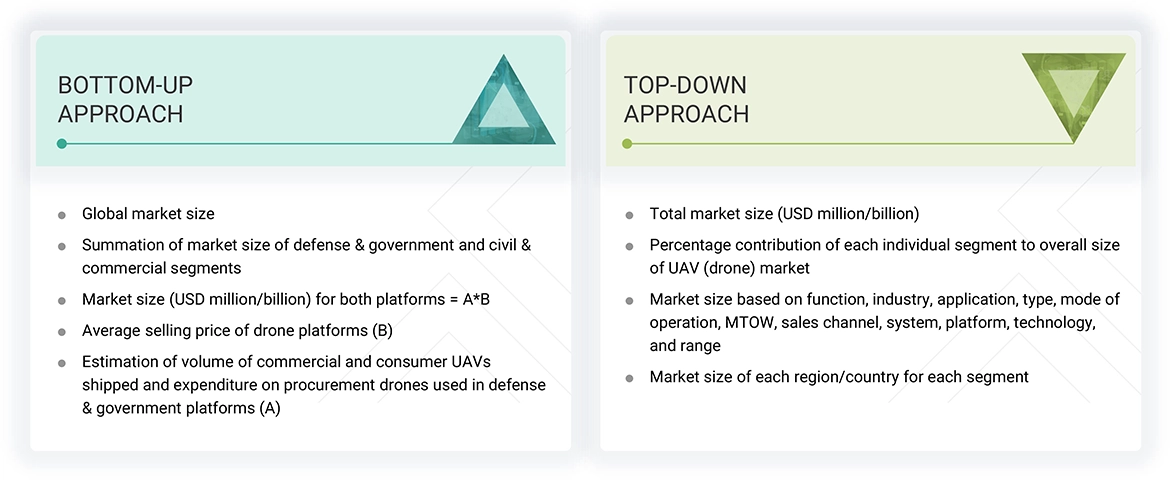
Data Triangulation
After arriving at the overall size of the UAV (drone) market from the market size estimation process explained above, the total market was split into several segments and subsegments. Wherever applicable, data triangulation and market breakdown procedures described below were implemented to complete the overall market engineering process and arrive at the exact statistics for various market segments and subsegments. The data was triangulated by studying different factors and trends from both the demand and supply sides. Additionally, the market size was validated using both top-down and bottom-up approaches.
Market Definition
Unmanned aerial vehicles (UAVs) are remotely piloted, optionally piloted, or fully autonomous aerial vehicles that play a significant role in the defense and commercial sectors. They are commonly termed drones and are mostly known for their wide usage in various military missions, such as border surveillance and combat operations. These vehicles are also used for mapping, surveying, and determining the weather conditions of a specific area.
Key Stakeholders
- UAV (Drone) Suppliers
- UAV (Drone) Component Manufacturers
- UAV (Drone) Manufacturers
- UAV (Drone) Pilot Training Institutes
- Technology Support Providers
- UAV (Drone) Software/Hardware/Service and Solution Providers
- Regulatory Bodies
- UAV (Drone) Consultants
- Defense Forces
Report Objectives
- To define, describe, segment, and forecast the size of the UAV market based on platform, system, industry, application, mode of operation, maximum take-off weight (MTOW), type, range, sales channel, function, technology, and region
- To forecast the size of various market segments with respect to six major regions, namely North America, Europe, Asia Pacific, the Middle East, Latin America, and Africa
- To identify and analyze key drivers, restraints, opportunities, and challenges influencing the growth of the market across the globe
- To identify industry trends, market trends, and technology trends that are currently prevailing in the market
- To provide an overview of the tariff and regulatory landscape with respect to drone regulations across regions
- To analyze micromarkets with respect to individual growth trends, prospects, and their contribution to the overall market
- To analyze opportunities in the market for stakeholders by identifying key market trends
- To profile key market players and comprehensively analyze their market shares and core competencies
- To analyze the degree of competition in the market by identifying key growth strategies, such as acquisitions, product launches, contracts, and partnerships, adopted by leading market players
- To identify detailed financial positions, key products, and unique selling points of leading companies in the market
- To provide a detailed competitive landscape of the market, along with market ranking analysis, market share analysis, and revenue analysis of key players
Customization Options
Along with the market data, MarketsandMarkets offers customizations to meet the specific needs of companies. The following customization options are available for the report:
Product Analysis
- Product matrix, which gives a detailed comparison of the product portfolio of each company
Regional Analysis
- Further breakdown of the market segments at the country level
Company Information
- Detailed analysis and profiling of additional market players (up to 5)
Key Questions Addressed by the Report
How is the UAV market expected to grow in value and volume by 2030?
The global UAV market is projected to grow from USD 26.12 billion in 2025 to USD 40.56 billion by 2030 at a CAGR of 9.2%, while OEM shipment volume is expected to increase from 596.94 thousand units to 869.76 thousand units during the same period.
What technologies are accelerating the adoption of UAVs across military and commercial sectors?
Improvements in autonomy, artificial intelligence, advanced sensing technologies, navigation systems, payload capabilities, and efficient power systems are expanding UAV capabilities and driving adoption across multiple industries.
Why does North America maintain a leading position in the global UAV market?
North America is expected to account for 48.6% of the global UAV market in 2025 due to strong defense spending, growing commercial drone adoption, investments in autonomous technologies, and advancements in BVLOS operations and analytics.
Which application segment is expected to record the fastest growth in the UAV market?
The commercial application segment is projected to grow at the fastest rate of 25.4% from 2025 to 2030 as drones gain wider acceptance in logistics, infrastructure inspection, agriculture, mapping, and environmental monitoring.
How is defense procurement contributing to UAV market expansion?
Defense organizations are increasingly procuring UAVs for intelligence, surveillance, reconnaissance, combat support, border monitoring, and battle management missions, creating sustained demand for advanced unmanned systems.
What opportunity is creating strong momentum for commercial drone manufacturers?
Growing investment in the commercial drone industry, which has expanded significantly since the pandemic period, is creating opportunities for innovation, infrastructure development, and broader deployment across industrial applications.
What regulatory challenge continues to affect UAV market growth?
The lack of standardized air traffic regulations and restrictions on drone operations near airports and controlled airspace continue to limit wider commercial deployment and create operational challenges for drone operators.
How are security concerns influencing UAV industry development?
Risks related to drone hijacking, communication vulnerabilities, and cybersecurity threats are driving increased focus on secure communications, encryption technologies, and protection measures for both military and commercial UAV platforms.
Which platform segment is expected to experience the strongest growth during the forecast period?
The civil and commercial platform segment is expected to grow at the fastest rate from 2025 to 2030 due to increasing use of UAVs for inspection, monitoring, logistics, agriculture, and infrastructure management applications.
Which companies are recognized as leading participants in the global UAV market?
DJI, Northrop Grumman Corporation, General Atomics, Israel Aerospace Industries Ltd., and Teledyne FLIR LLC are among the leading market participants, with DJI recognized for its strong market position and advanced UAV technologies.
Fact checked
Personalize This Research
- Triangulate with your Own Data
- Get Data as per your Format and Definition
- Gain a Deeper Dive on a Specific Application, Geography, Customer or Competitor
- Any level of Personalization
Let Us Help You
- What are the Known and Unknown Adjacencies Impacting the Unmanned Aerial Vehicle (UAV / Drone) Market
- What will your New Revenue Sources be?
- Who will be your Top Customer; what will make them switch?
- Defend your Market Share or Win Competitors
- Get a Scorecard for Target Partners

Custom Market Research Services
We Will Customise The Research For You, In Case The Report Listed Above Does Not Meet With Your Requirements
Get 10% Free CustomisationTESTIMONIALS
- US UAV (Drone) Market
- CANADA UAV (Drone) Market
- MEXICO UAV (Drone) Market
- BRAZIL UAV (Drone) Market
- ARGENTINA UAV (Drone) Market
- UK UAV (Drone) Market
- FRANCE UAV (Drone) Market
- GERMANY UAV (Drone) Market
- ITALY UAV (Drone) Market
- SWEDEN UAV (Drone) Market
- RUSSIA UAV (Drone) Market
- CHINA UAV (Drone) Market
- INDIA UAV (Drone) Market
- JAPAN UAV (Drone) Market
- SOUTH KOREA UAV (Drone) Market
- AUSTRALIA UAV (Drone) Market
- UAE UAV (Drone) Market
- SAUDI ARABIA UAV (Drone) Market
- ISRAEL UAV (Drone) Market
- TURKEY UAV (Drone) Market
- SOUTH AFRICA UAV (Drone) Market
- NIGERIA UAV (Drone) Market
Growth opportunities and latent adjacency in Unmanned Aerial Vehicle (UAV / Drone) Market






Kirill
Sep, 2019
We are a big agricultural business in Russia with over 100,000 hectares of irrigated land. We are interested in modern, sophisticated methods of control & security, such as the use of drones—not only quadcopters but also heavier fixed wing types—in monitoring. We are developing a business strategy to study the use of all classes of UAVs in Russian agriculture. Your report would be greatly appreciated after we have a look at the sample. Best wishes. Kirill Shilin. Marketing Manager. .
Cedric
Apr, 2026
Do you cover regulatory frameworks and compliance requirements across regions like North America, Europe, and Asia Pacific?.
Jeffrey
Apr, 2026
Does the report include pricing analysis and cost structures, like BOM or total cost of ownership for drones?.
Ahmed
Sep, 2019
I am interested in the UAV market and segmentation for all sizes, including growth opportunities and recent trends in UAVs..
MEHDI
Feb, 2019
SIR, HOW DO YOU FORESEE THE GROWTH OF HEAVY CARGO/PASSENGER UAVs IN INDIA AND NEIGHBOURING COUNTRIES..
ilaria
Jul, 2019
We are interested in the market value of Automated Aerial Monitoring data (UAVs) in water enviromental monitoring for sea water Pollution Monitoring..
xiangzi
Apr, 2024
八边形布局的八旋翼无人机在续航时间方面表现最佳。八边形布局可以提供更好的动力系统效率和飞行稳定性,从而延长飞行时间。在哪篇报告里.
TUYIHIMBAZE
Aug, 2019
Hi, Thanks for the great research done around UAVs. I am interested in reading this global forecast so I can direct our business well. We have been training young people to make drones that can be used to solve some of the biggest challenges here in Africa. It will be of great support to have a document guiding us regarding the market and the types of drones across the world. Best Regards, Serge.
Ahmad
Feb, 2019
I research on the technological aspects of UAV development as a graduate researcher. I am preparing for a business start-up competition and am looking for some detailed insights into UAV market and growth..
Stewart
Aug, 2019
Assess overall Class II and II+ UAV market to determine economics of component manufacturers and technological innovation investment..
Bcharan
Nov, 2019
We are an upcoming start-up into drones. Before we start this business, we are doing due market research to understand the sales growth for drones. We need a customized report having the following details 1. UAV Market, By UAV Type in India 2. UAV Market, By Application 3. UAV Market, By Class (Small) 4. UAV Payloads, By Type 5. UAV Gimbals 6. UAV Market, By Point of Sale (OEM & Aftermarket) 7. UAV Market, By MTOW (<25 Kilograms, 25-150 Kilograms, >150 Kilograms) 8. UAV Market, By Region (India) .
Robert
Aug, 2019
I'm researching the market for UAV avionics to evaluate the business case for investment in next-generation avionics computing and fault tolerant systems..
Nasser
Aug, 2019
I am an investor in the UAV market, and and the Director of Malaysia's only indigenous UAS development and integration organization. I would like to view the information in your report. .
Mads
Aug, 2019
I'm working with the "International Business and Entrepreneurship" research group at the Department of Marketing and Management, where I am doing a project on the business aspects of the global UAV market. I am interested in all business intelligence on the global UAV industry. .
minwoo
Jul, 2019
We want to read your analysis to look at the possibility for the success of wireless charging for smart commercial drones..
MnM Analyst
Jun, 2019
With upcoming India UTM regulations in place for BVLOS UAVs, the expected market potential in short term would be for Light Cargo Delivery Drone especially e-commerce, retail, food delivery etc. The market growth for heavy lift drones will depend on the successful implementation of Light Cargo Delivery Drone as drone operations with heavy payloads are restricted by aviation authorities. In India, commercial drones operations are restricted and need special approvals from DGCA prior the flight. However, Indian UAV manufacturers are developing UAV prototypes, capable of lifting heavy payloads. For instance, In February 2019, Poeir Jets launches Heavy-lift Hybrid Drone with MTOW of 200 Kgs to be used for Cargo, Civil, Agriculture, Forestry, Defence and other strategic applications. Neighboring countries such as China and Malaysia are developing UAVs with MTOW capacity ranging from 800 Kgs to 5000 Kgs to be used for various commercial & military applications. Irrespective of the development in UAV industry, the growth of heavy lift drones market is subject to the regulatory approvals by the concerned aviation authorities. .
MOHAMMED
May, 2019
Dear Sir/Madam, We are looking for a UAV market research report customized for the MENA region. I am wondering about the cost of the customization, especially for the GCC region. Moreover, I would like to have a free sample of this report. Regards, Mohammed.
Grepow
Mar, 2020
We are a battery manufacturer, and the UAV drone battery is also one of our projects. In recent years, the development of UAV is very rapid, and the demand for customized drone battery is also in short supply..
sritej
Mar, 2019
We are planning to start a consultancy in the UAV Industry, and would like to analyse the market for the same. Thank you..
Bresca
Mar, 2019
Good evening. I am researching on the use of UAVs as a possible component in a communications solution for PPDR (Public Protection and Disaster Preparedness) scenarios..
User
Feb, 2022
What is the best cost for the report ? .
Priscilla
Jan, 2019
Understanding broad market segmentation and growth to help in evaluating commercial potential of disclosed technologies..