Telepresence (Videoconferencing) Market by Component (Hardware, Software and Service), System Type (immersive Telepresence, Personal Telepresence, Holographic Telepresence, and Robotic Telepresence), Industry, and Geography - Global Forecast to 2035


Telepresence (Videoconferencing) Market Summary
The Telepresence (Videoconferencing) Market is experiencing sustained expansion as enterprises, government organizations, educational institutions, healthcare providers, and other sectors adopt digital collaboration technologies to support distributed workforces and hybrid communication. The global Telepresence (Videoconferencing) Market is estimated at approximately USD 10–15 billion in 2025 and is projected to reach USD 30–40 billion by 2035, registering a CAGR of 11%–13% during the forecast period. Market growth is being driven by the continued adoption of hybrid work models, enterprise digital transformation, increasing demand for immersive communication, cloud-based collaboration, and investments in connected workplace infrastructure.
The market has evolved beyond conventional video calling toward intelligent collaboration environments that combine high-definition video, spatial audio, interactive displays, AI-enabled meeting assistance, real-time transcription, language translation, virtual backgrounds, facial framing, automated camera control, and analytics. The integration of artificial intelligence is improving meeting experiences by automating routine tasks and enabling more natural communication between geographically distributed teams.
IoT is also contributing to the evolution of telepresence infrastructure. Connected cameras, microphones, displays, room-control systems, occupancy sensors, and smart building platforms can work together to create automated collaboration spaces. This convergence allows organizations to optimize meeting-room utilization, energy consumption, device management, and employee experiences.
Cloud computing remains another major growth factor. Cloud-hosted videoconferencing platforms reduce the need for extensive on-premises infrastructure while enabling users to participate from laptops, smartphones, meeting rooms, and specialized telepresence systems. As organizations continue to digitize operations, demand for scalable and interoperable communication platforms is expected to remain strong through 2035.
Key Market Trends & Insights
The Telepresence (Videoconferencing) Market is increasingly shifting toward AI-powered collaboration. AI can automatically frame participants, suppress background noise, summarize discussions, generate meeting transcripts, identify action items, and provide real-time language translation. These capabilities are making videoconferencing platforms more productive and accessible.
North America is expected to remain a leading regional market, supported by early adoption of cloud collaboration platforms, strong enterprise technology spending, widespread hybrid-work adoption, and the presence of major technology providers.
Asia Pacific is projected to be the fastest-growing region through 2035. Rapid digitalization, expanding enterprise IT infrastructure, increasing adoption of remote collaboration, and investments in smart offices and digital education are creating significant opportunities.
The market is also witnessing increased adoption of room-based telepresence solutions. Organizations are upgrading conference rooms with intelligent cameras, multi-display configurations, advanced microphones, interactive screens, and centralized room-management systems.
Another important trend is the emergence of immersive telepresence. Technologies such as spatial audio, high-resolution video, extended reality, 3D visualization, and virtual meeting environments are gradually enhancing the sense of physical presence during remote interactions.
Automation is becoming an important differentiator. Smart meeting rooms can automatically detect participants, activate displays, adjust lighting, configure cameras, and initiate meetings based on scheduled events or user authentication.
Market Size & Forecast
- Base year market size (2025): USD 10–15 billion
- Forecast market value (2035): USD 30–40 billion
- CAGR (2025–2035): 11%–13%
- Primary growth factors: Hybrid work, enterprise digital transformation, cloud collaboration, smart meeting rooms, remote education, telehealth, and global workforce connectivity.
- Technology outlook: AI, IoT, cloud computing, automation, spatial audio, immersive displays, intelligent cameras, and real-time language technologies will shape market development.
Telepresence (Videoconferencing) Market Market Top 10 key takeaway
- The Telepresence (Videoconferencing) Market is estimated at USD 10–15 billion in 2025.
- The market is projected to reach USD 30–40 billion by 2035.
- The market is expected to expand at a CAGR of 11%–13% during 2025–2035.
- Hybrid work remains one of the most important demand drivers.
- Cloud-based videoconferencing is increasingly replacing legacy communication infrastructure.
- AI is transforming meeting management, transcription, translation, and video optimization.
- North America is expected to remain a leading regional market.
- Asia Pacific is projected to record the fastest growth.
- Smart meeting rooms are increasing demand for connected cameras, displays, microphones, and room-control systems.
- Immersive telepresence and intelligent collaboration are expected to create new opportunities through 2035.
Product Insights
The product landscape of the Telepresence (Videoconferencing) Market includes hardware, software platforms, and services. Hardware encompasses cameras, microphones, speakers, displays, codecs, room systems, controllers, and specialized telepresence equipment. Software includes videoconferencing applications, collaboration platforms, meeting-management tools, AI-powered assistants, analytics, and security solutions. Services include installation, integration, managed services, technical support, and consulting.
Video conferencing systems and room-based collaboration equipment represent important product categories because organizations increasingly require reliable communication infrastructure for hybrid teams. High-resolution cameras and intelligent microphones are becoming standard components of modern meeting spaces. Manufacturers are emphasizing features such as automatic participant framing, speaker tracking, noise cancellation, echo reduction, and improved low-light performance.
Cloud-based software platforms are also gaining significant adoption because they provide scalable access across multiple locations and device types. Organizations can deploy communication services without investing heavily in dedicated hardware for every user. Cloud platforms also support continuous software updates, integration with enterprise applications, centralized administration, and AI-based features.
Emerging products include intelligent meeting-room systems, immersive telepresence environments, interactive collaboration displays, spatial-audio solutions, and AI-enabled conferencing devices. These products are designed to make remote participants feel more integrated into physical meetings.
AI is increasingly embedded directly into telepresence products. Cameras can use AI for framing and speaker tracking, while microphones can apply intelligent audio processing. Meeting software can generate summaries, extract action items, provide captions, and translate conversations in real time.
Technology / Component Insights
Technology innovation is a major competitive factor in the Telepresence (Videoconferencing) Market. Modern systems combine high-resolution imaging, advanced audio processing, cloud infrastructure, AI algorithms, networking technologies, and collaboration software.
AI is one of the most influential technologies reshaping the market. Intelligent algorithms can recognize speakers, optimize camera positioning, improve audio quality, suppress unwanted background sounds, and generate automated meeting documentation. Generative AI is further expanding functionality by enabling meeting summaries, question answering, content retrieval, and automated follow-up generation.
IoT integration is creating connected meeting environments. Cameras, displays, microphones, lighting systems, occupancy sensors, room-control devices, and building-management platforms can exchange information. This enables automated room configuration and more efficient utilization of workplace resources.
Cloud computing provides the scalability required by global organizations. Cloud-based telepresence platforms allow users to connect from different locations while supporting centralized administration and software updates. Hybrid cloud architectures are also becoming important for organizations that require greater control over sensitive communications.
Automation is improving the user experience. Smart meeting rooms can automatically configure equipment when participants enter, adjust displays and cameras, detect room occupancy, and release unused meeting rooms.
Future technology development is expected to focus on immersive communication, spatial computing, AI agents, real-time translation, 3D environments, advanced cybersecurity, edge computing, and seamless interoperability among communication platforms.
Application Insights
Enterprise communication represents the leading application area in the Telepresence (Videoconferencing) Market. Businesses use videoconferencing for internal meetings, customer interactions, sales presentations, training, recruitment, project management, and collaboration among geographically distributed teams.
The continued adoption of hybrid and remote work is supporting demand. Organizations increasingly need communication tools that connect employees working from offices, homes, regional facilities, and international locations. High-quality telepresence can reduce travel requirements while maintaining real-time interaction.
Healthcare represents another important application. Telepresence supports remote consultations, specialist interactions, medical education, and collaboration among healthcare professionals. The integration of high-quality video and audio is particularly valuable where physical presence is difficult or impractical.
Education is also benefiting from telepresence technologies. Universities, schools, training organizations, and professional education providers use videoconferencing to deliver remote classes, expert sessions, collaborative learning, and international programs.
Government agencies use telepresence for administrative meetings, public services, cross-agency collaboration, and remote operations. Financial institutions, professional services organizations, and technology companies are also significant users.
Future opportunities will emerge from immersive learning, remote technical assistance, virtual customer service, industrial collaboration, digital healthcare, and AI-powered enterprise communication.
Regional Insights
North America is expected to remain a leading region in the Telepresence (Videoconferencing) Market, supported by mature cloud infrastructure, strong enterprise software adoption, widespread hybrid working practices, and high investments in workplace technology. The United States remains a major demand center due to the presence of large technology companies and digitally mature enterprises.
Europe is another significant market, driven by enterprise digitalization, distributed workforces, smart-office investments, and demand for secure communication. European organizations are increasingly focused on data protection, interoperability, and sustainable workplace technologies.
Asia Pacific is projected to experience the fastest growth. China, Japan, India, South Korea, Singapore, and other regional economies are investing heavily in digital infrastructure and connected workplaces. Increasing smartphone and broadband penetration is also broadening access to video collaboration.
- North America: Strong enterprise adoption and mature cloud infrastructure support market leadership.
- Europe: Digital workplace transformation and secure collaboration are major growth factors.
- Asia Pacific: Rapid digitalization makes it the fastest-growing regional market.
- China: Enterprise technology adoption and smart-office investments support demand.
- India: Expanding digital workplaces, education technology, and IT services create opportunities.
Country-Specific Market Trends
China is expected to record approximately 13%–15% CAGR during the forecast period. Demand is supported by enterprise digitalization, smart-office development, technology-enabled education, and large-scale investments in connected infrastructure. Domestic technology ecosystems are also supporting the development of cloud-based collaboration platforms.
Japan is projected to grow at approximately 9%–11% CAGR, supported by workplace modernization, advanced communications infrastructure, aging workforce requirements, and increasing demand for remote collaboration technologies.
In North America, the United States is expected to register approximately 10%–12% CAGR. Hybrid work, enterprise cloud adoption, AI-enabled collaboration, and investments in smart conference rooms will remain key growth factors. Canada is projected to grow at approximately 9%–11% CAGR, while Mexico is expected to register approximately 10%–12% CAGR as enterprises modernize their communication infrastructure.
In Europe, Germany is expected to expand at approximately 9%–11% CAGR, driven by industrial digitalization, smart workplaces, and enterprise collaboration. France is projected to register approximately 9%–11% CAGR, supported by government digitalization, corporate technology adoption, education, and remote collaboration.
- China: Enterprise digitalization and smart-office development support strong growth.
- Japan: Advanced communications infrastructure supports sophisticated telepresence adoption.
- United States: Hybrid work and AI-enabled collaboration remain major growth drivers.
- Germany: Industrial digital transformation is supporting enterprise videoconferencing demand.
- France: Corporate, government, and education applications are expanding the market.
Key Telepresence (Videoconferencing) Market Company Insights
The competitive landscape of the Telepresence (Videoconferencing) Market includes major collaboration-platform providers, networking companies, audiovisual technology manufacturers, and specialized meeting-room technology vendors. Key companies include Cisco, Microsoft, Zoom Video Communications, Google, Logitech, HP, Poly, Huawei, Sony, and Panasonic.
Cisco continues to emphasize enterprise collaboration, networking integration, security, and intelligent meeting experiences. Microsoft integrates videoconferencing with its broader productivity ecosystem, while Zoom continues expanding from video meetings toward comprehensive collaboration and AI-enabled workplace tools.
Google benefits from its cloud and productivity ecosystem, supporting integrated communication experiences. Logitech focuses strongly on meeting-room hardware, cameras, microphones, and intelligent collaboration devices. HP and Poly provide enterprise collaboration hardware and room systems.
Huawei has a strong presence in enterprise communication infrastructure, particularly across international markets. Sony and Panasonic contribute display, imaging, and professional audiovisual technologies that support telepresence environments.
Across the competitive landscape, companies are increasingly investing in AI assistants, intelligent cameras, audio processing, interoperability, cloud services, room automation, and security.
- Cisco: Focuses on integrated enterprise collaboration and intelligent meeting solutions.
- Microsoft: Combines videoconferencing with productivity and AI capabilities.
- Zoom: Expands its platform with AI-powered collaboration features.
- Logitech: Emphasizes intelligent cameras and meeting-room hardware.
- Google: Integrates video collaboration with cloud and productivity ecosystems.
Recent Developments
AI integration is one of the most important recent developments in the Telepresence (Videoconferencing) Market. Leading platforms are introducing AI assistants capable of generating meeting summaries, identifying action items, improving meeting transcripts, and supporting information retrieval.
Another development is the expansion of intelligent meeting-room hardware. Newer cameras and microphones increasingly include automated framing, speaker tracking, advanced noise suppression, and intelligent room management.
The market is also seeing stronger integration between videoconferencing platforms and enterprise applications. Collaboration tools are increasingly connected with calendars, productivity software, customer relationship management platforms, project-management systems, and workplace-management solutions.
Market Segmentation
The Telepresence (Videoconferencing) Market can be segmented by Product, Technology/Component, Application, and Region. By Product, the market includes hardware, software, and services, with hardware covering cameras, microphones, displays, speakers, codecs, room systems, and controllers. By Technology/Component, the market includes AI-enabled systems, cloud platforms, IoT-connected devices, networking infrastructure, audio technologies, imaging technologies, and collaboration software. By Application, the market covers enterprises, healthcare, education, government, financial services, manufacturing, media, and other sectors. By Region, the market comprises North America, Europe, Asia Pacific, and Rest of the World.
- By Product: Software platforms and intelligent hardware represent major growth categories.
- By Technology: AI, cloud, IoT, advanced audio, and intelligent imaging are key technologies.
- By Application: Enterprises remain the largest demand center, followed by healthcare and education.
- By Deployment: Cloud and hybrid architectures are gaining adoption.
- By Region: North America leads, while Asia Pacific is expected to grow fastest.
Conclusion
The Telepresence (Videoconferencing) Market is entering a new phase of development in which videoconferencing is evolving from a communication utility into an intelligent digital collaboration platform. The market is estimated at USD 10–15 billion in 2025 and is projected to reach USD 30–40 billion by 2035, representing a CAGR of 11%–13%.
AI will remain one of the strongest technological forces shaping the market. AI-powered transcription, translation, meeting summaries, intelligent camera control, audio optimization, and automated workflows can significantly improve productivity and user experience.
IoT and automation will further transform meeting rooms by connecting communication devices with workplace-management systems. Organizations will increasingly use occupancy data, automated room controls, connected displays, and centralized device management to optimize collaboration infrastructure.
The emergence of immersive telepresence will create another long-term opportunity. Spatial audio, extended reality, high-resolution displays, 3D environments, and AI-driven digital collaboration could make remote communication more natural and interactive.
Through 2035, organizations will increasingly evaluate telepresence solutions based not only on video quality but also on interoperability, cybersecurity, AI functionality, scalability, analytics, automation, and total cost of ownership. Companies capable of delivering seamless, intelligent, secure, and highly integrated collaboration ecosystems will be well positioned to capture future opportunities.
FAQs
1. What is the market size of the Telepresence (Videoconferencing) Market?
The Telepresence (Videoconferencing) Market is estimated at USD 10–15 billion in 2025 and is projected to reach USD 30–40 billion by 2035.
2. What is the growth rate of the Telepresence (Videoconferencing) Market?
The market is expected to expand at a CAGR of 11%–13% from 2025 to 2035, driven by hybrid work, cloud collaboration, enterprise digitalization, and AI-enabled communication.
3. What are the key drivers of the Telepresence (Videoconferencing) Market?
Key drivers include hybrid work, remote collaboration, cloud computing, enterprise digital transformation, smart-office adoption, AI integration, IoT connectivity, remote education, telehealth, and demand for immersive communication.
4. Which region is expected to lead the Telepresence (Videoconferencing) Market?
North America is expected to remain a leading regional market because of strong enterprise technology adoption, mature cloud infrastructure, and widespread hybrid work. Asia Pacific is expected to register the fastest growth.
5. Who are the key companies in the Telepresence (Videoconferencing) Market?
Major companies include Cisco, Microsoft, Zoom Video Communications, Google, Logitech, HP, Poly, Huawei, Sony, and Panasonic. These companies are focusing on AI-powered collaboration, intelligent meeting-room hardware, cloud platforms, automation, interoperability, and secure communication.
To speak to our analyst for a discussion on the above findings, click Speak to Analyst
 Exclusive indicates content/data unique to MarketsandMarkets and not available with any competitors.
Table of Contents
1 Introduction (Page No. - 16)
1.1 Objectives of the Study
1.2 Market Definition
1.3 Study Scope
1.3.1 Markets Covered
1.3.2 Geographic Scope
1.3.3 Years Considered for the Study
1.4 Currency and Pricing
1.5 Limitations
1.6 Stakeholders
2 Research Methodology (Page No. - 20)
2.1 Research Data
2.2 Secondary Data
2.2.1 Key Data From Secondary Sources
2.3 Primary Data
2.3.1 Key Data From Primary Sources
2.3.2 Key Industry Insights
2.3.3 Breakdown of Primaries
2.4 Market Size Estimation
2.4.1 Bottom-Up Approach
2.4.2 Top-Down Approach
2.5 Market Breakdown & Data Triangulation
2.6 Research Assumptions
2.6.1 Assumptions
3 Executive Summary (Page No. - 28)
4 Premium Insights (Page No. - 33)
4.1 Attractive Growth Opportunities in the Telepresence Market
4.2 Telepresence Market, By Type
4.3 Telepresence Market, 2015
4.4 U.S. Held the Largest Share of the Telepresence Market
5 Market Overview (Page No. - 36)
5.1 Introduction
5.2 Evolution of Telepresence
5.3 Market Segmentation
5.3.1 Telepresence Market, By System Type
5.3.2 Telepresence Market, By Component & Service
5.3.3 Telepresence Market, By Industry
5.3.4 Telepresence Market, By Geography
5.3.5 Drivers
5.3.5.1 Growing Need to Reduce Traveling Costs in Small and Large Enterprises
5.3.5.2 Growing Demand for Robotic Telepresence in the Healthcare Industry
5.3.6 Restraints
5.3.6.1 High Initial Investments and Installation Costs
5.3.6.2 Issues Related to Low-Bandwidth Telepresence Systems
5.3.7 Opportunities
5.3.7.1 Development of Screenless Telepresence Systems Using Holograms
5.3.7.2 Advancements and Upgrades in Telepresence Systems
5.3.8 Challenges
5.3.8.1 Communication Delays Due to Networking Issues
6 Industry Trends (Page No. - 43)
6.1 Introduction
6.2 Value Chain Analysis
6.3 Porter’s Five Forces Model
6.3.1 Threat of New Entrants
6.3.2 Threat of Substitutes
6.3.3 Bargaining Power of Buyers
6.3.4 Bargaining Power of Suppliers
6.3.5 Intensity of Competitive Rivalry
7 Market, By Component & Service (Page No. - 50)
7.1 Introduction
7.2 Hardware
7.2.1 Displays
7.2.2 Projectors
7.2.3 Camera
7.2.3.1 Ptz Camera
7.2.3.2 Usb Camera
7.2.3.3 Others
7.2.4 Sensors
7.2.5 Audio Device
7.2.5.1 Conference Phones
7.2.5.2 Desktop Phones
7.2.5.3 Microphones
7.2.5.4 Speakers
7.2.6 Lighting
7.2.7 Processors
7.2.8 Interfaces
7.2.8.1 Graphical User Interface
7.2.8.2 Touch Control Interface
7.2.8.3 Browser-Based Interface
7.2.9 Others
7.2.9.1 Switches
7.2.9.2 Routers
7.2.9.3 Adapters
7.2.9.4 Cables
7.3 Software
7.3.1 Cloud Computing Software
7.3.2 Audio-Video Communication Software
7.3.3 Server
7.4 Services
8 Telepresence Market, By System Type (Page No. - 59)
8.1 Introduction
8.2 Static Telepresence
8.2.1 Immersive Telepresence
8.2.2 Personal Telepresence
8.2.3 Holographic Telepresence
8.3 Remote Telepresence Systems
8.3.1 Robotic Telepresence Systems
9 Telepresence Market, By Industry (Page No. - 81)
9.1 Introduction
9.2 Enterprise Industry
9.2.1 Government
9.2.2 Private
9.3 Healthcare Industry
9.4 Commercial Industry
9.4.1 Retail
9.4.2 Advertisement
9.4.3 Designing
9.5 Consumer Industry
9.5.1 Sports
9.5.2 Entertainment
9.6 Education Industry
9.7 Manufacturing Industry
9.7.1 Energy
9.8 Other Industries
9.8.1 Construction
9.8.2 Engineering
9.8.3 Space Application
10 Telepresence Market, By Geography (Page No. - 99)
10.1 Introduction
10.2 North America
10.2.1 U.S.
10.2.2 Canada
10.2.3 Mexico
10.3 Europe
10.3.1 U.K.
10.3.2 Germany
10.3.3 France
10.3.4 Rest of Europe
10.4 Asia-Pacific
10.4.1 China
10.4.2 Japan
10.4.3 India
10.4.4 South Korea
10.4.5 Rest of APAC
10.5 Rest of the World
10.5.1 Middle East and Africa
10.5.2 South America
11 Competitive Landscape (Page No. - 112)
11.1 Introduction
11.2 Market Ranking of Key Players in the Telepresence Market
11.3 Competitive Analysis
11.4 Recent Developments
11.4.1 New Product Developments: Telepresence Market
11.4.2 Agreements, Partnerships, Joint Ventures, Collaborations, & Expansions
11.4.3 Mergers & Acquisitions
11.4.4 Others
12 Company Profile (Page No. - 121)
(Overview, Products and Services, Financials, Strategy & Development)*
12.1 Introduction
12.2 Cisco Systems, Inc.
12.3 Polycom, Inc.
12.4 Huawei Technologies Co., Ltd.
12.5 ZTE Corp.
12.6 Lifesize, Inc.
12.7 Avaya Inc.
12.8 Vidyo Inc.
12.9 VGO Communications, Inc.
12.10 Teliris Inc.
12.11 Array Telepresence, Inc.
*Details on Overview, Products and Services, Financials, Strategy & Development Might Not Be Captured in Case of Unlisted Companies.
13 Appendix (Page No. - 144)
13.1 Insights of Industry Experts
13.2 Discussion Guide
13.3 Knowledge Store: Marketsandmarkets’ Subscription Portal
13.4 Introducing RT: Real-Time Market Intelligence
13.5 Available Customization
13.6 Related Reports
List of Tables (68 Tables)
Table 1 Global Telepresence Market, By Component & Service, 2013–2022 (USD Million)
Table 2 Global Telepresence Market for Hardware Component, By System Type, 2013–2022 (USD Million)
Table 3 Telepresence Market, By System Type, 2013–2022 (USD Million)
Table 4 Telepresence Market for Static Telepresence Systems, By Industry, 2013–2022 (USD Million)
Table 5 Telepresence Market for Immersive Telepresence Systems, By Industry, 2013–2022 (USD Million)
Table 6 Immersive Telepresence Systems Market for Enterprise Industry, By Region, 2013–2022 (USD Million)
Table 7 Immersive Telepresence Systems Market for Healthcare Industry, By Region, 2013–2022 (USD Million)
Table 8 Immersive Telepresence Systems Market for Commercial Industry, By Region, 2013–2022 (USD Million)
Table 9 Immersive Telepresence Systems Market for Consumer Industry, By Region, 2013–2022 (USD Million)
Table 10 Immersive Telepresence Systems Market for Manufacturing Industry, By Region, 2013–2022 (USD Million)
Table 11 Immersive Telepresence Systems Market for Education Industry, By Region, 2013–2022 (USD Million)
Table 12 Immersive Telepresence Systems Market for Other Industries, By Region, 2013–2022 (USD Million)
Table 13 Personal Telepresence Systems Market, By Industry, 2013–2022 (USD Million)
Table 14 Personal Telepresence Systems Market for Healthcare Industry, By Region, 2013–2022 (USD Million)
Table 15 Personal Telepresence Systems Market for Consumer Industry, By Region, 2013–2022 (USD Million)
Table 16 Personal Telepresence Systems Market for Manufacturing Industry, By Region, 2013–2022 (USD Million)
Table 17 Personal Telepresence Systems Market for Education Industry, By Region, 2013–2022 (USD Million)
Table 18 Personal Telepresence Systems Market for Other Industries, By Region, 2013–2022 (USD Million)
Table 19 Holographic Telepresence Systems Market , By Industry, 2013–2022 (USD Million)
Table 20 Holographic Telepresence Systems Market for Enterprise Industry, By Region, 2013–2022 (USD Million)
Table 21 Holographic Telepresence Systems Market for Healthcare Industry, By Region, 2013–2022 (USD Million)
Table 22 Holographic Telepresence Systems Market for Commercial Industry, By Region, 2013–2022 (USD Million)
Table 23 Holographic Telepresence Systems Market for Education Industry, By Region, 2013–2022 (USD Million)
Table 24 Holographic Telepresence Systems Market for Other Industries, By Region, 2013–2022 (USD Million)
Table 25 Robotic Telepresence Systems Market, By Industry, 2013–2022 (USD Million)
Table 26 Robotic Telepresence Market for Enterprise Industry, By Region, 2013–2022 (USD Million)
Table 27 Robotic Telepresence Systems Market for Healthcare Industry, By Region, 2013–2022 (USD Million)
Table 28 Robotic Telepresence Systems Market for Commercial Industry, By Region, 2013–2022 (USD Million)
Table 29 Robotic Telepresence Systems Market for Consumer Industry, By Region, 2013–2022 (USD Million)
Table 30 Robotic Telepresence Systems Market for Education Industry, By Region, 2013–2022 (USD Million)
Table 31 Robotic Telepresence Systems Market for Manufacturing Industry, By Region, 2013–2022 (USD Million)
Table 32 Robotic Telepresence Systems Market for Other Industries, By Region, 2013–2022 (USD Million)
Table 33 Telepresence Market, By Industry, 2013–2022 (USD Million)
Table 34 Telepresence Market for Enterprise Industry, By System Type, 2013–2022 (USD Million)
Table 35 Telepresence Market for Enterprise Industry, By Static System Type, 2013–2022 (USD Million)
Table 36 Telepresence Market for Enterprise Industry, By Region, 2013–2022 (USD Million)
Table 37 Telepresence Market for Healthcare Industry, By System Type, 2013–2022 (USD Million)
Table 38 Telepresence Market for Healthcare Industry, By Static System Type, 2013–2022 (USD Million)
Table 39 Telepresence Market for Healthcare Industry, By Region, 2013–2022 (USD Million)
Table 40 Telepresence Market for Commercial Industry, By System Type, 2013–2022 (USD Million)
Table 41 Telepresence Market for Commercial Industry, By Static System Type, 2013–2022 (USD Million)
Table 42 Telepresence Market for Commercial Industry, By Region, 2013–2022 (USD Million)
Table 43 Telepresence Market for Consumer Industry, By System Type, 2013–2022 (USD Million)
Table 44 Telepresence Market for Consumer Industry, By Static System Type, 2013–2022 (USD Million)
Table 45 Telepresence Market for Consumer Industry, By Region, 2013–2022 (USD Million)
Table 46 Telepresence Market for Education Industry, By System Type, 2013–2022 (USD Million)
Table 47 Telepresence Market for Education Industry, By Static System Type, 2013–2022 (USD Million)
Table 48 Telepresence Market for Education Industry, By Region, 2013–2022 (USD Million)
Table 49 Telepresence Market for Manufacturing Industry, By System Type, 2013–2022 (USD Million)
Table 50 Telepresence Market for Manufacturing Industry, By Static System Type, 2013–2022 (USD Million)
Table 51 Telepresence Market for Manufacturing Industry, By Region, 2013–2022 (USD Million)
Table 52 Telepresence Market for Other Industries, By System Type, 2013–2022 (USD Million)
Table 53 Telepresence Market for Other Industries, By Static System Type, 2013–2022 (USD Million)
Table 54 Telepresence Market for Other Industries, By Region, 2013–2022 (USD Million)
Table 55 Global Telepresence Market Size, By Region, 2013–2022 (USD Million)
Table 56 Telepresence Market in North America, By Industry, 2013–2022 (USD Million)
Table 57 Telepresence Market in North America, By Country, 2013–2022 (USD Million)
Table 58 Telepresence Market in Europe, By Industry, 2013–2022 (USD Million)
Table 59 Telepresence Market in Europe, By Country, 2013–2022 (USD Million)
Table 60 Telepresence Market in APAC, By Industry, 2013–2022 (USD Million)
Table 61 Telepresence Market in APAC, By Country, 2013–2022 (USD Million)
Table 62 Telepresence Market in RoW, By Industry, 2013–2022 (USD Million)
Table 63 Telepresence Market in RoW, By Region, 2013–2022 (USD Million)
Table 64 Market Ranking of Top 5 Players in the Telepresence Market
Table 65 New Product Launches and Developments, 2010–2016
Table 66 Agreements, Partnerships, Joint Ventures, Collaborations, and Expansions, 2012–2016
Table 67 Mergers & Acquisitions, 2015
Table 68 Others, 2011–2016
List of Figures (53 Figures)
Figure 1 Markets Covered
Figure 2 Telepresence Market: Research Design
Figure 3 Telepresence Market Size Estimation Methodology: Bottom-Up Approach
Figure 4 Telepresence Market Size Estimation Methodology: Top-Down Approach
Figure 5 Assumptions for the Research Study
Figure 6 Telepresence Market, By System Type, 2013–2022 (USD Million)
Figure 7 Enterprise and Education Industries Expected to Hold A Large Share of the Telepresence Market By 2022
Figure 8 APAC to Grow at the Highest Rate in the Telepresence Market
Figure 9 Healthcare Industry Expected to Witness Highest Growth Rate Between 2016 and 2022
Figure 10 North America Held the Largest Market Share in 2015
Figure 11 Telepresence Market Expected to Grow at A High CAGR During the Forecast Period
Figure 12 Static Telepresence Systems to Exhibit High Growth During the Forecast Period
Figure 13 North America Held the Largest Market Share in 2015
Figure 14 Telepresence Market in India Expected to Grow at the Highest CAGR Between 2016 and 2022
Figure 15 Evolution of Telepresence
Figure 16 Telepresence Market, By Geography
Figure 17 Growing Demand for Telepresence Systems in Healthcare and Enterprise Sectors is A Driving Factor
Figure 18 Value Chain Analysis (2015): Major Value Added During Research & Product Development and Manufacturing Stages
Figure 19 Porter’s Five Force Analysis, 2015
Figure 20 Porter’s Five Force Analysis for the Telepresence Market, 2015
Figure 21 Impact Analysis of Threat of New Entrants
Figure 22 Impact Analysis of Threat of Substitutes
Figure 23 Impact Analysis of Bargaining Power of Buyers
Figure 24 Impact Analysis of Bargaining Power of Suppliers
Figure 25 Impact Analysis of Intensity of Competitive Rivalry
Figure 26 Software Market Expected to Grow at the Highest Rate Between 2016 and 2022
Figure 27 The Holographic Telepresence Systems Market Expected to Grow at the Highest Rate During Forecast Period
Figure 28 Healthcare Industry Expected to Grow at A High Rate During the Forecast Period for Immersive Telepresence Systems Market
Figure 29 Immersive Telepresence Market for Healthcare Industry in North America Held the Largest Share in 2015
Figure 30 The Healthcare Industry Expected to Grow at the Highest Rate During Forecast Period
Figure 31 Enterprise Industry Held the Largest Share of North America Region in 2015
Figure 32 Robotic Telepresence Systems Market for Consumer Industry Held the Largest Size in 2015
Figure 33 The Healthcare Industry to Grow at A High Rate Between 2016 and 2022
Figure 34 The Immersive Telepresence Systems Held the Largest Share of Healthcare Sector in 2015
Figure 35 Telepresence Market for Consumer Industry Held the Largest Size in APAC
Figure 36 Personal Telepresence System to Grow at the Highest Rate in the Manufacturing Industry During the Forecast Period
Figure 37 Geographic Snapshot: APAC Held the Highest Growth Rate
Figure 38 APAC Region to Grow at the Highest Rate in the Telepresence Market During Forecast Period
Figure 39 North America: Telepresence Market Overview, 2015
Figure 40 APAC: Telepresence Market Overview, 2015
Figure 41 Companies Adopted New Product Launces as the Key Growth Strategy Between 2010 and 2016
Figure 42 Telepresence Market Evaluation Framework, 2013–2016
Figure 43 Battle for Market Share: New Product Launches Was the Key Strategy Between 2013 and 2016
Figure 44 Geographical Revenue Mix of Top 5 Market Players
Figure 45 Cisco Systems, Inc.: Company Snapshot
Figure 46 Cisco Systems, Inc.: SWOT Analysis
Figure 47 Polycom, Inc.: Company Snapshot
Figure 48 Polycom, Inc.: SWOT Analysis
Figure 49 Huawei Technologies Co., Ltd.: SWOT Analysis
Figure 50 ZTE Corp.: Company Snapshot
Figure 51 ZTE Corp.: SWOT Analysis
Figure 52 Lifesize, Inc.: SWOT Analysis
Figure 53 Avaya Inc.: Company Snapshot
This research study involves an extensive usage of secondary sources, directories, and databases (Factiva and OneSource) to identify and collect information useful for technical, market-oriented, and commercial aspects of telepresence technology. Top-down and bottom-up approaches have been implemented to arrive at the size of the telepresence market.
The points below explain the research methodology applied:
- The study of annual and financial reports of top players, presentations, press releases, journals, paid databases, and interviews with industry experts
- Analysis of the opportunities in the market for stakeholders by identifying high-growth segments
- Analyzing competitive developments such as mergers & acquisitions, new product developments, and research & development
- Carrying out primary and secondary research to derive all the percentage splits and segment breakdown of the market
The figure below shows the breakdown of primaries on the basis of companies, designations, and regions, conducted during the research study.
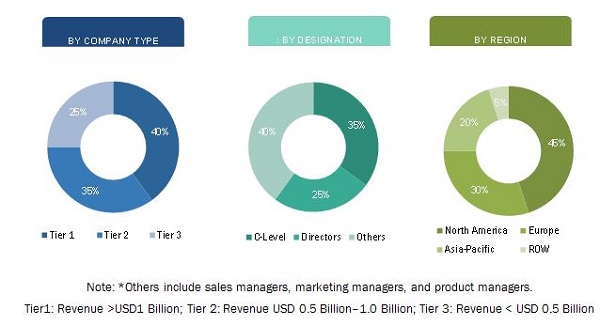
To know about the assumptions considered for the study, download the pdf brochure
Market Ecosystem:
The telepresence ecosystem comprises key manufacturers such as Cisco Systems, Inc. (U.S.), Polycom Inc. (U.S.), Avaya Inc. (U.S.), ZTE Corp. (U.S.), among others; software manufacturers includes Polycom, Inc. (U.S.), Vidyo Inc. (U.S.) and LifeSize, Inc. (U.S.) among others; and service provider companies include Cisco Systems, Inc. (U.S.), Polycom Inc. (U.S.), and Teliris Inc. (U.K.) among others; these are connected with their partners and distributers for selling the complete systems to end users in various verticals.
Please visit 360Quadrants to see the vendor listing of Video Conferencing Software
Target Audience:
- Telepresence device manufacturers
- Software and service providers
- Research organizations and consulting companies
- Associations, forums, and alliances related to telepresence
- Investors
“Study answers several questions for the target audiences, primarily which market segments to focus in the next two to five years for prioritizing the efforts and investments.”
Scope of the Report:
This report categorizes the global market for telepresence on the basis of component, system type, industry, and geography.
On the basis of Component & Service:
-
Hardware
- Display
- Projector
-
Camera
- PTZ Camera
- USB Camera
- Other
- Sensor
-
Audio Device
- Conference Phone
- Desktop Phone
- Microphone
- Speaker
- Other
- Lightings
- Processors
-
Others
- Switches
- Routers
- Adapters
- Cables
-
Software
- Cloud Computing Software
- Audio-video Communication Software
- Servers
- Services
On the Basis of System Type:
-
Static Telepresence
- Immersive telepresence
- Personal Telepresence
- Holographic telepresence
- Robotic Telepresence
On the Basis of Industry:
-
Enterprise
- Government
- Private
- Healthcare
-
Commercial
- Retail
- Advertisement
- Designing
-
Consumer
- Sports
- Entertainment
-
Manufacturing Industries
- Energy
- Education
-
Others Industries
- Construction
- Engineering
- Space
On the Basis of Region:
-
North America
- U.S.
- Canada
- Mexico
-
Europe
- Germany
- U.K.
- France
- Rest of Europe (Spain and Italy)
-
APAC
- China
- Japan
- India
- South Korea
- Rest of APAC (Australia and Netherlands)
-
RoW
- Middle East and Africa
- South America
Available Customizations
With the given market data, MarketsandMarkets offers customizations as per the company’s specific needs. The following customization options are available for the report:
Company Information
- Detailed analysis and profiling of additional market players (up to 10)













Growth opportunities and latent adjacency in Telepresence (Videoconferencing) Market
We are planning to enter into robotic telepresence market space and hence would like to understand the dynamics well and the overall market competition too.
We participated in this and apart from complementary executive summary, we would like to get a complimentary copy to check the accuracy of what was ultimately published.
I am an editor for a technology magazine and I would like to know your thoughts on the future of audio-video conferences. Can you help me with the growth projections specifically for niche applications in industries such as education and healthcare?
As a part of my research paper, I'm looking into how businesses are expected to communicate (phone vs teleconference vs slack type software) in the future. Hence, would request you to help me with a sample of the report and some interesting insights for my research paper.
I'm trying to get an understanding of the size and potential growth trajectory of the collaboration / telepresence / system integration industry in South Africa
Do you have a newer version of this report - also what kind of multi-user license can I get? We only need the report for a few folks.
We are planning to enter into telepresence services and hence would like to analyze the growth opportunities in the market in terms of value and attractive industries