LED Driver Market for Lighting, by Driving Method (Constant Current and Constant Voltage), Luminaire Type (A-Type, T-Lamps, Reflectors, Integral Modules), Components (Driver IC and Discrete), End User Application, and Geography - Global Forecasts to 2035


LED Driver Market for Lighting Summary
The LED Driver Market for Lighting is witnessing strong momentum as energy-efficient lighting systems become the global standard across residential, commercial, industrial, and smart city infrastructure projects. The market is estimated to be valued at USD 10–11 billion in 2025 and is projected to reach approximately USD 21–23 billion by 2035, expanding at a CAGR of 7%–9% during the forecast period. The increasing deployment of LED lighting in smart buildings, industrial automation, connected cities, and automotive applications continues to fuel market demand. Rapid digital transformation, the integration of AI-powered lighting controls, IoT-enabled lighting ecosystems, and cloud-based energy management platforms are further strengthening market growth. Governments worldwide are encouraging energy conservation through stringent lighting efficiency regulations, while manufacturers are focusing on intelligent LED drivers that support adaptive dimming, predictive maintenance, and wireless communication technologies.
Key Market Trends & Insights
-
North America continues to lead the global market due to early adoption of smart lighting technologies and stringent energy-efficiency standards.
-
Asia Pacific is expected to register the fastest growth owing to expanding urban infrastructure, industrialization, and government-supported LED replacement programs.
-
Constant current LED drivers remain the dominant product segment because of their superior efficiency and stable performance in commercial and industrial lighting.
-
Wireless lighting controls integrated with IoT platforms are becoming a major technology trend across commercial buildings and smart city projects.
-
Artificial intelligence is improving energy optimization through adaptive lighting, predictive maintenance, and intelligent load management.
-
Increasing demand for human-centric lighting and connected lighting systems is encouraging innovation in programmable LED drivers.
Market Size & Forecast
-
Base Year Market Size (2025): USD 10–11 billion
-
Forecast Market Size (2035): USD 21–23 billion
-
Expected CAGR (2025–2035): 7%–9%
-
Growth is driven by increasing adoption of smart lighting systems, expansion of connected infrastructure, stringent energy-efficiency regulations, and integration of AI, IoT, and automation technologies into lighting networks.
LED Driver Market for Lighting Top 10 key takeaway
-
North America holds the largest share of the global market.
-
Asia Pacific is projected to achieve the highest growth during the forecast period.
-
Constant current LED drivers dominate product demand.
-
Commercial buildings remain the largest application segment.
-
AI-enabled lighting management is becoming a competitive differentiator.
-
IoT connectivity is expanding the capabilities of intelligent LED drivers.
-
Government energy-efficiency initiatives continue to accelerate LED adoption.
-
Wireless communication technologies are improving smart lighting deployment.
-
Manufacturers are investing in compact, programmable, and energy-efficient drivers.
-
Sustainability goals and carbon reduction policies will continue supporting long-term market expansion.
Product Insights
Constant current LED drivers account for the largest revenue share of the global LED Driver Market for Lighting because they provide consistent electrical current regardless of voltage fluctuations, ensuring longer LED lifespan, improved lighting quality, and higher operational efficiency. These drivers are widely deployed in commercial buildings, industrial facilities, healthcare institutions, outdoor lighting, and architectural illumination where stable illumination is essential.
Constant voltage LED drivers also represent a significant market segment, particularly in decorative lighting, signage, residential lighting, and LED strip applications where multiple fixtures operate from a common voltage source. Their flexibility and ease of installation continue to support widespread adoption.
Programmable LED drivers are rapidly emerging as one of the fastest-growing product categories. These advanced drivers enable users to customize brightness, color temperature, dimming schedules, and energy consumption according to application-specific requirements. As smart buildings become increasingly connected, programmable drivers are gaining popularity among lighting designers and facility managers.
Artificial intelligence is transforming product development by enabling adaptive lighting systems capable of learning occupancy patterns, environmental conditions, and daylight availability. AI-powered LED drivers automatically adjust brightness levels to optimize energy efficiency while maintaining occupant comfort. Integration with wireless communication protocols including Bluetooth Mesh, Zigbee, DALI-2, and Matter is further expanding intelligent lighting capabilities.
Technology / Component Insights
Technological innovation continues to redefine the LED Driver Market for Lighting. Modern LED drivers now incorporate intelligent microcontrollers, digital power management systems, wireless communication modules, cloud connectivity, and advanced semiconductor components that significantly improve performance and efficiency.
Digital LED drivers equipped with AI algorithms optimize energy consumption by continuously monitoring environmental conditions, occupancy levels, and electricity demand. These intelligent systems dynamically regulate output while extending component lifespan and reducing maintenance requirements.
IoT-enabled LED drivers have become an essential component of connected lighting ecosystems. These devices communicate with centralized building management systems, allowing facility operators to remotely monitor lighting performance, schedule maintenance activities, and analyze energy consumption in real time.
Automation technologies are also improving operational efficiency across commercial facilities, warehouses, airports, hospitals, and manufacturing plants. Cloud-based lighting platforms provide predictive diagnostics, firmware updates, and remote configuration capabilities, minimizing downtime and maintenance costs.
Future technological developments are expected to include digital twins for lighting infrastructure, AI-driven predictive analytics, edge computing for faster lighting decisions, cybersecurity-enhanced smart lighting networks, and deeper integration with renewable energy systems and battery storage solutions.
Application Insights
Commercial lighting represents the largest application segment within the LED Driver Market for Lighting. Office buildings, shopping centers, hospitals, educational institutions, airports, hotels, and retail facilities continue investing heavily in energy-efficient LED lighting systems to reduce operational costs while meeting sustainability objectives.
Industrial lighting is another major application area where reliable LED drivers support manufacturing plants, warehouses, logistics centers, and production facilities requiring continuous illumination and harsh-environment durability.
Residential applications continue expanding as homeowners increasingly adopt smart lighting systems compatible with voice assistants, mobile applications, and home automation platforms. Outdoor lighting applications, including street lighting, highways, public infrastructure, sports facilities, and smart cities, are generating substantial demand for intelligent LED drivers capable of supporting remote monitoring and adaptive brightness control.
Growing investments in human-centric lighting, horticultural lighting, automotive lighting, and healthcare illumination are expected to create additional opportunities throughout the forecast period as lighting becomes increasingly personalized, connected, and intelligent.
Regional Insights
North America maintains its leadership position in the global LED Driver Market for Lighting due to widespread adoption of smart buildings, advanced commercial infrastructure, and stringent energy-efficiency regulations. The United States continues investing heavily in intelligent lighting solutions across public infrastructure, healthcare, education, and industrial sectors. Strong technology adoption, supportive government policies, and the presence of leading lighting manufacturers further strengthen regional growth.
Europe remains a mature but steadily expanding market supported by ambitious carbon neutrality targets, sustainable construction initiatives, and energy-efficient renovation projects. Countries across the region continue replacing conventional lighting systems with digitally connected LED infrastructure while integrating renewable energy solutions into building operations.
Asia Pacific is projected to experience the fastest market growth owing to rapid urbanization, infrastructure modernization, industrial expansion, and government-led LED adoption programs. Large-scale smart city developments across China, Japan, India, and Southeast Asia continue accelerating demand for intelligent lighting technologies.
The Middle East and Latin America are also witnessing growing investments in commercial construction, smart infrastructure, and public lighting modernization, creating new opportunities for LED driver manufacturers.
Regional Highlights
-
North America remains the largest regional market.
-
Asia Pacific records the fastest CAGR during the forecast period.
-
Europe benefits from strong sustainability regulations.
-
Smart city investments are accelerating LED adoption globally.
-
Infrastructure modernization continues driving regional demand.
Country-Specific Market Trends
China is expected to grow at a CAGR of 9%–10%, supported by extensive smart city development, large-scale manufacturing capabilities, and government initiatives promoting energy-efficient lighting across industrial and residential sectors.
Japan is forecast to expand at a CAGR of 7%–8% due to increasing adoption of intelligent buildings, advanced electronics manufacturing, and growing demand for high-quality lighting solutions in commercial facilities.
The United States continues leading the North American market with a CAGR of 7%–8%, driven by widespread deployment of IoT-enabled commercial lighting, smart buildings, and advanced industrial automation.
Canada is projected to register a CAGR of 6%–7%, supported by green building certifications, infrastructure modernization, and public investments in sustainable urban development.
Mexico is expected to grow at a CAGR of 7%–8% as manufacturing expansion and commercial construction activities increase demand for efficient lighting infrastructure.
Germany is anticipated to achieve a CAGR of 6%–7%, benefiting from Industry 4.0 adoption, advanced manufacturing, and strict environmental regulations encouraging LED deployment.
France is forecast to record a CAGR of 6%–7%, driven by smart city initiatives, public infrastructure upgrades, and national energy transition policies.
Country-Level Highlights
-
China remains the largest manufacturing hub for LED lighting components.
-
Japan emphasizes premium intelligent lighting technologies.
-
The United States leads smart building adoption.
-
Germany drives industrial automation-based lighting deployment.
-
France continues investing in sustainable infrastructure projects.
Key LED Driver Market for Lighting Company Insights
The competitive landscape is characterized by continuous innovation, strategic collaborations, and significant investments in digital lighting technologies. Leading companies are focusing on programmable LED drivers, AI-enabled energy optimization, wireless connectivity, and compact high-efficiency power electronics to strengthen their competitive positions.
Major manufacturers are expanding their portfolios by integrating cloud connectivity, Bluetooth Mesh, DALI-2 compatibility, and advanced dimming technologies into their products. Companies are also investing in semiconductor innovation to improve efficiency, thermal performance, and product reliability while supporting increasingly sophisticated smart lighting applications.
Key industry participants include Signify, Acuity Brands, OSRAM, Inventronics, Mean Well, Delta Electronics, Philips Advance, Eaglerise Electric, Tridonic, and MOSO Power Supply.
Company Strategy Highlights
-
Increased investment in AI-enabled intelligent lighting platforms.
-
Expansion of IoT-compatible programmable LED drivers.
-
Strategic partnerships with smart building solution providers.
-
Continuous focus on energy efficiency and miniaturization.
-
Strong emphasis on sustainability and digital innovation.
Recent Developments
In 2025, several leading lighting manufacturers introduced AI-enabled programmable LED drivers capable of optimizing illumination based on occupancy detection, daylight harvesting, and predictive energy management, improving operational efficiency across commercial buildings.
Multiple global lighting companies announced partnerships with smart building software providers to integrate cloud-connected lighting management platforms supporting predictive maintenance, remote monitoring, and automated diagnostics.
Manufacturers also launched next-generation LED drivers compatible with emerging communication standards such as Matter and Bluetooth Mesh, enabling greater interoperability across connected building ecosystems.
Market Segmentation
The LED Driver Market for Lighting is segmented by product, technology, application, and region. By product, the market includes constant current LED drivers, constant voltage LED drivers, programmable LED drivers, and dimmable LED drivers, with constant current solutions maintaining market leadership due to superior efficiency and reliability. By technology, the market encompasses analog drivers, digital drivers, wireless-enabled drivers, and IoT-integrated intelligent drivers, with digital and connected technologies gaining rapid adoption. Application-wise, commercial lighting dominates market demand, followed by industrial, residential, outdoor, automotive, horticultural, and architectural lighting applications. Regionally, North America leads the global market, Europe maintains steady expansion through sustainability initiatives, Asia Pacific demonstrates the highest growth potential, while Latin America and the Middle East continue emerging as attractive investment destinations.
Segmentation Highlights
-
Constant current LED drivers dominate product demand.
-
Digital intelligent drivers are the fastest-growing technology segment.
-
Commercial lighting remains the largest application area.
-
North America leads global revenue generation.
-
Asia Pacific offers the strongest long-term growth opportunities.
The global LED Driver Market for Lighting is expected to experience sustained expansion through 2035, supported by accelerating investments in energy-efficient lighting, smart buildings, connected infrastructure, and digital transformation initiatives. Artificial intelligence, IoT connectivity, cloud-based lighting management, and automation technologies are reshaping the industry by delivering intelligent, adaptive, and highly efficient lighting solutions. As governments continue implementing stringent energy regulations and organizations prioritize sustainability, demand for advanced LED drivers will continue rising. Companies investing in AI-enabled products, programmable technologies, and interoperable lighting ecosystems will be well positioned to capture future growth opportunities in this rapidly evolving global market.
FAQs - LED Driver Market for Lighting
1. What is the current size of the LED Driver Market for Lighting?
The global LED Driver Market for Lighting is estimated at USD 10–11 billion in 2025.
2. What is the expected growth rate of the market?
The market is projected to grow at a CAGR of 7%–9% between 2025 and 2035.
3. What are the major factors driving market growth?
Key growth drivers include increasing adoption of LED lighting, AI-enabled smart lighting systems, IoT integration, automation, energy-efficiency regulations, and smart city development.
4. Which region leads the LED Driver Market for Lighting?
North America currently leads the global market, while Asia Pacific is expected to record the fastest growth during the forecast period.
5. Who are the major companies operating in the LED Driver Market for Lighting?
Leading companies include Signify, Acuity Brands, OSRAM, Inventronics, Mean Well, Delta Electronics, Philips Advance, Eaglerise Electric, Tridonic, and MOSO Power Supply.
 Exclusive indicates content/data unique to MarketsandMarkets and not available with any competitors.
Table of Contents
1 Introduction (Page No. - 13)
1.1 Objectives of the Study
1.2 Market Definition
1.3 Study Scope
1.3.1 Markets Covered
1.3.2 Geographic Scope
1.3.3 Years Considered for the Study
1.4 Currency
1.5 Package Size
1.6 Limitations
1.7 Stakeholders
2 Research Methodology (Page No. - 17)
2.1 Research Data
2.1.1 Secondary Data
2.1.1.1 Key Data From Secondary Sources
2.1.2 Primary Data
2.1.2.1 Key Data From Primary Sources
2.1.2.2 Key Industry Insights
2.1.2.3 Breakdown of Primaries
2.2 Market Size Estimation
2.3 Market Breakdown and Data Triangulation
2.4 Research Assumptions
2.4.1 Assumptions
3 Executive Summary (Page No. - 25)
4 Premium Insights (Page No. - 30)
4.1 Attractive Market Opportunities in the Global LED Driver Market for Lighting
4.2 Market for Lighting, By Driving Method
4.3 Market for Lighting,By End-User Application
4.4 Market for Lighting, By Luminaire Type
4.5 Market for Lighting, By Geography
5 Market Overview (Page No. - 33)
5.1 Introduction
5.2 Market Segmentation
5.2.1 Market for Lighting, By Driving Method
5.2.2 Market for Lighting, By End-User Application
5.2.3 Market for Lighting, By Luminaire Type
5.2.4 Market for Lighting, By Geography
5.3 Market Dynamics
5.3.1 Drivers
5.3.1.1 Growing Adoption of LED Lighting in General Lighting Applications
5.3.1.2 Increasing Demand for Energy-Efficient Lighting Systems
5.3.1.3 Convergence of Iot and Lighting
5.3.1.4 Acceptance of Standard Protocols for Lighting Control
5.3.2 Restraints
5.3.2.1 False Notion About the High Cost for the Installation of LED Driver
5.3.3 Opportunities
5.3.3.1 Development of Wireless Technologies
5.3.3.2 Development of Programmable LED Drivers
5.3.4 Challenges
5.3.4.1 Lack of Common Standards Among Various Manufacturers
6 Industry Trends (Page No. - 44)
6.1 Introduction
6.2 Value Chain Analysis
6.2.1 Research and Development
6.2.2 Component Manufacturers of LED Drivers
6.2.3 Key Distributors
6.2.4 End-User Applications
6.3 Key Industry Trends
6.4 Porter’s Five Forces
6.4.1 Bargaining Power of Suppliers
6.4.2 Bargaining Power of Buyers
6.4.3 Threat of New Entrants
6.4.4 Threat of Substitutes
6.4.5 Competitive Rivalry
7 Market for Lighting, By Driving Method (Page No. - 53)
7.1 Introduction
7.2 Constant Current LED Drivers
7.2.1 Constant Current Dimmable LED Drivers
7.2.1.1 Pulse Width Modulation (PWM) Dimming
7.2.1.2 Constant Current Reduction (CCR) Dimming
7.3 Constant Voltage LED Drivers
8 Market for Lighting, By End-User Application (Page No. - 63)
8.1 Introduction
8.2 Commercial Lighting
8.2.1 Addition of Flexible Controls for Lighting
8.3 Industrial Lighting
8.3.1 Safety in Industrial Areas for Workers
8.4 Residential Lighting
8.4.1 Increasing Standard of Living
8.5 Outdoor & Traffic Lighting
8.5.1 Different Lighting Controls for Different Types of Roads
8.6 Others
9 Market for Lighting, By Luminaire Type (Page No. - 78)
9.1 Introduction
9.2 Type A Lamps (Bulbs)
9.3 Decorative Lamps (B, Ba, C, Ca, F, and G Replacement Lamps)
9.4 T Lamps (Tubular)
9.5 Reflectors
9.6 Integral Modules
9.7 Other Lamps
10 Market for Lighting, By Component (Page No. - 87)
10.1 Introduction
10.2 Driver ICS
10.3 Discrete Components
10.4 Others
11 Market for Lighting, By Geography (Page No. - 90)
11.1 Introduction
11.2 North America
11.2.1 U.S.
11.2.1.1 Market Expected to Be Driven By New Entrants and Offerings
11.2.2 Canada
11.2.2.1 Canadians Interest in Adopting LED Lighting Systems
11.2.3 Mexico
11.2.3.1 Government Encouragement Expected to Boost the Market
11.3 Europe
11.3.1 U.K.
11.3.1.1 Presence of the Lighting Industry Association
11.3.2 Germany
11.3.2.1 Known for Manufacturing Capabilities
11.3.3 France
11.3.3.1 Eu Member Nation
11.3.4 Rest of Europe
11.3.4.1 Growing Economic Conditions
11.4 APAC
11.4.1 China
11.4.1.1 Largest Market in the Asia-Pacific Region
11.4.2 Japan
11.4.2.1 Focus on Energy Management Solutions
11.4.3 Rest of APAC
11.4.3.1 Australia and Indonesia are Emerging Markets With Significant Potential
11.5 RoW
11.5.1 Focus on Real Estate
12 Competitive Landscape (Page No. - 107)
12.1 Introduction
12.2 Market Ranking of Players, 2015
12.3 Competitive Scenario and Trends
12.3.1 New Product Launches and Expansions
12.3.2 Partnerships, Agreements, Joint Ventures, and Collaborations
12.3.3 Mergers & Acquisitions, 2013
13 Company Profiles (Page No. - 113)
(Overview, Products and Services, Financials, Strategy & Development)*
13.1 Introduction
13.2 Koninklijke Philips N.V.
13.3 Osram GmbH
13.4 Harvard Engineering
13.5 Texas Instruments, Inc.
13.6 Maxim Integrated, Inc.
13.7 Macroblock, Inc.
13.8 Atmel Corporation
13.9 General Electric
13.10 Cree, Inc.
13.11 Rohm Semiconductors
13.12 On Semiconductor
13.13 AC Electronics
*Details on Overview, Products and Services, Financials, Strategy & Development Might Not Be Captured in Case of Unlisted Companies.
14 Appendix (Page No. - 145)
14.1 Insights of Industry Experts
14.2 Discussion Guide
14.3 Knowledge Store: Marketsandmarkets’ Subscription Portal
14.4 Introducing RT: Real-Time Market Intelligence
14.5 Available Customizations
14.6 Related Reports
List of Tables (75 Tables)
Table 1 Global LED Drivers Market Size for Lighting, 2013–2022
Table 2 Market, By Driving Method
Table 3 Market, By End-User Application
Table 4 Market, By Luminaire Type
Table 5 Growing Adoption of LED Lighting is Expected to Drive the Growth of the Market for Lighting
Table 6 Comparison of Costs: Conventional Lights vs LEDs
Table 7 Lack of Awareness Regarding Installation of LED Drivers is Restraining the Market Growth
Table 8 Development of Wireless Technologies Presents A Key Growth Area for Market for Lighting
Table 9 Lack of Common Standards are Proving to Be A Challenge for the Market for Lighting
Table 10 Market Size, By Driving Method, 2013–2022 (USD Million)
Table 11 Market Size, By Driving Method, 2013–2022 (Million Units)
Table 12 Market Size, By Dimming Type, 2013–2022 (USD Million)
Table 13 Market Size, By Dimming Type, 2013–2022 (Million Units)
Table 14 Constant Current LED Driver Market Size, By Dimming Type, 2013–2022 (USD Million)
Table 15 Constant Current Market Size, By Dimming Type, 2013–2022 (Million Units)
Table 16 Constant Current Market Size, By End-User Application, 2013–2022 (USD Million)
Table 17 Constant Current Market Size, By Region, 2013–2022 (USD Million)
Table 18 Constant Voltage Market Size, By Dimming Type, 2013–2022 (USD Million)
Table 19 Constant Voltage Market Size, By Dimming Type, 2013–2022 (Million Units)
Table 20 Constant Voltage Market Size, By End-User Application, 2013–2022 (USD Million)
Table 21 Constant Voltage Market Size, By Region, 2013–2022 (USD Million)
Table 22 Market Size, By End-User Application, 2013–2022 (USD Million)
Table 23 Market Size for Commercial Lighting, By Driving Method, 2013–2022 (USD Million)
Table 24 Market Size in Commercial Lighting, By Region, 2013–2022 (USD Million)
Table 25 Market Size in Commercial Lighting, By Luminaire Type, 2013–2022 (USD Million)
Table 26 Market Size in Commercial Lighting, By Luminaire Type, 2013–2022 (Million Units)
Table 27 Market Size in Industrial Lighting, By Driving Method, 2013–2022 (USD Million)
Table 28 Market Size in Industrial Lighting, By Region, 2013–2022 (USD Million)
Table 29 Market Size in Industrial Lighting, By Luminaire Type, 2013–2022 (USD Million)
Table 30 Market Size in Industrial Lighting, By Luminaire Type, 2013–2022 (Million Units)
Table 31 Market Size in Residential Lighting, By Driving Method, 2013–2022 (USD Million)
Table 32 Market Size in Residential Lighting, By Region, 2013–2022 (USD Million)
Table 33 Market Size in Residential Lighting, By Luminaire Type, 2013–2022 (USD Million)
Table 34 Market Size in Residential Lighting, By Luminaire Type, 2013–2022 (Million Units)
Table 35 Market Size in Outdoor & Traffic Lighting, By Driving Method, 2013–2022 (USD Million)
Table 36 Market Size in Outdoor & Traffic Lighting, By Region, 2013–2022 (USD Million)
Table 37 Market Size in Outdoor & Traffic Lighting, By Luminaire Type, 2013–2022 (USD Million)
Table 38 Market Size in Outdoor & Traffic Lighting, By Luminaire Type, 2013–2022 (Million Units)
Table 39 Market Size in Other End-User Applications, By Driving Method, 2013–2022 (USD Million)
Table 40 Market Size in Other End-User Applications, By Region, 2013–2022 (USD Million)
Table 41 Market Size in Other End-User Applications, By Luminaire Type, 2013–2022 (USD Million)
Table 42 Market Size in Other End-User Applications, By Luminaire Type, 2013–2022 (Million Units)
Table 43 Market Size, By Luminaire Type, 2013–2022 (USD Million)
Table 44 Market Size, By Luminaire Type, 2013–2022 (Million Units)
Table 45 Market Size for Type A Lamps, By End-User Application, 2013–2022 (USD Million)
Table 46 Market Size for Type A Lamps, By End-User Application, 2013–2022 (Million Units)
Table 47 Market Size for T Lamps, By End-User Application, 2013–2022 (USD Million)
Table 48 Market Size for T Lamps, By End-User Application, 2013–2022 (Million Units)
Table 49 Market Size for Reflectors, By End-User Application, 2013–2022 (USD Million)
Table 50 Market Size for Reflectors, By End-User Application, 2013–2022 (Million Units)
Table 51 Market Size for Integral Modules, By End-User Application, 2013–2022 (USD Million)
Table 52 Market Size for Integral Modules, By End-User Application, 2013–2022 (Million Units)
Table 53 Market Size for Other Lamps, By End-User Application, 2013–2022 (USD Million)
Table 54 Market Size for Other Lamps, By End-User Application, 2013–2022 (Million Units)
Table 55 Market Size, By Component, 2013–2022 (USD Million)
Table 56 Market Size for Driver ICS, By Component, 2013–2022
Table 57 Market Size, By Region, 2013–2022 (USD Million)
Table 58 Market Size in North America, By End-User Application, 2013–2022 (USD Million)
Table 59 Market Size in North America, By Driving Method, 2013–2022 (USD Million)
Table 60 Market Size in North America, By Country, 2013–2022 (USD Million)
Table 61 Market Size in Europe, By End-User Application, 2013–2022 (USD Million)
Table 62 Market Size in Europe, By Driving Method, 2013–2022 (USD Million)
Table 63 Market Size in Europe, By Country, 2013–2022 (USD Million)
Table 64 Market Size in APAC, By End-User Application, 2013–2022 (USD Million)
Table 65 Market Size in APAC, By Driving Method, 2013–2022 (USD Million)
Table 66 Market Size in APAC, By Country, 2013–2022 (USD Million)
Table 67 Market Size in RoW, By End-User Application, 2013–2022 (USD Million)
Table 68 Market Size in RoW, By Driving Method, 2013–2022 (USD Million)
Table 69 Market Size in RoW, By Region, 2013–2022 (USD Million)
Table 70 Market Size in RoW, By Country, 2013–2022 (USD Million)
Table 71 Ranking Based on LED Driver Module Offerings in the Market for Lighting, 2015
Table 72 Ranking Based on LED Driver ICS in the Market for Lighting, 2015
Table 73 New Product Launches and Expansions in Market, 2015–2016
Table 74 Partnerships, Agreements, Joint Ventures, Collaborations in the Market, 2015–2016
Table 75 Mergers & Acquistions in the LED Market, 2013
List of Figures (66 Figures)
Figure 1 LED Driver Market for Lighting
Figure 2 Market for Lighting: Research Design
Figure 3 Market Size Estimation Methodology: Bottom-Up Approach
Figure 4 Market Size Estimation Methodology: Top-Down Approach
Figure 5 Data Triangulation
Figure 6 Assumptions of the Research Study
Figure 7 Global LED Drivers Market Size for Lighting in Terms of Value, 2013–2022
Figure 8 Residential Lighting End-User Application Expected to Grow at the Highest Rate By 2022
Figure 9 Market for Constant Current LED Drivers Expected to Show Faster Growth Compared to Market for Constant Voltage LED Drivers
Figure 10 LED Drivers Market for LED Modules Expected to Dominant During the Forecast Period
Figure 11 Global Market for Lighting, By Geography, 2015
Figure 12 Global LED Drivers Market for Lighting Presents Lucrative Opportunities
Figure 13 Constant Current LED Drivers are Expected to Dominate the LED Drivers Market Based on Driving Method During the Forecast Period
Figure 14 Market for the Residential Lighting End-User Application Would Grow at the Highest Rate During the Forecast Period
Figure 15 LED Modules Expected to Dominate the LED Drivers Market Based on Luminaire Type By 2022
Figure 16 APAC Market Expected to Grow at the Highest Growth Rate During the Forecast Period
Figure 17 Market for Lighting, By Geography
Figure 18 Market Dynamics: Overview
Figure 19 Global LED Market Size, 2014 vs 2018 (In USD Billion)
Figure 20 Annual Energy Consumption in U.S. for Commercial Buildings, 2011
Figure 21 Market for Lighting: Value Chain Analysis
Figure 22 Vertical Integration — the Leading Trend Among Key Market Players
Figure 23 Porter’s Five Forces Analysis for the Market for Lighting
Figure 24 Porter’s Five Forces: Impact Analysis
Figure 25 Bargaining Power of Suppliers in the Market for Lighting, 2015
Figure 26 Bargaining Power of Buyers in the Market for Lighting, 2015
Figure 27 Threat of New Entrants in the Market for Lighting, 2015
Figure 28 Threat of Substitutes in the Market for Lighting, 2015
Figure 29 Competitive Rivalry in the Market for Lighting, 2015
Figure 30 Market for Lighting, By Driving Method
Figure 31 Market for Lighting, By Dimming Type (Million Units)
Figure 32 Constant Current LED Driver Market, By Region (USD Million) 2016 to 2022
Figure 33 Constant Voltage Market for Lighting, By End-User Application (USD Million)
Figure 34 Market for Lighting, By End-User Application
Figure 35 Market for Commercial Lighting, By Driving Method (USD Million) 2016 to 2022
Figure 36 Industrial Market, By Region, 2016–2022 (USD Million)
Figure 37 Residential Market, By Luminaire Type, 2016–2022 (USD Million)
Figure 38 Market in Outdoor & Traffic Lighting, By Luminaire Type, 2016–2022 (Million Units)
Figure 39 Market for Lighting, By Luminaire Type
Figure 40 Market for Type A Lamps, By End-User Application, 2016–2022 (USD Million)
Figure 41 Market for Integral Modules, By End-User Application, 2016–2022 (Million Units)
Figure 42 Market for Lighting, By Component
Figure 43 Geographic Snapshot: LED Driver Market for Lighting in Mexico Expected to Grow at the Highest Rate Between 2016 and 2022
Figure 44 North America: Market for Lighting Snapshot
Figure 45 Europe: Market for Lighting Snapshot
Figure 46 APAC: LED Driver for Lighting Market Snapshot
Figure 47 Companies Adopted Product Innovation as the Key Growth Strategy
Figure 48 Market Evaluation Framework: New Product Launches Fuelled the Growth and Innovation Between 2013 and 2015
Figure 49 Battle for Market Share: New Product Launches & Expansions Were the Key Strategies Adopted Between 2013 and 2015
Figure 50 Geographic Revenue Mix of Major Players in the Market, 2015
Figure 51 Koninklijke Philips N.V.: Company Snapshot
Figure 52 Koninklijke Philips N.V.: SWOT Analysis
Figure 53 Osram GmbH: Company Snapshot
Figure 54 Osram GmbH: SWOT Analysis
Figure 55 Harvard Engineering: SWOT Analysis
Figure 56 Texas Instruments, Inc.: Company Snapshot
Figure 57 Texas Instruments, Inc.: SWOT Analysis
Figure 58 Maxim Integrated, Inc.: Company Snapshot
Figure 59 Maxim Integrated, Inc.: SWOT Analysis
Figure 60 Macroblock, Inc.: Company Snapshot
Figure 61 Atmel Corporation: Company Snapshot
Figure 62 General Electric: Company Snapshot
Figure 63 General Electric: SWOT Analysis
Figure 64 Cree, Inc. Company Snapshot
Figure 65 Rohm Semiconductors: Company Snapshot
Figure 66 On Semiconductor: Company Snapshot
This research study involves the extensive use of secondary sources, directories, and databases (such as Hoovers, Bloomberg Business, Factiva, and OneSource) to identify and collect information useful for this study. The research methodology followed in this report is explained below.
- Analysis of all the end-user applications in which LED drivers for lighting are used worldwide
- Analysis of various LED drivers sold to these industries
- Analysis of the penetration of LED drivers in these industries
- Estimation of the market size in terms of volume
- Estimation of the market size of the LED drivers in end-user applications by driving method
- Overall market size finalized by data triangulation with supply-side data, including product developments, supply chain, and estimated sales of LED driver modules
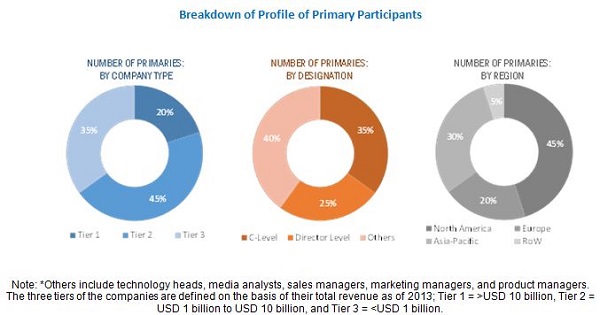
After arriving at the overall market size, the total market has been split into several segments and subsegments and confirmed with the key industry experts. The figure below shows the breakdown of primaries on the basis of company type, designation, and region.
To know about the assumptions considered for the study, download the pdf brochure
The LED driver ecosystem comprises hardware component manufacturers, prototype designers, and original equipment manufacturers (OEMs); LED driver module providers such as Osram GmbH (Germany), and Harvard Engineering (U.K.); LED driver IC providers such as, Texas Instruments (U.S.), Maxim Integrated (U.S.), and Macroblock, Inc. (Taiwan) among others.
Target Audience:
- LED module manufacturers
- LED IC manufacturers
- Lighting integrators
- Government bodies
The report provides the competitive landscape of key players, including their growth strategies to enhance their position in the LED driver market for lighting. The report also provides the profiles of the key companies in the LED driver market for lighting including Osram GmbH (Germany), Harvard Engineering (U.K.), Texas Instruments (U.S.), Maxim Integrated (U.S.), Macroblock Inc. (Taiwan), Atmel Corporation (U.S.), General Electric (U.S.), Cree, Inc. (U.S.), ROHM Semiconductors (Japan), ON Semiconductor (U.S.), and AC Electronics (U.S.).
The market in this report has been segmented as follows:
LED Driver Market, by Driving Method:
- Constant Current LED Driver
- Constant Voltage LED Driver
Market, by Luminaire Type:
- Type A-Lamps
- T-Lamps
- Reflectors
- Decorative Lamps
- Integral LED Modules
Market, by End-User Application:
- Commercial Lighting
- Industrial Lighting
- Residential Lighting
- Outdoor & Traffic Lighting
- Others
Market, by Geography:
- North America
- Europe
- APAC
- RoW
Available Customizations:
With the given market data, MarketsandMarkets offers customizations according to the company’s specific needs. The following customization options are available for the report.
Geographical Analysis
- Comprehensive coverage of regulations followed in each region (North America, APAC, Europe, RoW)
Company Information
- Detailed analysis and profiling of additional market players (up to five)













Growth opportunities and latent adjacency in LED Driver Market
We are interested in upcoming technologies and trends in the LED driver ecosystem. Does this report include this information?
We are interested in an updated market report for LED driver ICs for used in LED displays (video wall) applications including rental, digital signage, etc. Can you provide such information?