Smart Card Market Size, Share and Industry Growth Analysis Report by Interface (Contact, Contactless, Dual), Type (Memory, MPU Microprocessor), Functionality (Transaction, Communication, Security and Access Control), Offering, Vertical, and Region - Global Growth Driver and Industry Forecast to 2036


Updated on : Oct 23, 2024
Smart Card Market Summary
The Smart Card Market was valued at approximately USD 17.5 billion in 2024 and is projected to reach nearly USD 39.8 billion by 2036, expanding at a CAGR of 7.1% during the forecast period (2025–2036). The market continues to demonstrate steady and resilient growth, supported by the increasing need for secure authentication, digital payments, and identity management across industries. The rapid evolution of digital transformation, combined with rising concerns over cybersecurity and fraud prevention, is driving widespread adoption of smart card solutions globally. Furthermore, the integration of AI-enabled authentication systems, IoT-connected devices, and automated access control frameworks is significantly enhancing the functionality and relevance of the Smart Card Market. Governments and enterprises are increasingly deploying smart cards in applications such as banking, telecommunications, healthcare, and transportation, making them a critical component of modern digital infrastructure.
Key Market Trends & Insights
The Smart Card Market is currently led by Asia Pacific, owing to its large population base, extensive banking penetration, and strong government initiatives for digital identity programs. Europe follows closely due to its mature financial ecosystem and strict regulatory frameworks supporting secure transactions. Asia Pacific is also the fastest-growing region, driven by rapid urbanization and digital payment adoption. Contactless smart cards dominate the product segment due to their convenience and increasing usage in transit and retail payments. A key trend shaping the Smart Card Market is the integration of biometric authentication and AI-based security features, enabling enhanced fraud detection and user verification. Additionally, IoT-enabled smart cards are emerging, particularly in connected ecosystems such as smart cities and industrial automation, where secure device authentication is essential.
Market Size & Forecast
- Base Year Market Size (2024): USD 17.5 Billion
- Forecast Market Size (2036): USD 39.8 Billion
- CAGR (2025–2036): 7.1%
- Growth Factors: Increasing adoption of digital payments, rising need for secure identity verification, expansion of IoT ecosystems, and growing integration of AI-driven security technologies
Smart Card Market Top 10 key takeaway
- The Smart Card Market is expected to more than double by 2036 due to increasing digitalization.
- Contactless smart cards remain the dominant product segment globally.
- Asia Pacific leads both in market share and growth rate.
- Banking and financial services account for the largest application segment.
- AI-enabled biometric smart cards are gaining significant traction.
- IoT integration is expanding smart card applications beyond payments.
- Governments are driving demand through national ID and e-governance programs.
- Rising cybersecurity threats are accelerating smart card adoption.
- Automation in access control systems is boosting enterprise demand.
- Strategic partnerships between fintech and card manufacturers are increasing innovation.
Product Insights
Within the Smart Card Market, contactless smart cards represent the leading product segment, primarily due to their widespread adoption in payment systems, transportation networks, and secure access control. These cards offer enhanced convenience, faster transaction speeds, and improved user experience compared to traditional contact-based cards. The dominance of contactless smart cards is further reinforced by the global shift toward cashless economies and the increasing deployment of near-field communication (NFC) technologies.
Dual-interface smart cards, which combine both contact and contactless functionalities, are also gaining traction as they provide flexibility across multiple use cases. Meanwhile, emerging product categories such as biometric smart cards are transforming the Smart Card Market by integrating fingerprint recognition and AI-driven authentication directly into the card. These innovations significantly enhance security by ensuring that only authorized users can access sensitive information or perform transactions. The incorporation of embedded microprocessors and AI algorithms is enabling smart cards to perform complex tasks such as real-time encryption and adaptive security responses, further strengthening their value proposition.
Technology / Component Insights
The Smart Card Market is heavily influenced by advancements in semiconductor technologies, embedded systems, and secure microcontroller architectures. Key components include integrated circuits, memory chips, and communication interfaces such as NFC and RFID. AI is increasingly being integrated into smart card ecosystems, enabling advanced fraud detection, behavioral analysis, and predictive security mechanisms. These capabilities are particularly valuable in financial transactions and identity verification processes.
IoT plays a crucial role in expanding the scope of the Smart Card Market by enabling secure communication between connected devices. Smart cards are being used as authentication tools in IoT ecosystems, ensuring secure device access and data exchange. Cloud computing further enhances smart card functionality by enabling remote management, data storage, and real-time analytics. Automation technologies are streamlining card issuance, management, and lifecycle processes, reducing operational costs and improving efficiency.
Future innovation trends in the Smart Card Market include the development of quantum-resistant encryption algorithms, integration with blockchain for secure identity management, and the use of advanced materials for enhanced durability and performance. These technological advancements are expected to significantly enhance the security, scalability, and versatility of smart card solutions.
Application Insights
The banking, financial services, and insurance (BFSI) sector dominates the Smart Card Market, driven by the increasing adoption of chip-based payment cards and the need for secure transaction systems. Smart cards are widely used for credit, debit, and prepaid payment solutions, offering enhanced security through encryption and authentication features. The growth of digital banking and mobile payment platforms is further boosting demand for smart card technologies.
Telecommunications is another significant application area, where smart cards are used in SIM cards for secure network access and subscriber identity management. In the healthcare sector, smart cards are being deployed for patient identification, medical record management, and secure access to healthcare services. Transportation is also a key application segment, with smart cards enabling contactless ticketing and fare collection systems in public transit networks.
Looking ahead, the Smart Card Market is expected to witness new opportunities in areas such as smart cities, industrial automation, and government digital identity programs. The integration of AI and IoT technologies will further expand the application scope, enabling more sophisticated and secure use cases.
Regional Insights
Asia Pacific dominates the Smart Card Market due to its large-scale deployment of smart cards in banking, telecommunications, and government programs. Countries such as China and India are leading the adoption of digital payment systems and national ID initiatives, driving significant market growth. Europe remains a strong market, supported by stringent data protection regulations and widespread use of chip-based payment cards. North America, while slightly behind in volume, continues to lead in technological innovation and adoption of advanced smart card solutions, particularly in sectors such as healthcare and enterprise security.
Asia Pacific is also the fastest-growing region, driven by rapid digital transformation, increasing smartphone penetration, and government-led initiatives promoting cashless economies. The growing demand for secure and efficient payment systems, combined with advancements in infrastructure, is fueling market expansion across all regions.
- Asia Pacific leads due to high population and digital payment adoption
- Europe benefits from regulatory support and secure banking systems
- North America drives innovation in AI-enabled smart cards
- Rapid urbanization boosts demand in emerging economies
- Government initiatives play a key role in market growth
Country-Specific Market Trends
In Asia Pacific, China dominates the Smart Card Market with a projected CAGR of 8.2%, driven by its extensive use of smart cards in banking, transportation, and government ID programs. Japan follows with a CAGR of 6.9%, focusing on advanced technologies such as biometric authentication and automation. In North America, the United States leads with a CAGR of 6.5%, supported by strong demand in financial services and healthcare sectors, while Canada and Mexico are experiencing steady growth due to increasing digital adoption. In Europe, Germany and France are key markets, with CAGRs of 6.8% and 6.6% respectively, driven by regulatory compliance and the adoption of secure payment systems.
Governments across these regions are playing a crucial role in driving adoption through initiatives such as digital identity programs, smart city projects, and cybersecurity regulations. Industry demand is also being fueled by the need for secure, scalable, and efficient authentication solutions.
- China leads in large-scale smart card deployments
- Japan emphasizes innovation in biometric and AI integration
- United States drives adoption in financial and healthcare sectors
- Germany focuses on industrial and secure payment applications
- France supports growth through digital infrastructure initiatives
Key Smart Card Company Insights
The Smart Card Market is highly competitive, with key players focusing on innovation, security, and strategic collaborations to strengthen their market position. Major companies include Thales Group, IDEMIA, Infineon Technologies, NXP Semiconductors, Giesecke+Devrient, and HID Global. These companies are investing heavily in research and development to introduce advanced smart card solutions with enhanced security features and improved performance.
AI adoption is becoming a key differentiator among market players, with companies integrating machine learning algorithms into their products to enable advanced authentication and fraud detection capabilities. Product strategies are increasingly focused on developing contactless and biometric smart cards, as well as expanding into new application areas such as IoT and smart cities. Strategic partnerships with financial institutions, telecom operators, and government agencies are helping companies expand their reach and accelerate innovation.
- Companies are investing in AI-driven security solutions
- Focus on contactless and biometric smart cards is increasing
- Strategic partnerships are driving market expansion
- R&D investments are enhancing product innovation
- Companies are targeting emerging markets for growth
Recent Developments
In 2025, a leading smart card manufacturer launched a next-generation biometric payment card featuring AI-powered fingerprint authentication, aimed at enhancing transaction security. Another major development includes a partnership between a semiconductor company and a fintech firm to develop IoT-enabled smart cards for connected ecosystems. Additionally, advancements in NFC technology have enabled faster and more secure contactless transactions, further boosting adoption across retail and transportation sectors.
Market Segmentation
The Smart Card Market is segmented based on product, technology/component, application, and region. By product, the market includes contact-based, contactless, and dual-interface smart cards, each catering to specific use cases. In terms of technology, it encompasses microcontroller-based cards, memory cards, RFID, and NFC technologies. Applications span across BFSI, telecommunications, healthcare, transportation, and government sectors, highlighting the versatility of smart card solutions. Regionally, the market is divided into Asia Pacific, North America, Europe, and the rest of the world, with each region exhibiting unique growth dynamics driven by digitalization, infrastructure development, and regulatory frameworks.
- Product segmentation includes contact, contactless, and dual-interface cards
- Technology segmentation highlights RFID, NFC, and microcontrollers
- Applications cover BFSI, telecom, healthcare, and transportation
- Regional segmentation reflects diverse adoption patterns
- Integration across segments is driving overall market expansion
Conclusion
The Smart Card Market is poised for sustained growth through 2036, driven by the increasing demand for secure, efficient, and scalable authentication solutions in a digitally connected world. The integration of AI, IoT, and automation technologies is transforming smart cards into intelligent tools capable of supporting advanced applications across industries. As digital transformation continues to accelerate, the Smart Card Market will play a critical role in enabling secure transactions, protecting sensitive data, and supporting the development of smart infrastructure. Businesses that invest in innovative smart card technologies will be well-positioned to capitalize on emerging opportunities and maintain a competitive edge in the evolving digital landscape.
FAQs
What is the current size of the Smart Card Market?
The Smart Card Market was valued at approximately USD 17.5 billion in 2024.
What is the expected growth rate of the Smart Card Market?
The market is expected to grow at a CAGR of 7.1% from 2025 to 2036.
What are the key drivers of the Smart Card Market?
Key drivers include digital payment adoption, AI-based security integration, IoT expansion, and increasing cybersecurity needs.
Which region leads the Smart Card Market?
Asia Pacific currently holds the largest market share.
Who are the key players in the Smart Card Market?
Major companies include Thales Group, IDEMIA, Infineon Technologies, NXP Semiconductors, and Giesecke+Devrient.
To speak to our analyst for a discussion on the above findings, click Speak to Analyst
 Exclusive indicates content/data unique to MarketsandMarkets and not available with any competitors.
TABLE OF CONTENTS
1 INTRODUCTION (Page No. - 25)
1.1 STUDY OBJECTIVES
1.2 MARKET DEFINITION AND SCOPE
1.2.1 GENERAL INCLUSIONS & EXCLUSIONS
1.2.2 INCLUSIONS AND EXCLUSIONS AT COMPANY LEVEL
1.2.3 INCLUSIONS AND EXCLUSIONS AT INTERFACE LEVEL
1.2.4 INCLUSIONS AND EXCLUSIONS AT TYPE LEVEL
1.2.5 INCLUSIONS AND EXCLUSIONS AT FUNCTIONALITY LEVEL
1.2.6 INCLUSIONS AND EXCLUSIONS AT VERTICAL LEVEL
1.3 SCOPE
1.3.1 MARKETS COVERED
FIGURE 1 SMART CARD MARKET SEGMENTATION
1.3.2 GEOGRAPHIC SCOPE
1.3.3 YEARS CONSIDERED
1.4 CURRENCY
1.5 PACKAGE SIZE
1.6 MARKET STAKEHOLDERS
1.7 SUMMARY OF CHANGES
1.8 STUDY LIMITATIONS
2 RESEARCH METHODOLOGY (Page No. - 31)
2.1 RESEARCH DATA
FIGURE 2 SMART CARD MARKET: RESEARCH DESIGN
2.1.1 SECONDARY DATA
2.1.1.1 Key data from secondary sources
2.1.2 PRIMARY DATA
2.1.2.1 Primary interviews with experts
2.1.2.2 Key participants in primary processes across value chain of smart card market
2.1.2.3 Key industry insights
2.1.2.4 Breakdown of primaries
2.1.2.5 Key data from primary sources
2.2 SECONDARY AND PRIMARY RESEARCH
2.3 MARKET SIZE ESTIMATION
FIGURE 3 MARKET SIZE ESTIMATION METHODOLOGY: APPROACH 1 (SUPPLY SIDE): REVENUE GENERATED FROM SALES OF SMART CARDS
FIGURE 4 MARKET SIZE ESTIMATION METHODOLOGY: APPROACH 2 (SUPPLY SIDE): REVENUE GENERATED FROM SALES OF SMART CARDS
FIGURE 5 MARKET SIZE ESTIMATION METHODOLOGY: APPROACH 3 (DEMAND SIZE) – BOTTOM-UP APPROACH FOR ESTIMATION OF SIZE OF SMART CARD MARKET, BASED ON VERTICAL
2.3.1 BOTTOM-UP APPROACH
2.3.1.1 Approach used to arrive at market size using bottom-up analysis
FIGURE 6 MARKET SIZE ESTIMATION METHODOLOGY: BOTTOM-UP APPROACH
2.3.1.2 Approach for obtaining company-specific information on smart card value chain
2.3.2 TOP-DOWN APPROACH
2.3.2.1 Approach used to arrive at market size using top-down analysis
FIGURE 7 MARKET SIZE ESTIMATION METHODOLOGY: TOP-DOWN APPROACH
2.4 MARKET BREAKDOWN AND DATA TRIANGULATION
FIGURE 8 DATA TRIANGULATION METHODOLOGY
2.5 RESEARCH ASSUMPTIONS
2.5.1 ASSUMPTIONS
2.6 RISK ASSESSMENT
TABLE 1 LIMITATIONS & ASSOCIATED RISKS
3 EXECUTIVE SUMMARY (Page No. - 42)
3.1 SMART CARD MARKET: REALISTIC SCENARIO
FIGURE 9 MARKET: OPTIMISTIC, REALISTIC, AND PESSIMISTIC SCENARIO ANALYSIS (2017–2026)
3.2 MARKET: OPTIMISTIC SCENARIO
3.3 MARKET: PESSIMISTIC SCENARIO
FIGURE 10 MPU MICROPROCESSOR SEGMENT TO LEAD MARKET FROM 2021 TO 2026
FIGURE 11 CONTACTLESS SEGMENT TO ACCOUNT FOR LARGEST SIZE OF MARKET FROM 2021 TO 2026
FIGURE 12 COMMUNICATION SEGMENT TO ACCOUNT FOR LARGEST SIZE OF MARKET IN 2026
FIGURE 13 TELECOMMUNICATIONS SEGMENT HELD LARGEST SHARE OF MARKET IN 2020
FIGURE 14 APAC ACCOUNTED FOR LARGEST SHARE OF MARKET IN 2020
4 PREMIUM INSIGHTS (Page No. - 47)
4.1 ATTRACTIVE GROWTH OPPORTUNITIES IN SMART CARD MARKET
FIGURE 15 PENETRATION OF SMART CARDS IN ACCESS CONTROL AND PERSONAL IDENTIFICATION APPLICATIONS DRIVING GROWTH OF MARKET
4.2 SMART CARD MARKET, BY TYPE
FIGURE 16 MPU MICROPROCESSOR SEGMENT TO ACCOUNT FOR LARGER SIZE OF MARKET FROM 2021 TO 2026
4.3 MARKET IN APAC, BY VERTICAL AND COUNTRY
FIGURE 17 TELECOMMUNICATIONS SEGMENT AND CHINA ACCOUNTED FOR LARGEST SHARES OF MARKET IN APAC IN 2020
4.4 MARKET IN NORTH AMERICA, BY INTERFACE
FIGURE 18 CONTACT SEGMENT TO ACCOUNT FOR LARGEST SIZE OF MARKET IN NORTH AMERICA FROM 2021 TO 2026
4.5 MARKET, BY REGION
FIGURE 19 MARKET IN ROW TO GROW AT HIGHEST CAGR FROM 2021 TO 2026
5 MARKET OVERVIEW (Page No. - 50)
5.1 INTRODUCTION
5.2 MARKET DYNAMICS
FIGURE 20 SMART CARD MARKET: DRIVERS, RESTRAINTS, OPPORTUNITIES, AND CHALLENGES
5.2.1 DRIVERS
5.2.1.1 Surged demand for contactless (tap-and-play) payments amid COVID-19
FIGURE 21 PREFERENCE FOR DIFFERENT PAYMENT METHODS IN TERMS OF SAFETY TO PREVENT COVID-19 SPREAD
5.2.1.2 Proliferation of smart cards in healthcare, transportation, and BFSI verticals
TABLE 2 COMPARISON OF MULTIFUNCTIONAL SMART CARDS WITH CONVENTIONAL CARDS
TABLE 3 COMPARISON OF TECHNOLOGY FEATURES OF SMART CARDS AND CONVENTIONAL CARDS USED IN HEALTHCARE APPLICATIONS
5.2.1.3 Increased penetration of smart cards in access control and personal identification applications
5.2.1.4 Surged benefits offered by smart cards in form of multifunctionality and flexibility
5.2.1.5 Easy access to e-government services and heightened demand for online shopping and banking
FIGURE 22 IMPACT OF DRIVERS ON MARKET
5.2.2 RESTRAINTS
5.2.2.1 High infrastructure costs, along with security and data theft concerns
5.2.2.2 Emergence of mobile wallets impacting demand for smart cards
FIGURE 23 IMPACT OF RESTRAINTS ON MARKET
5.2.3 OPPORTUNITIES
5.2.3.1 New mode of information security of users enabled by blockchain
5.2.3.2 Adoption of smart cards in populated countries of APAC
5.2.3.3 Advent of smart cities and IoT to open up new latent growth opportunities
FIGURE 24 IMPACT OF OPPORTUNITIES ON MARKET
5.2.4 CHALLENGES
5.2.4.1 Lack of standardization in smart cards and increased security concerns
5.2.4.2 Increased popularity of digital identity cards
FIGURE 25 ADOPTION RATE OF DIGITAL IDENTIFICATION (EKYC) IN DIFFERENT COUNTRIES IN 2019
FIGURE 26 IMPACT OF CHALLENGES ON MARKET
5.3 VALUE CHAIN ANALYSIS
FIGURE 27 VALUE CHAIN ANALYSIS OF MARKET
5.4 ECOSYSTEM ANALYSIS
TABLE 4 SMART CARD MARKET: ECOSYSTEM
FIGURE 28 KEY PLAYERS IN MARKET ECOSYSTEM
5.5 PRICE TREND ANALYSIS
FIGURE 29 AVERAGE SELLING PRICES OF SMART CARDS USED IN DIFFERENT VERTICALS, 2017–2026
5.6 REGULATORY UPDATES
5.7 PORTER’S FIVE FORCES ANALYSIS
FIGURE 30 MARKET: PORTER’S FIVE FORCES ANALYSIS
TABLE 5 MARKET: PORTER’S FIVE FORCES ANALYSIS
5.7.1 DEGREE OF COMPETITION
FIGURE 31 HIGHLY COMPETITIVE MARKET OWING TO PRESENCE OF SEVERAL WELL-ESTABLISHED PLAYERS
5.7.2 THREAT OF SUBSTITUTES
FIGURE 32 THREAT OF SUBSTITUTES TO CONTINUE HAVING MEDIUM IMPACT ON MARKET OWING TO POOR QUALITY OF SUBSTITUTES
5.7.3 BARGAINING POWER OF BUYERS
FIGURE 33 BARGAINING POWER OF BUYERS TO BE LOW OWING TO INCREASED REQUIREMENT FOR CONTACTLESS PAYMENTS
5.7.4 BARGAINING POWER OF SUPPLIERS
FIGURE 34 BARGAINING POWER OF SUPPLIERS TO BE MODERATE DUE TO LIMITED PRODUCT DIFFERENTIATION
5.7.5 THREAT OF NEW ENTRANTS
FIGURE 35 THREAT OF NEW ENTRANTS TO HAVE LOW IMPACT ON MARKET OWING TO REQUIREMENT OF HIGH CAPITAL INVESTMENTS
5.8 PATENT LANDSCAPE
FIGURE 36 NUMBER OF PATENTS RELATED TO SMART CARDS PUBLISHED FROM 2011 TO 2020
FIGURE 37 SHARE OF TOP 10 COMPANIES IN PATENT APPLICATIONS FROM 2011 TO 2020
TABLE 6 KEY PATENTS FROM 2018 TO 2020
5.9 TRADE ANALYSIS
FIGURE 38 EXPORTS OF PRODUCTS CLASSIFIED UNDER HS CODE 8523, BY KEY COUNTRY, 2015–2019
FIGURE 39 IMPORTS OF PRODUCTS CLASSIFIED UNDER HS CODE 8523, BY KEY COUNTRY, 2015–2019
5.1 TECHNOLOGY ANALYSIS
TABLE 7 COMPARISON OF CONTACT, CONTACTLESS, AND DUAL-INTERFACE CARDS IN TERMS OF TECHNOLOGY
5.11 CASE STUDY ANALYSIS
5.11.1 FARMERS & MERCHANTS BANK IMPLEMENTED [email protected] SOLUTION OF CPI CARD GROUP
5.11.2 RBS DEPLOYED FINGERPRINT BIOMETRIC CARDS FOR PAYMENTS FOR FIRST TIME IN UK
5.11.3 BIG GIANTS TEAM UP TO LAUNCH BIOMETRIC CARDS IN ASIA
6 SMART CARD MARKET, BY INTERFACE (Page No. - 79)
6.1 INTRODUCTION
TABLE 8 MARKET, BY INTERFACE, 2017–2020 (USD MILLION)
TABLE 9 MARKET, BY INTERFACE, 2021–2026 (USD MILLION)
6.2 CONTACT
6.2.1 CONTACT SMART CARDS HAVE TO BE PHYSICALLY CONNECTED TO A READER TO ENSURE THE PROPER TRANSMISSION OF INFORMATION
TABLE 10 CONTACT: MARKET, BY REGION, 2017–2020 (USD MILLION)
TABLE 11 CONTACT: MARKET, BY REGION, 2021–2026 (USD MILLION)
6.3 CONTACTLESS
6.3.1 CONTACTLESS SMART CARDS PROVIDE EASE, SPEED, AND CONVENIENCE TO USERS
TABLE 12 CONTACTLESS: MARKET, BY REGION, 2017–2020 (USD MILLION)
TABLE 13 CONTACTLESS: MARKET, BY REGION, 2021–2026 (USD MILLION)
6.4 DUAL INTERFACE
6.4.1 DUAL INTERFACE CHIP CARDS PROVIDE GREATER PAYMENT PROCESSING CONVENIENCE
TABLE 14 DUAL INTERFACE: MARKET, BY REGION, 2017–2020 (USD MILLION)
TABLE 15 DUAL INTERFACE: MARKET, BY REGION, 2021–2026 (USD MILLION)
7 SMART CARD MARKET, BY TYPE (Page No. - 84)
7.1 INTRODUCTION
TABLE 16 MARKET, BY TYPE, 2017–2020 (USD MILLION)
TABLE 17 MARKET, BY TYPE, 2021–2026 (USD MILLION)
7.2 MEMORY
7.2.1 MEMORY-BASED SMART CARDS ARE PRIMARILY USED IN APPLICATIONS WHERE STORAGE, FASTER PROCESSING, AND SECURITY ARE OF LEAST PRIORITY
TABLE 18 MEMORY: MARKET, BY REGION, 2017–2020 (USD MILLION)
TABLE 19 MEMORY: MARKET, BY REGION, 2021–2026 (USD MILLION)
7.3 MPU MICROPROCESSOR
7.3.1 MPU MICROPROCESSOR-BASED SMART CARDS ARE PREDOMINANTLY USED IN BFSI SECTOR
TABLE 20 MPU MICROPROCESSOR: MARKET, BY REGION, 2017–2020 (USD MILLION)
TABLE 21 MPU MICROPROCESSOR: MARKET, BY REGION, 2021–2026 (USD MILLION)
8 SMART CARD MARKET, BY FUNCTIONALITY (Page No. - 88)
8.1 INTRODUCTION
TABLE 22 MARKET, BY FUNCTIONALITY, 2017–2020 (USD MILLION)
TABLE 23 MARKET, BY FUNCTIONALITY, 2021–2026 (USD MILLION)
8.2 TRANSACTION
8.2.1 BENEFITS SUCH AS EASE OF USE, CONFIDENTIALITY, AND PORTABILITY TO FUEL ADOPTION OF SMARTS CARDS FOR TRANSACTION PURPOSES
TABLE 24 TRANSACTION: MARKET, BY REGION, 2017–2020 (USD MILLION)
TABLE 25 TRANSACTION: MARKET, BY REGION, 2021–2026 (USD MILLION)
8.3 COMMUNICATION
8.3.1 COMMUNICATION TO ACCOUNT FOR LARGE MARKET SHARE DURING FORECAST PERIOD
TABLE 26 COMMUNICATION: MARKET, BY REGION, 2017–2020 (USD MILLION)
TABLE 27 COMMUNICATION: MARKET, BY REGION, 2021–2026 (USD MILLION)
8.4 SECURITY & ACCESS CONTROL
8.4.1 SMART CARDS ARE USED FOR SECURITY & ACCESS CONTROL IN ENTERPRISES AND EDUCATION INSTITUTIONS
TABLE 28 SECURITY & ACCESS CONTROL: MARKET, BY REGION, 2017–2020 (USD MILLION)
TABLE 29 SECURITY & ACCESS CONTROL: MARKET, BY REGION, 2021–2026 (USD MILLION)
9 SMART CARD MARKET, BY OFFERING (Page No. - 93)
9.1 INTRODUCTION
9.2 SMART CARDS
9.2.1 NEED FOR EFFICIENT STORAGE OF PERSONAL DATA IS EXPECTED TO BOOST ADOPTION OF SMART CARDS DURING FORECAST PERIOD
9.3 SMART CARD READERS
9.3.1 INCREASING ADOPTION OF IDENTITY MANAGEMENT TOOLS & SOLUTIONS TO FUEL DEMAND FOR SMART CARD READERS
10 SMART CARD MARKET, BY VERTICAL (Page No. - 94)
10.1 INTRODUCTION
TABLE 30 MARKET, BY VERTICAL, 2017–2020 (USD MILLION)
TABLE 31 MARKET, BY VERTICAL, 2021–2026 (USD MILLION)
TABLE 32 MARKET, BY VERTICAL, 2017–2020 (MILLION UNITS)
TABLE 33 MARKET, BY VERTICAL, 2021–2026 (MILLION UNITS)
10.2 TELECOMMUNICATIONS
10.2.1 TELECOMMUNICATIONS VERTICAL LED MARKET IN 2020
TABLE 34 TELECOMMUNICATIONS: MARKET, BY REGION, 2017–2020 (USD MILLION)
TABLE 35 TELECOMMUNICATIONS: MARKET, BY REGION, 2021–2026 (USD MILLION)
10.3 BANKING, FINANCIAL SERVICES AND INSURANCE (BFSI)
10.3.1 IMPLEMENTATION OF EMV STANDARD TO BOOST ADOPTION OF SMART CARDS IN BFSI
TABLE 36 BFSI: MARKET, BY REGION, 2017–2020 (USD MILLION)
TABLE 37 BFSI: MARKET, BY REGION, 2021–2026 (USD MILLION)
10.4 GOVERNMENT & HEALTHCARE
10.4.1 GOVERNMENT & HEALTHCARE SEGMENT TO REGISTER HIGHEST CAGR DURING FORECAST PERIOD
TABLE 38 GOVERNMENT & HEALTHCARE: MARKET, BY REGION, 2017–2020 (USD MILLION)
TABLE 39 GOVERNMENT & HEALTHCARE: MARKET, BY REGION, 2021–2026 (USD MILLION)
10.5 TRANSPORTATION
10.5.1 SMART CARDS ARE USED FOR TRANSIT FARE, CAR PARKING, WASHING, SERVICING, AND FUELING PAYMENT IN TRANSPORTATION VERTICAL
TABLE 40 TRANSPORTATION: MARKET, BY REGION, 2017–2020 (USD MILLION)
TABLE 41 TRANSPORTATION: MARKET, BY REGION, 2021–2026 (USD MILLION)
10.6 EDUCATION
10.6.1 APAC IS EXPECTED TO ACCOUNT FOR LARGEST SHARE OF SMART CARD MARKET FOR EDUCATION VERTICAL DURING FORECAST PERIOD
TABLE 42 EDUCATION: MARKET, BY REGION, 2017–2020 (USD MILLION)
TABLE 43 EDUCATION: MARKET, BY REGION, 2021–2026 (USD MILLION)
10.7 RETAIL
10.7.1 SMART CARDS HELP RETAILERS ESTABLISH STRONGER CUSTOMER RELATIONSHIPS AND ENSURE CUSTOMER LOYALTY
TABLE 44 RETAIL: MARKET, BY REGION, 2017–2020 (USD MILLION)
TABLE 45 RETAIL: MARKET, BY REGION, 2021–2026 (USD MILLION)
10.8 OTHERS
TABLE 46 OTHERS: MARKET, BY REGION, 2017–2020 (USD MILLION)
TABLE 47 OTHERS: MARKET, BY REGION, 2021–2026 (USD MILLION)
11 SMART CARD MARKET, BY REGION (Page No. - 103)
11.1 INTRODUCTION
FIGURE 40 MARKET IN ROW TO GROW AT HIGHEST CAGR FROM 2021 TO 2026
TABLE 48 MARKET, BY REGION, 2017–2020 (USD MILLION)
TABLE 49 MARKET, BY REGION, 2021–2026 (USD MILLION)
11.2 NORTH AMERICA
FIGURE 41 MARKET SNAPSHOT: NORTH AMERICA
TABLE 50 MARKET IN NORTH AMERICA, BY COUNTRY, 2017–2020 (USD MILLION)
TABLE 51 MARKET IN NORTH AMERICA, BY COUNTRY, 2021–2026 (USD MILLION)
TABLE 52 MARKET IN NORTH AMERICA, BY INTERFACE, 2017–2020 (USD MILLION)
TABLE 53 MARKET IN NORTH AMERICA, BY INTERFACE, 2021–2026 (USD MILLION)
TABLE 54 MARKET IN NORTH AMERICA, BY TYPE, 2017–2020 (USD MILLION)
TABLE 55 MARKET IN NORTH AMERICA, BY TYPE, 2021–2026 (USD MILLION)
TABLE 56 MARKET IN NORTH AMERICA, BY FUNCTIONALITY, 2017–2020 (USD MILLION)
TABLE 57 MARKET IN NORTH AMERICA, BY FUNCTIONALITY, 2021–2026 (USD MILLION)
TABLE 58 MARKET IN NORTH AMERICA, BY VERTICAL, 2017–2020 (USD MILLION)
TABLE 59 MARKET IN NORTH AMERICA, BY VERTICAL, 2021–2026 (USD MILLION)
FIGURE 42 PRE- VS. POST-COVID-19 SCENARIO: MARKET IN NORTH AMERICA, 2017–2026 (USD BILLION)
11.2.1 US
11.2.1.1 US accounted for largest market size in North America
TABLE 60 MARKET IN US, BY TYPE, 2017–2020 (USD MILLION)
TABLE 61 MARKET IN US, BY TYPE, 2021–2026 (USD MILLION)
11.2.2 CANADA
11.2.2.1 Rising technological awareness about applications and benefits offered by smart cards to drive market growth
TABLE 62 MARKET IN CANADA, BY TYPE, 2017–2020 (USD MILLION)
TABLE 63 MARKET IN CANADA, BY TYPE, 2021–2026 (USD MILLION)
11.2.3 MEXICO
11.2.3.1 Government efforts for improving ways to secure identification credentials of citizens to boost growth
TABLE 64 MARKET IN MEXICO, BY TYPE, 2017–2020 (USD MILLION)
TABLE 65 MARKET IN MEXICO, BY TYPE, 2021–2026 (USD MILLION)
11.3 EUROPE
FIGURE 43 MARKET SNAPSHOT: EUROPE
TABLE 66 MARKET IN EUROPE, BY COUNTRY, 2017–2020 (USD MILLION)
TABLE 67 MARKET IN EUROPE, BY COUNTRY, 2021–2026 (USD MILLION)
TABLE 68 MARKET IN EUROPE, BY INTERFACE, 2017–2020 (USD MILLION)
TABLE 69 MARKET IN EUROPE, BY INTERFACE, 2021–2026 (USD MILLION)
TABLE 70 MRKET IN EUROPE, BY TYPE, 2017–2020 (USD MILLION)
TABLE 71 MARKET IN EUROPE, BY TYPE, 2021–2026 (USD MILLION)
TABLE 72 MARKET IN EUROPE, BY FUNCTIONALITY, 2017–2020 (USD MILLION)
TABLE 73 MARKET IN EUROPE, BY FUNCTIONALITY, 2021–2026 (USD MILLION)
TABLE 74 MARKET IN EUROPE, BY VERTICAL, 2017–2020 (USD MILLION)
TABLE 75 MARKET IN EUROPE, BY VERTICAL, 2021–2026 (USD MILLION)
FIGURE 44 PRE- VS. POST-COVID-19 SCENARIO: MARKET IN EUROPE, 2017–2026 (USD BILLION)
11.3.1 GERMANY
11.3.1.1 Germany to register highest CAGR in European market
TABLE 76 MARKET IN GERMANY, BY TYPE, 2017–2020 (USD MILLION)
TABLE 77 MARKET IN GERMANY, BY TYPE, 2021–2026 (USD MILLION)
11.3.2 FRANCE
11.3.2.1 Early adoption of contactless payment cards to support market growth in France
TABLE 78 MARKET IN FRANCE, BY TYPE, 2017–2020 (USD MILLION)
TABLE 79 MARKET IN FRANCE, BY TYPE, 2021–2026 (USD MILLION)
11.3.3 UK
11.3.3.1 Growing security concerns and rising demand for smart and improved security access controls to boost demand for smart cards
TABLE 80 MARKET IN UK, BY TYPE, 2017–2020 (USD MILLION)
TABLE 81 MARKET IN UK, BY TYPE, 2021–2026 (USD MILLION)
11.3.4 ITALY
11.3.4.1 Issue of national e-IDs to boost market growth in Italy
TABLE 82 MARKET IN ITALY, BY TYPE, 2017–2020 (USD MILLION)
TABLE 83 MARKET IN ITALY, BY TYPE, 2021–2026 (USD MILLION)
11.3.5 REST OF EUROPE
TABLE 84 MARKET IN REST OF EUROPE, BY TYPE, 2017–2020 (USD MILLION)
TABLE 85 MARKET IN REST OF EUROPE, BY TYPE, 2021–2026 (USD MILLION)
11.4 APAC
FIGURE 45 MARKET SNAPSHOT: APAC
TABLE 86 MARKET IN APAC, BY COUNTRY, 2017–2020 (USD MILLION)
TABLE 87 MARKET IN APAC, BY COUNTRY, 2021–2026 (USD MILLION)
TABLE 88 MARKET IN APAC, BY INTERFACE, 2017–2020 (USD MILLION)
TABLE 89 MARKET IN APAC, BY INTERFACE, 2021–2026 (USD MILLION)
TABLE 90 MARKET IN APAC, BY TYPE, 2017–2020 (USD MILLION)
TABLE 91 MARKET IN APAC, BY TYPE, 2021–2026 (USD MILLION)
TABLE 92 MARKET IN APAC, BY FUNCTIONALITY, 2017–2020 (USD MILLION)
TABLE 93 MARKET IN APAC, BY FUNCTIONALITY, 2021–2026 (USD MILLION)
TABLE 94 MARKET IN APAC, BY VERTICAL, 2017–2020 (USD MILLION)
TABLE 95 MARKET IN APAC, BY VERTICAL, 2021–2026 (USD MILLION)
FIGURE 46 PRE- VS. POST-COVID-19 SCENARIO: MARKET IN APAC, 2017–2026 (USD BILLION)
11.4.1 CHINA
11.4.1.1 China held largest share of market in APAC in 2020
TABLE 96 MARKET IN CHINA, BY TYPE, 2017–2020 (USD MILLION)
TABLE 97 MARKET IN CHINA, BY TYPE, 2021–2026 (USD MILLION)
11.4.2 JAPAN
11.4.2.1 Japan’s top-notch infrastructural setup to boost market growth
TABLE 98 MARKET IN JAPAN, BY TYPE, 2017–2020 (USD MILLION)
TABLE 99 MARKET IN JAPAN, BY TYPE, 2021–2026 (USD MILLION)
11.4.3 INDIA
11.4.3.1 Smart Card India initiative to boost market growth in India
TABLE 100 MARKET IN INDIA, BY TYPE, 2017–2020 (USD MILLION)
TABLE 101 MARKET IN INDIA, BY TYPE, 2021–2026 (USD MILLION)
11.4.4 SOUTH KOREA
11.4.4.1 Critical security requirements lead to adoption of smart cards
TABLE 102 MARKET IN SOUTH KOREA, BY TYPE, 2017–2020 (USD MILLION)
TABLE 103 MARKET IN SOUTH KOREA, BY TYPE, 2021–2026 (USD MILLION)
11.4.5 REST OF APAC
TABLE 104 MARKET IN REST OF APAC, BY TYPE, 2017–2020 (USD MILLION)
TABLE 105 MARKET IN REST OF APAC, BY TYPE, 2021–2026 (USD MILLION)
11.5 ROW
TABLE 106 MARKET IN ROW, BY REGION, 2017–2020 (USD MILLION)
TABLE 107 MARKET IN ROW, BY REGION, 2021–2026 (USD MILLION)
TABLE 108 MARKET IN ROW, BY INTERFACE, 2017–2020 (USD MILLION)
TABLE 109 MARKET IN ROW, BY INTERFACE, 2021–2026 (USD MILLION)
TABLE 110 MARKET IN ROW, BY TYPE, 2017–2020 (USD MILLION)
TABLE 111 MARKET IN ROW, BY TYPE, 2021–2026 (USD MILLION)
TABLE 112 MARKET IN ROW, BY FUNCTIONALITY, 2017–2020 (USD MILLION)
TABLE 113 MARKET IN ROW, BY FUNCTIONALITY, 2021–2026 (USD MILLION)
TABLE 114 MARKET IN ROW, BY VERTICAL, 2017–2020 (USD MILLION)
TABLE 115 MARKET IN ROW, BY VERTICAL, 2021–2026 (USD MILLION)
FIGURE 47 PRE- VS. POST-COVID-19 SCENARIO: MARKET IN ROW, 2017–2026 (USD MILLION)
11.5.1 SOUTH AMERICA
11.5.1.1 Contactless segment to gain traction in next 2 to 3 years
11.5.2 MIDDLE EAST
11.5.2.1 Middle East witnessing high adoption of smart cards in medical, commercial, and government applications
11.5.3 AFRICA
11.5.3.1 Africa to grow at highest CAGR in coming years
12 COMPETITIVE LANDSCAPE (Page No. - 133)
12.1 OVERVIEW
FIGURE 48 COMPANIES ADOPTED PRODUCT LAUNCHES/DEVELOPMENTS, CONTRACTS, COLLABORATIONS, AND PARTNERSHIPS AS KEY GROWTH STRATEGIES FROM 2018 TO 2020
12.2 MARKET SHARE ANALYSIS
FIGURE 49 MARKET: MARKET SHARE ANALYSIS
TABLE 116 MARKET: DEGREE OF COMPETITION
FIGURE 50 MARKET: MARKET RANKING ANALYSIS
12.3 KEY STRATEGIES ADOPTED BY SMART CARD PLAYERS
TABLE 117 OVERVIEW OF STRATEGIES DEPLOYED BY KEY SMART CARD PLAYERS
12.3.1 PRODUCT PORTFOLIO
12.3.2 REGIONAL FOCUS
12.3.3 ORGANIC/INORGANIC GROWTH STRATEGIES
12.4 5-YEAR REVENUE ANALYSIS OF TOP COMPANIES
FIGURE 51 5-YEAR REVENUE ANALYSIS FOR KEY COMPANIES
12.5 COMPANY EVALUATION QUADRANT, 2020
FIGURE 52 MARKET (GLOBAL) COMPANY EVALUATION MATRIX, 2020
12.5.1 STAR
12.5.2 EMERGING LEADER
12.5.3 PERVASIVE
12.5.4 PARTICIPANT
12.6 COMPETITIVE BENCHMARKING
TABLE 118 COMPANY PRODUCT FOOTPRINT
FIGURE 53 COMPANY INDUSTRY FOOTPRINT
TABLE 119 COMPANY REGION FOOTPRINT
12.7 STARTUP/SME EVALUATION MATRIX, 2020
FIGURE 54 MARKET (GLOBAL) STARTUP/SME EVALUATION MATRIX, 2020
12.7.1 PROGRESSIVE COMPANY
12.7.2 RESPONSIVE COMPANY
12.7.3 DYNAMIC COMPANY
12.7.4 STARTING BLOCK
12.8 COMPETITIVE SCENARIO
12.8.1 PRODUCT LAUNCHES
TABLE 120 SMART CARD MARKET: PRODUCT LAUNCHES, JANUARY 2018–DECEMBER 2020
12.8.2 DEALS
TABLE 121 SMART CARD MARKET: DEALS, JANUARY 2018–DECEMBER 2020
13 COMPANY PROFILES (Page No. - 145)
13.1 KEY PLAYERS
(Business Overview, Products/Solutions/Services Offered, Recent Developments, and MnM View)*
13.1.1 THALES GROUP (GEMALTO)
TABLE 122 THALES: BUSINESS OVERVIEW
FIGURE 55 THALES GROUP: COMPANY SNAPSHOT
13.1.2 CPI CARD GROUP
TABLE 123 CPI CARD GROUP: BUSINESS OVERVIEW
FIGURE 56 CPI CARD GROUP: COMPANY SNAPSHOT
13.1.3 GIESECKE & DEVRIENT (G+D)
TABLE 124 GIESECKE & DEVRIENT: BUSINESS OVERVIEW
FIGURE 57 GIESECKE & DEVRIENT: COMPANY SNAPSHOT
13.1.4 IDEMIA
TABLE 125 IDEMIA: BUSINESS OVERVIEW
13.1.5 INTELIGENSA
TABLE 126 INTELIGENSA: BUSINESS OVERVIEW
13.1.6 CARDLOGIX
TABLE 127 CARDLOGIX: BUSINESS OVERVIEW
13.1.7 WATCHDATA
TABLE 128 WATCHDATA: BUSINESS OVERVIEW
13.1.8 EASTCOMPEACE
TABLE 129 EASTCOMPEACE: BUSINESS OVERVIEW
13.1.9 HID GLOBAL
TABLE 130 HID GLOBAL: BUSINESS OVERVIEW
13.1.10 ABCORP
TABLE 131 ABCORP: BUSINESS OVERVIEW
* Business Overview, Products/Solutions/Services Offered, Recent Developments, and MnM View might not be captured in case of unlisted companies.
13.2 OTHER PLAYERS
13.2.1 CARDCOM TECHNOLOGY
13.2.2 INGENICO
13.2.3 IDENTIV, INC.
13.2.4 KONA I CO., LTD.
13.2.5 VALID
13.2.6 VERIFONE
13.2.7 BRILLIANTTS CO., LTD.
13.2.8 PERFECT PLASTIC PRINTING
13.2.9 INFINEON
13.2.10 BARTRONICS INDIA LIMITED
14 APPENDIX (Page No. - 177)
14.1 OTHER INSIGHTS FROM INDUSTRY EXPERTS
14.2 DISCUSSION GUIDE
14.3 KNOWLEDGE STORE: MARKETSANDMARKETS’ SUBSCRIPTION PORTAL
14.4 AVAILABLE CUSTOMIZATIONS
14.5 RELATED REPORTS
14.6 AUTHOR DETAILS
The study involved 4 major activities for estimating the current size of the Smart card market. Exhaustive secondary research was carried out to collect information on the market, peer markets, and the parent market. The next step was to validate these findings, assumptions, and sizing with the industry experts across the value chain through primary research. Both top-down and bottom-up approaches were employed to estimate the complete market size. Thereafter, market breakdown and data triangulation procedures were used to estimate the size of segments and subsegments of the market.
Secondary Research
Secondary sources referred to for this research study included corporate filings (such as annual reports, investor presentations, and financial statements); trade, business, and professional associations; white papers, smart card-related journals, The Institute of Environmental Sciences and Technology (IEST) publications; directories; and databases. The secondary data was collected and analyzed to arrive at the overall market size estimations, which was further validated through the primary research.
Primary Research
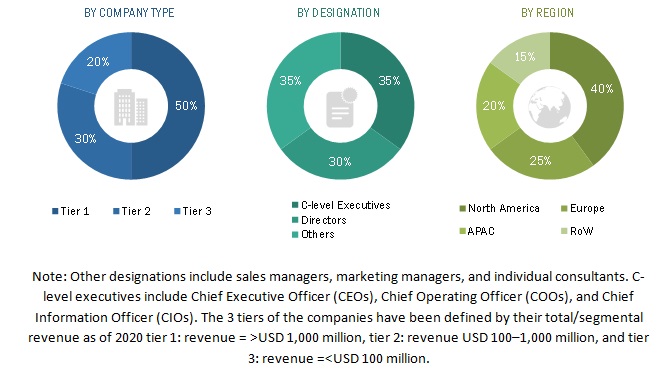
In the primary research process, various primary sources from both supply and demand sides were interviewed to obtain qualitative and quantitative information relevant to this report. Extensive primary research was conducted after understanding and analyzing the smart card market through secondary research. Several primary interviews were conducted with the key opinion leaders from both demand and supply side across 4 regions: North America, Europe, Asia Pacific (APAC), and the Rest of the World (RoW). RoW comprises the Middle East and Africa and South America. Approximately 25% of the primary interviews were conducted with the demand side, while approximately 75% with the supply side. This primary data was collected mainly through telephonic interviews, which accounted for approximately 80% of the total primary interviews. Besides, questionnaires and emails were also used to collect the data.
To know about the assumptions considered for the study, download the pdf brochure
Market Size Estimation
Both top-down and bottom-up approaches were implemented to estimate and validate the total size of the smart card market. These methods were also used extensively to estimate the size of the markets based on various segments. The research methodology used to estimate the market size included the following steps:
- The key players in the industry and markets were identified through extensive secondary research
- The industry’s supply chain and market size, in terms of value, were determined through primary and secondary research processes
- All percentage shares, splits, and breakdowns were determined using secondary sources and verified through primary sources
Data Triangulation
After arriving at the overall market size—using the market size estimation processes as explained above—the market was split into several segments and subsegments. Data triangulation and market breakdown procedures were employed, wherever applicable, to complete the overall market engineering process and arrive at the exact statistics for each market segment and subsegment. The data was triangulated by studying various factors and trends from demand and supply sides across different end users.
Study Objectives
- To describe and forecast the size of the overall smart card market, by interface, type, functionality, vertical, in terms of value
- To describe and forecast the size of the overall smart card market, by vertical, in terms of volume
- To describe and forecast the market size across 4 main regions, namely, North America, Europe, Asia Pacific (APAC), and the Rest of the World (RoW), along with their respective country-level market sizes, in terms of value
- To provide detailed information regarding drivers, restraints, opportunities, and challenges pertaining to the smart card market
- To provide a detailed overview of the smart card value chain
- To analyze each submarket with respect to individual growth trends and contributions to the overall smart card market
- To analyze opportunities in the market for stakeholders by identifying the high-growth segments of the smart card market
- To strategically profile key players in the said market and comprehensively analyze their market ranking in terms of revenue and core competencies1
- To analyze strategies/developments such as product launches, product developments, expansion, acquisition, contract, partnerships, and collaborations in the global smart card market
Available Customizations
With the given market data, MarketsandMarkets offers customizations according to the specific requirements of companies. The following customization options are available for this report:
Regional Analysis
- Country-wise breakdown of the smart card market for North America, Europe, APAC, and RoW
Company Information
- Detailed analysis and profiling of additional market players (up to 5)

 Generating Response ...










Growth opportunities and latent adjacency in Smart Card Market
About Smart IC - Market size and market structure (Application(card, tag, electronic passport)/region etc.) - SCM Structure - Information about the companies involved in market (M/S, main products, sales volume, sales revenue
The study will give a global and regional understanding of the Smart Card Market with Covid-19 Impact in terms of potential, dynamics and opportunities. The country specific information is also included in the report. The market research will give a complete understanding on the current and future market potential and revenues.
We are analyzing the market scenario post COVID and this will help to compare the market scenario pre and post COVID and support the businesses in making decisions.The detailed report will help to address following questions: • Which stakeholders in the Smart Card Market ecosystem will gain/ lose? Who will be impacted most adversely? • How are the major customers of Smart Card Market players shifting their spending and strategies? •What implication will this have on the player’s short term revenue growth? • How are the top 25-30 players in the ecosystem changing their short term strategies – in terms of product focus, end-use industry focus, regional focus, technology focus, etc.? • What are the most significant changes expected? • Post-COVID-19, which would be the most attractive industry for the Smart Card Market OEMs to invest in?• • How will this pandemic impact the short term and mid-term growth for Smart Card Market?
Need to calculate the TAM of touchless solutions.