How Signals Improve Lead Nurture Relevance
March 06, 2026
Every week, your SDR team sends thousands of nurture emails. Most go unanswered. Not because your messaging is bad. Not because your timing is wrong. But because your outreach has no connection to what is actually happening inside the account.
This is the lead nurturing problem no one talks about: we've built sophisticated workflows that ignore the most important variable—context.
Traditional lead nurturing operates on a simple assumption: if you send enough touches at the right intervals, someone will eventually respond. But enterprise buyers don't operate on your cadence. They operate on their business reality. When priorities shift, budgets freeze, or leadership changes, your seven-touch sequence becomes noise.
Signals change this. Not by adding more data. Not by increasing touch frequency. But by connecting your outreach to what is actually moving inside the account right now.
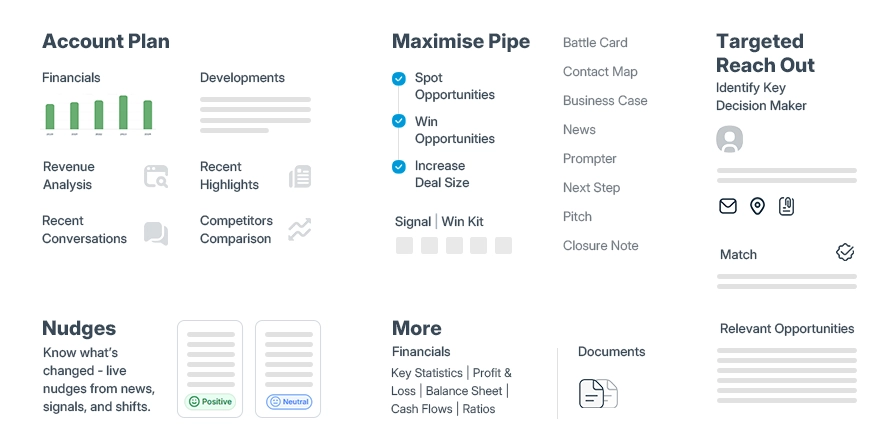
SalesPlay, a revenue intelligence platform from MarketsandMarkets, was built to solve this exact problem. Instead of guessing when to engage, sellers see what changed, why it matters, and who to talk to—before they write a single email.
Lead nurturing was supposed to solve pipeline creation. In reality, it created a different problem: volume without relevance.
The standard approach looks like this: a lead enters your system, gets tagged by source or ICP fit, and enters a predefined sequence. Touch one goes out on day one. Touch two on day three. Touch seven on day twenty-one. The sequence runs regardless of what happens inside the account during those three weeks.
This works when nothing changes. It breaks when reality intervenes.
Consider a typical scenario. Your SDR sends a perfectly crafted email on Monday about solving a capacity planning problem. On Tuesday, the account announces a hiring freeze. On Wednesday, your second touch arrives—still talking about capacity planning.
You just became irrelevant.
The problem isn't the message. The problem is the disconnect between your sequence and their business. Traditional nurture workflows operate in a vacuum. They execute based on time elapsed, not context gained.
According to SalesPlay's analysis of enterprise sales cycles, approximately 60% of nurture sequences continue running after the core business problem has fundamentally shifted. Sellers keep sending messages about priorities that no longer exist.
Irrelevant outreach does more than waste time. It trains buyers to ignore you.
When your outreach consistently misses the mark, buyers stop opening emails. They stop taking calls. Not because they don't have problems. But because your team has demonstrated they don't understand what those problems actually are right now.
Teams using SalesPlay's revenue intelligence platform report a different pattern. Engagement rates increase when outreach connects to recent account movements. Response rates improve when messaging references changes sellers can see and verify.
The difference isn't creativity. It's context.
The terms "signals" and "intent" get used interchangeably. They're not the same thing. Understanding the difference matters because it changes how you nurture.
Intent data tells you someone is researching a topic. A company visits your pricing page. An executive downloads a whitepaper. Someone watches a webinar about a problem you solve. This is intent. It suggests interest.
Signals tell you something changed inside the account. They hired a new VP of Sales. They reported declining revenue. They announced a product launch. They restructured a department. Signals indicate movement, not research.
Here's why this distinction matters for lead nurturing:
SalesPlay's Signals Agent was built around this distinction. Instead of tracking who visited your site, it tracks what changed inside the accounts you're already targeting. For sellers, this shifts the question from "are they interested?" to "what just happened that creates a reason to engage?"
Real Example: A SalesPlay customer tracked a target account for three months with no meaningful intent signals. When the account hired a new Chief Revenue Officer, the Signals Agent flagged it immediately. The seller reached out with a message specific to new CRO priorities. First meeting scheduled within 48 hours. Deal closed in 90 days.
Not all signals are equally useful. For lead nurturing to work, you need signals that connect to action.
1. Organizational Signals
Leadership changes. Department restructures. Headcount growth or reduction. Office expansions. Layoffs. These signals indicate shifting priorities and new budget owners. When a new executive joins, they bring their own problems and preferences. That creates a window.
2. Financial Signals
Earnings reports. Funding announcements. Revenue growth or decline. Margin compression. Cost-cutting initiatives. M&A activity. Financial signals change what buyers can spend and what they must fix. A company reporting declining revenue has different priorities than one reporting record growth.
3. Strategic Signals
Product launches. Market expansions. Partnership announcements. Technology investments. Digital transformation initiatives. Strategic signals reveal where the business is moving and what capabilities they need to build.
SalesPlay's Account Intelligence Agent consolidates all three signal types into a single view. Sellers don't need to monitor five different data sources. They see what changed, when it changed, and why it might matter—all in one place.
Signal-based nurturing doesn't replace traditional sequences. It makes them conditional. Instead of "send touch three on day seven," the logic becomes "send this message when this signal appears."
This is not theoretical. This is how SalesPlay's Auto-Nurture Agent operates.
Traditional nurture: fixed schedule, same message sequence for everyone in the segment.
Signal-based nurture: dynamic timing, personalized messaging based on what just changed.
Here's what changes operationally:
In SalesPlay, this happens automatically through sales automation. The Signals Agent monitors accounts. When a relevant signal appears, the Auto-Nurture Agent can trigger personalized outreach. Sellers review the drafted message, adjust if needed, and send. The entire workflow takes minutes, not hours.
Example 1: Expansion Opportunity
A SalesPlay customer selling sales enablement technology tracked a portfolio company. Signal detected: VP of Sales hired three new regional directors in one month. The nurture message referenced the hiring expansion and offered a framework for onboarding new sales leaders at scale. Response rate: 67% higher than standard sequence performance.
Example 2: Strategic Shift
Target account announced plans to enter European markets. Signal triggered outreach focusing on international compliance and multi-currency billing—specific to the expansion. Conversation started within 24 hours. Deal closed in 60 days.
Example 3: Financial Pressure
Public company reported margin compression in quarterly earnings. Signal flagged the financial change. Messaging shifted from "grow faster" to "reduce cost per sale." The relevance created urgency. Meeting scheduled same week.
These are not edge cases. This is how opportunity-driven lead nurturing works when the system connects outreach to account reality.
Moving from generic nurture to signal-based engagement requires more than better data. It requires workflow changes.
SDR teams are measured on activity volume: calls made, emails sent, meetings booked. Signal-based nurturing adds a new dimension: context quality.
Instead of "did you send ten emails today?" the question becomes "did those ten emails reference something real happening inside the account?"
This changes what SDRs need access to:
SalesPlay provides all of this through the combination of three agents working together: Signals Agent (monitors changes), Spot Opportunities Agent (identifies where to sell), and Auto-Nurture Agent (drafts personalized outreach).
For SDR teams, this means less time researching and more time engaging. According to SalesPlay's enterprise deployments, sellers using signal-based nurture spend 40% less time on account research and 60% more time in actual conversations.
Most sales prospecting tools focus on contact discovery. They help you find names, emails, and phone numbers. They tell you who to contact. They don't tell you when or why.
This creates a gap. You have a list. You have a sequence. But you're still guessing at timing and messaging.
Signal-based systems fill this gap. Instead of "here are 500 contacts at target accounts," the output becomes "here are 12 contacts experiencing changes relevant to what you sell, along with the specific signal that triggered the match."
SalesPlay's Spot Contacts Agent bridges prospecting and signals. You can start from a contact you already know and see opportunities relevant to them. Or you can start from an opportunity and see the contacts associated with that specific business need. Either way, the signal provides the context.
Signals are useless if they live outside your workflow. If sellers need to check three systems to see what changed, they won't do it consistently. Signal-based nurturing requires CRM integration.
SalesPlay connects directly to Salesforce. Accounts, opportunities, and contacts sync automatically. When a signal appears, it's visible in the same system sellers already use daily. No context switching. No manual data entry.
This integration changes how teams think about their sales process CRM. Instead of a system of record, it becomes a system of action. The CRM doesn't just store what happened. It shows what is happening and suggests what to do next.
For revenue operations leaders, this matters. Signal-based nurturing scales only if it fits naturally into existing workflows. SalesPlay was built with this constraint in mind.
Watch how enterprise sales teams use signals to engage accounts at exactly the right moment.
Schedule Your DemoTheory is easy. Execution is hard. Signal-based nurturing fails when it requires too much manual work. SalesPlay was built to make this approach operational, not aspirational.
The Signals Agent continuously monitors Salesforce-connected target accounts. It tracks multi-source changes and consolidates them in one place. No manual searches. No jumping between platforms.
What sellers see:
Each signal includes context: when it happened, what changed, and why it might create an opportunity. Sellers don't need to interpret raw data. The system provides the analysis.
This answers the question every seller asks: "What just happened here that creates a reason to engage?"
Detecting signals is step one. Turning them into relevant outreach is step two. This is where most signal-based approaches break down. The seller still needs to write the email.
SalesPlay's Auto-Nurture Agent eliminates this bottleneck.
Here's what actually happens:
The entire process takes minutes. The output is a multi-touch nurture sequence where every message references specific account context and signal-based timing.
This is not mail merge. This is contextual personalization at scale.
For SDR managers, this changes capacity planning. One seller can run signal-based nurture across 50+ accounts without sacrificing message quality. The constraint is no longer writing time. It's strategic thinking: which signals matter, which accounts to prioritize, and how to sequence engagement.
Enterprise sales is relationship-driven. But relationships don't scale if every interaction requires custom research and manual drafting. Signal-based nurturing solves this by automating context without automating away personalization.
What makes SalesPlay different:
This is how enterprise teams run signal-based nurturing without burning out their sellers or compromising quality.
If you can't measure it, you can't improve it. Signal-based nurturing requires different metrics than traditional sequences.
Standard nurture metrics track volume: emails sent, open rates, click rates, reply rates. These still matter. But they don't tell you if your outreach was relevant.
Signal-based nurturing adds context metrics:
SalesPlay tracks all of this automatically. Revenue operations teams can see which signal types drive the most engagement, which sellers are using signals effectively, and where nurture sequences need adjustment.
The goal isn't more activity. The goal is more relevant activity.
Teams using SalesPlay's signal-based approach report consistent patterns:
The biggest change isn't quantitative. It's qualitative. Sellers stop feeling like they're guessing. They know what changed inside the account. They know why it matters. They know what to say.
That clarity compounds. Better conversations lead to better relationships. Better relationships lead to more access. More access leads to more deals.
The most overlooked opportunity in B2B sales isn't net new logos. It's the pipeline hiding inside accounts you already know.
Most teams focus their nurture efforts on early-stage leads and inbound interest. They overlook the fact that their existing accounts are constantly changing. New executives join. Budgets shift. Strategic priorities evolve. Each change creates new buying opportunities.
SalesPlay's approach to turning account changes into qualified pipeline is simple: continuously monitor target accounts, detect when something relevant changes, and surface the opportunities those changes create.
This is especially powerful for account-based selling teams. Instead of waiting for accounts to raise their hand, sellers can generate pipeline from existing accounts by acting on signals before they become obvious to competitors.
The future of lead nurturing isn't more human SDRs. It's autonomous SDR agents that combine signal detection with automated execution.
Traditional SDRs spend 70% of their time on research and administrative work. Only 30% on actual selling. Autonomous agents flip this ratio. They handle the monitoring, research, and drafting. Human sellers focus on strategy and relationship building.
SalesPlay's agent architecture was designed around this principle. The system doesn't replace sellers. It removes everything that prevents them from selling effectively.
For teams exploring AI sales tools, the question isn't "should we use AI?" The question is "which workflows should AI handle, and which require human judgment?"
Signal detection and nurture drafting? Perfect for AI.
Account strategy and relationship building? Still human.
Final message approval and send timing? Human oversight with AI support.
This is the signal-driven revenue execution framework that enterprise teams are adopting.
Most teams start with contact enrichment. They need names, titles, emails, and phone numbers. This is table stakes.
But enrichment alone doesn't tell you when to reach out or what to say. You have complete contact records for 10,000 accounts. Now what?
This is where signal intelligence creates separation. It's not enough to know who works there. You need to know what's changing there—and why that change matters to your offering.
SalesPlay's approach combines both. The platform enriches contacts automatically while continuously monitoring for signals that create engagement windows. The result: sellers always know who to contact and have a specific reason to reach out.
For teams running lead enrichment at scale, adding signal intelligence transforms data into action. Instead of nurturing enriched leads generically, you nurture them contextually based on what just changed inside their account.
Intent data shows research behavior—someone visited your website, downloaded content, or engaged with your brand. Signals indicate business changes inside the account—leadership hires, financial shifts, strategic announcements. Intent suggests interest. Signals explain what changed to create urgency. For lead nurturing, signals provide the "why now" that intent data misses. SalesPlay's Signals Agent focuses on account-level changes rather than anonymous browsing behavior, giving sellers specific context to reference in outreach.
Behavioral signals improve response rates by making outreach relevant to the buyer's current reality. When your message references a recent leadership change, financial announcement, or strategic shift the buyer knows is true, it demonstrates you understand their business. SalesPlay customers typically see 2-3x higher response rates when messages tie directly to specific account signals versus generic pain point messaging. The key is specificity—referencing actual events rather than assumed problems.
Yes. SalesPlay integrates directly with Salesforce, syncing accounts, opportunities, and contacts automatically. Signals appear alongside existing CRM data, so sellers don't need to switch between systems. The goal is to enhance your current sales process CRM, not replace it. When a signal appears, it's visible in the same workflow sellers use daily, making signal-based nurturing a natural extension of existing processes rather than a parallel system.
The most valuable signals for SDR teams are organizational changes (leadership hires, restructures), financial movements (funding, revenue changes, cost initiatives), and strategic shifts (product launches, market expansions). These create clear reasons to engage. SalesPlay's Spot Opportunities Agent categorizes signals by relevance to your specific offerings, so SDRs focus on changes that actually connect to what they sell rather than monitoring all account activity.
SalesPlay's Auto-Nurture Agent creates personalized email campaigns based on detected signals and opportunities. Sellers select which opportunities to nurture, choose contacts, and set campaign parameters. The agent then drafts every email, personalizing each message around the specific signal and opportunity context. Messages reference actual account changes rather than generic pain points. Sellers review and approve before the campaign runs automatically, combining personalization at scale with human oversight.
SalesPlay's Signals Agent monitors accounts continuously and surfaces relevant changes automatically. Sellers don't need to manually check—new signals appear in their dashboard as they happen. For most enterprise sales teams, reviewing signal-triggered opportunities daily or every other day maintains responsiveness without creating information overload. The system filters noise and highlights what matters, so sellers focus on actionable signals rather than monitoring every data source.
Marketing automation typically runs on time-based triggers and behavioral scoring (email opens, website visits, content downloads). Signal-based nurturing triggers on external business events—changes inside the account unrelated to your marketing efforts. It's the difference between "this person opened three emails" and "this company just hired a new CRO." SalesPlay focuses on the latter: real business movements that create buying windows, not engagement metrics that suggest interest.
Absolutely. Account-based selling requires deep account understanding and timely engagement. Signals provide both. SalesPlay's Account Intelligence Agent consolidates signals, financial data, and key developments into a dynamic account view that updates as the account changes. This eliminates manual research and ensures account-based outreach stays current. Instead of building static account plans that become outdated, sellers work from living intelligence that reflects the account's actual state.
Lead nurturing fails when it operates on schedules instead of signals. The difference between a generic touch and a relevant conversation is simple: context.
Signals provide that context. They tell you what changed inside the account. Why timing matters now. What to reference in your outreach. Who to contact based on the specific business movement.
This isn't about adding more data. It's about connecting the data you have to the actions you take. Traditional nurture sends messages because it's day seven. Signal-based nurture sends messages because something happened that creates a reason to engage.
SalesPlay was built by MarketsandMarkets to operationalize this approach for enterprise sales teams. The platform doesn't just detect signals—it turns them into opportunities, maps them to contacts, drafts personalized outreach, and tracks what actually drives pipeline.
For revenue leaders, this changes the conversation. Instead of measuring activity volume, you measure context quality. Instead of hoping outreach lands at the right time, you know it references something real.
The question isn't whether signals matter. The question is whether your team can act on them without adding more manual work. That's where most signal-based approaches break down.
SalesPlay solves this. Signals appear automatically. Opportunities surface based on those signals. Nurture campaigns personalize around signal context. Sellers stay in control while the system handles the heavy lifting.
The result: lead nurturing that feels less like a numbers game and more like a real sales strategy.
Watch how SalesPlay's Signals Agent and Auto-Nurture Agent work together to create relevant, timely outreach that actually gets responses.
Request Your Demo Explore the Platform

Category: Uncategorized Tags: ai, AIOps, Artificial Intelligence, cloud, cloud platform, Cybersecurity, Information and Communications Technology , VR