3D Projector Market by Technology (DLP, LCD, LCoS), Light Source (Laser, Metal Halide, Hybrid, LED), Brightness, Resolution, Application (Cinema, Education, Business, Events & Large Venues, Home Theater & Gaming) and Region - Global Forecast 2025-2036


3D Projector Market Summary
The global 3D Projector Market is witnessing steady expansion as demand for immersive visualization technologies grows across entertainment, education, healthcare, simulation, gaming, and enterprise sectors. The market was valued at approximately USD 4.5 billion in 2025 and is projected to reach nearly USD 10.8 billion by 2036, registering a CAGR of 8.3% during 2025–2036. Increasing consumer demand for high-quality visual experiences, rising adoption of digital learning environments, and growing investments in simulation-based training are contributing significantly to market growth.
The integration of Artificial Intelligence (AI), Internet of Things (IoT), automation, cloud-based content management, and smart projection technologies is reshaping the 3D projector landscape. AI-powered image optimization, automatic calibration, gesture recognition, and real-time content enhancement are improving user experiences across commercial and residential applications. Furthermore, advancements in laser projection systems, ultra-short throw projectors, and high-resolution imaging technologies are expanding the scope of 3D projectors in professional environments. As organizations continue investing in digital transformation and immersive technologies, the 3D Projector Market is expected to maintain strong growth momentum through 2036.
Key Market Trends & Insights
- North America remains the leading regional market due to widespread adoption of advanced visualization technologies.
- Asia Pacific is projected to witness the fastest growth driven by expanding entertainment and education sectors.
- DLP (Digital Light Processing) projectors continue to dominate the product landscape.
- AI-powered image enhancement and automatic calibration are emerging industry trends.
- Laser-based projection technology is gaining significant market traction.
- Smart and connected projectors integrated with IoT platforms are transforming user experiences.
Market Size & Forecast
- Base Year Market Size (2025): USD 4.5 Billion
- Forecast Market Value (2036): USD 10.8 Billion
- CAGR (2025–2036): 8.3%
- Growth Factors: Increasing demand for immersive entertainment, digital education adoption, growth of gaming and simulation applications, AI-powered projection technologies, and advancements in laser projection systems.
3D Projector Market Top 10 key takeaway
- 3D projectors are becoming essential tools for immersive visual experiences.
- DLP technology remains the leading product segment.
- Entertainment and cinema applications generate substantial market revenue.
- AI-driven image optimization is enhancing projection quality.
- Laser projectors are witnessing rapid adoption across commercial applications.
- Asia Pacific is expected to achieve the highest growth rate.
- Smart classrooms are increasing demand for advanced projection systems.
- Healthcare simulation and medical visualization applications are expanding.
- Cloud-connected projectors support remote content management.
- Corporate digital transformation initiatives continue to drive adoption.
Product Insights
DLP-based 3D projectors currently account for the largest share of the global 3D Projector Market. Their superior image quality, high contrast ratios, excellent color accuracy, and reliability make them highly suitable for cinema, education, business, and home entertainment applications. DLP technology delivers smoother motion rendering and reduced image distortion, which are critical factors for immersive 3D viewing experiences.
The segment's dominance is also supported by continuous technological advancements that enhance brightness, resolution, and energy efficiency. Commercial theaters, corporate environments, educational institutions, and gaming centers increasingly rely on DLP projectors to deliver engaging visual content. The affordability of many DLP solutions further contributes to widespread adoption.
LCD-based 3D projectors continue to serve important market segments, particularly within educational and business environments. Their ability to produce vibrant colors and cost-effective performance makes them attractive for classrooms and conference rooms. LCoS (Liquid Crystal on Silicon) projectors are gaining popularity among premium home theater enthusiasts and professional visualization users due to their exceptional image clarity.
Emerging product categories include laser-powered 3D projectors, ultra-short throw projectors, portable smart projectors, and AI-enhanced projection systems. Manufacturers are increasingly integrating intelligent features such as automatic focus adjustment, obstacle avoidance, voice control, and adaptive brightness optimization.
The growing convergence of AI and projection technology is enabling advanced functionalities including real-time image correction, scene recognition, and personalized viewing experiences, positioning next-generation projectors as intelligent display solutions.
Projection Technology and Component Insights
The 3D Projector Market is driven by continuous advancements in projection technologies, imaging components, AI-powered processing systems, connectivity platforms, and automation capabilities. DLP, LCD, and LCoS technologies remain the primary projection architectures supporting the industry.
Laser light source technology has emerged as one of the most significant innovations in recent years. Compared to traditional lamp-based systems, laser projectors offer longer operational lifespans, improved brightness consistency, reduced maintenance requirements, and enhanced energy efficiency. These advantages are driving widespread adoption across cinemas, educational institutions, and corporate facilities.
Artificial intelligence is becoming increasingly important in modern projection systems. AI algorithms automatically optimize image quality, adjust brightness based on ambient conditions, improve color calibration, and enhance content rendering. AI-driven features reduce setup complexity while delivering superior viewing experiences.
IoT integration is enabling connected projector ecosystems. Smart projectors can communicate with other devices, receive remote updates, and provide real-time diagnostics. Cloud-based management platforms allow organizations to monitor and control projector fleets across multiple locations, improving operational efficiency and reducing maintenance costs.
Automation technologies are further transforming the market by enabling automatic screen alignment, intelligent keystone correction, predictive maintenance, and voice-controlled operation. Future innovation trends are expected to focus on holographic projection, AI-generated immersive environments, augmented reality integration, and ultra-high-definition 8K projection systems.
Application Insights
Entertainment and cinema applications represent the largest segment within the 3D Projector Market. Movie theaters, amusement parks, gaming venues, and immersive entertainment centers rely heavily on 3D projection technologies to deliver engaging experiences. Increasing consumer demand for high-quality visual content continues to drive investments in advanced projection systems.
Education is another major application area. Schools, universities, and training centers are increasingly utilizing 3D projectors to improve learning outcomes through interactive visualizations and immersive educational content. Subjects such as science, engineering, medicine, and architecture particularly benefit from three-dimensional presentations.
Corporate and business environments are adopting 3D projection technologies for presentations, product demonstrations, design visualization, and collaborative workspaces. Organizations seeking innovative communication tools are investing in advanced display technologies to improve engagement and productivity.
Healthcare applications are emerging as a high-growth segment. Medical professionals utilize 3D projectors for surgical planning, medical training, anatomical visualization, and diagnostic presentations. The technology enhances understanding of complex structures and improves training effectiveness.
Future opportunities are expected to arise from virtual production studios, defense simulations, industrial design visualization, smart cities, and metaverse-related applications where immersive visual experiences play a critical role.
Regional Insights
North America currently dominates the global 3D Projector Market due to strong technology adoption, significant investments in entertainment infrastructure, and widespread deployment of advanced visualization systems. The United States leads regional growth through extensive usage across cinema, education, healthcare, and corporate sectors. The region's focus on digital transformation and immersive technologies continues to support market expansion.
Europe represents a mature market characterized by strong adoption of advanced display technologies across education, manufacturing, healthcare, and entertainment industries. Countries such as Germany, France, and the United Kingdom continue to invest in digital learning environments and smart infrastructure projects that utilize advanced projection systems.
Asia Pacific is expected to register the fastest growth rate throughout the forecast period. Rapid urbanization, expanding entertainment industries, increasing education investments, and rising consumer electronics demand are fueling adoption. China, Japan, India, and South Korea are becoming major contributors due to their growing digital economies and technological advancements.
Latin America and the Middle East & Africa are gradually expanding their adoption of 3D projection technologies, particularly in education, entertainment, and corporate sectors.
Regional Insights Summary
- North America leads global market revenue.
- Asia Pacific records the highest forecast CAGR.
- Europe benefits from digital education initiatives.
- Entertainment applications drive regional demand.
- Smart infrastructure projects support market expansion.
Country-Specific Market Trends
The United States remains the largest national market and is expected to grow at a CAGR of approximately 8.0% through 2036. Strong demand from entertainment venues, educational institutions, healthcare organizations, and corporate users continues to support market growth. AI-enabled projection systems are gaining widespread adoption across professional environments.
Canada is witnessing increasing deployment of advanced projection technologies in higher education, public institutions, and business facilities. Government investments in digital learning infrastructure contribute to market expansion.
Mexico is experiencing growing demand for projection systems across entertainment, education, and corporate sectors. Infrastructure modernization initiatives are creating additional opportunities for market participants.
China is projected to achieve a CAGR exceeding 10.2% through 2036. Rapid urbanization, expanding cinema networks, smart classroom initiatives, and increasing consumer demand for advanced display technologies are driving market growth.
Japan remains a leader in display technology innovation. Companies continue to develop advanced projection systems incorporating AI, laser technology, and ultra-high-definition imaging capabilities.
Germany plays a significant role in the European market through strong investments in industrial visualization, education technology, and digital transformation projects. Advanced manufacturing and engineering sectors increasingly utilize 3D projection solutions.
France is experiencing increasing adoption of immersive visualization technologies across education, healthcare, and entertainment industries. Government-supported digitalization initiatives continue to support market development.
Country-Level Insights Summary
- China demonstrates the strongest growth potential.
- The United States remains the largest national market.
- Germany leads industrial visualization adoption in Europe.
- Japan drives technological innovation.
- Canada benefits from educational technology investments.
Key 3D Projector Market Company Insights
The 3D Projector Market is highly competitive, with leading manufacturers focusing on innovation, AI integration, laser projection advancements, and smart connectivity features. Companies continue investing in research and development to improve image quality, energy efficiency, and user experience.
Major companies operating in the market include BenQ Corporation, Epson Corporation, Sony Group Corporation, Panasonic Holdings Corporation, Optoma Corporation, NEC Display Solutions, ViewSonic Corporation, Barco NV, Christie Digital Systems, and Acer Inc.
These organizations are actively developing AI-powered projection systems capable of automatic calibration, intelligent image enhancement, and cloud-based management. Strategic partnerships with educational institutions, entertainment providers, and enterprise customers remain important growth strategies. Additionally, manufacturers are focusing on expanding laser projector portfolios and smart connected display solutions.
Company Strategy Highlights
- Development of AI-powered image optimization technologies.
- Expansion of laser projector product portfolios.
- Integration of IoT-enabled remote management capabilities.
- Strategic partnerships across education and entertainment sectors.
- Investment in ultra-high-definition projection systems.
Recent Developments
In 2025, several leading projector manufacturers launched next-generation laser-based 3D projectors featuring AI-powered image enhancement and automatic calibration technologies, improving image quality while reducing installation complexity.
Major education technology providers partnered with projection system manufacturers to deploy cloud-connected smart classroom solutions capable of supporting immersive and interactive learning experiences.
Several companies introduced IoT-enabled projector management platforms that provide predictive maintenance, remote diagnostics, and centralized control capabilities for enterprise customers.
Market Segmentation
The 3D Projector Market is segmented by product, technology, application, and region. By product, the market includes DLP projectors, LCD projectors, LCoS projectors, laser projectors, and portable smart projectors. DLP projectors currently account for the largest market share due to their superior image quality and widespread adoption.
Based on technology and components, the market encompasses projection engines, light sources, AI-powered image processing units, connectivity modules, cloud management software, and automation systems. Laser projection technology is witnessing the fastest adoption due to its performance and efficiency advantages.
By application, the market serves entertainment and cinema, education, healthcare, corporate, defense, gaming, and industrial visualization sectors. Entertainment remains the dominant application segment, supported by growing demand for immersive visual experiences.
Regionally, the market is categorized into North America, Europe, Asia Pacific, Latin America, and the Middle East & Africa. North America currently leads market revenue generation, while Asia Pacific is expected to achieve the highest growth through 2036.
Segmentation Highlights
- DLP projectors dominate product demand.
- Laser technology is the fastest-growing technology segment.
- Entertainment remains the largest application sector.
- North America generates the highest revenue share.
- Asia Pacific offers the strongest future growth opportunities.
Conclusion
The global 3D Projector Market is positioned for sustained growth through 2036, supported by increasing demand for immersive visual experiences, digital transformation initiatives, and technological advancements in projection systems. AI, IoT, cloud connectivity, and automation technologies are fundamentally reshaping the industry by improving image quality, operational efficiency, and user convenience.
As organizations continue investing in advanced visualization solutions for entertainment, education, healthcare, and enterprise applications, the role of intelligent projection systems will become increasingly important. Future innovations in laser technology, AI-powered image processing, holographic projection, and immersive content delivery are expected to create substantial growth opportunities. Companies that embrace these advancements will be well-positioned to capitalize on the evolving demands of the global visualization market.
FAQs
1. What is the current size of the 3D Projector Market?
The global 3D Projector Market was valued at approximately USD 4.5 billion in 2025.
2. What is the expected growth rate of the 3D Projector Market?
The market is projected to grow at a CAGR of 8.3% during 2025–2036.
3. What are the key drivers of market growth?
Major growth drivers include increasing demand for immersive entertainment, digital education adoption, AI-powered projection technologies, smart connected devices, and advancements in laser projection systems.
4. Which region leads the 3D Projector Market?
North America currently leads the market due to strong adoption across entertainment, healthcare, education, and enterprise sectors.
5. Who are the key companies operating in the 3D Projector Market?
Major companies include BenQ Corporation, Epson Corporation, Sony Group Corporation, Panasonic Holdings Corporation, Optoma Corporation, NEC Display Solutions, ViewSonic Corporation, Barco NV, Christie Digital Systems, and Acer Inc.
 Exclusive indicates content/data unique to MarketsandMarkets and not available with any competitors.
Table of Contents
1 Introduction (Page No. - 16)
1.1 Study Objectives
1.2 Definition
1.3 Study Scope
1.3.1 Markets Covered
1.3.2 Years Considered
1.4 Currency
1.5 Stakeholders
2 Research Methodology (Page No. - 19)
2.1 Research Data
2.1.1 Secondary Data
2.1.1.1 Secondary Sources
2.1.2 Primary Data
2.1.2.1 Breakdown of Primaries
2.1.2.2 Key Data From Primary Sources
2.1.2.3 Key Industry Insights
2.2 Market Size Estimation
2.2.1 Bottom-Up Approach
2.2.2 Top-Down Approach
2.3 Market Breakdown and Data Triangulation
2.4 Research Assumptions
3 Executive Summary (Page No. - 28)
4 Premium Insights (Page No. - 32)
4.1 Attractive Opportunities in 3D Projector Market
4.2 3D Projector Market, By Technology and Region
4.3 Country-Wise 3D Projector Market Growth Rate
5 Market Overview (Page No. - 35)
5.1 Introduction
5.2 Market Dynamics
5.2.1 Drivers
5.2.1.1 Adoption of 3D Projectors in Cinema Halls
5.2.1.2 Digitalization in Education Sector
5.2.1.3 Technological Advancements in 3D Projectors
5.2.2 Restraints
5.2.2.1 Technological Constraints With DLP Projectors and Metal Halide Light Source
5.2.3 Opportunities
5.2.3.1 Increasing Use of 3D Projectors for Events, Exhibitions, and Museums
5.2.3.2 Rise in Importance of Laser-Based 3D Projectors
5.2.4 Challenges
5.2.4.1 LED Screens as Substitutes to Projectors
6 3D Projector Market, By Technology (Page No. - 38)
6.1 Introduction
6.2 DLP
6.2.1 High Native Contrast Offered By DLP Projectors Drives the Growth of Market
6.3 LCD
6.3.1 Factors Including Low Power Consumption and Low Maintenance Cost Drives the Growth of Market
6.4 LCOS
6.4.1 Market for LCOS Based 3D Projectors With Laser Light Source to Grow at A Significant Rate
7 3D Projector Market, By Light Source (Page No. - 49)
7.1 Introduction
7.2 Laser
7.2.1 Higher Consistency Brightness, With A Longer Lamp Life Offered By 3D Laser Projector to Drive the Growth of Market
7.3 LED
7.3.1 Market Growth Driven By Increasing Need for Low Maintenance Cost Projectors
7.4 Hybrid
7.4.1 Benefits Offered Including Better Image Quality and Longer Light Source Life to Drive Growth of 3D Projector Market
7.5 Metal Halide
7.5.1 Metal Halide Lamp to Hold Largest Share of 3D Projector Market
7.6 Others
8 3D Projector Market, By Brightness (Page No. - 56)
8.1 Introduction
8.2 Less Than 2,000 Lumens
8.2.1 Market Driven By Applications Like Home Entertainment, Education, and Business
8.3 2,000 to 3,999 Lumens
8.3.1 3D Projectors With Brightness From 2,000 Lumens to 3,999 Lumens to Lead Market
8.4 4,000 to 9,999 Lumens
8.4.1 Market for 3D Projectors Offering 4,000 to 9,999 Lumens Brightness to Grow at A Significant Rate
8.5 10,000 & Above Lumens
8.5.1 Increasing Demand for Higher Lumens 3D Projectors in Events and Large Venues to Drive the Growth of Market
9 3D Projector Market, By Resolution (Page No. - 62)
9.1 Introduction
9.2 VGA
9.2.1 Market Driven By Super Video Graphics Array and Wide Video Graphics Array Projectors
9.3 XGA
9.3.1 Market for DLP Based 3D Projectors Offering XGA Resolution to Grow at A Significant Rate
9.4 HD & Full HD
9.4.1 High Quality Image Displayed By HD & Full HD Resolution 3D Projector Drives the Growth of Market
9.5 4K and Above
9.5.1 Increasing Demand for Better Resolution of Projector to Provide Opportunities for the Market
10 3D Projector Market, By Application (Page No. - 68)
10.1 Introduction
10.2 Cinema
10.2.1 Increasing Adoption of Digital Screens Drives the Growth of Market
10.3 Education
10.3.1 Increasing Interests From End-Users for Interactive Projectors Provides Opportunity for the Market
10.4 Business
10.4.1 DLP Projectors to Lead Market for Business Application
10.5 Home Theater and Gaming
10.5.1 Availability of Low Cost Projectors Provides Opportunity for Home Cinema and Gaming Application
10.6 Events and Large Venues
10.6.1 Increasing Requirements of High Brightness and Quality Images Drives the Growth of Market
10.7 Others
11 Geographic Analysis (Page No. - 82)
11.1 Introduction
11.2 North America
11.2.1 US
11.2.1.1 Increasing Investments in Education Sector Propels Growth of Market
11.2.2 Canada
11.2.2.1 Cinema and Events Important Applications for 3D Projector Market in Country
11.2.3 Mexico
11.2.3.1 Educational Sector to Contribute Significantly to 3D Projector Market in This Country
11.3 Europe
11.3.1 Germany
11.3.1.1 Emerging Technologies Like Virtual Reality to Provide Opportunity for the Market
11.3.2 UK
11.3.2.1 Events and Exhibition One of the Important Application Areas for UK Market
11.3.3 France
11.3.3.1 Cinema and Events to Play Important Role in 3D Projector Market
11.3.4 Italy
11.3.4.1 Growing Tourism Industry to Provide Opportunity for the Market
11.3.5 Rest of Europe
11.4 APAC
11.4.1 China
11.4.1.1 Rising Number of 3D Movie Screens and Increasing Adoption of Projectors for Home Theatre Application Fuel the Growth of Market
11.4.2 Japan
11.4.2.1 Different Developments Carried Out By Leading Players Play Important Role in 3D Projector Market
11.4.3 India
11.4.3.1 Increasing Adoption of Digital Technologies in Education Sector to Provide Opportunity for the Market
11.4.4 South Korea
11.4.4.1 Adoption of Laser Projectors in Cinema Application to Drive the Growth Market
11.4.5 Rest of APAC
11.5 RoW
11.5.1 Middle East & Africa
11.5.1.1 Increasing Number of Cinema Screens to Provide Significant Growth Opportunities for the Market
11.5.2 South America
11.5.2.1 Events and Cinema are Important Applications for 3D Projector Market
12 Competitive Landscape (Page No. - 95)
12.1 Overview
12.2 Market Ranking Analysis
12.2.1 Product Launches
12.2.2 Agreements, Collaborations, Partnerships, and Contracts
12.2.3 Mergers & Acquisitions
12.2.4 Expansion
12.3 Competitive Leadership Mapping
12.3.1 Visionary Leaders
12.3.2 Dynamic Differentiators
12.3.3 Innovators
12.3.4 Emerging Players
13 Company Profile (Page No. - 101)
(Business Overview, Products Offered, Recent Developments, SWOT Analysis, and MnM View)*
13.1 Introduction
13.2 Key Players
13.2.1 Sony
13.2.2 Optoma
13.2.3 Epson
13.2.4 Barco
13.2.5 Vivitek Corporation
13.2.6 Benq
13.2.7 Christie Digital
13.2.8 Jvckenwood (JVC)
13.2.9 NEC Display Solutions, Ltd.
13.2.10 Panasonic
13.2.11 Viewsonic
13.3 Other Key Players
13.3.1 Acer
13.3.2 Boxlight
13.3.3 Canon
13.3.4 Dell
13.3.5 Digital Projection
13.3.6 Dukane
13.3.7 Infocus
13.3.8 Sim2
13.3.9 Wolf Cinema
*Details on Business Overview, Products Offered, Recent Developments, SWOT Analysis, and MnM View Might Not Be Captured in Case of Unlisted Companies.
14 Appendix (Page No. - 134)
14.1 Discussion Guide
14.2 Knowledge Store: Marketsandmarkets’ Subscription Portal
14.3 Available Customizations
14.4 Related Reports
14.5 Author Details
List of Tables (64 Tables)
Table 1 3D Projector Market, By Technology, 2015–2024 (USD Million)
Table 2 Market for DLP-Based 3D Projectors, By Resolution, 2015–2024 (USD Million)
Table 3 Market for DLP-Based 3D Projectors, By Light Source, 2015–2024 (USD Million)
Table 4 Market for DLP-Based 3D Projectors, By Application, 2015–2024 (USD Million)
Table 5 Market for DLP-Based 3D Projectors, By Region, 2015–2024 (USD Million)
Table 6 Market for LCD-Based 3D Projectors, By Resolution, 2015–2024 (USD Million)
Table 7 Market for LCD-Based 3D Projector, By Light Source, 2015–2024 (USD Million)
Table 8 Market for LCD-Based 3D Projectors, By Application, 2015–2024 (USD Million)
Table 9 Market for LCD-Based 3D Projectors, By Region, 2015–2024 (USD Million)
Table 10 Market for LCOS-Based 3D Projectors, By Resolution, 2015–2024 (USD Million)
Table 11 Market for LCOS-Based 3D Projectors, By Light Source, 2015–2024 (USD Million)
Table 12 Market for LCOS-Based 3D Projectors, By Application, 2015–2024 (USD Million)
Table 13 Market for LCOS-Based 3D Projectors, By Region, 2015–2024 (USD Million)
Table 14 3D Projector Market, By Light Source, 2015–2024 (USD Million)
Table 15 3D Laser Projector Market, By Technology, 2015–2024 (USD Million)
Table 16 3D Laser Projector Market, By Brightness, 2015–2024 (USD Million)
Table 17 3D Projector With Led Light Source Market, By Technology, 2015–2024 (USD Million)
Table 18 Market for Led Light Source-Based 3D Projector, By Brightness, 2015–2024 (USD Million)
Table 19 Market for Metal Halide-Based 3D Projectors, By Technology, 2015–2024 (USD Million)
Table 20 Market for Metal Halide-Based 3D Projectors, By Brightness, 2015–2024 (USD Million)
Table 21 Market for 3D Projectors Based on Other Light Source, By Brightness, 2015–2024 (USD Million)
Table 22 Market, By Brightness, 2015–2024 (USD Million)
Table 23 Market for Brightness Less Than 2,000 Lumens, By Light Source, 2015–2024 (USD Million)
Table 24 Market for Brightness Ranging From 2,000 to 3,999 Lumens, By Light Source, 2015–2024 (USD Million)
Table 25 Market for Brightness Ranging From 4,000 to 9,999 Lumens, By Light Source, 2015–2024 (USD Million)
Table 26 Market for Brightness of 10,000 and Above Lumens, By Light Source, 2015–2024 (USD Million)
Table 27 Market, By Resolution, 2015–2024 (USD Million)
Table 28 Market for 3D Projector With VGA Resolution, By Technology, 2015–2024 (USD Million)
Table 29 Market for 3D Projectors With XGA Resolution, By Technology, 2015–2024 (USD Million)
Table 30 Market for 3D Projectors With HD & Full HD Resolution, By Technology, 2015–2024 (USD Million)
Table 31 Market for 3D Projectors With 4K and Above Resolution, By Technology, 2015–2024 (USD Million)
Table 32 Market, By Application, 2015–2024 (USD Million)
Table 33 Market for Cinema, By Technology, 2015–2024 (USD Million)
Table 34 DLP-Based Market for Cinema, By Region, 2015–2024 (USD Million)
Table 35 LCOS-Based Market for Cinema, By Region, 2015–2024 (USD Million)
Table 36 Market for Education, By Technology, 2015–2024 (USD Million)
Table 37 DLP-Based Market for Education, By Region, 2015–2024 (USD Million)
Table 38 LCD-Based Market for Education, By Region, 2015–2024 (USD Million)
Table 39 LCOS-Based Market for Education, By Region, 2015–2024 (USD Million)
Table 40 Market for Business, By Technology, 2015–2024 (USD Million)
Table 41 Market for DLP-Based 3D Projectors for Business, By Region, 2015–2024 (USD Million)
Table 42 Market for LCD-Based 3D Projectors for Business, By Region, 2015–2024 (USD Million)
Table 43 Market for LCOS-Based 3D Projectors for Business, By Region, 2015–2024 (USD Million)
Table 44 Market for Home Theater and Gaming, By Technology, 2015–2024 (USD Million)
Table 45 Market for DLP-Based 3D Projectors for Home Theater and Gaming, By Region, 2015–2024 (USD Million)
Table 46 Market for LCD-Based 3D Projectors for Home Theater and Gaming, By Region, 2015–2024 (USD Million)
Table 47 Market for LCOS-Based 3D Projectors for Home Theater and Gaming, By Region, 2015–2024 (USD Million)
Table 48 Market for Events and Large Venues, By Technology, 2015–2024 (USD Million)
Table 49 Market for DLP-Based 3D Projectors for Events and Large Venues, By Region, 2015–2024 (USD Million)
Table 50 Market for LCD-Based 3D Projectors for Events and Large Venues, By Region, 2015–2024 (USD Million)
Table 51 Market for LCOS-Based 3D Projectors for Events and Large Venues, By Region, 2015–2024 (USD Million)
Table 52 Market for Other Applications, By Technology, 2015–2024 (USD Million)
Table 53 Market for DLP-Based 3D Projectors for Other Applications, By Region, 2015–2024 (USD Million)
Table 54 Market for LCD-Based 3D Projectors for Other Applications, By Region, 2015–2024 (USD Million)
Table 55 Market for LCOS-Based 3D Projectors for Other Applications, By Region, 2015–2024 (USD Million)
Table 56 Market, By Region, 2015–2024 (USD Million)
Table 57 Market in North America, By Country, 2015–2024 (USD Million)
Table 58 Market in Europe, By Country, 2015–2024 (USD Million)
Table 59 Market in APAC, By Country, 2015–2024 (USD Million)
Table 60 Market in RoW, By Region, 2015–2024 (USD Million)
Table 61 Product Launch, 2018–2019
Table 62 Agreement, Collaboration, Partnership, and Contract, 2017–2018
Table 63 Mergers & Acquisitions, 2019
Table 64 Expansion, 2018
List of Figures (43 Figures)
Figure 1 3D Projector Market: Research Design
Figure 2 Market: Process Flow of Market Size Estimation
Figure 3 3D Projector: Bottom-Up Approach
Figure 4 Market: Top-Down Approach
Figure 5 Data Triangulation
Figure 6 Assumptions for Research Study
Figure 7 DLP-Based 3D Projectors to Dominate the Market By 2024
Figure 8 Market for 3D Projector With Laser Light Source to Grow at Highest CAGR During Forecast Period
Figure 9 3D Projectors Offering HD & Full HD Resolution to Hold Largest Size of the Market By 2024
Figure 10 Market for 3D Projector Featuring 10,000 and Above Lumens to Grow at Highest CAGR During Forecast Period
Figure 11 Cinema to Grow at Highest CAGR in Market During Forecast Period
Figure 12 APAC to Account for Largest Share of Market By 2024
Figure 13 Growing Adoption of 3D Projectors in Cinema Theaters Along With Technological Advancement in 3D Projectors to Drive Market for 3D Projectors
Figure 14 DLP Technology and APAC to Hold Largest Share of Market By 2024
Figure 15 Market in China to Grow at Fastest Rate During Forecast Period
Figure 16 Market Dynamics
Figure 17 DLP Technology Based Market to Grow at Highest CAGR During Forecast Period
Figure 18 Market for DLP-Based 3D Projector With Laser Light Source to Grow at Highest CAGR During Forecast Period
Figure 19 3D DLP Projector in APAC to Hold Largest Market Share in 2024
Figure 20 3D Projectors Based on Laser Light Source to Grow at Highest CAGR During Forecast Period
Figure 21 3D Laser Projectors With DLP Technology to Dominate the Market During Forecast Period
Figure 22 Metal Halide-Based 3D Projectors With DLP Technology to Dominate the Market During Forecast Period
Figure 23 3D Projectors With Brightness From 2,000 to 3,999 Lumens to Hold Largest Size of the Market By 2024
Figure 24 3D Projectors With Metal Halide Light Source Offering Brightness Ranging From 2,000 to 3,999 Lumens to Hold Largest Market Size During Forecast Period
Figure 25 Market for 3D Projectors With Resolution of 4K & Above to Grow at Highest CAGR During Forecast Period
Figure 26 Market for DLP-Based 3D Projectors With HD and Full HD Resolution to Dominate the Market During Forecast Period
Figure 27 Market for Cinema Application to Grow at Highest CAGR During the Forecast Period
Figure 28 Market in APAC to Grow at Highest CAGR During Forecast Period
Figure 29 North America: Snapshot of 3D Projector Market
Figure 30 US to Dominate Market in North America By 2024
Figure 31 Europe: Snapshot of Market
Figure 32 France to Grow at Highest CAGR in European Market During Forecast Period
Figure 33 APAC: Snapshot of Market
Figure 34 China to Dominate Market in APAC By 2024
Figure 35 South America to Lead Market in RoW During Forecast Period
Figure 36 Organic and Inorganic Strategies Adopted By Companies Operating in Market
Figure 37 Market Player Ranking, 2018
Figure 38 Market (Global) Competitive Leadership Mapping (2018)
Figure 39 Sony: Company Snapshot
Figure 40 Epson: Company Snapshot
Figure 41 Barco: Company Snapshot
Figure 42 Jvckenwood: Company Snapshot
Figure 43 Panasonic: Company Snapshot
The study has involved 4 major activities in estimating the size of the 3D projector market. Exhaustive secondary research has been done to collect information on the market, the peer market, and the parent market. To validate these findings, assumptions, and sizing with industry experts across the value chain through primary research has been the next step. Both top-down and bottom-up approaches have been employed to estimate the total market size. After that, market breakdown and data triangulation methods have been used to estimate the market for segments and subsegments.
Secondary Research
In the secondary research process, various secondary sources such as Hoovers, Bloomberg BusinessWeek, and Factiva have been referred to identify and collect information for this study. These secondary sources included annual reports, press releases and investor presentations of companies, white papers, certified publications, articles by recognized authors, gold-standard and silver-standard websites, regulatory bodies, trade directories, and databases.
Primary Research
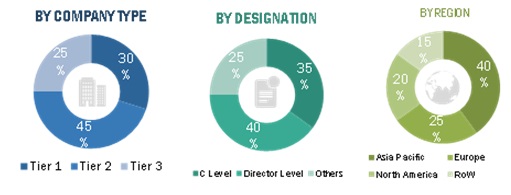
The 3D projector market comprises several stakeholders, such as projector manufacturers, component providers, among others in the supply chain. The demand side of this market includes various cinema, education, business, home theater, events & large venues. Various primary sources from both the supply and demand sides of the market have been interviewed to obtain qualitative and quantitative information. The breakdown of primary respondents is as follows:
To know about the assumptions considered for the study, download the pdf brochure
Market Size Estimation
Both top-down and bottom-up approaches have been used to estimate and validate the total size of the 3D projector market. These methods have also been used extensively to determine the size of various subsegments in the market. The research methodology used to estimate the market size is as follows:
- Key players in the industry and markets have been identified through extensive secondary research.
- The industry’s supply chain and market size, in terms of value, have been determined through primary and secondary research processes.
- Players offering various types of projectors are considered; their revenue for 3D projectors has been observed to arrive at global numbers.
- The market has further been narrowed down to obtain the splits for technology, light source, resolution, brightness, and applications.
- Application trends for various regions including North America, Europe, APAC, and Row have been studied to provide further breakdown the market estimation.
- All percentage shares, splits, and breakdowns have been determined using secondary sources and verified through primary sources.
Data Triangulation
After arriving at the overall market size—using the market size estimation processes as explained above—the market has been split into several segments and subsegments. To complete the entire market engineering process and arrive at the exact statistics of each market segment and subsegment, the data triangulation, and market breakdown procedures have been employed, wherever applicable. The data has been triangulated by studying various factors and trends from both the demand and supply sides in the 3D projector market.
Report Objectives
- To describe and forecast the 3D projector market, in terms of value, by technology, resolution, light source, brightness, and application
- To describe and forecast the 3D projector market, in terms of value, by region—North America, Europe, Asia Pacific (APAC), and Rest of the World (RoW)
- To provide detailed information regarding major factors influencing market growth (drivers, restraints, opportunities, and challenges)
- To strategically analyze micromarkets with respect to individual growth trends, future prospects, and contributions to the total market
- To profile key players and comprehensively analyze their market positions in terms of ranking and core competencies, along with the detailing the competitive landscape for market leaders
- To analyze competitive developments such as joint ventures, collaborations, agreements, contracts, partnerships, mergers and acquisitions, product launches and developments, and research and development (R&D) in the 3D projector market
- To benchmark players within the market using proprietary "Competitive Leadership Mapping" framework, which analyzes market players on various parameters within the broad categories of business and product strategy
Available Customizations:
With the given market data, MarketsandMarkets offers customizations according to the company’s specific needs. The following customization options are available for the report:
Company Information:
- Detailed analysis and profiling of additional market players













Growth opportunities and latent adjacency in 3D Projector Market