Aerospace 3D Printing Market by Offerings(Printers, Materials, Services, Software), Technology, Platform(Aircraft, UAVs, Spacecraft), Application(Prototyping, Tooling, Functional Parts), End Product, End User(OEM, MRO), & Region (2025-2035)


Aerospace 3D Printing Market
Aerospace 3D Printing Market Summary
The global Aerospace 3D Printing Market is estimated to reach approximately USD 4.40 billion in 2025 and is projected to grow to USD 18.60 billion by 2035, registering a CAGR of 15.5% during the forecast period. The market is witnessing rapid expansion driven by the increasing demand for lightweight components, reduced manufacturing lead times, and cost-efficient production processes in the aerospace industry. Additive manufacturing (AM), commonly known as 3D printing, is transforming aerospace production by enabling complex geometries, part consolidation, and on-demand manufacturing. The integration of artificial intelligence (AI), Internet of Things (IoT), and automation is further enhancing design optimization, production efficiency, and quality control. Digital transformation across aerospace supply chains, combined with advancements in materials such as titanium alloys and high-performance polymers, is significantly accelerating market growth globally.
Key Market Trends & Insights
The Aerospace 3D Printing Market is evolving rapidly as aerospace manufacturers increasingly adopt additive manufacturing technologies to improve efficiency and reduce costs. North America leads the market due to its strong aerospace ecosystem, early adoption of advanced manufacturing technologies, and presence of major OEMs and suppliers. Asia Pacific is the fastest-growing region, driven by expanding aerospace manufacturing capabilities, increasing aircraft production, and government support for advanced manufacturing.
Metal 3D printing dominates the market, particularly for producing critical aircraft components such as engine parts, structural components, and brackets. Polymer-based printing is also gaining traction for cabin interiors and non-structural applications. Emerging trends include the use of generative design, digital twins, and hybrid manufacturing processes that combine additive and subtractive techniques.
AI and automation are playing a crucial role in optimizing design processes, improving print accuracy, and reducing material waste. IoT integration is enabling real-time monitoring of production processes, ensuring quality and consistency. These technologies are reshaping the aerospace manufacturing landscape.
Market Size & Forecast
-
Base year market size (2025): USD 4.40 billion
-
Forecast value by 2035: USD 18.60 billion
-
CAGR (2025–2035): 15.5%
-
Growth is driven by demand for lightweight components, cost reduction, rapid prototyping, and integration of AI and IoT in manufacturing processes
Aerospace 3D Printing Market Top 10 key takeaway
-
The market is expected to grow more than fourfold by 2035
-
Metal 3D printing dominates due to structural applications
-
North America leads with advanced manufacturing capabilities
-
Asia Pacific is the fastest-growing region globally
-
Lightweight component demand is a key driver
-
AI-driven design optimization is transforming production
-
IoT integration enables real-time monitoring
-
Additive manufacturing reduces material waste
-
Digital twin technology is gaining traction
-
Continuous innovation is intensifying market competition
Product Insights
Metal-based 3D printing represents the leading product segment in the Aerospace 3D Printing Market, driven by its ability to produce high-strength, lightweight components for critical aerospace applications. Materials such as titanium, aluminum, and nickel-based alloys are widely used to manufacture engine parts, structural components, and complex assemblies. The ability to reduce weight while maintaining strength is a key factor driving the adoption of metal additive manufacturing in aerospace.
Polymer-based 3D printing is also gaining traction, particularly for cabin interiors, ducting systems, and non-structural components. High-performance polymers such as PEEK and ULTEM are being used to produce lightweight and durable parts that meet stringent aerospace standards.
Emerging product innovations include multi-material printing, hybrid components, and large-scale additive manufacturing systems. AI integration is enabling advanced design capabilities such as generative design, which allows engineers to create optimized structures that minimize material usage while maximizing performance.
Technology / Component Insights (Rename based on keyword if needed)
Technological advancements are at the core of the Aerospace 3D Printing Market, with innovations in additive manufacturing processes, materials, and digital integration driving significant improvements. Key technologies include selective laser melting (SLM), electron beam melting (EBM), fused deposition modeling (FDM), and stereolithography (SLA).
AI is enabling design optimization, process automation, and quality assurance by analyzing production data and identifying potential defects. Machine learning algorithms are being used to improve print accuracy, reduce material waste, and enhance overall efficiency. IoT integration is facilitating real-time monitoring of 3D printing processes, ensuring consistent quality and performance.
Cloud-based platforms are enabling collaborative design and data sharing across global teams, supporting efficient product development. Automation technologies are improving production scalability and reducing manual intervention. Future innovation trends include the development of autonomous manufacturing systems, integration with digital twins, and advancements in material science.
Application Insights
The aircraft manufacturing segment dominates the Aerospace 3D Printing Market, driven by the increasing use of additive manufacturing for producing structural components, engine parts, and interior components. Aerospace manufacturers are leveraging 3D printing to reduce weight, improve fuel efficiency, and shorten production cycles.
Maintenance, repair, and overhaul (MRO) is another significant application segment, with 3D printing being used to produce replacement parts on demand. This reduces inventory costs and minimizes aircraft downtime, making it an attractive solution for airlines and maintenance providers.
Space applications are emerging as a high-growth segment, with additive manufacturing being used to produce components for satellites, rockets, and space exploration missions. Future opportunities lie in the development of in-space manufacturing capabilities and advanced materials for extreme environments.
Regional Insights
North America leads the Aerospace 3D Printing Market, supported by its advanced aerospace industry, strong presence of leading manufacturers, and significant investments in research and development. The region continues to drive innovation in additive manufacturing technologies.
Europe is experiencing steady growth, driven by increasing focus on sustainability, advancements in aerospace technologies, and adoption of additive manufacturing in aircraft production. The region is home to several key players actively investing in 3D printing technologies.
Asia Pacific is the fastest-growing region, fueled by expanding aerospace manufacturing capabilities, increasing aircraft production, and government support for advanced manufacturing technologies. Countries such as China and India are playing a key role in driving regional growth.
-
North America dominates due to advanced aerospace infrastructure
-
Europe shows steady growth with sustainability initiatives
-
Asia Pacific is the fastest-growing region globally
-
Increasing aircraft production is driving demand
-
Technological advancements are accelerating adoption
Country-Specific Market Trends
In Asia Pacific, China is witnessing a CAGR of approximately 16.8%, driven by large-scale investments in aerospace manufacturing and additive technologies. Japan is also experiencing steady growth, supported by technological innovation and strong industrial capabilities.
In North America, the United States remains the largest market, with a CAGR of around 15.0%, driven by continuous investment in advanced manufacturing technologies. Canada and Mexico are also contributing to market growth through supply chain expansion.
In Europe, Germany and France are key markets, with CAGRs of approximately 14.8% and 14.5%, respectively. These countries are focusing on sustainable aviation technologies and advanced manufacturing processes.
-
China leads growth in Asia Pacific with strong manufacturing investments
-
Japan focuses on innovation and advanced technologies
-
The United States dominates the global market
-
Germany and France drive growth in Europe
-
Government initiatives support market expansion
Key Aerospace 3D Printing Market Company Insights
The Aerospace 3D Printing Market is highly competitive, with leading players focusing on innovation, material development, and digital integration. Companies such as General Electric, Stratasys, 3D Systems, EOS GmbH, SLM Solutions, and Materialise are actively shaping the market landscape.
These companies are investing heavily in research and development to introduce advanced 3D printing solutions with improved materials, enhanced precision, and increased scalability. AI integration, cloud-based platforms, and digital twin technologies are key focus areas, enabling companies to deliver innovative solutions.
Strategic partnerships with aerospace manufacturers and technology providers are helping these players expand their market presence and accelerate adoption. The focus on sustainability, efficiency, and digital transformation is shaping competitive strategies.
-
Companies are investing in advanced additive manufacturing technologies
-
AI integration is enhancing design and production
-
Strategic partnerships are driving innovation
-
Focus on lightweight and sustainable materials is increasing
-
Continuous R&D is strengthening market position
Recent Developments
Recent developments in the Aerospace 3D Printing Market highlight the growing emphasis on advanced materials and digital manufacturing. Several companies have introduced next-generation metal 3D printing systems capable of producing high-performance aerospace components.
In addition, partnerships between aerospace manufacturers and technology providers are enabling the integration of AI and IoT-based solutions, improving production efficiency and quality control. Governments and industry stakeholders are also investing in additive manufacturing initiatives, further driving market growth.
Market Segmentation
The Aerospace 3D Printing Market is segmented based on product, technology/component, application, and region. By product, the market includes metal and polymer 3D printing, with metal printing dominating due to its use in critical aerospace components.
In terms of technology, the market encompasses SLM, EBM, FDM, SLA, and other additive manufacturing processes. These technologies are driving improvements in efficiency, performance, and scalability.
Applications are categorized into aircraft manufacturing, MRO, and space applications. Regionally, the market is divided into North America, Europe, Asia Pacific, and the rest of the world.
-
Metal 3D printing dominates the product segment
-
AI and IoT technologies are driving innovation
-
Aircraft manufacturing represents the largest application segment
-
MRO and space sectors show strong growth potential
-
Asia Pacific is emerging as a key growth region
Conclusion
The Aerospace 3D Printing Market is poised for rapid growth through 2035, driven by increasing adoption of additive manufacturing technologies and advancements in digital transformation. The integration of AI, IoT, and automation is transforming production processes, enabling greater efficiency, flexibility, and innovation.
As the aerospace industry continues to focus on sustainability, cost reduction, and performance optimization, the demand for advanced 3D printing solutions will remain strong. Companies that invest in cutting-edge technologies and align their strategies with emerging trends will be well-positioned to capitalize on future opportunities. The market’s growth trajectory underscores its critical role in shaping the future of aerospace manufacturing.
FAQs
1. What is the current market size of the Aerospace 3D Printing Market?
The market size is estimated at USD 4.40 billion in 2025.
2. What is the expected growth rate of the market?
The market is projected to grow at a CAGR of 15.5% from 2025 to 2035.
3. What are the key drivers of market growth?
Key drivers include demand for lightweight components, AI integration, IoT adoption, and advancements in additive manufacturing technologies.
4. Which region leads the Aerospace 3D Printing Market?
North America is the leading region due to its advanced aerospace industry.
5. Who are the major players in the market?
Major players include General Electric, Stratasys, 3D Systems, EOS GmbH, SLM Solutions, and Materialise.
 Exclusive indicates content/data unique to MarketsandMarkets and not available with any competitors.
TABLE OF CONTENTS
-
INTRODUCTION
- OBJECTIVES OF THE STUDY
- MARKET DEFINITION
-
STUDY SCOPE
- MARKETS COVERED
- REGIONAL SCOPE
- YEARS CONSIDERED FOR THE STUDY
- CURRENCY AND PRICING
- MARKET STAKEHOLDERS
- SUMMARY OF CHANGES
-
EXECUTIVE SUMMARY
- KEY INSIGHTS AND MARKET HIGHLIGHTS
- KEY MARKET PARTICIPANTS: SHARE INSIGHTS AND STRATEGIC DEVELOPMENTS
- DISRUPTIVE TRENDS SHAPING THE MARKET
- HIGH GROWTH SEGMENTS AND EMERGING FRONTIERS
- SNAPSHOT: GLOBAL MARKET SIZE, GROWTH RATE, AND FORECAST
- BUSINESS MODELS
- TOTAL COST OF OWNERSHIP
- BILL OF MATERIALS
- PREMIUM INSIGHTS
-
MARKET OVERVIEW
- INTRODUCTION
-
MARKET DYNAMICS
- DRIVERS
- RESTRAINTS
- OPPORTUNITIES
- Challenges
- UNMET NEEDS AND WHITE SPACE
- INTERCONNECTED MARKETS AND CROSS-SECTOR OPPORTUNITIES
- STRATEGIC MOVES BY TIER-1/2/3 PLAYERS
-
INDUSTRY TRENDS
- INTRODUCTION
-
MACROECONOMIC OUTLOOK
- INTRODUCTION
- GDP TRENDS AND FORECAST
- Trends in the AEROSPACE 3D PRINTING industry
- VALUE CHAIN ANALYSIS
- Ecosystem Analysis
- Pricing ANALYSIS
-
Trade and tariff Analysis
- export scenario
- import scenario
- tariff data
- key conferences & events in 2026-2027
- Trends/disruptions impacting customer business
- Investment and funding scenario
- CASE STUDY ANALYSIS
-
STRATEGIC DISRUPTION THROUGH TECHNOLOGY, PATENTS, AND AI ADOPTION
- KEY EMERGING TECHNOLOGIES
- COMPLEMENTARY TECHNOLOGIES
-
TECHNOLOGY ROADMAP
- TECHNOLOGY ROADMAP
- EMERGING TECHNOLOGY TRENDS
- Patent Analysis
- FUTURE APPLICATIONS
- IMPACT OF AI on the AEROSPACE 3D PRINTING Market
- Success Stories and Real-World Applications
-
SUSTAINABILITY AND REGULATORY LANDSCAPE
-
regional regulations and compliance
- REGULATORY BODIES, GOVERNMENT AGENCIES, AND OTHER ORGANIZATIONS
- Industry Standards
-
Sustainability Initiatives
- Global & Regulatory Sustainability Initiatives
- Corporate & Industry-Led Sustainability Programs
- Sustainability Impact and Regulatory Policy Initiatives
- CERTIFICATIONS, LABELING, ECO-STANDARDS
-
regional regulations and compliance
-
CUSTOMER LANDSCAPE & BUYER BEHAVIOR
- Decision-making process
- BUYER STAKEHOLDERS AND BUYING EVALUATION CRITERIA
- ADOPTION BARRIERS & INTERNAL CHALLENGES
- Market profitability
-
AEROSPACE 3D PRINTING MARKET, BY OFFERING (MARKET SIZE & FORECAST TO 2031 – IN VALUE, USD MILLION)
- introduction
-
Printers
- Industrial printer
- Desktop Printer
-
Materials
- TITANIUM
- Steel
- Aluminum
- Nickel
- Plastics
- Ceramics
- Others
-
software
- design
- inspection
- printing
- scanning
-
services
- custom design & Manufacturing
- after-sales
-
AEROSPACE 3D PRINTING MARKET, BY TECHNOLOGY (MARKET SIZE & FORECAST TO 2031 – IN VALUE, USD MILLION)
- INTRODUCTION
- Polymerization
- Powder bed fusion
- Material Extrusion or Fusion Deposition Modeling (FDM)
- Others
-
AEROSPACE 3D PRINTING MARKET, BY PLATFORM (MARKET SIZE & FORECAST TO 2031 – IN VALUE, USD MILLION)
- Introduction
-
aircraft
- Commercial aircraft
- Military aircraft
-
UAVs
- civil and commercial
- Defense and government
-
spacecraft
- satellite
- launch vehicle
- Deep Space Probes
-
AEROSPACE 3D PRINTING MARKET, BY COMPONENT (MARKET SIZE & FORECAST TO 2031 – IN VALUE, USD MILLION)
- Introduction
- engine components
- Structural components
- Others
-
AEROSPACE 3D PRINTING MARKET, BY END-USER (MARKET SIZE & FORECAST TO 2031 – IN VALUE, USD MILLION)
- Introduction
- oem
- MRO
-
AEROSPACE 3D PRINTING MARKET, BY APPLICATION(MARKET SIZE & FORECAST TO 2031 – IN VALUE, USD MILLION)
- Introduction
- prototyping
- tooling
- functional parts
- AEROSPACE 3D PRINTING MARKET, BY REGION (MARKET SIZE & FORECAST TO 2031 – IN VALUE, USD MILLION)
ASSESSING GROWTH PATTERNS, INDUSTRY FORCES, REGULATORY LANDSCAPE, AND MARKET POTENTIAL ACROSS KEY GEOGRAPHIES AND COUNTRIES
- INTRODUCTION
-
NORTH AMERICA
- US
- CANADA
-
EUROPE
- UK
- GERMANY
- FRANCE
- ITALY
- REST OF EUROPE
-
ASIA PACIFIC
- JAPAN
- INDIA
- CHINA
- SOUTH KOREA
- AUSTRALIA
-
MIDDLE EAST & AFRICA
-
GCC COUNTRIES
- SAUDI ARABIA
- UAE
- REST OF THE MIDDLE EAST
- AFRICA
-
GCC COUNTRIES
-
LATIN AMERICA
- BRAZIL
- MEXICO
- COMPETITIVE LANDSCAPE
STRATEGIC ASSESSMENT OF LEADING PLAYERS, MARKET SHARE, REVENUE ANALYSIS, COMPANY POSITIONING, AND COMPETITIVE BENCHMARKS INFLUENCING MARKET POTENTIAL
- INTRODUCTION
- KEY PLAYER STRATEGIES/RIGHT TO WIN
- MARKET SHARE ANALYSIS OF LEADING PLAYERS, 2025
- REVENUE ANALYSIS 2021–2025
- BRAND COMPARISON
- COMPANY VALUATION AND FINANCIAL METRICS
-
COMPANY EVALUATION MATRIX: KEY PLAYERS, 2025
- STARS
- EMERGING LEADERS
- PERVASIVE PLAYERS
- PARTICIPANTS
- COMPANY FOOTPRINT, KEY PLAYERS, 2025
-
COMPANY EVALUATION MATRIX: STARTUPS/SMES, 2025
- PROGRESSIVE COMPANIES
- RESPONSIVE COMPANIES
- DYNAMIC COMPANIES
- STARTING BLOCKS
-
COMPETITIVE BENCHMARKING: START-UPS/SMES, 2025
- DETAILED LIST OF KEY STARTUPS/SMES
- COMPETITIVE BENCHMARKING OF KEY STARTUPS/SMES
-
COMPETITIVE SCENARIO
- PRODUCT LAUNCHES
- DEALS
- OTHERS
- COMPANY PROFILE
IN-DEPTH REVIEW OF COMPANIES, PRODUCTS, SERVICES, RECENT INITIATIVES, AND POSITIONING STRATEGIES IN THE AEROSPACE 3D PRINTING MARKET
- INTRODUCTION
-
KEY PLAYERS
- STRATASYS LTD
- 3D SYSTEMS, INC.
- GENERAL ELECTRIC COMPANY (GE ADDITIVE)
- EOS GMBH
- MATERIALISE NV
- RENISHAW
- DESKTOP METAL, INC.
- MARKFORGED
- WIPRO 3D
- AEROJET ROCKETDYNE HOLDINGS
- MTU AERO ENGINES AG
- PROTOLABS
- SLM SOLUTIONS
- VELO3D
- EPLUS3D
- OTHER PLAYERS
-
RESEARCH METHODOLOGY
-
RESEARCH DATA
-
SECONDARY DATA
- KEY DATA FROM SECONDARY SOURCES
-
PRIMARY DATA
- KEY DATA FROM PRIMARY SOURCES
- KEY PRIMARY PARTICIPANTS
-
MARKET SIZE ESTIMATION
- BOTTOM-UP APPROACH
- TOP-DOWN APPROACH
-
MARKET FORECAST APPROACH
- SUPPLY SIDE
- DEMAND SIDE
- DATA TRIANGULATION
- FACTOR ANALYSIS
- RESEARCH ASSUMPTIONS
- RESEARCH LIMITATIONS AND RISK ASSESSMENT
-
SECONDARY DATA
-
RESEARCH DATA
-
APPENDIX
- DISCUSSION GUIDE
- KNOWLEDGE STORE: MARKETSANDMARKETS’ SUBSCRIPTION PORTAL
- CUSTOMIZATION OPTIONS
- RELATED REPORTS
- AUTHOR DETAILS
- ANNEXURE: COMPANY LONG LIST
*Details on Business Overview, Products Offered, Recent Developments, SWOT Analysis, MnM View might not be captured in case of unlisted companies.
** Only a few key players are mentioned above; however top 15 key players will be profiled during the course of the research study, along with Other SME’s and Start-Ups
*** The above tentative TOC is based on preliminary secondary data and could improve based on primary data in the course of research study
**** All segments above will be further assessed & considered to be a part of market breakdown. The breakdown of segments will be finalized during the course of research.
***** Request for addition of company profiles or countries in the scope can be considered and included post feasibility
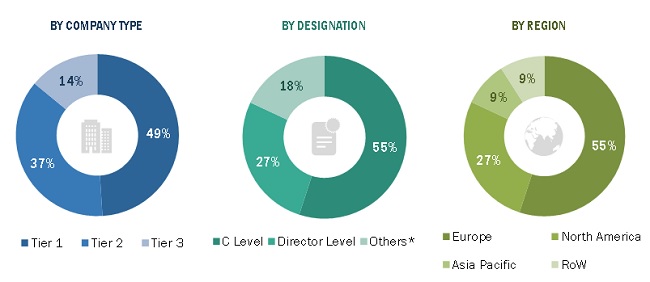
The research study involved the extensive use of secondary sources, directories, and databases such as D&B Hoovers, Bloomberg, and Factiva to identify and collect information relevant to the aerospace 3D printing market. Primary sources include industry experts from the aerospace 3D printing market as well as suppliers, manufacturers, solution providers, technology developers, alliances, and organizations related to all segments of the value chain of this market. In-depth interviews with various primary respondents, including key industry participants, subject matter experts (SMEs), industry consultants, and C-level executives, were conducted to obtain and verify critical qualitative and quantitative information pertaining to the aerospace 3D printing market as well as to assess the growth prospects of the market.
Secondary Research
In the secondary research process, various sources were referred to for identifying and collecting information for this study. The secondary sources included government sources, such as the International Air Transport Association (IATA); the Federal Aviation Administration (FAA); the General Aviation Manufacturers Association (GAMA); 3D Printing Association (3DPA); Association of 3D Printing; corporate filings such as annual reports, press releases, and investor presentations of companies; white papers, journals, and certified publications; and articles from recognized authors, directories, and databases.
Primary Research
In the primary research process, various primary sources from both supply and demand sides were interviewed to obtain qualitative and quantitative information on the market. The primary sources from the supply side included various industry experts, such as Chief X Officers (CXOs), Vice Presidents (VPs), Directors, from business development, marketing, product development/innovation teams, and related key executives from 3D printing vendors; system integrators; component providers; distributors; and key opinion leaders.
Primary interviews were conducted to gather insights such as market statistics, data of revenue collected from the products and services, market breakdowns, market size estimations, market forecasting, and data triangulation. Primary research also helped in understanding the various trends related to technology, application, vertical, and region. Stakeholders from the demand side, such as CIOs, CTOs, and CSOs, and installation teams of the customer/end users who are using 3D printers were interviewed to understand the buyer’s perspective on the suppliers, products, component providers, and their current usage of 3D printers and future outlook of their business which will affect the overall market.
To know about the assumptions considered for the study, download the pdf brochure
Market Size Estimation
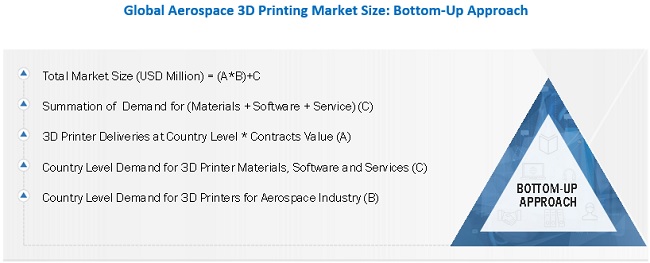
Both top-down and bottom-up approaches were used to estimate and validate the total size of the aerospace 3D printing market. These methods were also used extensively to estimate the size of various segments and subsegments of the market. The research methodology used to estimate the market size included the following:
- Key players in the industry and market were identified through extensive secondary research of their product matrix and geographical presence and developments undertaken by them.
- All percentage shares, splits, and breakdowns were determined using secondary sources and verified through primary sources.
To know about the assumptions considered for the study, Request for Free Sample Report
Data Triangulation
After arriving at the overall size of the aerospace 3D printing market from the estimation process explained above, the total market was split into several segments and subsegments. The data triangulation and market breakdown procedures explained below were implemented, wherever applicable, to complete the overall market engineering process and arrive at the exact statistics for various market segments and subsegments. The data was triangulated by studying various factors and trends from the demand and supply sides. Along with this, the aerospace 3D printing market size was validated using the top-down and bottom-up approaches.
Report Objectives
- To define, describe, segment, and forecast the aerospace 3D printing market on the basis of offerings, platform, technology, application, end user, end product and region
- To forecast the market size of segments with respect to various regions, including North America, Europe, Asia Pacific, Rest of the World, along with major countries in each region
- To identify and analyze key drivers, restraints, opportunities, and challenges influencing the growth of the aerospace 3D printing market
- To analyze technological advancements and product launches in the market
- To strategically analyze micromarkets, with respect to their growth trends, prospects, and their contribution to the market
- To identify financial positions, key products, and key developments of leading companies in the market
- To provide a detailed competitive landscape of the market, along with market share analysis
- To provide a comprehensive analysis of business and corporate strategies adopted by the key players in the market
- To strategically profile key players in the market and comprehensively analyze their core competencies
Available Customizations
MarketsandMarkets offers the following customizations for this market report:
- Additional country-level analysis of the aerospace 3D printing market
- Profiling of additional market players (up to 5)
Product Analysis
- Product matrix, which provides a detailed comparison of the product portfolio of each company in the Aerospace 3D printing Market

 Generating Response ...










Growth opportunities and latent adjacency in Aerospace 3D Printing Market