Gastrointestinal Stent Market

Gastrointestinal Stent Market By Product (Duodenal, Pancreatic, Colonic, Biliary), Type [Metal (SEMS, Balloon-expandable, Nitinol, Stainless Steel), Plastic, Biodegradable], Application (Colorectal & Stomach Cancer), End User - Global Forecast to 2031



GASTROINTESTINAL STENT MARKET SIZE, SHARE & GROWTH SNAPSHOT
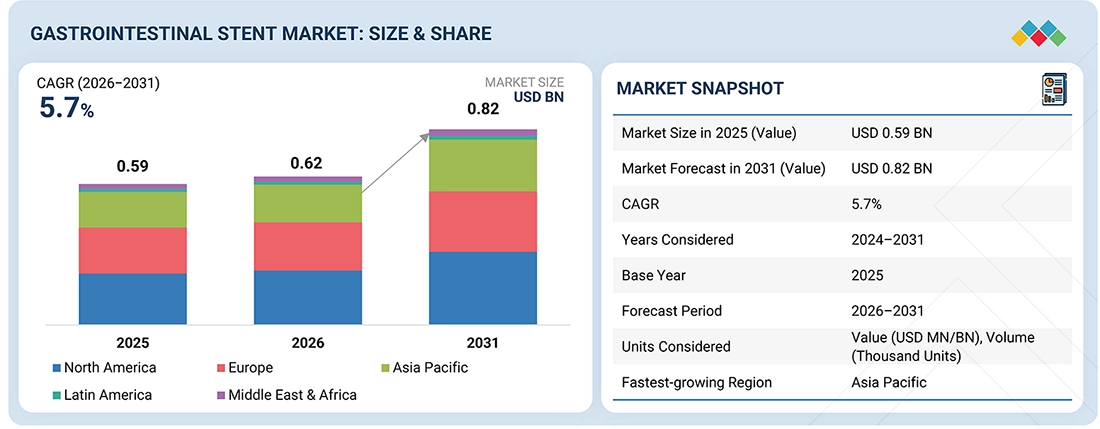
Source: Secondary Research, Interviews with Experts, MarketsandMarkets Analysis
The global gastrointestinal stent market is projected to grow from USD 0.62 billion in 2026 to USD 0.82 billion by 2031, at a CAGR of 5.7% during the forecast period. The market was valued at USD 0.59 billion in 2025. In addition to an increasing number of geriatric patients looking for palliative care and an increase in the use of minimally invasive procedures by healthcare providers, the growth of the gastrointestinal stent market can be attributed to a rising incidence rate of gastrointestinal diseases, such as colorectal and esophageal cancers, and biliary obstruction. Furthermore, stent technologies are constantly improving, leading to a rise in the use of self-expanding metal stents (SEMS) and better clinical results, which in turn support the market development. Besides, the promising reimbursement policies in developed countries and the growing healthcare facilities in developing countries are encouraging patients to opt for gastrointestinal stenting procedures.
KEY TAKEAWAYS
-
MARKET SNAPSHOT:
Base Year Market Size (2025): USD 0.59 Billion
Current Market Size (2026): USD 0.62 Billion
Forecast Market Size (2031): USD 0.82 Billion
CAGR (2026–2031): 5.7% -
SEGMENT LEADERSHIP:
By Region: Asia Pacific is estimated to register the highest CAGR of 6.4% during the forecast period.
By Product: Biliary stents accounted for the largest share of 44.3% in 2025.
By Type: Self-expandable metals are expected to dominate the market with a share of 70.1% in 2025.
By Application: Gastrointestinal cancers are projected to grow at the fastest rate from 2026 to 2031.
By End User: Hospitals & clinics dominated the market with a share of 84.4% in 2025. -
MARKET OUTLOOK & COMPETITIVE LANDSCAPE:
Boston Scientific Corporation, Cook Medical, Medtronic plc, Olympus Corporation, and BD were identified as leading players in the gastrointestinal stent market, driven by their strong global presence, extensive distribution networks, and comprehensive portfolios of advanced GI stenting and endoscopic solutions.
Leufen Medical GmbH, Allium Medical Solutions Ltd., Medorah Meditek Pvt. Ltd., and Advin Health Care, among others, represent emerging and regional participants in the market, offering cost-effective gastrointestinal stents and focusing on niche applications, regional expansion, and competitive pricing strategies.
The gastrointestinal stent market is growing because more people have GI disorders like colorectal cancers and esophageal strictures, as well as biliary obstruction disorders. Another driving force for the burgeoning GI stent market is the popularity of minimally invasive outpatient surgeries and support for outpatient palliative care. New advancements in stent technologies, such as SEMS and biodegradable stents, along with improvements in the methods used to endoscopically place stents and increased availability of healthcare resources, will contribute to continued growth in the number of GI stents sold and the total amount of revenue from their sale.
TRENDS & DISRUPTIONS IMPACTING CUSTOMERS' CUSTOMERS
The role of consumers' business in the GI stent market is influenced by the increase in the incidence of gastrointestinal diseases, enhanced focus on minimally invasive surgeries and improvements in stent and endoscopic technologies. Apart from hospitals, other prominent end users such as ambulatory surgery centers and specialty endoscopy clinics depend on manufacturers for the delivery of cutting edge and effective solutions for various conditions including biliary obstruction, esophageal strictures and colorectal cancers. With a strong focus on improving clinical outcomes, reducing procedure-related complications, and enhancing patient recovery times, there is a growing preference for advanced technology led solutions like biodegradable and drug-eluting stents. In fact, the need for cost-effective solutions, procedure efficiency and short hospital stays are the factors that are increasingly guiding the decision-making process in purchasing products in the gastrointestinal stents market.
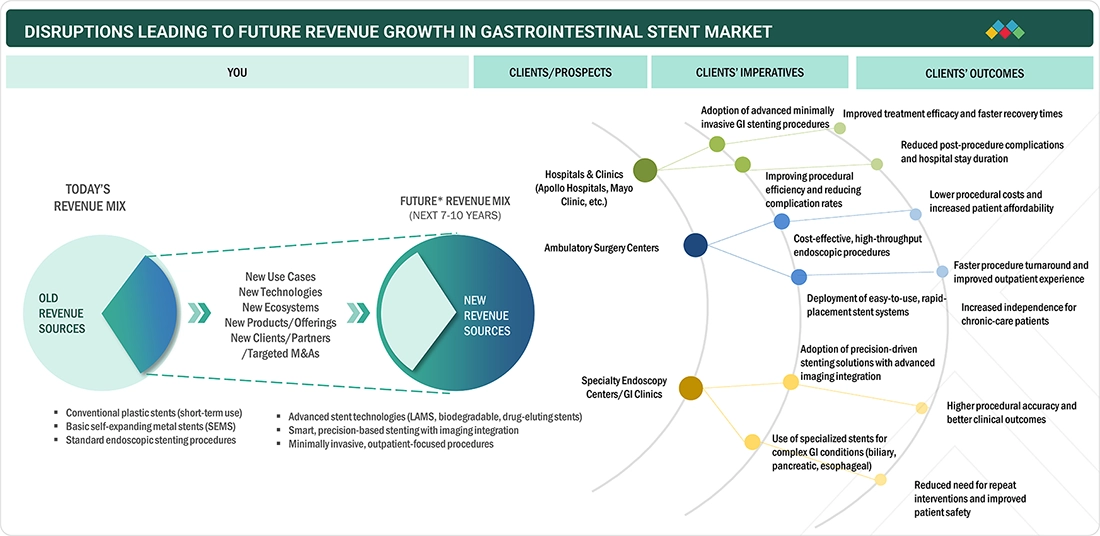
Source: Secondary Research, Interviews with Experts, MarketsandMarkets Analysis
MARKET DYNAMICS

Level
-
Increasing incidence of gastrointestinal cancers and obstructive conditions, including colorectal, esophageal, and biliary disorders

-
Increasing adoption of minimally invasive and endoscopic procedures


Level
-
High cost of advanced stents and endoscopic procedures

-
Limited access to advanced endoscopic infrastructure in developing regions


Level
-
Technological advancements (biodegradable stents, drug-eluting stents, LAMS)

-
Increasing demand for palliative care and non-surgical treatment options


Level
-
Stringent regulatory approvals and clinical validation requirements

-
Lack of skilled endoscopists in low-resource settings

Source: Secondary Research, Interviews with Experts, MarketsandMarkets Analysis
Driver: Increasing Incidence of Gastrointestinal Cancers and Obstructive Conditions
The increasing incidence of gastrointestinal diseases such as colorectal cancer, esophageal strictures, and biliary obstructions is a major factor in the rising demand for gastrointestinal stents. Most of these diseases result in the narrowing or blockage of the lumen, thereby necessitating rapid treatment to re-establish normal functioning. The worldwide rise in cancer and chronic GI diseases, together with the increasing rate of diagnosis, has led healthcare professionals to resort more and more to stenting techniques. These methods are considered effective and less invasive. This constant increase in the incidence of various diseases is the reason for the ever-growing requirement for gastrointestinal stents in both developed and developing countries.
Restraint: High Cost of Advanced Stents and Endoscopic Procedures
Advanced gastrointestinal stents, such as self-expanding metal stents (SEMS), drug-eluting stents, and lumen-apposing metal stents (LAMS), involve high manufacturing and material costs. Moreover, the equipment needed for endoscopy, as well as the presence of highly skilled professionals, are prerequisites for the placement procedure, making it more expensive. Such factors limit the affordability of the product mainly in developing countries, where the healthcare budget and the reimbursement coverage are very limited. Therefore, in regions such as developing countries, where healthcare budget constraints are high, the high cost of advanced gastrointestinal stents acts as a challenge to their growth in the market.
Opportunity: Technological Advancements in Gastrointestinal Stents
The ongoing improvements in stent design and materials have yielded considerable expansion prospects in the gastrointestinal stent market. Advances such as biodegradable stents, drug-eluting stents, and lumen-apposing metal stents (LAMS) are helping to improve patient outcomes by reducing complications such as restenosis and stent migration. Besides, these innovations also bring about an increase in the range of use cases and a higher number of physicians willing to carry out stenting procedures, which is the main reason for the growth of the market.
Challenge: Stringent Regulatory Approvals and Clinical Validation Requirements
Gastrointestinal stents face very strict regulatory approvals to ensure their safety and effectiveness, especially in developed markets like the US and Europe. Among other requirements, producers must conduct large-scale clinical studies and meet high-quality standards, which can increase the time and cost required to bring the product to market. Additionally, differing regulations across various localities may create challenges in entering the international market. As a result, product shipments can be delayed, and the pace of introducing new ideas can be limited. Therefore, compliance with these rules becomes a major obstacle for the gastrointestinal stent market.
GASTROINTESTINAL STENT MARKET: COMMERCIAL USE CASES ACROSS INDUSTRIES
| COMPANY | USE CASE DESCRIPTION | BENEFITS |
|---|---|---|
 |
Provides a comprehensive portfolio of gastrointestinal stents, including AXIOS lumen-apposing metal stents, WallFlex biliary, esophageal, colonic, and duodenal stents, and Agile esophageal stents. These are used for drainage of pancreatic fluid collections, treatment of malignant strictures, and maintenance of luminal patency in GI obstructions. | Enables minimally invasive management of complex GI conditions; supports effective drainage and obstruction relief; reduces need for surgical interventions; improves patient recovery and clinical outcomes. |
 |
Offers a wide range of GI stents, including Evolution esophageal and biliary stents and Zilver metal stents used for managing malignant and benign strictures across the gastrointestinal tract. Strong focus on endoscopic delivery systems. | Provides reliable and flexible stenting solutions; enhances physician control during placement; supports palliative care and improves patient quality of life. |
 |
Provides GI stenting solutions through its endoscopy portfolio, including self-expanding metal stents for esophageal and biliary applications, used in minimally invasive treatment of GI obstructions and cancers. | Improves procedural efficiency and treatment accessibility; supports large-scale hospital adoption; enhances patient outcomes through minimally invasive approaches. |
 |
Offers endoscopic stent solutions integrated with advanced imaging and endoscopy systems, supporting placement of GI stents for esophageal, biliary, and pancreatic conditions. | Enhances precision and visualization during procedures; improves procedural safety and physician efficiency; strengthens end-to-end GI treatment ecosystem. |
 |
Provides GI and biliary stenting solutions through its interventional portfolio , focusing on minimally invasive management of obstructions and strictures. | Supports effective obstruction management; leverages strong global distribution; improves treatment access and clinical outcomes. |
Logos and trademarks shown above are the property of their respective owners. Their use here is for informational and illustrative purposes only.
MARKET ECOSYSTEM
The gastrointestinal stent industry involves a diverse range of stakeholders that take part in various activities such as developing, distributing, and using stenting solutions for treating gastrointestinal disorders. Among the most important players are medical device manufacturers, suppliers of raw materials, providers of components, and research institutions that help product innovation and clinical progress. Besides, regulatory authorities and government bodies have an indispensable role in ensuring that the products are safe and effective as well as in enforcing compliance through rigorous approval procedures and quality standards. Distributors and channel partners provide market reach and product presence in healthcare establishments. On the demand side, end users consisting of hospitals, ambulatory surgical centers, and specialty clinics that have embraced minimally invasive procedures for the treatment of gastrointestinal obstructions and other related diseases form the main driving force. The ecosystem is also affected by the frequency of the disease, technology development in the design of stents, and regulatory and reimbursement systems that are constantly changing.
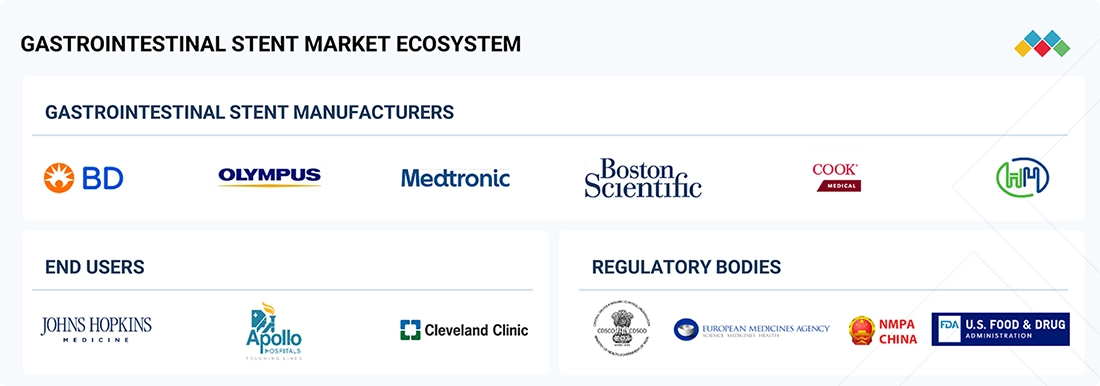
Logos and trademarks shown above are the property of their respective owners. Their use here is for informational and illustrative purposes only.
MARKET SEGMENTS
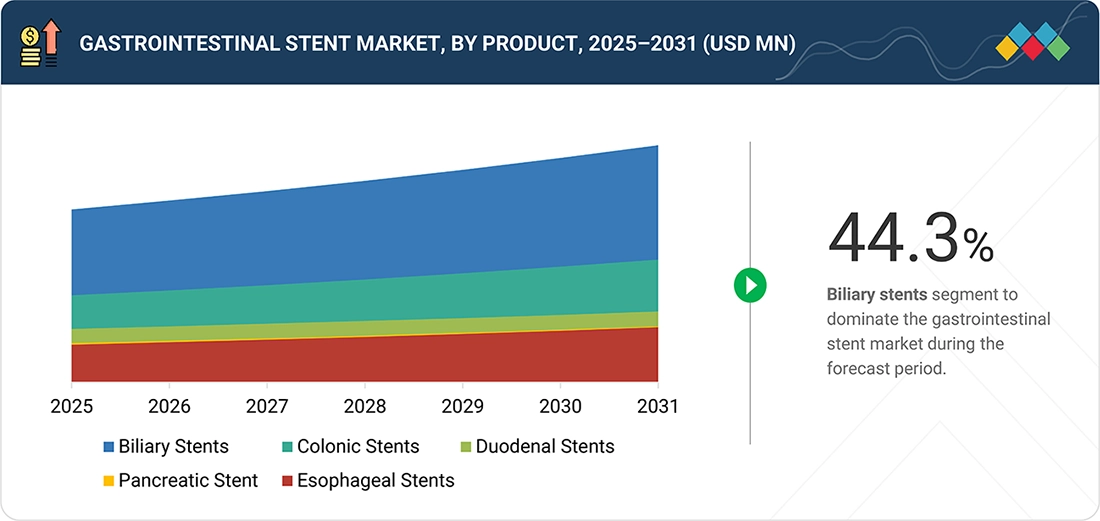
Source: Secondary Research, Interviews with Experts, MarketsandMarkets Analysis
Gastrointestinal Stent Market, By Product
In 2025, biliary stents constitute the majority share in the market for gastrointestinal stents, making up nearly 44% of the entire market share. The main reasons behind this top position are the high incidence of biliary diseases and cancers, as well as the strong requirement for stenting procedures to remove blockages and allow bile flow. On the other hand, the usage of colonic and duodenal stents is limited to a small number of cases that are gradually increasing. Besides, the rising rate of pancreatic and esophageal diseases is boosting the demand for different product segments.
Gastrointestinal Stent Market, By Type
In 2025, self-expandable metal stents took the lead in the gastrointestinal stent market by making up 70% of the market share. The reason is their better flexibility, longer life, and capability to conform to complicated anatomical structures. These types of stents have been the top choice in minimally invasive surgeries for both cancerous and non-cancerous strictures. On the other hand, plastic stents are less expensive but are usually reserved for short-term use because they have a higher probability of getting clogged and are less durable.
Gastrointestinal Stent Market, By Application
Biliary diseases are a major segment within the gastrointestinal stent market, holding about 47% of the overall demand in 2025. This is largely because of the prevalence of biliary obstructions, gallstones, and associated cancers that require intervention. Besides, gastrointestinal cancers such as colorectal, stomach, pancreatic, and esophageal cancers also heavily influence the demand for the market since these cases often have to resort to palliative stenting methods. On the other hand, inflammatory bowel diseases and other benign conditions form quite smaller fractions but are very likely to grow in the future.
Gastrointestinal Stent Market, By End User
Hospitals dominate the gastrointestinal stent market, contributing around 84% of the market share globally in 2025. Since they work as the primary centers of advanced endoscopic procedures and complex gastrointestinal interventions, this also leads to them being the primary customers for these products. Their leading position is also due to the availability of specialized infrastructure, skilled gastroenterologists, and large patient inflow for cancer and obstruction-related treatments.
REGION
Asia Pacific to be fastest-growing region during forecast period
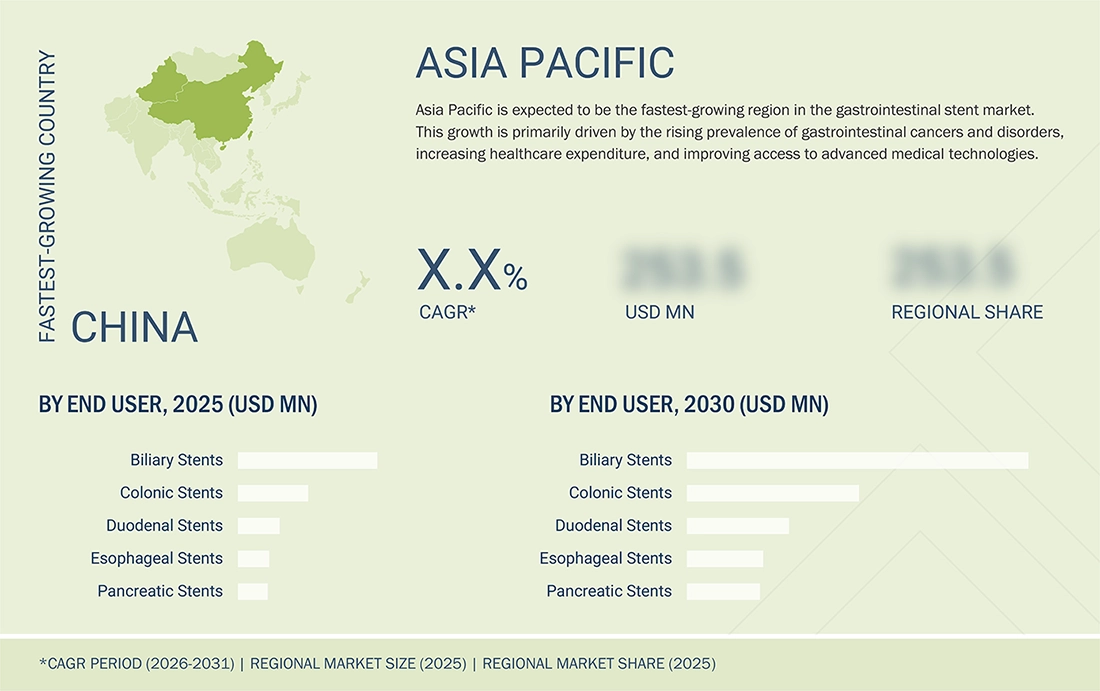
The gastrointestinal stents market is projected to grow the fastest in the Asia Pacific region. The main factors fueling this growth include the rising rates of gastrointestinal cancers and diseases, increased healthcare spending, and improved access to advanced medical technologies. Countries like China, India, and Japan are experiencing a significant rise in demand for minimally invasive procedures due to an aging population and greater awareness of early diagnosis and treatment. Additionally, the rapid expansion of new healthcare facilities, the increasing number of endoscopic procedures, and the adoption of new advanced stents are also driving growth within the region. Furthermore, various government healthcare reform initiatives aimed at improving access to quality care and a large patient base are further supporting the adoption of these devices in the region.
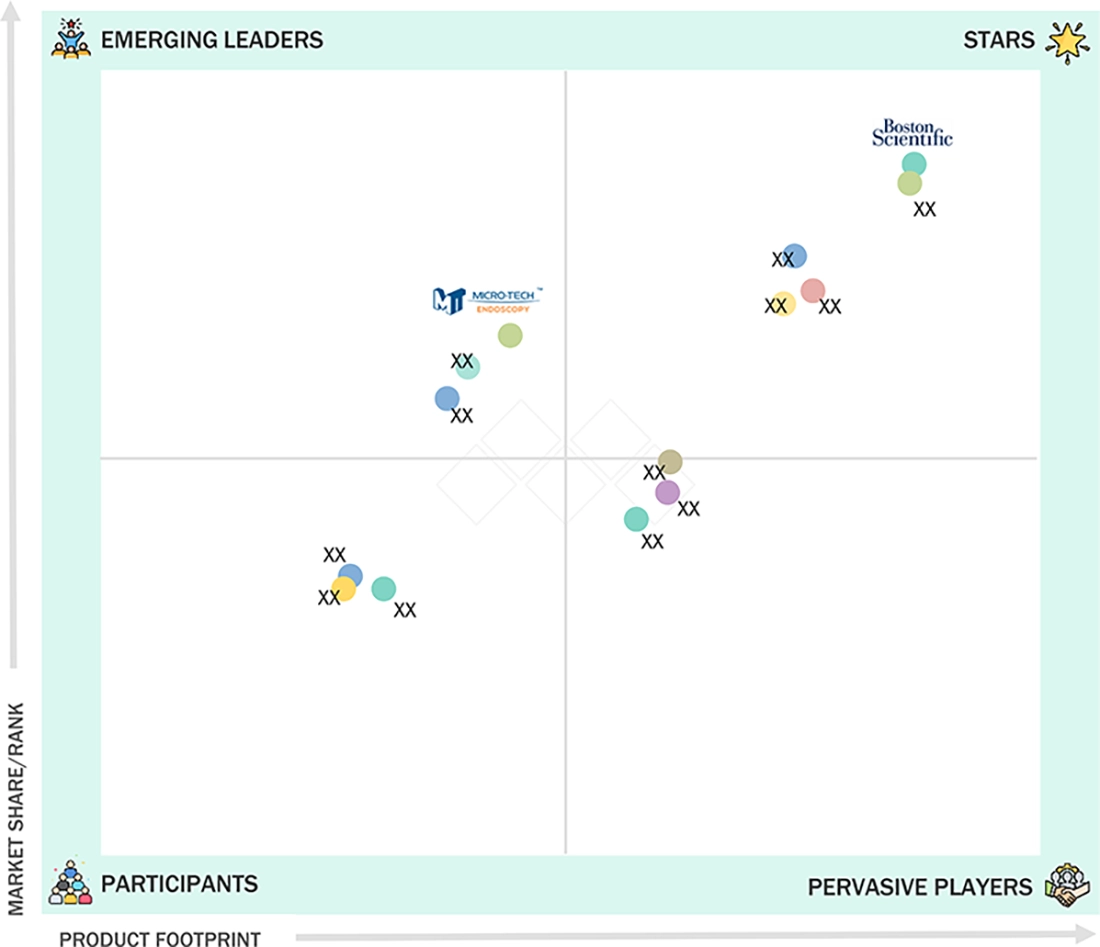
GASTROINTESTINAL STENT MARKET: COMPANY EVALUATION MATRIX
In the gastrointestinal stent market, Boston Scientific Corporation (Star) is the market leader, offering a comprehensive and diverse range of advanced GI stents. The company has a wide reach worldwide, supported by continuous innovation. Micro-Tech (Nanjing) Co., Ltd. (Emerging Leader) is rapidly expanding globally and offers cost-competitive products. The company's increasing number of regulatory approvals in the main markets is another factor that supports Micro-Tech's growth.
Source: Secondary Research, Interviews with Experts, MarketsandMarkets Analysis
KEY MARKET PLAYERS
- Boston Scientific Corporation (US)
- Cook Medical (US)
- Medtronic plc (Ireland)
- Olympus Corporation (Japan)
- BD (US)
- M.I.Tech Co., Ltd. (South Korea)
- W. L. Gore & Associates, Inc. (US)
- Endo-Flex GmbH (Germany)
- Micro-Tech (Nanjing) Co., Ltd. (China)
- Hobbs Medical Inc. (US)
- Merit Medical Systems, Inc. (US)
- BVM Medical Limited (UK)
- STERIS plc (Ireland)
- ELLA-CS, s.r.o. (Czech Republic)
- Q3 Medical Group (Netherlands)
MARKET SCOPE
| REPORT METRIC | DETAILS |
|---|---|
| Market Size in 2025 (Value) | USD 0.59 Billion |
| Market Size in 2026 (Value) | USD 0.62 Billion |
| Market Size in 2031 (Value) | USD 0.82 Billion |
| CAGR | CAGR of 5.7% from 2026-2031 |
| Years Considered | 2024-2031 |
| Base Year | 2025 |
| Forecast Period | 2026-2031 |
| Units Considered | Value (USD Million/Billion), Volume (Thousand Units) |
| Report Coverage | Revenue forecast, company ranking, competitive landscape, growth factors, and trends |
| Segments Covered |
|
| Regions Covered | North America, Europe, Asia Pacific, Latin America, Middle East & Africa |
WHAT IS IN IT FOR YOU: GASTROINTESTINAL STENT MARKET REPORT CONTENT GUIDE
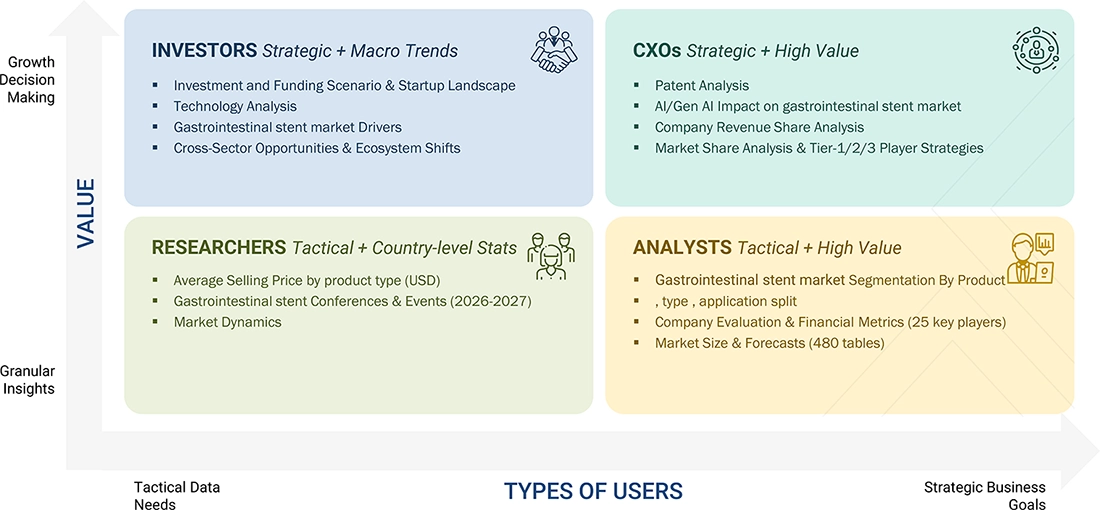
DELIVERED CUSTOMIZATIONS
We have successfully delivered the following deep-dive customizations:
| CLIENT REQUEST | CUSTOMIZATION DELIVERED | VALUE ADDS |
|---|---|---|
| Product Analysis | Comparative analysis of key gastrointestinal stent product categories, including biliary, esophageal, colonic, and duodenal stents. Highlighted technology trends such as self-expanding metal stents (SEMS), biodegradable stents, and lumen-apposing metal stents (LAMS), along with advancements in endoscopic delivery systems and design innovations across major manufacturers. | Enabled identification of high-demand application areas (cancer-related obstructions, strictures, palliative care), technology adoption trends, pricing dynamics, and product positioning strategies to support portfolio expansion and competitive benchmarking. |
| Company Information | Profiled key players including Boston Scientific, Cook Medical, Medtronic, Olympus, BD, Micro-Tech (Nanjing), and M.I.Tech. Provided insights on GI stent product portfolios, technological capabilities, geographic presence, and strategic initiatives such as partnerships, expansions, and regulatory approvals. | Delivered clarity on partnership and acquisition opportunities, competitive positioning, and investment hotspots influencing growth in the gastrointestinal stent market. |
| Geographic Analysis | Provided detailed analysis of key regions, including North America and the Rest of Europe, for gastrointestinal stent demand. Assessed country-level factors such as prevalence of GI cancers, healthcare infrastructure, endoscopy adoption rates, reimbursement scenarios, and regulatory landscape. | Supported regional expansion strategies by identifying high-growth markets, procedure-driven demand, localization opportunities, and distributor partnerships to accelerate market penetration. |
RECENT DEVELOPMENTS
- October 2025 : Boston Scientific Corporation announced that it has received 510(k) clearance from the U.S. Food and Drug Administration and CE Mark approval to market its Advanix™ Biliary Plastic Stents for the treatment of biliary strictures, including biliary stone disease, benign biliary strictures, and suspected and confirmed malignancies in the biliary system.
- January 2025 : Micro-Tech celebrated the groundbreaking of its Thailand Manufacturing Center with a formal ceremony held in the Laem Chabang Industrial Estate, Bang Lamung District, Chonburi Province. The event marks a significant milestone in the company’s global expansion and its commitment to serving international markets with high-quality medical devices.
- February 2023 : Olympus Corporation (Olympus), agreed to acquire Taewoong Medical Co., Ltd, (Taewoong Medical), a Korea-based manufacturer of medical devices such as gastrointestinal (GI) metallic stents to strengthen its GI EndoTherapy product portfolio capabilities, and in turn, contributing to improving patient outcome through comprehensive solutions.
Table of Contents
 Exclusive indicates content/data unique to MarketsandMarkets and not available with any competitors.
Methodology
This research study extensively utilized both primary and secondary sources. It involved analyzing various factors influencing the industry to identify segmentation types, industry trends, key players, the competitive landscape, key market dynamics, and strategies employed by key players.
Secondary Research
This research study utilized a variety of comprehensive secondary sources, including directories; databases such as Bloomberg Business, Factiva, and Dun & Bradstreet; white papers; annual reports; company house documents; investor presentations; and SEC filings from various companies. Secondary research was employed to gather information crucial for an in-depth, technical, market-oriented, and commercial analysis of the gastrointestinal stent market. This approach also helped identify key players in the industry and allowed for classification and segmentation based on emerging trends at the most detailed level. Furthermore, significant developments pertaining to both market and technological perspectives were documented. A database of primary industry leaders was created as part of this secondary research.
Primary Research
In the primary research process, we interviewed a range of sources from both the supply and demand sides to gather qualitative and quantitative information for this report. Primary sources from the supply side include project/sales/marketing/business development managers, presidents, CEOs, vice presidents, chairpersons, chief operating officers, chief strategy officers, directors, chief information officers, and chief medical information officers related to the gastrointestinal stent market. Primary sources from the demand side include gastroenterologists, interventional endoscopists, and surgeons from hospitals and ambulatory surgical centers, as well as directors of endoscopy units and gastrointestinal clinics.
A breakdown of the primary respondents is provided below:
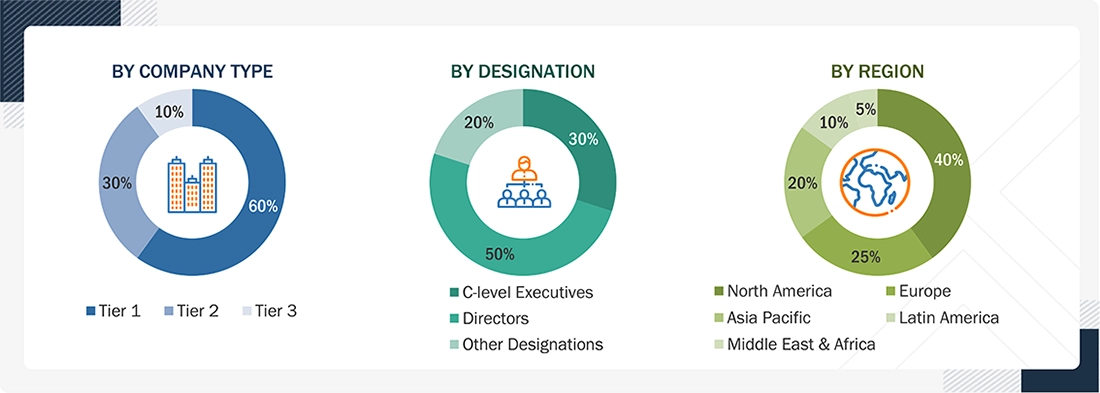
Note 1: C-level executives include CEOs, COOs, CTOs, and VPs.
Note 2: Other designations include sales, marketing, and product managers.
Note 3: Tiers are defined based on a company’s total revenue. As of 2025: Tier 1 = >USD 1 billion, Tier 2 = USD 500 million to USD 1 billion, and Tier 3 = USD 500 million.
To know about the assumptions considered for the study, download the pdf brochure
Market Size Estimation
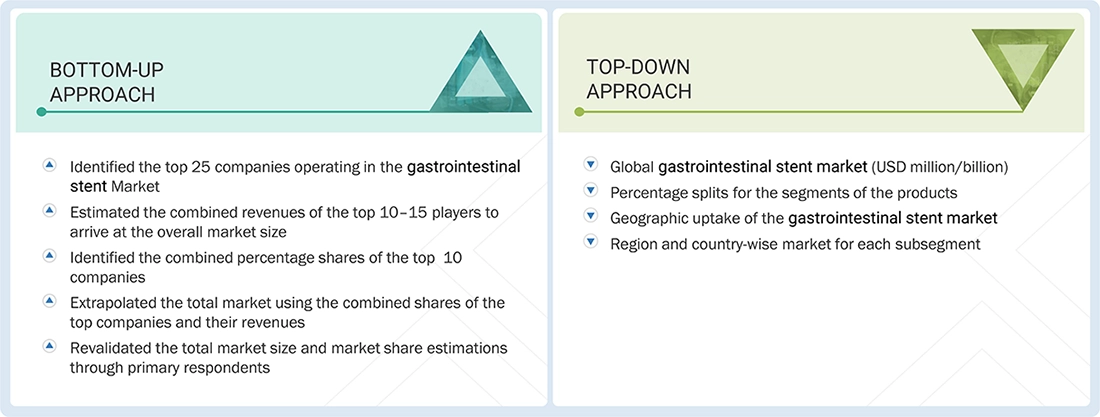
The total size of the gastrointestinal stent market was determined through data triangulation using three approaches, as outlined below. After each approach, the weighted average of the three approaches was calculated based on the level of assumptions used in each.
Gastrointestinal Stent Market : Top-Down and Bottom-Up Approach
Data Triangulation
After arriving at the market size, the total market was divided into several segments and subsegments. Data triangulation and market breakdown procedures were employed where applicable to complete the overall market engineering process and derive the exact statistics for all segments and subsegments.
Market Definition
The gastrointestinal stent market comprises medical devices designed for the minimally invasive management of obstructions, strictures, leaks, and fistulas within the gastrointestinal tract, including the esophagus, stomach, intestines, and biliary system. These stents, primarily self-expanding metal, plastic, and biodegradable variants, are deployed endoscopically or fluoroscopically to restore luminal patency, enable fluid drainage, and support tissue healing in both malignant and benign conditions. The market includes products, delivery systems, and associated technologies used across hospitals, ambulatory surgical centers, and specialty clinics, with applications spanning oncology, post-surgical complications, and chronic gastrointestinal disorders, driven by the growing preference for minimally invasive treatment approaches and improved patient outcomes.
Key Stakeholders
- GI stent manufacturers (metal, plastic, biodegradable stents)
- Endoscopy device & delivery system manufacturers
- Raw material & component suppliers (metals, polymers, coatings)
- Hospitals & ambulatory surgical centers (public & private)
- Gastroenterology clinics & endoscopy centers
- Gastroenterologists, interventional endoscopists & GI surgeons
- Contract manufacturers & OEM partners
- Distributors & regional channel partners
- Academic & clinical research institutions
- Regulatory authorities & healthcare agencies
- Market research & consulting firms
- Investors & private equity firms
Report Objectives
- To define, describe, segment, and forecast the gastrointestinal stent market by product, type, application, end user, and region
- To provide detailed information about the factors influencing market growth (such as drivers, restraints, opportunities, and challenges)
- To analyze micromarkets with respect to individual growth trends, prospects, and contributions to the overall gastrointestinal stent market
- To analyze market opportunities for stakeholders and provide details of the competitive landscape for key players
- To forecast the size of the gastrointestinal stent market in five main regions (along with their respective key countries): North America, Europe, the Asia Pacific, Latin America, and the Middle East & Africa
- To profile the key players in the gastrointestinal stent market and comprehensively analyze their core competencies and market shares
- To track and analyze competitive developments such as acquisitions, product launches, expansions, collaborations, agreements, and partnerships
Customization Options:
With the market data provided, MarketsandMarkets offers customizations to meet your company’s specific needs. The following customization options are available for the report:
Company Information
- Detailed analysis and profiling of additional market players (up to 5)
Geographic Analysis
- Further breakdown of the Rest of Europe gastrointestinal stent market into Austria, Finland, Switzerland, and other countries
- Further breakdown of the Rest of Latin America gastrointestinal stent market into Colombia, Chile, and other countries
Competitive Landscape Assessment
- Market share analysis for North America and Europe, which provides market shares of the top 3–5 key players in the gastrointestinal stent market
- Competitive leadership mapping for established players in the US


Personalize This Research
- Triangulate with your Own Data
- Get Data as per your Format and Definition
- Gain a Deeper Dive on a Specific Application, Geography, Customer or Competitor
- Any level of Personalization
Let Us Help You
- What are the Known and Unknown Adjacencies Impacting the Gastrointestinal Stent Market
- What will your New Revenue Sources be?
- Who will be your Top Customer; what will make them switch?
- Defend your Market Share or Win Competitors
- Get a Scorecard for Target Partners

Custom Market Research Services
We Will Customise The Research For You, In Case The Report Listed Above Does Not Meet With Your Requirements
Get 10% Free CustomisationTESTIMONIALS

JAYANT RAJPUROHIT
Director of Market Insights, Data and Analytics
SFI Health,
Leading Pharmaceutical Companywww.sfihealth.com/

We at SFI Health approached MarketsandMarkets for an Opportunity Assessment on "Incidence and Prevalence of Focus Indications" as we wanted to know the most attractive HCPs like Physician, Functional MD, Naturopath and Pharmacist. The project was critical for us to ensure our focus on the right target which would enable sustainable growth and profitability for SFI Health. The business insights provided exceeded our expectations and we were extremely impressed. The team at MarketsandMarkets is highly professional and detail oriented and very well understood our business needs. MarketsandMarkets offers a unique combination of expertise and dedicated engagement model. We identified 2 new products to be launched in coming months, based on the research findings provided by MarketsandMarkets. We are happy with the services and would strongly recommend MarketsandMarkets to my peers in the industry.

BEATRIZ DE LA CALLE
Head of Commercial Analytics
Qualicaps,
Leading Pharmaceutical Companywww.qualicaps.com/

We partnered with MarketsandMarkets for an assessment study on hard empty capsules. The team was extremely professional in understanding our business requirements and we received timely responses to all our queries. The market intelligence and the recommendations has met our business requirements. We were extremely impressed to see the final study results; it really exceeded our expectations. The market intelligence offered by MarketsandMarkets, and clarity on next steps will help us achieve our business objective for the Year 2021. We are happy with the services and would strongly recommend MarketsandMarkets to my peers in the industry.

Bob Williams,
Senior Director Business Development & Innovation
Bracco Diagnostics Inc.,
Italian Multinational in life sciences sector and a World Leader in imaging diagnosticsimaging.bracco.com/us-en
We were pleased with targeted insights that MarketsandMarkets identified from a custom study on the 'Radiation Dose Management Solutions Market'. Your team identified and characterized the market participants as well as underlying trends accurately. This study was useful to Bracco in formulating business strategies for our dose monitoring product lines and we thank MarketsandMarkets for the job well done.
Cody Coonradt,
Market Development and Strategy Manager
3M Health Information Systems,
Leader in Health care Coding, Payment & Analytics Solutions.www.3m.com/3M/en_US/health-information-systems-us
The value for our organization comes from three things: depth of research, specificity of segments and being easy to work with. As important as the first two are, the third can't be underestimated. MarketsandMarkets, maybe more than any other research vendor, wants to know what is top of mind for our team and what big questions we are grappling to answer.
Their customer first approach and high value engagement model, have given us great analysis and excellent value for money
- Canada Gastrointestinal Stent Market
- US Gastrointestinal Stent Market
- Germany Gastrointestinal Stent Market
- UK Gastrointestinal Stent Market
- France Gastrointestinal Stent Market
- Italy Gastrointestinal Stent Market
- Spain Gastrointestinal Stent Market
- Netherlands Gastrointestinal Stent Market
- Sweden Gastrointestinal Stent Market
- Poland Gastrointestinal Stent Market
- China Gastrointestinal Stent Market
- Japan Gastrointestinal Stent Market
- India Gastrointestinal Stent Market
- Australia Gastrointestinal Stent Market
- South Korea Gastrointestinal Stent Market
- Thailand Gastrointestinal Stent Market
- New Zealand Gastrointestinal Stent Market
- Brazil Gastrointestinal Stent Market
- Mexico Gastrointestinal Stent Market
- Argentina Gastrointestinal Stent Market
- Rest Of Europe Gastrointestinal Stent Market
- Rest Of Asia Pacific Gastrointestinal Stent Market






Growth opportunities and latent adjacency in Gastrointestinal Stent Market