Laparoscopic Instruments Market

Laparoscopic Instruments Market by Product (Laparoscopes, Energy Devices, Closure Devices, Insufflators), Usage (Reusable, Disposable), Application (General, Gynecological, Colorectal, Bariatric), and End User (Hospitals, ASCs) - Global Forecast to 2031



LAPAROSCOPIC INSTRUMENTS MARKET SIZE, SHARE & GROWTH SNAPSHOT
Source: Secondary Research, Interviews with Experts, MarketsandMarkets Analysis
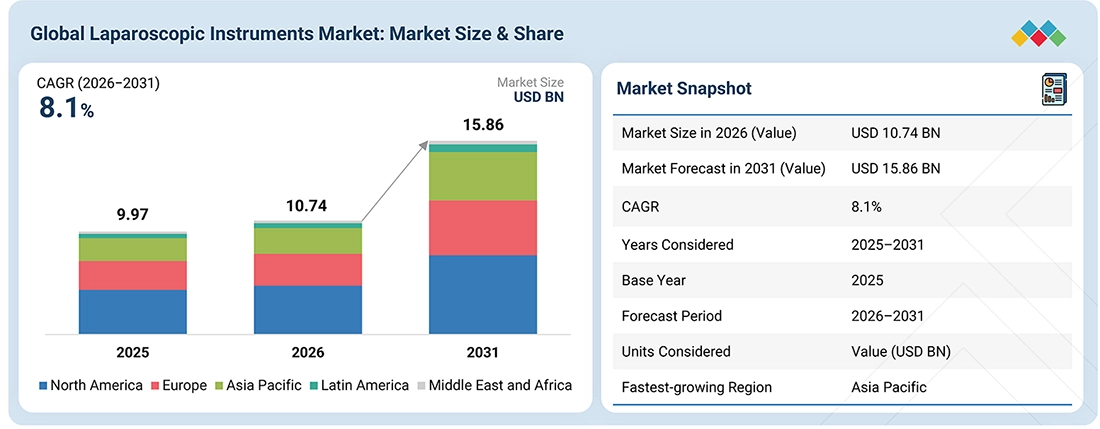
The global laparoscopic instruments market is projected to grow from USD 10.74 billion in 2026 to USD 15.86 billion by 2031, at a CAGR of 8.1% during the forecast period. The market was valued at USD 9.97 billion in 2025. The growth of the laparoscopic instruments market is driven by the rising preference for minimally invasive surgeries due to their benefits such as reduced recovery time, shorter hospital stays, and lower risk of complications. The increasing prevalence of chronic diseases, advancements in surgical technologies, growing adoption of laparoscopic procedures across various specialties, and rising healthcare expenditure further support market expansion.
KEY TAKEAWAYS
-
MARKET SNAPSHOT:
Base Year Market Size (2025): USD 9.97 Billion
Current Market Size (2026): USD 10.74 Billion
Forecast Market Size (2031): USD 15.86 Billion
CAGR (2026–2031): 8.1% -
SEGMENT LEADERSHIP:
Regional Leader: North America accounted for the largest share of the laparoscopic instruments market in 2025.
Product Leader: Laparoscopes accounted for the largest share of the laparoscopic instruments market in 2025.
Usage Leader: Reusable instruments accounted for a larger share of the laparoscopic instruments market in 2025.
Application Leader: General surgery accounted for the largest share of the laparoscopic instruments market in 2025.
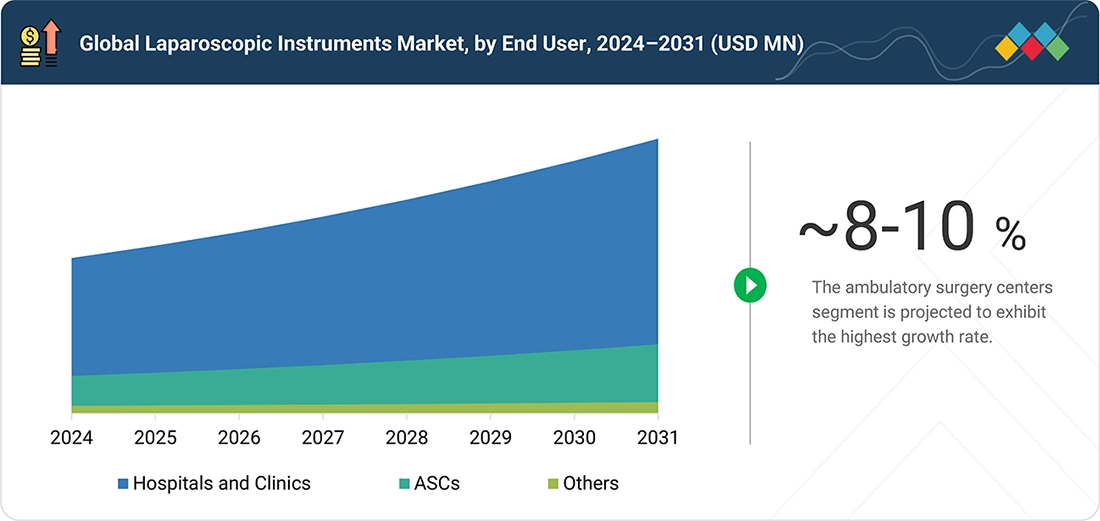
End User Outlook: Hospitals and clinics are projected to register the highest growth rate during the forecast period. -
MARKET OUTLOOK & COMPETITIVE LANDSCAPE:
Johnson & Johnson is recognized as a star player in the market due to its established strong product portfolio.
The market for laparoscopic instruments is expanding, driven by growing demand for minimally invasive surgery because of its benefits, including smaller incisions, less postoperative pain, shorter hospital stays, and faster recovery. Secondly, rising global incidence of diseases such as colorectal cancer, obesity, and gallstones, which tend to necessitate laparoscopic procedures, spurs demand. Advancements in imaging technologies, energy equipment, and robotic support are also improving the accuracy and results of laparoscopic surgery, further driving market growth. Furthermore, increased healthcare spending, enhanced surgical facilities in developing economies, and rising patient as well as healthcare professional awareness drive the market significantly. Government efforts to encourage sophisticated surgical methods and positive reimbursement policies in developed countries further complement the growth of the laparoscopic instruments market.
TRENDS & DISRUPTIONS IMPACTING CUSTOMERS' CUSTOMERS
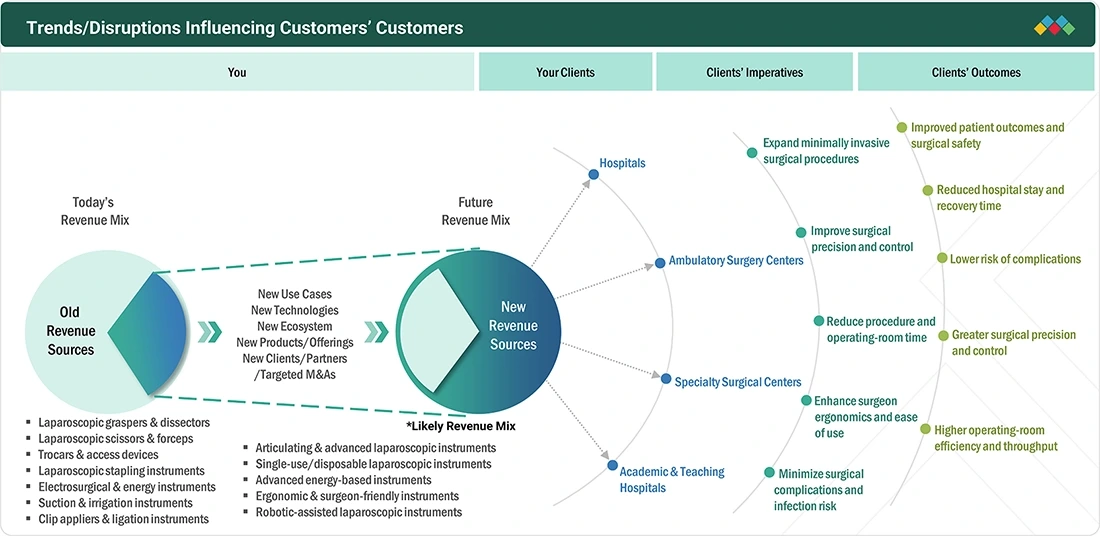
Revenue sources for laparoscopic instrument manufacturing companies are shifting due to market growth, technological advances in laparoscopic instrument modalities, and broader industry impacts. Technological advances have prompted end users to overhaul or update their manufacturing systems. These trends are expected to create significant business opportunities for players in the laparoscopic instrument market. The shift in revenue is expected from conventional rigid endoscopes, flexible endoscopes, capsule endoscopes, and visualization systems to AI-integrated equipment, robot-assisted endoscopes, and disposable endoscopes owing to the advantages offered by them compared to their counterparts.
Source: Secondary Research, Interviews with Experts, MarketsandMarkets Analysis
MARKET DYNAMICS

Level
-
Rising volume of minimally invasive surgeries (MIS)

-
Adoption of single-use laparoscopy instruments to prevent infectious diseases and offer increased efficiency and safety


Level
-
Unfavorable healthcare reforms in the US

-
Dearth of trained professionals in the field of laparoscopy


Level
-
Growing healthcare markets in emerging economies

-
Enhancements in the capabilities of laparoscopic instruments


Level
-
Regulatory hurdles and compliance complexity

Source: Secondary Research, Interviews with Experts, MarketsandMarkets Analysis
Driver: Rising volume of minimally invasive surgeries (MIS)
The main drivers of growth in the laparoscopic instruments market are the increasing number of minimally invasive surgeries (MIS), particularly laparoscopic surgery. They provide undisputed benefits over open surgery, such as shorter hospital stays, less postoperative pain, quicker recovery, and fewer complications. Consequently, laparoscopic methods are increasingly adopted in specialties like general surgery, gynecology, urology, bariatrics, and colorectal surgery. Volumes continue to grow because of aging populations, the growing incidence of lifestyle diseases (e.g., obesity, gastrointestinal disease), and increasing surgical capacity in developing markets. India, China, Brazil, and Mexico have all seen a considerable increase in the uptake of laparoscopic procedures as a result of increases in healthcare infrastructure and awareness. Additionally, ambulatory surgical centers (ASCs) are driving growth in MIS procedures within outpatient facilities, increasing demand for reusable and disposable laparoscopic instruments. This shift in procedures should continue to maintain market momentum through the next decade.
Restraint: Unfavorable healthcare reforms in the US
One of the key restraints for the laparoscopic instruments market is the impact of unfavorable healthcare reforms in the US. Changes in reimbursement policies, pricing pressures, and cost-containment measures have created financial challenges for hospitals and healthcare providers, limiting their ability to invest in advanced surgical instruments. Moreover, uncertainty around regulatory policies and healthcare coverage can slow the adoption of innovative laparoscopic technologies, as both manufacturers and end users face difficulties in ensuring adequate returns on investment. This environment may hinder market growth despite the rising demand for minimally invasive procedures.
Opportunity: Growing healthcare markets in emerging economies
The growing healthcare sector in emerging economies presents a significant opportunity for the laparoscopic instruments market. Rapid improvements in healthcare infrastructure, rising government investment, and expanding access to advanced medical technologies are driving adoption of minimally invasive procedures across Asia, Latin America, and the Middle East. Growing healthcare awareness, a growing middle-class population with higher disposable income, and a rising burden of chronic diseases further drive demand for cost-effective, efficient surgical solutions. These factors make emerging economies attractive, high-growth regions for manufacturers to expand their presence and tap into untapped patient pools.
Challenge: Regulatory hurdles and compliance complexity
Managing the nuances and dynamic changes in the regulatory environment for laparoscopic devices is a key challenge for manufacturers. Every geography has specific expectations regarding product testing, sterility validation, labeling, and post-market monitoring. For example, meeting EU MDR, U.S. FDA Class II/III device regulation, or country-specific regulations may result in longer time to approval and higher cost of market access. Further, shifts in the classification of reusable versus disposable elements and growing demands for compliance with Unique Device Identification (UDI) further complicate operations. Organizations without strong regulatory and clinical affairs infrastructure can find themselves unable to bring products to market or even sustain market presence.
LAPAROSCOPIC INSTRUMENTS MARKET: COMMERCIAL USE CASES ACROSS INDUSTRIES
| COMPANY | USE CASE DESCRIPTION | BENEFITS |
|---|---|---|
 |
The company offers advanced laparoscopes that allow surgeons to view internal organs with high-definition clarity during minimally invasive procedures. | Enable precise visualization of surgical sites, reduce the need for open surgery, shorten recovery time, and improve surgical outcomes |
 |
Stryker offers laparoscopic and minimally invasive surgical instruments, including graspers, dissectors, scissors, trocars, and advanced energy devices, designed to support surgeons across a range of laparoscopic procedures. | Enable precise tissue manipulation and dissection, improve surgical control, support minimally invasive procedures, reduce tissue trauma, and facilitate shorter recovery times |
 |
Energy devices electrosurgical, ultrasonic, or advanced bipolar instruments used for tissue cutting, sealing, and coagulation in laparoscopic procedures. | Ensure precise tissue dissection, reduce intraoperative bleeding, shorten surgery duration, and enhance surgical efficiency |
 |
Applied Medical provides a broad portfolio of laparoscopic instruments and access devices, including trocars, graspers, dissectors, scissors, suction and irrigation instruments, and energy devices for minimally invasive surgery. | Improve surgical access and instrument control, support precise tissue handling, reduce invasiveness, enhance procedural efficiency, and contribute to shorter patient recovery times |
 |
Hand instruments offered by Medtroni are ergonomically designed tools such as graspers, scissors, dissectors, and needle holders used by surgeons for tissue manipulation and suturing. | Provide tactile feedback, improve surgeon control, enhance precision in tissue handling, and increase overall operative efficiency |
Logos and trademarks shown above are the property of their respective owners. Their use here is for informational and illustrative purposes only.
MARKET ECOSYSTEM
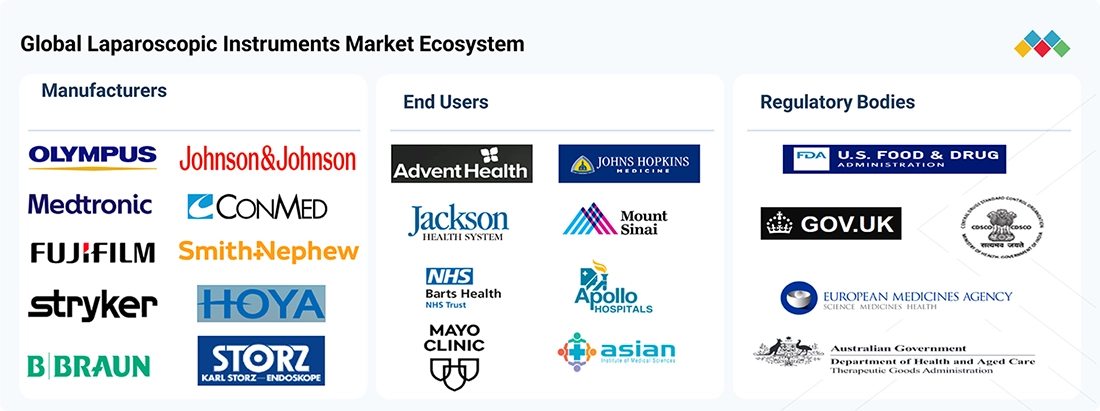
The ecosystem of the laparoscopic instruments market comprises manufacturers, distributors, research & product developers, and end users. Manufacturers include organizations involved in the entire process of research, design, product development, optimization, and launch. Distributors include third parties and e-commerce sites linked to the organization for the marketing of medical devices. Research & product developers include in-house research facilities of organizations, contract research organizations, and contract development and manufacturing organizations, which play an important role in outsourcing research for product development to manufacturers. End users include hospitals and ambulatory surgical centers where laparoscopic surgeries are being carried out. On the other hand, investors/funders and health regulatory bodies are the major influencers in this market.
Logos and trademarks shown above are the property of their respective owners. Their use here is for informational and illustrative purposes only.
MARKET SEGMENTS
Source: Secondary Research, Interviews with Experts, MarketsandMarkets Analysis
Laparoscopic Instruments Market, By Product
Based on product type, laparoscopes command the largest market share in the laparoscopic instruments market, as they play a crucial role in facilitating visualization during minimally invasive surgeries. The increased demand for laparoscopic procedures in specialties such as gynecology, urology, and general surgery has significantly increased demand for high-quality, high-resolution laparoscopes. Advances in technology, such as the creation of HD and 4K imaging systems, flexible and 3D laparoscopes, and incorporated camera technologies, have enhanced surgical precision and effectiveness significantly. In addition, increasing surgical volumes as a result of the expanding prevalence of chronic diseases, as well as ongoing replacement and upgrade cycles of image equipment within hospitals and surgery centers, support the robust market position for laparoscopes. The focus on enhancing diagnostic effectiveness and real-time visualization also underscores their critical contribution in contemporary minimally invasive surgery.
Laparoscopic Instruments Market, By Application
Based on application, general surgery dominates the market for laparoscopic instruments. General surgery includes a wide array of procedures such as hernia repair, appendectomy, cholecystectomy, and bowel resection, which are being done more and more using minimally invasive techniques. Growing demand for laparoscopic approaches to general surgery is driven by benefits such as smaller incisions, reduced postoperative pain, faster recovery, and shorter hospitalization. The worldwide surge in gastrointestinal disorders, gallbladder disease, and abdominal infections has also propelled the market for general surgical procedures. In addition, the growing availability of laparoscopic technology, the increasing number of trained surgeons, and favorable reimbursement schemes have supported wider adoption. The adaptability and common use of laparoscopy in general surgery solidify it as a key driver of market expansion.
Laparoscopic Instruments Market, By Usage
Based on usage, reusable instruments hold the highest share in the laparoscopic instruments market due to their cost-effectiveness and widespread adoption across hospitals and surgical centers. These instruments can be sterilized and reused, significantly reducing the overall cost burden for healthcare facilities compared to disposable alternatives. Their durability, compatibility with various procedures, and ability to support high surgical volumes make them the preferred choice in both developed and emerging markets. Additionally, advancements in sterilization techniques and material design have further enhanced the safety and efficiency of reusable laparoscopic instruments, reinforcing their dominance in the market.
Laparoscopic Instruments Market, By End User
Based on end user, hospitals and clinics account for the largest share of the laparoscopic instruments market, primarily due to the high volume of surgical procedures performed in these settings. These healthcare facilities are equipped with advanced infrastructure and skilled surgeons, making them the preferred centers for minimally invasive surgeries. The growing adoption of laparoscopic techniques for a wide range of procedures such as gynecological, urological, and general surgeries further drives demand. Additionally, hospitals and clinics are increasingly investing in technologically advanced instruments to improve surgical outcomes, reduce patient recovery time, and lower overall treatment costs, reinforcing their dominant position in the market.
REGION
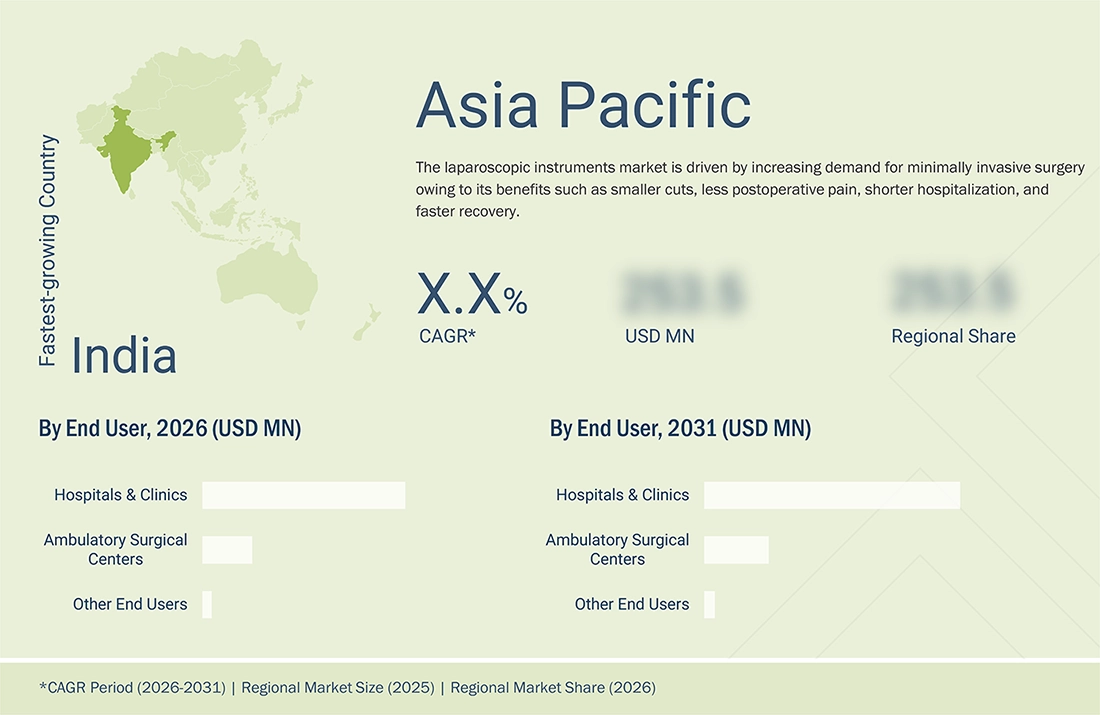
Asia Pacific to be fastest-growing region in global laparoscopic instruments market during forecast period
Asia Pacific is projected to be the fastest-growing region in the laparoscopic instruments market, driven by a combination of rising healthcare expenditure, rapid expansion of hospital infrastructure, and increasing adoption of minimally invasive surgeries. Growing awareness among patients about the benefits of laparoscopic procedures, such as reduced pain, shorter hospital stays, and faster recovery, is further boosting demand. Additionally, a large patient population, higher incidence of chronic diseases requiring surgical interventions, and government initiatives to improve access to advanced healthcare technologies are accelerating market growth. The presence of cost-effective manufacturing hubs and expanding medical tourism in countries like India, China, and Thailand also contribute to the region’s rapid expansion.
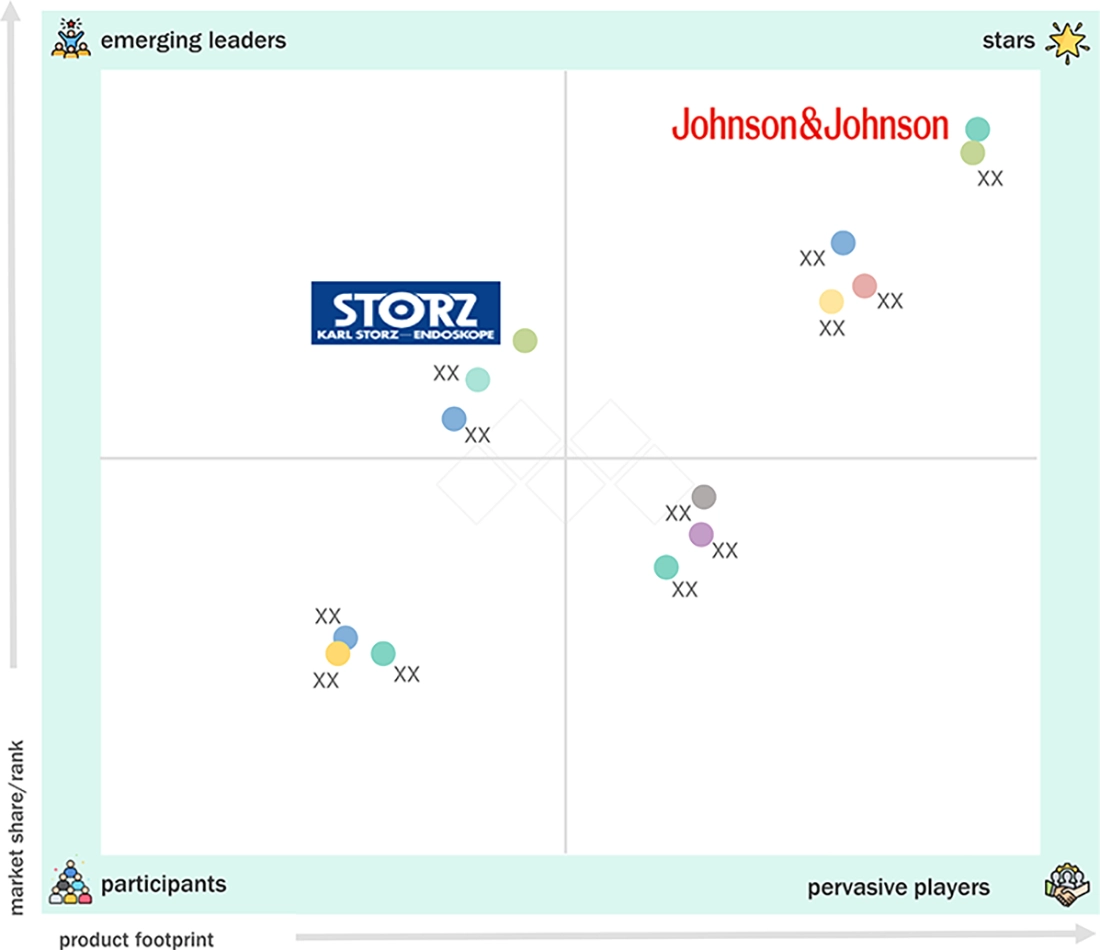
LAPAROSCOPIC INSTRUMENTS MARKET: COMPANY EVALUATION MATRIX
In the laparoscopic instruments market, Johnson & Johnson (Star) leads with scale, extensive distribution, and a broad solutions portfolio. Karl Storz (Emerging Leader) is gaining momentum by providing medical technology products that enhance clinical benefits, improve patient safety, and reduce total procedural costs.
Source: Secondary Research, Interviews with Experts, MarketsandMarkets Analysis
KEY MARKET PLAYERS
MARKET SCOPE
| REPORT METRIC | DETAILS |
|---|---|
| Market Size Value in 2026 | USD 10.74 Billion |
| Revenue Forecast in 2031 | USD 15.86 Billion |
| Growth Rate | CAGR of 8.1% from 2026-2031 |
| Years Considered | 2025-2031 |
| Base Year | 2025 |
| Forecast Period | 2026-2031 |
| Units Considered | Value (USD Million), Volume (Million Units) |
| Report Coverage | Revenue Forecast, Company Ranking, Competitive Landscape, Growth Factors, and Trends |
| Segments Covered |
|
| Regional Scope | North America, Asia Pacific, Europe, Latin America, and the Middle East & Africa |
WHAT IS IN IT FOR YOU: LAPAROSCOPIC INSTRUMENTS MARKET REPORT CONTENT GUIDE
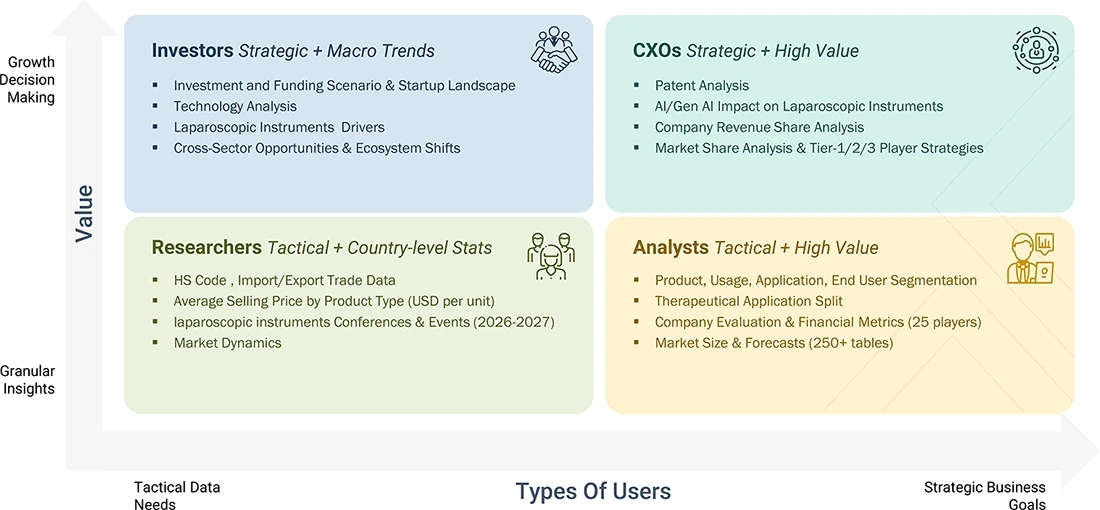
DELIVERED CUSTOMIZATIONS
We have successfully delivered the following deep-dive customizations:
| CLIENT REQUEST | CUSTOMIZATION DELIVERED | VALUE ADDS |
|---|---|---|
| Product Analysis | Comparison of top laparoscopic instruments: Laparoscopes, Energy Devices, Hand Instruments, Closure Devices, Access Devices, Accessories, Insufflators, Suction/Irrigation Pumps |
|
| Company Information |
|
Insights on revenue shifts towards emerging therapeutic applications and device innovations |
| Geographic Analysis |
|
Country-level demand mapping for new product launches and localization strategy planning |
RECENT DEVELOPMENTS
- May 2025 : Johnson & Johnson launched its ETHICON 4000 Stapler, a next-gen surgical stapler aimed at improving precision and reliability in minimally invasive procedures. The launch highlights Johnson & Johnson’s continued innovation in advanced surgical tools aimed at supporting surgeons in complex laparoscopic operations.
- March 2025 : Johnson & Johnson released the DUALTO Energy System, a versatile energy-based laparoscopic tool supporting multiple surgical approaches. This innovation is expected to streamline operating room workflows and reduce the need for multiple devices during laparoscopic procedures.
- May 2024 : B. Braun Melsungen AG inaugurated a new Swiss manufacturing facility to boost production capacity for advanced laparoscopic devices. In March 2024, Advanced Medical Solutions announces the acquisition of Peters Surgical. This facility was established to expand production capacity for advanced laparoscopic devices, ensuring better supply chain resilience and meeting growing global demand.
Table of Contents
 Exclusive indicates content/data unique to MarketsandMarkets and not available with any competitors.
Methodology
This study involved four major activities in estimating the current laparoscopic instruments market size. First, extensive secondary research was conducted to gather information on the market, including related and parent markets. The next step was to validate these findings, assumptions, and sizing with industry experts across the value chain through primary research. Both top-down and bottom-up approaches were employed to estimate the complete market size. After that, market breakdown and data triangulation were used to estimate the market size of segments and subsegments.
Secondary Research
The secondary research process involved the widespread use of secondary sources, directories, databases (such as Bloomberg Businessweek, Factiva, and D&B Hoovers), white papers, annual reports, company house documents, investor presentations, and SEC filings of companies. Secondary research was used to identify and collect information useful for the extensive, technical, market-oriented, and commercial study of the laparoscopic instruments market. It was also used to obtain important information about the key players and market classification and segmentation according to industry trends to the bottom-most level, and key developments related to market and technology perspectives. A database of the key industry leaders was also prepared using secondary research.
Primary Research
In the primary research process, various sources from both the supply and demand sides were interviewed to obtain qualitative and quantitative information for this report. The primary sources from the supply side include industry experts such as CEOs, vice presidents, marketing and sales directors, technology & innovation directors, and related key executives from various key companies and organizations operating in the laparoscopic instruments market. The primary sources from the demand side included industry experts, purchase & sales managers, doctors, and personnel from research organizations. Primary research was conducted to validate the market segmentation, identify key players in the market, and gather insights on key industry trends and key market dynamics.
A breakdown of the primary respondents for the laparoscopic instruments market is provided below:
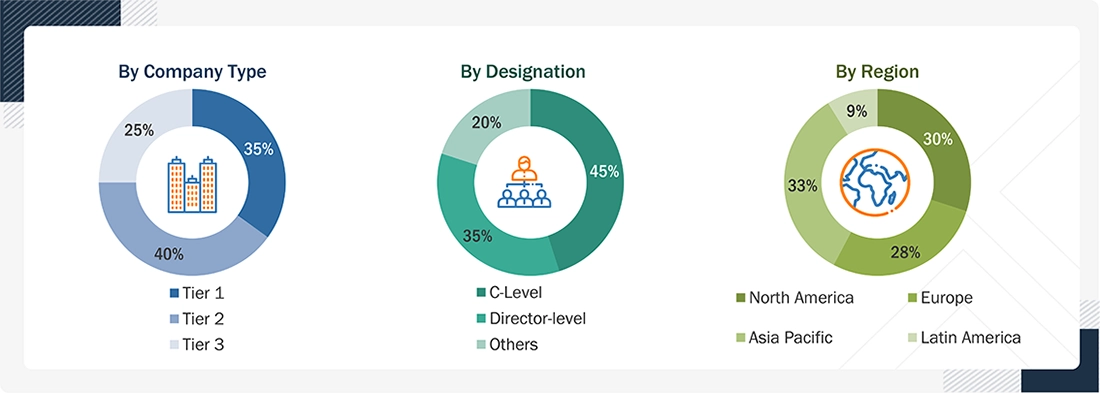
Notes: C-level primaries include CEOs, CFOs, COOs, and VPs.
Other designations include sales managers, marketing managers, business development managers, product managers, distributors, and suppliers.
Companies are classified into tiers based on their total revenue. As of 2023, Tier 1 = >USD 10.00 billion, Tier 2 = USD 1.00 billion to USD 10.00 billion, and Tier 3 = <USD 1.00 billion.
Source: MarketsandMarkets Analysis
To know about the assumptions considered for the study, download the pdf brochure
Market Size Estimation
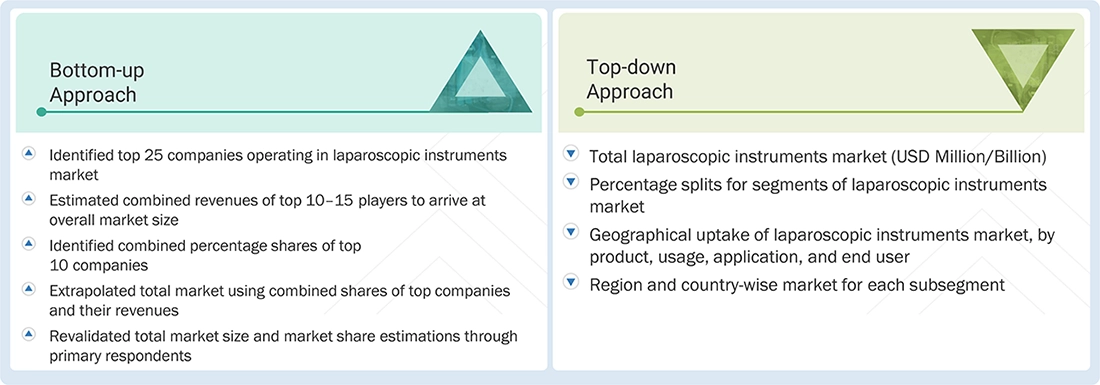
For the global market value, annual revenues were calculated based on the revenue mapping of major product manufacturers and OEMs active in the global laparoscopic instruments market. All the major product manufacturers were identified at the global and/or country/regional level. Revenue mapping for the respective business segments/sub-segments was done for the major players. Also, the global laparoscopic instruments market was split into various segments and sub-segments based on:
- List of major players operating in the products market at the regional and/or country level
- Product mapping of various laparoscopic instrument manufacturers at the regional and/or country level
- Mapping of annual revenue generated by listed major players from laparoscopic instruments (or the nearest reported business unit/product category)
- Extrapolation of the revenue mapping of the listed major players to derive the global market value of the respective segments/subsegments
- Summation of the market value of all segments/subsegments to arrive at the global laparoscopic instruments market
The above-mentioned data was consolidated and added with detailed inputs and analysis from MarketsandMarkets and presented in this report.
Laparoscopic Instruments Market : Top-Down and Bottom-Up Approach
Data Triangulation
After arriving at the overall size of the global laparoscopic instruments market through the above-mentioned methodology, this market was split into several segments and subsegments. The data triangulation and market breakdown procedures were employed, wherever applicable, to complete the overall market engineering process and arrive at the exact market value data for the key segments and subsegments. The extrapolated market data was triangulated by studying various macro indicators and regional trends from both demand- and supply-side participants.
Market Definition
Laparoscopic instruments are used during laparoscopy, a type of minimally invasive surgical procedure used for diagnostic and treatment purposes. The procedure allows surgeons to access the inside of the abdomen and pelvis region without making large incisions in the skin. The procedure involves the creation of small incisions in the abdominal wall through which a laparoscope (viewing tube) is inserted, which allows the doctor to examine the abdominal and pelvic organs on a video monitor connected to the tube.
Key Stakeholders
- Laparoscopes and related instrument manufacturing companies
- Suppliers and distributors of laparoscopic instruments
- Hospitals, diagnostic centers, and medical colleges
- Independent surgeons and private offices of physicians
- Ambulatory surgical centers (ASC)
- Teaching hospitals and academic medical centers (AMCs)
- Government bodies/municipal corporations
- Business research and consulting service providers
- Venture capitalists
Report Objectives
- To define and measure the global laparoscopic instruments market on the basis of product, usage, application, end user, and region
- To provide detailed information about the factors influencing the market growth (such as drivers, restraints, opportunities, and challenges)
- To analyze the micromarkets1 with respect to individual growth trends, prospects, and contributions to the overall laparoscopic instruments market
- To analyze market opportunities for stakeholders and provide details of the competitive landscape for key players
- To forecast the size of the laparoscopic instruments market in five main regions along with their respective key countries, namely, North America, Europe, the Asia Pacific, Latin America, and the Middle East & Africa
- To profile the key players in the laparoscopic instruments market and comprehensively analyze their core competencies2 and market shares
- To track and analyze company developments such as partnerships, agreements, collaborations, expansions, acquisitions, and product launches
Available customizations:
With the given market data, MarketsandMarkets offers customizations as per your company’s specific needs. The following customization options are available for the report:
Geographic Analysis
- Further breakdown of the Rest of Europe laparoscopic instruments market into Russia, Switzerland, Denmark, Austria, and others
- Further breakdown of the Rest of Asia Pacific laparoscopic instruments market into South Korea, Taiwan, and others
- Further breakdown of the Rest of Latin America laparoscopic instruments market into Argentina, Colombia, Chile, Ecuador, and others
Competitive Landscape
- Market share analysis, by region (North America and Europe), which provides market shares of the top 3-5 key players in the laparoscopic instruments market
- Competitive leadership mapping for established players in the US
Frequently Asked Questions (FAQ)
What is the key driver of the laparoscopic instruments market?
One of the key drivers in the laparoscopic instruments market includes the rising volume of minimally invasive surgeries.
Which product dominates the laparoscopic instruments market?
The laparoscopes segment, by product, is dominating the laparoscopic instruments market.
Who are the end users of the laparoscopic instruments market? Which end user is leading the market?
The laparoscopic instruments market is segmented into hospitals & clinics, ambulatory surgical centers, and other end users. The Hospitals segment accounted for the largest share of the laparoscopic instruments market in 2024.
Who are the key players in the laparoscopic instruments market?
The key players in the laparoscopic instruments market are Olympus Corporation (Japan), Karl Storz SE & Co. KG (Germany), Johnson & Johnson Services, Inc. (US), Fujifilm Holdings Corporation (Japan), Medtronic plc (Ireland), Stryker Corporation (US), B. Braun Melsungen AG (Germany), Becton, Dickinson and Company (US), Smith & Nephew PLC (UK).
Which region is lucrative for the laparoscopic instruments market?
The North American market is expected to witness the highest growth during the forecast period.


Personalize This Research
- Triangulate with your Own Data
- Get Data as per your Format and Definition
- Gain a Deeper Dive on a Specific Application, Geography, Customer or Competitor
- Any level of Personalization
Let Us Help You
- What are the Known and Unknown Adjacencies Impacting the Laparoscopic Instruments Market
- What will your New Revenue Sources be?
- Who will be your Top Customer; what will make them switch?
- Defend your Market Share or Win Competitors
- Get a Scorecard for Target Partners

Custom Market Research Services
We Will Customise The Research For You, In Case The Report Listed Above Does Not Meet With Your Requirements
Get 10% Free CustomisationTESTIMONIALS

JAYANT RAJPUROHIT
Director of Market Insights, Data and Analytics
SFI Health,
Leading Pharmaceutical Companywww.sfihealth.com/

We at SFI Health approached MarketsandMarkets for an Opportunity Assessment on "Incidence and Prevalence of Focus Indications" as we wanted to know the most attractive HCPs like Physician, Functional MD, Naturopath and Pharmacist. The project was critical for us to ensure our focus on the right target which would enable sustainable growth and profitability for SFI Health. The business insights provided exceeded our expectations and we were extremely impressed. The team at MarketsandMarkets is highly professional and detail oriented and very well understood our business needs. MarketsandMarkets offers a unique combination of expertise and dedicated engagement model. We identified 2 new products to be launched in coming months, based on the research findings provided by MarketsandMarkets. We are happy with the services and would strongly recommend MarketsandMarkets to my peers in the industry.

BEATRIZ DE LA CALLE
Head of Commercial Analytics
Qualicaps,
Leading Pharmaceutical Companywww.qualicaps.com/

We partnered with MarketsandMarkets for an assessment study on hard empty capsules. The team was extremely professional in understanding our business requirements and we received timely responses to all our queries. The market intelligence and the recommendations has met our business requirements. We were extremely impressed to see the final study results; it really exceeded our expectations. The market intelligence offered by MarketsandMarkets, and clarity on next steps will help us achieve our business objective for the Year 2021. We are happy with the services and would strongly recommend MarketsandMarkets to my peers in the industry.

Bob Williams,
Senior Director Business Development & Innovation
Bracco Diagnostics Inc.,
Italian Multinational in life sciences sector and a World Leader in imaging diagnosticsimaging.bracco.com/us-en
We were pleased with targeted insights that MarketsandMarkets identified from a custom study on the 'Radiation Dose Management Solutions Market'. Your team identified and characterized the market participants as well as underlying trends accurately. This study was useful to Bracco in formulating business strategies for our dose monitoring product lines and we thank MarketsandMarkets for the job well done.
Cody Coonradt,
Market Development and Strategy Manager
3M Health Information Systems,
Leader in Health care Coding, Payment & Analytics Solutions.www.3m.com/3M/en_US/health-information-systems-us
The value for our organization comes from three things: depth of research, specificity of segments and being easy to work with. As important as the first two are, the third can't be underestimated. MarketsandMarkets, maybe more than any other research vendor, wants to know what is top of mind for our team and what big questions we are grappling to answer.
Their customer first approach and high value engagement model, have given us great analysis and excellent value for money
- US Laparoscopic Instruments Market
- Canada Laparoscopic Instruments Market
- Germany Laparoscopic Instruments Market
- France Laparoscopic Instruments Market
- UK Laparoscopic Instruments Market
- Italy Laparoscopic Instruments Market
- Spain Laparoscopic Instruments Market
- China Laparoscopic Instruments Market
- Japan Laparoscopic Instruments Market
- India Laparoscopic Instruments Market
- Australia Laparoscopic Instruments Market
- South Korea Laparoscopic Instruments Market
- Brazil Laparoscopic Instruments Market
- Mexico Laparoscopic Instruments Market




Growth opportunities and latent adjacency in Laparoscopic Instruments Market