In-Vehicle Networking Market by Vehicle Type (Passenger Car, LCV, HCV, and AGV), Connectivity Standards (CAN, LIN, FlexRay, RF, Ethernet, and MOST), Application, and Geography - Global Growth Driver and Industry Forecast to 2035


In-Vehicle Networking Market Summary
The global In-Vehicle Networking Market is undergoing a structural transformation as vehicles evolve from collections of electronically controlled systems into connected, software-defined platforms. The market is estimated at approximately USD 10-12 billion in 2025 and is projected to reach roughly USD 20-25 billion by 2035, reflecting an estimated 7-9% CAGR during the forecast period. Published estimates vary because some studies include only in-vehicle communication hardware and protocols, while others include broader networking components and automotive Ethernet; one recent estimate places the market at USD 11.5 billion in 2025 and USD 24.8 billion by 2035.
Growth is being driven by vehicle electrification, advanced driver-assistance systems (ADAS), autonomous driving, connected infotainment, increasing electronic control unit (ECU) complexity, and the transition toward centralized and zonal electrical/electronic architectures. Automotive Ethernet is gaining importance because cameras, radar, lidar, displays, domain controllers, and high-performance computing platforms require significantly greater bandwidth than traditional automotive buses can provide. The broader automotive Ethernet market is itself forecast to expand rapidly as software-defined vehicles and zonal architectures become more common.
AI, IoT, automation, and digital transformation are reinforcing this transition. AI-enabled vehicles require continuous data exchange between sensors, ECUs, domain controllers, and centralized compute platforms. IoT connectivity is extending the vehicle beyond its physical boundaries through cloud services, telematics, remote diagnostics, and vehicle-to-everything communication. Consequently, the In-Vehicle Networking Market is increasingly becoming a strategic infrastructure layer for next-generation mobility rather than simply a collection of communication buses.
Key Market Trends & Insights
North America remains a leading market because of its strong automotive technology ecosystem, advanced vehicle electronics, autonomous-driving development, semiconductor capabilities, and demand for connected vehicles. The United States is particularly important for high-performance networking, autonomous systems, cybersecurity, and software-defined vehicle development.
Asia Pacific is the fastest-growing major region. China, Japan, South Korea, and India are benefiting from expanding vehicle production, electric-vehicle adoption, smart manufacturing, connected-car deployment, and investment in automotive semiconductor ecosystems. China is also experiencing strong pressure to standardize networking architectures across rapidly expanding new-energy vehicle platforms.
CAN remains highly important, but Automotive Ethernet is gaining share. CAN and LIN continue to dominate many low- and medium-bandwidth control functions because of their maturity, cost effectiveness, and established installed base. However, Ethernet is becoming increasingly important for high-bandwidth applications, backbone communication, zonal gateways, infotainment, ADAS, and centralized computing.
Zonal architecture is becoming a defining technology trend. Instead of maintaining numerous function-specific ECUs and long wiring harnesses, automakers are increasingly moving toward localized zonal controllers connected to powerful centralized computers. This approach can reduce wiring complexity while supporting higher bandwidth and software-centric vehicle architectures.
AI and automation are increasing network traffic. Cameras, radar, lidar, driver-monitoring systems, and AI compute platforms create continuous data flows that require predictable latency, high bandwidth, and secure communication.
Cybersecurity and deterministic networking are becoming essential. Time-Sensitive Networking (TSN), secure gateways, hardware security modules, network segmentation, and authenticated communication are increasingly important as vehicles become connected computers on wheels.
Market Size & Forecast
- Base year market size: Approximately USD 10-12 billion in 2025, depending on market scope and inclusion of networking components.
- Forecast value by 2035: Approximately USD 20-25 billion, supported by increasing vehicle electronics content and networking complexity.
- CAGR: Approximately 7-9% through the forecast period.
- Growth factors: Vehicle electrification, ADAS, autonomous driving, Automotive Ethernet, software-defined vehicles, zonal architectures, connected infotainment, cybersecurity, and high-performance computing will support sustained market expansion.
In-Vehicle Networking Market Top 10 key takeaway
- The global In-Vehicle Networking Market is estimated at approximately USD 10-12 billion in 2025.
- The market is expected to approach USD 20-25 billion by 2035.
- Overall market expansion is expected at approximately 7-9% CAGR.
- CAN remains a foundational networking technology across modern vehicle platforms.
- Automotive Ethernet is gaining share because of rising bandwidth requirements.
- Zonal electrical architectures are reshaping vehicle network design.
- Asia Pacific is expected to record the fastest growth among major regions.
- ADAS and autonomous-driving systems are major sources of new networking demand.
- AI, IoT, cloud connectivity, and automation are increasing in-vehicle data volumes.
- Cybersecurity, TSN, gateways, and intelligent network management will become increasingly strategic.
Product Insights
The product landscape of the In-Vehicle Networking Market is centered on network controllers, Ethernet switches, PHY transceivers, gateways, communication interfaces, ECUs, connectors, and associated networking software. Traditional CAN and LIN interfaces remain the largest installed base because virtually every modern vehicle contains numerous low-cost control networks for body electronics, powertrain functions, chassis systems, and comfort features.
However, the most significant growth opportunity is shifting toward Automotive Ethernet switches, PHYs, gateways, and high-speed communication controllers. Ethernet is increasingly used as the backbone technology for applications requiring high data throughput, including advanced infotainment, camera systems, automated driving, digital cockpits, and centralized vehicle computing. Industry forecasts for Automotive Ethernet show particularly strong growth as automakers migrate from domain-based to zonal architectures.
Gateways are also becoming more important because future vehicles will operate hybrid networks in which CAN, LIN, FlexRay, and Ethernet coexist. Intelligent gateways must translate protocols, manage traffic, enforce security policies, and support diagnostics. This makes the gateway a critical bridge between legacy vehicle platforms and newer software-defined architectures.
Emerging products include multi-gigabit Ethernet switches, 10BASE-T1S solutions, TSN-enabled devices, secure gateways, network processors, integrated microcontrollers, and high-performance zonal controllers. AI is also influencing product development as manufacturers seek networking silicon capable of supporting intelligent traffic management, anomaly detection, predictive diagnostics, and adaptive resource allocation.
Technology / Component Insights (Rename based on keyword if needed)
The technological foundation of the In-Vehicle Networking Market is transitioning from multiple independent fieldbus systems toward hybrid Ethernet-centric architectures. CAN and LIN continue to serve cost-sensitive and low-bandwidth applications, while Ethernet is increasingly deployed as the high-speed backbone connecting domain and zonal controllers.
Automotive Ethernet offers scalability and significantly higher bandwidth compared with traditional vehicle buses. Technologies such as 100BASE-T1, 1000BASE-T1, and emerging multi-gigabit solutions are enabling data-intensive applications while maintaining automotive requirements for electromagnetic compatibility, reliability, and deterministic performance.
Time-Sensitive Networking (TSN) is another important technology. TSN can provide predictable delivery characteristics for time-critical traffic, making Ethernet more suitable for safety-sensitive automotive workloads. Research into secure time-sensitive software-defined vehicle networks highlights the potential for TSN and software-defined networking to manage different traffic classes while improving network security.
AI and IoT are accelerating the need for more sophisticated networking components. AI-enabled ADAS requires continuous communication among cameras, radar, lidar, sensor processors, and centralized compute platforms. IoT connectivity adds telematics, cloud services, OTA updates, remote diagnostics, and fleet management.
Automation is also encouraging intelligent network monitoring. Software can identify unusual traffic patterns, detect potential faults, prioritize safety-critical messages, and optimize network resources. Future networking architectures will increasingly combine Ethernet switching, cybersecurity, edge processing, TSN, centralized compute, and software-defined network management.
Application Insights
The ADAS and autonomous-driving segment is emerging as one of the most important application areas for the In-Vehicle Networking Market. Modern driver-assistance systems depend on multiple cameras, radar sensors, lidar systems, ultrasonic sensors, positioning modules, and AI processors. These systems generate large volumes of data and require reliable communication with very low latency.
Infotainment and digital cockpits represent another major application. High-resolution displays, rear-seat entertainment, connected navigation, voice assistants, smartphone integration, and cloud-based services are increasing bandwidth requirements. As consumers expect vehicle experiences similar to smartphones and connected homes, network capacity becomes a major part of vehicle design.
Electric vehicles are creating additional demand. EV architectures contain sophisticated battery-management systems, power electronics, thermal management systems, charging interfaces, and centralized controllers. Networking enables these systems to exchange information efficiently and supports advanced energy-management functions.
Industrial and commercial vehicles also provide significant opportunities. Fleet operators increasingly require telematics, predictive maintenance, driver monitoring, connected diagnostics, and automated functions. Networking infrastructure allows vehicle data to be processed locally and transmitted to cloud platforms.
Future opportunities are particularly strong in autonomous vehicles, software-defined vehicles, robotics, connected fleets, and centralized vehicle computing. As vehicle functions increasingly become software controlled, networking will act as the communication layer linking hardware, software, sensors, and cloud services.
Regional Insights
North America is a leading market for in-vehicle networking because of advanced vehicle electronics adoption, autonomous-driving development, connected-car services, semiconductor innovation, and strong demand for premium vehicle technologies. The United States also has an influential ecosystem spanning automakers, Tier-1 suppliers, semiconductor companies, software developers, and technology firms.
Europe remains a major market due to its large automotive manufacturing base and stringent vehicle safety and emissions requirements. Germany is particularly significant because of its concentration of global automakers and Tier-1 suppliers. European manufacturers are actively evaluating centralized and zonal vehicle architectures as they develop software-defined platforms.
Asia Pacific is expected to register the fastest growth. China has become a particularly important market for electric and connected vehicles, while Japan and South Korea maintain strong capabilities in automotive electronics, robotics, semiconductors, and manufacturing. India is emerging as an important opportunity as automotive production, electronics manufacturing, connected mobility, and digital infrastructure expand.
- North America: Strong demand for autonomous driving, connected vehicles, and high-performance networking.
- Europe: Major opportunity from premium vehicles, safety systems, EVs, and software-defined architectures.
- Asia Pacific: Fastest-growing region due to automotive production and EV adoption.
- China: Strong demand from new-energy vehicles, smart cockpits, and centralized computing.
- Japan and South Korea: Advanced automotive electronics and semiconductor ecosystems support adoption.
[Country]-Specific Market Trends
In APAC, China is estimated to expand at approximately 9-11% CAGR, while Japan is expected to grow at approximately 6-8% CAGR through the forecast period. China's rapid EV adoption and strong connected-vehicle ecosystem are accelerating demand for Ethernet switches, gateways, domain controllers, and high-speed network interfaces. Government-supported new-energy vehicle policies and domestic semiconductor development further reinforce the opportunity. Japan's market is more mature but continues to benefit from advanced automotive manufacturing, robotics, safety systems, and next-generation vehicle platforms.
In North America, the United States is estimated to grow at approximately 7-9% CAGR, Canada at approximately 6-8%, and Mexico at approximately 7-9%. The United States remains the largest regional opportunity because of autonomous-driving programs, software-defined vehicle development, premium vehicle electronics, and advanced semiconductor demand. Canada benefits from automotive manufacturing and technology development, while Mexico's growing vehicle-production base supports demand for network components.
In Europe, Germany is expected to expand at approximately 7-9% CAGR, while France is projected to grow at approximately 6-8%. Germany's vehicle manufacturing ecosystem creates substantial demand for Ethernet, gateways, ECUs, and zonal architectures. France benefits from automotive electrification, connected mobility, commercial vehicles, and investment in digital transportation infrastructure.
Government initiatives supporting vehicle electrification, cybersecurity, road safety, semiconductor resilience, and digital mobility are likely to reinforce adoption across these markets.
- China: Rapid EV and connected-vehicle adoption drives high-speed networking demand.
- Japan: Mature automotive engineering supports advanced network integration.
- United States: Autonomous driving and software-defined vehicles create high-value opportunities.
- Germany: Strong OEM and Tier-1 presence accelerates adoption of Ethernet and zonal architectures.
- France: Electrification, connected mobility, and commercial vehicles support steady growth.
Key In-Vehicle Networking Company Insights
The competitive landscape includes NXP Semiconductors, Robert Bosch, Texas Instruments, Microchip Technology, STMicroelectronics, Infineon Technologies, Renesas Electronics, Analog Devices, Aptiv, and Continental. These companies compete across automotive microcontrollers, Ethernet PHYs, switches, gateways, communication interfaces, software, connectors, and system integration. Industry analysis identifies NXP, Bosch, Texas Instruments, Microchip, and STMicroelectronics among leading companies in the market.
NXP's strategy centers on integrating microcontrollers, Ethernet switches, PHYs, and networking technologies into automotive platforms. Bosch combines electronics, software, and system integration capabilities. Texas Instruments and Microchip focus heavily on semiconductor solutions for automotive communication and embedded control, while STMicroelectronics emphasizes broad automotive semiconductor integration.
Infineon's strategy has become particularly significant following its acquisition of Marvell's Automotive Ethernet business. The transaction was valued at USD 2.5 billion and was intended to combine Marvell's Automotive Ethernet portfolio with Infineon's automotive microcontroller capabilities to strengthen solutions for software-defined vehicles.
Aptiv and Continental compete more broadly through vehicle architecture, wiring, gateways, software, and system integration. Their positioning reflects the industry's shift from selling individual networking components toward delivering complete vehicle communication architectures.
- NXP: Integrates networking controllers, switches, PHYs, and automotive MCUs.
- Infineon: Expanding its Automotive Ethernet portfolio and software-defined vehicle capabilities.
- Bosch: Combines networking hardware, software, and vehicle-system integration.
- STMicroelectronics and Microchip: Focus on scalable automotive semiconductor and communication solutions.
- Aptiv and Continental: Emphasize complete vehicle architectures, gateways, wiring, and software integration.
Recent Developments
In April 2025, Infineon announced an agreement to acquire Marvell Technology's Automotive Ethernet business for approximately USD 2.5 billion. The transaction was designed to strengthen Infineon's position in software-defined vehicles by combining automotive microcontrollers with Automotive Ethernet technologies.
In August 2025, Infineon announced the completion of the acquisition following regulatory approvals. The company stated that the acquired business brought a design-win pipeline of approximately USD 4 billion through 2030, highlighting the strategic importance of Automotive Ethernet in future vehicle architectures.
Recent industry development is also increasingly centered on zonal networking and Ethernet-based vehicle backbones. The migration from domain-based architectures toward centralized computing is creating opportunities for intelligent gateways, high-speed switches, TSN, cybersecurity, and software-defined network management.
Market Segmentation
The In-Vehicle Networking Market can be segmented By Product into communication controllers, Ethernet switches, PHY transceivers, gateways, connectors, ECUs, network processors, and related software and interfaces. Network controllers and transceivers remain essential for conventional CAN and LIN architectures, while Ethernet switches, PHYs, and gateways represent some of the fastest-growing product opportunities.
By Technology / Component, the market includes CAN, LIN, FlexRay, MOST, Automotive Ethernet, TSN, gateways, switches, PHYs, microcontrollers, and network management software. CAN remains dominant in established control applications, while Automotive Ethernet is gaining momentum for high-bandwidth and backbone communication. Published vehicle-networking analysis identifies CAN and legacy bus systems as the largest installed technology category while highlighting Ethernet's expanding role.
By Application, the market covers powertrain, body electronics, chassis, ADAS, autonomous driving, infotainment, telematics, digital cockpit, battery and energy management, and connected-vehicle systems. ADAS, autonomous driving, infotainment, and centralized computing are expected to generate the strongest demand for high-bandwidth networking.
By Region, the market is divided into North America, Europe, Asia Pacific, Latin America, and the Middle East & Africa. North America remains a leading high-value market, Europe maintains a strong automotive manufacturing base, and Asia Pacific represents the fastest-growing regional opportunity.
- By Product: Ethernet switches, PHYs, gateways, and controllers are gaining strategic importance.
- By Technology: CAN remains foundational while Automotive Ethernet captures high-bandwidth applications.
- By Application: ADAS, autonomous driving, infotainment, and centralized computing are major growth areas.
- By Vehicle Type: Passenger vehicles represent the largest opportunity, with commercial and electric vehicles expanding.
- By Region: Asia Pacific offers the strongest growth potential while North America remains a major high-value market.
Conclusion
The global In-Vehicle Networking Market is entering a new phase as automotive architectures shift toward software-defined, connected, electric, and increasingly autonomous vehicles. With an estimated 2025 market size of approximately USD 10-12 billion and a potential value of USD 20-25 billion by 2035, the market is positioned for sustained 7-9% CAGR growth.
AI will be one of the most influential forces shaping future networking requirements. Advanced AI applications require continuous communication between cameras, radar, lidar, vehicle sensors, domain controllers, and centralized compute platforms. This will increase demand for high-bandwidth Ethernet, deterministic networking, intelligent gateways, and secure data paths.
The growing adoption of zonal architecture will further transform the market. Consolidating computing resources while distributing network connectivity through zonal controllers can simplify vehicle architecture and reduce wiring complexity. At the same time, the coexistence of CAN, LIN, and Ethernet means that gateways and network-management software will remain essential during the transition.
IoT, cloud connectivity, OTA updates, predictive diagnostics, and digital cockpit services will also increase the strategic importance of in-vehicle networks. Cybersecurity will become inseparable from network design as vehicles become increasingly connected to external systems.
Through 2035, businesses across automotive semiconductors, networking hardware, software, connectors, Tier-1 systems, and vehicle manufacturing will benefit from the transition. The strongest competitive positions are likely to belong to companies capable of combining high-speed Automotive Ethernet, secure gateways, AI-ready architectures, TSN, embedded computing, and software-defined network management into scalable vehicle platforms.
FAQs
1. What is the market size of the In-Vehicle Networking Market?
The global In-Vehicle Networking Market is estimated at approximately USD 10-12 billion in 2025. Depending on the definition and components included, published market estimates vary considerably; one recent study values the market at about USD 11.5 billion in 2025.
2. What is the growth rate of the In-Vehicle Networking Market?
The market is expected to grow at approximately 7-9% CAGR through 2035. Growth will be supported by vehicle electrification, ADAS, autonomous driving, Automotive Ethernet, zonal architectures, connected vehicles, and software-defined vehicle platforms.
3. What are the key drivers of the In-Vehicle Networking Market?
Major drivers include increasing ECU complexity, higher ADAS data volumes, vehicle electrification, connected infotainment, autonomous driving, centralized computing, Automotive Ethernet adoption, AI, IoT, cybersecurity requirements, and the transition to zonal vehicle architectures.
4. Which region leads the In-Vehicle Networking Market?
North America remains a leading market due to advanced automotive technology adoption, autonomous-driving development, and strong semiconductor capabilities. Asia Pacific is expected to be the fastest-growing major region because of EV production, connected vehicles, electronics manufacturing, and automotive digitalization.
5. Who are the key companies in the In-Vehicle Networking Market?
Key companies include NXP Semiconductors, Robert Bosch, Texas Instruments, Microchip Technology, STMicroelectronics, Infineon Technologies, Renesas Electronics, Analog Devices, Aptiv, and Continental. These companies compete through automotive Ethernet, CAN and LIN solutions, gateways, switches, microcontrollers, networking software, and complete vehicle architecture solutions.
To speak to our analyst for a discussion on the above findings, click Speak to Analyst
 Exclusive indicates content/data unique to MarketsandMarkets and not available with any competitors.
Table of Contents
1 Introduction (Page No. - 15)
1.1 Objectives of the Study
1.2 Market Definition
1.3 Scope of the Study
1.3.1 Markets Covered
1.3.2 Years Considered for the Study
1.4 Currency
1.5 Limitations
1.6 Stakeholders
2 Research Methodology (Page No. - 18)
2.1 Research Data
2.1.1 Secondary Data
2.1.1.1 List of Major Secondary Sources
2.1.1.2 Key Data From Secondary Sources
2.1.2 Primary Data
2.1.2.1 Primary Interviews With Experts
2.1.2.2 Breakdown of Primaries
2.1.2.3 Key Data From Primary Sources
2.2 Secondary and Primary Research
2.2.1 Key Industry Insights
2.3 Market Size Estimation
2.3.1 Bottom-Up Approach
2.3.1.1 Approach to Capture Market Shares of Applications Through Bottom-Up Analysis (Demand Side)
2.3.1.2 Approach to Capture Market Shares of Applications With the Help of Various Players in the Market Value Chain
2.3.2 Top-Down Approach
2.3.2.1 Approach to Capture Market Shares of Applications Through Top-Down Analysis (Supply Side)
2.4 Market Breakdown and Data Triangulation
2.5 Research Assumptions
2.5.1 Assumptions
3 Executive Summary (Page No. - 29)
4 Premium Insights (Page No. - 33)
4.1 Attractive Opportunities in the In-Vehicle Networking Market
4.2 Market, By Connectivity Standard
4.3 Market, By Application
4.4 Market, By Vehicle Type
4.5 Market, By Region
5 Market Overview (Page No. - 36)
5.1 Introduction
5.2 Segmentation of the In-Vehicle Network Market
5.2.1 Market, By Connectivity Standard
5.2.2 Market, By Vehicle Type
5.2.3 Market, By Application
5.2.4 Market, By Geography
5.3 Market Evolution of Automotive Electronics
5.3.1 Wiring
5.3.2 Hubs
5.3.3 Switches
5.3.4 Bridges
5.3.5 Routers
5.3.6 Gateways
5.3.7 Sensors
5.3.8 Wireless Access Points (Waps)
5.3.9 Transceivers
5.3.10 Terminal Adapters
5.4 Market Dynamics
5.4.1 Drivers
5.4.1.1 Rising Vehicle Production Across the Globe
5.4.1.2 Increase in the Use of Electronics in Vehicles
5.4.1.3 Growing Demand for Advanced Safety, Convenience, and Comfort Systems
5.4.1.4 Increasing Focus on Reducing Co2 Emission in Vehicles
5.4.2 Restraints
5.4.2.1 Intense Pricing Pressure From Low-End Cars and Emerging Markets
5.4.3 Opportunities
5.4.3.1 Growing Demand for Hybrid and Electric Vehicles
5.4.4 Challenges
5.4.4.1 Miniaturization of Networking Components
5.4.5 Burning Issues
5.4.5.1 Volatility of Oil Prices
5.4.6 Winning Imperatives
5.4.6.1 Emergence of Autonomous and Connected Cars
6 Industry Trends (Page No. - 51)
6.1 Introduction
6.2 Value Chain Analysis
6.3 Porter’s Five Forces Analysis
6.3.1 Intensity of Competitive Rivalry
6.3.2 Threat of Substitutes
6.3.3 Bargaining Power of Buyers
6.3.4 Bargaining Power of Suppliers
6.3.5 Threat of New Entrants
7 In Vehicle Networking Market, By Connectivity Standard (Page No. - 59)
7.1 Introduction
7.2 Controller Area Network (CAN)
7.3 Local Interconnect Network (LIN)
7.4 Flexray
7.5 Radio-Frequency (RF)
7.6 Ethernet
7.7 Media Oriented Systems Transport (MOST)
8 In Vehicle Networking Market, By Vehicle Type (Page No. - 63)
8.1 Introduction
8.2 Passenger Cars
8.3 Light Commercial Vehicles (LCVS)
8.4 Heavy Commercial Vehicles (HCVS)
8.5 Automated Guided Vehicles (AGV)
9 In Vehicle Networking Market, By Application (Page No. - 82)
9.1 Introduction
9.2 Powertrain
9.3 Safety
9.4 Body Electronics
9.5 Chassis
9.6 Infotainment
10 Regional Analysis (Page No. - 97)
10.1 Introduction
10.2 North America
10.2.1 Increased Production of Suvs and Light Trucks is Expected to Drive the Market
10.2.2 U.S.
10.2.3 Mexico
10.2.4 Canada
10.3 Europe
10.3.1 Presence of Various Luxury Car Manufacturers is the Major Driver of the Market
10.3.2 Germany
10.3.3 France
10.3.4 U.K.
10.3.5 Spain
10.3.6 Rest of Europe
10.4 Asia-Pacific
10.4.1 APAC Holds the Largest Market Share in Terms of Vehicle Production
10.4.2 China
10.4.3 Japan
10.4.4 South Korea
10.4.5 India
10.4.6 Rest of APAC
10.5 Rest of the World
10.5.1 South America is the Largest Market for In-Vehicle Networking in the RoW Region
10.5.2 South America
10.5.3 Russia
10.5.4 Middle-East and Africa
11 Competitive Landscape (Page No. - 114)
11.1 Introduction
11.2 Ranking of Market Players, 2015
11.3 Competitive Scenario and Trends
11.3.1 New Product Launches, Product Developments and Patents
11.3.2 Alliances, Business Expansions and Contracts
11.3.3 Mergers & Acquisitions
12 Company Profiles (Page No. - 120)
12.1 Introduction
(Business Overview, Products & Services, Key Insights, Recent Developments, SWOT Analysis, Ratio Analysis, MnM View)*
12.2 NXP Semiconductors N.V.
12.3 Infineon Technologies AG
12.4 Texas Instruments Incorporated
12.5 Robert Bosch GmbH
12.6 Xilinx, Inc.
12.7 Stmicroelectronics N.V.
12.8 On Semiconductor Corp.
12.9 Atmel Corporation
12.10 Microchip Technology Inc.
12.11 Melexis NV
12.12 Elmos Semicondustor AG
*Details on Business Overview, Products & Services, Key Insights, Recent Developments, SWOT Analysis, MnM View Might Not Be Captured in Case of Unlisted Companies.
13 Appendix (Page No. - 152)
13.1 Insights of Industry Experts
13.2 Discussion Guide
13.3 Knowledge Store: Marketsandmarkets’ Subscription Portal
13.4 Introducing RT: Real-Time Market Intelligence
13.5 Available Customizations
13.6 Related Reports
13.7 Author Details
List of Tables (76 Tables)
Table 1 Key Safety and Driver Assistant System Regulations
Table 2 Rising Vehicle Production Across the Globe and Increase in the Use of Electronics in Vehicles Propel the Growth of the In-Vehicle Networking Market
Table 3 Price Pressure From Low-End Cars Restrains the Growth of the In-Vehicle Networking Market
Table 4 Government Incentives for the Use of Electric Vehicles in Countries Across the Globe
Table 5 Growing Demand for Hybrid and Electric Vehicles Offers Growth Opportunities for the In-Vehicle Networking Market
Table 6 Maintaining Balance Between Cost and Quality of the Product is A Major Challenge for the In-Vehicle Networking Market
Table 7 Autonomous Driving Attempts Among Automakers
Table 8 Porter’s Five Forces Analysis: Intensity of Competitive Rivalry Had the Maximum Impact on the Overall Market in 2015
Table 9 Market, By Connectivity Standard, 2013–2022 (USD Million)
Table 10 Market, By Vehicle Type, 2013-2022 (USD Million)
Table 11 Market, By Vehicle Type, 2013-2022 (Million Units)
Table 12 Passenger Cars: Market, By Application, 2013-2022 (USD Million)
Table 13 Passenger Cars: Market, By Application, 2013-2022 (Million Units)
Table 14 Passenger Cars: Market, By Region, 2013-2022 (USD Million)
Table 15 Passenger Cars: Market, By Region, 2013-2022 (Million Units)
Table 16 Passenger Cars: North America Market, By Country, 2013-2022 (USD Million)
Table 17 Passenger Cars: Europe Market, By Country, 2013-2022 (USD Million)
Table 18 Passenger Cars: Asia-Pacific Market, By Country, 2013-2022 (USD Million)
Table 19 LCV: Market, By Application, 2013-2022 (USD Million)
Table 20 LCV: Market, By Application, 2013-2022 (Million Units)
Table 21 LCV: Market, By Region, 2013-2022 (USD Million)
Table 22 LCV: Market, By Region, 2013-2022 (Million Units)
Table 23 LCV: North America Market, By Country, 2013-2022 (USD Million)
Table 24 LCV: Europe Market, By Country, 2013-2022 (USD Million)
Table 25 LCV: Asia-Pacific Market, By Country, 2013-2022 (USD Million)
Table 26 HCV: Market, By Application, 2013-2022 (USD Million)
Table 27 HCV: Market, By Application, 2013-2022 (Million Units)
Table 28 HCV: Market, By Region, 2013-2022 (USD Million)
Table 29 HCV: Market, By Region, 2013-2022 (Million Units)
Table 30 HCV: North America Market, By Country, 2013-2022 (USD Million)
Table 31 HCV: Europe Market, By Country, 2013-2022 (USD Million)
Table 32 HCV: Asia-Pacific Market, By Country, 2013-2022 (USD Million)
Table 33 AGV: Market, By Application, 2013-2022 (USD Million)
Table 34 AGV: Market, By Application, 2013-2022 (Million Units)
Table 35 AGV: Market, By Region, 2013-2022 (USD Million)
Table 36 AGV: Market, By Region, 2013-2022 (Million Units)
Table 37 Market, By Application, 2013-2022 (USD Million)
Table 38 Market, By Application, 2013-2022 (Million Units)
Table 39 Powertrain: Market, By System, 2013-2022 (USD Million)
Table 40 Powertrain: Market, By System, 2013-2022 (Million Units)
Table 41 Powertrain: Market, By Vehicle Type, 2013-2022 (USD Million)
Table 42 Powertrain: Market, By Vehicle Type, 2013-2022 (Million Units)
Table 43 Safety: Market, By System, 2013-2022 (USD Million)
Table 44 Safety: Market, By System, 2013-2022 (Million Units)
Table 45 Safety: Market, By Vehicle Type, 2013-2022 (USD Million)
Table 46 Safety: Market, By Vehicle Type, 2013-2022 (Million Units)
Table 47 Body Electronics: Market, By System, 2013-2022 (USD Million)
Table 48 Body Electronics: Market, By System, 2013-2022 (Million Units)
Table 49 Body Electronics: Market, By Vehicle Type, 2013-2022 (USD Million)
Table 50 Body Electronics: Market, By Vehicle Type, 2013-2022 (Million Units)
Table 51 Chassis: Market, By System, 2013-2022 (USD Million)
Table 52 Chassis: Market, By System, 2013-2022 (Million Units)
Table 53 Chassis: Market, By Vehicle Type, 2013-2022 (USD Million)
Table 54 Chassis: Market, By Vehicle Type, 2013-2022 (Million Units)
Table 55 Infotainment: Market, By System, 2013-2022 (USD Million)
Table 56 Infotainment: Market, By System, 2013-2022 (Million Units)
Table 57 Infotainment: Market, By Vehicle Type, 2013-2022 (USD Million)
Table 58 Infotainment: Market, By Vehicle Type, 2013-2022 (Million Units)
Table 59 Market, By Region, 2013–2022 (USD Million)
Table 60 Market, By Region, 2013–2022 (Million Units)
Table 61 North America Market, By Vehicle Type, 2013–2022 (USD Million)
Table 62 North America Market, By Vehicle Type, 2013–2022 (Million Units)
Table 63 North America Market, By Country, 2013–2022 (USD Million)
Table 64 Europe Market, By Vehicle Type, 2013–2022 (USD Million)
Table 65 Europe Market, By Vehicle Type, 2013–2022 (Million Units)
Table 66 Europe Market, By Country, 2013–2022 (USD Million)
Table 67 Asia-Pacific Market, By Vehicle Type, 2013–2022 (USD Million)
Table 68 Asia-Pacific Market, By Vehicle Type, 2013–2022 (Million Units)
Table 69 Asia-Pacific Market, By Country, 2013–2022 (USD Million)
Table 70 RoW Market, By Vehicle Type, 2013–2022 (USD Million)
Table 71 RoW Market, By Vehicle Type, 2013–2022 (Million Units)
Table 72 RoW Market, By Region, 2013–2022 (USD Million)
Table 73 Ranking of Players in Market, 2015
Table 74 New Product Launches, Product Developments and Patents, 2014-2016
Table 75 Alliances, Business Expansions and Contracts, 2013-2015
Table 76 Mergers & Acquisitions, 2015–2016
List of Figures (69 Figures)
Figure 1 In-Vehicle Networking Market Segmentation
Figure 2 In-Vehicle Networking Market: Research Design
Figure 3 Market Size Estimation Methodology: Bottom-Up Approach
Figure 4 Market Size Estimation Methodology: Top-Down Approach
Figure 5 Data Triangulation
Figure 6 Global In-Vehicle Networking Market, 2016–2022
Figure 7 The Infotainment Application Segment is Expected to Be the Largest Segment of the Market By 2022
Figure 8 The Passenger Cars Segment is Estimated to Dominate the Market in 2016
Figure 9 The Flexray Segment is Estimated to Lead the Market in 2016
Figure 10 Asia-Pacific Accounted for the Largest Share of the Market in 2015
Figure 11 Increasing Use of Electronics in Automobiles is Expected to Fuel the Growth of the Market
Figure 12 Flexray is Expected to Be the Largest Segment of the Market in 2016
Figure 13 The Infotainment Application Segment is Estimated to Lead the Market Throughout the Forecast Period
Figure 14 The Passenger Cars Segment is Estimated to Dominate the Market During the Forecast Period
Figure 15 Europe is Expected to Be the Largest Market for In-Vehicle Networking By 2022
Figure 16 In-Vehicle Networking Market: By Geography
Figure 17 Technology Road Map for Automotive Electronics
Figure 18 In-Vehicle Networking Market, By Components
Figure 19 Increase in Vehicle Production Worldwide is Expected to Drive the Market for In-Vehicle Networking During the Forecast Period
Figure 20 Global Vehicle Production During 2013–2020 (Million Units)
Figure 21 Vehicle Electrification Market, By Key Technology, 2014 (Million Units)
Figure 22 Global Electric Vehicles Production, 2013–2020 (Units)
Figure 23 Global Crude Oil Prices, 2005–2015 (USD/Barrel)
Figure 24 Value Chain Analysis: In-Vehicle Networking Market
Figure 25 The Porter’s Five Forces Analysis, 2015
Figure 26 In-Vehicle Networking Market: Porter’s Five Forces Analysis, 2015
Figure 27 High Impact of Intensity of Competitive Rivalry on the In-Vehicle Networking Market
Figure 28 Low Impact of Threat of Substitutes on the In-Vehicle Networking Market
Figure 29 Medium Impact of Bargaining Power of Buyers on the In-Vehicle Networking Market
Figure 30 Low Impact of Bargaining Power of Suppliers on the In-Vehicle Networking Market
Figure 31 Medium Impact of Threat of New Entrants on the In-Vehicle Networking Market
Figure 32 In-Vehicle Networking Market, By Connectivity Standard
Figure 33 Network Diagram of In-Vehicle Communications
Figure 34 In-Vehicle Networking Market, By Vehicle Type
Figure 35 Passenger Cars Segment Expected to Hold the Largest Market Share in 2022
Figure 36 Body Electronics Segment Expected to Hold the Largest Market Share By 2022
Figure 37 Infotainment Segment Expected to Hold the Largest Market Share By 2022
Figure 38 LCV: In-Vehicle Networking in Europe, By Country
Figure 39 AGV: In-Vehicle Networking, By Application
Figure 40 In-Vehicle Networking, By Application
Figure 41 Infotainment Segment Estimated to Hold the Largest Market Share in 2016
Figure 42 Electronic Stability Control Segment Estimated to Hold the Largest Market Share in 2016
Figure 43 Passenger Cars Segment Estimated to Hold the Largest Market Share in 2016
Figure 44 Audio/Video System Segment Estimated to Hold the Largest Market Share in 2016
Figure 45 Regional Snapshot: Market in India Estimated to Grow at the Highest CAGR During the Forecast Period
Figure 46 North America: In-Vehicle Networking Snapshot
Figure 47 Europe: In-Vehicle Networking Snapshot
Figure 48 Asia-Pacific: In-Vehicle Networking Snapshot
Figure 49 Companies Adopted Product Innovation as the Key Growth Strategy
Figure 50 Market Evaluation Framework: New Product Launches, Contracts and Alliances are the Most Adopted Strategies Between 2014 and 2016
Figure 51 New Product Launches and New Product Developments Were the Key Strategies Adopted Between 2013 and 2015
Figure 52 Geographic Revenue Mix of the Major Market Players
Figure 53 NXP Semiconductors N.V.: Company Snapshot
Figure 54 NXP Semiconductors : SWOT Analysis
Figure 55 Infineon Technologies AG: Company Snapshot
Figure 56 Infineon Technologies AG: SWOT Analysis
Figure 57 Texas Instruments Incorporated: Company Snapshot
Figure 58 Texas Instruments Incorporated: SWOT Analysis
Figure 59 Robert Bosch GmbH: Company Snapshot
Figure 60 Robert Bosch GmbH: SWOT Analysis
Figure 61 Xilinx, Inc.: Company Snapshot
Figure 62 Xilinx, Inc.: SWOT Analysis
Figure 63 Stmicroelectronics N.V.: Company Snapshot
Figure 64 Stmicroelectronics N.V.: SWOT Analysis
Figure 65 on Semiconductor Corp.: Company Snapshot
Figure 66 Atmel Corporation: Company Snapshot
Figure 67 Microchip Technology Inc.: Company Snapshot
Figure 68 Melexis NV: Company Snapshot
Figure 69 Elmos Semiconductor AG: Company Snapshot
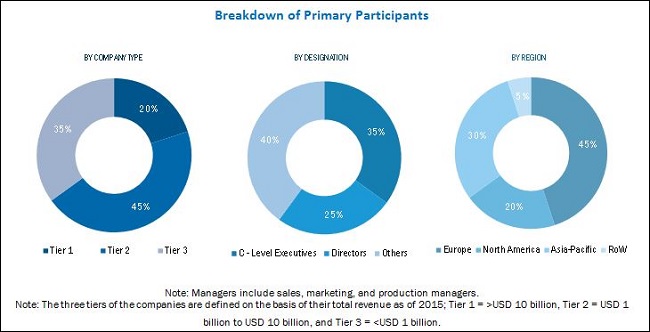
The research methodology used to estimate and forecast the in-vehicle networking market begins with capturing data on key vendor revenues through secondary research. Some of the secondary sources include associations such as Organisation Internationale des Constructeurs d'Automobiles (OCIA), International Council on Clean Transportation, and International Organization of Motor Vehicle Manufacturers, among others. The vendor offerings have also been taken into consideration to determine the market segmentation. The bottom-up procedure has been employed to arrive at the overall market size of the global market from the revenue of the key players in the market. After arriving at the overall market size, the total market has been split into several segments and subsegments, which have then been verified through primary research by conducting extensive interviews with key people such as CEOs, VPs, directors, and executives. The data triangulation and market breakdown procedures have been employed to complete the overall market engineering process and arrive at the exact statistics for all segments and subsegments. The breakdown of profiles of the primary respondents has been depicted in the figure below:
To know about the assumptions considered for the study, download the pdf brochure
The in-vehicle networking ecosystem includes raw material suppliers; semiconductor manufacturers such as NXP Semiconductor NV (Netherlands), Infineon Technologies AG (Germany), Texas Instruments, Inc. (U.S.), Robert Bosch GmbH (Germany), Xilinx, Inc. (U.S.), STMicroelectronics NV (Switzerland), ON Semiconductor Corp. (U.S.), Atmel Corporation (U.S.), Microchip Technology Inc. (U.S.), Elmos Semiconductor AG (Germany), and Melexis Semiconductors (Belgium); system integrators; automobile manufacturers; and end users.
Key Target Audience:
- Raw material suppliers
- Semiconductor component and device manufacturers
- Original equipment manufacturers (OEMs)—white label manufacturing for others in bulk volume
- Component and device suppliers and distributors
- Automotive control system integrators
- Automobile manufacturers
- Software, services, and technology providers
- Standardization and testing firms
- Government bodies such as regulating authorities and policy makers
- Associations, organizations, forums, and alliances related to semiconductor and automotive industries, research institutes and organizations
- Market research and consulting firms
Scope of the Report:
The in-vehicle networking market has been covered in detail in this report. To provide a holistic picture, the current market demand and forecasts have also been included in the report. The market has been segmented as follows:
By Vehicle Type:
- Passenger Cars
- LCVs
- HCVs
- AGVs
By Application:
- Powertrain
- Safety
- Body Electronics
- Chassis
- Infotainment
By Connectivity Standards:
- CAN
- LIN
- FlexRay
- RF
- Ethernet
- MOST
By Geography:
- North America
- Europe
- APAC
- RoW
Available Customizations:
With the given market data, MarketsandMarkets offers customizations according to the company’s specific needs. The following customization options are available for the report:
Application Analysis:
- Market numbers for various sub-segments of application can be given in the customization.
Company Information:
- Detailed analysis and profiling of additional market players













Growth opportunities and latent adjacency in In-Vehicle Networking Market