System Basis Chip Market by Vehicle Type (Passenger Car, Light and Heavy Commercial Vehicle, Automated Guided Vehicle), Application (Powertrain, Safety, Chassis, Body Electronics, Telematics & Infotainment), and Geography - Global Forecast to 2035


System Basis Chip Market Summary
The System Basis Chip Market is gaining importance as automotive electronics architectures become more connected, software-defined, and safety-oriented. The global System Basis Chip Market is estimated at approximately USD 1–2 billion in 2025 and is projected to reach USD 3–5 billion by 2035, registering a CAGR of 8%–10% during the forecast period. System basis chips integrate essential functions such as power management, communication interfaces, watchdog functions, voltage regulation, and system monitoring into compact semiconductor solutions, making them critical for modern electronic control units (ECUs). Growth is being driven by the increasing adoption of advanced driver-assistance systems (ADAS), electric vehicles (EVs), connected vehicles, zonal architectures, and automated driving technologies. AI-enabled vehicle functions are increasing computational and communication requirements, while IoT connectivity and automotive automation are expanding the number of electronic systems requiring reliable power and communication management. Digital transformation across automotive manufacturing is also encouraging semiconductor suppliers to develop more integrated, energy-efficient, and software-compatible system basis chip platforms.
Key Market Trends & Insights
The System Basis Chip Market is experiencing a structural shift from conventional vehicle electronics toward highly integrated automotive semiconductor architectures. One of the strongest trends is the consolidation of multiple functions into a single chip. By combining power management, CAN and LIN communication, diagnostics, watchdog functionality, and other support features, system basis chips help automotive manufacturers reduce component count, PCB space, wiring complexity, and overall system cost.
North America is expected to remain a leading regional market because of its strong automotive semiconductor ecosystem, high adoption of connected vehicles, increasing investment in autonomous driving, and presence of major semiconductor technology companies. Asia Pacific is projected to register the fastest growth as China, Japan, South Korea, and other manufacturing hubs expand EV production, intelligent vehicle development, and automotive electronics manufacturing.
The automotive sector remains the dominant application area because system basis chips are closely associated with ECUs, body electronics, powertrain systems, chassis electronics, ADAS, and vehicle communication networks. The transition toward software-defined vehicles is further increasing demand for sophisticated power and communication management.
Another important trend is the integration of system basis chips with increasingly complex automotive networks. CAN FD, LIN, Ethernet, and emerging zonal architectures are changing communication requirements. Manufacturers are consequently developing SBCs capable of supporting multiple communication interfaces while maintaining high functional safety, electromagnetic compatibility, low quiescent current, and robust diagnostics.
AI is also influencing the market indirectly. Although SBCs do not generally perform the high-level AI computation undertaken by GPUs, NPUs, or automotive processors, AI-enabled ECUs require dependable power sequencing, monitoring, communication, and fault management. As the number of intelligent vehicle functions increases, the supporting semiconductor infrastructure becomes increasingly important.
Market Size & Forecast
- Base year market size: USD 1–2 billion in 2025
- Forecast value by 2035: USD 3–5 billion by 2035
- Expected CAGR: 8%–10% during 2025–2035
- Growth outlook: Rising EV production, connected vehicles, ADAS deployment, zonal architectures, automotive Ethernet adoption, and increasing ECU complexity are expected to support market expansion.
The System Basis Chip Market is expected to maintain steady long-term growth rather than experience purely cyclical semiconductor demand. Automotive OEMs are increasingly emphasizing electronics reliability, functional safety, power efficiency, and integration. These requirements are creating opportunities for SBC suppliers to offer differentiated solutions designed for specific vehicle domains and architectures.
System Basis Chip Market Top 10 key takeaway
- The System Basis Chip Market is primarily driven by automotive electronics integration.
- The market is estimated at USD 1–2 billion in 2025.
- The market could reach USD 3–5 billion by 2035.
- Increasing EV production is creating new opportunities for SBC manufacturers.
- CAN and LIN communication remain important interfaces in automotive applications.
- ADAS and automated driving systems are increasing demand for reliable ECU support electronics.
- Zonal vehicle architectures are encouraging higher levels of semiconductor integration.
- AI-enabled automotive systems are increasing requirements for dependable power and communication infrastructure.
- Asia Pacific is expected to record the fastest market growth during the forecast period.
- Major semiconductor companies are focusing on functional safety, low power consumption, diagnostics, and multi-interface SBC solutions.
Product Insights
The automotive system basis chip segment represents the core of the System Basis Chip Market because SBCs are extensively deployed to support electronic control units and communication networks throughout vehicles. These chips typically combine several support functions, including voltage regulation, communication transceivers, watchdog timers, reset functionality, wake-up mechanisms, diagnostics, and protection features. Integrating these functions allows vehicle manufacturers and Tier 1 suppliers to simplify ECU design while improving reliability and reducing board-level complexity.
Demand for multi-functional SBCs is increasing as vehicles incorporate more ECUs and distributed electronic systems. Conventional vehicles already use SBCs across body control modules, gateway systems, lighting controllers, instrument clusters, and powertrain-related electronics. Modern vehicles add increasingly sophisticated ADAS, infotainment, connectivity, battery-management, and chassis functions, creating additional opportunities.
Low-power SBCs are becoming particularly important for connected vehicles. Vehicle systems may need to remain partially active even when the vehicle is parked to support security, remote access, telematics, keyless entry, and other connected functions. SBCs capable of efficient sleep, standby, and wake-up operation can help minimize battery drain.
Another emerging product direction involves SBCs designed specifically for electric and software-defined vehicles. These products emphasize high integration, flexible communication interfaces, functional safety, advanced diagnostics, and compatibility with centralized or zonal vehicle architectures. Future SBC products are expected to increasingly support automotive Ethernet alongside established CAN and LIN technologies.
Technology / Component Insights
Technology development is central to the evolution of the System Basis Chip Market. Modern SBCs increasingly integrate power management and communication capabilities while incorporating advanced diagnostic and protection functions. Voltage regulators, CAN transceivers, LIN transceivers, watchdog circuits, wake-up logic, reset controllers, and monitoring functions form the principal technological building blocks.
CAN and LIN remain highly important because they are widely used for communication between automotive ECUs. However, the transition toward centralized and zonal vehicle architectures is creating demand for higher-bandwidth interfaces and stronger networking capabilities. Automotive Ethernet is becoming increasingly relevant for high-data-rate applications, particularly where ADAS, automated driving, camera systems, and centralized computing are involved.
AI and automation are influencing SBC technology through the broader evolution of vehicle architectures. AI-based perception and decision-making systems require stable and reliable supporting electronics. SBCs provide critical power sequencing, monitoring, and communication functions that help ensure the availability of intelligent ECUs.
IoT connectivity is another important influence. Connected vehicles increasingly function as mobile IoT platforms, continuously communicating with cloud services, infrastructure, smartphones, and other vehicles. SBCs support the communication and power infrastructure necessary for these connected functions.
Future innovation is likely to emphasize higher integration, lower power consumption, stronger cybersecurity support, enhanced diagnostics, and functional safety compliance. Semiconductor manufacturers are also expected to optimize SBCs for software-defined vehicles, where centralized computing platforms communicate with numerous zonal controllers.
Application Insights
Automotive electronics represents the leading application area for the System Basis Chip Market. SBCs are used across body electronics, chassis systems, powertrain electronics, gateways, lighting systems, instrument clusters, telematics, and other vehicle subsystems. Their ability to combine multiple support functions makes them suitable for applications where reliability, compactness, and power efficiency are essential.
The increasing deployment of ADAS is expanding the addressable opportunity. Modern vehicles use cameras, radar, ultrasonic sensors, processors, communication modules, and multiple control units to support functions such as adaptive cruise control, lane-keeping assistance, automated parking, and collision mitigation. These systems require dependable power and communication management, creating indirect demand for SBCs.
EVs represent another important growth opportunity. Although EVs have different powertrain architectures from internal-combustion vehicles, they often contain more sophisticated electronic systems. Battery management, charging, thermal management, body electronics, connectivity, and power electronics increase semiconductor content per vehicle.
The future application landscape will increasingly include software-defined vehicles, autonomous mobility platforms, intelligent commercial vehicles, connected fleets, and advanced vehicle gateways. SBC suppliers that can combine multiple communication standards with functional safety and low-power operation are positioned to benefit from these trends.
Regional Insights
North America is expected to maintain a leading position in the System Basis Chip Market, supported by advanced automotive electronics adoption, strong semiconductor capabilities, and continued investments in connected and autonomous vehicle technologies. The US automotive industry is increasingly integrating ADAS, EV platforms, high-performance computing, vehicle connectivity, and advanced networking architectures. These developments create demand for reliable power-management and communication components.
Europe remains a significant market because of its sophisticated automotive manufacturing base and strong emphasis on vehicle safety, emissions reduction, electrification, and advanced electronic architectures. Automotive OEMs and Tier 1 suppliers in Germany, France, and other European countries are investing heavily in EVs, intelligent mobility, and software-defined vehicle platforms.
Asia Pacific is projected to be the fastest-growing region. China has become a major EV and automotive electronics manufacturing center, while Japan and South Korea have strong semiconductor and automotive ecosystems. Rapid vehicle electrification, increasing local semiconductor development, and growing adoption of connected and intelligent vehicles will support regional demand.
- North America: Strong demand from connected vehicles, ADAS, EVs, and autonomous driving platforms.
- Europe: Growth supported by vehicle electrification, safety requirements, and advanced automotive engineering.
- Asia Pacific: Expected to register the fastest growth through EV manufacturing and electronics localization.
- China: Increasing domestic automotive semiconductor capabilities are supporting SBC adoption.
- Japan: Established automotive manufacturers and electronics companies support steady SBC demand.
Country-Specific Market Trends
China is expected to record strong growth in the System Basis Chip Market as the country's EV manufacturers increasingly incorporate sophisticated electronic architectures. Government support for new-energy vehicles, domestic semiconductor development, intelligent transportation, and automotive technology localization is encouraging investment throughout the automotive semiconductor supply chain. Japan is expected to maintain steady demand due to its established automotive industry and emphasis on reliability, robotics, automation, and advanced vehicle technologies.
In North America, the United States is expected to remain the largest country-level market. Growing EV production, autonomous vehicle development, connected mobility initiatives, and investment in domestic semiconductor manufacturing are creating a favorable environment. Canada is benefiting from automotive manufacturing investments and EV-related supply-chain development, while Mexico is becoming increasingly important as an automotive manufacturing hub serving North American OEMs.
Germany represents the leading European opportunity due to its large automotive industry and investments in EVs, vehicle software, and advanced electronics. France is also witnessing increasing adoption as automotive manufacturers expand electrified and connected vehicle platforms. Across Europe, regulatory emphasis on safety, emissions, and vehicle intelligence will continue supporting advanced automotive semiconductor adoption.
Country-level growth is expected to vary, with China and Mexico potentially recording higher growth rates as EV manufacturing and automotive production capacity expand.
- China: Strong EV production and automotive semiconductor localization support rapid growth.
- Japan: Demand is supported by automotive electronics expertise and high reliability requirements.
- United States: Autonomous driving, EVs, and connected vehicles are major demand drivers.
- Canada and Mexico: Automotive manufacturing expansion is supporting semiconductor demand.
- Germany and France: Electrification and software-defined vehicle development are strengthening SBC adoption.
Key System Basis Chip Market Company Insights
The competitive landscape includes major automotive semiconductor companies such as NXP Semiconductors, Infineon Technologies, STMicroelectronics, Texas Instruments, Renesas Electronics, onsemi, and Microchip Technology. These companies are focusing on integrating communication interfaces, power management, diagnostics, protection, and functional safety features into increasingly compact SBC solutions.
NXP emphasizes automotive networking and system-level semiconductor platforms, while Infineon focuses strongly on automotive power, connectivity, functional safety, and electrification. STMicroelectronics is developing automotive microcontrollers, power-management solutions, and connectivity technologies that complement SBC applications. Renesas is strengthening its automotive semiconductor portfolio around MCUs, power management, networking, and zonal architectures.
Texas Instruments is focused on power management and automotive connectivity, while Microchip provides automotive networking and embedded-control solutions. onsemi is strengthening its position in automotive electrification, sensing, and power technologies. Competition is increasingly centered on integration, reliability, low power, cybersecurity, diagnostics, and support for next-generation vehicle architectures.
- NXP Semiconductors: Focuses on automotive networking, SBC integration, and functional safety.
- Infineon Technologies: Emphasizes electrification, power management, and connected automotive systems.
- STMicroelectronics: Combines automotive MCUs, connectivity, and power technologies.
- Renesas Electronics: Targets zonal architectures and integrated automotive semiconductor platforms.
- Texas Instruments: Concentrates on efficient power management and automotive connectivity.
Recent Developments
Automotive semiconductor manufacturers are increasingly introducing system basis chip platforms with expanded communication capabilities, improved low-power performance, and enhanced diagnostic functionality. Product development is increasingly aligned with zonal architectures and software-defined vehicles.
Another major development is the integration of CAN FD, LIN, and other communication capabilities with sophisticated power-management functions. This approach allows automotive OEMs to reduce component count and simplify ECU designs.
Partnerships between semiconductor manufacturers, automotive OEMs, and Tier 1 suppliers are also increasing as companies seek to accelerate the deployment of EV, ADAS, and centralized computing architectures. These collaborations are expected to influence SBC roadmaps toward higher integration, functional safety, and advanced vehicle networking.
Market Segmentation
The System Basis Chip Market can be segmented by product, technology or component, application, and region. By product, the market includes SBCs designed for different automotive electronic architectures and communication requirements, with multi-functional automotive SBCs representing a major category. By technology and component, the market encompasses power-management circuits, CAN and LIN transceivers, watchdog functions, voltage regulators, diagnostics, wake-up systems, protection circuits, and increasingly Ethernet-oriented communication technologies.
By application, automotive body electronics, powertrain systems, chassis and safety systems, gateways, lighting, telematics, instrument clusters, ADAS, and EV platforms represent key segments. As vehicle electronics become more centralized, SBCs are also being deployed in zonal controllers and domain-oriented architectures.
By region, the market covers North America, Europe, Asia Pacific, and other regions. North America is expected to maintain a leading position, while Asia Pacific is projected to experience the fastest growth due to EV manufacturing, automotive electronics expansion, and semiconductor ecosystem development.
- By Product: Automotive SBCs with integrated power and communication functions represent the core segment.
- By Technology: CAN, LIN, power management, diagnostics, and functional safety technologies remain important.
- By Application: Body electronics, ADAS, EVs, gateways, and vehicle networking are key applications.
- By Vehicle Type: Passenger vehicles are expected to account for a substantial share, alongside growing commercial vehicle demand.
- By Region: North America leads, while Asia Pacific is expected to grow fastest.
Conclusion
The System Basis Chip Market is entering an important phase of development as automotive manufacturers transition toward connected, electrified, automated, and software-defined vehicles. The market, estimated at USD 1–2 billion in 2025, is projected to reach USD 3–5 billion by 2035, representing a CAGR of 8%–10%. Although system basis chips are relatively small components within a vehicle's overall semiconductor architecture, their importance is increasing because they provide essential power, communication, monitoring, and safety functions.
AI will continue to influence the market by increasing the complexity and processing requirements of automotive systems. IoT connectivity, automation, EV adoption, ADAS, and zonal architectures will further expand the need for efficient and reliable SBC solutions. Semiconductor suppliers that successfully combine multiple functions, low power consumption, advanced diagnostics, cybersecurity, and functional safety will be well positioned to capture emerging opportunities.
For automotive OEMs and Tier 1 suppliers, SBC selection is becoming strategically important because these devices can influence ECU reliability, system complexity, power consumption, and network performance. Through 2035, the System Basis Chip Market is expected to benefit from increasing semiconductor content per vehicle and the continuing transformation of automotive electronics.
FAQs
1. What is the market size of the System Basis Chip Market?
The global System Basis Chip Market is estimated at approximately USD 1–2 billion in 2025 and is projected to reach USD 3–5 billion by 2035 as automotive electronics, EVs, connected vehicles, and advanced ECU architectures expand.
2. What is the growth rate of the System Basis Chip Market?
The System Basis Chip Market is expected to grow at a CAGR of 8%–10% from 2025 to 2035, supported by increasing vehicle electrification, ADAS adoption, connected mobility, and electronic system integration.
3. What are the key drivers of the System Basis Chip Market?
Key drivers include EV adoption, increasing ECU complexity, ADAS deployment, software-defined vehicles, zonal architectures, automotive networking, IoT connectivity, low-power requirements, and growing demand for functional safety and reliable power management.
4. Which region is expected to lead the System Basis Chip Market?
North America is expected to remain a leading regional market because of its advanced automotive electronics ecosystem, EV investments, connected vehicle adoption, and autonomous driving development. Asia Pacific is expected to register the fastest growth through 2035.
5. Who are the key companies in the System Basis Chip Market?
Major companies operating in the System Basis Chip Market include NXP Semiconductors, Infineon Technologies, STMicroelectronics, Renesas Electronics, Texas Instruments, onsemi, and Microchip Technology. These companies are focusing on integrated automotive networking, power management, diagnostics, functional safety, and next-generation vehicle architectures.
To speak to our analyst for a discussion on the above findings, click Speak to Analyst
 Exclusive indicates content/data unique to MarketsandMarkets and not available with any competitors.
Table of Contents
1 Introduction (Page No. - 15)
1.1 Objectives of the Study
1.2 Market Definition
1.3 Scope of the Study
1.3.1 Markets Covered
1.3.2 Years Considered for the Study
1.4 Currency & Pricing
1.5 Package Size
1.6 Limitations
1.7 Stakeholders
2 Research Methodology (Page No. - 19)
2.1 Research Data
2.1.1 Secondary Data
2.1.1.1 Key Data From Secondary Sources
2.1.2 Primary Data
2.1.2.1 Key Data From Primary Sources
2.1.2.2 Key Industry Insights
2.1.2.3 Breakdown of Primaries: By Company Type, Designation, and Region
2.2 Market Size Estimation
2.2.1 Bottom-Up Approach
2.2.2 Top-Down Approach
2.3 Market Breakdown and Data Triangulation
2.4 Research Assumptions
2.4.1 Assumptions
3 Executive Summary (Page No. - 28)
4 Premium Insights (Page No. - 32)
4.1 Attractive Market Opportunities in the System Basis Chip Market
4.2 Market in North America
4.3 Global System Basis Chip Market, in Terms of Value (USD Million) and Volume (Million Units), By Application
4.4 Market in North America to Grow at the Highest CAGR During the Forecast Period
4.5 Passenger Cars Estimated to Hold the Largest Share of the Market During the Forecast Period
5 Market Overview (Page No. - 36)
5.1 Introduction
5.2 Segmentation of the System Basis Chip Market
5.2.1 Market, By Vehicle Type
5.2.2 Market, By Application
5.2.3 Market, By Geography
5.3 Market Evolution of Automotive Electronics
5.4 Market Dynamics
5.4.1 Drivers
5.4.1.1 Rising Vehicle Production Worldwide
5.4.1.2 Increase in the Use of Electronics in Vehicles
5.4.1.3 Growing Demand for Advanced Safety, Convenience, and Comfort Systems
5.4.1.4 Increasing Focus on Reducing Co2 Emission From Vehicles
5.4.2 Restraints
5.4.2.1 Cost Concerns of Small-And Medium-End Car Manufacturers Restricting the Installation of New Features in the Vehicles
5.4.3 Opportunities
5.4.3.1 Growing Demand for Hybrid and Electric Vehicles
5.4.4 Challenges
5.4.4.1 Maintaining Balance Between Cost and Quality of the Product
5.4.4.2 Continuous Optimization of Component Size
5.4.5 Burning Issues
5.4.5.1 Continuous Depreciation of Oil Prices
5.4.6 Winning Imperatives
5.4.6.1 Emergence of New Concepts of Autonomous and Connected Cars
6 Industry Trends (Page No. - 49)
6.1 Introduction
6.2 Value Chain Analysis
6.3 Porter’s Five Forces Analysis
6.3.1 Intensity of Competitive Rivalry
6.3.2 Threat of Substitutes
6.3.3 Bargaining Power of Buyers
6.3.4 Bargaining Power of Suppliers
6.3.5 Threat of New Entrants
6.4 Communication Protocols for System Basis Chip
6.4.1 Controller Area Network (CAN)
6.4.1.1 CAN Transceivers
6.4.2 Local Interconnect Network (LIN)
6.4.2.1 LIN Transceivers
6.4.3 Peripheral Sensor Interface (PSI5)
6.4.4 Others (Flexray & Ethernet)
7 System Basis Chip Market, By Vehicle Type (Page No. - 59)
7.1 Introduction
7.2 Passenger Cars
7.3 Light Commercial Vehicles (LCVS)
7.4 Heavy Commercial Vehicles (HCVS)
7.5 Autonomous Vehicles
7.6 Automated Guided Vehicles (AGVS)
8 System Basis Chip Market, By Application (Page No. - 77)
8.1 Introduction
8.2 Powertrain
8.2.1 Engine Control Module
8.2.2 Hev/Ev Motor
8.2.3 Transmission
8.3 Safety
8.3.1 Airbags
8.3.2 Electronic Stability Control (ESC)
8.3.3 Adaptive Cruise Control (ACC)
8.3.4 Night Vision
8.3.5 Tire Pressure Monitoring System (TPMS)
8.3.6 Parking Assistance
8.4 Body Electronics
8.4.1 Body Control Modules (BCM)
8.4.2 Door Control Unit (DCU)
8.4.3 Led Lighting
8.4.4 Mirror & Window Control
8.4.5 Hvac System
8.5 Chassis
8.5.1 Brake Control Module
8.5.2 Steering Control Module
8.5.3 Suspension Control Module
8.5.4 Traction Control Module (TCS)
8.5.5 Vehicle Dynamics Management
8.6 Telematics and Infotainment
8.6.1 Dashboards
8.6.2 Navigation
8.6.3 Connectivity Devices
8.6.4 Audio-Video Systems
9 Geographic Analysis (Page No. - 91)
9.1 Introduction
9.2 North America
9.2.1 Increased Production of Suvs and Light Trucks in the Region is Expected to Drive the Market for System Basis Chips
9.2.2 U.S.
9.2.3 Mexico
9.2.4 Canada
9.2.5 Pest Analysis
9.2.5.1 Political Factors
9.2.5.2 Economic Factors
9.2.5.3 Social Factors
9.2.5.4 Technological Factors
9.3 Europe
9.3.1 Presence of Various Luxury Car Manufacturers in the Region is the Major Driver Behind the Growth of System Basis Chip Market
9.3.2 Germany
9.3.3 France
9.3.4 U.K.
9.3.5 Spain
9.3.6 Others
9.3.7 Pest Analysis
9.3.7.1 Political Factors
9.3.7.2 Economic Factors
9.3.7.3 Social Factors
9.3.7.4 Technological Factors
9.4 Asia-Pacific
9.4.1 APAC Holds the Largest Market Share in Terms of Vehicle Production
9.4.2 China
9.4.3 Japan
9.4.4 South Korea
9.4.5 India
9.4.6 Others
9.4.7 Pest Analysis
9.4.7.1 Political Factors
9.4.7.2 Economic Factors
9.4.7.3 Social Factors
9.4.7.4 Technological Factors
9.5 RoW
9.5.1 Brazil and Russia are the Largest Markets for System Basis Chip in the RoW Region
9.5.2 Brazil
9.5.3 Russia
9.5.4 Others
9.5.5 Pest Analysis
9.5.5.1 Political Factors
9.5.5.2 Economic Factors
9.5.5.3 Social Factors
9.5.5.4 Technological Factors
10 Competitive Landscape (Page No. - 122)
10.1 Overview
10.2 Market Ranking Analysis for the System Basis Chip Market, 2015
10.3 Competitive Situations and Trends
10.4 Recent Developments
10.4.1 New Product Launches
10.4.2 Agreements, Partnerships, and Collaborations
10.4.3 Mergers & Acquisitions
11 Company Profiles (Page No. - 128)
(Overview, Products and Services, Financials, Strategy & Development)*
11.1 Introduction
11.2 NXP Semiconductors N.V. (Also Featuring Freescale Semiconductor, Ltd. Products)
11.3 Infineon Technologies AG
11.4 Texas Instruments Incorporated
11.5 Robert Bosch GmbH
11.6 Stmicroelectronics N.V.
11.7 on Semiconductor Corp.
11.8 Atmel Corporation
11.9 Microchip Technology Inc.
11.10 Melexis NV
11.11 Elmos Semicondustor AG
*Details on Overview, Products and Services, Financials, Strategy & Development Might Not Be Captured in Case of Unlisted Companies.
12 Appendix (Page No. - 159)
12.1 Insights From Industry Experts
12.2 Discussion Guide
12.3 Knowledge Store: Marketsandmarkets’ Subscription Portal
12.4 Introducing RT: Real-Time Market Intelligence
12.5 Available Customization
12.6 Related Reports
List of Tables (68 Tables)
Table 1 Key Safety & Driver Assistant System Regulations
Table 2 Government Incentives for Electric Vehicles in Various Countries in the World
Table 3 Automakers Aiming to Launch Self Driving Vehicles
Table 4 Porter’s Five Forces Analysis: Intensity of Competitive Rivalry Had the Maximum Impact on the Overall Market in 2015
Table 5 System Basis Chip Market, By Vehicle Type, 2014–2022 (USD Million)
Table 6 Market, By Vehicle Type, 2014–2022 (Million Units)
Table 7 Market for Passenger Cars, By Region, 2014–2022 (USD Million)
Table 8 Market for Passenger Cars, By Region, 2014–2022 (Million Units)
Table 9 Market for Passenger Cars, By Application, 2014–2022 (USD Million)
Table 10 Market for Passenger Cars in North America, By Country, 2014–2022 (USD Million)
Table 11 Market for Passenger Cars in Europe, By Country, 2014–2022 (USD Million)
Table 12 Market for Passenger Cars in Asia-Pacific, By Country, 2014–2022 (USD Million)
Table 13 Market for LCVS, By Region, 2014–2022 (USD Million)
Table 14 Market for LCVS, By Region, 2014–2022 (Million Units)
Table 15 Market for LCVS, By Application, 2014–2022 (USD Million)
Table 16 Market for LCVS in North America, By Country, 2014–2022 (USD Million)
Table 17 Market for LCVS in Europe, By Country, 2014–2022 (USD Million)
Table 18 Market for LCVS in Asia-Pacific, By Country, 2014–2022 (USD Million)
Table 19 Market for HCVS, By Region, 2014–2022 (USD Million)
Table 20 Market for HCVS, By Region, 2014–2022 (Million Units)
Table 21 Market for HCVS, By Application, 2014–2022 (USD Million)
Table 22 Market for HCVS in North America, By Country, 2014–2022 (USD Million)
Table 23 Market for HCVS in Europe, By Country, 2014–2022 (USD Million)
Table 24 Market for HCVS in Asia-Pacific, By Country, 2014–2022 (USD Million)
Table 25 Market for AGVS, By Region, 2014–2022 (USD Million)
Table 26 Market for AGVS, By Region, 2014–2022 (Million Units)
Table 27 Market for AGVS, By Application, 2014–2022 (USD Million)
Table 28 Market, By Application, 2014–2022 (USD Million)
Table 29 Market, By Application, 2014–2022 (Million Units)
Table 30 Market for Powertrain Application, By Vehicle Type, 2014–2022 (USD Million)
Table 31 Market for Safety Application, By Vehicle Type, 2014–2022 (USD Million)
Table 32 Market for Body Electronics Application, By Vehicle Type, 2014–2022 (USD Million)
Table 33 Market for Chassis Application, By Vehicle Type, 2014–2022 (USD Million)
Table 34 Market for Telematics & Infotainment Application, By Vehicle Type, 2014–2022 (USD Million)
Table 35 Market, By Region, 2014–2022 (USD Million)
Table 36 Market, By Region, 2014–2022 (Million Units)
Table 37 Market in North America, By Country, 2014–2022 (USD Million)
Table 38 Market in North America, By Vehicle Type, 2014–2022 (USD Million)
Table 39 Market in North America, By Vehicle Type, 2014–2022 (Million Units)
Table 40 Market in U.S., By Vehicle Type, 2014–2022 (USD Million)
Table 41 Market in Mexico, By Vehicle Type, 2014–2022 (USD Million)
Table 42 Market in Canada, By Vehicle Type, 2014–2022 (USD Million)
Table 43 Market in Europe, By Country, 2014–2022 (USD Million)
Table 44 Market in Europe, By Vehicle Type, 2014–2022 (USD Million)
Table 45 Market in Europe, By Vehicle Type, 2014–2022 (Million Units)
Table 46 Market Size in Germany, By Vehicle Type, 2014–2022 (USD Million)
Table 47 Market Size in France, By Vehicle Type, 2014–2022 (USD Million)
Table 48 Market Size in U.K., By Vehicle Type, 2014–2022 (USD Million)
Table 49 Market Size in Spain, By Vehicle Type, 2014–2022 (USD Million)
Table 50 Market Size in Other European Countries, By Vehicle Type, 2014–2022 (USD Million)
Table 51 Market in Asia-Pacific, By Country, 2014–2022 (USD Million)
Table 52 Market Size in Asia-Pacific, By Vehicle Type, 2014–2022 (USD Million)
Table 53 Market in Asia-Pacific, By Vehicle Type, 2014–2022 (Million Units)
Table 54 Market in China, By Vehicle Type, 2014–2022 (USD Million)
Table 55 Market in Japan, By Vehicle Type, 2014–2022 (USD Million)
Table 56 Market in South Korea, By Vehicle Type, 2014–2022 (USD Million)
Table 57 Market in India, By Vehicle Type, 2014–2022 (USD Million)
Table 58 Market Size in Other Asia-Pacific Countries, By Vehicle Type, 2014–2022 (USD Million)
Table 59 Market in RoW, By Region, 2014–2022 (USD Million)
Table 60 Market in RoW, By Vehicle Type, 2014–2022 (USD Million)
Table 61 Market in RoW, By Vehicle Type, 2014–2022 (Million Units)
Table 62 Market in Brazil, By Vehicle Type, 2014–2022 (USD Million)
Table 63 Market in Russia, By Vehicle Type, 2014–2022 (USD Million)
Table 64 Market Size in Other Rest of the World Countries, By Vehicle Type, 2014–2022 (USD Million)
Table 65 Market Ranking of the Top 5 Players in the Market, 2015
Table 66 New Product Launches, 2013–2015
Table 67 Agreements, Partnerships, Collaborations & Joint Ventures, 2013–2014
Table 68 Mergers & Acquisitions, 2013–2015
List of Figures (75 Figures)
Figure 1 System Basis Chip Market: Research Design
Figure 2 Process Flow of Market Size Estimation
Figure 3 Market Size Estimation Methodology: Bottom-Up Approach
Figure 4 Market Size Estimation Methodology: Top-Down Approach
Figure 5 Data Triangulation
Figure 6 Market, in Terms of Value and Volume, 2014–2022
Figure 7 Passenger Cars Expected to Hold the Largest Share of the Overall Market During the Forecast Period
Figure 8 Market for Body Electronics Expected to Grow at the Highest Rate During the Forecast Period
Figure 9 Automotive Industry A Major Consumer of System Basis Chips in APAC
Figure 10 Increasing Use of Electronics in Vehicles to Create Huge Opportunities for the Market
Figure 11 LCVS Held the Largest Share of the SBC Market in North America, By Vehicle Type, in 2015
Figure 12 Telematics & Infotainment Accounted for the Largest Share of the Overall Market in 2015
Figure 13 China Held the Largest Share of the Overall Market in 2015
Figure 14 HCVS to Grow at the Highest Rate in the Market During the Forecast Period
Figure 15 Market, By Geography
Figure 16 Technology Road Map for Automotive Electronics
Figure 17 Increase in Vehicle Production Worldwide Drives the Market for System Basis Chip
Figure 18 Global Vehicle Production During 2013–2020 (Thousand Units)
Figure 19 Vehicle Electrification Market, By Key Technology, 2014 (Thousand Units)
Figure 20 Global Electric Vehicles Production, 2013–2020 (Units)
Figure 21 Global Crude Oil Prices, 2005–2015 (USD/Barrel)
Figure 22 Value Chain Analysis (2015): Market
Figure 23 Porter’s Five Forces Analysis (2015)
Figure 24 Market: Porter’s Five Forces Analysis, 2015
Figure 25 High Impact of Intensity of Competitive Rivalry on the Market
Figure 26 Low Impact of Threat of Substitutes on the Market
Figure 27 Medium Impact of Bargaining Power of Buyers on the Market
Figure 28 Low Impact of Bargaining Power of Suppliers on the Market
Figure 29 Medium Impact of Threat of New Entrants on the Market
Figure 30 Communication Protocols
Figure 31 Market, By Vehicle Type
Figure 32 HCVS Expected to Grow at the Highest Rate in the Market During the Forecast Period
Figure 33 APAC Held the Largest Size of the Market for Passenger Car Segment in 2015
Figure 34 Market for Safety Application Expected to Grow at the Highest Rate Between 2016 and 2022
Figure 35 North America Expected to Dominate the Market for LCV Segment During the Forecast Period
Figure 36 Body Electronics Application Expected to Dominate the SBC Market for LCVS Segment Between 2016 and 2022
Figure 37 APAC Estimated to Dominate the Market for HCVS Segment in 2016
Figure 38 Body Electronics Application Expected to Dominate the SBC Market for HCV Segment in 2016
Figure 39 Market for Autonomous Vehicle, 2017–2022
Figure 40 Powertrain Application Estimated to Dominate the SBC Market for AGV Segment in 2016
Figure 41 Market, By Application
Figure 42 Market for Body Electronics Application Expected to Grow at the Highest Rate During the Forecast Period
Figure 43 Market for HCVS in Powertrain Application Expected to Grow at the Highest Rate Between 2016 and 2022
Figure 44 Passenger Car Expected to Hold the Largest Size of the Market for Safety Application Between 2016 and 2022
Figure 45 Passenger Car to Hold the Largest Size in the Market for Body Electronic Application During the Forecast Period
Figure 46 HCVS to Grow at the Highest Rate in the Market for Chassis Application During the Forecast Period
Figure 47 Passenger Cars to Hold the Largest Market for the Telematics & Infotainment Application During the Forecast Period
Figure 48 Market, By Geography
Figure 49 Market, Geographic Snapshot
Figure 50 North America: Market Snapshot
Figure 51 LCVS Expected to Hold the Largest Share of the Market in North America During the Forecast Period
Figure 52 Europe: Market Snapshot
Figure 53 System Basis Chip Shipment for HCVS in the European Region is Expected to Grow at the Highest Rate During the Forecast Period
Figure 54 Asia-Pacific: Market Snapshot
Figure 55 China to Hold the Largest Size of the Market During the Forecast Period
Figure 56 Brazil Held the Largest Share of the Market in RoW
Figure 57 Key Players Adopted New Product Launches as the Key Strategy Between 2013 and 2016
Figure 58 Market Evaluation Framework
Figure 59 Battle for Market Share: New Product Launches Was the Key Strategy
Figure 60 Geographic Revenue Mix of the Major Market Players
Figure 61 NXP Semiconductors N.V.: Company Snapshot
Figure 62 NXP Semiconductors N.V.: SWOT Analysis
Figure 63 Infineon Technologies AG: Company Snapshot
Figure 64 Infineon Technologies AG: SWOT Analysis
Figure 65 Texas Instruments Incorporated: Company Snapshot
Figure 66 Texas Instruments Incorporated: SWOT Analysis
Figure 67 Robert Bosch GmbH: Company Snapshot
Figure 68 Robert Bosch GmbH: SWOT Analysis
Figure 69 Stmicroelectronics N.V.: Company Snapshot
Figure 70 Stmicroelectronics N.V.: SWOT Analysis
Figure 71 on Semiconductor Corp.: Company Snapshot
Figure 72 Atmel Corporation: Company Snapshot
Figure 73 Microchip Technology Inc.: Company Snapshot
Figure 74 Melexis NV: Company Snapshot
Figure 75 Elmos Semiconductor AG: Company Snapshot
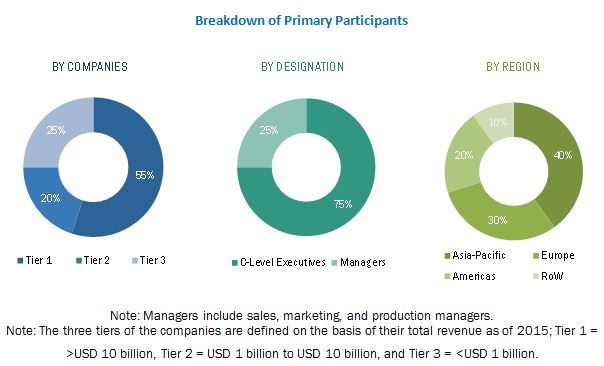
The research methodology used to estimate and forecast the system basis market begins with capturing data on key vendor revenues through secondary research. Some of the secondary sources include associations such as Organisation Internationale des Constructeurs d'Automobiles (OCIA), International Council on Clean Transportation, and International Organization of Motor Vehicle Manufacturers among others. The vendor offerings have also been taken into consideration to determine the market segmentation. The bottom-up procedure has been employed to arrive at the overall market size of the global system basis market from the revenue of the key players in the market. After arriving at the overall market size, the total market has been split into several segments and subsegments, which have then been verified through primary research by conducting extensive interviews with key people such as CEOs, VPs, directors, and executives. The data triangulation and market breakdown procedures have been employed to complete the overall market engineering process and arrive at the exact statistics for all segments and subsegments. The breakdown of profiles of the primary respondents is depicted in the below figure:
To know about the assumptions considered for the study, download the pdf brochure
The system basis chip ecosystem includes raw material suppliers; semiconductor manufacturers such as NXP Semiconductor NV (Netherlands), Infineon Technologies AG (Germany), Texas Instruments, Inc. (U.S.), Robert Bosch GmbH (Germany), STMicroelectronics NV (Switzerland), ON Semiconductor Corp. (U.S.), Atmel Corporation (U.S.), Microchip Technology Inc. (U.S.), Elmos Semiconductor AG (Germany), and Melexis Semiconductors (Belgium); system integrators; automobile manufacturers; and end users.
Key Target Audience:
- Raw material suppliers
- Semiconductor component and device manufacturers
- Original equipment manufacturers (OEMs) white label manufacturing for others in bulk volume
- Component and device suppliers and distributors
- Automotive control system integrators
- Automobile manufacturers
- Software, services, and technology providers
- Standardization and testing firms
- Government bodies such as regulating authorities and policy makers
- Associations, organizations, forums, and alliances related to semiconductor and automotive industries Research institutes and organizations
- Market research and consulting firms
Scope of the Report:
The system basis chip market has been covered in detail in this report. To provide a holistic picture, the current market demand and forecasts have also been included in the report. The market is segmented as follows:
By Vehicle Type:
- Passenger Cars
- LCVs
- HCVs
- AGVs
- Autonomous Vehicles
By Application:
- Powertrain
- Safety
- Body Electronics
- Chassis
- Telematics & Infotainment
By Geography:
- North America
- Europe
- APAC
- RoW
Available Customizations:
With the given market data, MarketsandMarkets offers customizations according to the company’s specific needs. The following customization options are available for the report:
Application Analysis:
- Market numbers for various sub-segments of application can be given in the customization.
Company Information:
- Detailed analysis and profiling of additional market players













Growth opportunities and latent adjacency in System Basis Chip Market