Infrared Emitter & Receiver Market by Spectral Range (Near IR, SWIR, MWIR, LWIR, and FAR IR), Vertical (Automotive, Industrial, Military & Aerospace, & Others) - Global Forecast to 2035


Infrared Emitter & Receiver Market Summary
The global Infrared Emitter & Receiver Market is experiencing strong growth as infrared technologies become increasingly embedded in consumer electronics, industrial automation, automotive sensing, security systems, healthcare devices, robotics, and smart-home applications. The market is estimated at approximately USD 1.5 - 2.0 billion in 2025 and is projected to reach around USD 5.0 - 6.0 billion by 2035, registering a CAGR of approximately 9% - 10% during the forecast period.
Infrared emitters and receivers are fundamental components for proximity detection, remote controls, optical communication, motion detection, biometric authentication, thermal sensing, industrial measurement, and machine vision. The rapid deployment of AI, IoT, automation, edge computing, digital transformation, and connected devices is expanding the number of applications requiring compact and reliable infrared sensing. AI-enabled systems increasingly depend on accurate environmental and object data, while IoT devices require low-power sensors capable of operating continuously. This combination is creating new opportunities for infrared LEDs, photodiodes, phototransistors, receivers, and integrated IR sensing modules.
Automotive electronics is another important growth engine. Infrared components are increasingly used in driver monitoring, occupant detection, proximity sensing, night vision, gesture recognition, and advanced safety systems. At the same time, industrial automation and robotics are creating demand for IR-based object detection and position sensing. These trends are encouraging manufacturers to develop higher-efficiency emitters, more sensitive receivers, smaller packages, wider wavelength options, and intelligent sensor modules.
Key Market Trends & Insights
The North American market remains a leading revenue-generating region, supported by advanced automotive electronics, industrial automation, defense, healthcare technology, and strong investment in AI-enabled sensing. The presence of major semiconductor and technology companies also supports continuous innovation in infrared components.
Asia Pacific is expected to be the fastest-growing regional market. China, Japan, South Korea, Taiwan, and India have extensive electronics manufacturing ecosystems and rapidly expanding applications in smartphones, consumer electronics, robotics, smart factories, automotive electronics, and IoT. The region's electronics production base creates significant volume opportunities for infrared component manufacturers.
The infrared emitter segment remains a major product category because IR LEDs and high-power emitters are widely deployed in remote controls, proximity sensors, optical sensing, security equipment, and automotive applications. However, advanced receivers and integrated sensing modules are gaining importance as applications become increasingly data-driven.
A major technology trend is the movement toward miniaturized, low-power, high-sensitivity IR components. Manufacturers are developing devices with improved radiant intensity, detection sensitivity, response time, and package efficiency.
AI and automation are also transforming infrared sensing. AI algorithms can interpret infrared signals for object detection, gesture recognition, anomaly detection, occupancy monitoring, and predictive maintenance. As sensors increasingly operate at the edge, manufacturers are combining IR components with signal-processing capabilities to reduce latency and improve autonomous decision-making.
Market Size & Forecast
-
Base year market size: USD 1.5 - 2.0 billion in 2025
-
Forecast value by 2035: USD 5.0 - 6.0 billion
-
CAGR: 9% - 10% during 2026–2035
-
Fastest-growing region: Asia Pacific
-
Leading regional market: North America
-
Key growth factors: IoT adoption, automation, automotive sensing, consumer electronics, AI-enabled devices, security systems, robotics, and industrial digitalization.
-
Technology opportunity: Miniaturized IR components, intelligent sensing modules, advanced photodetectors, and AI-enabled infrared analytics.
Infrared Emitter & Receiver Market Top 10 key takeaway
-
The global Infrared Emitter & Receiver Market is projected to approach USD 6 billion by 2035.
-
The market is expected to expand at approximately 10% CAGR through the forecast period.
-
North America remains a major market due to advanced technology adoption and industrial applications.
-
Asia Pacific is expected to register the fastest growth during the forecast period.
-
Infrared emitters remain widely used in proximity sensing, remote controls, security, and automotive electronics.
-
Advanced receivers and photodetectors are gaining importance in intelligent sensing applications.
-
AI and machine learning are increasing the value of infrared data in automated systems.
-
Automotive driver monitoring and safety systems represent high-growth application opportunities.
-
IoT and industrial automation are increasing demand for compact, low-power infrared components.
-
Major companies are focusing on higher efficiency, miniaturization, wavelength diversification, and application-specific IR solutions.
Product Insights
The Infrared Emitter & Receiver Market can broadly be divided into infrared emitters, infrared receivers, and integrated infrared sensing solutions. Infrared emitters, particularly infrared LEDs, represent a substantial portion of the market because they are inexpensive, compact, reliable, and compatible with a wide variety of electronic systems. They generate infrared radiation used for transmitting signals or illuminating objects for sensing and detection.
Infrared receivers include photodiodes, phototransistors, receiver modules, and other photodetection components. Their ability to detect infrared radiation makes them critical for remote controls, optical communication, proximity sensing, industrial equipment, and security applications. Vishay describes its IR receiver portfolio as covering remote-control systems as well as transmissive and reflective sensing applications, with a broad selection of surface-mount and through-hole packages.
The market is also moving toward integrated IR sensor modules that combine emitters, receivers, signal conditioning, filtering, and communication interfaces. Such integration reduces component count and simplifies system design. Emerging product categories include high-power IR LEDs, automotive-grade emitters, high-sensitivity photodiodes, multi-wavelength modules, SWIR components, and compact sensor arrays.
Product innovation is increasingly driven by requirements for low power consumption, higher signal-to-noise ratios, faster response times, improved thermal stability, and smaller form factors. AI-enabled edge devices are also creating demand for IR components that can deliver consistent data under changing environmental conditions.
Technology / Component Insights
The core technology of the Infrared Emitter & Receiver Market is based on optoelectronic conversion, in which electrical energy is converted into infrared radiation by an emitter and infrared radiation is converted back into an electrical signal by a receiver. The performance of these components depends on wavelength, radiant intensity, sensitivity, response time, viewing angle, package design, and operating temperature.
Different infrared wavelengths serve different purposes. Near-infrared components are widely used in consumer electronics, optical sensing, proximity detection, biometric systems, and communication. Longer wavelengths are increasingly relevant to thermal imaging, industrial inspection, environmental monitoring, and specialized sensing. Industry segmentation commonly includes LWIR, SWIR, MWIR, and other infrared ranges depending on application requirements.
IoT connectivity is becoming increasingly important because infrared components are frequently deployed as part of connected sensing systems. Sensors can transmit information to microcontrollers, edge processors, gateways, or cloud platforms. In industrial environments, this enables real-time monitoring of machinery, production lines, inventory, and worker activity.
AI adds another layer of intelligence. Machine learning algorithms can process IR sensor signals to distinguish objects, detect unusual activity, estimate occupancy, recognize gestures, or identify equipment anomalies. In smart factories, infrared sensing can therefore evolve from simple presence detection toward intelligent machine perception.
Future innovation will focus on higher sensitivity, multi-spectral sensing, integrated AI processing, edge intelligence, advanced packaging, low-power operation, and sensor fusion. Combining infrared data with visible cameras, radar, LiDAR, or other sensors can further improve object recognition and environmental awareness.
Application Insights
Consumer electronics and remote-control applications remain important applications for infrared emitters and receivers. Televisions, air conditioners, entertainment systems, smart appliances, and other devices continue to use IR communication because of its low cost, simplicity, and reliability.
However, automotive applications are becoming one of the most strategically important growth areas. Infrared components are being incorporated into driver monitoring systems, occupant monitoring, gesture recognition, proximity detection, night-vision systems, and other safety technologies. As vehicles become increasingly automated, sensing technologies capable of monitoring drivers, passengers, and surrounding objects are gaining importance.
Industrial automation is another major opportunity. Robots, automated guided vehicles, production equipment, and smart machinery can use IR sensors for object detection, positioning, counting, and presence monitoring. The expansion of Industry 4.0 is increasing the need for real-time sensing across production environments.
Healthcare applications also provide long-term opportunities. Infrared sensing can support non-contact monitoring, biomedical instrumentation, thermal measurement, and wearable devices. Security and surveillance systems are increasingly adopting IR illumination and sensing for low-light environments.
Future growth opportunities are expected to emerge from autonomous vehicles, smart homes, robotics, biometric authentication, healthcare wearables, industrial machine vision, and AI-enabled edge devices.
Regional Insights
North America remains a leading regional market due to its mature technology ecosystem, strong demand for industrial automation, advanced automotive electronics, defense applications, healthcare innovation, and early adoption of AI-enabled sensing technologies. The US is particularly important because of its concentration of semiconductor, automotive, technology, aerospace, and industrial automation companies.
Europe maintains a strong position because of its automotive manufacturing base, industrial automation capabilities, energy-efficiency initiatives, and emphasis on advanced vehicle safety. Germany, France, and other European countries are developing increasingly sophisticated sensing architectures for vehicles and smart manufacturing.
Asia Pacific is expected to be the fastest-growing region, supported by high-volume electronics manufacturing and rapidly increasing demand for IoT, smartphones, robotics, smart appliances, and automotive electronics. China, Japan, South Korea, and India are expanding investments in automation and intelligent manufacturing. The broader infrared sensor ecosystem also benefits from increasing IoT adoption and automation across Asian economies.
-
North America: Leading market supported by advanced technology and industrial adoption.
-
Europe: Strong automotive and industrial automation demand.
-
Asia Pacific: Fastest-growing region with extensive electronics manufacturing.
-
China and Japan: Major centers for electronics, semiconductor, and sensor production.
-
India: Emerging high-growth market supported by electronics manufacturing and digitalization.
Country-Specific Market Trends
China is expected to remain one of the largest growth opportunities within Asia Pacific. Expansion of domestic electronics manufacturing, smart factories, electric vehicles, robotics, surveillance systems, and IoT infrastructure is increasing demand for infrared components. China's focus on semiconductor and electronics supply-chain development is also supporting local component manufacturing.
Japan benefits from a highly developed semiconductor, robotics, automotive, and precision-electronics ecosystem. IR components are increasingly used in factory automation, robotics, automotive systems, consumer electronics, and healthcare equipment.
In the United States, demand is being supported by AI, autonomous vehicles, industrial automation, defense electronics, smart buildings, and advanced healthcare systems. Increased investment in domestic semiconductor and technology manufacturing further strengthens the supporting ecosystem.
Canada represents a smaller but technologically advanced market, with opportunities in industrial automation, healthcare, aerospace, defense, and research. Mexico benefits from its expanding automotive and electronics manufacturing base and integration into North American supply chains.
In Europe, Germany remains a major market due to automotive manufacturing, robotics, industrial automation, and machine vision. France is supported by aerospace, defense, automotive, healthcare, and smart infrastructure applications.
Indicative country-level growth expectations place China and India around 9–10% CAGR, Japan around 7–8%, the US around 8–9%, Canada and Mexico around 6–8%, Germany around 7–8%, and France around 6–8% through the forecast period. These figures are directional estimates reflecting relative market maturity and application expansion rather than a single standardized country forecast.
-
China: Large electronics ecosystem and rapid automation adoption.
-
Japan: Strong robotics, automotive, and precision-sensing industries.
-
United States: AI, autonomous systems, defense, and industrial automation drive demand.
-
Germany: Automotive and Industry 4.0 applications remain key growth engines.
-
India: Fast digitalization and electronics manufacturing create significant future opportunities.
Key Infrared Emitter & Receiver Company Insights
The competitive landscape includes semiconductor manufacturers, optoelectronics specialists, sensor companies, and diversified technology providers. Key participants include Vishay Intertechnology, ams OSRAM, Hamamatsu Photonics, Excelitas Technologies, ROHM Semiconductor, Lite-On Technology, Everlight Electronics, Broadcom, Texas Instruments, and Murata Manufacturing. These companies compete through product efficiency, wavelength capabilities, packaging technologies, application-specific designs, reliability, and global supply networks. Major market analyses identify OSRAM, Hamamatsu, Vishay, Excelitas, and LITE-ON among prominent industry participants.
Vishay has a particularly broad portfolio of infrared emitters, receivers, photodetectors, and related optoelectronic components. Its products cover multiple wavelengths and package formats, including automotive-qualified devices.
ams OSRAM is focused strongly on infrared illumination and sensing for automotive, consumer, and biometric applications. Hamamatsu Photonics emphasizes high-performance photonics and sensing technologies, while Excelitas provides photonic solutions for industrial, scientific, healthcare, and defense applications. ROHM and Lite-On focus on compact semiconductor and optoelectronic solutions suitable for consumer, automotive, and IoT applications.
-
Companies are investing in higher-efficiency infrared emitters.
-
Automotive-qualified IR products are becoming strategically important.
-
Miniaturization is a major product-development priority.
-
AI and sensor fusion are expanding the value of IR components.
-
Partnerships and application-specific development are strengthening competitive positioning.
Recent Developments
The infrared sensing industry is increasingly moving toward advanced automotive applications, including driver monitoring, occupant detection, and autonomous driving. The growing importance of infrared sensing in these applications is encouraging manufacturers to develop high-performance emitters and receivers capable of operating reliably under demanding automotive conditions.
Another major development is the integration of IR sensing with AI and edge computing. Instead of simply generating an analog or digital detection signal, advanced systems can process infrared information locally to identify objects, recognize gestures, monitor occupancy, and detect anomalies. This supports faster response times and reduces dependence on continuous cloud processing.
Product development is also progressing toward smaller packages, higher radiant intensity, improved sensitivity, and multi-wavelength capability. Manufacturers are increasingly developing application-specific solutions for robotics, biometric systems, smart-home devices, industrial automation, and automotive sensing.
Market Segmentation
The Infrared Emitter & Receiver Market can be segmented by product, technology/component, application, and region. By product, the market includes infrared emitters, infrared receivers, photodiodes, phototransistors, receiver modules, and integrated infrared sensing solutions. By technology/component, segmentation includes near-infrared, short-wave infrared, mid-wave infrared, long-wave infrared, optical filters, detectors, signal-conditioning components, and integrated sensor modules. By application, the market spans consumer electronics, automotive, industrial automation, healthcare, security and surveillance, telecommunications, aerospace and defense, robotics, and smart-home systems. By region, the market covers North America, Europe, Asia Pacific, Latin America, and the Middle East & Africa.
The market's future segmentation is likely to become increasingly application-specific as infrared components are optimized for autonomous vehicles, AI-enabled cameras, robotics, industrial machine vision, wearable devices, and smart infrastructure.
-
By Product: Infrared emitters, receivers, photodiodes, phototransistors, and integrated modules.
-
By Technology: NIR, SWIR, MWIR, LWIR, detectors, filters, and sensing modules.
-
By Application: Consumer electronics, automotive, industrial, healthcare, security, robotics, and defense.
-
By Region: North America, Europe, Asia Pacific, Latin America, and Middle East & Africa.
-
High-growth opportunities: Automotive sensing, AI-enabled vision, industrial automation, robotics, and IoT devices.
The Infrared Emitter & Receiver Market is positioned for sustained expansion through 2035, driven by the convergence of optoelectronics, AI, IoT, automation, and digital transformation. From approximately USD 1.5 - 2.0 billion in 2025, the market could reach around USD 5.0 - 6.0 billion by 2035, reflecting an estimated CAGR of approximately 9% - 10%.
The industry's growth is moving beyond traditional remote-control and basic proximity applications. Infrared technology is becoming an important sensing layer for autonomous vehicles, smart factories, robots, healthcare devices, security systems, biometric authentication, and connected homes. AI is further increasing the value of IR sensing by enabling systems to interpret infrared information rather than simply detect it.
For businesses operating across the optoelectronics and semiconductor value chain, investment in high-efficiency emitters, sensitive receivers, AI-enabled sensor modules, automotive-grade components, and advanced packaging will be strategically important. Companies that can combine optical performance with low power consumption, miniaturization, intelligent processing, and application-specific design are likely to capture the strongest opportunities as infrared sensing becomes increasingly integrated into intelligent digital environments.
FAQs
1. What is the market size of the Infrared Emitter & Receiver Market?
The global Infrared Emitter & Receiver Market is estimated at approximately USD 1.5 - 2.0 billion in 2025 and is projected to approach USD 5.0 - 6.0 billion by 2035, although estimates vary according to market scope and segmentation.
2. What is the growth rate of the Infrared Emitter & Receiver Market?
The market is expected to expand at approximately 9% - 10% CAGR during 2026–2035.
3. What are the key drivers of the Infrared Emitter & Receiver Market?
Major drivers include IoT adoption, AI-enabled sensing, industrial automation, automotive electronics, robotics, consumer electronics, security systems, biometric authentication, smart homes, and digital transformation.
4. Which region leads the Infrared Emitter & Receiver Market?
North America is a leading regional market because of its advanced industrial, automotive, healthcare, defense, and technology ecosystems. Asia Pacific is expected to be the fastest-growing region, supported by electronics manufacturing, automation, IoT adoption, and expanding automotive production.
5. Who are the key companies in the Infrared Emitter & Receiver Market?
Major companies include Vishay Intertechnology, ams OSRAM, Hamamatsu Photonics, Excelitas Technologies, ROHM Semiconductor, Lite-On Technology, Everlight Electronics, Broadcom, Texas Instruments, and Murata Manufacturing.
 Exclusive indicates content/data unique to MarketsandMarkets and not available with any competitors.
Table of Contents
1 Introduction (Page No. - 14)
1.1 Objectives of the Study
1.2 Market Definition
1.3 Market Scope
1.3.1 Markets Covered
1.3.2 Years Considered for the Study
1.4 Currency
1.5 Package
1.6 Stakeholders
1.7 Limitations
2 Research Methodology (Page No. - 17)
2.1 Research Data
2.1.1 Secondary Data
2.1.1.1 Key Data From Secondary Sources
2.1.2 Primary Data
2.1.2.1 Key Data From Primary Sources
2.1.2.2 Key Industry Insights
2.1.2.3 Breakdown of Primaries
2.2 Market Size Estimation
2.3 Market Breakdown & Data Triangulation
2.4 Research Assumptions
2.4.1 Assumptions
3 Executive Summary (Page No. - 25)
4 Premium Insights (Page No. - 30)
4.1 Attractive Market Opportunities in the Infrared Emitter and Receiver Market
4.2 Infrared Emitter Market, By Spectral Range
4.3 Infrared Receiver Market, By Vertical
4.4 Infrared Emitter Market, By Application Type
4.5 Infrared Receiver Market, By Geography
5 Market Overview (Page No. - 33)
5.1 Introduction
5.2 Market Segmentation
5.2.1 By Spectral Range
5.2.2 By Industry Vertical
5.2.3 By Application
5.2.4 By Geography
5.3 Market Dynamics
5.3.1 Drivers
5.3.1.1 Growth of the Automotive Sector
5.3.1.2 Increasing Demand for Ir Leds in the Surveillance Sector
5.3.1.3 Decreasing Price of Ir Receivers
5.3.1.4 Night Vision Capability in Military Applications
5.3.2 Restraints
5.3.2.1 Availability of A Viable Alternative Heating Technology
5.3.2.2 Legislative Barriers in Military Applications
5.3.3 Opportunities
5.3.3.1 Use of Uncooled Ir Camera for Remote Sensing and Hyperspectral Imaging in the Camera
5.3.4 Winning Imperatives
5.3.4.1 Focus on Automotive and Security Applications
6 Industry Trends (Page No. - 43)
6.1 Introduction
6.2 Value Chain Analysis
6.2.1 Research and Development
6.2.2 Infrared Emitters and Receivers Component Manufacturers
6.2.3 Key Distributors
6.2.4 End Users
6.3 Key Industry Trends
6.4 Porter’s Five Forces
6.4.1 Bargaining Power of Suppliers
6.4.2 Bargaining Power of Buyers
6.4.3 Threat of New Entrants
6.4.4 Threat of Substitutes
7 By Spectral Range (Page No. - 50)
7.1 Introduction
7.2 Near Infrared
7.3 Short Wavelength Infrared (SWIR)
7.4 Medium Wavelength Infrared (MWIR)
7.5 Long Wavelength Infrared (LWIR)
7.6 Far Infrared
8 By Vertical (Page No. - 58)
8.1 Introduction
8.2 Automotive
8.2.1 Automotive Manufacturing
8.2.2 Wheel & Electronic Stability Control
8.2.3 Automotive Night Vision
8.2.4 Car Locking Systems
8.2.5 Automated Guided Vehicles
8.3 Consumer Electronics
8.3.1 Proximity Sensors
8.3.2 Smartphones & Tablets
8.3.3 ATMS and Interactive Kiosks
8.3.4 Photographic Equipment
8.4 Telecommunication
8.4.1 Irda Transceivers
8.4.2 Fiber Optic Communication
8.4.3 Line-Of-Sight Wireless Communication
8.5 Security & Surveillance
8.5.1 Surveillance Cameras
8.5.2 Smoke & Fire Alarms
8.5.3 Home Security Systems
8.6 Military & Aerospace
8.6.1 Night Vision
8.6.2 Weapon Guidance and Target Acquisition Systems
8.6.3 Monitoring & Measurement Systems
8.7 Industrial
8.7.1 Industrial Heating
8.7.2 Industrial Remote Control
8.7.3 Monitoring & Measurement Systems
8.8 Healthcare
8.8.1 Surgery
8.8.2 Sterilizing
8.8.3 Manufacturing
8.8.4 Medical Imaging
8.8.5 Health Monitoring
8.9 Others
8.9.1 Home Automation & Lighting Systems
9 By Application Type (Page No. - 88)
9.1 Introduction
9.2 Thermal Heating
9.3 Sensing, Monitoring, & Detection
9.4 Imaging
9.4.1 Gesture Recognition
9.4.2 Machine Vision
9.5 Data Transmission
9.6 Others
9.6.1 Spectroscopy
10 Market, By Geography (Page No. - 99)
10.1 Introduction
10.2 North America
10.3 Europe
10.4 Asia-Pacific
10.5 Rest of the World
11 Competitive Landscape (Page No. - 117)
11.1 Introduction
11.2 Market Ranking of Players, 2014
11.3 Competitive Situation and Trends
11.3.1 New Product Launches and Developments
11.3.2 Product Expansion
11.3.3 Mergers & Acquisitions
12 Company Profiles (Page No. - 122)
(Overview, Products and Services, Financials, Strategy & Development)*
12.1 Rohm Semiconductor
12.2 Lite-On Technology, Inc.
12.3 Vishay Intertechnology, Inc.
12.4 Osram Opto Semiconductors GmbH
12.5 Honeywell International, Inc.
12.6 Cree, Inc.
12.7 Flir Systems Inc.
12.8 Murata Manufacturing Co., Ltd.
12.9 Koninklijke Philips N.V.
12.10 Texas Instruments Inc.
12.11 Raytek Corporation
12.12 Ulis
*Details on Overview, Products and Services, Financials, Strategy & Development Might Not Be Captured in Case of Unlisted Companies
13 Appendix (Page No. - 153)
13.1 Insights of Industry Experts
13.2 Discussion Guide
13.3 Introducing RT: Real Time Market Intelligence
13.4 Available Customizations
13.5 Related Reports
List of Tables (90 Tables)
Table 1 Infrared Emitter and Receiver Market Size, 2013–2020 (USD Million)
Table 2 Growth in the Automotive Sector Expected to Drive the Growth of the Infrared Emitter and Receiver Market
Table 3 Use of Alternate Heating Technology Restrains Market Growth
Table 4 Use of Uncooled Cameras in Imaging Presents A Key Growth Area for Infrared Emitter and Receiver Market
Table 5 Infrared Emitter Market Size, By Spectral Range, 2013–2020 (USD Million)
Table 6 Infrared Receiver Market Size, By Spectral Range, 2013–2020 (USD Million)
Table 7 Near Infrared Emitter Market Size, By Vertical, 2013–2020 (USD Million)
Table 8 Near Infrared Receiver Market Size, By Application, 2013–2020 (USD Million)
Table 9 SWIR Emitter Market Size, By Vertical, 2013–2020 (USD Million)
Table 10 SWIR Receiver Market Size, By Application, 2013–2020 (USD Million)
Table 11 MWIR Emitter Market Size, By Vertical, 2013–2020 (USD Million)
Table 12 MWIR Receiver Market Size, By Application, 2013–2020 (USD Million)
Table 13 LWIR Emitter Market Size, By Vertical, 2013–2020 (USD Million)
Table 14 LWIR Receiver Market Size, By Application, 2013–2020 (USD Million)
Table 15 Far Infrared Emitter Market Size, By Vertical, 2013–2020 (USD Million)
Table 16 Far Infrared Receiver Market Size, By Application, 2013–2020 (USD Million)
Table 17 Infrared Emitter Market Size, By Vertical, 2013–2020 (USD Million)
Table 18 Infrared Receiver Market Size, By Vertical, 2013–2020 (USD Million)
Table 19 Automotive: Infrared Emitter Market Size, By Spectral Range, 2013–2020 (USD Million)
Table 20 Automotive: Infrared Emitter Market Size, By Application, 2013–2020 (USD Million)
Table 21 Automotive: Infrared Receiver Market Size, By Application, 2013–2020 (USD Million)
Table 22 Automotive: Infrared Emitter Market Size, By Region, 2013–2020 (USD Million)
Table 23 Automotive: Infrared Receiver Market Size, By Region, 2013–2020 (USD Million)
Table 24 Consumer Electronics: Infrared Emitter Market Size, By Application, 2013–2020 (USD Million)
Table 25 Consumer Electronics: Infrared Receiver Market Size, By Application, 2013–2020 (USD Million)
Table 26 Consumer Electronics: Infrared Emitter Market Size, By Region, 2013–2020 (USD Million)
Table 27 Consumer Electronics: Infrared Receiver Market Size, By Region, 2013–2020 (USD Million)
Table 28 Telecommunication: Infrared Emitter Market Size, By Application, 2013–2020 (USD Million)
Table 29 Telecommunication: Infrared Receiver Market Size, By Application, 2013–2020 (USD Million)
Table 30 Telecommunication: Infrared Emitter Market Size, By Region, 2013–2020 (USD Million)
Table 31 Telecommunication: Infrared Receiver Market Size, By Region, 2013–2020 (USD Million)
Table 32 Security & Surveillance: Infrared Emitter Market Size, By Application, 2013–2020 (USD Million)
Table 33 Security & Surveillance: Infrared Receiver Market Size, By Application, 2013–2020 (USD Million)
Table 34 Security & Surveillance: Infrared Emitter Market Size, By Region, 2013–2020 (USD Million)
Table 35 Security & Surveillance: Infrared Receiver Market Size, By Region, 2013–2020 (USD Million)
Table 36 Military & Aerospace: Infrared Emitter Market Size, By Application, 2013–2020 (USD Million)
Table 37 Military & Aerospace: Infrared Receiver Market Size, By Application, 2013–2020 (USD Million)
Table 38 Military & Aerospace: Infrared Emitter Market Size, By Region, 2013–2020 (USD Million)
Table 39 Military & Aerospace: Infrared Receiver Market Size, By Region, 2013–2020 (USD Million)
Table 40 Industrial: Infrared Emitter Market Size, By Spectral Range, 2013–2020 (USD Million)
Table 41 Industrial: Infrared Emitter Market Size, By Application, 2013–2020 (USD Million)
Table 42 Industrial: Infrared Receiver Market Size, By Application, 2013–2020 (USD Million)
Table 43 Industrial: Infrared Emitter Market Size, By Region, 2013–2020 (USD Million)
Table 44 Industrial: Infrared Receiver Market Size, By Region, 2013–2020 (USD Million)
Table 45 Healthcare: Infrared Emitter Market Size, By Spectral Range, 2013–2020 (USD Million)
Table 46 Healthcare: Infrared Emitter Market Size, By Application, –2020 (USD Million)
Table 47 Healthcare: Infrared Receiver Market Size, By Application, 2013–2020 (USD Million)
Table 48 Healthcare: Infrared Emitter Market Size, By Region, 2013–2020 (USD Million)
Table 49 Healthcare: Infrared Receiver Market Size, By Region, 2013–2020 (USD Million)
Table 50 Others: Infrared Emitter Market Size, By Spectral Range, 2013–2020 (USD Million)
Table 51 Others: Infrared Emitter Market Size, By Application, 2013–2020 (USD Million)
Table 52 Others: Infrared Receiver Market Size, By Application, 2013–2020 (USD Million)
Table 53 Others: Infrared Emitter Market Size, By Region, 2013–2020 (USD Million)
Table 54 Others: Infrared Receiver Market Size, By Region, 2013–2020 (USD Million)
Table 55 Infrared Emitter Market Size, By Application, 2013–2020 (USD Million)
Table 56 Infrared Receiver Market Size, By Application, 2013–2020 (USD Million)
Table 57 Thermal Heating: Infrared Emitter Market Size, By Vertical, 2013–2020 (USD Million)
Table 58 Sensing, Monitoring, & Detection: Infrared Emitter Market Size, By Vertical, 2013–2020 (USD Million)
Table 59 Sensing, Monitoring, & Detection: Infrared Receiver Market Size, By Vertical, 2013–2020 (USD Million)
Table 60 Sensing, Monitoring, & Detection: Infrared Receiver Market Size, By Spectral Range, 2013–2020 (USD Million)
Table 61 Imaging: Infrared Emitter Market Size, By Vertical, 2013–2020 (USD Million)
Table 62 Imaging: Infrared Receiver Market Size, By Vertical, 2013–2020 (USD Million)
Table 63 Imaging: Infrared Receiver Market Size, By Spectral Range, 2013–2020 (USD Million)
Table 64 Data Transmission: Infrared Emitter Market Size, By Vertical, 2013–2020 (USD Million)
Table 65 Data Transmission: Infrared Receiver Market Size, By Vertical, 2013–2020 (USD Million)
Table 66 Others: Infrared Emitter Market Size, By Vertical, 2013–2020 (USD Million)
Table 67 Others: Infrared Receiver Market Size, By Vertical, 2013–2020 (USD Million)
Table 68 Others: Infrared Receiver Market Size, By Spectral Range, 2013–2020 (USD Million)
Table 69 Infrared Emitter Market Size, By Region, 2013–2020 (USD Million)
Table 70 Infrared Receiver Market Size, By Region, 2013–2020 (USD Million)
Table 71 North America: Infrared Emitter Market Size, By Country, 2013–2020 (USD Million)
Table 72 North America: Infrared Emitter Market Size, By Vertical, 2013–2020 (USD Million)
Table 73 North America: Infrared Receiver Market Size, By Country, 2013–2020 (USD Million)
Table 74 North America: Infrared Receiver Market Size, By Vertical, 2013–2020 (USD Million)
Table 75 Europe: Infrared Emitter Market Size, By Country, 2013–2020 (USD Million)
Table 76 Europe: Infrared Emitter Market Size, By Vertical, 2013–2020 (USD Million)
Table 77 Europe: Infrared Receiver Market Size, By Country, 2013–2020 (USD Million)
Table 78 Europe: Infrared Receiver Market Size, By Vertical, 2013–2020 (USD Million)
Table 79 APAC: Infrared Emitter Market Size, By Country, 2013–2020 (USD Million)
Table 80 APAC: Infrared Emitter Market Size, By Vertical, 2013–2020 (USD Million)
Table 81 APAC: Infrared Receiver Market Size, By Country, 2013–2020 (USD Million)
Table 82 APAC: Infrared Receiver Market Size, By Vertical, 2013–2020 (USD Million)
Table 83 RoW: Infrared Emitter Market Size, By Region, 2013–2020 (USD Million)
Table 84 RoW: Infrared Emitter Market Size, By Vertical, 2013–2020 (USD Million)
Table 85 RoW: Infrared Receiver Market Size, By Region, 2013–2020 (USD Million)
Table 86 RoW: Infrared Receiver Market Size, By Vertical, 2013–2020 (USD Million)
Table 87 Infrared Emitter & Receiver Market Rankings, By Key Player, 2014
Table 88 New Product Launches & Developments in Infrared Emitter & Receiver Market, 2015
Table 89 Product Expansions in the Infrared Emitter & Receiver Market, 2015
Table 90 Other Developments
List of Figures (72 Figures)
Figure 1 Infrared Emitter and Receiver Market
Figure 2 Research Design
Figure 3 Market Size Estimation Methodology: Bottom-Up Approach
Figure 4 Market Size Estimation Methodology: Top-Down Approach
Figure 5 Data Triangulation
Figure 6 Infrared Emitter and Receiver Market Size, 2015–2020
Figure 7 Infrared Emitter Market, By Spectral Range, 2015–2020
Figure 8 Infrared Receiver Market, By Application Type, 2014
Figure 9 Infrared Emitter Market, By Vertical: Security & Surveillance Expected to Dominate the Market During the Forecast Period
Figure 10 Infrared Receiver Market, By Geography, 2014
Figure 11 Infrared Emitter Market has Lucrative Opportunities
Figure 12 Infrared Receiver Market has Lucrative Opportunities
Figure 13 Near Infrared Spectral Range Expected to Dominate the Ir Emitter Market During the Forecast Period
Figure 14 Security & Surveillance Expected to Grow at the Highest Rate During the Forecast Period
Figure 15 Sensing, Monitoring, & Detection to Hold the Largest Share Among Applications By 2020
Figure 16 APAC Market Expected to Grow at the Highest Rate for Infrared Receivers Between 2014 and 2020
Figure 17 Infrared Emitter and Receiver Market: Segmentation
Figure 18 Infrared Emitter & Receiver Market Segmentation: By Spectral Range
Figure 19 Infrared Emitter & Receiver Market Segmentation: By Industry Vertical
Figure 20 Infrared Emitter & Receiver Market Segmentation: By Application
Figure 21 Infrared Emitter and Receiver Market, By Geography
Figure 22 Market Dynamics: Overview
Figure 23 Growth of Ir Led Market 2014–2020 (USD Million)
Figure 24 Growth of Night Vision Devices Market 2014-2020 (USD Billion)
Figure 25 Different Standards of Organizations on Infrared Technology
Figure 26 Infrared Emitter and Receiver Market: Value Chain Analysis
Figure 27 Vertical Integration—The Leading Trend Among Key Market Players
Figure 28 Porter’s Five Forces Analysis for the Infrared Emitter & Receiver Market
Figure 29 Porter’s Five Forces: Impact Analysis
Figure 30 Bargaining Power of Suppliers in the Infrared Emitter & Reciever Market, 2014
Figure 31 Bargaining Power of Buyers in Infrared Emitter & Receiver Market, 2014
Figure 32 Threat of New Entrants in the Infrared Emitter & Receiver Market, 2014
Figure 33 Threat of Substitutes in the Infrared Emitter & Receiver Market, 2014
Figure 34 Competitive Rivalry in Infrared Emitter & Receiver Market, 2014
Figure 35 Ir Emitter and Detector Market, By Vertical
Figure 36 Ir Emitter Market Size for Consumer Electronics, 2015-2020 (USD Million)
Figure 37 Ir Emitter Market Size for Consumer Electronics, 2015-2020 (USD Million)
Figure 38 Ir Emitter Market Size for Security & Surveillance, 2015-2020 (USD Million)
Figure 39 Ir Emitter Market for Military & Aerospace, By Spectral Range, 2015-2020 (USD Million)
Figure 40 Ir Emitter Market Size for Healthcare Vertical, By Spectral Range 2015-2020 (USD Million)
Figure 41 Ir Receiver Market Size for Others Vertical, By Region, 2015-2020 (USD Million)
Figure 42 Ir Emitter and Receiver Market, By Application
Figure 43 Ir Receiver Market Size, By Application, 2015-2020 (USD Million)
Figure 44 Infrared Receiver Market Size for Data Transmission, 2013–2020 (USD Million)
Figure 45 Infrared Emitter Market Geographic Snapshot: China Expected to Grow at the Highest Rate Between 2015 and 2020
Figure 46 Infrared Receiver Market Geographic Snapshot: India Expected to Experience the Highest Growth Rate Between 2015 and 2020
Figure 47 North America: Infrared Emitter Market Snapshot
Figure 48 North America: Infrared Receiver Market Snapshot
Figure 49 Europe: Infrared Emitter Market Snapshot
Figure 50 Europe: Infrared Receiver Market Snapshot
Figure 51 APAC: Infrared Emitter Market Snapshot
Figure 52 APAC: Infrared Receiver Market Snapshot
Figure 53 Companies Adopted Product Innovation as the Key Growth Strategy
Figure 54 Battle for Market Share: New Product Launches the Key Strategy Between 2013 and 2015
Figure 55 Geographic Revenue Mix of Major Players in Infrared Emitter and Receiver Market
Figure 56 Rohm Semiconductor: Company Snapshot
Figure 57 Lite-On Technology, Inc.: Company Snapshot
Figure 58 Lite-On Technology, Inc.: SWOT Analysis
Figure 59 Vishay Intertechnology, Inc.: Company Snapshot
Figure 60 Vishay Intertechnology, Inc.: SWOT Analysis
Figure 61 Osram Opto Semiconductors GmbH: Company Snapshot
Figure 62 Osram Opto Semiconductors GmbH: SWOT Analysis
Figure 63 Honeywell International, Inc.: Company Snapshot
Figure 64 Honeywell International, Inc.: SWOT Analysis
Figure 65 Cree, Inc.: Company Snapshot
Figure 66 Flir Systems, Inc.: Company Snapshot
Figure 67 Flir Systems, Inc.: SWOT Analysis
Figure 68 Murata Manufacturing Co., Ltd.: Company Snapshot
Figure 69 Murata Manufacturing Co., Ltd.: SWOT Analysis
Figure 70 Koninklijke Philips N.V.: Company Snapshot
Figure 71 Texas Instruments Inc.: Company Snapshot
Figure 72 Texas Instruments Inc.: SWOT Analysis
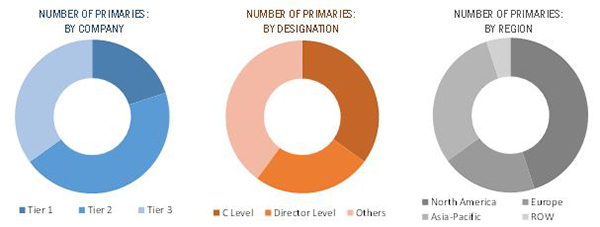
After arriving at the overall market size, the total market has been split into several segments and subsegments and confirmed with the key industry experts. The figure below shows the breakdown of primaries on the basis of company, designation, and region conducted during the research study.
To know about the assumptions considered for the study, download the pdf brochure
The market covered under this report has been segmented as follows:
This report categorizes the global infrared emitter & receiver market on the basis of industry verticals, spectral range, applications, and geography. It also covers the market dynamics and emerging trends and technologies in the market.
Market, by vertical:
On the basis of industry verticals, the market has been segmented into automotive, military & aerospace, consumer electronics, telecommunication, industrial, healthcare, security & surveillance, and others
Market, by spectral range:
Based on infrared spectral range, the market has been segmented into near IR, short-wavelength infrared, (SWIR), middle-wavelength infrared (MWIR), long-wavelength Infrared (LWIR), and far IR.
Market, by application:
On the basis of application, the market has been segmented into thermal heating, sensing, monitoring & detection, imaging, and others
Market, by geography:
The geographic analysis covers North America, Europe, Asia-Pacific, and Rest of the World (RoW). The cross-segmentation data included in the report provides insight into the regional markets.
Available customizations:
The available customizations for the report offer further country-wise breakdown for all the applications.
Company information
Detailed analysis and profiling of additional market players (up to five)













Growth opportunities and latent adjacency in Infrared Emitter & Receiver Market