Low Noise Amplifier (LNA) Market by Frequency (<6 GHz, 6–60 GHz, and >60 GHz), Material (Silicon, Silicon Germanium, Gallium Arsenide), Vertical (Consumer, Telecom, Military, Industrial, Automotive and Medical), and Geography - Global Forecast to 2036


Low Noise Amplifier (LNA) Market Summary
The global Low Noise Amplifier (LNA) Market was valued at approximately USD 4–5 billion in 2024 and is projected to reach USD 10–13 billion by 2036, expanding at a CAGR of 8%–10% during the forecast period. The market is witnessing strong growth due to the rapid expansion of wireless communication technologies, increasing deployment of 5G networks, and rising demand for high-performance signal processing in applications such as telecommunications, aerospace, defense, and consumer electronics. Low noise amplifiers are critical components in radio frequency (RF) systems, enhancing weak signals while minimizing noise, thereby ensuring optimal system performance.
The integration of Artificial Intelligence (AI), Internet of Things (IoT), and automation is further transforming the LNA market landscape. AI-driven design optimization, predictive maintenance, and real-time performance monitoring are improving efficiency and reliability. The growing adoption of connected devices, smart infrastructure, and advanced communication systems is driving the need for high-performance LNAs. Additionally, digital transformation across industries and increasing investments in satellite communication, radar systems, and autonomous technologies are expected to propel market growth through 2036.
Key Market Trends & Insights
The Low Noise Amplifier (LNA) Market is evolving rapidly with advancements in communication technologies and semiconductor innovation. North America leads the market due to strong investments in 5G infrastructure and defense systems. Asia Pacific is the fastest-growing region, driven by expanding telecommunications networks and consumer electronics manufacturing. The silicon-based LNA segment dominates the market due to cost efficiency and widespread adoption in consumer devices. Emerging trends include the use of gallium arsenide (GaAs) and gallium nitride (GaN) technologies for high-frequency applications. AI and automation are enhancing design processes and enabling real-time signal optimization, while the increasing adoption of IoT devices is driving demand for compact and energy-efficient LNAs.
Market Size & Forecast
- Base Year Market Size (2024): USD 4–5 billion
- Forecast Value by 2036: USD 10–13 billion
- CAGR (2024–2036): 8%–10%
- Growth Factors: Expansion of 5G networks, increasing demand for wireless communication, advancements in semiconductor technologies, and integration of AI and IoT
Low Noise Amplifier (LNA) Market Top 10 key takeaway
- Rising demand for high-performance RF components
- Growth in 5G and next-generation communication networks
- Increasing adoption in consumer electronics and IoT devices
- Silicon-based LNAs dominating due to cost efficiency
- GaAs and GaN technologies gaining traction for high-frequency applications
- Asia Pacific emerging as the fastest-growing region
- AI integration improving design and performance optimization
- Expanding applications in aerospace and defense sectors
- Growing demand for compact and energy-efficient amplifiers
- Increasing investments in satellite and radar technologies
Product Insights
The silicon-based LNA segment holds the largest share in the Low Noise Amplifier (LNA) Market, primarily due to its cost-effectiveness, scalability, and compatibility with mass production processes. These amplifiers are widely used in consumer electronics, smartphones, and wireless communication devices, where affordability and efficiency are critical factors. Their integration into system-on-chip (SoC) designs further enhances their adoption across various applications.
Gallium arsenide (GaAs) and gallium nitride (GaN)-based LNAs are emerging as high-performance alternatives, particularly in applications requiring high frequency and power efficiency. These materials offer superior noise performance and thermal stability, making them ideal for aerospace, defense, and satellite communication systems.
The integration of AI into LNA design and manufacturing is revolutionizing product development. AI algorithms enable advanced modeling, simulation, and optimization, reducing development time and improving performance. Additionally, the trend toward miniaturization is driving the development of compact LNAs with enhanced functionality, supporting the growing demand for portable and wearable devices.
Technology / Component Insights
The Low Noise Amplifier (LNA) Market is driven by advancements in semiconductor materials, RF design techniques, and signal processing technologies. Key technologies include CMOS, GaAs, and GaN, each offering unique advantages in terms of performance, cost, and efficiency. CMOS technology is widely used for low-cost applications, while GaAs and GaN are preferred for high-frequency and high-power applications.
Artificial Intelligence is playing a crucial role in enhancing LNA performance by enabling predictive analytics, adaptive tuning, and real-time optimization. AI-driven tools are being used to design LNAs with improved noise figures and gain characteristics, ensuring optimal performance in complex environments.
IoT integration is expanding the scope of LNAs by enabling connectivity in a wide range of devices, from smart home systems to industrial sensors. Cloud computing supports data analysis and remote monitoring, while automation technologies are improving manufacturing processes and reducing production costs.
Future innovations are expected to focus on advanced materials, integration with 6G technologies, and the development of ultra-low-power LNAs for next-generation applications. The adoption of advanced packaging techniques and system integration will further enhance performance and reliability.
Application Insights
The telecommunications segment is the leading application area in the Low Noise Amplifier (LNA) Market, driven by the rapid deployment of 5G networks and increasing demand for high-speed data transmission. LNAs are essential components in base stations, smartphones, and wireless communication systems, ensuring signal clarity and efficiency.
Aerospace and defense represent another significant application segment, where LNAs are used in radar systems, satellite communication, and electronic warfare. The need for high-performance and reliable communication systems in critical environments is driving demand in this sector.
Consumer electronics and IoT devices are also contributing to market growth, as LNAs are integrated into smartphones, wearable devices, and smart home systems. Future opportunities lie in autonomous vehicles, smart cities, and advanced communication technologies, where LNAs will play a crucial role in enabling seamless connectivity.
Regional Insights
North America dominates the Low Noise Amplifier (LNA) Market, supported by strong investments in telecommunications, defense, and advanced technologies. The presence of leading semiconductor companies and early adoption of 5G infrastructure contribute to the region’s leadership.
Europe is also a significant market, driven by advancements in automotive and industrial applications, as well as strong regulatory support for communication technologies. The region’s focus on innovation and sustainability is driving demand for advanced LNAs.
Asia Pacific is the fastest-growing region, fueled by rapid expansion of telecommunications networks, increasing smartphone penetration, and strong manufacturing capabilities. Countries such as China, South Korea, and India are investing heavily in 5G and semiconductor technologies, driving market growth.
- North America leads due to strong telecom and defense investments
- Europe driven by industrial and automotive applications
- Asia Pacific fastest-growing with expanding telecom networks
- Increasing investments in semiconductor manufacturing
- Growing demand for advanced communication technologies
Country-Specific Market Trends
In Asia Pacific, China leads the Low Noise Amplifier (LNA) Market with a CAGR of approximately 10%–12%, driven by large-scale 5G deployment and semiconductor manufacturing. Japan is also witnessing steady growth due to its focus on advanced electronics and automotive technologies.
In North America, the United States dominates the market, growing at a CAGR of 8%–10%, supported by strong investments in telecommunications and defense sectors. Canada is focusing on expanding communication infrastructure, while Mexico is gradually adopting advanced technologies.
In Europe, Germany and France are key contributors, with CAGRs ranging between 7%–9%. These countries are investing in automotive electronics and industrial automation, driving demand for LNAs.
- China leading with strong 5G and semiconductor growth
- Japan focusing on advanced electronics and innovation
- United States dominating with telecom and defense investments
- Germany and France driving European market growth
- Canada and Mexico showing steady adoption trends
Key Low Noise Amplifier (LNA) Market Company Insights
The Low Noise Amplifier (LNA) Market is highly competitive, with leading players focusing on innovation, product development, and strategic partnerships. Companies are investing in advanced semiconductor technologies and AI-driven design tools to enhance product performance and efficiency.
Key players such as Broadcom Inc., Qorvo Inc., Skyworks Solutions, Inc., Analog Devices, Inc., and Infineon Technologies AG are at the forefront of market development. These companies are expanding their product portfolios and investing in research and development to maintain a competitive edge.
Strategic collaborations with telecommunications providers and technology companies are enabling market players to strengthen their presence. The focus on miniaturization, energy efficiency, and high-frequency performance is shaping the competitive landscape.
- Companies focusing on AI-driven design and innovation
- Increasing investment in R&D activities
- Strategic partnerships with telecom providers
- Expansion of product portfolios
- Emphasis on miniaturization and efficiency
Recent Developments
Recent developments in the Low Noise Amplifier (LNA) Market highlight the growing emphasis on advanced technologies and innovation. Several companies have launched next-generation LNAs with improved noise performance and energy efficiency, catering to the needs of 5G and satellite communication systems.
AI integration into design processes is enabling faster development cycles and enhanced performance optimization. Additionally, partnerships between semiconductor companies and telecommunications providers are accelerating the deployment of advanced communication infrastructure.
Market Segmentation
The Low Noise Amplifier (LNA) Market is segmented by product, technology/component, application, and region. By product, the market includes silicon-based, GaAs-based, and GaN-based LNAs, with silicon-based LNAs dominating due to cost efficiency and widespread adoption. By technology, the market is driven by CMOS, GaAs, GaN, AI, IoT, and automation technologies that enhance performance and scalability.
In terms of application, the market is segmented into telecommunications, aerospace and defense, consumer electronics, and industrial applications, with telecommunications leading the market. Regionally, the market is divided into North America, Europe, Asia Pacific, and the Rest of the World, with North America leading and Asia Pacific showing the fastest growth.
- Silicon-based LNAs dominate product segment
- CMOS, GaAs, and GaN driving technological advancements
- Telecommunications leading application segment
- North America leading regional market
- Asia Pacific showing highest growth potential
The Low Noise Amplifier (LNA) Market is poised for substantial growth through 2036, driven by the rapid expansion of wireless communication technologies and advancements in semiconductor design. The integration of AI, IoT, and automation is transforming LNAs into intelligent components capable of delivering superior performance and efficiency.
As industries continue to adopt digital transformation and advanced communication systems, the demand for high-performance LNAs will continue to rise. Businesses operating in this market must focus on innovation, strategic partnerships, and technological advancements to remain competitive. The market presents significant opportunities for growth, particularly in emerging technologies such as 5G, IoT, and autonomous systems.
FAQs - Low Noise Amplifier (LNA) Market
1. What is the current size of the Low Noise Amplifier (LNA) Market?
The market was valued at approximately USD 4–5 billion in 2024.
2. What is the expected growth rate of the market?
The market is expected to grow at a CAGR of 8%–10% from 2025 to 2036.
3. What are the key drivers of market growth?
Key drivers include expansion of 5G networks, increasing demand for wireless communication, and integration of AI and IoT technologies.
4. Which region leads the market?
North America currently leads the Low Noise Amplifier (LNA) Market.
5. Who are the major players in the market?
Major players include Broadcom Inc., Qorvo Inc., Skyworks Solutions, Inc., Analog Devices, Inc., and Infineon Technologies AG.
To speak to our analyst for a discussion on the above findings, click Speak to Analyst
 Exclusive indicates content/data unique to MarketsandMarkets and not available with any competitors.
Table of Contents
1 Introduction (Page No. - 14)
1.1 Objectives of Study
1.2 Definition
1.3 Study Scope
1.3.1 Markets Covered
1.3.2 Geographic Scope
1.4 Years Considered for Study
1.5 Currency
1.6 Package Size
1.7 Limitations
1.8 Market Stakeholders
2 Research Methodology (Page No. - 18)
2.1 Research Data
2.1.1 Secondary Data
2.1.1.1 List of Major Secondary Sources
2.1.1.2 Secondary Sources
2.1.2 Primary Data
2.1.2.1 Primary Interviews With Experts
2.1.2.2 Key Data From Primary Sources
2.1.2.3 Key Industry Insights
2.1.2.4 Breakdown of Primaries
2.1.3 Secondary and Primary Research
2.2 Market Size Estimation
2.2.1 Bottom-Up Approach
2.2.1.1 Approach for Capturing the Market Share By Bottom-Up Analysis (Demand Side)
2.2.2 Top-Down Approach
2.2.2.1 Approach for Capturing the Market Share By Top-Down Analysis (Supply Side)
2.3 Market Ranking Estimation
2.4 Market Breakdown and Data Triangulation
2.5 Research Assumptions
3 Executive Summary (Page No. - 29)
4 Premium Insights (Page No. - 34)
4.1 Attractive Market Opportunities in LNA Market
4.2 Low Noise Amplifier (LNA) Market, By Material and Vertical
4.3 Market, By Frequency
4.4 Country-Wise Analysis of LNA Market
4.5 Market Size, By Region
5 Market Overview (Page No. - 37)
5.1 Introduction
5.2 Market Dynamics
5.2.1 Drivers
5.2.1.1 Huge Demand From Smartphone Market
5.2.1.2 Increasing Usage of Long-Term Evolution (LTE) Technology
5.2.1.3 Adoption of E Band to Meet Growing Bandwidth Demand
5.2.1.4 Increasing Defense Expenditure Globally
5.2.2 Restraints
5.2.2.1 Reduced Price Margin Due to Highly Fragmented Market
5.2.3 Opportunities
5.2.3.1 Rapid Development of Space Programs Worldwide
5.2.3.2 Evolution of 5g Technology
5.2.3.3 Commercialization of Iot
5.2.3.4 Growing Demand From Automotive Sector
5.2.4 Challenges
5.2.4.1 Designing Robust LNAs
5.3 Value Chain Analysis
6 Low Noise Amplifier (LNA) Market, By Frequency (Page No. - 47)
6.1 Introduction
6.2 DC to 6 GHz
6.3 6 GHz to 60 GHz
6.4 Greater Than 60 GHz
7 LNA Market, By Material (Page No. - 54)
7.1 Introduction
7.2 Silicon
7.3 Silicon Germanium
7.4 Gallium Arsenide
7.5 Others
8 Low Noise Amplifier (LNA) Market, By Vertical (Page No. - 62)
8.1 Introduction
8.2 Consumer Electronics
8.3 Telecom and Datacom
8.4 Medical
8.5 Military and Space
8.6 Industrial
8.7 Automotive
9 Geographic Analysis (Page No. - 79)
9.1 Introduction
9.2 Americas
9.2.1 US
9.2.2 Canada
9.2.3 Mexico
9.2.4 Brazil
9.2.5 Rest of Americas
9.3 Europe
9.3.1 Germany
9.3.2 France
9.3.3 UK
9.3.4 Italy
9.3.5 Rest of Europe
9.4 Asia Pacific
9.4.1 China
9.4.2 Japan
9.4.3 South Korea
9.4.4 India
9.4.5 Rest of APAC
9.5 Rest of the World
9.5.1 Middle East
9.5.2 Africa
10 Competitive Landscape (Page No. - 99)
10.1 Overview
10.2 Market Ranking Analysis
10.3 LNA Market Competitive Leadership Mapping, 2017
10.3.1 Visionary Leaders
10.3.2 Dynamic Differentiators
10.3.3 Innovators
10.3.4 Emerging Companies
10.4 Strength of Product Portfolio (For All 25 Players)
10.5 Business Strategy Excellence (For All 25 Players)
Top 25 Companies Analyzed for This Study are - Amplitech, Inc., Analog Devices, Inc., API Technologies Corp., B&Z Technologies, LLC, Broadcom Ltd., Ciao Wireless, Inc., CTT Inc., Custom Mmic Design Services, Inc., Dbwave Technologies Co., Ltd., Infineon Technologies Ag, L3 Narda-Miteq, Macom Technology Solutions Holdings, Inc., Northrop Grumman Corp., Microwave Dynamics, NEC Space Technologies, Ltd., Nxp Semiconductors N.V., on Semiconductor Corp., Panasonic Corp., Qorvo, Inc., Sage Millimeter, Inc., Skyworks Solutions, Inc., Teledyne Microwave Solutions, Texas Instruments Inc., Toshiba Corp., Wantcom Inc.
10.6 Competitive Scenario
11 Company Profiles (Page No. - 106)
(Business Overview, Strength of Service Portfolio, Business Strategy Excellence, Recent Developments)*
11.1 Introduction
11.2 Nxp Semiconductors N.V.
11.3 Analog Devices, Inc.
11.4 Infineon Technologies AG
11.5 L3 Narda-Miteq
11.6 Qorvo, Inc.
11.7 Skyworks Solutions, Inc.
11.8 on Semiconductor Corp.
11.9 Panasonic Corp.
11.10 Texas Instruments Inc.
11.11 Teledyne Microwave Solutions
11.12 Key Innovators
11.12.1 Custom Mmic Design Services, Inc.
11.12.2 Macom Technology Solutions Holdings, Inc.
11.12.3 Sage Millimeter, Inc.
11.12.4 Wantcom Inc.
11.12.5 Dbwave Technologies Co., Ltd.
*Details on Business Overview, Strength of Service Portfolio, Business Strategy Excellence, Recent Developments Might Not Be Captured in Case of Unlisted Companies.
12 Appendix (Page No. - 135)
12.1 Discussion Guide
12.2 Knowledge Store: Marketsandmarkets’ Subscription Portal
12.3 Introducing RT: Real-Time Market Intelligence
12.4 Available Customizations
12.5 Related Reports
12.6 Author Details
List of Tables (71 Tables)
Table 1 Low Noise Amplifier (LNA) Market, By Frequency, 2015–2023 (USD Million)
Table 2 LNA Market, By Frequency, 2015–2023 (Million Units)
Table 3 Market for DC to 6 GHz, By Material, 2015–2023 (USD Million)
Table 4 Market for DC to 6 GHz, By Vertical, 2015–2023 (USD Million)
Table 5 Market for DC to 6 GHz, By Vertical, 2015–2023 (Million Units)
Table 6 Market for 6 GHz to 60 GHz, By Material, 2015–2023 (USD Million)
Table 7 Market for 6 GHz to 60 GHz, By Vertical, 2015–2023 (USD Million)
Table 8 Market for 6 GHz to 60 GHz, By Vertical, 2015–2023 (Million Units)
Table 9 Market for Greater Than 60 GHz, By Material, 2015–2023 (USD Million)
Table 10 Market for Greater Than 60 GHz, By Vertical, 2015–2023 (USD Million)
Table 11 LNA Market for Greater Than 60 GHz, By Vertical, 2015–2023 (Million Units)
Table 12 Low Noise Amplifier (LNA) Market, By Material, 2015–2023 (USD Million)
Table 13 LNA Market for Silicon, By Frequency, 2015–2023 (USD Million)
Table 14 Market for Silicon, By Vertical, 2015–2023 (USD Million)
Table 15 Market for Silicon Germanium, By Frequency, 2015–2023 (USD Million)
Table 16 Market for Silicon Germanium, By Vertical, 2015–2023 (USD Million)
Table 17 Market for Gallium Arsenide, By Frequency, 2015–2023 (USD Million)
Table 18 Market for Gallium Arsenide, By Vertical, 2015–2023 (USD Million)
Table 19 Market for Others, By Frequency, 2015–2023 (USD Million)
Table 20 Market for Others, By Vertical, 2015–2023 (USD Million)
Table 21 Market, By Vertical, 2015–2023 (USD Million)
Table 22 Market, By Vertical, 2015–2023 (Million Units)
Table 23 Market for Consumer Electronics, By Frequency, 2015–2023 (USD Million)
Table 24 Market for Consumer Electronics, By Frequency, 2015–2023 (Million Units)
Table 25 Market for Consumer Electronics, By Material, 2015–2023 (USD Million)
Table 26 Market for Consumer Electronics, By Region, 2015–2023 (USD Million)
Table 27 Market for Consumer Electronics, By Region, 2015–2023 (Million Units)
Table 28 LNA Market for Telecom and Datacom, By Frequency, 2015–2023 (USD Million)
Table 29 Low Noise Amplifier (LNA) Market for Telecom and Datacom, By Frequency, 2015–2023 (Million Units)
Table 30 Market for Telecom and Datacom, By Material, 2015–2023 (USD Million)
Table 31 Market for Telecom and Datacom, By Region, 2015–2023 (USD Million)
Table 32 Market for Telecom and Datacom, By Region, 2015–2023 (Million Units)
Table 33 Market for Medical, By Frequency, 2015–2023 (USD Million)
Table 34 Market for Medical, By Frequency, 2015–2023 (Million Units)
Table 35 Market for Medical, By Material, 2015–2023 (USD Million)
Table 36 Market for Medical, By Region, 2015–2023 (USD Million)
Table 37 Market for Medical, By Region, 2015–2023 (Million Units)
Table 38 Market for Military and Space, By Frequency, 2015–2023 (USD Million)
Table 39 Market for Military and Space, By Frequency, 2015–2023 (Million Units)
Table 40 Low Noise Amplifier (LNA) Market for Military and Space, By Material, 2015–2023 (USD Million)
Table 41 Market for Military and Space, By Region, 2015–2023 (USD Million)
Table 42 Market for Military and Space, By Region, 2015–2023 (Million Units)
Table 43 Market for Industrial, By Frequency, 2015–2023 (USD Million)
Table 44 Market for Industrial, By Frequency, 2015–2023 (Million Units)
Table 45 Market for Industrial, By Material, 2015–2023 (USD Million)
Table 46 Market for Industrial, By Region, 2015–2023 (USD Million)
Table 47 Market for Industrial, By Region, 2015–2023 (Million Units)
Table 48 Market for Automotive, By Frequency, 2015–2023 (USD Million)
Table 49 Market for Automotive, By Frequency, 2015–2023 (Million Units)
Table 50 Market for Automotive, By Material, 2015–2023 (USD Million)
Table 51 Market for Automotive, By Region, 2015–2023 (USD Million)
Table 52 Market for Automotive, By Region, 2015–2023 (Million Units)
Table 53 Market, By Region, 2015–2023 (USD Million)
Table 54 Market, By Region, 2015–2023 (Million Units)
Table 55 Market in Americas, By Vertical, 2015–2023 (USD Million)
Table 56 Market in Americas, By Vertical, 2015–2023 (Million Units)
Table 57 Market in Americas, By Country, 2015–2023 (USD Million)
Table 58 Market in Americas, By Country, 2015–2023 (Million Units)
Table 59 Market in Europe, By Vertical, 2015–2023 (USD Million)
Table 60 Market in Europe, By Vertical, 2015–2023 (Million Units)
Table 61 Market in Europe, By Country, 2015–2023 (USD Million)
Table 62 Market in Europe, By Country, 2015–2023 (Million Units)
Table 63 Market in APAC, By Vertical, 2015–2023 (USD Million)
Table 64 LNA Market in APAC, By Vertical, 2015–2023 (Million Units)
Table 65 Low Noise Amplifier (LNA) Market in APAC, By Country, 2015–2023 (USD Million)
Table 66 Market in APAC, By Country, 2015–2023 (Million Units)
Table 67 Market in RoW, By Vertical, 2015–2023 (USD Million)
Table 68 Market in RoW, By Vertical, 2015–2023 (Million Units)
Table 69 Market in RoW, By Region, 2015–2023 (USD Million)
Table 70 LNA Market in RoW, By Region, 2015–2023 (Million Units)
Table 71 Market Ranking of Top 5 Players in LNA Market, 2016
List of Figures (45 Figures)
Figure 1 Low Noise Amplifier (LNA) Market: Research Design
Figure 2 Process Flow
Figure 3 Market Size Estimation Methodology: Bottom-Up Approach
Figure 4 Market Size Estimation Methodology: Top-Down Approach
Figure 5 Market Breakdown and Data Triangulation
Figure 6 Assumptions of the Research Study
Figure 7 LNA Market for Greater Than 60 GHz Segment to Grow at Highest CAGR During Forecast Period
Figure 8 Silicon to Hold Major Share of LNA Market in 2017
Figure 9 Industrial and Automotive: Most Promising Verticals for LNA Market
Figure 10 APAC to Be Fastest-Growing Region in LNA Market During Forecast Period
Figure 11 Growing Use of LTE Technology Driving LNA Market
Figure 12 Silicon Material and Consumer Electronics Vertical Hold Largest Market Shares
Figure 13 DC to 6 GHz Segment to Hold Largest Size of LNA Market By 2023
Figure 14 US Held Largest Share of LNA Market in 2017
Figure 15 LNA Market in APAC to Grow at Highest CAGR During Forecast Period
Figure 16 Huge Demand From Smartphone Market and Adoption of E-Band to Meet Growing Bandwidth Demand Contribute to Growth of LNA Market
Figure 17 Total Smartphone Users in World (2013–2020)
Figure 18 Global Mobile Data Traffic (2016–2021)
Figure 19 Defense Expenditure By Top 10 Countries in 2016
Figure 20 Number of Connected Devices to Reach ~50 Billion By 2020: Cisco Perspective
Figure 21 Increasing Penetration Rate of Connected Objects (2012–2020)
Figure 22 Value Chain Analysis: Major Value Added During Original Equipment Manufacturer and System Integrator Phases
Figure 23 DC to 6 GHz Segment to Hold to Largest Share of LNA Market During Forecast Period
Figure 24 LNA Market for Silicon Germanium to Grow at Highest CAGR During Forecast Period
Figure 25 LNA Market for Industrial Vertical to Grow at Highest CAGR During Forecast Period
Figure 26 LNA Market: Geographic Snapshot
Figure 27 Americas: LNA Market Snapshot
Figure 28 Europe: LNA Market Snapshot
Figure 29 APAC: LNA Market Snapshot
Figure 30 RoW: LNA Market Snapshot
Figure 31 Companies in LNA Market Adopted Product Launches as Key Growth Strategy Between January 2014 and March 2017
Figure 32 Competitive Leadership Mapping
Figure 33 LNA Market Evaluation Frame
Figure 34 Product Launches as Prominent Strategy Adopted By Major Players in LNA Market
Figure 35 Geographic Revenue Mix for Major Market Players
Figure 36 NXP Semiconductors N.V.: Company Snapshot
Figure 37 Analog Devices, Inc.: Company Snapshot
Figure 38 Infineon Technologies AG: Company Snapshot
Figure 39 L3 Narda-Miteq: Company Snapshot
Figure 40 Qorvo, Inc.: Company Snapshot
Figure 41 Skyworks Solutions, Inc.: Company Snapshot
Figure 42 On Semiconductor Corp.: Company Snapshot
Figure 43 Panasonic Corp.: Company Snapshot
Figure 44 Texas Instruments Inc.: Company Snapshot
Figure 45 Teledyne Microwave Solutions: Company Snapshot
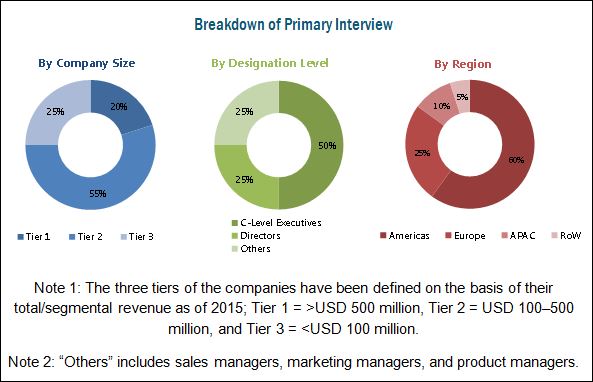
The research methodology used to estimate and forecast the low noise amplifier (LNA) market begins with capturing data on key vendor revenue through secondary sources such as Semiconductor Industry Association, Global Semiconductor Alliance, Electronic Components Industry Association (ECIA), and Semiconductor Portal Inc. Moreover, the vendor offerings are considered to determine the market segmentation. The top-down and bottom-up procedures have been employed in combination to arrive at the overall size of the LNA market on the basis of the revenues of the key players in the market. After arriving at the overall market size, the total market has been split into several segments and subsegments, which have been verified through primary research by conducting extensive interviews with the key officials such as CEOs, VPs, directors, and executives. The market breakdown and data triangulation procedures have been employed to complete the overall market engineering process and arrive at the exact statistics for all segments and subsegments. The breakdown of the profiles of primaries is depicted in the following figure.
To know about the assumptions considered for the study, download the pdf brochure
This report provides valuable insights on the LNA ecosystem including raw material suppliers, LNA manufacturers, system integrators, and end users. The main raw material suppliers include TSMC, Ltd. (Taiwan), Global Foundries Inc. (US), UMC Group (Taiwan), and Tower Semiconductor Ltd. (TowerJazz) (Israel). Some of the major OEMs of the LNA market are Analog Devices Inc. (US), NXP Semiconductors N.V. (Netherlands), Skyworks Solutions, Inc. (US), and Qorvo, Inc. (US), among others. The system integrators include Broadcom Ltd. (US), MACOM Technology Solutions Holdings, Inc. (US), and Microsemi Corp. (US). The end users of the LNA market include Samsung Electronics Co., Ltd. (South Korea), Apple Inc. (US), Audi AG (Germany), General Motors Co. (US), NEC Corp. (Japan), BridgeWave Communications Inc. (US), and Qualcomm Inc. (US).
Scope of the Report:
|
Report Metric |
Details |
|
Base year |
2016 |
|
Forecast period |
2017–2023 |
|
Units |
Value (USD) |
|
Segments covered |
Type, End User, Offerings, and Region |
|
Geographic regions covered |
North America, APAC, Europe, and RoW |
|
Companies covered |
NXP Semiconductors N.V. (Netherlands), Analog Devices, Inc. (US), Infineon Technologies AG (Germany), L3 Narda-MITEQ (US), Qorvo, Inc. (US), Skyworks Solutions, Inc. (US), ON Semiconductor Corp. (US), Panasonic Corp. (Japan), Texas Instruments, Inc. (US), and Teledyne Microwave Solutions (US). The key innovators of the market are Custom MMIC (US), MACOM Technology Solutions Holdings, Inc. (US), SAGE Millimeter, Inc. (US), WanTcom Inc. (US), and DBWave Technologies Co., Ltd. (China) |
Key Target Audience:
- Raw material suppliers
- Electronic design automation (EDA) and design tool vendors
- Original equipment manufacturers (OEMs)
- Integrated device manufacturers (IDMs)
- Original design manufacturers (ODMs)
- ODM and OEM technology solution providers
- Assembly, testing, and packaging vendors
- Technology, service, and solution providers
- Intellectual property (IP) core and licensing providers
- Suppliers and distributors
- Government and other regulatory bodies
- Technology investors
- Research institutes and organizations
- Market research and consulting firms
The study answers several questions for the stakeholders, primarily, which market segments to focus on in the next 2–5 years (depends on the range of forecast period) for prioritizing the efforts and investments.
Report Scope:
In this report, the low noise amplifier (LNA) market has been segmented into the following categories in addition to the industry trends, which have also been detailed below:
-
Low Noise Amplifier (LNA) Market, by Frequency
- DC to 6 GHz
- 6 GHz to 60 GHz
- Greater than 60 GHz
-
Low Noise Amplifier (LNA) Market, by Material
- Silicon
- Silicon Germanium
- Gallium Arsenide
- Others
-
Low Noise Amplifier (LNA) Market, by Vertical
- Consumer Electronics
- Telecom & Datacom
- Medical
- Military & Space
- Industrial
- Automotive
-
Low Noise Amplifier (LNA) Market, by Geography
-
Americas:
- US
- Canada
- Mexico
- Brazil
- Rest of Americas
-
Europe:
- Germany
- UK
- France
- Italy
- Rest of Europe
-
Asia Pacific (APAC):
- Japan
- China
- South Korea
- India
- Rest of APAC
-
Rest of the World (RoW):
- Middle East
- Africa
- Competitive Landscape
- Company Profiles: Detailed analysis of the major companies present in the LNA market.
-
Americas:
Available Customizations:
With the given market data, MarketsandMarkets offers customizations according to the company’s specific needs. The following customization options are available for the report:
Product analysis
- Product matrix that provides a detailed comparison of product portfolio of each company
Company information
- Detailed analysis and profiling of additional market players (up to 5).













Growth opportunities and latent adjacency in Low Noise Amplifier (LNA) Market