Monolithic Microwave IC Market

Monolithic Microwave IC Market by Component (Power Amplifiers, Low Noise Amplifiers, Switches), Material Type (GaAs, InP, GaN), Frequency Band (L, S, C, X, Ku, K, Ka, V, W), Technology (MESFET, HEMT, PHEMT, mHEMT, E- PHEMT) - Global Forecast to 2033




OVERVIEW
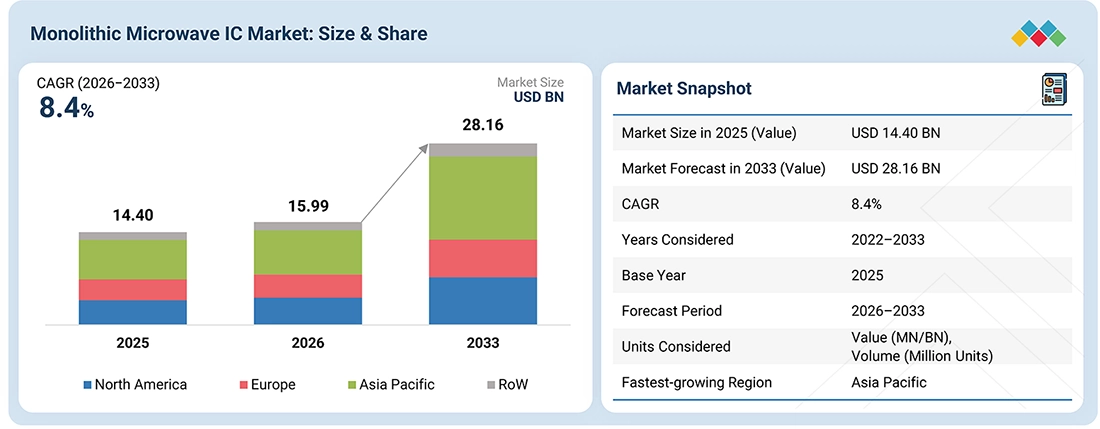
Source: Secondary Research, Interviews with Experts, MarketsandMarkets Analysis
The global monolithic microwave IC market size is estimated at USD 15.99 billion in 2026 and is projected to reach USD 28.16 billion by 2033, reflecting a CAGR of 8.4% over the period. The growing adoption of 5G, radar, and advanced wireless systems is driving demand for high-frequency, compact, and high-performance monolithic microwave ICs.
KEY TAKEAWAYS
-
By RegionThe North America monolithic microwave IC market accounted for a 26.6% revenue share in 2025.
-
By ComponentBy component, the attenuators segment is projected to grow at the fastest rate of 11.1% from 2026 to 2033.
-
By Material TypeBy material type, the gallium arsenide segment dominated the market, with a 53.5% share in 2025.
-
By TechnologyBy technology, the MESFET segment held the largest market share in 2025.
-
By ApplicationBy application, the wireless communication infrastructure segment is projected to grow at the fastest rate from 2026 to 2033.
-
Competitive Landscape - KEY PLAYERSQorvo, Inc., Analog Devices, Inc., NXP Semiconductors, MACOM were identified as some of the star players in the monolithic microwave IC market (global), given their strong market share and product footprint.
-
Competitive Landscape - STARTUPSBeRex, MicroArray Technologies, MicroWave Technology, Inc., ASB Inc., among others, have distinguished themselves among startups and SMEs by securing strong footholds in specialized niche areas, underscoring their potential as emerging market leaders.
The adoption of monolithic microwave ICs enables electronic system manufacturers to achieve high-frequency performance, compact designs, and reliable signal processing. This becomes increasingly important as the expansion of 5G, radar, aerospace and defense, and automotive applications drives demand for efficient, high-performance microwave solutions.
TRENDS & DISRUPTIONS IMPACTING CUSTOMERS' CUSTOMERS
The impact on consumers' business in the monolithic microwave IC market stems from evolving customer needs and industry disruptions. Consumer/enterprise electronics, wireless communication infrastructure, automotive, aerospace & defense, CATV & wired broadband, test & measurement are the primary users of monolithic microwave IC. Shifts toward advanced 5G and 6G, communication systems, KA band, IoT and IIOT, etc. directly influence the operational performance and revenues of end users. These impacts, in turn, drive the demand for monolithic microwave IC, shaping the market's growth trajectory.

Source: Secondary Research, Interviews with Experts, MarketsandMarkets Analysis
MARKET DYNAMICS

Level
-
Rising use of MMICs in smartphones

-
Increasing demand for high data throughputs in cellular and wireless networks


Level
-
High development costs associated with MMICS


Level
-
Preference for compact and miniaturized devices

-
Global surge in space programs


Level
-
Streamlining designing and cost-effective manufacturing of MMICS

Source: Secondary Research, Interviews with Experts, MarketsandMarkets Analysis
Driver: Rising use of MMICs in smartphones
The growing integration of advanced wireless technologies in smartphones is increasing demand for monolithic microwave ICs. Monolithic microwave ICs enable high-frequency signal amplification, switching, and processing within compact radio frequency (RF) front ends. The adoption of 5G connectivity, higher frequency bands, and multiple-input multiple-output (MIMO) architectures further supports their integration.
Restraint: High development costs associated with MMICS
MMIC development requires specialized semiconductor processes, advanced design tools, fabrication capabilities, and extensive testing. These requirements raise development and qualification costs, especially for high-frequency applications using gallium nitride (GaN), gallium arsenide (GaAs), and other compound semiconductors. High upfront investment can therefore limit adoption among smaller manufacturers and lengthen product development timelines.
Opportunity: Preference for compact and miniaturized devices
The growing demand for smaller, lighter electronic devices is driving adoption of monolithic microwave ICs. By integrating multiple microwave functions onto a single chip, monolithic microwave ICs can reduce component count, board space, and system complexity. This makes them suitable for smartphones, automotive systems, aerospace platforms, and other applications where compact form factors and high functional density are important.
Challenge: Streamlining designing and cost-effective manufacturing of MMICS
Monolithic microwave IC manufacturers face challenges balancing high-frequency performance with manufacturing efficiency and cost control. Complex circuit designs, specialized materials, fabrication processes, and stringent performance requirements can increase production costs and reduce manufacturing flexibility. Improving design methodologies, optimizing processes, improving yield, and enhancing scalability remain important for achieving cost-effective monolithic microwave IC production across high-volume applications.
MONOLITHIC MICROWAVE IC MARKET: COMMERCIAL USE CASES ACROSS INDUSTRIES
| COMPANY | USE CASE DESCRIPTION | BENEFITS |
|---|---|---|
 |
Keysight Technologies’ PathWave Advanced Design System (ADS) was used by Altum RF to develop a high-power monolithic microwave IC amplifier operating from 1–20 GHz. The integrated environment supported nonlinear modeling, electromagnetic simulation, layout, and design rule checking, helping Altum RF address complex GaN HEMT design and packaging requirements. | The solution enabled Altum RF to achieve a first-time-right prototype while reducing project time by 30%. It also improved design productivity and helped accelerate product development. |
 |
NASA integrated advanced monolithic microwave IC technology into a miniaturized microwave radiometer designed for CubeSat platforms. The technology enabled a compact, lightweight, multi-channel instrument operating near 90, 118, 183, and 206 GHz to measure atmospheric water vapor and temperature for satellite-based remote sensing. | The solution enabled smaller satellite-compatible sensing systems, improved atmospheric data collection, and supported higher-resolution weather and climate monitoring for future small-satellite missions. |
Logos and trademarks shown above are the property of their respective owners. Their use here is for informational and illustrative purposes only.
MARKET ECOSYSTEM
The monolithic microwave IC market ecosystem comprises raw material suppliers (IQE PLC, PAM-XIAMEN Co., Ltd., AXT, Inc.), MMIC manufacturers (Qorvo, Inc., NXP Semiconductors N.V., MACOM Technology, Inc., Infineon Technologies AG), suppliers and distributors (Mouser Electronics, Inc., Arrow Electronics, Inc., Future Electronics Inc., Avnet, Inc.), and end users (Sony Group Corporation, Apple Inc., The Boeing Company, RTX Corporation). The ecosystem supports the supply of semiconductor substrates and specialized materials, the development of microwave integrated circuits using technologies such as gallium arsenide (GaAs) and gallium nitride (GaN), product availability and distribution, and the integration of MMICs into communication, aerospace and defense, automotive, consumer electronics, and industrial systems.
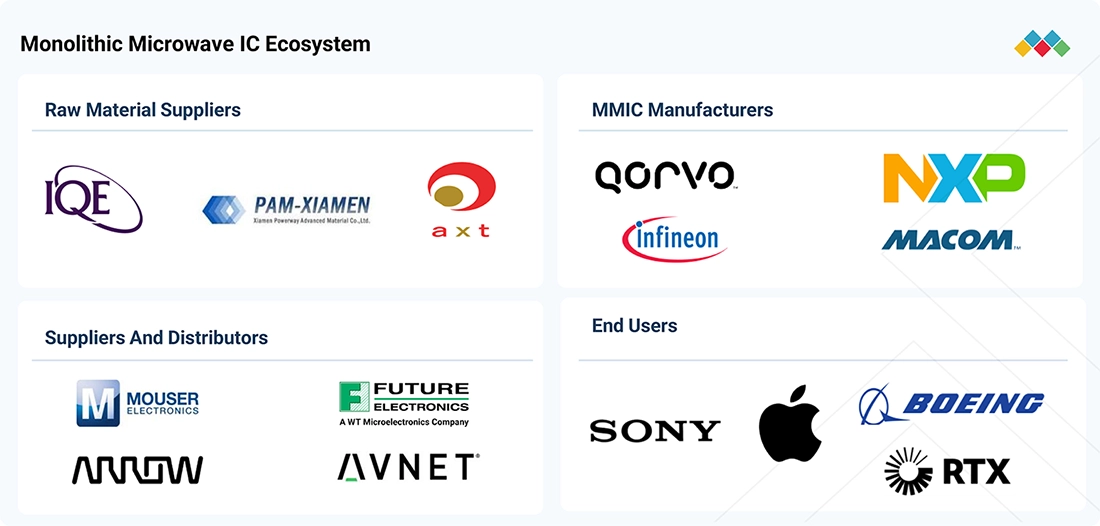
Logos and trademarks shown above are the property of their respective owners. Their use here is for informational and illustrative purposes only.
MARKET SEGMENTS
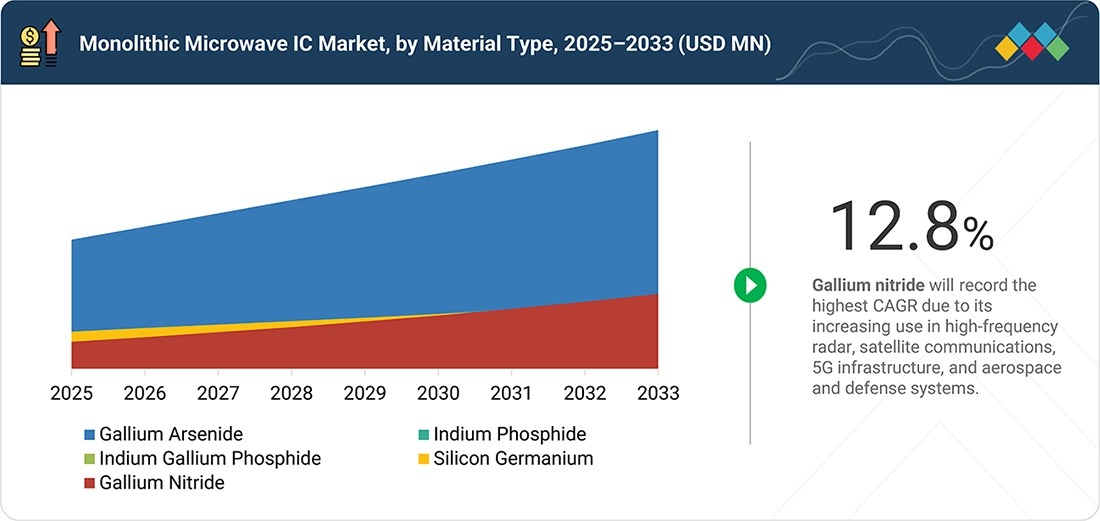
Source: Secondary Research, Interviews with Experts, MarketsandMarkets Analysis
Monolithic Microwave IC Market, By Component
Power amplifiers hold the largest share of the monolithic microwave IC market due to their widespread use in wireless communication, radar, aerospace and defense, and automotive systems. Growing demand for higher transmission power, improved signal coverage, and reliable high-frequency performance drives their integration across diverse microwave applications, supporting higher demand than other components.
Monolithic Microwave IC Market, By Material Type
Gallium arsenide (GaAs) holds the largest share of the monolithic microwave IC market due to its established use in high-frequency applications, offering high electron mobility, high gain, low noise, and efficient microwave performance. Its extensive deployment across amplifiers, radar, satellite communications, electronic warfare, and wireless infrastructure supports broad product adoption and market penetration.
Monolithic Microwave IC Market, By Technology
MESFET holds the largest share of the monolithic microwave IC market due to its long-established use in GaAs-based microwave circuits and its proven performance in amplifiers, oscillators, mixers, and switches. Its mature manufacturing ecosystem and deployment across radar, satellite communications, and microwave systems continue to support broad adoption.
Monolithic Microwave IC Market, By Application
Consumer/Enterprise electronics holds the largest share in the monolithic microwave IC market, driven by the high-volume integration of radio frequency (RF) front-end components in smartphones, tablets, wearables, and other connected devices. The growing number of frequency bands and demand for compact, high-performance connectivity solutions support strong adoption of Monolithic Microwave ICs in consumer electronics.
REGION
Asia Pacific to be fastest-growing region in global monolithic microwave IC market during forecast period
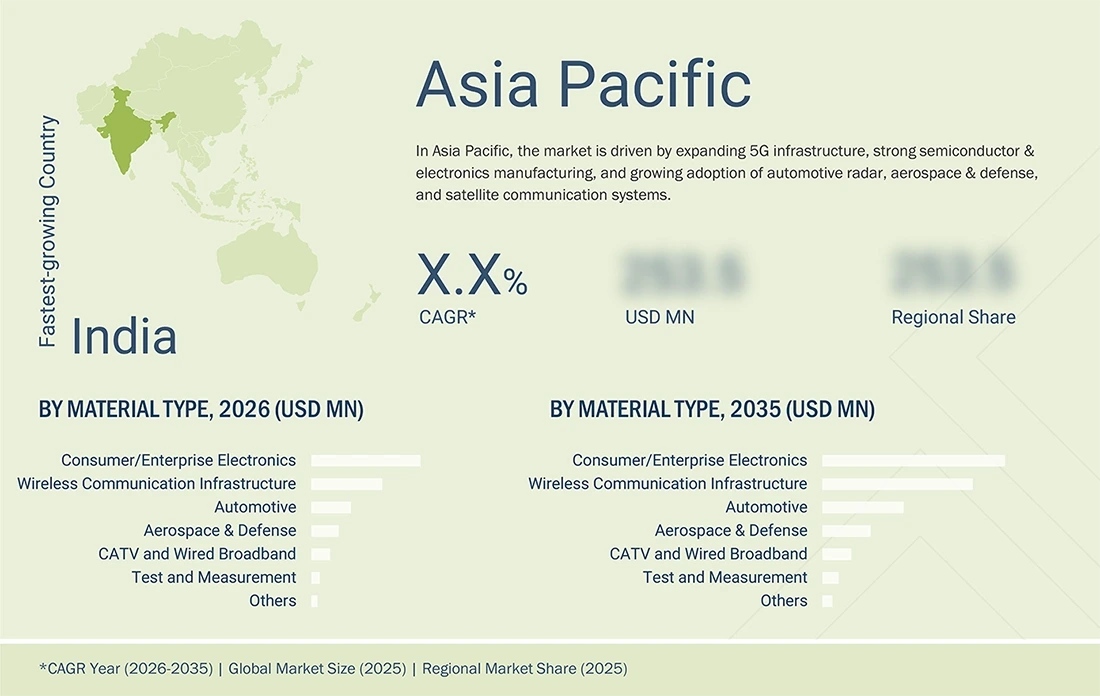
Asia Pacific is expected to post the highest CAGR over the forecast period, supported by rapid 5G network expansion, growing electronics and semiconductor manufacturing, and increasing adoption of advanced wireless, automotive, aerospace, and industrial technologies. The region’s expanding digital infrastructure and investments in next-generation connectivity are expected to sustain demand for high-frequency components.
MONOLITHIC MICROWAVE IC MARKET: COMPANY EVALUATION MATRIX
In the monolithic microwave IC market matrix, Qorvo, Inc. (US) (Star) leads with a broad portfolio of gallium arsenide (GaAs) and gallium nitride (GaN)-based MMICs, including amplifiers, control products, frequency converters, switches, and integrated front-end modules. Its product breadth across mobile, defense, infrastructure, and automotive applications strengthens its market position. Microchip Technology Incorporated (US) (Emerging Leader) differentiates itself with an extensive portfolio of monolithic microwave IC amplifiers supporting frequencies up to 70 GHz and applications such as radar, electronic warfare, satellite and military communications, 5G, and test and measurement. Overall, the market remains competitive, with established players differentiated by portfolio breadth, frequency coverage, technological capabilities, and application reach.

Source: Secondary Research, Interviews with Experts, MarketsandMarkets Analysis
KEY MARKET PLAYERS
- Qorvo, Inc (US)
- MACOM (US)
- Skyworks Solutions, Inc. (US)
- Analog Devices (Netherlands)
- NXP Semiconductors (Netherlands)
- Infineon Technologies AG (Germany)
- WIN Semiconductors (Taiwan)
- United Monolithic Semiconductors (France)
- Mini-Circuits (US)
- Keysight Technologies (US)
MARKET SCOPE
| REPORT METRIC | DETAILS |
|---|---|
| Market Size in 2025 (Value) | USD 14.40 Billion |
| Market Forecast in 2026 (Value) | USD 15.99 Billion |
| Market Forecast in 2033 (Value) | USD 28.16 Billion |
| Growth Rate | CAGR of 8.4% from 2026-2033 |
| Years Considered | 2022-2033 |
| Base Year | 2025 |
| Forecast Period | 2026-2033 |
| Units Considered | Value (USD Million/Billion), Volume (Million Units) |
| Report Coverage | Revenue forecast, company ranking, competitive landscape, growth factors, and trends |
| Segments Covered |
|
| Regions Covered | North America, Europe, Asia Pacific, RoW |
WHAT IS IN IT FOR YOU: MONOLITHIC MICROWAVE IC MARKET REPORT CONTENT GUIDE
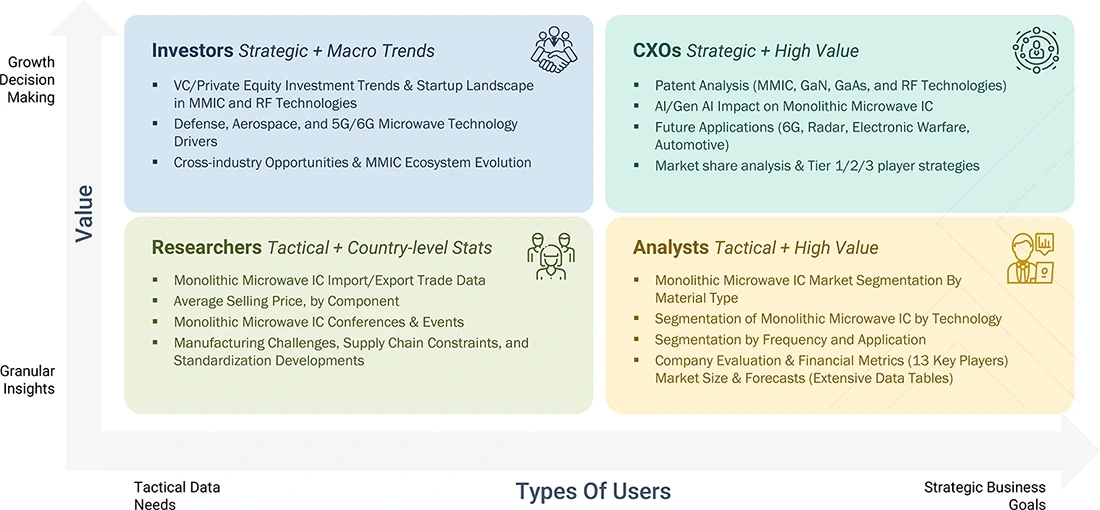
DELIVERED CUSTOMIZATIONS
We have successfully delivered the following deep-dive customizations:
| CLIENT REQUEST | CUSTOMIZATION DELIVERED | VALUE ADDS |
|---|---|---|
| Consumer Electronics OEM |
|
|
| Wireless Communication Equipment OEM |
|
|
| Automotive OEM |
|
|
| Aerospace & Defense OEM |
|
|
| MMIC Manufacturer |
|
|
| Radar & Electronic Systems Manufacturer |
|
|
RECENT DEVELOPMENTS
- August 2026 : Mini-Circuits (US) launched the GNA series of GaN Monolithic Microwave IC power amplifiers, offering broadband operation from 10 MHz to 6 GHz, with models delivering up to 8 W output power and 47% power-added efficiency. The products target applications including military radio systems and satellite communications.
- June 2025 : Qorvo, Inc. (US) launched the QPA1722 K-band power amplifier for Low Earth Orbit (LEO) satellite applications, using gallium nitride on silicon carbide (GaN-on-SiC) technology. The product provides higher bandwidth, improved efficiency, and a smaller footprint, supporting compact, high-throughput satellite payloads.
Table of Contents
 Exclusive indicates content/data unique to MarketsandMarkets and not available with any competitors.
Methodology
The research process for this technical, market-oriented, and commercial study of the monolithic microwave IC market included systematic gathering, recording, and analysis of data on companies operating in the market. It involved extensive use of secondary sources, directories, and databases (Factiva, OANDA) to identify and collect relevant information. In-depth interviews were conducted with primary respondents, including experts from core and related industries and preferred manufacturers, to obtain and verify critical qualitative and quantitative information and to assess the market's growth prospects. Key players in the monolithic microwave IC market were identified through secondary research, and their market rankings were determined through both primary and secondary research. This included studying the annual reports of top players and interviewing key industry experts, such as CEOs, directors, and marketing executives.
Secondary Research
In the secondary research process, various secondary sources have been consulted to identify and collect information relevant to this study. Secondary sources include annual reports, press releases, and investor presentations of companies; white papers, certified publications, and articles by recognized authors; directories; and databases. Secondary research has been conducted primarily to obtain key information on the industry's supply; the total pool of key players; and market segmentation by industry trends, geographic markets, and key developments from market- and technology-oriented perspectives.
Primary Research
In the primary research process, primary sources from the supply and demand sides have been interviewed to gather qualitative and quantitative information for this report. Primary sources from the supply side include experts such as CEOs, vice presidents, marketing directors, technology and innovation directors, subject-matter experts, consultants, and key executives from major companies and organizations operating in the monolithic microwave IC market.
After the complete market engineering process (market statistics calculations, market breakdown, market size estimates, market forecasting, and data triangulation), extensive primary research has been conducted to gather information and to verify and validate the critical market numbers.
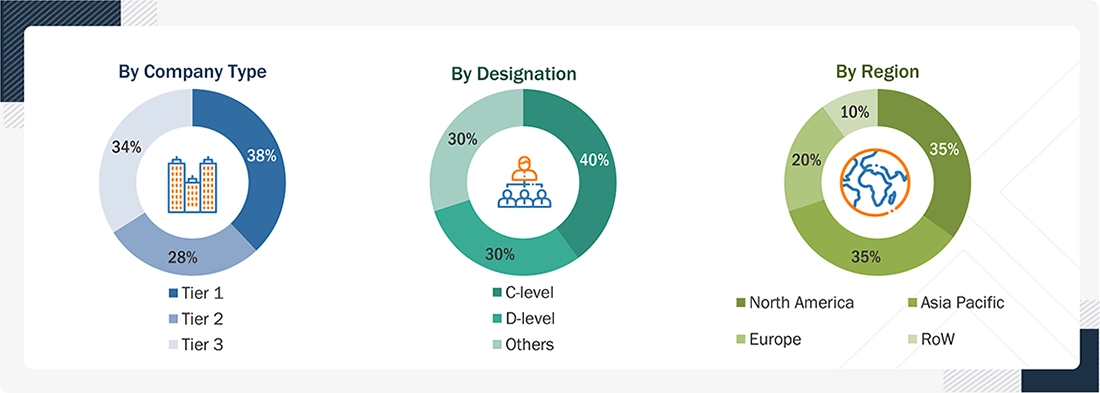
Several primary interviews have been conducted with experts from the demand and supply sides across four major regions—North America, Europe, Asia Pacific, and RoW. Approximately 25% of the primary interviews were conducted with the demand side, and 75% with the supply side. This primary data has been collected through questionnaires, emails, and telephone interviews.
BREAKDOWN OF PRIMARY PARTICIPANTS
To know about the assumptions considered for the study, download the pdf brochure
Market Size Estimation
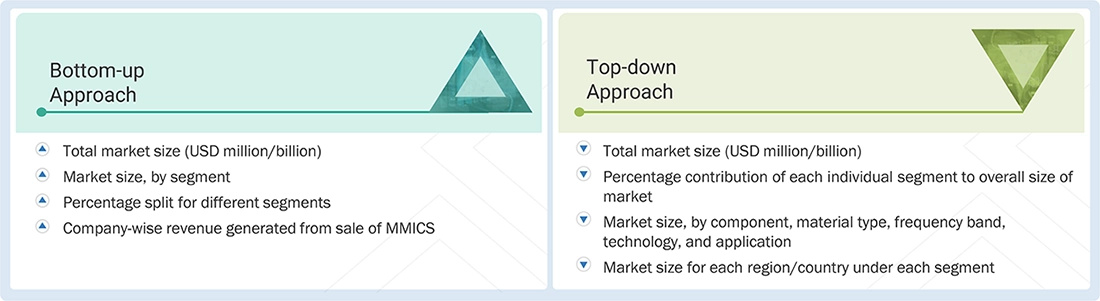
In the comprehensive market engineering process, top-down and bottom-up approaches, along with several data triangulation methods, have been used to estimate and forecast the overall market segments and subsegments listed in this report. Key players in the market have been identified through secondary research, and their market shares in the respective regions have been determined through primary and secondary research. This entire procedure includes the study of annual and financial reports of the top market players and extensive interviews for key insights (quantitative and qualitative) with industry experts (CEOs, VPs, directors, and marketing executives).
All percentage shares, splits, and breakdowns have been determined using secondary sources and verified through primary sources. All parameters affecting the markets covered in this research study have been accounted for, examined in detail, verified through primary research, and analyzed to obtain the final quantitative and qualitative data. This data has been consolidated and supplemented with detailed inputs and analysis from MarketsandMarkets, and presented in this report. The following figure represents this study’s overall market size estimation process.
Monolithic Microwave IC Market: Top-Down and Bottom-Up Approach
Data Triangulation
After determining the overall market size through the above estimation process, the market has been segmented into several segments and subsegments. The data triangulation procedure has been employed wherever applicable to complete the overall market engineering process and arrive at the exact statistics for all segments and subsegments. The data has been triangulated by studying various factors and trends from both the demand and supply sides. Additionally, the market size has been validated using top-down and bottom-up approaches.
Market Definition
Monolithic microwave integrated circuits (MMICs) consist of electronic devices fabricated on semiconductor wafers and are designed to operate at frequencies ranging from 300 MHz to 300 GHz. MMICs are used for high-frequency switching, power amplification, low-noise amplification, and microwave mixing, among other functions. These circuits were originally fabricated using gallium arsenide (GaAs), an III-V compound semiconductor with high transistor speed and a semi-insulating substrate.
The major characteristics of MMICs include high breakdown voltage, high thermal conductivity, effective operation at high frequencies (up to the microwave range), excellent power-handling capability, and efficient power amplification. The use of MMICs for Radio Frequency (RF) transmission and reception is a major factor driving increased demand for MMICs, with a significant focus on developing microwave-frequency (>1 GHz) RF power amplifiers to broaden the application base of RF devices. As demand for these circuits grows across applications such as consumer electronics, wireless communication infrastructure, automotive, aerospace & defense, the market for MMICs is expected to expand significantly during the forecast period.
Key Stakeholders
- Raw material suppliers
- Electronic design automation (EDA) and design tool vendors
- Original equipment manufacturers (OEMs)
- Integrated device manufacturers (IDMs)
- Original design manufacturers (ODMs)
- ODM and OEM technology solution providers
- Assembling, testing, and packaging vendors
- Technology, service, and solution providers
- Intellectual property (IP) core and license providers
- Suppliers and distributors
- Government and other regulatory bodies
- Technology investors
- Research institutes and organizations
- Market research and consulting firms
Report Objectives
- To describe, segment, and forecast the monolithic microwave IC market, in terms of value based on component, material type, frequency band, technology, and application
- To describe and forecast the monolithic microwave IC market, by component, in terms of volume
- To describe and forecast the market for four key regions, namely North America, Europe, Asia Pacific, and the Rest of the World (RoW), in terms of value
- To provide detailed information regarding the market dynamics (drivers, restraints, opportunities, and challenges) influencing the growth of the monolithic microwave IC market
- To provide a detailed overview of the supply chain and ecosystem pertaining to the monolithic microwave IC, along with their average selling prices
- To strategically analyze the ecosystem, tariffs & regulations, patent landscape, trade landscape, and case studies pertaining to the market under study
- To strategically analyze micromarkets with regard to individual growth trends, prospects, and contributions to the overall market
- To analyze opportunities in the market for stakeholders and provide a competitive landscape of the market
- To analyze competitive developments such as product launches & developments, expansions, partnerships, and acquisitions in the monolithic microwave IC market
- To strategically profile the key players in the monolithic microwave IC market and comprehensively analyze their market ranking and core competencies
- To analyze the impact of Gen AI/AI on the market and macroeconomic outlook for each region.
Available customizations:
Based on the provided market data, MarketsandMarkets offers customizations tailored to the specific requirements of companies. The following customization options are available for the report:
- Detailed analysis and profiling of additional market players (up to 5)
- Additional country-level analysis of the monolithic microwave IC market
Product Analysis
- Product matrix provides a detailed comparison of the product portfolio of each company in the monolithic microwave IC market.
Key Questions Addressed by the Report
What is the current and projected size of the MMIC market?
The MMIC market is valued at USD 14.53 billion in 2025 and is projected to reach USD 23.91 billion by 2030.
What is the expected growth rate of the MMIC market?
The market is expected to grow at a CAGR of 10.5% from 2025 to 2030.
What are the major growth drivers of the MMIC market?
Growth is driven by increasing demand for high-frequency communication, 5G deployment, automotive radar systems, and broadband connectivity.
Which industries are key users of MMICs?
Major industries include telecommunications, automotive (ADAS & radar), aerospace & defense, consumer electronics, and wireless infrastructure.
What are the latest trends in the MMIC market?
Key trends include adoption of 5G/6G, increasing use of Ka-band & K-band frequencies, AI integration, and high-speed data transmission technologies.
Which region dominates or grows fastest in the MMIC market?
Asia Pacific dominates the market, while Europe is among the fastest-growing regions due to increasing aerospace and telecom investments.
What are the major segments in the MMIC market?
The market is segmented by component (power amplifiers, switches), material (GaAs, GaN, InP), frequency bands, technology, and application sectors.
Who are the key companies in the MMIC market?
Leading players include Qorvo, MACOM, Skyworks Solutions, NXP Semiconductors, and Analog Devices.
What are the main challenges in the MMIC market?
Challenges include high manufacturing costs, design complexity, thermal management issues, and strict regulatory requirements.
What insights does the report analysis provide?
The report includes market sizing (USD billions), CAGR forecasts, company benchmarking, technology trends, segmentation analysis, and regional outlook up to 2030.


Personalize This Research
- Triangulate with your Own Data
- Get Data as per your Format and Definition
- Gain a Deeper Dive on a Specific Application, Geography, Customer or Competitor
- Any level of Personalization
Let Us Help You
- What are the Known and Unknown Adjacencies Impacting the Monolithic Microwave IC Market
- What will your New Revenue Sources be?
- Who will be your Top Customer; what will make them switch?
- Defend your Market Share or Win Competitors
- Get a Scorecard for Target Partners

Custom Market Research Services
We Will Customise The Research For You, In Case The Report Listed Above Does Not Meet With Your Requirements
Get 10% Free CustomisationTESTIMONIALS

Tetsuya Ohhira
Business Development Manager-Technology Business
Nikon Corporation,
Leading Japanese MNC specializing in optics and imaging productswww.nikon.com
MarketsandMarkets™ response
is quick. Their attitude is flexible and positive. Analyst Insights are globally considered and
significant. Client Services quickly respond to our inquiry and demand. Their wide range of global
surveys help us make our strategic plan.
We hope Knowledge Store will be easier to search
for a report.
VP - Marketing & Business Development
Leading Provider of Process Control Solutions
We engaged with MarketsandMarkets on a study to perform an analysis and recommend a Go-To-Market strategy for metrology and process control in the semiconductor market. The study was tailored to our targets and needs with well-defined milestones. Our overall experience with the MarketsandMarkets team was very good throughout the project in all aspects including the analysis methodologies used, the quality and depth of primary and secondary data sets, the professionalism and flexibility of the team and the ability to meet the target schedule and milestones. We want to thank MarketsandMarkets team for a job well done.






Growth opportunities and latent adjacency in Monolithic Microwave IC Market