Medical Equipment Cooling Market

Medical Equipment Cooling Market by Type (Liquid, Air), Compressor (Scroll, Screw, Centrifugal), Configuration (Packaged, Modular, Split), Application (PET, MRI, CT, LINAC, Medical Laser), End User (OEMs, Hospitals) - Global Forecast to 2031



MEDICAL EQUIPMENT COOLING MARKET SIZE, SHARE & GROWTH SNAPSHOT
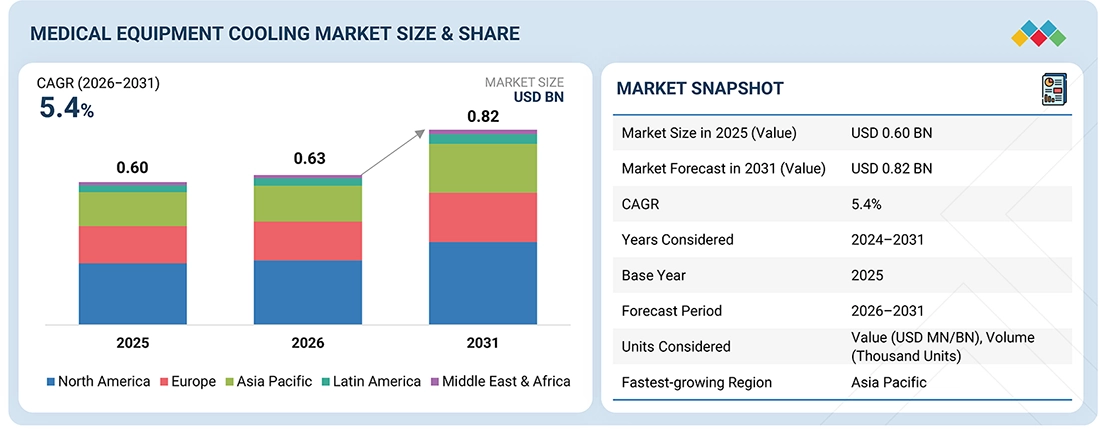
Source: Secondary Research, Interviews with Experts, MarketsandMarkets Analysis
The global medical equipment cooling market is projected to grow from USD 0.63 billion in 2026 to USD 0.82 billion by 2031, at a CAGR of 5.4% during the forecast period. The market was valued at USD 0.60 billion in 2025. The increasing installation of advanced medical equipment, particularly diagnostic imaging systems such as MRI, CT, PET, and X-ray, is a major factor driving the market. These high-performance systems generate substantial heat during continuous operation and require precise thermal management to maintain imaging accuracy, system reliability, and equipment longevity. Additionally, the mounting adoption of radiotherapy systems, medical lasers, and laboratory analyzers has further increased the demand for efficient cooling solutions across healthcare facilities. Increasing investments in healthcare infrastructure, hospital modernization, and the expansion of diagnostic centers in both developed and emerging economies are accelerating the deployment of advanced medical devices that depend on dedicated cooling systems. Furthermore, continuous technological advancements, including energy-efficient liquid cooling, smart thermal management systems with real-time monitoring, compact modular chillers, and environmentally sustainable refrigerants, are enhancing system performance while reducing operational costs and energy consumption, supporting the continued market expansion.
KEY TAKEAWAYS
-
MARKET SNAPSHOT:
Base Year Market Size (2025): USD 0.60 Billion
Current Market Size (2026): USD 0.63 Billion
Forecast Market Size (2031): USD 0.82 Billion
CAGR (2026–2031): 5.4% -
SEGMENT LEADERSHIP:
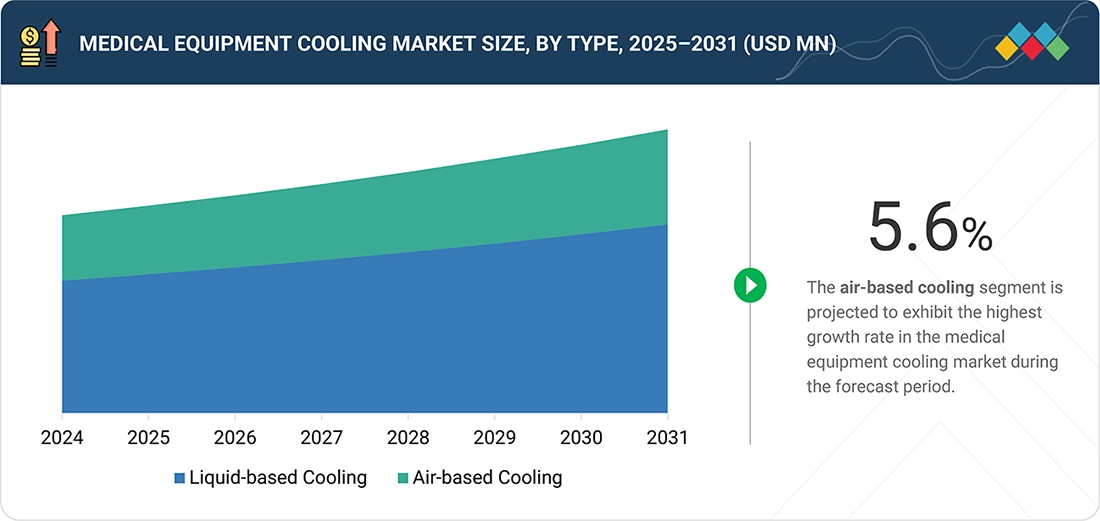
Type Leader: Air-based cooling segment is expected to record a CAGR of 5.6% between 2026 and 2031.
Compressor Leader: Scroll segment held approximately 43.6% share of the medical equipment cooling market in 2025.
Configuration Leader: Packaged systems segment accounted for approximately 42.9% share of the medical equipment cooling market in 2025.
Application Leader: Medical devices segment captured approximately 70% of the medical equipment cooling market in 2025.
End User Leader: Original equipment manufacturers segment held approximately 51.9% of the medical equipment cooling market in 2025. -
MARKET OUTLOOK & COMPETITIVE LANDSCAPE:
Parker Hannifin Corporation and Laird Thermal Systems were recognized as star players due to their established strong product portfolio.
Companies such as Acuderm, Inc. have distinguished themselves among startups and SMEs by securing strong footholds in specialized niche areas, underscoring their potential as emerging market leaders.
The growth of the medical equipment cooling market is largely driven by the increasing installation of advanced diagnostic imaging systems, including MRI, CT, PET, and X-ray equipment, which require precise thermal management to ensure optimal performance and reliability. Among the key factors driving demand are the rising prevalence of chronic diseases, an aging population requiring frequent diagnostic imaging and cancer treatment, and the growing number of minimally invasive procedures utilizing medical lasers and radiotherapy systems. Continuous investments in hospital modernization, expansion of outpatient imaging centers, and increasing healthcare expenditure are further supporting market growth. Additionally, technological advancements in energy-efficient liquid cooling systems, smart thermal management solutions with real-time monitoring, and environmentally sustainable cooling technologies are enabling healthcare providers and medical device manufacturers to improve equipment performance, reduce downtime, and lower operational costs, accelerating the adoption of advanced medical equipment cooling solutions.
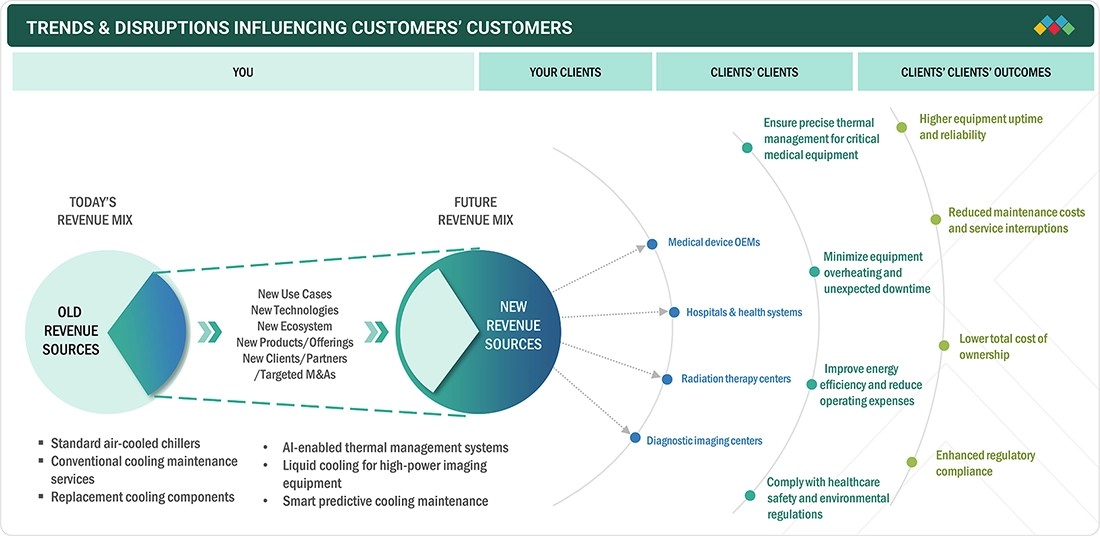
TRENDS & DISRUPTIONS IMPACTING CUSTOMERS' CUSTOMERS
The medical equipment cooling market is evolving rapidly, driven by the rising adoption of advanced diagnostic imaging systems, increasing healthcare infrastructure investments, and the growing demand for precision thermal management solutions. Equipment manufacturers are increasingly focusing on energy-efficient, compact, and intelligent cooling systems that enhance equipment reliability, reduce maintenance requirements, and improve operational efficiency. As high-performance medical technologies such as MRI systems, CT scanners, PET scanners, LINACs, medical lasers, and laboratory analyzers become more widely deployed, effective thermal management has emerged as a critical requirement for ensuring imaging accuracy, system longevity, and uninterrupted clinical operations. Furthermore, continuous innovations in liquid cooling technologies, modular cooling architectures, environmentally friendly refrigerants, and smart monitoring capabilities are shaping the next generation of medical equipment cooling solutions, enabling healthcare providers and OEMs to meet the growing demand for high-performance, reliable, and sustainable medical technologies.
Source: Secondary Research, Interviews with Experts, MarketsandMarkets Analysis
MARKET DYNAMICS

Level
-
Increasing installation of advanced diagnostic imaging systems

-
Mounting demand for minimally invasive surgeries and medical lasers


Level
-
High capital cost associated with precision cooling systems

-
Complex integration requirements and maintenance of liquid cooling systems in medical environments


Level
-
Expansion of healthcare infrastructure in emerging markets

-
Rising adoption of energy-efficient, intelligent, and liquid cooling technologies for next-generation medical equipment


Level
-
Compliance with stringent medical device regulations and performance validation requirements

-
Issues in ensuring uninterrupted cooling performance for high-value imaging

Source: Secondary Research, Interviews with Experts, MarketsandMarkets Analysis
Driver: Increasing installation of advanced diagnostic imaging systems
The growing installation of advanced diagnostic imaging equipment, including MRI systems, CT scanners, PET scanners, and hybrid imaging platforms, has significantly increased the demand for precision cooling solutions. These systems generate substantial heat during continuous operation, making efficient thermal management essential for maintaining imaging accuracy, system stability, and equipment lifespan. Additionally, the rising incidence of chronic diseases, an aging population requiring frequent diagnostic imaging, and increased healthcare investments are accelerating the procurement of high-performance medical equipment worldwide. As hospitals and diagnostic centers continue to modernize their imaging infrastructure, OEMs are increasingly integrating customized liquid cooling and precision chiller systems into next-generation medical devices, contributing to the sustained market growth.
Restraint: High capital cost associated with precision cooling systems
Precision cooling systems for medical equipment require specialized components, advanced temperature control technologies, and compliance with stringent medical device quality standards, resulting in high procurement and installation costs. Furthermore, routine maintenance, periodic calibration, coolant replacement, and skilled technical support contribute to higher operating expenses throughout the equipment lifecycle. These costs can be particularly challenging for small hospitals, diagnostic centers, and healthcare facilities in emerging economies with limited capital budgets. Consequently, the high total cost of ownership may delay equipment upgrades and limit the adoption of advanced cooling technologies in cost-sensitive markets.
Opportunity: Expansion of healthcare infrastructure in emerging markets
Continuous investments in healthcare infrastructure, particularly across Asia Pacific, Latin America, and the Middle East, are creating significant growth opportunities for medical equipment cooling solution providers. Governments and private healthcare organizations are expanding hospitals, diagnostic imaging centers, cancer treatment facilities, and research laboratories, increasing demand for advanced thermal management systems. Simultaneously, innovations such as energy-efficient liquid cooling, modular cooling architectures, IoT-enabled remote monitoring, predictive maintenance, and environmentally sustainable refrigerants are enabling manufacturers to improve equipment performance while reducing energy consumption and operating costs. These advancements are expected to boost the adoption of next-generation cooling technologies across both developed and emerging healthcare markets.
Challenge: Compliance with stringent medical device regulations and performance validation requirements
Medical equipment cooling systems must deliver highly reliable and uninterrupted performance to protect mission-critical diagnostic and therapeutic equipment operating in demanding clinical environments. Even minor temperature fluctuations can affect imaging quality, equipment calibration, and overall system reliability, potentially disrupting patient care. At the same time, manufacturers must comply with stringent international quality and safety standards while addressing increasing expectations for energy efficiency, compact system design, lower noise levels, and environmental sustainability. Balancing these performance, regulatory, and cost requirements remains a key challenge for cooling system manufacturers as healthcare providers continue to demand more reliable, intelligent, and efficient thermal management solutions.
MEDICAL EQUIPMENT COOLING MARKET: COMMERCIAL USE CASES ACROSS INDUSTRIES
| COMPANY | USE CASE DESCRIPTION | BENEFITS |
|---|---|---|
 |
Parker Hannifin develops precision process chillers, liquid cooling systems, refrigeration technologies, pumps, valves, and heat exchangers used in medical imaging equipment, laboratory diagnostic instruments, and life science applications. The company's customized thermal management solutions are integrated into OEM medical equipment requiring precise temperature regulation. | Highly stable temperature control | Improved diagnostic accuracy and equipment performance | Reduced downtime | Enhanced operational efficiency | Continuous operation of critical medical equipment while lowering maintenance costs and improving energy efficiency |
 |
Daikin supplies medical chillers, inverter compressor-based cooling systems, and environmentally sustainable refrigeration solutions for diagnostic imaging systems, laboratory equipment, and healthcare facilities. The company's precision cooling technologies are utilized in MRI scanners, CT systems, PET scanners, and analytical laboratory instruments requiring continuous temperature control. | High energy efficiency | Quiet operation | Reliable thermal performance while utilizing environmentally friendly refrigerants | Minimized power consumption | Reduced operational costs | Improved equipment stability | Support in achieving sustainability and regulatory compliance objectives |
 |
Laird Thermal Systems specializes in thermoelectric cooling modules, liquid cooling systems, recirculating chillers, and customized thermal management solutions for medical diagnostics, laboratory analyzers, medical lasers, and imaging equipment. The company's precision cooling technologies support temperature-sensitive medical devices requiring highly accurate thermal control. | Precise temperature regulation | Optimal performance of sensitive medical instruments | Diagnostic reliability | Reduced equipment size | Improved system efficiency | Extended component lifespan | Support in developing high-performance medical devices |
 |
Thermo Fisher Scientific integrates precision cooling technologies into its laboratory analyzers, molecular diagnostic instruments, life science equipment, and analytical systems to maintain stable operating conditions during complex laboratory workflows. The company utilizes advanced thermal management systems to support research laboratories, pharmaceutical manufacturing, and clinical diagnostics. | Improved analytical accuracy | Stable instrument temperatures | Reduced thermal fluctuations | Minimized equipment downtime | Enhanced laboratory productivity | Extended instrument life | Consistent test results | Continuous operation in high-throughput diagnostic and research environments |
 |
Boyd Corporation provides advanced liquid cooling systems, cold plates, heat exchangers, thermal interface materials, and customized thermal management solutions for high-performance medical equipment, including MRI systems, CT scanners, PET scanners, medical lasers, LINACs, and analytical & laboratory instruments. The company collaborates with leading medical device OEMs to design application-specific cooling solutions that effectively dissipate heat generated by high-power electronic components and imaging systems while supporting compact equipment architectures. | Superior heat dissipation, enabling medical equipment to operate continuously without performance degradation or overheating | Improved equipment reliability | Extended component lifespan | Reduced maintenance requirements | Enhanced diagnostic accuracy by maintaining stable operating temperatures | Optimize device design | Reduced system footprint | Improved overall energy efficiency | Support for the development of next-generation medical imaging and laboratory equipment |
Logos and trademarks shown above are the property of their respective owners. Their use here is for informational and illustrative purposes only.
MARKET ECOSYSTEM
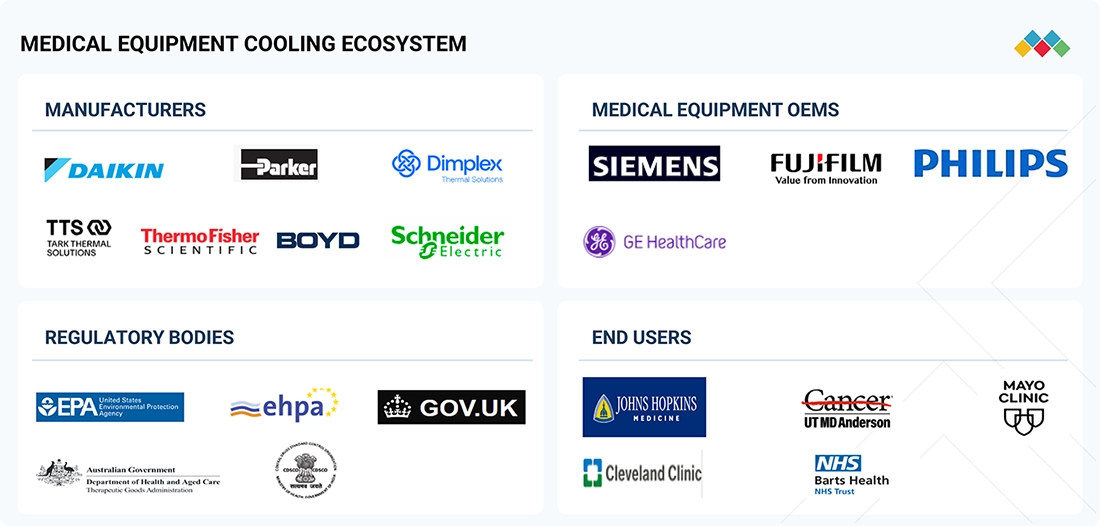
The medical equipment cooling ecosystem comprises cooling system manufacturers, medical equipment OEMs, end users, and regulatory bodies. Leading manufacturers, including Daikin Industries, Parker Hannifin, Boyd Corporation, Glen Dimplex Thermal Solutions, Thermo Fisher Scientific, TTS (Tark Thermal Solutions), and Ferrotec Corporation, develop precision cooling technologies for medical applications. These solutions are integrated by OEMs such as Siemens Healthineers, Philips Healthcare, GE HealthCare, and Fujifilm Healthcare into diagnostic imaging systems, laboratory equipment, and therapeutic devices. Major end users include hospitals and healthcare institutions such as Mayo Clinic, Johns Hopkins Medicine, Cleveland Clinic, MD Anderson Cancer Center, and NHS Trusts. Regulatory oversight is provided by organizations including the US EPA, MHRA (UK), TGA (Australia), CDSCO (India), and other regional authorities to ensure compliance with medical device and environmental standards.
Logos and trademarks shown above are the property of their respective owners. Their use here is for informational and illustrative purposes only.
MARKET SEGMENTS
Source: Secondary Research, Interviews with Experts, MarketsandMarkets Analysis
Medical Equipment Cooling Market, By Type
Among the various cooling technologies, liquid-based cooling accounted for the largest share of the medical equipment cooling market in 2025 owing to its superior heat dissipation capability, high cooling efficiency, and ability to maintain precise temperature control in high-performance medical equipment. Liquid cooling systems are extensively used in MRI systems, CT scanners, PET scanners, LINACs, medical lasers, and laboratory analyzers, where continuous operation and thermal stability are essential. Their ability to efficiently remove high thermal loads while improving equipment reliability, minimizing downtime, and extending system lifespan has significantly contributed to their widespread adoption across healthcare facilities and medical equipment OEMs.
Medical Equipment Cooling Market, By Application
Among the application segments, medical devices accounted for the largest share of the medical equipment cooling market in 2025 due to the increasing deployment of advanced diagnostic imaging and therapeutic equipment worldwide. MRI systems, CT scanners, PET scanners, medical lasers, and LINACs require precision cooling solutions to maintain optimal operating temperatures, ensure imaging accuracy, and prevent overheating during prolonged operation. Increasing investments in healthcare infrastructure, increasing demand for diagnostic imaging procedures, and continuous technological advancements in medical equipment are further driving the adoption of dedicated cooling systems across hospitals and diagnostic centers.
Medical Equipment Cooling Market, By End User
The original equipment manufacturers segment accounted for the largest share of the medical equipment cooling market in 2025, as cooling systems are increasingly integrated during the design and manufacturing of advanced medical equipment. OEMs collaborate closely with thermal management solution providers to develop customized cooling systems that meet specific performance, reliability, and regulatory requirements. The growing production of diagnostic imaging systems, laboratory instruments, and therapeutic equipment, coupled with increasing demand for compact, energy-efficient, and maintenance-friendly cooling solutions, continues to strengthen the dominance of this segment in the market.
REGION
Asia Pacific to be fastest-growing region in global medical equipment cooling market during forecast period
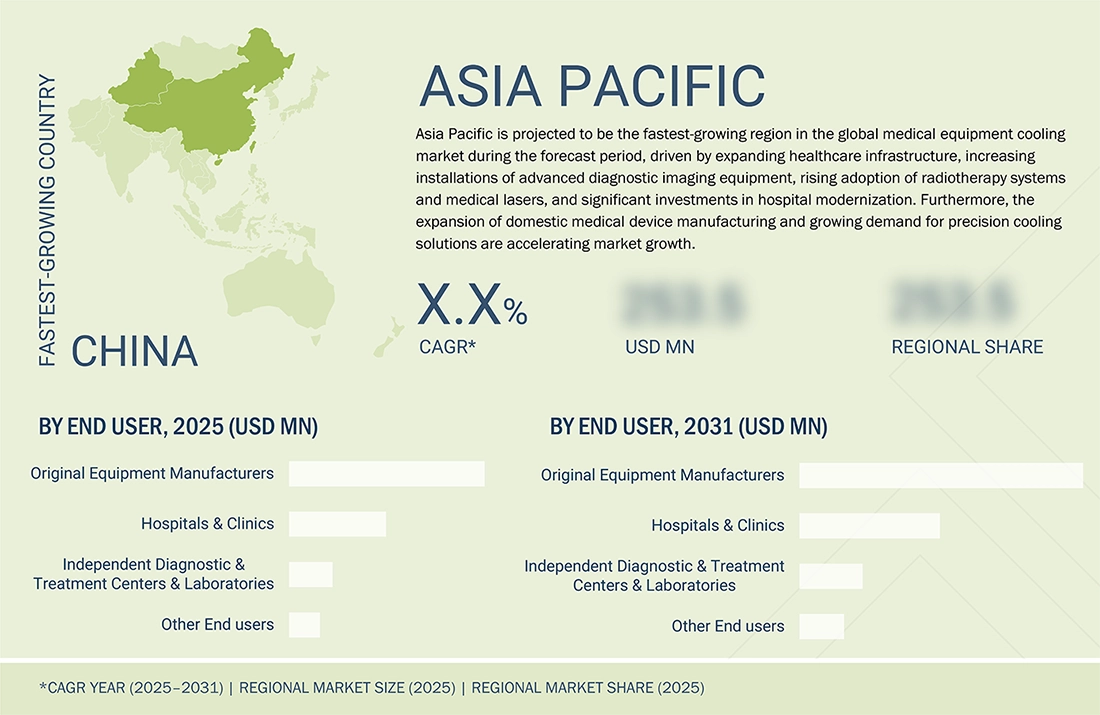
Asia Pacific is projected to be the fastest-growing region in the global medical equipment cooling market during the forecast period. The regional market is primarily driven by expanding healthcare infrastructure, increasing installations of advanced diagnostic imaging equipment (MRI, CT, PET, and X-ray), rising adoption of radiotherapy systems and medical lasers, and significant investments in hospital modernization across China, India, Japan, and Southeast Asian countries. Furthermore, the expansion of domestic medical device manufacturing and growing demand for precision cooling solutions are accelerating market growth.
MEDICAL EQUIPMENT COOLING MARKET: COMPANY EVALUATION MATRIX
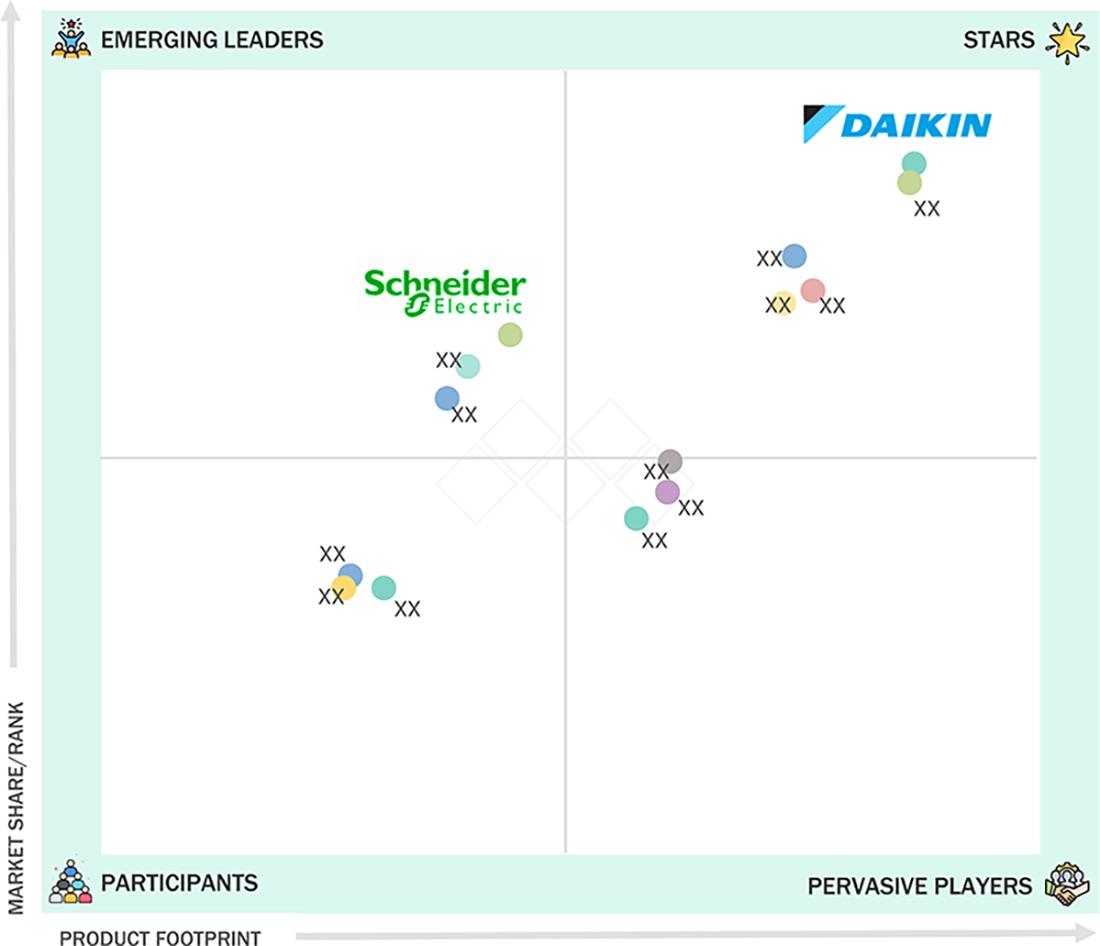
In the medical equipment cooling market matrix, Daikin Industries (Japan) (Star) leads the market owing to its strong global presence, extensive expertise in precision cooling technologies, comprehensive portfolio of medical chillers and liquid cooling systems, and well-established relationships with medical device OEMs. Schneider Electric (France) (Emerging Leader) is rapidly strengthening its position through its advanced thermal management solutions, energy-efficient cooling technologies, and increasing investments in intelligent cooling systems for healthcare infrastructure and critical medical applications. The company's growing focus on sustainable cooling solutions, digital monitoring capabilities, and expanding presence across healthcare facilities is expected to enhance its competitiveness in the global market.
Source: Secondary Research, Interviews with Experts, MarketsandMarkets Analysis
KEY MARKET PLAYERS
- Daikin Industries Ltd. (Japan)
- Glen Dimplex Group (Ireland)
- Thermo Fisher Scientific Inc. (US)
- Parker Hannifin Corp (US)
- Schneider Electric (France)
- SMC Corporation (Japan)
- Boyd Corporation (US)
- Tark Thermal Solutions (US)
- KKT Chillers (Germany)
- Ecochillers, Inc. (US)
MARKET SCOPE
| REPORT METRIC | DETAILS |
|---|---|
| Market Size in 2025 (Value) | USD 0.60 Billion |
| Market Size in 2026 (Value) | USD 0.63 Billion |
| Market Forecast in 2031 (Value) | USD 0.82 Billion |
| Growth Rate | CAGR of 5.4% from 2026-2031 |
| Years Considered | 2024-2031 |
| Base Year | 2025 |
| Forecast Period | 2026-2031 |
| Units Considered | Value (USD Million/Billion), Volume (Thousand Units) |
| Report Coverage | Revenue Forecast, Company Ranking, Competitive Landscape, Growth Factors, and Trends |
| Segments Covered |
|
| Regions Covered | North America, Europe, Asia Pacific, Latin America, and the Middle East & Africa |
WHAT IS IN IT FOR YOU: MEDICAL EQUIPMENT COOLING MARKET REPORT CONTENT GUIDE
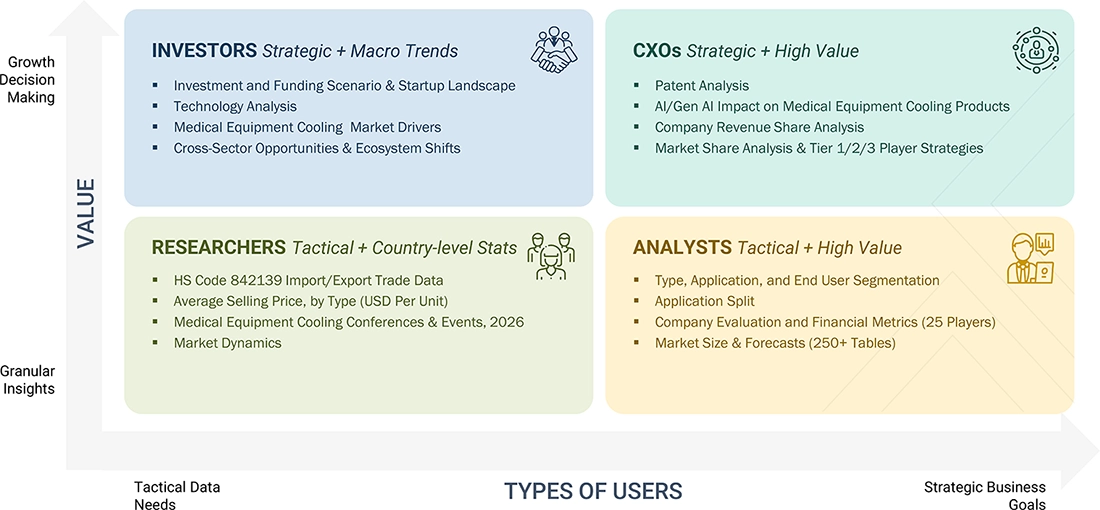
DELIVERED CUSTOMIZATIONS
We have successfully delivered the following deep-dive customizations:
| CLIENT REQUEST | CUSTOMIZATION DELIVERED | VALUE ADDS |
|---|---|---|
| Volume Analysis | Market assessment by volume (units) for medical equipment cooling systems across imaging systems, laboratory equipment, medical lasers, and radiotherapy equipment. | Insights into product demand by volume, installation base, replacement demand, and year-over-year (YoY) growth by product category. |
| Product Analysis | Further breakdown of other applications in the market | Insights on other applications involved in the market |
| Company Information |
|
Insights on market share analysis by country |
| Geographic Analysis |
|
Country level demand mapping for new product launches and localization strategy planning |
RECENT DEVELOPMENTS
- November 2025 : Eaton announced the acquisition of Boyd Corporation's Thermal Management business for approximately USD 9.5 billion, significantly strengthening its portfolio in advanced liquid cooling technologies. The acquisition expands Eaton's capabilities across data centers, medical equipment, and industrial thermal management solutions. The development highlights the growing strategic importance of precision cooling technologies, including medical equipment cooling, as demand for high-performance thermal management continues to increase globally.
- October 2024 : Laird Thermal Systems expanded its portfolio of thermoelectric cooling solutions for medical and laboratory applications by introducing high-efficiency temperature control technologies designed for diagnostic imaging systems, laboratory analyzers, and medical laser equipment. The product expansion reflects the increasing industry focus on compact, energy-efficient, and highly reliable cooling systems to improve equipment performance, operational efficiency, and system reliability in healthcare environments.
- July 2024 : GE HealthCare acquired the clinical artificial intelligence business of Intelligent Ultrasound to strengthen its diagnostic imaging portfolio and accelerate AI-enabled imaging workflows. The acquisition supports the development of more advanced ultrasound and imaging platforms with higher computing capabilities, increasing the need for efficient thermal management solutions to ensure reliable performance of medical imaging equipment. The development reflects the growing industry focus on integrating AI with diagnostic systems, driving the demand for precision medical equipment cooling technologies.
Table of Contents
 Exclusive indicates content/data unique to MarketsandMarkets and not available with any competitors.
Methodology
This study involved four major activities in estimating the current medical equipment cooling market size. First, extensive secondary research was conducted to gather information on the market, including related and parent markets. The next step was to validate these findings, assumptions, and sizing with industry experts across the value chain through primary research. Both top-down and bottom-up approaches were employed to estimate the complete market size. After that, market breakdown and data triangulation were used to estimate the market size of segments and subsegments.
Secondary Research
The secondary research process involved the widespread use of secondary sources, directories, databases (Bloomberg Businessweek, Factiva, and D&B Hoovers), white papers, annual reports, company house documents, investor presentations, and SEC filings of companies. Secondary research was used to identify and collect information useful for the extensive technical, market-oriented, and commercial study of the medical equipment cooling market. It was also used to obtain important information about the key players and market classification and segmentation according to industry trends to the bottom-most level, and key developments related to market and technology perspectives. A database of the key industry leaders was also prepared using secondary research.
Primary Research
In the primary research process, various sources from the supply and demand sides were interviewed to obtain qualitative and quantitative information for this report. The primary sources from the supply side include industry experts such as CEOs, vice presidents, marketing and sales directors, technology & innovation directors, and related key executives from various key companies and organizations operating in the medical equipment cooling market. The primary sources from the demand side included industry experts, purchase & sales managers, doctors, and personnel from research organizations. Primary research was conducted to validate the market segmentation, identify key players in the market, and gather insights on key industry trends and key market dynamics.
A breakdown of the primary respondents for the medical equipment cooling market is provided below:
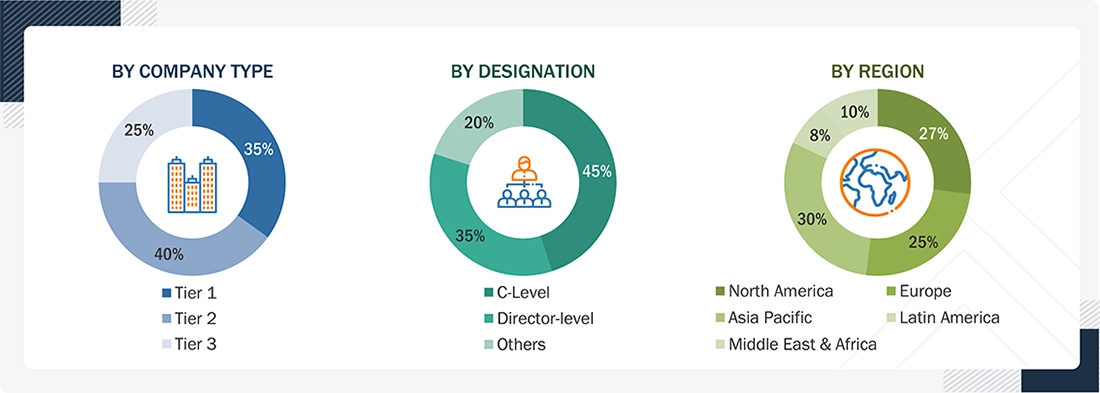
Note 1: C-level primaries include CEOs, CFOs, COOs, and VPs.
Note 2: Other designations include sales managers, marketing managers, business development managers, product managers, distributors, and suppliers.
Note 3: Companies are classified into tiers based on their total revenue. As of 2025, Tier 1 = >USD 10.00 billion, Tier 2 = USD 1.00 billion to USD 10.00 billion, and Tier 3 = <USD 1.00 billion.
To know about the assumptions considered for the study, download the pdf brochure
Market Size Estimation
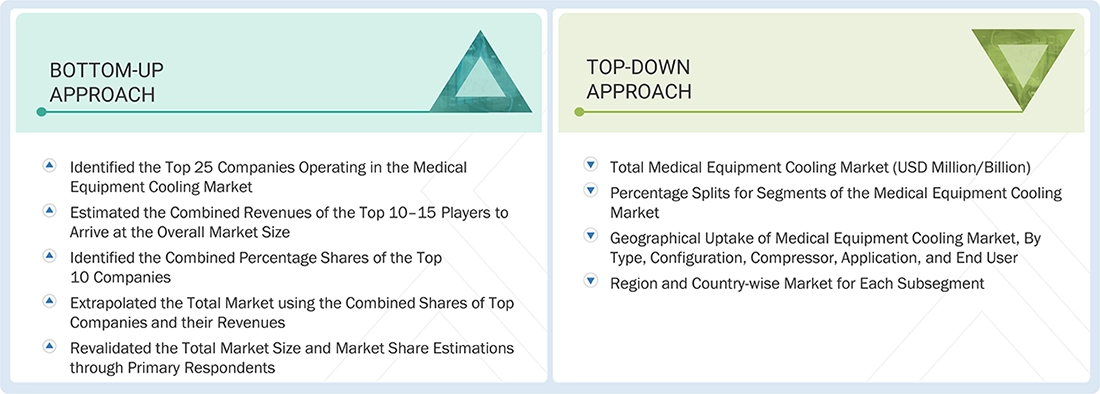
For the global market value, annual revenues were calculated based on the revenue mapping of major product manufacturers and OEMs active in the global medical equipment cooling market. All the major product manufacturers were identified at the global and/or country/regional level. Revenue mapping for the respective business segments/sub-segments was done for the major players. Additionally, the global medical equipment cooling market was split into various segments and sub-segments based on:
- List of major players operating in the products market at the regional and/or country level
- Product mapping of various medical equipment cooling manufacturers at the regional and/or country level
- Mapping of annual revenue generated by listed major players from medical equipment cooling (or the nearest reported business unit/product category)
- Revenue mapping of major players to covered
- Extrapolation of the revenue mapping of the listed major players to derive the global market value of the respective segments/subsegments
- Summation of the market value of all segments/subsegments to arrive at the global medical equipment cooling market
The above-mentioned data was consolidated and added with detailed input and analysis from MarketsandMarkets and presented in this report.
Market Size Estimation (Bottom-Up Approach & Top-down Approach)
Data Triangulation
After arriving at the overall size of the global medical equipment cooling market through the above-mentioned methodology, this market was split into several segments and subsegments. The data triangulation and market breakdown procedures were employed, wherever applicable, to complete the overall market engineering process and arrive at the exact market value data for the key segments and subsegments. The extrapolated market data was triangulated by studying various macro indicators and regional trends from both the demand- and supply-side participants.
Market Definition
Medical equipment such as MRI, CT, and LINAC produces a large amount of heat while operating. A powerful cooling system is necessary to consistently cope with the thermal load in order to ensure the continuous and accurate working of equipment and avoid damage from overheating.
Key Stakeholders
- Medical Equipment Cooling Product Manufacturing Companies
- Distributors, Suppliers, and Commercial Service Providers
- Medical Equipment Manufacturing Companies
- Healthcare Service Providers
- Clinical Research Organizations (CROs)
- Medical Research Laboratories
- Cancer Research Organizations
- Academic Medical Centers and Universities
- Diagnostic Laboratories
- Hospitals and Clinics
- Academic Institutions
- Research Institutions
- Government Associations
- Market Research and Consulting Firms
- Venture Capitalists and Investors
Report Objectives
- To describe, analyze, and forecast the medical equipment cooling market, by type, configuration, compressor, application, and end user, in terms of value
- To describe and forecast the medical equipment cooling market for key regions—North America, Europe, Asia Pacific, Latin America, and the Middle East & Africa, in terms of value
- To provide detailed information regarding the drivers, restraints, opportunities, and challenges influencing the growth of the medical equipment cooling market
- To strategically analyze micromarkets with respect to individual growth trends, prospects, and contributions to the overall market
- To analyze market opportunities for stakeholders and provide details of the competitive landscape for market players
- To profile key players and comprehensively analyze their market shares and core competencies in the medical equipment cooling market
- To analyze competitive developments such as partnerships, collaborations, agreements, acquisitions, product launches, expansions, and R&D activities in the market
- To benchmark players within the market using the proprietary Company Evaluation Matrix framework, which analyzes market players on various parameters within the broad categories of business and product strategy
Available customizations:
With the given market data, MarketsandMarkets offers customizations as per your company’s specific needs. The following customization options are available for the report:
GEOGRAPHIC ANALYSIS
- Further breakdown of the Rest of Europe Medical equipment cooling market into Russia, Switzerland, Denmark, Austria, and others
- Further breakdown of the Rest of Asia Pacific Medical equipment cooling market into Taiwan and others
- Further breakdown of the Rest of Latin America Medical equipment cooling market into Argentina, Colombia, Chile, Ecuador, and others
- Further breakdown of the Southeast Asia Medical equipment cooling market into Malaysia, Singapore, New Zealand, and others
COMPETITIVE LANDSCAPE ASSESSMENT
- Market share analysis, by region (North America, Europe, Asia Pacific, Latin America, Middle East and Africa), which provides market shares of the top 3-5 key players in the medical equipment cooling market
- Competitive leadership mapping for established players in the US


Personalize This Research
- Triangulate with your Own Data
- Get Data as per your Format and Definition
- Gain a Deeper Dive on a Specific Application, Geography, Customer or Competitor
- Any level of Personalization
Let Us Help You
- What are the Known and Unknown Adjacencies Impacting the Medical Equipment Cooling Market
- What will your New Revenue Sources be?
- Who will be your Top Customer; what will make them switch?
- Defend your Market Share or Win Competitors
- Get a Scorecard for Target Partners

Custom Market Research Services
We Will Customise The Research For You, In Case The Report Listed Above Does Not Meet With Your Requirements
Get 10% Free CustomisationTESTIMONIALS

JAYANT RAJPUROHIT
Director of Market Insights, Data and Analytics
SFI Health,
Leading Pharmaceutical Companywww.sfihealth.com/

We at SFI Health approached MarketsandMarkets for an Opportunity Assessment on "Incidence and Prevalence of Focus Indications" as we wanted to know the most attractive HCPs like Physician, Functional MD, Naturopath and Pharmacist. The project was critical for us to ensure our focus on the right target which would enable sustainable growth and profitability for SFI Health. The business insights provided exceeded our expectations and we were extremely impressed. The team at MarketsandMarkets is highly professional and detail oriented and very well understood our business needs. MarketsandMarkets offers a unique combination of expertise and dedicated engagement model. We identified 2 new products to be launched in coming months, based on the research findings provided by MarketsandMarkets. We are happy with the services and would strongly recommend MarketsandMarkets to my peers in the industry.

BEATRIZ DE LA CALLE
Head of Commercial Analytics
Qualicaps,
Leading Pharmaceutical Companywww.qualicaps.com/

We partnered with MarketsandMarkets for an assessment study on hard empty capsules. The team was extremely professional in understanding our business requirements and we received timely responses to all our queries. The market intelligence and the recommendations has met our business requirements. We were extremely impressed to see the final study results; it really exceeded our expectations. The market intelligence offered by MarketsandMarkets, and clarity on next steps will help us achieve our business objective for the Year 2021. We are happy with the services and would strongly recommend MarketsandMarkets to my peers in the industry.

Bob Williams,
Senior Director Business Development & Innovation
Bracco Diagnostics Inc.,
Italian Multinational in life sciences sector and a World Leader in imaging diagnosticsimaging.bracco.com/us-en
We were pleased with targeted insights that MarketsandMarkets identified from a custom study on the 'Radiation Dose Management Solutions Market'. Your team identified and characterized the market participants as well as underlying trends accurately. This study was useful to Bracco in formulating business strategies for our dose monitoring product lines and we thank MarketsandMarkets for the job well done.
Cody Coonradt,
Market Development and Strategy Manager
3M Health Information Systems,
Leader in Health care Coding, Payment & Analytics Solutions.www.3m.com/3M/en_US/health-information-systems-us
The value for our organization comes from three things: depth of research, specificity of segments and being easy to work with. As important as the first two are, the third can't be underestimated. MarketsandMarkets, maybe more than any other research vendor, wants to know what is top of mind for our team and what big questions we are grappling to answer.
Their customer first approach and high value engagement model, have given us great analysis and excellent value for money
- Canada Medical Equipment Cooling Market
- US Medical Equipment Cooling Market
- Germany Medical Equipment Cooling Market
- UK Medical Equipment Cooling Market
- France Medical Equipment Cooling Market
- Italy Medical Equipment Cooling Market
- Spain Medical Equipment Cooling Market
- Japan Medical Equipment Cooling Market
- China Medical Equipment Cooling Market
- India Medical Equipment Cooling Market
- Australia Medical Equipment Cooling Market
- South Korea Medical Equipment Cooling Market
- Brazil Medical Equipment Cooling Market
- Mexico Medical Equipment Cooling Market
- GCC Countries Medical Equipment Cooling Market
- Rest Of Europe Medical Equipment Cooling Market
- Rest Of Asia Pacific Medical Equipment Cooling Market
- Rest Of Latin America Medical Equipment Cooling Market






Growth opportunities and latent adjacency in Medical Equipment Cooling Market