Mobile Biometrics Market by Component (Fingerprint Readers, Scanners, Cameras, Software), Authentication Mode (Single factor (Fingerprint, Voice, Face, Iris, Vein, & Retina Scan) and Multifactor) and Geography - Global Forecast to 2035


Mobile Biometrics Market Summary
The global Mobile Biometrics Market is entering a high-growth phase as smartphones, tablets, wearables, mobile banking, digital payments, and identity-driven applications increasingly rely on secure and convenient authentication. The market was valued at approximately USD 51 billion in 2025 and is projected to reach around USD 270 billion by 2035, expanding at a CAGR of approximately 18%–20% during the forecast period.
The expansion of the Mobile Biometrics Market is being driven by increasing cybersecurity threats, rising smartphone penetration, growing adoption of mobile banking and e-commerce, digital identity programs, and demand for frictionless authentication. Fingerprint and facial recognition have become increasingly integrated into consumer devices, while enterprises and governments are extending biometric authentication to identity verification, remote onboarding, access control, healthcare, travel, and financial services. AI is further transforming the market through advanced facial matching, liveness detection, behavioral analysis, spoof detection, and adaptive authentication. IoT connectivity and cloud-based identity platforms are also enabling mobile biometric systems to operate as part of broader digital ecosystems.
Key Market Trends & Insights
The Mobile Biometrics Market is characterized by rapid technological development and expanding use cases. North America remains a leading regional market, supported by high smartphone adoption, advanced digital banking infrastructure, strong cybersecurity investments, and early deployment of biometric authentication.
Asia Pacific is expected to remain one of the fastest-growing regions as smartphone adoption, digital payments, mobile financial services, e-government platforms, and digital identity ecosystems expand across China, India, Japan, South Korea, and Southeast Asia. The region also benefits from a large population of mobile-first consumers.
Multi-factor authentication is becoming a particularly important segment because organizations increasingly combine biometrics with PINs, passwords, one-time passwords, device credentials, or behavioral signals. Industry estimates indicate that multi-factor authentication is expected to maintain strong momentum because it provides an additional security layer against credential theft and account takeover.
Facial recognition and fingerprint recognition remain dominant biometric modalities. Facial recognition is benefiting from increasingly capable smartphone cameras and AI-based computer vision, while fingerprint recognition continues to provide fast, familiar, and power-efficient authentication.
AI is becoming a foundational technology across the Mobile Biometrics Market. Machine learning algorithms can improve matching accuracy, identify presentation attacks, support liveness detection, and continuously adapt authentication models. Privacy-preserving processing, encrypted biometric templates, and on-device AI are also becoming important as consumers and regulators place greater emphasis on biometric data protection.
Market Size & Forecast
-
Base year market size: Approximately USD 51 billion in 2025
-
Forecast value by 2035: Approximately USD 270 billion
-
Expected CAGR: Approximately 18%–20%
-
Primary growth factors: Smartphone penetration, digital payments, mobile banking, cybersecurity requirements, digital identity initiatives, and demand for passwordless authentication.
-
Technology catalysts: AI-based facial recognition, fingerprint sensing, liveness detection, behavioral biometrics, edge computing, cloud identity platforms, and IoT integration.
-
High-potential opportunities: Healthcare authentication, financial services, government digital identity, travel, e-commerce, enterprise security, and connected devices.
Mobile Biometrics Market Top 10 key takeaway
-
The global Mobile Biometrics Market is estimated at approximately USD 51 billion in 2025.
-
The market is projected to approach USD 270 billion by 2035.
-
The market is expected to expand at approximately 18%–20% CAGR during the forecast period.
-
North America remains a leading regional market for mobile biometric technologies.
-
Asia Pacific is expected to record strong growth due to mobile-first digital ecosystems.
-
Fingerprint and facial recognition remain the most widely deployed biometric modalities.
-
Multi-factor authentication is gaining importance as organizations strengthen protection against account takeover and fraud.
-
AI is improving liveness detection, facial matching, anomaly detection, and adaptive authentication.
-
BFSI remains a major application area because of mobile banking, payments, and digital identity requirements.
-
Privacy-preserving biometrics, on-device processing, and encrypted identity infrastructure will shape the next phase of market development.
Product Insights
The Mobile Biometrics Market encompasses hardware, software, and services that enable biometric identification and authentication through smartphones, tablets, wearables, and other mobile platforms. Hardware includes fingerprint sensors, cameras, infrared components, biometric processors, and supporting modules, while software encompasses biometric algorithms, authentication frameworks, identity-management platforms, and security applications.
Fingerprint recognition remains a major product segment because it offers fast authentication, relatively low power consumption, and broad consumer familiarity. Capacitive, optical, thermal, and ultrasonic fingerprint technologies provide different performance characteristics and are used according to device design and security requirements. Fingerprint authentication continues to be particularly relevant for smartphones, mobile banking applications, enterprise devices, and secure access systems.
Facial recognition is another rapidly developing product category. Modern smartphones can combine RGB cameras, infrared sensing, depth information, and AI algorithms to create sophisticated facial authentication systems. The development of 3D face recognition and liveness detection is strengthening resistance against photographs, videos, masks, and other presentation attacks.
Voice recognition, iris recognition, palm recognition, and behavioral biometrics are also expanding the market. Behavioral biometrics can analyze characteristics such as typing patterns, touch interactions, device movement, and navigation behavior to create continuous authentication mechanisms.
The product landscape is increasingly moving toward multimodal biometrics, where multiple biometric signals are combined. AI enables these systems to evaluate different signals and determine authentication confidence dynamically. This can improve security while reducing the inconvenience associated with repeated authentication requests.
Technology / Component Insights
Technology innovation is at the center of the Mobile Biometrics Market. Fingerprint sensors, image-processing systems, biometric algorithms, secure processors, encryption technologies, and identity platforms work together to provide authentication. Semiconductor advances have enabled biometric sensors to become smaller and more power efficient, allowing them to be integrated into increasingly compact mobile devices.
AI and machine learning are particularly important because biometric authentication depends heavily on accurate pattern recognition. AI algorithms can identify facial features, compare fingerprint characteristics, distinguish genuine users from spoof attempts, and improve recognition performance under changing environmental conditions.
Liveness detection is becoming a critical technology. Traditional biometric systems could potentially be attacked using photographs, recordings, or fabricated fingerprints. AI-enabled liveness detection evaluates physical and behavioral characteristics to determine whether the biometric source is from a real person.
Edge AI is another important trend. Processing biometric information directly on a mobile device can reduce latency and limit the amount of sensitive biometric information transmitted to remote servers. This approach can strengthen privacy and improve authentication performance in environments with limited connectivity.
IoT is expanding the role of mobile biometrics beyond smartphones. Mobile biometric credentials can increasingly interact with smart locks, connected vehicles, enterprise devices, healthcare equipment, and smart-city infrastructure. Cloud-based identity systems provide another layer by enabling centralized policy management, credential administration, fraud analytics, and secure authentication across multiple devices.
Future innovation will focus on privacy-preserving machine learning, multimodal authentication, continuous authentication, post-quantum security considerations, secure biometric template storage, and highly efficient AI processors.
Application Insights
BFSI represents one of the most important application areas for the Mobile Biometrics Market. Banks and financial technology companies use biometrics for mobile app login, payment authorization, customer onboarding, transaction verification, and fraud prevention. The expansion of mobile banking and digital wallets is increasing the importance of convenient authentication methods that do not rely solely on passwords.
Retail and e-commerce are also adopting mobile biometrics to improve payment security and account protection. Biometric authentication can help verify customers during high-risk transactions and reduce friction during mobile purchases.
Government applications are expanding through digital identity programs, citizen authentication, secure mobile credentials, and public-service access. Governments are increasingly seeking ways to provide digital services while ensuring that only authorized individuals can access sensitive information.
Healthcare represents another important opportunity. Mobile biometrics can help authenticate patients, healthcare workers, and caregivers while protecting electronic health records and mobile medical applications. The growing use of connected healthcare devices and telehealth services could further increase demand.
Enterprise applications include employee authentication, secure mobile access, passwordless login, remote workforce security, and access to corporate applications. Travel and immigration systems are also using biometrics for passenger identification, border processing, and digital identity verification.
Regional Insights
North America continues to hold a leading position in the Mobile Biometrics Market because of its mature digital infrastructure, widespread smartphone adoption, advanced financial technology ecosystem, and strong focus on cybersecurity. The United States represents the largest opportunity in the region, with biometrics widely integrated into consumer devices, banking applications, enterprise security, and digital identity services.
Europe is supported by digital banking, privacy-conscious authentication solutions, enterprise cybersecurity requirements, and government identity initiatives. The region's regulatory environment places significant emphasis on secure and responsible handling of biometric information, encouraging vendors to develop privacy-focused architectures.
Asia Pacific is expected to record the fastest growth over the forecast period. Rapid smartphone adoption, mobile payments, digital banking, e-government programs, and expanding technology ecosystems are creating strong demand. China, Japan, India, South Korea, and Southeast Asian economies represent important growth markets.
-
North America remains a leading market because of advanced digital and financial infrastructure.
-
Europe emphasizes secure, privacy-aware biometric identity solutions.
-
Asia Pacific is expected to deliver strong growth through expanding mobile-first ecosystems.
-
Digital payments are increasing biometric authentication requirements across emerging economies.
-
Government digital identity initiatives are creating large-scale opportunities for mobile biometrics.
Country-Specific Market Trends
China is expected to remain an important Asia Pacific market because of its extensive smartphone ecosystem, digital payment adoption, e-commerce infrastructure, and deployment of AI-based identity technologies. Japan represents a mature market characterized by advanced consumer electronics, financial services, healthcare, and enterprise technology adoption. India is also emerging as a major opportunity because of its mobile-first population, digital financial services, and large-scale digital identity ecosystem.
In North America, the United States remains the largest national market. Demand is supported by mobile banking, e-commerce, cybersecurity, digital healthcare, enterprise authentication, and government identity applications. Canada is developing steadily through financial technology, healthcare digitization, and enterprise security. Mexico offers growth potential as mobile financial services, digital commerce, and smartphone adoption expand.
Germany represents a significant European market due to its industrial and financial infrastructure and increasing emphasis on secure digital services. France is supported by digital government services, financial applications, enterprise authentication, and travel-related identity systems.
Country-level growth rates will vary by technology maturity and adoption patterns. Emerging markets are generally expected to record faster percentage growth than mature markets as biometric authentication becomes embedded in mobile-first digital services.
-
China is benefiting from strong mobile payment and digital-service adoption.
-
Japan offers opportunities across financial services, electronics, healthcare, and enterprise applications.
-
United States remains the largest North American opportunity.
-
Germany is supported by enterprise security and digital transformation.
-
France and Canada provide growing opportunities in government, financial services, and digital identity.
Key Mobile Biometrics Company Insights
The competitive environment includes major technology companies, biometric technology specialists, semiconductor suppliers, and identity-security providers. Leading participants include Apple, Google, Samsung Electronics, NEC Corporation, Thales, IDEMIA, Fingerprint Cards, Synaptics, Goodix, and Precise Biometrics. These companies compete through sensor performance, biometric algorithms, device integration, security architecture, AI capabilities, and software ecosystems.
Smartphone manufacturers increasingly develop biometric functionality as part of broader device-security platforms rather than standalone authentication features. Semiconductor companies are focusing on smaller sensors, improved power efficiency, and enhanced sensing performance. Biometric software providers are concentrating on recognition accuracy, liveness detection, anti-spoofing, and identity orchestration.
AI is becoming a major competitive differentiator. Companies are investing in machine learning for facial recognition, fingerprint matching, behavioral analysis, and fraud detection. Privacy is equally important, particularly as biometric data cannot simply be replaced like a password if compromised. This is encouraging investments in secure enclaves, encrypted biometric templates, on-device processing, and privacy-preserving authentication.
-
Companies are investing heavily in AI-powered biometric recognition.
-
Multimodal authentication is becoming a key product strategy.
-
On-device biometric processing is gaining importance for privacy and latency.
-
Semiconductor suppliers are emphasizing smaller, lower-power sensors.
-
Partnerships between device manufacturers and identity-security providers are expanding.
Recent Developments
Recent market development has focused heavily on AI-enabled biometric authentication and anti-spoofing capabilities. Vendors are improving facial recognition systems with advanced liveness detection and machine learning models designed to distinguish genuine users from presentation attacks.
Another important development is the increasing adoption of passwordless authentication. Mobile biometric credentials are being integrated with enterprise identity platforms, financial applications, and digital services to reduce dependence on traditional passwords.
The industry is also moving toward greater integration between mobile biometrics and digital identity ecosystems. Mobile credentials can increasingly be connected with payment systems, government services, enterprise applications, connected vehicles, and IoT devices, creating broader opportunities for biometric authentication providers.
Market Segmentation
The Mobile Biometrics Market can be segmented by product, technology/component, application, and region. By component, the market includes hardware, software, and services. By biometric technology, key categories include fingerprint recognition, facial recognition, voice recognition, iris recognition, palm and vein recognition, and behavioral biometrics. By authentication mode, the market includes single-factor and multi-factor authentication. By application, major segments include device security, mobile payments, identity verification, access control, banking, healthcare, enterprise security, government services, and travel. Regionally, the market covers North America, Europe, Asia Pacific, Latin America, and the Middle East & Africa.
-
Hardware and biometric sensors remain fundamental to mobile authentication systems.
-
Facial and fingerprint recognition represent the most established modalities.
-
Multi-factor authentication is gaining share because of stronger security requirements.
-
BFSI and consumer electronics remain major demand-generating applications.
-
Asia Pacific represents one of the strongest long-term growth opportunities.
The Mobile Biometrics Market is expected to experience substantial growth through 2035, supported by the convergence of mobile computing, digital identity, cybersecurity, AI, cloud platforms, and connected devices. With the market projected to expand from approximately USD 51 billion in 2025 to nearly USD 270 billion by 2035, biometric authentication is moving from a convenience feature toward a foundational component of digital security.
AI will remain one of the most influential technologies shaping the market. Advanced machine learning can improve recognition accuracy, strengthen liveness detection, identify fraudulent behavior, and enable adaptive authentication. At the same time, edge processing and privacy-preserving architectures will help address concerns around sensitive biometric information.
The strategic opportunity extends beyond smartphones. Mobile biometrics is increasingly relevant to digital payments, banking, healthcare, government identity, enterprise applications, connected vehicles, wearables, and IoT ecosystems. Companies that combine strong biometric performance with privacy, interoperability, AI capabilities, and seamless user experiences will be well positioned to benefit from market expansion.
FAQs
1. What is the market size of the Mobile Biometrics Market?
The global Mobile Biometrics Market is estimated at approximately USD 51 billion in 2025.
2. What is the expected growth rate of the Mobile Biometrics Market?
The market is expected to grow at approximately 18%–20% CAGR through 2035.
3. What are the key drivers of the Mobile Biometrics Market?
Major drivers include smartphone adoption, mobile banking, digital payments, cybersecurity threats, digital identity programs, passwordless authentication, AI-enabled recognition, and increasing demand for convenient and secure user verification.
4. Which region leads the Mobile Biometrics Market?
North America is currently a leading regional market, while Asia Pacific is expected to experience strong growth during the forecast period because of rapid smartphone adoption, digital payments, mobile banking, and expanding digital identity ecosystems.
5. Who are the key companies in the Mobile Biometrics Market?
Key companies include Apple, Google, Samsung Electronics, NEC Corporation, Thales, IDEMIA, Fingerprint Cards, Synaptics, Goodix, and Precise Biometrics, among other technology and biometric-security providers.
To speak to our analyst for a discussion on the above findings, click Speak to Analyst
 Exclusive indicates content/data unique to MarketsandMarkets and not available with any competitors.
Table of Contents
1 Introduction (Page No. - 15)
1.1 Study Objectives
1.2 Market Definition
1.3 Study Scope
1.3.1 Markets Covered
1.3.2 Geographic Scope
1.3.3 Years Considered for the Study
1.4 Currency
1.5 Limitations
1.6 Market Stakeholders
2 Research Methodology (Page No. - 18)
2.1 Research Data
2.1.1 Secondary Data
2.1.1.1 Key Data From Secondary Sources
2.1.2 Primary Data
2.1.2.1 Key Data From Primary Sources
2.1.2.2 Key Industry Insights
2.1.2.3 Breakdown of Primaries
2.2 Market Size Estimation
2.2.1 Bottom-Up Approach
2.2.2 Top-Down Approach
2.3 Market Breakdown and Data Triangulation
2.4 Research Assumptions
3 Executive Summary (Page No. - 24)
4 Premium Insights (Page No. - 29)
4.1 Attractive Opportunities in the Global Mobile Biometrics Market
4.2 Market, By Authentication Mode (2016–2022)
4.3 Market, By Single Factor Authentication Method
4.4 Regional and Industrial Snapshot of Market
4.5 Mobile Biometrics Makret: Regional Outlook
5 Market Overview (Page No. - 32)
5.1 Introduction
5.2 Market Segmentation
5.2.1 Market, By Component
5.2.2 Market, By Authentication Mode
5.2.3 Market, By Industry
5.2.4 Market, By Geography
5.3 Market Dynamics: Mobile Biometrics Market
5.3.1 Drivers
5.3.1.1 Government Initiatives to Promote the Adoption of Biometrics
5.3.1.2 Rising Trend of Mobile Transactions
5.3.1.3 Growing Adoption of Biometric Features in Smartphones
5.3.1.4 Large Scale Adoption of Electronic Verification Systems Fueled Growth in Mobile Biometric Industry
5.3.1.5 Increased Usage of Mobile Biometrics Technology in Crime Identification
5.3.2 Restraints
5.3.2.1 Concern Regarding Privacy and Data Breach
5.3.3 Opportunities
5.3.3.1 Application of Mobile Biometrics in E-Commerce and Online Gaming
5.3.4 Challenges
5.3.4.1 Protection of Biometric Data
5.3.4.2 Cost Involved in the Deployment of Mobile Biometrics Systems
6 Industry Trends (Page No. - 39)
6.1 Introduction
6.2 Value Chain Analysis
6.3 Porter’s Five Forces Analysis for the Market
6.3.1 Bargaining Power of Suppliers
6.3.2 Bargaining Power of Buyers
6.3.3 Threat of Substitutes
6.3.4 Threat of New Entrants
6.3.5 Intensity of Rivalry
7 Mobile Biometrics Market, By Component (Page No. - 47)
7.1 Introduction
7.2 Hardware Component
7.2.1 Fingerprint Readers
7.2.2 Scanners
7.2.3 Cameras
7.2.4 Others
7.3 Software
8 Mobile Biometrics Market, By Authentication Mode (Page No. - 51)
8.1 Introduction
8.2 Single-Factor Authentication
8.2.1 Fingerprint Recognition
8.2.2 Voice Recognition
8.2.3 Facial Recognition
8.2.4 Iris Recognition
8.2.5 Vein Recognition
8.2.6 Retina Scan System
8.2.7 Others
8.3 Multi-Factor Authentication
9 Mobile Biometrics Market, By Industry (Page No. - 66)
9.1 Introduction
9.2 Consumer Electronics
9.3 Healthcare
9.4 Finance & Banking
9.5 Travel & Immigration
9.6 Government/Law Enforcement & Forensic
9.7 Military & Defense
9.8 Others
10 Geographic Analysis (Page No. - 81)
10.1 Introduction
10.2 North America
10.2.1 The Strong Economy and Government Inclination Toward Biometrics is the Major Driving Factor
10.2.2 U.S.
10.2.2.1 The Presence of Key Players in the U.S. is the Major Driver for the Market
10.2.3 Canada
10.2.3.1 Inclination of the Banking and Financial Sector Toward Adopting Mobile Biometrics
10.2.4 Mexico
10.2.4.1 Biometrics Technologies Such as Face and Voice Recognition Gaining Traction in Mexico
10.3 Europe
10.3.1 Brexit Offers A Key Opportunity for Mobile Biometrics Device Manufacturers in Europe
10.3.2 Germany
10.3.2.1 Widespread Adoption and Association of German Federal Office With Fido Alliance Driving the Market in Germany
10.3.3 France
10.3.3.1 Border Management and Travel & Immigration Industry to Drive the French Mobile Biometrics Market
10.3.4 U.K.
10.3.4.1 The U.K.’S Exit From the European Union Offers A Lucrative Opportunities
10.3.5 Italy
10.3.5.1 Security Upgradation in Italy and Untapped Market Opportunities Supporting the Growth of the Market
10.3.6 Rest of Europe
10.4 Asia-Pacific
10.4.1 Large Population, High Demand for Consumer Electronics, and Presence of Emerging Countries are the Key Drivers
10.4.2 China
10.4.2.1 Growing Using of Facial Recognition and E-Passports are Major Factors Driving the Chinese Market
10.4.3 Japan
10.4.3.1 Technological Advancement and Presence of Key Players Makes Japan A Prominent Market in APAC
10.4.4 South Korea
10.4.4.1 Concentration of Major Consumer Electronics Companies in South Korea has Strengthened the Market
10.4.5 India
10.4.5.1 Fastest-Growing Economy, Rising Population, and Government Initiatives for Adoption of Biometric Technologies
10.4.5.2 Rest of APAC
10.5 Rest of the World
10.5.1 Security Threats in the Middle East and Government Initiatives to Strengthen the Market
10.5.2 Latin America
10.5.3 Middle East & Africa
11 Competitive Landscape (Page No. - 98)
11.1 Overview
11.2 Market Ranking Analysis of Mobile Biometric Market
11.2.1 Key Players, 2015
11.3 Competitive Scenario and Trends
11.3.1 New Product Launches
11.3.2 Partnerships and Agreements
11.3.3 Contracts, Expansion, Patents, and Funding
11.3.4 Others
12 Company Profiles (Page No. - 103)
12.1 Introduction
(Overview, Financials, Products & Services, Strategy, and Developments)*
12.2 Apple Inc
12.3 Safran SA
12.4 Nuance Communication, Inc.
12.5 NEC Corporation
12.6 Precise Biometrics AB
12.7 3M Cogent, Inc.
12.8 Bio-Key
12.9 Fujitsu Ltd.
12.10 Honeywell International Inc.
12.11 Imageware Systems, Inc.
12.12 Applied Recognition, Inc.
12.13 Bioenable Technologies Pvt. Ltd.
12.14 Cognitec Systems GmbH
12.15 Eyeverify Inc.
12.16 Fulcrum Biometrics, LLC.
12.17 M2sys Technology
12.18 Neurotechnology
12.19 Voicepin.Com Sp Z O. O.
12.20 Voicevault, Inc.
*Details on Overview, Financials, Product & Services, Strategy, and Developments Might Not Be Captured in Case of Unlisted Companies.
13 Appendix (Page No. - 136)
13.1 Insights of Industry Experts
13.2 Discussion Guide
13.3 Introducing RT: Real-Time Market Intelligence
13.4 Knowledge Store: Marketsandmarkets’ Subscription Portal
13.5 Available Customizations
13.6 Related Reports
List of Tables (61 Tables)
Table 1 Mobile Biometrics Market, By Component, 2014–2022 (USD Million)
Table 2 Market for Hardware Component, By Device, 2014–2022 (USD Million)
Table 3 Market, By Authentication Mode, 2014–2022 (USD Million)
Table 4 Market for Single-Factor Authentication Mode, By Region, 2014–2022 (USD Million)
Table 5 Market for Single-Factor Authentication Mode, By Industry, 2014–2022 (USD Million)
Table 6 Market for Single-Factor Authentication Mode, By Authentication Method, 2014–2022 (USD Million)
Table 7 Market for Fingerprint Recognition, By Region, 2014–2022 (USD Million)
Table 8 Market for Fingerprint Recognition, By Industry, 2014–2022 (USD Million)
Table 9 Market for Voice Recognition, By Region, 2014–2022 (USD Million)
Table 10 Market for Voice Recognition, By Industry, 2014–2022 (USD Million)
Table 11 Market for Facial Recognition, By Region, 2014–2022 (USD Million)
Table 12 Market for Facial Recognition, By Industry, 2014–2022 (USD Million)
Table 13 Market for Iris Recognition Market, By Region, 2014–2022 (USD Million)
Table 14 Market for Iris Recognition, By Industry, 2014–2022 (USD Million)
Table 15 Mobile Biometrics Market for Vein Recognition, By Region, 2014–2022 (USD Million)
Table 16 Market for Vein Recognition, By Industry, 2014–2022 (USD Million)
Table 17 Market for Retina Scan System, By Region, 2014–2022 (USD Million)
Table 18 Market for Retina Scan System, By Industry, 2014–2022 (USD Million)
Table 19 Market for Other Authentication Methods, By Region, 2014–2022 (USD Million)
Table 20 Market for Other Authentication Methods, By Industry, 2014–2022 (USD Million)
Table 21 Market for Multi-Factor Authentication, By Region, 2014–2022 (USD Million)
Table 22 Market for Multi-Factor Authentication Mode, By Industry, 2014–2022 (USD Million)
Table 23 Market, By Industry, 2014–2022 (USD Million)
Table 24 Market in Consumer Electronics, By Authentication Mode, 2014–2022 (USD Million)
Table 25 Market in Consumer Electronics, By Region, 2014–2022 (USD Million)
Table 26 Market in Consumer Electronics, By Single-Factor Authentication Method, 2014–2022 (USD Million)
Table 27 Market in Healthcare, By Authentication Mode, 2014–2022 (USD Million)
Table 28 Market in Healthcare, By Single-Factor Authentication Method, 2014–2022
Table 29 Market in Healthcare, By Region, 2014–2022
Table 30 Mobile Biometrics Market for Finance & Banking, By Authentication Mode, 2014–2022 (USD Million)
Table 31 Market for Finance & Banking, By Single Factor Authentication Method, 2014–2022 (USD Million)
Table 32 Market in Finance & Banking, By Region, 2014–2022 (USD Million)
Table 33 Market for Travel & Immigration, By Authentication Mode, 2014–2022 (USD Million)
Table 34 Market for Travel & Immigration, By Single-Factor Authentication Method, 2014–2022 (USD Million)
Table 35 Market for Travel & Immigration, By Region, 2014–2022 (USD Million)
Table 36 Market in Government, By Authentication Mode, 2014–2022 (USD Million)
Table 37 Market in Government, By Single-Factor Authentication Method, 2014–2022 (USD Million)
Table 38 Mobile Biometric Market in Government, By Region, 2014–2022 (USD Million)
Table 39 Market in Military & Defense, By Authentication Mode, 2014–2022 (USD Million)
Table 40 Market in Military & Defense, By Single-Factor Authentication Method, 2014–2022 (USD Million)
Table 41 Market in Military & Defense, By Region, 2014–2022 (USD Million)
Table 42 Market in Other Industries, By Authentication Mode, 2014–2022 (USD Million)
Table 43 Market in Other Industries, By Single-Factor Authentication Method, 2014–2022 (USD Million)
Table 44 Market for Other Industries, By Region, 2014–2022 (USD Million)
Table 45 Market, By Region, 2014–2022 (USD Million)
Table 46 Market in North America, By Country, 2014–2022 (USD Million)
Table 47 Market in North America, By Industry, 2014–2022 (USD Million)
Table 48 Market in North America, By Authentication Mode, 2014–2022 (USD Million)
Table 49 Market in North America, By Single-Factor Authentication Method, 2014–2022 (USD Million)
Table 50 Market in Europe, By Country, 2014–2022 (USD Million)
Table 51 Market in Europe, By Industry, 2014–2022 (USD Million)
Table 52 Market in Europe, By Authentication Mode, 2014–2022 (USD Million)
Table 53 Market in Europe, By Single-Factor Authentication Method, 2014–2022 (USD Million)
Table 54 Market in APAC, By Country, 2014–2022 (USD Million)
Table 55 Market in APAC, By Industry, 2014–2022 (USD Million)
Table 56 Market in APAC, By Authentication Mode, 2014–2022 (USD Million)
Table 57 Market in APAC, By Single-Factor Authentication Method, 2014–2022 (USD Million)
Table 58 Market in RoW, By Region, 2014–2022 (USD Million)
Table 59 Marketin RoW, By Industry, 2014–2022 (USD Million)
Table 60 Market in RoW, By Authentication Mode, 2014–2022 (USD Million)
Table 61 Market in RoW, By Single-Factor Authentication Method, 2014–2022 (USD Million)
List of Figures (60 Figures)
Figure 1 Research Design
Figure 2 Market Size Estimation: Bottom-Up Approach
Figure 3 Market Size Estimation: Top-Down Approach
Figure 4 Mobile Biometrics Market: Data Triangulation Approach
Figure 5 Market, 2014–2022
Figure 6 Market Snapshot (2016 vs 2022), Single-Factor Authentication Expected to Dominate the Market During the Forecast Period
Figure 7 Fingerprint Recognition Would Be the Leading Single-Factor Authentication Method During the Forecast Period
Figure 8 Healthcare Industry Presents Lucrative Opportunities in Mobile Biometric Market During the Forecast Period
Figure 9 APAC is Expected to Show Prominent Growth During the Forecast Period
Figure 10 Adoption By Governments and Growing Integration of Biometrics in Mobile Devices are the Key Drivers
Figure 11 Multi-Factor Authentication Mode Expected to Grow at the Highest Rate During the Forecast Period
Figure 12 Fingerprint Recognition Method is Expected to Dominate the Single Factor Authentication Method During the Forecast Period
Figure 13 Consumer Electronics Was the Leading Industry in 2015
Figure 14 APAC is Expected to Grow at the Highest Rate During the Forecast Period
Figure 15 Adoption By the Governments and the Rising Trend of Mobile Transactions are the Key Drivers for the Market
Figure 16 Worldwide Mobile Payments, 2015–2018 (USD Billion)
Figure 17 Value Chain Analysis of Market : Major Value is Added By Component and Biometrics Manufacturers
Figure 18 Porter’s Five Forces Analysis for the Mobile Biometrics Market (2015)
Figure 19 Porter’s Five Forces Impact Analysis for Mobile Biometrics Market, 2015
Figure 20 Bargaining Power of Suppliers, 2015
Figure 21 Bargaining Power of Buyers, 2015
Figure 22 Threat of Substitutes, 2015
Figure 23 Threat of New Entrants, 2015
Figure 24 Intensity of Rivalry, 2015
Figure 25 Mobile Biometrics Market, By Component
Figure 26 Cameras Expected to Witness the Highest Growth Rate in the Market During the Forecast Period
Figure 27 Market, By Authentication Mode
Figure 28 Facial Recognition Market in Healthcare Expected to Grow at the Highest Rate During the Forecast Period
Figure 29 APAC is Expected to Grow at High Rate During the Forecast Period
Figure 30 Government and Finance & Banking Industries Expected to Show Prominent Growth for Multi-Factor Authentication During the Forecast Period
Figure 31 Mobile Biometrics Market, By Industry
Figure 32 Voice Recognition Expected to Grow at the Highest Rate in the Consumer Electronics Industry During the Forecast Period
Figure 33 APAC Expected to Grow at the Highest Rate in the Healthcare Industry During the Forecast Period
Figure 34 Fingerprint Recognition Expected to Witness Higher Adoption in the Government Industry During the Forecast Period
Figure 35 Fingerprint Recognition to Be the Widely Used Authentication Method in Military & Defense Industry Between 2016 and 2022
Figure 36 Mobile Biometric Market, By Geography
Figure 37 India and China to Witness the Highest Rate During the Forecast Period
Figure 38 APAC is Likely to Be an Attractive Destination for Market During the Forecast Period
Figure 39 North America: Geographic Snapshot
Figure 40 Europe: Geographical Snapshot
Figure 41 APAC: Geographic Snapshot
Figure 42 RoW: Geographic Snapshot
Figure 43 Market Evaluation Frame Work 2014-2016
Figure 44 Battle for Market Share: Partnerships, Collaborations, and Agrements Was the Key Strategy
Figure 45 Geographic Revenue Mix of Major Market Players
Figure 46 Apple Inc.: Company Snapshot
Figure 47 Apple, Inc. : SWOT Analysis
Figure 48 Safran SA: Company Snapshot
Figure 49 Safran SA: SWOT Analysis
Figure 50 Nuance Communications Inc. : Company Snapshot
Figure 51 Nuance Communication, Inc: SWOT Analysis
Figure 52 NEC Corporation: Company Snapshot
Figure 53 NEC Corporation: SWOT Analysis
Figure 54 Precise Biometrics AB : Company Snapshot
Figure 55 Precise Biometrics AB: SWOT Analysis
Figure 56 3M Congent: SWOT Analysis
Figure 57 Bio-Key: Company Snapshot
Figure 58 Fujitsu Ltd.: Company Snapshot
Figure 59 Honeywell International, Inc.: Company Snapshot
Figure 60 Imageware Systems, Inc. : Company Snapshot
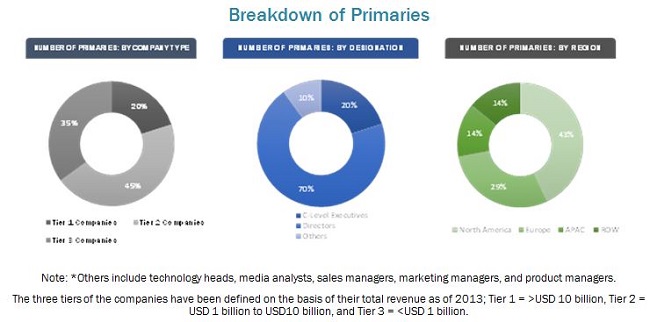
The research methodology used to estimate and forecast the size of the mobile biometrics market begins with obtaining data of key companies through secondary sources such as like FIDO Alliance, European Association for Biometrics, The International Biometric Society, and others. The vendors’ offerings and their current product portfolios have also been considered for this study. The estimation has also been made by identifying biometric-enabled mobile devices, mobile transactions, and the size of biometric mobile applications. After arriving at the overall market size, the total market has been split into several segments and subsegments, which have been verified through primary research by conducting interviews with key experts such as CEOs, VPs, directors, product managers, and others. In addition, the market breakdown and data triangulation procedures have been employed to complete the overall market engineering process and provide statistical analysis for all segments and subsegments. The breakdown of the profiles of primaries is depicted in the figure below:
To know about the assumptions considered for the study, download the pdf brochure
The mobile biometrics ecosystem comprises hardware suppliers, manufacturers, software companies, system integrators, and technology providers. The key players in the market are Apple Inc. (U.S.) Nuance Communications, Inc. (U.S.), Safran SA (France), NEC Corporation (Japan), 3M Cogent, Inc. (U.S.), and Precise Biometrics (Sweden), and M2SYS Technology (U.S.). Some of the other players that have shown prominent growth are Crossmatch (U.S.) BIO-key (U.S.), Aware Inc. (U.S.), Applied Recognition, Inc. (Canada), EyeVerify, Inc. (U.S.), and others
Key Target Audience
- Digital security consultants
- Biometric hardware providers, including regional equipment manufacturers, sensor manufacturers, battery manufacturers, and camera suppliers
- Software dealers & distributors
- Cloud service providers
- Biometrics associations and alliances
- Research institutions and organizations
- Market research & consulting firms
The study answers several questions for the stakeholders, primarily which market segments to focus on in the next two to five years for prioritizing efforts and investments.
Scope of the Report
The mobile biometrics market, in this research report, has been segmented on the basis of:
Component:
- Fingerprint readers
- Scanners
- Cameras
Authentication Mode:
- Single-factor authentication
- Multi-factor authentication
Industry:
- Consumer electronics
- Healthcare
- Finance & banking
- Travel & immigration
- Government
- Military & defense
- Others
Geography:
- North America
- Europe
- Asia Pacific
- RoW
Available Customizations:
With the given market data, MarketsandMarkets offers customizations according to the company’s specific needs. The following customization options are available for the report:
Company Information
- Detailed analysis and profiling of up to five additional market players
- Mobile biometrics market by matching capability (on server and on device)













Growth opportunities and latent adjacency in Mobile Biometrics Market