Sensor Hub Market by Processor Type (Application Sensor, Discrete Sensor, Sensor Integrated Microcontroller), End-Use Application (Consumer Electronics, Automotive, Industrial, Military, Healthcare), and Geography - Global Growth Driver and Industry Forecast to 2035


Sensor Hub Market Summary
The global Sensor Hub Market is entering a high-growth phase as connected devices increasingly require low-power, always-on sensing and localized data processing. Based on current industry estimates, the global Sensor Hub Market was valued at approximately USD 29 billion in 2025 and is projected to reach nearly USD 108 billion by 2035, expanding at a 14% CAGR during the 2025–2035 forecast period. The market is being propelled by the rapid adoption of artificial intelligence (AI), Internet of Things (IoT) devices, edge computing, automation, connected vehicles, smart wearables, and broader digital transformation initiatives. Sensor hubs aggregate and process information from multiple sensors while reducing the workload on application processors, enabling better energy efficiency, faster response times, and continuous sensing.
The transition from conventional sensing toward intelligent, software-defined sensing is also changing the competitive landscape. Manufacturers are integrating microcontrollers, sensor-fusion algorithms, machine learning capabilities, and connectivity functions into increasingly compact packages. This evolution is particularly important for smartphones, wearables, healthcare devices, industrial equipment, autonomous systems, and smart-home platforms where battery life, latency, and local decision-making directly influence product performance.
Key Market Trends & Insights
North America remains a leading regional market because of its established semiconductor ecosystem, high penetration of connected electronics, advanced automotive technology, and early adoption of edge AI and industrial IoT. The region benefits from strong investment in intelligent infrastructure and automation, while major technology companies continue to increase on-device processing capabilities.
Asia Pacific is expected to record the fastest growth through 2035. China, Japan, South Korea, and other Asian manufacturing centers have extensive electronics production capabilities and rapidly expanding demand for smartphones, wearables, robotics, connected vehicles, and smart-factory technologies. The combination of manufacturing scale, semiconductor investment, and digitalization is creating favorable conditions for sensor hub adoption.
The consumer electronics segment remains a dominant application area, particularly because smartphones, smartwatches, hearables, AR/VR devices, and fitness equipment require continuous motion, orientation, environmental, and proximity sensing. Sensor hubs enable these functions while allowing the main application processor to remain in a lower-power state.
A major technology trend is the integration of AI directly into sensing architectures. Bosch Sensortec, for example, offers programmable smart sensors combining MEMS sensing, microcontrollers, sensor fusion, and AI-enabled functionality for applications including activity recognition and always-on processing.
Automation is another important growth catalyst. In factories, warehouses, autonomous machines, and robotics, sensor hubs can combine data from accelerometers, gyroscopes, magnetometers, pressure sensors, temperature sensors, and other inputs to support real-time machine monitoring and control. This supports predictive maintenance, machine safety, navigation, and autonomous operation.
Market Size & Forecast
- Base year market size: Approximately USD 29 billion in 2025.
- Forecast value by 2035: Approximately USD 108 billion.
- CAGR: Approximately 14% during 2025–2035.
- Growth factors: AI-enabled sensing, IoT proliferation, edge computing, smart wearables, connected automobiles, industrial automation, AR/VR adoption, and demand for ultra-low-power processing are expected to remain the primary growth factors.
The forecast reflects the expanding role of sensor hubs as an intermediate intelligence layer between individual sensors and higher-level processors or cloud platforms. Market performance will increasingly depend on the ability of vendors to combine low energy consumption with increasingly sophisticated local analytics.
Sensor Hub Market Top 10 key takeaway
- The global Sensor Hub Market is estimated at approximately USD 29 billion in 2025.
- The market is projected to approach USD 108 billion by 2035.
- The industry is expected to expand at approximately 14% CAGR during 2025–2035.
- North America currently represents a leading regional market.
- Asia Pacific is expected to register the fastest growth during the forecast period.
- Consumer electronics remains one of the largest demand centers for sensor hub technology.
- AI-enabled sensor fusion is becoming a major product differentiator.
- Industrial automation and robotics are creating new high-value applications.
- Ultra-low-power MCUs and integrated processing are supporting always-on device functionality.
- Smart vehicles, wearables, healthcare devices, IoT infrastructure, and AR/VR represent significant long-term opportunities.
Product Insights
The sensor-integrated microcontroller and application sensor processor segments represent important product categories within the Sensor Hub Market because they combine sensing, processing, and data-management capabilities in compact architectures. These solutions allow manufacturers to collect information from multiple sensors without continuously activating the primary application processor. This architecture can reduce energy consumption, improve responsiveness, and support continuous monitoring in battery-powered products.
Smart sensor hubs are increasingly moving beyond basic data aggregation. Modern devices can execute sensor-fusion algorithms, activity recognition, gesture detection, orientation calculations, and selected machine-learning workloads locally. Bosch Sensortec's BHI260AB, for instance, integrates a programmable microcontroller, six-axis IMU, sensor-fusion software, and always-on processing capabilities in a compact device.
Emerging product categories include AI-enabled inertial sensors, programmable sensor processors, ultra-low-power sensor hubs, multi-axis motion platforms, and integrated sensor-processing systems for industrial IoT. The development direction is toward greater integration, smaller form factors, lower standby power, and more software programmability.
The growing use of AI is also changing product specifications. Instead of merely transmitting raw sensor data, intelligent sensor hubs increasingly identify patterns locally and transmit only meaningful events or processed information. This can reduce bandwidth requirements while improving privacy and latency.
Technology / Component Insights
The technology foundation of the Sensor Hub Market consists of MEMS sensors, microcontrollers, digital signal processors, sensor-fusion engines, memory, connectivity interfaces, and embedded software. I²C and SPI interfaces remain important for connecting external sensors, while advanced architectures increasingly combine multiple sensing functions into a single package or subsystem.
AI and edge processing are becoming particularly influential. Sensor hubs can execute lightweight machine-learning models close to the source of data, making them suitable for applications where latency, power consumption, and privacy are critical. Academic research into edge sensing has similarly highlighted the value of local processing for reducing bandwidth and latency in intelligent IoT systems.
IoT expansion is increasing the number and diversity of sensors deployed across connected environments. In smart factories, sensor hubs can consolidate data from machines and environmental sensors; in smart homes, they can coordinate motion, presence, temperature, acoustic, and proximity inputs. Cloud platforms remain important for large-scale analytics, but sensor hubs provide the local intelligence needed for immediate responses.
Automation will further accelerate technology development. Robotics, autonomous machines, industrial inspection equipment, and connected vehicles require continuous sensor fusion and real-time decision-making. Future sensor hub designs are therefore expected to incorporate more efficient neural-processing capabilities, adaptive algorithms, hardware security, and improved support for multimodal sensor fusion.
Application Insights
Consumer electronics represents a leading application segment because smartphones, tablets, smartwatches, hearables, gaming devices, and AR/VR equipment increasingly depend on continuous sensing. Motion tracking, screen orientation, gesture recognition, navigation, fitness monitoring, and contextual awareness can be handled partly through sensor hub architectures, reducing unnecessary processor activity.
Wearables are particularly attractive because battery capacity and device size impose strict power constraints. A sensor hub can continuously monitor motion and physiological or environmental inputs while keeping larger processing components in low-power states. AI-enabled processing also allows wearables to recognize activities and user behavior without constantly transferring raw data to the cloud.
Automotive applications are another major opportunity. Advanced driver-assistance systems, vehicle navigation, occupant monitoring, vehicle stability functions, and autonomous driving architectures depend on combining information from multiple sensors. As vehicles become increasingly software-defined, demand for distributed sensing and localized processing is expected to increase.
Industrial applications offer additional long-term growth. Predictive maintenance, robotics, automated production lines, asset tracking, and worker safety systems can use sensor hubs to analyze motion and environmental conditions at the edge. This enables faster responses and supports digital transformation without requiring every sensor event to be transmitted to a central server.
Regional Insights
North America is the current leader in the Sensor Hub Market, supported by high-value semiconductor development, advanced consumer electronics, automotive innovation, cloud infrastructure, and industrial automation. The United States in particular benefits from strong investment in AI, IoT, robotics, and connected-device ecosystems.
Europe represents an important market with strong demand from automotive, industrial automation, healthcare, and energy applications. Germany remains particularly significant because of its manufacturing base and automotive industry, while France is developing opportunities through connected infrastructure and industrial digitalization.
Asia Pacific is projected to be the fastest-growing region through 2035. Large electronics manufacturing bases, increasing consumer-device penetration, expanding EV production, smart-city investment, and industrial automation are supporting demand. China and Japan remain particularly influential because of their established electronics and automotive ecosystems.
- North America: Leading market due to advanced AI, IoT, automotive, and semiconductor capabilities.
- Europe: Strong industrial, automotive, healthcare, and automation demand.
- Asia Pacific: Fastest-growing regional market with large-scale electronics manufacturing.
- China: Major production base for connected electronics, EVs, and industrial equipment.
- Japan: Strong demand for precision sensing, robotics, automotive electronics, and factory automation.
Sensor Hub Market Country-Specific Market Trends
Within Asia Pacific, China is estimated to record approximately 16% CAGR, while Japan is expected to grow at around 12% CAGR during 2025–2035. China's growth is supported by domestic electronics manufacturing, EV production, smart manufacturing, IoT deployment, and government-backed digital infrastructure initiatives. Japan's established robotics, automotive, consumer electronics, and industrial automation industries provide a stable demand base for advanced sensor-processing technologies.
In North America, the United States is expected to expand at approximately 13% CAGR, followed by Canada at around 11% and Mexico at approximately 10%. The United States benefits from AI investment, autonomous vehicle development, wearable technology, and industrial digitalization. Canada offers opportunities through smart infrastructure and industrial IoT, while Mexico is benefiting from electronics and automotive manufacturing expansion.
In Europe, Germany is estimated at approximately 11% CAGR, while France is expected to grow at around 10% CAGR. Germany's automotive and industrial automation sectors remain key demand generators. France is seeing increasing adoption across aerospace, transportation, healthcare, and connected infrastructure. Across Europe, regulatory emphasis on energy efficiency, digitalization, industrial competitiveness, and intelligent mobility is supporting adoption.
These country-level CAGR figures are analyst estimates derived from regional growth conditions rather than company-reported forecasts and should be interpreted as directional market indicators.
- China: Fast expansion driven by electronics, EVs, robotics, and smart manufacturing.
- Japan: Strong adoption across robotics, automotive, healthcare, and precision electronics.
- United States: AI, autonomous systems, IoT, and wearable technology remain major drivers.
- Germany: Industrial automation and automotive electronics create substantial demand.
- France: Connected infrastructure, aerospace, healthcare, and digital transformation support growth.
Key Sensor Hub Market Company Insights
The competitive environment includes semiconductor and sensing specialists such as Bosch Sensortec, STMicroelectronics, TDK InvenSense, NXP Semiconductors, Analog Devices, Infineon Technologies, Microchip Technology, and Texas Instruments. Industry research also identifies several of these companies among the principal participants in the sensor hub competitive landscape.
Companies are increasingly differentiating through intelligent sensing rather than sensor hardware alone. Bosch Sensortec focuses on programmable smart sensors combining sensor fusion, low-power processing, and AI capabilities. STMicroelectronics is integrating sensor hubs, machine-learning cores, intelligent sensor processing, and edge AI into its MEMS portfolio. Its industrial evaluation platform, for example, supports sensor hub functionality alongside embedded intelligence and ST Edge AI development tools.
TDK InvenSense is pursuing integrated motion, positioning, and smart-home sensing solutions. Its PositionSense platform combines a six-axis IMU, TMR magnetometer, sensor-fusion software, and positioning capabilities for wearables, smartphones, and AR/VR devices. NXP, Analog Devices, Infineon, Microchip, and Texas Instruments compete through MCU, sensing, automotive, industrial, connectivity, and embedded-processing portfolios.
- Bosch Sensortec: Focuses on programmable smart sensors, AI, sensor fusion, and ultra-low-power operation.
- STMicroelectronics: Emphasizes intelligent MEMS, embedded AI, sensor hubs, and industrial edge processing.
- TDK InvenSense: Concentrates on motion sensing, positioning, smart-home applications, and integrated sensor solutions.
- NXP Semiconductors: Strong position across automotive, industrial, embedded processing, and sensing.
- Analog Devices: Targets high-performance industrial, automotive, and precision sensing applications.
Recent Developments
In May 2025, STMicroelectronics introduced an AI-enabled miniature IMU combining dual MEMS accelerometers with embedded intelligence for personal electronics and IoT applications. The development demonstrates the industry's movement toward processing intelligence closer to the sensor itself.
In June 2025, TDK announced a broader suite of InvenSense sensing solutions for smart-home applications, covering use cases such as presence detection, proximity, motion, sound, and appliance intelligence. The portfolio reflects increasing demand for multimodal sensing across connected homes.
A further industry development occurred in July 2025, when STMicroelectronics announced an agreement to acquire part of NXP's sensor business for up to USD 950 million, strengthening ST's MEMS sensor position in automotive safety, industrial monitoring, and pressure-sensing applications.
Market Segmentation
The Sensor Hub Market can be segmented by Product into application sensor processors, discrete sensor processors, sensor-integrated microcontrollers, and other architectures. By Technology / Component, the market includes MEMS sensors, microcontrollers, processors, memory, connectivity interfaces, sensor-fusion software, and AI/ML processing components. By Application, major categories include consumer electronics, automotive, industrial, healthcare, telecommunications, military and aerospace, and IoT-connected devices. By Region, the market covers North America, Europe, Asia Pacific, Latin America, and the Middle East & Africa, with North America maintaining a strong current position and Asia Pacific showing the strongest growth trajectory. These segmentation categories broadly align with published industry research, although individual research firms use different market definitions and scope.
- By Product: Sensor-integrated microcontrollers and application sensor processors are important growth categories.
- By Technology / Component: MEMS, low-power MCUs, sensor fusion, AI processing, and connectivity are central technologies.
- By Application: Consumer electronics currently represents a major demand center, while automotive and industrial uses are expanding.
- By Region: North America leads, while Asia Pacific is positioned for the fastest growth.
- Strategic segmentation trend: Integrated AI-enabled and ultra-low-power solutions are gaining importance across nearly every end-use category.
Conclusion
The global Sensor Hub Market is positioned for sustained expansion through 2035, supported by the convergence of AI, IoT, edge computing, automation, and digital transformation. A market estimated at approximately USD 29 billion in 2025 could approach USD 108 billion by 2035, representing roughly 14% CAGR under the current forecast scenario. The central structural shift is from passive sensor collection toward intelligent, distributed sensing in which data is filtered, fused, interpreted, and acted upon closer to its source.
AI will remain one of the most important differentiators. As manufacturers integrate machine-learning models into sensor processors and MEMS devices, sensor hubs will increasingly provide contextual intelligence rather than simple data aggregation. This trend is already visible in commercial products featuring embedded AI, programmable MCUs, sensor fusion, and always-on operation.
For businesses, the Sensor Hub Market represents more than a semiconductor opportunity. It is becoming an enabling technology for energy-efficient wearables, intelligent automobiles, autonomous machines, smart factories, connected healthcare, and next-generation consumer devices. Companies capable of combining sensing accuracy, low power consumption, embedded AI, security, software flexibility, and connectivity will be best positioned to capture value as intelligent edge architectures become mainstream.
FAQs
1. What is the market size of the Sensor Hub Market?
The global Sensor Hub Market is estimated at approximately USD 29 billion in 2025. Based on the current forecast scenario, the market could reach approximately USD 108 billion by 2035.
2. What is the expected growth rate of the Sensor Hub Market?
The Sensor Hub Market is projected to expand at approximately 14% CAGR from 2025 to 2035. Growth is being supported by AI-enabled sensing, IoT deployment, edge computing, automation, connected vehicles, and smart wearable adoption.
3. What are the key drivers of the Sensor Hub Market?
Major drivers include increasing IoT device deployment, demand for ultra-low-power electronics, AI and edge processing, sensor fusion, industrial automation, smart wearables, connected automotive systems, AR/VR devices, and broader digital transformation.
4. Which region leads the Sensor Hub Market?
North America is currently considered the leading regional market, supported by advanced semiconductor capabilities, high technology adoption, AI investment, connected-device penetration, and automotive and industrial applications. Asia Pacific, however, is expected to experience the fastest growth during the forecast period.
5. Who are the key companies in the Sensor Hub Market?
Major companies participating in the market include Bosch Sensortec, STMicroelectronics, TDK InvenSense, NXP Semiconductors, Analog Devices, Infineon Technologies, Microchip Technology, and Texas Instruments. Competitive strategies increasingly emphasize intelligent MEMS, AI-enabled processing, sensor fusion, low-power architectures, and application-specific solutions.
To speak to our analyst for a discussion on the above findings, click Speak to Analyst
 Exclusive indicates content/data unique to MarketsandMarkets and not available with any competitors.
Table of Contents
1 Introduction (Page No. - 14)
1.1 Objectives of the Study
1.2 Market Definition
1.3 Study Scope
1.3.1 Markets Covered
1.3.2 Geographic Analysis
1.4 Years Considered for the Study
1.5 Currency
1.6 Limitations
1.7 Stakeholders
2 Research Methodology (Page No. - 18)
2.1 Research Data
2.1.1 Secondary Data
2.1.1.1 Key Data From Secondary Sources
2.1.2 Primary Data
2.1.2.1 Key Data Points From Primary Sources
2.1.2.2 Key Industry Insights
2.1.2.3 Breakdown of Primary Interviews
2.2 Market Size Estimation
2.2.1 Bottom-Up Approach
2.2.1.1 Approach for Capturing the Market Share By Bottom-Up Analysis (Demand Side)
2.2.2 Top-Down Approach
2.2.2.1 Approach for Capturing the Market Share By Top-Down Analysis (Supply Side)
2.3 Market Breakdown & Data Triangulation
2.4 Research Assumptions
3 Executive Summary (Page No. - 27)
4 Premium Insights (Page No. - 31)
4.1 Attractive Opportunities in the Sensor Hub Market
4.2 Market, By Processor Type (2017–2023)
4.3 Market, By End-Use Application (2017–2023)
4.4 Market, By End-Use Application and Region (2017)
4.5 Market, By Region
4.6 Market, By Geography (2017)
5 Market Overview (Page No. - 34)
5.1 Introduction
5.2 Market Segmentation
5.2.1 By Processor Type
5.2.2 By End-Use Application
5.2.3 By Geography
5.3 Market Dynamics
5.3.1 Drivers
5.3.1.1 Growing Need for Low Power Generating Solutions
5.3.1.2 Steady Growth in the Number of Integrated Sensors in Smartphones
5.3.1.3 Increasing Use of 6-Axis and 9-Axis Sensor Solutions Or Use of Sensor Fusion Within Devices
5.3.2 Restraints
5.3.2.1 Complicated Debugging Field Issues as There is No Direct Interface Between the Sensor Hub and the Application Processor (Ap)
5.3.3 Opportunities
5.3.3.1 Advancements in Consumer Electronics End-Use Applications and Wearable Devices
5.3.3.2 Application Processor-Based Sensor Hubs to Attract Future Market Growth
5.3.4 Challenges
5.3.4.1 Technical Complexity in Sensor Hub Deployment
6 Sensor Hub Market, By Processor Type (Page No. - 41)
6.1 Introduction
6.2 Application Sensor Processor
6.3 Discrete Sensor Processor
6.4 Sensor Integrated Microcontroller
7 Sensor Hub Market, By End-Use Application (Page No. - 46)
7.1 Introduction
7.2 Consumer Electronics
7.3 Automotive
7.4 Industrial
7.5 Telecommunications
7.6 Military
7.7 Healthcare
8 Geographic Analysis (Page No. - 57)
8.1 Introduction
8.2 North America
8.2.1 US
8.2.2 Canada
8.2.3 Mexico
8.3 Europe
8.3.1 UK
8.3.2 Germany
8.3.3 France
8.3.4 Rest of Europe
8.4 Asia Pacific (APAC)
8.4.1 China
8.4.2 Japan
8.4.3 South Korea
8.4.4 Rest of APAC (RoAPAC)
8.5 Rest of the World (RoW)
8.5.1 South America
8.5.2 Middle East
8.5.3 Africa
9 Competitive Landscape (Page No. - 99)
9.1 Overview
9.2 Market Ranking Analysis
9.3 Vendor Dive Overview
9.3.1 Vanguards (Leaders)
9.3.2 Dynamic
9.3.3 Innovator
9.3.4 Emerging
9.4 Product Offering
9.5 Business Strategy
Top 25 Companies Analyzed for This Study are - Broadcom Limited; Intel Corporation; Microchip Corp.; NXP Semiconductors N.V.; Qualcomm Incorporated; Robert Bosch GmbH; Rohm Co. Ltd.; Stmicroelectronics N.V.; Analog Devices, Inc.; HiLLCrest Laboratories, Inc.; Maxim Integrated; Marvell Technology Group Ltd.; Renesas Electronics Corp.; Te Connectivity Corporation; Imagination Technologies Group PLC; Infineon Technologies Ag; Invensense, Inc.; Lapis Semiconductor Co., Ltd.; Memsic, Inc.; Quicklogic Inc; Texas Instruments Inc.; Ineda Systems Inc.; Mediatek Inc.; Standing Egg Inc.,; Megachips Corporation;
9.6 Competitive Scenario
9.6.1 Product Launches
9.6.2 Acquisitions and Agreements
10 Company Profiles (Page No. - 107)
(Business Overview, Products Offered & Services Strategies, Key Insights, Recent Developments, MnM View)*
10.1 Introduction
10.2 Analog Devices, Inc.
10.3 Robert Bosch GmbH
10.4 Microchip Technology Inc.
10.5 Texas Instruments Incorporated
10.6 Stmicroelectronics N.V.
10.7 NXP Semiconductors N.V.
10.8 Invensense, Inc.
10.9 Rohm Co., Ltd.
10.10 Intel Corporation
10.11 Infineon Technologies AG
10.12 Memsic, Inc.
10.13 Key Innovators
10.13.1 Broadcom Limited
10.13.2 Qualcomm Technologies, Inc.
10.13.3 Quicklogic Corp
10.13.4 HiLLCrest Labs, Inc.
*Details on Business Overview, Products Offered & Services Strategies, Key Insights, Recent Developments, MnM View Might Not Be Captured in Case of Unlisted Companies.
11 Appendix (Page No. - 143)
11.1 Insights of Industry Experts
11.2 Discussion Guide
11.3 Introducing RT: Real-Time Market Intelligence
11.4 Available Customizations
11.5 Related Reports
11.6 Author Details
List of Tables (95 Tables)
Table 1 Sensor Hub Market, in Terms of Value and Volume, 2014–2023
Table 2 Market for Consumer Electronics End-Use Application, in Terms of Value and Volume, 2014–2023
Table 3 Market, By Processor Type, 2014–2023 (USD Million)
Table 4 Market for Application Sensor Processor, By Region, 2014–2023 (USD Million)
Table 5 Market for Discrete Sensor Processor, By Region, 2014–2023 (USD Million)
Table 6 Market for Sensor Integrated Microcontroller, By Region, 2014–2023 (USD Million)
Table 7 Sensor Hub Market, By End-Use Application, 2014–2023 (USD Million)
Table 8 Market, By End-Use Application, 2014–2023 (Million Units)
Table 9 Market for Consumer Electronics, By Type, 2014–2023 (USD Million)
Table 10 Market for Healthcare, By Type, 2014–2023 (USD Million)
Table 11 Sensor Hub Market for Consumer Electronics, By Region, 2014–2023 (USD Million)
Table 12 Market for Consumer Electronics, By Region, 2014–2023 (Million Units)
Table 13 Market for Automotive, By Region, 2014–2023 (USD Million)
Table 14 Market for Automotive, By Region, 2014–2023 (Million Units)
Table 15 Market for Industrial, By Region, 2014–2023 (USD Million)
Table 16 Market for Industrial, By Region, 2014–2023 (Million Units)
Table 17 Market for Telecommunications, By Region, 2014–2023 (USD Million)
Table 18 Sensor Hub Market for Telecommunications, By Region, 2014–2023 (Million Units)
Table 19 Market for Military, By Region, 2014–2023 (USD Million)
Table 20 Market for Military, By Region, 2014–2023 (Million Units)
Table 21 Market for Healthcare, By Region, 2014–2023 (USD Million)
Table 22 Market for Healthcare, By Region, 2014–2023 (Million Units)
Table 23 Sensor Hub Market, By Region, 2014–2023 (USD Million)
Table 24 Market, By Region, 2014–2023 (Million Units)
Table 25 Market in North America, By Processor Type, 2014–2023 (USD Million)
Table 26 Sensor Hub Market in North America, By End-Use Application, 2014–2023 (USD Million)
Table 27 Market in North America, By End-Use Application, 2014–2023 (Million Units)
Table 28 Market for Consumer Electronics in North America, By Type, 2014–2023 (Million Units)
Table 29 Market for Healthcare in North America, By Type, 2014–2023 (USD Million)
Table 30 Market in North America, By Country, 2014–2023 (Million Units)
Table 31 Sensor Hub Market in US, By Processor Type, 2014–2023 (USD Million)
Table 32 Market in US, By End-Use Application, 2014–2023 (USD Million)
Table 33 Market for Consumer Electronics in Us, By Type, 2014–2023 (USD Million)
Table 34 Market for Healthcare in Us, By Type, 2014–2023 (USD Million)
Table 35 Market in Canada, By Processor Type, 2014–2023 (USD Million)
Table 36 Market in Canada, By End-Use Application, 2014–2023 (USD Million)
Table 37 Market for Consumer Electronics in Canada, By Type, 2014–2023 (USD Million)
Table 38 Market for Healthcare in Canada, By Type, 2014–2023 (USD Million)
Table 39 Market in Mexico, By Processor Type, 2014–2023 (USD Million)
Table 40 Market in Mexico, By End-Use Application, 2014–2023 (USD Million)
Table 41 Market for Consumer Electronics in Mexico, By Type, 2014–2023 (USD Million)
Table 42 Sensor Hub Market for Healthcare in Mexico, By Type, 2014–2023 (USD Million)
Table 43 Market in Europe, By Processor Type, 2014–2023 (USD Million)
Table 44 Market in Europe, By End-Use Application, 2014–2023 (USD Million)
Table 45 Market in Europe, By End-Use Application, 2014–2023 (Million Units)
Table 46 Market for Consumer Electronics in Europe, By Type, 2014–2023 (USD Million)
Table 47 Market for Healthcare in Europe, By Type, 2014–2023 (USD Million)
Table 48 Sensor Hub Market in Europe, By Country, 2014–2023 (USD Million)
Table 49 Market in UK, By Processor Type, 2014–2023 (USD Million)
Table 50 Market in UK, By End-Use Application, 2014–2023 (USD Million)
Table 51 Market for Consumer Electronics in UK, By Type, 2014–2023 (USD Million)
Table 52 Market for Healthcare in UK, By Type, 2014–2023 (USD Million)
Table 53 Market in Germany, By Processor Type, 2014–2023 (USD Million)
Table 54 Market in Germany, By End-Use Application, 2014–2023 (USD Million)
Table 55 Sensor Hub Market for Consumer Electronics in Germany, By Type, 2014–2023 (USD Million)
Table 56 Market for Healthcare in Germany, By Type, 2014–2023 (USD Million)
Table 57 Market in France, By Processor Type, 2014–2023 (USD Million)
Table 58 Market in France, By End-Use Application, 2014–2023 (USD Million)
Table 59 Sensor Hub Market for Consumer Electronics in France, By Type, 2014–2023 (USD Million)
Table 60 Market for Healthcare in France, By Type, 2014–2023 (USD Million)
Table 61 Market in RoE, By Processor Type, 2014–2023 (USD Million)
Table 62 Market in RoE, By End-Use Application, 2014–2023 (USD Million)
Table 63 Market for Consumer Electronics in RoE, By Type, 2014–2023 (USD Million)
Table 64 Sensor Hub Market for Healthcare in RoE, By Type, 2014–2023 (USD Million)
Table 65 Market in APAC, By Processor Type, 2014–2023 (Million Units)
Table 66 Market in APAC, By End-Use Application, 2014–2023 (USD Million)
Table 67 Market in APAC, By End-Use Application, 2014–2023 (Million Units)
Table 68 Market for Consumer Electronics in APAC, By Type, 2014–2023 (USD Million)
Table 69 Market for Healthcare in APAC, By Type, 2014–2023 (USD Million)
Table 70 Market in APAC, By Country, 2014–2023 (Million Units)
Table 71 Market in China, By Processor Type, 2014–2023 (USD Million)
Table 72 Sensor Hub Market in China, By End-Use Application, 2014–2023 (USD Million)
Table 73 Market for Consumer Electronics in China, By Type, 2014–2023 (USD Million)
Table 74 Market for Healthcare in China, By Type, 2014–2023 (USD Million)
Table 75 Sensor Hub Market in Japan, By Processor Type, 2014–2023 (USD Million)
Table 76 Market in Japan, By End-Use Application, 2014–2023 (USD Million)
Table 77 Market for Consumer Electronics in Japan, By Type, 2014–2023 (USD Million)
Table 78 Market for Healthcare in Japan, By Type, 2014–2023 (USD Million)
Table 79 Market in South Korea, By Processor Type, 2014–2023 (USD Million)
Table 80 Sensor Hub Market in South Korea, By End-Use Application, 2014–2023 (USD Million)
Table 81 Market for Consumer Electronics in South Korea, By Type, 2014–2023 (USD Million)
Table 82 Market for Healthcare in South Korea, By Type, 2014–2023 (USD Million)
Table 83 Market in RoAPAC, By Processor Type, 2014–2023 (USD Million)
Table 84 Market in RoAPAC, By End-Use Application, 2014–2023 (USD Million)
Table 85 Market for Consumer Electronics in RoAPAC, By Type, 2014–2023 (USD Million)
Table 86 Market for Healthcare in RoAPAC, By Type, 2014–2023 (USD Million)
Table 87 Market in RoW, By Processor Type, 2014–2023 (USD Million)
Table 88 Market in RoW, By End-Use Application, 2014–2023 (USD Million)
Table 89 Market in RoW, By End-Use Application, 2014–2023 (Million Units)
Table 90 Market for Consumer Electronics in RoW, By Type, 2014–2023 (USD Million)
Table 91 Market for Healthcare in RoW, By Type, 2014–2023 (USD Million)
Table 92 Market in RoW, By Region, 2014–2023 (USD Million)
Table 93 Market Ranking of Top 10 Players in the Sensor Hub Market, 2016
Table 94 Recent Product Launches in the Market
Table 95 Acquisitions and Agreements in the Market
List of Figures (39 Figures)
Figure 1 Market Segmentation
Figure 2 Sensor Hub Market: Research Design
Figure 3 Market Size Estimation Methodology: Bottom-Up Approach
Figure 4 Market Size Estimation Methodology: Top-Down Approach
Figure 5 Data Triangulation Methodology
Figure 6 Assumptions of the Research Study
Figure 7 Sensor Hub Market, in Terms of Value and Volume, 2014–2023
Figure 8 Market, By Processor Type, 2014–2023 (USD Million)
Figure 9 Consumer Electronics to Hold Largest Size of Market By 2023
Figure 10 Market in APAC to Grow at the Highest Rate During the Forecast Period
Figure 11 Demand in Consumer Electronics End-Use Application Expected to Create Attractive Growth Opportunities in Sensor Hub Market
Figure 12 Sensor Integrated Microcontroller Processor to Hold Largest Share of Market During Forecast Period
Figure 13 Market for Consumer Electronics End-Use Application Expected to Grow at Highest Rate Between 2017 and 2023
Figure 14 North America Expected to Hold Largest Share of Sensor Hub Market in 2017
Figure 15 Market in APAC Expected to Grow at Highest CAGR During Forecast Period
Figure 16 US to Hold Largest Share of Market in 2017
Figure 17 Market, By Geography
Figure 18 Growing Need for Low Power Generating Solutions Drive the Growth of the Market
Figure 19 Application Sensor Processor is Expected to Dominate the Market During the Forecast Period
Figure 20 Consumer Electronics End-Use Application Dominated the Market in 2017
Figure 21 Market for Wearable Devices Expected to Grow at the Highest Rate During the Forecast Period
Figure 22 Market, Geographic Snapshot, 2017–2023
Figure 23 Snapshot: Market in North America
Figure 24 Snapshot: Sensor Hub Market in Europe
Figure 25 Snapshot: Market in APAC
Figure 26 Snapshot: Market in RoW
Figure 27 Companies in the Market Adopted Product Launches as the Key Growth Strategy Between January 2014 and March 2017
Figure 28 Dive Chart
Figure 29 Battle for Market Share
Figure 30 Analog Devices, Inc.: Company Snapshot
Figure 31 Robert Bosch GmbH: Company Snapshot
Figure 32 Microchip Technology Inc.: Company Snapshot
Figure 33 Texas Instruments Incorporated: Company Snapshot
Figure 34 Stmicroelectronics N.V.: Company Snapshot
Figure 35 NXP Semiconductors N.V.: Company Snapshot
Figure 36 Invensense, Inc.: Company Snapshot
Figure 37 Rohm Co., Ltd.: Company Snapshot
Figure 38 Intel Corporation: Company Snapshot
Figure 39 Infineon Technologies AG: Company Snapshot
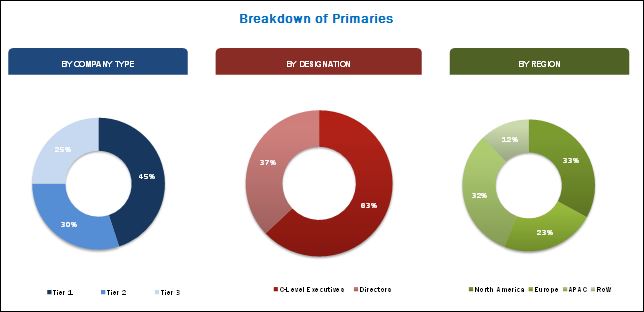
The research methodology used to estimate and forecast the sensor hub market begins with capturing data on key vendor revenue through government association-based secondary research such as International Journal of Research in Computer and Communication Technology (JIRCCT) Sensors & Transducers Journal, and the leading players’ newsletters. The vendor offerings are also considered to determine the market segmentation. The bottom-up procedure is employed to arrive at the overall size of the global sensor hub market from the revenue of the key players. After arriving at the overall market size, the total market is split into several segments and subsegments, which are verified through primary research by conducting extensive interviews with industry experts such as CEOs, VPs, directors, and executives. Market breakdown and data triangulation procedures are employed to complete the overall market engineering process and arrive at the exact statistics for all the segments and subsegments. The breakdown of the profiles of the primaries is depicted in the following figure:
To know about the assumptions considered for the study, download the pdf brochure
The sensor hub market ecosystem comprises interface manufacturers, system integrators, and distributors. Players involved in the development of sensor hub include Microchip Technology Inc. (US),, STMicroelectronics N.V. (Switzerland), Robert Bosch GmbH (Germany), NXP Semiconductors N.V.(Netherland), RoHM Co. Ltd. (Japan), Analog Devices, Inc.(US), InvenSense, Inc. (US), Infineon Technologies AG (Germany), and Memsic, Inc. (US).
Target Audience of the Report:
- Raw material and manufacturing equipment suppliers
- Sensor hub instrument original equipment manufacturers (OEMs)
- Asset management consultants who specialize in physical asset management
- Research institutes and organizations
- Associations and regulatory authorities related to plant maintenance
- Government bodies, venture capitalists, and private equity firms
“This study answers several questions for stakeholders, primarily which market segments to focus on in the next two to five years for prioritizing efforts and investments.”
Scope of the Report:
This research report categorizes the overall sensor hub market by processor type, end-use application, and region.
Sensor Hub Market, by Processor Type:
- Application Sensor Processor
- Discrete Sensor Processor
- Sensor Integrated Microcontroller
- Others
Sensor Hub Market, by End-Use Application:
- Consumer Electronics
- Automotive
- Industrial
- Military
- Healthcare
- Telecommunications
- Others
Sensor Hub Market, by Region:
- North America
- Europe
- Asia Pacific (APAC)
- Rest of the World (RoW)
Available Customizations:
With the given market data, MarketsandMarkets offers customizations according to the specific needs of companies. The following customization options are available for the report:
Company Information:
Detailed analysis and profiling of additional market players (up to five)













Growth opportunities and latent adjacency in Sensor Hub Market