Spatial Light Modulator Market by Application (Beam Shaping, Display, Optical, Laser Beam Steering, Holographic Data Storage), Resolution (Less Than 1024*768 PX, EQ or More Than 1024*768 PX), Type and Geography - Global Forecast to 2035


Spatial Light Modulator Market Summary
The global Spatial Light Modulator Market is entering a high-value growth phase as photonics, adaptive optics, holography, optical computing, advanced microscopy, and laser-based manufacturing increasingly require programmable control of light. Based on triangulation of current industry estimates and application demand, the market is estimated at approximately USD 1.1–1.4 billion in 2025 and is projected to reach nearly USD 2.4–3.1 billion by 2035, expanding at a CAGR of around 8%–10% during 2025–2035. The growth trajectory is supported by increasing adoption of LCOS and digital micromirror technologies, rising demand for precision beam shaping, growth of AI-enabled imaging, expansion of optical computing research, and increasing automation across semiconductor, healthcare, industrial, and scientific applications. Industry research also identifies optical computing, AR/VR, high-speed optical processing, laser beam shaping, and AI-powered holography as important demand catalysts.
The convergence of AI, IoT, automation, and digital transformation is changing how SLMs are deployed. Instead of operating as standalone optical components, modern SLM systems increasingly form part of software-controlled optical platforms in which algorithms dynamically optimize wavefronts, beam profiles, illumination patterns, and optical paths. This is particularly relevant to automated inspection, computational microscopy, laser processing, autonomous optical systems, and next-generation photonic computing.
Key Market Trends & Insights
North America remains a leading regional market, supported by advanced photonics research, semiconductor manufacturing, defense applications, healthcare imaging, and optical computing investment.
Asia Pacific is expected to register the fastest growth, driven by semiconductor and electronics manufacturing, industrial automation, laser processing, display technologies, and increasing investments in photonics across China, Japan, South Korea, and India.
LCOS-based spatial light modulators remain a dominant technology category, particularly in applications requiring accurate phase modulation and programmable wavefront control. Hamamatsu describes LCOS-SLM technology as enabling dynamic control of laser beam patterns and irradiation positions through computer-controlled wavefront manipulation.
Beam shaping and optical applications represent major demand centers, with SLMs being used for adaptive optics, optical manipulation, microscopy, holography, laser processing, and wavefront correction.
AI-enabled wavefront optimization is emerging as a major technology trend, allowing algorithms to determine phase patterns and optimize optical performance for complex imaging and laser applications.
High-speed SLM innovation is expanding the addressable opportunity. Research in 2026 demonstrated a programmable spatial light modulation approach capable of frame rates exceeding 10 million frames per second, highlighting the direction toward ultra-fast optical control.
Market Size & Forecast
- Base year market size (2025): Approximately USD 1.1–1.4 billion
- Forecast value by 2035: Approximately USD 2.4–3.1 billion
- Expected CAGR, 2025–2035: Approximately 8%–10%
- Growth factors: Expansion of adaptive optics, AI-enabled holography, laser material processing, optical computing, semiconductor inspection, AR/VR, microscopy, and automation is expected to support sustained market expansion.
The long-term opportunity is also strengthened by the diversification of SLM applications. Current product portfolios already address optical beam shaping, laser processing, optical manipulation, adaptive optics, optical tweezers, aberration correction, pulse shaping, and metal 3D printing.
Spatial Light Modulator Market Top 10 key takeaway
- The global Spatial Light Modulator Market is estimated at approximately USD 1.1–1.4 billion in 2025.
- The market is projected to reach around USD 2.4–3.1 billion by 2035.
- The market is expected to grow at approximately 8%–10% CAGR during 2025–2035.
- North America maintains a leading position due to advanced photonics, defense, healthcare, and semiconductor applications.
- Asia Pacific is anticipated to be the fastest-growing regional market.
- LCOS technology remains highly important for phase-based wavefront modulation.
- Beam shaping, optical processing, and laser applications are among the strongest application areas.
- AI is improving automated wavefront optimization, computational holography, and optical system control.
- High-speed, high-power, compact, and wavelength-flexible SLMs represent major innovation priorities.
Companies are increasingly competing through higher resolution, improved optical efficiency, thermal management, software integration, and application-specific SLM solutions.
Product Insights
The electrically addressed spatial light modulator segment is expected to maintain a leading position because electrically controlled architectures provide programmable, repeatable, and computer-driven modulation suitable for modern optical systems. They are particularly attractive in industrial and research environments where users need to rapidly modify phase or amplitude patterns without physically changing optical components. Optically addressed devices continue to serve specialized applications, but electrically addressed architectures benefit from stronger integration with digital control platforms, imaging systems, and automation.
LCOS-based products represent a particularly important product category because they combine high pixel density with accurate phase control. Commercial devices can provide precise wavefront manipulation, high diffraction efficiency, and PC-based control. Hamamatsu, for example, offers LCOS-SLM products across wide wavelength bands and specialized high-power laser configurations.
Emerging products are increasingly designed for high-power laser processing, near-infrared applications, compact optical systems, and advanced imaging. Product development is also moving toward higher refresh rates, smaller pixel pitches, better thermal management, improved fill factors, and broader wavelength compatibility. AI-powered control software will increasingly differentiate SLM products as manufacturers move from hardware-only devices toward intelligent optical platforms.
Technology / Component Insights
Technology innovation is centered on liquid crystal spatial light modulators, digital micromirror devices (DMDs), LCOS architectures, and MEMS-based approaches. LCOS technology is particularly suited to phase modulation and high-resolution wavefront shaping, while DMD-based architectures offer strong advantages in programmable amplitude and binary spatial modulation. The choice depends heavily on wavelength, switching speed, optical efficiency, resolution, polarization requirements, and application-specific performance.
AI is becoming an important layer above the physical SLM. Machine-learning models can calculate or optimize phase masks, compensate optical aberrations, identify patterns, and dynamically adjust beam characteristics. AI-assisted computational holography can reduce the computational burden associated with generating complex holographic patterns, while automated feedback loops can use cameras and sensors to measure output performance and adjust SLM parameters.
IoT connectivity and cloud-enabled workflows could further extend this capability in industrial environments. Connected optical systems can transmit operational data, monitor performance, and support predictive maintenance. In automated manufacturing, SLMs can become part of closed-loop systems where sensors measure the laser process and software continuously adjusts beam characteristics.
Future innovation is likely to focus on faster refresh rates, high-power operation, integrated photonics, AI-driven control, compact optical engines, and SLM compatibility with quantum optics and optical computing. Research into ultra-high-speed programmable optical control demonstrates the potential for SLM-like architectures to move beyond conventional display-rate operation.
Application Insights
Beam shaping and optical applications represent major areas of opportunity for the Spatial Light Modulator Market. SLMs enable dynamic modification of optical wavefronts, making them valuable for laser beam shaping, aberration correction, optical trapping, microscopy, holography, metrology, and optical manipulation. Their programmable nature makes them particularly attractive where conventional lenses and mirrors lack sufficient flexibility.
Laser processing is another important growth area. Manufacturers increasingly need precise control over laser energy distribution for cutting, welding, marking, additive manufacturing, and surface treatment. SLMs can dynamically modify beam profiles and support advanced processing strategies, while high-power product development is expanding their industrial applicability. Hamamatsu, for example, identifies laser processing and metal 3D printing among SLM application areas.
Healthcare and life sciences also provide long-term opportunities through adaptive optics, microscopy, biomedical imaging, optical manipulation, and computational imaging. Research published in 2026 highlights SLM-based three-dimensional imaging for field-of-view expansion, axial sectioning, resolution improvement, imaging through scattering media, and depth-of-field control.
Regional Insights
North America is expected to remain a leading region in the Spatial Light Modulator Market through the forecast period, supported by strong research ecosystems, semiconductor manufacturing, defense and aerospace programs, advanced healthcare imaging, and investment in AI and photonic computing. The region has a mature customer base for high-performance optical components and benefits from the presence of several established photonics suppliers.
Europe represents a technologically advanced market, with Germany, France, the UK, and other European countries supporting photonics research, industrial laser systems, scientific instrumentation, and precision manufacturing. The region's emphasis on advanced manufacturing and research commercialization creates opportunities for specialized SLM systems.
Asia Pacific is projected to achieve the fastest growth through 2035. China, Japan, South Korea, Taiwan, and India are expanding semiconductor, electronics, laser manufacturing, optical communications, and automation capabilities. Growing regional investment in high-precision manufacturing and photonics is creating new demand for programmable optical technologies. The global competitive landscape includes major Asian suppliers such as Hamamatsu Photonics and Santec, alongside European and US-based companies.
- North America leads due to research intensity and advanced optical applications.
- Europe benefits from industrial photonics and precision manufacturing.
- Asia Pacific is expected to post the fastest growth.
- China and Japan remain important centers for photonics and optical component development.
- Semiconductor, healthcare, defense, and laser manufacturing are key regional demand generators.
Country-Specific Market Trends
In Asia Pacific, China is expected to expand at approximately 10%–12% CAGR, supported by semiconductor manufacturing, industrial automation, laser processing, and domestic photonics development. Japan, with its mature optics and precision-engineering ecosystem, is projected to grow at approximately 7%–9% CAGR, supported by scientific instrumentation, industrial lasers, and advanced electronics. Japan is also home to major SLM suppliers and has a strong R&D foundation in optical technologies.
In North America, the United States is expected to grow at approximately 8%–10% CAGR, driven by defense, aerospace, semiconductor inspection, AI research, optical computing, microscopy, and advanced manufacturing. Canada is likely to record around 7%–9% CAGR, supported by photonics research, telecommunications, healthcare, and scientific applications. Mexico, benefiting from electronics and industrial manufacturing investments, could achieve approximately 8%–10% CAGR from a smaller base.
In Europe, Germany is projected to expand at approximately 7%–9% CAGR, supported by industrial lasers, automation, automotive manufacturing, photonics research, and precision engineering. France is expected to register approximately 6%–8% CAGR, with demand supported by aerospace, defense, scientific research, and optical technologies. Government-backed R&D programs, semiconductor strategies, industrial digitization, and photonics initiatives are expected to support adoption across these markets.
- China is likely to be one of the fastest-growing major national markets.
- Japan maintains strong expertise in SLM and precision optical technologies.
- The US remains a key center for AI, defense, photonics, and optical computing.
- Germany benefits from industrial automation and laser manufacturing.
- France is supported by aerospace, defense, and scientific research applications.
Key Spatial Light Modulator Market Company Insights
The competitive environment includes Hamamatsu Photonics, HOLOEYE Photonics, Meadowlark Optics, Texas Instruments, Jenoptik, Santec, Thorlabs, Forth Dimension Displays, Jasper Display, and Boston Micromachines. Industry sources characterize the market as fragmented, with vendors competing through product performance, application specialization, innovation, and geographic reach.
Hamamatsu Photonics is particularly prominent in LCOS-SLM solutions, with products targeting optical phase modulation, beam shaping, laser processing, and adaptive optics. Its product strategy increasingly emphasizes wavelength flexibility and high-power handling. Recent product specifications demonstrate specialized designs spanning visible and near-infrared wavelengths.
HOLOEYE Photonics focuses strongly on programmable spatial light modulation for research and advanced optical applications, while Meadowlark Optics competes through precision optical components and SLM solutions. Texas Instruments contributes DMD technology that supports programmable optical projection and spatial modulation applications. Santec, Jenoptik, Thorlabs, and other specialized suppliers compete across research, industrial, imaging, and laser applications.
- Companies are prioritizing higher resolution and optical efficiency.
- AI-enabled control and software integration are becoming strategic differentiators.
- High-power laser compatibility is expanding industrial opportunities.
- Vendors are developing application-specific products across wavelengths and use cases.
- Partnerships between research organizations and manufacturers are accelerating commercialization.
Recent Developments
The Spatial Light Modulator Market is experiencing notable technology development around high-performance LCOS systems and AI-enabled optical control. Hamamatsu Photonics has continued expanding its LCOS-SLM portfolio, including products designed for high-power laser applications and different wavelength ranges. Its latest product architectures emphasize phase accuracy, optical efficiency, and thermal management.
Another important development is the growing collaboration between research organizations and commercial SLM manufacturers. Research and commercialization partnerships are targeting compact LCOS microdisplays and next-generation spatial light modulation solutions for high-performance applications.
At the technology frontier, 2026 research demonstrated an ultra-fast programmable optical modulation architecture exceeding 10 million frames per second, potentially opening new opportunities in quantum control, microscopy, optical manipulation, and high-speed optical processing.
Market Segmentation
The Spatial Light Modulator Market can be segmented by Product into optically addressed and electrically addressed devices; by Technology/Component into liquid crystal spatial light modulators, digital micromirror devices, liquid crystal on silicon, and MEMS-based technologies; by Application into laser beam steering, beam shaping, holographic data storage, display applications, optical applications, and other applications; and by Region into North America, Europe, Asia Pacific, South America, the Middle East, and Africa. Current industry classifications similarly identify product type, component type, technology, application, and geography as major segmentation dimensions.
- Electrically addressed SLMs represent a major product segment.
- LCOS remains a leading technology for precision phase modulation.
- Beam shaping and optical applications are important revenue contributors.
- Industrial, healthcare, research, and semiconductor applications are expanding.
- Asia Pacific represents the strongest long-term regional growth opportunity.
Conclusion
The Spatial Light Modulator Market is transitioning from a specialized optical component market into a broader enabling technology market for intelligent photonics. The combination of programmable wavefront control, AI-driven optimization, automation, advanced imaging, and high-power laser processing is expanding the role of SLMs across industrial and scientific applications.
By 2035, the market could reach approximately USD 2.4–3.1 billion, with a projected 8%–10% CAGR from 2025 onward. AI will be particularly influential because it can automate phase-mask generation, improve optical correction, optimize holographic patterns, and enable closed-loop optical control. IoT connectivity and cloud-based analytics can further support remote monitoring and automated maintenance of industrial optical systems.
For businesses, the strategic opportunity extends beyond selling SLM hardware. Companies that combine high-performance modulation hardware with AI software, automation, sensors, photonics integration, and application-specific solutions are likely to capture a greater share of emerging value pools. The strongest opportunities are expected across adaptive optics, laser manufacturing, semiconductor inspection, optical computing, microscopy, quantum technologies, AR/VR, and advanced imaging.
FAQs
1. What is the market size of the Spatial Light Modulator Market?
The global Spatial Light Modulator Market is estimated at approximately USD 1.1–1.4 billion in 2025 and is projected to reach approximately USD 2.4–3.1 billion by 2035, based on an analyst triangulation of current industry estimates and application growth.
2. What is the growth rate of the Spatial Light Modulator Market?
The Spatial Light Modulator Market is expected to grow at approximately 8%–10% CAGR during 2025–2035, supported by expanding applications in laser processing, adaptive optics, holography, optical computing, microscopy, and advanced imaging.
3. What are the key drivers of the Spatial Light Modulator Market?
Major drivers include increasing demand for programmable wavefront control, AI-enabled optical systems, laser beam shaping, adaptive optics, semiconductor manufacturing, computational imaging, optical computing, automation, and emerging AR/VR and quantum applications.
4. Which is the leading region in the Spatial Light Modulator Market?
North America is expected to remain a leading regional market because of its advanced photonics research, semiconductor ecosystem, defense and aerospace applications, healthcare imaging, and optical computing investments. Asia Pacific, however, is projected to be the fastest-growing region through 2035.
5. Who are the key companies in the Spatial Light Modulator Market?
Major companies include Hamamatsu Photonics, HOLOEYE Photonics, Meadowlark Optics, Texas Instruments, Jenoptik, Santec, Thorlabs, Forth Dimension Displays, Jasper Display, and Boston Micromachines.
To speak to our analyst for a discussion on the above findings, click Speak to Analyst
 Exclusive indicates content/data unique to MarketsandMarkets and not available with any competitors.
Table of Contents
1 Introduction (Page No. - 11)
1.1 Objectives of the Study
1.2 Spatial Light Modulator Market Segmentation and Coverage
1.3 Stakeholders
2 Research Methodology (Page No. - 13)
2.1 Integrated Ecosystem of the Global Spatial Light Modulator Market
2.2 Arriving at the Global Spatial Light Modulator Market Size
2.2.1 Top-Down Approach
2.2.2 Bottom-Up Approach
2.2.3 Demand Side Approach
2.2.4 Macro Indicator-Based Approach
2.3 Assumptions
3 Executive Summary (Page No. - 20)
4 Market Overview (Page No. - 22)
4.1 Introduction
4.2 Comparison With Parent Market
4.3 Spatial Light Modulator Market Drivers and Restraints
4.4 Key Market Dynamics
4.5 Demand Side Analysis
5 Global Spatial Light Modulator Market, By Application (Page No. - 28)
5.1 Introduction
5.2 Display Application
5.3 Laser Beam Steering
5.4 Beam Shaping (Pulse Shaping)
5.5 Optical Application
5.6 Holographic Data Storage
5.7 Other Applications
6 Global Spatial Light Modulator Market, By Resolution (Page No. - 36)
6.1 Introduction
6.2 Comparison With Parent Spatial Light Modulator Market
6.3 Less Than 1024*768 Pixel Resolution
6.4 Equal Or More Than 1024*768 Pixel Resolution
7 Global Spatial Light Modulator Market, By Type (Page No. - 40)
7.1 Introduction
7.2 Optically Addressed
7.3 Electrically Addressed
7.3.1 Liquid Crystal Easlm
7.3.2 Deformable-Mirror
8 Global Spatial Light Modulator Market, By Geography (Page No. - 45)
8.1 Introduction
8.2 Average Selling Price (ASP) Trends
8.3 North America
8.3.1 By Application
8.3.2 By Country
8.3.2.1 Value
8.3.2.2 Volume
8.3.3 Average Selling Price (ASP) Trends
8.4 Europe
8.4.1 By Application
8.4.2 By Country
8.4.2.1 Value
8.4.2.2 Volume
8.4.3 Average Selling Price (ASP) Trend
8.5 Asia-Pacific
8.5.1 By Application
8.5.2 By Country
8.5.2.1 Value
8.5.2.2 Volume
8.5.3 Average Selling Price (ASP) Trends
8.6 Rest of World Spatial Light Modulator Market
8.6.1 By Application
9 Competitive Landscape (Page No. - 62)
9.1 Overview
9.2 Spatial Light Modulator Market Assessment of Key Players
9.3 New Product Developments
9.4 Acquisitions and Other Expansions
10 Company Profiles (Page No. - 65)
(Overview, Products and Services, Financials, Strategy & Development)*
10.1 Forth Dimension Displays Ltd.
10.2 Hamamatsu Photonics K.K.
10.3 Holoeye Photonics AG
10.4 Jenoptik AG
10.5 Laser 2000 (UK) Ltd.
10.6 Meadowlark Optics, Inc.
10.7 Perkin Elmer Inc.
10.8 Santec Corporation
10.9 Texas Instruments Inc.
*Details on Overview, Products and Services, Financials, Strategy & Development Might Not Be Captured in Case of Unlisted Companies.
11 Appendix (Page No. - 80)
11.1 Customization Options
11.1.1 Product Portfolio Analysis
11.1.2 Country-Level Data Analysis
11.1.3 Product Comparison of Various Competitors
11.2 Introducing RT: Real Time Spatial Light Modulator Market Intelligence
11.3 RT Snapshot
11.4 Related Reports
List of Tables (43 Tables)
Table 1 Global R&D Expenditure, 2012-2013 (USD BN)
Table 2 Global Market: Comparison With Parent Spatial Light Modulator Market, 2014 - 2020 (USD BN)
Table 3 Global Spatial Light Modulator Market : Drivers and Restraints
Table 4 Global Market, By Geography, 2014-2020 (USD MN)
Table 5 Global Market, By Application, 2014-2020 (USD MN)
Table 6 Global Market, By Resolution, 2014-2020 (USD MN)
Table 7 Global Market: Comparison With Application Spatial Light Modulator Market, 2014 - 2020 (USD BN)
Table 8 Global Spatial Light Modulator Market, By Application, 2014 - 2020 (USD MN)
Table 9 Global Spatial Light Modulator Market for Display Application, By Geography, 2014 - 2020 (USD MN)
Table 10 Global Spatial Light Modulator Market for Laser Beam Steering, By Geography, 2014 - 2020 (USD MN)
Table 11 Global Spatial Light Modulator Market for Beam Shaping (Pulse Shaping), By Geography, 2014 - 2020 (USD MN)
Table 12 Global Spatial Light Modulator Market for Optical Application, By Geography, 2014 - 2020 (USD MN)
Table 13 Global Spatial Light Modulator Market for Holographic Data Storage, By Geography, 2014 - 2020 (USD MN)
Table 14 Global Spatial Light Modulator Market for Other Applications, By Geography, 2014 - 2020 (USD MN)
Table 15 Global Spatial Light Modulator Market, By Resolution, 2014 - 2020 (USD MN)
Table 16 Global Spatial Light Modulator Market : Comparison With Parent Market, By Resolution, 2014 - 2020 (USD MN)
Table 17 Global Spatial Light Modulator Market, By Geography, 2014 - 2020 (USD MN)
Table 18 Global Spatial Light Modulator Market, By Geography, 2014 - 2020 (Thousand Units)
Table 19 Average Selling Price (ASP) Trend for Global Market, By Geography, 2014 - 2020 (Usd)
Table 20 North America Spatial Light Modulator Market, By Application, 2014 - 2020 (USD MN)
Table 21 North America Market: Value, By Country, 2014 - 2020 (USD MN)
Table 22 North America Market: Volume, By Country, 2014 - 2020 (Thousand Units)
Table 23 Average Selling Price (ASP) Trends for North America Market, By Country, 2014 - 2020 (Usd)
Table 24 Europe Spatial Light Modulator Market, By Application, 2014 - 2020 (USD MN)
Table 25 Europe Market: Value, By Country, 2014 - 2020 (USD MN)
Table 26 Europe Market: Volume, By Country, 2014 - 2020 (Thousand Units)
Table 27 Average Selling Price (ASP) Trends for Europe Market, By Country, 2014 - 2020 (Usd)
Table 28 Asia-Pacific Spatial Light Modulator Market, By Application, 2014 - 2020 (USD MN)
Table 29 Asia-Pacific Market: Value, By Country, 2014 - 2020 (USD MN)
Table 30 Asia-Pacific Market: Volume, By Country, 2014 & 2020 (Thousand Units)
Table 31 Average Selling (ASP) Trends for Asia-Pacific Market, By Country, 2014 - 2020 (Usd)
Table 32 Rest of World Spatial Light Modulator Market, By Application, 2014 - 2020 (USD MN)
Table 33 Global Spatial Light Modulator Market: New Product Developments
Table 34 Global Market: Acquisitions and Other Expansions
Table 35 Hamamatsu Photonics Kk: Revenue, By Business Segment, 2010-2014 (USD MN)
Table 36 Hamamatsu Photonics Kk: Revenue, By Geography, 2011-2013, (USD MN)
Table 37 Jenoptik AG: Revenue, By Business Segment, 2010-2014, (USD MN)
Table 38 Jenoptik AG: Revenue, By Geography, 2010-2014, (USD MN)
Table 39 Parkin Elmer Inc.: Revenue, By Business Segment, 2010-2014 (USD MN)
Table 40 Parkin Elmer Inc.: Revenue, By Geography 2010-2014 (USD MN)
Table 41 Santec Corporation: Key Financials, 2013-2015 (USD MN)
Table 42 Texas Instruments Inc: Revenue, By Business Segment, 2010–2014 (USD MN)
Table 43 Texas Instruments Inc: Revenue, By Geography, 2010–2014 (USD MN)
List of Figures (40 Figures)
Figure 1 Global Market: Segmentation & Coverage
Figure 2 Integrated Ecosystem of the Global Spatial Light Modulator Market
Figure 3 Research Methodology
Figure 4 Arriving at Global Spatial Light Modulator Market Size: Top-Down Approach
Figure 5 Arriving at Global Spatial Light Modulator Market Size: Bottom-Up Approach
Figure 6 Arriving at Global Spatial Light Modulator Market Size: Demand Side Approach
Figure 7 Global R&D Expenditure, 2012-2013 (USD BN)
Figure 8 Global Spatial Light Modulator Market: Snapshot
Figure 9 Global Spatial Light Modulator Market: Growth Aspects
Figure 10 Global Market: Comparison With Parent Market, 2014-2020 (USD BN)
Figure 11 Global Market, By Geography, 2015 & 2020 (USD MN)
Figure 12 Global Market, By Application, 2015 & 2020 (USD MN)
Figure 13 Global Market, By Resolution, 2015 & 2020 (USD MN)
Figure 14 Global Market: Comparison With Application Markets, 2014 - 2020 (USD BN)
Figure 15 Global Spatial Light Modulator Market, By Application, 2015 & 2020 (USD MN)
Figure 16 Global Market for Display Application, By Geography, 2015 & 2020 (USD MN)
Figure 17 Global Market for Laser Beam Steering, By Geography, 2015 & 2020 (USD MN)
Figure 18 Global Market for Beam Shaping (Pulse Shaping), By Geography, 2015 & 2020 (USD MN)
Figure 19 Global Market for Optical Application, By Geography, 2014 - 2020 (USD MN)
Figure 20 Global Market for Holographic Data Storage, By Geography, 2014 - 2020 (USD MN)
Figure 21 Global Market for Other Applications, By Geography, 2014 - 2020 (USD MN)
Figure 22 Global Spatial Light Modulator Market, By Resolution, 2015 & 2020 (USD MN)
Figure 23 Global Market: Comparison With Parent Market, By Resolution, 2014–2020 (USD MN)
Figure 24 Global Market: Growth Analysis, By Geography, 2015 & 2020 (USD MN)
Figure 25 Global Market: Growth Analysis, By Geography, 2015 & 2020 (Thousand Units)
Figure 26 North America Spatial Light Modulator Market, By Application, 2015 & 2020 (USD MN)
Figure 27 North America Market: Application Snapshot, 2015 & 2020 (USD MN)
Figure 28 North America Market: Value, By Country, 2015 & 2020 (USD MN)
Figure 29 North America Market: Volume, By Country, 2015 & 2020 (Thousand Units)
Figure 30 Europe Spatial Light Modulator Spatial Light Modulator Market, By Application, 2015 & 2020 (USD MN)
Figure 31 Europe Market: Application Snapshot, 2015 & 2020 (USD MN)
Figure 32 Europe Market: Value, By Country, 2015 & 2020 (USD MN)
Figure 33 Europe Market: Volume, By Country, 2015 & 2020 (Thousand Units)
Figure 34 Asia-Pacific Spatial Light Modulator Market, By Application, 2015 & 2020 (USD MN)
Figure 35 Asia-Pacific Market: Application Snapshot, 2015 & 2020 (USD MN)
Figure 36 Asia-Pacific Market: Value, By Country, 2015 & 2020 (USD MN)
Figure 37 Asia - Pacific Market: Volume, By Country, 2015 & 2020 (Thousand Units)
Figure 38 Rest of World Market, By Application, 2015 & 2020 (USD MN)
Figure 39 Rest of World Market: Application Snapshot, 2015 & 2020 (USD MN)
Figure 40 Global Spatial Light Modulator Market: Market Assessment of Key Players
The global spatial light modulator market has been segmented based on types, including optically addressed spatial light modulator and electrically addressed spatial light modulator. The market has also been segmented based on resolution into less than 1024 * 768 pixels and equal or more than 1024*768 pixels. This report covers the uses of spatial light modulator across applications, such as beam shaping (pulse shaping), display application, optical application, laser beam steering, and holographic data storage, among others. Geographically, the market has been segmented into North America, Europe, Asia-Pacific, and RoW. The base year considered for this report study is 2014 and the market forecast has been provided till 2020.
Major players operational in the spatial light modulator market were identified across region, along with their offerings, distribution channel, and regional presence. Furthermore, the average revenues generated by these companies, segmented by region, were used to arrive at the overall market size. This overall market size was used in the top-down procedure to estimate the sizes of subsegments of markets via percentage splits from secondary and primary research. The entire procedure included the study of the annual and financial reports of the top market players and extensive interview of key industry leaders, such as CEOs, VPs, directors, and marketing executives.
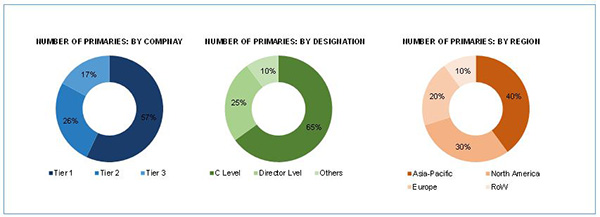
To know about the assumptions considered for the study, download the pdf brochure
This report provides valuable insights regarding the integrated ecosystem of the spatial light modulator market, which gives the holistic view of current demand side and vendor side of this market. This study answers several questions for the stakeholders, primarily which market segments to focus on in next two to five years for prioritizing their efforts and investments. Original Equipment Manufacturer (OEM) and Original Design Manufacturer (ODM) technology solution providers of spatial light modulator are the key contributor to the ecosystem.
Target Audience
- Original Equipment Manufacturers (OEMs)
- ODM and OEM Technology Solution Providers
- Suppliers and Distributors
- Research Organizations and Institutes
- Market research and Consulting Firms
- Technology Standards Organizations, Forums, Alliances, and Associations
- Technology Investors
- Analysts and Strategic Business Planners
- End users interested to know more about the spatial light modulator and the latest technological developments in this market
- Government and Other Regulatory Bodies
Spatial Light Modulator Market Scope:
By Application:
- Beam Shaping (Pulse Shaping)
- Display Application
- Optical Application
- Laser Beam Steering
- Holographic Data Storage
- Others
By Type:
- Optically Addressed
- Electrically Addressed
By Resolution:
- Less than 1024 * 768 Pixels Resolution
- Equal or More than 1024*768 Pixels Resolution
By Region:
- North America
- Europe
- Asia-Pacific
- RoW
Available Customizations:
Along with the market data, MarketsandMarkets offers customizations as per the client’s specific needs. The following customization options are available for the report:
Regional Analysis
- Further breakdown of region/country-specific analysis
Company Information
- Detailed analysis and profiling of additional market players (Up to 5)













Growth opportunities and latent adjacency in Spatial Light Modulator Market
Does this report include latest market information on Pico Projects, please suggest?