Special Mission Aircraft Market Size, share, Trends & Growth

Special Mission Aircraft Market by Platform (Military Aviation, Commercial Aviation, UAV), Application (ISR, Command and Control, Combat Support, Air-Launch/Rocket Launch), Payload Type, End-User, Point of Sale and Region - Global Forecast to 2030


Report Code: AS 7768 Sep, 2026, by marketsandmarkets.com

Special Mission Aircraft Market Summary

The Special Mission Aircraft Market is witnessing steady growth as governments strengthen defense preparedness, border surveillance, maritime security, intelligence gathering, disaster response, and electronic warfare capabilities. The market is estimated at USD 16.8 billion in 2025 and is projected to reach USD 24.7 billion by 2030, registering a CAGR of 8.0% during the forecast period. Rising geopolitical tensions, increasing investments in next-generation airborne intelligence platforms, and growing procurement of multi-role military aircraft are the primary factors accelerating market expansion.

Special mission aircraft perform highly specialized operations beyond traditional passenger or cargo transportation. These platforms support intelligence, surveillance and reconnaissance (ISR), airborne early warning and control (AEW&C), maritime patrol, electronic intelligence (ELINT), signals intelligence (SIGINT), search and rescue (SAR), airborne command and control, anti-submarine warfare (ASW), environmental monitoring, and humanitarian assistance missions. Governments worldwide continue modernizing aging fleets while integrating advanced radar systems, AI-powered mission computers, multi-sensor payloads, satellite communications, and secure networking technologies.

Artificial Intelligence (AI), Internet of Things (IoT), cloud-enabled mission management, autonomous decision support, and advanced analytics are fundamentally transforming special mission aviation. AI-powered image recognition significantly improves target identification, threat detection, object classification, and situational awareness. IoT-enabled aircraft health monitoring continuously analyzes engine performance, avionics status, fuel efficiency, and mission systems to improve operational readiness while reducing maintenance costs. Automation further enhances mission execution by enabling intelligent sensor fusion, automated flight planning, predictive maintenance, and real-time battlefield communication.

Growing investments in unmanned systems, satellite communications, digital command networks, and electronic warfare capabilities are creating new opportunities for aircraft manufacturers and defense electronics providers. Additionally, the increasing frequency of natural disasters, border security challenges, maritime disputes, and humanitarian operations is expanding demand for versatile special mission aircraft capable of operating across multiple mission environments. The market is expected to remain strategically important as nations prioritize defense modernization, national security, and real-time intelligence capabilities through 2030.

Key Market Trends & Insights

  • North America dominates the Special Mission Aircraft Market due to high defense expenditure, advanced aerospace manufacturing capabilities, and continuous military modernization programs.
  • Asia Pacific is projected to register the fastest growth owing to increasing defense budgets, border security investments, and regional geopolitical tensions.
  • Intelligence, Surveillance and Reconnaissance (ISR) aircraft remain the largest mission segment because of rising demand for persistent battlefield awareness and real-time intelligence.
  • AI-powered mission systems, autonomous sensor fusion, and predictive analytics are significantly improving operational efficiency and mission effectiveness.
  • Integration of satellite communications, cloud-enabled command systems, advanced AESA radar, and electronic warfare technologies is reshaping next-generation special mission aircraft.
  • Growing procurement of multi-role aircraft capable of surveillance, reconnaissance, maritime patrol, and disaster response is driving fleet modernization worldwide.

Market Size & Forecast

  • Base Year Market Size (2025): USD 16.8 Billion
  • Forecast Market Value (2030): USD 24.7 Billion
  • Forecast CAGR (2025–2030): 8.0%
  • Growth Drivers: Rising defense modernization programs, AI-enabled surveillance technologies, increasing ISR missions, expanding maritime security operations, electronic warfare investments, IoT-enabled predictive maintenance, and digital battlefield transformation.

Special Mission Aircraft Market Top 10 key takeaway

  1. The market is projected to reach USD 24.7 billion by 2030.
  2. ISR aircraft continue to dominate global procurement programs.
  3. North America remains the largest regional market.
  4. Asia Pacific is expected to witness the fastest CAGR through 2030.
  5. AI-enabled mission systems are transforming airborne surveillance operations.
  6. Multi-role aircraft procurement is increasing across defense organizations.
  7. Maritime patrol and border surveillance missions continue generating strong demand.
  8. IoT-enabled predictive maintenance improves aircraft availability and lifecycle management.
  9. Integration of cloud computing, satellite communications, and automated mission planning enhances operational effectiveness.
  10. Rising geopolitical tensions and defense modernization initiatives will continue driving long-term market growth. 
 

Product Insights

The Special Mission Aircraft Market is segmented into Intelligence, Surveillance & Reconnaissance (ISR) Aircraft, Airborne Early Warning & Control (AEW&C) Aircraft, Maritime Patrol Aircraft (MPA), Electronic Warfare (EW) Aircraft, Search & Rescue (SAR) Aircraft, Air Ambulance Aircraft, Environmental Monitoring Aircraft, and other specialized mission platforms. Among these, Intelligence, Surveillance & Reconnaissance (ISR) aircraft account for the largest market share due to their indispensable role in modern military operations, border security, counterterrorism, and homeland defense. Governments worldwide continue investing in ISR aircraft equipped with advanced electro-optical sensors, synthetic aperture radar (SAR), infrared imaging systems, electronic intelligence (ELINT), signals intelligence (SIGINT), and satellite communication capabilities to enhance real-time situational awareness and operational decision-making.

ISR platforms dominate because they enable persistent battlefield monitoring, long-range reconnaissance, target acquisition, threat detection, and intelligence collection across land, air, and maritime environments. These aircraft are increasingly equipped with AI-enabled image processing systems capable of automatically identifying vehicles, personnel, vessels, and potential threats while reducing operator workload and improving mission response time.

Airborne Early Warning & Control (AEW&C) aircraft continue to witness strong demand owing to rising investments in integrated air defense systems. Equipped with Active Electronically Scanned Array (AESA) radar, advanced command-and-control systems, secure communication networks, and long-range surveillance capabilities, AEW&C aircraft serve as airborne command centers capable of coordinating multiple combat operations simultaneously. Defense agencies are upgrading legacy platforms with AI-assisted battle management software, cloud-enabled data sharing, and sensor fusion technologies to improve operational effectiveness.

Maritime Patrol Aircraft (MPA) represent another rapidly expanding product category as nations strengthen maritime domain awareness, exclusive economic zone (EEZ) monitoring, anti-submarine warfare (ASW), anti-piracy operations, and coastal security. Increasing geopolitical tensions across strategic maritime regions continue driving procurement of long-range patrol aircraft equipped with sonobuoys, magnetic anomaly detectors, advanced maritime radar, and AI-enabled target classification systems.

Electronic Warfare (EW) aircraft are experiencing increased adoption as military organizations modernize electronic attack, electronic protection, and electronic support capabilities. These aircraft utilize advanced electronic jamming systems, cyber defense technologies, electromagnetic spectrum monitoring, and AI-assisted threat analysis to disrupt hostile communications and radar systems while protecting friendly forces.

Search and Rescue (SAR) aircraft remain essential for disaster response, humanitarian missions, emergency medical evacuation, and civilian rescue operations. Modern SAR aircraft incorporate thermal imaging cameras, satellite communications, automated navigation systems, and AI-powered search algorithms that significantly improve rescue efficiency during adverse weather conditions.

Environmental monitoring aircraft are increasingly deployed for wildfire detection, climate observation, pollution monitoring, agricultural surveillance, and disaster assessment. Governments and research organizations continue investing in aircraft equipped with hyperspectral imaging, LiDAR systems, and AI-based environmental analytics to support climate resilience and sustainable resource management.

The increasing adoption of modular mission systems allows operators to rapidly reconfigure aircraft for multiple mission profiles, reducing operational costs while improving fleet flexibility. Aircraft manufacturers continue developing open-architecture mission systems that simplify integration of future sensors, AI software, satellite communication technologies, and autonomous mission capabilities.

Technology / Component Insights

The Special Mission Aircraft Market is undergoing significant technological transformation as defense organizations adopt artificial intelligence, cloud computing, IoT-enabled monitoring, advanced radar systems, secure communications, and autonomous mission management technologies. These innovations are dramatically improving mission accuracy, operational efficiency, survivability, and lifecycle management while enabling faster decision-making in increasingly complex operational environments.

One of the most important technological advancements is the widespread deployment of Artificial Intelligence (AI) across airborne mission systems. AI algorithms analyze enormous volumes of sensor data collected from electro-optical cameras, infrared sensors, synthetic aperture radar, electronic intelligence receivers, and satellite communication networks. Machine learning models automatically identify potential threats, classify targets, detect abnormal movement patterns, prioritize intelligence information, and recommend tactical responses in real time. AI significantly reduces operator workload while improving mission accuracy and response speed.

Internet of Things (IoT) technologies have become essential for predictive aircraft maintenance and fleet management. Embedded sensors continuously monitor engines, avionics, hydraulic systems, landing gear, fuel systems, and mission-critical equipment. Real-time data is transmitted to centralized maintenance platforms where predictive analytics identify component degradation before failures occur. This predictive maintenance approach minimizes aircraft downtime, reduces maintenance costs, and improves mission availability.

Cloud computing has emerged as another critical technology supporting modern airborne operations. Secure military cloud infrastructure enables rapid sharing of intelligence between aircraft, command centers, satellites, naval vessels, and ground forces. Cloud-based mission management allows defense agencies to integrate multi-domain operations while supporting collaborative planning, secure communications, and distributed command-and-control architectures.

Advanced Active Electronically Scanned Array (AESA) radar systems continue replacing traditional mechanically scanned radar because of their superior detection range, faster scanning speed, improved resistance to electronic interference, and ability to simultaneously track multiple airborne, maritime, and ground targets. AI-assisted radar processing further enhances target discrimination and threat prioritization.

Sensor fusion technologies integrate information from multiple surveillance systems—including radar, electro-optical cameras, infrared sensors, SIGINT receivers, LiDAR, satellite communications, and navigation systems—into a unified operational picture. This comprehensive situational awareness enables military commanders to make informed decisions during complex missions while reducing information overload.

Electronic warfare technologies continue evolving through software-defined architectures, digital radio frequency memory (DRFM), cognitive electronic warfare systems, and AI-enabled spectrum management. These solutions allow aircraft to rapidly detect hostile radar emissions, analyze electronic threats, and deploy appropriate countermeasures with minimal operator intervention.

Automation is increasingly influencing flight operations through intelligent autopilot systems, autonomous navigation, adaptive mission planning, automated target tracking, collision avoidance, and AI-assisted decision support. While full autonomy remains limited for military aircraft, increasing levels of automation are enhancing mission effectiveness while improving crew safety.

The future of Special Mission Aircraft will likely incorporate quantum-resistant communications, edge AI computing, 6G-enabled tactical networking, digital twins for aircraft lifecycle management, advanced cybersecurity platforms, and human-machine teaming technologies that enable seamless collaboration between pilots and autonomous mission systems.

Application Insights

The defense and military sector represents the largest application segment in the Special Mission Aircraft Market due to continuous investments in intelligence gathering, surveillance, reconnaissance, electronic warfare, airborne command and control, and national security operations. Modern military forces increasingly rely on special mission aircraft to conduct persistent monitoring of strategic locations, support combat operations, detect emerging threats, coordinate multinational missions, and maintain battlefield superiority. AI-enabled surveillance systems, real-time data fusion, and secure communications significantly improve operational effectiveness across defense applications.

Border surveillance and homeland security constitute another major application area. Governments are deploying special mission aircraft equipped with advanced imaging sensors, maritime surveillance radar, infrared cameras, and automated target recognition systems to monitor illegal border crossings, drug trafficking, human smuggling, and unauthorized maritime activities. AI-assisted analytics improve detection accuracy while reducing operator workload.

Maritime security continues to generate substantial demand as countries protect exclusive economic zones (EEZs), offshore energy assets, shipping lanes, and coastal infrastructure. Maritime patrol aircraft equipped with anti-submarine warfare capabilities, sonobuoys, advanced radar, and satellite communications play an increasingly critical role in protecting strategic maritime interests.

The search and rescue (SAR) segment is experiencing steady growth due to increasing natural disasters, aviation accidents, maritime emergencies, and humanitarian crises. AI-powered search algorithms, thermal imaging technologies, and satellite-based communication systems enable faster location of survivors while improving rescue coordination under difficult operating conditions.

Environmental monitoring, disaster response, and scientific research applications are also expanding rapidly. Governments deploy specialized aircraft to assess flood damage, monitor wildfires, track hurricanes, evaluate pollution levels, conduct climate research, and support emergency response operations. The integration of AI, hyperspectral imaging, and real-time environmental analytics is further enhancing mission effectiveness across civilian applications.

Overall, the increasing convergence of AI, automation, IoT, satellite communications, and advanced sensing technologies is broadening the operational scope of special mission aircraft, enabling them to perform increasingly complex defense, security, humanitarian, and environmental missions with greater precision and efficiency.

Regional Insights

The Special Mission Aircraft Market demonstrates strong regional growth patterns driven by rising defense modernization programs, geopolitical tensions, increasing investments in airborne intelligence capabilities, and technological advancements in surveillance and electronic warfare systems. While North America remains the largest regional market because of its mature aerospace ecosystem and substantial defense spending, Asia Pacific is expected to register the fastest growth due to expanding military budgets and border security initiatives. Europe continues investing in collaborative defense programs, airborne early warning capabilities, and maritime surveillance platforms to strengthen regional security.

North America

North America holds the largest share of the Special Mission Aircraft Market, supported by continuous investments in advanced defense technologies, intelligence platforms, and aerospace innovation. The United States accounts for the majority of regional demand due to extensive procurement programs by the Department of Defense, growing investments in ISR aircraft, airborne early warning systems, electronic warfare platforms, and maritime patrol aircraft. The modernization of legacy aircraft with AI-enabled mission systems, secure communications, and advanced sensor integration is accelerating fleet upgrades.

The United States also benefits from the presence of leading aerospace manufacturers, defense contractors, and avionics suppliers that continuously develop next-generation mission aircraft. Increasing demand for border surveillance, space-based intelligence integration, homeland security operations, and multi-domain command systems further strengthens market growth.

Canada continues investing in maritime surveillance aircraft, Arctic monitoring capabilities, and search-and-rescue modernization programs to safeguard vast coastlines and northern territories. Government initiatives supporting aerospace innovation and defense procurement are creating opportunities for advanced mission aircraft.

Mexico is gradually expanding investments in surveillance aircraft to strengthen border security, counter-narcotics operations, disaster response, and maritime monitoring. Government modernization efforts are expected to drive steady procurement over the forecast period.

Europe

Europe represents a significant market driven by increasing defense cooperation, NATO modernization initiatives, and investments in advanced surveillance capabilities. Germany leads regional demand through continuous investments in airborne intelligence, ISR platforms, electronic warfare systems, and integrated defense modernization. The country's strong aerospace manufacturing sector supports innovation in mission avionics, secure communications, and AI-assisted surveillance technologies.

The United Kingdom continues expanding airborne intelligence and maritime patrol capabilities while investing in multi-role surveillance aircraft for homeland security and international defense operations. Government support for digital defense transformation and collaborative aerospace programs further supports market growth.

France remains a major contributor through investments in airborne early warning aircraft, electronic intelligence systems, and overseas military operations. French defense programs emphasize next-generation mission management, AI-enabled battlefield awareness, and secure tactical communications.

Italy and Spain continue modernizing maritime patrol fleets and airborne surveillance assets to improve Mediterranean security, border monitoring, and disaster response capabilities. Across the Nordic countries, increasing defense preparedness, Arctic monitoring requirements, and cross-border security cooperation are generating demand for advanced special mission aircraft.

European defense strategies increasingly focus on interoperability, digital command-and-control systems, AI-powered intelligence processing, and multinational procurement programs to strengthen regional security.

Asia Pacific

Asia Pacific is projected to register the fastest CAGR throughout the forecast period due to rising geopolitical tensions, increasing military modernization programs, and expanding investments in indigenous aerospace capabilities.

China continues investing heavily in airborne early warning aircraft, electronic warfare platforms, ISR systems, and long-range maritime patrol capabilities as part of its comprehensive military modernization strategy. Rapid advancements in AI, radar technologies, satellite communications, and autonomous mission systems are enhancing domestic aircraft capabilities.

Japan is strengthening airborne surveillance and maritime patrol operations in response to regional security challenges. Investments in advanced radar systems, AI-assisted surveillance platforms, and integrated air defense networks continue supporting market expansion.

India is significantly increasing procurement of airborne early warning aircraft, border surveillance platforms, maritime patrol aircraft, and electronic intelligence systems under defense modernization initiatives. Government programs encouraging domestic aerospace manufacturing, technology transfer, and indigenous defense production are expected to accelerate future growth.

South Korea continues investing in advanced surveillance aircraft, electronic warfare capabilities, and AI-enabled command-and-control systems while strengthening domestic aerospace manufacturing.

Australia is modernizing maritime surveillance aircraft and intelligence capabilities to enhance Indo-Pacific security, while Singapore remains an important regional adopter of advanced surveillance technologies, integrated defense networks, and digital military infrastructure.

Overall, Asia Pacific benefits from increasing defense budgets, indigenous aircraft development, government-backed aerospace investments, and growing adoption of AI-enabled mission technologies.

Rest of the World

The Rest of the World, including the Middle East, Latin America, and Africa, is witnessing gradual growth in the Special Mission Aircraft Market. Middle Eastern countries continue investing in airborne surveillance, intelligence gathering, and border security platforms to strengthen national defense. Latin American nations are upgrading surveillance aircraft for anti-narcotics operations, disaster response, and environmental monitoring, while African countries increasingly deploy special mission aircraft for peacekeeping, border monitoring, humanitarian assistance, and wildlife protection missions.

Regional Insights Summary

  • North America remains the largest market due to high defense expenditure and aerospace innovation.
  • Asia Pacific is projected to record the fastest growth through 2030.
  • Europe benefits from NATO modernization, collaborative defense programs, and AI-enabled surveillance investments.
  • China, India, Japan, and South Korea continue expanding indigenous defense aerospace capabilities.
  • Maritime surveillance, ISR, electronic warfare, and border security remain the primary regional demand drivers.

Country-Specific Market Trends

The adoption of special mission aircraft continues to accelerate across major defense economies as governments strengthen airborne intelligence, border surveillance, electronic warfare, maritime patrol, and disaster response capabilities. AI-enabled mission systems, autonomous analytics, cloud-connected command platforms, and advanced radar technologies are becoming standard across new aircraft procurement programs.

APAC

China (CAGR: ~9.5%) continues expanding indigenous production of airborne early warning aircraft, ISR platforms, and electronic warfare systems. Government investments in AI-enabled military modernization, satellite communications, and integrated air defense networks are supporting strong market growth.

Japan (CAGR: ~8.2%) is strengthening airborne surveillance, maritime patrol, and homeland defense capabilities through modernization of existing aircraft and procurement of next-generation mission platforms equipped with AI-powered sensor fusion and secure communication systems.

North America

United States (CAGR: ~7.8%) remains the world's largest market due to sustained defense modernization, AI-enabled ISR deployment, airborne command-and-control programs, and continuous procurement of next-generation special mission aircraft.

Canada (CAGR: ~6.9%) focuses on Arctic surveillance, maritime security, search-and-rescue modernization, and intelligence gathering supported by advanced mission avionics and digital surveillance technologies.

Mexico (CAGR: ~6.5%) continues expanding investments in surveillance aircraft for border protection, disaster management, counter-narcotics operations, and coastal monitoring.

Europe

Germany (CAGR: ~7.4%) leads European investments in ISR aircraft, electronic warfare systems, AI-enabled mission computing, and integrated defense modernization programs while supporting domestic aerospace innovation.

France (CAGR: ~7.1%) continues strengthening airborne command, intelligence collection, maritime surveillance, and overseas operational capabilities through advanced mission aircraft procurement and AI-integrated defense technologies.

Country-Level Insights Summary

  • China is expected to register the highest growth among major markets due to rapid military modernization.
  • The United States remains the largest individual country market supported by sustained defense spending.
  • India and Japan continue increasing investments in airborne surveillance and maritime security.
  • Germany and France lead European procurement of advanced special mission aircraft.
  • AI integration, indigenous manufacturing, and digital defense transformation are accelerating adoption across all major regions. 

Key Special Mission Aircraft Market Company Insights

The Special Mission Aircraft Market is characterized by strong competition among global aerospace manufacturers, defense contractors, mission system integrators, and avionics providers. Companies are focusing on developing multi-role aircraft equipped with AI-powered mission computers, advanced radar systems, electronic warfare capabilities, secure satellite communications, and autonomous decision-support technologies. Strategic priorities include aircraft modernization, sensor integration, cloud-enabled command-and-control systems, and modular open-system architectures that allow rapid upgrades throughout an aircraft's operational lifecycle.

Lockheed Martin Corporation continues expanding its airborne intelligence and surveillance portfolio through integrated ISR solutions, mission avionics, and network-centric warfare capabilities. Boeing focuses on airborne early warning platforms, maritime patrol aircraft, and next-generation mission systems equipped with AI-enabled analytics. Northrop Grumman remains a leader in airborne ISR, electronic warfare, radar technologies, and autonomous mission management systems.

Saab AB continues strengthening its position through advanced AEW&C aircraft, surveillance radar, and integrated command-and-control solutions. L3Harris Technologies specializes in ISR payloads, secure communications, electronic intelligence systems, and mission integration for military aircraft. Textron Aviation Defense supplies adaptable special mission aircraft for intelligence, border surveillance, and maritime operations.

Airbus Defence and Space is expanding its portfolio of multi-role surveillance aircraft with advanced sensor fusion and digital mission systems. Leonardo S.p.A. focuses on maritime patrol aircraft, airborne surveillance solutions, and integrated electronic warfare technologies. Embraer Defense & Security continues developing mission-ready aircraft for intelligence, border patrol, humanitarian missions, and environmental monitoring. General Dynamics Mission Systems strengthens the market through secure communications, cyber-resilient avionics, and integrated battlefield networking solutions.

Manufacturers are increasingly collaborating with defense ministries, satellite communication providers, AI software developers, and radar technology companies to enhance mission flexibility and improve operational efficiency.

Company Strategy Highlights

  • Leading manufacturers are investing in AI-powered mission management and sensor fusion technologies.
  • Open-system architecture is enabling faster upgrades and lower lifecycle costs.
  • Strategic partnerships with defense agencies and avionics suppliers are accelerating innovation.
  • Companies are integrating cloud computing, secure satellite communications, and predictive maintenance into mission aircraft.
  • Indigenous manufacturing and localized production remain major priorities for government procurement programs.

Recent Developments

  • February 2026: Saab unveiled an upgraded airborne early warning platform featuring AI-enabled radar processing, enhanced electronic surveillance, and improved multi-domain command-and-control capabilities.
  • June 2026: Boeing announced a strategic collaboration with a leading defense software company to integrate AI-driven mission planning and predictive maintenance technologies into next-generation special mission aircraft.
  • October 2026: Airbus Defence and Space introduced a modular ISR aircraft architecture allowing rapid integration of advanced sensors, electronic warfare payloads, and satellite communication systems for multi-role defense missions.

Market Segmentation

The Special Mission Aircraft Market is segmented by Product, Technology, Application, and Region. By product, the market comprises Intelligence, Surveillance & Reconnaissance (ISR) aircraft, Airborne Early Warning & Control (AEW&C) aircraft, Maritime Patrol Aircraft, Electronic Warfare Aircraft, Search & Rescue Aircraft, Air Ambulance Aircraft, and Environmental Monitoring Aircraft, with ISR platforms accounting for the largest market share due to their extensive deployment in military and homeland security operations. By technology, the market includes AI-enabled mission systems, AESA radar, electro-optical/infrared (EO/IR) sensors, secure satellite communications, electronic warfare systems, IoT-based predictive maintenance, and cloud-enabled command-and-control platforms. By application, defense and military remain the dominant segment, followed by homeland security, maritime surveillance, disaster response, environmental monitoring, and humanitarian assistance. Regionally, North America leads the market, followed by Europe and Asia Pacific, while the Middle East, Latin America, and Africa continue offering long-term growth opportunities through increasing defense modernization initiatives.

Market Segmentation Highlights

  • ISR aircraft account for the largest product segment.
  • AI-powered mission systems represent the fastest-growing technology category.
  • Defense and military remain the leading application segment.
  • North America dominates global market revenue.
  • Asia Pacific is projected to register the highest growth during the forecast period.

Conclusion

The Special Mission Aircraft Market is expected to witness sustained growth through 2030, driven by rising geopolitical tensions, increasing defense modernization budgets, expanding airborne intelligence requirements, and continuous advancements in AI-enabled surveillance technologies. Governments are prioritizing investment in multi-role aircraft capable of supporting intelligence gathering, electronic warfare, maritime security, border surveillance, and disaster response operations. Emerging technologies such as artificial intelligence, cloud computing, autonomous mission systems, IoT-enabled predictive maintenance, advanced radar, and secure satellite communications are transforming operational capabilities while improving mission effectiveness. Companies investing in digital mission systems, modular aircraft architectures, and next-generation defense technologies will be well positioned to capitalize on long-term opportunities within the evolving aerospace and defense landscape.

FAQs

1. What is the projected market size of the Special Mission Aircraft Market by 2030?

The market is projected to grow from approximately USD 16.8 billion in 2025 to nearly USD 24.7 billion by 2030.

2. What is the expected CAGR of the Special Mission Aircraft Market?

The market is anticipated to expand at a CAGR of approximately 8.0% during the 2025–2030 forecast period.

3. What factors are driving the growth of the Special Mission Aircraft Market?

Major growth drivers include increasing defense modernization programs, rising demand for ISR capabilities, AI-powered surveillance systems, electronic warfare investments, maritime security requirements, border protection initiatives, and cloud-enabled mission management technologies.

4. Which region dominates the Special Mission Aircraft Market?

North America currently dominates the market due to substantial defense spending, advanced aerospace manufacturing capabilities, and continuous investments in airborne intelligence and surveillance platforms.

5. Which companies are the leading players in the Special Mission Aircraft Market?

Key companies include Lockheed Martin, Boeing, Northrop Grumman, Saab AB, Airbus Defence and Space, L3Harris Technologies, Leonardo S.p.A., Embraer Defense & Security, Textron Aviation Defense, and General Dynamics Mission Systems.

Revenue

The Special Mission Aircraft Market generated an estimated USD 16.8 billion in revenue in 2025 and is expected to reach approximately USD 24.7 billion by 2030, supported by increasing procurement of ISR platforms, airborne early warning aircraft, maritime patrol systems, and electronic warfare solutions. Revenue growth is driven by defense modernization programs, military aircraft upgrades, border security initiatives, and expanding investments in AI-powered mission systems, advanced avionics, and integrated surveillance technologies. Long-term service contracts, aircraft modernization programs, mission system upgrades, and maintenance services continue generating recurring revenue opportunities for manufacturers and defense system integrators.

Investment & Funding

Global investment in the Special Mission Aircraft Market continues to accelerate as governments allocate larger defense budgets toward airborne surveillance, electronic warfare, AI-enabled intelligence systems, and next-generation mission aircraft. Aerospace manufacturers are investing heavily in advanced radar technologies, autonomous mission management, secure communications, digital avionics, and open-system architectures. Public-private partnerships, government-funded defense research programs, and strategic collaborations between aircraft manufacturers, defense electronics companies, AI software developers, and satellite communication providers are supporting continuous innovation and strengthening long-term market competitiveness.

Mergers & Acquisitions (M&A)

Merger and acquisition activity in the Special Mission Aircraft Market is primarily focused on expanding defense technology portfolios, strengthening AI and sensor integration capabilities, and enhancing mission system expertise. Leading aerospace companies continue acquiring specialized avionics firms, radar technology developers, electronic warfare providers, cybersecurity companies, and AI software specialists to broaden their defense offerings and improve aircraft mission capabilities. Strategic partnerships between aircraft OEMs, mission system integrators, satellite communication providers, and defense agencies are also increasing, enabling faster deployment of next-generation special mission aircraft equipped with advanced surveillance, secure networking, and autonomous operational technologies.


Exclusive indicates content/data unique to MarketsandMarkets and not available with any competitors.

TABLE OF CONTENTS

  • INTRODUCTION
    • STUDY OBJECTIVES
    • MARKET DEFINITION
    • MARKET SCOPE
      • MARKET SEGMENTATION AND REGIONAL SCOPE
      • INCLUSIONS AND EXCLUSIONS
      • YEARS CONSIDERED
    • CURRENCY CONSIDERED
    • UNIT CONSIDERED
    • LIMITATIONS
    • STAKEHOLDERS
    • SUMMARY OF CHANGES
  • EXECUTIVE SUMMARY
    • MARKET HIGHLIGHTS AND KEY INSIGHTS
    • KEY MARKET PARTICIPANTS: MAPPING OF STRATEGIC DEVELOPMENTS
    • DISRUPTIVE TRENDS IN SPECIAL MISSION AIRCRAFT MARKET
    • HIGH-GROWTH SEGMENTS
    • REGIONAL SNAPSHOT: MARKET SIZE, GROWTH RATE, AND FORECAST
  • PREMIUM INSIGHTS
  • MARKET OVERVIEW
    • INTRODUCTION
    • MARKET DYNAMICS
      • DRIVERS
      • RESTRAINTS
      • OPPORTUNITIES
      • CHALLENGES
    • UNMET NEEDS AND WHITE SPACES
    • INTERCONNECTED MARKETS AND CROSS-SECTOR OPPORTUNTIES
    • STRATEGIC MOVES BY TIER-1/2/3 PLAYERS
  • INDUSTRY TRENDS
    • MACROECONOMIC OUTLOOK
      • INTRODUCTION
      • GDP TRENDS AND FORECAST
      • TRENDS IN GLOBAL AIRCRAFT INDUSTRY
      • TRENDS IN GLOBAL SPECIAL MISSION AIRCRAFT INDUSTRY
    • VALUE CHAIN ANALYSIS
    • ECOSYSTEM ANALYSIS
    • INVESTMENTS & FUNDING SCENARIO
    • PRICING ANALYSIS
      • INDICATIVE PRICING ANALYSIS OF SPECIAL MISSION AIRCRAFT, BY PLATFORM
      • INDICATIVE PRICING ANALYSIS, BY REGION
    • TRADE ANALYSIS
      • IMPORT SCENARIO
      • EXPORT SCENARIO
    • KEY CONFERENCES AND EVENTS, 2025-2026
    • TRENDS/DISRUPTIONS IMPACTING CUSTOMER BUSINESS
    • INVESTMENT AND FUNDING SCENARIO
    • CASE STUDY ANALYSIS
    • IMPACT OF 2025 US TARIFF – SPECIAL MISSION AIRCRAFT MARKET
      • INTRODUCTION
      • KEY TARIFF RATES
      • PRICE IMPACT ANALYSIS
      • IMPACT ON COUNTRIES/REGIONS
        • US
        • EUROPE
        • APAC
      • IMPACT ON DIFFERENT APPLICATIONS
  • TECHNOLOGICAL ADVANCEMENTS, AI-DRIVEN IMPACT, PATENTS, INNOVATIONS, AND FUTURE APPLICATIONS
    • KEY EMERGING TECHNOLOGIES
    • COMPLEMENTARY TECHNOLOGIES
    • ADJACENT TECHNOLOGIES
    • TECHNOLOGY/PRODUCT ROADMAP
    • PATENT ANALYSIS
    • FUTURE APPLICATIONS
    • IMPACT OF AI/GEN AI ON SPECIAL MISSION AIRCRAFT MARKET
      • TOP USE CASES AND MARKET POTENTIAL
      • CASE STUDIES OF AI IMPLEMENTATION IN THE SPECIAL MISSION AIRCRAFT MARKET
      • INTERCONNECTED ADJACENT ECOSYSTEM AND IMPACT ON MARKET PLAYERS
      • CLIENTS’ READINESS TO ADOPT GENERATIVE AI IN SPECIAL MISSION AIRCRAFT MARKET
  • SUSTAINABILITY AND REGULATORY LANDSCAPE
    • REGIONAL REGULATIONS AND COMPLIANCE
      • REGULATORY BODIES, GOVERNMENT AGENCIES, AND OTHER ORGANIZATIONS
      • INDUSTRY STANDARDS
    • SUSTAINABILITY INITIATIVES
      • CARBON IMPACT AND ECO-APPLICATIONS OF SPECIAL MISSION AIRCRAFT
    • SUSTAINABILITY IMPACT AND REGULATORY POLICY INITIATIVES
    • CERTIFICATIONS, LABELING, ECO-STANDARDS
  • CUSTOMER LANDSCAPE & BUYER BEHAVIOR
    • DECISION-MAKING PROCESS
    • BUYER STAKEHOLDERS AND BUYING EVALUATION CRITERIA
    • ADOPTION BARRIERS & INTERNAL CHALLENGES
    • UNMET NEEDS FROM VARIOUS END-USES
  • SPECIAL MISSION AIRCRAFT MARKET, BY PLATFORM (MARKET SIZE & FORECAST TO 2030 - USD MILLION)
    • INTRODUCTION
    • COMMERCIAL AVIATION
      • COMMERCIAL AIRCRAFT
        • NARROW-BODY AIRCRAFT
        • WIDE-BODY AIRCRAFT
        • REGIONAL TRANSPORT AIRCRAFT
      • GENERAL & BUSINESS AIRCRAFT
        • ULTRALIGHT & LIGHT AIRCRAFT
        • BUSINESS JETS
      • HELICOPTERS
        • LIGHT
        • MEDIUM
        • HEAVY
      • UNMANNED AERIAL VEHICLES
  • SPECIAL MISSION AIRCRAFT MARKET, BY APPLICATION (MARKET SIZE & FORECAST TO 2030 - USD MILLION)
    • INTRODUCTION
    • INTELLIGENCE, SURVEILLANCE, AND RECONNAISSANCE
    • COVERT SURVEILLANCE
      • MARITIME PATROL
      • BORDER SURVEILLANCE
      • SIGNALS INTELLIGENCE
      • AIRBORNE EARLY WARNING & CONTROL (AEWC)
    • COMBAT SUPPORT
    • COMMAND & CONTROL
    • EMERGENCY SERVICES
      • MEDICAL EVACUATION
      • MEDICAL AID & SUPPLIES
      • DISASTER MANAGEMENT
    • TRANSPORTATION
      • VIP AND VVIP
      • PASSENGER & CARGO TRANSPORTATION
    • AIR/ROCKET LAUNCH
    • SCIENTIFIC RESEARCH & GEOLOGICAL SURVEY
    • OTHERS
  • SPECIAL MISSION AIRCRAFT MARKET, BY COMPONENT (MARKET SIZE & FORECAST TO 2030-USD MILLION)
    • INTRODUCTION
    • SENSORS
      • RADAR/MULTI-MISSION RADAR
      • ESM/ELINT AND CSM/COMINT
      • EO/IR SYSTEMS
      • NIGHT VISION SYSTEMS
      • LAUNCHER & DISPENSER SYSTEMS
    • COMMUNICATION SUITE
      • SATCOM
      • HF AND V/UHF RADIO
      • DATA LINK
      • WEAPONS MANAGEMENT SYSTEM (WMS) AND MISSION MANAGEMENT SYSTEM (MMS)
    • PROTECTION SUITE
      • RADAR WARNING AND LOCATING SYSTEM
      • MISSILE APPROACH WARNING SYSTEM
      • RF JAMMER
      • OTHERS
    • OTHERS
  • SPECIAL MISSION AIRCRAFT MARKET, BY POINT OF SALE (MARKET SIZE & FORECAST TO 2030-USD MILLION)
    • INTRODUCTION
    • AFTERMARKET
      • UPGRADES
      • CONVERSION
    • OEM
  • SPECIAL MISSION AIRCRAFT CONVERSION, OPERATIONAL ANALYSIS
    • CONVERSION VALUE CHAIN
      • AIRFRAME SELECTION
      • STRUCTURAL REINFORCEMENT
      • MISSION SYSTEM INTEGRATION
      • POWER ARCHITECTURE REDESIGN
      • CERTIFICATION & FLIGHT VALIDATION
      • LIFECYCLE SUPPORT
  • CERTIFICATION & REGULATORY LANDSCAPE
    • CERTIFICATION & AIRWORTHINESS IN SMA CONVERSIONS
      • SUPPLEMENTAL TYPE CERTIFICATE (STC)
      • MILITARY AIRWORTHINESS STANDARDS
      • CIVIL-MILITARY HYBRID CERTIFICATION
      • EXPORT CONTROLS (ITAR, ETC.)
    • STRUCTURAL & POWER ARCHITECTURE
      • STRUCTURAL MODIFICATIONS
        • FUSELAGE REINFORCEMENT
        • ANTENNA RADOME STRUCTURAL INTEGRATION
        • MISSION BAY RECONFIGURATION
        • HARDPOINT & SENSOR MOUNTING STRUCTURES
        • COOLING DUCT STRUCTURAL ROUTING
    • POWER DISTRIBUTION & ELECTRICAL ARCHITECTURE RECONFIGURATION
      • LOAD ANALYSIS FOR MISSION SYSTEMS
      • GENERATOR CAPACITY AUGMENTATION
      • POWER CONVERSION UNITS
      • REDUNDANT POWER SYSTEMS
      • EMI/EMC CONSIDERATIONS
      • THERMAL MANAGEMENT INTEGRATION
  • SPECIAL MISSION AIRCRAFT MARKET, BY END USER (MARKET SIZE & FORECAST TO 2030-USD MILLION)
    • INTRODUCTION
    • COMMERCIAL & CIVIL
      • HEALTHCARE SERVICE PROVIDERS
      • ENERGY AND POWER ORGANIZATIONS
      • MEDIA AGENCIES
      • OTHERS
    • LAW ENFORCEMENT AGENCIES
    • SPACE
      • SATELLITE OPERATORS/OWNERS
      • LAUNCH SERVICE PROVIDERS
      • NATIONAL SPACE AGENCIES
  • SPECIAL MISSION AIRCRAFT MARKET, BY REGION (MARKET SIZE & FORECAST TO 2030-USD MILLION)
    • INTRODUCTION
    • NORTH AMERICA
      • US
      • CANADA
    • EUROPE
      • UK
      • GERMANY
      • FRANCE
      • ITALY
      • REST OF EUROPE
    • ASIA PACIFIC
      • CHINA
      • INDIA
      • JAPAN
      • SOUTH KOREA
      • REST OF ASIA PACIFIC
    • MIDDLE EAST & AFRICA
      • GCC
        • SAUDI ARABIA
        • UAE
      • TURKEY
      • SOUTH AFRICA
    • LATIN AMERICA
      • BRAZIL
      • MEXICO
  • COMPETITIVE LANDSCAPE
    • INTRODUCTION
    • KEY PLAYER COMPETITIVE STRATEGIES/RIGHT TO WIN
    • REVENUE ANALYSIS
    • MARKET SHARE ANALYSIS
    • PRODUCT COMPARISON
    • COMPANY EVALUATION MATRIX: KEY PLAYERS, 2024
      • STARS
      • EMERGING LEADERS
      • PERVASIVE PLAYERS
      • PARTICIPANTS
      • COMPANY FOOTPRINT, KEY PLAYERS, 2024
        • COMPANY FOOTPRINT
        • REGION FOOTPRINT
        • PLATFORM FOOTPRINT
        • APPLICATION FOOTPRINT
      • COMPANY EVALUATION MATRIX: STARTUPS/SMES, 2024
        • PROGRESSIVE COMPANIES
        • RESPONSIVE COMPANIES
        • DYNAMIC COMPANIES
        • STARTING BLOCKS
        • COMPETITIVE BENCHMARKING: STARTUPS/SMES, 2024
          • DETAILED LIST OF KEY STARTUPS/SMES
          • COMPETITIVE BENCHMARKING OF KEY STARTUPS/SMES
        • COMPETITIVE SCENARIO
          • PRODUCT LAUNCHES
          • DEALS
          • OTHER DEVELOPMENTS
  • COMPANY PROFILE
    • KEY PLAYERS
      • THE BOEING COMPANY
      • LOCKHEED MARTIN CORPORATION
      • DASSAULT AVIATION S.A.
      • TEXTRON AVIATION INC.
      • NORTHROP GRUMMAN CORPORATION
      • BOMBARDIER INC.
      • ELBIT SYSTEMS LTD.
      • ISRAEL AEROSPACE INDUSTRIES LTD.
      • THALES S.A.
      • BAE SYSTEMS PLC
      • SAAB AB
      • LEONARDO S.P.A.
      • KRATOS DEFENSE & SECURITY SOLUTIONS, INC.
      • GENERAL ATOMICS AERONAUTICAL SYSTEMS, INC.
      • AIRBUS SE
      • L3HARRIS TECHNOLOGIES, INC.
      • LUFTHANSA TECHNIK AG
      • PILATUS AIRCRAFT LTD.
      • RUAG INTERNATIONAL HOLDING AG
      • GULFSTREAM AEROSPACE CORPORATION
  • RESEARCH METHODOLOGY
    • RESEARCH DATA
      • SECONDARY DATA
        • KEY DATA FROM SECONDARY SOURCES
      • PRIMARY DATA
        • KEY DATA FROM PRIMARY SOURCES
        • KEY PRIMARY PARTICIPANTS
        • BREAKDOWN OF PRIMARIES
        • KEY INDUSTRY INSIGHTS
      • MARKET SIZE ESTIMATION
        • BOTTOM-UP APPROACH
        • TOP-DOWN APPROACH
        • BASE NUMBER CALCULATION
      • MARKET FORECAST APPROACH
        • SUPPLY SIDE
        • DEMAND SIDE
      • RESEARCH ASSUMPTIONS
      • RESEARCH LIMITATIONS AND RISK ASSESSMENT
  • APPENDIX
    • DISCUSSION GUIDE
    • KNOWLEDGESTORE: MARKETSANDMARKETS’ SUBSCRIPTION PORTAL
    • CUSTOMIZATION OPTIONS
    • RELATED REPORTS
    • AUTHOR DETAILS

The study involved various activities in estimating the current size of the special mission aircraft market. Exhaustive secondary research was done to collect information on the special mission aircraft market, its adjacent markets, and its parent market. The next step was to validate these findings, assumptions, and sizing with industry experts across the value chain through primary research. Demand-side analyses were carried out to estimate the overall size of the market. Thereafter, market breakdown and data triangulation procedures were used to estimate the sizes of different segments and subsegments of the special mission aircraft market.

Secondary Research

The market ranking of companies was determined using the secondary data made available through paid and unpaid sources and by analyzing the product portfolios of major companies. These companies were rated on the basis of performance and quality of their products. These data points were further validated by primary sources.

Secondary sources referred to, for this research study include financial statements of companies offering special mission aircraft and information from various trade, business, and professional associations. The secondary data was collected and analyzed to arrive at the overall size of the special mission aircraft market, which was validated by primary respondents.

Primary Research

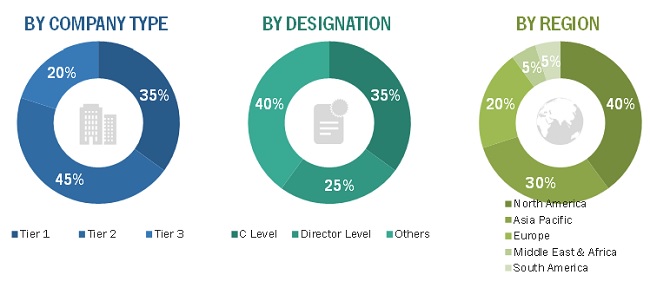
Extensive primary research was conducted after acquiring information regarding the special mission aircraft market scenario through secondary research. Several primary interviews were conducted with market experts from both the demand and supply sides across major countries of North America, Europe, Asia Pacific, and the Rest of the World. Primary data was collected through questionnaires, emails, and telephonic interviews.

After interacting with industry experts, brief sessions were conducted with highly experienced independent consultants to reinforce the findings from our primaries. This, along with the in-house subject matter experts’ opinions, has led us to the findings as described in the remainder of this report.
Special Mission Aircraft Market  Size, and Share

To know about the assumptions considered for the study, download the pdf brochure

Market Size Estimation

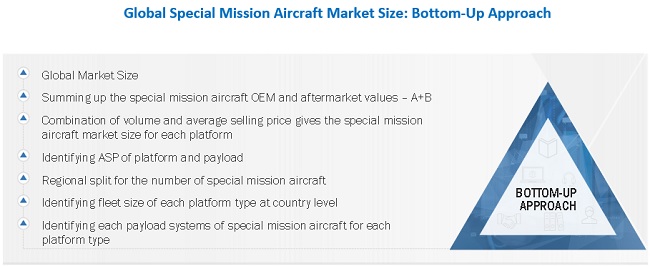
Both top-down and bottom-up approaches were used to estimate and validate the size of the special mission aircraft market. The research methodology used to estimate the size of the market includes the following details:

The key players in the special mission aircraft market were identified through secondary research, and their market shares were determined through primary and secondary research. This included a study of the annual and financial reports of the top market players and extensive interviews with leaders such as CEOs, directors, and marketing executives of leading companies operating in the special mission aircraft market.

All percentage shares, splits, and breakdowns were determined using secondary sources and verified through primary sources. All possible parameters that affect the markets covered in this research study were accounted for, viewed in extensive detail, verified through primary research, and analyzed to obtain the final quantitative and qualitative data on the special mission aircraft market. This data was consolidated, enhanced with detailed inputs, analyzed by MarketsandMarkets, and presented in this report.

Special Mission Aircraft Market Size: Bottom-Up Approach:
Special Mission Aircraft Market  Size, and Share

To know about the assumptions considered for the study, Request for Free Sample Report

Data Triangulation

After arriving at the overall size of the special mission aircraft market from the market size estimation process explained above, the total market was split into several segments and subsegments. The data triangulation and market breakdown procedures explained below were implemented, wherever applicable, to complete the overall market engineering process and arrive at the exact statistics for various segments and subsegments of the market. The data was triangulated by studying various factors and trends from both, the demand and supply sides. The market size was validated using both, the top-down and bottom-up approaches.

Report Objectives

  • To define, describe, and forecast the size of the special mission aircraft market based on platform, application, type, end user, point of sale, and region for the forecast period from 2022 to 2027
  • To analyze the demand- and supply-side indicators influencing the special mission aircraft market
  • To identify and analyze key drivers, restraints, opportunities, and challenges influencing the growth of the market across the globe
  • To forecast the size of various segments of the special mission aircraft market across North America, Europe, Asia Pacific, Middle East & Africa, and Latin America
  • To analyze technological advancements and product launches in the market
  • To identify financial positions, key products, and key developments of leading companies in the market
  • To analyze micromarkets with respect to their growth trends, prospects, and their contribution to the overall market
  • To provide a detailed competitive landscape of the market, along with market share analysis
  • To provide a comprehensive analysis of business and corporate strategies adopted by the key players in the market
  • To strategically profile key players in the market and comprehensively analyze their core competencies

Available Customizations

MarketsandMarkets offers the following customizations for this market report:

  • Additional country-level analysis of the special mission aircraft market
  • Profiling of additional market players (up to 5)

Product Analysis

  • Product matrix, which provides a detailed comparison of the product portfolio of each company in the special mission aircraft market

Custom Market Research Services

We will customize the research for you, in case the report listed above does not meet with your exact requirements. Our custom research will comprehensively cover the business information you require to help you arrive at strategic and profitable business decisions.

Request Customization

Instant Answers with GPT - Ask Now!

Ask real questions. Get complete answers !

TESTIMONIALS

Report Code
AS 7768
Available for Pre-Book
Choose License Type
BUY NOW
  • SHARE
X
Request Customization
Speak to Analyst
Speak to Analyst
OR FACE-TO-FACE MEETING
PERSONALIZE THIS RESEARCH
  • Triangulate with your Own Data
  • Get Data as per your Format and Definition
  • Gain a Deeper Dive on a Specific Application, Geography, Customer or Competitor
  • Any level of Personalization
REQUEST A FREE CUSTOMIZATION
LET US HELP YOU!
  • What are the Known and Unknown Adjacencies Impacting the Special Mission Aircraft Market
  • What will your New Revenue Sources be?
  • Who will be your Top Customer; what will make them switch?
  • Defend your Market Share or Win Competitors
  • Get a Scorecard for Target Partners
CUSTOMIZED WORKSHOP REQUEST
knowledgestore logo

Want to explore hidden markets that can drive new revenue in Special Mission Aircraft Market?

Find Hidden Markets
  • Call Us
  • +1-888-600-6441 (Corporate office hours)
  • +1-888-600-6441 (US/Can toll free)
  • +44-800-368-9399 (UK office hours)
CONNECT WITH US
ABOUT TRUST ONLINE
©2026 MarketsandMarkets Research Private Ltd. All rights reserved
DMCA.com Protection Status
Website Feedback







