VRF System Market by Component (Outdoor Units, Indoor Units, and Control Systems and Accessories), System Type (Heat Pump, Heat Recovery), Capacity, Application (Commercial, Residential, and Others), and Geography - Global Forecast to 2035


VRF System Market Summary
The global VRF (Variable Refrigerant Flow) system market was valued at approximately USD 18–20 billion in 2024 and is projected to reach around USD 38–42 billion by 2035, expanding at a compound annual growth rate (CAGR) of 6%–8% during the forecast period (2025–2035). This steady growth trajectory is largely driven by increasing demand for energy-efficient HVAC solutions across commercial and residential infrastructure. The integration of advanced technologies such as artificial intelligence (AI), Internet of Things (IoT), and automation into HVAC systems is transforming traditional cooling systems into intelligent climate management solutions. Rapid urbanization, rising construction activities, and the global push toward sustainable and low-energy buildings are further accelerating market expansion. Additionally, digital transformation in facility management is enabling predictive maintenance and smart energy optimization, reinforcing VRF systems as a preferred choice in modern infrastructure development.
Key Market Trends & Insights
The VRF System Market is witnessing significant transformation driven by technological advancements and sustainability mandates. Asia Pacific currently leads the market due to large-scale infrastructure development and urban expansion. Meanwhile, North America is emerging as a key adopter of smart HVAC systems integrated with IoT and AI capabilities. The commercial segment continues to dominate due to high demand from office spaces, malls, and hospitality sectors. Residential adoption is also increasing, particularly in high-rise urban housing.
A notable trend is the integration of AI-driven climate control systems that enable real-time adjustments based on occupancy and weather conditions. Automation and cloud-based monitoring systems are further enhancing operational efficiency. Additionally, the shift toward eco-friendly refrigerants and energy-efficient solutions is shaping product innovation across the market.
Market Size & Forecast
- Base Year Market Size (2024): USD 18–20 billion
- Forecast Market Size (2035): USD 38–42 billion by 2035
- CAGR (2025–2035): 6%–8%
- Growth Factors: Increasing demand for energy-efficient HVAC systems, rising smart building adoption, AI-driven automation, and government regulations promoting green infrastructure
VRF System Market Market Top 10 key takeaway
- The market is projected to more than double by 2035, driven by energy efficiency demands.
- AI-enabled VRF systems are becoming a standard in smart buildings.
- Asia Pacific dominates due to rapid urbanization and infrastructure growth.
- Commercial applications account for the largest market share.
- IoT integration is transforming system monitoring and maintenance.
- Demand for eco-friendly refrigerants is accelerating innovation.
- Retrofitting older HVAC systems with VRF solutions is increasing globally.
- Cloud-based HVAC management platforms are gaining traction.
- Government regulations on energy efficiency are boosting adoption.
- Modular design flexibility is a key advantage driving market growth.
Product Insights
The heat pump VRF systems segment currently leads the market due to its cost-effectiveness and suitability for moderate climates. These systems are widely adopted in commercial buildings where simultaneous heating and cooling are not required. Their simpler design and lower installation costs make them a preferred choice for a broad range of applications.
However, heat recovery VRF systems are gaining momentum, especially in regions with variable climate conditions. These systems allow simultaneous heating and cooling in different zones, significantly improving energy efficiency. The growing emphasis on sustainability and energy optimization is driving the adoption of such advanced systems.
Technological integration is playing a crucial role in product innovation. Modern VRF systems now incorporate AI-based sensors and predictive analytics to optimize performance and reduce downtime. Manufacturers are also focusing on compact designs and modular systems that can be easily scaled according to building requirements.
Technology / Component Insights
The VRF System Market is being reshaped by advancements in core technologies such as inverter-driven compressors, smart thermostats, and cloud-based control systems. Inverter technology allows precise control of compressor speed, resulting in significant energy savings and improved system longevity.
AI and IoT are revolutionizing HVAC operations by enabling real-time monitoring and predictive maintenance. IoT-enabled sensors collect data on temperature, occupancy, and system performance, which is then analyzed using AI algorithms to optimize energy consumption. Cloud integration further enhances remote accessibility, allowing facility managers to control and monitor systems from anywhere.
Automation is another key driver, with smart building management systems integrating VRF solutions into a unified digital ecosystem. Future innovations are expected to focus on self-learning HVAC systems that adapt to user behavior and environmental conditions, further enhancing efficiency and comfort.
Application Insights
The commercial sector dominates the VRF System Market, accounting for the largest share due to extensive use in office buildings, shopping malls, hotels, and hospitals. The need for energy-efficient and customizable climate control solutions is driving adoption in this segment.
Residential applications are also experiencing steady growth, particularly in urban areas with high-rise apartments and smart homes. Increasing awareness about energy efficiency and the availability of compact VRF systems are contributing to this trend.
Industrial applications, though smaller in share, are expected to grow as industries adopt advanced HVAC systems for temperature-sensitive processes. The integration of AI and automation in industrial facilities is further boosting demand for VRF systems.
Regional Insights
North America holds a significant share of the VRF System Market, driven by the adoption of smart HVAC technologies and stringent energy efficiency regulations. The region is witnessing increased retrofitting of traditional HVAC systems with advanced VRF solutions.
Europe follows closely, with strong emphasis on sustainability and green building standards. Government initiatives promoting energy-efficient infrastructure are supporting market growth.
Asia Pacific is the fastest-growing region, fueled by rapid urbanization, infrastructure development, and increasing construction activities in emerging economies. The region’s large population and rising disposable income are also contributing to increased demand for advanced HVAC systems.
- Asia Pacific leads in volume due to urban expansion
- North America focuses on smart and connected HVAC systems
- Europe emphasizes sustainability and energy efficiency
- Middle East sees growth in commercial infrastructure
- Latin America shows steady adoption in urban areas
Country-Specific Market Trends
In Asia Pacific, China and Japan are leading adopters of VRF systems. China’s massive construction sector and government focus on energy efficiency are driving demand, while Japan continues to innovate in HVAC technology.
In North America, the United States dominates the market with strong adoption of smart building technologies. Canada and Mexico are also witnessing increased demand due to infrastructure development and energy regulations.
In Europe, Germany and France are key markets, supported by stringent environmental policies and growing investment in green buildings. The adoption of AI-enabled HVAC systems is particularly strong in these countries.
- China leads in large-scale VRF installations
- Japan focuses on technological innovation in HVAC
- United States drives smart HVAC adoption
- Germany emphasizes sustainable building solutions
- France supports energy-efficient infrastructure development
Key VRF System Market Company Insights
The VRF System Market is highly competitive, with major players focusing on innovation, energy efficiency, and smart technology integration. Companies are investing heavily in AI and IoT capabilities to enhance product performance and differentiate their offerings.
Leading players such as Daikin Industries, Mitsubishi Electric, Toshiba Carrier, LG Electronics, and Samsung Electronics are at the forefront of technological advancements. These companies are expanding their product portfolios with energy-efficient and environmentally friendly solutions. Strategic partnerships, mergers, and acquisitions are also common as companies aim to strengthen their market presence.
- Companies are investing in AI-driven HVAC solutions
- Product innovation focuses on energy efficiency and sustainability
- Strategic partnerships enhance market reach
- Expansion in emerging markets is a key growth strategy
- Smart and connected systems are a major focus area
Recent Developments
Recent developments in the VRF System Market highlight the growing emphasis on technology and sustainability. Several companies have launched AI-enabled VRF systems capable of predictive maintenance and real-time optimization. Partnerships between HVAC manufacturers and smart building technology providers are also increasing.
Additionally, new product launches featuring eco-friendly refrigerants and enhanced energy efficiency are gaining traction. Companies are also investing in digital platforms to offer remote monitoring and control capabilities.
Market Segmentation
The VRF System Market is segmented based on product, technology, application, and region. By product, the market includes heat pump systems and heat recovery systems. By technology, it encompasses inverter-driven systems, IoT-enabled solutions, and AI-integrated platforms. Applications include commercial, residential, and industrial sectors, with commercial dominating the market. Regionally, the market is divided into North America, Europe, Asia Pacific, Latin America, and the Middle East & Africa.
- Heat pump systems dominate the product segment
- AI and IoT integration define the technology segment
- Commercial applications lead market demand
- Residential adoption is increasing steadily
- Asia Pacific dominates regional segmentation
Conclusion
The VRF System Market is poised for substantial growth through 2035, driven by the convergence of energy efficiency requirements and advanced technologies such as AI, IoT, and automation. As smart buildings become more prevalent, the demand for intelligent HVAC systems will continue to rise. Businesses investing in innovative and sustainable VRF solutions are likely to gain a competitive edge in this evolving market landscape. The integration of digital technologies will not only enhance system performance but also redefine how climate control solutions are managed globally.
FAQs
What is the current market size of the VRF System Market?
The market size is approximately USD USD 18–20 billion in 2024.
What is the expected growth rate?
The market is expected to grow at a CAGR of 6%–8% from 2025 to 2035.
What are the key drivers of the market?
Key drivers include energy efficiency demand, AI and IoT integration, smart building adoption, and sustainability regulations.
Which region leads the market?
Asia Pacific currently leads the market due to rapid urbanization and infrastructure development.
Who are the key companies in the market?
Major players include Daikin, Mitsubishi Electric, LG Electronics, Samsung Electronics, and Toshiba Carrier.
 Exclusive indicates content/data unique to MarketsandMarkets and not available with any competitors.
4 major activities were conducted to estimate the size of the global VRF system market. Exhaustive secondary research has been conducted to collect information on the market. The findings, assumptions, and sizing have been validated with industry experts across the value chain through primary research. Both top-down and bottom-up approaches have been employed to estimate the overall market size. After that, market breakdown and data triangulation techniques have been used to estimate the market size of segments and subsegments.
Secondary Research
In the secondary research process, various secondary sources have been referred to for identifying and collecting information important for this study. Secondary sources such as corporate filings (such as annual reports, investor presentations, and financial statements); trade, business, and professional associations; white papers and VRF system-related journals and certified publications; articles of recognized authors; gold- and silver-standard websites; directories; and databases have been used to identify and collect information for an extensive technical and commercial study of the VRF system market.
Primary Research
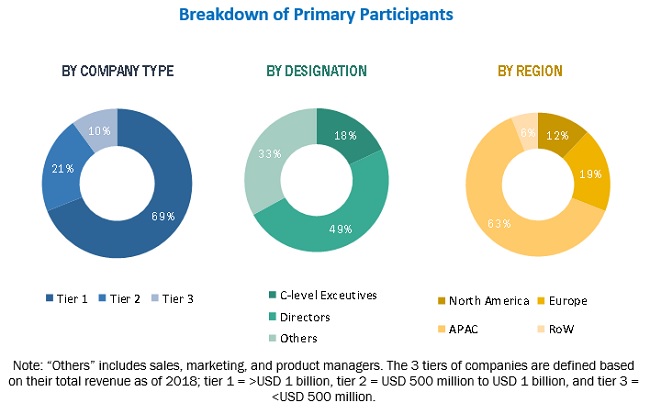
In the primary research process, primary sources from both the supply and demand sides have been interviewed to obtain qualitative and quantitative information relevant to this report. Primary sources, such as experts from related industries and suppliers, have been interviewed to obtain and verify critical information as well as assess prospects. Key players in the VRF system market have been identified through secondary research, and their respective market rankings have been determined through primary and secondary research. This research included studying annual reports of top market players and interviewing key opinion leaders such as CEOs, directors, and marketing personnel.
To know about the assumptions considered for the study, download the pdf brochure
Market Size Estimation
In the complete market engineering process, both top-down and bottom-up approaches have been implemented, along with several data triangulation methods, to estimate and validate the size of the VRF system market and other dependent submarkets listed in this report.
- Key players in the industry and markets have been identified through extensive secondary research.
- The industry’s supply chain and market size, in terms of value, have been determined through primary and secondary research.
- All percentage shares, splits, and breakdowns have been determined using secondary sources and verified through primary sources.
Data Triangulation
After arriving at the overall market size, the total market has been split into several segments. To complete the overall market engineering process and arrive at the exact statistics for all segments, market breakdown and data triangulation procedures have been employed, wherever applicable. The data has been triangulated by studying various factors and trends from both the demand and supply sides. The market has also been validated using both top-down and bottom-up approaches.
Study Objectives:
- To describe and forecast the VRF system market, by component, system, capacity, application, and geography
- To describe and forecast the market size for various segments with regard to 4 main regions—North America, Europe, APAC, and RoW
- To provide detailed information regarding drivers, restraints, opportunities, and challenges influencing the growth of the VRF system market
- To strategically analyze micro markets with respect to growth trends, prospects, and contributions to the total market
- To analyze opportunities for stakeholders by identifying high-growth segments within the VRF system market
- To study the complete value chain and allied industry segments and perform a value chain analysis of the VRF system ecosystem
- To analyze competitive developments such as product developments, expansions, partnerships, collaborations, agreements, and acquisitions in the VRF system market
Available Customizations:
With the given market data, MarketsandMarkets offers customizations according to a company’s specific needs. The following customization options are available for the VRF system market report.
Company information:
- Detailed analysis and profiling of additional market players (up to 5)













Growth opportunities and latent adjacency in VRF System Market
How do you rank various VRF suppliers in terms of energy efficiency, working efficiency in hot climate, product life, and after sales services?
I am a working professional in VRF industry and I would like to procure your reports to be well-informed about current trends and new development taking place in this market.
I am in search of heat recovery systems technology penetration rate in Western European countries. How you gather market data?. Can you share sample for research methodology which you follow for forecasting market data.
I am looking for VRF product analysis for certain company in specific country and region. I have to preseent these information to my senior management. Would you be able to provide these kind of information and what will be estimated time for this information ?
I am looking for data related to installation and and maintainace cost for VRF systems in US, Canada and South American Market. What information is available in your report with respect to my requirement.
I do believe that globally and perhaps in recent US history 2 pipes is much more prevalent. However, we are hearing from our reps in three regions of the US that the “Simultaneous Heating and Cooling” is the primary value proposition and that is becoming a requirement in many US commercial buildings where opening windows as a form of climate control is often prohibited. On the VRF report can you tell me 2 pipe vs 3 pipe installations trend and to what granularity do you have that information, country/state?.
Specifically I am looking for; -VRF Installations by country, especially for Asia region -who installs these, contractors? Individuals? -How are these systems specified in a commercial building -Sales channel description and value chain analysis -what are the failure rates, Frequency of systems maintainane or replacement, who (contractors or OEM) does take the account of maintenance and repairing process.
I am a graduate student at Auburn University in Alabama. As a part of my curriculum, I am writing a research paper on Use of VRF Systems in the South-Eastern United States. While doing a literature review, I came across this report and found it to be very helpful. However, obtaining this report is very expensive and beyond my reach as a student. I was wondering if you could share some information pertinent to my research. I am looking for only the following parts of this report... - Section 10.2 (page 105 onwards) - VRF Systems Market, By Geographic Analysis (North America) - Tables 17, 18, 47, and 48 - Figures 61 and 62 I would like to assure you that this information is required purely for academic purposes. Thank you!
Hi, I am conducting an informative paper on VRF system market adoption trends and penetration rate in different regions and need information on the this topic. Can you please provide me with some pages of this report? Some graphs and table data would be great. Thanks
Id like to receive VRF systems global forecast numbers and analysis data to understand better industry growth trend and regional data. What are the expectations for the VRF system. Thank you.