Voice over WLAN Market by Solution (Hardware, And Services), Application (Unified Communication & Collaboration, Security & Emergency Alarms), End-User, & Geography - Global Forecast to 2035


Voice over WLAN Market Summary
The global Voice over WLAN Market is entering a strong expansion phase as enterprises, healthcare facilities, retailers, warehouses, educational institutions, and public-sector organizations increasingly replace or complement traditional wired and cellular voice systems with wireless IP-based communications. Based on recent industry estimates and a harmonized assessment of the broader VoWLAN market scope, the market is estimated at approximately USD 24–26 billion in 2025 and is projected to reach USD 85–90 billion by 2035, registering a CAGR of 13%–14% during the forecast period. The market encompasses wireless voice communication supported by Wi-Fi infrastructure, including enterprise handsets, access points, software, voice platforms, cloud services, and related network-management solutions.
The market is being driven by the rapid digital transformation of enterprises, increasing adoption of cloud communications, expansion of Wi-Fi 6 and Wi-Fi 7 infrastructure, growing use of IoT-enabled devices, and demand for mobile workforce communications. AI is also becoming increasingly relevant through intelligent network monitoring, automated quality-of-service optimization, predictive analytics, voice analytics, and automated troubleshooting. As organizations move toward hybrid work environments and highly connected industrial operations, Voice over WLAN is evolving from a basic mobility solution into an integrated communications layer supporting unified communications, IoT, automation, and real-time operational workflows.
Key Market Trends & Insights
The North American market remains a leading contributor to global Voice over WLAN adoption because of its mature enterprise Wi-Fi infrastructure, high cloud communications penetration, and early deployment of unified communications platforms. Large enterprises are increasingly integrating wireless voice with collaboration, contact-center, security, and workplace-management systems.
Asia Pacific is expected to be the fastest-growing regional market. Rapid digitalization in China, Japan, India, South Korea, and Southeast Asia, combined with investments in smart factories, healthcare digitization, retail automation, and enterprise connectivity, is increasing demand for wireless voice solutions. Growing deployment of Wi-Fi 6/6E and Wi-Fi 7 networks is further supporting the transition.
The hardware segment remains a major component of the market, particularly enterprise-grade wireless handsets, access points, gateways, and network equipment. However, software and managed services are gaining importance as organizations shift toward cloud-managed networking and subscription-based communications.
A major technology trend is the integration of AI and machine learning into WLAN management. AI-enabled platforms can analyze network traffic, detect anomalies, identify potential congestion, and optimize voice performance. This is particularly valuable in large campuses, hospitals, warehouses, and manufacturing facilities where hundreds or thousands of wireless endpoints may operate simultaneously.
Another important trend is convergence with IoT and automation. VoWLAN-enabled devices can support mobile workers while simultaneously operating alongside barcode scanners, sensors, robots, asset-tracking systems, and industrial devices on a common wireless infrastructure.
Market Size & Forecast
-
Base year market size: USD 24–26 billion in 2025
-
Forecast value by 2035: USD 85–90 billion
-
CAGR: 13%–14% during 2025–2035
-
Growth factors: Enterprise mobility, cloud communications, Wi-Fi 6/6E and Wi-Fi 7 adoption, IoT connectivity, AI-based network management, workplace digitalization, and increasing demand for real-time wireless communication.
Recent market research estimates vary substantially because some studies define VoWLAN narrowly while others include broader Voice over Wi-Fi or enterprise wireless communications markets. For example, one recent estimate places the VoWLAN market at USD 23.59 billion in 2025, while another estimates USD 24.8 billion for the same year.
Voice over WLAN Market Top 10 key takeaway
-
The global Voice over WLAN Market is estimated at USD 24–26 billion in 2025.
-
The market is projected to reach approximately USD 85–90 billion by 2035.
-
The market is expected to expand at a CAGR of 13%–14%.
-
North America remains one of the leading markets because of mature enterprise wireless infrastructure.
-
Asia Pacific is expected to register the fastest growth during the forecast period.
-
Enterprise communications and unified communications remain important application areas.
-
Wi-Fi 6, Wi-Fi 6E, and Wi-Fi 7 are improving reliability, capacity, and voice quality.
-
AI is enabling predictive network management, automated troubleshooting, and intelligent QoS optimization.
-
IoT, industrial automation, healthcare mobility, and warehouse digitization are creating new VoWLAN opportunities.
-
Cloud-managed VoWLAN and integrated communications platforms are expected to become increasingly important through 2035.
Product Insights
The hardware segment represents a significant portion of the Voice over WLAN Market because organizations require physical infrastructure to support reliable wireless voice communication. Enterprise wireless handsets, access points, WLAN controllers, gateways, routers, and communication endpoints are widely deployed across offices, hospitals, warehouses, hotels, manufacturing plants, and retail facilities. Enterprise-grade equipment is particularly important because voice applications require low latency, stable connectivity, roaming capabilities, and effective quality-of-service management.
Wireless IP phones and ruggedized handsets are particularly important in industries where employees remain mobile throughout their work shifts. Hospitals, for example, use wireless communication devices for clinical coordination, while warehouses use them for order fulfillment, inventory operations, and worker communication. Manufacturing companies increasingly combine wireless voice with industrial mobility applications and connected equipment.
The product landscape is also moving toward software-defined and cloud-managed solutions. Modern WLAN infrastructure can integrate voice, video, IoT devices, and enterprise applications through centrally managed platforms. AI-powered monitoring capabilities can identify unusual traffic patterns, predict performance degradation, and automatically recommend network changes. Consequently, the market is gradually moving from standalone wireless voice products toward intelligent communications ecosystems.
Technology / Component Insights
The technological foundation of the Voice over WLAN Market includes Wi-Fi networking, VoIP, SIP, WLAN controllers, access points, cloud communication platforms, network security, and quality-of-service technologies. Wi-Fi 6 and Wi-Fi 6E have improved network efficiency in high-density environments, while Wi-Fi 7 is expected to further enhance throughput, latency, reliability, and multi-device performance.
AI is becoming an important technology differentiator. AI-driven WLAN management platforms can continuously analyze network behavior and identify congestion, interference, packet loss, or abnormal endpoint activity. Instead of relying entirely on manual network monitoring, administrators can use intelligent analytics to detect problems and optimize network performance.
IoT is another major technology catalyst. A modern enterprise WLAN may simultaneously support voice handsets, smartphones, sensors, cameras, asset trackers, robots, medical devices, and industrial equipment. This convergence increases the strategic value of wireless infrastructure and encourages organizations to invest in higher-capacity networks.
Cloud technology is also changing the component landscape. Cloud-managed access points, centralized policy management, analytics dashboards, and subscription-based communication platforms allow organizations to operate large distributed WLAN environments with fewer on-site resources. Automation is increasingly being incorporated into provisioning, security policy enforcement, device management, and troubleshooting.
Future innovation will focus on AI-native WLAN architectures, Wi-Fi 7 optimization, edge intelligence, automated security, network digital twins, location-aware services, and tighter integration between wireless networks and enterprise applications.
Application Insights
Unified Communication and Collaboration is a major application area for the Voice over WLAN Market. Enterprises increasingly expect employees to remain connected across offices, meeting spaces, production areas, warehouses, and remote locations. Wireless voice enables mobility while allowing organizations to connect telephony with messaging, video conferencing, presence management, and collaboration platforms.
Healthcare is another high-value application. Hospitals and medical facilities require reliable communication among doctors, nurses, technicians, security teams, and administrative staff. VoWLAN supports mobile communication while helping organizations reduce dependence on fixed telephone infrastructure.
Retail and warehousing are also generating significant demand. Employees can use wireless handsets to coordinate inventory, customer service, deliveries, and emergency communications. In warehouses, VoWLAN can work alongside scanners, IoT sensors, automated guided vehicles, and warehouse-management systems.
Manufacturing provides an additional growth opportunity as factories become increasingly automated. Wireless voice can support communication between production personnel, maintenance teams, supervisors, and automated systems. Future applications are expected to combine voice with location services, AI-based workflow management, digital twins, and industrial IoT.
Regional Insights
North America is expected to remain a leading regional market due to strong enterprise IT spending, widespread Wi-Fi infrastructure, high adoption of cloud-based communications, and the presence of major networking and communications vendors. Organizations across healthcare, retail, education, manufacturing, and financial services are investing in intelligent wireless infrastructure to support mobile employees and connected devices.
Europe represents another important market, supported by enterprise digitalization, industrial automation, healthcare modernization, and increasing demand for secure wireless communications. European manufacturers are particularly focused on integrating wireless connectivity with Industry 4.0 environments.
Asia Pacific is expected to demonstrate the fastest growth through 2035. China, Japan, India, South Korea, and other Asian economies are investing heavily in smart manufacturing, digital infrastructure, retail automation, smart healthcare, and enterprise mobility. The rapid expansion of Wi-Fi infrastructure and growing adoption of cloud technologies will further strengthen the regional market.
-
North America: Strong enterprise adoption and mature WLAN infrastructure support market leadership.
-
Europe: Industrial automation and digital transformation are creating sustained demand.
-
Asia Pacific: Fastest growth is supported by infrastructure modernization and smart-factory investments.
-
China and Japan: Advanced manufacturing and enterprise networking are key adoption catalysts.
-
Emerging Asian economies: Cloud adoption, digitization, and expanding connectivity create long-term opportunities.
Country-Specific Market Trends
In China, the Voice over WLAN Market is benefiting from rapid enterprise digitalization, smart manufacturing, 5G/Wi-Fi infrastructure investment, and expansion of connected industrial environments. China is expected to record approximately 15%–16% CAGR through 2035. Government-supported digital infrastructure initiatives and Industry 4.0 investments are encouraging enterprises to modernize communications and WLAN infrastructure.
Japan is expected to grow at approximately 12%–13% CAGR, supported by automation, robotics, healthcare technology, and smart-factory deployments. Japanese enterprises place strong emphasis on reliable wireless communication for industrial and operational environments.
In the United States, the market is expected to expand at approximately 12%–13% CAGR, supported by enterprise cloud migration, unified communications, healthcare IT, retail automation, and widespread Wi-Fi infrastructure. Canada is expected to record approximately 11%–12% CAGR, while Mexico could achieve approximately 13%–14% CAGR as enterprises modernize IT infrastructure and expand digital operations.
In Europe, Germany is projected to grow at approximately 11%–12% CAGR, driven by industrial automation and smart manufacturing. France is expected to expand at approximately 10%–11% CAGR, supported by enterprise digitalization, public infrastructure modernization, and increasing cloud communications adoption.
-
China: Smart manufacturing and digital infrastructure are major growth drivers.
-
Japan: Robotics, healthcare, and industrial automation support adoption.
-
United States: Cloud communications and enterprise mobility remain key catalysts.
-
Germany: Industry 4.0 and connected factories create strong demand.
-
France: Digital transformation and modern enterprise networking support market expansion.
Key Voice over WLAN Market Company Insights
The competitive landscape includes major networking, telecommunications, enterprise communications, and wireless infrastructure providers. Companies such as Cisco Systems, Hewlett Packard Enterprise/Aruba, Huawei Technologies, Nokia, Ericsson, Extreme Networks, CommScope/Ruckus, Zebra Technologies, Mitel, and Avaya are associated with different portions of the broader VoWLAN ecosystem.
Cisco Systems focuses on enterprise networking, collaboration, security, wireless infrastructure, and AI-enabled network management. Hewlett Packard Enterprise, through its Aruba networking portfolio, emphasizes cloud-managed WLAN, network security, AI-based operations, and enterprise mobility.
Huawei Technologies continues to focus on wireless networking, enterprise connectivity, and communications infrastructure. Nokia and Ericsson contribute through carrier and enterprise connectivity technologies, while Extreme Networks focuses on cloud-managed networking and AI-assisted network operations.
CommScope supports enterprise wireless infrastructure through its RUCKUS portfolio, while Zebra Technologies has a strong presence in enterprise mobility, healthcare, retail, warehousing, and rugged wireless devices. Mitel and Avaya remain relevant to enterprise voice and unified communications ecosystems.
-
Vendors are increasingly integrating AI into WLAN monitoring and optimization.
-
Cloud-managed networking is becoming a core product strategy.
-
Enterprise vendors are combining voice, data, security, and IoT connectivity.
-
Rugged wireless devices remain important for healthcare, logistics, and manufacturing.
-
Partnerships and platform integration are becoming critical competitive strategies.
Recent Developments
Recent market developments indicate a shift toward AI-enabled and cloud-managed wireless infrastructure. Networking vendors are increasingly embedding AI-driven assurance capabilities into WLAN platforms to detect anomalies, optimize connectivity, and automate troubleshooting.
The expansion of Wi-Fi 7 is another important development. Higher capacity, improved latency, and enhanced multi-link performance can support increasingly demanding voice, video, IoT, and real-time applications in high-density enterprise environments.
Another significant development is the increasing convergence of wireless voice with IoT and unified communications platforms. Vendors are developing integrated solutions that allow voice endpoints, enterprise applications, sensors, location technologies, and collaboration services to operate within a coordinated wireless ecosystem.
Market Segmentation
The Voice over WLAN Market can be segmented by Product, Technology/Component, Application, and Region. By product, the market includes hardware and services, with hardware covering wireless handsets, access points, gateways, controllers, routers, and related infrastructure, while services include deployment, integration, consulting, maintenance, and managed services. By technology/component, the market encompasses WLAN access infrastructure, VoIP/SIP platforms, cloud communications, network-management software, security technologies, and Wi-Fi standards. By application, unified communications and collaboration represent a major segment, followed by healthcare communications, retail and logistics, manufacturing, security and emergency communications, education, hospitality, and other enterprise applications. Regionally, the market includes North America, Europe, Asia Pacific, Latin America, and the Middle East & Africa, with North America maintaining strong market maturity and Asia Pacific recording the fastest expansion.
-
By Product: Hardware remains substantial, while managed and cloud services are gaining momentum.
-
By Technology: Wi-Fi 6/6E, Wi-Fi 7, VoIP, cloud, AI, and IoT are central technologies.
-
By Application: Unified communications, healthcare, retail, logistics, and manufacturing are important markets.
-
By Region: North America leads in maturity, while Asia Pacific offers high growth potential.
-
By deployment trend: Cloud-managed and hybrid wireless architectures are increasingly preferred.
Conclusion
The global Voice over WLAN Market is positioned for sustained growth as organizations seek reliable, mobile, scalable, and intelligent communication infrastructure. From an estimated USD 24–26 billion in 2025, the market could reach approximately USD 85–90 billion by 2035, representing a CAGR of 13%–14% under the defined market scope. The long-term outlook is supported by the convergence of enterprise Wi-Fi, cloud communications, IoT, AI, automation, and digital transformation.
AI will have an increasingly important influence on the market by making WLAN environments more predictive and autonomous. Intelligent network monitoring, automated optimization, anomaly detection, predictive maintenance, and AI-assisted troubleshooting can reduce operational complexity while improving voice reliability. At the same time, Wi-Fi 7 and edge computing will create opportunities for higher-performance real-time communications.
For businesses, Voice over WLAN is becoming more than an alternative to conventional telephony. It is increasingly a strategic component of the digital workplace, smart factory, connected hospital, intelligent warehouse, and automated retail environment. Companies that combine VoWLAN with AI, IoT, cloud management, cybersecurity, and automation will be better positioned to create flexible communication infrastructures through 2035.
FAQs
1. What is the estimated size of the Voice over WLAN Market?
The global Voice over WLAN Market is estimated at approximately USD 24–26 billion in 2025 based on a harmonized assessment of recent market estimates. Published estimates vary according to market definition and whether broader Voice over Wi-Fi markets are included.
2. What is the expected growth rate of the Voice over WLAN Market?
The market is projected to grow at a CAGR of approximately 13%–14% from 2025 to 2035, supported by enterprise mobility, cloud communications, Wi-Fi infrastructure upgrades, IoT, AI, and digital transformation.
3. What are the key drivers of the Voice over WLAN Market?
Major drivers include increasing enterprise mobility, cloud-based communications, unified communications adoption, Wi-Fi 6/6E and Wi-Fi 7 deployment, IoT expansion, industrial automation, healthcare digitization, and AI-powered network management.
4. Which region is leading the Voice over WLAN Market?
North America is a leading regional market because of its mature enterprise networking infrastructure, strong cloud adoption, and widespread deployment of unified communications. Asia Pacific, however, is expected to be the fastest-growing region during the forecast period.
5. Who are the key companies in the Voice over WLAN Market?
Key companies associated with the VoWLAN ecosystem include Cisco Systems, Hewlett Packard Enterprise/Aruba, Huawei Technologies, Nokia, Ericsson, Extreme Networks, CommScope/RUCKUS, Zebra Technologies, Mitel, and Avaya.
 Exclusive indicates content/data unique to MarketsandMarkets and not available with any competitors.
Table of Contents
1 Introduction (Page No. - 15)
1.1 Objectives of the Study
1.2 Market Definition
1.3 Study Scope
1.3.1 Markets Covered
1.3.2 Years Considered for the Study
1.4 Currency & Pricing
1.5 Limitations
1.6 Stakeholders
2 Research Methodology (Page No. - 18)
2.1 Research Data
2.1.1 Secondary Data
2.1.1.1 Key Data From Secondary Sources
2.1.2 Primary Data
2.1.2.1 Key Data From Primary Sources
2.1.2.2 Key Industry Insights
2.1.2.3 Breakdown of Primaries Interviews
2.2 Market Size Estimation
2.2.1 Bottom-Up Approach
2.2.2 Top-Down Approach
2.3 Market Breakdown and Data Triangulation
2.4 Research Assumptions
3 Executive Summary (Page No. - 26)
4 Premium Insights (Page No. - 30)
4.1 Increasing Opportunities in Public and Government Sector Expected to Drive the VoWLAN Market During the Forecast Period
4.2 Voice Over Wireless Lan Market, By Application
4.3 APAC to Hold the Largest Share of the Voice Over Wlan Market in 2016
4.4 Market, By End User and Country: China to Lead the VoWLAN Market in APAC, in 2016
4.5 VoWLAN Market, By Service
4.6 Life Cycle Analysis, By Geography
5 Market Overview (Page No. - 34)
5.1 Introduction
5.2 Market Segmentation
5.2.1 Market, By Solution
5.2.2 Market, By End User
5.2.3 Market, By Application
5.2.4 Market, By Geography
5.3 Market Dynamics
5.3.1 Drivers
5.3.1.1 Efficient and Low-Cost Wi-Fi Solution
5.3.1.2 Ability to Handle Increasing Data Traffic
5.3.1.3 Improved Indoor Coverage Offered Through Wi-Fi
5.3.2 Restraints
5.3.2.1 Huge Investment in Installation and Infrastructure of the Complete Setup
5.3.2.2 Roaming Latency Leading to A Drop in Voice Quality
5.3.3 Opportunities
5.3.3.1 Growing Demand in Manufacturing and Logistics Sectors
5.3.3.2 Integration of Voice With 5g Technology
5.3.4 Challenges
5.3.4.1 Improvement in Quality of Service(Qos)
5.3.4.2 Focus on Improving Handoff During Calls
5.4 VoWLAN Devices Overview
5.4.1 Single-Mode Devices
5.4.2 Dual-Mode Devices
6 Industry Trends (Page No. - 43)
6.1 Value Chain Analysis
6.2 Porter’s Five Forces Analysis
6.2.1 Intensity of Competitive Rivalry
6.2.2 Threat of Substitutes
6.2.3 Bargaining Power of Buyers
6.2.4 Bargaining Power of Suppliers
6.2.5 Threat of New Entrants
7 Market, By Solution (Page No. - 50)
7.1 Introduction
7.2 Hardware
7.2.1 Wireless Lan Access Points
7.2.2 Wireless Lan Controllers
7.2.3 Wireless Hotspot Gateways
7.2.4 Voice Handsets/IP Wireless Phones
7.2.5 Others
7.3 Services
7.3.1 Network Planning and Design
7.3.2 Deployment, Upgradation, and Implementation
7.3.3 Training, Support, and Maintenance
8 Market, By End User (Page No. - 60)
8.1 Introduction
8.2 Residential and SOHO
8.3 Commercial/Enterprise
8.3.1 Healthcare
8.3.2 Public Sector and Government Offices
8.3.3 Retail and Warehouses
8.3.4 Manufacturing and Distribution
8.3.5 Transportation and Logistics
8.3.6 Education
8.3.7 Hospitality
8.3.8 Others
9 Market, By Application (Page No. - 79)
9.1 Introduction
9.2 Unified Communication and Collaboration
9.2.1 Telephony
9.2.2 Unified Messaging
9.2.3 Conferencing
9.3 Security and Emergency Alarm
9.4 Others
10 Geographic Analysis (Page No. - 86)
10.1 Introduction
10.2 Americas
10.2.1 North America
10.2.1.1 Low-Cost Services and Increased Data Usage to Boost the North America VoWLAN Market
10.2.1.2 U.S.
10.2.1.2.1 Increase in the Number of VoWLAN Installations in the U.S.
10.2.1.3 Canada
10.2.1.3.1 Increasing Investments to Upgrade Existing Infrastructure
10.2.1.4 Rest of North America
10.2.1.4.1 Increasing Adoption of VoWLAN System Due to Expansion of Its Wi-Fi and Broadband Access
10.2.2 Latin America
10.2.2.1 Growth in Wi-Fi Services Will Increase in VoWLAN System
10.2.2.2 Mexico
10.2.2.2.1 New Investments and Increased Opportunities for the VoWLAN Market in Mexico
10.2.2.3 Rest of Latin America
10.2.2.3.1 Expansion of VoWLAN Systems in Rural Markets
10.3 Europe
10.3.1 Low-Cost Solution is A Major Driver for the VoWLAN Market
10.3.2 U.K.
10.3.2.1 Increased Demand for Voice Over Wireless Lan
10.3.3 Germany
10.3.3.1 Increased Investment in Upcoming Projects for the Expansion of the VoWLAN Market
10.3.4 Sweden
10.3.4.1 Focus on Upgrading Existing Systems
10.3.5 France
10.3.5.1 Use of VoWLAN in France Would Help Reduce Costs
10.3.6 Netherlands
10.3.6.1 Use of Mobile Virtual Network Operators and VoWLAN Reduces Costs and Enhances Customer Experience
10.3.7 Russia
10.3.7.1 Initiatives Such as Internet Freedom to Lead to the Growth of VoWLAN
10.3.8 Rest of Europe
10.3.8.1 Increase in Installation in Education and Manufacturing Sectors
10.4 Asia-Pacific
10.4.1 China
10.4.1.1 Opportunity for VoWLAN Due to the Large Smartphone Market
10.4.2 Japan
10.4.2.1 Deployment of VoWLAN in Japan to Increase in the Long Run
10.4.3 India
10.4.3.1 Strong Government Support and Initiatives By Private Companies for Implementing Wireless Set-Ups/VoWLAN Systems.
10.4.4 Australia
10.4.4.1 Opportunities Due to the Growing Manufacturing Sector
10.4.5 Rest of APAC
10.4.5.1 High Growth is Expected in Indonesia and Malaysia
10.5 Rest of the World (RoW)
10.5.1 Increasing Demand From the Healthcare Industry
10.5.2 Middle East
10.5.2.1 High Coverage is A Major Driver for the VoWLAN Market.
10.5.3 Africa
10.5.3.1 Increased Investments in Wireless Communication to Help the Growth of the VoWLAN Market
11 Competitive Landscape (Page No. - 110)
11.1 Overview
11.2 Ranking of Players in the Voice Over Wlan Market
11.3 Competitive Scenario
11.3.1 New Product Launches
11.3.2 Partnerships/Agreements/Collaborations
11.3.3 Expansions
11.3.4 Mergers & Acquisitions
12 Company Profiles (Page No. - 116)
12.1 Introduction
(Business Overview, Products & Services, Key Insights, Recent Developments, SWOT Analysis, Ratio Analysis, MnM View)*
12.2 Cisco Systems, Inc.
12.3 Aruba Networks, Inc.
12.4 Zebra Technologies Corporation
12.5 Ruckus Wireless, Inc.
12.6 Aerohive Networks, Inc.
12.7 Extreme Networks, Inc.
12.8 Huawei Technologies Co., Ltd.
12.9 Avaya Inc.
12.10 Alcatel-Lucent Enterprise
12.11 Dell Inc.
*Details on Business Overview, Products & Services, Key Insights, Recent Developments, SWOT Analysis, MnM View Might Not Be Captured in Case of Unlisted Companies.
13 Appendix (Page No. - 142)
13.1 Insights of Industry Experts
13.2 Discussion Guide
13.3 Knowledge Store: Marketsandmarkets’ Subscription Portal
13.4 Introducing RT: Real-Time Market Intelligence
13.5 Available Customizations
13.6 Related Reports
List of Tables (69 Tables)
Table 1 Porter’s Five Forces Analysis: Threat of New Entrants Likely to Have A Medium Impact on the Overall Market
Table 2 VoWLAN Market, By Solution, 2013–2022 (USD Billion)
Table 3 VoWLAN Market, By Hardware, 2013–2022 (USD Billion)
Table 4 VoWLAN Market, By Hardware, 2013–2022 (Thousand Units)
Table 5 Connectivity Between Mimo Access Points and Devices
Table 6 Connectivity Between Access Points and Wlan Controllers
Table 7 VoWLAN Market, By Service, 2013–2022 (USD Billion)
Table 8 Market, By End User, 2013–2022 (USD Billion)
Table 9 Market, By Commercial, 2013–2022 (USD Billion)
Table 10 VoWLAN Market for Residential and SOHO, By Region, 2013–2022 (USD Billion)
Table 11 Market for Residential and SOHO, By Americas, 2013–2022 (USD Billion)
Table 12 Market for Residential and SOHO, By Application, 2013–2022 (USD Billion)
Table 13 VoWLAN Market for Commercial, By Region, 2013–2022 (USD Billion)
Table 14 VoWLAN Market for Commercial, By Americas, 2013–2022 (USD Billion)
Table 15 VoWLAN Market for Commercial, By Application, 2013–2022 (USD Billion)
Table 16 VoWLAN Market for Healthcare, By Region 2013–2022 (USD Billion)
Table 17 Market for Healthcare, By Americas, 2013–2022 (USD Billion)
Table 18 VoWLAN Market for Healthcare, By Application, 2013–2022 (USD Billion)
Table 19 Market for Public Sector and Government Offices, By Region, 2013–2022 (USD Billion)
Table 20 Market for Public Sector and Government Offices, By Americas, 2013–2022 (USD Billion)
Table 21 Market for Public Sector and Government Offices, By Application, 2013–2022 (USD Billion)
Table 22 Market for Retail and Warehouses, By Region, 2013–2022 (USD Billion)
Table 23 Market for Retail and Warehouses, By Americas, 2013–2022 (USD Billion)
Table 24 Market for Retail and Warehouses, By Application, 2013–2022 (USD Billion)
Table 25 Market for Manufacturing and Distribution, By Region, 2013–2022 (USD Billion)
Table 26 Market for Manufacturing and Distribution, By Application, 2013–2022 (USD Billion)
Table 27 Market for Manufacturing and Distribution, By Application, 2013–2022 (USD Billion)
Table 28 Market for Transportation and Logistics, By Region, 2013–2022 (USD Billion)
Table 29 Market for Transportation and Logistics, By Americas, 2013–2022 (USD Billion)
Table 30 Market for Transportation and Logistics, By Application, 2013–2022 (USD Billion)
Table 31 Market for Education, By Region, 2013–2022 (USD Billion)
Table 32 Market for Education, By Americas, 2013–2022 (USD Billion)
Table 33 VoWLAN Market for Education, By Application, 2013–2022 (USD Billion)
Table 34 VoWLAN Market for Hospitality, By Region, 2013–2022 (USD Billion)
Table 35 VoWLAN Market for Hospitality, By Americas, 2013–2022 (USD Billion)
Table 36 VoWLAN Market for Hospitality, By Application, 2013–2022 (USD Billion)
Table 37 Others VoWLAN Market, By Region, 2013–2022 (USD Billion)
Table 38 VoWLAN Market for Others, By Americas, 2013–2022 (USD Billion)
Table 39 VoWLAN Market for Others, By Application, 2013–2022 (USD Billion)
Table 40 VoWLAN Market, Application, 2013–2022 (USD Billion)
Table 41 Market for Unified Communication and Collaboration Application, By End User, 2013–2022 (USD Billion)
Table 42 Market for Unified Communication and Collaboration Application, By Commercial End User, 2013–2022 (USD Billion)
Table 43 Market for Security and Emergency Alarms, By End User, 2013–2022 (USD Billion)
Table 44 Market for Security and Emergency Alarms, By Commercial End User, 2013–2022 (USD Billion)
Table 45 Market for Others, By Commercial End User, 2013–2022 (USD Billion)
Table 46 Market, By Region 2013–2022 (USD Billion)
Table 47 Market in Americas, By End User, 2013–2022 (USD Billion)
Table 48 VoWLAN Market in Americas, By Commercial End User, 2013–2022 (USD Billion)
Table 49 VoWLAN Market, By Region, 2013–2022 (USD Billion)
Table 50 Market in North America, By End User, 2013–2022 (USD Billion)
Table 51 Market in North America, By Commercial End User, 2013–2022 (USD Billion)
Table 52 Market in North America, By Country, 2013–2022 (USD Billion)
Table 53 Market in Latin America, By End User, 2013–2022 (USD Billion)
Table 54 Market in Latin America, By Commercial End User, 2013–2022 (USD Billion)
Table 55 Market in Latin America, By Country, 2013–2022 (USD Billion)
Table 56 Market in Europe, By End User, 2013–2022 (USD Billion)
Table 57 Market in Europe, By Commercial End User, 2013–2022 (USD Billion)
Table 58 Market in Europe, By Country, 2013–2022 (USD Billion)
Table 59 Market in APAC, By End User, 2013–2022 (USD Billion)
Table 60 Market in APAC, By Commercial End User, 2013–2022 (USD Billion)
Table 61 Market in APAC, By Country, 2013–2022 (USD Billion)
Table 62 Market in RoW, By End User, 2013–2022 (USD Billion)
Table 63 Market in RoW, By Commercial, 2013–2022 (USD Billion)
Table 64 Market in RoW, By Region, 2013–2022 (USD Billion)
Table 65 Ranking of the Top 5 Players in the Voice Over Wlan Market, 2015
Table 66 New Product Launches, 2013–2016
Table 67 Partnerships/Agreements/Collaborations, 2014–2016
Table 68 Expansions, 2013–2016
Table 69 Mergers & Acquisitions, 2014–2016
List of Figures (71 Figures)
Figure 1 Research Design
Figure 2 Market Size Estimation Methodology: Bottom-Up Approach
Figure 3 Market Size Estimation Methodology: Top-Down Approach
Figure 4 Data Triangulation
Figure 5 VoWLAN Market Expected to Grow Moderately During the Forecast Period
Figure 6 Security and Emergency Alarms Application Expected to Exhibit the Highest Rate During the Forecast Period
Figure 7 Market for Residential & SOHO Expected to Grow at A High Rate Between 2016 and 2022
Figure 8 Services Market Expected to Grow at A High Rate Between 2016 and 2022
Figure 9 Wireless Gateways Expected to Exhibit the Highest Growth Rate, in Terms of Value, During the Forecast Period
Figure 10 Market in APAC Expected to Grow at the Highest CAGR Between 2016 and 2022
Figure 11 Government Initiatives to Create Opportunities for Market Growth
Figure 12 Security and Emergency Alarms to Register High Growth Rate in the VoWLAN Market for Healthcare During the Forecast Period
Figure 13 India Expected to Witness the Highest Growth Rate During the Forecast Period
Figure 14 Logistics and Transportation to Hold the Largest Market Share in APAC, in 2016
Figure 15 Training, Support, and Maintenance Estimated to Exhibit Highest CAGR Between 2016 and 2022
Figure 16 VoWLAN Market Currently in the Growth Stage in APAC
Figure 17 Voice Over Wireless Lan (VoWLAN) Market, By Geography
Figure 18 Ability to Provide Free Calling Over Wi-Fi Expected to Spur the Growth of the VoWLAN Market
Figure 19 Growing Rate of Vowifi Traffic, 2014–2019
Figure 20 Country-Wise Analysis of Indoor Calling Experience Over Wireless Lan
Figure 21 Major Value Added During the Integration Phase
Figure 22 Impact Analysis of the VoWLAN Market, 2015
Figure 23 VoWLAN Market: Porter’s Five Forces Analysis
Figure 24 Intensity of Competitive Rivalry: High Competition in the Market Due to Competitor’s Market Share
Figure 25 Threat of Substitutes Likely to Remain Medium Due to High Substitute Product Quality
Figure 26 Bargaining Power of Buyers to Be Medium Due to Product Differentiation
Figure 27 Bargaining Power of Suppliers Likely to Be Medium Due to Low Product Differentiation
Figure 28 Threat of New Entrants Likely to Be Medium Due to Low Product Differentiation
Figure 29 Market Segmentation: By Solution
Figure 30 Market By Services Expected to Grow at the Highest Rate Between 2016 to 2022
Figure 31 Market Segmentation, By Hardware
Figure 32 Market Segmentation: By Services
Figure 33 Market for Services Expected to Grow at the Highest Rate Between 2016 and 2022
Figure 34 Market Segmentation, By End User
Figure 35 Market Segmentation, By Commercial
Figure 36 Market for Healthcare Expected to Grow at the Highest Rate in APAC During the Forecast Period
Figure 37 Market for Manufacturing in APAC to Grow at the Highest Rate During the Forecast Period
Figure 38 Market for Security and Emergency Alarm Application Expected to Grow at A High Rate in the Education Sector
Figure 39 Market Segmentation, By Application
Figure 40 Market Segmentation for Unified Communication and Collaboration Application, By Type
Figure 41 Market for Others, By Commercial End User
Figure 42 Market, By Region
Figure 43 APAC Expected to Register the Highest Growth Rate During the Forecast Period
Figure 44 China, India, and Mexico Markets Estimated to Grow at A High Rate Between 2016 and 2022
Figure 45 Americas: Market Snapshot
Figure 46 Governments in the Americas Estimated to Exhibit High Growth Rate Between 2016 and 2022
Figure 47 Residential and SOHO End Users in Latin America Estimated to Exhibit High Growth Rate Between 2016 and 2022
Figure 48 Market for Public Sector & Governments to Grow at the Highest Rate in Europe, 2015
Figure 49 Market in Europe
Figure 50 APAC: Market Snapshot
Figure 51 Residential and SOHO Expected to Grow at High Rate in APAC During the Forecast Period
Figure 52 Market in Asia-Pacific
Figure 53 Market in RoW
Figure 54 Market for Public Sector and Government Offices, Education, and Logistics & Transportation Estimated to Grow at A High Rate Between 2016 and 2022 in RoW
Figure 55 Key Growth Strategies Adopted By Top Companies, 2013–2016
Figure 56 Ruckus Wireless Inc. Grew Rapidly Between 2013 and 2015
Figure 57 Market Evaluation Framework: New Product Development Fueled Growth and Innovation Between 2014 and 2016
Figure 58 Battle for Market Share: New Product Launches Was the Key Strategy Adopted in 2015
Figure 59 Geographic Revenue Mix of Top Market Players
Figure 60 Cisco Systems, Inc.: Company Snapshot
Figure 61 Cisco Systems, Inc.: SWOT Analysis
Figure 62 Aruba Networks, Inc.: SWOT Analysis
Figure 63 Zebra Technologies Corp.: Company Snapshot
Figure 64 Zebra Technologies Corp.: SWOT Analysis
Figure 65 Ruckus Wireless, Inc.: Company Snapshot
Figure 66 Ruckus Wireless, Inc.: SWOT Analysis
Figure 67 Aerohive Networks, Inc.: Company Snapshot
Figure 68 Aerohive Networks, Inc.: SWOT Analysis
Figure 69 Extreme Networks, Inc.: Company Snapshot
Figure 70 Huawei Technologies Co., Ltd.: Company Snapshot
Figure 71 Avaya Inc.: Company Snapshot
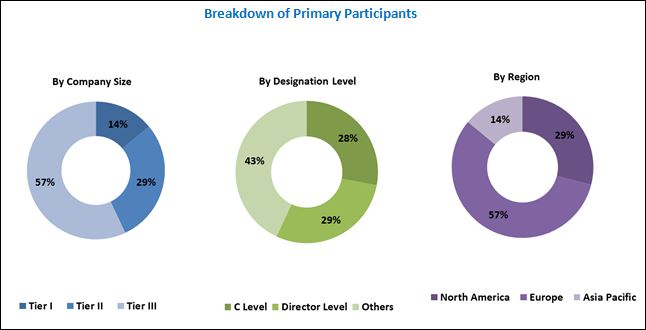
The research methodology used to estimate and forecast the voice over WLAN market begins with obtaining data on key vendor revenues through secondary research from sources such asTelecom Regulatory Authority of India,ACG & Cisco VNI Global Mobile Data Traffic Forecast, and Ericsson Consumer Lab- Analytical Platform among others. The vendor offerings have been taken into consideration to determine the market segmentation. The top-down procedure has been employed to arrive at the overall market size of the global voice over WLAN market from the number of units of each hardware components sold globally and the average selling price for each hardware component in USD, along with analysis of the overall voice over WLAN service market. After arriving at the overall market size, the total market has been split into several segments and sub segments, which have then been verified through primary research by conducting extensive interviews with key people such as CEOs, VPs, directors, and executives. This data triangulation and market breakdown procedures have been employed to complete the overall market engineering process and arrive at the exact statistics for all segments and sub segments.
To know about the assumptions considered for the study, download the pdf brochure
This study also answers several questions for the stakeholders, such as which market segments to focus on in the next two to five years for prioritizing efforts and investments. The voice over WLAN market comprises of hardware providers and software providers, who integrate the hardware with software and sell them to end users who cater to their unique business requirements.
- Hardware providers: Cisco Systems Inc. (U.S.), Aruba Networks Inc., (U.S.), Ruckus Wireless Inc. (U.S.), Zebra Technologies Corporation (U.S.), Aerohive Networks, Inc. (U.S.), Proxim Wireless (U.S), Avaya Inc. (U.S), and LANCOM systems (Germany) among others.
- Software providers: such as 3COM Corporation (U.S.), Avaya Inc. (U.S.), Alcatel lucent enterprises (U.S.), Nortel Networks Corporation (U.S.), Mitel communication (Boca Raton), Cisco Systems Inc. (U.S) among others.
Target Audience:
- Raw material & equipment suppliers
- WLAN infrastructure vendors
- Original Equipment Manufacturers (OEMs)
- Device manufacturers
- Distributors and retailers
- Research Organizations
- Forums, Alliances and Associations
- Technology investors
- End users such as, residential and SOHO, manufacturing and distribution, retail and warehouses, education and, healthcare among others
Scope of the Report:
The global voice over WLAN market, in this research report, has been segmented on the basis of solution, application, end users, and geography.
Voice over WLAN Market, by Solutions:
- Hardware
- Service
Voice over WLAN Market, by Application:
- Unified communication and collaboration
- Security and emergency alarms
- Other (price marking, shipment tracking, and inventory management)
Voice over WLAN Market, by End-User:
- Residential & SOHO (Small Office Home Office)
-
Commercial
- Healthcare
- Public Sector & Government offices
- Retail Facilities & Warehouses
- Education
- Manufacturing & Distribution
- Logistics & Transportation
- Hospitality
- Others (BFSI, IT & Telecom)
Voice over WLAN Market, by Region:
- Americas
- Europe
- APAC
- RoW
Available Customizations:
With the given market data, MarketsandMarkets offers customizations as per a company’s specific needs. The following customization options are available for the report:
Geographic Analysis
- Comprehensive coverage of regulations followed in each region (the Americas, APAC, and Europe)
Company Information
- Detailed analysis and profiling of additional market players (up to five)













Growth opportunities and latent adjacency in Voice over WLAN Market