Agricultural Films Market

Agricultural Films Market by Type (LDPE, LLDPE, EVA, Reclaim, HDPE), Application [Greenhouse Film (Classic Greenhouses, Low Tunnel), Mulch Film (Black Mulches, Transparent Mulches), Silage Film (Silage Stretch Wrap)], and Region - Forecast to 2031




OVERVIEW
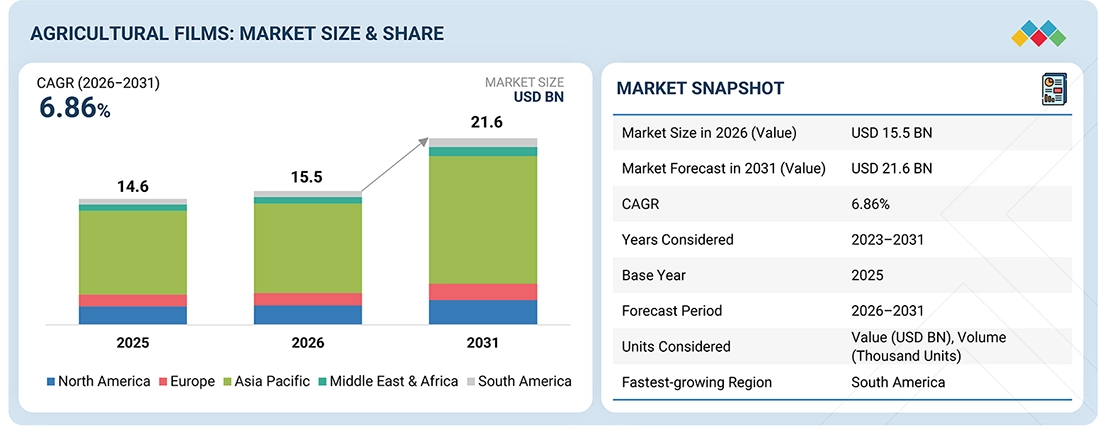
Source: Secondary Research, Interviews with Experts, MarketsandMarkets Analysis
The global agricultural films market is projected to grow from USD 15.5 billion in 2026 to USD 21.6 billion by 2031, at a CAGR of 6.86% during the forecast period. The market has shown consistent growth throughout the study period and is expected to maintain this trend during the forecast period. The need for increasing agricultural output, innovations in agricultural films, and growing demand from dairy and food processing industries are driving the market for agricultural films.
KEY TAKEAWAYS
-
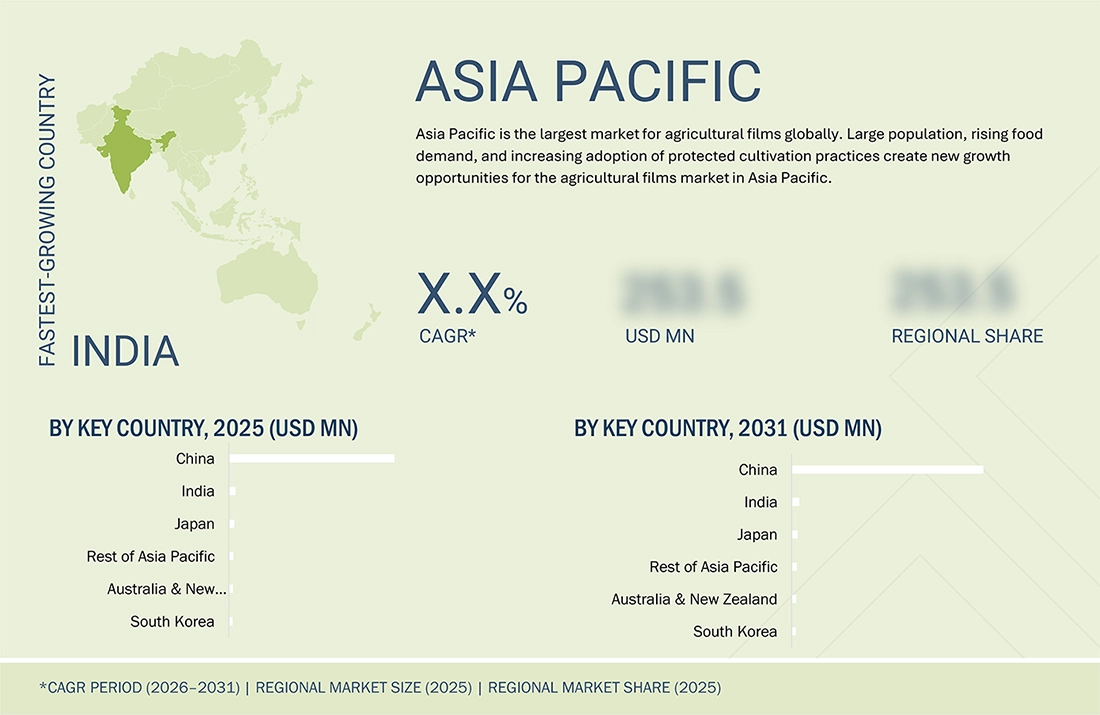
BY REGIONThe global agricultural films market is dominated by Asia Pacific with a share of 66.4%, in terms of value, in 2025. The market in the region is projected to register a CAGR of 7.36% between 2026 and 2031.
-
By TypeBy type, the EVA segment is projected to register the highest CAGR of 7.30%, in terms of value, during the forecast period.
-
By ApplicationThe mulch films segment is the largest application in the overall agricultural films market, accounting for 43.9% of the overall market, in terms of value, in 2025.
-
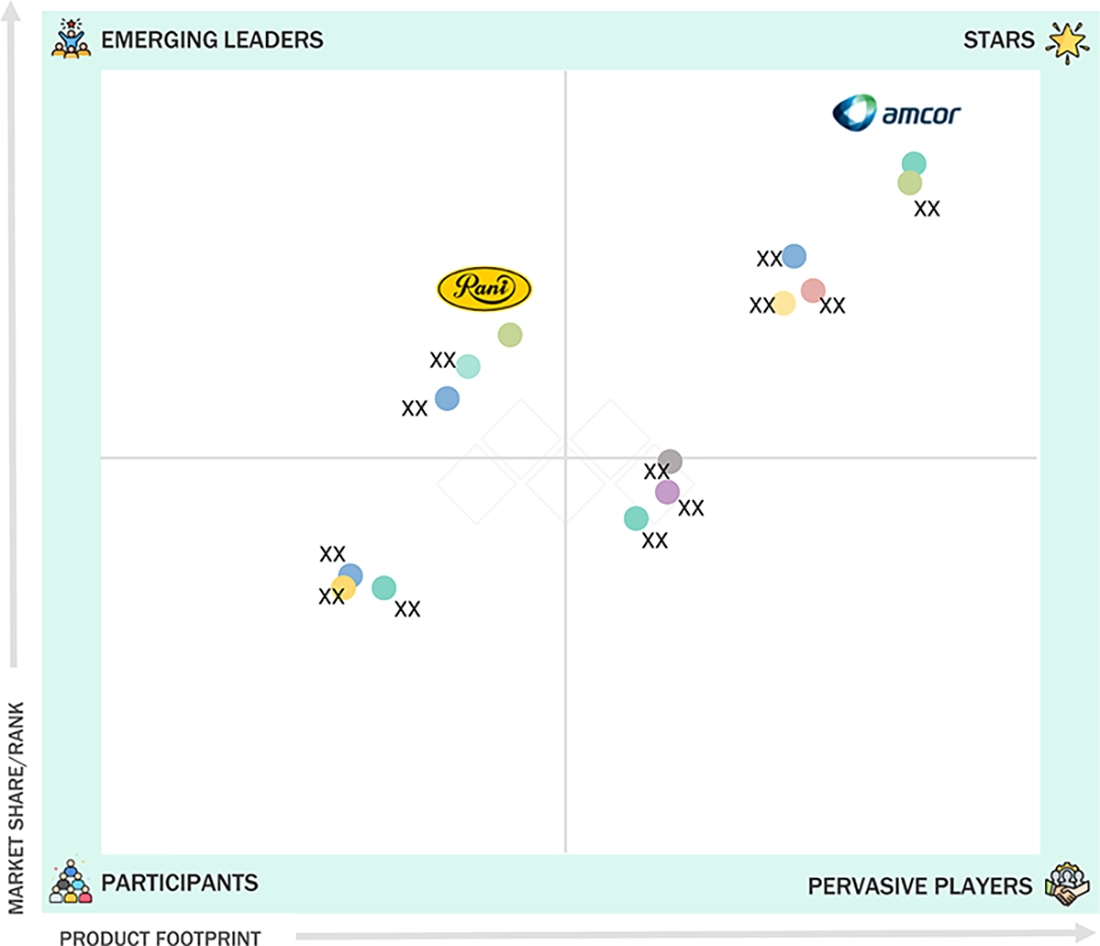
Competitive Landscape - Key PlayersAmcor plc, Kuraray Co., Ltd., and BASF SE were identified as some of the star players in the agricultural films market (global), given their strong market share and product footprint.
-
Competitive Landscape - StartupsExxon Mobil, Plastika Kritis, and POLIFILM Group, among others, have distinguished themselves among startups and SMEs by securing strong footholds in specialized niche areas, underscoring their potential as emerging market leaders.
The market for agricultural films is expected to grow at a significant pace during the forecast period. The demand for agricultural films is increasing due to increased demand from the dairy industry, innovations in agricultural films, growing population, and increasing investments in protected cultivation, greenhouse farming, and controlled-environment agriculture. By application, the mulch films segment accounted for the largest market share. Mulch films are widely used in modern agricultural practices to maintain soil temperature and retain moisture. Asia Pacific is estimated to be the dominant market for agricultural films globally.
TRENDS & DISRUPTIONS IMPACTING CUSTOMERS' CUSTOMERS
Growing demand for enhanced agricultural productivity, resource-efficient farming practices, and protected cultivation techniques is driving growth in the agricultural films market. Increasing adoption of greenhouse films, mulch films, silage films, and stretch films is helping farmers improve crop yields, conserve water, and protect crops from adverse weather conditions. Advancements in multilayer film technologies, UV stabilization, light diffusion, and biodegradable materials are improving film performance and sustainability. Manufacturers are focusing on developing recyclable and bio-based agricultural films to address environmental concerns and evolving regulatory requirements. Government support for modern farming practices, rising investments in precision agriculture, and increasing awareness of sustainable crop production are further accelerating demand for agricultural films across both developed and emerging agricultural economies.
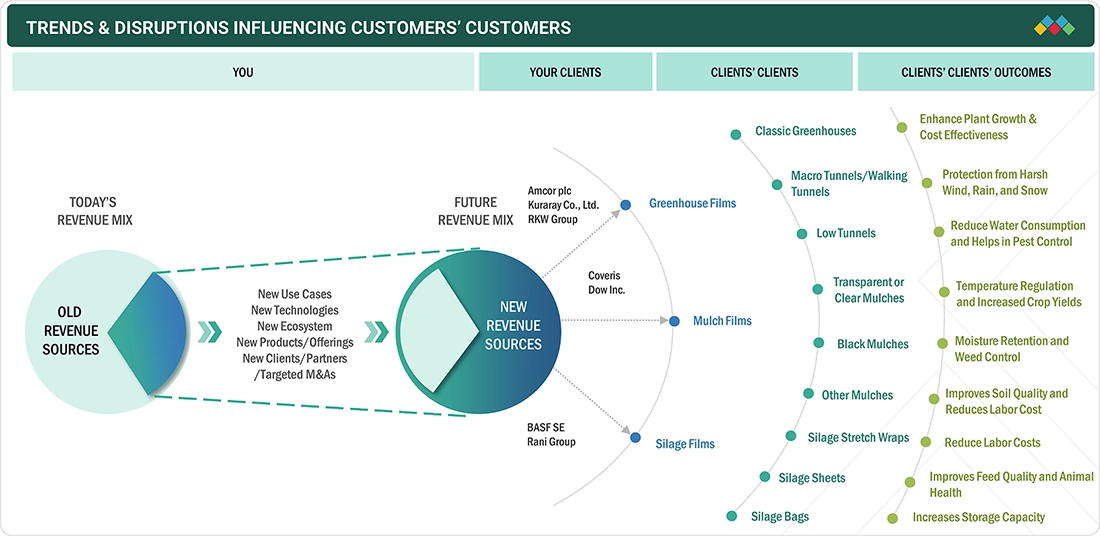
Source: Secondary Research, Interviews with Experts, MarketsandMarkets Analysis
MARKET DYNAMICS

Level
-
Global food security imperative and expanding agricultural productivity requirements

-
Accelerating global water scarcity driving mulch film adoption


Level
-
Accumulation of polyethylene film residue and microplastic soil contamination

-
Raw material price volatility and polyethylene resin cost exposure


Level
-
Government-supported expansion of certified biodegradable film markets

-
Precision agriculture and smart farming integration


Level
-
Inconsistent biodegradation performance across diverse soil and climate conditions

-
High capital and deployment costs of advanced greenhouse film systems

Source: Secondary Research, Interviews with Experts, MarketsandMarkets Analysis
Driver: Global food security imperative and expanding agricultural productivity requirements
The most powerful and durable structural driver of the agricultural films market is the global food security imperative. The FAO has consistently documented that global food production will need to increase by 60-70% above 2005/2007 levels by 2050 to meet demands of a projected global population of approximately 9.7 billion, rising incomes, and dietary transitions toward higher-protein foods. The OECD-FAO Agricultural Outlook 2025–2034 projects global agricultural and fish production will increase by 14% over the next decade, driven predominantly by productivity growth in middle-income countries, a trajectory directly requiring precision farming inputs including high-performance agricultural films. Agricultural films are proven productivity amplifiers: mulch films increase vegetable yields by 30-50% in controlled studies through improved soil temperature, moisture retention, and weed management simultaneously, while greenhouse films enable year-round production of crops otherwise confined to seasonal availability. China's agricultural modernization programs, including its Agricultural Film Management Measures and rural development investment, reflect national strategic prioritization of yield improvement on limited arable land. According to BASF, China's demand for mulching film alone exceeds 1.4 million metric tonnes annually. India's PM-KUSUM scheme provides subsidies for the adoption of sustainable agricultural technologies, including advanced mulch films, to address the country's food security needs.
Restraints: Accumulation of polyethylene film residue and microplastic soil contamination
The most significant environmental restraint on the agricultural films market is the well-documented accumulation of polyethylene film residues in farmland soils following incomplete collection and disposal of used mulch films. This restraint simultaneously operates as a reputational, regulatory, and commercial constraint on demand for conventional PE film. Research confirmed that PE mulch film fragments generated through mechanical degradation and UV aging enter soil environments as secondary microplastics targeted by the EU's Ecodesign for Sustainable Products Regulation (ESPR). Studies have documented PE film residue accumulation exceeding 100 kg per hectare on Chinese farmland where thin PE mulch films have been used for multiple decades. In 2025, Cambridge University published a dynamic economic model in the Agricultural and Resource Economics Review that established that microplastic pollution from agricultural fields represents a significant long-term externalized cost not captured in conventional PE film pricing, and that governments are beginning to correct this systematic market failure through regulation. The environmental stigma associated with PE film waste is directly influencing purchasing decisions in premium and export-oriented agricultural markets. Major European food retailers are conducting upstream sustainability audits that reach agricultural input specifications — creating commercial pressure on export-oriented horticulture producers to transition to certified alternatives. The UNEP Plastic Pollution negotiations and FAO's 2025 Voluntary Code of Conduct on Agricultural Plastics are creating reputational and regulatory risk for participants without certified biodegradable or recyclable alternative portfolios.
Opportunity: Government-supported expansion of certified biodegradable film markets
The convergence of stringent regulatory mandates, government subsidy programs, and rapidly scaling production of biodegradable polymers is creating a historic market expansion opportunity for certified biodegradable agricultural film manufacturers capable of meeting the performance requirements and certification standards demanded by regulated markets in major regions such as Europe, China, and India. In China, MARA, the Ministry of Ecology and Environment, and the NDRC jointly implement programs to reduce PE residue pollution and promote the adoption of certified biodegradable mulch in priority provinces and crop sectors. Government procurement programs and provincial subsidy schemes create policy-supported demand expansion that bypasses pure price competition with conventional PE films. The proven success of the Beijing Yanqing 100-hectare biodegradable film pilot (2024), which documents cost savings from eliminating retrieval labour and sustained crop productivity, provides field validation data supporting broader program scale-up. In Europe, the CE marking framework for soil-biodegradable mulch films creates a market access credential expected to accelerate commercial greenhouse and professional horticulture adoption over the next three to five years
Challenge: Inconsistent biodegradation performance across diverse soil and climate conditions
One of the most technically challenging obstacles facing the agricultural films market's transition to certified biodegradable alternatives is significant variability in actual field biodegradation performance of PBAT/PLA-based films across the diverse soil types, temperature regimes, moisture conditions, pH levels, and microbial communities present in global agricultural environments, creating farmer hesitancy, regulatory compliance risk, and certification credibility concerns. Soil biodegradation of PBAT polymer systems is a microbial metabolic process that depends on the presence of appropriate enzymatic pathways, primarily cutinase and lipase, which are distributed unevenly across soil types and are highly sensitive to temperature and moisture availability. Cold, dry, or acidic soil conditions that suppress microbial activity also slow biodegradation rates, raising the possibility that films applied in northern Chinese cotton fields, highland Mexican vegetable farms, or cool-season European lettuce production may not meet the degradation timelines assumed under European standard test conditions. Research published in Springer Nature Microplastics and Nanoplastics (2026) documented that biodegradable PBAT films require sufficient incubation periods and concentrations to achieve meaningful degradation. The npj Sustainable Agriculture (Nature, 2025) multi-layer PBAT/TPS study confirmed pure PBAT films degrade by only 12% over 365 days in laboratory composting, far below the EU's 90% criterion.
AGRICULTURAL FILMS MARKET: COMMERCIAL USE CASES ACROSS INDUSTRIES
| COMPANY | USE CASE DESCRIPTION | BENEFITS |
|---|---|---|
 |
Amcor plc provides agricultural film solutions, including greenhouse films, silage films, mulch films, and stretch films. Its products incorporate UV stabilization, light diffusion technology, thermal control properties, and durability enhancements for crop protection, forage preservation, and yield optimization. | Improves crop yields, extends growing seasons, enhances forage quality, reduces water consumption, protects crops from adverse weather, and improves operational efficiency |
 |
RKW manufactures a broad portfolio of agricultural films, including silage stretch films, bale wrap films, greenhouse covers, and mulch films. The company's products focus on puncture resistance, oxygen barrier performance, UV protection, and sustainability through recyclable solutions. | Improves silage preservation, minimizes crop losses, enhances storage quality, reduces spoilage, and supports sustainable farming practices |
 |
Armando Alvarez supplies greenhouse films, mulch films, silage films, and geomembranes designed for horticulture and agricultural applications. Its films feature light management technologies, thermal insulation, and resistance to environmental degradation. | Enhances plant growth conditions, improves water retention, increases agricultural productivity, reduces chemical usage, and supports intensive farming systems |
 |
Coveris develops agricultural stretch films and silage protection solutions that utilize advanced polymer technologies for enhanced strength, sealing performance, and storage efficiency. The company also focuses on sustainable and recyclable film products. | Improves feed quality preservation, reduces waste, lowers operational costs, increases storage efficiency, and supports environmental sustainability goals |
Logos and trademarks shown above are the property of their respective owners. Their use here is for informational and illustrative purposes only.
MARKET ECOSYSTEM
The ecosystem of the agricultural films market includes polymer manufacturers, resin suppliers, additive producers, and film converters. Some key players in the market are Amcor plc (Switzerland), Dow Inc. (US), RKW Group (Germany), BASF SE (Germany), Coveris (Austria), Kuraray Co., Ltd. (Japan), Rani Group (Finland), and Armando Alvarez Group (Spain). These players introduce new technologies and are adopting acquisitions and collaborations to increase their market shares.
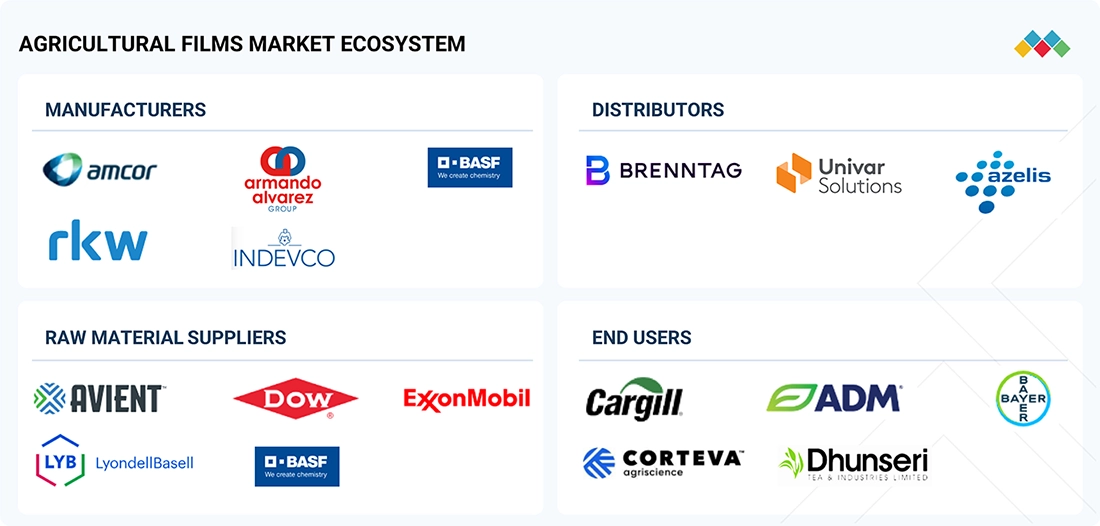
Logos and trademarks shown above are the property of their respective owners. Their use here is for informational and illustrative purposes only.
MARKET SEGMENTS
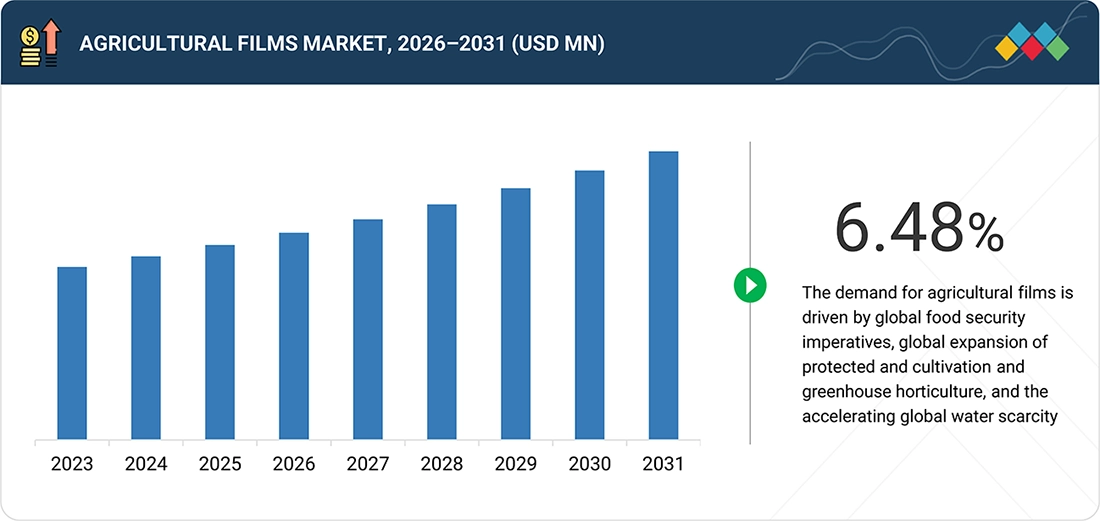
Source: Secondary Research, Interviews with Experts, MarketsandMarkets Analysis
Agricultural Films Market, By Application
By application, the mulch films accounted for the largest share of the agricultural films market, reflecting broad adoption across row crops, horticulture, and commercial vegetable production systems globally. Plastic mulches are impermeable to water, thereby preventing direct evaporation of soil moisture, limiting water loss, and reducing surface soil erosion. Asia Pacific is projected to be the largest market for this segment during the forecast period.
Agricultural Films Market, By Type
By type, the LLDPE segment is estimated to account for the largest share of the overall agricultural films market during the forecast period. LLDPE films offer mechanical strength, moisture barrier, optical properties, and resistance to sunlight. This film is thinner than other films, making it suitable for agricultural applications. It has high puncture resistance, high tensile strength, and suitable low-temperature properties. While Asia Pacific accounts for the dominant share of the market for the LLDPE segment, South America is projected to witness the highest growth during the forecast period.
REGION
Asia Pacific is estimated to account for the largest market share during the forecast period.
Based on region, Asia Pacific is estimated to be the largest market for agricultural films. The market in the region is also projected to witness significant growth during the forecast period. The vast agricultural land base, expanding protected cultivation infrastructure, and strong government support for modern farming are driving the market in the region. Increasing population and rising per capita food intake exert pressure on agricultural output in the region, especially in China and India. As the area of arable land available remains limited and the demand for food produce increases significantly, the necessity of controlled agricultural practices is increasing.
AGRICULTURAL FILMS MARKET: COMPANY EVALUATION MATRIX
In the agricultural films market, Amcor plc (Star) is a leading solutions provider, offering a diversified portfolio of greenhouse, mulch, silage, and stretch films, backed by advanced polymer technologies and a global distribution network. The company's focus on durability, crop protection, resource efficiency, and sustainable film solutions enables it to maintain strong adoption across commercial agriculture and protected cultivation applications. Armando Alvarez Group (Emerging Leader) is expanding its position through continuous innovation in greenhouse and mulch film technologies. The company focuses on improving light transmission, thermal regulation, and water conservation while developing environmentally responsible film solutions. Its growing presence in horticulture and intensive farming applications positions it as a key challenger in the global agricultural films market.
Source: Secondary Research, Interviews with Experts, MarketsandMarkets Analysis
KEY MARKET PLAYERS
- Amcor plc (Switzerland)
- Kuraray Co., Ltd. (Japan)
- BASF SE (Germany)
- Dow Inc. (US)
- RKW Group (Germany)
- Armando Alvarez Group (Spain)
- Coveris (UK)
MARKET SCOPE
| REPORT METRIC | DETAILS |
|---|---|
| Market Size in 2025 (Value) | USD 14.6 BN |
| Market Forecast in 2031 | USD 21.6 BN |
| CAGR (2026–2033) | 6.86% |
| Years Considered | 2023–2031 |
| Base Year | 2025 |
| Forecast Period | 2026–2031 |
| Units Considered | Value (USD BN) |
| Report Coverage | The report defines, segments, and projects the agricultural films market based on type, application, and region. It provides detailed information on the major factors influencing the market's growth, including drivers, restraints, opportunities, and challenges. It strategically profiles agricultural film manufacturers, comprehensively analyzes their market shares and core competencies, and tracks and analyzes competitive developments they undertake in the market, such as expansions, partnerships, and new product launches. |
| Regional Scope | North America, Europe, Asia Pacific, Middle East & Africa, South America |
WHAT IS IN IT FOR YOU: AGRICULTURAL FILMS MARKET REPORT CONTENT GUIDE
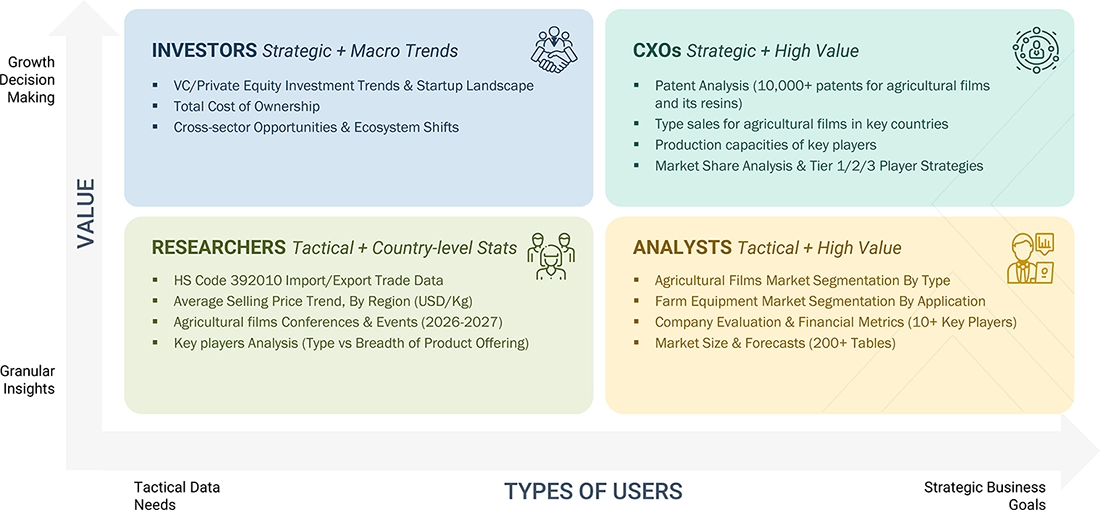
DELIVERED CUSTOMIZATIONS
We have successfully delivered the following deep-dive customizations:
| CLIENT REQUEST | CUSTOMIZATION DELIVERED | VALUE ADDS |
|---|---|---|
| Europe-based Agricultural Films Manufacturer |
|
|
| Asia Pacific-based Agricultural Films Manufacturer |
|
|
RECENT DEVELOPMENTS
- April 2025 : Amcor completed a merger, creating a global packaging leader with agricultural film offerings, including silage, mulch, and greenhouse films.
- November 2024 : Coveris announced a major investment at its polyethylene extrusion facility in Winsford, Cheshire, its UK centre of excellence for high-performance technical barrier and stretch films. The expansion includes a new state-of-the-art nine-layer blown extrusion line for technical EVOH barrier films, a new cast stretch extrusion line for machinery-applied stretch films with a minimum of 30% recycled content, and a 5,000-pallet space onsite warehouse.
- March 2024 : Kuraray Co., Ltd. invested USD 140 million in the production plant of the product EVAL EVOH in Singapore to expand the business and contribute to the improvement of the natural and living environment.
- April 2023 : BASF established compounding capacities for ecovio to support customers in Asia Pacific. The high-quality biopolymer Ecovio is biodegraded by microorganisms in industrial and home composting conditions as well as in agricultural soil. Ecovio can be used for fruit and vegetable bags, cling film, as well as agricultural mulch films.
- October 2022 : Under the Polydress TWISTA brand, RKW offered three different silage combination films. Polydress TWISTA Barrier combines a special underlay film with a high-oxygen barrier to deliver excellent silage quality. Polydress TWISTA Strong is the well-known extra-robust silage solution, and Polydress TWISTA Green is a sustainable film combination with a high recycled content.
Table of Contents
 Exclusive indicates content/data unique to MarketsandMarkets and not available with any competitors.
Methodology
The study involved four major activities in estimating the market size for agricultural films. Exhaustive secondary research was done to collect information on the market, the peer market, and the parent market. The next step was to validate these findings, assumptions, and sizing with industry experts across the value chain through primary research. Both top-down and bottom-up approaches were employed to estimate the complete market size. After that, the market breakdown and data triangulation procedures were used to estimate the market size of the segments and subsegments.
Secondary Research
Secondary sources used in this study included annual reports, press releases, and investor presentations of companies; white papers; certified publications; articles from recognized authors; and gold standard & silver standard websites such as Factiva, ICIS, Bloomberg, and others. The findings of this study were verified through primary research by conducting extensive interviews with key officials such as CEOs, VPs, directors, and other executives. The breakdown of profiles of the primary interviewees is illustrated in the figure below:
Primary Research
The agricultural films market comprises several stakeholders, such as raw material suppliers, end-product manufacturers, and regulatory organizations in the supply chain. The demand side of this market is characterized by the adoption of greenhouse films, mulch films, and silage films in current agricultural practices. The supply side is characterized by advancements in technology and diverse application sectors. Various primary sources from both the supply and demand sides of the market were interviewed to obtain qualitative and quantitative information.
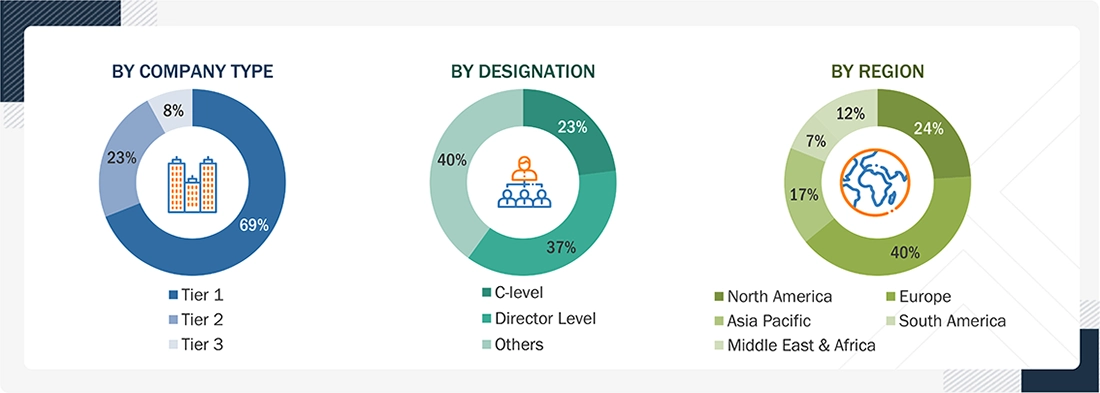
Notes: Tier 1, Tier 2, and Tier 3 companies are classified based on their market revenue in 2025/2026, available in the public domain, product portfolios, and geographical presence.
|
COMPANY NAME |
DESIGNATION |
|
Amcor plc |
Senior Manager |
|
Kuraray Co., Ltd. |
Innovation Manager |
|
BASF SE |
Vice-President |
|
Dow Inc. |
Production Supervisor |
|
RKW Group |
Sales Manager |
To know about the assumptions considered for the study, download the pdf brochure
Market Size Estimation
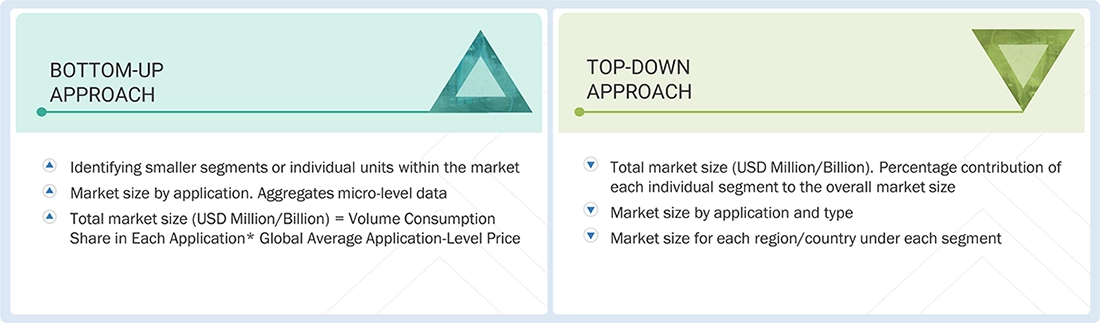
Both top-down and bottom-up approaches were used to estimate and validate the total size of the agricultural films market. These methods were also used extensively to estimate the size of various subsegments in the market. The research methodology used to estimate the market size includes the following:
- The key players in the industry have been identified through extensive secondary research.
- The supply chain of the industry has been determined through primary and secondary research.
- All percentage shares, splits, and breakdowns have been determined using secondary sources and verified through primary sources.
- All possible parameters that affect the markets covered in this research study have been accounted for, viewed in extensive detail, verified through primary research, and analyzed to obtain the final quantitative and qualitative data.
Data Triangulation
After arriving at the overall market size using the market size estimation processes as explained above, the market was split into several segments and subsegments. To complete the overall market engineering process and arrive at the exact statistics of each market segment and subsegment, data triangulation and market breakdown procedures were employed, wherever applicable. The data was triangulated by studying various factors and trends from both the demand and supply sides in the agricultural films industry.
Market Definition
Agriculture films are protective films that are placed over soil or are used to cover greenhouses or wrap fodder.” Agricultural films help in reducing soil erosion, maintaining soil temperature in extreme cold weather conditions, suppressing the growth of weeds, and protecting the soil against ultraviolet rays. These films play a crucial role in modern agriculture, boosting crop yields and improving resource management. The market encompasses a variety of films, such as greenhouse films that create controlled environments, mulch films that suppress weeds and conserve moisture, and silage films that aid in preserving animal feed.
Key Stakeholders
- Agricultural film manufacturers
- Agricultural film suppliers
- Raw material suppliers
- Service providers
- End users
- Government bodies
Report Objectives
- To define, describe, and forecast the agricultural films market in terms of value and volume
- To provide detailed information regarding the drivers, opportunities, restraints, and challenges influencing market growth
- To estimate and forecast the market size by type, application, and region
- To forecast the size of the market for the five main regions: Asia Pacific, Europe, North America, South America, and the Middle East & Africa, along with their key countries
- To strategically analyze micromarkets1 with respect to their growth trends, prospects, and contribution to the overall market
- To analyze opportunities in the market for stakeholders and provide a competitive landscape for market leaders
- To analyze competitive developments, such as deals and expansions, in the market
- To analyze the impact of the recession on the market
- To strategically profile key players and comprehensively analyze their growth strategies
Available customizations:
Along with the given market data, MarketsandMarkets offers customizations according to the company’s specific needs. The following customization options are available for the report:
Regional Analysis
- Further breakdown of a region with respect to a particular country or additional applications
Company Information
- Detailed analysis and profiles of additional market players (up to five)


Personalize This Research
- Triangulate with your Own Data
- Get Data as per your Format and Definition
- Gain a Deeper Dive on a Specific Application, Geography, Customer or Competitor
- Any level of Personalization
Let Us Help You
- What are the Known and Unknown Adjacencies Impacting the Agricultural Films Market
- What will your New Revenue Sources be?
- Who will be your Top Customer; what will make them switch?
- Defend your Market Share or Win Competitors
- Get a Scorecard for Target Partners

Custom Market Research Services
We Will Customise The Research For You, In Case The Report Listed Above Does Not Meet With Your Requirements
Get 10% Free CustomisationTESTIMONIALS
We at Nissan Chemicals Corporation have been clients of MarketsandMarkets for more than a year now. We recently consulted MarketsandMarkets for a study, the team at MarketsandMarkets was extremely professional and organized. The business insights were very detailed and aligned well with our expectations that really helped us formulate the Business Plans and device new strategies for development themes. MarketsandMarkets offers a unique combination of expertise and dedicated engagement model. Their research findings have helped us in designing our Pricing Strategy which will make it easier for us to predict the future sales and profits for the next ten years. We look forward to working with MarketsandMarkets in the future.
VP of Strategy & New Business Development
Leading Specialty Chemical Company
The MarketsandMarkets Engagement Model, composed of both the Knowledge Store and advisory custom research, has greatly helped us in understanding our markets and making strategic decisions. The Knowledge Store is a fast way to allow everyone in our organization to understand more about most any market they are interested in. The ability to then get custom research done and get answers to specific strategic questions and market insight has been spectacular. The Markets and Markets team feel more like colleagues than vendors and their services have helped us change our culture where statements of things like growth opportunities and competitive position are always backed by industry research.

Rich Gibson,
Director, Corporate Strategy
Milliken & Company,
Leading Industrial Manufacturer of specialty chemical, floor covering, performance and protective textile materials, and healthcaremilliken.com
MarketsandMarkets is a trusted resource that helps us to better understand markets that are near-adjacencies-whether its technology, value chain or geography. Their Knowledge Store platform provides a dashboard of markets and their characteristics which is easy to use and saves us time.
Adam Shaw,
Market Development and Strategy Manager
AdvanSix Inc. USA,
An American Leader in Chemicalswww.advansix.com
The Knowledge Store from MarketsandMarkets is a valuable tool which has helped my team acquire greater insight in to the end markets that our business serves. This has enabled us to help our company build stronger strategies throughout our planning process.
TOSHIO KINOSHITA
Senior Chif Consultion Research & Consulting Division
Mitsubishi Chemical Research Corporation,
Leading Manufacturer of Chemical Productswww.mitsubishichem-res.co.jp/en/

We recently engaged with MarketsandMarkets for a study, the team not only clearly understood our business objectives but was also extremely professional in the way they handled the entire project. The study was efficiently conducted in a phase-wise manner, and the engagement model furnished us with high-quality business insights that far exceeded our expectations at each phase. We were especially happy that MarketsandMarkets could provide us with both, an English as well as a Japanese version of the study. A special thanks to the Analyst Team and Client Services Team, whose fluency in Japanese enhanced our comfort level, as we could converse with them in our preferred language.
Independent entrepreneurs
Arrow Precision
We approached MarketsandMarkets for study on Proppants Market, and their work exceeded our expectations. The study conducted was comprehensive and enabled us to view the market through the various dimensions. In addition, the team was extraordinarily responsive throughout the process and resolved our queries on time. I strongly recommend MarketsandMarkets and will certainly consider them for additional market assessments we will need in the future.
Global engineering company, Japan
Deputy Manager,
Strategic Planning OfficeThe high-quality insights shared by the MarketsandMarkets team helped us understand the pharmaceutical plant designers in a specific geography. It also captured the risks that we may likely face in communicating with our potential partners. The study would enable us identify partners, which would impact our future growth.
- US Agricultural Films Market
- Saudi Arabia Agricultural Films Market
- Iran Agricultural Films Market
- Egypt Agricultural Films Market
- South Africa Agricultural Films Market
- Brazil Agricultural Films Market
- Argentina Agricultural Films Market
- China Agricultural Films Market
- Japan Agricultural Films Market
- India Agricultural Films Market
- South Korea Agricultural Films Market
- Italy Agricultural Films Market
- Spain Agricultural Films Market
- Germany Agricultural Films Market
- France Agricultural Films Market
- UK Agricultural Films Market
- Turkey Agricultural Films Market
- Mexico Agricultural Films Market
- Canada Agricultural Films Market




Growth opportunities and latent adjacency in Agricultural Films Market