Critical Communication Market by Offering (Hardware, Services), Technology (Land Mobile Radio, Long-Term Evolution), End-Use Vertical (Public Safety, Transportation, Utilities, Mining), and Region (North America, Europe, APAC, RoW) - Global Growth Driver and Industry Forecast to 2035


Critical Communication Market Summary
The Critical Communication Market is entering a sustained growth phase as governments, public-safety agencies, utilities, transportation operators, defense organizations, and industrial enterprises modernize communication infrastructure to support secure, reliable, and always-available connectivity. The global Critical Communication Market is estimated at approximately USD 19.8 billion in 2025 and is projected to reach nearly USD 40.2 billion by 2035, registering a CAGR of around 7.3% during the forecast period. Growth is being driven by the migration from legacy communication networks to broadband and mission-critical LTE and 5G platforms, increasing investments in public safety infrastructure, expanding IoT deployments, industrial automation, and the growing need for real-time data exchange. AI-powered analytics, cloud-based communication platforms, edge computing, and automated incident response are further transforming critical communication systems from voice-centric networks into intelligent, data-driven operational ecosystems.
Key Market Trends & Insights
The North American region is expected to maintain its leading position in the Critical Communication Market through 2035. The region benefits from established public safety communication infrastructure, strong investment in mission-critical broadband networks, and modernization programs across government agencies, transportation, utilities, and defense. The presence of advanced telecommunications ecosystems and early adoption of private LTE and 5G technologies further supports regional growth.
Asia Pacific is projected to register the fastest growth during the forecast period. Rapid urbanization, smart-city development, expanding transportation infrastructure, industrial digitalization, and investments in public safety networks across China, Japan, India, South Korea, and Southeast Asian economies are increasing demand for dependable communication platforms. The adoption of private 5G, IoT, and edge computing is creating new opportunities for mission-critical connectivity.
Mission-critical broadband communication is emerging as a dominant technology trend. Organizations increasingly require high-speed data, video, location services, telemetry, and IoT connectivity in addition to voice communication. LTE and 5G networks are therefore becoming increasingly important complements or successors to traditional narrowband systems.
AI is expanding the role of critical communication platforms. AI-based video analytics, predictive maintenance, automated threat detection, intelligent dispatching, speech analytics, and anomaly detection enable organizations to identify incidents and coordinate responses faster. Integration of AI with command-and-control platforms is expected to become a major differentiator among solution providers.
Cloud, edge computing, and interoperable communication architectures are gaining momentum. These technologies allow agencies and enterprises to connect heterogeneous devices and communication systems while improving scalability and reducing dependence on isolated legacy networks.
Market Size & Forecast
- Base year market size: Approximately USD 19.8 billion in 2025
- Forecast value by 2035: Approximately USD 40.2 billion
- CAGR: Approximately 7.3% from 2025 to 2035
- Growth outlook: Expansion will be supported by public-safety modernization, critical infrastructure investments, LTE and 5G deployment, industrial automation, IoT connectivity, and increasing demand for resilient communications.
- Technology transition: Migration from legacy narrowband networks toward broadband, cloud-connected, AI-enabled, and interoperable communication platforms will create additional revenue opportunities.
Critical Communication Market Top 10 key takeaway
- The Critical Communication Market is expected to nearly double in value between 2025 and 2035.
- North America is expected to remain the leading regional market throughout the forecast period.
- Asia Pacific is projected to record the fastest growth as smart infrastructure and industrial digitalization accelerate.
- Mission-critical broadband communication is gaining importance across public safety and enterprise environments.
- LTE and 5G technologies are increasingly complementing legacy land mobile radio networks.
- AI is improving incident detection, dispatching, predictive analytics, and operational decision-making.
- Public safety remains one of the largest application areas for critical communication solutions.
- Utilities, transportation, energy, manufacturing, and defense are expanding investments in resilient communication networks.
- Private 5G and edge computing are opening new opportunities for industrial critical communication applications.
- Interoperability, cybersecurity, network resilience, and low-latency connectivity will remain strategic priorities through 2035.
Product Insights
The hardware segment is expected to account for a significant share of the Critical Communication Market, supported by continued demand for mission-critical radios, terminals, networking equipment, control-room infrastructure, ruggedized devices, and communication gateways. Land mobile radio systems remain important for public safety organizations because of their proven reliability, extensive coverage, push-to-talk functionality, and ability to operate under demanding conditions. However, the product landscape is gradually shifting toward broadband-capable devices that can support voice, video, location data, images, telemetry, and IoT information on a common communications platform.
Mission-critical handheld and vehicle-mounted devices are particularly important in public safety, emergency response, transportation, utilities, and defense applications. Modern devices increasingly incorporate GNSS positioning, secure connectivity, high-resolution cameras, biometric authentication, and advanced computing capabilities. Ruggedized smartphones and specialized broadband terminals are gaining traction as organizations seek to combine conventional radio functionality with mobile data services.
The software and services component is expected to grow rapidly as organizations transition toward cloud-based communication management. Software platforms provide dispatching, device management, workforce coordination, location tracking, incident management, and interoperability between different communication networks. AI-enabled software can analyze incoming video, sensor information, and communication data to prioritize incidents and support emergency personnel.
Another emerging trend is the integration of critical communication products with IoT devices. Sensors deployed across pipelines, substations, rail networks, factories, ports, and public infrastructure can continuously transmit operational information through critical communication networks. This convergence is expanding the addressable market beyond traditional radio equipment toward connected operational technology ecosystems.
Technology / Component Insights
Technology evolution is one of the most important factors shaping the Critical Communication Market. Traditional land mobile radio technologies, including digital radio standards, continue to provide dependable voice communication, but organizations increasingly require broadband capabilities for data-intensive applications. LTE provides a mature platform for mission-critical broadband services, while 5G introduces higher bandwidth, lower latency, network slicing, massive device connectivity, and improved support for industrial applications.
AI is increasingly being incorporated into critical communication infrastructure. Machine learning algorithms can analyze network performance and identify abnormal behavior before service disruptions occur. Predictive analytics can help operators anticipate equipment failures, optimize network capacity, and prioritize maintenance. In emergency response environments, AI can process video feeds, sensor data, location information, and incoming communications to generate actionable alerts.
IoT is also becoming a fundamental component of critical communication architectures. Connected sensors can provide real-time information about equipment health, environmental conditions, traffic flows, infrastructure integrity, and security incidents. Critical communication networks provide the connectivity required to transmit this information reliably, particularly in locations where communication failures can have significant operational or safety consequences.
Cloud computing is improving the scalability and flexibility of communication management platforms. Cloud-based command-and-control systems enable organizations to manage distributed teams and devices from centralized environments. At the same time, edge computing is becoming important for applications requiring extremely low latency or local data processing. For example, industrial facilities can analyze sensor data at the edge without transmitting every data point to a distant cloud environment.
Cybersecurity is another critical technology area. As communication networks become more IP-based and connected to enterprise and IoT systems, the potential attack surface increases. Encryption, identity management, secure authentication, network monitoring, zero-trust architectures, and AI-powered threat detection will therefore become increasingly important components of future critical communication systems.
Application Insights
Public safety and emergency response are expected to remain leading application areas in the Critical Communication Market. Police departments, fire services, emergency medical organizations, disaster-response agencies, and other public-sector organizations depend on resilient communication systems to coordinate personnel during routine operations and major incidents. Demand is increasing for platforms capable of supporting voice, video, location services, messaging, and real-time data within a unified environment.
Transportation represents another high-growth application area. Railways, airports, ports, highways, and public transportation systems require dependable communications to coordinate operations and respond rapidly to disruptions. The increasing deployment of connected transportation infrastructure is creating demand for communication networks that can connect vehicles, control centers, field personnel, and infrastructure sensors.
Utilities and energy companies are also increasing their use of critical communication technologies. Electricity grids, oil and gas facilities, water infrastructure, and renewable energy installations require reliable communication for remote monitoring and emergency response. IoT-enabled sensors and automated control systems are increasing the volume of operational data that must be exchanged across geographically distributed assets.
Industrial manufacturing is expected to become a significant opportunity through the adoption of private LTE and 5G networks. Smart factories require low-latency connectivity for robotics, autonomous vehicles, machine monitoring, worker safety systems, and automated production processes. Critical communication networks can provide a resilient connectivity layer for these applications while supporting operational continuity.
Defense and homeland security applications will continue to prioritize encrypted, resilient, and interference-resistant communication. Increasing geopolitical risks and modernization programs are encouraging investments in secure communications, tactical networking, situational awareness, and advanced command-and-control systems.
Regional Insights
North America is expected to remain the largest regional market for critical communication solutions. The US represents a major contributor because of ongoing public safety network modernization, federal and state-level investments, extensive deployment of LMR infrastructure, and the transition toward mission-critical broadband. Canada is also investing in resilient communications for public safety, transportation, utilities, and remote infrastructure. Regional enterprises are increasingly adopting private LTE and 5G networks to support industrial and critical infrastructure applications.
Europe represents a mature market characterized by strong regulatory frameworks, sophisticated transportation infrastructure, public safety modernization, and growing investment in secure digital communications. Countries such as Germany, France, and the UK are advancing industrial digitalization and private 5G initiatives, creating opportunities for critical communication vendors. Smart-city programs and cross-border interoperability requirements are also supporting demand.
Asia Pacific is projected to register the fastest growth. China, Japan, South Korea, India, and other regional economies are expanding smart-city infrastructure, industrial automation, transportation networks, and public safety systems. The rapid deployment of 5G and private wireless networks is creating an increasingly favorable environment for critical communication applications.
- North America will benefit from public safety modernization and mission-critical broadband adoption.
- Europe will focus on interoperability, cybersecurity, industrial connectivity, and resilient infrastructure.
- Asia Pacific is expected to record the fastest growth through 2035.
- China and Japan are major contributors to regional technology adoption and infrastructure investment.
- Emerging markets will increasingly deploy LTE, 5G, IoT, and cloud-based communication solutions.
Country-Specific Market Trends
China is expected to record a Critical Communication Market CAGR of approximately 9% through 2035, supported by extensive 5G deployment, smart-city programs, industrial automation, transportation modernization, and public security investments. Japan is projected to grow at approximately 7%, with demand driven by disaster resilience, transportation systems, advanced manufacturing, and aging infrastructure modernization.
In North America, the United States is expected to expand at approximately 7%, supported by public safety modernization, critical infrastructure protection, private wireless networks, and federal investments in secure communications. Canada could record growth of around 6%, driven by public safety communications, utilities, transportation, and connectivity requirements across geographically dispersed regions. Mexico is projected to grow at approximately 7%, supported by industrial development, transportation investments, smart infrastructure, and increasing adoption of wireless communication technologies.
Germany is expected to record a CAGR of approximately 6%, supported by Industry 4.0, private 5G, automotive manufacturing, logistics, and critical infrastructure modernization. France could grow at around 6%, supported by public safety, transportation, defense, energy, and smart-city initiatives. Across Europe, government programs and industrial digitalization will continue to encourage secure and resilient communication infrastructure.
- China will benefit from large-scale 5G, smart-city, and industrial automation investments.
- Japan will emphasize disaster-resilient communications and advanced industrial connectivity.
- The United States will remain a major market due to public safety and critical infrastructure modernization.
- Germany and France will drive European demand through industrial and government applications.
- Emerging economies will increasingly adopt broadband critical communication platforms as infrastructure becomes digitalized.
Key Critical Communication Market Company Insights
The competitive landscape includes telecommunications providers, radio-system manufacturers, networking companies, and specialized critical communication solution providers. Major participants include Motorola Solutions, Nokia, Ericsson, L3Harris Technologies, Hytera Communications, Airbus, AT&T, Verizon, Rohde & Schwarz, and Leonardo. These companies are focusing on broadband mission-critical communications, secure networking, cloud platforms, interoperability, AI, and advanced command-and-control capabilities.
Motorola Solutions continues to emphasize integrated public safety ecosystems combining communication devices, software, video security, command-center technologies, and analytics. Nokia and Ericsson are focusing heavily on private LTE and 5G networks for industrial and mission-critical environments. L3Harris and other defense-focused providers emphasize secure tactical communications and resilient networking.
Telecommunications operators such as AT&T and Verizon are expanding their role by providing broadband connectivity and private wireless capabilities for government and enterprise customers. Specialized manufacturers such as Hytera and Rohde & Schwarz continue to develop professional radio, testing, secure communications, and network technologies. Across the competitive landscape, AI integration, cybersecurity, interoperability, and lifecycle services are becoming key differentiation factors.
- Companies are shifting from hardware-only models toward integrated software and services.
- AI and analytics are becoming important components of command-and-control platforms.
- Private LTE and 5G are expanding vendors' industrial market opportunities.
- Interoperability is increasingly central to public safety communication strategies.
- Strategic partnerships are helping vendors combine connectivity, cloud, cybersecurity, and analytics capabilities.
Recent Developments
Critical communication providers are increasingly introducing broadband-enabled devices and platforms that combine conventional push-to-talk communication with video, location, messaging, and data services. These solutions are designed to support public safety and industrial personnel who require access to multiple information sources from a single device.
Vendors are also expanding AI capabilities across command-center and communication platforms. AI-based video analytics, automated incident classification, predictive maintenance, intelligent dispatching, and real-time situational awareness are emerging as important product capabilities.
Another significant development is the expansion of private 5G partnerships between network providers, equipment manufacturers, governments, and industrial organizations. These collaborations are enabling dedicated communication networks for manufacturing plants, ports, airports, utilities, and other environments where reliability, security, and low latency are critical.
Market Segmentation
The Critical Communication Market can be segmented By Product, By Technology / Component, By Application, and By Region. By product, the market includes radios, terminals, networking infrastructure, command-and-control platforms, software, and communication services. Hardware remains essential for field personnel, while software and managed services are gaining importance as organizations modernize their infrastructure. By technology, the market includes land mobile radio, LTE, 5G, satellite communication, Wi-Fi, and other wireless technologies, with LTE and 5G expected to gain share as broadband applications expand. By application, public safety, transportation, utilities, industrial, energy, defense, and emergency services represent important demand centers. By region, the market covers North America, Europe, Asia Pacific, Latin America, and the Middle East & Africa, with North America leading and Asia Pacific showing the strongest growth trajectory.
- By Product: Radios and terminals remain important, while software and services are expanding rapidly.
- By Technology / Component: LTE and 5G are gaining momentum alongside established LMR technologies.
- By Application: Public safety remains a major application, followed by transportation, utilities, industrial, and defense.
- By Region: North America leads, while Asia Pacific is expected to grow at the fastest rate.
- Future segmentation: AI, IoT, cloud, edge computing, and private wireless networks will reshape market opportunities.
Conclusion
The Critical Communication Market is expected to experience sustained expansion through 2035 as governments and enterprises prioritize resilient, secure, interoperable, and intelligent communication infrastructure. The transition from traditional voice-centric systems toward broadband communication is creating significant opportunities for LTE and 5G technologies, while AI, IoT, cloud computing, and edge analytics are broadening the role of critical communication networks across public safety and industrial environments.
AI will increasingly help organizations convert communication and sensor data into actionable intelligence. Automated incident detection, predictive network maintenance, intelligent dispatching, and real-time situational awareness can improve response times and operational efficiency. At the same time, IoT and automation will increase the number of connected assets that depend on resilient communications.
By 2035, organizations are expected to view critical communication not simply as a connectivity requirement but as a strategic component of operational resilience and digital transformation. Vendors capable of combining secure connectivity, AI-powered intelligence, cloud platforms, cybersecurity, and interoperable infrastructure will be well positioned to capture emerging opportunities across public safety, transportation, utilities, energy, manufacturing, and defense.
FAQs
1. What is the projected market size of the Critical Communication Market?
The global Critical Communication Market is estimated at approximately USD 19.8 billion in 2025 and is projected to reach nearly USD 40.2 billion by 2035, based on an estimated CAGR of around 7.3%.
2. What is the expected growth rate of the Critical Communication Market?
The Critical Communication Market is projected to grow at approximately 7.3% CAGR from 2025 to 2035, supported by public safety modernization, broadband adoption, private 5G deployment, IoT, and industrial digitalization.
3. What are the key drivers of the Critical Communication Market?
Major drivers include increasing investments in public safety infrastructure, migration from legacy networks to LTE and 5G, demand for resilient communications, industrial automation, IoT connectivity, AI-enabled analytics, cybersecurity, and digital transformation.
4. Which region is expected to lead the Critical Communication Market?
North America is expected to remain the leading regional market because of its mature public safety infrastructure, continued network modernization, advanced telecommunications ecosystem, and strong adoption of mission-critical broadband technologies. Asia Pacific is expected to record the fastest growth.
5. Who are the key companies operating in the Critical Communication Market?
Major companies include Motorola Solutions, Nokia, Ericsson, L3Harris Technologies, Hytera Communications, Airbus, AT&T, Verizon, Rohde & Schwarz, and Leonardo, among other regional and specialized technology providers.
To speak to our analyst for a discussion on the above findings, click Speak to Analyst
 Exclusive indicates content/data unique to MarketsandMarkets and not available with any competitors.
Table of Contents
1 Introduction (Page No. - 16)
1.1 Study Objectives
1.2 Definition
1.3 Study Scope
1.3.1 Years Considered
1.4 Currency
1.5 Limitations
1.6 Stakeholders
2 Research Methodology (Page No. - 20)
2.1 Research Data
2.1.1 Secondary Data
2.1.1.1 Key Data From Secondary Sources
2.1.2 Primary Data
2.1.2.1 Key Data From Primary Sources
2.1.2.2 Breakdown of Primaries
2.2 Market Size Estimation
2.2.1 Bottom-Up Approach
2.2.1.1 Approach to Capture Market Size By Bottom-Up Analysis
2.2.2 Top-Down Approach
2.2.2.1 Approach to Capture Market Size By Top-Down Analysis
2.3 Market Breakdown and Data Triangulation
2.4 Research Assumptions
3 Executive Summary (Page No. - 28)
4 Premium Insights (Page No. - 32)
4.1 Attractive Opportunities in Overall Critical Communication Market
4.2 Market, By Technology
4.3 Market, By Vertical
4.4 Market in APAC, By Vertical and Country
4.5 Market, By Geography
5 Market Overview (Page No. - 35)
5.1 Introduction
5.2 Market Dynamics
5.2.1 Drivers
5.2.1.1 High Demand for Critical Communication Solutions From Diverse Industries Such as Public Safety, Transportation, and Medical
5.2.1.2 Advanced Features of Critical Communication Networks
5.2.1.3 Increased Need to Modernize Old Equipment
5.2.2 Restraints
5.2.2.1 Limited Availability of Bandwidth
5.2.2.2 Increased Complexity of Networks and Systems Due to Multiple Communication Standards
5.2.3 Opportunities
5.2.3.1 Need for Reliable and High-Quality Public Safety Communication Systems
5.2.3.2 Standardization of Infrastructure Platforms
5.2.4 Challenges
5.2.4.1 Budget Constraints Toward Procurement
5.2.4.2 Interoperability Issues
6 Critical Communication Market, By Offering (Page No. - 40)
6.1 Introduction
6.2 Hardware
6.2.1 Command and Control Systems
6.2.1.1 APAC to Be Fastest-Growing Region in Critical Communication Market for Command and Control Systems During Forecast Period
6.2.2 Infrastructure Equipment
6.2.2.1 North America to Hold Substantial Share of Critical Communication Market for Infrastructure Equipment During Forecast Period
6.2.3 End-Use Devices
6.2.3.1 Critical Communication Market for End-Use Devices to Grow at Highest Growth Rate During Forecast Period
6.3 Services
6.3.1 Consulting Services
6.3.1.1 Consulting Services to Witness Significant Growth in Critical Communication Market During Forecast Period
6.3.2 Integration Services
6.3.2.1 Technological Advancements to Boost Demand for Integration Services During Forecast Period
6.3.3 Maintenance and Support Services
6.3.3.1 Maintenance and Support Services to Dominate the Critical Communication Market During Forecast Period
7 Critical Communication Market, By Technology (Page No. - 50)
7.1 Introduction
7.2 Land Mobile Radio (LMR)
7.2.1 LMR Technology-Based Critical Communication Solutions to Account for Larger Market Share During 2019–2024
7.2.2 Tetra/P25
7.2.2.1 Tera/P25 LMR Technology to Record Highest CAGR in Critical Communication Market During Forecast Period
7.2.3 Analog
7.2.3.1 Analog Technology Accounted for Largest Share of Market for LMR in 2018
7.2.4 Others
7.3 Long-Term Evolution (LTE)
7.3.1 LTE Technology to Witness Highest CAGR in Market During Forecast Period
8 Critical Communication Market, By Vertical (Page No. - 56)
8.1 Introduction
8.2 Public Safety
8.2.1 Public Safety Vertical to Witness Highest Demand for Critical Communication Solutions During Forecast Period
8.3 Transportation
8.3.1 Transportation Vertical to Witness Highest CAGR in Market From 2019 to 2024
8.4 Utilities
8.4.1 Need for Robust Communication in Utilities Vertical to Propel Market Growth During Forecast Period
8.5 Mining
8.5.1 APAC to Record Highest CAGR in Market for Mining Vertical During Forecast Period
8.6 Others
9 Geographic Analysis (Page No. - 62)
9.1 Introduction
9.2 North America
9.2.1 US
9.2.1.1 US to Hold Major Share of Critical Communication Market in North America During Forecast Period
9.2.2 Canada
9.2.2.1 Canadian Critical Communication Market Growth is Accelerated By Huge Investments By Government
9.2.3 Mexico
9.2.3.1 LMR Technology to Capture Major Share of Critical Communication Market in Mexico During Forecast Period
9.3 Europe
9.3.1 UK
9.3.1.1 UK to Lead European Critical Communication Market During Forecast Period
9.3.2 Germany
9.3.2.1 Germany to Record Highest CAGR in Critical Communication Market in Europe During Forecast Period
9.3.3 France
9.3.3.1 LTE Technology to Witness Higher CAGR in French Critical Communication Market During 2019–2024
9.3.4 Spain
9.3.4.1 Technological Advancements and Concerns of Safety and Security to Surge Demand for Critical Communication Solutions in Spain in Coming Years
9.3.5 Rest of Europe
9.3.5.1 Strong Government Support for Development of Advanced Critical Communication Systems Boost Critical Communication Market Growth in Rest of Europe
9.4 Asia Pacific (APAC)
9.4.1 China
9.4.1.1 China to Hold Major Share of Critical Communication Market in APAC During Forecast Period
9.4.2 Japan
9.4.2.1 Critical Communication Market in Japan is Driven By Increasing Preference for Smart Home Technologies
9.4.3 India
9.4.3.1 India to Witness Highest CAGR in Market in APAC During Forecast Period
9.4.4 South Korea
9.4.4.1 LTE Technology to Register Highest CAGR in Market in South Korea During Forecast Period
9.4.5 Rest of APAC
9.4.5.1 LMR Technology to Hold Significant Share of Market in Rest of APAC During Forecast Period
9.5 Rest of the World (RoW)
9.5.1 South America
9.5.1.1 South America to Register Higher CAGR in Market in RoW During Forecast Period
9.5.2 Middle East and Africa
9.5.2.1 Middle East and Africa to Hold Major Share of Market in RoW During Forecast Period
10 Competitive Landscape (Page No. - 90)
10.1 Overview
10.2 Ranking Analysis of Key Players in Critical Communication Market
10.3 Competitive Leadership Mapping
10.3.1 Visionary Leaders
10.3.2 Dynamic Differentiators
10.3.3 Innovators
10.3.4 Emerging Companies
10.4 Strength of Product Portfolio (25 Companies)
10.5 Business Strategy Excellence (25 Companies)
10.6 Competitive Situations and Trends
10.6.1 Product Launches and Developments
10.6.2 Agreements, Partnerships, Contracts, Collaborations
10.6.3 Acquisitions
10.6.4 Expansions
11 Company Profiles (Page No. - 101)
(Business Overview, Products, Solutions, and Services Offered, Recent Developments, SWOT Analysis, and MnM View)*
11.1 Introduction
11.2 Key Players
11.2.1 MotoRoLA Solutions
11.2.2 Nokia
11.2.3 Harris
11.2.4 AT&T
11.2.5 Hytera
11.2.6 Ericsson
11.2.7 ZTE
11.2.8 Huawei
11.2.9 Cobham Wireless
11.2.10 Ascom
11.3 Other Key Players
11.3.1 Leonardo
11.3.2 Mentura Group
11.3.3 Inmarsat
11.3.4 Zenitel
11.3.5 Telstra
11.3.6 Jvckenwood Corporation
11.3.7 Tait Communications
11.3.8 Secure Land Communications (Airbus)
11.3.9 Simoco Wireless Solutions
*Details on Business Overview, Products, Solutions, and Services Offered, Recent Developments, SWOT Analysis, and MnM View Might Not Be Captured in Case of Unlisted Companies.
12 Appendix (Page No. - 141)
12.1 Discussion Guide
12.2 Knowledge Store: Marketsandmarkets’ Subscription Portal
12.3 Related Reports
12.4 Author Details
List of Tables (62 Tables)
Table 1 List of Frequency Bands
Table 2 Critical Communication Market, By Offering, 2016–2024 (USD Billion)
Table 3 Market for Hardware Offerings, By Type, 2016–2024 (USD Billion)
Table 4 Market for Hardware Offerings, By Region, 2016–2024 (USD Million)
Table 5 Market for Command and Control Systems, By Region, 2016–2024 (USD Million)
Table 6 Market for Infrastructure Equipment, By Region, 2016–2024 (USD Million)
Table 7 Market for End-Use Devices, By Region, 2016–2024 (USD Million)
Table 8 Market for Service Offerings, By Type, 2016–2024 (USD Million)
Table 9 Market for Service Offerings, By Region, 2016–2024 (USD Million)
Table 10 Market for Consulting Services, By Region, 2016–2024 (USD Million)
Table 11 Market for Integration Services, By Region, 2016–2024 (USD Million)
Table 12 Market for Maintenance and Support Services, By Region, 2016–2024 (USD Million)
Table 13 Critical Communication Market, By Technology, 2016–2024 (USD Billion)
Table 14 Market for LMR Technology, By Type, 2016–2024 (USD Million)
Table 15 Market for LMR Technology, By Region, 2016–2024 (USD Million)
Table 16 Market for LTE Technology, By Region, 2016–2024 (USD Million)
Table 17 Market, By Vertical, 2016–2024 (USD Million)
Table 18 Market for Public Safety Vertical, By Region, 2016–2024 (USD Million)
Table 19 Market for Transportation Vertical, By Region, 2016–2024 (USD Million)
Table 20 Market for Utilities Vertical, By Region, 2016–2024 (USD Million)
Table 21 Market for Mining Vertical, By Region, 2016–2024 (USD Million)
Table 22 for Other Verticals, By Region, 2016–2024 (USD Million)
Table 23 Market, By Region, 2016–2024 (USD Million)
Table 24 Market in North America, By Technology, 2016–2024 (USD Million)
Table 25 Market in North America, By Offering, 2016–2024 (USD Million)
Table 26 Market in North America, By Vertical, 2016–2024 (USD Million)
Table 27 Market in North America, By Country, 2016–2024 (USD Million)
Table 28 Market in North America for Hardware Offerings, By Type, 2016–2024 (USD Million)
Table 29 Market in North America for Service Offerings, By Type, 2016–2024 (USD Million)
Table 30 Market in US, By Technology, 2016–2024 (USD Million)
Table 31 Market in Canada, By Technology, 2016–2024 (USD Million)
Table 32 Market in Mexico, By Technology, 2016–2024 (USD Million)
Table 33 Market in Europe, By Technology, 2016–2024 (USD Million)
Table 34 Market in Europe, By Offering, 2016–2024 (USD Million)
Table 35 Market in Europe, By Vertical, 2016–2024 (USD Million)
Table 36 Market in Europe, By Country, 2016–2024 (USD Million)
Table 37 Market in Europe for Hardware Offerings, By Type, 2016–2024 (USD Million)
Table 38 Market in Europe for Service Offerings, By Type, 2016–2024 (USD Million)
Table 39 Market in UK, By Technology, 2016–2024 (USD Million)
Table 40 Market in Germany, By Technology, 2016–2024 (USD Million)
Table 41 Market in France, By Technology, 2016–2024 (USD Million)
Table 42 Market in Spain, By Technology, 2016–2024 (USD Million)
Table 43 Market in Rest of Europe, By Technology, 2016–2024 (USD Million)
Table 44 Market in APAC, By Technology, 2016–2024 (USD Million)
Table 45 Market in APAC, By Offering, 2016–2024 (USD Million)
Table 46 Market in APAC, By Vertical, 2016–2024 (USD Million)
Table 47 Market in APAC, By Country, 2016–2024 (USD Million)
Table 48 Market in APAC for Hardware Offerings, By Type, 2016–2024 (USD Million)
Table 49 Market in APAC for Service Offerings, By Type, 2016–2024 (USD Million)
Table 50 Market in China, By Technology, 2016–2024 (USD Million)
Table 51 Market in Japan, By Technology, 2016–2024 (USD Million)
Table 52 Market in India, By Technology, 2016–2024 (USD Million)
Table 53 Market in South Korea, By Technology, 2016–2024 (USD Million)
Table 54 Market in Rest of APAC, By Technology, 2016–2024 (USD Million)
Table 55 Market in RoW, By Technology, 2016–2024 (USD Million)
Table 56 Market in RoW, By Offering, 2016–2024 (USD Million)
Table 57 Market in RoW, By Vertical, 2016–2024 (USD Million)
Table 58 Market in RoW, By Region, 2016–2024 (USD Million)
Table 59 Market in RoW for Hardware Offerings, By Type, 2016–2024 (USD Million)
Table 60 Market in RoW for Service Offerings, By Type, 2016–2024 (USD Million)
Table 61 Market in South America, By Technology, 2016–2024 (USD Million)
Table 62 Market in Middle East and Africa, By Technology, 2016–2024 (USD Thousand)
List of Figures (43 Figures)
Figure 1 Markets Covered
Figure 2 Critical Communication Market: Process Flow of Market Size Estimation
Figure 3 Critical Communication Market: Research Design
Figure 4 Market Size Estimation Methodology: Bottom-Up Approach
Figure 5 Market Size Estimation Methodology: Top-Down Approach
Figure 6 Data Triangulation
Figure 7 Assumptions for Research Study
Figure 8 Public Safety Vertical to Account for Largest Share of Market By 2024
Figure 9 Services Segment to Witness Higher CAGR in Market During Forecast Period
Figure 10 LMR Technology to Hold Larger Size of Market During Forecast Period
Figure 11 APAC to Be Fastest-Growing Region in Market During Forecast Period
Figure 12 High Demand for Critical Communication Solutions From Diverse Verticals Such as Public Safety, Transportation, and Medical is Fueling Market Growth
Figure 13 LMR Technology to Hold Major Market Size During Forecast Period
Figure 14 Transportation Vertical to Record Highest CAGR in Market During Forecast Period
Figure 15 Public Safety and China to Hold Largest Share of Market, By Vertical and Country, Respectively, in APAC By 2024
Figure 16 India to Witness Highest CAGR in Market During 2019–2024
Figure 17 Critical Communication Market: Drivers, Restraints, Opportunities, and Challenges
Figure 18 Hardware Offerings to Hold A Larger Size of Market During Forecast Period
Figure 19 Infrastructure Equipment to Account for Largest Size of Market for Hardware Offerings By 2024
Figure 20 Maintenance and Support Services to Lead Critical Communication Market During Forecast Period
Figure 21 LMR Network Technology to Capture Significantly Larger Size of Market During Forecast Period
Figure 22 Public Safety Vertical to Account for Largest Size of Market During Forecast Period
Figure 23 North America to Account for Largest Size of Market By 2024
Figure 24 Geographic Snapshot of Critical Communication Market (2019–2024)
Figure 25 Snapshot of Critical Communication Market in North America
Figure 26 US to Dominate Market in North America During Forecast Period
Figure 27 Snapshot of Critical Communication Market in Europe
Figure 28 UK to Command Market in Europe During Forecast Period
Figure 29 Snapshot of Critical Communication Market in APAC
Figure 30 China to Hold Largest Size of Market in APAC During Forecast Period
Figure 31 Middle East and Africa to Hold Largest Size of Market in RoW During Forecast Period
Figure 32 Key Developments By Leading Players in Market From 2016 to 2018
Figure 33 Ranking of Key Players in Critical Communication Market (2018)
Figure 34 Critical Communication Market (Global) Competitive Leadership Mapping, 2018
Figure 35 Agreements, Contracts, Collaborations, and Partnerships Were Key Strategies Adopted By Major Players From 2016 to 2018
Figure 36 MotoRoLA Solutions: Company Snapshot
Figure 37 Nokia: Company Snapshot
Figure 38 Harris: Company Snapshot
Figure 39 AT&T: Company Snapshot
Figure 40 Ericsson: Company Snapshot
Figure 41 ZTE: Company Snapshot
Figure 42 Huawei: Company Snapshot
Figure 43 Ascom: Company Snapshot
The study involved four major activities for estimating the size of the critical communication market. Exhaustive secondary research was done to collect information on the market, including its peer markets. The next step was to validate these findings, assumptions, and sizing with industry experts across the value chain through primary research. Both top-down and bottom-up approaches were employed to estimate the complete market size. After that, market breakdown and data triangulation were used to estimate the market size of segments and subsegments.
Secondary Research
In the secondary research process, various secondary sources have been referred to for identifying and collecting information important for this study. Secondary sources include corporate filings (such as annual reports, press releases, investor presentations, and financial statements); trade, business, and professional associations; white papers, critical communication-based marketing-related journals, certified publications, and articles from recognized authors; gold and silver standard websites; directories; and databases.
Secondary research has been conducted to obtain key information about the industry’s supply chain, market’s monetary chain, the total pool of key players, and market segmentation according to industry trends to the bottom-most level, geographic markets, and key developments from both market and technology oriented perspectives. The secondary data has been collected and analyzed to arrive at the overall market size, which has further been validated by primary research.
Primary Research
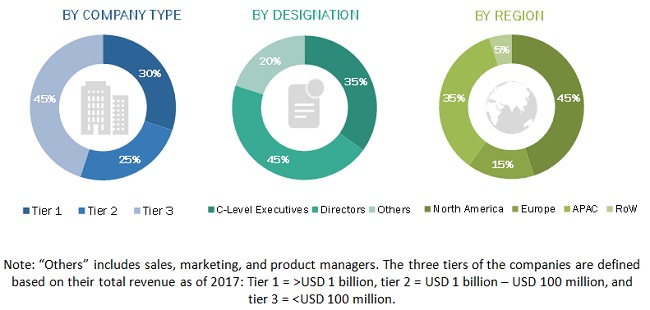
In the primary research process, various primary sources from the supply and demand sides have been interviewed to obtain the qualitative and quantitative information relevant to this report. Primary sources from the supply side include key industry participants, subject matter experts (SMEs), C-level executives of key companies, and consultants from various key companies and organizations operating in the critical communication market.
After the complete market engineering (including calculations for market statistics, market breakdown, market size estimations, market forecasting, and data triangulation), extensive primary research has been conducted to verify and validate critical market numbers.
Primary research has also been conducted to identify segmentation types and key players, as well as analyze the competitive landscape, key market dynamics (drivers, restraints, opportunities, and challenges), and major growth strategies adopted by market players. During market engineering, both top-down and bottom-up approaches have been extensively used, along with several data triangulation methods, to estimate and forecast the market, including the overall market segments and subsegments listed in this report. Extensive qualitative and quantitative analyses have been performed during the complete market engineering process to list the key information/insights throughout the report.
To know about the assumptions considered for the study, download the pdf brochure
Market Size Estimation
In the market engineering process, both top-down and bottom-up approaches, along with several data triangulation methods, have been used to estimate and validate the size of the overall market and other dependent submarkets listed in this report. Extensive qualitative and quantitative analyses have been performed during market engineering to list key information/insights.
Major players in the market have been identified through secondary research, and their market ranking has been determined through primary and secondary research. This involved studying the annual and financial reports of top market players, and interviews with industry experts (such as CEOs, vice presidents, directors, and marketing executives) for key insights—both quantitative and qualitative.
All percentage shares, splits, and breakdowns have been determined using secondary sources and verified through primary sources. All possible parameters that affect the markets covered in this research study have been accounted for, viewed in extensive detail, verified through primary research, and analyzed to obtain the final quantitative and qualitative data. This data has been consolidated and supplemented with detailed inputs and analysis from MarketsandMarkets and presented in this report.
Data Triangulation
After arriving at the overall market size through the process explained above, the total market has been split into several segments. To complete the overall market engineering process and arrive at the exact statistics for all the segments, the market breakdown and data triangulation procedures have been employed, wherever applicable. The data has been triangulated by studying various factors and trends from both the demand and supply sides. The market has also been validated using both top-down and bottom-up approaches.
Study Objectives
- To define and describe the critical communication market, in terms of value, by offering, technology, end-use vertical, and Geography
- To forecast the critical communication market, in terms of value, by region—North America, Europe, Asia Pacific (APAC), and Rest of the World (RoW)
- To provide detailed information regarding major factors influencing market growth (drivers, restraints, opportunities, and challenges)
- To identify the opportunities for various stakeholders such as critical communication system manufacturers, component suppliers, and brand product manufacturers by identifying high-growth segments and emerging use cases of the critical communication market
- To strategically analyze micro-markets with regard to individual growth trends, prospects, and contributions to the total market
-
To strategically profile key players and comprehensively analyze their market position in
terms of ranking and core competencies, along with detailing competitive landscape for market leaders - To analyze strategic approaches such as product launches, acquisitions, contracts, agreements, and partnerships in the critical communication market
Available Customization
With the given market data, MarketsandMarkets offers customizations according to companies’ specific needs. The following customization options are available for the report.
- Detailed analysis and profiling of additional market players (up to 5)













Growth opportunities and latent adjacency in Critical Communication Market