Data Center Cooling Market

Data Center Cooling Market by Solution (Hardware, Services), Type of Cooling, Technology (Air Cooling, Liquid Cooling), Data Center Type, Component, End-use Industry, And Region - Global Forecast to 2033




OVERVIEW
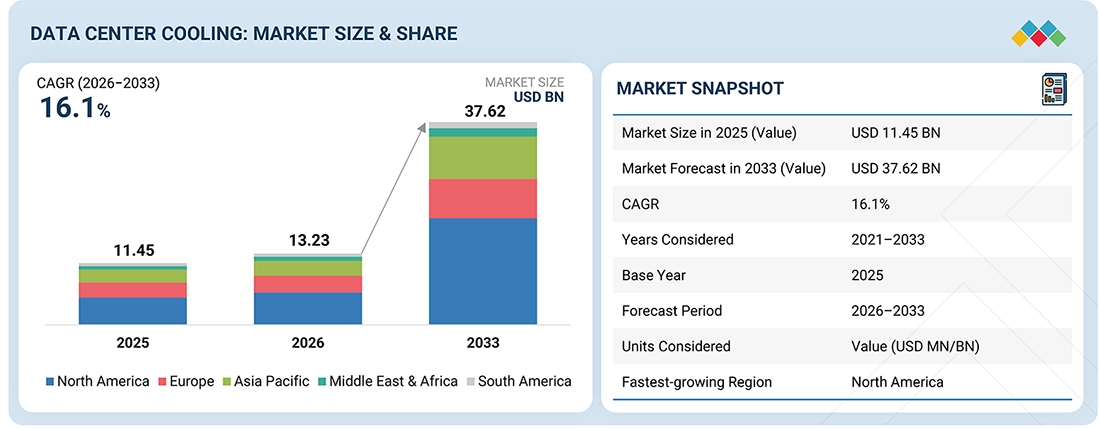
Source: Secondary Research, Interviews with Experts, MarketsandMarkets Analysis
The global data center cooling market is projected to grow from USD 13.23 billion in 2026 to USD 37.62 billion by 2033, at a CAGR of 16.1% over the forecast period. The increasing deployment of hyperscale, enterprise, and colocation data centers, rising AI and high-performance computing (HPC) workloads, growing emphasis on energy-efficient cooling solutions, and supportive government initiatives promoting sustainable data center infrastructure are expected to drive market growth in the coming years.
KEY TAKEAWAYS
-
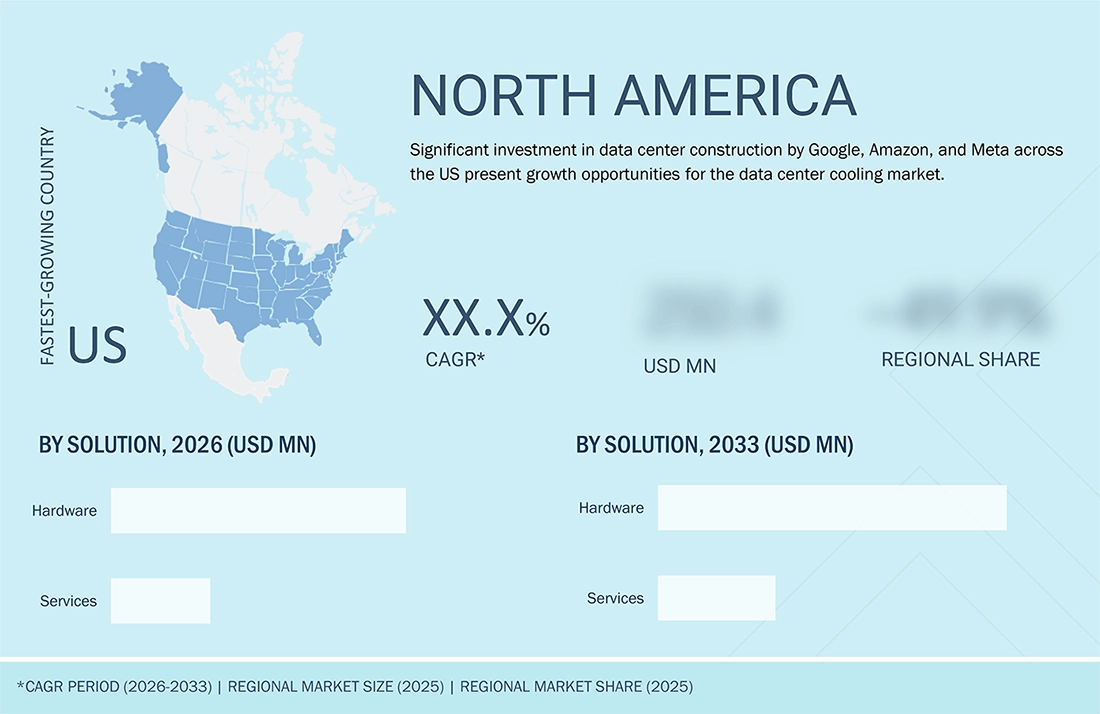
BY REGIONIn 2025, North America held the largest share of 44.1% in the global data center cooling market by value and is expected to grow at a CAGR of 18.6% from 2026 to 2033.
-
BY COMPONENTBy component, the liquid cooling systems segment is projected to grow at a CAGR of 29.5% during the forecast period.
-
BY DATA CENTER TYPEBy data center type, the hyperscale data centers segment is projected to reach the largest market size by 2033, registering a CAGR of 19.4% during the forecast period.
-
BY END-USE INDUSTRYBy end-use industry, the government & defense segment is projected to register a CAGR of 18.5% by 2033.
-
BY SOLUTIONBy solution, the hardware segment is expected to dominate the market.
-
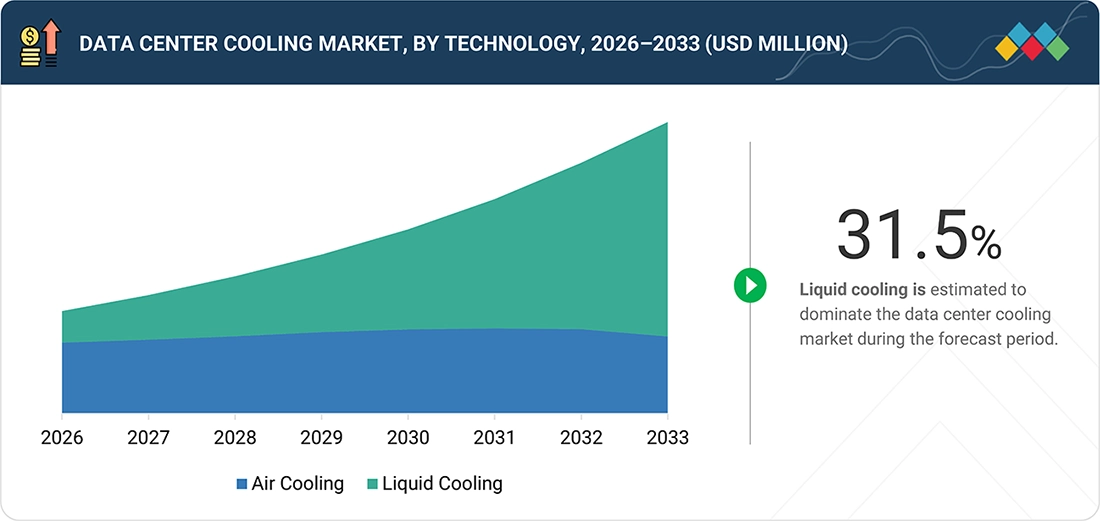
BY TECHNOLOGYBy technology, the liquid cooling segment projected to grow at a CAGR of 31.5% during the forecast period.
-
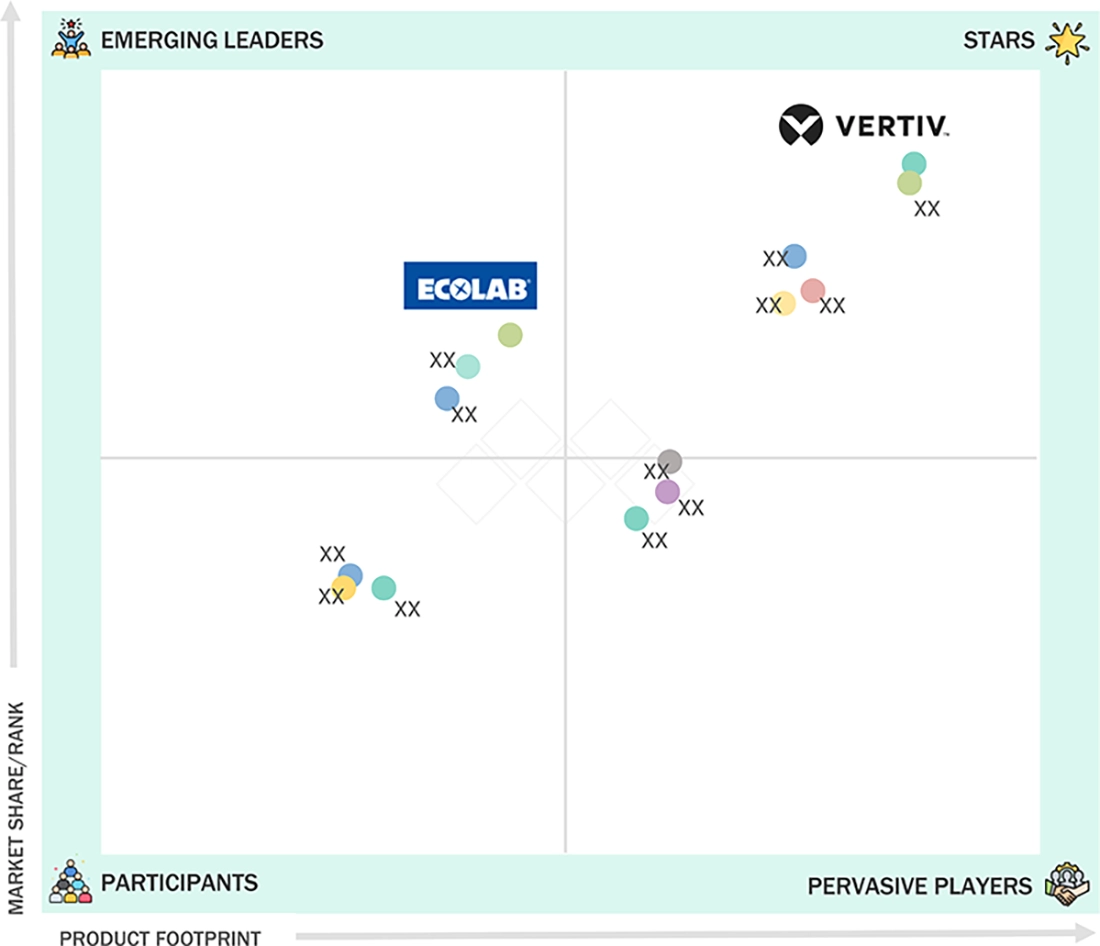
Competitive Landscape - Key PlayersVertiv Group Corp., Johnson Controls, and Schneider Electric were identified as some of the star players in the data center cooling market (global), given their strong market share and product footprint.
-
Competitive Landscape - StartupsCoolCentric, Midas Immersion Cooling, and Iceotope Precision Liquid Cooling, among others, have distinguished themselves among startups and SMEs by securing strong footholds in specialized niche areas, underscoring their potential as emerging market leaders.
The industry is driven by the increasing growth of data creation and cloud computing. With more businesses being set up on cloud services and newer technologies such as AI and big data, the processing load and heat generation of data centers increase, and they need proper cooling to operate at their best.
TRENDS & DISRUPTIONS IMPACTING CUSTOMERS' CUSTOMERS
The impact on customers' businesses is driven by the rapid evolution of data center infrastructure and the growing demand for AI-ready, energy-efficient facilities. The global data center cooling market is undergoing a significant shift in revenue mix as operators increasingly move from conventional air-based cooling systems to advanced thermal management solutions that support high-density computing environments. While current revenue is primarily generated from precision air-cooling systems, chillers and heat-rejection systems, CRAH and CRAC systems, and cooling controls and maintenance services, future growth is expected to be driven by hybrid air- and liquid-cooling solutions, direct-to-chip cooling, immersion cooling, modular prefabricated cooling systems, and digital twin-enabled thermal optimization. This transformation is expanding the customer ecosystem beyond traditional facility operators to include EPC contractors, system integrators, and MEP contractors, who are enabling the deployment of advanced cooling infrastructure for hyperscale, colocation, and enterprise data centers. Ultimately, these innovations help end users support ultra-high-density AI workloads, improve Power Usage Effectiveness (PUE), accelerate the deployment of AI-ready facilities, enhance operational resilience and uptime, and build scalable, future-ready data center infrastructure.
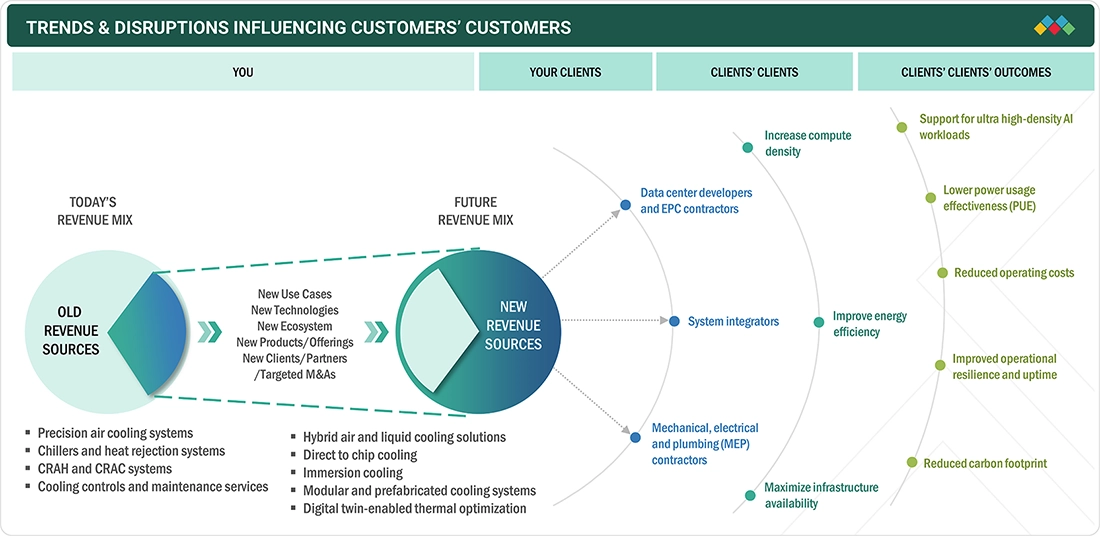
Source: Secondary Research, Interviews with Experts, MarketsandMarkets Analysis
MARKET DYNAMICS

Level
-
•Need for improving efficiency in data centers

-
•Significant growth in number of data centers


Level
-
•High capital investment

-
•Requirement of specialized infrastructure


Level
-
•Emergence of liquid cooling technology

-
•Growing requirement for modular data center cooling


Level
-
•Cooling challenges during power outage

-
Reducing carbon emissions

Source: Secondary Research, Interviews with Experts, MarketsandMarkets Analysis
Driver: Need for improving efficiency in data centers
One of the major drivers of the data center cooling market is the growing need to improve data center efficiency. Data centers are becoming more power-hungry as data creation and handling grow through cloud computing, artificial intelligence (AI), IoT, and high-performance computing (HPC). This has raised the need for advanced cooling technologies that handle rising heat loads effectively while keeping power consumption and operational costs low. Energy efficiency is not merely a cost-saving requirement but also a sustainability goal. Conventional cooling mechanisms account for almost 40% of the power consumed in a data center. As a result, operators are now opting for novel cooling systems like liquid cooling, in-row cooling, and free cooling to achieve optimal thermal management and lower Power Usage Effectiveness (PUE). In addition, green data centers and regulatory policies are pushing operators to replace their cooling infrastructure with greener systems. The increasing use of modular and edge data centers, which are generally space- and power-limited, also demands efficient, space-efficient cooling systems. Hyperscale data centers led by cloud pioneers are embracing AI-powered cooling systems to optimize energy in real time. These innovations indicate that the market is responding to broader digital transformation and ESG aspirations, making energy-efficient cooling a strategic imperative rather than a desirable upgrade.
Restraint: Requirement of specialized infrastructure
Improved infrastructure is a major barrier to expanding the data center cooling business. Even as demand for efficient cooling systems rises, installing them will likely require substantial modifications to existing facilities or the construction of entirely new ones. These changes take time and are costly. This is a significant barrier, especially for small and medium data centers, which lack the funds to upgrade to advanced cooling technologies such as immersion systems or liquid cooling. Modern cooling technologies require specific architectural configurations, room layouts, raised floors, or specialized fluid distribution systems. Retrofitting current data centers to support these requirements is a formidable challenge and expense, often leading to extended periods of inactivity and disruptions to operations. Maintenance and operation also require trained personnel, adding further obstacles to widespread adoption. The problem is even worse in developing countries, where infrastructure, power supply, and technical skills are limited, discouraging the use of high-end cooling systems. In developed countries, data center operators may be reluctant to move away from traditional air-based cooling systems because of the risks and costs associated with redesigning infrastructure. This reliance on existing infrastructure slows the adoption of new cooling technologies in the broader market, especially outside large hyperscale operations. This, in turn, limits overall growth in the data center cooling market.
Opportunity: Emergence of liquid cooling technology
Liquid cooling plays a crucial role in propelling the data center cooling market. Thanks to advances in AI, machine learning, and HPC, servers are becoming increasingly powerful and supporting more demanding applications. As a result, traditional air-cooling mechanisms can no longer suffice. They're becoming less effective and falling short of what's needed. Direct-to-chip and immersion liquid cooling technologies offer a better alternative by delivering improved thermal management without additional energy costs. One of the primary advantages of liquid cooling is its ability to handle high thermal loads in confined spaces and its high efficiency in dense server environments and edge data centers. Liquid cooling reduces energy use and noise because air movement is eliminated. This leads to a higher PUE and greener operations. It also enables more compact, modular, and efficient data center designs, with advantages in scalability and reduced requirements for massive cooling systems. Liquid cooling is being widely embraced by cloud service providers and hyperscale operators in their effort to maximize computational performance while minimizing environmental footprint. With data center operators looking toward energy efficiency and the future of even higher computational needs, liquid cooling is considered a revolutionary solution. Growing technology uptake is a deliberate effort to create high-performance and efficient cooling systems and is one of the main drivers of future market potential.
Challenge: Cooling challenges during a power outage
The cooling challenge during a blackout is a significant factor in the supply of unintended outages for the data center cooling market in terms of reliability and resilience. Essentially, data centers run 24/7, and partial power outages can cause immediate rises in temperature, thereby endangering delicate equipment from excessive heating, short-term failures, or permanent damage. Thermal stability must be maintained during power outages to prevent massive downtime and data loss costs. Backup power systems, like generators and Uninterruptible Power Supplies, usually focus on keeping IT equipment alive. Cooling systems are generally very energy-hungry and seldom form part of these backup scenarios. That leaves a risk scenario; computing processes are okay if they do so without adequate cooling to stop thermal stress and eventual system failure. Plus, operations with high-density racks and compute-intensive workloads further temporarily escalate the issue by generating high heat. If the systems are allowed to shut down for any reason, starting them up could be a big challenge; it will require a ramp-up cycle to avoid thermal shock to the systems. The demand for backup-power-compatible cooling systems is becoming increasingly important. Battery-powered cooling, efficient chillers, and phase-change materials are all options being considered, but technical and cost challenges have prevented their widespread adoption. Thus, cooling problems due to power outages remain a sure threat to business continuity and market reliability at large.
DATA CENTER COOLING MARKET: COMMERCIAL USE CASES ACROSS INDUSTRIES
| COMPANY | USE CASE DESCRIPTION | BENEFITS |
|---|---|---|
 |
Implemented liquid immersion cooling in Azure data centers to manage high-performance computing (HPC) and AI workloads | Reduced energy consumption by up to 30% | Improved server density and performance | Enhanced sustainability through lower water and power usage |
 |
Deployed AI-driven cooling optimization using DeepMind technology to automate real-time temperature and airflow control | Achieved up to 40% reduction in cooling energy | Improved PUE (Power Usage Effectiveness) | Lower carbon emissions and operational costs |
 |
Introduced evaporative and liquid cooling systems in hyperscale data centers for high-demand cloud operations | Increased energy efficiency and thermal stability | Significant reduction in carbon footprint | Cost savings from optimized cooling loads |
 |
Adopted direct-to-chip liquid cooling and waste heat recovery systems in its data centers in Denmark and the US | Enables reuse of waste heat for local heating | Supports net-zero sustainability targets | Reduces water usage compared to conventional systems |
 |
Integrated modular cooling infrastructure for colocation data centers to support rapid deployment and mixed workloads | Flexible scaling based on client demand | Lower operational risk and downtime | Enhanced cooling efficiency for diverse tenants |
Logos and trademarks shown above are the property of their respective owners. Their use here is for informational and illustrative purposes only.
MARKET ECOSYSTEM
The data center cooling ecosystem comprises an interconnected network of component and fluid providers, solution providers, distributors, and end users. These stakeholders work together to enhance the efficiency, reliability, and sustainability of modern data center infrastructure. Component and fluid providers such as Chemours, ABB, Johnson Controls, Trane, and Eaton supply critical electrical infrastructure, cooling equipment, control systems, and thermal management fluids. These technologies form the foundation of advanced data center cooling solutions. They are distributed through global and regional channel partners to support efficient deployment across diverse markets. Solution providers, including Vertiv, Schneider Electric, Daikin, Carrier, and Submer, integrate these components into comprehensive air-based, liquid cooling, and immersion cooling systems. These solutions are designed to meet the evolving requirements of hyperscale, enterprise, and colocation data centers. On the demand side, technology giants and cloud players, including Google, Microsoft, and AWS, are driving next-generation cooling. Their infrastructure investments are facilitating the growth of high-density artificial intelligence (AI) and high-performance compute (HPC) while also enhancing sustainability. Their combined investment is leading data centers toward scalable, eco-friendly cooling infrastructure.
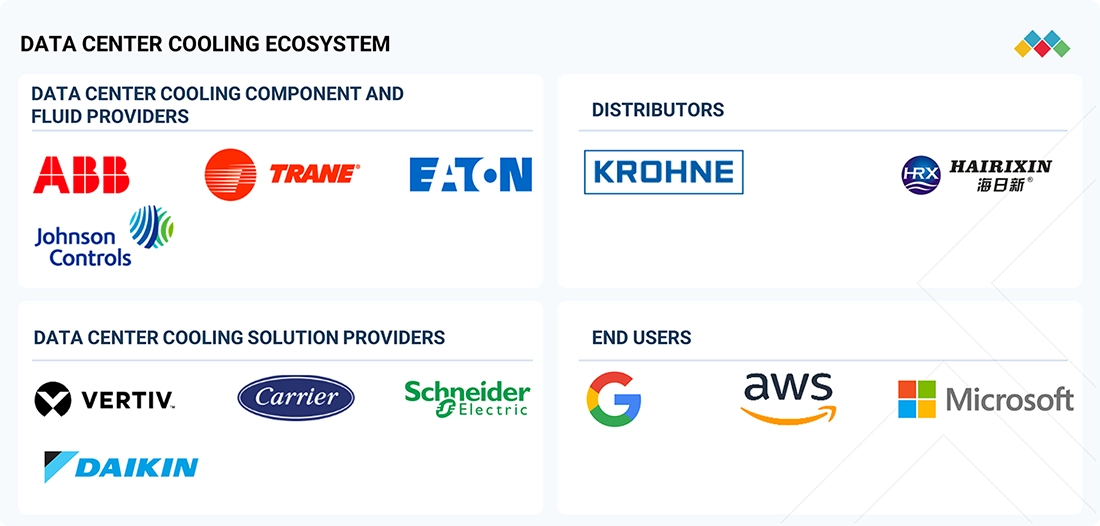
Logos and trademarks shown above are the property of their respective owners. Their use here is for informational and illustrative purposes only.
Also Read: Data Center Busways Market Report
MARKET SEGMENTS
Source: Secondary Research, Interviews with Experts, MarketsandMarkets Analysis
Data Center Cooling Market, By Technology
By technology, air cooling held the largest share of the global data center cooling market. High adoption rates among enterprise, colocation, and hyperscale data centers have significantly contributed to air cooling's dominant position. The technology's established reliability and low installation complexity have kept it viable for many conventional and medium-density computing workloads across both existing and new data center infrastructure. However, the soaring adoption of artificial intelligence (AI) and high-performance computing (HPC) workloads has increased rack power densities. Liquid cooling is gradually complementing air cooling for these emerging, compute-intensive workloads to improve heat dissipation and data center energy efficiency. Hybrid cooling solutions are also gaining ground to support AI workloads, improve Power Usage Effectiveness (PUE), and ensure scalability in data centers. Both approaches are likely to coexist for the foreseeable future, supporting the development of scalable and sustainable data center infrastructure.
Data Center Cooling Market, By Data Center Type
By data center type, the hyperscale data centers segment held the largest share of the global data center cooling market. There is increased demand in hyperscale facilities due to the rapid growth of artificial intelligence (AI), cloud, and high-performance computing (HPC) workloads, resulting in the expansion of facility footprints by major cloud service providers globally. These facilities require high-density, energy-efficient cooling solutions to manage increasing rack densities, maintain operational reliability, and reduce operating costs. Consequently, demand for the latest cooling technologies continues to grow across hyperscale facilities. Colocation providers are also experiencing strong growth as enterprises increasingly outsource their data center capacity to reduce costs, avoid high upfront investments, and scale capacity more flexibly in response to workloads and client demand. In turn, there is a growing need for innovative, adaptive cooling systems capable of handling a wide range of customer workloads and environments. Enterprise data centers continue to generate steady demand as organizations modernize existing facilities and invest in digital transformation initiatives. The adoption of hybrid IT environments is also supporting cooling infrastructure upgrades. As AI workloads continue to grow, all three data center types are expected to drive demand for advanced, energy-efficient data center cooling solutions.
REGION
North America is estimated to account for the largest market during the forecast period
North America has a vast, advanced digital infrastructure and a large number of hyperscale and enterprise data centers, making the North American market for data center cooling the largest share. Given the region’s size, especially in the United States, many cloud service providers, such as Amazon Web Services, Microsoft Azure, and Google Cloud, offer cooling solutions for their high-density, high-performance environments. As AI, big data analytics, and similar applications become more prevalent, data centers face very high thermal loads. Hence, there is a push for next-generation cooling technologies such as liquid cooling and economizer chillers. The region also has strict energy codes with a greater emphasis on sustainability, promoting energy-efficient and green cooling systems. Government initiatives and R&D funding for sustainable infrastructure further spur innovation in this area. In addition, Canada’s cooler climate and access to renewable energy create ideal conditions for free cooling and green data center deployments. The ongoing emphasis on data sovereignty remains North America’s driver of technological advancement, and scalable, resilient IT infrastructure continues to be in high demand, securing the region’s front-runner status amid growth in the global data center cooling market.
DATA CENTER COOLING MARKET: COMPANY EVALUATION MATRIX
In the data center cooling market matrix, Vertiv (Star) leads with a strong market share and an extensive product footprint, driven by its data center cooling solutions, which are adopted by various end users. Ecolab (Emerging Leader) demonstrates substantial product innovation compared to its competitors. While Vertiv dominates through scale and a diversified portfolio, Ecolab's data center cooling shows significant potential to move toward the leaders’ quadrant as demand for data center cooling continues to rise.
Source: Secondary Research, Interviews with Experts, MarketsandMarkets Analysis
KEY MARKET PLAYERS
- Vertiv Group Corp (US)
- Schneider Electric (France)
- Daikin Industries Ltd. (Japan)
- Johnson Controls, Inc. (US)
- Carrier (US)
- Mitsubishi Electric Corporation (Japan)
- Ecolab (Canada)
- Super Micro Computer Inc (US)
- Modine (US)
- Trane(Ireland)
- Lenovo (China)
- STULZ GMBH (Germany)
- Sugon Information Industry Co., Ltd. (China)
- Munters (Sweden)
- Delta Electronics Inc (Taiwan)
- Baltimore Aircoil Company, Inc. (US)
- Eaton (Ireland)
- Rittal Gmbh & Co. KG (Germany)
- DCX Liquid Cooling Systems (Poland)
- Taisol Electronics Co., Ltd. (Taiwan)
- Alfa Laval (Sweden)
- Green Revolution Cooling Inc. (US)
- Flex Ltd (US)
- Koari Heat Treatment Co., Ltd. (Taiwan)
- GIGA-BYTE Technology Co., Ltd. (Taiwan)
- Legrand (France)
- Submer (Spain)
- Inspur Co., Ltd. (China)
- Asperitas (Netherlands)
- Zutacore Inc. (US)
- nVent (UK)
- LUVE (Italy)
- Coolcentric (US)
MARKET SCOPE
| REPORT METRIC | DETAILS |
|---|---|
| Market Size in 2025 (Value) | USD 11.45 Billion |
| Market Size in 2026 (Value) | USD 13.23 Billion |
| Market Forecast in 2033 (Value) | USD 37.62 Billion |
| Growth Rate | CAGR of 16.1% from 2026-2033 |
| Years considered | 2021–2033 |
| Base Year | 2025 |
| Forecast Period | 2026–2033 |
| Units Considered | Value (USD Million/Billion) |
| Report Coverage | The report defines, segments, and projects the data center cooling market size based on component, data center type, end-use industry, solution, technology, type of cooling, and region. It strategically profiles the key players and comprehensively analyzes their market share and core competencies. It also tracks and analyzes competitive developments, such as new product development, agreements, acquisitions, and expansions they undertake in the market. |
| Segments Covered |
|
| Regional Scope | North America, Europe, Asia Pacific, South America, Middle East & Africa |
WHAT IS IN IT FOR YOU: DATA CENTER COOLING MARKET REPORT CONTENT GUIDE
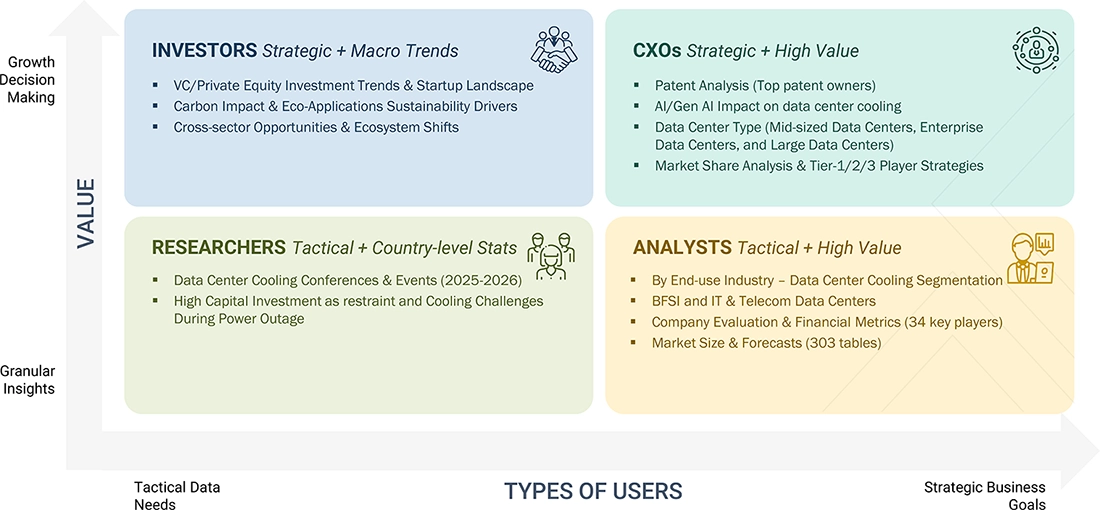
DELIVERED CUSTOMIZATIONS
We have successfully delivered the following deep-dive customizations:
| CLIENT REQUEST | CUSTOMIZATION DELIVERED | VALUE ADDS |
|---|---|---|
| Hyperscale & Enterprise Data Center Operators |
|
|
| Colocation Providers & SMEs |
|
|
| Edge Data Centers & Cloud Service Providers |
|
|
RECENT DEVELOPMENTS
- June 2025 : Green Revolution Cooling, Inc., and Samsung Ventures joined GRC's major shareholders in this latest financing, including HTS, SK Enmove, and ENEOS. Samsung C&T entered a strategic partnership with the company. The investment enabled Green Revolution Cooling to meet global demand and deliver innovation to the global data center ecosystem.
- July 2025 : Vertiv and Oklo announced a strategic collaboration to co-develop integrated power and cooling solutions for hyperscale and colocation data centers. Using Oklo's advanced nuclear power plants and Vertiv's expertise in thermal and power management, the collaboration aimed to deliver highly efficient, resilient infrastructure that supported the growing needs of AI and high-performance computing. By using steam and electricity from Oklo's power facilities to power Vertiv's cooling technologies, the collaboration enabled the co-optimization of energy and thermal systems, reduced environmental impact, and simplified deployment with fully integrated reference designs.
- April 2025 : Johnson Controls (JCI) announced the creation of a new Global Data Center Solutions organization to meet growing demand for integrated data center infrastructure. This strategic move unites JCI's expertise in cooling systems (such as chillers and CRAHs), smart building technologies, fire protection, security, and QpenBlue digital solutions to provide comprehensive services for hyperscale, enterprise, and edge data centers.
- February 2025 : Carrier announced a strategic investment and technology partnership with ZutaCore, a leader in two-phase, direct-to-chip, waterless liquid cooling for data centers. Through Carrier Ventures, the move aligns with Carrier's strategy to provide advanced, energy-efficient thermal management solutions for AI-driven, high-density computing environments. ZutaCore's HyperCool technology enables high heat reuse, increased server density, and zero water usage, key features for sustainable data center operations. The partnership complements Carrier's QuantumLeap platform and reinforces its commitment to redefining the thermal lifecycle for next-generation data centers.
- December 2024 : Vertiv Group Corp acquired certain assets and technologies from BiXin Energy Technology Co., Ltd. The acquisition, made through Vertiv's Chinese subsidiary, expands its portfolio and enhances its capabilities in delivering liquid cooling solutions for data centers. Integrating BiXin's technologies aims to improve Vertiv’s offering for managing the thermal demands of high-performance computing and AI workloads, aligning with growing market needs for efficient and scalable cooling solutions in data center environments.
Table of Contents
 Exclusive indicates content/data unique to MarketsandMarkets and not available with any competitors.
Methodology
The study involved four major activities to estimate the current data center cooling market size. Exhaustive secondary research was conducted to collect information on the market, peer markets, and parent markets. The next step was to validate these findings, assumptions, and sizes with industry experts across the data center cooling value chain through primary research. Both top-down and bottom-up approaches were employed to estimate the total market size. After that, market breakdown and data triangulation were used to calculate the size of the market’s segments and subsegments.
Secondary Research
The research methodology used to estimate and forecast the data center cooling market begins with capturing data on the revenues of key vendors in the market through secondary research. In the secondary research process, various secondary sources, such as Hoovers, Bloomberg BusinessWeek, Factiva, World Bank, and Industry Journals, were consulted to identify and collect information for this study. These secondary sources included annual reports, press releases & investor presentations of companies; white papers; certified publications; articles by recognized authors; notifications by regulatory bodies; trade directories; and databases. Vendor offerings have also been taken into consideration to determine market segmentation.
Primary Research
The data center cooling market comprises several stakeholders, including raw material suppliers, processors, recycling companies, data center cooling manufacturers, and regulatory organizations across the supply chain. Qualitative and quantitative information was gathered through interviews with primary sources from both the supply and demand sides of the market. Supply-side primary sources included industry experts such as Chief Executive Officers (CEOs), vice presidents, marketing directors, technology and innovation directors, and other key executives from companies and organizations operating in the data center cooling market. Demand-side primary sources included directors, marketing heads, and purchasing managers from various sourcing industries. The following is the breakdown of the primary respondents:
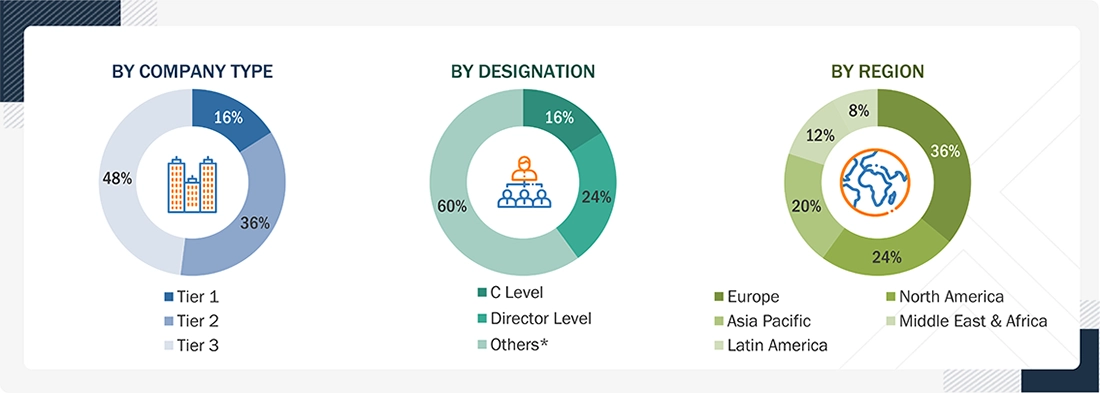
To know about the assumptions considered for the study, download the pdf brochure
Market Size Estimation
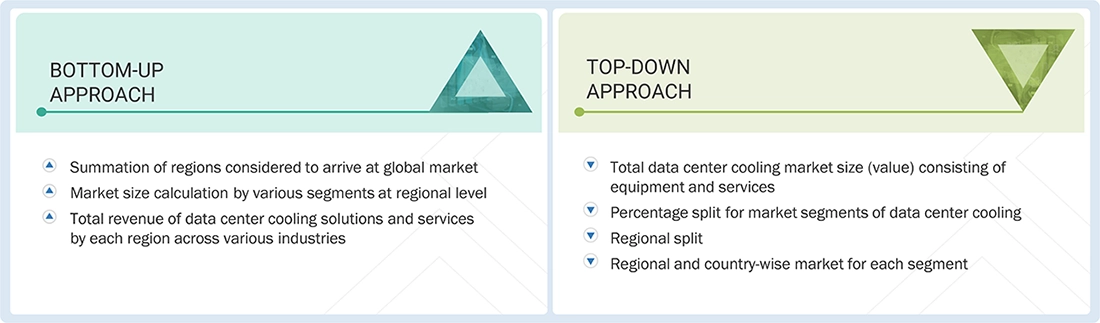
The top-down and bottom-up approaches have been used to estimate and validate the total size of the data center cooling market. These approaches have also been used extensively to estimate the size of various dependent market subsegments. The research methodology used to estimate the market size included the following steps.
The following segments provide details about the overall market size estimation process employed in this study:
- The key players in the market were identified through secondary research.
- The market share in the respective regions was identified through primary and secondary research.
- The value chain and market size of the data center cooling market, in terms of value, were determined through primary and secondary research.
- All percentage shares, splits, and breakdowns were determined using secondary sources and verified through primary sources.
- All possible parameters that affect the market covered in this research study were accounted for, viewed in extensive detail, verified through primary research, and analyzed to obtain the final quantitative and qualitative data.
- The research included studying the annual and financial reports of the top market players and interviewing industry experts, such as CEOs, VPs, directors, sales managers, and marketing executives, for key insights, both quantitative and qualitative.
Global Data Center Cooling Market Size: Bottom-up Approach and Top-down Approac
Data Triangulation
After determining the overall market size using the market size estimation processes explained above, the market was segmented into several segments and subsegments. To complete the overall market engineering process and arrive at the exact statistics for each market segment and subsegment, data triangulation and market breakdown procedures were employed wherever applicable. The data was triangulated by analyzing various factors and trends from both the demand and supply sides in the data center cooling sector.
Market Definition
Data center cooling is a system of equipment, tools, processes, and techniques designed to manage and control the heat generated by hardware within data centers and to maintain the temperature of the data center infrastructure at an optimal level, keeping systems running and avoiding downtime. Air and liquid systems are among the cooling methods used to ventilate and maintain equipment at its optimum temperatures. The global data center cooling market is growing quickly due to increasing data generation, the adoption of cloud computing, and a rising number of hyper-scale and edge data centers. All of this high power density poses a significant challenge to cooling solutions; if not well designed, it can threaten the safety of hardware facilities, which is quite common in traditional infrastructures. The market trend is moving toward high-end liquid cooling and power-saving technologies, driven by environmental regulations and the need to reduce energy consumption and carbon emissions.
Key Stakeholders
- NGOs, Governments, Investment Banks, Venture Capitalists, and Private Equity Firms
- Telecom Services Providers
- Original Equipment Manufacturers
- Value-added Service Providers
- Data Center Cooling Solution Vendors
- Data Center Operators
- Data Center Colocation Service Providers
- System Integrators
- Cloud Service Providers
Report Objectives
- To define, describe, and forecast the global data center cooling market based on component, solution, type of cooling, service, data center type, end-use industry, and region
- To provide detailed information regarding major factors influencing the growth of the market (drivers, restraints, opportunities, and challenges)
- To strategically analyze micromarkets concerning individual growth trends, prospects, and contributions to the total market
- To forecast the market size relating to five central regions, namely, North America, Europe, Asia Pacific, the Middle East & Africa, and Latin America
- To analyze competitive developments such as joint ventures, mergers & acquisitions, product launches, and research & development (R&D) activities in the data center cooling market
- To strategically profile the key market players and comprehensively analyze their core competencies
Available customizations:
With the given market data, MarketsandMarkets offers customizations according to the client-specific needs.
The following customization options are available for the report:
- Additional country-level analysis of the data center cooling market
- Profiling of additional market players (up to 5)
Product Analysis
- Product matrix, which gives a detailed comparison of the product portfolio of each company.
Key Questions Addressed by the Report
What is the current size of the data center cooling market?
The data center cooling market is projected to grow from USD 13.23 billion in 2026 to USD 37.62 billion by 2033, at a CAGR of 16.1% during the same period.
Which region is expected to hold the highest data center cooling market share?
North America is expected to hold the highest market share, driven by strong demand from the government & defense and research & academic sectors.
What is the primary end-use industry of data center cooling?
The government & defense industry is the primary end-use industry for data center cooling, growing at a CAGR of 18.5% by 2033.
Who are the major players operating in the data center cooling market?
Major players include Vertiv Group Corp. (US), Johnson Controls (US), Schneider Electric (France), Carrier (US), and Daikin Industries Ltd. (Japan).
What total CAGR will be recorded for the data center cooling market during 2026–2033?
The market is expected to record a CAGR of 16.1% from 2026 to 2033.


Personalize This Research
- Triangulate with your Own Data
- Get Data as per your Format and Definition
- Gain a Deeper Dive on a Specific Application, Geography, Customer or Competitor
- Any level of Personalization
Let Us Help You
- What are the Known and Unknown Adjacencies Impacting the Data Center Cooling Market
- What will your New Revenue Sources be?
- Who will be your Top Customer; what will make them switch?
- Defend your Market Share or Win Competitors
- Get a Scorecard for Target Partners

Custom Market Research Services
We Will Customise The Research For You, In Case The Report Listed Above Does Not Meet With Your Requirements
Get 10% Free CustomisationTESTIMONIALS
We at Nissan Chemicals Corporation have been clients of MarketsandMarkets for more than a year now. We recently consulted MarketsandMarkets for a study, the team at MarketsandMarkets was extremely professional and organized. The business insights were very detailed and aligned well with our expectations that really helped us formulate the Business Plans and device new strategies for development themes. MarketsandMarkets offers a unique combination of expertise and dedicated engagement model. Their research findings have helped us in designing our Pricing Strategy which will make it easier for us to predict the future sales and profits for the next ten years. We look forward to working with MarketsandMarkets in the future.
VP of Strategy & New Business Development
Leading Specialty Chemical Company
The MarketsandMarkets Engagement Model, composed of both the Knowledge Store and advisory custom research, has greatly helped us in understanding our markets and making strategic decisions. The Knowledge Store is a fast way to allow everyone in our organization to understand more about most any market they are interested in. The ability to then get custom research done and get answers to specific strategic questions and market insight has been spectacular. The Markets and Markets team feel more like colleagues than vendors and their services have helped us change our culture where statements of things like growth opportunities and competitive position are always backed by industry research.

Rich Gibson,
Director, Corporate Strategy
Milliken & Company,
Leading Industrial Manufacturer of specialty chemical, floor covering, performance and protective textile materials, and healthcaremilliken.com
MarketsandMarkets is a trusted resource that helps us to better understand markets that are near-adjacencies-whether its technology, value chain or geography. Their Knowledge Store platform provides a dashboard of markets and their characteristics which is easy to use and saves us time.
Adam Shaw,
Market Development and Strategy Manager
AdvanSix Inc. USA,
An American Leader in Chemicalswww.advansix.com
The Knowledge Store from MarketsandMarkets is a valuable tool which has helped my team acquire greater insight in to the end markets that our business serves. This has enabled us to help our company build stronger strategies throughout our planning process.
TOSHIO KINOSHITA
Senior Chif Consultion Research & Consulting Division
Mitsubishi Chemical Research Corporation,
Leading Manufacturer of Chemical Productswww.mitsubishichem-res.co.jp/en/

We recently engaged with MarketsandMarkets for a study, the team not only clearly understood our business objectives but was also extremely professional in the way they handled the entire project. The study was efficiently conducted in a phase-wise manner, and the engagement model furnished us with high-quality business insights that far exceeded our expectations at each phase. We were especially happy that MarketsandMarkets could provide us with both, an English as well as a Japanese version of the study. A special thanks to the Analyst Team and Client Services Team, whose fluency in Japanese enhanced our comfort level, as we could converse with them in our preferred language.
Independent entrepreneurs
Arrow Precision
We approached MarketsandMarkets for study on Proppants Market, and their work exceeded our expectations. The study conducted was comprehensive and enabled us to view the market through the various dimensions. In addition, the team was extraordinarily responsive throughout the process and resolved our queries on time. I strongly recommend MarketsandMarkets and will certainly consider them for additional market assessments we will need in the future.
Global engineering company, Japan
Deputy Manager,
Strategic Planning OfficeThe high-quality insights shared by the MarketsandMarkets team helped us understand the pharmaceutical plant designers in a specific geography. It also captured the risks that we may likely face in communicating with our potential partners. The study would enable us identify partners, which would impact our future growth.
- China Data Center Cooling Market
- India Data Center Cooling Market
- Japan Data Center Cooling Market
- South Korea Data Center Cooling Market
- Canada Data Center Cooling Market
- Mexico Data Center Cooling Market
- US Data Center Cooling Market
- Germany Data Center Cooling Market
- UK Data Center Cooling Market
- Netherlands Data Center Cooling Market
- France Data Center Cooling Market
- Italy Data Center Cooling Market
- South Africa Data Center Cooling Market
- Brazil Data Center Cooling Market
- Rest Of Europe Data Center Cooling Market
- Rest Of Asia Pacific Data Center Cooling Market
- -Rest Of The GCC Countries Data Center Cooling Market
- Rest Of South America Data Center Cooling Market




Growth opportunities and latent adjacency in Data Center Cooling Market