Emulsifiers Market

Emulsifiers Market by Source (Bio-based, Synthetic), Product (Lecithin, Ionic, Chemical Composition, Physical State), Application (Food, Cosmetics & Personal Care, Oilfield Chemicals, Pharmaceutical, Agrochemicals), and Region - Global Forecast to 2031




OVERVIEW
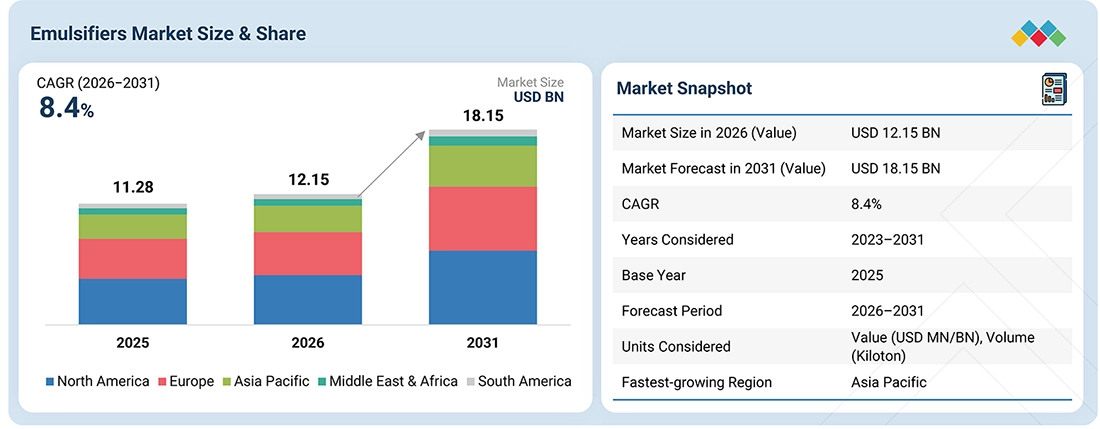
Source: Secondary Research, Interviews with Experts, MarketsandMarkets Analysis
The emulsifiers market is predicted to reach USD 18.15 billion by 2031 from USD 12.15 billion in 2026, registering a CAGR of 8.4% during the forecast period. Driven by the evolving food & beverage industry, increasing demand for convenience and processed foods, and growing adoption of functional and clean-label formulations. One of the key factors contributing to the growth of the emulsifiers market is the increasing use of emulsifiers to improve product stability, texture, consistency, shelf life, and ingredient dispersion across applications such as bakery, confectionery, dairy products, beverages, sauces, dressings, and plant-based foods. As food processing and packaged food consumption continue to expand globally, particularly in developing regions, demand is increasing for functional emulsifiers that support efficient processing and consistent product quality. Growing consumer preference for natural, plant-derived, bio-based, and clean-label ingredients is further encouraging manufacturers to develop specialty emulsifiers with improved functionality and sustainable sourcing. In addition, the expansion of personal care, cosmetics, pharmaceutical, and other formulation industries is contributing to the increasing demand for application-specific emulsifier solutions.
KEY TAKEAWAYS
-
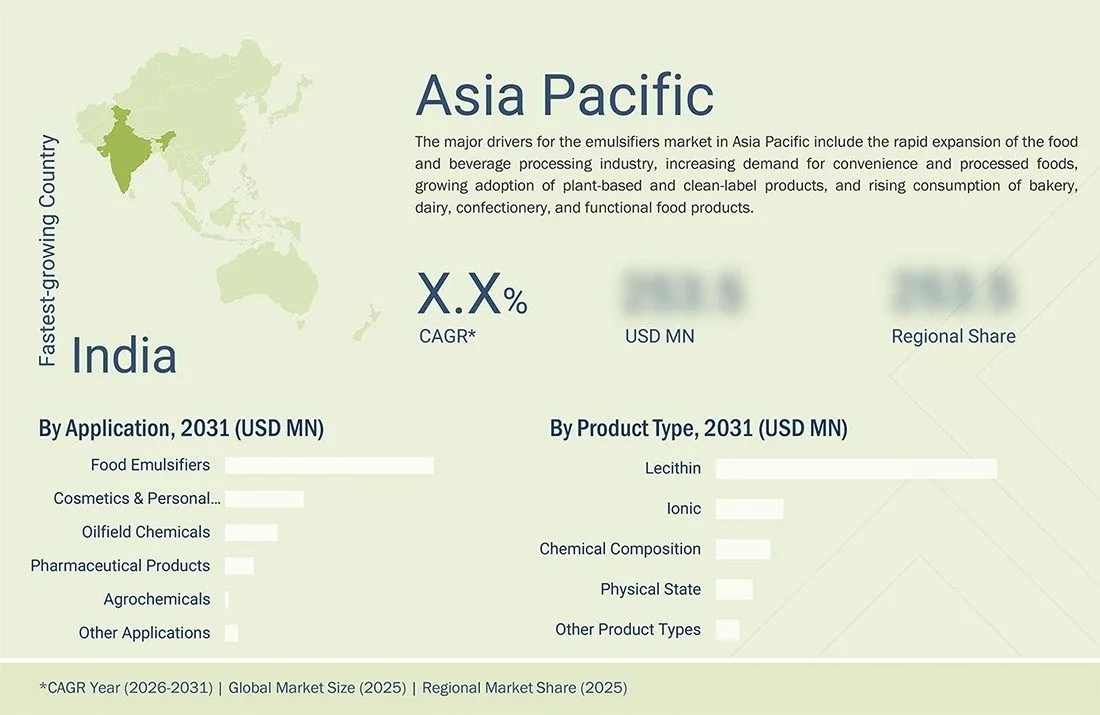
By RegionBy region, Asia Pacific accounted for a 19.9% share of the emulsifiers market in 2025, supported by the expansion of the food and beverage processing industry, rising consumption of processed and convenience foods, and increasing demand for bakery, confectionery, dairy, plant-based, and functional food products across China, India, Japan, and South Korea.
-
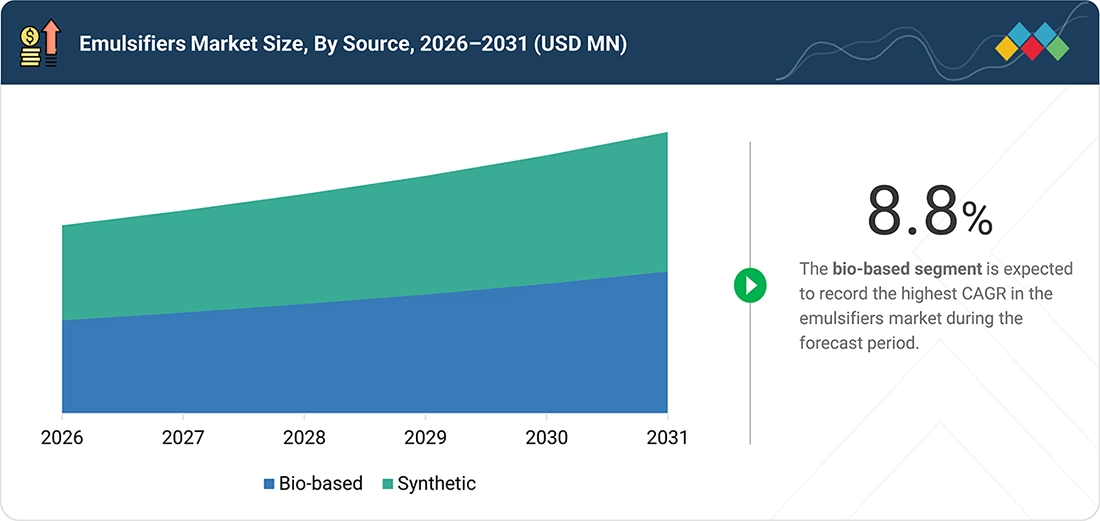
By SourceBy source, the bio-based emulsifier is estimated to grow at an 8.8% CAGR between 2026 and 2031, supported by increasing demand for natural, plant-derived, renewable, and clean-label ingredients across food, personal care, and other formulation applications.
-
By Product TypeBy product type, Lecithin holds a 55.5% share of the emulsifiers market in 2025, supported by its broad use as a natural emulsifying and dispersing ingredient in food and beverage applications. Increasing use of lecithin in bakery products, confectionery, dairy products, infant nutrition, processed foods, and plant-based formulations is supporting demand due to its ability to improve ingredient dispersion, texture, mixing, and product stability.
-
By ApplicationBy application, food emulsifiers are anticipated to record a CAGR of 8.9% during the forecast period, driven by increasing demand for processed and convenience foods, bakery and confectionery products, dairy and dairy alternatives, sauces, dressings, beverages, and plant-based foods.
-
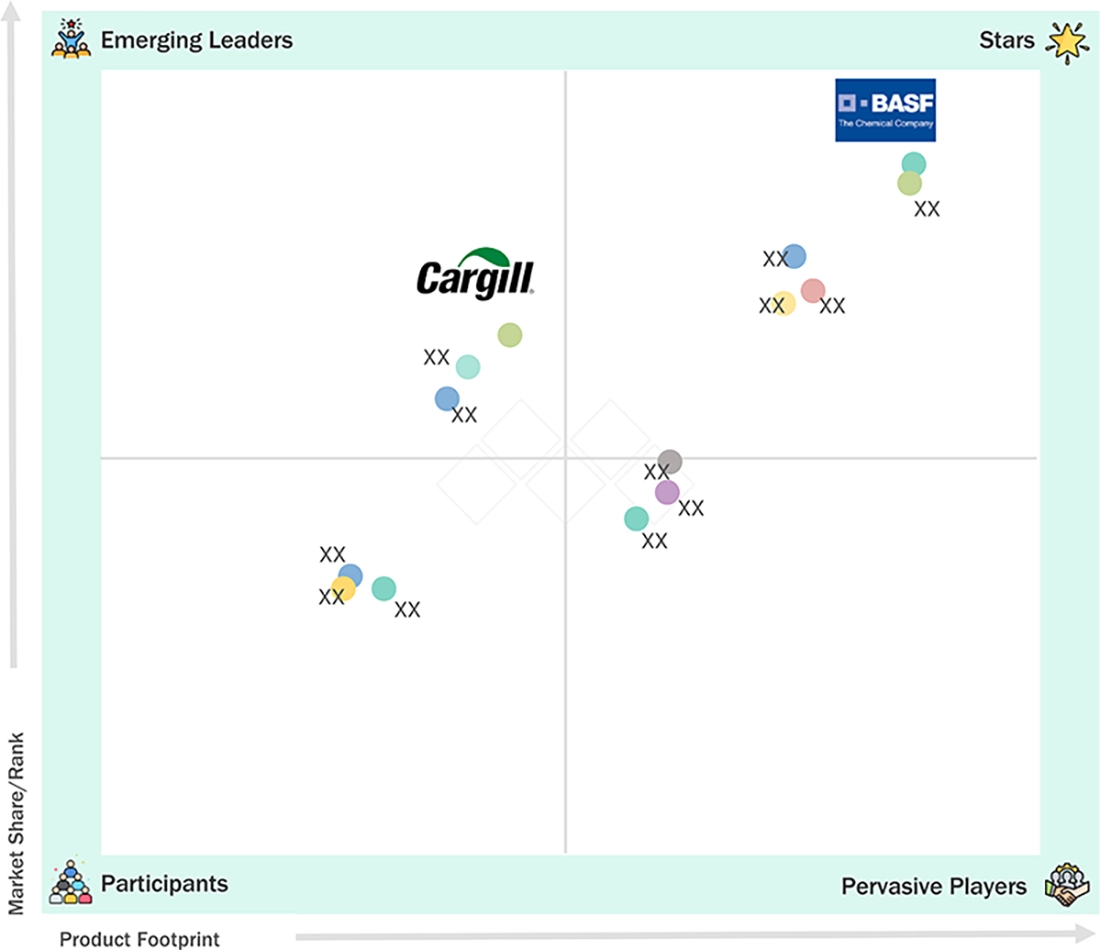
Competitive Landscape - Key PlayersBASF SE (Germany), Archer Daniels Midland (ADM) (US), Cargill, Incorporated (US), Evonik Industries AG (Germany), Kerry Group plc (Republic of Ireland) were identified as some of the star players in the emulsifiers market, given their strong market share and product footprint.
-
Competitive Landscape - Startups/SMEsKraton Corporation, Palsgaard, Stepan Company, among others, have distinguished themselves among startups and SMEs by securing strong footholds in specialized niche areas, underscoring their potential as emerging market leaders.
The emulsifiers market is growing at a high rate due to the increased demand in food & beverage, cosmetics, pharmaceuticals, and industrial applications. The drivers are the increased demand for processed and convenience foods, as emulsifiers are required to maintain texture, stability, and shelf life in packaged products. The growing trend toward healthier food options, low-fat, low-calorie, and clean-label products is also a major driver, as emulsifiers help meet these consumer demands without compromising on product quality. The expansion of the cosmetics and personal care industry, along with increasing consumer preference for natural and bio-based ingredients, is driving the demand for emulsifiers in skincare, haircare, and beauty formulations. The pharmaceutical sector’s growth, particularly in drug delivery systems, is another key factor, with emulsifiers enhancing bioavailability and stability in medicinal products. Advancements in emulsifier technology may lead to multifunctional emulsifiers produced through greener processes, creating market opportunities and improving competition. Also, in the emerging markets of Asia Pacific and South America, the demand for emulsifier-based products is expected to increase due to urbanization and changes in consumer behavior. The emulsifiers market is expected to continue its long-term growth path, influenced by continuous innovation, increasing application areas, and changing consumer requirements.
TRENDS & DISRUPTIONS IMPACTING CUSTOMERS' CUSTOMERS
Growing demand for processed and convenience foods, plant-based products, clean-label formulations, and functional food and beverage products is driving significant advancements in emulsifier technologies across bakery, confectionery, dairy, beverages, sauces, dressings, and other food applications. Greater emphasis is being placed on formulation stability, texture, sensory performance, shelf life, natural sourcing, biodegradability, and processing efficiency. The shift from conventional emulsifiers toward natural, plant-derived, bio-based, biodegradable, and multifunctional emulsifiers with improved emulsification performance and application-specific functionality is influencing the competitive landscape. Increasing demand for clean-label and customized formulation solutions is also encouraging manufacturers to invest in specialty emulsifier technologies, sustainable raw materials, formulation development, and application-specific solutions for food and beverage, personal care, pharmaceutical, and other end-use industries.
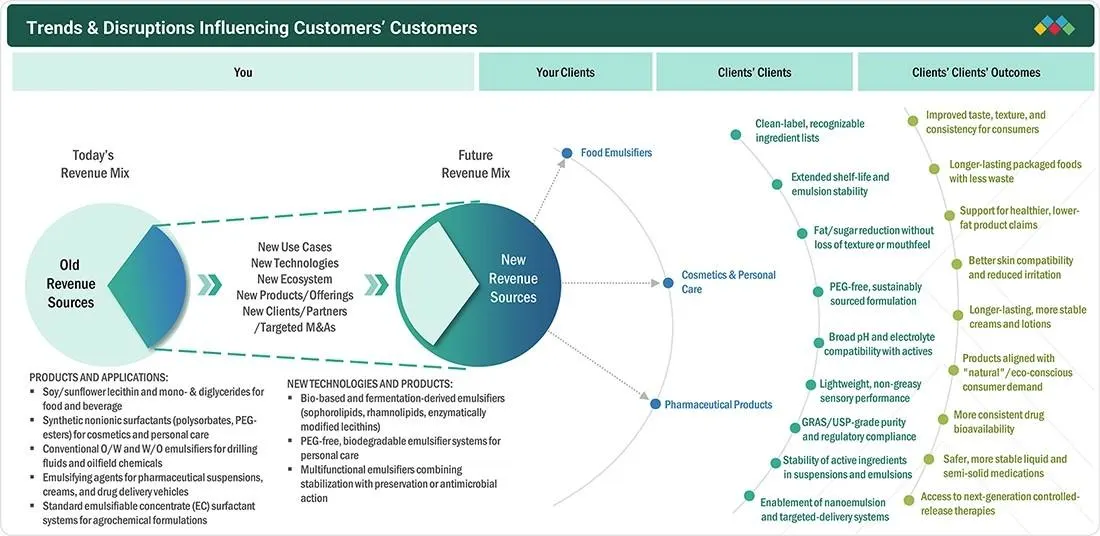
Source: Secondary Research, Interviews with Experts, MarketsandMarkets Analysis
MARKET DYNAMICS

Level
-
Growing awareness regarding health and wellness among the general population

-
Increasing applications of emulsifiers in the food &beverage industry


Level
-
Stringent regulations regarding the manufacturing and supply of certain emulsifiers

-
High extraction costs associated with bio-based emulsifiers


Level
-
Urbanization and growth of food & beverage application in emerging economies

-
Expanding cosmetics &personal care industry


Level
-
Competition from alternative stabilizing agents and natural emulsifiers

-
High cost of natural emulsifiers

Source: Secondary Research, Interviews with Experts, MarketsandMarkets Analysis
Driver: Growing awareness regarding health and wellness among the general population
The increasing awareness regarding health & wellness is one of the major drivers in the emulsifiers market, which significantly influences the demand for healthier and more sustainable food, cosmetic, and pharmaceutical products. Consumers are increasingly becoming health-conscious, which leads to an increased demand for low-fat, low-calorie, and artificial additive-free food products with desirable texture and quality. Emulsifiers play a huge role in fulfilling these needs, as they stabilize the emulsions and create a desirable mouthfeel for low-fat or reduced-calorie products. In recent times, consumers have moved toward clean-label products, a term used to describe foods made with fewer synthetic additives, and manufacturers are turning increasingly toward natural, bio-based emulsifiers that are derived from plant sources, as these appeal to consumer expectations for healthful, non-genetically modified, and organic ingredients. This trend can also be seen in the cosmetics & personal care industry, wherein consumers are looking for more products free of harmful chemicals and made with natural, safe ingredients. Emulsifiers derived from natural sources such as lecithin and sunflower oil are gaining prominence as key ingredients in formulations of skincare and haircare products because of their mild properties and effectiveness in stabilizing oil and water mixtures. In the pharmaceutical industry, emulsifiers are used to improve the bioavailability and stability of drugs, especially supplements and nutraceuticals, which are in demand due to the increasing preventive healthcare and wellness focus. Overall, awareness regarding health & wellness is driving manufacturers to innovate and develop emulsifiers that cater to evolving consumer preferences for healthier, sustainable, and cleaner products, ensuring that emulsifiers remain an essential ingredient in various industries.
Restraint: Stringent regulations regarding the manufacturing and supply of certain emulsifiers
Stringent regulations in the emulsifiers market are a constraint. The production and supply of some synthetic emulsifiers are controlled through stringent regulations. Emulsifiers, especially synthetic emulsifiers, have certain restrictions on their use, which are regulated by government agencies such as the Food and Drug Administration (FDA) in the US, the European Food Safety Authority (EFSA) in Europe, and other national regulatory agencies worldwide. The principal regulations governing synthetic emulsifiers are related to their safety, health effects, and environmental impact, which would restrict the supply and, thus, the marketability of particular ingredients. For example, some synthetic emulsifiers may face increasing scrutiny concerning potential health issues, like allergies or adverse reactions. Further, sourcing and production of these emulsifiers, especially the petrochemical-derived ones, have become more of an environmental concern, thereby making regulatory scrutiny more prominent in this direction. However, manufacturers have found it difficult to deal with such regulations because of their complexity and frequent changes. In turn, they need to spend on compliance, which tends to increase production costs and delay product launches. The regulatory hurdles may also affect the supply of certain emulsifiers, as suppliers face delays in getting approval for new formulations or difficulties in meeting evolving standards. This can create uncertainty in the market and limit the ability of producers to introduce new or innovative emulsifiers quickly.
Opportunity: Urbanization and growth of food & beverage application in emerging economies
The urbanization and growth of the food & beverage application in emerging economies is an opportunity in the emulsifiers market. As people shift to urban areas, their demand for processed, packaged, and convenience foods grows due to busy lifestyles and consumption patterns. This is seen across regions such as Asia Pacific, South America, and the Middle East, which are experiencing rapid urbanization. These emerging markets provide a vast growth opportunity for the emulsifier industry since emulsifiers enhance the texture, stability, and shelf life of food products, including baked goods, beverages, sauces, and dressings. The food & beverage sector growth is also being spurred by high disposable incomes and changing diet preferences in these regions. Consumers in emerging markets are demanding convenient, higher-quality food products. So, demand for emulsifiers is expected to be high, with a requirement for product consistency and appeal. Consumer health concerns in emerging regions also demand healthier, reduced-fat, and clean-label food products. Emulsifiers are expected to play a central role in formulating healthy options as they can offer texture stability while reducing the fat and calorie content in food. The burgeoning middle class and the ascension of international food companies in the developing world help drive the need for food products of good quality with new ingredients and innovation in these developing countries. This serves as an immense opportunity for the manufacturers of emulsifiers to address the evolving nature of food & beverage firms in the developed world by providing bespoke solutions. With increasing urbanization and growth in the food & beverage sector, the demand for emulsifiers and its market expansion in developing economies is expected to continue to provide a high-growth opportunity in the next few years.
Challenge:Competition from alternative stabilizing agents and natural emulsifiers
Alternative stabilizing agents and natural emulsifiers increasingly challenge traditional emulsifier suppliers. As consumers continue their trend toward cleaner, more natural ingredients, there is now a growing shift toward renewably sourced natural emulsifiers such as lecithin, gums, and starches, perceived by consumers as healthier and better for the environment than synthetic options. These natural alternatives can provide comparable or even better functionality in certain cases and are attractive to manufacturers who want to meet consumer demands for clean-label and non-genetically modified organisms (GMO) products. Furthermore, with increased awareness of sustainability issues, more consumers and businesses are trending toward natural emulsifiers that are viewed as more environmentally friendly and align with the greater movement to make production more sustainable. There is also a growth in the application of other stabilizing agents, which include hydrocolloids such as guar gum, xanthan gum, proteins, and other biopolymers. This group of agents can, like stabilizers, thicken, emulsify, and improve the texture of foodstuffs, although they come from natural sources. This is a challenge for traditional emulsifier manufacturers, particularly synthetic ones, as their demand may be reduced since consumers and industries are going for products with simpler, more recognizable ingredient lists. This is expected to challenge traditional emulsifier manufacturers to either formulate new compositions, utilizing either natural or bio-based emulsifiers, or upgrade their synthetic emulsifier recipes in terms of sustainability in line with the regulatory requirements as well as consumer pressure. Yet this competition from these alternatives forms a high barrier and, for the companies depending solely on synthetic emulsifiers, this may negatively influence the market share and profit potential.
EMULSIFIERS MARKET: COMMERCIAL USE CASES ACROSS INDUSTRIES
| COMPANY | USE CASE DESCRIPTION | BENEFITS |
|---|---|---|
 |
BASF's Care Chemicals division supplies emulsifiers (Emulgade and Eumulgin lines, including the newer Emulgade Verde natural-based series) for personal care formulations, creams, lotions, sun care, and skincare. Its Emulgade Verde 10 OL/MS grades are built on 100% renewable feedstocks and are Cosmos/Natrue-approved for cold-process manufacturing. | Suitable for cold-process manufacturing, reducing energy and cost | Enables single-use emulsification for sprayable formats like sun care sprays | Non-comedogenic and microbiome-friendly | Broad compatibility with synthetic and bio-based emollients/polymers |
 |
ADM, the market leader in lecithin, supplies emulsifiers (Stabrium lecithin and related lecithin-based ingredients) for confectionery, baked goods, dairy, and snacks, plus fully plant-derived, fermentation-produced emulsifiers manufactured at a dedicated US facility for paints/inks, oilfield/drilling, latex production, and agrochemical sprays. | Improves blending, moisture retention, and fat-sparing in baked goods | Prevents fat and sugar bloom in confectionery | Adds nutritional value via bioavailable choline and polyunsaturated fatty acids | Extends into industrial uses through fermentation-based, fully plant-derived sourcing |
 |
Cargill supplies a broad lecithin-based emulsifier portfolio (LECIPRIME, TOPCITHIN, EMULPUR, EMULTOP, LECIGRAN) sourced from soy, sunflower, canola, and egg, serving chocolate/confectionery, bakery, margarines/spreads, dairy alternatives, and plant-based meat, alongside pharmaceutical, personal care, and animal feed applications. | Adjusts viscosity and reduces cocoa butter use in chocolate | Prevents oil separation in fillings/spreads and reduces stickiness in candies | Improves emulsion stability and reduces spattering in margarines | Non-GMO and allergen-conscious options (e.g., canola lecithin) support clean-label reformulation |
 |
Evonik's Personal Care business supplies PEG-free, renewable-based emulsifiers (TEGO Care line, dermofeel NC MB) for cosmetic oil-in-water and water-in-oil creams, lotions, sun care, and body care, including RSPO-certified palm-based grades and a next-generation cationic emulsifier (TEGO Care Eco CAT MB) with antimicrobial properties. | Forms stable emulsions across a wide pH range (3.5–8.5) with strong compatibility with actives/electrolytes | Enables hot/cold processing for energy savings and "microplastic-free" formulating | Readily biodegradable with lower eco-toxicity versus legacy ester quats | Built-in antibacterial/antifungal action supports reduced preservative loads |
Logos and trademarks shown above are the property of their respective owners. Their use here is for informational and illustrative purposes only.
MARKET ECOSYSTEM
The emulsifiers ecosystem consists of a complex network of raw material suppliers, manufacturers, distributors, and end-users spanning food, personal care, and pharmaceutical value chains. The ecosystem of the emulsifiers market involves an analysis that ranges from raw material suppliers such as oilseed and lipid processors, to specialty chemical manufacturers, ingredient distributors, and ultimately end-users such as consumer goods and pharmaceutical companies that formulate emulsifiers into finished products. All of these players must continue to work together in an innovative environment and remain compliant with food safety, cosmetic, and pharmaceutical regulations. Examples of regulatory frameworks include FDA GRAS status and EU food additive (E-number) approvals, which establish acceptable safety and purity standards for emulsifier ingredients. Emerging trends such as clean-label demand, bio-based sourcing, and sustainable supply chains also affect the ecosystem of the emulsifiers market and are driving demand for natural, allergen-conscious, and renewably sourced emulsifiers used in food, personal care, and pharmaceutical applications.
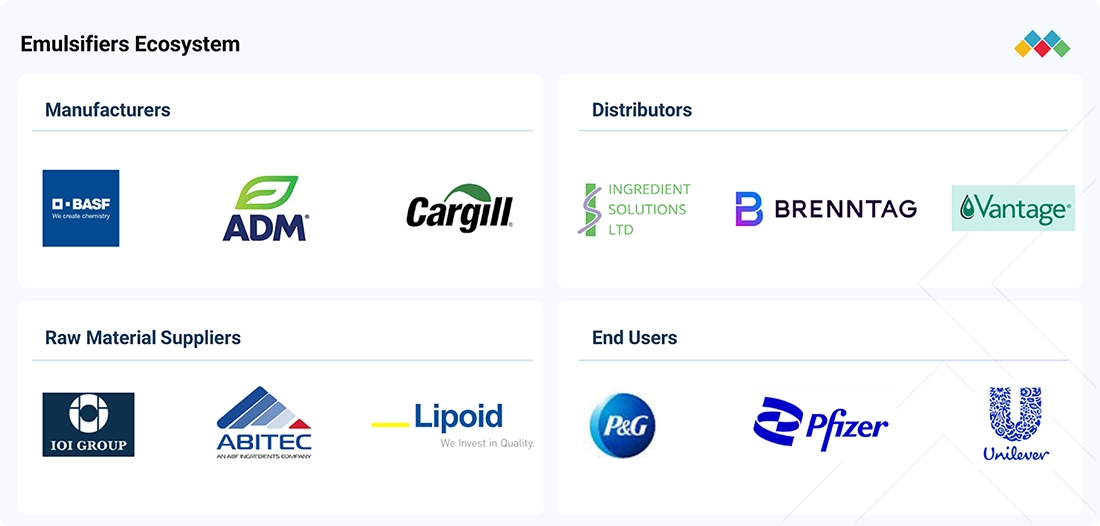
Logos and trademarks shown above are the property of their respective owners. Their use here is for informational and illustrative purposes only.
MARKET SEGMENTS
Source: Secondary Research, Interviews with Experts, MarketsandMarkets Analysis
Emulsifiers Market, By Source
Bio-based emulsifiers have been gaining prominence in the global emulsifiers market, growing at the highest rate due to consumer demand for eco-friendly and sustainable products. They are extracted from natural sources, including plant oils, lecithin, and polysaccharides, and their usage goes hand-in-hand with the overall thrust of cutting down carbon footprints and the consumption of fossil fuel-based products. Bio-based emulsifiers are also utilized in food & beverage applications, cosmetics, pharmaceutical, and personal care products with a clean label priority. Bio-based emulsifiers are finding their way into the food industry, where they can stabilize products while maintaining natural formulations that appeal to health-conscious consumers. In cosmetics & personal care, they are preferred for their skin-friendly properties and compatibility with organic certifications. Advances in biotechnology have further improved the efficiency and functionality of bio-based emulsifiers, making them competitive with synthetic counterparts. Market growth is also driven by regulatory frameworks that support sustainable practices and growing investment in R&D by manufacturers to improve cost-effectiveness and scalability. As industries move toward greener alternatives, bio-based emulsifiers are poised to dominate the market, reflecting their pivotal role in fostering sustainability while meeting performance expectations. This trend underscores the industry's commitment to innovation and environmental stewardship.
Emulsifiers Market, By Product Type
With regard to product type segment in the emulsifiers market, lecithin will continue to hold the largest share because of its versatile functionality, natural sourcing, and broad regulatory acceptance across food, pharmaceutical, and industrial applications. Lecithin is well suited to manufacturers seeking multifunctional performance, as its amphiphilic phospholipid structure allows it to simultaneously stabilize emulsions, reduce viscosity, improve texture, and extend shelf life in a single ingredient. Through extraction and refining from naturally occurring sources such as soybean, sunflower, canola, and egg, lecithin is produced with consistent quality, wide compatibility with oil- and water-based systems, and a recognizable, clean-label identity that is increasingly demanded by health-conscious consumers. Lecithin is used across a diverse range of applications including chocolate and confectionery, bakery, dairy alternatives, margarines and spreads, infant nutrition, pharmaceutical suspensions, and industrial and animal feed formulations, which has made it widely adopted across virtually every end-use segment the emulsifiers market serves. In addition, lecithin technology has the flexibility to be modified through enzymatic hydrolysis, de-oiling, or fractionation to create specialized grades tailored to specific performance needs, such as enhanced water dispersibility or heat resistance. The growing shift toward clean-label, non-GMO, and allergen-conscious formulations, along with rising demand for plant-based and dairy-alternative products, has fueled continued growth in lecithin consumption. Considering its natural origin, multifunctional performance, broad regulatory acceptance, and adaptability across food, pharmaceutical, and industrial uses, lecithin will remain the leading product type in the emulsifiers market, supporting formulators across virtually every application it serves.
Emulsifiers Market, By Application
The cosmetics & personal care application is projected to be the second-fastest-growing category in the emulsifiers market. The increasing desire for quality, stability, and innovative beauty products is expected to fuel demand. Emulsifiers are key ingredients with regard to the manufacture of different cosmetics and personal care items, such as lotions, creams, shampoos, makeup, and sunscreens, which allow for the homogeneous mixture of oil and water-based ingredients, creating a smooth and stable formulation as well as improving the product's texture and feel. The increasing demand for natural and clean-label beauty products supplements this. Consumers are demanding beauty products that are more natural and have fewer ingredients. There has been a surge in the demand for emulsifiers from natural sources like lecithin, sunflower oil, and plant-based esters. The increasing demand for sustainable, non-toxic, and eco-friendly formulations drives manufacturers to seek emulsifiers that meet these criteria. This trend is much more powerful in regions such as North America and Europe, due to their heightened focus on health, wellness, and environmental concerns. Besides this, the emerging beauty market in the Asia Pacific region is fueling the growth of the segment in cosmetics and personal care. A rise in disposable incomes, changing beauty patterns, and the increasing importance of social media in marketing beauty products are factors propelling demand for diverse products in the personal care application. This makes emulsifiers very important in producing these products to meet customer performance, stability, and sensory appeal requirements.
REGION
Asia Pacific to be fastest-growing region in emulsifiers market during forecast period
The Asia Pacific region is projected to register the highest CAGR during the forecast period due to tremendous industrialization, increasing awareness of the environment, and government initiatives. Growth in this market is expected to be centered around China and India, mainly due to their growing manufacturing sectors and their demand for sustainable materials in various applications such as food emulsifiers, cosmetics & personal care, and oilfield chemicals. The increasingly hectic pace of urban life means consumers are moving toward packaged foods that must include emulsifiers to prevent settling and maintain texture, stability, and shelf life. As disposable incomes rise, consumers are increasingly willing to spend on high-quality food, beverages, and cosmetics, leading to a higher demand for emulsifiers in the region. The cosmetics and personal care market is booming in Asia Pacific, especially in countries such as Japan, South Korea, and China, where the beauty and skincare industries are flourishing. Consumers are increasingly choosing products that contain clean, natural ingredients, which is driving the demand for bio-based emulsifiers in cosmetics and skincare formulations. The pharmaceutical industry in the region is also growing, especially with the rise of nutraceuticals and dietary supplements. Emulsifiers play a crucial role in enhancing the stability and bioavailability of active ingredients in these products.
EMULSIFIERS MARKET: COMPANY EVALUATION MATRIX
BASF SE (Star), a Germany-based company in the emulsifiers market, has established a strong market position through its broad portfolio of emulsifiers and formulation solutions for personal care, food, and other specialty applications. The company offers emulsifier technologies designed to provide formulation stability, texture, sensory properties, and compatibility with natural and renewable ingredients. Its Emulgade portfolio includes natural-based emulsifiers such as Emulgade Verde, supporting applications including creams, lotions, skincare, haircare, and other personal care formulations. BASF's focus on sustainable raw materials, biodegradable formulations, and application-specific emulsification technologies strengthens its position in the emulsifiers market. Cargill, Incorporated (Emerging Leader), a US-based company, is strengthening its position in the emulsifiers market through its portfolio of lecithins and specialty emulsifying ingredients for food and beverage applications. The company's portfolio includes Cargill Lecigran and other lecithin-based solutions used to improve dispersion, mixing, texture, stability, and processing performance in applications such as bakery, confectionery, dairy, plant-based foods, and nutrition products. Cargill's integrated sourcing capabilities, broad food ingredient portfolio, application expertise, and focus on plant-derived and functional emulsifying solutions support its growing presence in the global emulsifiers market.
Source: Secondary Research, Interviews with Experts, MarketsandMarkets Analysis
KEY MARKET PLAYERS
- BASF SE (Germany)
- Archer Daniels Midland (ADM) (US)
- Cargill, Incorporated (US)
- Kerry Group plc (Republic of Ireland)
- Evonik Industries (Germany)
- Syensqo (Belgium)
- CLARIANT AG (Switzerland)
- The DoW Chemical Company (US)
- DSM-Firmenich (Netherlands)
- Nouryon (Netherlands)
MARKET SCOPE
| REPORT METRIC | DETAILS |
|---|---|
| Market Size in 2025 (Value) | USD 11.28 Billion |
| Market Size in 2026 (Value) | USD 12.15 Billion |
| Market Forecast in 2031 (Value) | USD 18.15 Billion |
| Growth Rate | CAGR of 8.4% from 2026-2031 |
| Years Considered | 2023-2031 |
| Base Year | 2025 |
| Forecast Period | 2026-2031 |
| Units Considered | Value (USD Million/Billion), Volume (Kiloton) |
| Report Coverage | Revenue forecast, company ranking, competitive landscape, growth factors, and trends |
| Segments Covered |
|
| Regions Covered | North America, Asia Pacific, Europe, South America, and the Middle East & Africa |
WHAT IS IN IT FOR YOU: EMULSIFIERS MARKET REPORT CONTENT GUIDE
DELIVERED CUSTOMIZATIONS
We have successfully delivered the following deep-dive customizations:
| CLIENT REQUEST | CUSTOMIZATION DELIVERED | VALUE ADDS |
|---|---|---|
| Leading Emulsifiers Manufacturer | Competitive profiling of key emulsifier suppliers (financials, product portfolio, source type, applications, and strategic developments) | Supported go-to-market strategy and competitive positioning |
| Country-level insights for high-growth regions |
|
Enabled prioritized market entry and resource allocation across high-growth geographies |
| Identify emerging emulsifier technologies | Conducted technology scouting and feasibility analysis for bio-based/fermentation-derived emulsifiers, PEG-free personal care grades, enzymatically modified lecithins, and clean-label alternatives | Supported investment decisions and innovation roadmaps for clients |
| Evaluate regulatory compliance for new market entry | Compiled country-level food additive regulations (E-numbers, GRAS status), cosmetic ingredient compliance (COSMOS/Natrue), and pharmaceutical excipient (USP/EP) requirements | Ensured smoother market entry and minimized regulatory and compliance risks |
RECENT DEVELOPMENTS
- June 2026 : BASF SE launched Emulgade Verde PE, a polyglyceryl-based emulsifier blend designed to simplify the incorporation of hydrophilic active ingredients into cosmetic formulations. The ingredient supports the formation of niosome vesicles for active delivery and is suitable for skincare, body care, and hair care applications. It is based on renewable feedstocks, readily biodegradable, preservative-free, and manufactured through a solvent-free process. (BASF)
- March 2026 : Evonik Industries AG developed SYMBIO muls Aquasoft MB, a polyglyceryl ester emulsifier incorporating rice bran, a byproduct of rice processing. Developed by Evonik's Shanghai R&D team for the Chinese cosmetics market, the emulsifier provides high emulsification performance, low-viscosity formulation capability, low foaming, and a lightweight skin feel. The ingredient is biodegradable and designed for skincare emulsions targeting sensitive skin. (Evonik Elements)
- October 2024 : BASF SE launched the Emulgade Verde line of natural-based emulsifiers, including Emulgade Verde 10 OL and Emulgade Verde 10 MS, for personal care formulations. The O/W emulsifiers are based on 100% renewable feedstocks, are readily biodegradable, and are suitable for applications including creams, lotions, and sprayable emulsions. (BASF)
- October 2023 : BASF SE launched Emulgade Verde 10 MS, a new O/W emulsifier based on polyglyceryl fatty acid ester technology for natural personal care formulations. The emulsifier is based on 100% renewable feedstocks, readily biodegradable, COSMOS approved, and designed to provide stability in O/W creams and lotions. (BASF)
- March 2023 : Momentive Performance Materials Inc. expanded its personal care portfolio with HARMONIE Mesh emulsifier, a W/O emulsifier based on a polyether silicone copolymer dispersed in naturally derived MCT oil. The formulation contains 49% active emulsifying polymer and is designed for color cosmetics, skincare, sun care, foundations, creams, and lotions. It provides emulsification and pigment-dispersion properties at relatively low use levels. (Momentive)
Table of Contents
 Exclusive indicates content/data unique to MarketsandMarkets and not available with any competitors.
Methodology
The study involved four major activities for estimating the current size of the global emulsifiers market. Exhaustive secondary research was conducted to collect information on the market, the peer product market, and the parent product group market. The next step was to validate these findings, assumptions, and sizes with industry experts across the value chain of emulsifiers through primary research. Both the top-down and bottom-up approaches were employed to estimate the overall size of the emulsifiers market. After that, market breakdown and data triangulation procedures were used to determine the size of different segments and sub-segments of the market.
Secondary Research
In the secondary research process, various secondary sources such as Hoovers, Factiva, Bloomberg BusinessWeek, and Dun & Bradstreet were referred to identify and collect information for this study on the emulsifiers market. These secondary sources included annual reports, press releases & investor presentations of companies; white papers; certified publications; articles by recognized authors; regulatory bodies, trade directories, and databases.
Primary Research
The emulsifiers market comprises several stakeholders in the supply chain, which include raw material suppliers, processors, end-product manufacturers, buyers, and regulatory organizations. Various primary sources from the supply and demand sides of the market have been interviewed to obtain qualitative and quantitative information. The primary participants from the demand side include key opinion leaders, executives, vice presidents, and CEOs of companies in the emulsifiers market. Primary sources from the supply side include associations and institutions involved in the emulsifiers market, key opinion leaders, and processing players.
The following is the breakdown of primary respondents:
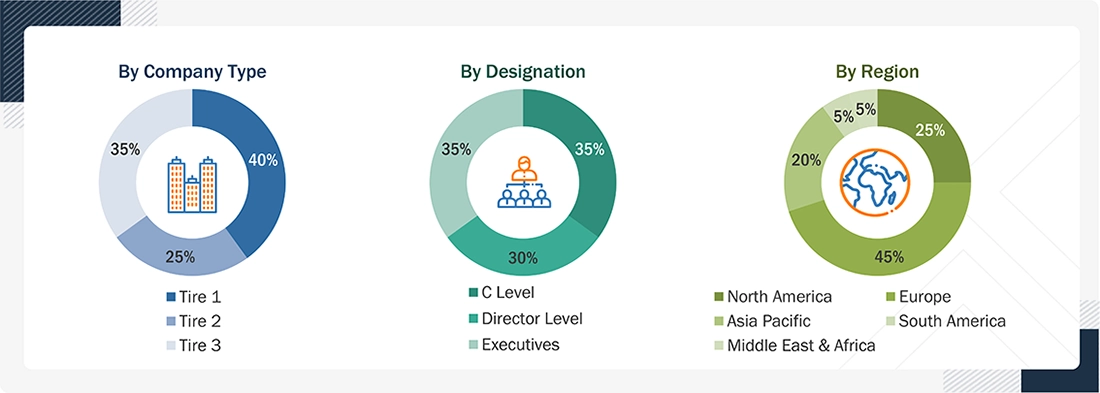
To know about the assumptions considered for the study, download the pdf brochure
Market Size Estimation
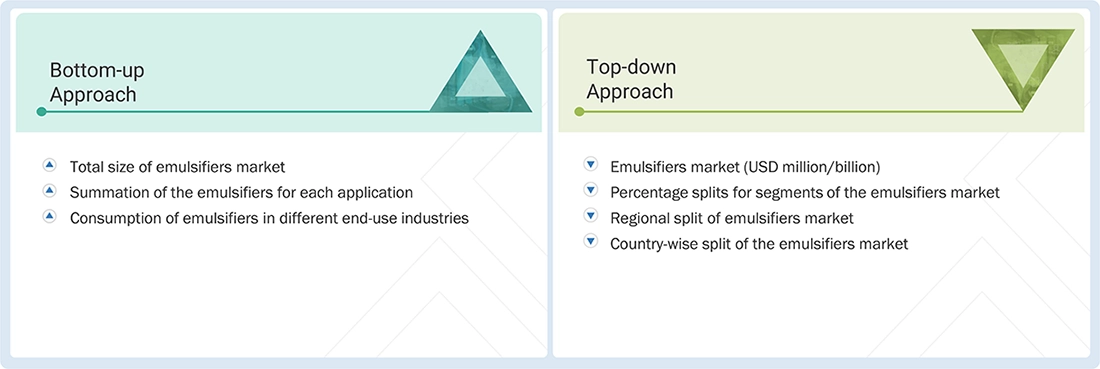
The bottom-up and top-down approaches have been used to estimate the emulsifiers market by source, product type, application, and region. The research methodology used to calculate the market size includes the following steps:
- The key players in the industry and markets were identified through extensive secondary research.
- In terms of value, the industry’s supply chain and market size were determined through primary and secondary research processes.
- All percentage shares, splits, and breakdowns were determined using secondary sources and verified through primary sources.
- All possible parameters that affect the markets covered in this research study were accounted for, viewed in extensive detail, verified through primary research, and analyzed to obtain the final quantitative and qualitative data.
- The research included studying reports, reviews, and newsletters of top market players and extensive interviews with leaders such as directors and marketing executives to obtain opinions.
The following figure illustrates the overall market size estimation process employed for this study.
Data Triangulation
After arriving at the overall size of the emulsifiers market from the estimation process explained above, the total market was split into several segments and sub-segments. The data triangulation and market breakdown procedures were employed, wherever applicable, to complete the overall market engineering process and arrive at the exact statistics for all segments and sub-segments. The data was triangulated by studying various factors and trends from both the demand and supply sides. Along with this, the market size was validated using both the top-down and bottom-up approaches.
Market Definition
Emulsifiers are chemical or natural agents that can help stabilize and maintain a mixture of two or more immiscible liquids, such as oil and water, by reducing the surface tension at their interface. This enables the stable formation of an emulsion, and the liquid droplets do not separate from each other over time. Emulsifiers contain hydrophilic and lipophilic elements; hence, they can attach to both phases in a mixture. Emulsifiers are commonly used in various industries, such as food and beverages, cosmetics, pharmaceuticals, and industrial products. They improve formulations in terms of texture, consistency, and shelf life. Examples include lecithin, mono- and diglycerides, polysorbates, and other natural options such as gums and starches. It is a critical ingredient within many applications because of its versatility and importance in achieving product stability.
Key Stakeholders
- Emulsifier Manufacturers
- Raw Material Suppliers
- Regulatory Bodies and Government Agencies
- Distributors and Suppliers
- End-Use Industries
- Associations and Industrial Bodies
- Market Research and Consulting Firms
Report Objectives
- To define, describe, and forecast the size of the emulsifiers market in terms of value and volume.
- To provide detailed information regarding the key factors influencing the growth of the market (drivers, restraints, opportunities, and challenges).
- To forecast the market size based on source, product type, application, and region.
- To forecast the market size for the five main regions—North America, Europe, Asia Pacific (APAC), South America, and the Middle East & Africa (MEA)—along with their key countries.
- To strategically analyze micro markets with respect to individual growth trends, prospects, and contributions to the total market.
- To analyze the opportunities in the market for stakeholders and provide details of the competitive landscape for the market leaders.
- To strategically profile leading players and comprehensively analyze their key developments such as new product launches, expansions, and deals in the emulsifiers market.
- To strategically profile key players and comprehensively analyze their market shares and core competencies.
- To study the impact of AI/Gen AI on the market under study, along with the macroeconomic outlook.
Available customizations:
With the given market data, MarketsandMarkets offers customizations per the specific needs of companies.
The following customization options are available for the report:
RODUCT ANALYSIS
- Product matrix, which provides a detailed comparison of the market for different sources of emulsifiers.
REGIONAL ANALYSIS
- Further breakdown of a country with respect to the emulsifiers market.
COMPANY INFORMATION
- Detailed analysis and profiling of additional market players


Personalize This Research
- Triangulate with your Own Data
- Get Data as per your Format and Definition
- Gain a Deeper Dive on a Specific Application, Geography, Customer or Competitor
- Any level of Personalization
Let Us Help You
- What are the Known and Unknown Adjacencies Impacting the Emulsifiers Market
- What will your New Revenue Sources be?
- Who will be your Top Customer; what will make them switch?
- Defend your Market Share or Win Competitors
- Get a Scorecard for Target Partners

Custom Market Research Services
We Will Customise The Research For You, In Case The Report Listed Above Does Not Meet With Your Requirements
Get 10% Free CustomisationTESTIMONIALS

We at Nissan Chemicals Corporation have been clients of MarketsandMarkets for more than a year now. We recently consulted MarketsandMarkets for a study, the team at MarketsandMarkets was extremely professional and organized. The business insights were very detailed and aligned well with our expectations that really helped us formulate the Business Plans and device new strategies for development themes. MarketsandMarkets offers a unique combination of expertise and dedicated engagement model. Their research findings have helped us in designing our Pricing Strategy which will make it easier for us to predict the future sales and profits for the next ten years. We look forward to working with MarketsandMarkets in the future.
VP of Strategy & New Business Development
Leading Specialty Chemical Company
The MarketsandMarkets Engagement Model, composed of both the Knowledge Store and advisory custom research, has greatly helped us in understanding our markets and making strategic decisions. The Knowledge Store is a fast way to allow everyone in our organization to understand more about most any market they are interested in. The ability to then get custom research done and get answers to specific strategic questions and market insight has been spectacular. The Markets and Markets team feel more like colleagues than vendors and their services have helped us change our culture where statements of things like growth opportunities and competitive position are always backed by industry research.

Rich Gibson,
Director, Corporate Strategy
Milliken & Company,
Leading Industrial Manufacturer of specialty chemical, floor covering, performance and protective textile materials, and healthcaremilliken.com
MarketsandMarkets is a trusted resource that helps us to better understand markets that are near-adjacencies-whether its technology, value chain or geography. Their Knowledge Store platform provides a dashboard of markets and their characteristics which is easy to use and saves us time.
Adam Shaw,
Market Development and Strategy Manager
AdvanSix Inc. USA,
An American Leader in Chemicalswww.advansix.com
The Knowledge Store from MarketsandMarkets is a valuable tool which has helped my team acquire greater insight in to the end markets that our business serves. This has enabled us to help our company build stronger strategies throughout our planning process.
TOSHIO KINOSHITA
Senior Chif Consultion Research & Consulting Division
Mitsubishi Chemical Research Corporation,
Leading Manufacturer of Chemical Productswww.mitsubishichem-res.co.jp/en/

We recently engaged with MarketsandMarkets for a study, the team not only clearly understood our business objectives but was also extremely professional in the way they handled the entire project. The study was efficiently conducted in a phase-wise manner, and the engagement model furnished us with high-quality business insights that far exceeded our expectations at each phase. We were especially happy that MarketsandMarkets could provide us with both, an English as well as a Japanese version of the study. A special thanks to the Analyst Team and Client Services Team, whose fluency in Japanese enhanced our comfort level, as we could converse with them in our preferred language.
Independent entrepreneurs
Arrow Precision
We approached MarketsandMarkets for study on Proppants Market, and their work exceeded our expectations. The study conducted was comprehensive and enabled us to view the market through the various dimensions. In addition, the team was extraordinarily responsive throughout the process and resolved our queries on time. I strongly recommend MarketsandMarkets and will certainly consider them for additional market assessments we will need in the future.
Global engineering company, Japan
Deputy Manager,
Strategic Planning OfficeThe high-quality insights shared by the MarketsandMarkets team helped us understand the pharmaceutical plant designers in a specific geography. It also captured the risks that we may likely face in communicating with our potential partners. The study would enable us identify partners, which would impact our future growth.






Growth opportunities and latent adjacency in Emulsifiers Market