Failure Analysis Market by Equipment (Optical Microscope, SEM, TEM, FIB, Scanning Probe Microscope, Dual Beam), Technology (SIMS, EDX, CMP, FIB, BIM, RIE), Application, & Geography - Global Growth Driver and Industry Forecast to 2036


Failure Analysis Market Summary
The Failure Analysis Market was valued at approximately USD 6.5–7.8 billion in 2024 and is projected to reach around USD 15.5–18.5 billion by 2036, growing at a CAGR of 7–9% during the forecast period (2025–2036). The market is gaining significant momentum as industries prioritize product reliability, safety compliance, and operational efficiency across manufacturing, electronics, automotive, aerospace, and healthcare sectors. The rapid expansion of the Failure Analysis Market is driven by increasing product complexity, stringent regulatory requirements, and the growing need to minimize downtime and prevent costly failures. Additionally, the integration of artificial intelligence (AI), Internet of Things (IoT), and automation technologies is transforming traditional failure analysis into predictive and real-time diagnostic systems. These advancements enable organizations to identify root causes more efficiently, improve product quality, and enhance lifecycle management. As digital transformation accelerates globally, the Failure Analysis Market is becoming an essential component of modern industrial ecosystems.
Key Market Trends & Insights
The Failure Analysis Market is led by North America, supported by strong R&D investments, advanced industrial infrastructure, and a high concentration of semiconductor and aerospace industries. Asia Pacific is the fastest-growing region due to rapid industrialization, expanding electronics manufacturing, and increasing quality control requirements. Material analysis services dominate the market, as they are critical for identifying structural and compositional defects in components. A key trend shaping the Failure Analysis Market is the integration of AI-powered analytics, which enables automated defect detection and faster root cause identification. IoT-enabled systems are facilitating real-time monitoring of equipment and components, allowing predictive maintenance and reducing failure risks. Automation is also playing a vital role by streamlining inspection processes and improving accuracy in high-volume environments. Furthermore, the adoption of advanced imaging technologies such as electron microscopy and spectroscopy is enhancing analytical precision.
Market Size & Forecast
- Base Year Market Size (2024): USD 6.5–7.8 Billion
- Forecast Market Size (2036): USD 15.5–18.5 Billion
- CAGR (2025–2036): 7–9%
- Growth Factors: Increasing product complexity, demand for quality assurance, adoption of AI and IoT technologies, and stringent regulatory standards
To know about the assumptions considered for the study, Request for Free Sample Report
Failure Analysis Market Top 10 key takeaway
- The Failure Analysis Market is expected to more than double by 2036.
- North America leads due to strong R&D and industrial base.
- Asia Pacific is the fastest-growing region driven by manufacturing growth.
- Material analysis services dominate the market.
- AI integration enables predictive and real-time diagnostics.
- IoT connectivity supports continuous monitoring and maintenance.
- Automation improves efficiency and accuracy in analysis processes.
- Semiconductor and electronics sectors are key contributors.
- Advanced imaging technologies enhance analytical precision.
- Regulatory compliance drives adoption across industries.
Product Insights
In the Failure Analysis Market, services represent the dominant segment, particularly material analysis, fault detection, and reliability testing services. These services are essential for industries that require detailed investigation of component failures to ensure product quality and safety. The dominance of services is attributed to the increasing outsourcing of failure analysis processes to specialized laboratories equipped with advanced tools and expertise.
Equipment is another important segment, including scanning electron microscopes (SEM), transmission electron microscopes (TEM), focused ion beam (FIB) systems, and spectroscopy instruments. These tools are critical for conducting in-depth analysis at micro and nano levels. Emerging product categories include AI-enabled diagnostic tools and automated inspection systems, which are enhancing the efficiency and accuracy of failure analysis processes.
AI integration is revolutionizing product capabilities by enabling automated defect recognition, pattern analysis, and predictive failure detection. These advancements are reducing analysis time and improving decision-making, making failure analysis more proactive and data-driven.
Technology / Component Insights
The Failure Analysis Market is driven by a range of advanced technologies, including electron microscopy, X-ray analysis, spectroscopy, and thermal imaging. These technologies enable detailed examination of materials, components, and systems to identify failure mechanisms. The increasing adoption of high-resolution imaging techniques is enhancing the accuracy and reliability of analysis results.
Artificial intelligence is playing a transformative role in the Failure Analysis Market by enabling automated data analysis, anomaly detection, and predictive maintenance. AI algorithms can process large volumes of data to identify patterns and predict potential failures before they occur. IoT integration allows real-time monitoring of equipment and systems, providing continuous data for analysis and enabling proactive maintenance strategies.
Cloud computing is further supporting these capabilities by providing scalable storage and advanced analytics, while automation technologies are streamlining workflows and reducing human intervention. Future innovation trends include the development of digital twins, integration of augmented reality (AR) for visualization, and adoption of advanced machine learning models for enhanced predictive capabilities.
Application Insights
The semiconductor and electronics industry is the leading application segment in the Failure Analysis Market, driven by the need for high reliability and performance in electronic components. Failure analysis is critical in this sector to identify defects, improve manufacturing processes, and ensure product quality.
The automotive industry is another major contributor, where failure analysis is used to enhance safety, reliability, and performance of vehicles, particularly in electric vehicles (EVs) and autonomous systems. Aerospace and defense sectors also rely heavily on failure analysis to ensure the safety and reliability of critical components.
Healthcare is an emerging application area, where failure analysis is used in medical device testing and diagnostics. Industrial manufacturing is also witnessing increased adoption, as companies seek to minimize downtime and improve operational efficiency. Future opportunities in the Failure Analysis Market include renewable energy systems, smart infrastructure, and advanced robotics.
Regional Insights
North America dominates the Failure Analysis Market due to its strong technological capabilities, high R&D investments, and presence of major industry players. The region’s advanced semiconductor, aerospace, and automotive industries are key drivers of market growth. Europe follows with steady growth, supported by stringent regulatory standards and focus on quality assurance. Asia Pacific is the fastest-growing region, driven by rapid industrialization, expanding electronics manufacturing, and increasing demand for high-quality products.
The growing emphasis on product reliability and safety is driving market growth across all regions. The integration of AI, IoT, and automation technologies is further enhancing the capabilities of failure analysis solutions, making them essential for modern industries.
- North America leads due to strong R&D and industrial base
- Europe benefits from regulatory compliance and quality standards
- Asia Pacific shows highest growth due to manufacturing expansion
- Increasing adoption of advanced technologies boosts demand
- Government initiatives support industrial development
Country-Specific Market Trends
In Asia Pacific, China leads the Failure Analysis Market with a CAGR of 9–11%, driven by large-scale manufacturing and electronics production. Japan follows with a CAGR of 7–8%, focusing on advanced technologies and precision engineering. In North America, the United States dominates with a CAGR of 7–9%, supported by strong demand from semiconductor and aerospace industries, while Canada and Mexico are experiencing steady growth due to increasing industrial activities. In Europe, Germany and France are key markets, with CAGRs of 7–8% and 6–7% respectively, driven by industrial innovation and regulatory requirements.
Governments across these regions are promoting technological advancement and quality standards, further driving the adoption of failure analysis solutions. Industry demand is being fueled by the need for reliable, efficient, and cost-effective analysis methods.
- China leads with strong manufacturing and electronics growth
- Japan emphasizes precision engineering and advanced technologies
- United States drives demand through semiconductor and aerospace sectors
- Germany focuses on industrial innovation and quality standards
- France supports growth through regulatory frameworks
Key Failure Analysis Company Insights
The Failure Analysis Market is highly competitive, with key players focusing on innovation, technological advancement, and strategic partnerships. Major companies include Thermo Fisher Scientific Inc., Hitachi High-Tech Corporation, Carl Zeiss AG, JEOL Ltd., Bruker Corporation, Keysight Technologies, Intertek Group plc, SGS SA, and Bureau Veritas. These companies are investing heavily in research and development to enhance analytical capabilities, integrate AI technologies, and expand their global footprint.
Innovation is centered around developing high-resolution imaging systems, advanced analytical tools, and AI-powered diagnostic solutions. AI adoption is enabling faster and more accurate analysis, while IoT integration is enhancing real-time monitoring and predictive maintenance. Product strategies are increasingly focused on offering integrated solutions that combine hardware, software, and services. Strategic collaborations and acquisitions are helping companies strengthen their market position and drive innovation.
- Companies are investing in AI-driven failure analysis solutions
- Focus on high-resolution imaging and advanced tools is increasing
- Strategic partnerships are driving market growth
- Integration of hardware and software enhances capabilities
- R&D investments are improving analytical precision
Recent Developments
In 2025, a leading analytical instrument manufacturer launched an AI-powered failure analysis platform capable of real-time defect detection and predictive diagnostics, significantly improving analysis efficiency. Another notable development includes a partnership between a semiconductor company and a research institute to develop advanced failure analysis techniques for next-generation chips. Additionally, advancements in imaging technology are enabling higher resolution and faster analysis, further enhancing the capabilities of failure analysis solutions.
Market Segmentation
The Failure Analysis Market is segmented based on product, technology/component, application, and region. By product, the market includes services and equipment, with services dominating due to the increasing outsourcing of analysis processes. In terms of technology, it encompasses electron microscopy, spectroscopy, X-ray analysis, AI, IoT, and automation, which collectively enhance analytical capabilities. Applications span semiconductor and electronics, automotive, aerospace, healthcare, and industrial sectors, reflecting the broad applicability of failure analysis. Regionally, the market is divided into North America, Europe, Asia Pacific, and the rest of the world, each exhibiting unique growth patterns influenced by technological adoption and industrial development.
- Product segmentation includes services and analytical equipment
- Technology segmentation highlights AI, IoT, and imaging technologies
- Applications cover electronics, automotive, aerospace, and healthcare
- Regional segmentation reflects diverse growth dynamics
- Advanced technologies drive market expansion
Conclusion
The Failure Analysis Market is poised for substantial growth through 2036, driven by increasing demand for product reliability, safety, and quality assurance across industries. The integration of AI, IoT, and automation is transforming failure analysis into a proactive and predictive process, enabling organizations to identify and address potential issues before they escalate. As industries continue to embrace digital transformation and advanced technologies, failure analysis will play a critical role in ensuring operational efficiency and innovation. Businesses that invest in advanced failure analysis solutions will be well-positioned to capitalize on emerging opportunities and maintain a competitive edge in the evolving market landscape.
FAQs
What is the current size of the Failure Analysis Market?
The market was valued at approximately USD 6.5–7.8 billion in 2024.
What is the expected growth rate of the Failure Analysis Market?
The market is expected to grow at a CAGR of 7–9% from 2025 to 2036.
What are the key drivers of the Failure Analysis Market?
Key drivers include increasing product complexity, demand for quality assurance, and adoption of AI and IoT technologies.
Which region leads the Failure Analysis Market?
North America currently holds the largest market share.
Who are the key players in the Failure Analysis Market?
Major companies include Thermo Fisher Scientific, Hitachi High-Tech, Carl Zeiss, JEOL, and SGS SA.
-
To speak to our analyst for a discussion on the above findings, click Speak to Analyst
 Exclusive indicates content/data unique to MarketsandMarkets and not available with any competitors.
TABLE OF CONTENTS
1 INTRODUCTION (Page No. - 19)
1.1 STUDY OBJECTIVES
1.2 MARKET DEFINITION AND SCOPE
1.2.1 INCLUSIONS AND EXCLUSIONS
1.3 STUDY SCOPE
1.3.1 MARKETS COVERED
1.3.2 GEOGRAPHIC SCOPE
1.4 YEARS CONSIDERED
1.5 CURRENCY
1.6 LIMITATIONS
1.7 STAKEHOLDERS
1.8 SUMMARY OF CHANGES
2 RESEARCH METHODOLOGY (Page No. - 23)
2.1 RESEARCH DATA
2.1.1 SECONDARY DATA
2.1.1.1 Secondary sources
2.1.2 PRIMARY DATA
2.1.2.1 Primary sources
2.1.2.2 Breakdown of primary interviews
2.1.3 SECONDARY AND PRIMARY RESEARCH
2.2 MARKET SIZE ESTIMATION
2.2.1 BOTTOM-UP APPROACH
2.2.1.1 Approach for capturing market size using bottom-up analysis (demand side)
2.2.2 TOP-DOWN APPROACH
2.2.2.1 Approach for capturing market share using top-down analysis (supply side)
2.3 DATA TRIANGULATION
2.4 ASSUMPTIONS
3 EXECUTIVE SUMMARY (Page No. - 32)
4 PREMIUM INSIGHTS (Page No. - 36)
4.1 ATTRACTIVE OPPORTUNITIES IN THE FAILURE ANALYSIS MARKET
4.2 MARKET IN ASIA PACIFIC, BY EQUIPMENT AND APPLICATION
4.3 MARKET, BY TECHNOLOGY
4.4 MARKET, BY GEOGRAPHY
5 MARKET OVERVIEW (Page No. - 39)
5.1 INTRODUCTION
5.2 MARKET DYNAMICS
5.2.1 DRIVERS
5.2.1.1 Imposition of safety rules and regulations by governments and international bodies
5.2.1.2 Rise in demand for failure analysis from the electronics & semiconductor industry
5.2.1.3 Technological advancements in microscopes
5.2.1.4 Rising focus on nanotechnology and regenerative medicine
5.2.2 RESTRAINTS
5.2.2.1 High ownership and maintenance cost
5.2.3 OPPORTUNITIES
5.2.3.1 Increasing demand for failure analysis in developing countries
5.2.3.2 Integration of microscopy with spectroscopy
5.2.3.3 Use of focused ion beam systems to study biological samples and biomaterials
5.2.4 CHALLENGES
5.2.4.1 Dearth of skilled professionals
5.3 VALUE CHAIN ANALYSIS
5.4 COVID-19 IMPACT ON FAILURE ANALYSIS MARKET
6 FAILURE ANALYSIS MARKET, BY EQUIPMENT (Page No. - 48)
6.1 INTRODUCTION
6.2 OPTICAL MICROSCOPE
6.2.1 HIGH ADOPTION OF OPTICAL MICROSCOPES FOR LOCATING AND IDENTIFYING EXTERNAL DEFECTS TO DRIVE THE MARKET
6.3 SCANNING ELECTRON MICROSCOPE (SEM)
6.3.1 INCREASING ADOPTION OF SCANNING ELECTRON MICROSCOPES IN VARIOUS INDUSTRIES SUCH AS MATERIAL SCIENCE AND SEMICONDUCTORS TO DRIVE THE MARKET
6.4 TRANSMISSION ELECTRON MICROSCOPE (TEM)
6.4.1 HIGH ADOPTION OF TRANSMISSION ELECTRON MICROSCOPES FOR LIFE SCIENCE, MATERIAL SCIENCE, AND METALLURGY TO DRIVE THE MARKET
6.5 SCANNING PROBE MICROSCOPE (SPM)
6.5.1 INCREASING DEMAND FOR ATOMIC FORCE MICROSCOPY FROM MINIATURE ELECTRONIC AND SEMICONDUCTOR DEVICES IS DRIVING THE MARKET
6.6 FOCUSED ION BEAM (FIB) SYSTEM
6.6.1 MARKET FOR FOCUSED ION BEAM SYSTEMS IS EXPECTED TO GROW AT THE HIGHEST CAGR DURING THE FORECAST PERIOD
6.7 DUAL BEAM SYSTEM
6.7.1 MARKET FOR DUAL BEAM SYSTEMS IS EXPECTED TO GROW AT THE SECOND HIGHEST CAGR DURING FORECAST PERIOD
6.8 OTHERS
7 FAILURE ANALYSIS MARKET, BY TECHNOLOGY (Page No. - 70)
7.1 INTRODUCTION
7.2 ENERGY DISPERSIVE X-RAY SPECTROSCOPY (EDX)
7.2.1 EDX CAN BE COUPLED WITH SEM, TEM, AND STEM TECHNOLOGIES, WHICH IS LIKELY TO DRIVE THE DEMAND FOR THIS TECHNOLOGY
7.3 SECONDARY ION MASS SPECTROSCOPY (SIMS)
7.3.1 WIDE ADOPTION OF SIMS IN MATERIAL SCIENCE APPLICATIONS IS LIKELY TO DRIVE THE SEGMENT
7.4 FOCUSED ION BEAM (FIB)
7.4.1 DEMAND FROM NANOFABRICATION AND MICROMACHINING-RELATED APPLICATIONS IS LIKELY TO DRIVE THE FIB SEGMENT
7.5 BROAD ION MILLING (BIM)
7.5.1 HIGH-QUALITY TEM SAMPLING ABILITIES ARE LIKELY TO DRIVE THE DEMAND FOR BIM TECHNOLOGY
7.6 REACTIVE ION ETCHING (RIE)
7.6.1 INCREASED PRODUCT DENSITY, IMPROVED YIELDS, AND TIGHTER TOLERANCES FROM THE ELECTRONICS INDUSTRY ARE LIKELY TO BOOST THE DEMAND FOR REACTIVE ION ETCHING
7.7 SCANNING PROBE MICROSCOPY (SPM)
7.7.1 INCREASED DEMAND FROM SEMICONDUCTORS, MATERIAL SCIENCE, ELECTRONICS, AND NANOTECHNOLOGY FOR TOPOGRAPHIC ANALYSIS TO BOOST THE SPM SEGMENT
7.8 OTHERS
7.9 OVERVIEW OF FAILURE ANALYSIS TECHNIQUES (QUALITATIVE)
7.9.1 DESTRUCTIVE PHYSICAL ANALYSIS (DPA)
7.9.2 FAULT TREE ANALYSIS (FTA)
7.9.3 COMMON-MODE FAILURE ANALYSIS
7.9.4 FAILURE MODES AND EFFECTS ANALYSIS (FMEA)
7.9.5 SNEAK CIRCUIT ANALYSIS
8 FAILURE ANALYSIS MARKET, BY APPLICATION (Page No. - 76)
8.1 INTRODUCTION
8.2 ELECTRONICS & SEMICONDUCTOR
8.2.1 SEMICONDUCTOR MANUFACTURING
8.2.1.1 Increasingly complex circuitry leads to the requirement for failure analysis of different electronic components and devices
8.2.2 MEMS AND THIN FILM PRODUCTION
8.2.2.1 Focused ion beam systems are used for failure analysis of MEMS and identification of root causes of these failures
8.3 INDUSTRIAL SCIENCE
8.3.1 OIL & GAS
8.3.1.1 FIB-SEM systems provide new insights related to the reservoir flow control mechanism for the oil & gas vertical
8.3.2 AUTOMOTIVE AND AEROSPACE
8.3.2.1 Increased demand for electronic systems in autonomous and driverless cars is likely to drive the market for the automotive sector
8.3.3 CHEMICALS
8.3.3.1 Dual beam microscopes carry out the high-fidelity 3D characterization of crystallography, morphology, and chemistry of micro- and submicro-sized features of different components
8.3.4 POWER GENERATION
8.3.4.1 Scanning electron microscope high-resolution imaging is used for the analysis of microstructural changes in power plants
8.4 MATERIAL SCIENCE
8.4.1 METALS AND MINING
8.4.1.1 High adoption of scanning electron microscopes, transmission electron microscopes, and focused ion beam systems to gain an improved understanding of the physical properties of metals
and alloys 83
8.4.2 PAPER AND FIBER MATERIALS
8.4.2.1 Focused ion beam systems provide failure analysis of paper and fiber materials
8.4.3 CERAMIC AND GLASS
8.4.3.1 Focused ion beam systems provide nanofabrication, milling, and imaging of ceramics and glass
8.4.4 POLYMERS
8.4.4.1 High adoption of scanning electron microscopes in modern material science investigations into polymers and plastics is driving the segment
8.4.5 NANOFABRICATION
8.4.5.1 Focused ion beam offers patterning solutions for nanofabrication
8.5 BIOSCIENCE
8.5.1 CELLULAR BIOLOGY
8.5.1.1 Examination of 3D cell and tissue architecture using SEM and TEM is boosting the segment
8.5.2 STRUCTURAL BIOLOGY
8.5.2.1 FIB-SEM systems are being used extensively for studying structural biology
8.5.3 BIOMEDICAL ENGINEERING
8.5.3.1 FIB and TEM systems are aiding research activities for biotechnology and implantable biomedical devices
8.5.4 NEUROSCIENCE
8.5.4.1 3D biological samples imaging is done through FIB-SEM systems
9 FAILURE ANALYSIS MARKET, BY GEOGRAPHY (Page No. - 89)
9.1 INTRODUCTION
9.2 NORTH AMERICA
9.2.1 US
9.2.1.1 Increasing R&D and growing commercialization of nanotechnology-based products are driving the demand for failure analysis in the US
9.2.2 CANADA
9.2.2.1 Initiatives by different institutions, research laboratories, and companies in Canada are driving the market
9.2.3 MEXICO
9.2.3.1 Increasing adoption of advanced technologies in electronics & semiconductor and material science verticals is fueling the demand for failure analysis equipment in Mexico
9.3 EUROPE
9.3.1 GERMANY
9.3.1.1 Favorable funding scenario for R&D in microscopy, growth in the biotechnology industry, and rise in focus on nanotechnology are driving the failure analysis market in Germany
9.3.2 UK
9.3.2.1 Increase in R&D investments in biotechnology, nanotechnology, and life sciences is expected to surge the demand for failure analysis equipment in the UK
9.3.3 FRANCE
9.3.3.1 Growing biotechnology industry is likely to propel the market growth in France
9.3.4 REST OF EUROPE
9.4 ASIA PACIFIC
9.4.1 JAPAN
9.4.1.1 Consistent and increased investments in R&D activities by key players are likely to drive the market in Japan
9.4.2 CHINA
9.4.2.1 Growing demand for failure analysis equipment from electronics & semiconductor, automotive, and other consumer industries is likely to drive the market
9.4.3 SOUTH KOREA
9.4.3.1 Increased adoption of FIB and FIB-SEM systems and solutions in laboratories, universities, and manufacturing companies is contributing to the growth of the market in South Korea
9.4.4 INDIA
9.4.4.1 Increase in government initiatives to support the growth of the electronics & semiconductor industry is likely to drive the market in India
9.4.5 REST OF ASIA PACIFIC
9.5 REST OF THE WORLD (ROW)
9.5.1 MIDDLE EAST & AFRICA
9.5.1.1 Increase in demand for failure analysis equipment from consumer electronics, automotive, and aerospace & defense industries is likely to drive the market in the Middle East & Africa
9.5.2 SOUTH AMERICA
9.5.2.1 Increase in investments in bioscience research is likely to drive the market in South America
10 COMPETITIVE LANDSCAPE (Page No. - 117)
10.1 OVERVIEW
10.2 MARKET PLAYER RANKING ANALYSIS
10.3 COMPETITIVE LEADERSHIP MAPPING
10.3.1 VISIONARY LEADERS
10.3.2 INNOVATORS
10.3.3 DYNAMIC DIFFERENTIATORS
10.3.4 EMERGING COMPANIES
10.4 COMPETITIVE SCENARIO
10.4.1 PRODUCT LAUNCHES AND DEVELOPMENTS
10.4.2 ACQUISITIONS, PARTNERSHIPS, AGREEMENTS, AND COLLABORATIONS
11 COMPANY PROFILES (Page No. - 124)
11.1 KEY PLAYERS
(Business Overview, Products Offered, Recent Developments, SWOT Analysis, and MnM View)*
11.1.1 HITACHI HIGH-TECHNOLOGIES CORPORATION
11.1.2 THERMO FISHER SCIENTIFIC, INC.
11.1.3 CARL ZEISS
11.1.4 JEOL LTD.
11.1.5 TESCAN OSRAY HOLDING
11.1.6 BRUKER
11.1.7 HORIBA, LTD.
11.1.8 SEMILAB
11.1.9 A&D COMPANY LTD.
11.1.10 MOTION X CORPORATION
* Business Overview, Products Offered, Recent Developments, SWOT Analysis, and MnM View might not be captured in case of unlisted companies.
11.2 RIGHT TO WIN
11.3 OTHER KEY PLAYERS
11.3.1 EUROFINS SCIENTIFIC
11.3.2 INTERTEK GROUP PLC
11.3.3 OXFORD INSTRUMENTS
11.3.4 RAITH GMBH
11.3.5 LEICA MICROSYSTEMS
11.3.6 VEECO INSTRUMENTS
11.3.7 ACCU-SCOPE
11.3.8 MEIJI TECHNO CO.
11.3.9 FIBICS
11.3.10 APPLIED BEAMS
12 APPENDIX (Page No. - 157)
12.1 DISCUSSION GUIDE
12.2 KNOWLEDGE STORE: MARKETSANDMARKETS’ SUBSCRIPTION PORTAL
12.3 AVAILABLE CUSTOMIZATIONS
12.4 RELATED REPORTS
12.5 AUTHOR DETAILS
LIST OF TABLES (100 TABLES)
TABLE 1 FAILURE ANALYSIS MARKET, BY EQUIPMENT, 2017–2025 (USD MILLION)
TABLE 2 MARKET FOR OPTICAL MICROSCOPE, BY APPLICATION, 2017–2025 (USD MILLION)
TABLE 3 MARKET FOR OPTICAL MICROSCOPE, BY REGION, 2017–2025 (USD MILLION)
TABLE 4 MARKET FOR OPTICAL MICROSCOPE IN NORTH AMERICA, BY COUNTRY, 2017–2025 (USD MILLION)
TABLE 5 MARKET FOR OPTICAL MICROSCOPE IN EUROPE, BY COUNTRY, 2017–2025 (USD MILLION)
TABLE 6 MARKET FOR OPTICAL MICROSCOPE IN ASIA PACIFIC, BY COUNTRY, 2017–2025 (USD MILLION)
TABLE 7 MARKET FOR OPTICAL MICROSCOPE IN ROW, BY REGION, 2017–2025 (USD MILLION)
TABLE 8 MARKET FOR SCANNING ELECTRON MICROSCOPE, BY APPLICATION, 2017–2025 (USD MILLION)
TABLE 9 MARKET FOR SCANNING ELECTRON MICROSCOPE, BY REGION, 2017–2025 (USD MILLION)
TABLE 10 MARKET FOR SCANNING ELECTRON MICROSCOPE IN NORTH AMERICA, BY COUNTRY, 2017–2025 (USD MILLION)
TABLE 11 MARKET FOR SCANNING ELECTRON MICROSCOPE IN EUROPE, BY COUNTRY, 2017–2025 (USD MILLION)
TABLE 12 MARKET FOR SCANNING ELECTRON MICROSCOPE IN ASIA PACIFIC, BY COUNTRY, 2017–2025 (USD MILLION)
TABLE 13 MARKET FOR SCANNING ELECTRON MICROSCOPE IN ROW, BY REGION, 2017–2025 (USD MILLION)
TABLE 14 MARKET FOR TRANSMISSION ELECTRON MICROSCOPE, BY APPLICATION, 2017–2025 (USD MILLION)
TABLE 15 MARKET FOR TRANSMISSION ELECTRON MICROSCOPE, BY REGION, 2017–2025 (USD MILLION)
TABLE 16 MARKET FOR TRANSMISSION ELECTRON MICROSCOPE IN NORTH AMERICA, BY COUNTRY, 2017–2025 (USD MILLION)
TABLE 17 MARKET FOR TRANSMISSION ELECTRON MICROSCOPE IN EUROPE, BY COUNTRY, 2017–2025 (USD MILLION)
TABLE 18 MARKET FOR TRANSMISSION ELECTRON MICROSCOPE IN ASIA PACIFIC, BY COUNTRY, 2017–2025 (USD MILLION)
TABLE 19 MARKET FOR TRANSMISSION ELECTRON MICROSCOPE IN ROW, BY REGION, 2017–2025 (USD MILLION)
TABLE 20 TYPES OF SCANNING PROBE MICROSCOPE (SPM)
TABLE 21 MARKET FOR SCANNING PROBE MICROSCOPE, BY APPLICATION, 2017–2025 (USD MILLION)
TABLE 22 MARKET FOR SCANNING PROBE MICROSCOPE, BY REGION, 2017–2025 (USD MILLION)
TABLE 23 MARKET FOR SCANNING PROBE MICROSCOPE IN NORTH AMERICA, BY COUNTRY, 2017–2025 (USD MILLION)
TABLE 24 MARKET FOR SCANNING PROBE MICROSCOPE IN EUROPE, BY COUNTRY, 2017–2025 (USD MILLION)
TABLE 25 MARKET FOR SCANNING PROBE MICROSCOPE IN ASIA PACIFIC, BY COUNTRY, 2017–2025 (USD MILLION)
TABLE 26 MARKET FOR SCANNING PROBE MICROSCOPE IN ROW, BY REGION, 2017–2025 (USD MILLION)
TABLE 27 MARKET FOR FOCUSED ION BEAM SYSTEM, BY APPLICATION, 2017–2025 (USD MILLION)
TABLE 28 MARKET FOR FOCUSED ION BEAM SYSTEM, BY REGION, 2017–2025 (USD MILLION)
TABLE 29 MARKET FOR FOCUSED ION BEAM SYSTEM IN NORTH AMERICA, BY COUNTRY, 2017–2025 (USD MILLION)
TABLE 30 MARKET FOR FOCUSED ION BEAM SYSTEM IN EUROPE, BY COUNTRY, 2017–2025 (USD MILLION)
TABLE 31 MARKET FOR FOCUSED ION BEAM SYSTEM IN ASIA PACIFIC, BY COUNTRY, 2017–2025 (USD MILLION)
TABLE 32 MARKET FOR FOCUSED ION BEAM SYSTEM IN ROW, BY REGION, 2017–2025 (USD MILLION)
TABLE 33 MARKET FOR DUAL BEAM SYSTEM, BY APPLICATION, 2017–2025 (USD MILLION)
TABLE 34 MARKET FOR DUAL BEAM SYSTEM, BY REGION, 2017–2025 (USD MILLION)
TABLE 35 MARKET FOR DUAL BEAM SYSTEM IN NORTH AMERICA, BY COUNTRY, 2017–2025 (USD MILLION)
TABLE 36 MARKET FOR DUAL BEAM SYSTEM IN EUROPE, BY COUNTRY, 2017–2025 (USD MILLION)
TABLE 37 MARKET FOR DUAL BEAM SYSTEM IN ASIA PACIFIC, BY COUNTRY, 2017–2025 (USD MILLION)
TABLE 38 MARKET FOR DUAL BEAM SYSTEM IN ROW, BY REGION, 2017–2025 (USD MILLION)
TABLE 39 MARKET FOR OTHERS, BY APPLICATION, 2017–2025 (USD MILLION)
TABLE 40 MARKET FOR OTHERS, BY REGION, 2017–2025 (USD MILLION)
TABLE 41 MARKET FOR OTHERS IN NORTH AMERICA, BY COUNTRY, 2017–2025 (USD MILLION)
TABLE 42 MARKET FOR OTHERS IN EUROPE, BY COUNTRY, 2017–2025 (USD MILLION)
TABLE 43 MARKET FOR OTHERS IN ASIA PACIFIC, BY COUNTRY, 2017–2025 (USD MILLION)
TABLE 44 MARKET FOR OTHERS IN ROW, BY REGION, 2017–2025 (USD MILLION)
TABLE 45 FAILURE ANALYSIS MARKET, BY TECHNOLOGY, 2017–2025 (USD MILLION)
TABLE 46 MARKET, BY APPLICATION, 2017–2025 (USD MILLION)
TABLE 47 ELECTRONICS & SEMICONDUCTOR FAILURE ANALYSIS TECHNIQUES
TABLE 48 MARKET FOR ELECTRONICS & SEMICONDUCTOR, BY EQUIPMENT, 2017–2025 (USD MILLION)
TABLE 49 MARKET FOR ELECTRONICS & SEMICONDUCTOR, BY REGION, 2017–2025 (USD MILLION)
TABLE 50 MARKET FOR INDUSTRIAL SCIENCE, BY EQUIPMENT, 2017–2025 (USD MILLION)
TABLE 51 MARKET FOR INDUSTRIAL SCIENCE, BY REGION, 2017–2025 (USD MILLION)
TABLE 52 MARKET FOR MATERIAL SCIENCE, BY EQUIPMENT, 2017–2025 (USD MILLION)
TABLE 53 MARKET FOR MATERIAL SCIENCE, BY REGION, 2017–2025 (USD MILLION)
TABLE 54 MARKET FOR BIOSCIENCE, BY EQUIPMENT, 2017–2025 (USD MILLION)
TABLE 55 MARKET FOR BIOSCIENCE, BY REGION, 2017–2025 (USD MILLION)
TABLE 56 MARKET, BY REGION, 2017–2025 (USD MILLION)
TABLE 57 MARKET IN NORTH AMERICA, BY EQUIPMENT, 2017–2025 (USD MILLION)
TABLE 58 MARKET IN NORTH AMERICA, BY APPLICATION, 2017–2025 (USD MILLION)
TABLE 59 MARKET IN NORTH AMERICA, BY COUNTRY, 2017–2025 (USD MILLION)
TABLE 60 MARKET IN US, BY APPLICATION, 2017–2025 (USD MILLION)
TABLE 61 MARKET IN CANADA, BY APPLICATION, 2017–2025 (USD MILLION)
TABLE 62 MARKET IN MEXICO, BY APPLICATION, 2017–2025 (USD MILLION)
TABLE 63 MARKET FOR ELECTRONICS & SEMICONDUCTOR IN NORTH AMERICA, BY COUNTRY, 2017–2025 (USD MILLION)
TABLE 64 MARKET FOR INDUSTRIAL SCIENCE IN NORTH AMERICA, BY COUNTRY, 2017–2025 (USD MILLION
TABLE 65 MARKET FOR MATERIAL SCIENCE IN NORTH AMERICA, BY COUNTRY, 2017–2025 (USD MILLION)
TABLE 66 MARKET FOR BIOSCIENCE IN NORTH AMERICA, BY COUNTRY, 2017–2025 (USD MILLION)
TABLE 67 MARKET IN EUROPE, BY EQUIPMENT, 2017–2025 (USD MILLION)
TABLE 68 MARKET IN EUROPE, BY APPLICATION, 2017–2025 (USD MILLION)
TABLE 69 FAILURE ANALYSIS MARKET IN EUROPE, BY COUNTRY, 2017–2025 (USD MILLION)
TABLE 70 MARKET IN GERMANY, BY APPLICATION, 2017–2025 (USD MILLION)
TABLE 71 MARKET IN UK, BY APPLICATION, 2017–2025 (USD MILLION)
TABLE 72 MARKET IN FRANCE, BY APPLICATION, 2017–2025 (USD MILLION)
TABLE 73 MARKET IN REST OF EUROPE, BY APPLICATION, 2017–2025 (USD MILLION)
TABLE 74 MARKET FOR ELECTRONICS & SEMICONDUCTOR IN EUROPE, BY COUNTRY, 2017–2025 (USD MILLION)
TABLE 75 MARKET FOR INDUSTRIAL SCIENCE IN EUROPE, BY COUNTRY, 2017–2025 (USD MILLION)
TABLE 76 MARKET FOR MATERIAL SCIENCE IN EUROPE, BY COUNTRY, 2017–2025 (USD MILLION)
TABLE 77 MARKET FOR BIOSCIENCE IN EUROPE, BY COUNTRY, 2017–2025 (USD MILLION)
TABLE 78 MARKET IN ASIA PACIFIC, BY EQUIPMENT, 2017–2025 (USD MILLION)
TABLE 79 MARKET IN ASIA PACIFIC, BY APPLICATION, 2017–2025 (USD MILLION)
TABLE 80 MARKET IN ASIA PACIFIC, BY COUNTRY, 2017–2025 (USD MILLION)
TABLE 81 MARKET IN JAPAN, BY APPLICATION, 2017–2025 (USD MILLION)
TABLE 82 MARKET IN CHINA, BY APPLICATION, 2017–2025 (USD MILLION)
TABLE 83 MARKET IN SOUTH KOREA, BY APPLICATION, 2017–2025 (USD MILLION)
TABLE 84 MARKET IN INDIA, BY APPLICATION, 2017–2025 (USD MILLION)
TABLE 85 MARKET IN REST OF ASIA PACIFIC, BY APPLICATION, 2017–2025 (USD MILLION)
TABLE 86 MARKET FOR ELECTRONICS & SEMICONDUCTOR IN ASIA PACIFIC, BY COUNTRY, 2017–2025 (USD MILLION)
TABLE 87 MARKET FOR INDUSTRIAL SCIENCE IN ASIA PACIFIC, BY COUNTRY, 2017–2025 (USD MILLION)
TABLE 88 MARKET FOR MATERIAL SCIENCE IN ASIA PACIFIC, BY COUNTRY, 2017–2025 (USD MILLION)
TABLE 89 MARKET FOR BIOSCIENCE IN ASIA PACIFIC, BY COUNTRY, 2017–2025 (USD MILLION)
TABLE 90 MARKET IN ROW, BY EQUIPMENT, 2017–2025 (USD MILLION)
TABLE 91 MARKET IN ROW, BY APPLICATION, 2017–2025 (USD MILLION)
TABLE 92 FAILURE ANALYSIS MARKET IN ROW, BY REGION, 2017–2025 (USD MILLION)
TABLE 93 MARKET IN MIDDLE EAST & AFRICA, BY APPLICATION, 2017–2025 (USD MILLION)
TABLE 94 MARKET IN SOUTH AMERICA, BY APPLICATION, 2017–2025 (USD MILLION)
TABLE 95 MARKET FOR ELECTRONICS & SEMICONDUCTOR IN ROW, BY REGION, 2017–2025 (USD MILLION)
TABLE 96 MARKET FOR INDUSTRIAL SCIENCE IN ROW, BY REGION, 2017–2025 (USD MILLION)
TABLE 97 MARKET FOR MATERIAL SCIENCE IN ROW, BY REGION, 2017–2025 (USD MILLION)
TABLE 98 MARKET FOR BIOSCIENCE IN ROW, BY REGION, 2017–2025 (USD MILLION)
TABLE 99 TOP FIVE PRODUCT LAUNCHES AND DEVELOPMENTS, JANUARY 2018–MARCH 2020
TABLE 100 TOP FIVE ACQUISITIONS, PARTNERSHIPS, AGREEMENTS, AND COLLABORATIONS, JANUARY 2018–MARCH 2020
LIST OF FIGURES (37 FIGURES)
FIGURE 1 FAILURE ANALYSIS MARKET SEGMENTATION
FIGURE 2 RESEARCH FLOW
FIGURE 3 FAILURE ANALYSIS MARKET: RESEARCH DESIGN
FIGURE 4 BOTTOM-UP APPROACH
FIGURE 5 TOP-DOWN APPROACH
FIGURE 6 DATA TRIANGULATION
FIGURE 7 MATERIAL SCIENCE SEGMENT OF THE MARKET IS PROJECTED TO GROW AT THE HIGHEST CAGR FROM 2020 TO 2025
FIGURE 8 OPTICAL MICROSCOPE TO HOLD THE LARGEST SHARE OF THE MARKET FROM 2020 TO 2025
FIGURE 9 FOCUSED ION BEAM TECHNOLOGY TO GROW AT THE HIGHEST CAGR IN THE MARKET FROM 2020 TO 2025
FIGURE 10 ASIA PACIFIC IS ESTIMATED TO ACCOUNT FOR THE LARGEST SHARE OF THE MARKET IN 2020
FIGURE 11 RISE IN DEMAND FOR FAILURE ANALYSIS FROM THE ELECTRONICS & SEMICONDUCTOR INDUSTRY AND TECHNOLOGICAL ADVANCEMENTS IN MICROSCOPES ARE DRIVING THE GROWTH OF THE MARKET FROM 2020 TO 2025
FIGURE 12 OPTICAL MICROSCOPE AND ELECTRONICS & SEMICONDUCTOR SEGMENTS TO HOLD LARGEST SHARES OF THE MARKET IN ASIA PACIFIC IN 2020
FIGURE 13 MARKET FOR FOCUSED ION BEAM TECHNOLOGY IS PROJECTED TO GROW AT THE HIGHEST CAGR FROM 2020 TO 2025
FIGURE 14 US IS ESTIMATED TO ACCOUNT FOR THE LARGEST SHARE OF THE MARKET IN 2020
FIGURE 15 FAILURE ANALYSIS MARKET: DRIVERS, RESTRAINTS, OPPORTUNITIES, AND CHALLENGES
FIGURE 16 FAILURE ANALYSIS MARKET DRIVERS AND THEIR IMPACT
FIGURE 17 FAILURE ANALYSIS MARKET RESTRAINT AND ITS IMPACT
FIGURE 18 FAILURE ANALYSIS MARKET OPPORTUNITIES AND THEIR IMPACT
FIGURE 19 FAILURE ANALYSIS MARKET CHALLENGES AND THEIR IMPACT
FIGURE 20 FAILURE ANALYSIS MARKET: VALUE CHAIN ANALYSIS
FIGURE 21 OPTICAL MICROSCOPE SEGMENT IS EXPECTED TO ACCOUNT FOR THE LARGEST SHARE OF THE MARKET DURING THE FORECAST PERIOD
FIGURE 22 ENERGY DISPERSIVE X-RAY SPECTROSCOPY (EDX) SEGMENT IS EXPECTED TO ACCOUNT FOR THE LARGEST SHARE OF THE MARKET DURING THE FORECAST PERIOD
FIGURE 23 MATERIAL SCIENCE SEGMENT IS EXPECTED TO GROW AT THE HIGHEST CAGR DURING THE FORECAST PERIOD
FIGURE 24 GEOGRAPHIC SNAPSHOT OF THE MARKET
FIGURE 25 NORTH AMERICA: GEOGRAPHIC SNAPSHOT
FIGURE 26 EUROPE: GEOGRAPHIC SNAPSHOT
FIGURE 27 ASIA PACIFIC: GEOGRAPHIC SNAPSHOT
FIGURE 28 COMPANIES ADOPTED PARTNERSHIPS, AGREEMENTS, AND COLLABORATIONS AS KEY GROWTH STRATEGIES FROM JANUARY 2018 TO MARCH 2020
FIGURE 29 TOP 5 PLAYERS IN THE FAILURE ANALYSIS MARKET, 2019
FIGURE 30 MARKET (GLOBAL) COMPETITIVE LEADERSHIP MAPPING, 2019
FIGURE 31 MARKET EVALUATION FRAMEWORK: PRODUCT LAUNCHES FUELED GROWTH AND INNOVATION DURING 2018–2019
FIGURE 32 HITACHI HIGH-TECHNOLOGIES CORPORATION: COMPANY SNAPSHOT
FIGURE 33 THERMO FISHER SCIENTIFIC, INC.: COMPANY SNAPSHOT
FIGURE 34 CARL ZEISS: COMPANY SNAPSHOT
FIGURE 35 JEOL LTD.: COMPANY SNAPSHOT
FIGURE 36 BRUKER: COMPANY SNAPSHOT
FIGURE 37 HORIBA, LTD.: COMPANY SNAPSHOT
The study involved 4 major activities in estimating the size of the failure analysis market. Exhaustive secondary research has been done to collect information on the failure analysis market. Validation of these findings, assumptions, and sizing with industry experts across value chain through primary research has been the next step. Both top-down and bottom-up approaches have been employed to estimate the complete market size. After that, market breakdown and data triangulation have been used to estimate the market size of segments and subsegments.
Secondary Research
In the secondary research, various secondary sources have been referred to for identifying and collecting information important for this study. Secondary sources include corporate filings (such as annual reports, investor presentations, and financial statements); trade, business, and professional associations; white papers, failure analysis–related journals, and certified publications; articles from recognized authors; gold and silver standard websites; directories; and databases. Few examples of secondary sources are Microscopy Society of America (MSA), European Microbeam Analysis Society (EMAS, and European Microscopy Society.
Primary Research
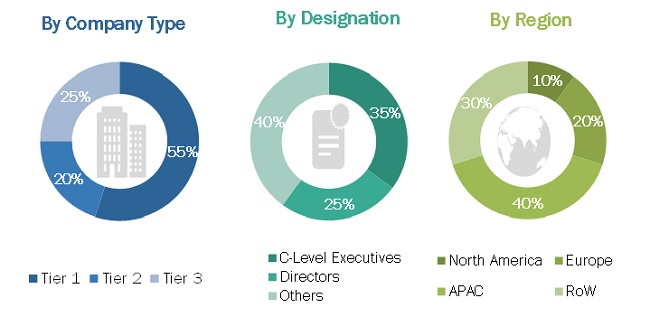
In the primary research, various primary sources from both the supply and demand sides have been interviewed to obtain the qualitative and quantitative information for this report. Primary sources from the supply side include industry experts such as CEOs, VPs, marketing directors, technology and innovation directors, and related key executives from major companies and organizations operating in the failure analysis market. Following is the breakdown of primary respondents.
To know about the assumptions considered for the study, download the pdf brochure
Market Size Estimation
Both top-down and bottom-up approaches have been used to estimate and validate the size of the failure market and its subsegments. The research methodology used to estimate the market size includes the following:
- Key players in the market have been identified through extensive secondary research
- The industry’s supply chain and market size, in terms of value, have been determined through primary and secondary research processes
- All percentage shares, splits, and breakdowns have been determined using secondary sources and verified through primary sources
Data Triangulation
After arriving at the overall market size—using the estimation processes explained above—the market has been split into several segments and subsegments. To complete the overall market engineering process and arrive at the exact statistics of each market segment and subsegment, data triangulation and market breakdown procedures have been employed, wherever applicable. The data has been triangulated by studying various factors and trends in both demand and supply sides of the failure analysis market.
Report Objectives
- To describe and forecast the failure analysis market, in terms of value, based on technology, equipment, and application
- To describe and forecast the market, in terms of value, for four major regions—North America, Europe, Asia Pacific, and the Rest of the World (RoW)
- To provide detailed information regarding factors such as drivers, restraints, opportunities, and challenges influencing the growth of the market
- To strategically analyze micromarkets1 with respect to individual growth trends, and contributions to the total market
- To profile key players and comprehensively analyze their position in terms of the market ranking and core competencies2, along with a detailed competitive landscape of the market
- To analyze the competitive growth strategies—collaborations, agreements, partnerships, acquisitions, product launches and developments, research and development (R&D) activities—adopted by major players operating in the failure analysis market
Available Customizations
long with the market data, MarketsandMarkets offers customizations according to a company’s specific needs. The following customization options are available for the report:
Company Information
- Detailed analysis and profiling of additional market players (up to 5)













Growth opportunities and latent adjacency in Failure Analysis Market