Microscopy Software Market

Microscopy Software Market by Product Configuration (On-premise: Standalone, integrated; Cloud-native, Hybrid), Modality (Optical, electron, Raman, Atomic Force Microscopy), End User (Academia, Diagnostic Labs, Pharma-Biotech Co) - Global forecast to 2031



MICROSCOPE SOFTWARE MARKET SIZE, SHARE & GROWTH SNAPSHOT
Source: Secondary Research, Interviews with Experts, MarketsandMarkets Analysis
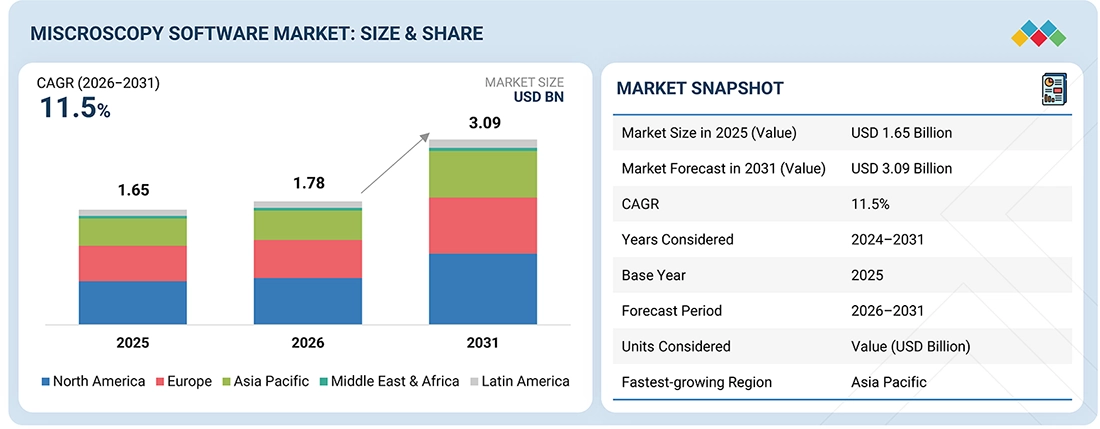
The global microscopy software market is projected to grow from USD 1.78 billion in 2026 to USD 3.09 billion by 2031, at a CAGR of 11.5% during the forecast period. The market was valued at USD 1.65 billion in 2025. The microscopy software market is evolving rapidly as digital microscopy shifts from basic image capture to integrated, AI-enabled analysis, workflow automation, and data-intensive interpretation across research and industrial settings. Demand is being reinforced by the expanding use of microscopy in life sciences, materials analysis, and inspection workflows, along with the growing role of academic cores, public research facilities, and professional microscopy societies in standardizing methods and widening access.
KEY TAKEAWAYS
-
MARKET SNAPSHOT:
Base Year Market Size (2025): USD 1.65 Billion
Current Market Size (2026): USD 1.78 Billion
Projected Market Size (2031): USD 3.09 Billion
CAGR (2026–2031): 11.5% -
SEGMENT LEADERSHIP:
Fastest-Growing Region: Asia Pacific is projected to register the highest CAGR of 14.5% during the forecast period.
Product Configuration Leader: On-premises segment held the largest share of 65.0% of the microscopy software market in 2025.
Modality Leader: Optical microscopy segment accounted for 60.0% of the microscopy software market in 2025.
Fastest-Growing End User: Hospitals & diagnostic labs segment will grow at the highest CAGR during the forecast period. -
MARKET OUTLOOK & COMPETITIVE LANDSCAPE:
Key players in the market include Bruker Corporation (US), Carl Zeiss AG (Germany), Evident Scientific (Japan), Hitachi High-Tech Corporation (Japan), JEOL Ltd. (Japan), Leica Microsystems GmbH (Germany), and Thermo Fisher Scientific Inc. (US).
Companies such as Biodock (US), INSCOPER (France), Clemex (Canada), and NimbusImage (US) are some of the key SMEs in the microscopy software market.
The microscopy software market is growing steadily as laboratories, research centers, and industrial users shift from manual microscopy to digital and automated imaging workflows. Demand is supported by the broader use of microscopy in life sciences, pathology, materials science, semiconductor inspection, and quality control, where users need faster image capture, analysis, measurement, and reporting. The market also benefits from integrated software from major microscopy makers and the continued use of open platforms such as ImageJ and Fiji, which make image analysis more accessible across different user groups. In addition, microscopy societies, core facilities, and research institutions are promoting standard practices, training, and reproducible analysis. Overall, microscopy software is becoming an important tool for improving efficiency, reducing manual work, and supporting more consistent interpretation of microscopy data across research and industrial applications.
TRENDS & DISRUPTIONS IMPACTING CUSTOMERS' CUSTOMERS
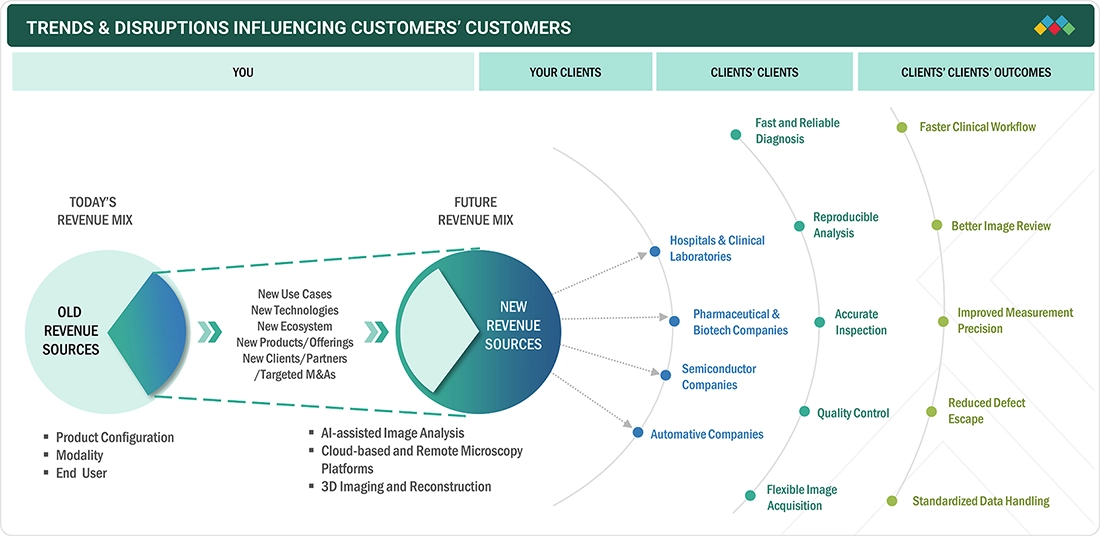
The most disruptive areas are expected to be AI-assisted image analysis, cloud-based and remote microscopy platforms, and 3D imaging and reconstruction, as these will improve diagnostic speed, reproducibility, collaboration, and measurement accuracy across end users. Hospitals and clinical laboratories are likely to benefit from faster clinical workflows and better image review, pharmaceutical and biotech companies from reproducible analysis and standardized data handling, and semiconductor and automotive users from more accurate inspection, improved measurement precision, and reduced defect escape. Overall, the market is shifting toward smarter, more connected, and more automated software solutions that support both operational efficiency and higher-quality decision-making.
Source: Secondary Research, Interviews with Experts, MarketsandMarkets Analysis
MARKET DYNAMICS

Level
-
Increased demand for workflow integration

-
Need for handling larger, complex image data


Level
-
High implementation and integration complexity

-
Standardization and interoperability issues


Level
-
Cloud-based and remote microscopy

-
Portable and connected microscopy workflows


Level
-
High computational and data-handling burden

-
Need for training and expert support

Source: Secondary Research, Interviews with Experts, MarketsandMarkets Analysis
Driver: Increased demand for workflow integration
Microscopy users are moving from single-instrument, stand-alone setups toward multi-modal, multi-site workflows, which makes integrated software a core requirement. Connected platforms such as ZEISS ZEN core explicitly position themselves as “universal control” environments that link light and electron microscopes, data management, and reporting in a single GUI to keep analysis data together across instruments, laboratories, and locations. This need is reinforced by smart-microscopy initiatives that highlight the current fragmentation of control and analysis tools and explicitly call for shared standards and modular software to achieve interoperability across devices and workflows. As facilities adopt more imaging modalities and sites, the pressure to consolidate acquisition, analysis, and data management into integrated software stacks becomes a major driver for microscopy software adoption and upgrades.
Restraint: High implementation and integration complexity
Building and adopting integrated workflows in conventional microscopy practice is nontrivial and would require more time than expected. Smart-microscopy reviews note that advanced workflows require configuring real-time feedback loops between hardware and analysis code, which often demands intensive user training and additional facility staff time just to set up experiments. Hardware–software control layers must coordinate multiple components (stages, scanners, cameras) and synchronize state changes, a core technical challenge for system builders identified in the Software for Microscopy Workshop white paper. For many labs, especially outside tier-one core facilities, the expertise and time needed to integrate microscopes, cameras, databases, and analysis pipelines become a practical restraint on how fast and how widely new software platforms can be adopted.
Opportunity: Cloud-based and remote microscopy
Cloud-based and remote microscopy is emerging as a clear growth opportunity because it directly addresses access, collaboration, and IT-management pain points. Telepathology platforms such as TeleSlide Patho® and Motic’s cloud solutions allow hospitals to upload whole-slide images, assign cases to remote subspecialty experts, share annotations, and obtain second opinions without shipping physical specimens, improving turnaround time and reducing logistics costs. Research systems like LiveMicro demonstrate that real-time remote control of microscopy and live image processing over the network are technically feasible, enabling remote diagnosis and collaborative education sessions from a single “virtual microscopy” session. As more institutions move toward distributed clinical networks and multi-site research collaborations, microscopy software that natively supports cloud storage, remote viewing, and telemicroscopy can unlock new usage and revenue models beyond the traditional single-lab license.
Challenges: High computational and data-handling burden
Modern microscopes generate multi-dimensional, terabyte-scale datasets, posing significant challenges for end users in managing such large volumes. Large-scale electron and light-sheet microscopy routinely produce 3D and time-series data that demand substantial storage, high-bandwidth data transfer, and computationally intensive registration and reconstruction processes, often surpassing the capacity of local workstations. Studies on large EM and light-sheet datasets indicate that manual segmentation and proofreading can take multiple person-years, and even automated pipelines face performance and memory limits when handling multi-terabyte image stacks. Recent discussions highlight that the diversity of file formats and the need for comprehensive, FAIR metadata further complicate storage, curation, and long-term preservation of microscopy data. This computational and data management burden means many labs cannot fully leverage advanced software without parallel investments in IT infrastructure and data engineering skills.
MICROSCOPE SOFTWARE MARKET: COMMERCIAL USE CASES ACROSS INDUSTRIES
| COMPANY | USE CASE DESCRIPTION | BENEFITS |
|---|---|---|
 |
Danaher through Leica offers “LAS X Life Science Microscope Software Platform”; the platform is built around a workflow-based interface intended to make users productive quickly, save experiment settings | It has played a key role in reducing the workflow complexity in research laboratories and life science users. |
 |
Macka EMAR Diagnostic Center (Istanbul): Upgrade to SIGNA Works with AIR Recon DL + Multi-Purpose Coils | It simplifies complex workflows, improves reproducibility, and supports faster analysis with more consistent results. |
 |
St. Joseph’s Hospital (Phoenix, Arizona): MRI in Neuro ED with fast protocols | MRI used in the Emergency Department to enable richer diagnosis (soft tissues, spinal cord) vs CT; scan times reduced to ~10 min in some protocols. |
 |
Entry into US market | First US installation of uMR 570 1.5T MRI | It improves workflow efficiency, supports reproducible experiments, and helps users switch between imaging applications with less complexity. |
Logos and trademarks shown above are the property of their respective owners. Their use here is for informational and illustrative purposes only.
MARKET ECOSYSTEM
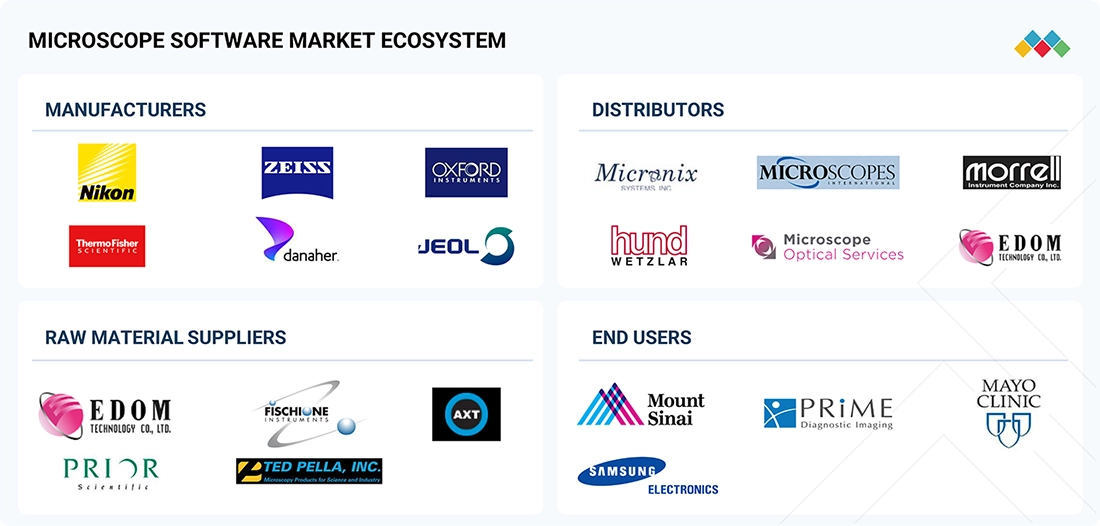
The microscopy software ecosystem is built on a multi-layered value chain linking manufacturers, distributors, component suppliers, and end users. Manufacturers such as Nikon, ZEISS, Thermo Fisher Scientific, Danaher, Oxford Instruments, and JEOL develop core software platforms that support image acquisition, analysis, documentation, and workflow control across research, clinical, and industrial applications. Distributors such as Micronix, Microscope International, Morrell Instruments, HUND, Microscope Optical Services, and EDOM help expand market reach and provide local access, service, and support. The component and raw-material layer includes suppliers such as Nikon OEM, Evident, Prior Scientific, Fischione, Ted Pella, and EDOM, which support microscopy integration through optical parts, precision motion systems, and sample-preparation tools. End users such as Mount Sinai Hospital, Mayo Clinic, Prime Diagnostic Imaging, and Samsung Electronics demonstrate how microscopy software is applied in healthcare, diagnostics, and industrial inspection workflows. Together, these stakeholders shape product adoption, service requirements, and future software development across the market.
Logos and trademarks shown above are the property of their respective owners. Their use here is for informational and illustrative purposes only.
MARKET SEGMENTS
Source: Secondary Research, Interviews with Experts, MarketsandMarkets Analysis
Microscopy Software Market, By Product Configuration
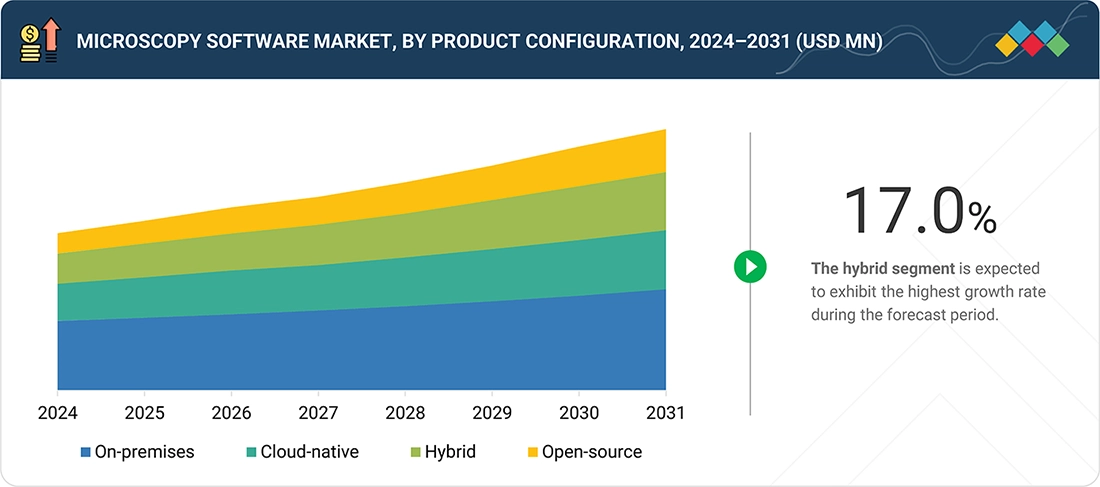
By product configuration, the microscopy software market is categorized into on-premises, cloud-native, hybrid, and open source. On-premises software holds a dominant share because high-speed, multidimensional imaging routinely generates massive datasets, often several gigabytes per second, that cannot be uploaded to the cloud in real time due to internet bandwidth bottlenecks. In practice, high-throughput pharmaceutical screening labs, industrial semiconductor facilities, and clinical pathology departments require local, workstation-bound software to ensure zero-latency communication between cameras, lasers, and motorized stages. This local architecture is essential for real-time hardware adjustments, automated stage tracking, and continuous workflow execution without the risk of external network latency or internet outages.
Microscopy Software Market, By Modality
By modality, the microscopy software market is categorized into optical microscopy, electron microscopy, Raman microscopy, atomic force microscopy, and other microscopy. Optical microscopy software holds the dominant share because optical microscopes—ranging from standard brightfield systems to advanced confocal microscopes—are the most widely deployed instruments across academic, clinical, and industrial laboratories due to their versatility and lower relative cost. In practice, life science researchers, pharmaceutical companies, and university core facilities heavily rely on optical techniques like live-cell fluorescence imaging and whole slide scanning to study dynamic biological processes in real time. Many organizations already have optical microscopes installed, so software upgrades and add-on analytics can be adopted without replacing the full instrument base. This creates recurring demand not just for new systems, but also for imaging, documentation, measurement, and workflow software linked to existing microscopes.
Microscopy Software Market, By End User
By end user, the microscopy software market is categorized into academic and research institutes, pharma and biotech companies, hospital and diagnostic labs, food and beverage companies, industrial manufacturers, semiconductor and electronics manufacturers, and other industries. Academic and research institutes hold a dominant share because they host the highest volume of microscopy installations globally, spanning thousands of universities, public research organizations, and centralized institutional core facilities. In practice, these entities operate under a shared-resource model in which a single imaging core manages dozens of instruments across optical, electron, and atomic force modalities. This immense infrastructure creates a continuous, baseline institutional demand for multi-user software licenses, offline workstation seats, and centralized data management systems to coordinate the daily imaging and analysis needs of hundreds of individual researchers, students, and principal investigators.
REGION
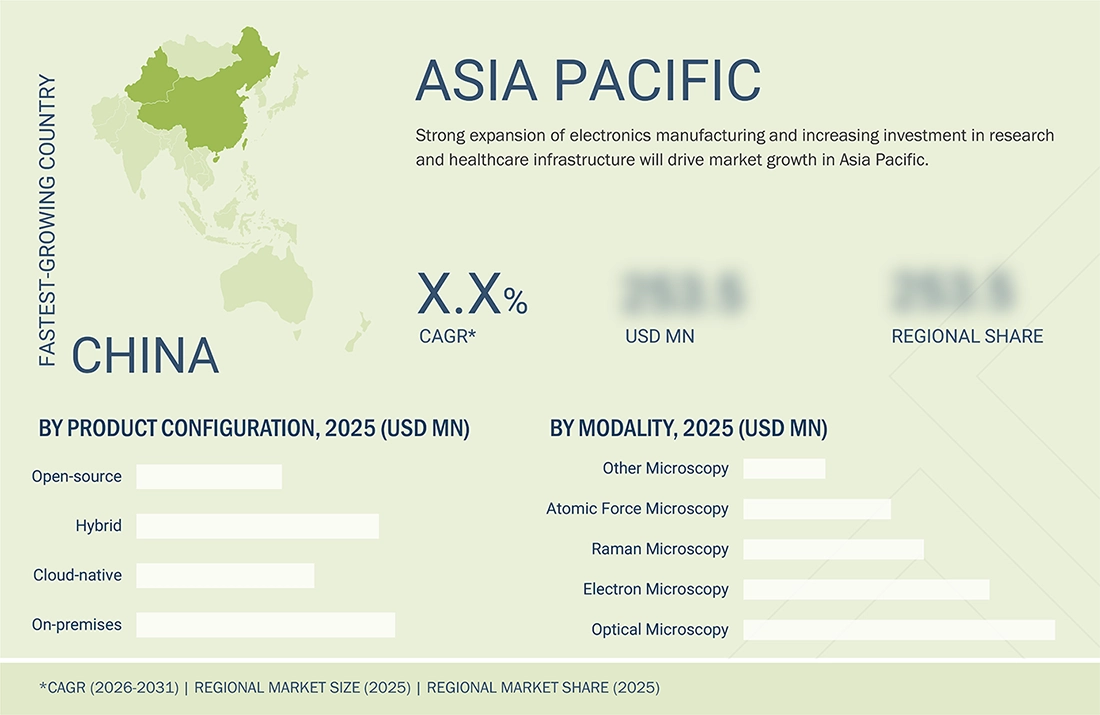
Asia Pacific is expected to grow at the highest CAGR in the microscope software market during the forecast period
The Asia Pacific region is experiencing rapid growth, particularly in China, India, and Southeast Asia. This region is expected to grow the fastest because it is not driven by a single end market; it benefits from a combination of semiconductor expansion, rising healthcare digitization, growing life sciences research, and broader industrial upgrading. This creates a broader demand base for microscopy software than in many mature markets, where adoption is already relatively established. A major factor is the region’s position as a global semiconductor and electronics manufacturing hub. Countries such as China, Taiwan, South Korea, Japan, and increasingly India are investing heavily in chip manufacturing, advanced packaging, electronics assembly, and precision engineering. These sectors rely on microscopy for wafer inspection, defect detection, metrology, material characterization, and failure analysis, which directly increases demand for microscopy software used in image capture, measurement, and analysis.
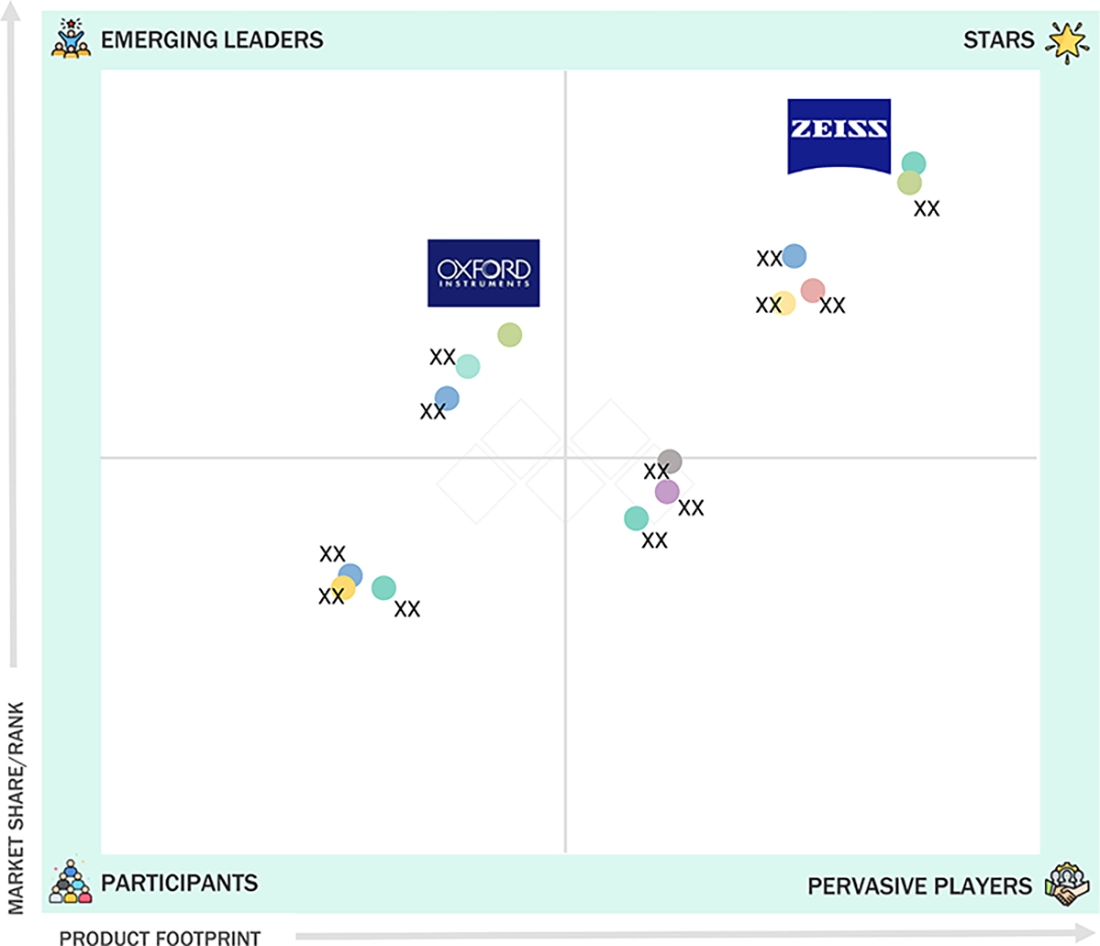
MICROSCOPE SOFTWARE MARKET: COMPANY EVALUATION MATRIX
Carl Zeiss is positioned in the Stars quadrant for its strong leadership in the microscopy software market, broad product portfolio, and extensive global reach. The company benefits from its established brand, wide sales and service network, and ability to provide integrated microscopy software solutions across life sciences and industrial applications. Its continued focus on acquisitions, workflow efficiency, and advanced imaging capabilities helps sustain its dominant market position. Oxford Instruments can be placed in the Emerging Leaders quadrant for its strong technical capabilities, growing product footprint, and relevance in research and industrial microscopy applications.
Source: Secondary Research, Interviews with Experts, MarketsandMarkets Analysis
KEY MARKET PLAYERS
- Carl Zeiss AG (Germany)
- Bruker Corporation (US)
- Thermo Fisher Scientific Inc. (US)
- JEOL Ltd. (Japan)
- Evident Scientific (Japan)
- Hitachi High-Tech Corporation (Japan)
MARKET SCOPE
| REPORT METRIC | DETAILS |
|---|---|
| Market Size in 2025 (Value) | USD 1.65 Billion |
| Market Size in 2026 (Value) | USD 1.78 Billion |
| Market Forecast in 2031 (Value) | USD 3.09 Billion |
| Growth Rate | CAGR of 11.5% from 2026–2031 |
| Years Considered | 2024–2031 |
| Base Year | 2025 |
| Forecast Period | 2026–2031 |
| Units Considered | Value (USD Billion) |
| Report Coverage | Revenue forecast, company ranking, competitive landscape, growth factors, and trends |
| Segments Covered |
|
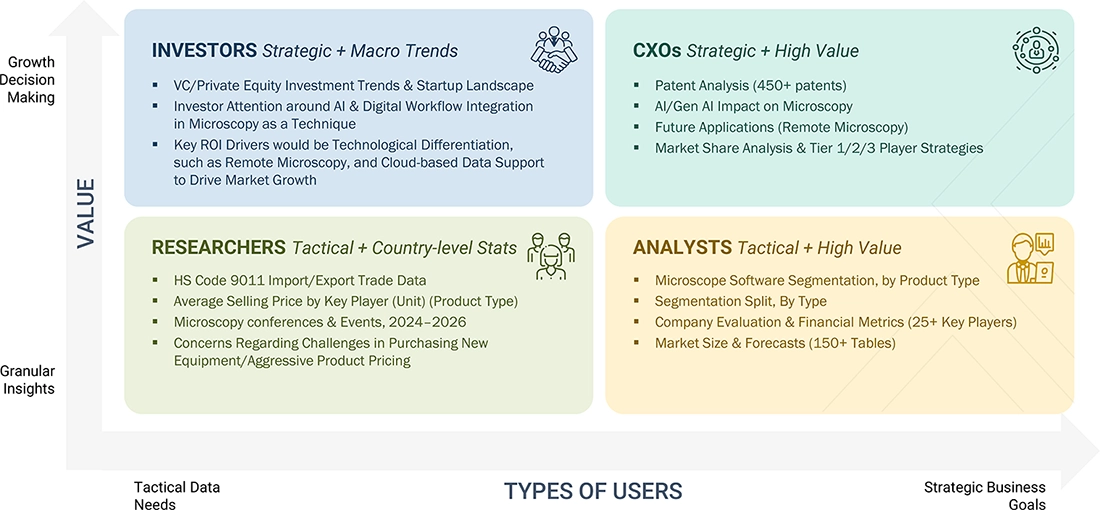
WHAT IS IN IT FOR YOU: MICROSCOPE SOFTWARE MARKET REPORT CONTENT GUIDE
DELIVERED CUSTOMIZATIONS
We have successfully delivered the following deep-dive customizations:
| CLIENT REQUEST | CUSTOMIZATION DELIVERED | VALUE ADDS |
|---|---|---|
| Biopharmaceutical Companies |
|
|
RECENT DEVELOPMENTS
- March 2026 : ZEISS continued expanding its connected microscopy capabilities through ZEN core and related software platforms, supporting unified image acquisition, analysis, and data management across microscopy workflows.
- January 2025 : Evident launched the DSX2000 fully motorized digital microscope to simplify operations and boost productivity in material analysis and inspection workflows
- May 2025 : Evident introduced the IXplore IX85 SpinXL and SpinSR spinning-disk confocal microscopes to expand live-cell imaging and super-resolution research capabilities.
Table of Contents
 Exclusive indicates content/data unique to MarketsandMarkets and not available with any competitors.
Methodology
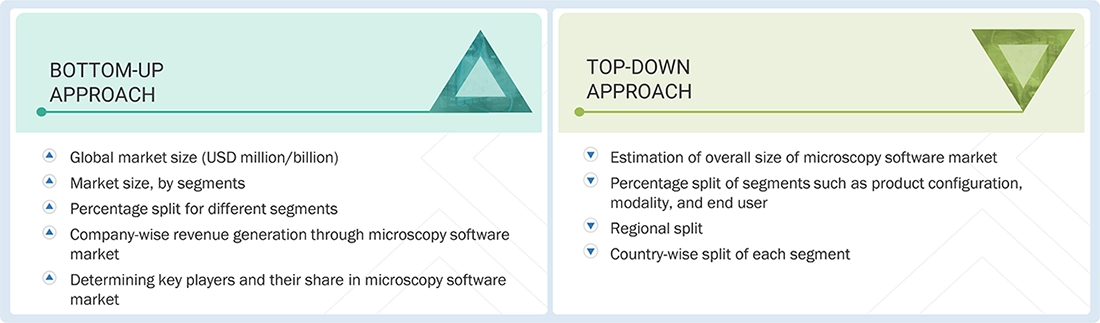
This study balanced primary and secondary research for the microscopy software market by analyzing market variables that affect small, medium, and large businesses. The next step was to conduct primary research with industry experts across the value chain to validate findings, assumptions, and market sizing. Multiple methodologies, including top-down and bottom-up approaches, were used to estimate the overall market size. The study covers market segments, evolving trends, regulatory frameworks, and competitive dynamics. It examines leading market players and the strategies they employ in this sector. In conclusion, the total market size was estimated using a combination of top-down and bottom-up approaches, with data triangulation to finalize the estimate. Primary research was conducted throughout the study to validate and test each hypothesis.
Secondary Research
During the study, secondary research was conducted using a range of sources, including directories and databases such as Bloomberg Businessweek, D&B Hoovers, and Factiva. Additional materials included white papers, annual reports, SEC filings, and investor presentations. This approach was used to collect and analyze data that provide comprehensive, technical, and market-focused insights into the microscopy software market. The findings offer insights into key players and market segmentation, informed by recent industry trends and significant developments. A database of leading industry figures was also created as part of this secondary research.
Primary Research
Primary research involved activities to gather qualitative and quantitative data. A variety of individuals from the supply and demand sides were interviewed during this phase. On the supply side, key figures such as CEOs, vice presidents, directors of marketing and sales, directors of technology and innovation, and other important leaders were interviewed by industry experts. On the demand side, primary sources included academic institutions and research organizations. This research aimed to validate market segmentation, identify prominent market participants, and gain insights into significant industry trends and market dynamics through a real-world primary study.
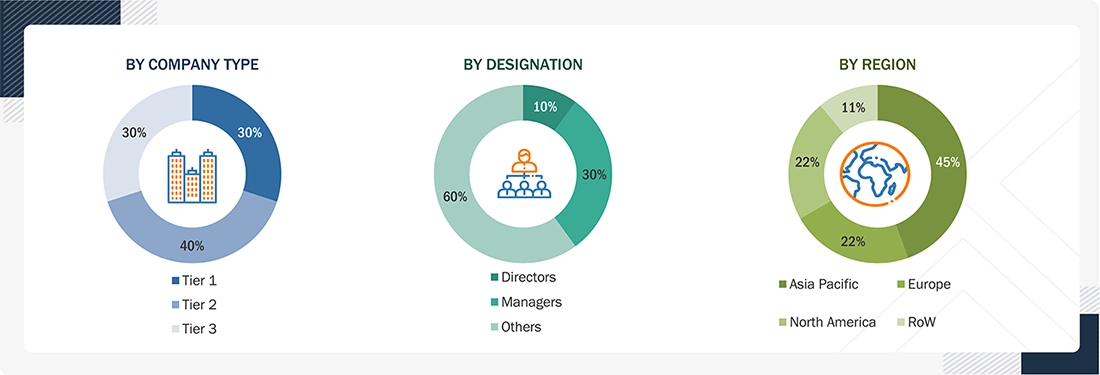
Notes:
- Others include distributors, suppliers, product managers, business development managers, marketing managers, and sales managers.
- Companies are categorized into tiers based on their total revenue. Here are the categories used:
As of 2025, Tier 1 = >USD 1,000 million, Tier 2 = USD 500–1,000 million, and Tier 3 = <USD 500 million.
To know about the assumptions considered for the study, download the pdf brochure
Market Size Estimation
This report analyzes the global microscopy software market size by reviewing the revenue shares of leading companies. Key players with significant market shares were identified through secondary research, and their microscopy software revenue was calculated and then validated through primary research. Secondary research included an analysis of annual and financial reports from leading market participants. Primary research involved in-depth interviews with key thought leaders, such as directors, CEOs, and marketing executives.
To calculate the global market value, segmental revenue was determined based on the revenue mapping of service and product providers. The process involved the following steps:
- Generating a list of key players that operate in the microscopy software market at regional or global levels
- Mapping the products of manufacturers of microscopy software and related product lines at the regional level
- Mapping the revenue of listed players through the sales of microscope software and related products
- Mapping the revenue of major players to cover at least ~90% of the global market share as of 2025
- Extrapolating the mapped revenue of players to arrive at the global market value for the respective segment
- Summing up the market value for all segments and subsegments to achieve the actual value of the global microscopy software market
Data Triangulation
After estimating the overall market size, the microscopy software market was classified into subsegments. The overall market engineering process was finalized through data triangulation and market segmentation, yielding accurate statistics for all segments and subsegments. This triangulation involved analyzing trends and factors on both the demand and supply sides. Furthermore, the microscopy software market data was verified and validated using both top-down and bottom-up approaches.
Market Definition
Microscopy software is a digital solution that controls microscopes and processes, analyzes, stores, and presents images captured in microscopic imaging workflows. It enables scientists, researchers, clinicians, and industrial users to acquire images, adjust visualization parameters, perform quantitative analysis, create 3D reconstructions, and manage microscopy data through integrated or standalone platforms.
Key Stakeholders
- Academic and Research Institutes
- Regulatory Authorities and Industry Associations
- Hospitals
- Clinical Laboratories
- Pharmaceutical Companies
- Biotech Companies
- Automotive Companies
- Imaging Centers
- Manufacturers and Suppliers of Microscopes & Microscope Software
- Product Suppliers, Distributors, and Channel Partners
- Research Institutes
- Regulatory Authorities and Industry Associations
- Venture Capitalists and Investment Firms
- Research Labs
Report Objectives
- To define, describe, and forecast the size of the microscopy software market based on product configuration, modality, end user, and region
- To provide detailed information regarding the factors (drivers, restraints, opportunities, challenges, and trends) influencing the growth potential of the global microscopy software market
- To analyze micro markets with respect to individual growth trends, prospects, and contributions to the global microscopy software market
- To analyze key growth opportunities in the global microscopy software market for key stakeholders and provide details of the competitive landscape for market leaders
- To forecast the size of market segments and/or subsegments in five regions, namely, North America (US and Canada), Europe (Germany, France, the UK, Spain, Italy, and the Rest of Europe), Asia Pacific (Japan, China, India, Australia, South Korea, and the Rest of Asia Pacific), Latin America (Brazil, Mexico, and the Rest of Latin America), and the Middle East & Africa (GCC Countries and the Rest of the Middle East & Africa)
- To profile the key players in the microscopy software market and comprehensively analyze their market share and core competencies
- To analyze the competitive developments such as product launches/approvals, agreements, expansions, collaborations, and acquisitions undertaken in the global microscopy software market.
Available customizations:
With the given market data, MarketsandMarkets offers customizations based on your company’s specific needs. The following customization options are available for the present global microscopy software market report:
Product Analysis
- Product matrix, which gives a detailed comparison of the product portfolios of the top 15 companies
Company Information
- Detailed analysis and profiling of additional market players (up to 13)
Geographic Analysis
- Further breakdown of the Rest of Europe microscopy software market into Russia, Belgium, the Netherlands, Switzerland, Austria, Finland, Sweden, Poland, and Portugal
- Further breakdown of the Rest of Asia Pacific microscopy software market into Singapore, Taiwan, New Zealand, the Philippines, Malaysia, and other Asia Pacific countries
- Further breakdown of the Rest of Latin America microscopy software market into Argentina, Chile, Peru, and Colombia


Personalize This Research
- Triangulate with your Own Data
- Get Data as per your Format and Definition
- Gain a Deeper Dive on a Specific Application, Geography, Customer or Competitor
- Any level of Personalization
Let Us Help You
- What are the Known and Unknown Adjacencies Impacting the Microscopy Software Market
- What will your New Revenue Sources be?
- Who will be your Top Customer; what will make them switch?
- Defend your Market Share or Win Competitors
- Get a Scorecard for Target Partners

Custom Market Research Services
We Will Customise The Research For You, In Case The Report Listed Above Does Not Meet With Your Requirements
Get 10% Free CustomisationTESTIMONIALS

JAYANT RAJPUROHIT
Director of Market Insights, Data and Analytics
SFI Health,
Leading Pharmaceutical Companywww.sfihealth.com/

We at SFI Health approached MarketsandMarkets for an Opportunity Assessment on "Incidence and Prevalence of Focus Indications" as we wanted to know the most attractive HCPs like Physician, Functional MD, Naturopath and Pharmacist. The project was critical for us to ensure our focus on the right target which would enable sustainable growth and profitability for SFI Health. The business insights provided exceeded our expectations and we were extremely impressed. The team at MarketsandMarkets is highly professional and detail oriented and very well understood our business needs. MarketsandMarkets offers a unique combination of expertise and dedicated engagement model. We identified 2 new products to be launched in coming months, based on the research findings provided by MarketsandMarkets. We are happy with the services and would strongly recommend MarketsandMarkets to my peers in the industry.

BEATRIZ DE LA CALLE
Head of Commercial Analytics
Qualicaps,
Leading Pharmaceutical Companywww.qualicaps.com/

We partnered with MarketsandMarkets for an assessment study on hard empty capsules. The team was extremely professional in understanding our business requirements and we received timely responses to all our queries. The market intelligence and the recommendations has met our business requirements. We were extremely impressed to see the final study results; it really exceeded our expectations. The market intelligence offered by MarketsandMarkets, and clarity on next steps will help us achieve our business objective for the Year 2021. We are happy with the services and would strongly recommend MarketsandMarkets to my peers in the industry.

Bob Williams,
Senior Director Business Development & Innovation
Bracco Diagnostics Inc.,
Italian Multinational in life sciences sector and a World Leader in imaging diagnosticsimaging.bracco.com/us-en
We were pleased with targeted insights that MarketsandMarkets identified from a custom study on the 'Radiation Dose Management Solutions Market'. Your team identified and characterized the market participants as well as underlying trends accurately. This study was useful to Bracco in formulating business strategies for our dose monitoring product lines and we thank MarketsandMarkets for the job well done.
Cody Coonradt,
Market Development and Strategy Manager
3M Health Information Systems,
Leader in Health care Coding, Payment & Analytics Solutions.www.3m.com/3M/en_US/health-information-systems-us
The value for our organization comes from three things: depth of research, specificity of segments and being easy to work with. As important as the first two are, the third can't be underestimated. MarketsandMarkets, maybe more than any other research vendor, wants to know what is top of mind for our team and what big questions we are grappling to answer.
Their customer first approach and high value engagement model, have given us great analysis and excellent value for money
- US Microscopy Software Market
- Canada Microscopy Software Market
- Germany Microscopy Software Market
- UK Microscopy Software Market
- France Microscopy Software Market
- Italy Microscopy Software Market
- Spain Microscopy Software Market
- Japan Microscopy Software Market
- China Microscopy Software Market
- India Microscopy Software Market
- Australia Microscopy Software Market
- South Korea Microscopy Software Market
- Brazil Microscopy Software Market
- Mexico Microscopy Software Market
- Rest Of Europe Microscopy Software Market
- Roapac Microscopy Software Market
- Rest Of Latin America Microscopy Software Market
- GCC Countries Microscopy Software Market






Growth opportunities and latent adjacency in Microscopy Software Market