Fumed Silica Market

Fumed Silica Market by Type (Hydrophilic Fumed Silica and Hydrophobic Fumed Silica), Application (Silicone Elastomers, Paints, Coatings & Inks, Adhesives & Sealants, UPR & Composites), End-use Industry and Region - Global Forecast to 2030




OVERVIEW
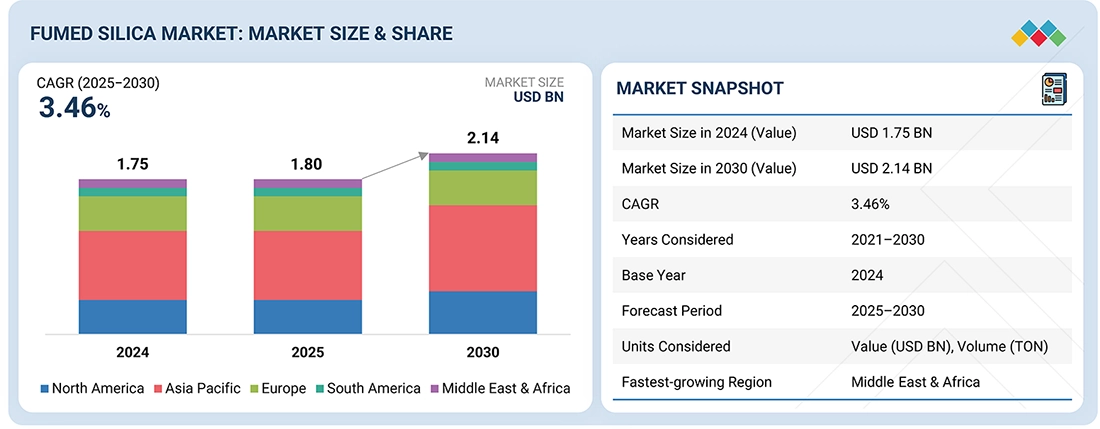
Source: Secondary Research, Interviews with Experts, MarketsandMarkets Analysis
The fumed silica market is expected to reach USD 2.14 billion by 2030 from USD 1.80 billion in 2025, at a CAGR of 3.46% during the forecast period. The rapid electrification and growing expansion of electric vehicles (EVs) are significant catalysts for the fumed silica market. In 2024, worldwide electric vehicle sales have surpassed 17 million, more than double the quantity of vehicles on the road in 2021, with China leading the market and experiencing consistent growth in the US and emerging economies (Source: IEA). This trend is propelling the demand for high-performance materials, as fumed silica is a crucial element in electric vehicles for battery insulation, thermal management systems, lightweight composites, structural adhesives, and sealants. Conversely, the escalating urbanization and extensive infrastructure development initiatives are creating enduring prospects in the construction, coatings, adhesives, sealants, and concrete sectors. Global infrastructure investment requirements are projected to approach USD 79 trillion from 2016 to 2040, necessitating around USD 6.9 trillion annually by 2030 to fulfill sustainable development and climate change objectives. Governments and industry in major economies, including the US, China, India, Germany, and Japan, are increasingly adopting energy-efficient, resilient, and high-performance materials. These advancements position fumed silica as a versatile functional addition that enhances material performance, durability, and sustainability in the rapidly growing industrial and automotive industries.
KEY TAKEAWAYS
-
By RegionAsia Pacific's fumed silica market dominated, with a share of 44.0% in 2024.
-
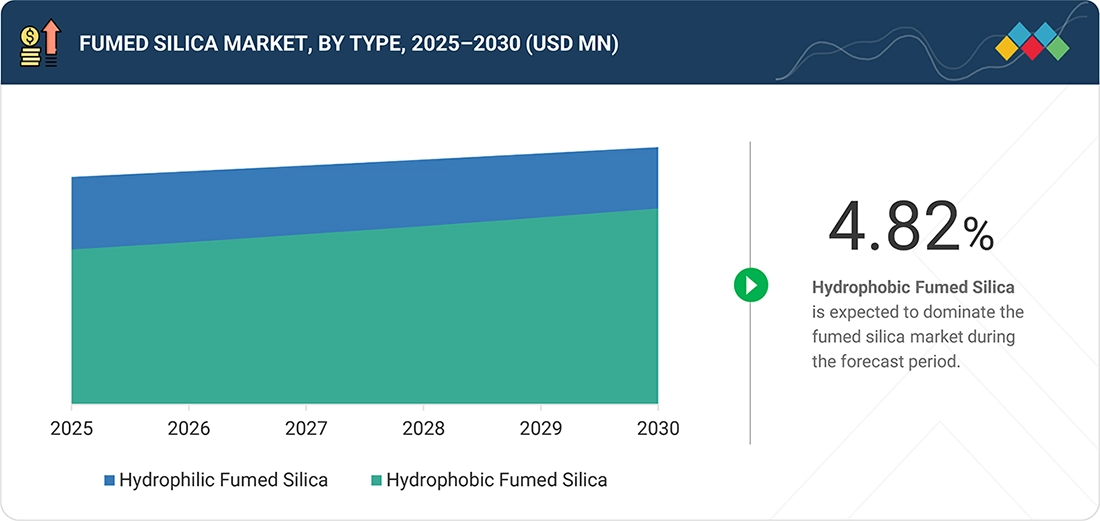
By TypeBy type, the hydrophobic fumed silica segment is expected to register the highest CAGR of 4.82% from 2025 to 2030, in terms of value.
-
By ApplicationBy application, the UPR & Composites segment is expected to register the highest CAGR of 4.03% from 2025 to 2030, in terms of value.
-
By End-use IndustryBy end-use industry, the pharmaceuticals segment is expected to dominate the market, growing at the highest CAGR of 4.36%.
-
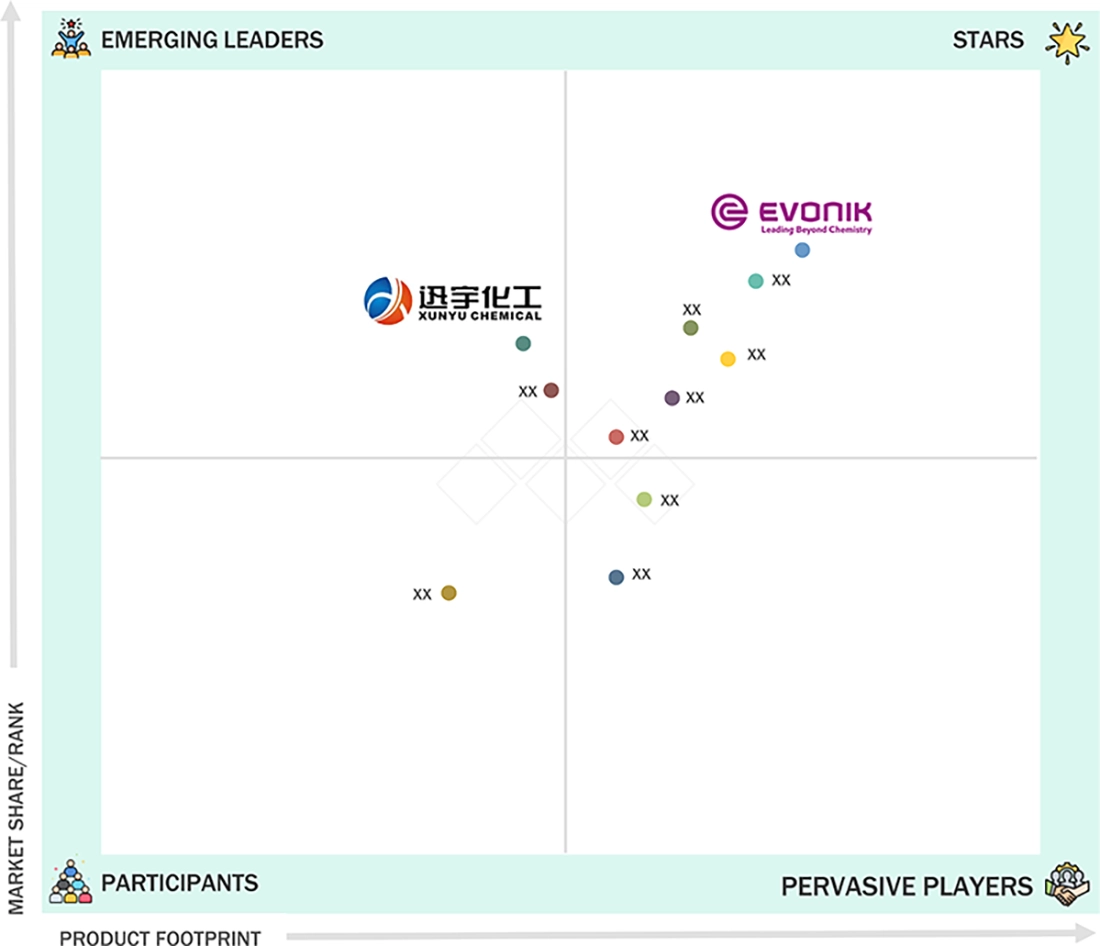
Competitive Landscape - Key PlayersEvonik Industries AG, Wacker Chemie AG, Cabot Corporation, Tokuyama Corporation, and OCI Company Ltd., were identified as Star players in thefumed silica market, as they have focused on innovation and have broad industry coverage, and strong operational & financial strength.
-
Competitive Landscape- StartupsChifeng Shengsen Silicon Technology Development Co., Ltd., Heraeus Covantics, Orisil, Kemitura, among others, have distinguished themselves among startups and SMEs due to their strong product portfolio and business strategy.
The fumed silica market is expanding at a rapid rate as different sectors are in search of materials that can enhance performance, efficiency, and durability. The increasing demand from the automotive, construction, electronics, healthcare, and renewable energy sectors is driving the application of fumed silica as a coating, adhesive, sealant, silicone elastomer, and battery. The trend of using electric vehicles, lightweight composites, and advanced insulation systems is creating a demand for reinforcement, rheology modification, and thermal stability. The focus on sustainability, energy efficiency, and long-lasting infrastructure is fueling the use of fumed silica in green building materials and protective coatings. The pharmaceutical and personal care industries are further fueling the demand for high-purity and stable additives. Government policies that encourage electrification, industrialization, and infrastructure development are further fueling the growth of the market, making fumed silica a critical functional additive in various high-growth industries.
TRENDS & DISRUPTIONS IMPACTING CUSTOMERS' CUSTOMERS
The fumed silica sector is driven by growing end-use industries demanding improved material performance, operational efficiency, and longevity. The transition to electric vehicles, lightweight composites, and sophisticated insulation systems heightens the demand for reinforcement, rheological control, and thermal stability. Sustainability, energy efficiency, and long-term infrastructure development are driving the demand for fumed silica in green building materials and protective coatings. The pharmaceutical and personal care industries are fueling the demand for high-purity and stable additives, while government programs for electrification, industrialization, and infrastructure development are further fueling the demand, making fumed silica a critical functional additive in various high-growth applications.
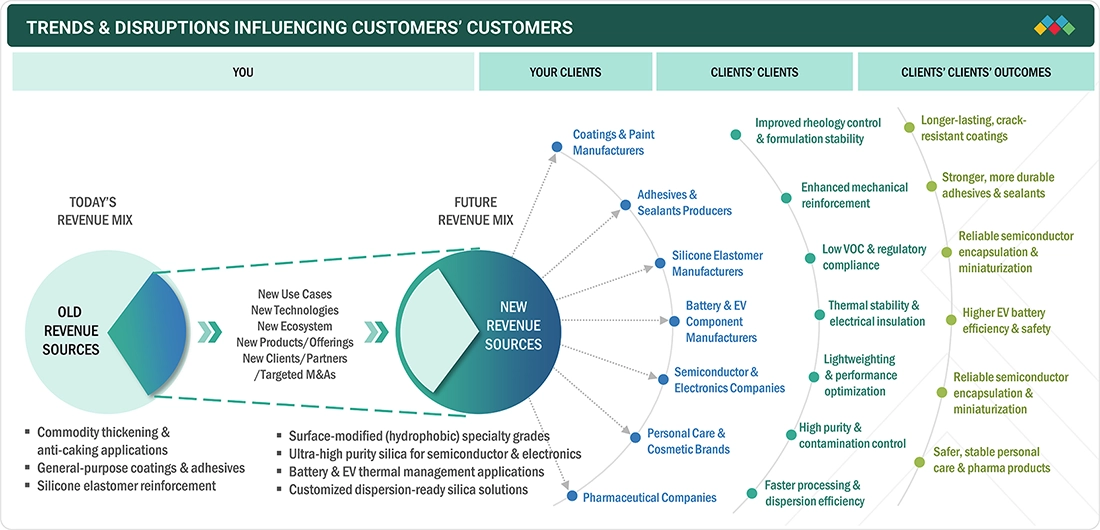
Source: Secondary Research, Interviews with Experts, MarketsandMarkets Analysis
MARKET DYNAMICS

Level
-
Rising EV adoption and advanced material needs

-
Rapid expansion of semiconductor industry


Level
-
Stringent government regulations and environmental concerns regarding handling and disposal

-
Raw material price volatility and supply chain challenges


Level
-
Surging global construction, infrastructure investment, and urban expansion

-
Expanding global beauty consumer base driving growth opportunities


Level
-
Health effects and occupational risk

-
Substitution risk and competition from alternative materials

Source: Secondary Research, Interviews with Experts, MarketsandMarkets Analysis
Driver: Rising EV adoption and advanced material needs
The Automotive and Transportation industry significantly propels the global fumed silica market, driven by swift electrification, lightweighting efforts, and increasing performance and safety standards in both conventional and electric vehicles (EVs). Fumed silica offers superior rheological control, thickening, anti-settling, and reinforcement, which make it a key material for use in paints, coatings, adhesives, sealants, rubbers, and tires. Fumed silica enhances sag resistance, durability, weather resistance, & mechanical strength, hence facilitating structural bonding and high-performance external coatings. The greatest growth potential is observed in electric vehicle production, as manufacturers endeavor to enhance range, accelerate charging, and augment safety. In the production of lithium-ion batteries, fumed silica improves thermal interface materials, prevents filler settling, and reduces the risk of heat dissipation and thermal runaway. It also acts as a nano-porous filler for the separators and insulation layers. Moreover, it improves the performance of gel-type lead-acid batteries by reducing acid stratification. It also improves the use of lightweight composite materials, adhesives, and encapsulants, which help manufacturers design lighter vehicles. According to the International Energy Agency, the global sales of EVs surpassed 17 million units in 2024, which is three times the 2021 fleet, further reinforcing fumed silica demand across automotive applications.
Restraint: Stringent government regulations and environmental concerns regarding handling and disposal
Stringent government regulations on health, safety, and environmental impacts significantly restrain the global fumed silica market. The U.S. FDA authorizes amorphous silicon dioxide, including fumed silica, as a direct food additive under 21 CFR 172.480, principally for use as an anticaking agent, with a maximum allowable concentration of 2% by weight, hence limiting its utilization in powdered foods and flavor carriers. Workplace exposure limits are stringently regulated: in the US, OSHA stipulates a permissible exposure limit (PEL) of 0.8 mg/m³ for respirable fumed silica, whilst SafeWork Australia enforces a time-weighted average of 2 mg/m³, requiring hazard management, ventilation, and personal protective equipment. Under the EU REACH system of regulations, the manufacture of fumed silica has to be registered by the manufacturer along with safety data sheets, risk assessments, emission controls, etc. Environmental issues such as the energy-intensive process of generating ultrafine particles are also examined. Compliance with these regulations requires additional costs to be incurred on dust suppression systems, closed handling systems, clean technologies, etc., thereby increasing costs. Although these are essential for safety, these regulations are also limiting the free expansion of the industry.
Opportunity: Surging global construction, infrastructure investment, and urban expansion
The growing investment in global infrastructure and urbanization is contributing to the rising demand for high-performance materials in the construction, paint, adhesive, sealant, and concrete sectors. The Global Infrastructure Hub estimates that global infrastructure needs will approach USD 79 trillion from 2016 to 2040, resulting in a USD 15 trillion investment shortfall to achieve performance benchmarks and the UN Sustainable Development Goals (SDGs). The OECD estimates that the annual sustainable infrastructure investment required by 2030 is USD 6.9 trillion to meet climate goals. At the same time, the International Energy Agency forecasts the global building floor space to grow from 201 billion m² in 2022 to 298 billion m² by 2030, mainly in emerging countries. Buildings contribute to 34% of worldwide CO2 emissions, leading to an increased demand for durable, energy-efficient materials. Fumed silica improves rheology, strength, and durability in construction materials, facilitating low-carbon, high-performance infrastructure development.
Challenge: Health effects and occupational risk
Occupational exposure to crystalline silica dust is a well-known cause of serious pulmonary diseases, including silicosis, tuberculosis, chronic bronchitis, COPD, and lung cancer. In contrast, synthetic amorphous silicas, such as wet-process silica, pyrogenic (fumed) silica, and chemically or physically modified variants, exhibit a different toxicological profile. Animal studies indicate that inhalation exposure to synthetic amorphous silica can cause partially reversible inflammation of the lungs, granulomas, and emphysema, but lack progressive fibrosis. Epidemiological data indicate that there is little risk of fibrosis among exposed workers, although chronic bronchitis, COPD, or emphysema cannot be entirely ruled out. There is also insufficient evidence to support the classification of amorphous silica as a carcinogen. Although fumed silica is of lower fibrotic risk than crystalline silicas, regulatory attention and fine particulate exposure-related occupational health issues continue to create structural market challenges, underlining the importance of further research and strict exposure limits.
FUMED SILICA MARKET: COMMERCIAL USE CASES ACROSS INDUSTRIES
| COMPANY | USE CASE DESCRIPTION | BENEFITS |
|---|---|---|
 |
Tested AEROSIL 200 Pharma in partnership with Gericke AG and L.B. Bohle for continuous direct compression, including feeding, mixing, and tablet production. The precise application of the glidant at minimal rates provided optimum dispersion, improved powder flow, and consistent die filling during short residence times. | Enhanced flowability and reduced variability, facilitating continuous treatment and precise low-dose administration. Continuous production processes achieved elevated average tablet weights, less weight variability, enhanced crushing strength, and superior mechanical integrity. |
 |
A coatings producer in Hubei Province used HL-200, a hydrophilic fumed silica with a surface area of ~200 m²/g, to counter sedimentation and delamination in 40% powder water-based coatings. The additive was efficiently dispersed at high-speed mixing, creating a hydrogen-bonded three-dimensional structure that stabilized pigments and fillers without influencing gloss or film properties. | Prevented sedimentation and phase separation under prolonged storage conditions while improving viscosity and rheology. Retained consistent gloss, smooth film appearance, and long-term stability, proving optimal suspension performance in water-based coating applications. |
|
|
AEROSIL® fumed silica is used in VRLA gel lead-acid batteries to immobilize sulfuric acid and prevent stratification during cycling. The silica generated by flame creates a thixotropic three-dimensional SiO2 network, facilitating regulated gel formation, structural recovery post-shear, and prolonged electrolyte stabilization. | Eradicates acid stratification, diminishes sulfation and moisture loss, and improves deep-cycle stability and safety. Provides an extended service life, enhanced oxygen recombination efficiency, reduced leakage risk, and greater electrochemical performance relative to traditional systems. |
Logos and trademarks shown above are the property of their respective owners. Their use here is for informational and illustrative purposes only.
MARKET ECOSYSTEM
The fumed silica market is a tightly integrated ecosystem of raw material suppliers, manufacturers, compounders, formulators, technology developers, and regulatory bodies. The major manufacturers are innovation leaders in terms of advanced flame hydrolysis technology, surface modification technology, and high-purity manufacturing. The downstream markets of coatings, adhesives, sealants, silicone elastomers, batteries, pharmaceuticals, and personal care products specify their requirements in terms of rheology modification, reinforcement, and dispersion. The value chain players are challenged in terms of managing energy-intensive manufacturing, logistics, and cost optimization to ensure a stable supply. Regulatory authorities affect market adoption via chemical safety, environmental regulations, and pharmaceutical quality requirements. With the increasing need for electrification, infrastructure, and high-performance materials, effective coordination throughout the value chain is essential for fostering innovation, ensuring product consistency, and maintaining competitive advantage.
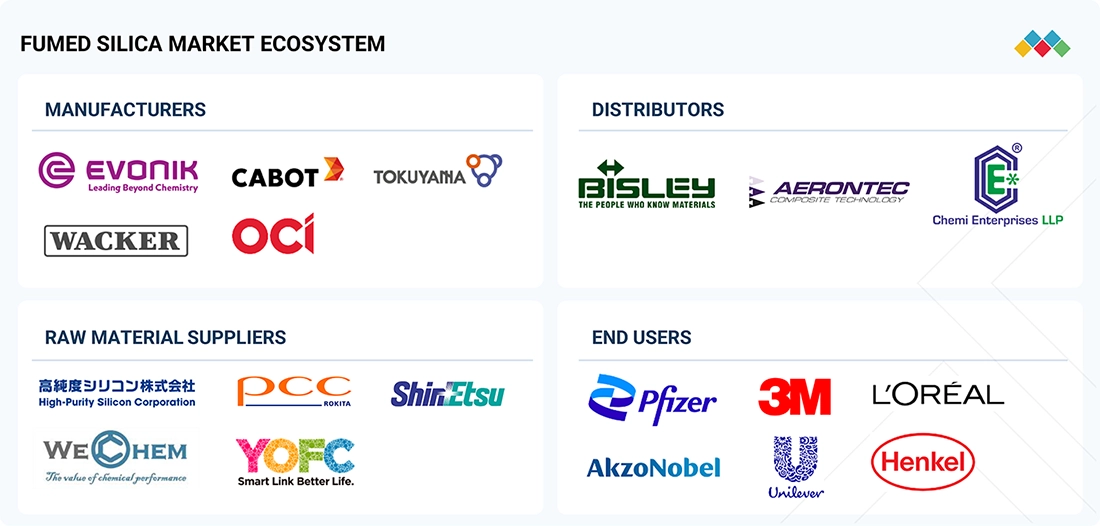
Logos and trademarks shown above are the property of their respective owners. Their use here is for informational and illustrative purposes only.
MARKET SEGMENTS
Source: Secondary Research, Interviews with Experts, MarketsandMarkets Analysis
Fumed Silica Market, By Type
Hydrophilic Fumed Silica led the market in 2024, mainly because of its versatility in various high-volume applications. Its high surface silanol (Si-OH) groups provide excellent hydrogen bonding capabilities, which make it very useful for rheology modification, thickening, anti-settling, and reinforcement. It is widely used in paints & coatings, adhesives & sealants, silicone elastomers, pharmaceuticals, and personal care products, where viscosity modification and dispersion stability are of utmost importance. In coatings and construction chemicals, hydrophilic formulations augment sag resistance, prevent pigment deposition, and promote mechanical durability. In pharmaceutical and cosmetic uses, it aids in flow modulation, suspension stability, and formulation uniformity. Additionally, hydrophilic fumed silica is simpler to process and less complex in terms of processing compared to surface-treated products, making it the dominant one. Its cost-effectiveness, high purity, and compatibility with aqueous and certain polar solvents further increase its demand, making it the leading product in the global fumed silica market.
Fumed Silica Market, By Application
In 2024, silicone elastomers constituted the predominant segment, driven by their extensive use in automotive, electrical and electronics, construction, healthcare, and industrial sectors. Fumed silica serves as an essential reinforcing filler in silicone elastomers, markedly improving tensile strength, rip resistance, elasticity, and thermal stability. The high surface area and strong affinity of fumed silica with silicone polymers enable the preparation of materials with improved mechanical properties without sacrificing flexibility. In the automotive sector, silicone elastomers are used extensively in the production of gaskets, seals, hoses, and insulation parts that need to withstand extreme temperatures and harsh environmental conditions. Silicone elastomers provide excellent insulation and protection against moisture and vibrations in the electronics sector. The increasing use of high-performance, lightweight, and durable materials in various end-use industries is thereby propelling the demand for silicone elastomers, solidifying their leading market position in the fumed silica market.
Fumed Silica Market, By End-use Industry
In 2024, the automotive & transportation industry accounted for the largest market share due to the rapid adoption of electric vehicles and the growing requirement for advanced mobility solutions. The International Energy Agency (IEA) states that global EV sales were over 17 million units in 2024, making a 25% increase against the previous year, and these EV sales accounted for more than 20% of the total new vehicle sales worldwide. China was the leading market with over 11 million units sold, while the US and emerging economies showed steady growth, resulting in a total global EV population of nearly 58 million vehicles. This fast-paced electrification trend has had a profoundly positive impact on the demand for high-performance materials such as fumed silica. Fumed silica is mainly used as a battery insulation component, thermal management component, structural adhesive, sealant, and lightweight composite material to enhance safety, mechanical properties, and durability. The rising production of electric vehicles globally has intensified the demand for a material that is reliable, thermally stable, and lightweight, establishing the Automotive & Transportation sector as a significant driving force in the fumed silica market.
REGION
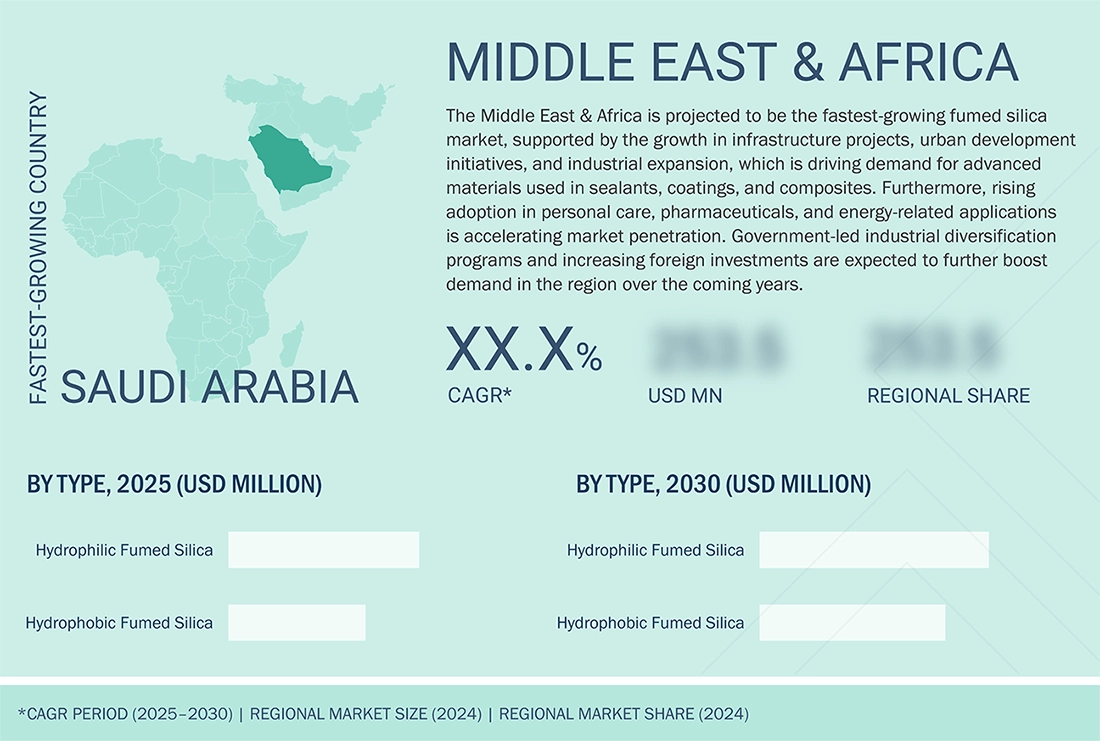
Middle East & Africa to be the fastest-growing region in the fumed silica market during the forecast period
The Middle East & Africa is expected to be the fastest-growing fumed silica market, supported by strong macroeconomic conditions and infrastructure-driven growth. The IMF reports that the Middle East has a nominal GDP of roughly USD 3.92 trillion and a real GDP growth rate of 3.5%, but Africa's GDP is nearly USD 3.3 trillion, exhibiting a higher growth rate of 4.3%, indicative of robust non-oil sector reforms and increasing public and private investments. Large-scale investments in the GCC and MENA groups of countries in the construction, oil & gas, transportation, and manufacturing sectors are fueling the demand for advanced materials. Saudi Arabia leads this trend with its Vision 2030 plans, whereas the UAE & Qatar are at the forefront of the demand for smart city development, tourism infrastructure, and renewable energy projects. One of the main contributors in the sub-Saharan region is South Africa. Fumed silica is a critical material in the paints & coatings, adhesives & sealants, silicone elastomers, and construction composites industries, backed by improved rheology control, reinforcement, anti-settling, and durability in adverse climatic conditions, making MEA a strategic high-growth market.
FUMED SILICA MARKET: COMPANY EVALUATION MATRIX
Evonik Industries AG (Star) is a leading company in the fumed silica industry with high-performance AEROSIL products for various applications. With its strong R&D background, global manufacturing network, and sustainable production processes, the company provides consistent quality, technical support, and innovative silica solutions to improve rheology, dispersion, mechanical properties, and processability. Xunyu Group (Emerging Leader) is expanding its business in the fumed silica industry through cost-effective manufacturing, expanding local production capacity, and meeting the increasing demand for silicone rubber, coatings, inks, and sealants. The company enhances scalable supply, product performance, and adoption in construction, automotive, and industrial applications through ongoing process optimization and regional market penetration.
Source: Secondary Research, Interviews with Experts, MarketsandMarkets Analysis
KEY MARKET PLAYERS
- Evonik Industries AG (Germany)
- Wacker Chemie AG (Germany)
- Cabot Corporation (US)
- Tokuyama Corporation (Japan)
- OCI Company Ltd. (South Korea)
- Dongyue Group (China)
- Hoshine Silicon Industry Co., Ltd. (China)
- Hubei Xingfa Chemicals Group Co., Ltd. (China)
- Hubei Huifu Nanomaterial Co., Ltd. (China)
- Xunyu Group (China)
- Applied Material Solutions (US)
MARKET SCOPE
| REPORT METRIC | DETAILS |
|---|---|
| Market Size in 2024 (Value) | USD 1.75 BN |
| Market Size in 2030 (Value) | USD 2.14 BN |
| CAGR | 3.46% |
| Years Considered | 2021–2030 |
| Base Year | 2024 |
| Forecast Period | 2025–2030 |
| Units Considered | Value (USD BN), Volume (Ton) |
| Report Coverage | Revenue forecast, company ranking, competitive landscape, growth factors, and trends |
| Segments Covered |
|
| Regions Covered | North America, Europe, Asia Pacific, South America, and Middle East & Africa |
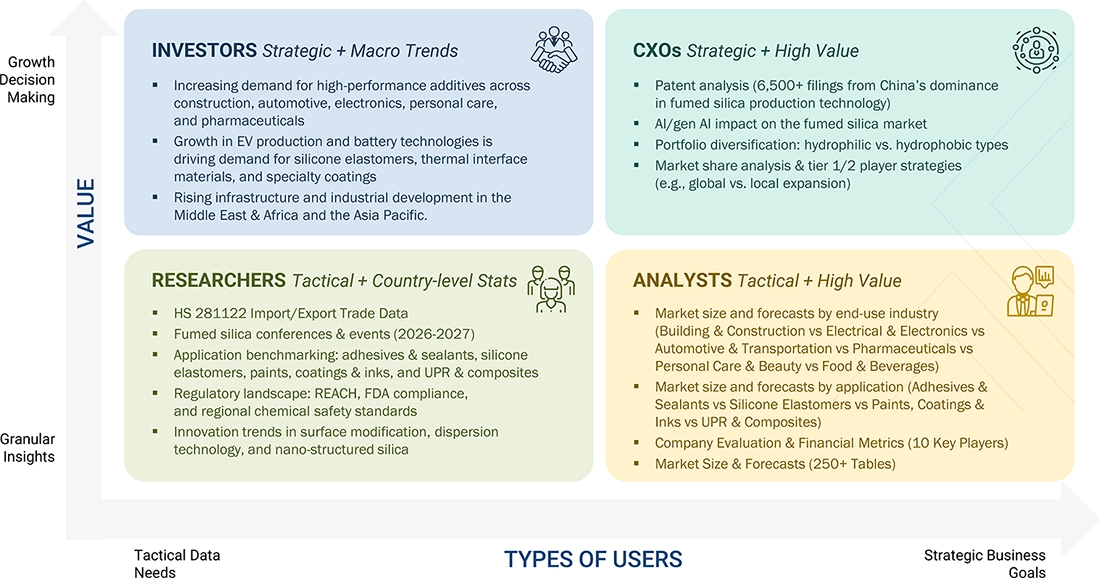
WHAT IS IN IT FOR YOU: FUMED SILICA MARKET REPORT CONTENT GUIDE
DELIVERED CUSTOMIZATIONS
We have successfully delivered the following deep-dive customizations:
| CLIENT REQUEST | CUSTOMIZATION DELIVERED | VALUE ADDS |
|---|---|---|
| US-based Fumed Silica Manufacturers |
|
|
| Hydrophobic Fumed Silica Manufacturers |
|
|
| Hydrophilic Fumed Silica Manufacturers |
|
|
RECENT DEVELOPMENTS
- January 2025 : Wacker Chemie AG established new specialty silicone production facilities in Tsukuba, Japan, and Jincheon, South Korea, to meet the increasing demand in the automotive, electromobility, electronics, and construction sectors in Asia.
- August 2024 : OCI Company Ltd. acquired 100% of P&O Chemical from POSCO Future M for USD 40 million, strengthening its semiconductor and rechargeable battery materials division.
- June 2024 : Evonik Industries inaugurated a new AEROSIL® Easy-to-Disperse (E2D) fumed silica facility in Rheinfelden to augment sustainable production and promote efficiency in paints, coatings, and ink applications.
- June 2024 : Wacker Chemie AG launched a new silicone specialty production facility in Karlovy Vary, Czech Republic, targeting the electromobility, healthcare, and renewable energy industries from late 2025.
- March 2023 : Hoshine Silicon Industry Co., Ltd. expanded its Xinjiang business by partnering with local authorities to promote silicon materials, photovoltaics, and semiconductor production with a green development strategy.
Table of Contents
 Exclusive indicates content/data unique to MarketsandMarkets and not available with any competitors.
Methodology
The study involved four major activities to estimate the current size of the global fumed silica market. Exhaustive secondary research was carried out to collect information on the market, the peer product market, and the parent product group market. The next step was to validate these findings, assumptions, and sizes with the industry experts across the value chain of fumed silica through primary research. The top-down and bottom-up approaches were employed to estimate the overall size of the fumed silica market. After that, market breakdown and data triangulation procedures were used to determine the size of different segments and sub-segments of the market.
Secondary Research
The market for companies offering fumed silica is arrived at by secondary data available through paid and unpaid sources, analyzing the product portfolios of the major companies in the ecosystem, and rating the companies by their performance and quality. Various secondary sources, such as Business Standard, Bloomberg, World Bank, and Factiva, were referred to identify and collect information for this study on the fumed silica market. In the secondary research process, various secondary sources were referred to identify and collect information related to the study. Secondary sources included annual reports, press releases, and investor presentations of door vendors, forums, certified publications, and white papers. The secondary research was used to obtain critical information on the industry’s value chain, the total pool of key players, market classification, and segmentation from the market and technology-oriented perspectives.
Primary Research
In the primary research process, various primary sources from both the supply and demand sides were interviewed to obtain qualitative and quantitative information for this report. The primary sources from the supply side included industry experts, such as Chief Executive Officers (CEOs), Vice Presidents (VPs), marketing directors, technology and innovation directors, and related key executives from several key companies and organizations operating in the fumed silica market. After the complete market engineering (calculations for market statistics, market breakdown, market size estimations, market forecasting, and data triangulation), extensive primary research was conducted to gather information and verify and validate the critical numbers arrived at. Primary research was also conducted to identify the segmentation types, industry trends, competitive landscape of fumed silica offered by various market players, and key market dynamics, such as drivers, restraints, opportunities, challenges, industry trends, and key player strategies. In the complete market engineering process, the top-down and bottom-up approaches and several data triangulation methods were extensively used to perform the market estimation and market forecasting for the overall market segments and subsegments listed in this report. Extensive qualitative and quantitative analysis was performed on the complete market engineering process to list the key information/insights throughout the report.
Following is the breakdown of primary respondents:
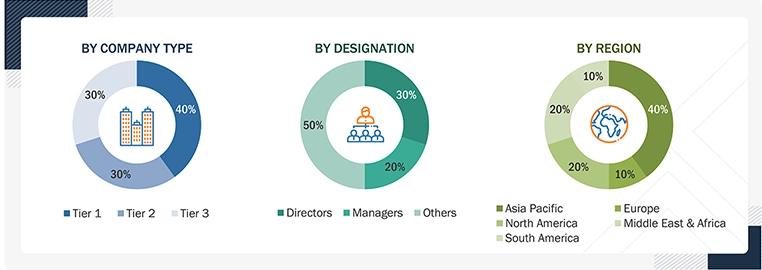
Notes: Other designations include sales, marketing, and product managers.
Tier 1: >USD 1 Billion; Tier 2: USD 500 million–1 Billion; and Tier 3: <USD 500 million.
To know about the assumptions considered for the study, download the pdf brochure
Market Size Estimation
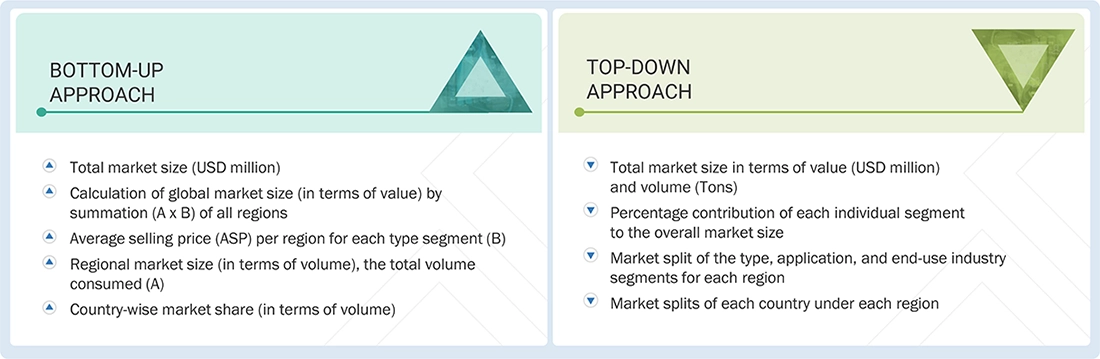
The top-down and bottom-up approaches were used to estimate and validate the size of the global fumed silica market. These approaches were also used extensively to estimate the size of various dependent market segments. The research methodology used to estimate the market size included the following:
Fumed Silica Market : Top-Down and Bottom-Up Approach
Data Triangulation
After arriving at the overall market size using the market size estimation processes, the market was split into several segments and subsegments. The data triangulation and market breakup procedures were employed, wherever applicable, to complete the overall market engineering process and arrive at the exact statistics of each market segment and subsegment. The data was triangulated by studying various factors and trends from both the demand and supply sides.
Market Definition
Fumed silica, or pyrogenic silica, is a synthetic, amorphous variant of silicon dioxide (SiO2) generated via high-temperature flame hydrolysis of silicon tetrachloride in a hydrogen-oxygen flame. This process forms microscopic, non-porous particles fused into branched chain-like structures, resulting in a white powder with high purity (>99.8%), very high specific surface area (50–400 m²/g, BET), and low bulk density. It is classified into hydrophilic and hydrophobic grades. Hydrophilic fumed silica contains surface hydroxyl groups, enabling strong water affinity and good dispersion in polar systems. Hydrophobic grades undergo surface treatment with silanes or siloxanes, which diminishes moisture absorption and enhances compatibility with non-polar systems. Due to its unique structure, fumed silica functions as a rheology modifier and performance additive, providing thickening, thixotropy, reinforcement, anti-settling, and flow control in silicones, coatings, adhesives, sealants, composites, pharmaceuticals, cosmetics, food, and electronics. It is crystalline-free and chemically distinct from hazardous crystalline silica forms.
Key Stakeholders
- Fumed silica manufacturers
- Raw material suppliers
- Converters & processors
- Distributors and traders
- Industry associations and regulatory bodies
- End users
Report Objectives
- To define, describe, and forecast the size of the global fumed silica market, based on type, application, end-use industry, and region in terms of value and volume
- To provide detailed information on the significant drivers, restraints, opportunities, and challenges influencing the market
- To strategically analyze micromarkets1 concerning individual growth trends, prospects, and their contribution to the market
- To assess the growth opportunities in the market for stakeholders and provide details on the competitive landscape for market leaders
- To forecast the market size of segments and subsegments for North America, Europe, Asia Pacific, South America, and the Middle East & Africa
- To strategically profile key players and comprehensively analyze their market shares and core competencies
- To analyze competitive developments such as product launches, acquisitions, expansions, partnerships, and agreements in the fumed silica market
- To provide the impact of AI/Gen AI on the market
Available customizations:
With the given market data, MarketsandMarkets offers customizations according to client-specific needs.
The following customization options are available for the fumed silica market report:
Product Analysis.
- A product matrix that gives a detailed comparison of the product portfolio of each company.
Regional Analysis
- A further breakdown of the fumed silica market for additional countries
Company Information
- Detailed analysis and profiling of additional market players (up to five)
Frequently Asked Questions (FAQ):
What is the current size of the global fumed silica market?
The global fumed silica market size is projected to grow from USD 1.3 billion in 2021 to USD 1.6 billion by 2026, at a CAGR of 5.1% from 2021 to 2026.
How is the fumed silica market aligned?
The fumed silica market is consolidated, with a 75%-80% share held by the top three companies.. These players have strong and well-established procurement and distribution networks, which help in cost-efficient production.
Who are the key players in the global fumed silica market?
Key manufacturers in the fumed silica market are Evonik Industries (Germany), Cabot Corporation (US), Wacker Chemie AG (Germany), Tokuyama Corporation (Japan), and Applied Material Solutions Inc. (US), among others.
What are the factors driving the growth of the fumed silica market?
The growth of the fumed silica market is attributed to the increase in demand for fumed silica for numerous applications, particularly for silicone elastomers. .
To speak to our analyst for a discussion on the above findings, click Speak to Analyst


Personalize This Research
- Triangulate with your Own Data
- Get Data as per your Format and Definition
- Gain a Deeper Dive on a Specific Application, Geography, Customer or Competitor
- Any level of Personalization
Let Us Help You
- What are the Known and Unknown Adjacencies Impacting the Fumed Silica Market
- What will your New Revenue Sources be?
- Who will be your Top Customer; what will make them switch?
- Defend your Market Share or Win Competitors
- Get a Scorecard for Target Partners

Custom Market Research Services
We Will Customise The Research For You, In Case The Report Listed Above Does Not Meet With Your Requirements
Get 10% Free CustomisationTESTIMONIALS
We at Nissan Chemicals Corporation have been clients of MarketsandMarkets for more than a year now. We recently consulted MarketsandMarkets for a study, the team at MarketsandMarkets was extremely professional and organized. The business insights were very detailed and aligned well with our expectations that really helped us formulate the Business Plans and device new strategies for development themes. MarketsandMarkets offers a unique combination of expertise and dedicated engagement model. Their research findings have helped us in designing our Pricing Strategy which will make it easier for us to predict the future sales and profits for the next ten years. We look forward to working with MarketsandMarkets in the future.
VP of Strategy & New Business Development
Leading Specialty Chemical Company
The MarketsandMarkets Engagement Model, composed of both the Knowledge Store and advisory custom research, has greatly helped us in understanding our markets and making strategic decisions. The Knowledge Store is a fast way to allow everyone in our organization to understand more about most any market they are interested in. The ability to then get custom research done and get answers to specific strategic questions and market insight has been spectacular. The Markets and Markets team feel more like colleagues than vendors and their services have helped us change our culture where statements of things like growth opportunities and competitive position are always backed by industry research.

Rich Gibson,
Director, Corporate Strategy
Milliken & Company,
Leading Industrial Manufacturer of specialty chemical, floor covering, performance and protective textile materials, and healthcaremilliken.com
MarketsandMarkets is a trusted resource that helps us to better understand markets that are near-adjacencies-whether its technology, value chain or geography. Their Knowledge Store platform provides a dashboard of markets and their characteristics which is easy to use and saves us time.
Adam Shaw,
Market Development and Strategy Manager
AdvanSix Inc. USA,
An American Leader in Chemicalswww.advansix.com
The Knowledge Store from MarketsandMarkets is a valuable tool which has helped my team acquire greater insight in to the end markets that our business serves. This has enabled us to help our company build stronger strategies throughout our planning process.
TOSHIO KINOSHITA
Senior Chif Consultion Research & Consulting Division
Mitsubishi Chemical Research Corporation,
Leading Manufacturer of Chemical Productswww.mitsubishichem-res.co.jp/en/

We recently engaged with MarketsandMarkets for a study, the team not only clearly understood our business objectives but was also extremely professional in the way they handled the entire project. The study was efficiently conducted in a phase-wise manner, and the engagement model furnished us with high-quality business insights that far exceeded our expectations at each phase. We were especially happy that MarketsandMarkets could provide us with both, an English as well as a Japanese version of the study. A special thanks to the Analyst Team and Client Services Team, whose fluency in Japanese enhanced our comfort level, as we could converse with them in our preferred language.
Independent entrepreneurs
Arrow Precision
We approached MarketsandMarkets for study on Proppants Market, and their work exceeded our expectations. The study conducted was comprehensive and enabled us to view the market through the various dimensions. In addition, the team was extraordinarily responsive throughout the process and resolved our queries on time. I strongly recommend MarketsandMarkets and will certainly consider them for additional market assessments we will need in the future.
Global engineering company, Japan
Deputy Manager,
Strategic Planning OfficeThe high-quality insights shared by the MarketsandMarkets team helped us understand the pharmaceutical plant designers in a specific geography. It also captured the risks that we may likely face in communicating with our potential partners. The study would enable us identify partners, which would impact our future growth.
- China Fumed Silica Market
- India Fumed Silica Market
- Japan Fumed Silica Market
- South Korea Fumed Silica Market
- Germany Fumed Silica Market
- UK Fumed Silica Market
- France Fumed Silica Market
- Russia Fumed Silica Market
- Spain Fumed Silica Market
- Belgium Fumed Silica Market
- Italy Fumed Silica Market
- South Africa Fumed Silica Market
- Brazil Fumed Silica Market
- Argentina Fumed Silica Market
- Rest Of Asia Pacific Fumed Silica Market






Growth opportunities and latent adjacency in Fumed Silica Market