HVAC Filters Market

HVAC Filters Market by Material (Fiberglass, Synthetic Polymer, Carbon, Metal), Technology (HEPA, Electrostatic Precipitator, Activated Carbon), End-use Industry (Building & Construction, Pharmaceutical, Food & Beverage) & Region - Global Forecast to 2031




OVERVIEW
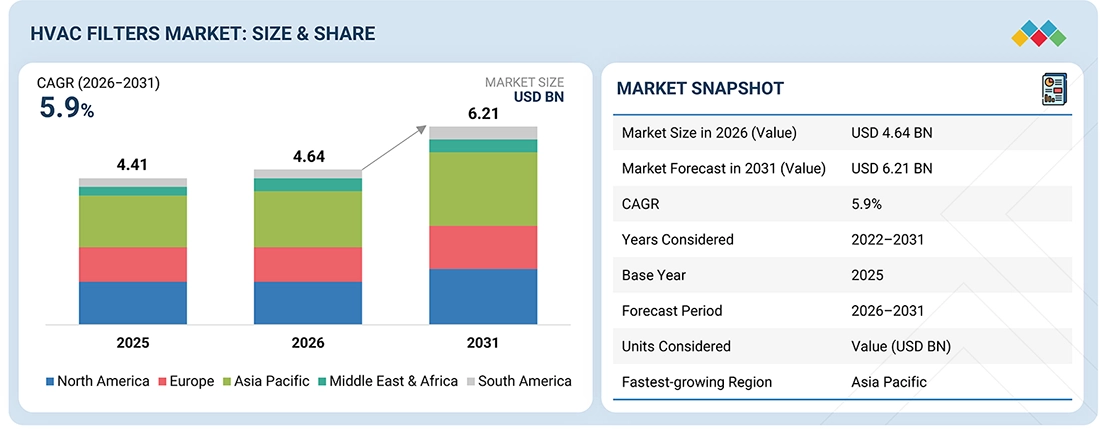
Source: Secondary Research, Interviews with Experts, MarketsandMarkets Analysis
The HVAC filters market size is projected to grow from USD 4.66 billion in 2026 to USD 6.21 billion by 2031, registering a CAGR of 5.9% during the forecast period. The HVAC filters market is expected to grow steadily over the forecast period due to increased demand for better indoor air quality, stringent air quality regulations, and the expansion of the construction sector. Rising awareness of airborne pollutants, allergens, and pathogens is increasing adoption of high-efficiency filtration solutions, especially in hospitals, data centers, schools, and even manufacturing plants. Meanwhile, rapid urbanization, industrial expansion, and stricter workplace safety requirements are driving facilities to upgrade their filtration systems. Increasing focus on sustainability, energy conservation, and regulatory compliance further supports the adoption of advanced HVAC filter technologies worldwide.
KEY TAKEAWAYS
-
By RegionAsia Pacific dominated the HVAC filters market, with a share of 37.0%, in terms of value, in 2025.
-
By MaterialThe carbon segment dominates the HVAC filter market with a share of 39.6%, in terms of value, in 2025.
-
By TechnologyBased on technology, the HEPA segment is projected to register the highest CAGR of 5.4% in the HVAC Filter market during the forecast period.
-
By End-Use IndustryThe building & construction segment held the largest market share of 39.0%, in terms of value, in 2025.
-
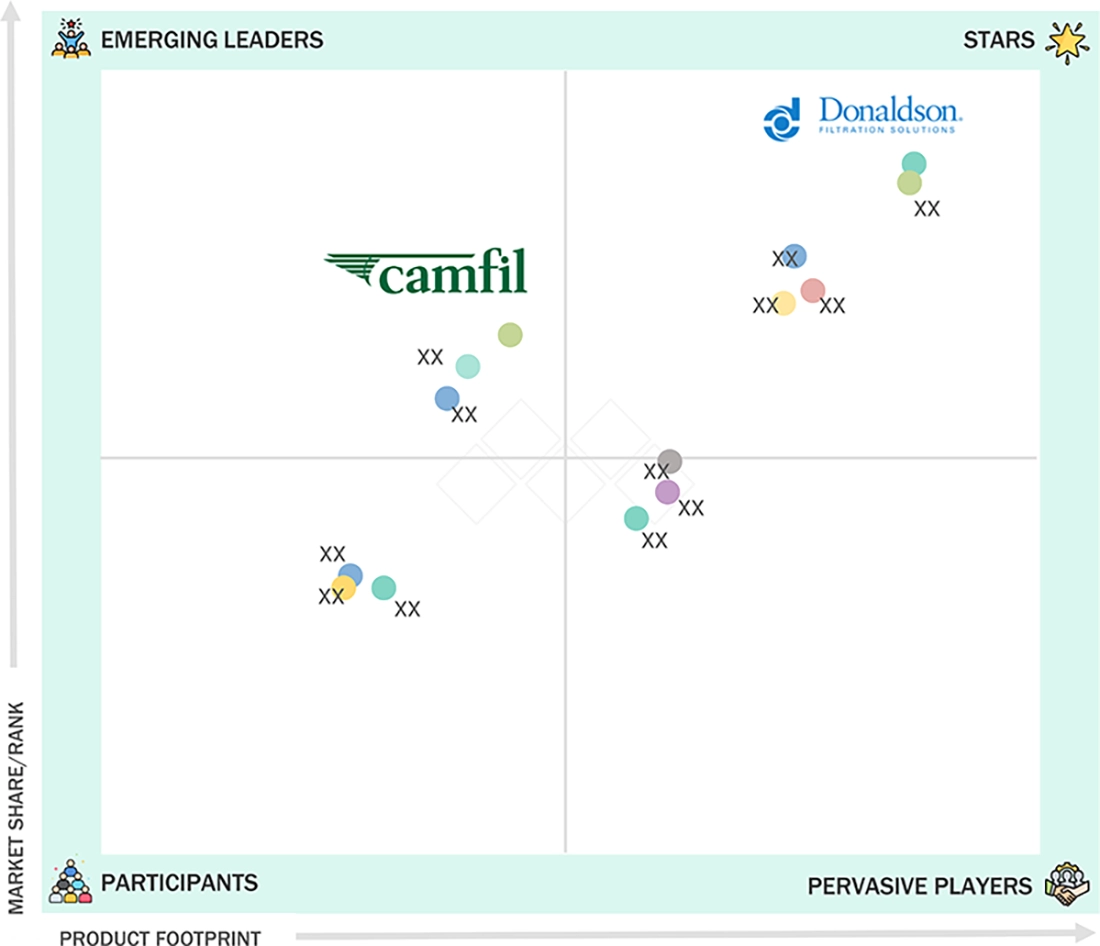
COMPETITIVE LANDSCAPE- KEY PLAYERSCompanies such as Donaldson Company, Inc., Parker Hannifin Corporation, and 3M were identified as some of the star players in the HVAC Filters market, given their strong market share and product footprint
-
COMPETITIVE LANDSCAPE- STARTUPSAir Filters, Inc., Tex-Air Filters, and A-J Manufacturing, among others, have distinguished themselves among startups and SMEs by securing strong footholds in specialized niche areas, underscoring their potential as emerging market leaders.
Multiple factors contribute to the steady growth of the HVAC filters market. One factor that drives the market is urbanization and industrialization, along with an increased focus on indoor air quality. Stringent air quality laws have been driving increased use of advanced filtration systems in residential, commercial, and industrial buildings. There is growing understanding of the adverse health effects associated with airborne contaminants, allergens, and pathogens, which in turn has driven demand for high-quality filters in healthcare facilities, data centers, educational institutions, and manufacturing facilities. Improvements in filter technology, energy-efficient filter designs, and innovative HVAC systems are helping to enhance filtration efficacy and minimize costs.
TRENDS & DISRUPTIONS IMPACTING CUSTOMERS' CUSTOMERS
The demand for HVAC filters is increasing steadily due to increased awareness regarding indoor air quality, energy efficiency, and compliance with standards within various industries. The demand for HVAC filters is increasing not only in commercial buildings but also in hospitals, data centers, manufacturing facilities, educational institutions, and even in residential sectors. The innovation in filtration media, nanofibers, and high-efficiency filters is increasing the particle removal capabilities, along with saving energy and costs. Increasing standards for indoor air quality and workplace safety, along with the growing adoption of green building practices, are driving growth in the HVAC filter market. Also, the use of intelligent HVAC systems and monitoring technologies for filters is enhancing the performance of HVAC filters.
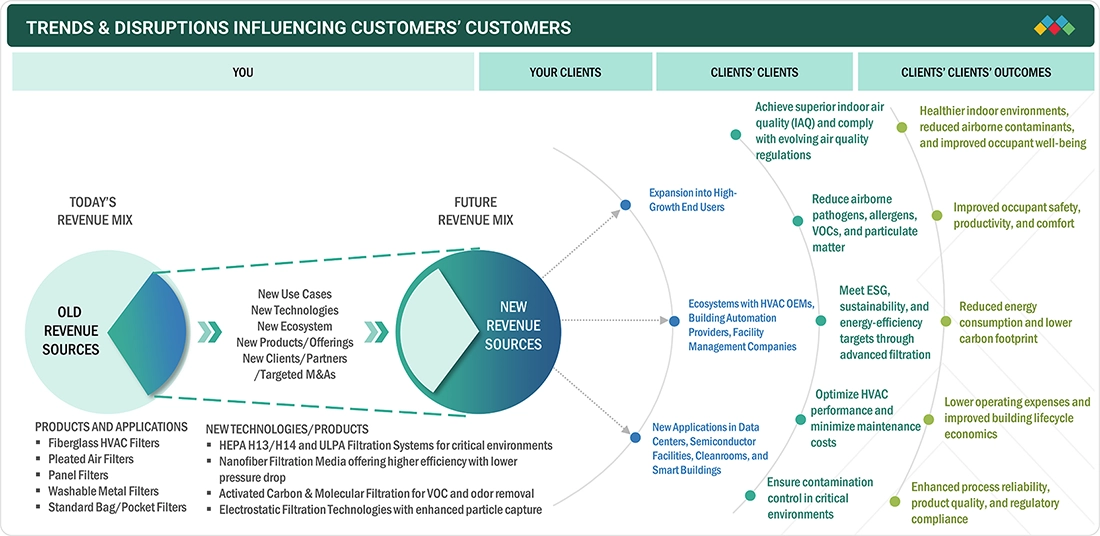
Source: Secondary Research, Interviews with Experts, MarketsandMarkets Analysis
MARKET DYNAMICS

Level
-
Increasing Focus on Indoor Air Quality

-
Stringent Air Quality and Building Regulations


Level
-
High Maintenance and Replacement Costs

-
Pressure Drop and Energy Consumption Concerns


Level
-
Growing Adoption of Smart and Connected HVAC Systems

-
Expansion of Green Buildings and Sustainable Infrastructure


Level
-
Balancing Filtration Efficiency with Energy Efficiency

-
Volatility in Raw Material Prices

Source: Secondary Research, Interviews with Experts, MarketsandMarkets Analysis
Driver: Increasing Focus on Indoor Air Quality
One of the key factors driving the HVAC filters market is the rising importance of indoor air quality. Due to increasing awareness of the impact of contaminants such as dust, pathogens, pollen, VOCs, and allergens in indoor air quality on people’s health, there is a growing demand for better filtration products. Hospitals, schools, office spaces, and other public places are installing highly efficient filters in order to make their environments safer and protect people from airborne diseases. Also, lessons learned from past public health emergencies have underscored the importance of effective air filtration. Moreover, increasing urbanization and industrialization across regions have raised concerns about indoor air pollution, prompting investments in HVAC filters.
Restraint: High Maintenance and Replacement Costs
The cost of maintenance and replacement remains a major constraint on the HVAC filters market. HVAC filters need to be inspected, cleaned, and replaced to maintain filtration efficiency and maximize system performance. High-efficiency HVAC filters, such as HEPA and activated carbon filters, are usually more expensive than standard filters. Large commercial buildings, hospitals, industries, and data centers incur huge maintenance costs with regards to filter replacement, especially when there is a need for multiple levels of filtration. Moreover, labor costs related to the filter replacement can also add to the operational cost. Financial constraints faced by small businesses and individuals may make it difficult to opt for high-efficiency HVAC filters due to their high price.
Opportunity: Growing Adoption of Smart and Connected HVAC Systems
The fast development of smart buildings and IoT HVAC solutions represents an excellent opportunity for HVAC filters. There is an increasing demand from building managers who implement IoT-based HVAC solutions that allow them to monitor air quality, airflow, and the effectiveness of the filters. With smart filtration systems installed with sensors, it is possible to receive notifications about the necessity of changing the filters. Predictive maintenance technology allows enhancing the effectiveness of HVAC solutions and increasing their lifetime. Furthermore, smart building solutions which are aimed at energy saving, occupant comfort, and sustainability require more sophisticated filtration systems that will be able to fit into the building management system.
Challenge: Balancing Filtration Efficiency with Energy Efficiency
Juggling filtration efficiency with energy efficiency remains a major headache for HVAC filter makers and the folks using the systems. On one hand, high-efficiency filters are made to snag very small particles, allergens, bacteria, and a bunch of other airborne pollutants; but on the other hand, they can also bring more airflow resistance, so there’s usually a higher pressure drop through the HVAC pathway. When that happens, you may see higher energy use, higher day-to-day costs, and sometimes weaker overall system performance, especially if no one is really watching the trade-offs. Building operators usually want a filtration setup that improves indoor air quality but without draining energy or shortening the equipment lifespan. So manufacturers are investing more in upgraded filter media, nanofiber-based technologies, and fresh design approaches, all aimed at reducing pressure drop while maintaining strong filtration performance. Getting that balance right matters more and more, as sustainability and energy conservation continue to rise in priority across much of the world.
HVAC FILTERS MARKET: COMMERCIAL USE CASES ACROSS INDUSTRIES
| COMPANY | USE CASE DESCRIPTION | BENEFITS |
|---|---|---|
 |
Designs and manufactures a broad range of HVAC filtration solutions, including panel, pleated, bag, rigid, HEPA, and molecular filters for commercial buildings, healthcare facilities, data centers, pharmaceuticals, and industrial applications; Focuses on improving indoor air quality, energy efficiency, and system protection through advanced filtration media and innovative filter designs | High filtration efficiency, improved indoor air quality, extended HVAC equipment life, reduced energy consumption, and strong expertise in contaminant control across diverse applications |
 |
Provides HVAC filtration products through its filtration business, offering air filters for commercial, industrial, healthcare, and cleanroom environments; Emphasizes advanced filtration technologies, energy-efficient performance, and compliance with stringent indoor air quality standards | Enhanced airborne particle removal, energy-efficient operation, regulatory compliance support, reliable system performance, and comprehensive filtration solutions for critical environments |
 |
Develops high-performance HVAC filtration solutions utilizing proprietary nonwoven and electrostatic filtration technologies; Serves residential, commercial, healthcare, and institutional facilities with products designed to capture fine particulates while maintaining airflow efficiency | Superior particulate capture, lower pressure drop, improved airflow, enhanced occupant health and comfort, and reduced operating costs through energy-efficient filtration performance |
 |
Manufactures a comprehensive portfolio of HVAC air filtration products, including prefilters, rigid filters, pocket filters, HEPA filters, and gas-phase filtration systems; Serves commercial buildings, healthcare facilities, industrial plants, and specialized clean-air applications | Broad product portfolio, high indoor air quality performance, protection of HVAC equipment, support for sustainability initiatives, and effective filtration for demanding environments |
 |
Offers a wide range of HVAC filtration solutions through multiple brands, including panel, pleated, bag, rigid, HEPA, ULPA, and molecular filters; Serves commercial, industrial, healthcare, pharmaceutical, and data center markets with a focus on clean air, energy efficiency, and sustainability | Comprehensive filtration expertise, strong contaminant removal capabilities, customized solutions, improved energy efficiency, and reliable performance in critical air quality applications |
Logos and trademarks shown above are the property of their respective owners. Their use here is for informational and illustrative purposes only.
MARKET ECOSYSTEM
The HVAC filters market operates through cooperation among filter manufacturers, filtration media suppliers, HVAC system manufacturers, distributors, and facility management companies serving commercial, industrial, healthcare, educational, and residential end-users. Filters help clean the air from particulate matter, allergens, microorganisms, and other impurities, thus ensuring better air quality and safety of HVAC equipment. The largest centers of production and distribution of HVAC filters are located in North America, Europe, and Asia Pacific owing to fast urbanization and increased activity in the construction business and energy-efficient buildings. The rising awareness about the importance of occupants’ health, tough indoor air quality legislation, and sustainability trends fuel the demand for innovative filtration technologies providing high-quality air, system performance, energy efficiency, and compliance with regulations.
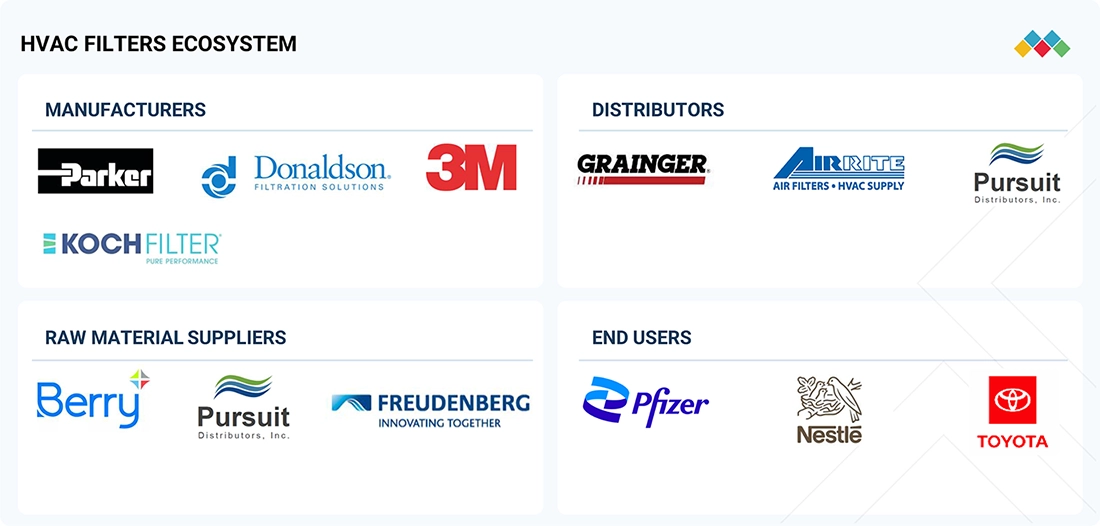
Logos and trademarks shown above are the property of their respective owners. Their use here is for informational and illustrative purposes only.
MARKET SEGMENTS
Source: Secondary Research, Interviews with Experts, MarketsandMarkets Analysis
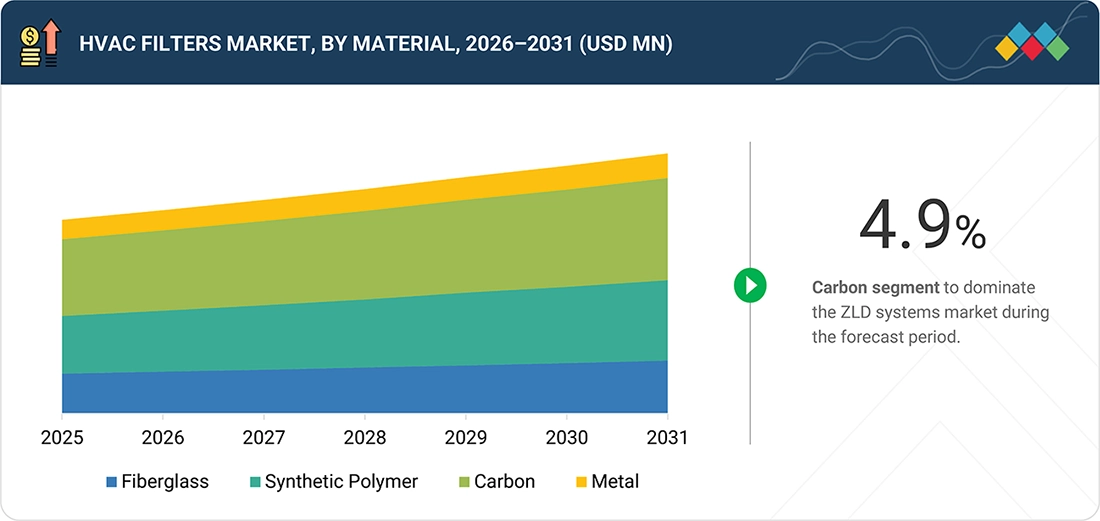
HVAC Filters Market, by Material
Filters used in HVAC can be segmented by material into four major groups: fiberglass, synthetic polymer, carbon, and metal. Of all the above-mentioned filter types, carbon filters have the largest market share because of their ability to remove odors, VOCs, smoke, and other gaseous emissions. Fiberglass filters are used as an inexpensive alternative for basic particulate filtration, while synthetic polymer filters offer better dust removal, greater durability, and more effective filtration. Metal filters are used in industry where reusable and washable filters are required. The growing importance of carbon filters is explained by the increasing demand for improving indoor air quality, strict air quality requirements, and demand for carbon filters from healthcare facilities, commercial buildings, and industry.
HVAC Filters Market, by Technology
The HVAC filters market is segmented according to technology into four major categories which include: electrostatic precipitators, HEPA filters, activated carbon filters, and others. Of the four, HEPA filters occupy the highest market share owing to their high efficiency in collecting up to 99.97% of particulates of size 0.3 microns. HEPA filters have wide application in healthcare institutions, pharmaceutical manufacturing plants, data centers, clean rooms, commercial buildings and other areas that require extremely high levels of air purity. Activated carbon filters are mostly applied in eliminating gases and odors while electrostatic precipitators collect particles efficiently without much resistance to airflow. Others are used for meeting specific air quality needs. This high share of HEPA filters in the market results from indoor air quality regulations, rising health consciousness, increasing fears about airborne diseases and need for effective air filtering systems.
HVAC Filters Market, by End-Use Industry
The market for HVAC filters has been segmented based on end-use industry into building & construction, pharmaceuticals, food & beverages, automotive, and other end-use industries. Of these segments, the building & construction segment commands the highest market share owing to the prevalence of HVAC filters in residential, commercial, and institutional buildings. HVAC filters ensure proper indoor air quality, enhance individual comfort, and meet required air quality standards for offices, shopping centers, hospitals, institutions, and residences. The pharmaceutical industry uses high-efficiency filtration systems for maintaining clean rooms. Similarly, the food & beverage industry uses HVAC filters to ensure hygiene. The automotive industry uses filtration systems in its production facilities and testing units. The dominance of the building and construction segment is attributed to rapid urbanization, growing construction activity, a rising trend in green buildings, and increased awareness of healthy indoor environments.
REGION
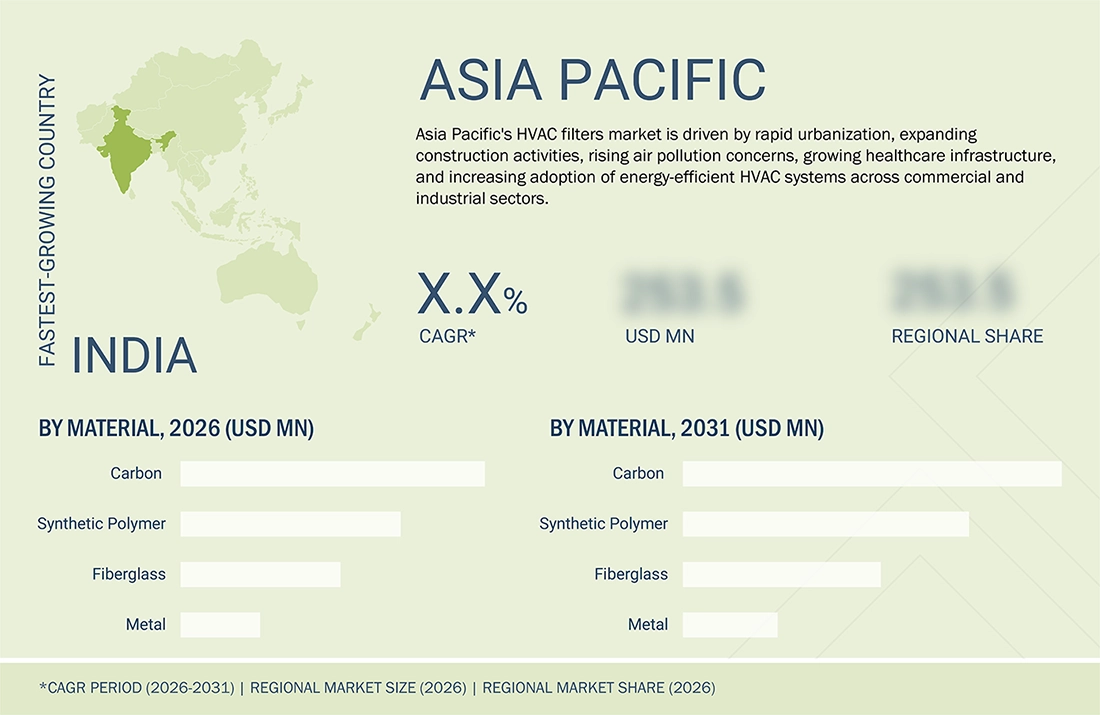
Asia Pacific to be fastest-growing region in HVAC filters market during forecast period
Asia-Pacific is anticipated to witness the highest growth in the HVAC filters market in the forecast period, owing to rapid urbanization, industrialization, and construction activities in countries such as China, India, Japan, South Korea, and Southeast Asian countries. An increase in investment in commercial establishments, healthcare establishments, data centers, manufacturing units, and housing sectors has led to an increase in the demand for advanced HVAC systems and filtration technology. Environmental concerns and growing awareness regarding indoor air quality in urban settings have resulted in rising demand for filters. Moreover, strict government standards and regulations on air quality, energy efficiency, and occupational safety have spurred demand for filtration technologies.
HVAC FILTERS MARKET: COMPANY EVALUATION MATRIX
Donaldson Company, Inc. (Star Player) has earned a leadership position in the HVAC filters industry through its diversified filter products, sophisticated filtration technology, efficient global distribution channel, and presence in many industries, including commercial, industrial, health care, and data center markets. The emphasis on improving indoor air quality, energy efficiency and adhering to air quality regulations has given Donaldson an edge in this competition. Camfil Group (Emerging Player) is expanding its presence by developing innovative HEPA, molecular, and energy-efficient filtration solutions that suit critical environments such as health care facilities, pharmaceutical plants, and commercial establishments. The company is gaining popularity through ongoing efforts towards sustainable filtration and clean air solutions. Both companies have benefited from the increasing demand for HVAC filters, increased awareness about indoor air quality, regulations and the use of energy-efficient building systems.
Source: Secondary Research, Interviews with Experts, MarketsandMarkets Analysis
KEY MARKET PLAYERS
- 1. Donaldson Company, Inc. (US)
- 2. Parker Hannifin Corporation (US)
- 3. Calgon Carbon Corporation (US)
- 4. Camfil Group (Sweden)
- 5. American Air Filter Company (US)
- 6. 3M (US)
- 7. Koch Filter (US)
- 8. Troy Filters (US)
- 9. Filtration Group Corporation (US)
- 10. Sandler AG (Germany)
MARKET SCOPE
| REPORT METRIC | DETAILS |
|---|---|
| Market Size in 2025 (Value) | USD 4.41 Billion |
| Market Forecast in 2026 (Value) | USD 4.66 Billion |
| Market Forecast in 2031 (value) | USD 6.21 Billion |
| Growth Rate | CAGR of 5.9% from 2026–2031 |
| Years Considered | 2022–2031 |
| Base Year | 2025 |
| Forecast Period | 2026–2031 |
| Units Considered | Value (USD Billion), Volume (Thousand Units) |
| Report Coverage | Revenue Forecast, Company Ranking, Competitive Landscape, Growth Factors, and Trends |
| Segments Covered |
|
| Regions Covered | North America, Asia Pacific, Europe, South America, Middle East & Africa |
WHAT IS IN IT FOR YOU: HVAC FILTERS MARKET REPORT CONTENT GUIDE
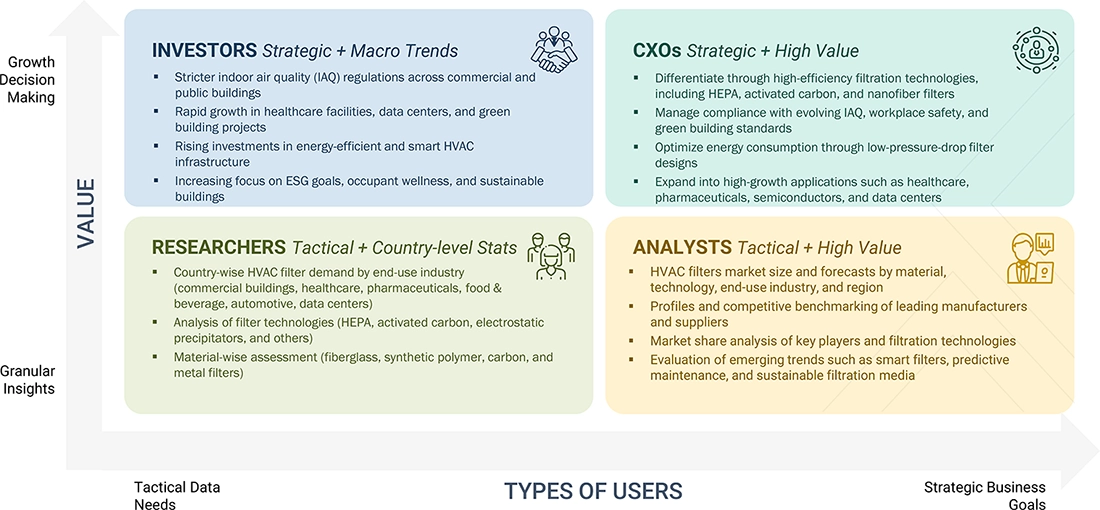
DELIVERED CUSTOMIZATIONS
We have successfully delivered the following deep-dive customizations:
| CLIENT REQUEST | CUSTOMIZATION DELIVERED | VALUE ADDS |
|---|---|---|
| Demand for country-specific market insights | Provided in-depth analysis of HVAC filter demand, indoor air quality regulations, construction activity, HVAC system adoption, and end-use industry growth across key countries in North America, Europe, Asia Pacific, the Middle East, and Latin America | Helps clients identify high-growth markets, assess regional demand drivers, and prioritize market entry and expansion strategies |
| Request for competitor benchmarking | Delivered comprehensive benchmarking of leading HVAC filter manufacturers, covering product portfolios, filtration technologies, distribution networks, manufacturing footprint, pricing strategies, sustainability initiatives, and recent developments | Enables strategic positioning, highlights competitive gaps, and identifies opportunities for product differentiation and market expansion |
| System- and application-specific insights | Provided detailed analysis of HVAC filter types, materials, efficiencies, and technologies across commercial buildings, healthcare facilities, data centers, pharmaceutical plants, manufacturing facilities, and residential applications | Supports product portfolio optimization and alignment with high-growth applications and customer requirements |
| Technology and innovation support | Evaluated advancements in HEPA filtration, activated carbon filtration, nanofiber media, electrostatic filtration, smart filter monitoring, and energy-efficient filter designs, highlighting adoption trends and innovation opportunities | Reduces time-to-market, supports innovation roadmaps, and strengthens competitiveness through advanced filtration solutions |
| Regulatory and compliance assessment | Provided detailed analysis of indoor air quality standards, HVAC filtration regulations, green building certifications, workplace safety requirements, and energy efficiency guidelines across major regions | Ensures regulatory compliance, mitigates business risk, and supports sustainable product development and commercialization strategies |
RECENT DEVELOPMENTS
- May 2026 : Donaldson Company’s acquisition of Facet Filtration strengthens its filtration technology portfolio and expands its expertise in high-performance air and fluid filtration solutions.
- January 2026 : Camfil acquired Italian air filtration specialist F.C.R. effective January 1, 2026, expanding its presence in Italy and combining global reach with F.C.R.'s local expertise in filtration design, innovation, and customer service.
- November 2025 : Parker Hannifin’s USD 9.25 billion acquisition of Filtration Group Corporation strengthens its filtration portfolio through complementary technologies, proprietary media, and established brands.
- September 2024 : Donaldson Company expanded its filtration services in France, Germany, and Austria, enhancing its technical support and filtration expertise in Europe.
- September 2023 : Aquatech entered into a Memorandum of Understanding (MOU) with Datavolt to collaborate on the development of water cooling and recycling technologies.
- March 2020 : Camfil acquired Airepure Australia Group (including FilterTech Australia) to strengthen its position in the Australian and New Zealand air filtration market.
Table of Contents
 Exclusive indicates content/data unique to MarketsandMarkets and not available with any competitors.
Methodology
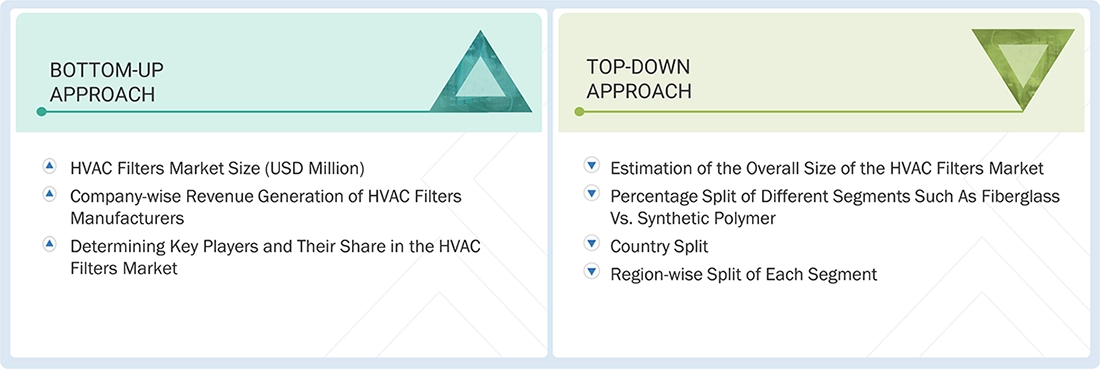
The study involves two major activities in estimating the current market size for the HVAC filters market. Exhaustive secondary research was done to collect information on the market, peer market, and parent market. The next step was to validate these findings, assumptions, and sizing with industry experts across the value chain through primary research. Both top-down and bottom-up approaches were employed to estimate the complete market size. After that, market breakdown and data triangulation were used to estimate the market size of segments and subsegments.
Secondary Research
Secondary sources referred to for this research study include financial statements of companies offering HVAC filters and information from various trade, business, and professional associations. Secondary research has been used to obtain critical information about the industry’s value chain, the total pool of key players, market classification, and segmentation according to industry trends to the bottom-most level and regional markets. The secondary data was collected and analyzed to arrive at the overall size of the HVAC filters market, which was validated by primary respondents.
Primary Research
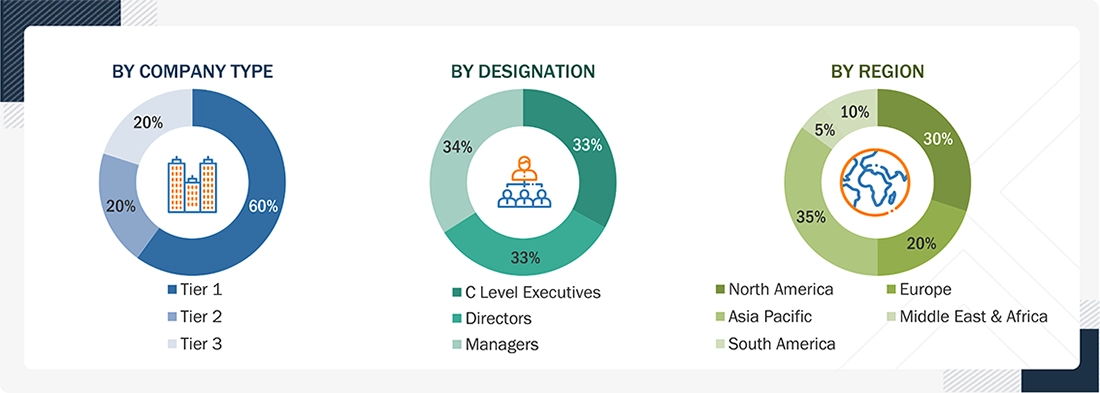
Extensive primary research was conducted after obtaining information regarding the HVAC filters market scenario through secondary research. Several primary interviews were conducted with market experts from both the demand and supply sides across major countries of North America, Europe, Asia Pacific, the Middle East & Africa, and South America. Primary data was collected through questionnaires, emails, and telephonic interviews. The primary sources from the supply side included various industry experts, such as chief executive officers (CXOs), vice presidents (VPs), directors from business development, marketing, product development/innovation teams, and related key executives from HVAC filters industry vendors; material providers; distributors; and key opinion leaders. Primary interviews were conducted to gather insights into market statistics, revenue from products and services, market breakdowns, market size estimates, market forecasting, and data triangulation. Primary research also helped in understanding the various trends related to process, capacity, application, system, end-use industry, and region. Stakeholders from the demand side, such as CIOs, CTOs, CSOs, and installation teams of the customer/end users who are seeking HVAC filters, were interviewed to understand the buyer’s perspective on the suppliers, products, and their current usage of HVAC filters and future outlook of their business, which will affect the overall market.
To know about the assumptions considered for the study, download the pdf brochure
Market Size Estimation
The research methodology used to estimate the size of the HVAC filters market includes the following details. The market sizing of the market was undertaken from the demand side. The market was upsized based on the demand for HVAC filters in different end-use industries at a regional level. Such procurements provide information on the demand aspects of the HVAC filters industry for each end-use industry. For each end-use, all possible segments of the HVAC filters market were integrated and mapped.
Data Triangulation
After arriving at the overall size from the market size estimation process explained above, the total market was split into several segments and subsegments. The data triangulation and market breakdown procedures explained below were implemented, wherever applicable, to complete the overall market engineering process and arrive at the exact statistics for various market segments and subsegments. The data was triangulated by studying various factors and trends from the demand and supply sides. Along with this, the market size was validated using both the top-down and bottom-up approaches.
Market Definition
The HVAC filters market consists of filter media and technologies that are employed in HVAC systems to filter out airborne particles, dust, allergens, microorganisms, odor, and other contaminants from the air. These filters help improve indoor air quality, protect HVAC systems, increase energy efficiency, and comply with air quality regulations. The HVAC filters market is made up of different materials, technologies, and filter efficiencies that cater to the various environmental needs.
Key Stakeholders
- HVAC filter manufacturers
- HVAC filter distributors and suppliers
- End-use industries
- Universities, governments, and research organizations
- Associations and industrial bodies
- R&D institutes
- Environmental support agencies
- Investment banks and private equity firms
- Research and consulting firms
Report Objectives
- To define, describe, and forecast the HVAC filters market size in terms of volume and value
- To provide detailed information regarding the key factors, such as drivers, restraints, opportunities, and challenges influencing market growth
- To analyze and forecast the market by system, material, technology, end-use industry, and region
- To forecast the market size concerning five main regions (along with country-level data), namely, North America, Europe, Asia Pacific, the Middle East & Africa, and South America, and analyze the significant region-specific trends
- To strategically analyze micromarkets with respect to individual growth trends, prospects, and contributions of the submarkets to the overall market
- To analyze the market opportunities and the competitive landscape for stakeholders and market leaders
- To assess recent market developments and competitive strategies, such as agreements, contracts, acquisitions, partnerships & collaboration, and product developments/product launches, to draw the competitive landscape
- To strategically profile the key market players and comprehensively analyze their core competencies
Available customizations:
MarketsandMarkets offers the following customizations for this market report:
- Additional country-level analysis of the HVAC Filters market
Product Analysis
- Product matrix, which provides a detailed comparison of the product portfolio of each company’s market


Personalize This Research
- Triangulate with your Own Data
- Get Data as per your Format and Definition
- Gain a Deeper Dive on a Specific Application, Geography, Customer or Competitor
- Any level of Personalization
Let Us Help You
- What are the Known and Unknown Adjacencies Impacting the HVAC Filters Market
- What will your New Revenue Sources be?
- Who will be your Top Customer; what will make them switch?
- Defend your Market Share or Win Competitors
- Get a Scorecard for Target Partners

Custom Market Research Services
We Will Customise The Research For You, In Case The Report Listed Above Does Not Meet With Your Requirements
Get 10% Free CustomisationTESTIMONIALS

We at Nissan Chemicals Corporation have been clients of MarketsandMarkets for more than a year now. We recently consulted MarketsandMarkets for a study, the team at MarketsandMarkets was extremely professional and organized. The business insights were very detailed and aligned well with our expectations that really helped us formulate the Business Plans and device new strategies for development themes. MarketsandMarkets offers a unique combination of expertise and dedicated engagement model. Their research findings have helped us in designing our Pricing Strategy which will make it easier for us to predict the future sales and profits for the next ten years. We look forward to working with MarketsandMarkets in the future.
VP of Strategy & New Business Development
Leading Specialty Chemical Company
The MarketsandMarkets Engagement Model, composed of both the Knowledge Store and advisory custom research, has greatly helped us in understanding our markets and making strategic decisions. The Knowledge Store is a fast way to allow everyone in our organization to understand more about most any market they are interested in. The ability to then get custom research done and get answers to specific strategic questions and market insight has been spectacular. The Markets and Markets team feel more like colleagues than vendors and their services have helped us change our culture where statements of things like growth opportunities and competitive position are always backed by industry research.

Rich Gibson,
Director, Corporate Strategy
Milliken & Company,
Leading Industrial Manufacturer of specialty chemical, floor covering, performance and protective textile materials, and healthcaremilliken.com
MarketsandMarkets is a trusted resource that helps us to better understand markets that are near-adjacencies-whether its technology, value chain or geography. Their Knowledge Store platform provides a dashboard of markets and their characteristics which is easy to use and saves us time.
Adam Shaw,
Market Development and Strategy Manager
AdvanSix Inc. USA,
An American Leader in Chemicalswww.advansix.com
The Knowledge Store from MarketsandMarkets is a valuable tool which has helped my team acquire greater insight in to the end markets that our business serves. This has enabled us to help our company build stronger strategies throughout our planning process.
TOSHIO KINOSHITA
Senior Chif Consultion Research & Consulting Division
Mitsubishi Chemical Research Corporation,
Leading Manufacturer of Chemical Productswww.mitsubishichem-res.co.jp/en/

We recently engaged with MarketsandMarkets for a study, the team not only clearly understood our business objectives but was also extremely professional in the way they handled the entire project. The study was efficiently conducted in a phase-wise manner, and the engagement model furnished us with high-quality business insights that far exceeded our expectations at each phase. We were especially happy that MarketsandMarkets could provide us with both, an English as well as a Japanese version of the study. A special thanks to the Analyst Team and Client Services Team, whose fluency in Japanese enhanced our comfort level, as we could converse with them in our preferred language.
Independent entrepreneurs
Arrow Precision
We approached MarketsandMarkets for study on Proppants Market, and their work exceeded our expectations. The study conducted was comprehensive and enabled us to view the market through the various dimensions. In addition, the team was extraordinarily responsive throughout the process and resolved our queries on time. I strongly recommend MarketsandMarkets and will certainly consider them for additional market assessments we will need in the future.
Global engineering company, Japan
Deputy Manager,
Strategic Planning OfficeThe high-quality insights shared by the MarketsandMarkets team helped us understand the pharmaceutical plant designers in a specific geography. It also captured the risks that we may likely face in communicating with our potential partners. The study would enable us identify partners, which would impact our future growth.
- Rest Of South America HVAC Filters Market
- US HVAC Filters Market
- Canada HVAC Filters Market
- Mexico HVAC Filters Market
- Germany HVAC Filters Market
- France HVAC Filters Market
- UK HVAC Filters Market
- Italy HVAC Filters Market
- Spain HVAC Filters Market
- China HVAC Filters Market
- India HVAC Filters Market
- Japan HVAC Filters Market
- South Korea HVAC Filters Market
- South Africa HVAC Filters Market
- Brazil HVAC Filters Market
- Argentina HVAC Filters Market
- Rest Of Europe HVAC Filters Market
- Rest Of Asia Pacific HVAC Filters Market
- GCC Countries HVAC Filters Market
- -Rest Of GCC HVAC Filters Market
Growth opportunities and latent adjacency in HVAC Filters Market




Ryne
Jul, 2022
The HVAC Filters Market report gives a holistic view of the market talking about macro data, competitive landscape, potential growth opportunities as well as market sizing by following segmentations:
1. Material (Fiberglass, Synthetic Polymer, Carbon, Metal), 2. Technology (HEPA, Electrostatic Precipitator, Activated Carbon), 3. End-use Industry (Building & Construction, Pharmaceutical, Food & Beverage), 4. Region (North America, Europe, Asia-Pacific, MEA, South America)
The HVAC Filters Industry report will provide you with the market size in USD Million and Thousand Units for the HVAC Filters Market segmented by Material, Technology and End User Industry. The data is further segmented and provided for North America, South America ,Europe, Middle East & Africa, APAC and also for the major countries in these regions along with competitive landscape and company profiles for 25 companies. The forecast is Provided till 2024.
HVAC Filters Market report does provide the market size in USD Million and Thousand Units for the US market along with the major countries ( 18) in the report. Data can be compared on Global, Regional and country level market size.
Similar reports on Filtration market are as below:
* Liquid Filtration Market by Fabric Material (Polymer, Cotton, and Metal), Filter Media (Woven, Nonwoven, and Mesh), End-User (Municipal Treatment, Food & Beverage, Metal & Mining, Chemical, and Pharmaceutical), Region - Global Forecast to 2024
* Industrial Filters Market by Type (Liquid and Air Filter Media), End-use Industry (Food & Beverage, Metal & Mining, Chemical, Pharmaceutical, and Power Generation), and Region (APAC, Europe, North America, MEA, and SA) - Global Forecast to 2023
* Fabric Filters Market by Type (Liquid and Air Filter Media), End-use Industry (Food & Beverage, Metal & Mining, Chemical, Pharmaceutical, Power Generation), Region (APAC, Europe, North America, MEA, and South America) - Global Forecast to 2024
*Automotive Filters Market by Type (Air, Fuel, Oil, Cabin, Coolant, Brake Dust, Oil Separator, Transmission, Steering, Dryer Cartridge, EMI/EMC, Coolant Air Particle), Air & Cabin Filter Media, Fuel & Vehicle Type, Aftermarket - Global Forecast to 2025
* Pharmaceutical Filtration Market by Product (Membrane Filters, Single-Use Systems), Technique (Microfiltration, Ultrafiltration), Application (Final Product Processing, Raw material), Scale of Operation (Manufacturing, Pilot, R&D) - Global Forecast to 2021
* Pharmaceutical Membrane Filtration Market by Product (Filter, Systems), Technique (Microfiltration, Ultrafiltration), Material (PES, PVDF, PTFE, PCTE), Application (Final Product (Sterile), Raw Material (Bioburden), Cell Separation, Air) - Global Forecast to 2024
* Membrane Filtration Market by Type (RO, UF, MF, NF), Application (Water, Dairy, Drinks & Concentrates, Wine & Beer), Module Design (Spiral, Tubular, Plate & Frame), Membrane Material (Polymeric & Ceramic), and Region - Global Forecast to 2025
* Depth Filtration Market by Media Type (Diatomaceous Earth, Activated Carbon, Cellulose), Product (Filter Cartridge, Capsule Filter), Application (Final Product Processing (Small Molecules, Biologics), Cell clarification) - Global Forecast to 2022
* Tangential Flow Filtration Market by Product (TFF System, Membrane Filter), Application (Bioprocess, Viral Vector Purification), Technique (Ultrafiltration, Microfiltration), Material Type (PES/PS Membrane), Region - Global Forecast to 2024
* Hollow Fiber Filtration Market by Technique (Microfiltration, Ultrafiltration), Material (Polymer, Ceramic), Application (Harvest & Clarification, Concentration, Perfusion), End User (Pharmaceutical Manufacturer, CRO, CMO) - Global Forecast to 2023
* Virus Filtration Market by Product (Kits & Reagents, Systems, Services), Application (Biologics (Vaccine & Therapeutics, Blood, Tissues, Stem Cells), Devices, Air, Water Purification), End User (Biopharmaceutical, CROs, Research) - Global Forecast to 2020.