Medical Alert Systems Market Size, Share, Statistics and Industry Growth Analysis Report by Offering, System Type, Connection Type (Wired, Wireless), Technology, Distribution Channel (Pharmacies, Online Sales, Hypermarkets), Application and Geography - Global Growth Driver and Industry Forecast to 2036


Updated on : Oct 23, 2024
Medical Alert Systems Market Summary
The Medical Alert Systems Market was valued at approximately USD 9–10 billion in 2024 and is projected to reach around USD 25–28 billion by 2036, expanding at a CAGR of 8–10% during the forecast period (2025–2036). The market is witnessing strong and sustained growth as aging populations, rising chronic disease prevalence, and increasing focus on independent living drive demand for remote healthcare solutions. The rapid integration of AI, IoT, and automation into healthcare monitoring systems is transforming traditional medical alert devices into intelligent, connected solutions capable of real-time health tracking and emergency response. The growing adoption of digital health platforms, combined with government initiatives supporting elderly care and telehealth, is further fueling the expansion of the Medical Alert Systems Market. As healthcare systems shift toward preventive care and remote monitoring, medical alert systems are becoming an essential component of modern patient management and safety infrastructure.
Key Market Trends & Insights
The Medical Alert Systems Market is led by North America, supported by advanced healthcare infrastructure, high awareness, and strong adoption of remote patient monitoring technologies. Asia Pacific is the fastest-growing region, driven by a rapidly aging population, expanding healthcare access, and increasing digitalization. Mobile and wearable medical alert systems dominate the product segment due to their portability, convenience, and ability to provide real-time monitoring. A key trend shaping the Medical Alert Systems Market is the integration of AI-driven analytics for fall detection, health monitoring, and predictive alerts. IoT-enabled devices are enhancing connectivity and enabling seamless communication between patients, caregivers, and healthcare providers. Automation is improving emergency response times through features such as automatic alerts and voice-activated assistance, significantly enhancing user safety and experience.
Market Size & Forecast
- Base Year Market Size (2024): USD 9–10 Billion
- Forecast Market Size (2036): USD 25–28 Billion
- CAGR (2025–2036): 8–10%
- Growth Factors: Aging population, increasing prevalence of chronic diseases, rising adoption of telehealth solutions, and integration of AI and IoT technologies in healthcare monitoring
To know about the assumptions considered for the study, Request for Free Sample Report
Medical Alert Systems Market Top 10 key takeaway
- The Medical Alert Systems Market is expected to nearly triple by 2036.
- North America remains the dominant region due to advanced healthcare systems.
- Asia Pacific is the fastest-growing region driven by demographic trends.
- Wearable and mobile alert systems lead the product segment.
- AI-based fall detection is transforming patient safety solutions.
- IoT connectivity enables real-time health monitoring and alerts.
- Automation improves emergency response efficiency.
- Increasing demand for home healthcare is driving adoption.
- Government initiatives support remote patient monitoring solutions.
- Technological advancements are expanding application scope.
Product Insights
Wearable medical alert systems represent the leading product segment in the Medical Alert Systems Market, driven by their portability, ease of use, and ability to provide continuous monitoring. Devices such as pendants, wristbands, and smartwatches equipped with emergency buttons and health sensors are widely adopted by elderly individuals and patients with chronic conditions. These systems dominate the market due to their capability to offer immediate assistance during emergencies, particularly falls, which are a major concern among aging populations.
In-home medical alert systems, which include base units connected to landlines or cellular networks, continue to play a significant role, especially among users who prefer stationary solutions. However, mobile-based systems are gaining traction due to their ability to function outside the home, offering greater flexibility and independence. Emerging product categories include AI-enabled smart wearables that integrate advanced health monitoring features such as heart rate tracking, oxygen level measurement, and activity analysis. These devices leverage AI algorithms to detect anomalies and provide predictive alerts, significantly enhancing their value in the Medical Alert Systems Market.
Technology / Component Insights
The Medical Alert Systems Market is driven by advancements in communication technologies, sensor systems, and software platforms. Key components include GPS tracking, fall detection sensors, two-way communication modules, and cloud-based data management systems. AI plays a crucial role in enhancing system capabilities by enabling real-time data analysis, predictive health monitoring, and intelligent alert mechanisms.
IoT integration allows medical alert systems to connect with other healthcare devices and platforms, creating a comprehensive ecosystem for patient monitoring. This connectivity enables continuous data collection and real-time communication between patients, caregivers, and healthcare providers. Cloud computing further enhances these systems by enabling secure data storage, remote access, and advanced analytics.
Automation technologies are improving system efficiency by enabling features such as automatic fall detection, emergency call routing, and voice-activated commands. Future innovation trends in the Medical Alert Systems Market include the integration of advanced biosensors, AI-driven health prediction models, and 5G connectivity for faster and more reliable communication. These advancements are expected to significantly improve the accuracy, reliability, and functionality of medical alert systems.
Application Insights
Home-based care is the leading application segment in the Medical Alert Systems Market, driven by the increasing preference for aging in place and the rising cost of institutional healthcare. Medical alert systems enable elderly individuals and patients with chronic conditions to live independently while ensuring access to immediate assistance in case of emergencies. The growing adoption of telehealth services is further supporting the expansion of this segment.
Assisted living facilities and healthcare institutions also represent significant application areas, where medical alert systems are used to enhance patient safety and streamline emergency response processes. These systems are particularly valuable in monitoring high-risk patients and ensuring timely intervention. The integration of AI and IoT technologies is enabling more advanced applications, such as continuous health monitoring and predictive analytics.
Future opportunities in the Medical Alert Systems Market are expected to arise from the increasing adoption of smart home technologies, integration with wearable health devices, and expansion into emerging markets. As healthcare systems continue to evolve, medical alert systems will play a critical role in improving patient outcomes and reducing healthcare costs.
Regional Insights
North America dominates the Medical Alert Systems Market due to its well-established healthcare infrastructure, high awareness levels, and strong adoption of advanced technologies. The United States is a key contributor, with a large aging population and significant investments in digital health solutions. Europe follows with steady growth, supported by government initiatives promoting elderly care and healthcare digitalization. Asia Pacific is the fastest-growing region, driven by rapid demographic changes, increasing healthcare expenditure, and expanding access to healthcare services.
The growing demand for remote patient monitoring and home healthcare solutions is driving market growth across all regions. The integration of AI, IoT, and automation technologies is further enhancing the capabilities of medical alert systems, making them essential in modern healthcare delivery.
- North America leads due to advanced healthcare infrastructure
- Europe benefits from strong regulatory support and aging population
- Asia Pacific shows highest growth due to demographic trends
- Increasing telehealth adoption boosts global demand
- Government initiatives support remote healthcare solutions
Country-Specific Market Trends
In Asia Pacific, China leads the Medical Alert Systems Market with a CAGR of 10–12%, driven by its large aging population and government initiatives to improve healthcare access. Japan follows with a CAGR of 9–10%, focusing on advanced healthcare technologies and elderly care solutions. In North America, the United States dominates with a CAGR of 8–9%, supported by strong demand for home healthcare and digital health solutions, while Canada and Mexico are experiencing steady growth due to increasing healthcare investments. In Europe, Germany and France are key markets, with CAGRs of 8–9% and 7–8% respectively, driven by aging populations and supportive healthcare policies.
Governments across these regions are actively promoting the adoption of remote healthcare solutions, further driving the growth of the Medical Alert Systems Market. Industry demand is being fueled by the need for efficient, reliable, and cost-effective patient monitoring solutions.
- China leads with large-scale healthcare initiatives
- Japan emphasizes advanced elderly care technologies
- United States drives demand through home healthcare adoption
- Germany focuses on healthcare digitalization
- France supports growth through policy initiatives
Key Medical Alert Systems Company Insights
The Medical Alert Systems Market is characterized by the presence of several key players focusing on innovation, product development, and strategic partnerships. Major companies include Philips Lifeline, ADT Inc., Bay Alarm Medical, Medical Guardian LLC, Life Alert Emergency Response, Tunstall Healthcare, and GreatCall (Lively). These companies are investing heavily in AI-driven solutions, IoT integration, and advanced wearable technologies to enhance their product offerings.
Innovation is centered around developing user-friendly devices with enhanced functionality, such as fall detection, GPS tracking, and health monitoring. AI adoption is enabling companies to offer predictive analytics and personalized care solutions. Product strategies are increasingly focused on expanding mobile and wearable offerings to meet the growing demand for flexible and portable solutions. Strategic collaborations with healthcare providers and technology companies are helping firms expand their market presence and improve service delivery.
- Companies are investing in AI and IoT-enabled solutions
- Focus on wearable and mobile systems is increasing
- Strategic partnerships are driving innovation
- Product development emphasizes user-friendly designs
- Expansion into emerging markets is a key growth strategy
Recent Developments
In 2025, a leading company launched an AI-powered wearable medical alert system capable of detecting falls and monitoring vital signs in real time. Another significant development includes a partnership between a healthcare provider and a technology firm to integrate medical alert systems with telehealth platforms, enabling seamless patient monitoring. Additionally, advancements in sensor technologies are improving the accuracy and reliability of medical alert devices, further driving market adoption.
Market Segmentation
The Medical Alert Systems Market is segmented based on product, technology/component, application, and region. By product, the market includes in-home systems, mobile systems, and wearable devices, each catering to different user needs. In terms of technology, it encompasses GPS tracking, AI-based analytics, IoT connectivity, and cloud-based platforms. Applications span home care, assisted living facilities, and healthcare institutions, highlighting the diverse use cases of medical alert systems. Regionally, the market is divided into North America, Europe, Asia Pacific, and the rest of the world, with each region exhibiting unique growth dynamics influenced by healthcare infrastructure and demographic trends.
- Product segmentation includes in-home, mobile, and wearable systems
- Technology segmentation highlights AI, IoT, GPS, and cloud platforms
- Applications cover home care and healthcare facilities
- Regional segmentation reflects diverse growth patterns
- Integration of technologies is driving market expansion
Conclusion
The Medical Alert Systems Market is poised for substantial growth through 2036, driven by the increasing demand for remote healthcare solutions and the integration of advanced technologies such as AI, IoT, and automation. As healthcare systems shift toward preventive and patient-centric models, medical alert systems will play a critical role in ensuring safety, improving outcomes, and reducing costs. The continued evolution of wearable technologies, coupled with advancements in data analytics and connectivity, will further enhance the capabilities of these systems. Businesses that invest in innovative medical alert solutions will be well-positioned to capitalize on the growing demand and contribute to the transformation of global healthcare systems.
FAQs
What is the current size of the Medical Alert Systems Market?
The market was valued at approximately USD 9–10 billion in 2024.
What is the expected growth rate of the Medical Alert Systems Market?
The market is expected to grow at a CAGR of 8–10% from 2025 to 2036.
What are the key drivers of the Medical Alert Systems Market?
Key drivers include aging populations, increasing chronic diseases, and adoption of AI and IoT technologies.
Which region leads the Medical Alert Systems Market?
North America currently holds the largest market share.
Who are the key players in the Medical Alert Systems Market?
Major companies include Philips Lifeline, ADT Inc., Medical Guardian LLC, Bay Alarm Medical, and Tunstall Healthcare.
To speak to our analyst for a discussion on the above findings, click Speak to Analyst
 Exclusive indicates content/data unique to MarketsandMarkets and not available with any competitors.
TABLE OF CONTENTS
1 INTRODUCTION (Page No. - 28)
1.1 STUDY OBJECTIVES
1.2 MARKET DEFINITION
1.2.1 GENERAL INCLUSIONS AND EXCLUSIONS
1.2.2 INCLUSIONS AND EXCLUSIONS AT COMPANY LEVEL
1.2.3 INCLUSIONS AND EXCLUSIONS AT PRODUCT LEVEL
1.2.4 INCLUSIONS AND EXCLUSIONS AT OFFERING LEVEL
1.2.5 INCLUSIONS AND EXCLUSIONS AT CONNECTION TYPE LEVEL
1.2.6 INCLUSIONS AND EXCLUSIONS AT END USER LEVEL
1.2.7 INCLUSIONS AND EXCLUSIONS AT REGIONAL LEVEL
1.3 MARKET SEGMENTATION
1.3.1 MARKETS COVERED
FIGURE 1 MEDICAL ALERT SYSTEMS MARKET SEGMENTATION
1.3.2 GEOGRAPHIC SCOPE
1.3.3 YEARS CONSIDERED
1.4 CURRENCY
1.5 PACKAGE SIZE
1.6 STAKEHOLDERS
1.7 SUMMARY OF CHANGES
2 RESEARCH METHODOLOGY (Page No. - 35)
2.1 RESEARCH DATA
FIGURE 2 MEDICAL ALERT SYSTEMS MARKET: RESEARCH DESIGN
2.1.1 SECONDARY DATA
2.1.1.1 List of major secondary sources
2.1.1.2 Secondary sources
2.1.2 PRIMARY DATA
2.1.2.1 Primary interviews with experts
2.1.2.2 Primary participants
2.1.2.3 Breakdown of primary interviews
2.1.2.4 Key data from primary sources
2.1.3 SECONDARY AND PRIMARY RESEARCH
2.1.3.1 Key industry insights
2.2 MARKET SIZE ESTIMATION
2.2.1 BOTTOM-UP APPROACH
2.2.1.1 Approach for obtaining market size using bottom-up analysis (demand side)
FIGURE 3 MARKET SIZE ESTIMATION METHODOLOGY: BOTTOM-UP APPROACH
2.2.2 TOP-DOWN APPROACH
2.2.2.1 Approach for obtaining market size using top-down analysis (supply side)
FIGURE 4 MARKET SIZE ESTIMATION METHODOLOGY: TOP-DOWN APPROACH
FIGURE 5 MARKET SIZE ESTIMATION METHODOLOGY: SUPPLY-SIDE APPROACH 1
FIGURE 6 MARKET SIZE ESTIMATION METHODOLOGY: SUPPLY-SIDE APPROACH 2
FIGURE 7 MARKET SIZE ESTIMATION METHODOLOGY: DEMAND-SIDE APPROACH
2.3 MARKET BREAKDOWN AND DATA TRIANGULATION
FIGURE 8 DATA TRIANGULATION
2.4 RISK ASSESSMENT
TABLE 1 RISK FACTOR ANALYSIS
2.5 RESEARCH ASSUMPTIONS AND LIMITATIONS
2.5.1 ASSUMPTIONS
2.5.2 LIMITATIONS
3 EXECUTIVE SUMMARY (Page No. - 51)
3.1 SCENARIO ANALYSIS
FIGURE 9 PRE- AND POST-COVID-19 MEDICAL ALERT SYSTEMS MARKET SIZE, BY SCENARIO, 2017–2026
3.1.1 REALISTIC SCENARIO (POST-COVID-19)
3.1.2 OPTIMISTIC SCENARIO (POST-COVID-19)
3.1.3 PESSIMISTIC SCENARIO (POST-COVID-19)
FIGURE 10 SMART BELTS TO EXHIBIT HIGHEST CAGR IN MEDICAL ALERT SYSTEMS MARKET DURING FORECAST PERIOD
FIGURE 11 MEDICAL ALERT SYSTEMS MARKET, BY CONNECTION TYPE, 2021–2026 (USD MILLION)
FIGURE 12 HOME-BASED USERS TO WITNESS LARGEST STAKE IN MEDICAL ALERT SYSTEMS MARKET IN 2026
FIGURE 13 NORTH AMERICA ACCOUNTED FOR LARGEST MARKET SHARE IN 2020
4 PREMIUM INSIGHTS (Page No. - 56)
4.1 ATTRACTIVE GROWTH OPPORTUNITIES IN MEDICAL ALERT SYSTEMS MARKET
FIGURE 14 MOBILE-BASED PERS TO WITNESS HIGH ADOPTION DURING FORECAST PERIOD
4.2 MEDICAL ALERT SYSTEMS MARKET, BY END USER
FIGURE 15 HOME-BASED USERS TO ACCOUNT FOR LARGEST SIZE OF MARKET DURING FORECAST PERIOD
4.3 MEDICAL ALERT SYSTEMS MARKET, BY PRODUCT
FIGURE 16 PERS TO CAPTURE LARGER MARKET SHARE THAN NCS IN 2026
4.4 MEDICAL ALERT SYSTEMS MARKET, BY OFFERING
FIGURE 17 HARDWARE SEGMENT TO EXHIBIT HIGHER CAGR THAN SERVICES SEGMENT IN MARKET DURING FORECAST PERIOD
4.5 MEDICAL ALERT SYSTEMS MARKET, BY PRODUCT AND REGION
FIGURE 18 NORTH AMERICA AND PERS TO ACCOUNT FOR LARGEST MARKET SHARE IN 2026
5 MARKET OVERVIEW (Page No. - 59)
5.1 MARKET DYNAMICS
FIGURE 19 MEDICAL ALERT SYSTEMS MARKET: DRIVERS, RESTRAINTS, OPPORTUNITIES, AND CHALLENGES
5.1.1 DRIVERS
5.1.1.1 Increasing geriatric population globally, along with high level of health literacy among older people
FIGURE 20 GLOBAL AND REGION-WISE GROWTH OF POPULATION AGED 60 AND OLDER, BY REGION (2017 VS. 2050)
5.1.1.2 Rising adoption of life-saving and tracking systems by hospitals and general public in pandemic and post-pandemic scenarios
5.1.1.3 Surging implementation of smart and mobile emergency response systems in medical care
5.1.1.4 Ongoing technological advancements in medical alert systems
5.1.1.5 Supporting healthcare policies and financial assistance by governments worldwide for senior citizens
5.1.1.6 Growing inclination of elders toward independent living
FIGURE 21 IMPACT ANALYSIS: DRIVERS
5.1.2 RESTRAINTS
5.1.2.1 High rate of false alarms
5.1.2.2 Stringent regulatory processes and increased testing requirements for product approval
5.1.2.3 Lower acceptability among seniors for use of technology
FIGURE 22 IMPACT ANALYSIS: RESTRAINTS
5.1.3 OPPORTUNITIES
5.1.3.1 Positive growth outlook for healthcare sector with rising expenditure on medical services
FIGURE 23 REGIONAL PERCENTAGE OF GDP SPEND ON HEALTHCARE, 1995–2024
5.1.3.2 Important revolution brought by emerging technologies such as IoT and AI
5.1.3.3 Untapped potential in developing countries
FIGURE 24 PERCENTAGE OF GDP SPEND ON HEALTHCARE ACROSS BRICS MEMBERS IN 2019
5.1.3.4 Rapid penetration of voice-based and mobile medical alert systems
5.1.3.5 Recent trend of assisted living centers and retirement homes designed for geriatric population
FIGURE 25 IMPACT ANALYSIS: OPPORTUNITIES
5.1.4 CHALLENGES
5.1.4.1 Integration of connected medical devices into established ecosystem
5.1.4.2 Cybersecurity risks posed by proliferation of connected medical devices
5.1.4.3 Supply chain disruptions caused due to outbreak of COVID-19
FIGURE 26 IMPACT ANALYSIS: CHALLENGES
5.2 REVENUE SHIFT AND NEW REVENUE POCKETS FOR PLAYERS IN MARKET
FIGURE 27 REVENUE SHIFT IN MARKET
5.3 PRICE TREND ANALYSIS
FIGURE 28 AVERAGE SELLING PRICES OF DIFFERENT TYPES OF MEDICAL ALERT SYSTEMS, 2017–2026 (USD)
5.4 REGULATORY LANDSCAPE
5.4.1 US
5.4.2 UK
5.4.3 INDIA
TABLE 2 LIST OF COUNTRY-BASED POLICIES, STANDARDS, AND GUIDELINES RELATED TO MEDICAL DEVICES
5.5 VALUE CHAIN ANALYSIS
FIGURE 29 MEDICAL ALERT SYSTEMS MARKET: VALUE CHAIN ANALYSIS
5.6 ECOSYSTEM ANALYSIS
FIGURE 30 KEY PLAYERS IN MEDICAL ALERT SYSTEMS ECOSYSTEM
TABLE 3 MEDICAL ALERT SYSTEMS MARKET: ECOSYSTEM
5.7 PORTER’S FIVE FORCES ANALYSIS
FIGURE 31 MARKET: PORTER’S FIVE FORCES ANALYSIS
TABLE 4 MARKET: PORTER’S FIVE FORCES ANALYSIS
5.8 TECHNOLOGY ANALYSIS
5.8.1 INTEGRATION OF IOT AND AI INTO SENIOR HEALTHCARE
5.8.2 DETECTION OF FALLS USING MACHINE LEARNING APPROACH
5.8.3 ADOPTION OF SMART WEARABLES
5.8.4 RISE OF TELEMEDICINE
5.9 PATENT ANALYSIS
5.9.1 PUBLICATION TREND
FIGURE 32 NO. OF PATENTS GRANTED EACH YEAR BETWEEN 2011 AND 2020
5.9.2 JURISDICTION ANALYSIS
FIGURE 33 JURISDICTION ANALYSIS
5.9.3 TOP PATENT OWNERS
FIGURE 34 TOP 10 COMPANIES WITH HIGHEST NUMBER OF PATENT APPLICATIONS FROM 2011 TO 2020
TABLE 5 TOP 20 PATENT OWNERS (US) IN LAST 10 YEARS
5.10 TRADE ANALYSIS
FIGURE 35 EXPORT SCENARIO FOR HS CODE: 851769-BASED PRODUCTS, BY COUNTRY, 2016–2020 (USD THOUSAND)
FIGURE 36 IMPORT SCENARIO FOR HS CODE: 851769-BASED PRODUCTS, BY COUNTRY, 2016–2020 (USD THOUSAND)
6 MEDICAL ALERT SYSTEMS MARKET, BY PRODUCT (Page No. - 85)
6.1 INTRODUCTION
FIGURE 37 PERSONAL EMERGENCY RESPONSE SYSTEM (PERS) TO ACCOUNT FOR LARGEST SIZE OF MEDICAL ALERT SYSTEMS MARKET IN 2026
TABLE 6 MARKET, BY PRODUCT, 2017–2020 (USD MILLION)
TABLE 7 MARKET, BY PRODUCT, 2021–2026 (USD MILLION)
TABLE 8 MARKET, BY PRODUCT, 2017–2020 (THOUSAND UNITS)
TABLE 9 MARKET, BY PRODUCT, 2021–2026 (THOUSAND UNITS)
6.2 PERSONAL EMERGENCY RESPONSE SYSTEM
TABLE 10 MARKET FOR PERS, BY TYPE, 2017–2020 (USD MILLION)
TABLE 11 MARKET FOR PERS, BY TYPE, 2021–2026 (USD MILLION)
TABLE 12 MARKET FOR PERS, BY END USER, 2017–2020 (USD MILLION)
TABLE 13 MARKET FOR PERS, BY END USER, 2021–2026 (USD MILLION)
TABLE 14 MARKET FOR PERS, BY CONNECTION TYPE, 2017–2020 (USD MILLION)
TABLE 15 MARKET FOR PERS, BY CONNECTION TYPE, 2021–2026 (USD MILLION)
TABLE 16 MARKET FOR PERS, BY REGION, 2017–2020 (USD MILLION)
TABLE 17 MARKET FOR PERS, BY REGION, 2021–2026 (USD MILLION)
6.2.1 TRADITIONAL LANDLINE-BASED PERS
6.2.1.1 Traditional landline-based PERS proved to be user friendly
6.2.2 MOBILE-BASED PERS
6.2.2.1 Cellular emergency response system
6.2.2.1.1 Developments in communication technologies and protocols creating high demand for cellular PERS
6.2.2.2 Wireless emergency response system
6.2.2.2.1 Wireless PERS are gaining popularity owing to advances in medical technology
6.2.2.3 GPS-based emergency response system
6.2.2.3.1 GPS-based PERS devices are expected to witness highest growth rate in medical alert systems market during forecast period
6.3 NURSE CALLING SYSTEM (NCS)
TABLE 18 MARKET FOR NCS, BY TYPE, 2017–2020 (USD MILLION)
TABLE 19 MARKET FOR NCS, BY TYPE, 2021–2026 (USD MILLION)
TABLE 20 MARKET FOR NCS, BY END USER, 2017–2020 (USD MILLION)
TABLE 21 MARKET FOR NCS, BY END USER, 2021–2026 (USD MILLION)
TABLE 22 MARKET FOR NCS, BY CONNECTION TYPE,2017–2020 (USD MILLION)
TABLE 23 MARKET FOR NCS, BY CONNECTION TYPE, 2021–2026 (USD MILLION)
TABLE 24 MARKET FOR NCS, BY REGION, 2017–2020 (USD MILLION)
TABLE 25 MARKET FOR NCS, BY REGION, 2021–2026 (USD MILLION)
6.3.1 BUTTON-BASED SYSTEMS
6.3.1.1 Button-based systems allow patients in hospitals or healthcare settings to alert nurses or healthcare staff in medical emergencies
6.3.2 INTEGRATED COMMUNICATION SYSTEMS
6.3.2.1 Integrated communication systems enable end users to access real-time routing of text messages, calls, and clinical data
6.3.3 MOBILE SYSTEMS
6.3.3.1 Mobile nurse call systems enable easy communication between healthcare staff and doctors
6.3.4 INTERCOM SYSTEMS
6.3.4.1 Intercom systems are used inside healthcare facilities to transmit audio and video signals
6.4 SMART BELT
6.4.1 SMART BELTS TO REGISTER HIGHEST CAGR IN MEDICAL ALERT SYSTEMS MARKET DURING FORECAST PERIOD
TABLE 26 MARKET FOR SMART BELT, BY END USER, 2017–2020 (USD MILLION)
TABLE 27 MARKET FOR SMART BELT, BY END USER, 2021–2026 (USD MILLION)
TABLE 28 MARKET FOR SMART BELT, BY REGION, 2017–2020 (USD MILLION)
TABLE 29 MARKET FOR SMART BELT, BY REGION, 2021–2026 (USD MILLION)
7 MEDICAL ALERT SYSTEMS MARKET, BY OFFERING (Page No. - 100)
7.1 INTRODUCTION
FIGURE 38 MARKET FOR HARDWARE TO GROW AT HIGHER CAGR FROM 2021 TO 2026
TABLE 30 MARKET, BY OFFERING, 2017–2020 (USD MILLION)
TABLE 31 MARKET, BY OFFERING, 2021–2026 (USD MILLION)
7.2 HARDWARE
7.2.1 CONSOLE UNIT
7.2.1.1 Technological advancements have resulted in development of smart console units that can be connected to VoIP or 4G LTE network for faster communication
7.2.2 TRANSMITTER
7.2.2.1 Transmitter is battery-powered, lightweight, and waterproof button providing excellent communication capabilities
7.2.3 WRISTBAND TRANSMITTER
7.2.3.1 Wristband transmitter is most common easy-to-use on-the-go medical alert system
7.2.4 PENDANT TRANSMITTER
7.2.4.1 Pendant transmitters are available with fall detection option and are user-friendly
7.2.5 SENSORS
7.2.5.1 Sensors play crucial role in saving user’s life and unnecessary hospitalization costs
7.3 SERVICES
7.3.1 SUBSCRIPTION-BASED MONITORING
7.3.1.1 Surged demand for subscription-based services to ensure security and safety of elderly person
7.3.2 MOBILE APPLICATION-BASED MONITORING
7.3.2.1 Increased penetration and popularity of smartphones resulted in rising demand for mobile application-based monitoring services
8 MEDICAL ALERT SYSTEMS MARKET, BY CONNECTION TYPE (Page No. - 105)
8.1 INTRODUCTION
FIGURE 39 MARKET, BY CONNECTION TYPE
FIGURE 40 WIRELESS MEDICAL ALERT SYSTEMS TO EXHIBIT HIGHER CAGR DURING FORECAST PERIOD
TABLE 32 MARKET, BY CONNECTION TYPE, 2017–2020 (USD MILLION)
TABLE 33 MARKET, BY CONNECTION TYPE, 2021–2026 (USD MILLION)
8.2 WIRED
8.2.1 WIRED MEDICAL ALERT SYSTEMS ARE SUITABLE FOR SENIORS WITH SEDENTARY LIFESTYLE
TABLE 34 WIRED MARKET, BY PRODUCT, 2017–2020 (USD MILLION)
TABLE 35 WIRED MARKET, BY PRODUCT, 2021–2026 (USD MILLION)
8.3 WIRELESS
8.3.1 PENETRATION OF WIRELESS MEDICAL ALERT SYSTEMS AMONG ELDERLY INDIVIDUALS IS HIGHER THAN WIRED MEDICAL ALERT SYSTEMS
TABLE 36 WIRELESS MEDICAL ALERT SYSTEM MARKET, BY PRODUCT, 2017–2020 (USD MILLION)
TABLE 37 WIRELESS MEDICAL ALERT SYSTEM MARKET, BY PRODUCT, 2021–2026 (USD MILLION)
9 COMMUNICATION TECHNOLOGIES USED IN MEDICAL ALERT SYSTEMS (Page No. - 110)
9.1 INTRODUCTION
9.2 TWO-WAY VOICE SYSTEMS
9.2.1 TWO-WAY VOICE SYSTEMS PROVIDE REAL-TIME ACCESS TO TEXT MESSAGES, CALLS, AND CLINICAL DATA
9.3 UNMONITORED MEDICAL ALERT SYSTEMS
9.3.1 UNMONITORED SYSTEMS ENABLE SUBSCRIPTION-FREE, TWO-WAY COMMUNICATION WITH EMERGENCY CONTACT PERSON OR SERVICE PROVIDER
9.4 MEDICAL ALERT ALARM (BUTTON) SYSTEMS
9.4.1 MEDICAL ALARMS PROVIDE CRUCIAL INFORMATION TO CLINICIANS TO MAKE DIAGNOSTIC AND TREATMENT-RELATED DECISIONS
9.5 VOIP-BASED SYSTEMS
9.5.1 VOIP-BASED MEDICAL ALERT SYSTEMS UTILIZE HIGH-SPEED INTERNET CONNECTION, ALLOWING PATIENTS TO ROUTE CALLS DIRECTLY TO THEIR ASSIGNED CAREGIVER
10 CHANNELS OF DISTRIBUTION TO MARKET MEDICAL ALERT SYSTEMS (Page No. - 112)
10.1 INTRODUCTION
10.2 PHARMACIES
10.2.1 PHARMACIES ARE WIDELY PREFERRED BY BOTH MANUFACTURERS AND CONSUMERS
10.3 ONLINE CHANNELS
10.3.1 EASE OF USE AND HIGH LEVELS OF CONVENIENCE HAVE MADE ONLINE SALES PROMINENT DISTRIBUTION CHANNEL
10.4 HYPERMARKETS
10.4.1 RISING PREFERENCE FOR ONLINE PURCHASING IS REDUCING MARKET SHARE OF HYPERMARKETS
11 MEDICAL ALERT SYSTEMS MARKET, BY END USER (Page No. - 114)
11.1 INTRODUCTION
FIGURE 41 ASSISTED LIVING FACILITIES TO REGISTER HIGHEST CAGR IN MARKET BETWEEN 2021 AND 2026
TABLE 38 MARKET, BY END USER, 2017–2020 (USD MILLION)
TABLE 39 MARKET, BY END USER, 2021–2026 (USD MILLION)
11.2 HOSPITALS AND CLINICS
11.2.1 HIGH DEMAND FOR MEDICAL ALERT SYSTEMS IN HOSPITALS AND CLINICS TO SUPERVISE PATIENTS WITH BRAIN DISORDERS
11.3 HOME-BASED USERS
11.3.1 LARGEST MARKET SHARE OF HOME-BASED USERS DUE TO INDEPENDENCE OFFERED BY MEDICAL ALERT SYSTEMS AT LOWEST COST
TABLE 40 MARKET FOR HOME-BASED USERS, BY PRODUCT, 2017–2020 (USD MILLION)
TABLE 41 MARKET FOR HOME-BASED USERS, BY PRODUCT, 2021–2026 (USD MILLION)
11.4 SENIOR LIVING FACILITIES
11.4.1 ENHANCED SAFETY FEATURES, REDUCED BURDEN ON STAFF, AND IMPROVED MOBILITY STIMULATE DEMAND FROM SENIOR LIVING FACILITIES TO MAINTAIN ACTIVE LIFESTYLE OF USERS
TABLE 42 MARKET FOR SENIOR LIVING FACILITIES, BY PRODUCT, 2017–2020 (USD MILLION)
TABLE 43 MARKET FOR SENIOR LIVING FACILITIES, BY PRODUCT, 2021–2026 (USD MILLION)
11.5 ASSISTED LIVING FACILITIES
11.5.1 INCREASED NUMBER OF ASSISTED LIVING CENTERS PUSHING DEMAND FOR MEDICAL ALERT SYSTEMS
TABLE 44 MARKET FOR ASSISTED LIVING FACILITIES, BY PRODUCT, 2017–2020 (USD MILLION)
TABLE 45 MARKET FOR ASSISTED LIVING FACILITIES, BY PRODUCT, 2021–2026 (USD MILLION)
11.6 OTHERS
TABLE 46 MARKET FOR OTHER END USERS, BY PRODUCT, 2017–2020 (USD MILLION)
TABLE 47 MARKET FOR OTHER END USERS, BY PRODUCT, 2021–2026 (USD MILLION)
12 MEDICAL ALERT SYSTEMS MARKET, BY REGION (Page No. - 122)
12.1 INTRODUCTION
FIGURE 42 GEOGRAPHIC SNAPSHOT OF MEDICAL ALERT SYSTEMS MARKET, 2021–2026
FIGURE 43 APAC TO BE FASTEST-GROWING MARKET FOR MEDICAL ALERT SYSTEMS FROM 2021 TO 2026
TABLE 48 MARKET, BY REGION, 2017–2020 (USD MILLION)
TABLE 49 MARKET, BY REGION, 2021–2026 (USD MILLION)
12.2 NORTH AMERICA
FIGURE 44 SNAPSHOT OF MEDICAL ALERT SYSTEMS MARKET IN NORTH AMERICA
FIGURE 45 US TO ACCOUNT FOR LARGEST SIZE OF NORTH AMERICAN MEDICAL ALERT SYSTEMS MARKET DURING FORECAST PERIOD
TABLE 50 MARKET IN NORTH AMERICA, BY PRODUCT, 2017–2020 (USD MILLION)
TABLE 51 MARKET IN NORTH AMERICA, BY PRODUCT, 2021–2026 (USD MILLION)
TABLE 52 MARKET IN NORTH AMERICA, BY COUNTRY, 2017–2020 (USD MILLION)
TABLE 53 MARKET IN NORTH AMERICA, BY COUNTRY, 2021–2026 (USD MILLION)
TABLE 54 MARKET IN NORTH AMERICA, BY OFFERING, 2017–2020 (USD MILLION)
TABLE 55 MARKET IN NORTH AMERICA, BY OFFERING, 2021–2026 (USD MILLION)
12.2.1 US
12.2.1.1 US to capture largest share of North American market for medical alert systems market due to rising geriatric population
TABLE 56 MARKET IN US, BY OFFERING, 2017–2020 (USD MILLION)
TABLE 57 MARKET IN US, BY OFFERING, 2021–2026 (USD MILLION)
12.2.2 CANADA
12.2.2.1 Canada to witness highest growth rate in North American market for medical alert systems
TABLE 58 MARKET IN CANADA, BY OFFERING, 2017–2020 (USD MILLION)
TABLE 59 MARKET IN CANADA, BY OFFERING, 2021–2026 (USD MILLION)
12.2.3 MEXICO
12.2.3.1 Mexican market growth is driven by rising need for improved medical infrastructure
TABLE 60 MARKET IN MEXICO, BY OFFERING, 2017–2020 (USD MILLION)
TABLE 61 MARKET IN MEXICO, BY OFFERING, 2021–2026 (USD MILLION)
12.2.4 IMPACT OF COVID-19 ON MEDICAL ALERT SYSTEMS MARKET IN NORTH AMERICA
12.3 EUROPE
FIGURE 46 SNAPSHOT OF MEDICAL ALERT SYSTEMS MARKET IN EUROPE
FIGURE 47 MARKET IN SPAIN TO GROW AT HIGHEST CAGR DURING FORECAST PERIOD
TABLE 62 MARKET IN EUROPE, BY PRODUCT, 2017–2020 (USD MILLION)
TABLE 63 MARKET IN EUROPE, BY PRODUCT, 2021–2026 (USD MILLION)
TABLE 64 MARKET IN EUROPE, BY COUNTRY, 2017–2020 (USD MILLION)
TABLE 65 MARKET IN EUROPE, BY COUNTRY, 2021–2026 (USD MILLION)
TABLE 66 MARKET IN EUROPE, BY OFFERING, 2017–2020 (USD MILLION)
TABLE 67 MARKET IN EUROPE, BY OFFERING, 2021–2026 (USD MILLION)
12.3.1 UK
12.3.1.1 Rising awareness among elderly citizens regarding benefits of medical alert systems to boost market growth in UK
TABLE 68 MARKET IN UK, BY OFFERING, 2017–2020 (USD MILLION)
TABLE 69 MARKET IN UK, BY OFFERING, 2021–2026 (USD MILLION)
12.3.2 GERMANY
12.3.2.1 Growing inclination of older adults toward independent living to accelerate market growth in Germany
TABLE 70 MARKET IN GERMANY, BY OFFERING, 2017–2020 (USD MILLION)
TABLE 71 MARKET IN GERMANY, BY OFFERING, 2021–2026 (USD MILLION)
12.3.3 FRANCE
12.3.3.1 Increasing healthcare expenditure to fuel growth of medical alert systems market in France
TABLE 72 MARKET IN FRANCE, BY OFFERING, 2017–2020 (USD MILLION)
TABLE 73 MARKET IN FRANCE, BY OFFERING, 2021–2026 (USD MILLION)
12.3.4 ITALY
12.3.4.1 Increasing elderly population, along with elevated demand for advanced technology, to propel growth of Italian medical alert systems market
TABLE 74 MARKET IN ITALY, BY OFFERING, 2017–2020 (USD MILLION)
TABLE 75 MARKET IN ITALY, BY OFFERING, 2021–2026 (USD MILLION)
12.3.5 SPAIN
12.3.5.1 Developing private healthcare sector in Spain providing opportunities to players in medical alert systems market
TABLE 76 MARKET IN SPAIN, BY OFFERING, 2017–2020 (USD MILLION)
TABLE 77 MARKET IN SPAIN, BY OFFERING, 2021–2026 (USD MILLION)
12.3.6 REST OF EUROPE
TABLE 78 MARKET IN REST OF EUROPE, BY OFFERING, 2017–2020 (USD MILLION)
TABLE 79 MARKET IN REST OF EUROPE, BY OFFERING, 2021–2026 (USD MILLION)
12.3.7 IMPACT OF COVID-19 ON MEDICAL ALERT SYSTEMS MARKET IN EUROPE
12.4 ASIA PACIFIC (APAC)
FIGURE 48 SNAPSHOT OF MEDICAL ALERT SYSTEMS MARKET IN APAC
FIGURE 49 AUSTRALIA TO WITNESS HIGHEST CAGR IN MARKET DURING FORECAST PERIOD
TABLE 80 MARKET IN APAC, BY PRODUCT, 2017–2020 (USD MILLION)
TABLE 81 MARKET IN APAC, BY PRODUCT, 2021–2026 (USD MILLION)
TABLE 82 MARKET IN APAC, BY COUNTRY, 2017–2020 (USD MILLION)
TABLE 83 MARKET IN APAC, BY COUNTRY, 2021–2026 (USD MILLION)
TABLE 84 MARKET IN APAC, BY OFFERING, 2017–2020 (USD MILLION)
TABLE 85 MARKET IN APAC, BY OFFERING, 2021–2026 (USD MILLION)
12.4.1 CHINA
12.4.1.1 Healthcare sector in China is expanding at faster rate, creating opportunity for affordable and easy-to-use medical technologies such as medical alert systems
TABLE 86 MARKET IN CHINA, BY OFFERING, 2017–2020 (USD MILLION)
TABLE 87 MARKET IN CHINA, BY OFFERING, 2021–2026 (USD MILLION)
12.4.2 JAPAN
12.4.2.1 Japan has almost 25% of population 65 years old and above, thereby creating growth opportunities for market players
TABLE 88 MARKET IN JAPAN, BY OFFERING, 2017–2020 (USD MILLION)
TABLE 89 MARKET IN JAPAN, BY OFFERING, 2021–2026 (USD MILLION)
12.4.3 AUSTRALIA
12.4.3.1 Australian market is driven by high expenditure toward modern healthcare services
TABLE 90 MARKET IN AUSTRALIA, BY OFFERING, 2017–2020 (USD MILLION)
TABLE 91 MARKET IN AUSTRALIA, BY OFFERING, 2021–2026 (USD MILLION)
12.4.4 SOUTH KOREA
12.4.4.1 High penetration of technology among South Korean senior population has resulted in increased demand for medical devices such as medical alert systems
TABLE 92 MARKET IN SOUTH KOREA, BY OFFERING, 2017–2020 (USD MILLION)
TABLE 93 MARKET IN SOUTH KOREA, BY OFFERING, 2021–2026 (USD MILLION)
12.4.5 REST OF APAC
TABLE 94 MARKET IN REST OF APAC, BY OFFERING, 2017–2020 (USD MILLION)
TABLE 95 MARKET IN REST OF APAC, BY OFFERING, 2021–2026 (USD MILLION)
12.4.6 IMPACT OF COVID-19 ON MEDICAL ALERT SYSTEMS MARKET IN APAC
12.5 REST OF THE WORLD (ROW)
TABLE 96 MARKET IN ROW, BY PRODUCT, 2017–2020 (USD MILLION)
TABLE 97 MARKET IN ROW, BY PRODUCT, 2021–2026 (USD MILLION)
TABLE 98 MARKET IN ROW, BY REGION, 2017–2020 (USD MILLION)
TABLE 99 MARKET IN ROW, BY REGION, 2021–2026 (USD MILLION)
TABLE 100 MARKET IN ROW, BY OFFERING, 2017–2020 (USD MILLION)
TABLE 101 MARKET IN ROW, BY OFFERING, 2021–2026 (USD MILLION)
12.5.1 MIDDLE EAST & AFRICA
12.5.1.1 Middle East & Africa to account for larger market size in RoW region throughout forecast period
TABLE 102 MARKET IN MIDDLE EAST & AFRICA, BY OFFERING, 2017–2020 (USD MILLION)
TABLE 103 MARKET IN MIDDLE EAST & AFRICA, BY OFFERING, 2021–2026 (USD MILLION)
12.5.2 SOUTH AMERICA
12.5.2.1 South America to exhibit higher CAGR in medical alert systems market in RoW during forecast period
TABLE 104 MARKET IN SOUTH AMERICA, BY OFFERING, 2017–2020 (USD MILLION)
TABLE 105 MARKET IN SOUTH AMERICA, BY OFFERING, 2021–2026 (USD MILLION)
13 COMPETITIVE LANDSCAPE (Page No. - 156)
13.1 INTRODUCTION
FIGURE 50 COMPANIES ADOPTED PRODUCT LAUNCHES AS KEY GROWTH STRATEGIES BETWEEN JANUARY 2018 AND MAY 2021
13.2 MARKET EVALUATION FRAMEWORK
TABLE 106 OVERVIEW OF STRATEGIES DEPLOYED BY KEY MEDICAL ALERT SYSTEM MANUFACTURERS
13.2.1 PRODUCT PORTFOLIO
13.2.2 REGIONAL FOCUS
13.2.3 MANUFACTURING FOOTPRINT
13.2.4 ORGANIC/INORGANIC GROWTH STRATEGIES
13.3 MARKET SHARE ANALYSIS OF KEY COMPANIES, 2020
TABLE 107 MEDICAL ALERT SYSTEMS MARKET: DEGREE OF COMPETITION
TABLE 108 SHARE OF LEADING PLAYERS IN MARKET, 2020
TABLE 109 MARKET RANKING ANALYSIS: MARKET, 2020
13.4 HISTORICAL REVENUE ANALYSIS OF MAJOR PLAYERS IN MARKET
FIGURE 51 REVENUE ANALYSIS OF KEY COMPANIES FROM 2016 TO 2020 (USD BILLION)
13.5 COMPETITIVE SITUATIONS AND TRENDS
13.5.1 PRODUCT LAUNCHES
TABLE 110 MARKET: PRODUCT LAUNCHES, JANUARY 2018–MAY 2021
13.5.2 DEALS
TABLE 111 MARKET: DEALS, JANUARY 2018– MAY 2021
13.6 COMPANY EVALUATION MATRIX, 2020
13.6.1 STAR
13.6.2 PERVASIVE
13.6.3 PARTICIPANT
13.6.4 EMERGING LEADER
FIGURE 52 MARKET (GLOBAL), COMPANY EVALUATION MATRIX (2020)
13.7 STARTUP/SME EVALUATION MATRIX, 2020
13.7.1 PROGRESSIVE COMPANY
13.7.2 RESPONSIVE COMPANY
13.7.3 DYNAMIC COMPANY
13.7.4 STARTING BLOCK
FIGURE 53 MARKET (GLOBAL), STARTUP/SME EVALUATION MATRIX (2020)
13.8 COMPETITIVE BENCHMARKING
TABLE 112 COMPANY END USER FOOTPRINT
TABLE 113 COMPANY REGION FOOTPRINT
TABLE 114 COMPANY FOOTPRINT
14 COMPANY PROFILES (Page No. - 172)
(Business Overview, Products Offered, Recent Developments, and MnM View (Key strengths/Right to Win, Strategic Choices Made, and Weaknesses and Competitive Threats))*
14.1 INTRODUCTION
14.2 KEY PLAYERS
14.2.1 PHILIPS
TABLE 115 PHILIPS: BUSINESS OVERVIEW
FIGURE 54 PHILIPS: COMPANY SNAPSHOT
14.2.2 CONNECT AMERICA
TABLE 116 CONNECT AMERICA: BUSINESS OVERVIEW
14.2.3 VALUED RELATIONSHIPS
TABLE 117 VALUED RELATIONSHIPS: BUSINESS OVERVIEW
14.2.4 MEDICAL GUARDIAN
TABLE 118 MEDICAL GUARDIAN: BUSINESS OVERVIEW
14.2.5 ADT
TABLE 119 ADT: BUSINESS OVERVIEW
FIGURE 55 ADT: COMPANY SNAPSHOT
14.2.6 GUARDIAN ALARM
TABLE 120 GUARDIAN ALARM: BUSINESS OVERVIEW
14.2.7 BAY ALARM MEDICAL
TABLE 121 BAY ALARM MEDICAL: BUSINESS OVERVIEW
14.2.8 MOBILEHELP
TABLE 122 MOBILEHELP: BUSINESS OVERVIEW
14.2.9 ALERT1
TABLE 123 ALERT1: BUSINESS OVERVIEW
14.2.10 LIFEFONE
TABLE 124 LIFEFONE: BUSINESS OVERVIEW
14.3 OTHER IMPORTANT PLAYERS
14.3.1 NORTEK CONTROL (NUMERA)
14.3.2 GALAXY MEDICAL ALERT SYSTEMS
14.3.3 RESPONSE NOW
14.3.4 LIFESTATION
14.3.5 RESCUE ALERT
14.3.6 BETTER ALERTS
14.3.7 INTERCALL SYSTEMS
14.3.8 LIVELY
14.3.9 CORNELL COMMUNICATIONS
14.3.10 BLUELINEA
14.3.11 ACTIVEPROTECTIVE
14.3.12 ALOE CARE HEALTH
14.3.13 VANGUARD WIRELESS
14.3.14 QMEDIC
14.3.15 TUNSTALL
*Details on Business Overview, Products Offered, Recent Developments, and MnM View (Key strengths/Right to Win, Strategic Choices Made, and Weaknesses and Competitive Threats) might not be captured in case of unlisted companies.
15 APPENDIX (Page No. - 206)
15.1 INSIGHTS OF INDUSTRY EXPERTS
15.2 DISCUSSION GUIDE
15.3 KNOWLEDGE STORE: MARKETSANDMARKETS’ SUBSCRIPTION PORTAL
15.4 AVAILABLE CUSTOMIZATIONS
15.5 RELATED REPORTS
15.6 AUTHOR DETAILS
The study involved four major activities in estimating the current size of the medical alert systems market. Exhaustive secondary research was done to collect information on the market and its peer and parent markets. The next step was to validate these findings, assumptions, and sizing with industry experts across the value chain through primary research. Both top-down and bottom-up approaches were employed to estimate the total market size. After that, market breakdown and data triangulation were employed to estimate the market size of segments and subsegments.
Secondary Research
In the secondary research process, various secondary sources have been referred to for identifying and collecting information important for this study. These secondary sources include medical alert systems technology journals and magazines, IEEE journals; annual reports, press releases, and investor presentations of companies; white papers; certified publications and articles from recognized authors; and directories and databases such as Factiva, Hoovers, and OneSource.
Primary Research
In the primary research process, various primary sources from both supply and demand sides have been interviewed to obtain qualitative and quantitative information important for this report. The primary sources from the supply side included industry experts such as CEOs, VPs, marketing directors, technology and innovation directors, and related executives from key companies and organizations operating in the medical alert systems market. After complete market engineering (including calculations regarding market statistics, market breakdown, market size estimations, market forecasting, and data triangulation), extensive primary research was conducted to gather information as well as to verify and validate the critical numbers arrived at.
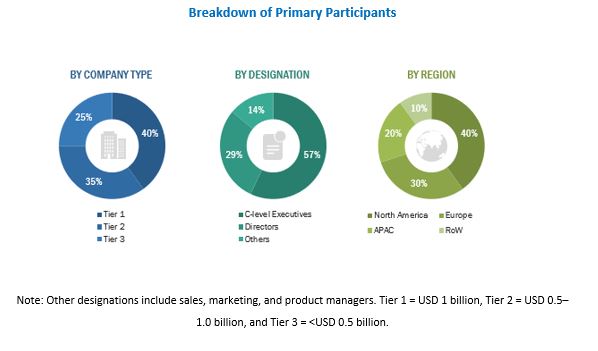
To know about the assumptions considered for the study, download the pdf brochure
Market Size Estimation
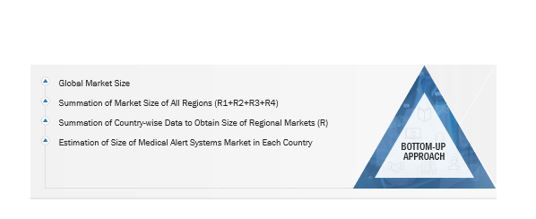
In the complete market engineering process, both top-down and bottom-up approaches have been implemented, along with several data triangulation methods, to estimate and validate the size of the medical alert systems market and other dependent submarkets listed in this report.
- Key players in the industry and markets have been identified through extensive secondary research.
- In terms of value, the industry’s supply chain and market size have been determined through primary and secondary research processes.
- All percentage shares, splits, and breakdowns have been determined using secondary sources and verified through primary sources.
Medical Alert Systems Market: Bottom-Up Approach
Data Triangulation
After arriving at the overall market size from the estimation process explained above, the global market has been split into several segments and subsegments. To complete the overall market engineering process and arrive at exact statistics for all segments and subsegments, market breakdown and data triangulation procedures have been employed wherever applicable. The data has been triangulated by studying various factors and trends identified from both demand and supply sides.
Report Objectives
The following are the primary objectives of the study.
- To define, describe, and forecast the medical alert systems market, in terms of system types, offering, connection type, technology, distribution channel, application and region
- To provide the market size estimation for North America, Europe, Asia Pacific (APAC), and Rest of the World (RoW), along with their respective country-level market sizes, in terms of value
- To provide detailed information regarding the drivers, restraints, opportunities, and challenges that influence market growth.
- To provide a detailed overview of the medical alert systems value chain
- To strategically analyze micromarkets1 with respect to individual growth trends, prospects, and contributions to the total market
- To analyze key trends related to components, connectivity technologies, and applications that shape and influence the global medical alert systems market.
- To profile key players and comprehensively analyze their ranking based on their revenues and core competencies.
- To analyze opportunities in the market for stakeholders and provide a detailed competitive landscape of the market.
- To analyze competitive developments in the market, such as expansion, agreements, partnerships, contracts, product developments, and research and development (R&D)
Available Customizations
With the given market data, MarketsandMarkets offers customizations according to a company’s specific needs. The following customization options are available for the report:
Company Information:
- Detailed analysis and profiling of additional market players (up to 25)

 Generating Response ...











Growth opportunities and latent adjacency in Medical Alert Systems Market
Does this report have data for subscription churn and subscription revenue. I am looking for the number of subscribers of all the players. Is that information available in the report? Thank you
I am making research on end-user experiences of Medical Alert System/Personal Emergency Response Systems and your market analyses would be very helpful. Would be interested in knowing best option available for this market.