Medical Device Cleaning Market

Medical Device Cleaning Market by Product (Detergent, Disinfectant, Accessories), Process (Automatic, Manual, Precleaning), Device Type (Critical, Non-critical), Application (Surgical, Endoscopes, Ultrasound, Dental), End User – Global Forecast to 2031


MEDICAL DEVICE CLEANING MARKET SIZE, SHARE & GROWTH SNAPSHOT
Source: Secondary Research, Interviews with Experts, MarketsandMarkets Analysis
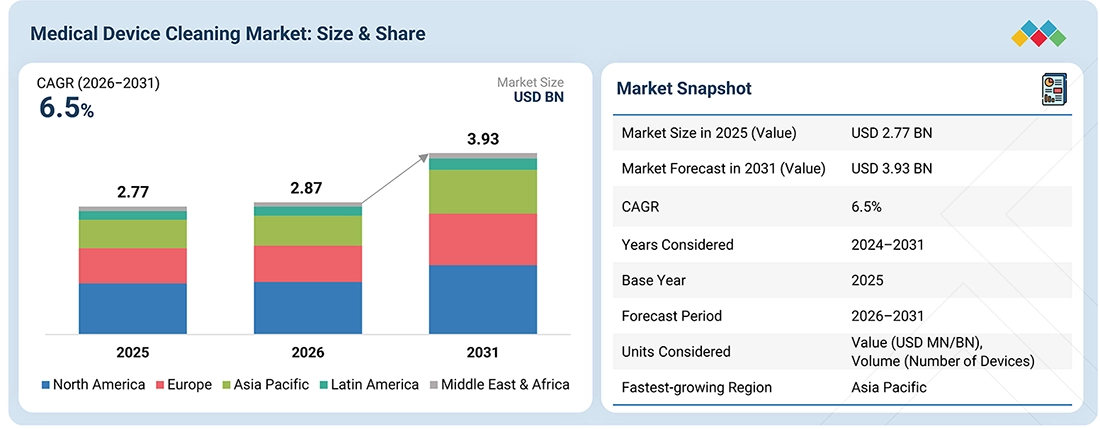
The global medical device cleaning market is projected to grow from USD 2.87 billion in 2026 to USD 3.93 billion by 2031, at a CAGR of 6.5% during the forecast period. The market was valued at USD 2.77 billion in 2025. The market is evolving as healthcare providers increasingly seek effective, reliable solutions for cleaning, disinfection, and reprocessing medical devices. Market participants are focusing on product innovation, specialized formulations, device compatibility, and improved reprocessing efficiency to address the requirements of modern healthcare facilities. Companies are also expanding their portfolios and strengthening their presence through strategic partnerships, acquisitions, product development, and geographic expansion. These initiatives are supporting the development of advanced cleaning and reprocessing solutions for surgical instruments, endoscopes, dental instruments, and other reusable medical devices across hospitals, ambulatory surgical centers, clinics, and other healthcare settings.
KEY TAKEAWAYS
-
MARKET SNAPSHOT:
Base Year Market Size (2025): USD 2.77 Billion
Current Market Size (2026): USD 2.87 Billion
Forecast Market Size (2031): USD 3.93 Billion
CAGR (2026–2031): 6.5% -
SEGMENT LEADERSHIP:
Regional Leader: North America led the market in 2025.
Product Leader: Detergents held the largest share of 46.4% in 2025.
Process Leader: Disinfection held the majority of the market share in 2025.
Fastest-Growing Device Type: Critical devices are expected to register the highest CAGR of 6.9% during the forecast period.
Application Leader: Surgical instruments held the largest share of 37.7% in 2025.
End User Leader: Hospitals, ASCs, and clinics led the market in 2025. -
MARKET OUTLOOK & COMPETITIVE LANDSCAPE:
STERIS plc (Ireland), Getinge AB (Sweden), Ecolab Inc. (US), Fortive Corporation (US), and B. Braun SE (Germany) were identified as star players in the medical device cleaning market, owing to their strong market presence and extensive product portfolios.
Silvertech Co., Ltd. (EZ-JET) (South Korea), BABGENCEL GmbH (Germany), Jiangsu Doer Biotechnology Co., Ltd. (China), and Ebele Cosmeceuticals LLP (India) have distinguished themselves among startups and SMEs by establishing strong footholds in specialized niches.
The medical device cleaning market is expected to grow steadily, supported by the increasing complexity of reusable medical instruments and the need for cleaning solutions that can address intricate surfaces, narrow channels, and sensitive device materials. Ongoing developments in cleaning chemistries, material-compatible formulations, cleaning verification methods, and device-specific reprocessing solutions are improving contamination removal while helping maintain instrument integrity. Furthermore, greater emphasis on standardized reprocessing procedures, process validation, and documentation is encouraging healthcare facilities to adopt more consistent and reliable cleaning practices. The growing demand for specialized solutions across surgical instruments, endoscopes, dental instruments, and other reusable devices is further expanding opportunities for manufacturers to develop targeted products that meet the diverse requirements of healthcare providers.
TRENDS & DISRUPTIONS IMPACTING CUSTOMERS' CUSTOMERS
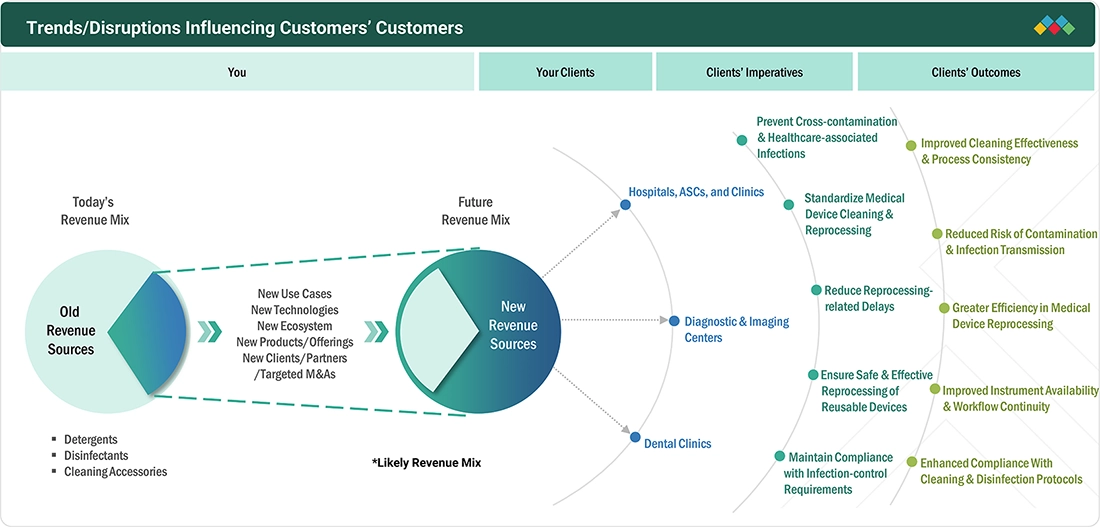
The medical device cleaning market is growing steadily, driven by the increasing complexity of reusable medical instruments and the need for specialized cleaning and disinfection solutions. The growing use of devices with intricate components, narrow channels, and sensitive materials is driving demand for formulations and products that remove contaminants effectively while preserving device integrity. Furthermore, advances in enzymatic detergents, high-level disinfectants, material-compatible formulations, and cleaning verification solutions are improving reprocessing quality and process consistency. These developments, combined with greater adoption of device-specific cleaning protocols and standardized reprocessing practices, are expected to support continued market expansion over the forecast period.
Source: Secondary Research, Interviews with Experts, MarketsandMarkets Analysis
MARKET DYNAMICS

Level
-
Rising prevalence of HAIs and increasing number of surgical procedures

-
Increasing outsourcing of sterilization services among hospitals and clinics


Level
-
Growing concerns about safety of reprocessed instruments

-
Consequences associated with chemical use


Level
-
Rising healthcare expenditure in emerging economies

-
Expanding healthcare infrastructure


Level
-
Stringent regulatory framework

Source: Secondary Research, Interviews with Experts, MarketsandMarkets Analysis
Driver: Rising prevalence of HAIs and increasing number of surgical procedures
The rising prevalence of healthcare-associated infections (HAIs) and the growing number of surgical procedures are major drivers of growth in the medical device cleaning market. The growing volume of surgical interventions increases the use and turnover of reusable medical instruments, creating a greater need for effective cleaning and disinfection before subsequent procedures. Furthermore, the increasing focus on preventing cross-contamination and maintaining safe reprocessing practices is encouraging healthcare facilities to strengthen cleaning protocols and adopt specialized cleaning and disinfection products. Consequently, the rising burden of HAIs, combined with the growing number of surgical procedures, is expected to increase demand for reliable medical device cleaning solutions across healthcare settings.
Restraints: Growing concerns about safety of reprocessed instruments
Stringent regulatory frameworks remain a significant challenge for the medical device cleaning market, particularly for products such as medical-device detergents, disinfectants, cleaning formulations, and reprocessing solutions. These products must meet requirements for safety, efficacy, material compatibility, labeling, manufacturing quality, and validation before commercialization. Increasing regulatory scrutiny of microbial reduction, chemical safety, device compatibility, and reprocessing performance can lead to additional testing requirements, longer approval timelines, and higher compliance costs. Furthermore, differences in regulatory requirements across major markets can increase the complexity of product registration and commercialization for manufacturers. Consequently, evolving regulations and complex compliance requirements may delay product launches and create barriers to market entry for innovative medical device cleaning solutions.
Opportunities: Rising healthcare expenditure in emerging economies
Emerging economies offer a compelling growth opportunity, driven by large patient populations and the rising prevalence of neurological disorders. As these regions develop economically, healthcare infrastructure is improving significantly, leading to better access to medical services. Factors such as expanding insurance coverage are making healthcare more affordable, while heightened awareness of health issues is encouraging individuals to seek medical attention sooner. Additionally, investments in hospitals and specialized care facilities are increasing, which is crucial for meeting rising demand for effective treatment options. In particular, Asia Pacific and Latin America are undergoing transformations expected to drive strong demand for medical device cleaning equipment. As healthcare providers strive to maintain high standards of hygiene and patient safety, the necessity for effective cleaning solutions has become paramount. These collective advancements not only improve patient outcomes but also facilitate a conducive environment for robust market expansion in these rapidly evolving regions.
Challenge: Stringent regulatory framework
The medical device cleaning market faces considerable challenges because of stringent regulatory requirements. These regulations ensure the safety and effectiveness of medical device cleaning processes, but their complexity and rigor can create hurdles for manufacturers and service providers. Compliance often requires substantial investments in quality assurance, validation, and ongoing monitoring. As a result, companies must navigate a multifaceted landscape of guidelines, which can significantly impact their operational efficiency and product development timelines.
MEDICAL DEVICE CLEANING MARKET: COMMERCIAL USE CASES ACROSS INDUSTRIES
| COMPANY | USE CASE DESCRIPTION | BENEFITS |
|---|---|---|
 |
Provides infection prevention and sterile processing solutions, including washer-disinfectors, sterilizers, endoscope reprocessing systems, and detergents & other consumables for cleaning reusable medical instruments. | Supports a complete reprocessing workflow, improves instrument cleanliness and turnaround, and helps hospitals meet reprocessing standards. |
 |
Supplies sterile reprocessing equipment such as washer-disinfectors and sterilizers, along with related process chemistry and consumables for surgical instruments. | Standardizes automated cleaning and disinfection, improves throughput in central sterile departments, and reduces variability from manual handling. |
 |
Offers chemistry for each reprocessing step (pretreatment, manual wash, automated wash, ultrasonic wash, and cleaning verification), including enzymatic, neutral and alkaline detergents, rinses, and lubricants | Through Soluscope, it also provides flexible endoscope washer-disinfectors with peracetic acid or glutaraldehyde disinfectants. | Improves removal of hard-to-clean soils, adds process monitoring and verification, and covers both manual and automated cleaning. |
 |
Advanced Sterilization Products, a Fortive business, offers the STERRAD system for sterilizing instruments and the EVOTECH and ENDOCLENS systems for endoscope reprocessing and cleaning | Its range also includes CIDEX OPA, a high-level disinfectant for flexible endoscopes and other heat-sensitive devices. | Enables low-temperature sterilization of heat-sensitive devices, provides high-level disinfection options for endoscopes, and adds rapid biological indicator monitoring. |
 |
Provides instrument cleaning and disinfection chemistry and sterile processing products, alongside Aesculap surgical instruments and sterile container systems. | Helps protect surgical instruments during reprocessing, supports safe handling and storage of sterilized sets, and gives hospitals an integrated instrument-care offering. |
Logos and trademarks shown above are the property of their respective owners. Their use here is for informational and illustrative purposes only.
MARKET ECOSYSTEM
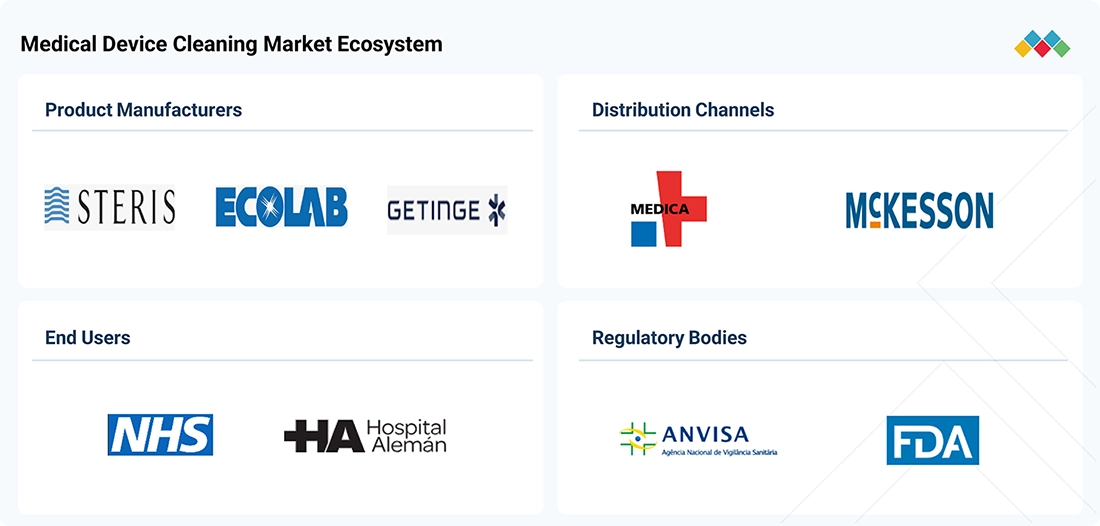
Medical device cleaning is an industry built on interactions among cleaning and disinfection product manufacturers, hospitals, ambulatory surgical centers, endoscopy and specialty clinics, and sterile processing departments. Together they ensure that reusable medical devices are safely reprocessed between patient uses. Manufacturers develop and supply enzymatic and non-enzymatic detergents, high-, intermediate- and low-level disinfectants, automated washer-disinfectors, ultrasonic cleaners, endoscope reprocessors, cleaning brushes and other accessories. These products support pre-cleaning, manual cleaning, automated cleaning and disinfection of surgical instruments, flexible endoscopes and other reusable devices. Sterile processing technicians, infection prevention specialists, surgeons, endoscopy staff and researchers rely on these solutions to remove organic soil, reduce microbial contamination, prevent hospital-acquired infections and maintain instrument performance. The industry continues to evolve through advances in cleaning chemistry, enzyme formulations, low-temperature and peracetic acid-based disinfection, process automation, cleaning verification and monitoring, and traceability, supported by regulatory standards, professional guidelines and collaboration among manufacturers, healthcare providers and academic institutions. Ongoing efforts to improve cleaning efficacy, patient and staff safety, material compatibility and reprocessing efficiency are further driving the adoption of advanced medical device cleaning and disinfection solutions across healthcare settings.
Logos and trademarks shown above are the property of their respective owners. Their use here is for informational and illustrative purposes only.
MARKET SEGMENTS
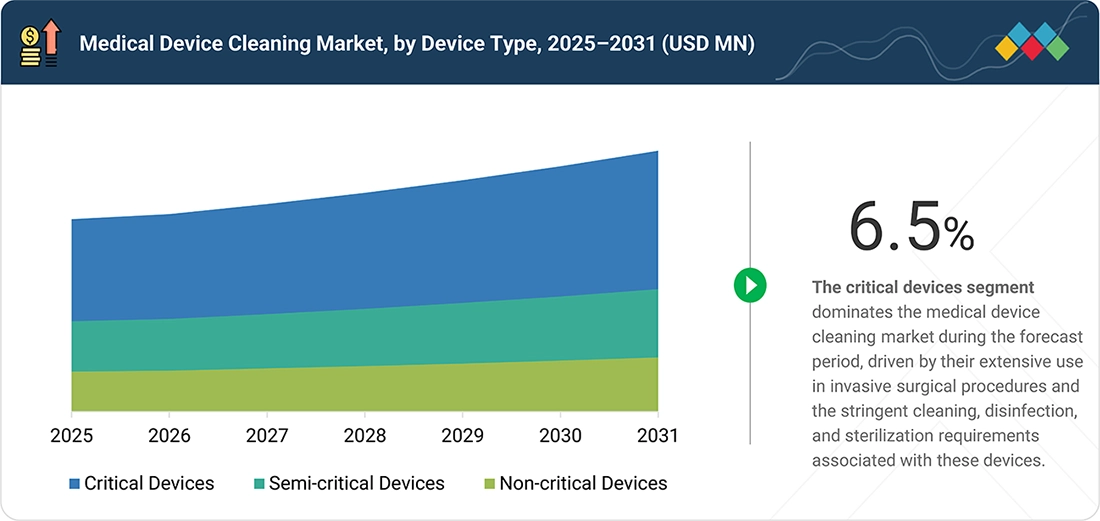
Source: Secondary Research, Interviews with Experts, MarketsandMarkets Analysis
Medical Device Cleaning Market, By Product
The medical device cleaning market, by product, is segmented into detergents, disinfectants, and cleaning accessories. The detergents segment accounted for the largest market share in 2025. This segment comprises products used to remove organic residues, contaminants, and debris from reusable medical devices as part of the reprocessing workflow. The widespread use of detergents to clean surgical instruments, endoscopes, dental instruments, and other reusable devices continues to drive demand for this segment. Furthermore, the growing complexity of medical instruments, the increasing focus on effective cleaning before disinfection and sterilization, and the need for consistent reprocessing outcomes are supporting detergent adoption across hospitals, ambulatory surgical centers, clinics, diagnostic & imaging centers, and other healthcare settings.
Medical Device Cleaning Market, By Process
The medical device cleaning market is segmented by process into disinfection, automatic cleaning, manual cleaning, and pre-soaking/pre-cleaning. Disinfection accounted for the largest market share in 2025, driven by its critical role in reprocessing reusable medical devices across healthcare facilities. The segment's dominance is supported by increasing emphasis on infection prevention, adherence to reprocessing protocols, and the widespread use of reusable medical instruments. Meanwhile, the automatic cleaning segment is expected to grow significantly, supported by the increasing need for process standardization, workflow efficiency, and consistent cleaning outcomes. The growing adoption of advanced reprocessing practices and the need to manage rising instrument volumes are further driving growth in this segment.
Medical Device Cleaning Market, By Device Type
The medical device cleaning market, by device type, is segmented into critical devices, semi-critical devices, and non-critical devices. The critical devices segment accounted for the largest market share in 2025, owing to the stringent reprocessing requirements associated with devices used in invasive procedures and those that come into contact with sterile tissues or the bloodstream. Surgical instruments and other critical devices require thorough cleaning before subsequent disinfection or sterilization, creating sustained demand for specialized cleaning products. In addition, the increasing complexity of critical medical devices and the need for validated reprocessing practices are supporting the adoption of effective cleaning and disinfection solutions across healthcare facilities.
Medical Device Cleaning Market, By Application
By application, the medical device cleaning market is segmented into surgical instruments, endoscopes, ultrasound probes, dental instruments, and other instruments. The surgical instruments segment accounted for the largest market share in 2025, owing to the extensive use of reusable instruments across a wide range of surgical procedures and their frequent need for cleaning and reprocessing. The growing variety and complexity of surgical instruments, including devices with joints, crevices, and intricate surfaces, are driving demand for effective cleaning solutions that enable thorough contaminant removal. Furthermore, the growing emphasis on proper instrument reprocessing and maintaining device functionality is supporting the adoption of cleaning products across hospitals, ambulatory surgical centers, and other healthcare facilities.
Medical Device Cleaning Market, By End User
The medical device cleaning market, by end user, is segmented into hospitals, ambulatory surgical centers (ASCs), and clinics; diagnostic & imaging centers; dental clinics; and other end users. Hospitals, ASCs, and clinics accounted for the largest market share in 2025, supported by the high volume of procedures performed across these healthcare settings and the extensive use of reusable medical devices. The growing emphasis on infection prevention, effective device reprocessing, and adherence to standardized cleaning protocols is further increasing demand for medical device cleaning products across these facilities. In addition, the expansion of surgical and outpatient care services is driving increased use of detergents, disinfectants, and other cleaning solutions in hospitals, ASCs, and clinics.
Medical Device Cleaning Market, By Region
The medical device cleaning market is geographically segmented into North America, Europe, Asia Pacific, Latin America, and the Middle East & Africa. North America represents the largest regional market, supported by well-established healthcare infrastructure, high utilization of reusable medical devices, and a strong emphasis on infection prevention and device reprocessing. The region also benefits from the widespread adoption of standardized cleaning and disinfection practices across hospitals, ambulatory surgical centers, and clinics, where large volumes of medical instruments require routine reprocessing. Furthermore, stringent infection control requirements, investments in healthcare facilities, rising surgical volumes, and a greater focus on safe, consistent medical device reprocessing are supporting demand for detergents, disinfectants, and related cleaning solutions across the region.
REGION
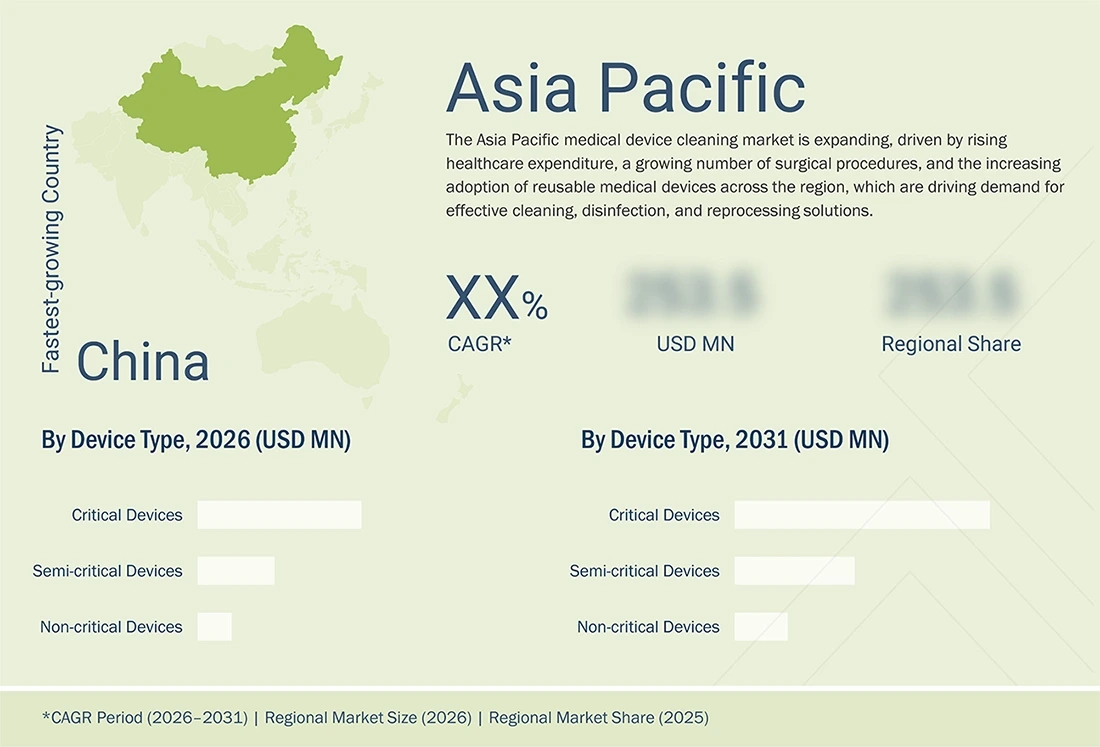
Asia Pacific to be fastest-growing regional segment in medical device cleaning market during forecast period.
Asia Pacific is expected to register the fastest growth during the forecast period, driven by expanding healthcare infrastructure, rising healthcare expenditure, increasing surgical volumes, and growing adoption of reusable medical devices across emerging economies. Hospital and other healthcare facility modernization, improved access to healthcare services, and a growing focus on infection control and safe medical device reprocessing further support market growth across the region.
MEDICAL DEVICE CLEANING MARKET: COMPANY EVALUATION MATRIX
STERIS plc is a leading participant in the medical device cleaning market, offering a broad range of solutions for cleaning, disinfection, sterilization, and reprocessing of medical devices and surgical instruments. The company strengthens its market position through a comprehensive portfolio of infection prevention products, established healthcare partnerships, and continued investments in innovative reprocessing technologies and solutions. Envista Holdings Corporation is an emerging market participant focused on solutions that support infection prevention and the cleaning and maintenance of medical and dental instruments. The company is expanding its presence through product development, technological advancements, and a broader portfolio of dental and healthcare solutions that support efficient instrument reprocessing and improved infection control practices across healthcare settings.
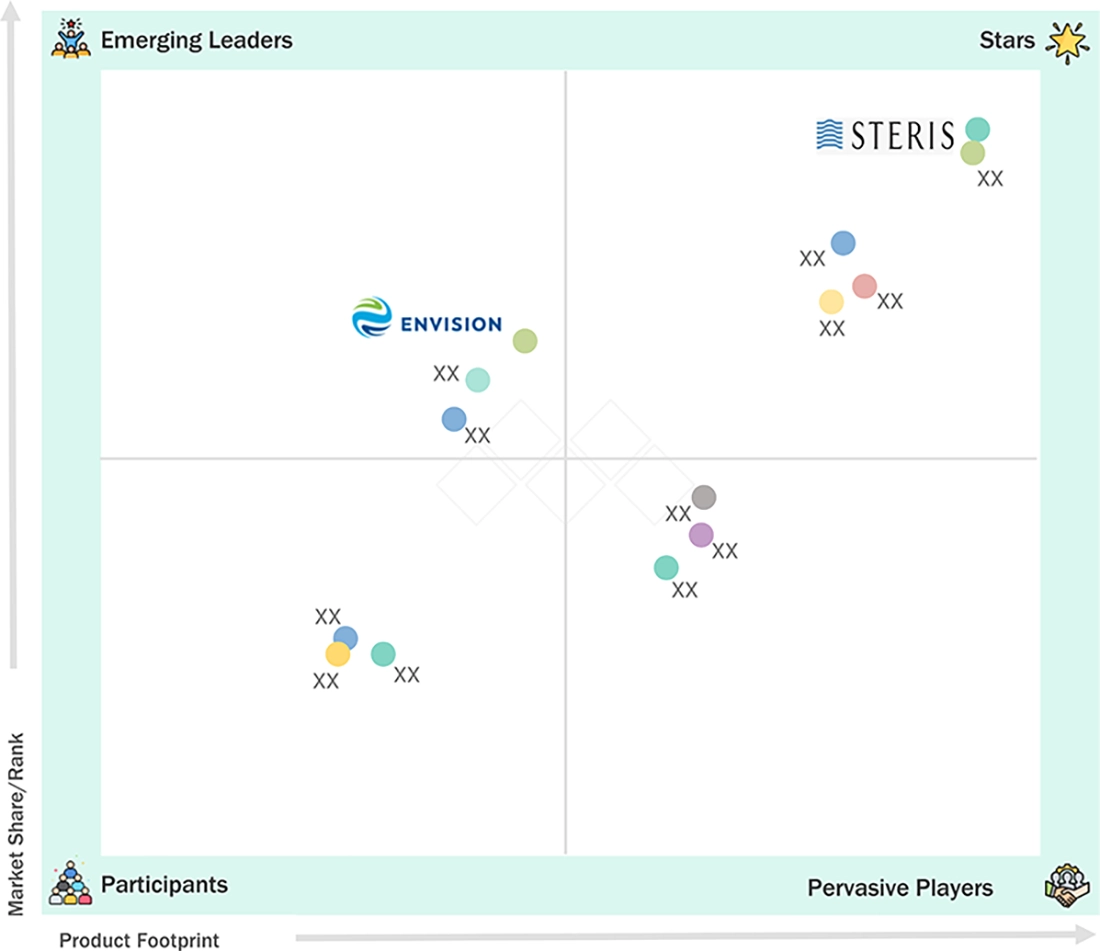
Source: Secondary Research, Interviews with Experts, MarketsandMarkets Analysis
KEY MARKET PLAYERS
- STERIS plc (US)
- Getinge AB (Sweden)
- Ecolab Inc. (US)
- Fortive Corporation (US)
- B. Braun SE (Germany)
- Solventum Corporation (US)
- Envista Holdings Corporation (US)
- Stryker Corporation (US)
- Integra LifeSciences Holdings Corporation (US)
- Medline Industries, LP (US)
- Nanosonics Limited (Australia)
MARKET SCOPE
| REPORT METRIC | DETAILS |
|---|---|
| Market Size in 2025 (Value) | USD 2.77 Billion |
| Market Forecast in 2026 (Value) | USD 2.87 Billion |
| Market Forecast in 2031 (Value) | USD 3.93 Billion |
| CAGR | CAGR of 6.5% from 2026–2031 |
| Years Considered | 2024–2031 |
| Base Year | 2025 |
| Forecast Period | 2026–2031 |
| Units Considered | Value (USD Million/Billion), Volume (Number of Devices) |
| Report Coverage | Revenue Forecast, Company Ranking, Competitive Landscape, Growth Factors, Trends |
| Segments Covered | By Product: Detergents, Disinfectants, Cleaning Accessories I By Process: Disinfection, Automatic Cleaning, Manual Cleaning, Pre-soaking/Pre-cleaning I By Application: Surgical Instruments, Endoscopes, Ultrasound Probes, Dental Instruments, Other Instruments I By Device Type: Critical Devices, Semi-critical Devices, Non-critical Devices I By End User: Hospitals, Ambulatory Surgical Centers, and Clinics; Diagnostic & Imaging Centers; Dental Clinics; Other End Users |
| Regions Covered | North America, Europe, Asia Pacific, Latin America, Middle East & Africa |
WHAT IS IN IT FOR YOU: MEDICAL DEVICE CLEANING MARKET REPORT CONTENT GUIDE
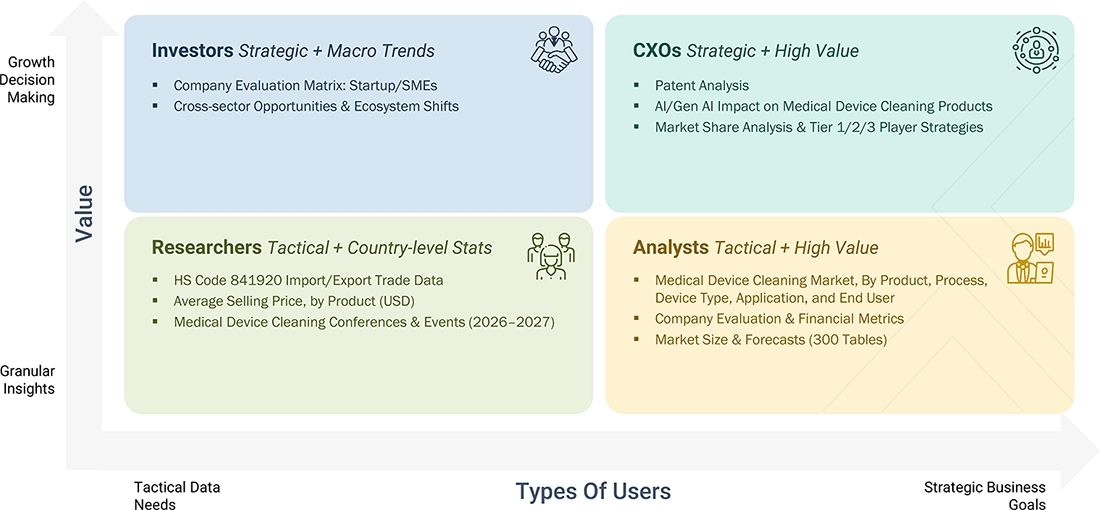
DELIVERED CUSTOMIZATIONS
We have successfully delivered the following deep-dive customizations:
| CLIENT REQUEST | CUSTOMIZATION DELIVERED | VALUE ADDS |
|---|---|---|
| Product Analysis | Product matrix, which provides a detailed comparison of the product portfolio of each company in the market | Enables easy comparison of competitors’ offerings, helping identify gaps, overlaps, and differentiation opportunities |
| Company Information | Additional five company profiles of players operating in the market. | Provides insights into competitors’ strategies, innovation focus, and partnerships, supporting strategic planning |
RECENT DEVELOPMENTS
- July 2024 : Ecolab (US) launched Disinfectant 1 Wipe, an EPA-registered, plastic-free, degradable disinfectant wipe designed for one-minute hospital disinfection, expanding the company’s infection prevention and healthcare disinfection portfolio.
- March 2023 : Getinge (Sweden) acquired Ultra Clean Systems (US), a manufacturer of ultrasonic cleaning technologies for decontaminating surgical instruments, strengthening Getinge’s portfolio of solutions for medical device cleaning and sterile processing.
Table of Contents
 Exclusive indicates content/data unique to MarketsandMarkets and not available with any competitors.
Methodology
This study analyzes the key dynamics shaping the medical device cleaning market, including drivers, restraints, opportunities, challenges, and emerging technology trends. The study also evaluates competitive developments such as product launches, regulatory approvals, acquisitions, partnerships, collaborations, and geographic expansions undertaken by leading market participants. Furthermore, it assesses the competitive landscape of the medical device cleaning market by profiling key players and benchmarking them across various business and product strategy parameters. The report used both top-down and bottom-up approaches to estimate overall market size, and market breakdown and data triangulation to validate individual segment and subsegment sizes and ensure accurate estimates.
The four steps involved in estimating the market size are as follows:
Secondary Research
Secondary research for the medical device cleaning market drew on a wide range of credible commercial and regulatory sources, including Bloomberg Business, Factiva, and Dun & Bradstreet for corporate financial and operational data. White papers, scientific publications, annual reports, investor presentations, and SEC filings provided additional context on product pipelines, revenue structures, and market positioning. We used regulatory databases to track device clearances and approvals in key geographies.
Primary Research
In primary research, we interviewed sources on both the supply and demand sides to gather qualitative and quantitative information for this report. We conducted supply-side primary interviews with project managers, product managers, sales directors, vice presidents of diagnostics, CEOs, and business development directors at manufacturers of medical device cleaning products, as well as suppliers, laboratory automation vendors, and distributors. Demand-side primary interviews covered hospital directors, laboratory directors, and procurement department personnel at hospital and reference laboratories; research laboratory managers; health clinic directors; academic research scientists; and procurement officers.
The following is a breakdown of the primary respondents:
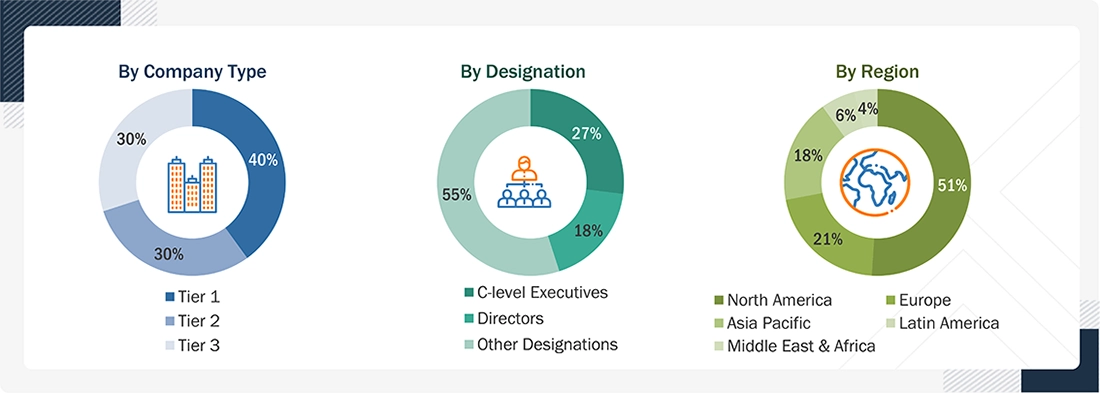
Note 1: Other designations include sales, marketing, and product managers.
Note 2: Companies are classified into tiers based on their total revenues. As of 2025, Tier 1 = >USD 100 million, Tier 2 = USD 10 million to USD 100 million, and Tier 3 = <USD 10 million.
|
COMPANY NAME |
DESIGNATION |
|
Steris PLC (US) |
Sales Manager |
|
Getinge AB (Sweden) |
Product Manager |
To know about the assumptions considered for the study, download the pdf brochure
Market Size Estimation
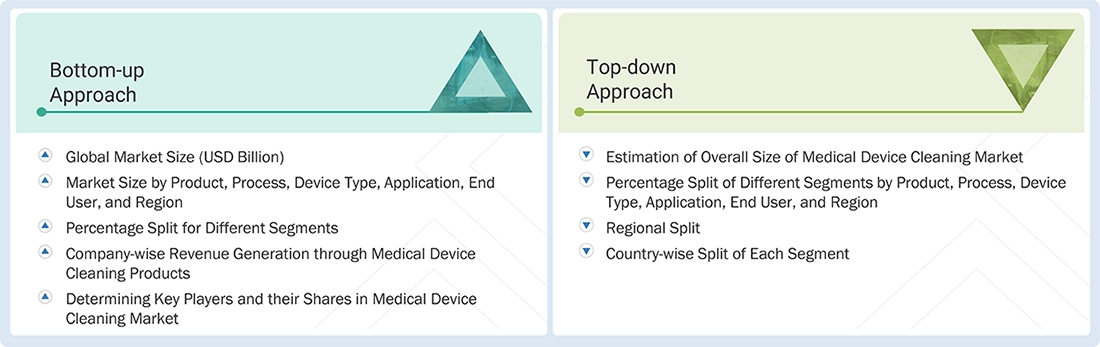
We used both top-down and bottom-up approaches to estimate and validate the total size of the medical device cleaning market. We also used these methods to estimate the size of various market subsegments. The research methodology used to estimate the market size includes the following:
- The key players in the industry have been identified through extensive secondary research.
- The revenues generated by leading players operating in the medical device cleaning market were determined through primary and secondary research.
- All percentage shares, splits, and breakdowns have been determined using secondary sources and verified through primary sources.
Medical Device Cleaning Market: Top-Down and Bottom-Up Approach
Data Triangulation
After determining the overall market size using the process above, we split the total market into several segments and subsegments. We used data triangulation and market-breakdown procedures to validate and complete the overall market engineering process and arrive at accurate statistics for all segments and subsegments of the medical device cleaning market. We triangulated the data by studying factors and trends on both the demand and supply sides of the medical device cleaning market.
Market Definition
The medical device cleaning market comprises products used for the manual and automatic cleaning and disinfection of reusable medical devices between uses. It includes detergents, sprays, wipes, sponges, and disinfectants used for surgical instruments, endoscopes, ultrasound probes, and dental instruments.
Key Stakeholders
- Medical device cleaning product manufacturers and vendors
- Distributors of medical device cleaning products
- Academic universities and medical research centers
- Research & development (R&D) centers
- Market research and consulting firms
- Government associations
Report Objectives
- To define, describe, and forecast the medical device cleaning market (product, process, device type, application, end user, and region)
- To provide detailed information about the key factors influencing the growth of the medical device cleaning market (drivers, restraints, opportunities, and challenges)
- To analyze the micromarkets with respect to individual growth trends, prospects, and contributions to the overall market
- To analyze market opportunities for stakeholders and provide the competitive landscape details of the key players
- To forecast the revenue of market segments across five main regions: North America, Europe, Asia Pacific, Latin America, and the Middle East & Africa
- To profile the key players of the medical device cleaning market and comprehensively analyze their core competencies and market shares
- To benchmark players within the market using the proprietary Company Evaluation Matrix framework, which analyzes market players on various parameters within the broad categories of business and product excellence
- To study the impact of AI on the market, along with the macroeconomic outlook for each region
Available customizations:
MarketsandMarkets offers the following customizations for this market report.
Country Information
- Additional country-level analysis of the medical device cleaning market
Company Profiles
- Additional five company profiles of players operating in the medical device cleaning market.
Product Analysis
- Product matrix, which provides a detailed comparison of the product portfolio of each company in the medical device cleaning market


Personalize This Research
- Triangulate with your Own Data
- Get Data as per your Format and Definition
- Gain a Deeper Dive on a Specific Application, Geography, Customer or Competitor
- Any level of Personalization
Let Us Help You
- What are the Known and Unknown Adjacencies Impacting the Medical Device Cleaning Market
- What will your New Revenue Sources be?
- Who will be your Top Customer; what will make them switch?
- Defend your Market Share or Win Competitors
- Get a Scorecard for Target Partners

Custom Market Research Services
We Will Customise The Research For You, In Case The Report Listed Above Does Not Meet With Your Requirements
Get 10% Free CustomisationTESTIMONIALS

JAYANT RAJPUROHIT
Director of Market Insights, Data and Analytics
SFI Health,
Leading Pharmaceutical Companywww.sfihealth.com/

We at SFI Health approached MarketsandMarkets for an Opportunity Assessment on "Incidence and Prevalence of Focus Indications" as we wanted to know the most attractive HCPs like Physician, Functional MD, Naturopath and Pharmacist. The project was critical for us to ensure our focus on the right target which would enable sustainable growth and profitability for SFI Health. The business insights provided exceeded our expectations and we were extremely impressed. The team at MarketsandMarkets is highly professional and detail oriented and very well understood our business needs. MarketsandMarkets offers a unique combination of expertise and dedicated engagement model. We identified 2 new products to be launched in coming months, based on the research findings provided by MarketsandMarkets. We are happy with the services and would strongly recommend MarketsandMarkets to my peers in the industry.

BEATRIZ DE LA CALLE
Head of Commercial Analytics
Qualicaps,
Leading Pharmaceutical Companywww.qualicaps.com/

We partnered with MarketsandMarkets for an assessment study on hard empty capsules. The team was extremely professional in understanding our business requirements and we received timely responses to all our queries. The market intelligence and the recommendations has met our business requirements. We were extremely impressed to see the final study results; it really exceeded our expectations. The market intelligence offered by MarketsandMarkets, and clarity on next steps will help us achieve our business objective for the Year 2021. We are happy with the services and would strongly recommend MarketsandMarkets to my peers in the industry.

Bob Williams,
Senior Director Business Development & Innovation
Bracco Diagnostics Inc.,
Italian Multinational in life sciences sector and a World Leader in imaging diagnosticsimaging.bracco.com/us-en
We were pleased with targeted insights that MarketsandMarkets identified from a custom study on the 'Radiation Dose Management Solutions Market'. Your team identified and characterized the market participants as well as underlying trends accurately. This study was useful to Bracco in formulating business strategies for our dose monitoring product lines and we thank MarketsandMarkets for the job well done.
Cody Coonradt,
Market Development and Strategy Manager
3M Health Information Systems,
Leader in Health care Coding, Payment & Analytics Solutions.www.3m.com/3M/en_US/health-information-systems-us
The value for our organization comes from three things: depth of research, specificity of segments and being easy to work with. As important as the first two are, the third can't be underestimated. MarketsandMarkets, maybe more than any other research vendor, wants to know what is top of mind for our team and what big questions we are grappling to answer.
Their customer first approach and high value engagement model, have given us great analysis and excellent value for money
Growth opportunities and latent adjacency in Medical Device Cleaning Market



James
Nov, 2022
How much global revenue is the medical device cleaning market expected to generate in the future?.