Planting Equipment Market

Planting Equipment Market by Type (Air Seeders, Seed Drills, Planters, Others), Design (Mechanical, Automatic), Crop Type (Cereals & Grains, Oilseeds & Pulses, Fruits & Vegetables, Other Crop Types), and Region - Global Forecast to 2031




OVERVIEW
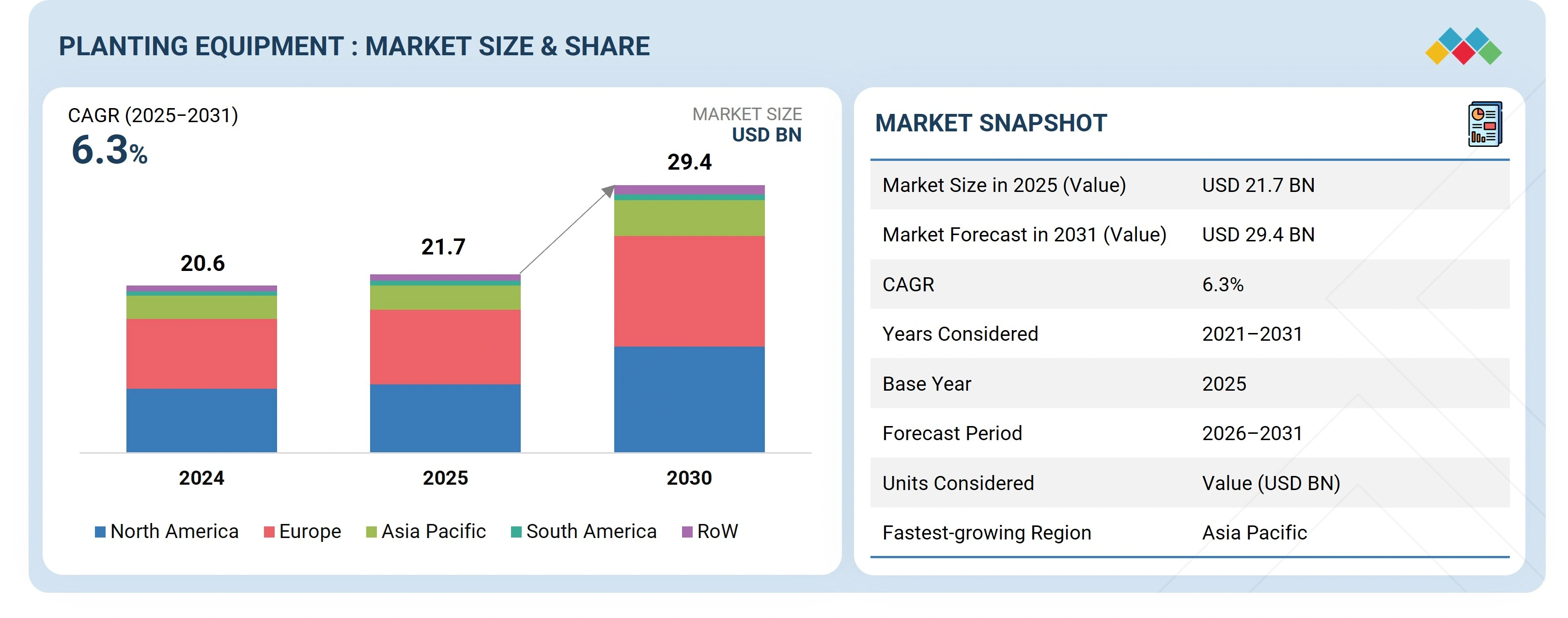
Source: Secondary Research, Interviews with Experts, MarketsandMarkets Analysis
The planting equipment market is projected to reach USD 29.4 billion by 2031 from USD 21.74 billion in 2026, at a CAGR of 6.3% from 2026 to 2031. The market is experiencing strong growth driven by the increasing need for efficient and precise farming operations that enhance crop productivity and reduce labor dependency. Farmers are increasingly adopting advanced planting equipment such as planters, seed drills, and air seeders to ensure accurate seed placement, uniform crop establishment, and optimal use of inputs.
Market Size and Forecast:
- Market Size Value in 2025: USD 20.6 Billion
- Market Size Value in 2026: USD 21.74 Billion
- Revenue Forecast in 2031: USD 29.4 Billion
- Growth Rate: CAGR of 6.3% from 2025 to 2031
- Data available from 2021 to 2031
- Base year: 2025
- Forecast period: 2026–2031
- Europe growing at a highest CAGR of 39.8%
- The air seeders segment growing at a CAGR of 6.4%
Key Market Trends and Insights
- By Type: Increasing demand for seed drills, planters, air seeders, and broadcast seeders across large-scale and precision farming operations is driving substantial growth in the planting equipment market.
-
Key Advantages: Planting equipment improves seed placement accuracy, enhances planting efficiency, reduces labor dependency, minimizes seed wastage, and supports higher crop productivity through optimized field operations.
- Growing Trends: Farmers are increasingly adopting GPS-guided planting systems, smart farming technologies, and precision agriculture equipment to improve operational efficiency, maximize yield potential, and reduce overall cultivation costs.
- Growth Opportunities: Expanding mechanization in agriculture, increasing demand for high-efficiency farming equipment, rising government support for modern agricultural practices, and growing cultivation of commercial and row crops are creating significant expansion opportunities for the planting equipment market.
KEY TAKEAWAYS
-
BY REGIONEurope accounted for the largest share of 39.8% in 2026.
-
BY TYPEThe air seeders segment is expected to register the highest CAGR of 6.4%.
-
BY DESIGNThe automatic segment is expected to register the highest CAGR.
-
BY CROP TYPEThe cereals & grains segment is expected to dominate the market.
-
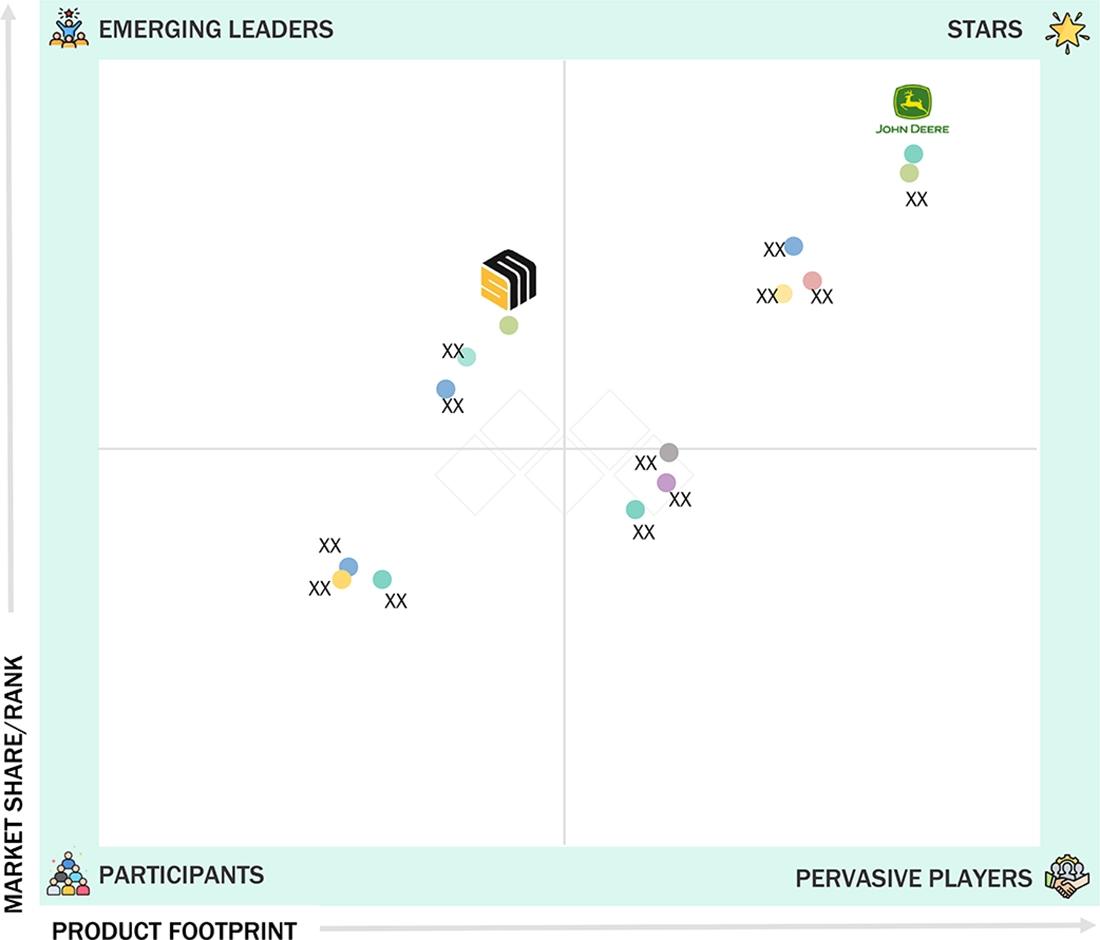
COMPETITIVE LANDSCAPE - KEY PLAYERSCompanies such as Deere & Company, AGCO Corporation, CNH Industrial N.V., Vaderstad AB, and Kinze Manufacturing were identified as some of the star players in the planting equipment market, given their strong market share and product footprint.
-
COMPETITIVE LANDSCAPE - STARTUPS/SMEsCompanies such as FarmWise, Ecorobotix, and Small Robot Company, among others, have distinguished themselves among startups and SMEs by securing strong footholds in niche areas, underscoring their potential as emerging market leaders.
The planting equipment market is projected to reach USD 29.4 billion by 2031 from USD 21.74 billion in 2026, at a CAGR of 6.3% from 2026 to 2031. The market expansion occurs through the release of new advanced NPK products, which include complete soluble NPK and chelated micronutrient formulations, together with the rising use of fertigation and precision agriculture. Planting equipment has become more accepted because irrigation systems are improving, and farmers want to achieve better results from each hectare of land. The market shows strong growth potential through increasing adoption, which enhances crop yield and quality and nutrient use efficiency in fruit vegetable plantation crops and major field crops.
TRENDS & DISRUPTIONS IMPACTING CUSTOMERS' CUSTOMERS
The global planting equipment market is witnessing a key trend centered on precision farming and efficient crop establishment practices. The increasing focus on improving agricultural productivity, reducing labor dependency, and optimizing input utilization, combined with rising demand for high-quality crop output, is driving both manufacturers and farmers to adopt advanced planting solutions. The development of precision planters, high-speed seed drills, and variable rate seeding technologies has enabled more accurate seed placement and improved field efficiency. Planting equipment plays a critical role in modern agriculture by enhancing operational productivity, ensuring uniform crop emergence, and supporting sustainable farming practices. When integrated with precision agriculture technologies such as GPS guidance and data analytics, these systems contribute to better resource utilization and improved overall farm performance.
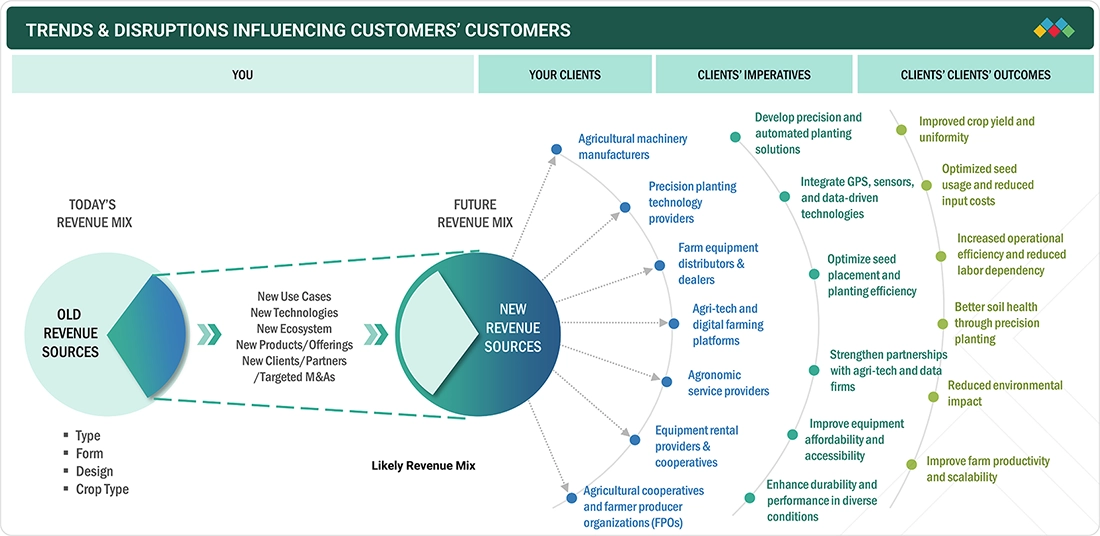
Source: Secondary Research, Interviews with Experts, MarketsandMarkets Analysis
MARKET DYNAMICS

Level
-
Rising Adoption of Precision Agriculture

-
Government Subsidies & Farm Mechanization Programs


Level
-
Limited Technical Awareness & Training

-
Dependence on Seasonal Demand & Weather Conditions


Level
-
Growth of Smart & Autonomous Planting Equipment

-
Expansion in Emerging Markets


Level
-
Integration with Diverse Farm Conditions

-
Price Sensitivity in Developing Markets

Source: Secondary Research, Interviews with Experts, MarketsandMarkets Analysis
Driver: Rising Adoption of Precision Agriculture
The rising adoption of precision farming is a key driver of the planting equipment market, as farmers increasingly focus on improving productivity and optimizing input usage. Technologies such as GPS-guided systems and variable rate seeding enable accurate seed placement and efficient resource utilization. This not only enhances crop yields but also reduces input costs and environmental impact. As awareness of sustainable farming grows, demand for precision-enabled planting equipment is expected to increase steadily across both developed and emerging markets.
Restraint: Limited Technical Awareness & Training
Limited technical awareness and inadequate training act as key restraints in the planting equipment market, particularly in developing regions. Many farmers lack the necessary knowledge and skills to effectively operate advanced planting machinery and precision technologies. This results in underutilization of equipment and reduced efficiency gains. Additionally, limited access to training programs and technical support slows adoption. As a result, the transition from traditional farming methods to mechanized and precision-based planting remains gradual in several markets.
Opportunity: Growth of Smart & Autonomous Planting Equipment
The growth of smart and autonomous planting equipment presents a significant opportunity in the planting equipment market, driven by increasing demand for efficiency and precision in farming operations. Technologies such as GPS guidance, sensors, and AI-enabled automation allow for accurate seed placement, reduced labor dependency, and optimized input usage. These systems enhance productivity while minimizing operational costs and human error. As labor shortages intensify and digital farming adoption increases, smart and autonomous planting solutions are expected to gain strong traction globally.
Challenge: Integration with Diverse Farm Conditions
Integration with diverse farm conditions remains a critical challenge in the planting equipment market due to the wide variability in agro-climate and field characteristics across regions. Factors such as soil texture (clay, loam, sandy), moisture levels, residue cover, and terrain (flat vs. undulating land) significantly influence planting performance. Equipment calibrated for uniform, large-scale fields—common in North America or parts of Europe—often struggles to deliver consistent results in heterogeneous environments found in Asia, Africa, and Latin America. Variations in soil resistance and moisture can affect seed depth control, metering accuracy, and machine traction, leading to uneven crop emergence and reduced yield potential.
PLANTING EQUIPMENT MARKET: COMMERCIAL USE CASES ACROSS INDUSTRIES
| COMPANY | USE CASE DESCRIPTION | BENEFITS |
|---|---|---|
 |
Deployment of GPS-guided precision planters in large-scale corn and soybean farming | Enhances seed placement accuracy, improves crop uniformity, and increases overall yield |
 |
Use of high-speed planters and variable rate seeding systems in commercial farming operations | Optimizes seed usage, reduces input costs, and improves operational efficiency |
 |
Integration of smart planting equipment with digital farm management platforms | Enables real-time monitoring, improves decision-making, and enhances productivity |
 |
Adoption of compact and automated planting equipment in small and medium-sized farms | Reduces labor dependency, ensures timely planting, and improves crop establishment |
Logos and trademarks shown above are the property of their respective owners. Their use here is for informational and illustrative purposes only.
MARKET ECOSYSTEM
The planting equipment market includes several well-established and financially strong manufacturers with diversified machinery portfolios and advanced engineering capabilities. These companies operate through extensive global distribution networks and focus on high-efficiency and precision planting solutions. The ecosystem consists of raw material suppliers, equipment manufacturers, technology providers, distributors, and farmers. Key players such as Deere & Company, AGCO Corporation, CNH Industrial N.V., and Kubota Corporation develop advanced planters, seed drills, and precision planting systems to improve crop establishment and operational efficiency.
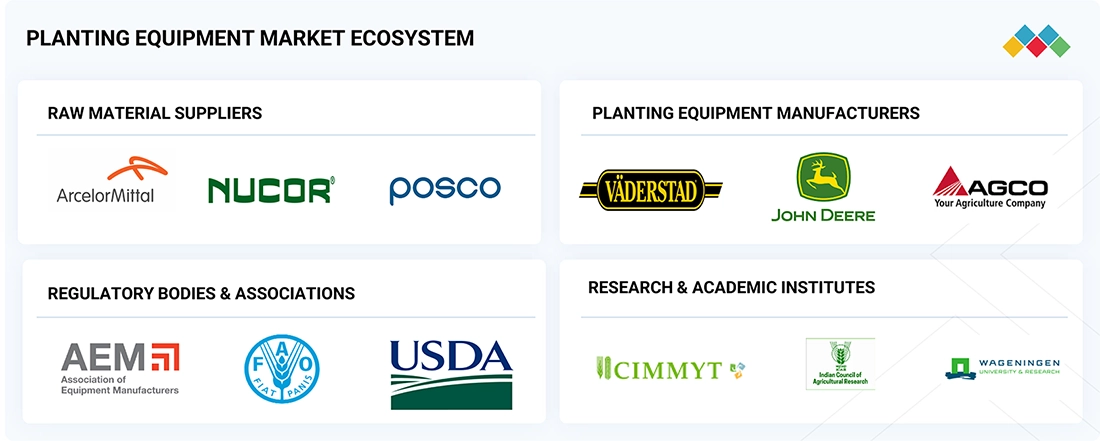
Logos and trademarks shown above are the property of their respective owners. Their use here is for informational and illustrative purposes only.
MARKET SEGMENTS
Source: Secondary Research, Interviews with Experts, MarketsandMarkets Analysis
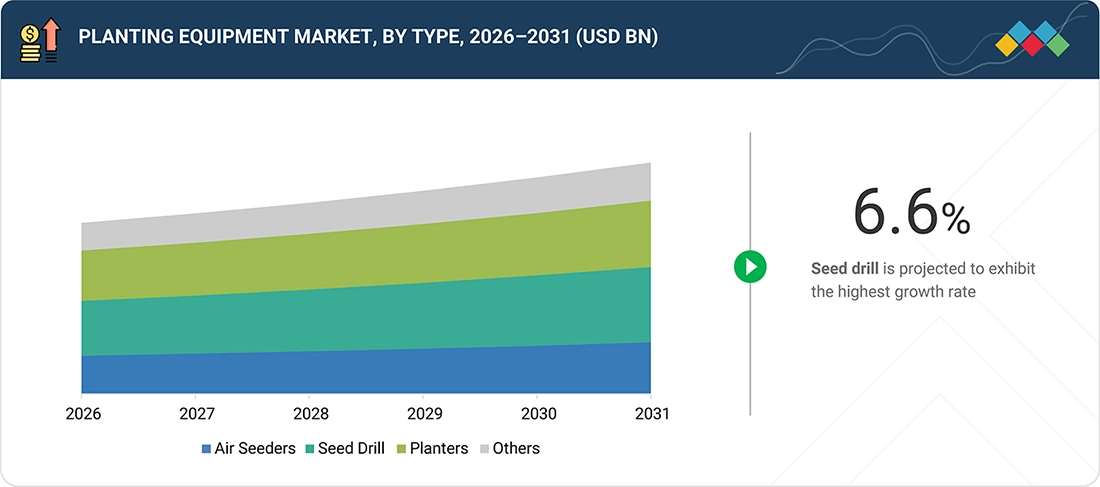
Planting Equipment Market, By Type
The planting equipment market, by type, is segmented into planters, seed drills, air seeders, and others, each catering to specific crop and farm requirements. Planters account for a significant share due to their ability to ensure precise seed placement, uniform spacing, and optimal depth control, making them suitable for row crops such as corn and soybeans. Seed drills are widely used for cereals and grains, offering efficient sowing over large areas. Air seeders are gaining traction in large-scale farming due to their high capacity and ability to handle multiple seed types.
Planting Equipment Market, By Design
The planting equipment market, by design, is segmented into mechanical and automated systems, each addressing different levels of farm mechanization and technological adoption. Mechanical planting equipment continues to hold a significant share, particularly in developing regions, due to its lower cost, ease of operation, and suitability for small and medium-sized farms. In contrast, automated planting equipment is witnessing faster growth, driven by increasing adoption of precision agriculture technologies such as GPS guidance, sensors, and variable rate seeding. These systems enable higher accuracy, improved efficiency, and reduced labor dependency, making them increasingly preferred in large-scale and technologically advanced farming operations.
Planting Equipment Market, By Crop Type
The planting equipment market, by crop type, is segmented into cereals & grains, oilseeds & pulses, fruits & vegetables, and others. Cereals and grains account for the largest share due to their extensive cultivation and the need for efficient large-scale planting operations, particularly for crops such as wheat, rice, and corn. Oilseeds and pulses also represent a significant segment, driven by growing demand for crops like soybeans and lentils. Meanwhile, fruits and vegetables are witnessing increasing adoption of precision planting equipment to ensure uniform spacing and improved crop quality, especially in high-value horticulture farming.
REGION
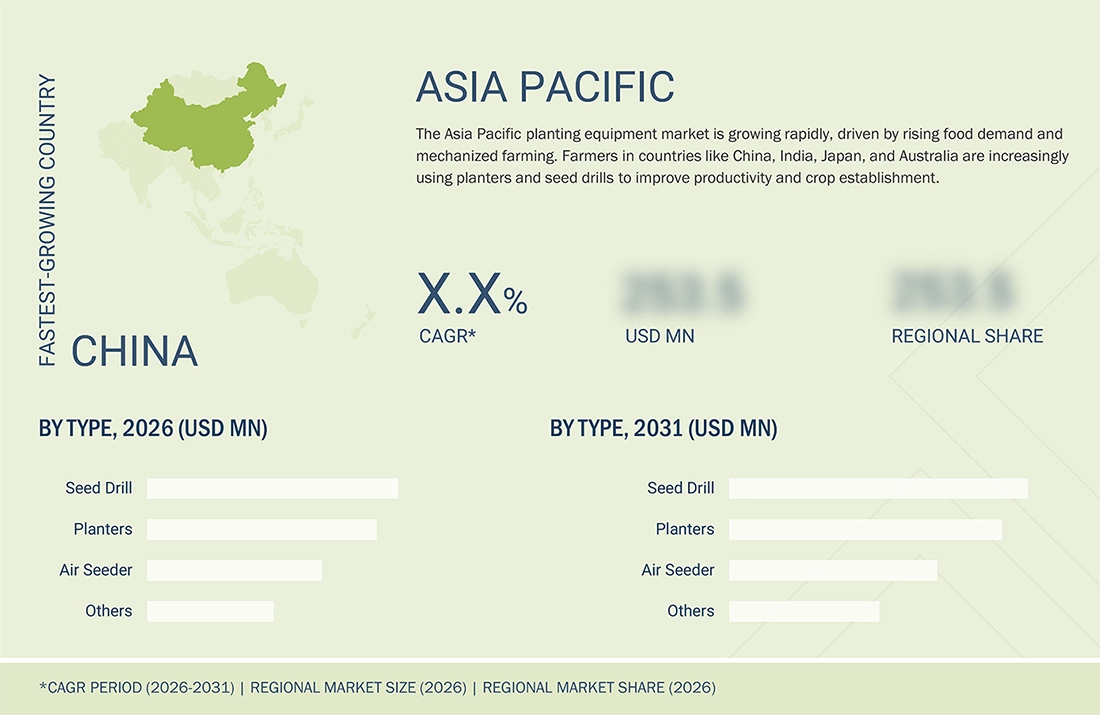
Asia Pacific to be the fastest-growing region in the planting equipment market during the forecast period
Asia Pacific is projected to be the fastest-growing region in the planting equipment market, driven by the increasing adoption of precision agriculture and a strong focus on sustainable farming practices. Countries across the region are investing in advanced machinery such as automated planters and GPS-enabled seed drills to improve efficiency and reduce environmental impact. Supportive government policies, including subsidies under agricultural programs, are further encouraging farmers to adopt modern equipment. Additionally, rising labor costs and the need for high-quality crop output are accelerating the shift toward technologically advanced planting solutions across the Asia Pacific.
PLANTING EQUIPMENT MARKET: COMPANY EVALUATION MATRIX
Star companies such as Deere & Company, along with other leading global planting equipment manufacturers, maintain broad and diversified machinery portfolios, strong brand equity, and substantial market influence across key agricultural regions. Emerging players such as SeedMaster Manufacturing Ltd. are expanding rapidly through innovative and high-performance planting solutions. Participants maintain steady operations in regional markets, while pervasive players hold a moderate but steadily growing presence, supported by increasing demand for mechanization and precision planting technologies.
Source: Secondary Research, Interviews with Experts, MarketsandMarkets Analysis
KEY MARKET PLAYERS
- Deere & Company (United States)
- AGCO Corporation (United States)
- CNH Industrial N.V. (United Kingdom)
- Väderstad AB (Sweden)
- Kinze Manufacturing (United States)
- Bourgault Industries Ltd. (Canada)
- KUHN Group (France)
- SeedMaster Manufacturing Ltd. (Canada)
- HORSCH Maschinen GmbH (Germany)
- MaterMacc S.p.A. (Italy)
- LEMKEN GmbH & Co. KG (Germany)
- Maschio Gaspardo (Italy)
- Kubota Corporation (Japan)
- Sfoggia Agriculture Division (Italy)
- Yanmar Co., Ltd. (Japan)
MARKET SCOPE
| REPORT METRIC | DETAILS |
|---|---|
| Market Size in 2026 (Value) | USD 21.7 Billion |
| Market Forecast in 2031 (value) | USD 29.44 Billion |
| Growth Rate | CAGR of 6.3% during 2026-2031 |
| Years Considered | 2021-2031 |
| Base Year | 2025 |
| Forecast Period | 2026-2031 |
| Units Considered | Value (USD Million/Billion) |
| Report Coverage | Revenue forecast, company ranking, competitive landscape, growth factors, and trends |
| Segments Covered |
|
| Regions Covered | North America, South America, Europe, Asia Pacific, RoW |
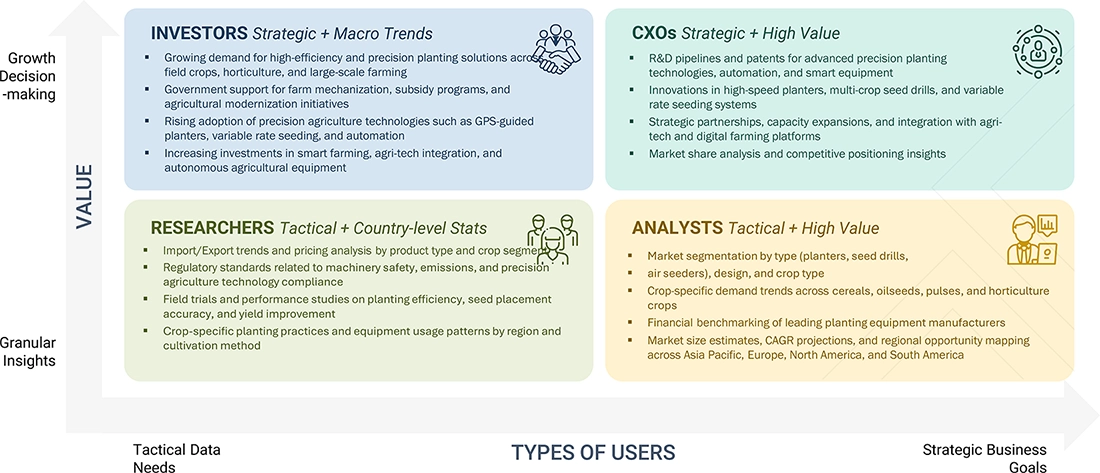
WHAT IS IN IT FOR YOU: PLANTING EQUIPMENT MARKET REPORT CONTENT GUIDE
DELIVERED CUSTOMIZATIONS
We have successfully delivered the following deep-dive customizations:
| CLIENT REQUEST | CUSTOMIZATION DELIVERED | VALUE ADDS |
|---|---|---|
| Global-based Planting Equipment Manufacturer |
|
|
| Globally Focused Distributor |
|
|
| Global Specialty Fertilizer Company |
|
|
| Investor/Private Equity Firm |
|
|
RECENT DEVELOPMENTS
- February 2026 : John Deere expanded its ExactShot technology across additional planter models, enabling targeted starter fertilizer application directly to each seed. This reduces fertilizer usage while improving early plant vigor and nutrient efficiency.
- February 2025 : AGCO enhanced SmartDepth technology to enable real-time automatic adjustment of planting depth based on soil conditions, improving emergence uniformity and optimizing seed placement in variable field environments.
- February 2026 : CNH enhanced Early Riser planters with advanced automation features, including real-time seed placement monitoring, row-by-row control, and improved connectivity with AFS™ systems, ensuring precise planting and optimized input usage.
- November 2025 : Väderstad enhanced the Tempo L planter with an upgraded Central Fill system, improving seed logistics, reducing refill time, and enabling continuous high-speed planting with maintained precision at speeds up to 15–17 km/h.
Table of Contents
 Exclusive indicates content/data unique to MarketsandMarkets and not available with any competitors.
Methodology
The study involved four major activities in estimating the current size of the planting equipment market. Exhaustive secondary research was done to collect information on the market, peer market, and parent market. The next step was to validate these findings, assumptions, and sizing with industry experts across the value chain through primary research. Both top-down and bottom-up approaches were employed to estimate the complete market size. After that, market breakdown and data triangulation were used to estimate the market size of segments and subsegments.
Secondary Research
This research study involved the extensive use of secondary sources—directories and databases such as Bloomberg Businessweek and Factiva—to identify and collect information useful for a technical, market-oriented, and commercial study of the planting equipment market.
In the secondary research process, various sources such as annual reports, press releases & investor presentations of companies, white papers, certified publications, articles from recognized authors, gold & silver standard websites, directories, and databases were referred to identify and collect information. This research study involved the extensive use of secondary sources—directories and databases such as Bloomberg Businessweek and Factiva—to identify and collect information useful for a technical, market-oriented, and commercial study of the planting equipment market.
Secondary research was mainly used to obtain key information about the industry’s supply chain, the total pool of key players, and market classification and segmentation as per the industry trends to the bottom-most level, regional markets, and key developments from both market- and technology-oriented perspectives.
Primary Research
Extensive primary research was carried out after gathering information about the planting equipment market through secondary research. Several interviews were conducted with industry experts from both the demand and supply sides across major countries in North America, Europe, Asia Pacific, South America, and RoW. Data was collected via questionnaires, emails, and phone calls. Supply-side sources included industry leaders such as CXOs, Vice Presidents (VPs), and directors from business development, marketing, research, and development teams, as well as key opinion leaders. These interviews aimed to gather insights on market statistics, revenue data from products and services, market segmentation, size estimates, forecasting, and data triangulation. The research also provided an understanding of trends related to planting equipment’s core material, shell material, methods, technology, and applications. Stakeholders from the demand side, including research institutions, universities, and third-party vendors, were interviewed to gain perspectives on their service needs, current use of encapsulation, and outlook for their businesses, which influence the overall market.
Note: The three tiers of the companies are defined based on their total revenues in 2023 or 2024, as per the availability of financial data: Tier 1: Revenue > USD 1 billion; Tier 2: USD 100 million ≤ Revenue ≤ USD 1 billion; Tier 3: Revenue < USD 100 million.
To know about the assumptions considered for the study, download the pdf brochure
|
COMPANY NAME |
DESIGNATION |
|
Deere & Company (United States) |
R&D Expert |
|
AGCO Corporation (United States) |
Sales Manager |
|
CNH Industrial N.V. (United Kingdom) |
Manager |
|
HORSCH Maschinen GmbH (Germany) |
Sales Manager |
|
KUHN Group (France) |
Marketing Manager |
Market Size Estimation
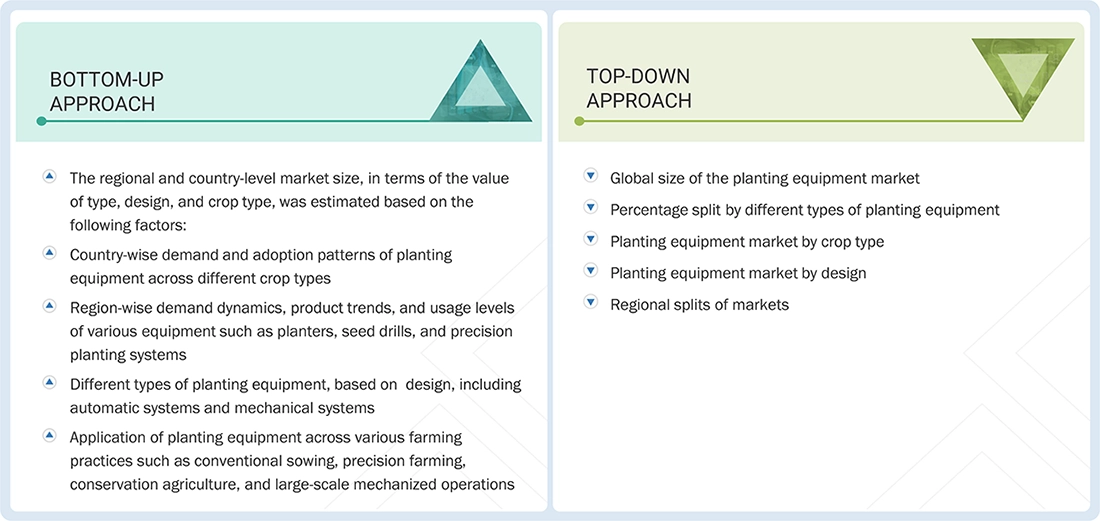
Both the top-down and bottom-up approaches were used to estimate and validate the total size of the planting equipment market. These approaches were also used extensively to determine the size of various subsegments in the market. The research methodology used to estimate the market size includes the following details:
- The key players in the industry and the overall markets were identified through extensive secondary research.
- All shares, splits, and breakdowns were determined using secondary sources and verified through primary sources.
- All possible parameters that affect the market covered in this research study were accounted for, viewed in extensive detail, verified through primary research, and analyzed to obtain final quantitative and qualitative data.
- The research included the study of reports, reviews, and newsletters of top market players, along with extensive interviews for opinions from leaders, such as CEOs, directors, and marketing executives.
Planting Equipment Market : Top-Down and Bottom-Up Approach
Data Triangulation
After arriving at the overall market size from the estimation process explained above, the total market was split into several segments and subsegments. Data triangulation and market breakdown procedures were employed, wherever applicable, to estimate the overall planting equipment market and arrive at the exact statistics for all segments and subsegments. The data was triangulated by studying various factors and trends from the demand and supply sides. Along with this, the market size was validated using both the top-down and bottom-up approaches.
Market Definition
Planting equipment refers to agricultural machinery used for sowing seeds in the soil at the correct depth, spacing, and rate to ensure optimal crop establishment throughout the growing season. These machines are essential for improving planting accuracy, reducing seed wastage, and increasing overall farm productivity. Planting equipment allows for timely operations and supports uniform germination, which directly leads to higher crop yields. It can be used across a variety of crops, including cereals, oilseeds, and horticultural crops, and is suitable for both small-scale and large-scale farming.
Planting equipment comprises various types, such as seed drills, planters, and precision planting systems. Seed drills are widely used for uniform seed distribution and proper soil coverage, while planters are designed for row crops with precise spacing and depth control. Advanced planting systems integrate technologies such as GPS guidance, sensors, and automation to improve efficiency and accuracy. These machines help farmers optimize input usage, reduce labor dependency, and ensure effective crop establishment under different farming conditions.
Key Stakeholders
- Raw material suppliers and manufacturers
- Key manufacturers of planting equipment and precision agriculture solutions
- Agricultural machinery dealers, distributors, and service providers
- Importers and exporters
- Regulatory bodies:
- The United States Department of Agriculture (USDA)
- Food and Agriculture Organization (FAO)
- European Commission (EC)
- Commercial research & development (R&D) institutions and financial institutions
- Agricultural engineering research institutes and agri-tech innovation centers
- Banks and financial institutions providing farm equipment, financing and leasing services
- Associations:
- Association of Equipment Manufacturers
- Agricultural Industry Electronics Foundation
- Organisation for Economic Co-operation and Development (OECD)
Report Objectives
MARKET INTELLIGENCE
- Determining and projecting the size of the planting equipment market with respect to type, crop type, and design
- Identifying the attractive opportunities in the market by determining the largest and fastest-growing segments
- Providing detailed information about the key factors influencing market growth (drivers, restraints, opportunities, and industry-specific challenges)
- Providing the regulatory framework and market entry process related to the planting equipment market
- Analyzing the micro markets with respect to individual growth trends, prospects, and their contribution to the total market
Available customizations:
With the given market data, MarketsandMarkets offers customizations according to company-specific scientific needs.
The following customization options are available for the report:
Product Analysis
- Products Matrix, which gives a detailed comparison of the service portfolio of each company.
Regional Analysis
With the given market data, MarketsandMarkets offers customizations according to company-specific scientific needs.
- Further breakdown of the Rest of Europe planting equipment market into key countries.
- Further breakdown of the Rest of Asia Pacific planting equipment market into key countries.
- Further breakdown of the Rest of South America planting equipment market into key countries.
Company Information
- Detailed analyses and profiling of additional market players (up to five)
Key Questions Addressed by the Report
What is the current size of the planting equipment market?
The planting equipment market is valued at USD 21.74 billion in 2026 and is projected to reach USD 29.40 billion by 2031, reflecting steady adoption of advanced agricultural machinery across global farming operations.
What is the expected CAGR of the planting equipment market?
The planting equipment market is expected to grow at a CAGR of 6.3% between 2026 and 2031, driven by increasing farm mechanization, precision agriculture, and demand for higher crop productivity.
What factors are driving the growth of the planting equipment market?
Market growth is supported by the rising adoption of precision farming technologies, increasing labor shortages, growing demand for efficient seed placement, government support for agricultural mechanization, and the need to improve crop yields while reducing operational costs.
What are the latest trends in the planting equipment market?
Key trends include the integration of GPS guidance systems, automated planting technologies, variable-rate seeding, smart farming equipment, and digital agriculture solutions that improve planting accuracy and resource efficiency.
What opportunities exist in the planting equipment market?
Growth opportunities are emerging from the expansion of precision agriculture, increasing adoption of automated equipment in developing economies, technological innovation, and rising investments in sustainable farming practices.


Personalize This Research
- Triangulate with your Own Data
- Get Data as per your Format and Definition
- Gain a Deeper Dive on a Specific Application, Geography, Customer or Competitor
- Any level of Personalization
Let Us Help You
- What are the Known and Unknown Adjacencies Impacting the Planting Equipment Market
- What will your New Revenue Sources be?
- Who will be your Top Customer; what will make them switch?
- Defend your Market Share or Win Competitors
- Get a Scorecard for Target Partners

Custom Market Research Services
We Will Customise The Research For You, In Case The Report Listed Above Does Not Meet With Your Requirements
Get 10% Free CustomisationTESTIMONIALS

Business Innovation Director
US Based Leading Agribusiness,
Food and Ingredients ManufacturerI highly appreciate the team's efficiency for a well conducted study that helped us clarify some blind spots in food and agricultural niche markets. Although compiling information for B2B markets is very difficult, the MnM team pulled out the task successfully. The quality of research, level of insights, and responsiveness of team were commendable.
- US Planting Equipment Market
- Canada Planting Equipment Market
- Mexico Planting Equipment Market
- Germany Planting Equipment Market
- France Planting Equipment Market
- Poland Planting Equipment Market
- UK Planting Equipment Market
- Italy Planting Equipment Market
- Spain Planting Equipment Market
- China Planting Equipment Market
- India Planting Equipment Market
- Japan Planting Equipment Market
- Brazil Planting Equipment Market
- Argentina Planting Equipment Market
- Rest Of Europe Planting Equipment Market
- Rest Of Asia Pacific Planting Equipment Market
- Rest Of South America Planting Equipment Market






Growth opportunities and latent adjacency in Planting Equipment Market