Surface Disinfectant Market: Growth, Size, Share, and Trends

Surface Disinfectant Market by Composition (Alcohols, Chlorine, Quaternary Ammonium, H2O2), Type (Liquid, Wipes, Sprays), Application (Surface Disinfection), End User (Hospitals, Clinics, Diagnostic Laboratories), & Region - Global Forecast to 2030




OVERVIEW
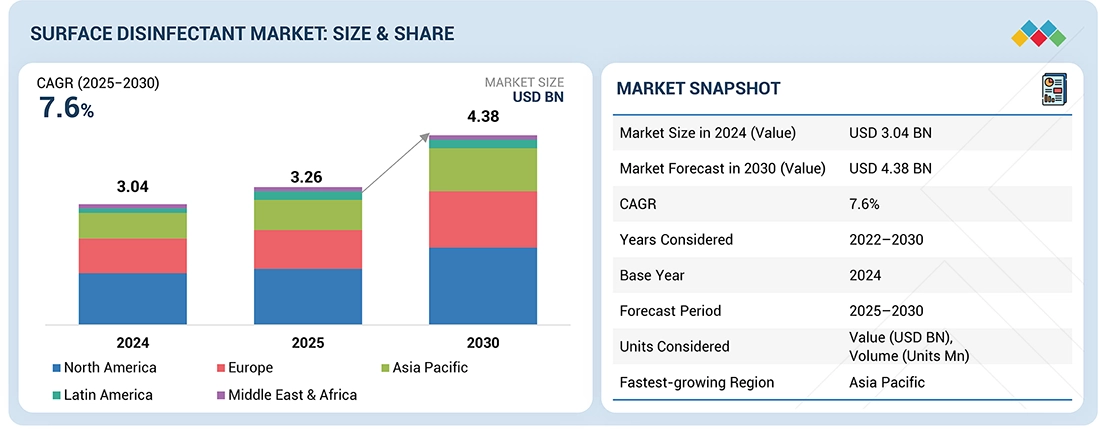
Source: Secondary Research, Interviews with Experts, MarketsandMarkets Analysis
The surface disinfectant market is expected to grow from USD 3.04 billion in 2025 to USD 4.38 billion by 2030, registering a CAGR of 7.6% during the forecast period. Market expansion is primarily fueled by the heightened emphasis on infection prevention to reduce hospital-acquired infections and the increasing utilization of advanced disinfectant formulations for effective surface sanitization.
KEY TAKEAWAYS
-
BY COMPOSITIONBased on composition, the surface disinfectant market is categorized into alcohols, chlorine compounds, quaternary ammonium compounds, hydrogen peroxide, peracetic acid, phenolic compounds, and other compositions. The alcohols segment held the dominant share of the market driven by their broad-spectrum antimicrobial activity, rapid evaporation rate, and compatibility with a wide range of surfaces, making them ideal for both healthcare and commercial environments.
-
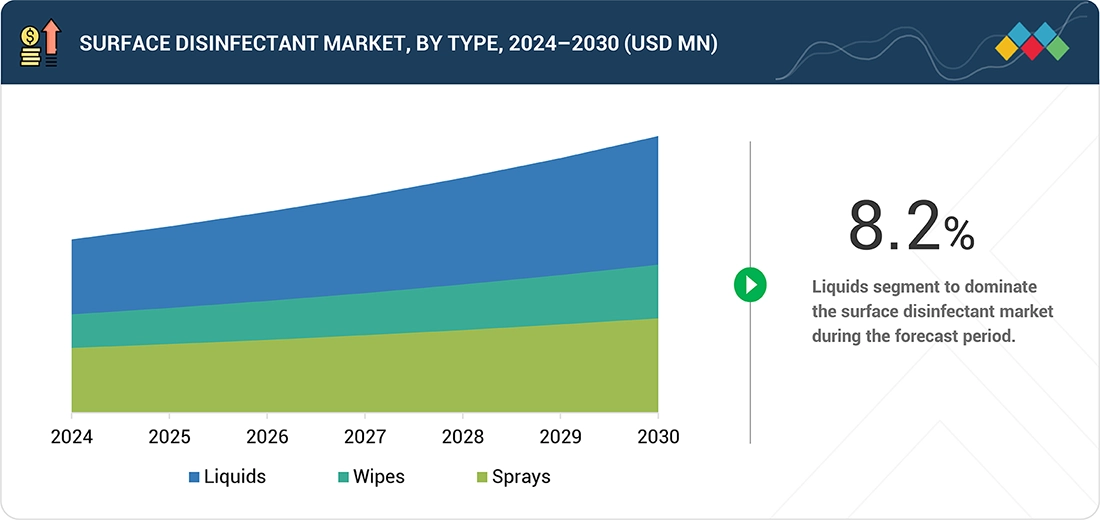
BY TYPEBased on type, the surface disinfectant market is segmented into liquids, wipes, and sprays. The liquids segment holds the largest share of the market, driven by its versatility, superior surface coverage, and ease of application across healthcare, commercial, and household settings.
-
BY APPLICATIONBased on application, the surface disinfectant market is segmented into surface disinfection, instrument disinfection, and other applications. The surface disinfection segment dominates the market, driven by the critical need to maintain hygiene and prevent healthcare-associated infections (HAIs) in medical and laboratory environments.
-
BY END USERBased on end user, the surface disinfectant market is segmented into hospitals, clinics & ambulatory surgical centers (ASCs), diagnostic laboratories, pharmaceutical and biotechnology companies, and research laboratories. The hospitals, clinics & ASCs segment holds the largest market share, driven by the high incidence of healthcare-associated infections (HAIs) and the implementation of strict infection prevention and control guidelines established by global health authorities such as the CDC and WHO.
-
BY REGIONBased on region, the surface disinfectant market is segmented into North America, Europe, Asia Pacific, Latin America, and the Middle East & Africa. North America holds the largest share of the market, driven by advanced healthcare infrastructure, stringent infection control regulations, and high adoption of modern disinfectant solutions.
-
COMPETITIVE LANDSCAPEMajor market players have adopted both organic and inorganic strategies, including product launches, agreements, partnership, expansions, and collaborations. For instance, Reckitt Benckiser (UK) and The Clorox Copmany (US) have entered into a number of collaborations and agreements to cater to the growing demand for surface disinfectants across the applications.
The surface disinfectant market is witnessing steady growth, driven by the increasing focus on infection control measures to mitigate hospital-acquired infections and the rising adoption of advanced disinfectants for effective sanitization. Growing consumer awareness about hygiene across healthcare and community settings, along with the surge in surgical procedures, continues to strengthen market demand and enhance infection prevention standards. New deals and developments, including the shift toward eco-friendly and non-toxic disinfectant formulations, increasing healthcare expenditures in emerging economies, and innovations in sustainable, high-efficacy disinfection solutions, are reshaping the industry landscape.
TRENDS & DISRUPTIONS IMPACTING CUSTOMERS' CUSTOMERS
The impact on end users in the surface disinfectant market is driven by increasing focus on infection control measures and growing awareness of hygiene across healthcare and public settings. Hospitals, clinics, and diagnostic laboratories, the primary consumers of surface disinfectants are responding to these trends by adopting advanced and eco-friendly disinfectant solutions. Shifts such as the rising preference for non-toxic, sustainable formulations and innovations in high-efficacy disinfectants are expected to alter the revenue mix for end users, influencing purchasing patterns and budgets. These changes, in turn, will impact the revenues of surface disinfectant manufacturers, creating opportunities for companies that can offer effective, safe, and environmentally friendly products in line with evolving market demands.
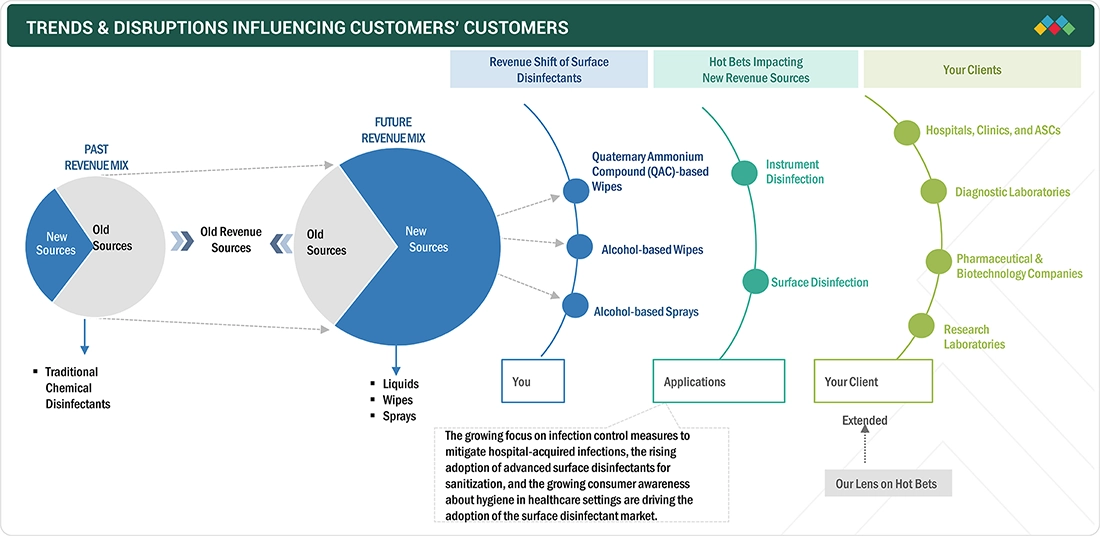
Source: Secondary Research, Interviews with Experts, MarketsandMarkets Analysis
MARKET DYNAMICS

Level
-
Growing focus on mitigating hospital-acquired infections

-
Rising adoption of advanced surface disinfectants for sanitization


Level
-
Potential consequences of chemical disinfectant use

-
Increasing adoption of alternative surface disinfection methods


Level
-
Rising healthcare expenditure in emerging economies

-
Shift toward eco-friendly and non-toxic disinfectants


Level
-
Strict regulatory requirements

Source: Secondary Research, Interviews with Experts, MarketsandMarkets Analysis
Driver: Growing focus on mitigating hospital-acquired infections.
Hospital-acquired infections (HAIs) are infections acquired during a patient’s stay in healthcare facilities and can arise from contaminated medical devices or surfaces. Common HAIs include surgical-site infections, bloodstream infections, urinary tract infections, and pneumonia, often caused by bacteria such as MRSA, C. difficile, E. coli, and Klebsiella. The use of surface disinfectants in hospitals, clinics, and diagnostic facilities plays a critical role in reducing these infections, highlighting the ongoing need for effective disinfection practices to ensure patient safety and improve healthcare outcomes.
Restraint: Potential consequences of chemical disinfectant use.
While chemical disinfectants are effective in controlling microorganisms and preventing infections, their improper or excessive use can pose health, environmental, and material risks. Prolonged exposure may lead to respiratory issues or skin irritation, while improper disposal can harm ecosystems. Overuse can also contribute to antimicrobial resistance, and frequent application on surfaces may cause corrosion or material deterioration, affecting equipment longevity and effectiveness.
Opportunity: Shift toward eco-friendly and non-toxic disinfectants.
The growing demand for eco-friendly and non-toxic surface disinfectants presents significant opportunities for market expansion. These alternatives reduce environmental pollution and minimize health risks associated with traditional chemical disinfectants. Innovations such as citric acid-based and pH-neutral formulations are gaining traction, offering effective cleaning without harming sensitive surfaces or ecosystems. With increasing regulatory support and consumer awareness, manufacturers have the opportunity to develop biodegradable, plant-based, and safe disinfectant solutions that meet both efficacy and sustainability standards.
Challenge: Strict regulatory requirements.
The surface disinfectant market faces challenges due to stringent regulatory guidelines governing product formulation, usage, and labeling. In many countries, agencies such as the EPA, OSHA, and FDA enforce strict compliance for disinfectants used on surfaces and medical devices. Users must follow precise instructions regarding dilution, contact time, and application methods, with non-compliance potentially leading to legal action. Similar regulations are being adopted in emerging markets, making adherence to rigorous disinfection standards a critical challenge for manufacturers and end users alike.
Surface Disinfectant Market: COMMERCIAL USE CASES ACROSS INDUSTRIES
| COMPANY | USE CASE DESCRIPTION | BENEFITS |
|---|---|---|
 |
Provides EPA-registered disinfectants such as Lysol Professional solutions for institutional hygiene across healthcare, offices, and public spaces. | Delivers broad-spectrum disinfection; trusted performance in high-traffic environments; supports infection control protocols across industries. |
 |
Offers professional-grade disinfectants like Microban 24 Professional and Comet cleaner products for commercial and institutional environments. | Provides continuous antibacterial protection; supports efficient facility hygiene; enhances staff and guest safety with long-lasting efficacy. |
 |
Develops EPA-registered disinfectants including 3M Quat Disinfectant Cleaner for healthcare facilitities cleaning. | Offers fast-acting broad coverage; integrates with dilution control systems for safety and efficiency; supports infection prevention in critical settings. |
 |
Supplies disinfectant wipes, RTU sprays, and concentrated systems like Disinfectant 1 and Peroxide Multi Surface Cleaner for healthcare disinfection. | Delivers hospital-grade efficacy with 1-minute kill time; reduces labor time with ready-to-use formats; ensures regulatory compliance and safety. |
 |
Provides CloroxPro product line including germicidal bleach, hydrogen peroxide disinfectants, and electrostatic sprayers for professional use. | Offers high-efficacy disinfection against pathogens including C. difficile; adaptable for diverse surface types; trusted in hospitals and institutions. |
Logos and trademarks shown above are the property of their respective owners. Their use here is for informational and illustrative purposes only.
MARKET ECOSYSTEM
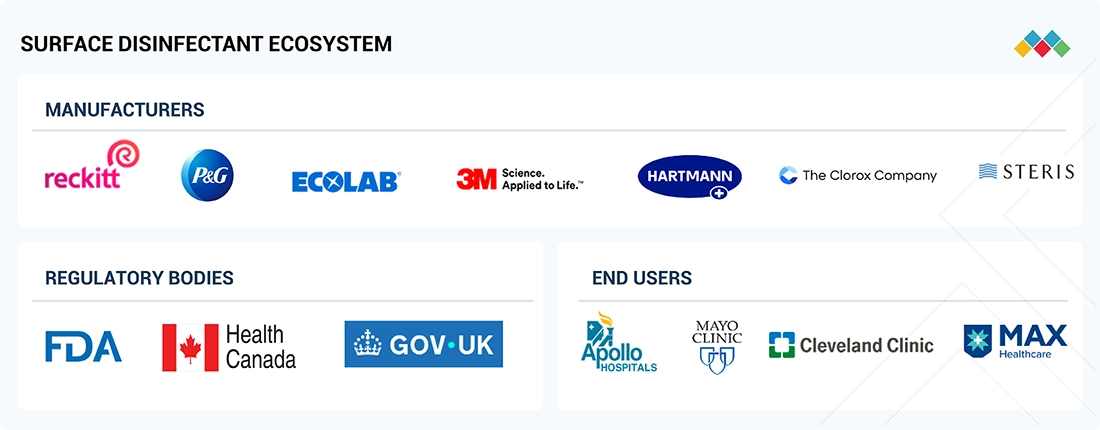
The surface disinfectant market ecosystem consists of manufacturers, distributors, end users, investors, and regulatory bodies. Manufacturers engage in research, product development, optimization, and the launch of various disinfectant formulations, including alcohols, chlorine compounds, quaternary ammonium compounds, hydrogen peroxide, peracetic acid, phenolic compounds, and others. Distributors, including third-party suppliers and e-commerce platforms, connect manufacturers with the market, ensuring broad availability of products. End users, such as hospitals, clinics, diagnostic laboratories, and research facilities, drive demand for surface disinfectants to maintain hygiene and prevent infections. Meanwhile, investors and health regulatory authorities play a critical role in influencing product standards, adoption, and market growth. Collaboration across this value chain is essential to drive innovation, regulatory compliance, and adoption of advanced disinfectant solutions.
Logos and trademarks shown above are the property of their respective owners. Their use here is for informational and illustrative purposes only.
MARKET SEGMENTS
Source: Secondary Research, Interviews with Experts, MarketsandMarkets Analysis
Surface Disinfectant Market , By Composition
In 2024, the alcohols segment held the largest share of the surface disinfectant market. This dominance is driven by broad-spectrum antimicrobial efficacy, rapid action, and widespread availability. Alcohol-based disinfectants are highly effective against bacteria, viruses, and fungi, making them ideal for healthcare, laboratory, and commercial environments. Their fast evaporation rate, ease of application, and compatibility with various surfaces further reinforce their leading position. Additionally, the growing adoption of ethanol- and isopropanol-based formulations in response to infection control concerns has strengthened the segment’s market leadership.
Surface Disinfectant Market , By Type
In 2024, liquids dominated the market among surface disinfectant types. Their versatility, ability to cover large surface areas, and suitability for multiple cleaning methods make them preferred across healthcare facilities, laboratories, and industrial settings. Liquids can be applied manually or through automated systems, ensuring thorough surface coverage. Their ease of formulation with active ingredients such as alcohols, chlorine compounds, and hydrogen peroxide also supports their widespread adoption, contributing to their strong market share.
Surface Disinfectant Market , By Application
The surface disinfection segment accounted for the largest share in 2024. Maintaining hygienic, pathogen-free surfaces in healthcare and diagnostic facilities is critical to preventing hospital-acquired infections (HAIs). High-touch areas such as patient beds, countertops, surgical equipment, and diagnostic tools require frequent and effective disinfection, driving consistent demand for surface disinfectants. The emphasis on infection prevention protocols and regulatory compliance reinforces the leading position of this application segment.
Surface Disinfectant Market , By End User
In 2024, hospitals, clinics, and ambulatory surgical centers (ASCs) dominated the end-user segment. This is primarily due to the high risk of HAIs and stringent infection control measures mandated by health authorities. Continuous disinfection practices in patient care areas, surgical suites, and high-touch zones ensure that these facilities remain major consumers of surface disinfectants. The segment’s dominance is further supported by ongoing investments in infection prevention technologies and adoption of advanced disinfectant formulations.
REGION
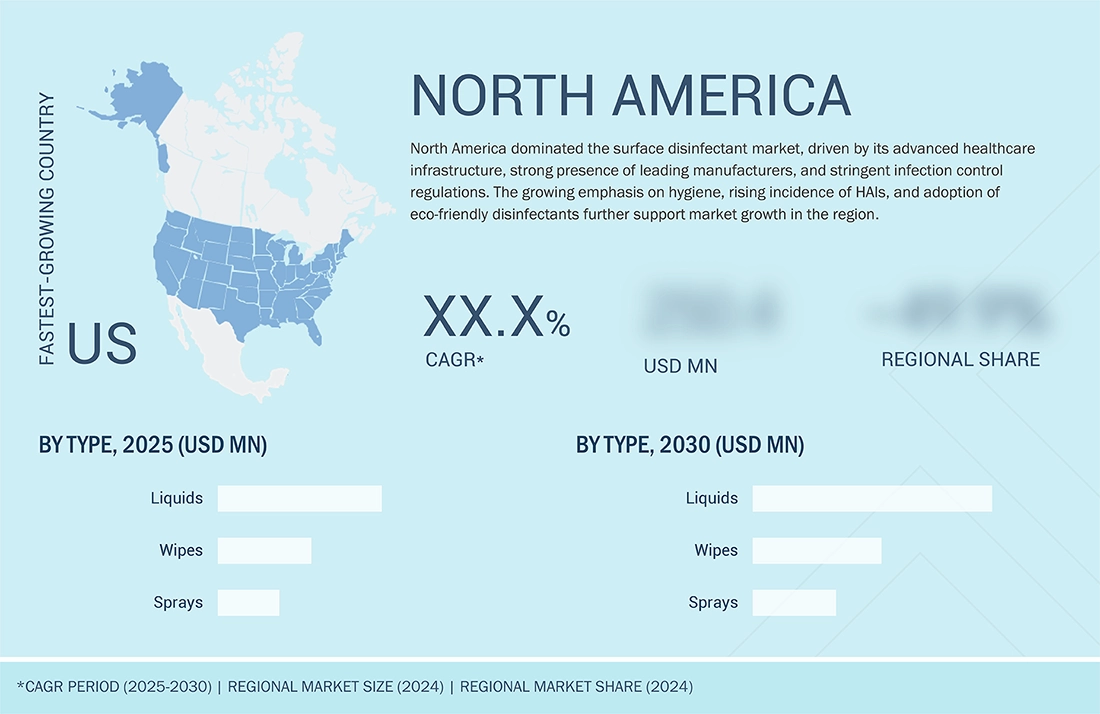
North America to be fastest-growing region in global Surface Disinfectant Market during forecast period
In 2024, North America held the largest share of the surface disinfectant market. The region’s dominance is driven by advanced healthcare infrastructure, strict regulatory standards, and high adoption of modern disinfectant solutions. Hospitals, clinics, and diagnostic laboratories rely heavily on surface disinfectants to maintain hygiene and prevent healthcare-associated infections (HAIs). The emphasis on infection control protocols, patient safety, and compliance with agencies such as the CDC, FDA, and EPA further reinforces the region’s leading position in the market.
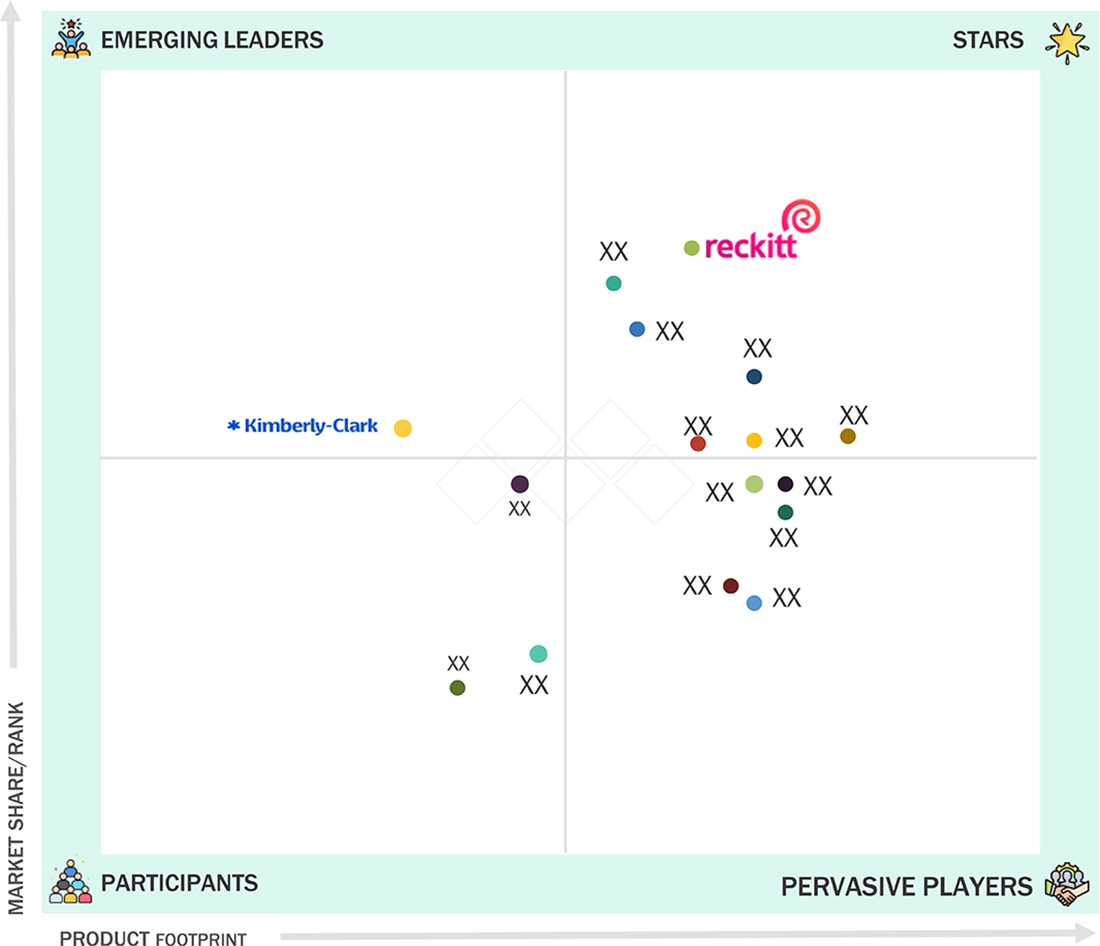
Surface Disinfectant Market: COMPANY EVALUATION MATRIX
In the surface disinfectant market matrix, Reckitt Benckiser (UK) and Procter & Gamble (US) lead as Star players, driven by their strong product portfolios, extensive global reach, and consistent innovation in hygiene and disinfection solutions. Ecolab (US) and 3M (US) also hold prominent positions, leveraging their advanced technologies and strong customer base in healthcare and commercial sectors. The Clorox Company (US) continues to maintain a robust presence through its trusted consumer disinfectant brands and high brand recall. While Reckitt Benckiser and Procter & Gamble dominate the market through scale and brand strength, Ecolab and 3M demonstrate significant potential to advance further through technological innovation and expansion in institutional hygiene applications.
Source: Secondary Research, Interviews with Experts, MarketsandMarkets Analysis
KEY MARKET PLAYERS
MARKET SCOPE
| REPORT METRIC | DETAILS |
|---|---|
| Market Size in 2024 (Value) | USD 3.04 Billion |
| Market Forecast in 2030 (Value) | USD 4.38 Billion |
| Growth Rate | CAGR of 7.6% from 2025-2030 |
| Years Considered | 2022-2030 |
| Base Year | 2024 |
| Forecast Period | 2025-2030 |
| Units Considered | Value (USD Million/Billion), Volume (Units) |
| Report Coverage | Revenue forecast, company ranking, competitive landscape, growth factors, and trends |
| Segments Covered |
|
| Regions Covered | North America, Asia Pacific, Europe, Latin America, Middle East & Africa |
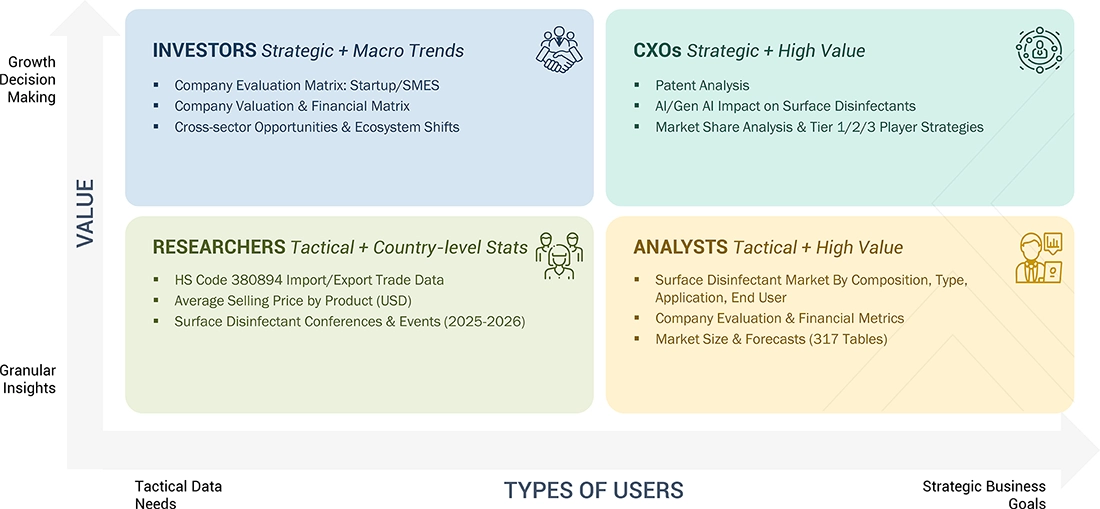
WHAT IS IN IT FOR YOU: Surface Disinfectant Market REPORT CONTENT GUIDE
RECENT DEVELOPMENTS
- June 2026: The Clorox Company launched Clorox Healthcare Quat Alcohol Disinfecting Wipes and Clorox Healthcare HyperOxi Disinfecting Wipes, two new healthcare surface-disinfection products. The Quat Alcohol wipes use a triple-active formula with 40% less alcohol and a 1-minute contact time, while HyperOxi is Clorox Healthcare’s first bleach-free sporicidal wipe, using Quanticare Technology to kill C. difficile spores in four minutes.
- March 2026: Reckitt Benckiser highlighted the expansion of Dettol Activ Botany, a newly developed plant-derived disinfectant formulation engineered for use across household surfaces and laundry. The product combines benzalkonium chloride with citric acid and was tested across more than 100 common household hard surfaces, with Reckitt stating that the formulation delivers 99.9% bacterial elimination and up to seven-day long-lasting germ kill. Reckitt also confirmed that the China launch was informing the product's planned UK rollout in early 2026, making the development directly relevant to surface disinfectant innovation.
- October 2025: Ecolab launched Klercide™ Rapid Sporicide, a new ready-to-use sporicidal disinfectant for pharmaceutical cleanroom applications. The formulation was developed to provide rapid microbial control while reducing odor, residue, corrosiveness and re-application requirements, and is specifically formulated for consistent surface coverage in cleanroom environments. Ecolab describes it as a new solution designed to improve pharmaceutical production turnover while providing broad-spectrum surface disinfection.
- April 2025: Procter & Gamble introduced Mr. Clean Antibacterial 2X Concentrated Cleaner, which was subsequently recognized among Circana's 2025 New Product Pacesetters. The product delivers multi-surface cleaning with antibacterial functionality and was positioned as a new innovation in P&G's home-care portfolio.
- January 202 : Reckitt Benckiser announced the expansion of its R&D capabilities with the establishment of a Global R&D Science and Innovation Centre in Shanghai, China, scheduled to launch in 2026. This initiative reinforces the company’s commitment to developing advanced product solutions and enhancing local innovation capacity for the Chinese market.
Table of Contents
 Exclusive indicates content/data unique to MarketsandMarkets and not available with any competitors.
Methodology
This study involved the extensive use of primary and secondary sources. The research process involved the study of various factors affecting the industry to identify the segmentation types, industry trends, key players, competitive landscape, fundamental market dynamics, and key player strategies.
Secondary Research
The secondary research process involves the widespread use of secondary sources, directories, databases (such as Bloomberg Businessweek, Factiva, and D&B Hoovers), white papers, annual reports, investor presentations, SEC filings of companies and publications from government sources such as National Institutes of Health (NIH), US FDA, World Health Organization (WHO), International Trade Administration (ITA), US Census Bureau, and Centers for Medicare and Medicaid Services (CMS) were referred to identify and collect information for the global surface disinfectant market study. It was also used to obtain important information about the key players and market classification & segmentation according to industry trends to the bottom-most level and key developments related to market and technology perspectives. A database of the key industry leaders was also prepared using secondary research.
Primary Research
In the primary research phase, a comprehensive approach was employed, involving the interviewing of several sources from the supply and demand sides. These interviews aimed to obtain the quantitative and qualitative information needed to put up this report. Industry experts from core and associated industries, as well as preferred manufacturers, distributors, suppliers, technological innovators, and organizations involved in all facets of this industry's value chain, served as the primary information sources. Numerous primary respondents, including important industry participants, subject-matter specialists, C-level executives of the major market companies, and industry advisers, were the focus of extensive inquiry. The objective was to comprehensively evaluate potential futures and collect and validate significant qualitative and quantitative insights.
A breakdown of the primary respondents is provided below:
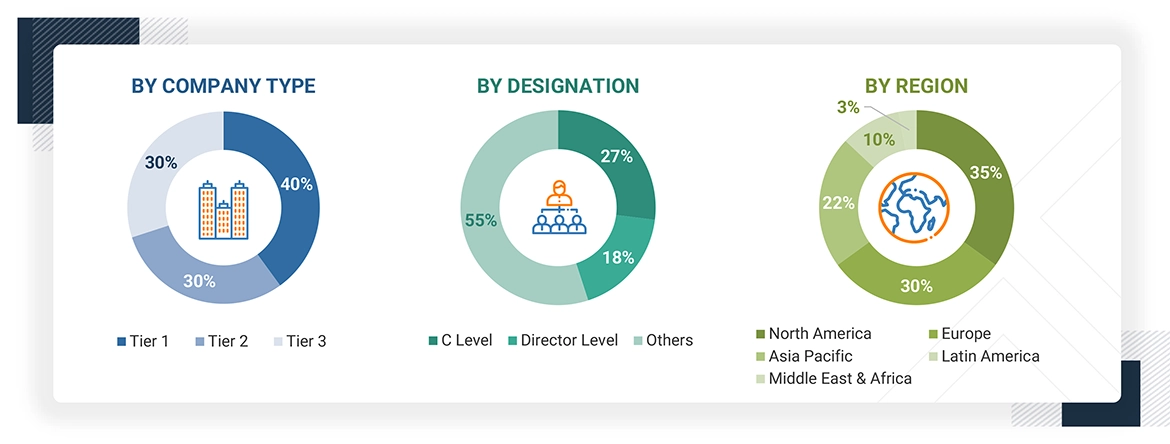
Note 1: C-level primaries include CEOs, CFOs, COOs, and VPs.
Note 2: Other designations include sales managers, marketing managers, business development managers, product managers, distributors, and suppliers.
Note 3: Companies are classified into tiers based on their total revenue. As of 2024, Tier 1 = >USD 10.00 billion, Tier 2 = USD 1.00 billion to USD 10.00 billion, and Tier 3 = < USD 1.00 billion.
Source: MarketsandMarkets Analysis
To know about the assumptions considered for the study, download the pdf brochure
Market Size Estimation
For the global market value, annual revenues were calculated based on the revenue mapping of major product manufacturers and OEMs active in the global surface disinfectant market. All the major product manufacturers were identified at the global and/or country/regional level. Revenue mapping for the respective business segments/subsegments was done for the major players. The global surface disinfectant market was split into various segments and sub-segments based on:
- List of major players operating in the products market at the regional and/or country level
- Product mapping of various surface disinfectant manufacturers at the regional and/or country level
- Mapping of annual revenue generated by listed major players from surface disinfectant (or the nearest reported business unit/product category)
- Extrapolation of the revenue mapping of the listed major players to derive the global market value of the respective segments/subsegments
- Summation of the market value of all segments/subsegments to arrive at the global surface disinfectant market
The above-mentioned data was consolidated and added with detailed inputs and analysis from MarketsandMarkets and presented in this report.
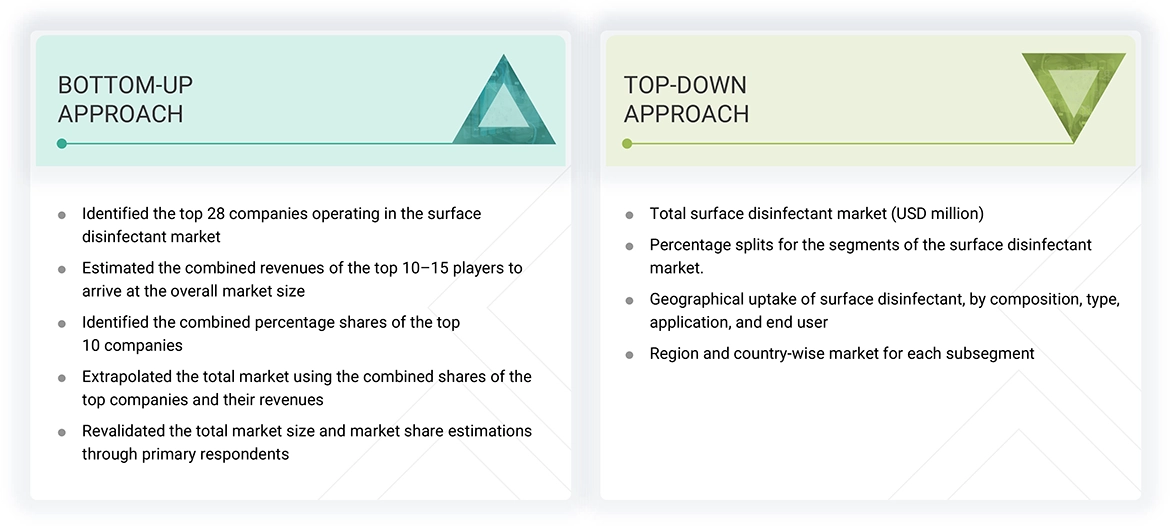
Data Triangulation
After arriving at the overall size of the global surface disinfectant market through the above-mentioned methodology, this market was split into several segments and subsegments. Where applicable, the data triangulation and market breakdown procedures were employed to complete the overall market engineering process and arrive at the exact market value data for the key segments and subsegments. The extrapolated market data was triangulated by studying various macro indicators and regional trends from both demand- and supply-side participants.
Market Definition
A surface disinfectant is an antimicrobial agent applied to the surface of objects to eliminate microorganisms. Surface disinfectants play a vital role in removing pathogens and germs, thereby ensuring effective protection against infections. Surface disinfectants are primarily used to clean walls, floors, and other surfaces in hospitals, as well as to disinfect medical devices and instruments.
Stakeholders
- Manufacturers and Vendors of surface disinfectants
- Pharmaceutical & Biopharmaceutical Companies
- Distributors of Surface Disinfectants
- Healthcare Institutions
- Government Bodies/Municipal Corporations
- Regulatory Bodies
- Business Research and Consulting Service Providers
- Venture Capitalists and Investors
- Market Research and Consulting Firms
- Healthcare Providers
Report Objectives
- To describe, analyze, and forecast the surface disinfectant market by composition, type, application, end user, and region
- To describe and forecast the surface disinfectant market in key regions—North America, Europe, the Asia Pacific, Latin America, and the Middle East & Africa.
- To provide detailed information regarding the drivers, restraints, opportunities, and challenges influencing the market growth
- To strategically analyze micromarkets1with respect to individual growth trends, prospects, and contributions to the overall market
- To analyze market opportunities for stakeholders and provide details of the competitive landscape for market players
- To profile key players and comprehensively analyze their market shares and core competencies in the surface disinfectant market
- To analyze competitive developments such as product launches, agreements, partnerships, expansions, collaborations, and other developments in the surface disinfectant market
- To analyze the impact of AI/Gen AI on the surface disinfectant market in terms of its capabilities, potential, use cases, and future
Key Questions Addressed by the Report
- Hospitals, Clinics, and ASCs
- Diagnostic Laboratories
- Pharmaceutical & Biotechnology Companies
- Research Laboratories.


Personalize This Research
- Triangulate with your Own Data
- Get Data as per your Format and Definition
- Gain a Deeper Dive on a Specific Application, Geography, Customer or Competitor
- Any level of Personalization
Let Us Help You
- What are the Known and Unknown Adjacencies Impacting the Surface Disinfectant Market
- What will your New Revenue Sources be?
- Who will be your Top Customer; what will make them switch?
- Defend your Market Share or Win Competitors
- Get a Scorecard for Target Partners

Custom Market Research Services
We Will Customise The Research For You, In Case The Report Listed Above Does Not Meet With Your Requirements
Get 10% Free CustomisationTESTIMONIALS

JAYANT RAJPUROHIT
Director of Market Insights, Data and Analytics
SFI Health,
Leading Pharmaceutical Companywww.sfihealth.com/
We at SFI Health approached MarketsandMarkets for an Opportunity Assessment on "Incidence and Prevalence of Focus Indications" as we wanted to know the most attractive HCPs like Physician, Functional MD, Naturopath and Pharmacist. The project was critical for us to ensure our focus on the right target which would enable sustainable growth and profitability for SFI Health. The business insights provided exceeded our expectations and we were extremely impressed. The team at MarketsandMarkets is highly professional and detail oriented and very well understood our business needs. MarketsandMarkets offers a unique combination of expertise and dedicated engagement model. We identified 2 new products to be launched in coming months, based on the research findings provided by MarketsandMarkets. We are happy with the services and would strongly recommend MarketsandMarkets to my peers in the industry.

BEATRIZ DE LA CALLE
Head of Commercial Analytics
Qualicaps,
Leading Pharmaceutical Companywww.qualicaps.com/
We partnered with MarketsandMarkets for an assessment study on hard empty capsules. The team was extremely professional in understanding our business requirements and we received timely responses to all our queries. The market intelligence and the recommendations has met our business requirements. We were extremely impressed to see the final study results; it really exceeded our expectations. The market intelligence offered by MarketsandMarkets, and clarity on next steps will help us achieve our business objective for the Year 2021. We are happy with the services and would strongly recommend MarketsandMarkets to my peers in the industry.

Bob Williams,
Senior Director Business Development & Innovation
Bracco Diagnostics Inc.,
Italian Multinational in life sciences sector and a World Leader in imaging diagnosticsimaging.bracco.com/us-en
We were pleased with targeted insights that MarketsandMarkets identified from a custom study on the 'Radiation Dose Management Solutions Market'. Your team identified and characterized the market participants as well as underlying trends accurately. This study was useful to Bracco in formulating business strategies for our dose monitoring product lines and we thank MarketsandMarkets for the job well done.
Cody Coonradt,
Market Development and Strategy Manager
3M Health Information Systems,
Leader in Health care Coding, Payment & Analytics Solutions.www.3m.com/3M/en_US/health-information-systems-us
The value for our organization comes from three things: depth of research, specificity of segments and being easy to work with. As important as the first two are, the third can't be underestimated. MarketsandMarkets, maybe more than any other research vendor, wants to know what is top of mind for our team and what big questions we are grappling to answer.
Their customer first approach and high value engagement model, have given us great analysis and excellent value for money
- US Surface Disinfectant Market
- Canada Surface Disinfectant Market
- Germany Surface Disinfectant Market
- France Surface Disinfectant Market
- UK Surface Disinfectant Market
- Italy Surface Disinfectant Market
- Spain Surface Disinfectant Market
- China Surface Disinfectant Market
- Japan Surface Disinfectant Market
- India Surface Disinfectant Market
- Australia Surface Disinfectant Market
- South Korea Surface Disinfectant Market
- Brazil Surface Disinfectant Market
- Mexico Surface Disinfectant Market
- Rest Of Europe Surface Disinfectant Market
- Rest Of Asia Pacific Surface Disinfectant Market
- Rest Of Latin America Surface Disinfectant Market
Growth opportunities and latent adjacency in Surface Disinfectant Market






Steven
Mar, 2022
Which is the fastest growing market of Surface Disinfectant Market?.
Andrew
Mar, 2022
Can you enlighten us with your market intelligence to grow and sustain in Surface Disinfectant Market?.
Paul
Mar, 2022
What are the growth estimates for Surface Disinfectant Market till 2026?.