Air Traffic Management Market Size, Share & Trends

Air Traffic Management Market Size, Share and Trends by Operation (ATS, ATFM, ASM, AIM), Technology (Communication, Navigation, Surveillance, Automation Systems), Solution (Hardware, Software, Services), Deployment (New, Upgrade), and Region - Global Forecast to 2030




AIR TRAFFIC MANAGEMENT MARKET OVERVIEW
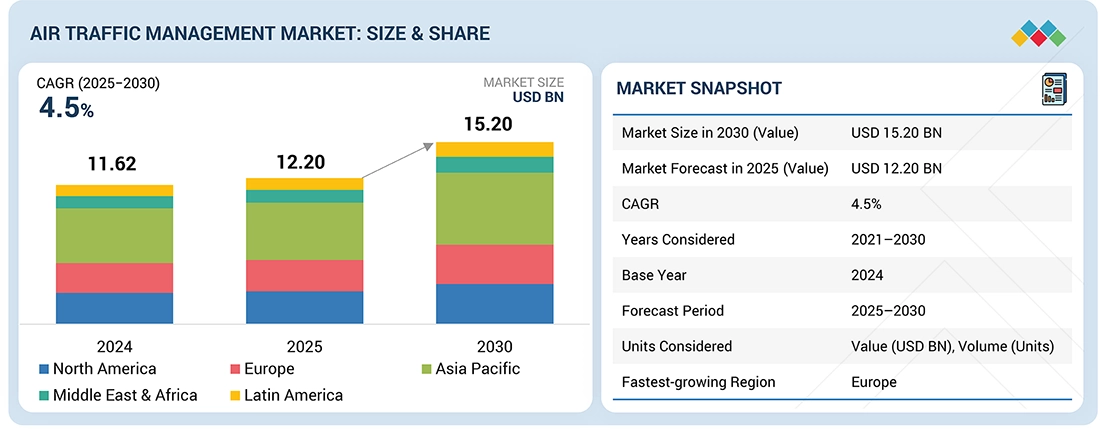
According to Marketsandmarkets, The global Air Traffic Management Market size was valued at USD 12.20 billion in 2025 and is projected to reach USD 15.20 billion by 2030, at a CAGR of 4.5% from 2025 to 2030. The market growth is driven by the continual rise in global air traffic, which increases the need for ongoing investments in advanced systems to boost capacity while maintaining efficiency and safety. At the same time, modernization initiatives and the adoption of digital technologies are facilitating the shift toward more integrated and automated airspace management solutions.
REPORT SCOPE
| REPORT METRIC | DETAILS |
|---|---|
| Market Size in 2025 (Value) | USD 12.20 Billion |
| Market Forecast in 2030 (Value) | USD 15.20 Billion |
| Growth Rate | CAGR of 4.5% |
| Years Considered | 2021-2030 |
| Base Year | 2024 |
| Forecast Period | 2025-2030 |
| Units Considered | Value (USD Million/Billion), Volume (Unit) |
| Report Coverage | Revenue forecast, company ranking, competitive landscape, growth factors, and trends |
| Segments Covered |
|
| Regions Covered | North America, Europe, Asia Pacific, Middle East & Africa, Latin America |
Market Size & Forecast
Source: Secondary Research, Interviews with Experts, MarketsandMarkets Analysis
KEY TAKEAWAYS
-
By RegionThe Asia Pacific region dominated the air traffic management market, with a share of 39.3% in 2025.
-
By OperationBy operation, the air traffic services (ATS) segment is expected to grow at the highest CAGR of 5.1% from 2025 to 2030.
-
By TechnologyBy technology, the fully autonomous systems segment is projected to grow at the highest CAGR of 5.1% from 2025 to 2030.
-
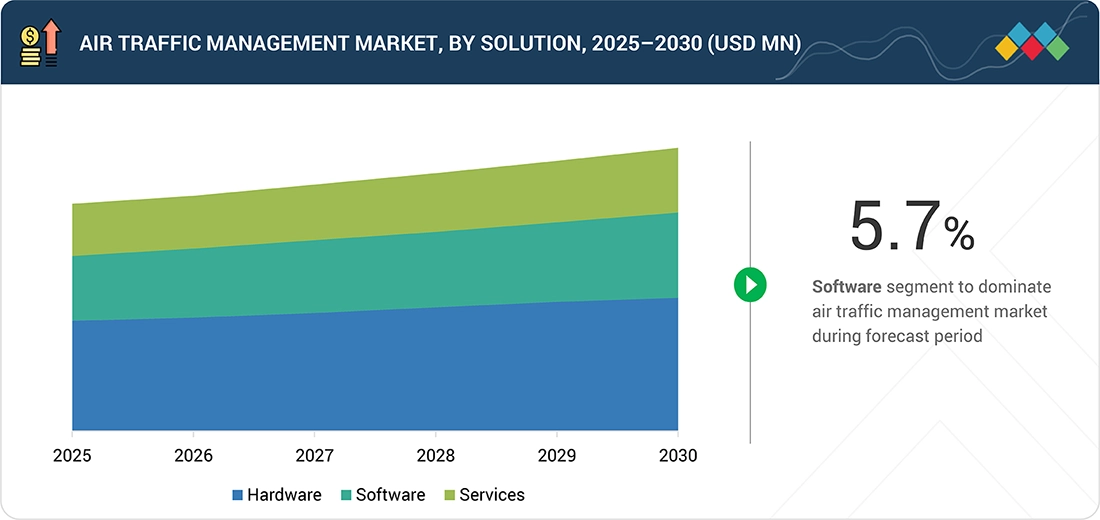
By SolutionBy application, the software segment will grow fastest during the forecast period.
-
Competitive LandscapeThales, RTX, L3Harris Technologies, Inc., Indra, and Saab AB are recognized as key players in the global air traffic management market. These companies hold strong positions due to their established product portfolios and wide operational presence. Their solutions are deployed across multiple regions and mission profiles. Consistent investment in product development supports their market standing.
-
Competitive LandscapeAireon and Unifly are considered progressive companies among others and have distinguished themselves in the air traffic management market due to strong product innovation and technological advancement.
The global Air Traffic Management Industry is supported by several strong demand factors. Steady growth in passenger and cargo traffic is boosting the need for better airspace utilization and increased capacity. Governments are concentrating more on digital transformation and automation, along with upgrading outdated air traffic control systems to enhance safety and minimize delays.
TRENDS & DISRUPTIONS IMPACTING CUSTOMERS' CUSTOMERS
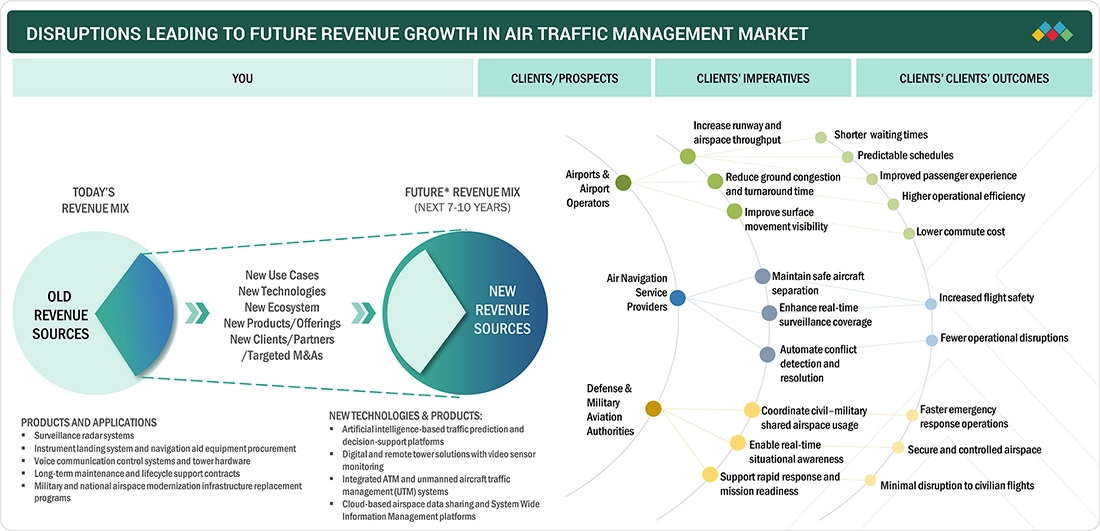
The air traffic management market is undergoing a major transformation due to ongoing airspace modernization and steady growth in air traffic. To keep up with this change, stakeholders are adopting satellite-based navigation. Automatic Dependent Surveillance–Broadcast (ADS-B), digital towers, and AI-enabled automation are used to boost capacity and safety. At the same time, investments are moving toward software-driven, interoperable platforms that improve operational efficiency and support long-term system resilience.
Source: Secondary Research, Interviews with Experts, MarketsandMarkets Analysis
MARKET DYNAMICS

Level
-
Government-led airspace modernization programs

-
Rising global air traffic and airspace congestion


Level
-
High capital investment and long implementation cycles

-
Integration complexity with legacy systems


Level
-
Integration of unmanned aircraft systems and advanced air mobility

-
Adoption of artificial intelligence and predictive analytics


Level
-
Escalating cybersecurity risks in digitized air traffic management infrastructure

-
Regulatory fragmentation across jurisdictions

Source: Secondary Research, Interviews with Experts, MarketsandMarkets Analysis
Driver: Government-led airspace modernization programs
Governments worldwide are investing in modernizing air traffic control infrastructure to enhance safety, capacity, and operational efficiency. These efforts focus on replacing legacy systems with digital, automated, and integrated platforms. Such initiatives are consistently driving demand for advanced air traffic management solutions.
Restraint: High capital investment and long implementation cycles
Air traffic management projects require significant upfront investment in hardware, software, and system integration. The deployment process is complex and often takes several years due to regulatory approvals and operational testing. This long payback period can slow down adoption, especially in developing markets.
Opportunity: Integration of unmanned aircraft systems and advanced air mobility
The increasing use of unmanned aircraft systems and advanced air mobility platforms is bringing new demands for airspace management. This creates opportunities for scalable and interoperable air traffic management solutions that can safely accommodate new airspace users. Companies with flexible and digital platforms can gain advantages from this shift.
Challenge: Escalating cybersecurity risks in digitized air traffic management infrastructure
As air traffic management systems become increasingly digital and connected, the risk of cyber threats rises. Any security breach can disrupt operations and jeopardize safety, making cybersecurity a vital priority. Ensuring secure communication networks and resilient infrastructure remains an ongoing challenge for industry stakeholders.
AIR TRAFFIC MANAGEMENT MARKET SIZE, SHARE & GROWTH ANALYSIS: COMMERCIAL USE CASES ACROSS INDUSTRIES
| COMPANY | USE CASE DESCRIPTION | BENEFITS |
|---|---|---|
 |
Integrated air traffic control automation and digital tower services for civil and military airports | Enhances operational efficiency, improves safety through real-time automation, supports remote tower operations, and increases airspace capacity |
 |
Scalable communication, navigation and surveillance (CNS) platforms for modern ATM deployments | Improves interoperability between systems, enhances situational awareness, supports multi-agency coordination, and reduces downtime through reliable communications |
 |
Deployable ATM solutions with secure voice communications and advanced surveillance sensors for fixed and expeditionary airspace environments | Enhances secure operations, enables rapid deployment in diverse environments, improves surveillance accuracy, and supports both civil and defense air traffic needs |
 |
End-to-end ATM automation systems for area control, approach and airport tower operations | Increases traffic throughput, reduces controller workload with automation, enhances safety, and facilitates smoother traffic flow across different airspace sectors |
 |
Integrated surveillance radar systems and surface movement solutions for airports and en route airspace | Improves detection and tracking accuracy, enhances airport surface safety, supports efficient runway operations, and strengthens airspace monitoring capabilities |
Logos and trademarks shown above are the property of their respective owners. Their use here is for informational and illustrative purposes only.
MARKET ECOSYSTEM
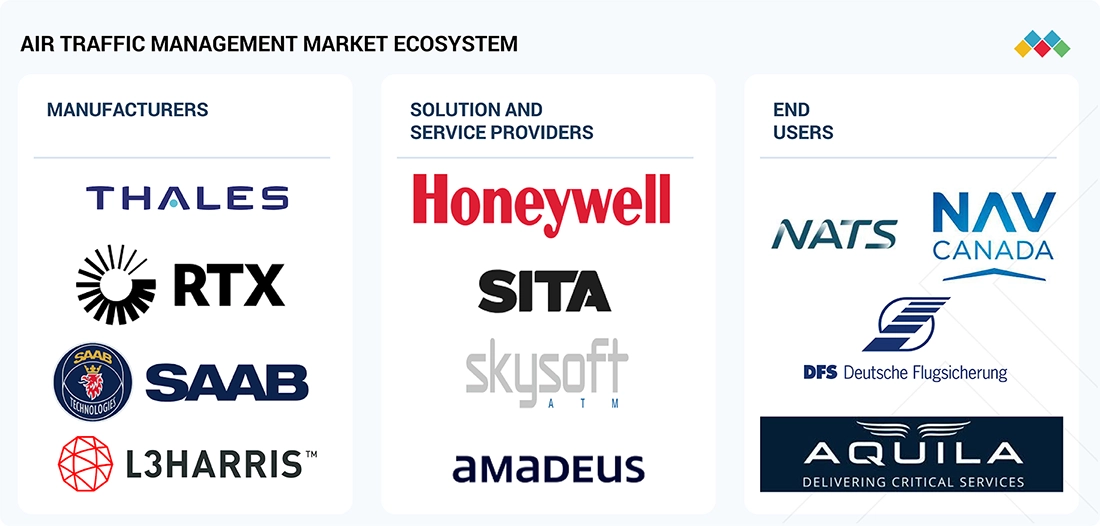
The air traffic management market ecosystem comprises system manufacturers, technology companies, and software providers that support civil and military airspace operations. They supply radars, communication systems, automation platforms, and traffic flow management tools to enhance coordination and efficiency. Air navigation service providers and airport authorities are the primary users of these systems, utilizing them to ensure airspace safety and smooth operations. The ecosystem is highly interconnected, with companies increasingly collaborating on digital upgrades and long-term modernization.
Logos and trademarks shown above are the property of their respective owners. Their use here is for informational and illustrative purposes only.
MARKET SEGMENTS
Source: Secondary Research, Interviews with Experts, MarketsandMarkets Analysis
Air Traffic Management Market, By Operation
Air traffic services continue to dominate the market because they form the foundation of airspace management and ensure the safe movement of aircraft. Increasing air traffic raises reliance on these services for traffic separation, navigation support, and flow management. Ongoing upgrades in communication, navigation, and surveillance infrastructure are enhancing ATS capabilities. This helps handle higher traffic volumes while maintaining stable safety levels.
Air Traffic Management Market, By Technology
The software segment is leading the market due to the shift towards digital as well as integrated air traffic systems. Demand for real time data processing, simulation as well as decision support tools is increasing steadily. Cloud based platforms are helping different stakeholders work together more smoothly. These solutions are improving situational awareness while also supporting better overall airspace management.
Air Traffic Management Market, By Solution
The <=200 KM segment dominates the market as most urban air mobility routes are short-distance city or airport transfers. Short-range operations require less battery capacity, which reduces aircraft weight and cost. Operators prefer this range because it improves turnaround time and route frequency.
Air Traffic Management Market, By Deployment
The upgrade and modernization sector is leading due to the need to replace outdated air traffic control systems with more advanced solutions. Growing congestion in airspace is prompting authorities to adopt next-generation traffic management systems. Government mandates and global initiatives are also accelerating these programs. These investments are helping enhance system performance, reduce delays, and improve safety.
Air Traffic Management Market, By Customer
UTM operators are driving growth in the air traffic management market as unmanned aerial systems are gradually being integrated into controlled airspace. Increasing demand for drone-based use cases such as delivery, surveillance, and inspection is creating the need for dedicated traffic management systems. Regulatory bodies are also supporting UTM frameworks to ensure operations remain safe and efficient. This is driving investments toward digital platforms that enable real-time monitoring of low-altitude airspace.
REGION
Europe to be fastest-growing region in global air traffic management market during forecast period
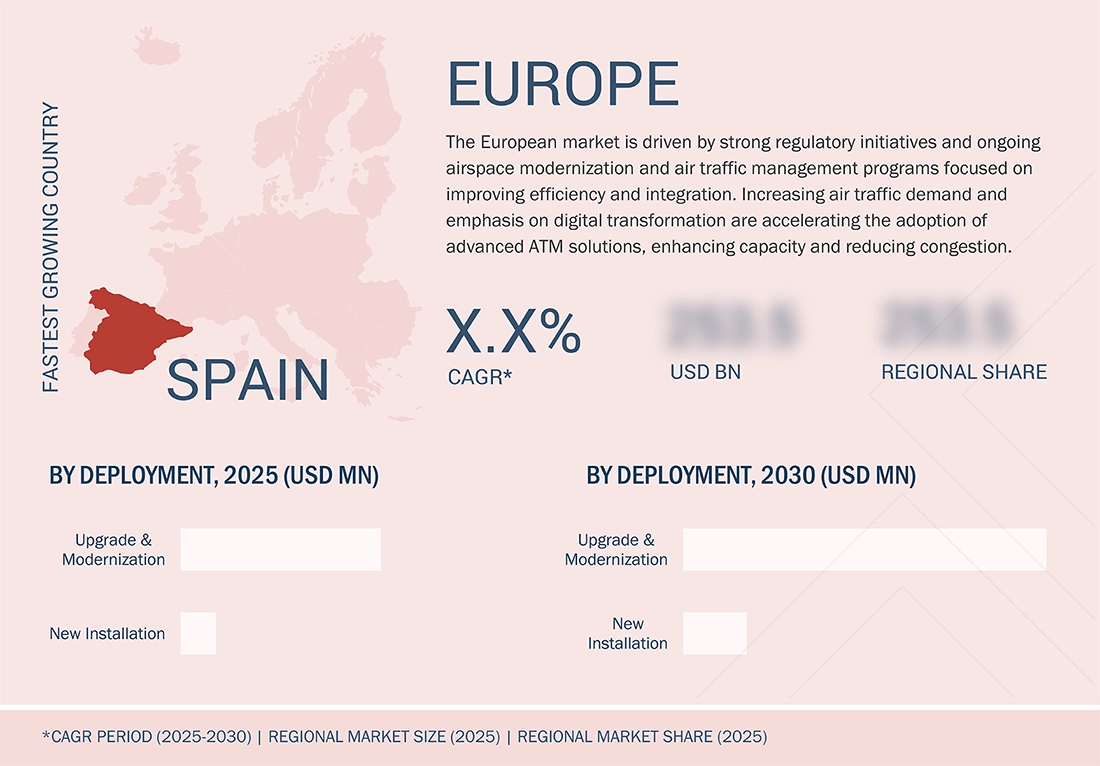
Europe is projected to be the fastest-growing region in the air traffic management market, primarily driven by strong regulatory support and large-scale airspace modernization efforts like the Single European Sky initiative. Increasing emphasis on digitalization and automation, along with better cross-border airspace integration, is fueling the adoption of advanced air traffic management solutions.
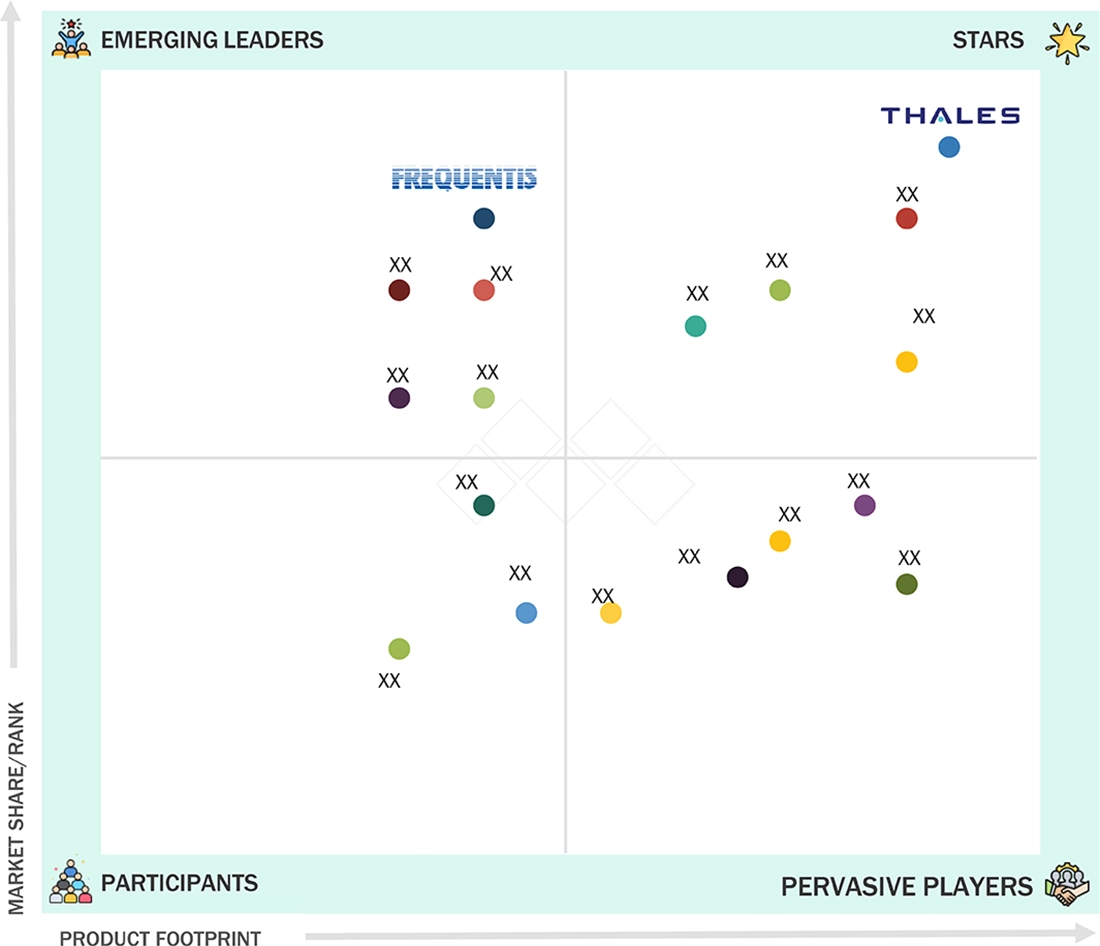
AIR TRAFFIC MANAGEMENT MARKET SIZE, SHARE & GROWTH ANALYSIS: COMPANY EVALUATION MATRIX
Thales is a leading player in the air traffic management market with strong capabilities in automation systems, surveillance radars, and digital towers deployed worldwide. Its ongoing role in modernization projects maintains its strong position. Frequentis AG is an emerging company growing through voice communication systems and digital tower solutions that support civil and defense air traffic control upgrades.
Source: Secondary Research, Interviews with Experts, MarketsandMarkets Analysis
KEY MARKET PLAYERS - TOP AIR TRAFFIC MANAGEMENT COMPANIES
- Thales
- RTX
- L3Harris Technologies, Inc.
- Indra
- Saab AB
- Kongsberg Defence & Aerospace
- SITA
- BAE Systems
- Frequentis AG
- Honeywell International Inc.
- Advanced Navigation and Positioning Corporation
- Leidos
- Intelcan Technosystems Inc.
- Amadeus IT Group SA
- Leonardo S.p.A.
- NAV CANADA
WHAT IS IN IT FOR YOU: AIR TRAFFIC MANAGEMENT MARKET SIZE, SHARE & GROWTH ANALYSIS REPORT CONTENT GUIDE
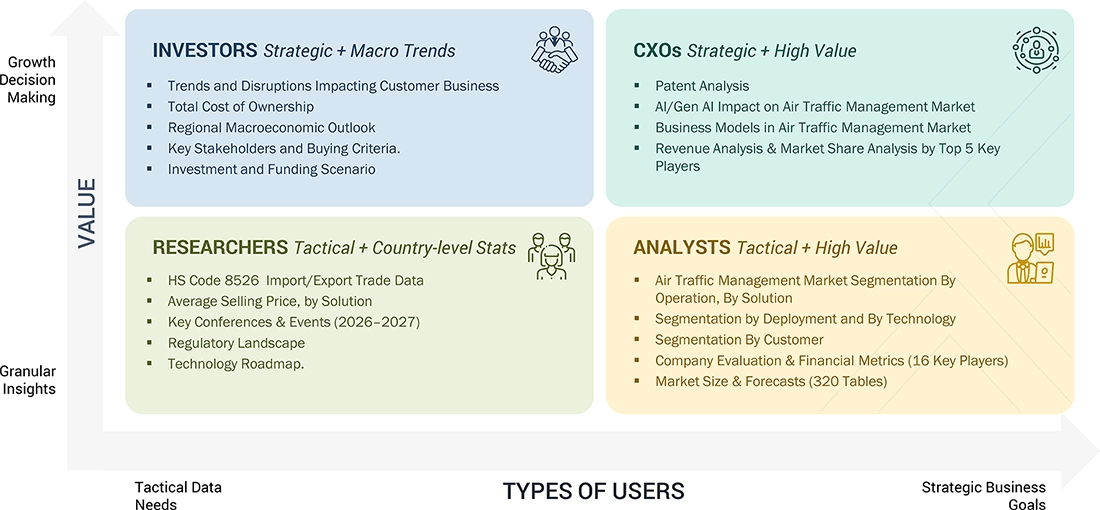
DELIVERED CUSTOMIZATIONS
We have successfully delivered the following deep-dive customizations:
| CLIENT REQUEST | CUSTOMIZATION DELIVERED | VALUE ADDS |
|---|---|---|
| Leading Manufacturer | Additional segment breakdown for countries | Additional country-level market sizing tables for segments/subsegments covered at the regional/global level to gain an understanding of market potential by each country |
| Emerging Leader | Additional company profiles | Competitive information on targeted players to gain granular insights on direct competition |
| Regional Market Leader | Additional country market estimates | Additional country-level deep dive for a more targeted understanding of the total addressable market |
RECENT DEVELOPMENTS
- September 2026 : Bangalore International Airport Limited (BIAL) is set to introduce a new Air Traffic Management System (ATMS) at Kempegowda International Airport in September, making it the first Indian airport to deploy the technology. The system will modernize air traffic operations and improve the handling of growing flight volumes. The upgrade is expected to strengthen operational efficiency, safety, and airspace management at Bengaluru airport. The move comes as KIA continues to expand its capacity and international connectivity. The deployment positions BIAL at the forefront of India’s aviation technology modernization.
- July 2026 : Egis is calling for a new procurement model for air traffic management as technology and operational requirements evolve faster than traditional procurement cycles. The approach would prioritize outcomes, flexibility, and collaboration rather than rigid requirements defined upfront. It could help air navigation service providers adopt new technologies more efficiently while reducing the risk of outdated systems. The proposal is particularly relevant as digitalization and automation reshape air traffic management. The shift could improve innovation, adaptability, and long-term value across the aviation technology market.
- July 2026 : Thales secured a landmark contract from Mongolia’s National Civil Aviation Center to modernize the country’s air traffic management infrastructure. The project will deploy a next-generation dual Area Control Center (ACC) architecture in Ulaanbaatar and Sainshand. The new air traffic control automation systems will improve airspace capacity, operational resilience, and cybersecurity. The program also includes aviation workforce training and dedicated cybersecurity support. The contract strengthens Thales’ position in modernizing critical air navigation infrastructure across emerging aviation markets.
- June 2026 : FAA awarded Air Space Intelligence (ASI) an $875 million, 12-year contract to modernize air traffic management across the US National Airspace System. The Flow Management Data and Services (FMDS) platform will replace the FAA’s existing traffic-flow system, with SMART adding predictive congestion management. The technology will analyze flight plans, schedules, weather, and real-time aircraft data to identify bottlenecks before flights depart. Initial SMART operations are planned for fall 2026, targeting fewer delays and lower controller workload. The contract gives ASI a major opportunity to scale its AI-driven aviation technology across the US airspace.
- April 2026 : Civil Aviation Authority of Bangladesh (CAAB) launched a modern Air Traffic Management Centre (ATMC) at Hazrat Shahjalal International Airport with technology support from Thales. The automated system enables real-time flight monitoring and control while expanding Bangladesh’s airspace management capacity. It is expected to improve flight punctuality, safety, and operational efficiency while supporting international aviation standards. The system can also help Bangladesh capture additional overflight revenue from international airlines. The upgrade strengthens the country’s ambition to develop Dhaka into a regional and global aviation hub.
Table of Contents
 Exclusive indicates content/data unique to MarketsandMarkets and not available with any competitors.
Methodology
The study followed four main steps to estimate the size of the air traffic management market. Secondary research was conducted to gather data on air traffic control systems, communication, navigation, surveillance infrastructure, and modernization programs across regions. These findings were confirmed through primary interviews with air navigation service providers, airport authorities, system integrators, and industry experts. The research team reviewed aviation traffic statistics, government budgets, procurement plans, and ongoing airspace modernization initiatives to evaluate market demand. Market estimates were then divided by Operation, Technology, Solution, Deployment, and Customer. Data triangulation was used to verify the final figures for each segment and sub-segment.
Secondary Research
Secondary research was conducted to establish the foundation for this study. Data was gathered from civil aviation authorities, transport regulators, and national airspace modernization initiatives. Company information was reviewed from annual reports, certification updates, press releases, and investor disclosures of Air Traffic Management solution providers. The study also examined white papers, aviation journals, and published research on air traffic control systems, surveillance technologies, and digital airspace management. Additional insights were obtained from aerospace industry platforms and aviation associations to analyze market trends and regional adoption.
Primary Research
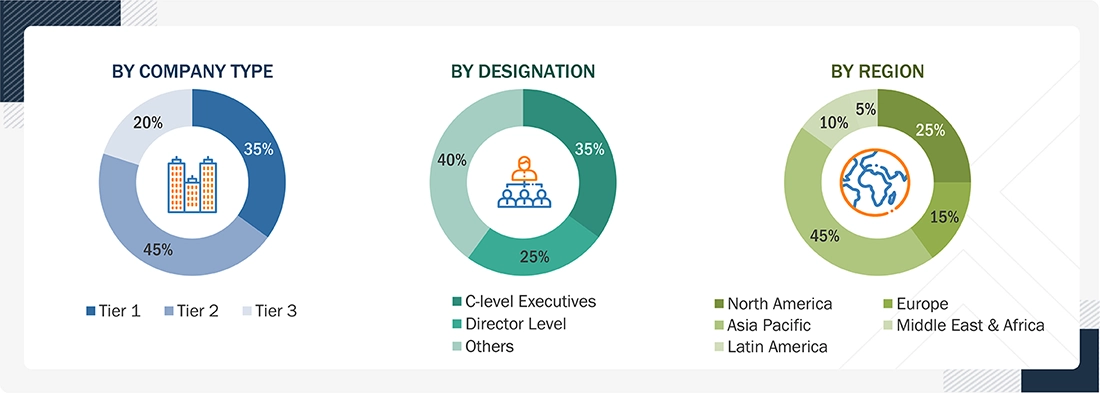
Primary research was conducted after key insights from secondary analysis were identified. The study team engaged with executives, engineers, operators, and suppliers involved in the air traffic management ecosystem. Discussions included manufacturers, mobility service providers, infrastructure partners, and regulatory experts across major regions. Interviews were conducted via calls and written correspondence to confirm market size estimates and user needs. These inputs helped refine perspectives on competition, deployment strategies, and technological advancements. Feedback was also used to adjust assumptions and enhance data accuracy.
Breakdown of Primary Respondents:
To know about the assumptions considered for the study, download the pdf brochure
Market Size Estimation
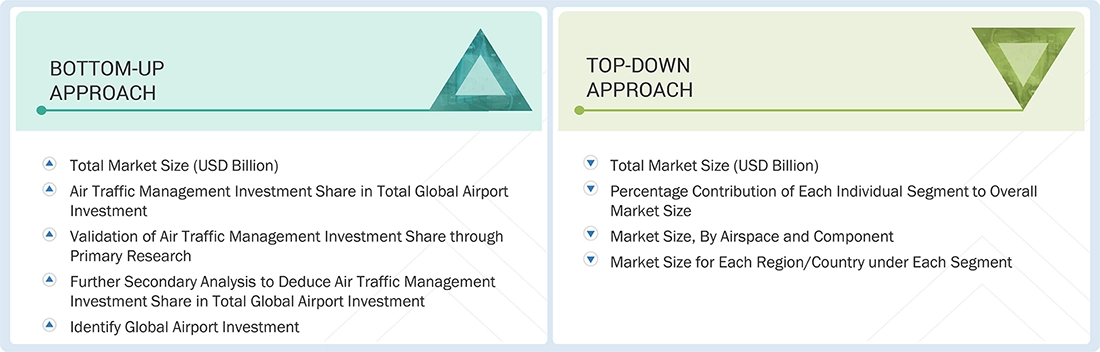
The top-down and bottom-up methods were used to estimate and validate the size of the air traffic management market. The research process involved several steps to ensure accuracy.
- Key companies active in the air traffic management market were identified through secondary research. Their market share was evaluated using a combination of primary inputs and published data. This included reviewing annual reports, financial disclosures, certification updates, and public filings from various organizations. Interviews were also conducted with industry participants such as company executives, program managers, operators, infrastructure providers, and aviation experts. These inputs were used to validate assumptions and refine market size estimates across regions.
- All percentage shares, segment splits, and market breakdowns were first developed using secondary information. These values were then verified through primary discussions with industry participants.
- The analysis evaluated key factors influencing the air traffic management market, including regulatory frameworks, certification timelines, technology advancements, infrastructure readiness, and investment activity. Each factor was examined through primary research and used to determine both quantitative and qualitative market estimates for this report.
Air Traffic Management Market Size: Bottom-up Approach and Top-down Approach
Data Triangulation
After determining the overall market size, the total market was divided into multiple segments and subsegments. The data triangulation and market breakdown procedures described below were carried out, where applicable, to complete the overall market analysis and determine the estimated market figures for the segments and subsegments. The data was triangulated by examining various factors and trends from both demand and supply sides. Additionally, the market size was validated using the top-down and bottom-up approaches.
Market Definition
According to Doc 9854 AN, 458 Global Air Traffic Management Operational Concept International Civil Aviation Organization (ICAO), air traffic management (ATM) is the integrated management of air traffic and airspace safely, economically, and efficiently through the provision of facilities and seamless services in collaboration with all parties. This operational concept defines seven interdependent components that will be integrated to form the future ATM system. This comprises airspace organization and management, aerodrome operations, demand and capacity balancing, traffic synchronization, conflict management, airspace user operations, and ATM service delivery management.
The main functions of air traffic management are to facilitate flights to and from runways or airports into airspace, ensuring they are safely separated from hazards, within capacity limits, and making optimal use of all system resources. Air traffic management includes air traffic services, airspace management, air traffic flow management, and aeronautical information management.
Stakeholders
- Air navigation service providers (ANSPs) responsible for airspace management and air traffic control operations
- Civil aviation authorities and regulatory bodies overseeing airspace safety, certification, and compliance
- Airport operators and airport authorities managing tower operations and surface movement control
- Air traffic management system manufacturers and original equipment manufacturers (OEMs)
- Radar and surveillance system providers [primary radar, secondary radar, automatic dependent surveillance–broadcast (ADS-B)]
- Communication system providers [very high frequency (VHF), data link, voice communication control systems]
- Navigation infrastructure providers [(instrument landing systems (ILS), satellite-based augmentation systems)]
- Software and automation solution providers [(air traffic control automation, traffic flow management, decision support systems)]
- System integrators and aerospace technology suppliers
- Defense and military organizations operating dedicated air traffic control networks
- Unmanned aircraft system traffic management (UTM) solution providers
- Maintenance, support, and lifecycle service providers
Report Objectives
- To define, describe, and forecast the size of the air traffic management market based on operation, technology, solution, deployment, and customer
- To forecast the size of market segments with respect to key countries in the following regions: North America, Europe, Asia Pacific, Middle East & Africa, Latin America
- To identify and analyze drivers, restraints, opportunities, and challenges influencing the growth of the market
- To identify industry trends, market trends, and technology trends currently prevailing in the market
- To provide an overview of the regulatory landscape with respect to global air traffic management regulations.
- To analyze micromarkets with respect to individual growth trends, prospects, and their contribution to the overall market
- To analyze opportunities in the market for stakeholders by identifying key market trends
- To profile key market players and comprehensively analyze their market share and core competencies
- To analyze the degree of competition in the market by identifying growth strategies, such as agreements, acquisitions, partnerships, collaborations, and product launches, adopted by leading market players
- To identify detailed financial positions, key products, and unique selling points of leading market players
Key Questions Addressed by the Report
What is the current size of the air traffic management market?
The air traffic management market was values at USD 12.20 billion in 2025.
Which regions are covered in the air traffic management market analysis?
The market is analyzed across key regions including North America, Europe, Asia Pacific, the Middle East & Africa, and Latin America.
Which region is expected to show strong growth in the market?
Asia Pacific is expected to witness significant growth due to rising air traffic, infrastructure development, and increasing investments in aviation modernization.
What are the major segments of the air traffic management market?
The market is segmented by airspace, application, investment type, offering, service, end use, airport size, and region, with applications including communication, navigation, surveillance, and automation.
Who are the key players in the air traffic management market?
Major companies in the market include Thales Group, Raytheon Technologies Corporation, L3Harris Technologies, Inc., Indra Sistemas, S.A., and Saab AB.


Personalize This Research
- Triangulate with your Own Data
- Get Data as per your Format and Definition
- Gain a Deeper Dive on a Specific Application, Geography, Customer or Competitor
- Any level of Personalization
Let Us Help You
- What are the Known and Unknown Adjacencies Impacting the Air Traffic Management Market
- What will your New Revenue Sources be?
- Who will be your Top Customer; what will make them switch?
- Defend your Market Share or Win Competitors
- Get a Scorecard for Target Partners

Custom Market Research Services
We Will Customise The Research For You, In Case The Report Listed Above Does Not Meet With Your Requirements
Get 10% Free CustomisationTESTIMONIALS
- Canada Air Traffic Management Market
- US Air Traffic Management Market
- UK Air Traffic Management Market
- Germany Air Traffic Management Market
- France Air Traffic Management Market
- Sweden Air Traffic Management Market
- Italy Air Traffic Management Market
- Spain Air Traffic Management Market
- China Air Traffic Management Market
- India Air Traffic Management Market
- Japan Air Traffic Management Market
- Australia Air Traffic Management Market
- South Korea Air Traffic Management Market
- UAE Air Traffic Management Market
- Saudi Arabia Air Traffic Management Market
- South Africa Air Traffic Management Market
- Brazil Air Traffic Management Market
- Mexico Air Traffic Management Market
- Argentina Air Traffic Management Market
- Rest Of Europe Air Traffic Management Market
Growth opportunities and latent adjacency in Air Traffic Management Market






Mohamed
Apr, 2022
I am interested in Value analysis for air transport system in africa.
Aguinaldo
Mar, 2019
Good Morning, We are looking for a safe supplier of an ATM system. And we would like some suggestions from the key players on the market. Best Regards, Aguinaldo Madureira.
Denis
Jul, 2019
Hi! I'd like to know the size of our ATC market, on which way we are now, and what problems are faced by different ATC markets in other countries. Thank you!.
Ben
Jun, 2026
How deeply does the study analyze modernization opportunities for legacy ATC infrastructure versus greenfield deployments like digital towers and vertiports?.
Donald
Jun, 2026
How does your report assess the impact of AI and generative AI on air traffic flow management, predictive analytics, and controller workload reduction?.