Augmented Reality and Virtual Reality Market – M&A Private Equity Investment, and Patent Filing Analysis


Augmented Reality and Virtual Reality Market Summary
The Augmented Reality and Virtual Reality Market is entering a broader commercialization phase as enterprises, consumers, healthcare organizations, educational institutions, manufacturers, retailers, and entertainment companies adopt immersive technologies for visualization, training, collaboration, gaming, and customer engagement. The market is estimated at US$ 55.0 Billion - US$ 65.0 Billion in 2025 and is projected to reach US$ 250.0 Billion - US$ 300.0 Billion by 2035 at a CAGR of 16.0% - 18.0% from 2025 to 2035. Growth is being supported by advances in head-mounted displays, spatial computing, AI-enabled content generation, 5G connectivity, edge computing, digital twins, and cloud-based immersive platforms. Increasing enterprise investment in remote assistance, workforce training, industrial simulation, virtual showrooms, and healthcare visualization is further expanding the addressable market.
Key Market Trends & Insights
The market is shifting from entertainment-led adoption toward enterprise and industrial use cases, including employee training, remote maintenance, product design, digital twins, and immersive collaboration.
North America remains the leading regional market, supported by strong investments in spatial computing, gaming, enterprise software, defense simulation, healthcare technology, and advanced computing infrastructure.
Asia Pacific is expected to be the fastest-growing region, supported by rapid digitalization, expanding manufacturing ecosystems, smartphone penetration, gaming demand, 5G deployment, and government-backed investments in immersive technologies.
AR devices and software platforms are gaining momentum across retail, logistics, manufacturing, healthcare, and field services because they can overlay digital information onto real-world environments.
AI is becoming a major technology catalyst. Generative AI can accelerate the creation of 3D environments, avatars, training scenarios, virtual assistants, and interactive content, reducing the time and cost required to develop immersive applications.
The convergence of AR/VR with IoT, digital twins, cloud computing, edge AI, robotics, and 5G is creating connected immersive environments in which real-time data can be visualized and acted upon.
Market Size & Forecast
-
Base year market size: US$ 55.0 Billion - US$ 65.0 Billion in 2025
-
Forecast market value: US$ 250.0 Billion - US$ 300.0 Billion by 2035
-
CAGR: 16.0% - 18.0% from 2025 to 2035
-
Growth factors: AI-enabled immersive content, spatial computing, enterprise adoption, gaming, digital twins, healthcare applications, industrial training, 5G connectivity, and falling hardware costs.
The market's expansion is increasingly influenced by the transition from standalone immersive experiences toward integrated platforms. Enterprises are deploying AR and VR solutions alongside existing cloud, IoT, enterprise software, and automation infrastructure.
AI-Powered Military Transformation: The Future of Smart Combat and Defense Top 10 Key Takeaway
-
The Augmented Reality and Virtual Reality Market is projected to grow from US$ 55.0 Billion - US$ 65.0 Billion in 2025 to US$ 250.0 Billion - US$ 300.0 Billion by 2035.
-
The market is expected to expand at a 16.0% - 18.0% CAGR from 2025 to 2035.
-
North America is expected to remain the leading regional market.
-
Asia Pacific is projected to register the fastest growth.
-
AR is gaining adoption in manufacturing, healthcare, retail, logistics, and field services.
-
VR remains important for gaming, simulation, training, entertainment, and virtual collaboration.
-
AI is accelerating immersive content creation and intelligent virtual experiences.
-
5G and edge computing are enabling more responsive cloud-connected immersive applications.
-
Digital twins are increasing AR/VR adoption in industrial and manufacturing environments.
-
Enterprise applications are expected to become an increasingly important source of long-term market growth.
Product Insights
Head-mounted displays (HMDs) represent a central product category in the market, covering AR glasses, VR headsets, mixed-reality headsets, and spatial-computing devices. Demand is being driven by improvements in display resolution, field of view, processing capabilities, battery efficiency, tracking accuracy, and ergonomic design.
VR headsets continue to see substantial adoption in gaming, entertainment, simulation, employee training, and virtual collaboration. Standalone devices that include onboard processors and wireless connectivity are becoming more attractive because they reduce dependence on external computers.
AR glasses are developing rapidly in professional environments. Manufacturing technicians can receive step-by-step instructions while keeping their hands free, while logistics workers can access warehouse information without repeatedly consulting handheld devices. Healthcare professionals can also use AR visualization for training, surgical planning, medical education, and remote assistance.
Mixed-reality and spatial-computing devices represent an emerging premium segment. These systems combine digital content with physical environments and can support applications such as 3D design, virtual workspaces, architecture, engineering, education, and immersive visualization.
AI integration is becoming a major differentiator. Intelligent eye tracking, hand tracking, gesture recognition, voice interaction, scene understanding, object recognition, and generative AI assistants can make immersive devices more intuitive and context-aware.
Technology / Component Insights
The technology landscape includes display systems, sensors, cameras, processors, optical components, tracking technologies, connectivity modules, software platforms, and content-management systems. Improvements across these components are directly influencing the usability and commercial viability of AR and VR solutions.
Advanced displays such as micro-OLED, OLED, microLED, and improved LCD architectures are being developed to increase resolution, brightness, contrast, and power efficiency. Optical innovations are simultaneously working to reduce headset size and improve visual comfort.
AI is becoming embedded throughout the technology stack. Computer vision algorithms can understand physical environments, identify objects, track movements, and enable spatial mapping. Generative AI can create virtual environments and digital assets more rapidly, helping organizations reduce content-development costs.
IoT integration enables immersive systems to visualize real-time sensor information. In manufacturing, for example, an AR interface can display machine temperature, production status, maintenance alerts, and equipment performance directly over physical assets.
Cloud computing supports centralized content delivery, collaboration, device management, and data processing. Edge computing reduces latency by processing time-sensitive information closer to users and connected devices.
5G and future wireless technologies will further improve immersive applications by enabling high-bandwidth, low-latency communication. Future innovation is expected to focus on lightweight glasses, AI-native interfaces, spatial audio, advanced eye tracking, haptic feedback, real-time 3D reconstruction, and more efficient wearable processors.
Application Insights
Gaming and entertainment remain important applications, particularly for VR. Immersive gaming provides users with interactive environments that traditional screens cannot replicate. Virtual concerts, sports experiences, theme parks, immersive media, and social virtual environments are also creating opportunities.
Enterprise and industrial applications are becoming increasingly significant. Manufacturers can use VR for equipment simulation, employee training, factory planning, and product development. AR can provide workers with digital instructions, remote expert assistance, quality-control information, and maintenance guidance.
Healthcare represents another promising application. AR and VR can support medical training, rehabilitation, pain management, surgical planning, patient education, and visualization of anatomical structures.
Retailers are adopting AR for virtual try-ons, product visualization, room planning, and immersive shopping experiences. Customers can visualize furniture, clothing, cosmetics, vehicles, and other products before making purchasing decisions.
Education and training are also benefiting from immersive learning. Students can explore virtual laboratories, historical environments, scientific models, and technical simulations, while companies can train employees in realistic but controlled environments.
Future opportunities will increasingly emerge from digital twins, remote operations, robotics, smart factories, autonomous systems, and collaborative spatial computing.
Regional Insights
North America is expected to remain the leading market through the forecast period. The US has a strong ecosystem of technology companies, semiconductor manufacturers, software developers, gaming firms, defense organizations, healthcare institutions, and enterprise technology providers. High investment in spatial computing, AI, cloud infrastructure, and immersive software supports adoption.
Europe is characterized by strong industrial applications, particularly in automotive, aerospace, manufacturing, healthcare, and engineering. Demand for worker training, digital twins, remote assistance, and industrial simulation is supporting market development.
Asia Pacific is projected to be the fastest-growing region, supported by large manufacturing bases, growing gaming industries, expanding consumer electronics ecosystems, increasing 5G availability, and digital-transformation initiatives. China, Japan, South Korea, and India are expected to remain important markets.
-
North America is expected to maintain market leadership.
-
Europe has strong demand for industrial AR/VR applications.
-
Asia Pacific is expected to record the fastest growth.
-
Manufacturing and gaming are important regional demand centers.
-
5G and AI investments are accelerating immersive technology adoption.
Country Specific Market Trends
In Asia Pacific, China is projected to record approximately 19.0% - 21.0% CAGR, supported by manufacturing digitalization, gaming, consumer electronics, smart-city programs, industrial simulation, and immersive entertainment. Japan is expected to grow at approximately 15.5% - 17.5% CAGR, supported by robotics, automotive manufacturing, healthcare, gaming, education, and advanced visualization.
In North America, the United States is expected to grow at approximately 15.0% - 17.0% CAGR. Enterprise spatial computing, defense simulation, gaming, healthcare, industrial training, and AI development are important adoption factors. Canada could register approximately 14.0% - 16.0% CAGR, supported by education, healthcare, gaming, and enterprise digitalization, while Mexico could achieve approximately 17.0% - 19.0% CAGR as manufacturing and digital infrastructure expand.
In Europe, Germany is expected to grow at approximately 14.0% - 16.0% CAGR, supported by Industry 4.0, automotive manufacturing, industrial simulation, engineering, and workforce training. France could register approximately 14.5% - 16.5% CAGR, driven by aerospace, defense, healthcare, entertainment, education, and digital transformation.
-
China is expected to remain a major Asia Pacific growth engine.
-
Japan is an important market for robotics, gaming, and industrial applications.
-
The US remains the largest North American demand center.
-
Mexico offers opportunities from manufacturing digitalization.
-
Germany and France are strong European markets for enterprise AR/VR.
Key Company Insights
Major companies operating across the AR and VR ecosystem include Meta Platforms, Apple, Sony, Microsoft, Alphabet, HTC, Samsung Electronics, Lenovo, PTC, and Qualcomm. Competition is increasingly focused on hardware capabilities, operating systems, spatial computing platforms, AI integration, developer ecosystems, content libraries, and enterprise software.
Companies are investing heavily in lighter and more capable headsets while improving display quality, tracking, spatial audio, cameras, and processing. Platform ecosystems are becoming strategically important because developers need reliable tools for creating immersive applications.
AI is becoming a core competitive factor. Companies are incorporating intelligent assistants, computer vision, speech recognition, generative AI, hand tracking, and spatial understanding into immersive experiences.
Enterprise-focused vendors are emphasizing AR software for remote assistance, industrial workflows, training, design, and digital twins. Semiconductor companies are simultaneously developing processors and connectivity technologies optimized for wearable and spatial-computing workloads.
-
Companies are competing on hardware, software, and ecosystem strength.
-
AI and spatial computing are becoming major product differentiators.
-
Enterprise AR platforms are expanding across industrial applications.
-
Lightweight and high-performance headsets remain a major innovation focus.
-
Developer ecosystems are increasingly important for long-term competitiveness.
Recent Developments
The market continues to witness the introduction and expansion of mixed-reality and spatial-computing platforms designed to support immersive productivity, entertainment, design, and enterprise applications. New devices increasingly combine high-resolution displays, eye tracking, hand tracking, advanced cameras, and powerful onboard processors.
AI integration is accelerating across immersive platforms. Companies are developing AI-powered assistants, spatial understanding capabilities, automated content generation, and intelligent interaction models that allow users to communicate with digital environments more naturally.
Partnerships between AR/VR technology providers, manufacturers, healthcare organizations, automotive companies, and enterprise software vendors are also expanding. These collaborations are focused on industrial training, digital twins, remote assistance, product design, healthcare visualization, and immersive customer experiences.
Market Segmentation
The Augmented Reality and Virtual Reality Market can be segmented by product, technology/component, application, and region. By product, the market includes AR devices, VR headsets, mixed-reality devices, AR glasses, head-mounted displays, controllers, sensors, cameras, and related software platforms. Enterprise-focused AR glasses and advanced mixed-reality devices represent important emerging opportunities.
By technology/component, the market includes display technologies, optical systems, sensors, cameras, processors, tracking systems, connectivity technologies, software platforms, cloud infrastructure, AI technologies, and content-management solutions. AI, computer vision, spatial mapping, and advanced display technologies are expected to have a growing influence.
By application, the market includes gaming and entertainment, healthcare, education, enterprise, manufacturing, automotive, aerospace and defense, retail, logistics, real estate, tourism, and other industries. Gaming remains important for VR, while enterprise and industrial use cases are becoming major growth contributors.
By region, the market covers North America, Europe, Asia Pacific, Latin America, and the Middle East & Africa. North America is expected to maintain leadership, while Asia Pacific is projected to achieve the fastest growth through 2035.
-
AR is gaining strong momentum in enterprise and industrial applications.
-
VR remains important for gaming, simulation, and training.
-
AI and computer vision are critical enabling technologies.
-
Manufacturing, healthcare, and retail offer significant future opportunities.
-
Asia Pacific is expected to deliver the strongest regional growth.
Conclusion
The Augmented Reality and Virtual Reality Market is moving toward a more mature and commercially diversified phase. From gaming and entertainment to manufacturing, healthcare, education, retail, and enterprise collaboration, immersive technologies are becoming part of broader digital-transformation strategies.
The market is projected to expand from US$ 55.0 Billion - US$ 65.0 Billion in 2025 to US$ 250.0 Billion - US$ 300.0 Billion by 2035 at a CAGR of 16.0% - 18.0% from 2025 to 2035. AI will be one of the most influential forces during this period, particularly through generative content creation, computer vision, intelligent assistants, spatial understanding, and automated workflows.
The convergence of AI, IoT, 5G, cloud computing, edge computing, robotics, and digital twins will make immersive technology more valuable to businesses. Organizations will increasingly use AR and VR not simply as visualization tools but as interfaces for accessing operational data, training employees, controlling workflows, and interacting with digital twins.
Through 2035, companies that combine high-quality hardware with AI capabilities, scalable software ecosystems, enterprise integration, and compelling user experiences will be best positioned to capture the market's long-term growth.
FAQs
1. What is the projected market size of the Augmented Reality and Virtual Reality Market?
The market is estimated at US$ 55.0 Billion - US$ 65.0 Billion in 2025 and is projected to reach US$ 250.0 Billion - US$ 300.0 Billion by 2035.
2. What is the expected growth rate of the Augmented Reality and Virtual Reality Market?
The market is projected to grow at approximately 16.0% - 18.0% CAGR from 2025 to 2035.
3. What are the key drivers of the AR and VR Market?
Key drivers include AI integration, spatial computing, gaming, enterprise training, digital twins, healthcare applications, 5G connectivity, industrial automation, and growing demand for immersive customer experiences.
4. Which region is expected to lead the AR and VR Market?
North America is expected to remain the leading region, while Asia Pacific is projected to be the fastest-growing market through 2035.
5. Who are the key companies in the AR and VR Market?
Major companies include Meta Platforms, Apple, Sony, Microsoft, Alphabet, HTC, Samsung Electronics, Lenovo, PTC, and Qualcomm.
 Exclusive indicates content/data unique to MarketsandMarkets and not available with any competitors.
Table of Contents
1 Introduction (Page No. - 12)
1.1 Objectives of the Study
1.2 Industry Definition
1.3 Study Scope
1.3.1 Years Considered for the Study
1.3.2 Currency
1.4 Limitations
1.5 Stakeholders
1.6 Research Methodology
1.6.1 Key Data From Secondary Sources
1.6.2 Key Data From Primary Sources
1.6.3 Key Industry Insights
2 Executive Summary (Page No. - 19)
3 Industry Overview (Page No. - 24)
3.1 Introduction
3.2 Value Chain Analysis
3.3 Porter’s Five Forces Analysis
3.3.1 Porter’s Five Forces Analysis of Augmented Reality Market
3.3.1.1 Bargaining Power of Suppliers
3.3.1.2 Bargaining Power of Buyers
3.3.1.3 Threat of New Entrants
3.3.1.4 Threat of Substitutes
3.3.1.5 Intensity of Competitive Rivalry
3.3.2 Porter’s Five Forces Analysis of Virtual Reality Market
3.3.2.1 Bargaining Power of Suppliers
3.3.2.2 Bargaining Power of Buyers
3.3.2.3 Threat of New Entrants
3.3.2.4 Threat of Substitutes
3.3.2.5 Intensity of Competitive Rivalry
3.4 Key Industry Trends and Competitive Situation
3.4.1 Key Industry Trends in the Augmented Reality Market
3.4.2 Key Industry Trends in the Virtual Reality Market
4 Market Dynamics (Page No. - 41)
4.1 Introduction
4.2 Market Dynamics for Augmented Reality
4.2.1 Drivers
4.2.1.1 Growing Interest in Augmented Reality By Most of the Large Tech Companies
4.2.1.2 Growing Demand for Augmented Reality Across Various Verticals
4.2.2 Restraints
4.2.2.1 Lack of Awareness About Augmented Reality Technology
4.2.2.2 Development of AR Depends on the Advancements in Computer and Digital Network
4.2.2.3 Limited User Interface Affecting the Navigation Performance of Augmented Reality Applications
4.2.2.4 Limited Processing Power and Inadequate Storage
4.2.3 Opportunities
4.2.3.1 Rising Investments in the Augmented Reality Market
4.2.3.2 Increasing Demand for AR Devices and Apps in the Tourism Vertical
4.2.3.3 Opportunities in the E-Commerce Industry Would Help to Penetrate the AR Market
4.2.4 Challenges
4.2.4.1 Low Adoption Due to Privacy Issue and Complexity in the Design
4.2.4.2 Reconfiguration of AR Application for Different Platforms
4.3 Market Dynamics for Virtual Reality
4.3.1 Drivers
4.3.1.1 Penetration of Head Mounted Displays (HMD) in Gaming and Entertainment Verticals
4.3.1.2 Decline in Prices of Hardware Components
4.3.1.3 More Effective Training and Simulation Using VR Technology Integrated Devices
4.3.2 Restraints
4.3.2.1 Display Latency and Energy Consumption Affecting the Overall Performance of Virtual Reality Devices
4.3.2.2 Low Resolution Restrains the Immersion of Virtual Reality
4.3.3 Opportunities
4.3.3.1 Increasing Capital Investments
4.3.3.2 Opportunity in Healthcare Industry for Penetration of Head Mounted Display (HMD)
4.3.4 Challenges
4.3.4.1 Challenges to Identify the Level of Details Required in A VR Device for Complete Immersion
5 Patent Analysis (Page No. - 52)
5.1 Introduction
5.2 U.S. and South Korea are the Major Patent Filing Nations
5.3 The Increased Patent Filings Will Boost the AR-VR Market
5.4 North America is Leading in Patent Filing for AR-VR Market
6 Investor Analysis (Page No. - 57)
6.1 Introduction
6.2 Investors in the U.S. Dominate the AR-VR Investments
6.3 Increased Investments From APAC Will Boost the Overall Development of AR-VR
6.4 Enterprise Vertical is the Biggest Investor in the AR-VR Market
6.5 Investors in the AR-VR Market
7 Private Equity Investment Analysis (Page No. - 64)
7.1 Introduction
7.2 Regulations for Pe Firms and Investments
7.3 Pe Investment Flow
7.3.1 Investment Flow, Based on the Establishment Year of the Company
7.3.2 Investment Flow, Based on Total Investments in Market Value in A Particular Year
7.4 Virtual Reality: Private Equity Investments
7.5 Augmented Reality: Private Equity Investments
7.6 Company Profile
(Overview, Products and Services, Financials, Strategy & Development)*
7.6.1 Magic Leap, Inc.
7.6.2 Jaunt Inc.
7.6.3 Avegant Corporation
7.6.4 Matterport Inc.
7.6.5 Playful Corporation
7.6.6 Mindmaze SA
7.6.7 Nextvr Inc.
7.6.8 Skully Inc.
7.6.9 Meta Co.
7.6.10 WEVR Inc.
7.6.11 Legend3D Inc.
*Details on Overview, Products and Services, Financials, Strategy & Development Might Not Be Captured in Case of Unlisted Companies.
8 Mergers and Acquisitions: Augmented Reality and Virtual Reality (Page No. - 90)
8.1 Introduction
8.2 M&A Trends in Augmented Reality and Virtual Reality
8.3 Deals Based on Capital Investments
8.4 Deals Based on Target Company
8.5 Deals Based on Deal Volume
8.6 M&A Analysis, By Key Players
8.7 M&A Analysis, By Geographical Coverage
8.8 Company Profile
(Overview, Products and Services, Financials, Strategy & Development)*
8.8.1 Facebook Incorporation
8.8.2 Apple Inc.
8.8.3 Microsoft Corporation
8.8.4 Intel Corporation
8.8.5 Blippar Inc.
8.8.6 Qualcomm Inc.
8.8.7 Daqri LLC
8.8.8 Atheer Inc.
8.8.9 PTC
8.8.10 Cyberglove Systems Inc.
*Details on Overview, Products and Services, Financials, Strategy & Development Might Not Be Captured in Case of Unlisted Companies.
9 Future Industry Roadmap (Page No. - 124)
9.1 Introduction
9.2 Evolution Phase of Augmented Reality and Virtual Reality
9.3 AR & VR Evolving Space
9.3.1 Comprehensive Industry Strategy
9.3.2 Strategic Benchmarking of AR&VR
9.3.3 Patent Goals
9.4 Channels Affecting Industry Growth
9.4.1 Competition
9.4.2 Innovation & Productivity
9.4.3 Acceptance
9.5 Life Cycle Analysis of the Market, By Region
10 Appendix (Page No. - 136)
10.1 Insights of Industry Experts
10.2 Discussion Guide
10.3 Knowledge Store: Marketsandmarkets’ Subscription Portal
10.4 Introducing RT: Real Time Market Intelligence
10.5 Available Customizations
10.6 Related Reports
List of Tables (33 Tables)
Table 1 Porter’s Five Forces Analysis: Threat of New Entrants Likely to Have Maximum Impact on the Overall Market
Table 2 Threat of New Entrants Likely to Have Major Impact on the Overall Market
Table 3 Key Industry Trends in the Augmented Reality Market
Table 4 Key Industry Trends in the Virtual Reality Market
Table 5 Growing Demand for Augmented Reality in Retail
Table 6 Limited User Interface Devices in Mobile-Driven Augmented Reality is A Major Problem for AR Market Growth
Table 7 Increasing Demand for AR Devices and Apps in the Tourism Vertical
Table 8 The Growing Demand of Virtual Reality in Gaming and Entertainment
Table 9 Display Latency is the Major Issue Restraining the Growth of Virtual Reality Market
Table 10 Opportunity in Healthcare Industry to Drive VR Market
Table 11 To Identify the Level of Details Necessary for A User to Accept the Illusion is A Major Challenge
Table 12 Country Wise Patent Filing, 2012- 2016
Table 13 Investment in the Companies Established in 2015
Table 14 Investment in the Companies Established in 2014
Table 15 Investment in the Companies Established in 2013
Table 16 Major Investments in the Augmented Reality Companies
Table 17 List of M&A in Augmented Reality
Table 18 List of M&A in Virtual Reality
Table 19 Facebook Incorporation: Financial Analysis, 2012-2015
Table 20 Key Financial Ratio (2015)
Table 21 Financial Strength (2015)
Table 22 Apple Inc.: Financial Analysis, 2012-2015
Table 23 Key Financial Ratio (2015)
Table 24 Financial Strength (2015)
Table 25 Microsoft Corporation: Financial Analysis, 2012-2015
Table 26 Key Financial Ratio (2015)
Table 27 Financial Strength (2015)
Table 28 Intel Corporation: Financial Analysis, 2012-2015
Table 29 Key Financial Ratio (2015)
Table 30 Financial Strength (2015)
Table 31 Qualcomm Inc.: Financial Analysis, 2012-2015
Table 32 Key Financial Ratio (2015)
Table 33 Financial Strength (2015)
List of Figures (92 Figures)
Figure 1 Industrial Landscape Classification
Figure 2 Research Design
Figure 3 Augmented Reality and Virtual Reality Market, 2013–2020 (USD Billion)
Figure 4 M&A Deals, Based on Target Company Between 2013 and 2016
Figure 5 Investment Analysis of AR-VR From 2011 to 2015
Figure 6 Venture Capital Firms are the Biggest Investors in the AR-VR Market
Figure 7 Patent Filings for AR-VR Market, 2012-2016
Figure 8 Value Chain Analysis of Augmented Reality (2015): Major Value is Added During Research & Product Development and Manufacturing Stages
Figure 9 Value Chain Analysis (2015) of Augmented Reality and Virtual Reality: Major Value is Added During Manufacturing and Assembly Stages
Figure 10 Porter’s Five Forces Analysis of Augmented Reality Market
Figure 11 Augmented Reality Market: Porter’s Five Forces Analysis
Figure 12 Bargaining Power of Suppliers is High Due to Maximum Number of Suppliers in the Market and Their Financial Power
Figure 13 Bargaining Power of Buyers Will Be Medium Because of Low Price Sensitive Market and High Product Differentiation
Figure 14 High Threat of New Entrants Due to Competitive Market Space With High Capital Requirements
Figure 15 Low Threats of Substitutes Due to Less Legislative Regulations and Low Quality and Performance in the Market
Figure 16 Increase in Number of Patent Filings Have A High Impact on Intensity of Competitive Rivalry
Figure 17 Porter’s Five Forces Analysis of Virtual Reality Market
Figure 18 Virtual Reality Market: Porter’s Five Forces Analysis
Figure 19 Increase in Number of Suppliers Would Affect the Bargaining Power of Suppliers
Figure 20 Bargaining Power of Buyers is High Because of Increase in Number of Suppliers in the Market
Figure 21 High Capital Requirement is Major Threat to New Entrants
Figure 22 Threat of Substitutes has Medium Impact in the Market Due to Low Competitive Pricing and Moderate Availability of Substitutes
Figure 23 Intensity of Competitive Rivalry is High Due to High Entry Barrier and Existing Number of Players
Figure 24 The Large Tech Companies Entry and Growing Start-Ups Will Drive the Growth of the AR Market
Figure 25 Affordable Hardware With Penetration of Head Mounted Display (HMD) for Various Applications is A Driving Force for VR Market
Figure 26 Major Patent Filing Companies in the AR-VR Market, 2012-2016
Figure 27 Patent Filings in the AR-VR Market, 2012–2016
Figure 28 North America Led the Patent Filing Between 2012-2016
Figure 29 Augmented Reality Gains More Patent Filings Than the Virtual Reality
Figure 30 Number of Major Investors in the AR-VR Vertical, By Country
Figure 31 Investments in AR & VR, By Region
Figure 32 Major Venture Capital Investors in the AR-VR Market
Figure 33 Major Investors in the AR-VR Market
Figure 34 Investment in the AR-VR Start-Ups Founded in 2015
Figure 35 Investment in the AR-VR Start-Ups Founded in 2014
Figure 36 Investment in the AR-VR Start-Ups Founded in 2013
Figure 37 Investment in the AR-VR Start-Ups Founded in 2012
Figure 38 Investment in the AR-VR Companies Founded Before 2012
Figure 39 Investment Analysis of AR-VR, By Foundation Year of the Company
Figure 40 Investment Analysis of AR-VR Companies for the Period 2011–2015
Figure 41 Overall Investment Share of Augmented Reality vs Virtual Reality
Figure 42 Major Investments in Global Virtual Reality Market
Figure 43 U.S. Virtual Reality Investments, By Company
Figure 44 Global Virtual Reality Investments, By Geography
Figure 45 Percentage Share of Investment in Virtual Reality
Figure 46 Global Augmented Reality Investments
Figure 47 U.S. Augmented Reality Investments
Figure 48 Global Augmented Reality Investments, By Geography
Figure 49 Magic Leap, Inc.: Company Snapshot
Figure 50 Jaunt Inc.: Company Snapshot
Figure 51 Avegant Corporation: Company Snapshot
Figure 52 Matterport Inc.: Company Snapshot
Figure 53 Playful Corporation: Company Snapshot
Figure 54 Mindmaze SA: Company Snapshot
Figure 55 Nextvr Inc.: Company Snapshot
Figure 56 Skully Inc.: Company Snapshot
Figure 57 Meta Co.: Company Snapshot
Figure 58 WEVR Inc.: Company Snapshot
Figure 59 Legend3D Inc.: Company Snapshot
Figure 60 Key Trends in M&A Undertaken By the Key Players in AR-VR Market
Figure 61 Mergers & Acquisitions, By Deal Value Between 2013 and 2016
Figure 62 Top Players in M&A Based on Maximum Investments (Deal Value)
Figure 63 M&A Deals, Based on Target Company Between 2013 and 2016
Figure 64 M&A Based on Deal Volume Between Year 2014-2016
Figure 65 Top Players With Highest M&A Transaction
Figure 66 Geographic Landscape: the Companies in the U.S. Have Undertaken the Maximum M&A
Figure 67 Facebook Incorporation: Company Snapshot
Figure 68 Facebook Incorporation: SWOT Analysis
Figure 69 Apple Inc.: Company Snapshot
Figure 70 Apple Inc.: SWOT Analysis
Figure 71 Microsoft Corporation: Company Snapshot
Figure 72 Microsoft Corporation: SWOT Analysis
Figure 73 Intel Corporation: Company Snapshot
Figure 74 Blippar Inc.: Company Snapshot
Figure 75 Qualcomm Inc.: Company Snapshot
Figure 76 Daqri LLC: Company Snapshot
Figure 77 Atheer Inc.: Company Snapshot
Figure 78 PTC: Company Snapshot
Figure 79 Cyberglove Systems Inc.: Company Snapshot
Figure 80 Evolution of Virtual Reality and Augmented Reality
Figure 81 Gaming and E-Commerce Application Expect to Grow at Highest Rate in the Near Future
Figure 82 AR and VR Technology is Set to Boom With the Increased Use in Diverse Applications
Figure 83 Consumer Vertical Expected to Witness the Highest Growth in the Virtual Reality Between 2015 and 2020
Figure 84 Commercial Vertical Expected to Witness the Highest Growth Rate Between 2015 and 2020
Figure 85 AR&VR Growth Strategy
Figure 86 Key Drivers and Risk Factors for Merger and Acquisitions Deals
Figure 87 Benchmarking of VR: Organic and Inorganic Growth Strategies for New Product and Technology Development
Figure 88 Benchmarking of AR: Key Players Largely Adopted the Strategy of New Product Launches
Figure 89 Patent Benefits to Industry Players
Figure 90 AR and VR Market Stage in Different Regions, 2015
Figure 91 Marketsandmarkets Knowledge Store Snapshot
Figure 92 Marketsandmarkets Knowledge Store: Semiconductor & Electronics Industry Snapshot
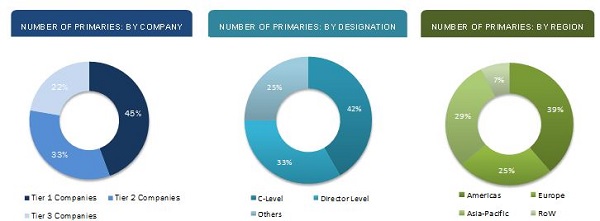
The research methodology used to estimate and forecast the global augmented reality and virtual reality market covers collecting of data on key vendor revenues through secondary research. The vendor offerings are also taken into consideration to determine the market segmentation. The patents, mergers & acquisitions, and PE investments have been verified through various sources. The sources were chosen through primary research by conducting extensive interviews with key industry people - CEOs, VPs, Directors, and executives. The analysis of the M&A deals in augmented reality and virtual reality market includes extensive primary research to gather information and verify and validate the critical conclusions arrived at after an extensive secondary research.
The breakdown of profiles of primary is depicted in the below figure:
To know about the assumptions considered for the study, download the pdf brochure
The top players in the augmented reality and virtual reality market covered in this report include Intel Corporation (U.S.), Microsoft Corporation (U.S.), Qualcomm Incorporated (U.S.), Apple Inc., Blippar Inc. (U.K.), Sony Corporation (Japan), Magic Leap, Inc. (U.S.), Jaunt Inc. (U.S.) Avegant Corporation (U.S.), and Atheer Inc. (U.S.) among others have been profiled in the study.
Key Target Audience
- Raw Material and Manufacturing Equipment Suppliers
- Semiconductor Foundries
- Original Equipment Manufacturers (OEMs) (end-user application or electronic product manufacturers)
- Product Manufacturers
- ODM and OEM Technologies Solution Providers
- Research Organizations
- Technology Standards Organizations, Forums, Alliances, and Associations
- Technology Investors
- Governments, Financial Institutions, and Investment Communities
- Analysts and Strategic Business Planners
- End Users
Scope of the Report
The research report segments merger and acquisition, PE investments, and patent analysis in augmented reality and virtual reality market during the period 2013-2016 into following categories:
Patent Analysis for Augmented Reality and Virtual Reality Market
- By Major Companies
- By Year
- By Geography
- By Technology
Investor Analysis for Augmented Reality and Virtual Reality Market
- By Region (& Country)
- By Investor Type
- By Major Investors
Private Equity Investment in Augmented Reality and Virtual Reality Market
- By Establishment Year of the Company
- By Total Investments in a Year
- By AR and VR
Merger and Acquisition in Augmented Reality and Virtual Reality Market
- By Deal Value
- By Target Company
- By Deal Volume
- By Geographical Coverage
Available Customizations
Along with the market data, MarketsandMarkets offers customizations as per the company’s specific needs. The following customization options are available for the report:
Patent Analysis
- Application analysis of the patents of the major companies
Private Equity Investment Analysis
- Detailed analysis and profiling of additional market players (Up to 5)













Growth opportunities and latent adjacency in Augmented Reality and Virtual Reality Market