Automotive Adhesives Market

Automotive Adhesives Market by Resin Type (Polyurethane, Epoxy, Acrylic, Silicone, SMP, MMA), Vehicle Type (Passenger Car, LCV, Trucks, Buses, Aftermarket), Application (Body in White, Paintshop, Assembly, Power Train), and Region - Global Forecast to 2031




OVERVIEW
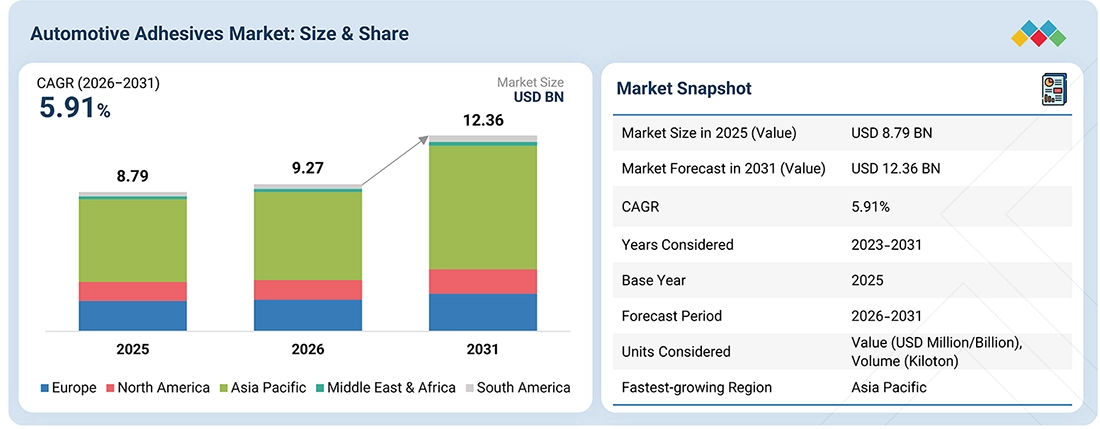
Source: Secondary Research, Interviews with Experts, MarketsandMarkets Analysis
The automotive adhesives market is projected to grow from USD 9.27 billion in 2026 to USD 12.36 billion by 2031, at a CAGR of 5.91%. Automotive adhesives are bonding materials used to join different components and substrates in vehicles while improving structural integrity, durability, and manufacturing efficiency. They enable lightweight vehicle designs by reducing reliance on mechanical fasteners and support bonding between metals, plastics, composites, and other materials. Market growth is fueled by rising demand across passenger cars, commercial vehicles, and electric vehicles, along with increasing vehicle production, lightweighting initiatives, and the adoption of advanced materials in modern vehicle manufacturing.
KEY TAKEAWAYS
-
BY REGIONAsia Pacific dominated the global automotive adhesives market in 2025, accounting for a share of 59.3%, in terms of value.
-
BY VEHICLE TYPEBy vehicle type, the passenger car segment dominated the overall automotive adhesives market, accounting for a share of 70.7% in 2025.
-
BY RESIN TYPEBy resin type, the polyurethane segment led the overall automotive adhesives market, accounting for a share of 30.6% in 2025.
-
BY APPLICATIONThe power train segment is projected to register the highest CAGR of 7.45%, in terms of value, during the forecast period.
-
COMPETITIVE LANDSCAPE - KEY PLAYERSHenkel AG & Co. KGaA, 3M Company, Sika AG, Arkema S.A., and H.B. Fuller Company are identified as key players in the global automotive adhesives market. These companies have strong market presence and extensive product portfolios.
-
COMPETITIVE LANDSCAPE - STARTUPSDELO Industrial Adhesives, Master Bond Inc., and Permabond, among other emerging players, hold strong positions in specialized niche segments, underscoring their potential to become future market leaders in the automotive adhesives market.
The automotive adhesives market is projected to grow steadily over the next decade, supported by advancements in adhesive chemistry and the shift toward lightweight and electrified vehicles. Automotive manufacturers are increasingly adopting adhesives to improve structural performance, reduce vehicle weight, and simplify assembly processes, making them valuable across body, interior, exterior, powertrain, and battery applications. Growing emphasis on fuel efficiency, electric mobility, material integration, and manufacturing automation further strengthens the role of automotive adhesives as an essential bonding solution, supporting broad industrial adoption.
TRENDS & DISRUPTIONS IMPACTING CUSTOMERS' CUSTOMERS
The impact on consumers’ business arises from evolving customer requirements and industry disruptions. Raw material suppliers and distribution partners are closely linked with automotive adhesive manufacturers, while automotive applications represent the primary demand base for these products. Market shifts, including changes in vehicle production, lightweighting requirements, electric vehicle adoption, material preferences, and automotive regulations, directly influence the revenues of automotive manufacturers and component producers. Changes in vehicle and component demand subsequently affect procurement volumes across suppliers and distributors, which in turn impact the revenues of automotive adhesive manufacturers throughout the value chain.
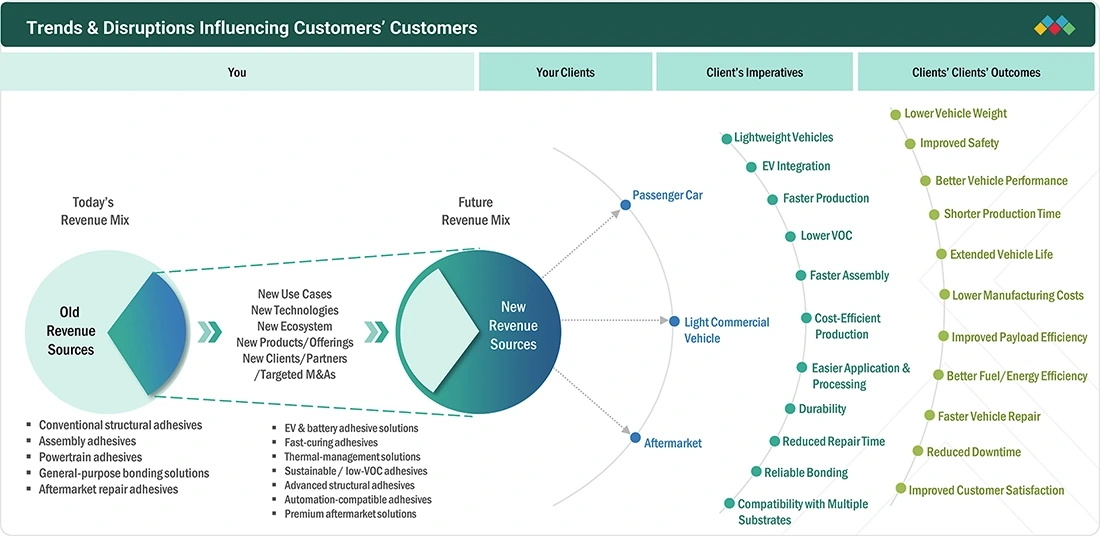
Source: Secondary Research, Interviews with Experts, MarketsandMarkets Analysis
MARKET DYNAMICS

Level
-
Accelerating global electric vehicle adoption and battery pack assembly demand

-
Rising adoption of lightweight vehicle structures to drive market growth


Level
-
Increasing costs of petrochemical-based raw materials

-
Technical complexity of multi-material substrate bonding


Level
-
Expansion of adhesive applications in automotive battery thermal management

-
Development of faster-curing adhesives for automated vehicle assembly


Level
-
Meeting long-term durability requirements under demanding vehicle conditions

Source: Secondary Research, Interviews with Experts, MarketsandMarkets Analysis
Driver: Accelerating global electric vehicle adoption and battery pack assembly demand
The automotive adhesives market is gaining significant momentum from the rapid adoption of electric vehicles (EVs) and the resulting expansion of battery pack manufacturing. EV architectures require adhesives to bond battery cells, modules, packs, enclosures, and other components where traditional mechanical fastening may add weight or take up valuable space. Adhesives support lightweight construction while providing structural integrity, vibration resistance, and improved assembly efficiency. The increasing localization of battery production and investments in gigafactories are further expanding adhesive consumption across vehicle manufacturing ecosystems. Moreover, automakers are increasingly using adhesives to join dissimilar materials, seal battery housings, and improve component integration. As EV production scales across major automotive markets, demand for specialized adhesive solutions capable of supporting high-volume battery assembly is expected to increase substantially.
Restraint: Technical complexity of multi-material substrate bonding
The technical complexity associated with bonding multiple substrates remains a key restraint for the automotive adhesives market. Modern vehicles increasingly combine steel, aluminum, composites, plastics, glass, and coated surfaces to achieve weight reduction and design flexibility. These materials have different surface energies, thermal expansion rates, stiffness levels, and chemical characteristics, making consistent adhesion difficult to achieve. Adhesive formulations must provide reliable bonding while accommodating movement caused by temperature changes and mechanical stresses. Surface preparation, primers, curing conditions, and application equipment may also vary between substrates, increasing manufacturing complexity. These requirements can raise development and production costs and require extensive validation before new adhesive systems are introduced into vehicle platforms.
Opportunity: Expansion of adhesive applications in automotive battery thermal management
The increasing focus on battery thermal management is creating new opportunities for automotive adhesive suppliers. Electric vehicle batteries require effective management of heat generated during charging, discharging, and high-power operation to maintain performance and safety. Adhesives are increasingly used to bond thermal interface materials, secure cooling components, attach insulation layers, and integrate battery enclosure systems. Specialized thermally conductive adhesives can facilitate heat transfer while maintaining electrical insulation and structural stability. Demand is further supported by higher battery energy densities and increasingly compact pack designs, which require efficient thermal management within limited spaces. Developing adhesives that combine thermal conductivity, lightweight properties, electrical insulation, and automated processability can enable suppliers to capture growing demand from battery manufacturers and automotive original equipment manufacturers (OEMs).
Challenge: Meeting long-term durability requirements under demanding vehicle conditions
Automotive adhesives must maintain reliable performance throughout prolonged exposure to demanding vehicle operating conditions, creating a significant challenge for manufacturers. Bonded components can experience repeated temperature cycling, vibration, mechanical loads, moisture, road chemicals, and ultraviolet exposure over extended service periods. Electric vehicles introduce additional requirements because battery assemblies may encounter substantial thermal variation and repeated charging cycles. Adhesives must therefore retain strength and flexibility while accommodating expansion and contraction between bonded materials. Failure of critical adhesive joints can affect component reliability and increase warranty risks for automakers. Manufacturers must conduct extensive durability testing and develop formulations capable of maintaining consistent performance throughout vehicle lifecycles. Balancing long-term reliability with fast curing, lightweight construction, and efficient automated application remains technically demanding.
AUTOMOTIVE ADHESIVES MARKET: COMMERCIAL USE CASES ACROSS INDUSTRIES
| COMPANY | USE CASE DESCRIPTION | BENEFITS |
|---|---|---|
 |
Structural adhesives for bonding lightweight body panels, battery components, and mixed-material assemblies in vehicle production | Reduced vehicle weight, improved structural integrity, enhanced assembly efficiency, and reliable bonding across dissimilar materials |
 |
Automotive adhesives for bonding body panels, interior components, and battery systems across conventional and electric vehicle platforms | Improved joint strength, reduced mechanical fasteners, greater design flexibility, and enhanced manufacturing efficiency |
 |
Adhesive solutions for assembling sensors, electronic control units, and automotive components requiring secure bonding and protection | Improved component reliability, vibration resistance, protection from environmental exposure, and consistent assembly performance |
 |
Structural and specialty adhesives for vehicle body assembly, interior systems, and electric vehicle battery applications | Lower component weight, improved crash performance, enhanced production flexibility, and durable bonding for advanced vehicle designs |
Logos and trademarks shown above are the property of their respective owners. Their use here is for informational and illustrative purposes only.
MARKET ECOSYSTEM
The automotive adhesives market ecosystem consists of raw material suppliers (BASF SE, Wanhua Chemical Group Co., Ltd., Covestro AG, and Evonik Industries AG), manufacturers (Henkel AG & Co. KGaA, 3M Company, Sika AG, H.B. Fuller Company, and Arkema S.A.), and end users (Toyota Motor Corporation, Volkswagen AG, Ford Motor Company). Raw materials such as epoxy resins, polyurethane precursors, acrylic polymers, silicones, curing agents, and specialty additives are processed into automotive adhesives and customized formulations that provide high bonding strength, durability, flexibility, vibration resistance, and thermal stability. End users in passenger vehicles, commercial vehicles, electric vehicles, and automotive components drive demand for high-performance bonding solutions, while producers ensure consistent formulation quality and application-specific performance. Collaboration across the value chain is crucial for advancing lightweight vehicle design, improving manufacturing efficiency, supporting electrification, ensuring compliance with automotive standards, and driving the growth of automotive adhesive solutions.
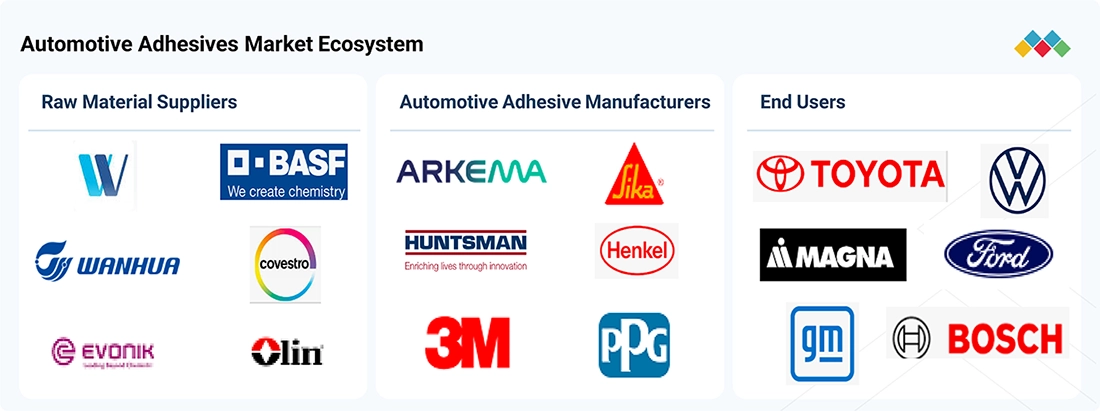
Logos and trademarks shown above are the property of their respective owners. Their use here is for informational and illustrative purposes only.
MARKET SEGMENTS
Source: Secondary Research, Interviews with Experts, MarketsandMarkets Analysis
Automotive Adhesives Market, By Vehicle Type
The passenger car segment dominated the automotive adhesives market, in terms of value, in 2025. Passenger car production remains a major source of adhesive consumption because modern vehicles contain numerous bonded components across body, interior, glazing, and sealing applications. Automotive adhesives support durable joining between metals, plastics, glass, fabrics, and composite materials while enabling efficient assembly. Vehicle manufacturers increasingly use adhesive technologies to improve joint quality, production speed, and overall vehicle performance. Growing demand for new passenger vehicles, supported by rising vehicle ownership and replacement purchases, is sustaining production volumes across major automotive manufacturing centers. The continued development of new vehicle platforms is also increasing the number of components assembled using adhesive solutions. This broad application base makes passenger cars a key contributor to automotive adhesives demand.
Automotive Adhesives Market, By Resin Type
The polyurethane resin type accounted for a leading share of the automotive adhesives market, in terms of value, in 2025. Increasing demand for vehicle comfort and cabin refinement is supporting the use of polyurethane adhesives in automotive interiors. Adhesive bonding is used for trim, headliners, instrument panels, carpets, seating components, and decorative surfaces for clean joints and consistent appearance. Polyurethane formulations can provide flexible bonds that accommodate vibration and movement during operation, supporting long-term interior quality. They also allow designers to reduce visible mechanical fasteners in selected components, creating cleaner surfaces and design freedom. Rising consumer expectations for refined interiors are encouraging automakers and component suppliers to adopt adhesive-based assembly methods, supporting demand for polyurethane resin systems within interior manufacturing.
Automotive Adhesives Market, By Application
Body in white (BIW) application dominated the automotive adhesives market, in terms of value, in 2025. Vehicle manufacturers are increasing adhesive use across body structures as production moves toward mixed-material designs. Adhesives support joining between steel, galvanized steel, aluminum, and selected composite components. This is valuable for doors, roofs, hoods, side panels, and body assemblies requiring consistent joining across different surfaces. Automotive adhesives also distribute joining loads across bonded areas, supporting body quality and production consistency. As automakers introduce more material combinations within vehicle bodies, adhesive bonding is becoming a more important part of BIW assembly. Growing adoption of mixed-material body structures is therefore expanding adhesive consumption across vehicle manufacturing plants worldwide, particularly as manufacturers integrate varied materials within common vehicle platforms and seek efficient joining solutions.
REGION
Asia Pacific to be fastest-growing region in global automotive adhesives market during forecast period
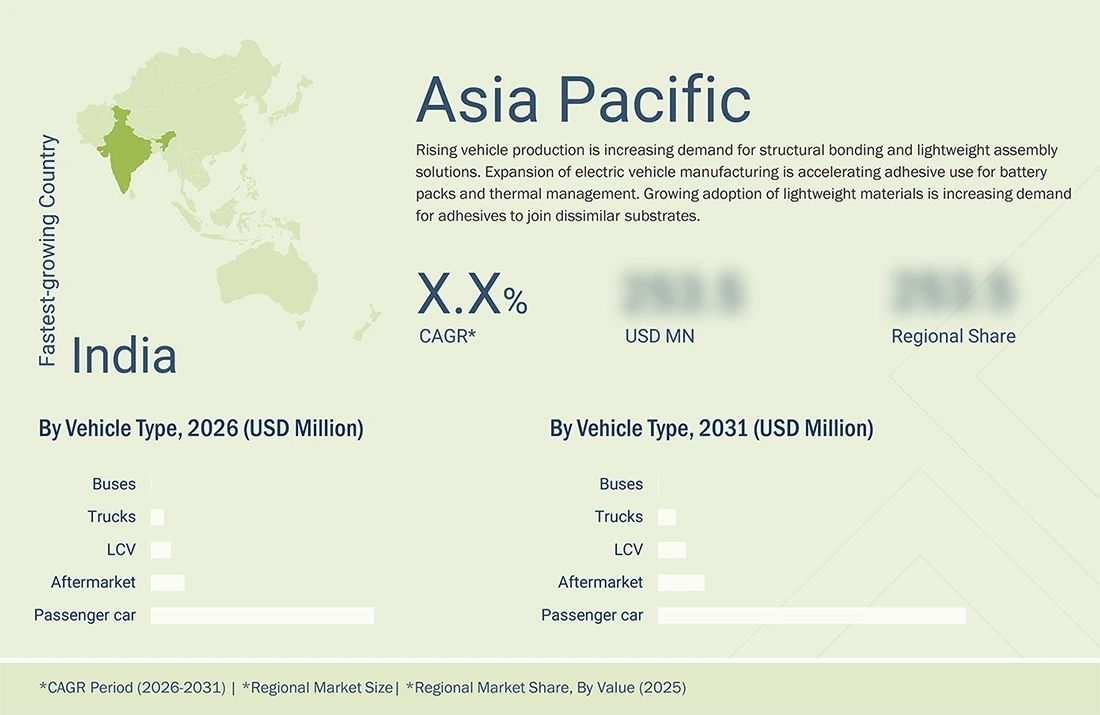
Asia Pacific accounted for the largest share of the global automotive adhesives market in 2025. The region is also projected to be the fastest-growing region during the forecast period. The region’s vehicle manufacturing base creates demand for bonding solutions across passenger cars, commercial vehicles, and two-wheelers. China, Japan, India, South Korea, and Southeast Asian countries host assembly networks supported by supplier bases. Adhesives are used across body assembly, interior fitting, glass bonding, trim attachment, and component integration, giving suppliers access to several vehicle production stages. Rising vehicle output in India, Southeast Asia, and China is expanding adhesive consumption alongside established production in Japan and South Korea. The concentration of vehicle plants and component suppliers supports technical service and distribution capabilities. This manufacturing ecosystem remains a core driver of automotive adhesive demand across Asia Pacific.
AUTOMOTIVE ADHESIVES MARKET: COMPANY EVALUATION MATRIX
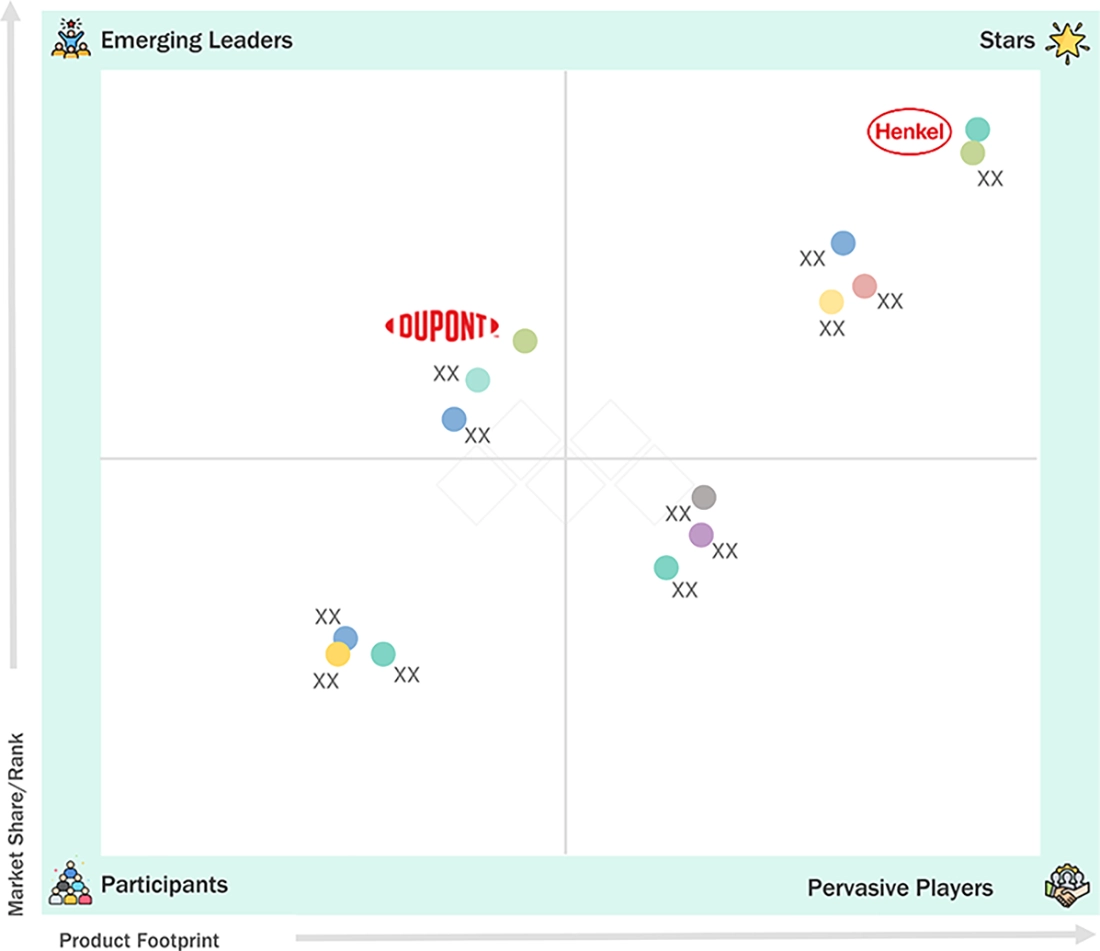
In the automotive adhesives market matrix, Henkel AG & Co. KGaA (Star) leads with a strong global market presence and a broad adhesive portfolio, driving large-scale adoption across vehicle assembly, interiors, powertrain, and electric vehicle applications. DuPont de Nemours, Inc. (Emerging Leader) is gaining traction through its advanced materials expertise and adhesive solutions designed for lightweight vehicle structures, thermal management, and multi-material bonding. While Henkel dominates through its extensive product range, global technical support, and established automotive relationships, DuPont demonstrates strong growth potential through material innovation and increasing focus on electrification and lightweight vehicle design, positioning it to advance toward the leaders' quadrant.
Source: Secondary Research, Interviews with Experts, MarketsandMarkets Analysis
KEY MARKET PLAYERS
MARKET SCOPE
| REPORT METRIC | DETAILS |
|---|---|
| Market Size in 2026 (Value) | USD 9.27 Billion |
| Market Forecast in 2031 (Value) | USD 12.36 Billion |
| Growth Rate | CAGR of 5.91% from 2026 to 2031 |
| Years Considered | 2023–2031 |
| Base Year | 2025 |
| Forecast Period | 2026–2031 |
| Units Considered | Value (USD Million/Billion) and Volume (Kiloton) |
| Report Coverage | Revenue forecast, company ranking, competitive landscape, growth factors, and trends |
| Segments Covered |
|
| Regional Scope | Asia Pacific, Europe, North America, Middle East & Africa, and South America |
WHAT IS IN IT FOR YOU: AUTOMOTIVE ADHESIVES MARKET REPORT CONTENT GUIDE
DELIVERED CUSTOMIZATIONS
We have successfully delivered the following deep-dive customizations:
| CLIENT REQUEST | CUSTOMIZATION DELIVERED | VALUE ADDS |
|---|---|---|
| Europe-based Automotive Adhesives Manufacturer |
|
|
| Asia Pacific-based Automotive Adhesives Producer |
|
|
RECENT DEVELOPMENTS
- May 2026 : Henkel AG & Co. KGaA introduced the Teroson EP 52 Series, a heat-curing, solvent-free structural adhesive that simultaneously delivers high structural integrity and vibration damping performance.
- May 2026 : Illinois Tool Works Inc., through its Performance Polymers division, launched three new Plexus thermomechanical polyurethane structural adhesives designed to address heat, stress, and durability challenges in modern assemblies.
- February 2026 : Sika AG agreed to acquire Akkim, a manufacturer of adhesives and sealants, to strengthen its position in the global adhesives and sealants market.
- November 2025 : Henkel AG & Co. KGaA launched TECHNOMELT PUR 6260 ECO, a bio-based polyurethane hot-melt adhesive designed for automotive interior applications.
- September 2025 : Huntsman International LLC launched a reformulated range of ARALDITE epoxy adhesives free from intentionally added BPA and substances classified as CMR under EU regulations, with initial grades released in Europe.
Table of Contents
 Exclusive indicates content/data unique to MarketsandMarkets and not available with any competitors.
Methodology
The study involved four major activities in estimating the market size for automotive adhesives. Exhaustive secondary research was done to collect information on the market, the peer market, and the parent market. The next step was to validate these findings, assumptions, and sizing with industry experts across the value chain through primary research. Both top-down and bottom-up approaches were employed to estimate the complete market size. After that, the market breakdown and data triangulation procedures were used to estimate the market size of the segments and subsegments.
Secondary Research
Secondary sources used in this study included annual reports, press releases, and investor presentations of companies; white papers; certified publications; articles from recognized authors; and gold-standard and silver-standard websites, such as Factiva, ICIS, Bloomberg, and others. The findings of this study were verified through primary research, which involved conducting extensive interviews with key officials, including CEOs, VPs, directors, and other executives. The breakdown of profiles of the primary interviewees is illustrated in the figure below:
Primary Research
In the primary research process, interviews with sources from both the supply and demand sides were conducted to gather qualitative and quantitative information for this report. Primary sources were mainly industry experts from the core and related industries, as well as preferred suppliers, manufacturers, distributors, service providers, technology developers, researchers, and organizations across all segments of this industry’s value chain. In-depth interviews were conducted with key industry participants, subject-matter experts, C-level executives at key market players, and industry consultants to obtain and verify critical qualitative and quantitative information and to assess prospects.
Breakdown of the primary participants:
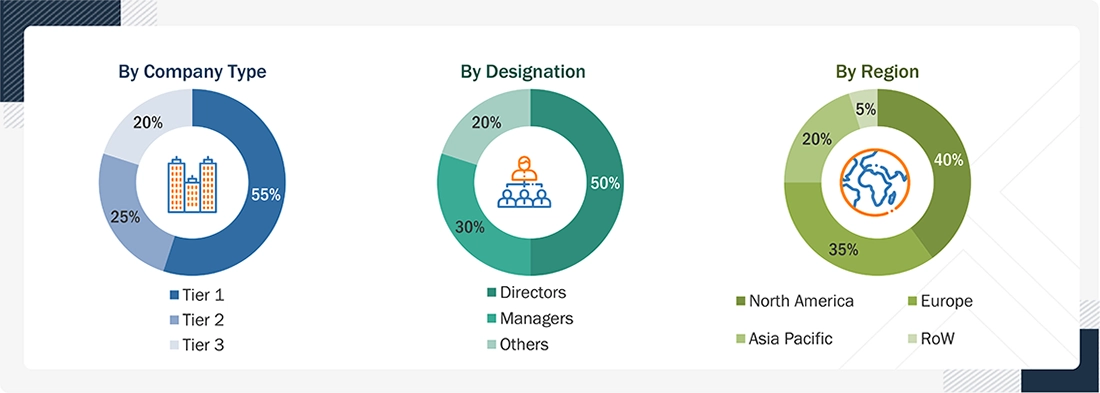
Notes: Tier 1, Tier 2, and Tier 3 companies are classified based on their market revenue in 2024/2025 available in the public domain, product portfolios, and geographical presence.
Other designations include consultants and sales, marketing, and procurement managers.
|
COMPANY NAME |
DESIGNATION |
|
Henkel AG & Co. KGaA |
Senior Manager |
|
3M Company |
Innovation Manager |
|
Sika AG |
Development Manager |
|
Arkema S.A. |
Production Supervisor |
|
H.B. Fuller Company |
Sales Manager |
To know about the assumptions considered for the study, download the pdf brochure
Market Size Estimation
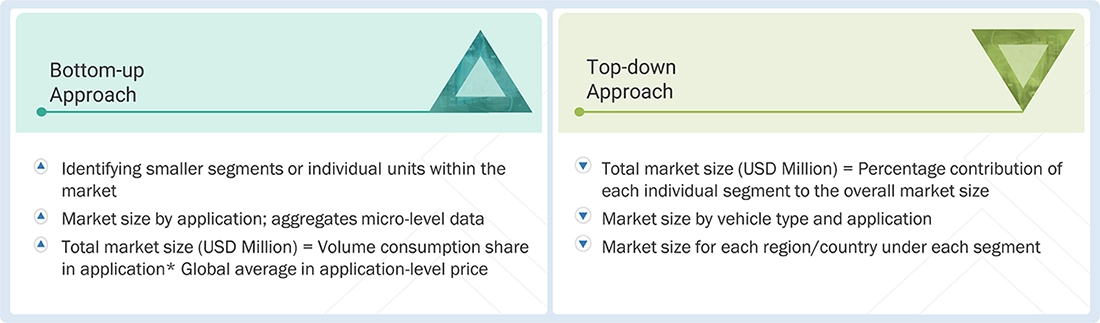
Both top-down and bottom-up approaches were used to estimate and validate the total size of the automotive adhesives market. These methods were also used extensively to estimate the size of various subsegments in the market. The research methodology used to estimate the market size includes the following:
- The key players in the industry have been identified through extensive secondary research.
- The supply chain of the industry has been determined through primary and secondary research.
- All percentage shares, splits, and breakdowns have been determined using secondary sources and verified through primary sources.
- All possible parameters that affect the markets covered in this research study have been accounted for, viewed in extensive detail, verified through primary research, and analyzed to obtain the final quantitative and qualitative data.
Automotive Adhesives Market: Top-Down and Bottom-Up Approach
Data Triangulation
After determining the overall market size using the market size estimation processes explained above, the market was divided into several segments and subsegments. To complete the overall market engineering process and determine the exact statistics for each market segment and subsegment, data triangulation and market breakdown procedures were employed, as applicable. The data was triangulated by studying various factors and trends from both the demand and supply sides in the automotive adhesives industry.
Market Definition
According to the Adhesive & Sealant Council (ASC), automotive adhesives are bonding materials used across vehicle manufacturing to join and secure different substrates and components. They support structural bonding, body assembly, sealing, trim and final assembly, and automotive electronics applications. These adhesives enable durable joints while reducing reliance on mechanical fasteners and supporting lightweight construction, improved durability, manufacturing efficiency, and noise, vibration, and harshness (NVH) performance. Their applications extend across passenger cars, light trucks, heavy vehicles, and electric vehicle systems.
Key Stakeholders
- Automotive adhesive manufacturers
- Automotive adhesive distributors
- Raw material suppliers
- Government and research organizations
- Investment banks and private equity firms
Report Objectives
- To analyze and forecast the size of the global automotive adhesives market in terms of value and volume
- To provide detailed information about the major drivers, restraints, challenges, and opportunities influencing the market growth
- To define, describe, and segment the market based on vehicle type, resin type, application, and region
- To forecast the size of the market segments based on regions such as Asia Pacific, North America, Europe, the Middle East & Africa, and South America
- To strategically analyze micromarkets with respect to individual growth trends, prospects, and their contribution to the overall market
- To strategically analyze the segmented markets with respect to individual growth trends, prospects, and contributions to the overall market
- To identify and analyze opportunities for stakeholders in the market
- To analyze competitive developments such as expansions, partnerships, joint ventures, mergers & acquisitions, agreements, and product launches in the market
- To strategically profile the key companies and comprehensively analyze their core competencies
Available customizations:
Along with the given market data, MarketsandMarkets offers customizations according to the company’s specific needs. The following customization options are available for the report:
Regional Analysis
- Further breakdown of a region with respect to a particular country or additional application
Company Information
- Detailed analysis and profiles of additional market players (up to five)


Personalize This Research
- Triangulate with your Own Data
- Get Data as per your Format and Definition
- Gain a Deeper Dive on a Specific Application, Geography, Customer or Competitor
- Any level of Personalization
Let Us Help You
- What are the Known and Unknown Adjacencies Impacting the Automotive Adhesives Market
- What will your New Revenue Sources be?
- Who will be your Top Customer; what will make them switch?
- Defend your Market Share or Win Competitors
- Get a Scorecard for Target Partners

Custom Market Research Services
We Will Customise The Research For You, In Case The Report Listed Above Does Not Meet With Your Requirements
Get 10% Free CustomisationTESTIMONIALS
We at Nissan Chemicals Corporation have been clients of MarketsandMarkets for more than a year now. We recently consulted MarketsandMarkets for a study, the team at MarketsandMarkets was extremely professional and organized. The business insights were very detailed and aligned well with our expectations that really helped us formulate the Business Plans and device new strategies for development themes. MarketsandMarkets offers a unique combination of expertise and dedicated engagement model. Their research findings have helped us in designing our Pricing Strategy which will make it easier for us to predict the future sales and profits for the next ten years. We look forward to working with MarketsandMarkets in the future.
VP of Strategy & New Business Development
Leading Specialty Chemical Company
The MarketsandMarkets Engagement Model, composed of both the Knowledge Store and advisory custom research, has greatly helped us in understanding our markets and making strategic decisions. The Knowledge Store is a fast way to allow everyone in our organization to understand more about most any market they are interested in. The ability to then get custom research done and get answers to specific strategic questions and market insight has been spectacular. The Markets and Markets team feel more like colleagues than vendors and their services have helped us change our culture where statements of things like growth opportunities and competitive position are always backed by industry research.

Rich Gibson,
Director, Corporate Strategy
Milliken & Company,
Leading Industrial Manufacturer of specialty chemical, floor covering, performance and protective textile materials, and healthcaremilliken.com
MarketsandMarkets is a trusted resource that helps us to better understand markets that are near-adjacencies-whether its technology, value chain or geography. Their Knowledge Store platform provides a dashboard of markets and their characteristics which is easy to use and saves us time.
Adam Shaw,
Market Development and Strategy Manager
AdvanSix Inc. USA,
An American Leader in Chemicalswww.advansix.com
The Knowledge Store from MarketsandMarkets is a valuable tool which has helped my team acquire greater insight in to the end markets that our business serves. This has enabled us to help our company build stronger strategies throughout our planning process.
TOSHIO KINOSHITA
Senior Chif Consultion Research & Consulting Division
Mitsubishi Chemical Research Corporation,
Leading Manufacturer of Chemical Productswww.mitsubishichem-res.co.jp/en/

We recently engaged with MarketsandMarkets for a study, the team not only clearly understood our business objectives but was also extremely professional in the way they handled the entire project. The study was efficiently conducted in a phase-wise manner, and the engagement model furnished us with high-quality business insights that far exceeded our expectations at each phase. We were especially happy that MarketsandMarkets could provide us with both, an English as well as a Japanese version of the study. A special thanks to the Analyst Team and Client Services Team, whose fluency in Japanese enhanced our comfort level, as we could converse with them in our preferred language.
Independent entrepreneurs
Arrow Precision
We approached MarketsandMarkets for study on Proppants Market, and their work exceeded our expectations. The study conducted was comprehensive and enabled us to view the market through the various dimensions. In addition, the team was extraordinarily responsive throughout the process and resolved our queries on time. I strongly recommend MarketsandMarkets and will certainly consider them for additional market assessments we will need in the future.
Global engineering company, Japan
Deputy Manager,
Strategic Planning OfficeThe high-quality insights shared by the MarketsandMarkets team helped us understand the pharmaceutical plant designers in a specific geography. It also captured the risks that we may likely face in communicating with our potential partners. The study would enable us identify partners, which would impact our future growth.






Growth opportunities and latent adjacency in Automotive Adhesives Market