Enterprise Video Market

Enterprise Video Market by Solution (Video Conferencing, Video Content Management, Webcasting), Application (Corporate Communications, Training & Development, Marketing & Client Engagement), Vertical (BFSI, Telecom, Retail) – Global Forecast to 2031




OVERVIEW
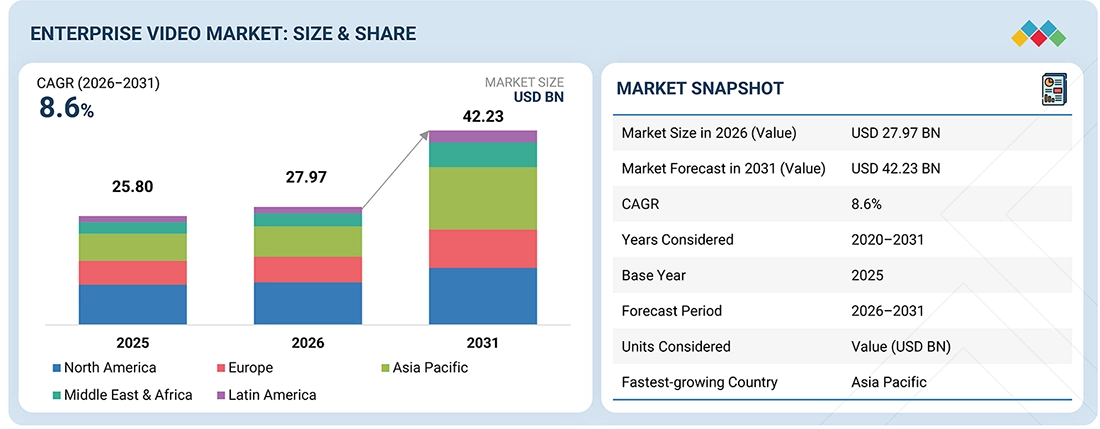
Source: Secondary Research, Interviews with Experts, MarketsandMarkets Analysis
The enterprise video market is projected to grow from USD 27.97 billion in 2026 to USD 42.23 billion by 2031, at a CAGR of 8.6%. This market growth is largely supported by the increasing adoption of hybrid work models, which require reliable communication and collaboration tools for distributed teams. As a result, organizations are increasingly implementing video conferencing, webcasting, and video content management platforms to support internal meetings, employee training, and customer engagement activities. In addition, enterprises are gradually shifting toward cloud-based video solutions as they offer better scalability, reduced infrastructure costs, and easier integration with existing collaboration ecosystems. Furthermore, advancements such as automated transcription, meeting summaries, and analytics are improving the overall usability and management of video content. Consequently, as companies continue investing in digital workplace transformation, enterprise video platforms are becoming an essential component of everyday business communication.
KEY TAKEAWAYS
-
BY REGIONNorth America is expected to hold the largest market size of USD 9.77 billion in 2026.
-
BY OFFERINGThe solution segment is expected to hold largest market size of USD 17.5 billion in 2026.
-
BY APPLICATIONThe hybrid cloud segment is expected to grow at the highest CAGR of 21.1% during the forecast period.
-
BY SOLUTIONThe video conferencing is expected to hold the largest market share in 2026.
-
BY VERTICALThe telecommunication segment is expected to hold the largest market share in 2026.
-
COMPETITIVE LANDSCAPE - KEY PLAYERSMajor players in the enterprise video market, including IBM, Zoom Video Communications, Microsoft, Google, and Avaya, are adopting both organic and inorganic growth strategies such as partnerships, product innovations, and AI-driven feature integration. These companies are strengthening their enterprise video portfolios by enhancing cloud-based collaboration platforms, improving security frameworks, and embedding AI capabilities such as real-time transcription, meeting analytics, and automated summaries to support hybrid work and digital engagement.
-
COMPETITIVE LANDSCAPE - STARTUPS/SMESThe competitive landscape also includes strong participation from specialized vendors and emerging players such as ON24, Kaltura, Brightcove, and Panopto. These companies focus on niche capabilities such as enterprise video management, virtual events, training platforms, and advanced video analytics. Their solutions are widely adopted by enterprises for webinars, knowledge management, and internal communications, strengthening the overall enterprise video ecosystem.
The enterprise video market is evolving from basic video conferencing to a strategic digital communication platform embedded with AI and analytics. Cloud-based and managed service models are driving scalability, flexibility, and cost efficiency for enterprises. Growth is strongest in hybrid work, corporate training, and digital customer engagement use cases. Vendors that prioritize security, interoperability, and AI-driven innovation are best positioned to capture long-term market opportunities.
TRENDS & DISRUPTIONS IMPACTING CUSTOMERS' CUSTOMERS
The enterprise video market is undergoing significant changes due to AI-driven automation, including real-time transcription, summarization, sentiment analysis, and search. Such changes have turned the use of videos into an asset for knowledge. The continued rapid growth of hybrid/remote employment models is expected to continue driving demand for scalable, cloud-native video platform services. Cybersecurity and data privacy legislation are also driving increased demand for enhanced encryption. Immersive experiences, including AR/VR-based collaboration and interactive virtual events, are also changing the nature of digital engagement.
Source: Secondary Research, Interviews with Experts, MarketsandMarkets Analysis
MARKET DYNAMICS

Level
-
Rising adoption of video for corporate training and knowledge management

-
Expansion of cloud infrastructure and high-speed connectivity


Level
-
Overcoming bandwidth and network performance limitations

-
Strengthening security and regulatory compliance frameworks


Level
-
AI-driven intelligence and advanced video analytics

-
Verticalized innovation and next-gen technology integration


Level
-
Ensuring consistent global video performance

-
Addressing virtual fatigue and over-dependence on video

Source: Secondary Research, Interviews with Experts, MarketsandMarkets Analysis
Driver: Rising adoption of video for corporate training and knowledge management
Organizations are using video conferencing and video content management systems to deliver recorded corporate training for skill development programs. Enterprise video companies are improving the functionality of their video platforms by incorporating tools such as video search and analytics. This is helping organizations maintain consistent corporate training programs and minimize the operational costs associated with physical training programs. As the focus shifts to upskilling and continuous learning within the enterprise community, the use of enterprise video platforms is growing. This is leading to the growth of the enterprise video market.
Restraint: Overcoming bandwidth and network performance limitations
The performance of enterprise video platforms depends on network bandwidth and infrastructure capabilities. High-definition video conferencing, live streaming, and webcasting require stable, high-capacity network connections to ensure uninterrupted communication. Organizations operating in areas with limited bandwidth and network congestion will face latency issues, buffering problems, and reduced video quality, which will negatively affect user experience. Network restrictions pose a barrier to implementing enterprise video solutions, especially for organizations operating multiple offices across different geographic locations. Enterprises must spend money on network optimization, content delivery systems, and infrastructure improvements, which will increase their deployment costs while creating barriers to market expansion.
Opportunity: AI-driven intelligence and advanced video analytics
The integration of artificial intelligence and machine learning into enterprise video platforms is creating new growth opportunities for vendors. AI-powered capabilities such as automatic transcription and real-time translation, along with video indexing and intelligent search technologies, enable organizations to better manage video content when searching for specific video materials. The additional AI-driven analytics that vendors offer enable customers to understand how viewers interact with their content, which meetings they attend, and how their content performs. The features provide businesses with tools to develop more effective training programs, build stronger internal communication systems, and improve decision-making processes. The growing need for organizations to obtain advanced video management systems with automated features will create a competitive edge for vendors who provide AI-powered enterprise video solutions, thus driving substantial growth in the enterprise video market.
Challenge: Ensuring consistent global video performance
Delivering consistent video performance across multiple enterprise locations remains a key challenge in the enterprise video market. Multinational organizations rely on enterprise video platforms for meetings, virtual events, and collaboration across geographically distributed teams. The different network infrastructure elements, together with their varying latency characteristics and connectivity limitations across regions, create problems that affect video playback quality and system dependability. To address these challenges, vendors use content delivery networks (CDNs), edge computing, and adaptive bitrate streaming technologies to improve video streaming performance. New technologies enhance system capabilities, but they create additional challenges for businesses seeking to implement extensive enterprise video systems.
ENTERPRISE VIDEO MARKET: COMMERCIAL USE CASES ACROSS INDUSTRIES
| COMPANY | USE CASE DESCRIPTION | BENEFITS |
|---|---|---|
 |
Capital One adopted Zoom Video Communications solutions, including Zoom Meetings and Zoom Rooms, to support its globally dispersed hybrid workforce and modernize recruiting efforts. The company leveraged video collaboration to enable seamless communication, enhance inclusivity, and expand virtual talent acquisition initiatives. | Capital One improved collaboration across global teams, reduced conference room deployment costs to nearly one-third of previous systems, and accelerated installation timelines. The shift to virtual recruiting doubled event attendance and tripled engagement with diverse institutions, strengthening talent outreach and candidate experience. |
 |
PepsiCo unified its global workforce by standardizing on Microsoft Teams and Microsoft 365 Copilot to replace fragmented collaboration tools. The company migrated thousands of meeting rooms to Teams Rooms and embedded AI-driven productivity across Microsoft 365 to enable secure, AI-powered collaboration at scale. | PepsiCo achieved up to 95% daily active use of Copilot and streamlined collaboration for over 250,000 employees worldwide. The unified platform improved productivity, simplified secure AI deployment, enhanced user adoption, and enabled employees to save significant time through AI-powered insights across meetings, emails, and documents. |
 |
Landtech improved its remote technical support operations by adopting GoToAssist and GoTo Meeting after facing collaboration and multi-monitor limitations with its previous solution. The platform enabled seamless remote access, multi-tech collaboration, and efficient product demonstrations for clients in the real estate and title industry. | Landtech enhanced customer support efficiency with easy reconnections, multi-monitor visibility, and smoother issue escalation. The solution reduced client frustration, improved professionalism, enabled secure handling of sensitive data, and allowed unattended after-hours support, strengthening overall customer confidence and service quality. |
 |
ERIE Insurance implemented Vbrick’s Rev platform to stream large-scale internal and external events without straining network bandwidth. The solution enabled seamless live streaming across branches and agents, supporting company-wide updates, employee engagement initiatives, and public-facing learning symposiums. | ERIE achieved reliable, high-quality streaming without network disruptions, ensuring smooth delivery of critical corporate communications. The platform strengthened employee engagement in a hybrid work model and enabled successful external events, expanding audience reach while enhancing presentation quality and brand visibility. |
Logos and trademarks shown above are the property of their respective owners. Their use here is for informational and illustrative purposes only.
MARKET ECOSYSTEM
The enterprise video market ecosystem includes solution providers, service providers, system integrators, and end users that work together to support video communication. Solution vendors develop platforms that provide live streaming, video conferencing, and on-demand video capabilities. Service providers help enterprises with managed services such as content production, distribution, and infrastructure management. System integrators support organizations by integrating video platforms with existing IT environments. Vendors are also forming partnerships and making acquisitions to expand their capabilities and deliver complete cloud-based solutions. Modern platforms include AI-based features, secure video delivery, CDN support, access controls, and API integration. These capabilities help organizations improve internal communication, training programs, virtual events, and customer engagement while supporting operational efficiency.
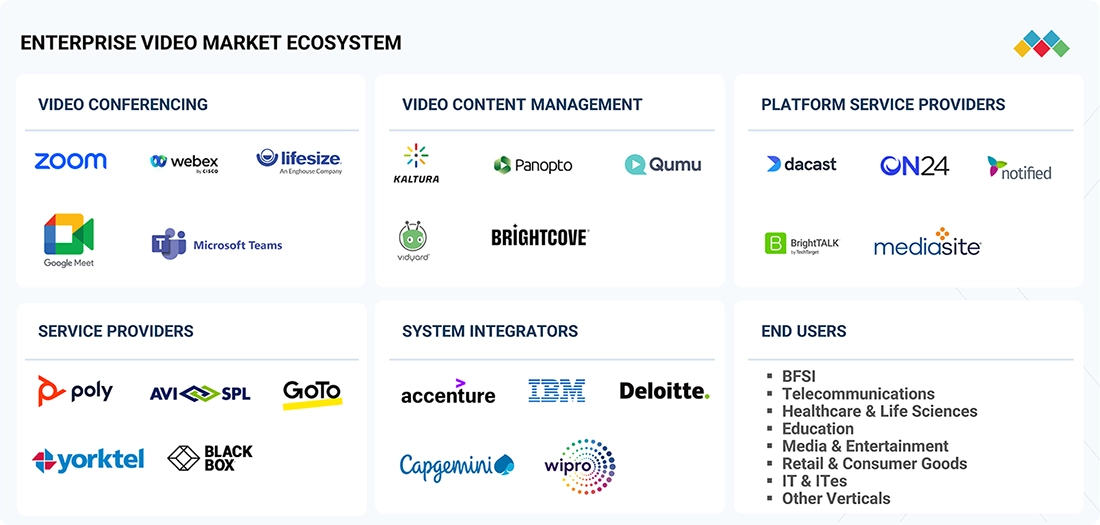
Logos and trademarks shown above are the property of their respective owners. Their use here is for informational and illustrative purposes only.
MARKET SEGMENTS
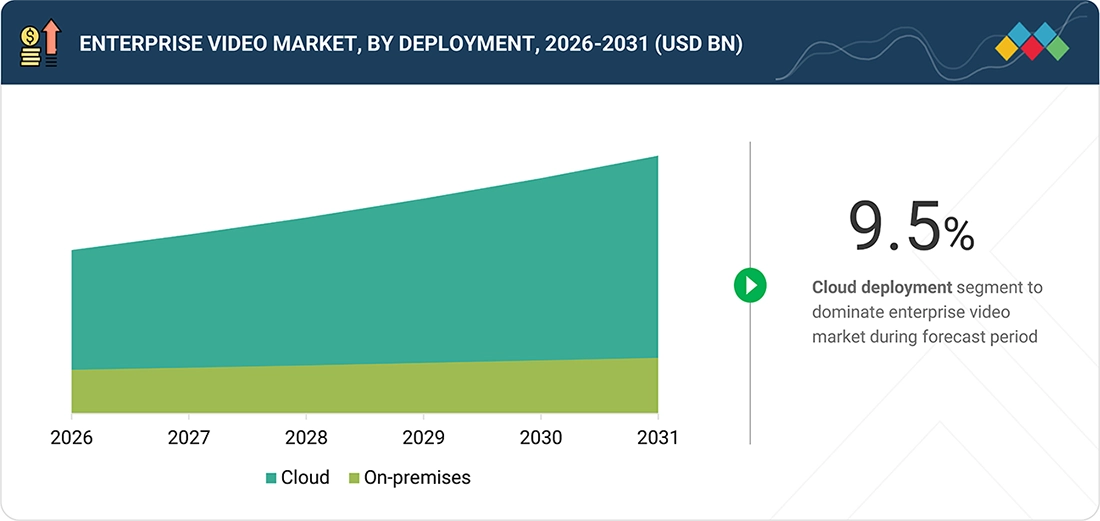
Source: Secondary Research, Interviews with Experts, MarketsandMarkets Analysis
Enterprise Video Market, By Offering
Enterprise video solutions provide the foundation for organizations' video conferencing, webcasting, and video content management systems. Business organizations implement these platforms to enable their employees to work from multiple locations while conducting virtual meetings and using online communication tools. Organizations use these solutions to control their meeting, training, and corporate communication processes through integration with collaboration platforms, cloud services, and enterprise software systems. The system becomes more usable and scalable through ongoing feature updates, which include AI-powered transcription and analytics and advanced security functions. The demand for enterprise video solutions continues to grow as organizations increasingly rely on video communication and digital workplace technologies.
Enterprise Video Market, By Solution
The webcasting segment is expected to grow the most as more organizations turn to virtual events and corporate broadcasts to reach large audiences. Organizations use webcasting platforms for events such as investor briefings, product launches, training sessions, and company-wide meetings. The features offered by the webcasting platforms allow organizations to engage their audiences and measure audience participation. It also allows organizations to reach global audiences simultaneously, unlike physical events. As more organizations turn to digital engagement strategies, the need for webcasting solutions is growing.
Enterprise Video Market, By Services
The services segment plays a critical role in enabling enterprises to successfully deploy and manage enterprise video platforms. Organizations often require consulting, integration, customization, and deployment support to align video solutions with their existing IT infrastructure and security policies. Service providers help enterprises integrate video platforms with collaboration tools, enterprise applications, and network environments to ensure seamless operation. In addition, vendors offer maintenance, training, and system optimization services to improve platform performance and user adoption. As enterprise video deployments become more complex, the demand for professional services continues to increase.
Enterprise Video Market, By Professional Services
The training and education services segment is expected to grow rapidly as companies seek to improve user engagement and optimize the benefits of enterprise video systems. Organizations need training services to help them effectively use video conferencing systems, content management systems, and collaboration systems. Employees need training on new technology, as vendors in this industry introduce solutions with benefits such as AI-powered analytics and transcription services, as well as video management systems. The services help organizations improve productivity and enhance communication systems by optimizing the benefits of enterprise video systems.
Enterprise Video Market, By Deployment Type
The cloud deployment segment is estimated to contribute the highest market share due to its flexibility and ease of deployment. Cloud-based enterprise video platforms help organizations use video communication tools from anywhere, without installing expensive equipment at the workplace. Organizations are adopting cloud deployment for their enterprise video platforms because they provide timely updates, integration with SaaS-based collaboration tools, and support for the workforce. The capability to provide immediate feature, security, and performance upgrades through cloud-based platforms is helping vendors grow their enterprise video platforms.
Enterprise Video Market, By Application
The marketing & client engagement segment is expected to grow at a higher rate as more organizations use video to reach customers and market their products and services. Organizations are using video platforms for conducting webinars, product demos, virtual events, and marketing campaigns for their customers. Video platforms are enabling organizations to analyze their customers, integrate their customer relationship management systems, and engage their customers in real-time through video communications. Videos are enabling organizations to create engaging digital experiences for their customers, which, in turn, is enhancing their brand communication and customer relationship strategies. As digital marketing trends evolve, enterprise video for marketing and client engagement is also on the rise.
Enterprise Video Market, By Vertical
The telecommunications segment is expected to hold the largest market share in the enterprise video market as telecom operators provide the core connectivity infrastructure required for video communication. Enterprise video applications such as conferencing, webcasting, and live streaming require high-bandwidth, low-latency networks, which telecom providers enable through fiber and 5G deployments. Telecom operators also support enterprise video adoption by delivering reliable network services that ensure stable video quality across distributed business locations. In addition, telecom companies serve a large enterprise customer base and enable video-based communication across industries. As enterprises increasingly rely on real-time video collaboration, the role of telecom infrastructure becomes critical, allowing the telecommunications segment to account for the largest market value.
REGION
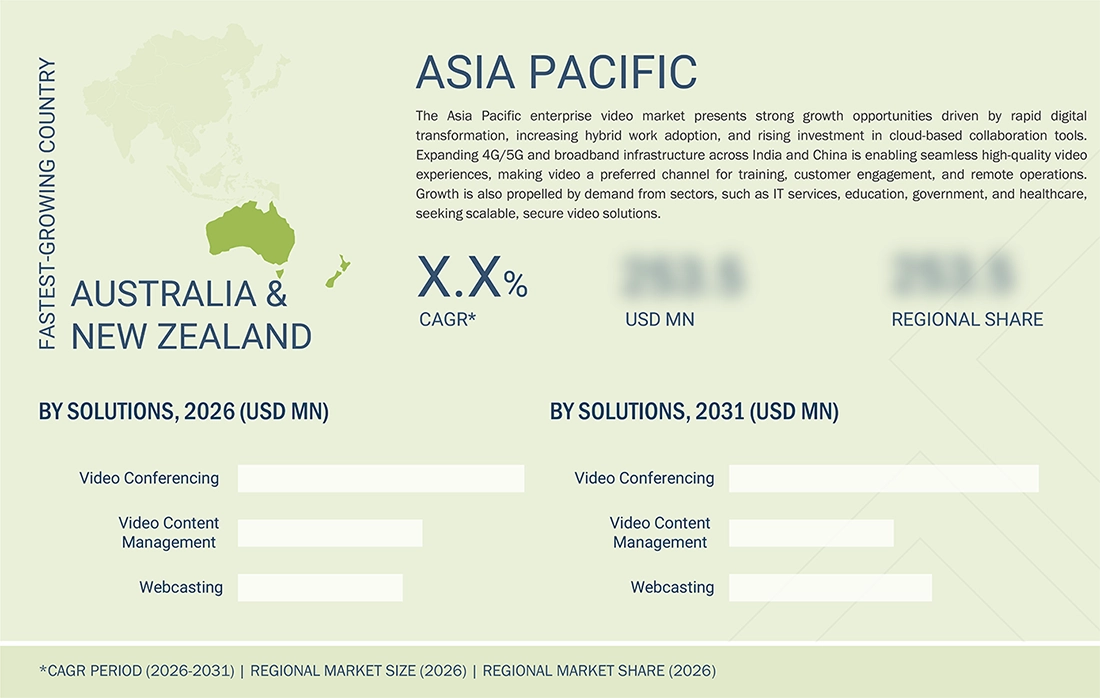
Asia Pacific to register a CAGR of 12.6% in the enterprise video market
Asia Pacific is expected to register the highest growth rate in the global enterprise video market due to the rapid pace of digital transformation across emerging and developed economies in the region. The increase in broadband and 5G infrastructure in Asia Pacific nations such as China, Japan, and Australia & New Zealand is supporting the delivery of high-quality video communication services to enterprises in the region. Additionally, government initiatives such as the Japan Ministry of Internal Affairs and Communications and the Digital Economy Strategy of Australia are supporting the adoption of digital workplaces and connectivity initiatives, which are likely to drive the adoption of enterprise video solutions in the Asia Pacific region. Similarly, technology companies such as Alibaba Cloud, Tencent, Microsoft, Zoom, and Cisco are investing in Asia Pacific, focusing on delivering cloud infrastructure and digital collaboration solutions to enterprises.
ENTERPRISE VIDEO MARKET: COMPANY EVALUATION MATRIX
In the enterprise video market, Microsoft (Star) leads with its integrated collaboration environment, including Microsoft Teams and integration with Microsoft 365. Additionally, its use of artificial intelligence, security framework, and global customer base in regulated industries also contributes to its leadership in the market. Amazon Web Services (Emerging Leader) is gradually building its presence in the market through its scalable infrastructure and media services designed specifically for the enterprise environment. With increased investments in artificial intelligence, media, and cloud-based collaboration, AWS is building its presence and competitiveness in the market.
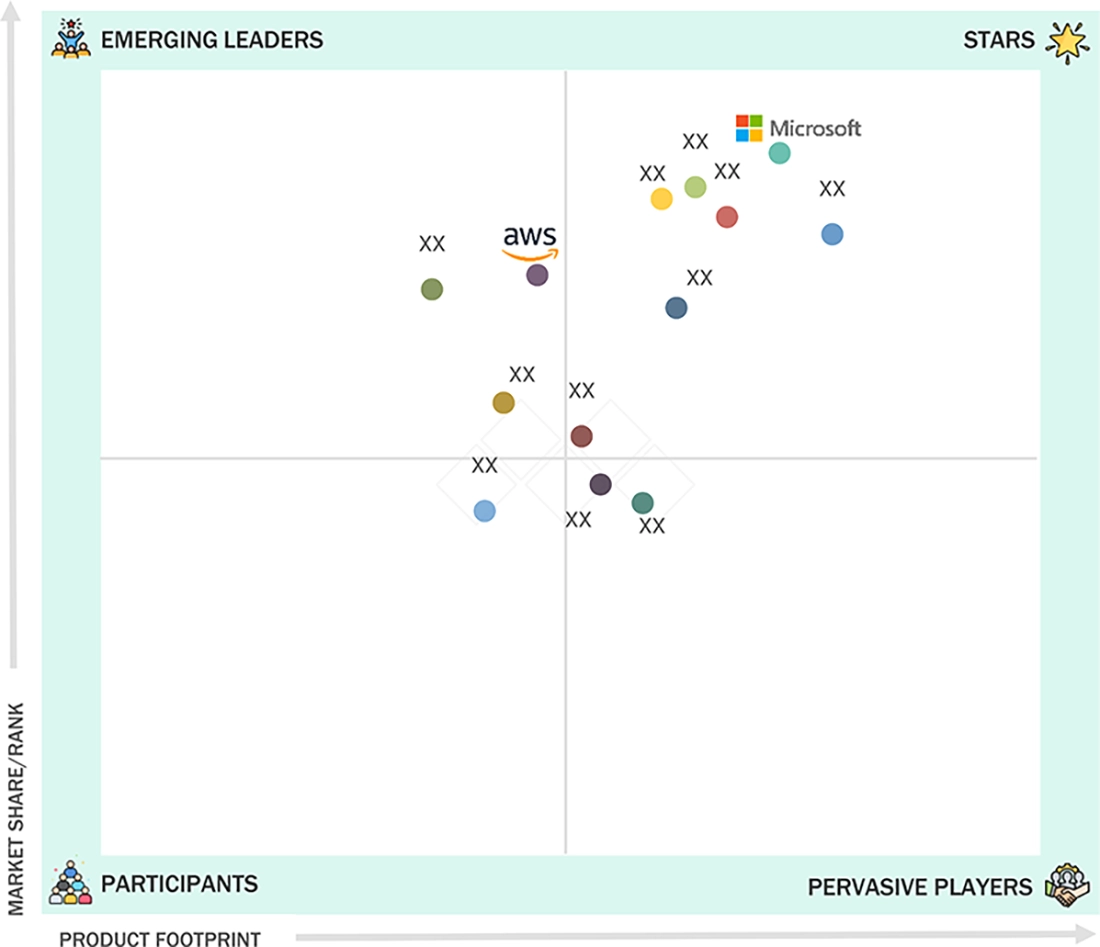
Source: Secondary Research, Interviews with Experts, MarketsandMarkets Analysis
KEY MARKET PLAYERS
- IBM (US)
- Zoom (US)
- Microsoft (US)
- Google (US)
- Avaya (US)
- AWS (US)
- Cisco (US)
- Poly (US)
- Adobe (US)
- GoTo (US)
- RingCentral (US)
- MediaPlatform (US)
- Notified (Sweden)
- Kollective Technology (US)
- Haivision (Canada)
- Kaltura (US)
- On24 (US)
- Enghouse System (Canada)
- Brightcove (US)
- Vidimoz (US)
- Panopto (US)
- Vbrick (US)
- Sonic Foundry (US)
- Qumu (US)
- Dalet Digital Media Systems (France)
MARKET SCOPE
| REPORT METRIC | DETAILS |
|---|---|
| Market Size in 2025 (Value) | USD 25.80 Billion |
| Market Size in 2026 (Value) | USD 27.97 Billion |
| Market Forecast in 2031 (Value) | USD 42.23 Billion |
| CAGR | 8.6% |
| Years Considered | 2020–2031 |
| Base Year | 2025 |
| Forecast Period | 2026–2031 |
| Units Considered | USD Billion |
| Report Coverage | Revenue forecast, company ranking, competitive landscape, growth factors, and trends |
| Segments Covered |
|
| Regions Covered | North America, Europe, Asia Pacific, Middle East & Africa, Latin America |
WHAT IS IN IT FOR YOU: ENTERPRISE VIDEO MARKET REPORT CONTENT GUIDE
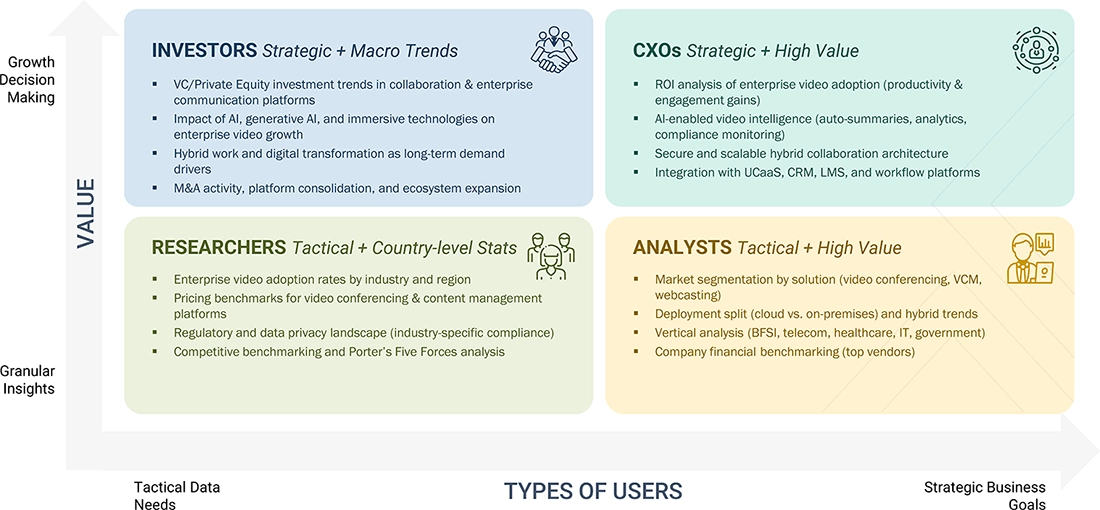
DELIVERED CUSTOMIZATIONS
We have successfully delivered the following deep-dive customizations:
| CLIENT REQUEST | CUSTOMIZATION DELIVERED | VALUE ADDS |
|---|---|---|
| Enterprise Collaboration & IT Teams |
|
|
| Telecom Operator |
|
|
| Media, Marketing & Corporate Communication Teams |
|
|
| Enterprise IT Modernization Teams |
|
|
RECENT DEVELOPMENTS
- November 2025 : Kaltura signed a definitive agreement to acquire eSelf.ai to expand its AI-powered video capabilities. The acquisition integrates conversational, photorealistic avatar technology into Kaltura’s AI Video Experience Cloud to enable immersive virtual agents for training, marketing, support, and employee engagement.
- September 2025 : Kollective partnered with movingimage to enhance enterprise video delivery and streaming performance. The integration embeds Kollective’s eCDN technology into the movingimage platform, enabling organizations to stream large-scale live events and leadership communications without overloading corporate networks. This collaboration improves scalability, network efficiency, and analytics visibility for enterprise video communications.
- May 2025 : Brandlive acquired MediaPlatform to strengthen its capabilities in enterprise town halls, webinars, and large-scale corporate video communications. The acquisition integrates MediaPlatform’s high-scale streaming infrastructure with Brandlive’s creative production and video engagement tools. This move expands Brandlive’s reach into global and highly regulated industries while reinforcing its strategy to enhance business-to-employee (B2E) communication experiences.
Table of Contents
 Exclusive indicates content/data unique to MarketsandMarkets and not available with any competitors.
Methodology
This research study involved extensive secondary sources, directories, and databases, such as Bloomberg BusinessWeek, EconoTimes, and Factiva, to identify and collect information useful for this technical, market-oriented, and commercial study of the enterprise video market. The global enterprise video market size is obtained by evaluating its penetration among the major vendors and their offerings in this market. A few startups and private companies were interviewed to gain better visibility and in-depth knowledge of the market across regions. In addition, a few government associations, public sources, conferences, webinars, journals, magazines, articles, and MarketsandMarkets internal repositories were referred to arrive at the actual market size.
Secondary Research
The market size of companies offering enterprise video and services was determined based on secondary data from paid and unpaid sources. It was also arrived at by analyzing the product portfolios of major companies and rating the companies based on their performance and quality.
Several sources were consulted during the secondary research phase to locate and gather data for this investigation. Annual reports, press announcements, investor presentations, white papers, journals, certified publications, and articles by renowned writers, directories, and databases were examples of secondary sources. In addition, information was gathered from additional secondary sources, including blogs, government websites, journals, and vendor websites. Furthermore, data on national spending on enterprise video was taken directly from the relevant sources. To identify the key players based on solutions, services, market classification, and segmentation according to offerings of the major players, industry trends related to offerings, users, and regions, and the key developments from both market- and technology-oriented perspectives, secondary research was primarily used to obtain the critical information related to the industry's value chain and supply chain.
Primary Research
Various sources from the supply and demand sides were questioned during the primary research process to gather qualitative and quantitative market data. Chief Experience Officers (CXOs), Vice Presidents (VPs), directors from the business development, marketing, and product development/innovation teams; related influential executives from enterprise video vendors, industry associations, and independent consultants; and essential opinion leaders were among the primary sources from the supply side.
Insights such as market statistics, the most recent disruptive trends, newly adopted use cases, information on income generated by goods and services, market segmentation, market size estimations, market predictions, and data triangulation were gathered through primary interviews. My understanding of numerous trends in technology, offerings, end users, and geographical areas has also improved thanks to primary research. Demand-side stakeholders were interviewed to gain insight into the buyer's viewpoint regarding suppliers, products, service providers, and their current use, which could impact the enterprise video market. These stakeholders included Chief Information Officers (CIOs), Chief Technology Officers (CTOs), Chief Security Officers (CSOs), and project teams working on digital initiatives.
To know about the assumptions considered for the study, download the pdf brochure
Market Size Estimation
The size of the enterprise video market, as well as the sizes of several dependent subsegments, were estimated and validated using both top-down and bottom-up methods. The following information was part of the research technique utilized to determine the market size:
- Through secondary research, the major market players were located, and primary and secondary research was used to calculate their respective revenue contributions in each region.
- Throughout the process, annual and financial reports from leading market players were examined, and in-depth interviews with directors, CEOs, VPs, and marketing executives were conducted to gather meaningful insights.
- Primary sources were used to verify all percentage splits and breakups, which were calculated using secondary sources.
- To obtain the final quantitative and qualitative data, every factor that might impact the market studied in this research study was considered, examined in great detail, confirmed by primary research, and then assessed. MarketsandMarkets provided thorough input and analysis, which helped to combine and add this data.
A comprehensive list of every vendor providing solutions in the enterprise video industry was compiled using the top-down methodology. The revenue contribution for each vendor in the market was estimated through funding, investor presentations, paid databases, annual reports, news releases, primary interviews, and investor presentations. Based on what it offered, each vendor was assessed. The total market size was calculated by summing together the enterprises' revenues. The size of the worldwide market and the degree of regional penetration of each subsegment were examined in further detail. Triangulating the markets involved using data from primary and secondary sources. The first step was getting important information from top executives, including directors, CEOs, VPs, and marketing executives. The use of enterprise video solutions by many verticals led to the development of the enterprise video market. The market numbers were further cross-checked against the current MarketsandMarkets repository to ensure validity.
The bottom-up approach identified the adoption trend of enterprise video in significant countries for regions that contribute to most of the market share. For cross-validation, the adoption trend of Enterprise video, along with different use cases concerning their business segments, was identified and extrapolated. The use cases found in other domains were given more weight in the computation. A comprehensive roster of all suppliers providing goods and services in the business video sector was compiled. The revenue contribution of all vendors in the market was estimated through funding, investor presentations, paid databases, annual reports, news releases, primary interviews, and paid databases. To determine the size of the market, vendors offering enterprise video services were taken into account. Each vendor was assessed based on what each vendor offered different user types. The total market size was calculated by summing together the revenue of all the companies. We looked at the market size and regional penetration of each subsegment.
Primary and secondary sources were used to determine the geographic divide based on these figures. A regional penetration analysis of the enterprise video market was part of the process. The socioeconomic analysis of each nation, the strategic vendor analysis of top enterprise video solutions and services providers, the regional spending on information and communications technology (ICT), and the organic and inorganic business development activities of regional and international players were all estimated using secondary research. This study ascertained and validated the precise values of the total enterprise video market size and the market sizes of its segments through the data triangulation technique and data validation through primary.
Enterprise video Market: Top-Down and Bottom-Up approaches
To know about the assumptions considered for the study, Request for Free Sample Report
Data Triangulation
The market was divided into several segments and subsegments using the previously described market size estimation procedures once the overall market size was determined. When required, market breakdown and data triangulation procedures were employed to complete the market engineering process and specify the exact figures for every market segment and subsegment. The data was triangulated by examining several variables and patterns from government entities' supply and demand sides.
Market Definition
Considering various sources and associations, MarketsandMarkets defines enterprise video as "the use of video technology within large organizations or enterprises for various purposes such as communication, training, collaboration, and marketing. It encompasses creating, distributing, and managing video content tailored specifically for internal or external audiences within the enterprise context. Enterprise video solutions often include features like live streaming, on-demand video playback, video conferencing, content management, analytics, and integration with other enterprise systems. The primary goal of enterprise video is to enhance communication, knowledge sharing, and engagement among employees, customers, partners, and other stakeholders, ultimately driving organizational productivity and effectiveness".
Key Stakeholders
- Enterprise Video Solution and Platform Vendors
- IT Developers
- Consulting Service Providers
- Telecom Operators
- Over-the-top (OTT) Players
- Cloud Service Providers
- Government Agencies
- Network and System Integrators
- Software Vendors
- Content Delivery Network Providers
- Web and Video Conferencing Service Providers
- Webcasting Service Providers
- Video Content Management Software Providers
Report Objectives
- To define, describe, and forecast the Enterprise video market based on offerings, applications, deployment model, organization size, verticals, and region
- To offer comprehensive details regarding the primary variables impacting the market's growth (drivers, restraints, opportunities, and challenges)
- To determine the high-growth market sectors to assess the opportunities for stakeholders in the market
- To forecast the market size for five major regions—North America, Europe, Asia Pacific, the Middle East & Africa, and Latin America
- To analyze the subsegments of the market concerning individual growth trends, prospects, and contributions to the overall market
- To create a thorough analysis of the market's major players' profiles, market share, and fundamental skills
- To track and analyze competitive developments in the global enterprise video market, such as product enhancements, product launches, acquisitions, partnerships, and collaborations.
Available Customizations
With the given market data, MarketsandMarkets offers customizations per the company's specific needs. The following customization options are available for the report:
Product Analysis
- The product matrix provides a detailed comparison of each company's product portfolio.
Geographic Analysis
- Further breakup of the Asia Pacific market into countries contributing 75% to the regional market size
- Further breakup of the North American market into countries contributing 75% to the regional market size
- Further breakup of the Latin American market into countries contributing 75% to the regional market size
- Further breakup of the Middle Eastern & African market into countries contributing 75% to the regional market size
- Further breakup of the European market into countries contributing 75% to the regional market size
Company Information
- Detailed analysis and profiling of additional market players (up to 5)
Key Questions Addressed by the Report
What is the current size of the Enterprise Video Market?
The global Enterprise Video Market is projected to grow from USD 27.97 billion in 2026 to USD 42.23 billion by 2031, at a CAGR of 8.6% during the forecast period.
What factors are driving the growth of the Enterprise Video Market?
The market is driven by enhanced employee engagement and training, globalization and cross-border communication, the integration of AI and analytics into enterprise video platforms, and the growing demand for personalized customer experiences.
Which solution segment holds the largest share of the Enterprise Video Market?
The video conferencing segment accounts for the largest share of the Enterprise Video Market due to its widespread use for internal meetings, customer interactions, cross-border collaboration, and seamless integration with unified communications and productivity platforms.
Which region is expected to grow at the highest rate in the Enterprise Video Market?
The Asia Pacific region is expected to register the highest CAGR during the forecast period, supported by rapid enterprise digitalization, cloud infrastructure expansion, and increasing adoption of enterprise collaboration solutions across China, Japan, and Australia & New Zealand.
Which application segment is expected to grow the fastest in the Enterprise Video Market?
The Marketing & Client Engagement segment is expected to grow at the highest CAGR as organizations increasingly use webinars, virtual product launches, online demonstrations, and video-based customer engagement to support digital-first business strategies.
Who are the major players in the Enterprise Video Market?
Key companies operating in the Enterprise Video Market include IBM, Microsoft, Google, Cisco, Zoom, Amazon Web Services (AWS), Adobe, and Avaya.


Personalize This Research
- Triangulate with your Own Data
- Get Data as per your Format and Definition
- Gain a Deeper Dive on a Specific Application, Geography, Customer or Competitor
- Any level of Personalization
Let Us Help You
- What are the Known and Unknown Adjacencies Impacting the Enterprise Video Market
- What will your New Revenue Sources be?
- Who will be your Top Customer; what will make them switch?
- Defend your Market Share or Win Competitors
- Get a Scorecard for Target Partners

Custom Market Research Services
We Will Customise The Research For You, In Case The Report Listed Above Does Not Meet With Your Requirements
Get 10% Free CustomisationTESTIMONIALS
- Canada Enterprise Video Market
- US Enterprise Video Market
- UK Enterprise Video Market
- Germany Enterprise Video Market
- France Enterprise Video Market
- Italy Enterprise Video Market
- China Enterprise Video Market
- Japan Enterprise Video Market
- South Africa Enterprise Video Market
- Brazil Enterprise Video Market
- Mexico Enterprise Video Market
- Rest Of Europe Enterprise Video Market
- Rest Of Asia Pacific Enterprise Video Market






Growth opportunities and latent adjacency in Enterprise Video Market