Laboratory Freezers Market

Laboratory Freezers Market by Modality (Cryopreservation; Freezer: ULTF, Plasma, Enzyme; Refrigerator: Blood Bank, Pharmacy, Chromatography), Application (Genetic, Vaccine, Biological Sample), End User (Hospital, Pharma, Cell Bank)-Global Forecast to 2031



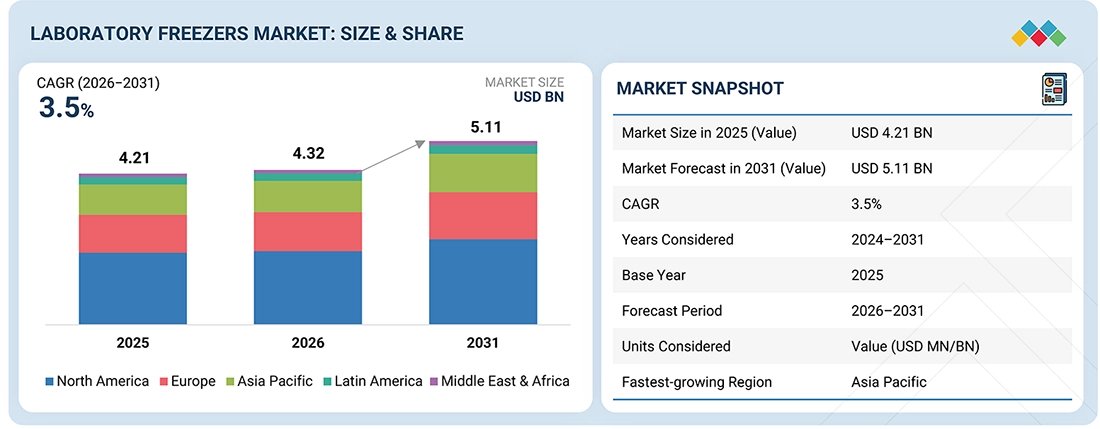
LABORATORY FREEZERS MARKET SIZE, SHARE & GROWTH SNAPSHOT
Source: Secondary Research, Interviews with Experts, MarketsandMarkets Analysis
The global laboratory freezers marketis projected to grow from USD 4.32 billion in 2026 to USD 5.11 billion by 2031, at a CAGR of 3.5% during the forecast period. The market was valued at USD 4.21 billion in 2025. Market growth is driven by expanding pharmaceutical and biotechnology research, rising vaccine and biologics production, and increasing adoption of biobanking, precision medicine, and cell and gene therapies. Pharmaceutical companies, hospitals, diagnostic laboratories, biobanks, and research institutions are increasingly deploying laboratory refrigerators, ultra-low-temperature freezers, and cryopreservation systems to maintain the integrity of temperature-sensitive samples, reagents, vaccines, cells, and tissues. The adoption of energy-efficient compressors, natural refrigerants, IoT-enabled temperature monitoring, cloud-based data logging, automated alarms, and predictive maintenance is further improving equipment reliability, regulatory compliance, and sample security. In addition, investments in healthcare and research infrastructure, expansion of clinical trials, and growing demand for validated cold-storage capacity are accelerating the adoption of advanced laboratory freezer solutions worldwide.
KEY TAKEAWAYS
-
MARKET SNAPSHOT:
Base Year Market Size (2025): USD 4.21 Billion
Current Market Size (2026): USD 4.32 Billion
Forecast Market Size (2031): USD 5.11 Billion
CAGR (2026–2031): 3.5% -
SEGMENT LEADERSHIP:
Regional Growth: Asia Pacific is expected to register the highest CAGR of 4.2% during the forecast period.
Application Leader: Pharmaceutical & vaccine storage segment accounted for the largest share of 32.0% of the laboratory freezers market in 2025.
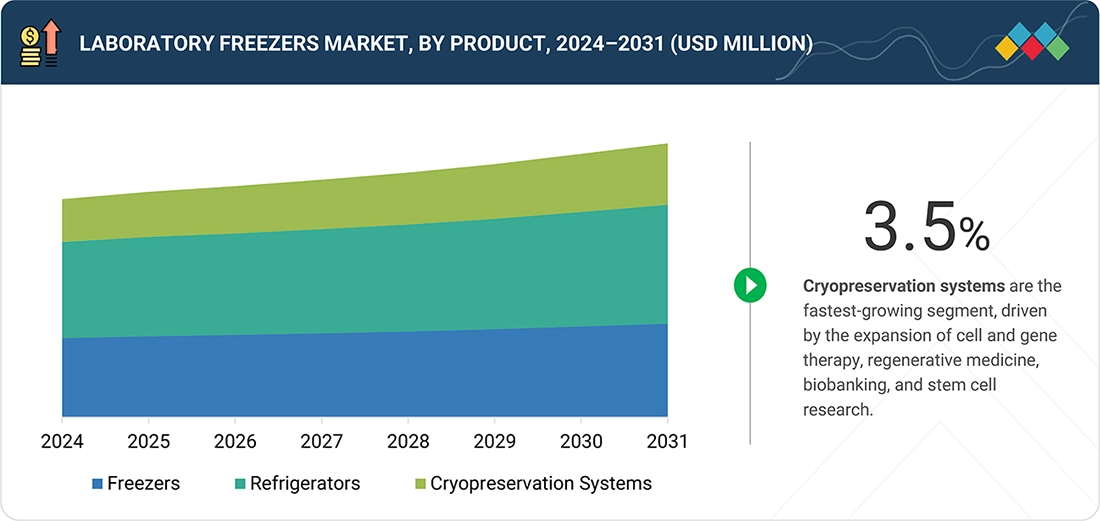
Product Leader: Cryopreservation systems segment is expected to register the highest CAGR of 5.4% during the forecast period.
End User Leader: Clinical & pathology laboratories are expected to register the highest CAGR of 4.4% during the forecast period. -
MARKET OUTLOOK & COMPETITIVE LANDSCAPE:
Thermo Fisher Scientific (US), Haier Biomedical (China), and Eppendorf SE (Germany) are driving the laboratory freezers market through energy-efficient refrigeration, advanced temperature control, and connected monitoring solutions. They offer refrigerators, ultra-low-temperature freezers, and cryogenic systems for storing vaccines, biologics, clinical samples, cells, and tissues. Product launches, partnerships, acquisitions, and expanding service networks are strengthening their global market presence.
A key growth trend in the laboratory freezers market is the increasing integration of IoT-enabled monitoring and energy-efficient refrigeration technologies to support reliable and sustainable storage of temperature-sensitive materials. Pharmaceutical and biotechnology companies, hospitals, diagnostic laboratories, biobanks, and research institutions are increasingly adopting smart freezers equipped with real-time temperature monitoring, automated alarms, cloud-based data logging, remote access, and predictive maintenance to maintain sample integrity, minimize equipment downtime, and strengthen regulatory compliance. This trend is particularly driven by the expanding storage requirements for vaccines, biologics, clinical specimens, genomic samples, and cell and gene therapies, where uninterrupted temperature control, complete traceability, and long-term sample stability are critical.
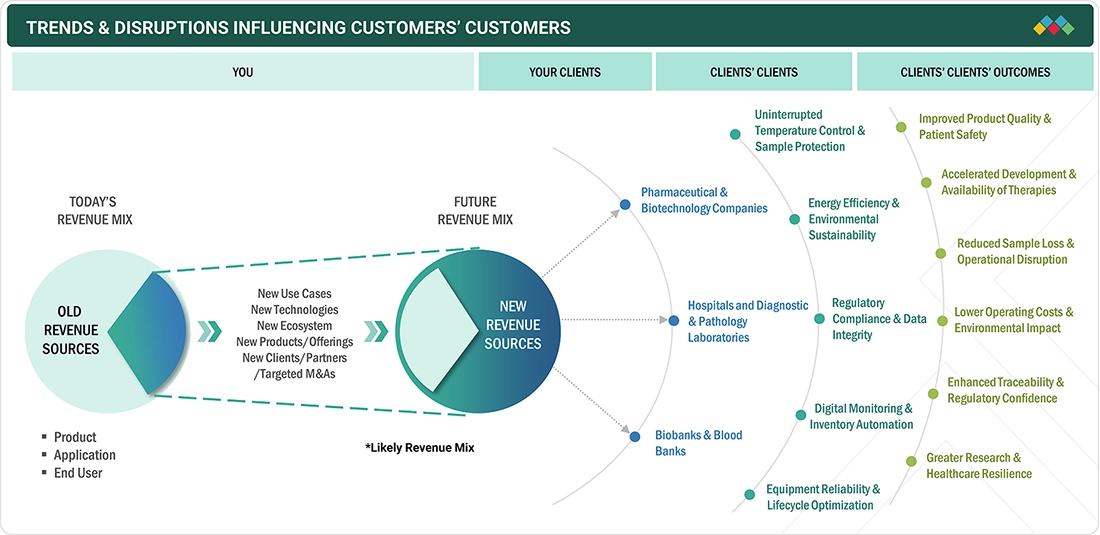
TRENDS & DISRUPTIONS IMPACTING CUSTOMERS' CUSTOMERS
The trends and disruptions affecting customers in the laboratory freezers market are centered on the growing need for secure, traceable, energy-efficient, and uninterrupted storage of temperature-sensitive vaccines, biologics, cell and gene therapies, clinical specimens, research samples, and diagnostic reagents. End users increasingly expect pharmaceutical and biotechnology companies, hospitals, diagnostic laboratories, biobanks, and research institutions to maintain consistent sample quality, regulatory compliance, and rapid access to stored materials. This is encouraging laboratory freezer manufacturers and service providers to adopt IoT-enabled temperature monitoring, automated alarm systems, cloud-based data logging, predictive maintenance, RFID/barcode inventory tracking, and energy-efficient refrigeration technologies. Meanwhile, stricter validation requirements, refrigerant regulations, sustainability targets, and risks related to power failures and supply-chain disruptions are driving investments in natural refrigerants, backup systems, redundant storage capacity, and stronger service networks. These developments are improving sample integrity, reducing energy consumption and equipment downtime, strengthening compliance, and accelerating the adoption of advanced ultra-low-temperature and cryopreservation systems.
Source: Secondary Research, Interviews with Experts, MarketsandMarkets Analysis
MARKET DYNAMICS

Level
-
Expanding life science research and temperature-sensitive biologics storage

-
Rising vaccine and biopharmaceutical production


Level
-
High acquisition and lifecycle costs

-
Infrastructure and affordability limitations


Level
-
Modernization of healthcare and research infrastructure in emerging markets

-
Adoption of connected monitoring and intelligent inventory systems


Level
-
Maintaining temperature uniformity and sample integrity

-
Meeting stringent validation and documentation requirements

Source: Secondary Research, Interviews with Experts, MarketsandMarkets Analysis
Driver: Expanding life science research and temperature-sensitive biologics storage
The market for laboratory freezers is experiencing significant growth, largely fueled by the expanding research and development activities within the pharmaceutical and biotechnology sectors. This increase is particularly evident in the production of vaccines and biologics, as well as in the rising demand for biobanking and genomic research initiatives. These areas necessitate the reliable and secure storage of temperature-sensitive samples, including reagents, vaccines, cells, and various types of tissues. As pharmaceutical companies and research institutions delve deeper into the realms of precision medicine and personalized therapies, the need for efficient storage solutions grows. Laboratory freezers are designed to provide stable, low-temperature environments that ensure the integrity and viability of biological materials over time. The ongoing emphasis on innovative treatments and vaccines, especially in response to global health challenges, further accelerates the demand for advanced freezer technologies that cater to these critical requirements in various research and clinical settings.
Restraint: High acquisition and lifecycle costs
Advanced ultra-low-temperature and cryogenic freezers require substantial upfront investment in equipment procurement, installation, temperature mapping, validation, remote monitoring systems, backup power infrastructure, ventilation, and facility modifications. Their continuous operation also results in high electricity consumption, while periodic calibration, preventive maintenance, compressor servicing, refrigerant management, software support, and replacement of critical components further increase the total cost of ownership. These financial requirements may delay replacement cycles and encourage smaller laboratories to retain conventional or older freezer systems, thereby restricting the adoption of advanced cold-storage technologies.
Opportunity: Modernization of healthcare and research infrastructure in emerging markets
Growing public- and private-sector investments in pharmaceutical and vaccine manufacturing, diagnostic networks, public-health laboratories, hospitals, universities, biobanks, and biomedical research centers are expanding the need for reliable cold-storage infrastructure across emerging markets. The establishment of new laboratories and modernization of existing facilities are increasing demand for laboratory refrigerators, ultra-low-temperature freezers, and cryopreservation systems to support sample storage, disease surveillance, clinical research, and biologics development. Local manufacturing, distributor partnerships, regional service networks, leasing and rental models, and bundled maintenance contracts can lower initial costs, improve equipment availability and uptime, and accelerate adoption among underserved healthcare and research facilities.
Challenge: Maintaining temperature uniformity and sample integrity
Regulated laboratories must perform temperature mapping, periodic calibration, continuous monitoring, alarm verification, preventive maintenance, and equipment requalification while maintaining complete audit trails and documented contingency procedures. Compliance with Good Laboratory, Manufacturing, Clinical, and Distribution Practices requires validated freezer systems, reliable data-management platforms, trained personnel, and accurate documentation, increasing operational complexity, compliance costs, and administrative workloads for end users.
LABORATORY FREEZERS MARKET: COMMERCIAL USE CASES ACROSS INDUSTRIES
| COMPANY | USE CASE DESCRIPTION | BENEFITS |
|---|---|---|
 |
Provides laboratory, clinical, pharmacy, blood-bank, and ultra-low-temperature freezers for storing vaccines, pharmaceuticals, reagents, enzymes, biological specimens, cell lines, and research samples. | Maintains temperature uniformity, protects sample integrity, enables faster temperature recovery, supports regulatory compliance, and lowers energy consumption and operating costs. |
 |
Offers CryoCube ultra-low-temperature freezers for the long-term storage of biological samples, cell lines, DNA/RNA, proteins, microbial cultures, and other valuable research materials at temperatures as low as −86°C. | Delivers secure sample preservation, rapid temperature recovery, high storage capacity, improved traceability, ergonomic sample access, and reduced energy consumption. |
 |
Supplies biomedical refrigerators, −30°C freezers, −80°C/−86°C ULT freezers, and −150°C cryogenic freezers for storing DNA, blood, tissues, stem cells, embryos, vaccines, reagents, and pharmaceutical research samples. | Supports long-term sample viability, provides stable and uniform temperatures, minimizes contamination and sample-loss risks, improves storage capacity, and reduces electricity costs. |
 |
Provides laboratory refrigerators, biomedical freezers, ULT freezers, and liquid-nitrogen storage systems for preserving vaccines, pharmaceuticals, blood products, biological specimens, cell lines, tissues, genetic materials, and biobank samples across hospitals, laboratories, and research facilities. | Maintains stable storage conditions from +8°C to −196°C, protects sample integrity, enables real-time temperature monitoring and remote alarms, improves sample traceability, supports cold-chain compliance, and reduces energy consumption and sample-loss risks. |
Logos and trademarks shown above are the property of their respective owners. Their use here is for informational and illustrative purposes only.
MARKET ECOSYSTEM
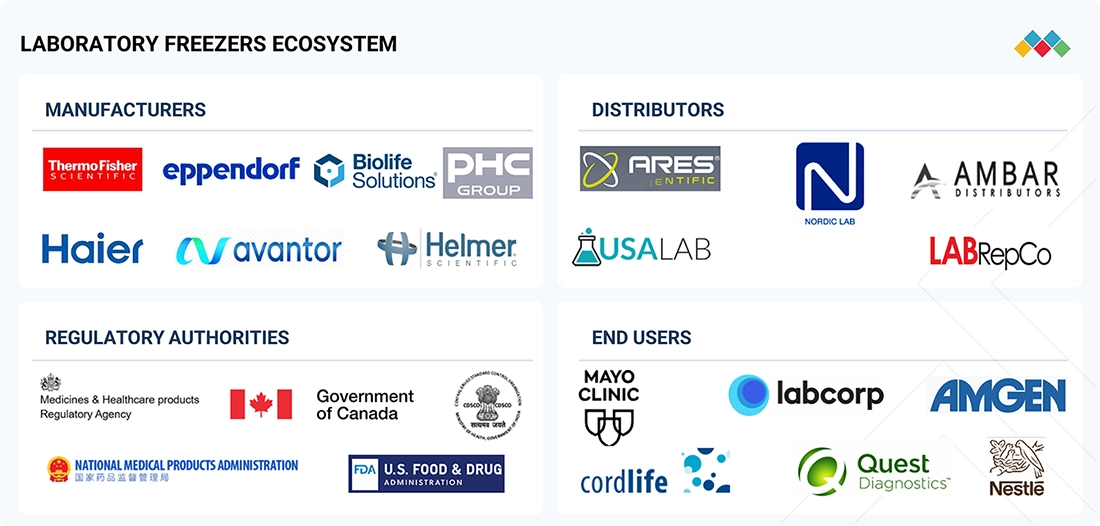
The laboratory freezers ecosystem is built around a collaborative network of manufacturers, distributors, regulatory authorities, and end users that supports the safe storage of temperature-sensitive biological and pharmaceutical materials. Manufacturers, including Thermo Fisher Scientific, Eppendorf, PHC Holdings, BioLife Solutions, Haier Biomedical, Avantor, and Helmer Scientific, develop laboratory refrigerators, biomedical freezers, ultra-low-temperature freezers, and cryogenic storage systems with advanced temperature control and monitoring capabilities. Distributors such as Ares Scientific, Nordic Lab, Ambar Distributors, USA Lab, and LabRepCo improve product availability, installation, and after-sales support. Regulatory authorities, including the MHRA, Health Canada, CDSCO, NMPA, and US FDA, oversee applicable safety, quality, registration, and compliance requirements. These solutions are adopted by end users such as Mayo Clinic, Labcorp, Amgen, Cordlife, Quest Diagnostics, and Nestlé for storing clinical specimens, vaccines, biologics, cells, tissues, reagents, and research samples, creating an interconnected ecosystem focused on sample integrity, regulatory compliance, and operational reliability.
Logos and trademarks shown above are the property of their respective owners. Their use here is for informational and illustrative purposes only.
MARKET SEGMENTS
Source: Secondary Research, Interviews with Experts, MarketsandMarkets Analysis
Laboratory Freezers Market, by Product
Laboratory refrigerators hold the largest market share by product due to their extensive use for routine storage of vaccines, pharmaceutical products, diagnostic reagents, blood samples, culture media, enzymes, and other temperature-sensitive materials at controlled temperatures, generally between 2°C and 8°C. Compared with ultra-low-temperature and cryogenic freezers, refrigerators have a broader application base across pharmaceutical and biotechnology companies, hospitals, diagnostic and pathology laboratories, blood banks, universities, and research institutions. Their relatively lower purchase price, energy consumption, maintenance requirements, and infrastructure needs support large-scale installations and frequent replacement. Additionally, growth in vaccine programs, clinical testing, pharmaceutical quality-control activities, and laboratory automation continues to strengthen demand for refrigerators with uniform cooling, continuous temperature monitoring, data logging, and alarm capabilities.
Laboratory Freezers Market, by Application
The pharmaceutical & vaccine storage segment holds the largest share of the laboratory freezers market due to the high volume of temperature-sensitive vaccines, biologics, pharmaceutical formulations, active ingredients, reference standards, and diagnostic reagents requiring controlled storage across research, manufacturing, quality-control, and distribution activities. Expanding vaccine programs, rising biologics production, increasing pharmaceutical R&D, and stringent requirements for temperature stability and continuous monitoring are driving the installation of laboratory refrigerators and freezers. The need to prevent product degradation, maintain efficacy, comply with Good Manufacturing and Distribution Practices, and manage large inventories across pharmaceutical companies, hospitals, public-health facilities, and vaccination centers further supports the segment’s leading position.
Laboratory Freezers Market, by End User
Pharmaceutical & biotechnology companies hold the largest share of the laboratory freezers market due to their extensive need to store temperature-sensitive vaccines, biologics, drug candidates, active ingredients, cell lines, enzymes, reagents, clinical-trial samples, and reference standards across discovery, development, manufacturing, and quality-control workflows. Expanding pharmaceutical R&D, growing production of biologics and biosimilars, and increasing development of cell and gene therapies are driving the installation of laboratory refrigerators, ultra-low-temperature freezers, and cryopreservation systems. High sample volumes, stringent regulatory requirements for temperature control and traceability, and the need for validated storage, continuous monitoring, backup capacity, and inventory management further support the segment’s leading market position.
REGION
Asia Pacific to be fastest-growing region in laboratory freezers market during forecast period
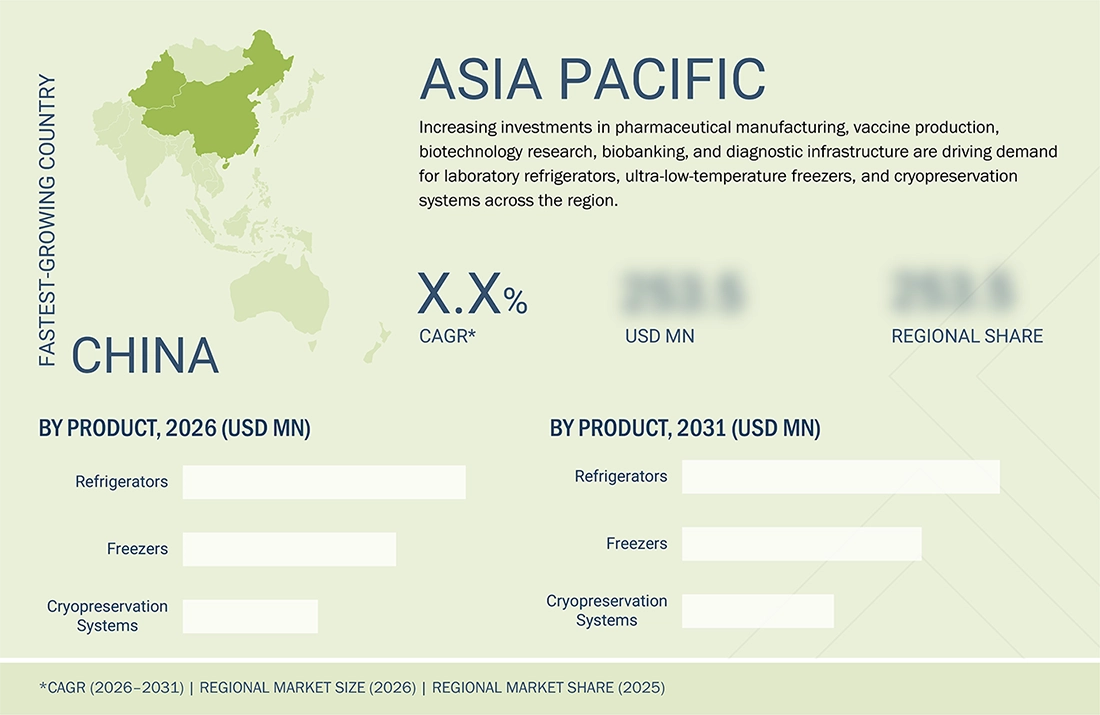
The Asia Pacific is emerging as the fastest-growing market for laboratory freezers, driven by the rapid expansion of pharmaceutical and biotechnology manufacturing, increasing investments in vaccine and biologics production, and the development of diagnostic laboratories, biobanks, and biomedical research facilities across China, India, Japan, South Korea, and Singapore. Government initiatives supporting domestic pharmaceutical production, immunization programs, precision medicine, and life-science research are increasing the need for reliable storage of vaccines, clinical specimens, reagents, cells, tissues, and other temperature-sensitive materials. The expansion of contract research and manufacturing organizations, rising clinical-trial activity, and increasing compliance with international quality and cold-storage standards are further accelerating the installation of laboratory refrigerators, ultra-low-temperature freezers, and cryopreservation systems. Additionally, improving healthcare expenditure, local manufacturing, and expanding distribution and service networks are expected to enhance equipment accessibility and fuel regional market growth.
LABORATORY FREEZERS MARKET: COMPANY EVALUATION MATRIX
The competitive landscape of the laboratory freezers market indicates a moderately fragmented market, with vendors positioned according to their market share/rank and product footprint. Thermo Fisher Scientific occupies the Stars quadrant, supported by its broad portfolio of laboratory refrigerators, plasma freezers, ultra-low-temperature freezers, extensive global distribution network, strong technological capabilities, and well-established customer base. BioLife Solutions is positioned among the Emerging Leaders, reflecting its growing presence in ultra-low-temperature and cryogenic storage solutions for cell and gene therapy, biobanking, and other advanced biopreservation applications, although its overall product footprint remains narrower than that of the market leader. Several companies fall within the Pervasive Players quadrant, indicating broad product offerings but comparatively lower market shares, with opportunities to strengthen their position through geographic expansion, digital monitoring capabilities, and energy-efficient product innovation. Meanwhile, numerous vendors are positioned in the Participants quadrant, representing regional or specialized suppliers that compete through customized products, competitive pricing, and targeted laboratory applications. Overall, the market is characterized by strong established players and multiple developing competitors, with growing demand for energy-efficient refrigeration, natural refrigerants, IoT-enabled monitoring, predictive maintenance, and reliable ultra-low-temperature storage expected to drive innovation, partnerships, and competitive differentiation.
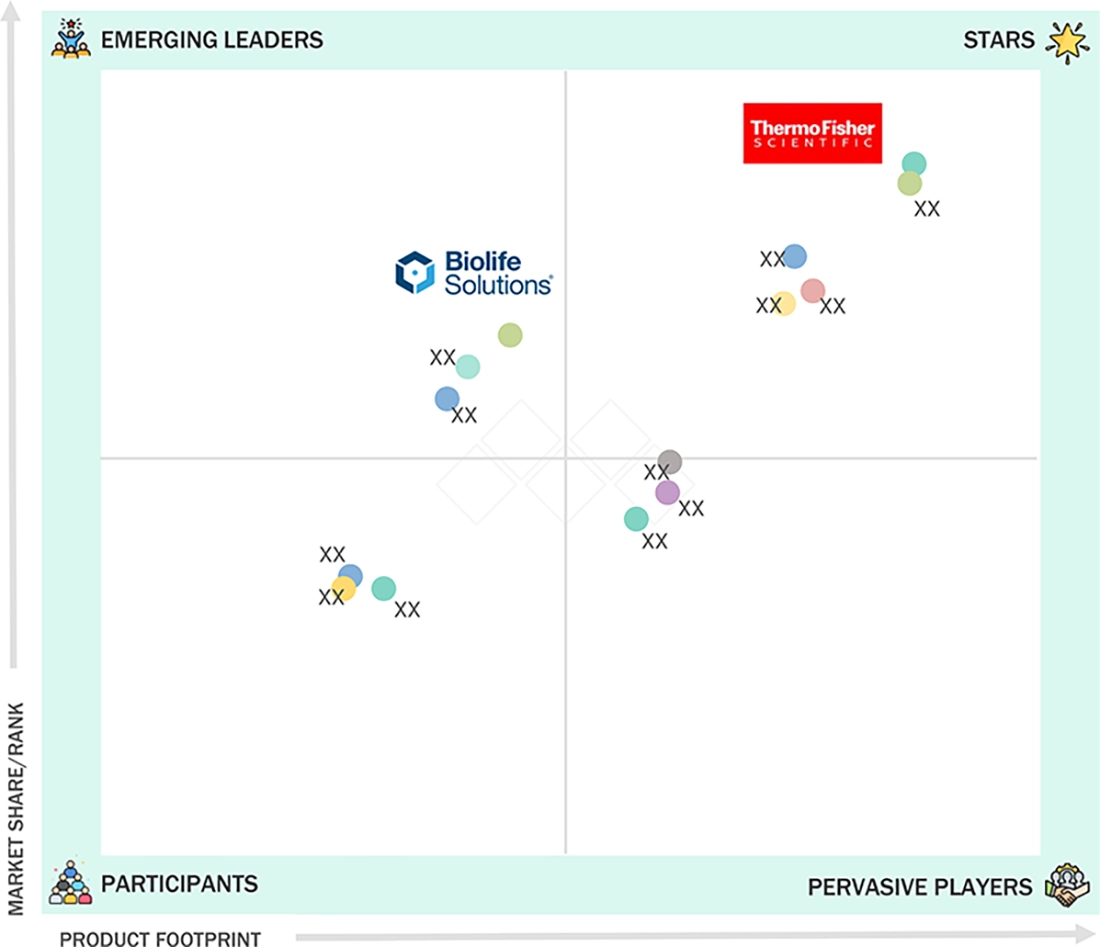
Source: Secondary Research, Interviews with Experts, MarketsandMarkets Analysis
KEY MARKET PLAYERS
MARKET SCOPE
| REPORT METRIC | DETAILS |
|---|---|
| Market Size in 2025 (Value) | USD 4.21 Billion |
| Market Forecast in 2026 (Value) | USD 4.32 Billion |
| Market Forecast in 2031 (value) | USD 5.11 Billion |
| Growth Rate | CAGR of 3.5% from 2026–2031 |
| Years Considered | 2024–2031 |
| Base Year | 2025 |
| Forecast Period | 2026–2031 |
| Units Considered | Value (USD Billion) |
| Report Coverage | Revenue Forecast, Company Ranking, Competitive Landscape, Growth Factors, Trends |
| Segments Covered |
|
| Country Covered | North America, Europe, Asia Pacific, Latin America, Middle East & Africa |
WHAT IS IN IT FOR YOU: LABORATORY FREEZERS MARKET REPORT CONTENT GUIDE
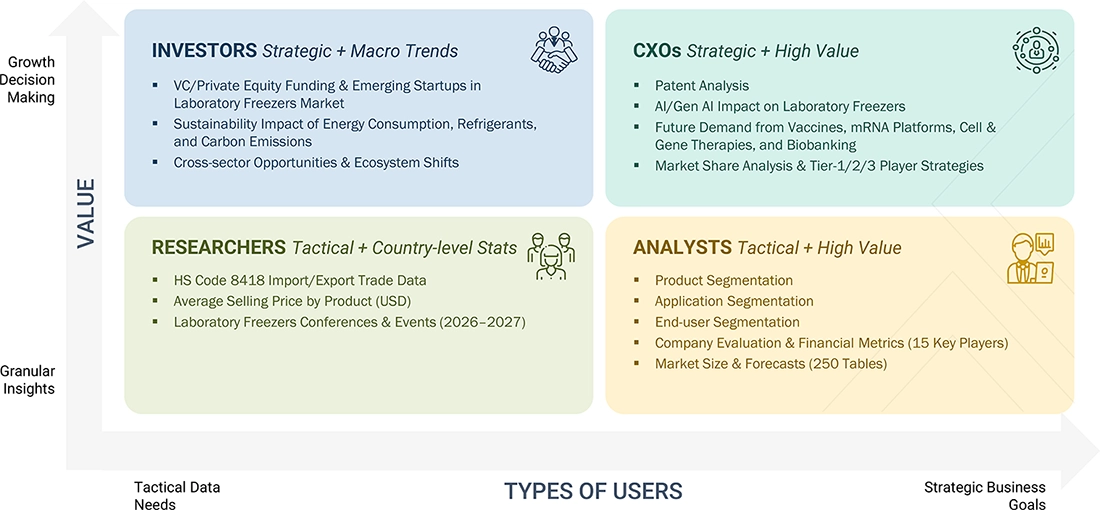
DELIVERED CUSTOMIZATIONS
We have successfully delivered the following deep-dive customizations:
| CLIENT REQUEST | CUSTOMIZATION DELIVERED | VALUE ADDS |
|---|---|---|
| Laboratory Freezer Manufacturers |
|
|
RECENT DEVELOPMENTS
- January 2026 : PHC Corporation launched the PHCbi TwinGuard ECO 703VXH ultra-low-temperature freezer to enhance energy efficiency and research-sample protection. The launch strengthened PHC’s sustainable, high-reliability ULT storage portfolio for biobanks, pharmaceutical companies, and research laboratories.
- June 2025 : Haier Biomedical launched its UltraEco ULT freezer, featuring ENERGY STAR certification and daily energy consumption of 4.16 kWh, and showcased a hydrocarbon-refrigerant-based −150°C cryogenic freezer. The company also presented RFID-enabled storage solutions designed to improve sample identification, traceability, operational efficiency, and security.
- March 2025 : Haier Biomedical announced that selected flagship products achieved certification under the EU Medical Device Regulation (EU MDR 2017/745), confirming compliance with applicable European safety and performance requirements.
Table of Contents
 Exclusive indicates content/data unique to MarketsandMarkets and not available with any competitors.
Methodology
The market was assessed through a balanced combination of primary and secondary research, with a detailed evaluation of key market variables influencing small, medium, and large enterprises. Primary interviews with industry experts across the value chain were conducted to validate the research findings, assumptions, and market estimates. The overall market size was determined using both top-down and bottom-up estimation approaches, ensuring robust and reliable analysis. The study further evaluates market segments, emerging trends, regulatory developments, competitive landscape, and the strategic initiatives adopted by leading market participants. Finally, data triangulation was applied to reconcile findings from multiple sources and methodologies, resulting in accurate market size estimates, while primary research was used throughout the study to validate key assumptions and hypotheses.
Secondary Research
During the study, secondary research was conducted using a range of sources, including directories and databases such as Bloomberg Businessweek, D&B Hoovers, and Factiva. Additional materials included white papers, annual reports, SEC filings, and investor presentations. This research approach was adopted to collect and analyze data that provides comprehensive, technical, and market-focused insights into the Laboratory Freezers market. The findings offer insights into key players and market segmentation, informed by recent industry trends and significant developments. A database comprising leading industry figures was also created as part of this secondary research.
Primary Research
Primary research involved activities designed to gather both qualitative and quantitative data. A variety of individuals from both the supply and demand sides were interviewed during this phase. On the supply side, key figures such as CEOs, vice presidents, directors of marketing and sales, directors of technology and innovation, and other important leaders were interviewed by industry experts. On the demand side, primary sources included academic institutions and research organizations. This research aimed to validate market segmentation, identify prominent market participants, and gain insights into significant industry trends and market dynamics through a real-world primary study.
A breakdown of the primary respondents is provided below:
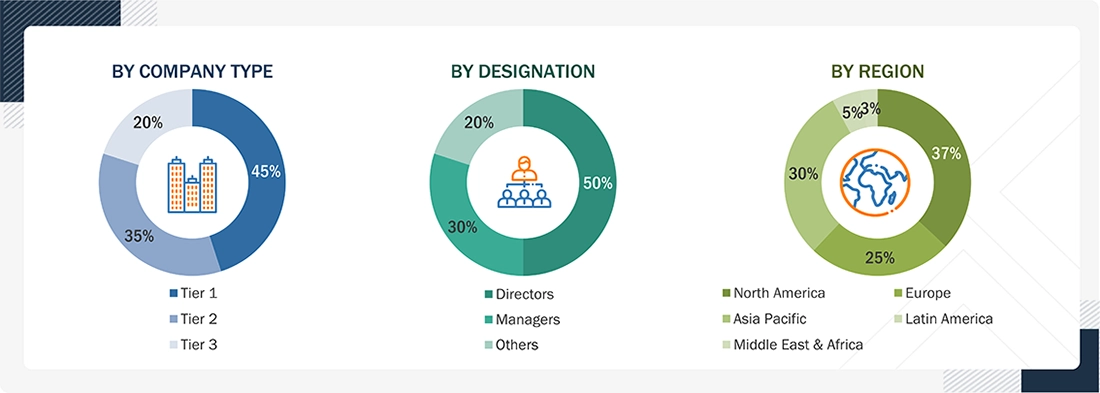
Note 1: Others include distributors, suppliers, product managers, business development managers, marketing managers, and sales managers.
Note 2: Companies are categorized into tiers based on their total revenue. As of 2025, Tier 1 = >USD 1,000 million, Tier 2 = USD 500–1,000 million, and Tier 3 = <USD 500 million
To know about the assumptions considered for the study, download the pdf brochure
Market Size Estimation
This report provides an analysis of the global laboratory freezers market size by reviewing the revenue shares of prominent companies. Key players with significant market shares were identified through secondary research, and their revenues from laboratory freezer sales were calculated and subsequently validated through primary research. The secondary research included an analysis of annual and financial reports from leading market participants. Meanwhile, the primary research involved in-depth interviews with key thought leaders, such as directors, CEOs, and marketing executives.
To calculate the global market value, segmental revenues were determined based on the revenue mapping of service and product providers. The process involved the following steps:
- Generating a list of key players that operate in the laboratory freezers market at the regional or global levels
- Mapping the products of manufacturers of laboratory freezers and related product lines at the regional level
- Mapping the revenues of listed players through the sales of laboratory freezers and related products
- Mapping the revenues of major players to cover at least ~40% of the global market share as of 2025
- Extrapolating the mapped revenues of players to arrive at the global market value for the respective segment
- Summing up the market value for all segments and subsegments to achieve the actual value of the global laboratory freezers market.
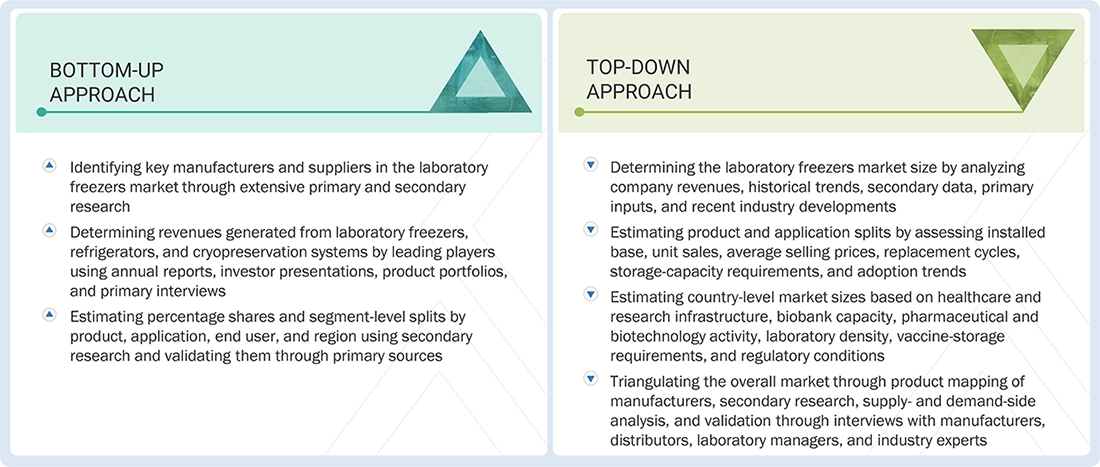
Data Triangulation
Following the estimation of the overall market size, the laboratory freezers market was segmented into various subsegments. The market engineering process was completed through data triangulation and detailed market segmentation to generate accurate estimates for each segment and subsegment. This process involved evaluating key trends and factors from both the demand and supply sides. The market estimates were further validated using a combination of top-down and bottom-up approaches to ensure the accuracy and consistency of the findings.
Market Definition
The laboratory freezers market comprises freezers, refrigerators, and cryopreservation systems designed to maintain controlled low-temperature conditions for storing and preserving genetic materials, pharmaceuticals, vaccines, biological samples, and testing materials. These products are used across hospitals, clinical and pathology laboratories, pharmaceutical and biotechnology companies, research institutes, pharmacies, cell and tissue banks, environmental and forensic laboratories, and food & beverage companies.
Key Stakeholders
- Product distributors, dealers, and service providers
- Hospitals, clinics, and pathology laboratories
- Pharmaceutical and biotechnology companies
- Contract research organizations
- Academic and research institutions
- Pharmacies and physicians’ offices
- Biobanks, blood banks, and cell and tissue banks
- Environmental and third-party testing laboratories
- Forensic and public health laboratories
- Food and beverage testing companies
- Vaccine manufacturers and immunization program operators
- Logistics, cold-chain, and sample-transportation providers
- Third-party testing laboratories
Report Objectives
- To define, describe, and forecast the size of the laboratory freezers market based on product, application, end user, and region
- To provide detailed information regarding the factors influencing the growth potential of the global laboratory freezers market (drivers, restraints, opportunities, challenges, and trends)
- To analyze micromarkets with respect to individual growth trends, prospects, and contributions to the global laboratory freezers market
- To analyze key growth opportunities in the global laboratory freezers market for key stakeholders and provide details of the competitive landscape for market leaders
- To forecast the size of market segments and/or subsegments concerning five regions: North America (US and Canada), Europe (Germany, France, the UK, Spain, Italy, and the Rest of Europe), Asia Pacific (Japan, China, India, Australia, South Korea, and the Rest of Asia Pacific), Latin America (Brazil, Mexico, and the Rest of Latin America), and the Middle East & Africa (GCC Countries and the Rest of the Middle East & Africa)
- To profile the key players in the laboratory freezers market and comprehensively analyze their market shares and core competencies
- To track and analyze the competitive developments undertaken in the global laboratory freezers market, such as product launches/approvals, agreements, expansions, collaborations, and acquisitions
Available customizations:
With the given market data, MarketsandMarkets offers customizations based on your company’s specific needs. The following customization options are available for the present global laboratory freezers market report:
Product Analysis
- Product matrix, which gives a detailed comparison of the product portfolios of the top 15 companies
Company Information
- Detailed analysis and profiling of additional market players (up to 13)
Geographic Analysis
- Further breakdown of the Rest of Europe laboratory freezers market into Russia, Belgium, the Netherlands, Switzerland, Austria, Finland, Sweden, Poland, and Portugal
- Further breakdown of the Rest of Asia Pacific laboratory freezers market into Singapore, Taiwan, New Zealand, the Philippines, Malaysia, and other Asia Pacific countries
- Further breakdown of the Rest of Latin America laboratory freezers market into Argentina, Chile, Peru, and Colombia


Personalize This Research
- Triangulate with your Own Data
- Get Data as per your Format and Definition
- Gain a Deeper Dive on a Specific Application, Geography, Customer or Competitor
- Any level of Personalization
Let Us Help You
- What are the Known and Unknown Adjacencies Impacting the Laboratory Freezers Market
- What will your New Revenue Sources be?
- Who will be your Top Customer; what will make them switch?
- Defend your Market Share or Win Competitors
- Get a Scorecard for Target Partners

Custom Market Research Services
We Will Customise The Research For You, In Case The Report Listed Above Does Not Meet With Your Requirements
Get 10% Free CustomisationTESTIMONIALS

JAYANT RAJPUROHIT
Director of Market Insights, Data and Analytics
SFI Health,
Leading Pharmaceutical Companywww.sfihealth.com/

We at SFI Health approached MarketsandMarkets for an Opportunity Assessment on "Incidence and Prevalence of Focus Indications" as we wanted to know the most attractive HCPs like Physician, Functional MD, Naturopath and Pharmacist. The project was critical for us to ensure our focus on the right target which would enable sustainable growth and profitability for SFI Health. The business insights provided exceeded our expectations and we were extremely impressed. The team at MarketsandMarkets is highly professional and detail oriented and very well understood our business needs. MarketsandMarkets offers a unique combination of expertise and dedicated engagement model. We identified 2 new products to be launched in coming months, based on the research findings provided by MarketsandMarkets. We are happy with the services and would strongly recommend MarketsandMarkets to my peers in the industry.

BEATRIZ DE LA CALLE
Head of Commercial Analytics
Qualicaps,
Leading Pharmaceutical Companywww.qualicaps.com/

We partnered with MarketsandMarkets for an assessment study on hard empty capsules. The team was extremely professional in understanding our business requirements and we received timely responses to all our queries. The market intelligence and the recommendations has met our business requirements. We were extremely impressed to see the final study results; it really exceeded our expectations. The market intelligence offered by MarketsandMarkets, and clarity on next steps will help us achieve our business objective for the Year 2021. We are happy with the services and would strongly recommend MarketsandMarkets to my peers in the industry.

Bob Williams,
Senior Director Business Development & Innovation
Bracco Diagnostics Inc.,
Italian Multinational in life sciences sector and a World Leader in imaging diagnosticsimaging.bracco.com/us-en
We were pleased with targeted insights that MarketsandMarkets identified from a custom study on the 'Radiation Dose Management Solutions Market'. Your team identified and characterized the market participants as well as underlying trends accurately. This study was useful to Bracco in formulating business strategies for our dose monitoring product lines and we thank MarketsandMarkets for the job well done.
Cody Coonradt,
Market Development and Strategy Manager
3M Health Information Systems,
Leader in Health care Coding, Payment & Analytics Solutions.www.3m.com/3M/en_US/health-information-systems-us
The value for our organization comes from three things: depth of research, specificity of segments and being easy to work with. As important as the first two are, the third can't be underestimated. MarketsandMarkets, maybe more than any other research vendor, wants to know what is top of mind for our team and what big questions we are grappling to answer.
Their customer first approach and high value engagement model, have given us great analysis and excellent value for money
- Canada Laboratory Freezers Market
- US Laboratory Freezers Market
- Germany Laboratory Freezers Market
- France Laboratory Freezers Market
- UK Laboratory Freezers Market
- Italy Laboratory Freezers Market
- Spain Laboratory Freezers Market
- China Laboratory Freezers Market
- Japan Laboratory Freezers Market
- India Laboratory Freezers Market
- Brazil Laboratory Freezers Market
- Mexico Laboratory Freezers Market
- Roe Laboratory Freezers Market
- Roapac Laboratory Freezers Market
- Rest Of Latin America Laboratory Freezers Market






Growth opportunities and latent adjacency in Laboratory Freezers Market