Slide Stainers Market by Product (Automated Equipment, Stains, Sera, Antibodies, Probes), Technology (H&E, IHC, Special Staining), Application (Cancer: Breast, GIT, Prostate; Research), End User (Hospital, Academia, Pharma-biotech) Global Forecast to 2031

Market Size
$5.15B
MARKET SIZE, 2026
Projected Market Size
$7.39B
MARKET SIZE, 2031
CAGR
7.5%
CAGR (2026-2031)
Forecast Period
2026-2031
FORECAST PERIOD

SLIDE STAINERS MARKET SIZE, SHARE & GROWTH SNAPSHOT

slide-stainer-market Overview

Source: Secondary Research, Interviews with Experts, MarketsandMarkets Analysis

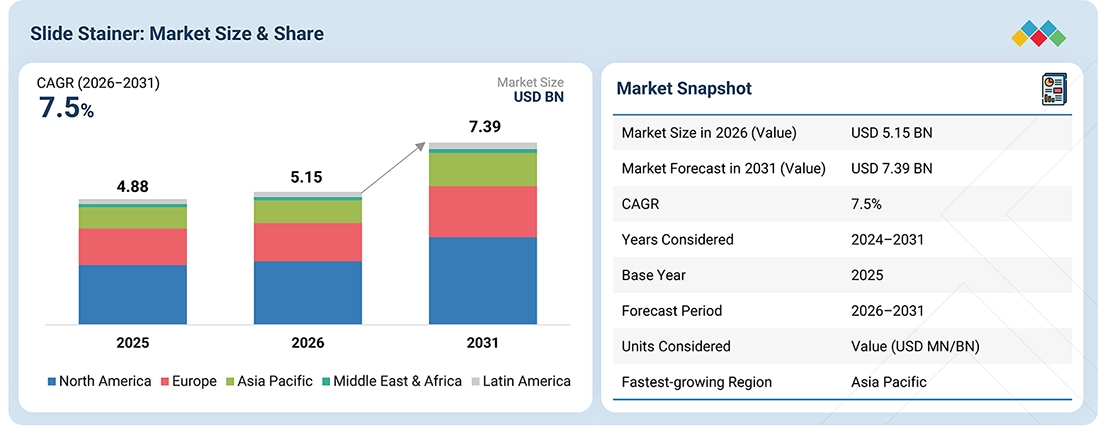
The global slide stainers market is projected to grow from USD 5.15 billion in 2026 to USD 7.39 billion by 2031, at a CAGR of 7.5% during the forecast period. The market was valued at USD 4.88 billion in 2025. This steady growth is driven by rising demand for automated histopathology and cytology solutions, increased adoption of precision diagnostics, and growing investments in pathology laboratory modernization. The expanding use of immunohistochemistry (IHC), in situ hybridization (ISH), and multiplex staining techniques in oncology and biomarker-based testing is accelerating demand for advanced slide staining platforms. Manufacturers are increasingly developing high-throughput, fully automated staining systems with integrated coverslipping, optimized reagent management, and digital connectivity to enhance laboratory productivity and staining reproducibility. Additionally, the growing adoption of AI-assisted digital pathology, increasing demand for standardized staining protocols, and the expansion of centralized diagnostic laboratory networks are creating new growth opportunities. Rising investments in cancer research, companion diagnostics, and advanced laboratory automation are further supporting market expansion, particularly across emerging economies in Asia-Pacific.

KEY TAKEAWAYS

  • MARKET SNAPSHOT:
    Base Year Market Size (2025): USD 4.88 Billion
    Current Market Size (2026): USD 5.15 Billion
    Forecast Market Size (2031): USD 7.39 Billion
    CAGR (2026–2031): 7.5%
  • SEGMENT LEADERSHIP:
    Regional Leader: North America accounted for the largest market share in 2025.
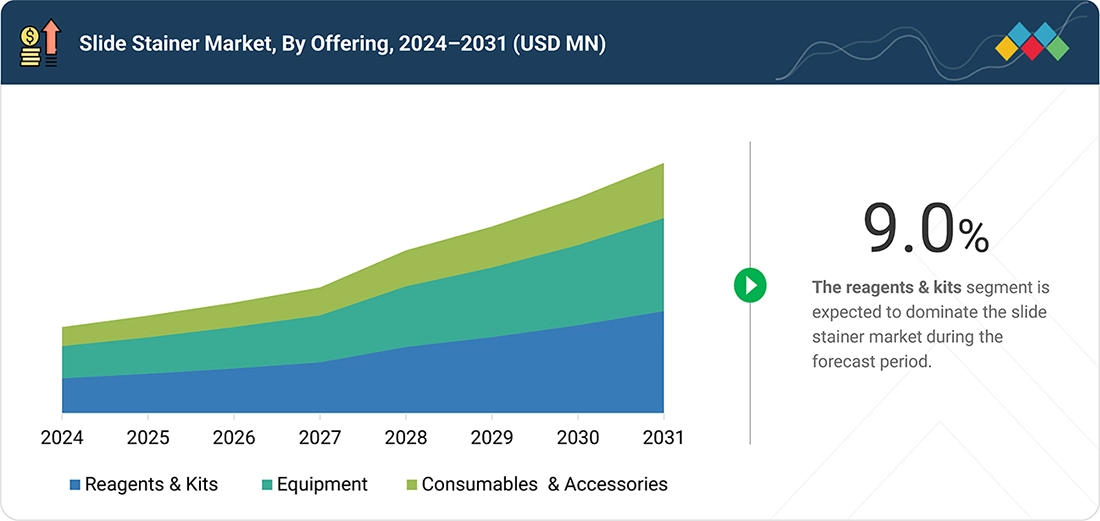
    Product Leader: Reagents and kits accounted for 65% of the market in 2025.
    Fastest-Growing Technology: Immunohistochemistry (IHC) is expected to register the highest CAGR of 8.5%.
    Fastest-Growing Application: Disease diagnostic is expected to register the highest CAGR of 8.0%.
    Fastest-Growing End User: Hospitals and diagnostic laboratories are expected to register the highest CAGR of 8.5%.
  • MARKET OUTLOOK & COMPETITIVE LANDSCAPE:
    Key players include F. Hoffmann-La Roche Ltd., Agilent Technologies, Inc., and Danaher Corporation, which focus on automated staining solutions, advanced immunohistochemistry (IHC) technologies, integrated pathology workflows, and continuous product innovation to strengthen their market positions.
    Emerging and specialized players such as Abcam plc, Bio SB, Inc., and CellPath Ltd. are strengthening competition by offering specialized staining reagents, IHC solutions, histology products, and innovative pathology workflow solutions, focusing on product differentiation and expanding adoption in laboratories.

The global slide stainers market is growing steadily, supported by rising adoption of automated histopathology and cytology technologies, increasing demand for precision diagnostics, and ongoing investments in advanced pathology infrastructure. The growing use of immunohistochemistry (IHC), in situ hybridization (ISH), and multiplex staining for cancer diagnosis and biomarker identification is driving demand for sophisticated slide-staining solutions. Leading manufacturers are focusing on high-throughput automated staining platforms, integrated staining and coverslipping systems, and advanced reagent management technologies to improve operational efficiency, staining consistency, and laboratory productivity. Furthermore, the increasing integration of digital pathology and AI-assisted diagnostic solutions, coupled with the expansion of centralized diagnostic laboratories and standardized staining workflows, is supporting market development. Growing investments in oncology research, companion diagnostics, and laboratory automation are expected to create significant growth opportunities, particularly in emerging Asia-Pacific economies.

TRENDS & DISRUPTIONS IMPACTING CUSTOMERS' CUSTOMERS

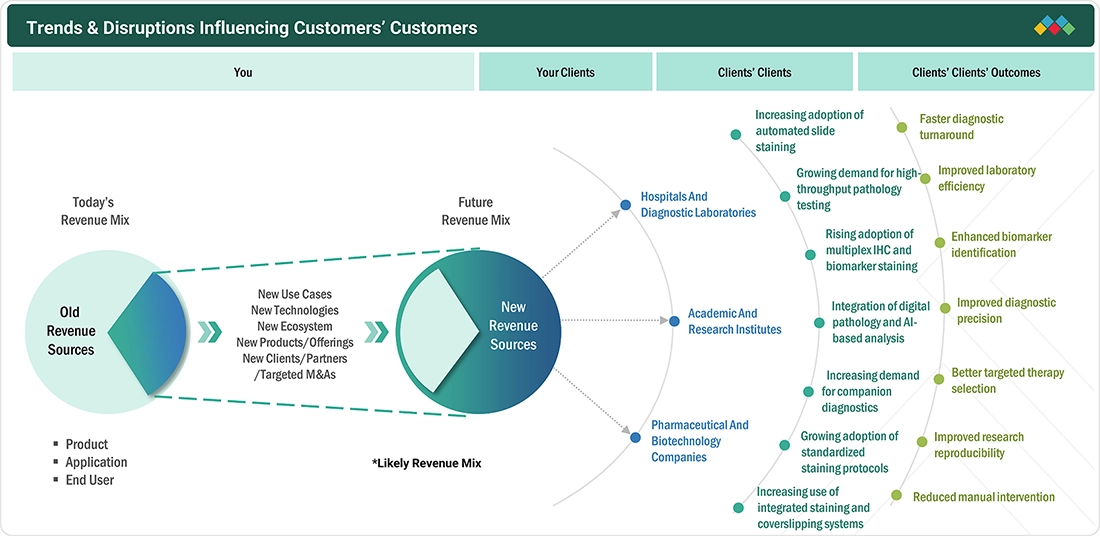
The global slide stainers market is undergoing significant transformation as evolving diagnostic requirements across hospitals, diagnostic laboratories, academic and research institutes, and pharmaceutical and biotechnology companies drive adoption of advanced staining technologies. Rising demand for automated slide staining and high-throughput pathology testing is improving laboratory efficiency and reducing diagnostic turnaround times. The growing use of multiplex immunohistochemistry (IHC) and biomarker-specific staining techniques is enhancing biomarker identification and supporting precision diagnostics. Additionally, the integration of digital pathology and AI-assisted image analysis is improving diagnostic accuracy, while increasing demand for companion diagnostics is enabling more targeted therapy selection. The adoption of standardized staining protocols and integrated staining and coverslipping systems is further enhancing research reproducibility, minimizing manual intervention, and improving overall laboratory productivity. These developments are creating new growth opportunities for slide stainer manufacturers while supporting more efficient diagnostic and research workflows globally.

slide-stainer-market Disruptions

Source: Secondary Research, Interviews with Experts, MarketsandMarkets Analysis

MARKET DYNAMICS

Drivers
Impact
Level
  • Increasing demand for cancer diagnostics and histopathological examinations
  • Growing adoption of automated slide staining systems to improve laboratory efficiency and staining consistency
RESTRAINTS
Impact
Level
  • High initial investment and maintenance costs of advanced automated slide staining systems
  • Recurring reagent and consumable costs, particularly for proprietary staining platforms
OPPORTUNITIES
Impact
Level
  • Growing integration of automated slide staining systems with digital pathology and AI-assisted diagnostic workflows
  • Expanding applications of multiplex immunohistochemistry (IHC) and companion diagnostics in precision oncology
CHALLENGES
Impact
Level
  • Maintaining staining consistency and standardization across different instruments, reagents, and laboratories
  • Shortage of skilled histotechnologists and technical complexities associated with advanced staining protocols

Source: Secondary Research, Interviews with Experts, MarketsandMarkets Analysis

Driver: Increasing demand for cancer diagnostics and histopathological examinations

The global slide stainers market is growing steadily, driven by the rising burden of cancer, higher volumes of tissue biopsies, and greater demand for accurate histopathological examinations. The growing use of hematoxylin and eosin (H&E), immunohistochemistry (IHC), and special staining techniques for tumor identification and disease classification is accelerating adoption of automated slide-staining systems. Hospitals and diagnostic laboratories are investing in high-throughput staining platforms to improve diagnostic turnaround times, enhance staining consistency, and manage increasing pathology workloads. According to the International Agency for Research on Cancer (IARC), approximately 20 million new cancer cases were reported globally in 2022, with the number projected to reach 35 million annually by 2050. This growing cancer burden is expected to increase demand for tissue-based diagnostics and automated staining solutions.

Restraint: High initial investment and maintenance costs of advanced automated slide staining systems

The high capital investment required for automated slide-staining instruments remains a significant barrier, particularly for small and medium-sized pathology laboratories and healthcare facilities in developing economies. Advanced staining systems entail costs for instrument procurement, installation, validation, preventive maintenance, software integration, and operator training. Proprietary reagents, staining kits, and specialized consumables can also increase recurring operational costs, limiting adoption among budget-constrained laboratories. For instance, advanced automated IHC staining platforms such as the VENTANA BenchMark ULTRA PLUS from Roche and BOND-PRIME from Leica Biosystems incorporate sophisticated reagent dispensing, slide processing, and workflow management technologies, requiring dedicated infrastructure and ongoing maintenance. These financial considerations may encourage smaller laboratories to continue using manual or semi-automated staining methods, limiting the adoption of advanced automated systems.

Opportunity: Growing integration of automated slide staining systems with digital pathology and AI-assisted diagnostic workflows

The growing integration of automated slide-staining systems with digital pathology platforms and AI-assisted diagnostic technologies is creating significant growth opportunities for the global slide-stainers market. Healthcare facilities are increasingly adopting interconnected pathology workflows that integrate automated staining, whole-slide imaging, digital image management, and AI-based tissue analysis to improve diagnostic efficiency and support precision medicine. These advancements are driving demand for staining systems that deliver consistent, high-quality slides suitable for digital analysis. For instance, Roche's BenchMark ULTRA PLUS system, launched in June 2022, supports automated IHC and ISH staining, offering optimized workflows and improved testing efficiency. Roche also offers digital pathology solutions, highlighting opportunities to connect staining and image analysis within broader pathology workflows.

Challenge: Maintaining staining consistency and standardization across different instruments, reagents, and laboratories

Maintaining consistent staining quality and standardized diagnostic results across laboratory settings remains a major challenge in the global slide stainers market. Variations in staining protocols, reagent formulations, incubation times, tissue preparation techniques, and instrument calibration can affect staining intensity, tissue morphology, and biomarker interpretation. These inconsistencies are especially critical in immunohistochemistry (IHC), digital pathology, and AI-assisted image analysis, where reproducible staining is essential for reliable diagnostic assessments. For instance, a 2026 study on color standardization in whole-slide imaging identified differences in color reproduction across scanner systems and underscored the importance of standardized calibration for consistent digital pathology results. Additionally, the US FDA highlights color reproducibility, image quality, and AI performance consistency as key technical considerations in digital pathology. These findings reinforce the need for harmonized staining protocols, robust quality control, and instrument validation across pathology laboratories.

SLIDE STAINER MARKET GROWTH: COMMERCIAL USE CASES ACROSS INDUSTRIES

COMPANY USE CASE DESCRIPTION BENEFITS
company logo
Automated H&E staining and histopathology slide preparation using Gemini AS and related staining solutions Improves staining consistency, reduces manual intervention, and enhances laboratory productivity
company logo
Automated H&E, special staining, and IHC using HistoCore SPECTRA ST and BOND staining platforms Enhances staining reproducibility, accelerates slide processing, and improves workflow efficiency
company logo
Automated IHC and ISH staining using Dako Omnis platforms for tissue biomarker analysis and cancer diagnostics Improves biomarker detection, ensures consistent staining quality, and supports efficient diagnostic workflows
company logo
Automated H&E, IHC, and ISH staining using VENTANA HE 600 and BenchMark ULTRA PLUS systems Supports high-throughput staining, improves diagnostic consistency, and reduces laboratory turnaround times

Logos and trademarks shown above are the property of their respective owners. Their use here is for informational and illustrative purposes only.

MARKET ECOSYSTEM

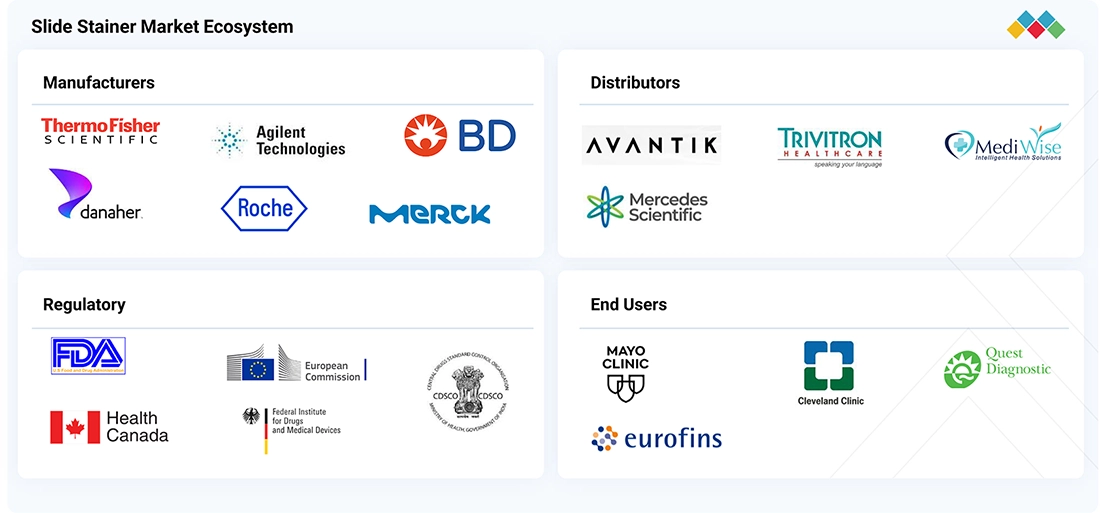
The ecosystem comprises manufacturers, distributors, service providers, and end users, collectively supporting the development, commercialization, and adoption of advanced staining technologies. Leading manufacturers, including F. Hoffmann-La Roche Ltd., Danaher Corporation, PHC Holdings Corporation, Agilent Technologies, and Sakura Finetek, focus on developing automated staining instruments, reagents, kits, and integrated pathology solutions. Distributors such as Avantor, Cardinal Health, and Thomas Scientific improve product access and supply chain efficiency, while service providers, including Labcorp, Quest Diagnostics, Sonic Healthcare, and NeoGenomics Laboratories, offer histopathology, cytology, and biomarker testing services. Major end users include hospitals, diagnostic laboratories, academic and research institutes, and pharmaceutical and biotechnology companies. Increasing adoption of automated staining workflows, growing demand for precision diagnostics, and technological advancements are strengthening collaboration among ecosystem participants and driving innovation and operational efficiency.

slide-stainer-market Ecosystem

Logos and trademarks shown above are the property of their respective owners. Their use here is for informational and illustrative purposes only.

MARKET SEGMENTS

slide-stainer-market Segments

Source: Secondary Research, Interviews with Experts, MarketsandMarkets Analysis

Slide Stainers Market, By Product

The reagents & kits segment is experiencing steady growth, supported by a shift toward xylene-free staining formulations, rising demand for environmentally sustainable laboratory chemicals, and a growing emphasis on improving tissue preservation and staining quality. The expanding use of special stains to identify microorganisms, connective tissue abnormalities, and other pathological conditions is driving demand for specialized staining kits across clinical laboratories. Additionally, the increasing adoption of rapid staining protocols, alcohol-free reagent alternatives, and low-toxicity staining solutions is encouraging laboratories to modernize their histological workflows. Manufacturers are focusing on developing concentrated staining reagents, optimized buffer solutions, and formulations with improved stability to reduce reagent consumption and operating costs. Growing emphasis on laboratory safety, waste reduction, and consistent staining performance, coupled with expanding applications in veterinary pathology, toxicology studies, and pharmaceutical research, is further creating growth opportunities for reagents and kits globally.

Slide Stainers Market, By Technology

The hematoxylin & eosin (H&E) staining segment is growing steadily, driven by rising demand for routine histopathological examinations, the increasing adoption of automated staining workflows, and a growing emphasis on staining consistency and reproducibility. The growing use of H&E staining in surgical pathology, tissue biopsy analysis, and disease diagnosis is driving demand for advanced staining systems. Manufacturers are developing rapid staining protocols, xylene-free staining solutions, and integrated staining and coverslipping platforms to improve laboratory efficiency, reduce chemical exposure, and shorten processing time. Additionally, growing adoption of continuous-loading staining systems, automated reagent monitoring, and standardized staining protocols is enhancing laboratory productivity. The expanding application of H&E-stained slides in digital pathology, whole-slide imaging, and AI-assisted tissue analysis is further creating growth opportunities by increasing demand for high-quality, consistently stained specimens.

Slide Stainers Market, By Application

The disease diagnostics application segment is growing steadily, supported by rising demand for rapid pathological assessments, greater adoption of preventive healthcare screening programs, and increased use of slide staining techniques to evaluate inflammatory, autoimmune, and infectious conditions. The expansion of gastrointestinal pathology, dermatopathology, and renal biopsy examinations is driving demand for specialized staining procedures to identify tissue abnormalities and support differential diagnosis. Additionally, greater adoption of rapid on-site evaluation (ROSE) during biopsy procedures, growing demand for standardized cytological examinations, and advancements in automated blood and tissue staining workflows are improving diagnostic turnaround times and laboratory productivity. The rising use of special stains to detect fungal and bacterial infections, increasing demand for accurate tissue morphology assessment, and the expansion of decentralized diagnostic services are further supporting segment growth. Growing emphasis on reducing repeat testing, improving specimen quality, and strengthening routine pathology services is creating additional growth opportunities globally.

Slide Stainers Market, By End User

The hospitals & diagnostic laboratories segment is growing steadily, driven by rising demand for high-throughput pathology testing, the expansion of centralized diagnostic laboratory networks, and increasing investment in advanced laboratory automation. The rising adoption of integrated staining and coverslipping systems, continuous-loading platforms, and automated slide-tracking technologies is helping hospitals and diagnostic laboratories streamline workflows, reduce manual errors, and improve diagnostic turnaround times. Additionally, the growing emphasis on laboratory accreditation, quality assurance, and standardized staining procedures is encouraging healthcare facilities to adopt advanced slide-staining solutions. The growing integration of slide staining instruments with laboratory information systems (LIS), digital pathology platforms, and automated specimen-processing workflows further enhances operational efficiency and sample traceability. Expanding outpatient diagnostic services, increasing outsourcing of pathology testing, and growing demand for cost-effective, high-quality diagnostic solutions are creating additional global growth opportunities for the segment.

REGION

Asia Pacific to be fastest-growing region in global slide stainers market during forecast period

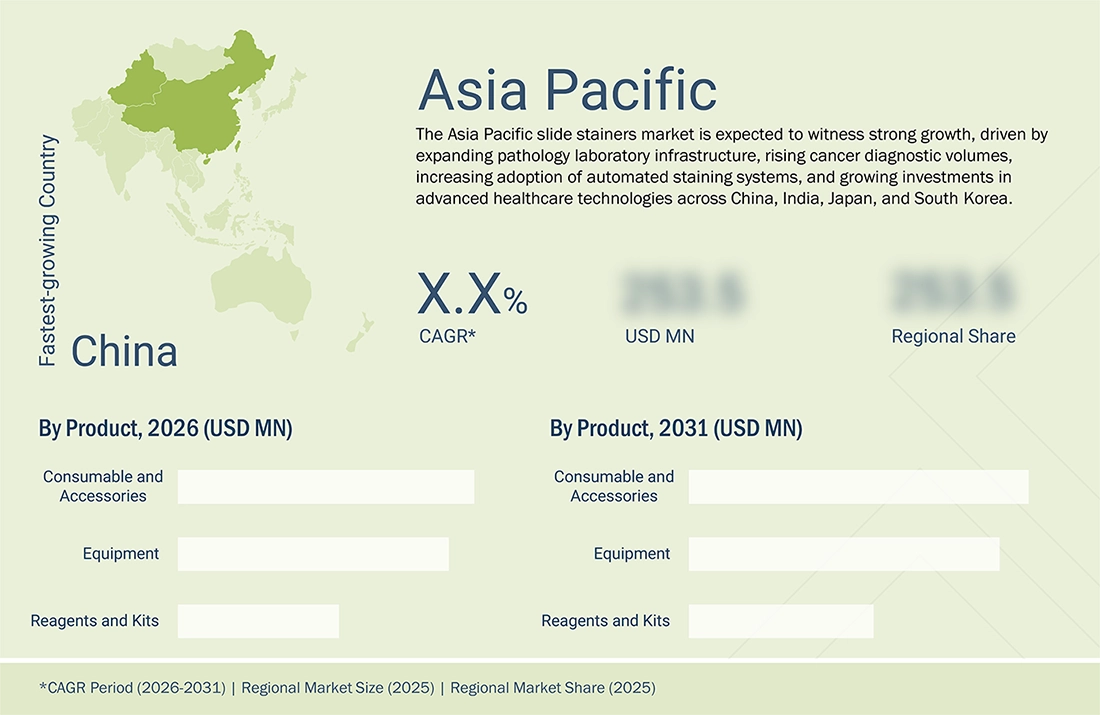
The Asia Pacific slide stainers market is expected to witness significant growth, driven by the rapid expansion of diagnostic laboratory networks, increasing adoption of automated histopathology solutions, and growing investments in healthcare infrastructure across China, India, Japan, South Korea, and Australia. The rising establishment of specialized cancer centers, increasing demand for tissue-based diagnostic testing, and expansion of private pathology services are accelerating the adoption of advanced slide staining technologies. Additionally, growing emphasis on laboratory accreditation, standardized staining protocols, and high-throughput diagnostic workflows is encouraging healthcare facilities to modernize their pathology infrastructure. Japan and South Korea are focusing on digital pathology integration and advanced laboratory automation, while China and India are experiencing increasing demand for cost-effective staining platforms and localized diagnostic solutions. The expansion of medical research activities, growing adoption of precision oncology, and increasing investments in laboratory modernization are further creating growth opportunities across the region.

slide-stainer-market Region

SLIDE STAINER MARKET GROWTH: COMPANY EVALUATION MATRIX

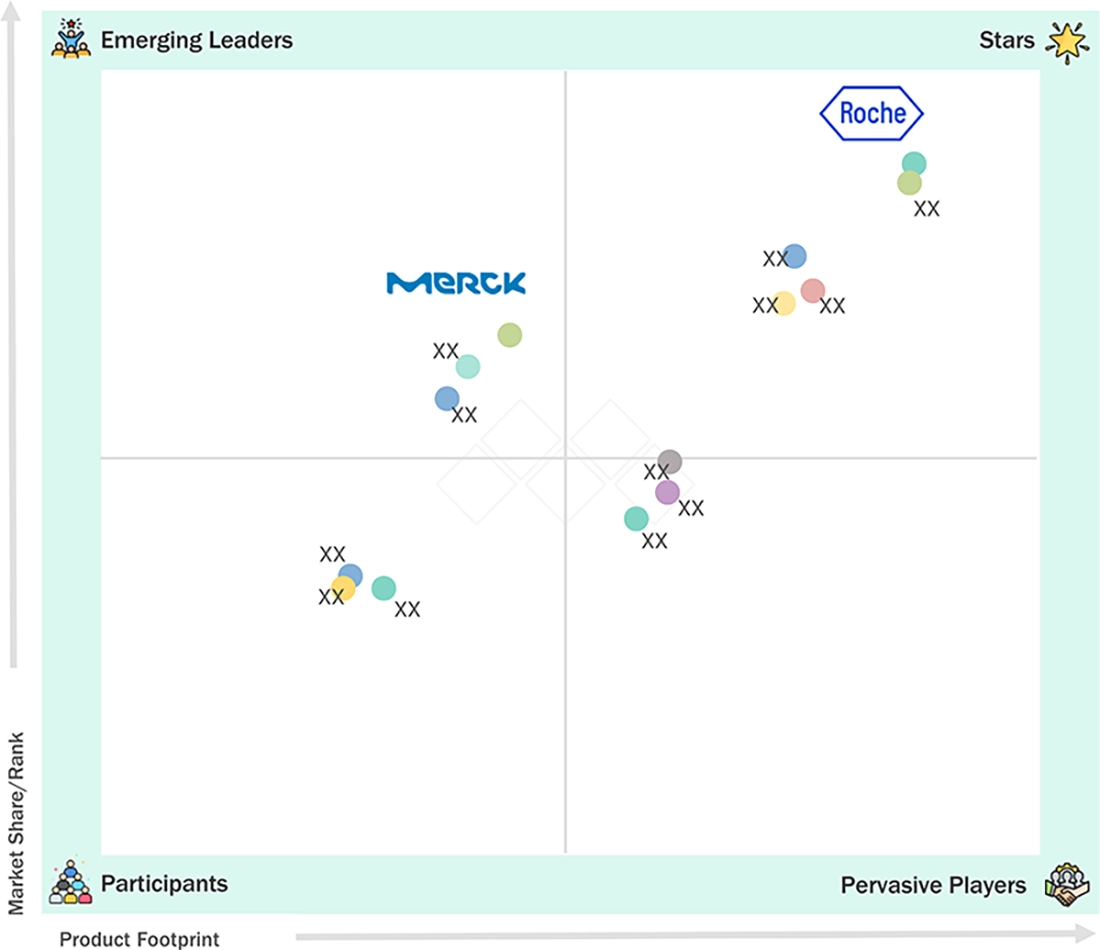
The global slide stainers market is highly competitive, with key manufacturers differing in market presence, product innovation, and strategic positioning. The competitive matrix groups companies into four categories: stars, emerging leaders, pervasive players, and participants, based on relative market share and competitive ranking. Leading players, including Agilent Technologies, maintain strong positions through established product portfolios, advanced automated staining platforms, and extensive global distribution networks. Emerging leaders are strengthening their competitive positions through technological advances, product differentiation, and expansion into specialized histopathology and immunohistochemistry applications. Pervasive players focus on expanding their customer base and strengthening regional distribution capabilities, while participants primarily compete through specialized staining solutions, competitive pricing, and niche applications. Rising investments in laboratory automation, digital pathology integration, and precision diagnostics are expected to intensify competition and create growth opportunities across the industry.

slide-stainer-market Evaluation Metrics

Source: Secondary Research, Interviews with Experts, MarketsandMarkets Analysis

KEY MARKET PLAYERS

MARKET SCOPE

REPORT METRIC DETAILS
Market Size in 2025 (Value) USD 4.88 Billion
Market Forecast in 2026 (Value) USD 5.15 Billion
Market Forecast in 2031 (Value) USD 7.39 Billion
Growth Rate CAGR of 7.50% from 2026 to 2031
Years Considered 2024-2031
Base Year 2025
Forecast Period 2026-2031
Units Considered Value (USD Billion)
Report Coverage Revenue forecast, company ranking, competitive landscape, growth factors, and trends
Segments Covered
  • Product:
    • Reagents and Kits (Stains
    • Blocking Serum and Reagents
    • Diluents and Buffers
    • Mounting Media
    • Fixative Reagents
    • and Embedding Media
    • Probes
    • Antibodies)
    • Equipment (Automated & Semi-Automated Slide Stainers
    • Manual Slide Staining Sets)
    • Consumables & Accessories
  • Technology:
    • Hematoxylin & EOSIN (H&E)
    • Immunohistochemistry (IHC)
    • In Situ Hybridization (ISH)
    • Cytology
    • Microbiology
    • Hematology
    • Special Staining
  • Application:
    • Disease Diagnostic (Breast Cancer
    • Gastric Cancer
    • Lymphoma
    • Prostate Cancer
    • Non-small Cell Lung Cancer
    • Other Disease)
    • Medical Research
  • End User:
    • Hospitals & Diagnostic Laboratories
    • Academic & Research Institutes
    • Pharmaceutical & Biotechnology Companies
    • Other End Users
Country Covered North America, Asia Pacific, Europe, Latin America, Middle East & Africa

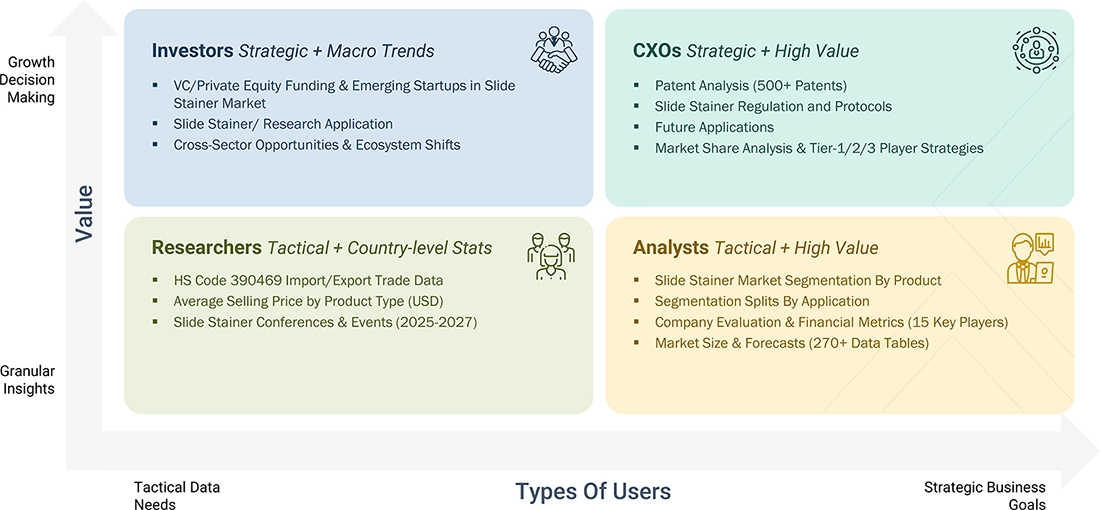
WHAT IS IN IT FOR YOU: SLIDE STAINER MARKET GROWTH REPORT CONTENT GUIDE

slide-stainer-market Content Guide

DELIVERED CUSTOMIZATIONS

We have successfully delivered the following deep-dive customizations:

CLIENT REQUEST CUSTOMIZATION DELIVERED VALUE ADDS
Detailed market segmentation analysis Market analysis by product type (instruments, reagents & kits, consumables), staining technique, application, end user, and region Identification of high-growth segments and revenue opportunities
Competitive landscape assessment Company profiling, product portfolio analysis, market share assessment, and competitive benchmarking of leading slide stainer manufacturers Insights into competitive positioning, product differentiation, and growth strategies
Regional market opportunity assessment Country-level market analysis across North America, Europe, Asia Pacific, Latin America, Middle East, and Africa Identification of emerging markets, regional growth drivers, and investment opportunities

RECENT DEVELOPMENTS

  • June 2026 : Roche received EU IVDR approval for its VENTANA MMR RxDx Panel companion diagnostic, broadening its applications across multiple cancer types and therapies to support precision oncology and personalized treatment decisions.
  • October 2025 : Thermo Fisher Scientific announced an agreement to acquire Clario Holdings for USD 8.875 billion, strengthening its clinical trial data solutions and research capabilities.
  • May 2025 : Roche received FDA approval for its VENTANA MET (SP44) RxDx Assay, the first companion diagnostic to identify non-small cell lung cancer patients eligible for EMRELIS treatment.


Table of Contents

checkmarkExclusive indicates content/data unique to MarketsandMarkets and not available with any competitors.

TITLE
PAGE NO
1
INTRODUCTION


15
 
1.2)MARKET DEFINITION


2
EXECUTIVE SUMMARY


3
PREMIUM INSIGHTS


4
MARKET OVERVIEW
Maps the market evolution with focus on trend catalysts, risk factors, and growth opportunities across segments.


4.1
MARKET DYNAMICS


4.1.1
DRIVERS


4.1.2
RESTRAINTS


4.1.3
OPPORTUNITIES


4.1.4
CHALLENGES


4.2
UNMET NEEDS AND WHITE SPACES


4.3
INTERCONNECTED MARKETS AND CROSS-SECTOR OPPORTUNITIES


4.4
STRATEGIC MOVES BY TIER-1/2/3 PLAYERS


5
INDUSTRY TRENDS
Outlines emerging trends, technology impact, and regulatory signals affecting growth trajectory and stakeholder decisions.


5.1
PORTER’S FIVE FORCES ANALYSIS


5.1.1
THREAT OF NEW ENTRANTS


5.1.2
BARGAINING POWER OF SUPPLIERS


5.1.3
BARGAINING POWER OF BUYERS


5.1.4
THREAT OF SUBSTITUTES


5.1.5
INTENSITY OF COMPETITIVE RIVALRY


5.2
MACROECONOMIC INDICATORS


5.2.1
INTRODUCTION


5.2.2
GDP TRENDS AND FORECAST


5.2.3
TRENDS IN GLOBAL SLIDE STAINER INDUSTRY


5.3
SUPPLY CHAIN ANALYSIS


5.4
VALUE CHAIN ANALYSIS


5.5
ECOSYSTEM ANALYSIS


5.6
PRICING ANALYSIS


5.6.1
AVERAGE SELLING PRICE TREND, BY REGION (2023-2025)


5.6.2
AVERAGE SELLING PRICE TREND OF PRODUCT, BY KEY PLAYERS (2023-2025)


5.7
TRADE ANALYSIS


5.7.1
IMPORT SCENARIO


5.7.2
EXPORT SCENARIO


5.8
KEY CONFERENCES AND EVENTS, 2026–2027


5.9
TRENDS/DISRUPTIONS IMPACTING CUSTOMER BUSINESS


5.10
INVESTMENT AND FUNDING SCENARIO


5.11
CASE STUDY ANALYSIS


5.12
IMPACT OF 2025 US TARIFF – GLOBAL SLIDE STAINER MARKET


5.12.1
INTRODUCTION


5.12.2
KEY TARIFF RATES


5.12.3
PRICE IMPACT ANALYSIS


5.12.4
IMPACT ON REGIONS


5.12.5
IMPACT ON END-USE INDUSTRIES
 
 
6
STRATEGIC DISRUPTION THROUGH TECHNOLOGY, PATENTS, AND AI ADOPTIONS


6.1
KEY EMERGING TECHNOLOGIES


6.2
COMPLEMENTARY TECHNOLOGIES


6.3
TECHNOLOGY/PRODUCT ROADMAP


6.4
PATENT ANALYSIS


6.5
IMPACT OF AI/GEN AI ON THE SLIDE STAINER MARKET


6.5.1
TOP USE CASES AND MARKET POTENTIAL


6.5.2
BEST PRACTICES IN SLIDE STAINER MARKET


6.5.3
CASE STUDIES OF AI IMPLEMENTATION IN SLIDE STAINER MARKET


6.5.4
INTERCONNECTED ADJACENT ECOSYSTEM AND IMPACT ON MARKET PLAYERS


6.5.5
CLIENTS’ READINESS TO ADOPT GENERATIVE AI IN SLIDE STAINER MARKET


6.6
SUCCESS STORIES AND REAL APPLICATIONS


7
REGULATORY LANDSCAPE


7.1
REGIONAL REGULATIONS AND COMPLIANCE


7.1.1
REGULATORY BODIES, GOVERNMENT AGENCIES, AND OTHER ORGANIZATIONS


7.1.2
INDUSTRY STANDARDS
 
 
8
CUSTOMER LANDSCAPE & BUYER BEHAVIOR


8.1
DECISION-MAKING PROCESS


8.2
BUYER STAKEHOLDERS AND BUYING EVALUATION CRITERIA


8.3
ADOPTION BARRIERS & INTERNAL CHALLENGES


8.4
UNMET NEEDS FROM VARIOUS END-USE INDUSTRIES


9
SLIDE STAINER MARKET, BY PRODUCT (MARKET SIZE & FORECAST TO 2031 - IN VALUE, USD MILLION)


COMPARATIVE ASSESSMENT OF KEY PRODUCT SUB-CATEGORIES, THEIR MARKET POTENTIAL, AND DEMAND PATTERNS AT THE REGIONAL & COUNTRY LEVELS


9.1
REAGENTS AND KITS


9.1.1
STAINS


9.1.2
BLOCKING SERUM AND REAGENTS


9.1.3
DILUENTS AND BUFFERS


9.1.4
MOUNTING MEDIA, FIXATIVE REAGENTS, AND EMBEDDING MEDIA


9.1.5
PROBES


9.1.6
ANTIBODIES


9.2
EQUIPMENT


9.2.1
AUTOMATED AND SEMI-AUTOMATED SLIDE STAINERS


9.2.2
MANUAL SLIDE STAINING SETS


9.3
CONSUMABLES AND ACCESSORIES


10
SLIDE STAINER MARKET, BY TECHNOLOGY (MARKET SIZE & FORECAST TO 2031 - IN VALUE, USD MILLION)


COMPARATIVE ASSESSMENT OF KEY TECHNOLOGIES, THEIR MARKET POTENTIAL, AND DEMAND PATTERNS AT THE REGIONAL & COUNTRY LEVELS


10.1
HEMATOXYLIN & EOSIN (H&E)


10.2
IMMUNOHISTOCHEMISTRY (IHC)


10.3
IN SITU HYBRIDIZATION (ISH)


10.4
CYTOLOGY


10.5
MICROBIOLOGY


10.6
HEMATOLOGY


10.7
SPECIAL STAINING


11
SLIDE STAINER MARKET, BY APPLICATION (MARKET SIZE & FORECAST TO 2031 - IN VALUE, USD MILLION)


COMPARATIVE ASSESSMENT OF KEY APPLICATIONS, THEIR MARKET POTENTIAL, AND DEMAND PATTERNS AT REGIONAL LEVEL


11.1
DISEASE DIAGNOSTIC


11.1.1
BREAST CANCER


11.1.2
GASTRIC CANCER


11.1.3
LYMPHOMA


11.1.4
PROSTATE CANCER


11.1.5
NON-SMALL CELL LUNG CANCER


11.1.6
OTHER DISEASE


11.2
MEDICAL RESEARCH


12
SLIDE STAINER MARKET, BY END USER (MARKET SIZE & FORECAST TO 2031- IN VALUE, USD MILLION)


COMPARATIVE ASSESSMENT OF KEY END USERS, THEIR MARKET POTENTIAL, AND DEMAND PATTERNS AT THE REGIONAL LEVEL


12.1
HOSPITALS & DIAGNOSTIC LABORATORIES


12.2
ACADEMIC & RESEARCH INSTITUTES


12.3
PHARMACEUTICAL & BIOTECHNOLOGY COMPANIES


12.4
OTHER END USERS


13
SLIDE STAINER MARKET DATA, BY REGION (MARKET SIZE & FORECAST TO 2031 – IN VALUE, USD MILLION)


ASSESSING GROWTH PATTERNS, INDUSTRY FORCES, REGULATORY LANDSCAPE, AND MARKET POTENTIAL ACROSS KEY REGIONS AND COUNTRIES


13.1
INTRODUCTION


13.2
NORTH AMERICA


13.2.1
US


13.2.2
CANADA


13.3
EUROPE


13.3.1
GERMANY


13.3.2
UK


13.3.3
FRANCE


13.3.4
ITALY


13.3.5
SPAIN


13.3.6
REST OF EUROPE


13.4
ASIA PACIFIC


13.4.1
CHINA


13.4.2
JAPAN


13.4.3
INDIA


13.4.4
SOUTH KOREA


13.4.5
AUSTRALIA


13.4.6
REST OF ASIA PACIFIC


13.5
LATIN AMERICA


13.5.1
BRAZIL


13.5.2
MEXICO


13.5.3
REST OF LATIN AMERICA


13.6
MIDDLE EAST & AFRICA


14
COMPETITIVE LANDSCAPE


STRATEGIC ASSESSMENT OF LEADING PLAYERS, MARKET SHARE, REVENUE ANALYSIS, COMPANY POSITIONING, AND COMPETITIVE BENCHMARKS INFLUENCING MARKET POTENTIAL


14.1
INTRODUCTION


14.2
KEY PLAYER STRATEGIES/RIGHT TO WIN (2023-2025)


14.3
REVENUE ANALYSIS (2022-2025)


14.4
GLOBAL MARKET SHARE ANALYSIS OF KEY PLAYERS,


14.5
COMPANY EVALUATION MATRIX: KEY PLAYERS,


14.5.1
STARS


14.5.2
EMERGING LEADERS


14.5.3
PERVASIVE PLAYERS


14.5.4
PARTICIPANTS


14.5.5
COMPANY FOOTPRINT: KEY PLAYERS,


14.5.5.1
REGIONAL FOOTPRINT


14.5.5.2
PRODUCT FOOTPRINT


14.5.5.3
TECHNOLOGY FOOTPRINT


14.5.5.4
APPLICATION FOOTPRINT


14.5.5.5
END USER FOOTPRINT
 
 
14.6
COMPANY EVALUATION MATRIX: STARTUPS/SMES,


14.6.1
PROGRESSIVE COMPANIES


14.6.2
RESPONSIVE COMPANIES


14.6.3
DYNAMIC COMPANIES


14.6.4
STARTING BLOCKS


14.6.5
COMPETITIVE BENCHMARKING: STARTUPS/SMES,


14.6.5.1
DETAILED LIST OF KEY STARTUPS/SMES


14.6.5.2
COMPETITIVE BENCHMARKING OF KEY STARTUPS/SMES
 
 
14.7
COMPETITIVE SCENARIO (2021–2025)


14.7.1
NEW PRODUCT LAUNCHES & APPROVALS


14.7.2
DEALS


14.7.3
OTHER DEVELOPMENTS


14.8
BRAND/PRODUCT COMPARISON


14.9
COMPANY VALUATION AND FINANCIAL METRICS


15
COMPANY PROFILES


IN-DEPTH REVIEW OF COMPANIES, PRODUCTS, RECENT INITIATIVES, AND POSITIONING STRATEGIES IN GLOBAL SLIDE STAINER MARKET LANDSCAPE


15.1
KEY COMPANIES


15.1.1
AGILENT TECHNOLOGIES, INC.


15.1.2
AMOS SCIENTIFIC PTY LTD


15.1.3
BIOCARE MEDICAL, LLC


15.1.4
BIOGENEX


15.1.5
BECTON, DICKINSON AND COMPANY


15.1.6
BRUKER COMPANY


15.1.7
DANAHER CORPORATION


15.1.8
F. HOFFMANN-LA ROCHE LTD


15.1.9
GENERAL DATA COMPANY, INC


15.1.10
HARDY DIAGNOSTICS


15.1.11
HISTO-LINE LABORATORIES


15.1.12
MERCK KGAA


15.1.13
PHC HOLDINGS CORPORATION


15.1.14
SIEMENS HEALTHINEERS AG.


15.1.15
THERMO FISHER SCIENTIFIC, INC.


15.2
OTHER PLAYERS


15.2.1
ABCAM PLC


15.2.2
BIO SB, INC


15.2.3
CELLPATH LTD


15.2.4
CELL SIGNALING TECHNOLOGY, INC.


15.2.5
DIAPATH S.P.A.


15.2.6
DIAGNOSTIC BIOSYSTEMS, INC.


15.2.7
DAKEWE BIOTECHNOLOGY CO., LTD


15.2.8
MEDITE MEDICAL GMBH


15.2.9
SAKURA FINETEK JAPAN CO., LTD


15.2.10
SLEE MEDICAL GMBH
 
 
16
RESEARCH METHODOLOGY


16.1
RESEARCH DATA SOURCES


16.1.1
SECONDARY RESEARCH


16.1.2
PRIMARY RESEARCH


16.2
MARKET SIZE ESTIMATION METHODOLOGY


16.2.1
REVENUE-MAPPING-BASED MARKET ESTIMATION


16.2.2
END-USER-BASED MARKET ESTIMATION


16.3
MARKET FORECASTING APPROACH


16.4
MARKET BREAKDOWN AND DATA TRIANGULATION


16.5
RESEARCH ASSUMPTIONS


16.6
RESEARCH LIMITATIONS


16.6.1
SCOPE-RELATED LIMITATIONS


16.6.2
METHODOLOGY-RELATED LIMITATIONS


16.7
RISK ASSESSMENT


17
APPENDIX


Methodology

The study involved four major activities to estimate the current size of the global slide stainers market. Extensive secondary research was conducted to gather information on the slide stainers market, related histopathology and cytology equipment markets, and the broader clinical diagnostics and laboratory automation industries. The findings, assumptions, and market estimates were then validated through primary research with industry experts across the slide stainers value chain, including manufacturers, reagent and consumable suppliers, distributors, pathology laboratories, hospitals, diagnostic service providers, and end users. Both top-down and bottom-up approaches were used to estimate the overall slide stainers market size. This was followed by market segmentation and data triangulation to estimate the size of key segments and subsegments by product, staining technique, application, end user, and region.

Secondary Research

The secondary research process relied extensively on industry databases, company websites, annual reports, investor presentations, SEC filings, regulatory publications, scientific and technical papers, white papers, financial reports, trade publications, and commercial databases such as Bloomberg Businessweek, Factiva, and D&B Hoovers. The research gathered comprehensive technical, market-oriented, regulatory, and commercial information on slide stainers, including automated and manual staining systems, staining reagents and kits, consumables, and associated laboratory equipment. It covered major staining techniques, including hematoxylin and eosin (H&E), immunohistochemistry (IHC), in situ hybridization (ISH), and special staining, along with their applications in disease diagnostics, cancer detection, histopathology, cytology, and biomedical research.

Secondary research was also used to identify key market players, slide-staining equipment manufacturers, reagent and consumable suppliers, distributors, and other stakeholders; establish detailed market classification and segmentation; assess regulatory developments, product approvals, technological advancements, laboratory automation trends, and emerging staining technologies; and identify key market developments, demand drivers, challenges, and growth opportunities. A database of key industry participants and stakeholders in the global slide-stainers ecosystem was also developed through secondary research.

Primary Research

During the primary research process, supply- and demand-side stakeholders in the slide stainers market were interviewed to gather qualitative and quantitative insights for the study. Supply-side respondents included industry experts such as CEOs, vice presidents, marketing and sales directors, product managers, technology and innovation directors, business development managers, and other senior executives from leading slide-staining equipment manufacturers, staining reagent and kit suppliers, laboratory equipment providers, distributors, and diagnostic technology companies. Demand-side respondents included professionals from hospitals, diagnostic and pathology laboratories, academic and research institutes, pharmaceutical and biotechnology companies, and other organizations that use slide-staining systems for histopathology, cytology, disease diagnostics, and research applications.

Primary research was conducted to validate market segmentation and market size estimates, identify and assess key market participants, and gain insights into adoption of automated and manual slide staining systems, staining techniques, reagent and consumable requirements, regulatory and compliance standards, testing volumes, purchasing criteria, laboratory automation capabilities, competitive dynamics, and key market drivers and challenges shaping the global slide stainers market.
Slide Stainer Market 
 Size, and Share

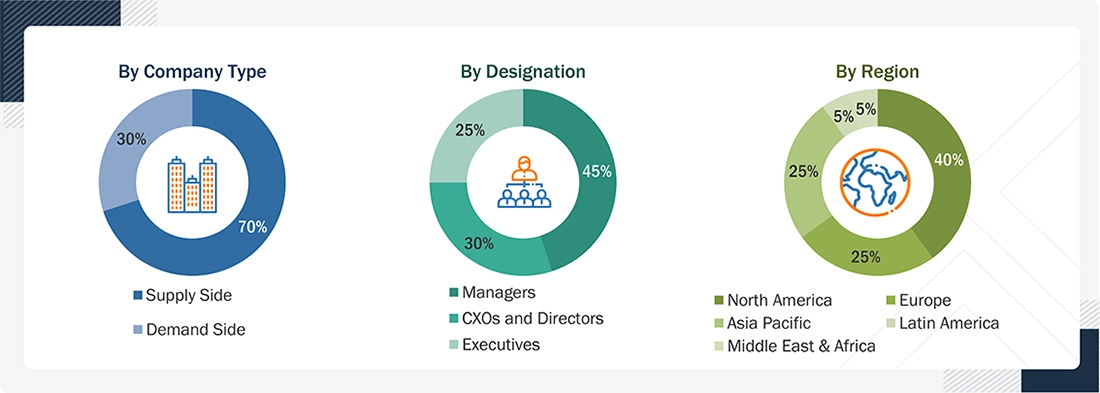
*Others include sales managers, marketing managers, business development managers, product managers, distributors, and suppliers.

Note: Companies are classified into tiers based on their total revenue. Tier 1 = >USD 1000 million, Tier 2 = USD 500 million, and Tier 3 = <USD 100 million.

To know about the assumptions considered for the study, download the pdf brochure

Market Size Estimation

In this report, the global slide stainers market size was determined using revenue share analysis of leading market players. To this end, key companies operating in the market were identified, and their revenues from slide staining instruments, reagents, kits, and related consumables were estimated based on insights gathered during the primary and secondary research phases. Secondary research included an extensive review of annual reports, financial statements, investor presentations, and product portfolios of leading market players. Primary research involved interviews with key opinion leaders, including CEOs, directors, product managers, marketing executives, and industry experts from slide staining equipment manufacturers, diagnostic laboratories, and hospital procurement departments.
Segmental revenues were calculated by mapping revenue from major slide-staining equipment manufacturers and reagent and kit suppliers to estimate the global slide-stainers market value. This process involved the following steps:

  • Compiling a list of major global players in the slide stainers market, including F. Hoffmann-La Roche Ltd., Danaher Corporation, PHC Holdings Corporation, and other key manufacturers.
  • Mapping annual revenues for major global players from slide-staining instruments, reagents & kits, and related consumables, based on reported financial information, product portfolios, and estimated business contributions.
  • Mapping revenue for leading market players to determine their share of the global slide stainers market as of 2025.
  • Extrapolating the global value of the slide stainers market, with specific attention to product segments, staining techniques, disease diagnostic applications, and major end users, including hospitals and diagnostic laboratories.

Slide Stainer Market Top Down and Bottom Up Approach

Data Triangulation

After determining the overall market size through the market estimation process described above, the global slide stainers market was segmented into segments and subsegments. Data triangulation and market breakdown procedures were used to complete the overall market engineering process and determine the market size for all segments and subsegments, including product, staining technique, application, end user, and region. Data triangulation involved analyzing various factors and trends from both demand- and supply-side perspectives, including diagnostic testing volumes, adoption of automated staining systems, reagent consumption, technological advancements, and laboratory infrastructure development. Additionally, slide stainers market estimates were validated using top-down and bottom-up approaches.

Market Definition

Slide stainers are laboratory instruments and associated staining solutions that apply dyes, reagents, and chemical stains to biological specimens mounted on microscope slides, enabling detailed examination of cellular structures, tissue morphology, and disease-specific biomarkers. These systems include automated and manual staining instruments, reagents, kits, and consumables used for hematoxylin and eosin (H&E), immunohistochemistry (IHC), in situ hybridization (ISH), and special staining procedures. Slide stainers are widely used in histopathology, cytology, hematology, and clinical research to support disease diagnosis, cancer detection, and pathological investigations. They are primarily used in hospitals, diagnostic laboratories, academic and research institutes, and pharmaceutical and biotechnology companies to ensure standardized staining procedures, improve diagnostic accuracy, and enhance laboratory efficiency.

Key Stakeholders

  • Slide staining instrument manufacturers
  • Suppliers & distributors of slide staining instruments and consumables
  • Staining reagents & kits manufacturing companies
  • Hospitals & diagnostic laboratories
  • Histopathology & cytology laboratories
  • Pharmaceutical & biotechnology companies
  • Academic & research institutes
  • Clinical research organizations (CROs)
  • Pathology equipment and laboratory automation providers
  • Market research and consulting firms

Report Objectives

  • To define, describe, and forecast the size of the slide stainers market by product type, technology, application, end user, and region
  • To provide detailed information on the major factors influencing the growth potential of the global slide stainers market—including drivers, restraints, opportunities, challenges, and trends—from a healthcare industry perspective
  • To analyze the micro-markets in terms of individual growth trends, prospects, and contributions to the global slide stainers market, with an emphasis on the industry
  • To identify key growth opportunities in the global slide stainers market for stakeholders and detail the competitive landscape for market leaders
  • To forecast the size of market segments and subsegments across five major regions: North America (the US and Canada), Europe (Germany, France, the UK, Italy, Spain, and the rest of Europe), Asia Pacific (Japan, China, India, Australia, South Korea, and the rest of Asia Pacific), Latin America (Brazil, Mexico, and the rest of Latin America), and the Middle East and Africa
  • To profile key players in the slide stainers market and comprehensively analyze their market shares and core competencies
  • To analyze competitive developments in the global slide stainers market, including product launches, agreements, expansions, and mergers and acquisitions

Available customizations:

With the given market data, customizations are offered per the company's specific needs. The following customization options are available for the present global slide stainers market report:

Product Analysis

  • Product matrix, which gives a detailed comparison of the product portfolios of the top five companies.

Company Information

  • Detailed analysis and profiling of additional market players (up to five).

Geographic Analysis

  • Further breakdown of the Rest of Europe slide stainers market into Russia, Belgium, the Netherlands, Switzerland, Austria, Finland, Sweden, Poland, and Portugal, among others.
  • Further breakdown of the Rest of Asia Pacific Slide Stainers market into Singapore, Taiwan, New Zealand, Philippines, Malaysia, and other APAC countries.
  • Further breakdown of the Latin American Slide Stainers market into Colombia, Chile, Argentina, and Peru, among others.


Personalize This Research

  • Triangulate with your Own Data
  • Get Data as per your Format and Definition
  • Gain a Deeper Dive on a Specific Application, Geography, Customer or Competitor
  • Any level of Personalization
Request A Free Customisation

Let Us Help You

  • What are the Known and Unknown Adjacencies Impacting the Slide Stainers Market
  • What will your New Revenue Sources be?
  • Who will be your Top Customer; what will make them switch?
  • Defend your Market Share or Win Competitors
  • Get a Scorecard for Target Partners
Customized Workshop Request

Custom Market Research Services

We Will Customise The Research For You, In Case The Report Listed Above Does Not Meet With Your Requirements

Get 10% Free Customisation

TESTIMONIALS

Growth opportunities and latent adjacency in Slide Stainers Market

THIS REPORT TELLS YOU

How big the Slide Stainers market is, and who leads it.

GROWTHIQ TELLS YOU NEW

Where your company should play next, and who is taking your share.

Get your company's view of this market. Free snapshot.

DMCA.com Protection Status
popup img