AI Impact Analysis on Autonomous Boats Industry
The maritime industry is undergoing a significant transformation with the integration of Artificial Intelligence (AI) into autonomous boats. This technological advancement is revolutionizing navigation, safety, logistics, and sustainability in maritime operations. AI powered autonomous boats are poised to redefine the future of maritime transportation, offering enhanced efficiency and reduced human error.
AI's Role in Autonomous Navigation
Autonomous navigation is at the forefront of AI applications in maritime technology. AI algorithms process data from various sensors, including GPS, radar, and sonar, to enable real time decision making for route planning and obstacle avoidance. This capability allows autonomous boats to navigate complex waterways safely and efficiently.
Enhancing Maritime Safety with AI
Safety is paramount in maritime operations, and AI significantly contributes to enhancing it. AI systems can predict potential hazards by analyzing historical data and real time environmental conditions. For instance, AI can forecast adverse weather conditions, allowing autonomous boats to adjust their routes proactively. Additionally, AI powered surveillance systems can detect unauthorized vessels or obstacles, reducing the risk of collisions and enhancing overall maritime security.
AI in Maritime Logistics and Operations
AI optimizes maritime logistics by streamlining operations such as cargo handling, route optimization, and port management. AI algorithms analyze traffic patterns, weather conditions, and port congestion to determine the most efficient routes and schedules. This optimization leads to reduced fuel consumption, lower operational costs, and timely deliveries. Moreover, AI facilitates autonomous docking procedures by communicating with port systems to coordinate berthing and cargo handling, enhancing overall efficiency.
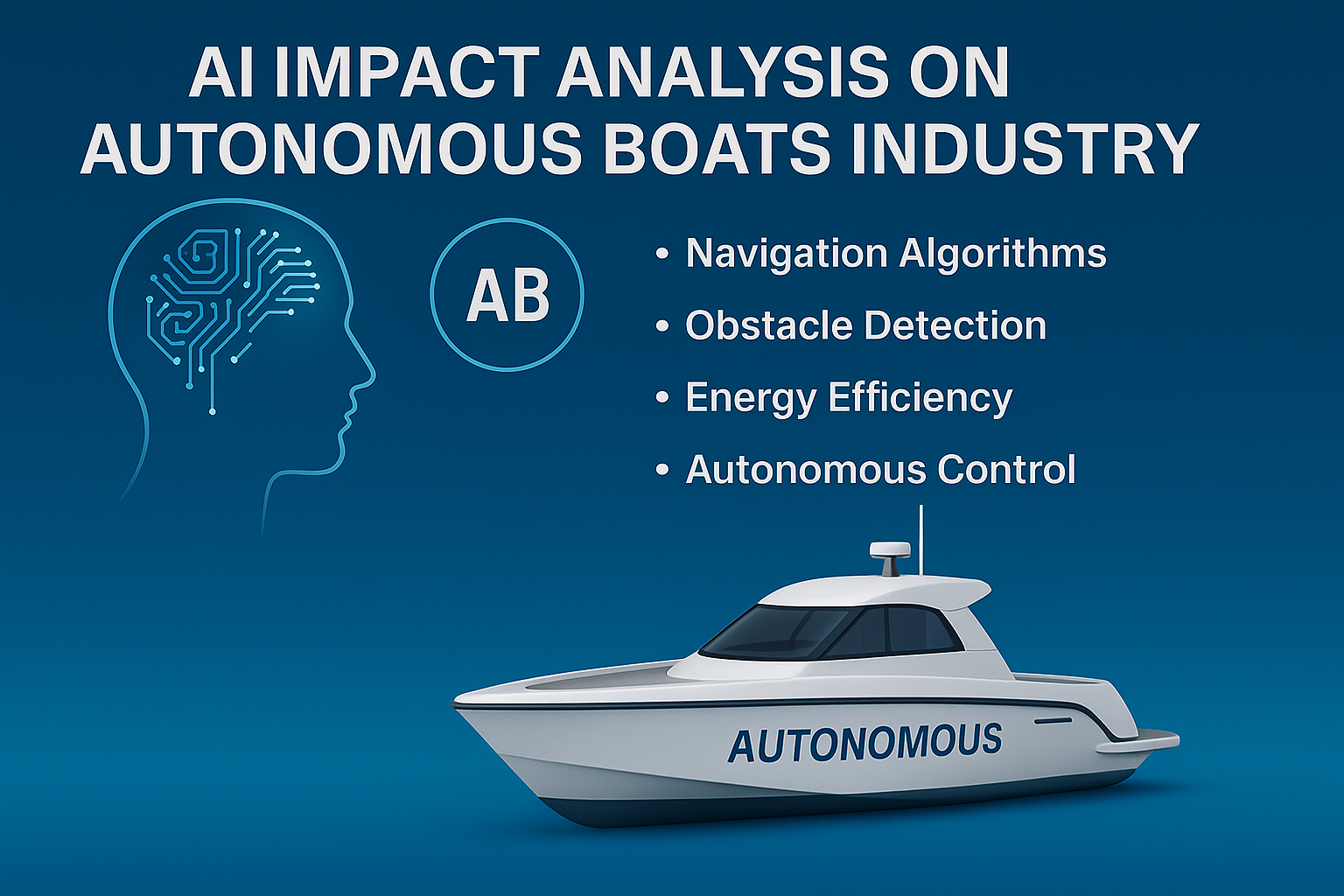
AI Driven Innovations in Boat Manufacturing
The integration of AI in boat manufacturing processes leads to significant innovations. AI powered design tools enable the creation of optimized hull structures and propulsion systems, enhancing performance and fuel efficiency. In manufacturing, AI driven robotics automate assembly lines, ensuring precision and consistency in production. Predictive maintenance powered by AI monitors equipment health, anticipating failures and scheduling maintenance, thereby reducing downtime and maintenance costs.
AI in Maritime Defense Applications
AI plays a crucial role in enhancing maritime defense capabilities. Autonomous boats equipped with AI can perform surveillance, reconnaissance, and patrol missions without human intervention. AI algorithms analyze sensor data to detect and classify potential threats, enabling timely responses. Furthermore, AI facilitates swarm intelligence, allowing multiple autonomous vessels to coordinate and execute complex defense strategies collaboratively.
Promoting Sustainable Boating through AI
Sustainability is a growing concern in the maritime industry, and AI contributes significantly to promoting eco friendly practices. AI optimizes fuel consumption by analyzing engine performance and environmental conditions, reducing greenhouse gas emissions. Additionally, AI monitors and manages waste disposal systems onboard, ensuring compliance with environmental regulations. By enhancing operational efficiency, AI supports the maritime industry's transition towards sustainable practices.
Get AI Impact Analysis on Autonomous Boats Market, Request Pdf Brochure: https://www.marketsandmarkets.com/pdfdownloadNew.asp?id=222340429
AI in Regulatory Compliance and Documentation
Compliance with maritime regulations is essential for safe and lawful operations. AI assists in monitoring compliance by analyzing operational data and ensuring adherence to safety and environmental standards. AI systems can generate reports and documentation required for regulatory audits, streamlining the compliance process. Moreover, AI facilitates real time updates on regulatory changes, enabling autonomous boats to adapt promptly to new requirements.
Future Outlook: AI's Expanding Role in Maritime Industry
The integration of AI into autonomous boats is set to expand further, with advancements in machine learning and sensor technologies. Future developments may include enhanced human machine collaboration, where AI systems work alongside human operators to improve decision making. Additionally, AI will play a pivotal role in developing fully autonomous maritime ecosystems, encompassing navigation, logistics, and maintenance. As AI technology continues to evolve, its impact on the maritime industry will become increasingly profound, driving innovation and efficiency.
AI is revolutionizing the autonomous boats market by enhancing navigation, safety, logistics, manufacturing, defense, sustainability, and regulatory compliance. The integration of AI technologies leads to more efficient, safe, and environmentally friendly maritime operations. As the maritime industry continues to embrace AI, autonomous boats will become an integral part of global transportation networks, shaping the future of maritime commerce and defense.
Related Report:
Autonomous Boats Market by Propulsion (Fully Electric, Fuel-powered, Hybrid Electric), Boat Size (<20 Feet, 20-40 Feet, >40 Feet), Type (Cruising Boats, Tug & Work Boats, Combat Boats), Autonomy and Region - Global Forecast to 2029

This FREE sample includes market data points, ranging from trend analyses to market estimates & forecasts. See for yourself.
SEND ME A FREE SAMPLE






