AI Impact Analysis on Aviation Cloud Industry
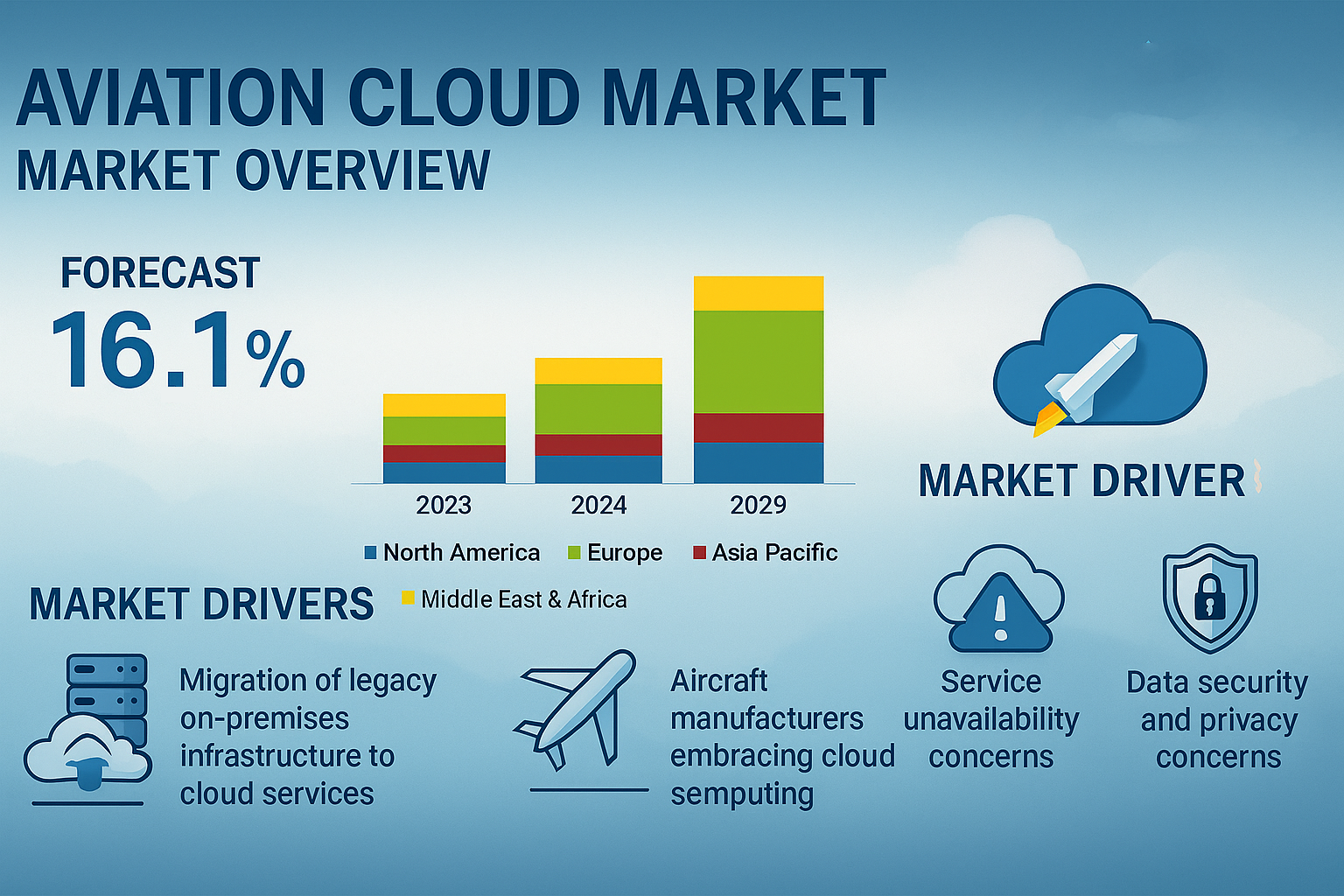
The aviation cloud market in North America is experiencing exponential growth, with a valuation that surpassed USD 6.1 Billion in 2024 and is projected to reach over USD 12.9 Billion by 2029, marking a CAGR of around 16.1%. This surge is driven by ever increasing air traffic, amplified digitalization, and expanding use of AI and IoT technologies. For industry players and regulators alike, AI represents both a catalyst and a necessity redesigning operations, elevating safety, and enabling sustainable growth in a competitive aviation ecosystem.
1. AI Powered Predictive Analytics in Aviation Cloud Systems
AI powered predictive analytics is reshaping cloud systems by enabling airlines to forecast maintenance needs before failure, model fuel burns along flight routes, and anticipate disruptions. The F‑35 maintenance project led by NLP Logix and Andromeda Systems offers a blueprint: combining component age, operational data, and environmental inputs to anticipate failures in mission critical aircraft systems. In a commercial context, this translates to fewer unscheduled groundings, optimized maintenance cycles, and dramatic cost savings helping airlines reduce expenses and improve fleet availability.
2. Enhanced Flight Operations through AI in Aviation Cloud
AI enhanced cloud computing enables dynamic flight operations from real time rerouting during turbulence to smart slot management and crew scheduling. AI copilots in dispatch hubs offer route suggestions based on live weather, traffic, and cost models, similar to Alaska Airlines’ "Flyways" assistant that saved an average of 5.3 minutes per flight and nearly 480 000 gallons of fuel. In North America, this translates to smoother, greener, and more resilient operations as airlines scale via cloud based orchestration.
3. AI Driven Passenger Experience Optimization
AI in the aviation cloud is enhancing every customer touchpoint. From predicting booking patterns and personalizing offers, to deploying virtual assistants in mobile apps and streamlining bag tracking, AI delivers seamless travel experiences. Facial recognition powered check ins reduce wait times, while personalized notifications keep travelers informed in real time. These AI driven experiences in cloud architecture not only elevate passenger satisfaction, but free staff to focus on complex exceptions.
4. Cloud Based Aircraft Health Monitoring and Diagnostics
Aircraft are increasingly linked via IoT to cloud systems, enabling continuous health monitoring. AI analyzes telemetry from flight control systems, engines, and sensors detecting anomalies and degrading performance. This smart stream of diagnostics supports component level decision making and improves safety. One study showed how predictive maintenance powered by AI based cloud tools slashed maintenance costs while increasing reliability .
5. AI in Aviation Cybersecurity over Cloud Infrastructure
Cyber threats escalate as aviation systems become more integrated. AI is critical to cloud based defense, using anomaly detection, endpoint monitoring, threat scoring, and real time defense automation. Hybrid models enable zero trust architectures, identifying unusual access or data flows. As FAA’s NextGen system and IoT heavy smart airports rely on aviation cloud, AI enabled cybersecurity becomes foundational to safeguarding systems and passenger data.
6. AI Role in Cloud Based Air Traffic Management
AI enhanced cloud systems are transforming ATM and UTM. They allow real time traffic predictions, conflict detection, and dynamic route optimization. FAA’s NextGen modernization, deploying tools like ADS B and ERAM, already supports AI uplift . AI infused cloud platforms process radar, flight, and weather data enabling efficient airspace sharing and scalable capacity without physical infrastructure build out.
Get AI Impact Analysis on Aviation Cloud Market, Request Pdf Brochure: https://www.marketsandmarkets.com/pdfdownloadNew.asp?id=225849784
7. AI for Fuel Efficiency and Sustainability via Aviation Cloud
Sustainability is a planetary imperative. Cloud based AI enables airlines to optimize routes, balance payloads, model emissions, and even manage use of sustainable aviation fuel. Cloud AI systems constantly simulate alternative paths, exploit wind patterns, and manage ground traffic to minimize fuel burn and noise. This green advantage translates into compliance, modern branding, and reduced operating costs.
8. AI Integration into Cloud Based Airport Management
Airports are leveraging AI in cloud platforms to streamline operations and improve traveler flow. Gate management adjusts in response to delays or crowding; staff and equipment allocation optimize dynamically. Smart baggage systems route tags through hubs, integrating with DCS. This reduces dwell time and improves customer satisfaction. AI also orchestrates ground logistics, terminal services, and aligns airport demand with peak flight schedules.
9. AI for Aviation Cloud Data Governance and Decision Support
As aviation cloud adoption expands, so does the need for robust data governance. AI enriched dashboards use master data records, compliance checks, real time alerts, and analytics to drive decision making. ML ensures data quality, policy adherence, and provides predictive impact assessments supporting MRO, security, passenger experience, and financial optimization across airlines and airports.
10. Market Outlook: The Future of AI in Aviation Cloud Systems
AI adoption in aviation cloud is accelerating due to 5G rollouts, GenAI copilot systems, edge cloud integration, and hybrid models. Partnerships with hyperscalers like Google Cloud and Air France reinforce confidence . eVTOL and urban mobility systems anticipate AI cloud orchestration. Regulatory frameworks will evolve, demanding explainability, data sovereignty, and ethical deployment. Aviation cloud providers that embed AI across operations, cybersecurity, and sustainability stand to lead over the next decade.
Artificial Intelligence is no longer optional for aviation cloud it’s imperative. As North American airlines, airports, and regulators embrace AI powered cloud systems, they unlock higher performance, reliability, sustainability, and passenger satisfaction. From predictive airflow management and smarter maintenance to green operations and enhanced security, AI is the connective tissue enabling the future of civil and defense aviation. Those who invest now will be the ones shaping the sky's next frontier.
Related Report:
Aviation Cloud Market by Service Model (IaaS, PaaS, SaaS), Deployment Type (Public, Private, Hybrid), End User (Airlines, Airports, OEMs, MROs), Application (Flight Operations, Passenger Service, Supply Chain Management) - Global Forecast to 2029

This FREE sample includes market data points, ranging from trend analyses to market estimates & forecasts. See for yourself.
SEND ME A FREE SAMPLE

