AI Impact Analysis on Integrated Visual Augmentation System Industry
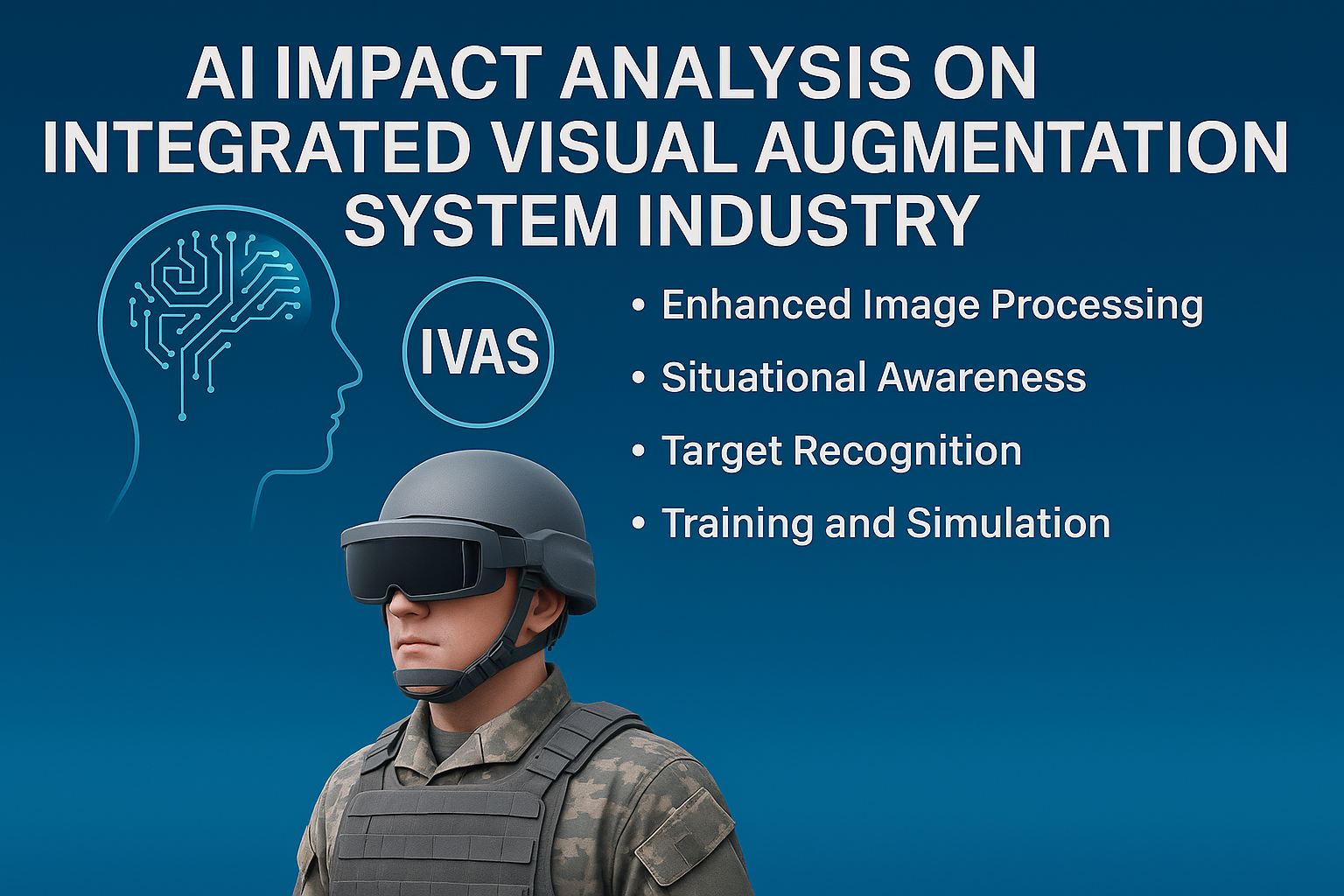
The integration of Artificial Intelligence (AI) into Integrated Visual Augmentation Systems (IVAS) marks a significant advancement in military technology. IVAS, combining augmented reality (AR) with AI, enhances soldiers' situational awareness, decision making, and overall operational effectiveness. This fusion of technologies is reshaping modern warfare and defense strategies.
AI Integration in IVAS Technology
AI plays a pivotal role in processing vast amounts of data collected by IVAS, enabling real time analysis and actionable insights. Machine learning algorithms assist in identifying patterns, predicting potential threats, and providing recommendations, thereby enhancing the system's responsiveness and accuracy.
AI Driven Situational Awareness in Combat
In combat scenarios, AI enhances situational awareness by analyzing environmental data and presenting critical information through AR displays. This real time data visualization allows soldiers to make informed decisions swiftly, improving mission outcomes and safety.
Enhancement of Soldier Training with AI in IVAS
AI integrated IVAS systems revolutionize military training by simulating realistic combat scenarios. These simulations provide immersive experiences, enabling soldiers to practice and refine their skills in controlled environments, leading to better preparedness for real world missions.
AI in Threat Detection and Targeting
AI algorithms enhance threat detection capabilities by analyzing sensor data to identify potential dangers. This includes recognizing enemy movements, detecting concealed weapons, and assessing threat levels, allowing for proactive responses and increased soldier safety.
AI Powered Voice and Gesture Command Capabilities
Integrating AI with voice and gesture recognition technologies enables hands free operation of IVAS. Soldiers can issue commands and interact with the system through natural movements and speech, reducing the need for manual controls and enhancing operational efficiency.
AI Enabled Thermal and Night Vision Advancements
AI enhances thermal imaging and night vision capabilities by processing and interpreting infrared data more accurately. This leads to clearer visuals in low light conditions, improving navigation and target identification during nighttime operations.
Get AI Impact Analysis on Integrated Visual Augmentation System Market, Request Pdf Brochure: https://www.marketsandmarkets.com/pdfdownloadNew.asp?id=264968355
Data Security and Cyber Protection in AI IVAS Systems
As IVAS relies heavily on data, ensuring cybersecurity is paramount. AI contributes to data protection by detecting anomalies, preventing unauthorized access, and responding to cyber threats in real time, safeguarding sensitive military information.
Challenges in Scaling AI for IVAS Deployment
Scaling AI integrated IVAS presents challenges such as ensuring system reliability, managing power consumption, and maintaining user comfort. Addressing these issues requires ongoing research and development to optimize hardware and software components for field deployment.
Future of AI in the IVAS Market
The future of AI in IVAS is promising, with advancements expected in areas like autonomous decision making, enhanced human machine collaboration, and integration with other military systems. These developments will further solidify AI's role in modern defense strategies.
AI integration into IVAS significantly enhances military capabilities, offering improved situational awareness, training, threat detection, and overall operational efficiency. As technology continues to evolve, AI will remain a cornerstone in the advancement of defense systems, shaping the future of military operations.
Related Report:
Integrated Visual Augmentation System Market by End-User (Air Force, Army, Navy), Product (Helmet Mounted Display, Night Vision Device), Technology (Augmented Reality, Virtual Reality, Mixed Reality), Application and Region - Global Forecast to 2029

This FREE sample includes market data points, ranging from trend analyses to market estimates & forecasts. See for yourself.
SEND ME A FREE SAMPLE






