Electric Heat Tracing Market: Supporting Industrial Process Reliability And Energy Infrastructure Modernization
Electric Heat Tracing Systems Become Critical to Industrial Thermal Management
The electric heat tracing market is witnessing strong growth as industries increasingly prioritize process reliability, freeze protection, operational safety, and energy-efficient thermal management systems across industrial infrastructure. Electric heat tracing technologies are no longer limited to conventional pipe freeze-protection applications; they are now becoming integral to process optimization, energy infrastructure modernization, and industrial automation ecosystems.
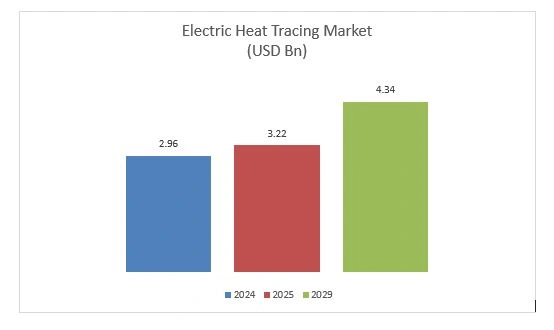
The global electric heat tracing market was valued at USD 2.96 billion in 2024 and is projected to reach USD 3.22 billion by 2029, growing at a CAGR of 7.9% from 2024 to 2029. Market expansion is being driven by increasing investments in LNG infrastructure, chemical processing facilities, renewable energy projects, hydrogen infrastructure, water & wastewater treatment systems, and industrial automation modernization. Rising demand for temperature maintenance systems across pipelines, tanks, process equipment, and critical industrial assets is also accelerating long-term adoption globally.
Market Drivers & Opportunities
Expanding Applications Across Industrial and Commercial Infrastructure
The market includes self-regulating heat tracing systems, constant wattage heating cables, mineral-insulated heating cables, and advanced thermal monitoring solutions designed for maintaining or raising temperatures across industrial systems and infrastructure.
Electric heat tracing technologies are widely used across oil & gas pipelines, LNG terminals, chemical plants, pharmaceutical facilities, food processing units, power generation infrastructure, semiconductor fabs, and commercial buildings. These systems help prevent freezing, maintain process temperatures, improve fluid flow consistency, reduce operational downtime, and enhance infrastructure safety.
To know about the assumptions considered for the study download the pdf brochure
Industrial operators are increasingly integrating heat tracing systems with digital monitoring platforms, automation systems, industrial sensors, and remote diagnostics technologies to improve operational visibility and predictive maintenance capabilities. Commercial applications such as roof de-icing, underfloor heating, and fire sprinkler freeze protection are also supporting market diversification.
The broader ecosystem includes heating cable manufacturers, insulation providers, automation companies, EPC contractors, industrial distributors, and end-use operators. Growing focus on industrial efficiency and infrastructure resilience is reshaping purchasing priorities across the market.
LNG Expansion and Energy Transition Strengthen Long-Term Market Outlook
The electric heat tracing market is increasingly benefiting from global investments in LNG infrastructure, hydrogen projects, renewable energy systems, and industrial decarbonization initiatives. Heat tracing systems are becoming essential for maintaining operational reliability across cryogenic pipelines, process instrumentation, storage tanks, and temperature-sensitive industrial environments.
Oil & gas remains the largest application segment due to extensive deployment across upstream, midstream, and downstream infrastructure. Heat tracing systems are critical for preventing freezing, maintaining viscosity control, and ensuring uninterrupted operations under extreme climatic conditions.
Hydrogen infrastructure and carbon capture systems are also emerging as important growth areas due to increasing requirements for advanced thermal management and process stability. As energy infrastructure becomes increasingly complex, operators are prioritizing intelligent and energy-efficient thermal management solutions.
Industrial automation is further transforming market dynamics. Enterprises are increasingly deploying connected heat tracing systems integrated with predictive maintenance software, centralized monitoring platforms, and industrial IoT architectures capable of improving operational efficiency and reducing maintenance costs.
However, the market continues facing challenges associated with high installation costs, energy price volatility, maintenance complexity in hazardous environments, and stringent industrial electrical compliance requirements. Supply chain constraints affecting specialty heating cables and insulation materials also remain important operational considerations.
Energy Efficiency and Safety Standards Influence Industry Evolution
The electric heat tracing market operates within highly regulated industrial environments where operational safety, hazardous-area compliance, and energy efficiency are critically important. Systems deployed across oil & gas, chemicals, power generation, and pharmaceutical facilities must comply with standards including IEC, IEEE, NEC, ATEX, UL, CSA, and IECEx certifications.
Industrial operators are increasingly prioritizing energy-efficient thermal management solutions capable of reducing energy losses and improving operational sustainability. Replacement of conventional steam tracing systems with electric heat tracing technologies is accelerating due to improved temperature precision, reduced maintenance requirements, and lower lifecycle operational costs.
Environmental regulations and industrial decarbonization initiatives are also influencing purchasing decisions across process industries. Intelligent thermal monitoring systems, predictive maintenance capabilities, and automated diagnostics are becoming increasingly important as enterprises prioritize operational visibility and energy optimization.
Chemicals, Pharmaceuticals, Food Processing, and Power Infrastructure Expand Market Opportunities
The chemicals industry remains a major demand center due to increasing requirements for precise temperature control, hazardous fluid handling, and process reliability across industrial processing environments.
Pharmaceutical and biotechnology manufacturers are increasingly deploying electric heat tracing systems within sterile and temperature-sensitive manufacturing operations to improve process stability and regulatory compliance. Food & beverage processing facilities are also adopting advanced heat tracing technologies to maintain hygienic process conditions and strengthen operational consistency.
Power generation infrastructure including thermal plants, nuclear facilities, renewable energy systems, and district heating networks continues supporting market demand due to growing requirements for operational reliability and thermal management.
Semiconductor manufacturing and battery production facilities are emerging as additional growth areas due to increasing deployment of advanced industrial infrastructure requiring highly stable thermal operating environments.
Regional Industrial Investments Accelerate Adoption
North America remains a major market supported by LNG export expansion, shale gas infrastructure development, industrial automation investments, and modernization of aging pipeline networks. The United States continues investing heavily in energy infrastructure, advanced manufacturing, and industrial digitalization.
Europe continues emphasizing industrial sustainability, hydrogen infrastructure, emissions reduction initiatives, and energy-efficient industrial systems. Regional focus on decarbonization and modernization of industrial infrastructure is supporting long-term demand for electric heat tracing technologies.
Asia Pacific represents the fastest-growing regional market due to rapid industrialization, refinery expansion, chemical production growth, semiconductor investments, and infrastructure modernization. China and India continue investing heavily in petrochemical facilities, pharmaceutical manufacturing, industrial corridors, and energy infrastructure.
Japan and South Korea remain technologically advanced markets supported by semiconductor manufacturing, precision industrial processing, and LNG infrastructure expansion.
Smart Monitoring and Digital Thermal Management Redefine Competitive Positioning
The market is increasingly transitioning toward intelligent and digitally connected thermal management ecosystems. Manufacturers are investing heavily in predictive maintenance systems, industrial IoT-enabled monitoring platforms, automated diagnostics, and energy optimization technologies. Key technology trends shaping the market include:
- Self-regulating heating cable technologies
- Intelligent temperature monitoring systems
- Industrial IoT-enabled heat tracing platforms
- Remote diagnostics and predictive maintenance
- Energy-efficient thermal insulation integration
- Hazardous-area certified control systems
- Advanced mineral-insulated heating cables
- Digital thermal management software
- Smart industrial monitoring architectures
- Sustainable low-energy heating systems
These technologies are helping industries improve operational visibility, reduce downtime, optimize energy consumption, and strengthen infrastructure safety across industrial environments.
Competitive Landscape Evolves Toward Intelligent Thermal Management Solutions
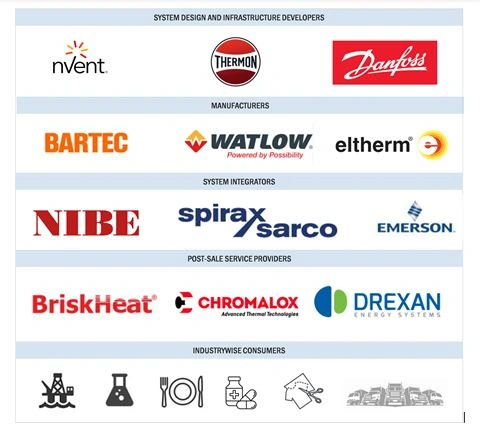
The electric heat tracing market remains moderately competitive with leading companies focusing on digital monitoring capabilities, hazardous-area expertise, energy-efficient technologies, and industrial automation integration. Major market participants include nVent Electric plc, Thermon Group Holdings, Inc., Emerson Electric Co., Spirax Group plc, Chromalox, Danfoss A/S, Bartec Group, eltherm GmbH, Parker Hannifin Corporation, and Pentair plc.
Competitive differentiation is increasingly shifting toward intelligent thermal management platforms integrated with automation systems, predictive maintenance capabilities, and industrial IoT architectures. Companies are also strengthening positions through LNG infrastructure participation, industrial partnerships, and smart monitoring product launches.
Strategic Recommendations for OEMs and Infrastructure Operators
The report highlights strategic recommendations for heat tracing OEMs, automation companies, EPC contractors, and industrial infrastructure operators regarding long-term investment priorities and operational strategies.
Manufacturers should prioritize development of intelligent heat tracing systems integrated with digital monitoring, predictive maintenance, and energy optimization capabilities. Companies must increasingly focus on hazardous-area certified solutions, hydrogen-compatible thermal systems, and sustainable low-energy technologies.
Industrial operators should accelerate replacement of aging steam tracing infrastructure with connected electric heat tracing ecosystems capable of improving operational reliability and reducing lifecycle maintenance costs. Organizations investing early in intelligent thermal management systems are expected to gain long-term operational advantages as industrial infrastructure increasingly transitions toward connected and automated operations.
Recent Developments and Its Implications For Growth Prospectus
-
February 2025: nVent Expands Intelligent Heat Tracing Solutions for Industrial Infrastructure
- Development: nVent continued strengthening its intelligent heat tracing portfolio through expansion of digital monitoring and connected thermal management capabilities for industrial and energy infrastructure applications.
- So what-Impact: This validates growing demand for connected heat tracing systems integrated with predictive maintenance and industrial automation platforms.
-
November 2024: Thermon Advances Thermal Management Solutions for Hydrogen and LNG Infrastructure
- Development: Thermon continued expanding thermal management capabilities supporting hydrogen projects, LNG terminals, and energy transition infrastructure requiring precise temperature maintenance systems.
- So what-Impact: Rising investments in LNG and hydrogen infrastructure are creating substantial long-term opportunities for advanced heat tracing technologies.
-
August 2024: Emerson Strengthens Integration of Plant Monitoring and Thermal Management Systems
- Developement : Emerson continued enhancing digital plant monitoring and automation integration capabilities supporting industrial thermal management and operational reliability systems.
- So what -Impact : Industrial operators are increasingly prioritizing centralized operational intelligence platforms integrating thermal management within broader automation ecosystems.
-
June 2024: Pharmaceutical Manufacturers Increase Adoption of Electric Heat Tracing Systems
- Developement :Pharmaceutical and biotechnology facilities continued increasing deployment of electric heat tracing systems for sterile manufacturing environments and temperature-sensitive processing operations.
- So what -Impact : Precision thermal management is becoming increasingly important within regulated healthcare manufacturing infrastructure.
-
April 2024: LNG Infrastructure Expansion Continues Supporting Heat Tracing Demand
- Developement : Global investments in LNG storage, transportation, and terminal infrastructure continued strengthening demand for advanced thermal management systems supporting cryogenic operations.
- So what -Impact : LNG expansion remains one of the strongest long-term structural growth drivers for electric heat tracing technologies globally.
-
Industrial Decarbonization Initiatives Accelerate Shift from Steam to Electric Heat Tracing
- Developement : Industrial operators across North America, Europe, and Asia increasingly accelerated replacement of conventional steam tracing systems with energy-efficient electric heat tracing technologies during 2024 and 2025.
- So what -Impact : This transition validates the growing strategic importance of energy-efficient and digitally optimized thermal management systems across industrial infrastructure.
The electric heat tracing market’s expansion toward USD 4.34 billion by 2029 reflects the growing importance of intelligent thermal management systems across industrial infrastructure, energy projects, and advanced manufacturing environments. Industries are increasingly transitioning toward connected and energy-efficient thermal management ecosystems capable of improving operational reliability, infrastructure safety, and process efficiency.
LNG infrastructure expansion, industrial automation, hydrogen projects, energy transition investments, and smart industrial monitoring systems are expected to remain the primary structural growth drivers shaping the market between 2024 and 2029. Organizations investing strategically in intelligent and energy-efficient thermal management technologies will be positioned to capture substantial long-term value as industrial infrastructure modernization accelerates globally.
This report focuses on industrial investments, technology developments, product innovations, and regulatory trends from verified industry sources, but does not provide a detailed assessment of geopolitical disruptions, regional energy supply volatility, or commodity price fluctuations that may influence industrial infrastructure investments globally.
Frequently Asked Questions:
- What is the market size, growth trajectory, and key investment thesis for the electric heat tracing market through 2029?
Answer: The electric heat tracing market was valued at USD 3.22 billion in 2025 and is projected to reach USD 4.34 billion by 2029, growing at a CAGR of 7.9% during the forecast period. Key growth drivers include LNG infrastructure expansion, industrial automation modernization, hydrogen economy investments, and increasing adoption of energy-efficient thermal management systems.
- Which industries are expected to drive the highest demand for electric heat tracing systems globally?
Answer: Oil & gas, chemicals, LNG infrastructure, pharmaceuticals, food & beverage processing, power generation, semiconductor manufacturing, and renewable energy sectors are expected to remain the primary demand centers for electric heat tracing systems globally.
- What are the major operational and strategic challenges associated with electric heat tracing deployment?
Answer: Major challenges include high installation costs, energy price volatility, hazardous-area maintenance complexity, compliance with industrial electrical standards, and supply chain constraints affecting specialty heating cables and insulation materials.
- How are industrial automation and digital monitoring technologies influencing electric heat tracing systems?
Answer: Industrial automation and digital monitoring technologies are transforming electric heat tracing systems into intelligent thermal management ecosystems integrated with predictive maintenance platforms, industrial IoT architectures, and centralized operational monitoring systems.
Related Reports:
Electric Heat Tracing Market by Type (Self-regulating, Constant Wattage, Mineral-insulated), Component (Heat Tracing Cables, Control & Monitoring Systems, Thermal Insulation Materials, Power Connection Kits), Vertical - Global Forecast to 2029
Contact:
Mr. Aashish Mehra
MarketsandMarkets™ INC.
630 Dundee Road
Suite 430
Northbrook, IL 60062
USA : 1-888-600-6441
[email protected]

This FREE sample includes market data points, ranging from trend analyses to market estimates & forecasts. See for yourself.
SEND ME A FREE SAMPLE

