Battlefield Management Systems Market by Solution (Hardware, Software) Platform (Armored Vehicles, Headquarter, and Command Centers, Soldier Systems), System, Component, Installation Type, End-User, Region (2025-2035)


Battlefield Management Systems Market
Battlefield Management Systems Market Summary
The global Battlefield Management Systems Market is estimated to reach approximately USD 12.40 billion in 2025 and is projected to grow to USD 28.90 billion by 2035, registering a CAGR of 8.8% during the forecast period. The market is being driven by increasing defense modernization initiatives, rising demand for real-time situational awareness, and the growing complexity of modern warfare environments. Battlefield Management Systems (BMS) enable seamless communication, data sharing, and command coordination across military units, significantly enhancing operational efficiency and decision-making. The integration of artificial intelligence (AI), Internet of Things (IoT), and automation is transforming BMS into intelligent, network-centric platforms capable of predictive analytics, autonomous decision support, and enhanced battlefield visualization. Digital transformation in defense ecosystems, combined with the need for faster, data-driven military operations, is further accelerating market growth.
Key Market Trends & Insights
The Battlefield Management Systems Market is evolving rapidly as defense forces worldwide shift toward network-centric warfare and digital command infrastructures. North America leads the market due to its advanced military capabilities, high defense spending, and early adoption of AI-driven defense technologies. Asia Pacific is the fastest-growing region, driven by increasing defense budgets, geopolitical tensions, and large-scale military modernization programs.
Software solutions dominate the market, as they form the backbone of data integration, visualization, and decision-making within BMS platforms. Hardware components such as communication devices, computing systems, and display units continue to play a critical supporting role. Emerging trends include AI-enabled command systems, real-time data fusion, and integration with unmanned and autonomous systems.
AI and automation are significantly enhancing battlefield efficiency by enabling predictive threat analysis, automated decision support, and improved coordination among military units. IoT-enabled sensors and devices are providing real-time data from the battlefield, improving situational awareness and operational effectiveness.
Market Size & Forecast
-
Base year market size (2025): USD 12.40 billion
-
Forecast value by 2035: USD 28.90 billion
-
CAGR (2025–2035): 8.8%
-
Growth is driven by defense modernization, adoption of AI and IoT technologies, increasing demand for real-time situational awareness, and integration of advanced communication systems
Battlefield Management Systems Market Top 10 key takeaway
-
The market is expected to exceed USD 28 billion by 2035
-
AI-driven systems are transforming battlefield operations
-
North America dominates due to advanced military infrastructure
-
Asia Pacific is the fastest-growing region globally
-
Software solutions lead the market segment
-
IoT-enabled sensors are enhancing situational awareness
-
Automation is improving decision-making and operational efficiency
-
Integration with unmanned systems is creating new opportunities
-
Defense digitization is accelerating market growth
-
Continuous innovation is intensifying competition
Product Insights
Software solutions represent the leading segment in the Battlefield Management Systems Market, as they are essential for data integration, visualization, and command coordination. These systems enable real-time communication between various military units, providing commanders with actionable insights and improving decision-making processes. The increasing complexity of modern warfare and the need for rapid information exchange have significantly contributed to the dominance of software-based solutions.
Hardware components, including communication devices, rugged computing systems, and display units, continue to play a vital role in supporting BMS functionality. These components ensure reliable data transmission and system performance in harsh battlefield environments. However, the market is witnessing a shift toward integrated and modular systems that combine hardware and software capabilities.
Emerging product categories include cloud-enabled BMS platforms, mobile-based systems, and wearable technologies for soldiers. These innovations are enhancing flexibility, mobility, and operational efficiency. The integration of AI-driven analytics and automation features is further transforming BMS into intelligent systems capable of predictive decision-making and real-time threat assessment.
Technology / Component Insights (Rename based on keyword if needed)
Technological advancements are at the core of the Battlefield Management Systems Market, with AI, IoT, and cloud computing playing pivotal roles in shaping next-generation solutions. AI is enabling advanced data analytics, predictive threat detection, and automated decision support, significantly enhancing battlefield efficiency and response times.
IoT integration is facilitating real-time data collection from various sensors, devices, and platforms, providing a comprehensive view of the battlefield. This connectivity enables seamless communication between ground forces, aerial units, and command centers, improving coordination and situational awareness.
Cloud-based platforms are being used to process and store large volumes of data, enabling scalable and efficient data management. Automation technologies are streamlining operations by reducing manual intervention and improving system reliability. Future innovation trends include the development of autonomous BMS platforms, integration with edge computing, and enhanced cybersecurity solutions to protect sensitive data.
Application Insights
The land forces segment dominates the Battlefield Management Systems Market, driven by the extensive use of BMS in ground operations and the need for real-time coordination among troops. These systems are essential for mission planning, execution, and monitoring, providing commanders with critical information to make informed decisions.
Naval and air force applications are also witnessing significant growth, as modern military operations increasingly require integrated command systems across multiple domains. The adoption of BMS in these segments is enhancing coordination between different branches of the military and improving overall operational efficiency.
Future opportunities lie in the integration of BMS with autonomous and unmanned systems, enabling more efficient and flexible operations. As warfare continues to evolve, the demand for advanced BMS solutions across all military domains is expected to increase.
Regional Insights
North America leads the Battlefield Management Systems Market, supported by its advanced defense infrastructure, high military expenditure, and strong focus on technological innovation. The region continues to invest heavily in AI-driven defense systems and network-centric warfare capabilities.
Europe is experiencing steady growth, driven by collaborative defense initiatives, modernization programs, and increasing focus on regional security. Countries in this region are investing in upgrading their defense systems with advanced BMS solutions.
Asia Pacific is the fastest-growing region, fueled by rising geopolitical tensions, increasing defense budgets, and rapid military modernization. Countries such as China and India are focusing on enhancing their defense capabilities, driving demand for advanced BMS systems.
-
North America dominates due to advanced defense infrastructure
-
Europe shows steady growth with modernization initiatives
-
Asia Pacific is the fastest-growing region globally
-
Increasing defense budgets are driving global demand
-
Technological advancements are accelerating adoption
Country-Specific Market Trends
In Asia Pacific, China is witnessing a CAGR of approximately 10.5%, driven by large-scale military modernization and investments in advanced defense technologies. Japan is also experiencing steady growth, supported by increasing defense spending and focus on technological innovation.
In North America, the United States remains the largest market, with a CAGR of around 8.2%, driven by continuous investment in next-generation defense systems. Canada and Mexico are also contributing to market growth through modernization initiatives and increased defense spending.
In Europe, Germany and France are key markets, with CAGRs of approximately 8.0% and 7.8%, respectively. These countries are focusing on enhancing their defense capabilities through advanced technologies and collaborative programs.
-
China leads growth in Asia Pacific with strong defense investments
-
Japan focuses on innovation and modernization
-
The United States dominates the global market
-
Germany and France drive growth in Europe
-
Government policies and defense budgets are key growth drivers
Key Battlefield Management Systems Market Company Insights
The Battlefield Management Systems Market is highly competitive, with key players focusing on innovation, technological integration, and strategic partnerships to strengthen their market position. Leading companies such as Lockheed Martin, Northrop Grumman, BAE Systems, Thales Group, Elbit Systems, and Saab AB are playing a significant role in shaping the market.
These companies are investing heavily in AI-driven solutions, advanced communication systems, and integrated platforms to enhance battlefield efficiency. Strategic collaborations with governments and defense agencies are enabling them to expand their capabilities and market presence.
The focus on modular designs, interoperability, and integration with autonomous systems is shaping competitive strategies. Continuous research and development efforts are helping companies stay ahead in a rapidly evolving market.
-
Companies are investing in AI and automation technologies
-
Strategic partnerships are driving market expansion
-
Focus on interoperability and integration is increasing
-
R&D investments are accelerating innovation
-
Global expansion strategies are strengthening market presence
Recent Developments
Recent developments in the Battlefield Management Systems Market highlight the growing emphasis on digital transformation and advanced technologies. Several companies have launched AI-enabled BMS platforms with enhanced data analytics and real-time decision support capabilities.
In addition, partnerships between defense contractors and technology firms are enabling the integration of IoT-based solutions, improving situational awareness and operational efficiency. Governments are also awarding contracts for the development of next-generation BMS systems as part of broader military modernization programs.
Market Segmentation
The Battlefield Management Systems Market is segmented based on product, technology/component, application, and region. By product, the market includes software and hardware solutions, with software dominating due to its critical role in data integration and decision-making.
In terms of technology, the market encompasses AI-enabled systems, IoT-integrated solutions, cloud-based platforms, and automated control systems. These technologies are driving advancements in efficiency, connectivity, and performance.
Applications are categorized into land, naval, and air force operations, each with distinct requirements and growth dynamics. Regionally, the market is divided into North America, Europe, Asia Pacific, and the rest of the world.
-
Software solutions dominate the product segment
-
AI and IoT technologies are driving innovation
-
Land forces represent the largest application segment
-
Naval and air segments show strong growth potential
-
Asia Pacific is emerging as a key growth region
Conclusion
The Battlefield Management Systems Market is poised for substantial growth through 2035, driven by the increasing integration of AI, IoT, and automation in defense systems. As modern warfare becomes more data-driven and complex, the demand for advanced BMS solutions capable of delivering real-time insights and enhancing operational efficiency will continue to rise.
The market offers significant opportunities for innovation, particularly in the development of autonomous and intelligent systems. Companies that invest in advanced technologies and align their strategies with evolving defense requirements will be well-positioned to capitalize on future growth. Overall, Battlefield Management Systems will play a critical role in shaping the future of global defense operations.
FAQs
1. What is the current market size of the Battlefield Management Systems Market?
The market size is estimated at USD 12.40 billion in 2025.
2. What is the expected growth rate of the market?
The market is projected to grow at a CAGR of 8.8% from 2025 to 2035.
3. What are the key drivers of market growth?
Key drivers include defense modernization, AI integration, IoT adoption, and increasing demand for real-time situational awareness.
4. Which region leads the Battlefield Management Systems Market?
North America is the leading region due to advanced defense infrastructure and high military spending.
5. Who are the major players in the market?
Major players include Lockheed Martin, Northrop Grumman, BAE Systems, Thales Group, Elbit Systems, and Saab AB.
 Exclusive indicates content/data unique to MarketsandMarkets and not available with any competitors.
table of contents
1.... introduction
1.1 Study objectives
1.2 Market definition
1.3 Study SCOPE
1.3.1 Market segmentation
1.3.2 INCLUSIONS and EXCLUSIONS
1.4 Years Considered
1.4.1 HISTORICAL YEAR- 2020-2023
1.4.2 BASE YEAR- 2024
1.4.3 FORECAST PERIOD- 2025-2030
1.5 currency considered
1.6 Stakeholders
1.7 currency considered
1.8 Summary of Changes
2.... research methodology
2.1 Research data
2.1.1 Secondary data
2.1.1.1 Key data from secondary sources
2.1.2 Primary data
2.1.2.1 Key primary sources
2.1.2.2 Key data from primary sources
2.2 Factor Analysis
2.2.1 Introduction
2.2.2 demand-side indicators
2.2.3 supply-side indicators
2.3 MARKET SIZE ESTIMATION
2.3.1 Bottom-up Approach
2.3.1.1 Market size estimation and methodology
2.3.2 TOP-DOWN APPROACH
2.4 DATA TRIANGULATION
2.5 Research Assumptions
2.6 limitations
3.... executive summary
4.... Premium InsightS
4.1 attractive opportunities for players in the Battlefield Management System Market
4.2 Battlefield Management System Market, by system
4.3 Battlefield Management System Market, by component
4.4 Battlefield Management System Market, by solution
4.5 Battlefield Management System Market, by platform
4.6 Battlefield Management System Market, by end user
4.7 BATTLEFIELD MANAGEMENT SYSTEM MARKET, BY COUNTRY
5.... Market Overview
5.1 introduction
5.2 Market Dynamics
5.2.1 Drivers
5.2.2 Restraints
5.2.3 Opportunities
5.2.4 CHALLENGES
5.3 Pricing Analysis
5.4 VALUE CHAIN analysis
5.5 ecosystem analysis
5.5.1 PROMINENT COMPANIES
5.5.2 Private AND SMALL ENTERPRISES
5.5.3 end users
5.6 Technology Analysis
5.6.1 Key Technologies
5.6.2 Complementary Technologies
5.6.3 Adjacent Technologies
5.7 TRENDS and DISRUPTIONS IMPACTING CUSTOMER BUSINESS
5.8 trade analysis
5.9 Regulatory Landscape
5.10 Case Study Analysis
5.11 Key stakeholders AND buying criteria
5.11.1 Key Stakeholders in the Buying Process
5.11.2 Buying criteria
5.12 Key Conferences and Events, 2026-2027
5.13 investments and funding scenario
5.14 OPERATIONAL DATA
5.15 Technology roadmap
5.16 total cost of ownership
5.17 business models
5.18 Bill of materials
5.19 Impact of AI/Gen AI
5.20 Macroeconomic outlook
5.20.1 Introduction
5.20.2 North America
5.20.3 EUROPE
5.20.4 Asia Pacific
5.20.5 Middle East
5.20.6 RoW
6.... Industry trends
6.1 Introduction
6.2 TECHNOLOGY trends
6.3 Impact of MEGAtrends
6.4 Supply Chain Analysis
6.5 Patent Analysis
7.... Battlefield Management System Market, BY component ( MARKET SIZE & FORECAST TO 2030- by value (USD MILLION), volume (units))
7.1 InTRODUCTION
7.2 Communication Devices
7.2.1 Wired Communication Devices
7.2.1.1 Demand for dedicated bandwidth for military communication purposes increases demand for wired devices
7.2.2 Wireless Communication Devices
7.2.2.1 Procurement of wireless communication devices is high for faster data transfer among platforms
7.3 Imaging Devices
7.3.1 Demand for high-definition imaging devices for battlefield observation purposes fuels demand for imaging devices
7.4 DISPLAY DEVICES
7.4.1 integration of rugged lcd display systems for battlefield applications boosts demand for Display devices
7.5 tracking Devices
7.5.1 Demand for reliable asset tracking devices fuels tracking devices Market growth
7.6 computer hardware Devices
7.6.1 computer hardware devices segment driven by adoption of technologically advanced computing devices
7.7 data distribution units
7.7.1 demand for safe communication interface for various military equipment drives segment
7.8 night vision devices
7.8.1 demand for enhanced visible imaging boosts night vision
devices segment
7.9 software
7.9.1 command & control software
7.9.2 military situational awareness
7.9.3 Security Management
7.9.4 Others
8.... Battlefield Management System Market, BY solution (MARKET SIZE & FORECAST TO 2030- by value (USD MILLION), volume (units))
8.1 InTRODUCTION
8.2 Hardware
8.2.1 Demand for secure communication and data transfer between various military platforms is expected to drive this segment
8.3 Software
8.3.1 effective software modules expected to manage various functions for real-world combat situations
9.... Battlefield Management System Market, BY platform (MARKET SIZE & FORECAST TO 2030- by value (USD MILLION), volume (units))
9.1 InTRODUCTION
9.2 armored vehicles
9.2.1 Need to counter emergencies caused by insurgencies and militant attacks drives segment growth
9.2.1.1 Combat vehicles
9.2.1.1.1 Main Battle Tanks (MBTs)
9.2.1.1.1.1 Procurement of battlefield management system-enabled MBTs for border security purposes is high
9.2.1.1.2 Infantry Fighting Vehicles (IFVs)
9.2.1.1.2.1 Demand for advanced infantry vehicles fuels growth of battlefield management system Market
9.2.1.1.3 Air defense vehicles
9.2.1.1.3.1 Technological advancements in radar systems drive Market for air defense vehicles
9.2.1.1.4 Self-propelled howitzers
9.2.1.1.4.1 Increasing use of in-built electronic suites in howitzers drives Market
9.2.1.1.5 Armored amphibious vehicles
9.2.1.1.5.1 Demand for improved command over land and water surface during combat boost Market growth
9.2.1.2 Combat support vehicles
9.2.1.2.1 Armored command & control vehicles
9.2.1.2.1.1 Integration of battlefield management systems in modern armored vehicles drives Market
9.2.1.2.2 Armored supply trucks
9.2.1.2.2.1 Segment driven by increased use of advanced protection systems for military transportation
9.2.1.3 Unmanned armored ground vehicles
9.2.1.3.1 Integration of battlefield management systems in UAGVs for human-inconvenient mission operations is high
9.3 headquarter & command centers
9.3.1 Development of effective software modules to manage
Various functions for real-world combat situations fuel segment growth
9.4 Soldier Systems
9.4.1 Increasing budget allocations for Soldier Modernization Programs drives segment growth
10.. Battlefield Management System Market, BY system (MARKET SIZE & FORECAST TO 2030- by value (USD MILLION), volume (units))
10.2 computing
10.2.1 Increasing use of portable and wearable computing
Systems drives the Market
10.3 COMMUNICATION & NETWORKING
10.3.1 Demand for network-centric and data-centric communication
10.4 COMMAND & CONTROL
10.4.1 Use of Cloud computing and data storage solutions for Command & control in battlefield management is increasing
10.5 NAVIGATION, IMAGING, AND MAPPING
10.5.1 Demand for tracking and locating enemy forces
boosts segment growth
11.. Battlefield Management System Market, BY installation type (MARKET SIZE & FORECAST TO 2030- by value (USD MILLION), volume (units))
11.1 InTRODUCTION
11.2 New Installation
11.2.1 Growing defense budget allocations for new installation of the advanced battlefield management system will drive this segment
11.3 Upgradation
11.3.1 need for upgrading existing battlefield management systems will drive this segment
12.. Battlefield Management System Market, BY end user (MARKET SIZE & FORECAST TO 2030- by value (USD MILLION), volume (units))
12.1 InTRODUCTION
12.2 army
12.2.1 Increasing use of battle management systems for real-time information sharing is driving the Market
12.3 navy
12.3.1 Modernization of Battlefield management systems is
Driving the Market
12.4 air force
12.4.1 advanced battlefield MANAGEMENT systems are used to
enhance interoperability of defense platforms
13.. Battlefield Management System Market, by Region (MARKET SIZE & FORECAST TO 2030- by value (USD MILLION), volume (units))
13.1 introduction
13.2 NORTH AMERICA
13.2.1 PESTLe Analysis
13.2.2 US
13.2.2.1 US Army Accelerates Network-Centric Warfare Through Integrated BMS Modernization
13.2.3 Canada
13.2.3.1 Canadian Army Modernizes Land Command Systems to Strengthen Digital Battlefield Readiness
13.3 europe
13.3.1 PESTLE ANALYSIS
13.3.2 UK
13.3.2.1 NATO Alignment Shapes Open-Architecture Battlefield Management Platforms
13.3.3 Germany
13.3.3.1 Bundeswehr Modernization Accelerates Networked Command and Digital BMS Systems
13.3.4 France
13.3.4.1 SCORPION Program Positions BMS as the Backbone of Network-Centric Ground Operations
13.3.5 Italy
13.3.5.1 Army Digitization Efforts Expand BMS Integration Across Tactical and Command Levels
13.4 ASIA PACIFIC
13.4.1 Pestle ANALYSIS
13.4.2 India
13.4.2.1 Army Network Modernization Programs Push Large-Scale BMS Deployment
13.4.3 Japan
13.4.3.1 Defense Digitization Initiatives Strengthen BMS Adoption for Joint Land Operations
13.4.4 South Korea
13.4.4.1 Network-Centric Warfare Doctrine Accelerates BMS Integration Across Army Units
13.4.5 Australia
13.4.5.1 Land Force Digitization Programs Expand BMS Use Across Deployed and Domestic Operations
13.4.6 CHINA
13.4.6.1 Integrated Command Informatization Drives Large-Scale BMS Deployment
13.5 Latin America
13.5.1 PESTLE ANALYSIS
13.5.2 Brazil
13.5.2.1 Army Modernization Programs Support Gradual Adoption of Digital BMS Platforms
13.5.3 MEXICO
13.5.3.1 Security-Driven Operations Drive Selective BMS Deployment for Land Forces
13.6 Africa
13.6.1 PESTLE ANALYSIS
13.6.2 South Africa
13.6.2.1 Land Forces Modernization Focuses on Cost-Effective BMS Enhancements
13.7 middle east
13.7.1 PESTLE ANALYSIS
13.7.2 gulf cooperation council (GCC)
13.7.2.1 UAE
13.7.2.1.1 Digital Land Warfare Programs Drive Advanced and Integrated BMS Adoptio
13.7.2.2 Saudi Arabia
13.7.2.2.1 Land Forces Modernization and Localization Efforts Expand BMS Deployment
13.7.3 ISRAEL
13.7.3.1 Operationally Proven Digital Command Systems Sustain Continuous BMS Evolution
13.7.4 TURKEY
13.7.4.1 Indigenous Defense Programs Accelerate Domestic BMS Development and Deployment
14.. competitive LANDSCAPE
14.1 Introduction
14.2 KEY PLAYER STRATEGIES/RIGHT TO WIN, 2020–2024
14.3 REVENUE ANALYSES
14.4 Market Share Analysis
14.5 Brand/Product Comparison
14.6 COMPANY valuation and FINANCIAL METRICS
14.7 COMPANY EVALUATION matrix: key players, 2024
14.7.1 STARS
14.7.2 EMERGING LEADERS
14.7.3 PERVASIVE PLAYERS
14.7.4 PARTICIPANTS
14.7..5 company footprint: key players
14.8 Company Evaluation Matrix: Startups/SMEs, 2024
14.8.1 PROGRESSIVE COMPANIES
14.8.2 RESPONSIVE COMPANIES
14.8.3 DYNAMIC COMPANIES
14.8.4 STARTING BLOCKS
14.8.5 COMPETITIVE BENCHMARKING
14.9 COMPETITIVE SCENARIO & trends
14.9.1 PRODUCT Launches
14.9.2 Deals
14.9.3 OTHER developments
15.. Company profiles
15.1 key players
15.1.1 Lockheed Martin Corporation
15.1.1.1 Business overview
15.1.1.2 Products/Solutions offered
15.1.1.3 Recent developments
15.1.1.3.1 Deals
15.1.1.3.2 Other developments
15.1.1.4 MnM view
15.1.1.4.1 Right to win
15.1.1.4.2 Strategic choices
15.1.1.4.3 Weaknesses and competitive threats
15.1.2 Northrop Grumman Corporation
15.1.2.1 Business overview
15.1.2.2 Products/Solutions offered
15.1.2.3 Recent developments
15.1.2.3.1 Other developments
15.1.2.4 MnM view
15.1.2.4.1 Right to win
15.1.2.4.2 Strategic choices
15.1.2.4.3 Weaknesses and competitive threats
15.1.3 RTX Corporation
15.1.3.1 Business overview
15.1.3.2 Products/Solutions offered
15.1.3.3 Recent developments
15.1.3.3.1 Other developments
15.1.3.4 MnM view
15.1.3.4.1 Right to win
15.1.3.4.2 Strategic choices
15.1.3.4.3 Weaknesses and competitive threats
15.1.4 BAE Systems plc
15.1.4.1 Business overview
15.1.4.2 Products/Solutions offered
15.1.4.3 Recent developments
15.1.4.3.1 Other developments
15.1.4.4 MnM view
15.1.4.4.1 Right to win
15.1.4.4.2 Strategic choices
15.1.4.4.3 Weaknesses and competitive threats
15.1.5 Leonardo S.p.A
15.1.5.1 Business overview
15.1.5.2 Products/Solutions offered
15.1.5.3 Recent developments
15.1.5.3.1 Product launches
15.1.5.3.2 Deals
15.1.5.3.3 Other developments
15.1.5.4 MnM view
15.1.5.4.1 Right to win
15.1.5.4.2 Strategic choices
15.1.5.4.3 Weaknesses and competitive threats
15.1.6 Thales Group
15.1.6.1 Business overview
15.1.6.2 Products/Solutions offered
15.1.6.3 Recent developments
15.1.6.3.1 Other Developments
15.1.7 Collins Aerospace
15.1.7.1 Business overview
15.1.7.2 Products/Solutions offered
15.1.7.3 Recent developments
15.1.7.3.1 Other Developments
15.1.8 L3Harris Technologies, Inc
15.1.8.1 Business overview
15.1.8.2 Products/Solutions offered
15.1.8.3 Recent developments
15.1.8.3.1 Deals
15.1.8.3.2 Other developments
15.1.9 Leonardo S.p.A.
15.1.9.1 Business overview
15.1.9.2 Products/Solutions offered
15.1.9.3 Recent developments
15.1.9.3.1 Deals
15.1.9.3.2 Other developments
15.1.10 Elbit Systems Ltd
15.1.10.1 Business overview
15.1.10.2 Products/Solutions offered
15.1.10.3 Recent developments
15.1.10.3.1 Product launches
15.1.10.3.2 Other developments
15.1.11 Saab AB
15.1.11.1 Business overview
15.1.11.2 Products/Solutions offered
15.1.11.3 Recent developments
15.1.11.3.1 Product launches
15.1.11.3.2 Deals
15.1.11.3.3 Other developments
15.1.12 ASELSAN A.S.
15.1.12.1 Business overview
15.1.12.2 Products/Solutions offered
15.1.12.3 Recent developments
15.1.12.3.1 Deals
15.1.12.3.2 Other developments
15.1.13 General Dynamics Corporation
15.1.13.1 Business overview
15.1.13.2 Products/Solutions offered
15.1.13.3 Recent developments
15.1.13.3.1 Deals
15.1.13.3.2 Other developments
15.1.14 Indra Sistemas S.A.
15.1.14.1 Business overview
15.1.14.2 Products/Solutions offered
15.1.14.3 Recent developments
15.1.14.3.1 Product launches
15.1.14.3.2 Other developments
15.1.15 Bharat Electronics Limited
15.1.15.1 Business overview
15.1.15.2 Products/Solutions offered
15.1.15.3 Recent developments
15.1.15.3.1 Other developments
15.1.16 Ultra Electronics Holdings plc
15.1.16.1 Business overview
15.1.16.2 Products/Solutions offered
15.1.16.3 Recent developments
15.1.16.3.1 Product launches
15.1.16.3.2 Deals
15.1.16.3.3 Other developments
15.1.17 Systematic A/S
15.1.17.1 Business overview
15.1.17.2 Products/Solutions offered
15.1.17.3 Recent developments
15.1.17.3.1 Other developments
15.1.18 Curtiss-Wright Corporation
15.1.18.1 Business overview
15.1.18.2 Products/Solutions offered
15.1.19 Rheinmetall AG
15.1.19.1 Business overview
15.1.19.2 Products/Solutions offered
15.1.19.3 Recent developments
15.1.19.3.1 Other Developments
15.1.20 Rolta India Limited
15.1.20.1 Business overview
15.1.20.2 Products/Solutions offered
15.1.20.3 Recent developments
15.1.20.3.1 Other developments
15.1.21 Cobham plc
15.1.21.1 Business overview
15.1.21.2 Products/Solutions offered
15.1.21.3 Recent developments
15.1.21.3.1 Other developments
15.2 Other Players
15.2.1 Anduril Industries, Inc.
15.2.2 Nexter Systems
15.2.3 Sapura Secured Technologies
15.2.4 Israel Aerospace Industries
15.2.5 MPrest Systems
16.. Appendix
16.1 discussion guide
16.2 ANNEXURE
16.3 Annexure A: DefENse Program Mapping
16.4 KnowledgeStore: MarketsandMarkets’ subscription portal
16.5 Customization options
16.6 Related reports
16.7 AUTHOR DETAIL
Note: Running titles/drivers provided in the table of contents at the segment and country level will be updated during study updates!!
The study involved various activities in estimating the market size for battlefield management system. Exhaustive secondary research was undertaken to collect information on the battlefield management systems market, its adjacent markets, and its parent market. The next step was to validate these findings, assumptions, and sizing with the industry experts across the value chain through primary research. Both demand- and supply-side analyses were carried out to estimate the overall size of the market. Thereafter, market breakdown and data triangulation procedures were used to estimate the sizes of different segments and subsegments of the battlefield management systems market.
Secondary Research
In the secondary research process, various secondary sources, such as annual reports, Secondary sources include Publications of Statista, Clarksons Research, the International Maritime Organization (IMO), the Stockholm International Peace Research Institute (SIPRI), and the US Department of Defence: Publications, press releases & investor presentations of companies, certified publications, and articles by recognized authors were referred to for identifying and collecting information on the battlefield management systems market.
Primary Research
The battlefield management systems market comprises several stakeholders such as army, navy, air forces, regulatory bodies, research institutes and organizations, wholesalers, retailers, and distributors of battlefield management system software and hardware in its supply chain. The supply side is characterized by technological advancements taking place in the field of battlefield management systems such as the artificial intelligence, and cloud computing. The following is the breakdown of the primary respondents that were interviewed to obtain qualitative and quantitative information about the battlefield management systems market.
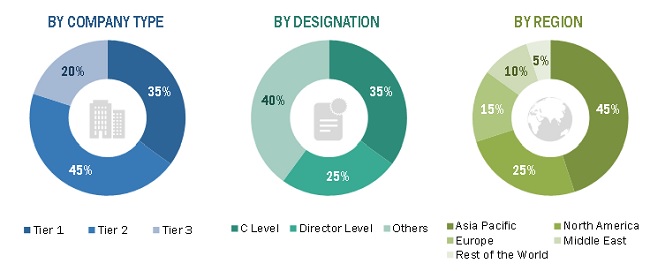
To know about the assumptions considered for the study, download the pdf brochure
Market Size Estimation
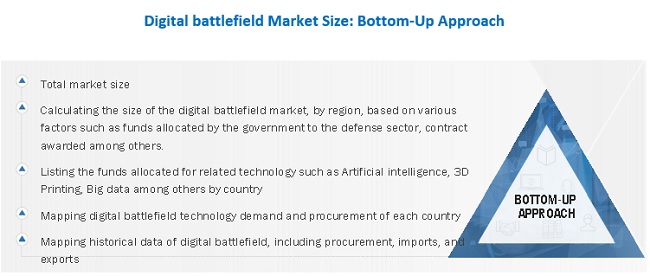
Both, top-down and bottom-up approaches were used to estimate and validate the battlefield management systems market size. These methods were also used extensively to estimate the size of various segments and subsegments of the market. The research methodology used to estimate the market size included the following steps:
- Key players in the industry and market were identified through extensive secondary research of their product matrix and geographical presence and developments undertaken by them.
- All percentage shares, splits, and breakdowns were determined using secondary sources and verified through primary sources.
Research Approach
Both top-down and bottom-up approaches were used to estimate and validate the total size of the battlefield management systems market. These methods were also used extensively to estimate the size of various segments and subsegment of the market. The research methodology used to estimate the market size included the following:
- Key players in the industry and market were identified through extensive secondary research of their product matrix and geographical presence and developments undertaken by them.
- All percentage shares, splits, and breakdowns were determined using secondary sources and verified through primary sources.
To know about the assumptions considered for the study, Request for Free Sample Report
Data Triangulation
After arriving at the overall size of the battlefield management systems market using the market size estimation processes explained above, the market was split into several segments and subsegments. To complete the overall market engineering process and arrive at the exact statistics of each market segment and subsegment, data triangulation, and market breakdown procedures were employed, wherever applicable. The data was triangulated by studying various factors and trends from demand as well as supply sides of the battlefield management systems market.
Objectives of the Report
- To define, describe, segment, and forecast the size of the battlefield management systems market based on technology, application, end user, and region
- To understand the structure of the market by identifying its various segments and subsegments
- To forecast the size of various segments of the market with respect to four major regions, namely, North America, Europe, Asia Pacific, Middle East, and Rest of the World, along with the major countries in each of these regions
- To identify and analyze key drivers, restraints, opportunities, and challenges that influence the growth of the battlefield management systems market
- To strategically analyze the micro-markets with respect to individual growth trends, prospects, and their contributions to the overall market
- To analyze the opportunities in the market for stakeholders by identifying key market trends
- To analyze competitive developments such as contracts, acquisitions, expansions, new product launches, and partnerships & agreements in the market
- To provide a detailed competitive landscape of the battlefield management systems market, along with an analysis of the business and corporate strategies adopted by leading players
Available Customizations
MarketsandMarkets offers the following customizations for this market report:
- Additional country-level analysis of the battlefield management systems market
- Profiling of additional market players (up to 5)
Product Analysis
- Product matrix, which provides a detailed comparison of the product portfolio of each company in the battlefield management systems market

 Generating Response ...










Growth opportunities and latent adjacency in Battlefield Management Systems Market