A Talk with Peter Koerte, the 'Future Architect' amid Siemens' Bet on Industrial Intelligence
This article is replicated from Forbes, where it was first published.
Over half a decade ago, I spoke with Roland Busch, then the COO & CTO of Siemens, about the megatrends impacting the world and Siemens in particular. Fast forward almost seven years, and I recently had the opportunity to speak with Peter Koerte, the current Chief Technology Officer (CTO) and Chief Strategy Officer (CSO) at Siemens AG, on the same topic. It was a fascinating interview, to say the least, an enlightening walk through Peter’s strategic vision for Siemens’ future.
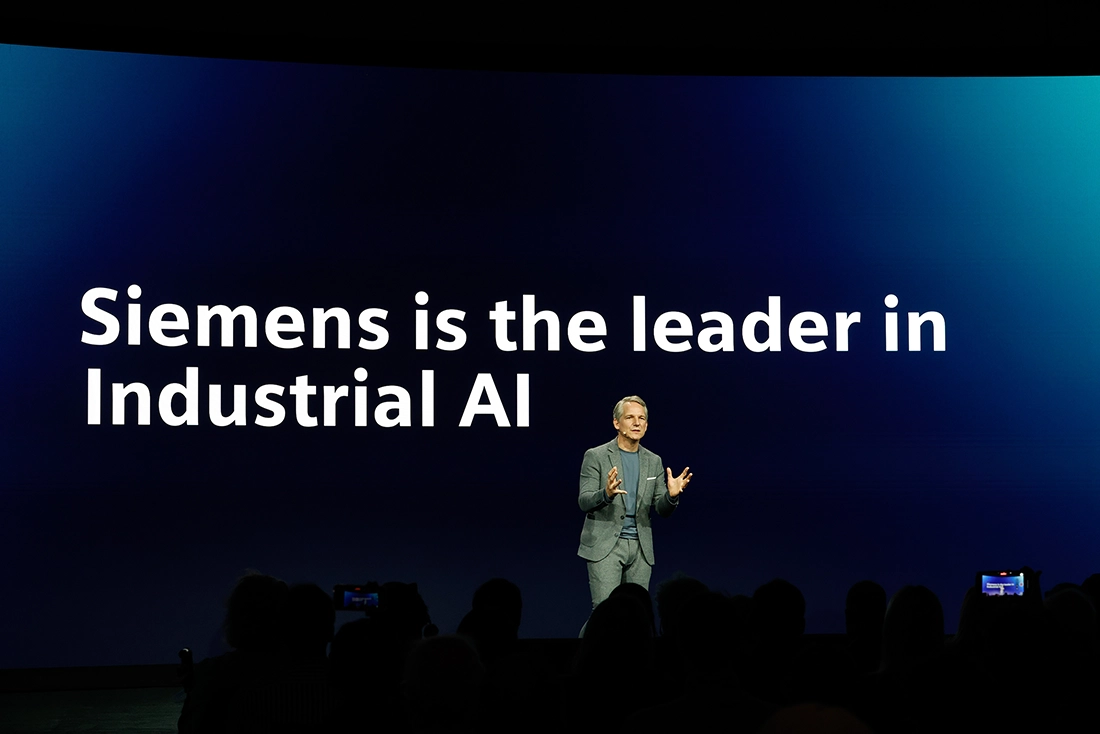
Peter Koerte is not someone who uses the usual corporate titles. Peter Koerte is not someone who uses the usual corporate titles. “Future architect” is a fitting way to describe his work. As CTO and Chief Strategy Officer of Siemens AG, Peter helps lead a company that is guiding one of the most significant technological transformations in industrial history. He is navigating a world filled with challenges such as tariffs, trade wars and differing technology standards between China, Europe and the United States. He's betting on electrification, automation and digitalization as a powerful three-pronged approach to navigate what he describes as the megatrend minefield of decarbonization, changing demographics, urban growth, digital advances and de-globalization, that are transforming the industry.
Megatrends Shaping the Future of Siemens
When I spoke with the last CTO of Siemens, we discussed five megatrends: urbanization, globalization, demographic changes, climate change and digitalization Of these, Peter believes that demographic changes will have the biggest influence on global industry. Apart from these megatrends, Siemens, under Peter Koerte, is choosing to bet on electrification, automation, quantum computing and digitalization as the factors that will have the most significant impact on the industry over the next few years, going as far as to say that solving these would make the world a much different place.
According to Peter, electrification is already transforming how we power our world, and the transition from alternating current to direct current, made possible by solid-state switching technology, will enhance efficiency and integrate smart features directly into the grid. Peter firmly believes that ‘energy is everything’—and Siemens is betting that intelligent grids will become the unseen backbone of the next century, providing a huge opportunity for the company.
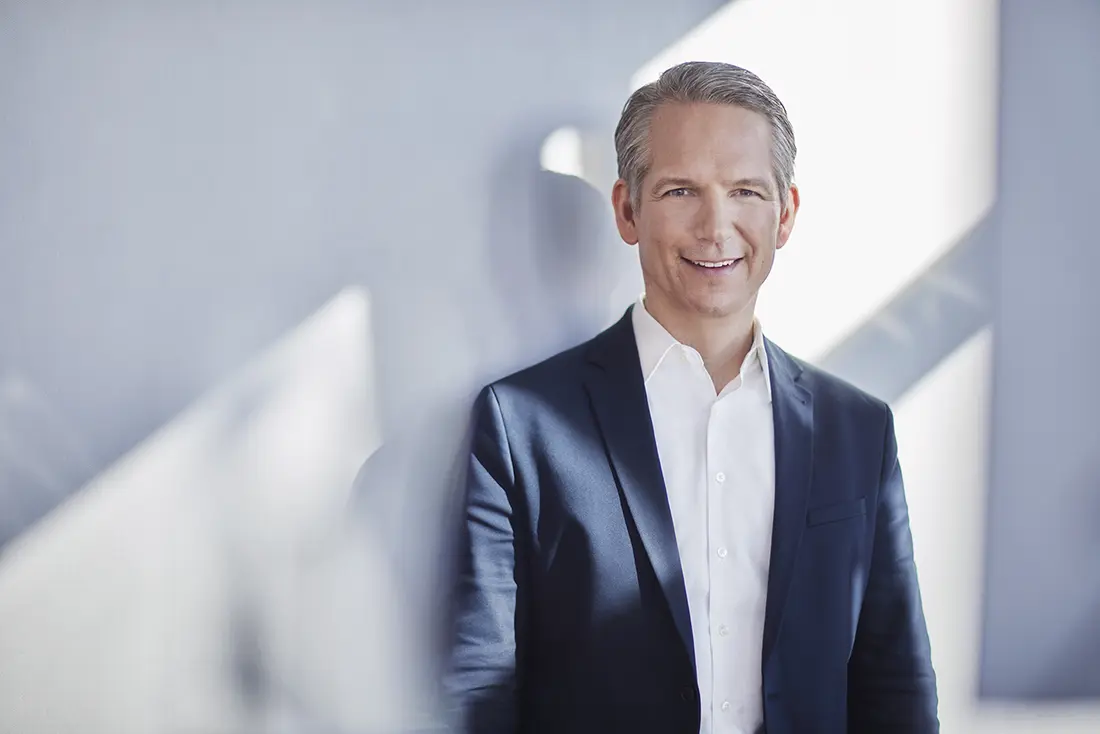
On the robotics front, Peter remains skeptical about the use of humanoid robots, believing that moving things between two points would be more efficient using wheels as opposed to a humanoid on two legs. His reasoning, as always, is straightforward and practical: specialized machines generally outperform human-like robots in most industrial tasks. He prefers innovation over imitating biology, especially when specialized machines better suited for the task can be created. However, he's paying close attention and is open to changing his stance if humanoid robots become popular in the consumer market and costs drop significantly. As he puts it, the final decision is still pending.
When it comes to digitalization, Peter emphasizes that hallucination would be ‘outright catastrophic’, highlighting the AI issue where models confidently produce incorrect information. In settings such as factories, power grids, or medical device manufacturing, AI must be precise and reliable with no room for approximation. Under Koerte, Siemens is working on an ‘industrial foundation model’, which, unlike typical models trained on language, focuses on CAD files, manufacturing data, engineering drawings and operational systems to develop intelligence capable of understanding the physical world as deeply as ChatGPT understands conversations. Siemens is confident that the model will enable designers, engineers and operators to collaborate effortlessly across disciplines, significantly reducing the time-to-market process.
What really excites Peter, though, is something innovative yet straightforward: smart glasses. His take on smart glasses isn't typical consumer gadgets from past tech flops, but advanced industrial AR glasses that offer real-time guidance, safety alerts and operational insights directly in a worker's field of view. As the company announced its collaboration with Meta and Ray-Ban at CES 2026, Siemens believes this could be the interface that finally makes AI feel natural and seamless on the factory floor. Peter believes augmented reality could provide a smart solution by literally looking over workers' shoulders to document tasks, then sharing that knowledge easily across teams. The benefits are immediate and clear, making industrial uses a perfect testing ground that he believes will lead to broader consumer acceptance. Peter is also interested in how the hardware development intersects with advancements in computational architecture. And while he acknowledges that the rise of quantum computing is real, he also believes that the future will be more of a hybrid system, with traditional CPUs and GPUs working alongside quantum processors tailored for specific, complex calculations.
This vision is both bold and practical—revitalizing long-established industries with state-of-the-art technology while staying grounded in what's truly effective. For Peter, the future isn't about science fiction; it's about intelligence woven into everyday life—hidden yet vital—enhancing the physical world one grid, one factory, one pair of glasses at a time.
The Move from Heavy Equipment to Software and AI
Peter is well aware of the diversity in the industrial AI scene. He notes that the electrification teams are focused and doing well, and are so busy setting up data centers and AI factories that digital transformation isn’t their primary concern. “They're all about electrons, not digits”, he says with a friendly smile, highlighting how engineers are happily working on the basics that power the AI revolution. However, it's in the realm of software and automation where the real transformation is occurring, and where Siemens faces its most pressing challenge: a skills gap that traditional software developers cannot bridge.
The company’s response, however, has been decisive. In 2024, they brought Altair Engineering Inc. to reimagine Industrial AI-enabled products from the ground up. The reasoning, Peter emphasizes, cuts to the heart of what makes AI fundamentally different. “AI models are fundamentally all about the data”, he insists. It's not just about coding—it requires data scientists who understand how to construct training sets, a capability that traditional software developers often lack. The company is leveraging GPU-accelerated simulation to generate synthetic data at scale, following the playbook that Roland discussed with Jensen Huang.
Yet, perhaps most revealing is where this team is headquartered: predominantly on the West Coast, not in Siemens' traditional European strongholds. Peter doesn't mince words about why. American culture, he argues, embraces risk-taking and rapid experimentation, whereas European markets remain hamstrung by regulation.
The marketplace strategy Siemens launched three years ago with Siemens Xcelerator represents another ambitious bet on industrial transformation. With over 700 partners now offering curated solutions, the platform aims to simplify complexity by organizing offerings around specific industry challenges—whether that's sustainability in consumer packaged goods or biodiversity in production processes. But Peter is refreshingly candid about the difficulties. Industrial marketplaces face a fundamental challenge that consumer platforms don't: deployment complexity. Unlike downloading a consumer app, implementing something like Teamcenter—Siemens' product lifecycle management software—requires extensive integration with existing systems. The solution, he suggests, lies in redesigning products for what he calls ‘product to channel fit’, creating lighter, SaaS-accessible versions that lower entry barriers and enable true plug-and-play adoption.
It's a vision that acknowledges both the transformative potential of industrial AI and the stubborn realities of enterprise deployment—along with an unsentimental assessment of where innovation can happen fastest in today's regulatory landscape.
Physical AI in the Industrial World
When asked about his current interests, Peter's excitement shifts toward industrial foundation models—the fascinating project of creating AI systems specifically designed for manufacturing and engineering. Yet, his enthusiasm is tempered by the valuable lessons from his past work in healthcare AI, reminding us of the importance of learning from each step of our journey. He shares that this experience helped him understand three vital truths about applying AI in high-stakes industrial contexts. First, accuracy is essential. When false alarms happen too often, they cause what he terms ‘alert fatigue’—a situation where individuals begin to ignore alerts altogether. In bustling industrial settings, where engineers are often skeptical, even a tiny error rate can make it difficult for new AI tools to gain acceptance.
The second challenge is more than just algorithms; it’s about seamlessly fitting into existing workflows. That’s why Peter sees smart glasses as incredibly valuable for operations, and why AI tools should be smoothly incorporated into design processes. As he says, “If it’s not embedded in your workflow, you're not going to use it.” Even the most advanced model won’t be helpful if it disrupts users’ routines or requires them to learn complicated new ways to interact with it.
However, it’s the third obstacle, according to Peter, that really highlights how much work remains before industrial AI reaches maturity: determining business models. How should we price AI capabilities? Should they be sold on their own or bundled with existing products? Peter calls these ‘mini problems’, and they’re more than just technical questions—he highlights that how we approach them will determine whether industrial foundation models become essential infrastructure or just expensive experiments.
These are the puzzles that Siemens’ first architect is looking to solve in real-time, building not just the technology but the entire commercial and operational framework needed to make industrial AI actually work in the physical world.
Conclusion
Peter's leadership philosophy is deeply influenced by his early years at Boston Consulting Group, which he affectionately refers to as his ‘domestication’. He openly shares that these formative experiences helped shape his general outlook on life and fostered a core belief that people are naturally driven by purpose, impact and a desire to be acknowledged and understood.
“I first and foremost believe in people”, he explains, articulating a management approach built on clarity of mission rather than prescription of method. He invests what he calls ‘an extraordinary amount of time’ explaining where the organization needs to go—the destination, not the route. The how, he insists, belongs to the team. Micromanagement, in his view, is a tool reserved exclusively for crisis situations—a leadership mode he'll deploy when circumstances demand it, but never his preference.
However, beneath this people-first philosophy runs a more pragmatic and data-driven undercurrent. Peter is highly data-oriented, using tools such as glucose monitoring to better understand his diet, and tracking sleep patterns and behavioral metrics. Together, this reflects a telling duality: a leader who places strong trust in his teams while applying analytical rigor to his own routines.
The last time I sat across from a Siemens CTO, our conversation had this same electric quality, giving me a sense of speaking with someone who could see around corners that others hadn't noticed yet. That CTO eventually became CEO. Peter's unconventional blend of BCG-honed people leadership, Silicon Valley risk appetite and biohacker's obsession with data might seem like an improbable formula for leading a 177-year-old German industrial giant into the AI age. But perhaps that's precisely the paradox Siemens needs: someone equally comfortable discussing billion-euro AI investments and glucose patches, who can inspire teams to build foundation models while acknowledging they'll ‘get things wrong for sure’.
Whether Peter follows his predecessor's trajectory from CTO to the corner office remains to be seen. But if industrial AI delivers even half of what he envisions—and if his unconventional blend of BCG-honed people skills, West Coast risk tolerance and biohacker discipline proves replicable at scale—Siemens may find itself not just participating in the industrial transformation but defining it.
About MarketsandMarkets™
MarketsandMarkets™ has been recognized as one of America's Best Management Consulting Firms by Forbes, as per their recent report.
MarketsandMarkets™ is a blue ocean alternative in growth consulting and program management, leveraging a man-machine offering to drive supernormal growth for progressive organizations in the B2B space. With the widest lens on emerging technologies, we are proficient in co-creating supernormal growth for clients across the globe.
Today, 80% of Fortune 2000 companies rely on MarketsandMarkets, and 90 of the top 100 companies in each sector trust us to accelerate their revenue growth. With a global clientele of over 13,000 organizations, we help businesses thrive in a disruptive ecosystem.
The B2B economy is witnessing the emergence of $25 trillion in new revenue streams that are replacing existing ones within this decade. We work with clients on growth programs, helping them monetize this $25 trillion opportunity through our service lines – TAM Expansion, Go-to-Market (GTM) Strategy to Execution, Market Share Gain, Account Enablement, and Thought Leadership Marketing.
Built on the 'GIVE Growth' principle, we collaborate with several Forbes Global 2000 B2B companies to keep them future-ready. Our insights and strategies are powered by industry experts, cutting-edge AI, and our Market Intelligence Cloud, KnowledgeStore™, which integrates research and provides ecosystem-wide visibility into revenue shifts.
To find out more, visit www.MarketsandMarkets™.com or follow us on Twitter , LinkedIn and Facebook .
Contact:
Mr. Rohan Salgarkar
MarketsandMarkets™ INC.
1615 South Congress Ave.
Suite 103, Delray Beach, FL 33445
USA: +1-888-600-6441
Email: [email protected]
Visit Our Website: https://www.marketsandmarkets.com/