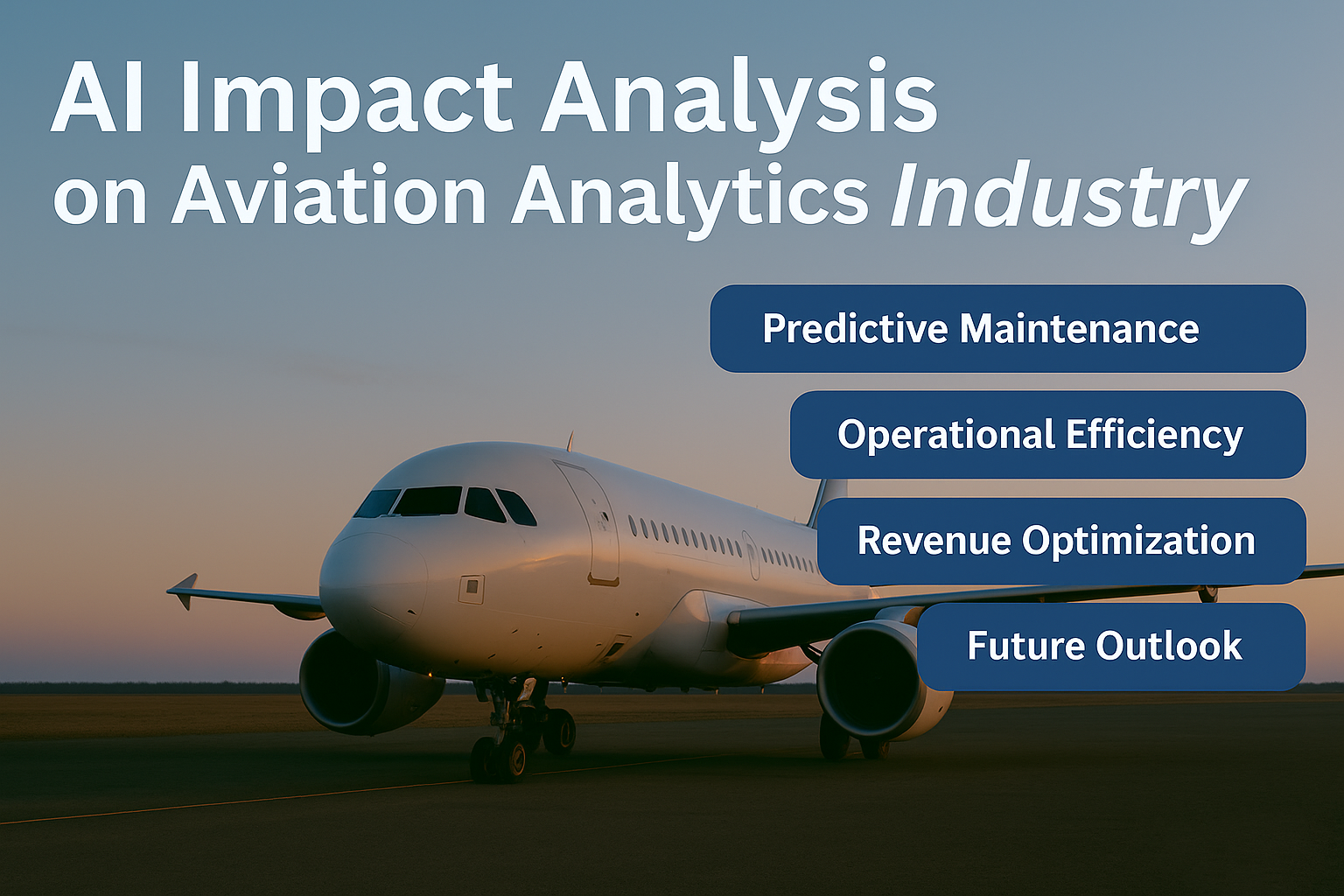
AI Impact Analysis on Aviation Analytics Industry
The aviation industry is undergoing a significant transformation, driven by the integration of Artificial Intelligence (AI) into various facets of operations. From predictive maintenance to dynamic pricing, AI is enhancing efficiency, safety, and customer satisfaction. This comprehensive analysis explores the multifaceted impact of AI on the aviation analytics market, highlighting key areas of transformation and future prospects.
1. Evolution of AI in Aviation Analytics
Historical Context and Transition
Traditionally, aviation relied on manual processes and basic data analysis for decision making. With the advent of big data and AI, the industry has shifted towards more sophisticated analytics, enabling real time insights and proactive strategies. The integration of AI has facilitated the transition from reactive to predictive and prescriptive analytics, revolutionizing how airlines operate.
Integration with Big Data and Cloud Computing
The synergy between AI, big data, and cloud computing has been pivotal in this evolution. Airlines now harness vast amounts of data from various sources, including sensors, customer interactions, and operational systems. Cloud platforms provide the scalability and processing power necessary for AI algorithms to analyze this data effectively, leading to more informed decision making.
2. AI Driven Predictive Maintenance
Enhancing Aircraft Reliability
AI powered predictive maintenance has become a cornerstone in ensuring aircraft reliability. By analyzing data from sensors and historical maintenance records, AI models can predict potential component failures before they occur. This proactive approach reduces unscheduled maintenance, minimizes downtime, and enhances safety. According to industry experts, predictive maintenance can reduce unplanned maintenance by up to 30% and increase aircraft availability by 20%.
Real Time Monitoring and Decision Support
Real time monitoring systems, augmented by AI, continuously assess aircraft health during operations. These systems provide maintenance teams with timely alerts and actionable insights, enabling swift interventions. The result is a more efficient maintenance process, cost savings, and improved operational readiness.
3. Flight Operations Optimization
Route Planning and Fuel Efficiency
AI algorithms are instrumental in optimizing flight operations. They analyze variables such as weather conditions, air traffic, and aircraft performance to determine the most efficient flight paths. This optimization leads to significant fuel savings and reduced carbon emissions, aligning with environmental sustainability goals.
Dynamic Scheduling and Resource Allocation
Beyond route planning, AI assists in dynamic scheduling and resource allocation. It enables airlines to adjust flight schedules in response to real time events, such as delays or cancellations, ensuring optimal utilization of aircraft and crew. This adaptability enhances punctuality and customer satisfaction.
4. Revenue Management and Dynamic Pricing
Personalized Pricing Strategies
AI has revolutionized revenue management through dynamic pricing strategies. By analyzing market demand, booking patterns, and competitor pricing, AI models adjust fares in real time to maximize revenue. This approach allows airlines to offer personalized pricing, catering to different customer segments and preferences.
Inventory Management and Forecasting
AI also enhances inventory management by forecasting demand and optimizing seat allocation. It ensures that the right number of seats are available at the right price points, reducing the risk of overbooking or underutilization. This precision contributes to improved profitability and customer experience.
5. Passenger Experience and Personalization
Enhancing Customer Interactions
AI driven tools, such as chatbots and virtual assistants, have transformed customer service in aviation. These tools provide instant responses to inquiries, assist with bookings, and offer personalized recommendations, enhancing the overall passenger experience.
Tailored Services and Loyalty Programs
By analyzing customer data, AI enables airlines to tailor services and loyalty programs to individual preferences. This personalization fosters customer loyalty and increases engagement, as passengers receive offers and services that align with their travel habits and interests.
6. Airport Operations and AI Optimization
Streamlining Ground Operations
AI optimizes various aspects of airport operations, including baggage handling, security screening, and gate assignments. For instance, AI powered systems can predict and manage passenger flow, reducing congestion and wait times. This efficiency enhances the overall airport experience for travelers.
Infrastructure Maintenance and Planning
AI assists in the maintenance and planning of airport infrastructure. Predictive analytics identify potential issues in facilities and equipment, allowing for timely maintenance and reducing disruptions. Additionally, AI supports strategic planning by analyzing passenger trends and forecasting future infrastructure needs.
Get AI Impact Analysis on Aviation Analytics Market, Request Pdf Brochure: https://www.marketsandmarkets.com/pdfdownloadNew.asp?id=26274177
7. AI in Safety, Compliance, and Risk Analytics
Proactive Safety Measures
Safety is paramount in aviation, and AI contributes significantly by identifying potential risks before they escalate. Through continuous monitoring and analysis of operational data, AI systems detect anomalies and suggest preventive actions, enhancing overall safety.
Regulatory Compliance and Reporting
AI streamlines compliance by automating the monitoring and reporting processes. It ensures that operations adhere to regulatory standards and promptly identifies areas requiring attention. This automation reduces the administrative burden and enhances accuracy in compliance management.
8. Supply Chain and Inventory Analytics
Optimizing Logistics and Inventory
AI enhances supply chain efficiency by forecasting demand for parts and materials, optimizing inventory levels, and streamlining logistics. It ensures that necessary components are available when needed, reducing delays and costs associated with inventory shortages or surpluses.
Supplier Performance and Risk Management
By analyzing supplier data, AI assesses performance and identifies potential risks in the supply chain. This insight enables proactive management of supplier relationships and ensures continuity in operations, even in the face of disruptions.
9. Sustainability and Environmental Impact
Reducing Carbon Footprint
AI contributes to environmental sustainability by optimizing flight operations to reduce fuel consumption and emissions. It supports the development of eco friendly practices, such as efficient routing and load management, aligning with global efforts to combat climate change.
Monitoring and Reporting Environmental Metrics
AI systems monitor environmental metrics, providing accurate data on emissions and resource usage. This information is crucial for reporting and developing strategies to minimize environmental impact, demonstrating the industry's commitment to sustainability.
10. Market Forecast, Investment, and Competitive Landscape
Growth Projections and Investment Trends
The aviation analytics market is poised for significant growth, driven by the increasing adoption of AI technologies. Investments in AI are expected to rise as airlines and airports seek to enhance efficiency, safety, and customer satisfaction.
Competitive Dynamics and Strategic Partnerships
The competitive landscape is evolving, with companies forming strategic partnerships to leverage AI capabilities. Collaborations between airlines, technology providers, and research institutions are fostering innovation and accelerating the deployment of AI solutions across the industry.
AI is reshaping the aviation industry, offering transformative solutions across various domains. From enhancing operational efficiency to elevating passenger experiences, AI driven analytics are becoming integral to the industry's evolution. As technology continues to advance, the aviation sector is set to reach new heights of innovation and excellence.
Related Report:
Aviation Analytics Market by Application (Fuel Management, Route Management, Flight Risk Management, inspection, others), End-User (MROs, Airlines, Airports, OEMs), Component, Deployment, Business Function, and - Global Forecast to 2027

This FREE sample includes market data points, ranging from trend analyses to market estimates & forecasts. See for yourself.
SEND ME A FREE SAMPLE






